Exam 3 - Prin. of Health Edu.
 Call Kai
 Learn
Learn Practice Test
 Spaced Repetition
 Match
Match Flashcards
 Knowt Play
1/71

There's no tags or description
Looks like no tags are added yet.
Name | Mastery | Learn | Test | Matching | Spaced | Call with Kai |
|---|
No analytics yet
Send a link to your students to track their progress
72 Terms
teaching method
the way information is taught that brings the learner into contact with what is to be learned
instructional material
objects or vehicles used to transmit info that supplements the act of teaching
lecture
highly structured, oldest & most used form, most efficient strategy for transmitting large amount of content to a large audience at once
five approaches to an effective lecture
use an opening & summary, present key terms, offer examples, use analogies, use visual backups
group discussion
effective method for teachin in affective & cognitive domains
team based learning
students work in teams throughout the semester, grades are group & indvidual based w/ peer evaluations, focus on solving real work problems
cooperative learning
students work in groups to solve problems, useful for teaching foundational concepts that have specific answers
case studies
use real work cases to help learners gain insight & apply knowledge, develop analytial & problem solving skills
seminars
learners complete assigned readings prior to meeting for class, in class discussions about readings, promotes engagement & educator facilitates discussion
one to one instruction
suitable for learners w/ learning disabilities or low literacy, face to face delivery designed to meet needs of individual learner, meet all 3 domains of learning
additional characteristics of one to one instruction
mutual goal setting, instructions, response, & direct feedback, teach back stratey to assess comprehension
scaffolding
incremental approach to sequencing steps to a skill during demonstration
demonstration & return demonstration
effective in psychomotor domain, educator should stay silent during return demonstration, & return demo should occur as soon as possible after demonstration
the key to demonstration is…
practice
gaming
help learners retain information, effective for cognitive domain, games can be placed anywhere in sequence of learning, individual or groups
simulation
best method for applying protocols to pretend clinical situations, make decisions in controlled environment with no real consequences, critical thinking & high lvl decision making skills, debrief after
roleplay
assigned a character in an unrehearsed performance, affective domain, reflect on experiences, discuss feelings & share observations
role model
preceptors/mentos guide support & socialized students, bridges gap b/w theory & practice, novices learn critical thinking, psychomotor, & interpersonal skills via observation
self instruction in HC
continuing education & required annual education
tools used in self instruction
videos, workbooks, study guides
how to select teaching methods
behavioral objectives that need to be accomplished, assessment of learners, consider resources, educators comfort lvl with using certain methods
ways to increase effectiveness to teaching
present info w/ enthusiasm, include humor, connect material to life/experiences, choose problem solving activities, be a role model, use examples, tech, models
ask me 3 approach for improving effectiveness
what is my main problem, what do i need to do, why is it important
general principles for teaching across methodologies
give pos. reinforcement, acceptance & sensitivity, be organized, give feedback/instruction, use questions, use the teach back method, know audience, use repetition & pacing, summarize main points
most effective method for learning
have learners present segments of content to the class
least effective method for learning
simple reading
settings for teaching
any place where health prof. engage in teaching for disease prevention, health promotion, maintenance, & rehab
3 main components of instructional materials
delivery system - hardware & softwar used in presentation of info, content, presentation - how info is present
choosing instructional material
characteristics of: learner, medium, task
printed material
reinforce verbal instructions & provide reference, do not inherently promote active learning compared to demonstrations or discussion
models
3D instructional tools used for psychomotor skills
computer resources
disadvantage: high cost & limited use in low literacy populations
displays
2D objects for teaching i.e. whiteboards, posters, use written words/graphics, design is important
advantages of demonstration material
useful for cognitive, psychomotor, & affective domains, usually low cost, offer opportunity for repetition
disadvantages of demonstration materials
time consuming to make, doesnt work for large audiences, not appropriate for learners w/ visual impairment
goal
final outcome, broad, long term outcome
objective
specific, single, short term behavior, must be achieved before the goal can be reached or by end of each session, must be measurable
behavioral objectives
directed towards what the learner is expected to be able to do (action oriented)
Goals & Objectives similarities
need to have both to accomplish something, must be clear, realistic, & learner centered, goal & objective setting a mutual process
educational objective
high lvl, identify outcomes of overall educational process
instructional objectives
describe teaching activties, specific content areas, resources, used to facilitate effective learning/instruction
importance of using behavioral objectives
learner centered practive, education individualized, communicates plan to learners, helps learners track progress
blooms taxonomy definition
a framework used to classify learning objectives into lvls of complexity & specificity
list levels of blooms taxonomy (bottom up)
remember, understand, apply, analyze, evaluate, create
remember
recall facts & basic concepts: define, duplicate, list, memorize, repeat, state
understand
explain ideas/concepts: classify, describe, discuss, explain, identify, recognize, select
apply
use information in new situation: execute, implement, solve, use, demonstrate, interpret, schedule, sketch
analyze
draw connections among ideas: differentiate, organize, relate, compare/contrast, distinguish, examine, question, experiment, test
evalutate
justify a stand/decision: argue, defend, judge, select, support, value, critque
create
produce new work: design, assemble, construct, develop, formulate, investigate
ABCD rule
elements needed for behavioral objectives: Audience, Behavior, Condition, Degree
characteristics for writing behavioral objectives
performance - what the learner should be able to do, condition - under what conditions to do it, criterion - how well/accuracy/time frame to complete behavior
cognitive domain
thinking domain: knowledge, comprehend, apply, analyze, synthesis, evaluate
affective domain
feeling domain, deals with values, attitudes & feelings: receive, respond, value, organize, characterize
psychomotor domain
physical skills domain: perception, set, guided response, mechanism, complex overt response, adaption, origination
mistakes made when writing behavioral objectives
describing what the teacher is to do, including more than expected behavior, not using all 4 ABCD, using terms that can be open to many interpretations, objectives unattainable/unrealistic, dont relate to goal, unnecessary info, too general
spacing effect
learning distributed over several sessions leads to better memory than info learned in 1 session (cognitive domain)
most common teaching methods for cognitive domain
leacture, group discussion, one to one, self instruction
most common teaching methods for affective domain
role model, role play, simulation, case study, group discussion
teaching strategies for affective
most commonly neglected, learning is subjective & value driven
most common teaching methods for psychomotor domain
demonstration, return demonstration, simulation, self instruction, models, diagrams
teaching strategies for psychomotor
keep psychomotor instruction separate from cognitive/affective instruction, ability to perform skill doesnt mean the skill has been learned or mastered, making mistakes expected
teaching plan
blueprint to achieve the goal/objectives
8 basic elements of teaching plan
purpose, statment of overall goal, list objectivesm outline the content to be covered, teaching methods for instruction, time alloted for teaching each objective, instructinoal resources needed, methods used to evaluate learning
learning contract
written or verbal agreement b/w the teacher & learner that delineates specific teaching & learning activities that are to occur in a specific time frame, stresses shared accountability
contents of learning contract
content, performance expectations, evaluation, time frame
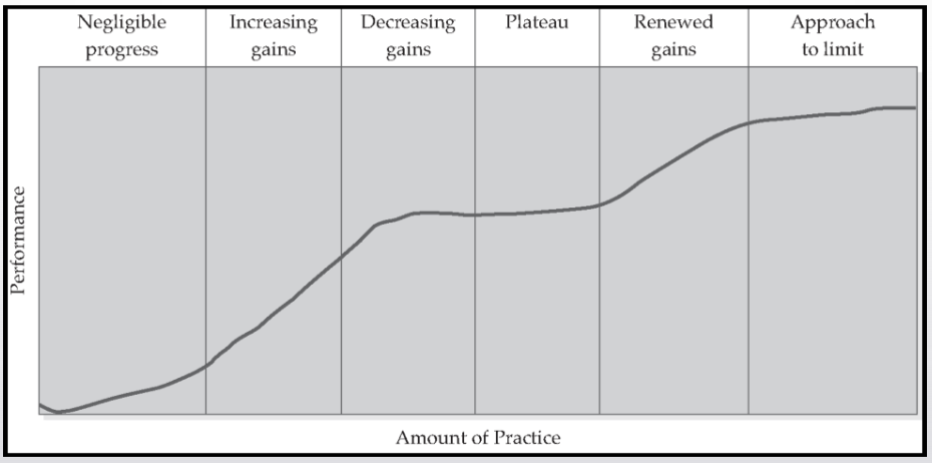
six stages of learning curve
SES
factors include occupation, educational lvl, family income, family structure, geography
low SES learners
educators must realize these clients are often focused on immediate needs rather than long term health goals
LGBTQ+ care
always use inclusive language that reflects clients identity
ehtnocentrism
tendency to believe ones own ways of thinking/acting are the only right or natural ways
patient education guidelines
identify primary language, assess spiritual/religious practice, always use certified medical interpreter (never rely on family for interpretation)