Cell division + Cell cycle

0.0(0)
Studied by 0 people
call kaiCall Kai
learnLearn
examPractice Test
spaced repetitionSpaced Repetition
heart puzzleMatch
flashcardsFlashcards
GameKnowt Play
Card Sorting

1/13

encourage image

There's no tags or description

Looks like no tags are added yet.

Last updated 9:53 PM on 4/10/26
Name
Mastery
Learn
Test
Matching
Spaced
Call with Kai

No analytics yet

Send a link to your students to track their progress

14 Terms

1
New cards

What is mitosis?

Mitosis is when one cell gives rise to 2 daughter cells

2
New cards

Why must cells divide by mitosis?

For growth (fertilized cell to fetus)

For repair & renewal (replacement of cells)
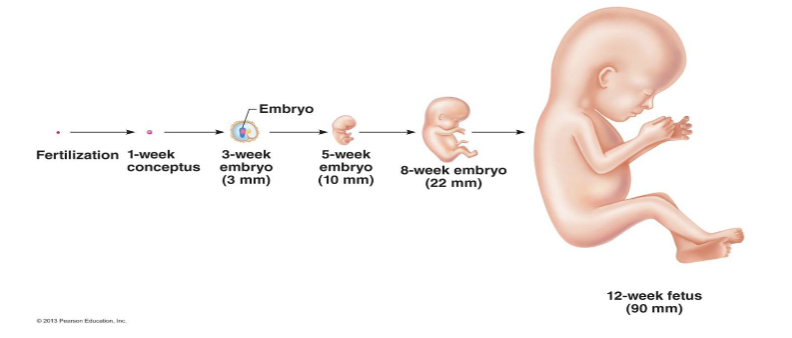
<p>For <strong>growth</strong> (<strong>fertilized</strong> <strong>cell</strong> to <strong>fetus</strong>) </p><p>For <strong>repair</strong> &amp; <strong>renewal</strong> (<strong>replacement</strong> of <strong>cells</strong>)</p>
3
New cards

What is passed on to daughter cells?

An exact copy of genetic material / DNA

4
New cards

What are the two phases of the cell cycle?

The mitotic phase & the interphase
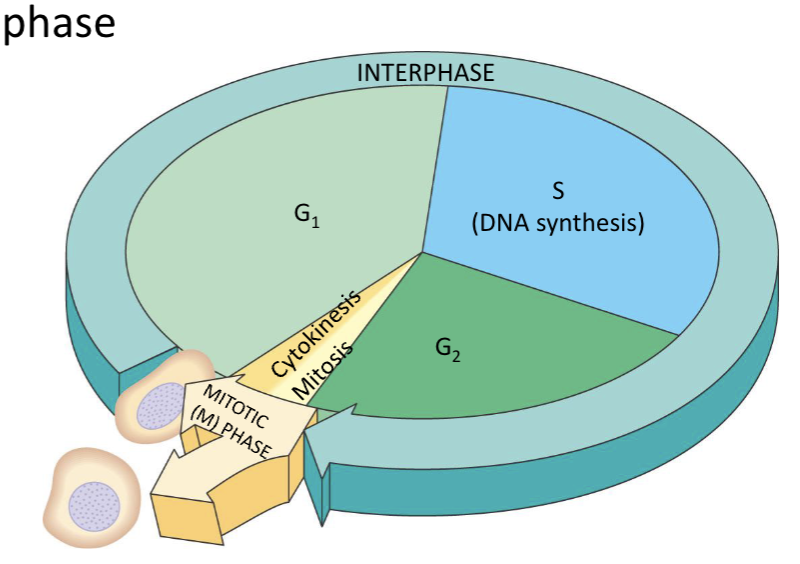
<p>The <strong>mitotic</strong> <strong>phase</strong> &amp; the <strong>interphase</strong></p>
5
New cards

What is a mitotic chromosome?

A mitotic chromosome is a duplicated chromosome made up of 2 sister chromatids
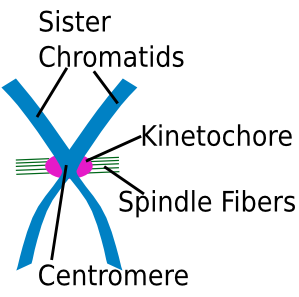
<p>A mitotic chromosome is a <strong>duplicated</strong> <strong>chromosome</strong> made up of <strong>2</strong> <strong>sister</strong> <strong>chromatids</strong></p>
6
New cards

What is the first step of the cell cycle?

  1. Prophase: Chromatin condenses, chromosomes shorten and thicken, and mitotic spindle forms
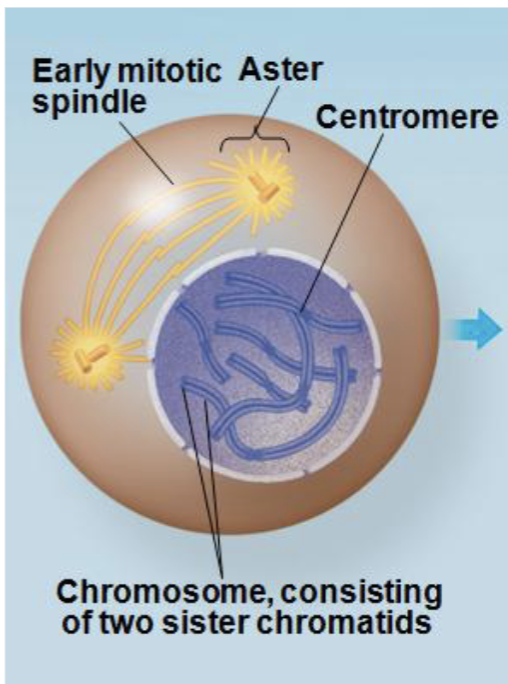
<ol><li><p><strong>Prophase</strong>: <strong>Chromatin</strong> <strong>condenses</strong>, <strong>chromosomes</strong> <strong>shorten</strong> and <strong>thicken</strong>, and <strong>mitotic</strong> <strong>spindle</strong> <strong>forms</strong></p></li></ol><p></p>
7
New cards

What is the second step of the cell cycle?

  1. Prometaphase: nuclear envelope disintegrates; microtubules attach to the kinetochore of chromosomes
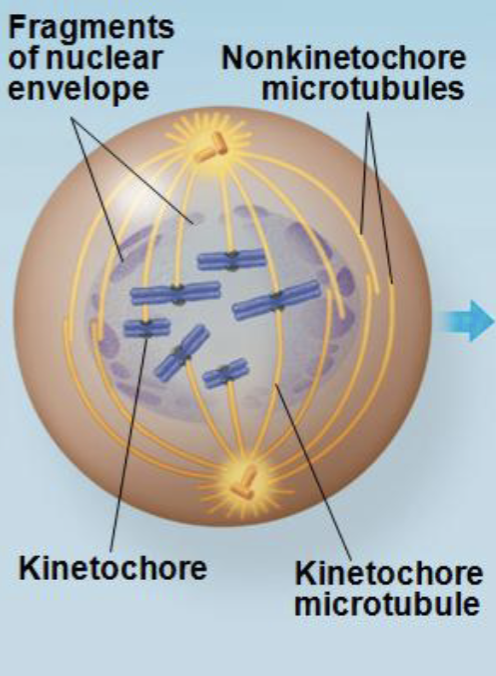
<ol start="2"><li><p><strong>Prometaphase:</strong> <strong>nuclear</strong> <strong>envelope</strong> <strong>disintegrates</strong>; <strong>microtubules</strong> <strong>attach</strong> to the <strong>kinetochore</strong> of <strong>chromosomes</strong></p></li></ol><p></p>
8
New cards

What is the third step of the cell cycle?

  1. Metaphase: Chromosomes align on the metaphase plate
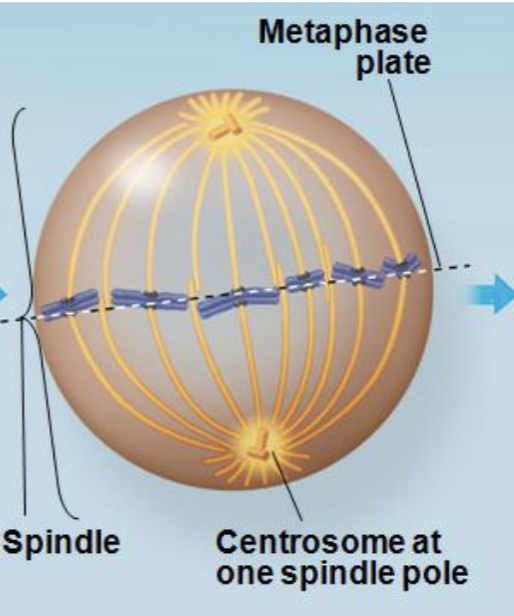
<ol start="3"><li><p><strong>Metaphase: Chromosomes</strong> <strong>align</strong> on the <strong>metaphase</strong> <strong>plate</strong></p></li></ol><p></p>
9
New cards

What is the fourth step of the cell cycle?

  1. Anaphase: The two sister chromatids of each chromosome part and go towards the opposite ends of the cell as daughter chromosomes
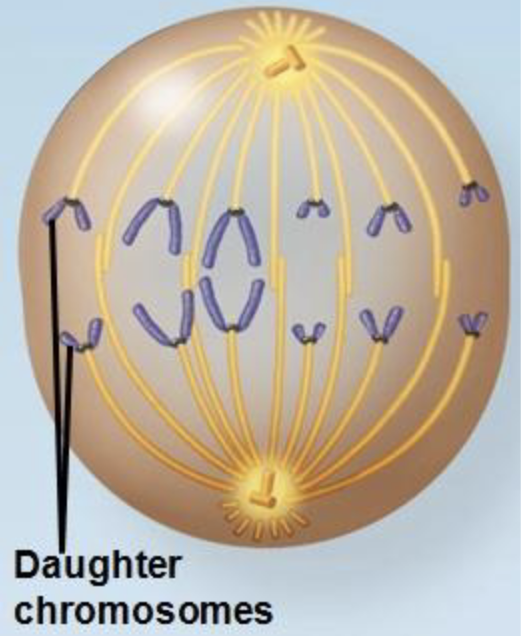
<ol start="4"><li><p><strong>Anaphase: </strong>The <strong>two</strong> <strong>sister</strong> <strong>chromatids</strong> of <strong>each</strong> <strong>chromosome</strong> <strong>part</strong> and go towards the <strong>opposite</strong> <strong>ends</strong> of the <strong>cell</strong> as <strong>daughter</strong> <strong>chromosomes</strong></p></li></ol><p></p>
10
New cards

What is the fifth step of the cell cycle?

  1. Telophase & Cytokinesis: Nuclear envelopes form & cytoplasm divides, resulting in two genetically identical daughter cells
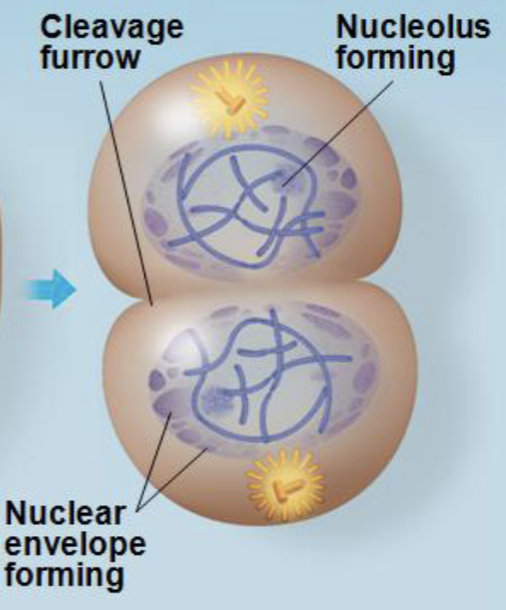
<ol start="5"><li><p><strong>Telophase &amp; Cytokinesis: Nuclear</strong> <strong>envelopes</strong> <strong>form</strong> &amp; <strong>cytoplasm</strong> <strong>divides</strong>, resulting in <strong>two</strong> <strong>genetically</strong> <strong>identical</strong> <strong>daughter</strong> <strong>cells</strong></p></li></ol><p></p>
11
New cards

What is meiosis?

Meiosis is reproductive cell division that only occurs in the gonads

They produce cells that have a haploid number (23) of chromosomes
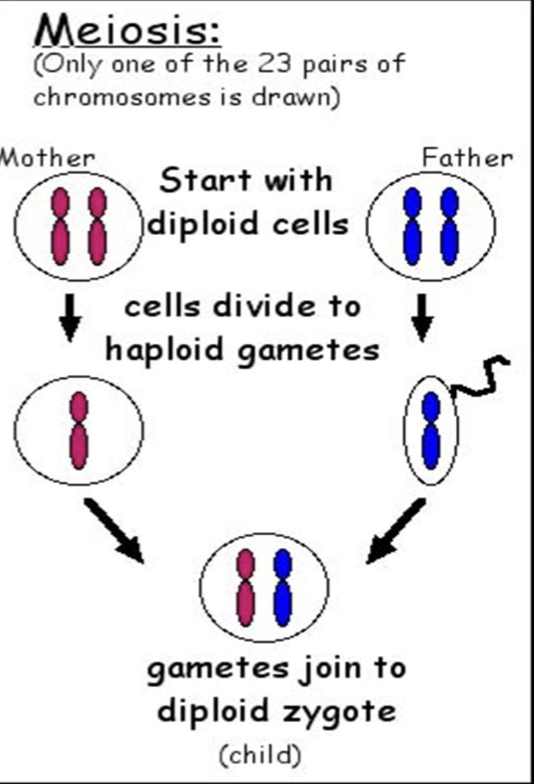
<p>Meiosis is <strong>reproductive</strong> <strong>cell</strong> <strong>division</strong> that only occurs in the <strong>gonads</strong></p><p>They produce cells that have a <strong>haploid</strong> <strong>number (23)</strong> of <strong>chromosomes</strong> </p>
12
New cards

What is the difference between mitosis and meiosis?

Mitosis occurs in somatic cells and results in two daughter cells forming while meiosis occurs in gametic cells and results in four daughter cells forming
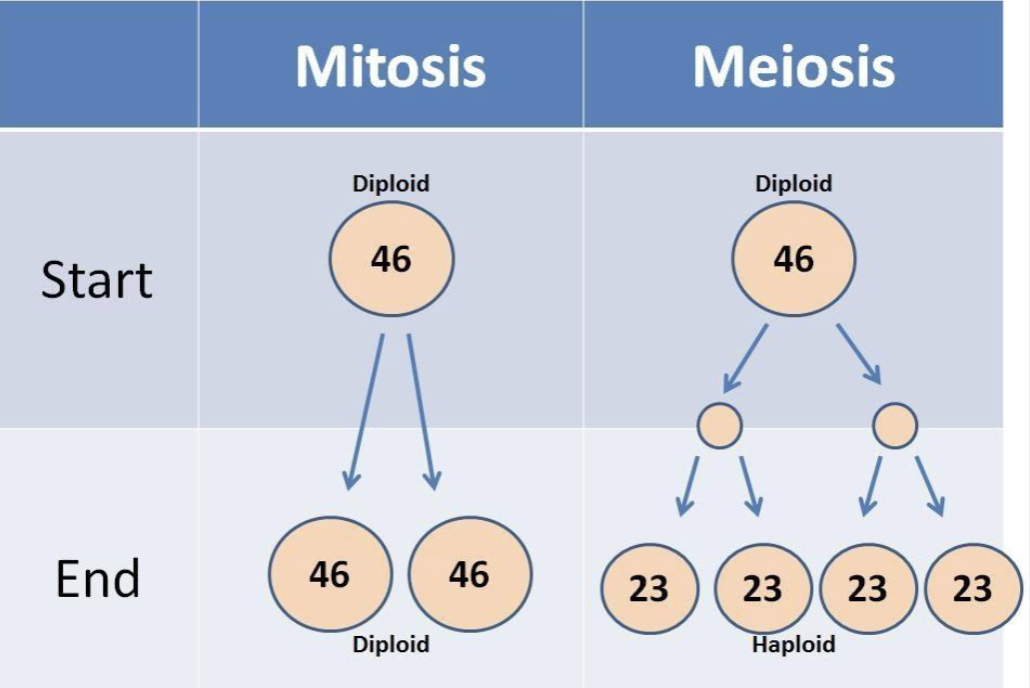
<p><strong>Mitosis</strong> occurs in <strong>somatic</strong> <strong>cells</strong> and results in <strong>two</strong> <strong>daughter</strong> <strong>cells</strong> <strong>forming</strong> while <strong>meiosis</strong> occurs in <strong>gametic</strong> <strong>cells</strong> and results in <strong>four</strong> <strong>daughter</strong> <strong>cells</strong> <strong>forming</strong></p>
13
New cards

What is nondisjunction?

Nondisjunction is the failure of paired chromosomes separating normally
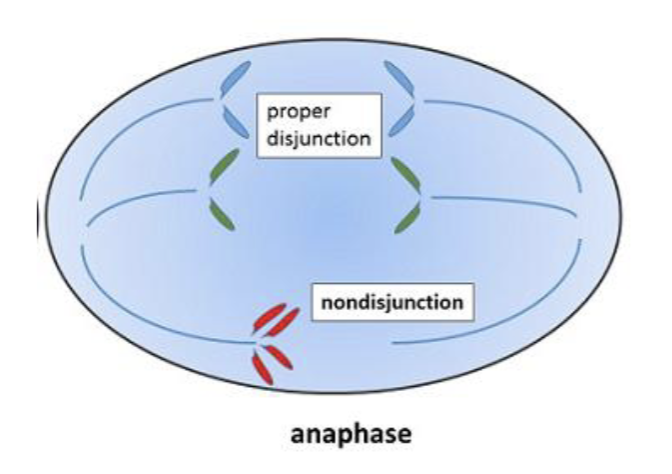
<p>Nondisjunction is the <strong>failure</strong> of <strong>paired</strong> <strong>chromosomes</strong> <strong>separating</strong> <strong>normally</strong></p>
14
New cards

What can nondisjunction result in?

Nondisjunction can result in daughter cells having extra or missing chromosomes



