[AR23] Conveying and Mechanical Systems
 Call Kai
 Learn
Learn Practice Test
 Spaced Repetition
 Match
Match Flashcards
 Knowt Play
1/101

Earn XP
Description and Tags
Name | Mastery | Learn | Test | Matching | Spaced | Call with Kai |
|---|
No analytics yet
Send a link to your students to track their progress
102 Terms
Early Conveyor Concept
Used log rollers and sleds to move massive stones, such as those used for the Pyramids.
18th Century Conveyor Materials
The first true conveyor belts, used to transport grain in flour mills, were made of these two materials: wood and leather.
Thomas Robins (1892)
Inventor of the heavy-duty rubber belt, specifically designed for mining operations to transport coal and iron.
Jesse Reno (1892)
Patented the "Inclined Elevator," the first working escalator, which debuted as an amusement park ride at Coney Island.
1900 Escalator Milestone
The year the modern escalator (featuring flat steps) won the Grand Prize at the Paris World’s Fair.
Henry Ford (1913)
Revolutionized manufacturing by creating the first moving assembly line for cars, demonstrating the power of conveyors in mass production.
ELEVATORS
ESCALATOR SYSTEMS
VERTICAL TRANSPORATION SYSTEMS
MOVING WALKWAYS
CONVEYORS
HORIZONTAL TRANSPORTATION SYSTEMS
Elevator
A hoisting and lowering mechanism equipped with a car or platform.
Elevator
A transport system that moves along guide rails in a vertical or diagonal direction.
Elevator
A transport system designed to serve two or more floors of a building.
Passenger Elevator
An elevator specifically designed and used to transport people.
Freight Elevator
An elevator specifically designed to carry materials, goods, and cargo.
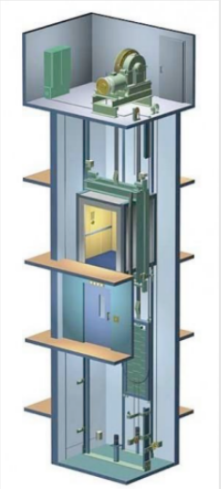
ELECTRIC ELEVATOR
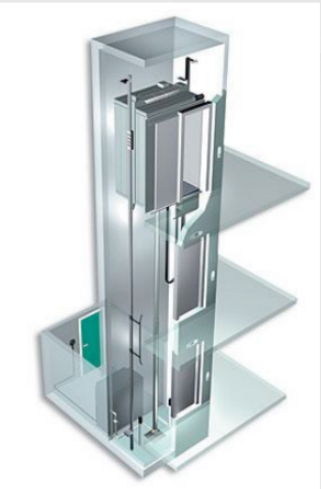
HYDRAULIC ELEVATOR
Electric Elevator
An elevator system consisting of a car mounted on guide rails and suspended by tension cables, operated by electric hoisting machinery.
Traction Elevator
Another common name used to refer to an electric elevator.
Electric Elevator
A type of elevator system used exclusively in high-rise buildings.
Electric Elevator
Typically operated using direct current (DC) motors.
Electric Elevator
A system that typically requires a machine room to house the overhead equipment.
Hydraulic Elevator
An elevator system where car movement is driven by pressure applied through a system of retractable tubes.
Hydraulic Elevator
A system where oil is pumped from a reservoir into retractable tubes to create the pressure necessary for movement.
Hydraulic Elevator
An elevator type specifically used for low to mid-rise buildings.
Hydraulic Elevator
An elevator system that does not require a machine room.
Geared Traction Machine
A traction system featuring a gearbox attached to an electric motor that turns the hoist sheave to move the elevator ropes.
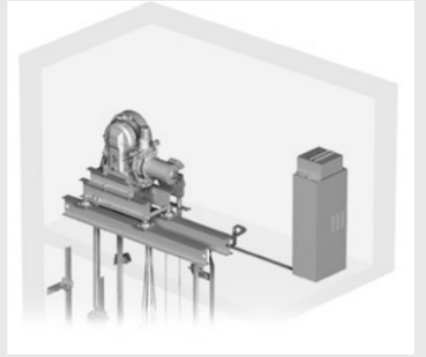
Geared Traction Machine
An elevator machine that utilizes a worm and gear assembly to operate the hoist system.
Geared Traction Machine
An elevator machine type with a maximum rated speed of 500 feet per minute
Geared Traction Machine
HAVE A GEARBOX WHICH IS ATTACHED TO THE ELECTRIC MOTOR AND
TURNS THE HOIST SHEAVE AND MOVES THE ROPE.
Geared Traction Machine
A system typically utilized in buildings of 8–20 storeys where high speed is not a primary design concern.
Gearless Traction Machine
A traction system where the hoist wheel (sheave) is directly attached to the electric motor, eliminating the need for a gearbox.
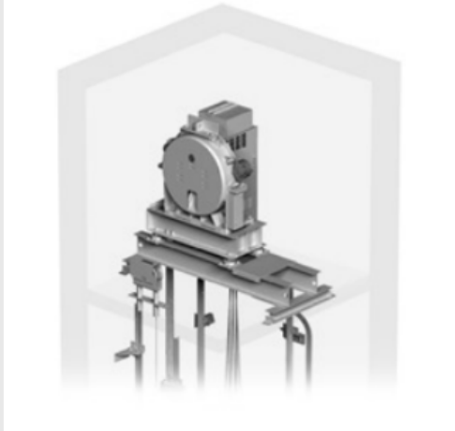
Gearless Traction Machine
A high-performance elevator machine type capable of reaching speeds up to 2,000 feet per minute (FPM).
Gearless Traction Machine
An elevator machine type capable of serving buildings with a travel distance of up to 600 meters, or approximately 150 storeys
Gearless Traction Machine
Considered the most reliable and efficient elevator option for high-rise building installations.
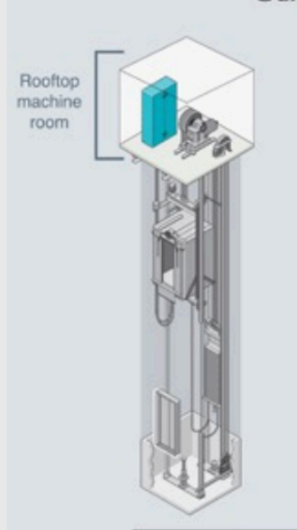
Conventional Machine Room
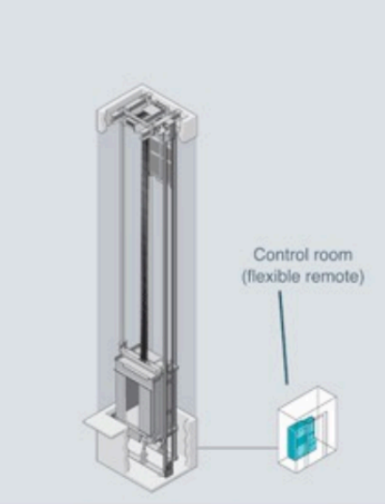
Machine-Roomless with Control Room
True Machine-Roomless
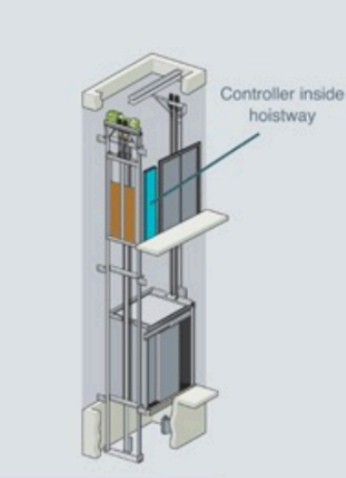
Machine Room-Less
A traction elevator designed without a dedicated machine room above the elevator shaft.
MRL Elevator
A system where the traction hoisting machine is located within the hoistway, typically on the top side wall or at the bottom.
MRL Elevator
A system that utilizes a permanent magnet synchronous gearless drive unit installed directly inside the shaft.
MRL Elevator
A system with a maximum operational speed of 500 feet per minute (FPM).
MRL Elevator
An elevator type limited to a maximum travel distance of approximately 75 meters, or about 20 storeys.
MRL Elevator
A popular elevator choice specifically utilized for mid-rise buildings.
MRL Elevator
A system with initial and maintenance costs comparable to those of geared traction elevators.
MRL Elevator
A system that offers operational performance and reliability on par with gearless traction elevators.
Escalator
A power-driven, inclined, continuous stairway designed for raising or lowering passengers.
Moving Stairway / Electric Stairway
Alternative terms used to refer to an escalator.
1302, 30
According to Section ____ of the National Building Code, the maximum allowable angle of inclination is __° from the horizontal.
32, 800
A standard smaller step width measuring __ inches (approximately __ mm).
48, 1200
A wider step width option measuring __ inches (approximately ____ mm).
90
The standard operational speed of an escalator, which is __ feet per minute (FPM).
120
The maximum operational speed used during peak times, which is ___ feet per minute (FPM)
Escalator Truss
The welded steel frame that structurally supports the entire escalator system.
Escalator Sprocket Assemblies
The top and bottom sprocket wheels around which the endless belt of steps circulates.
Escalator Driving Machine
The component that provides the motive power necessary to operate the escalator unit.
Escalator Balustrade Assembly
The comprehensive safety enclosure system that includes the deck boards, concave inside of panel skirt guards, handrails, and comb plates.
Escalator Balustrade
The side architecture of an escalator, specifically comprising the handrails, skirt panels, and interior panels.
Escalator Tracks
The guiding system that directs the path and movement of the endless step chain.
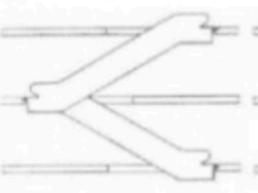
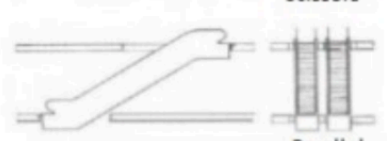
Single
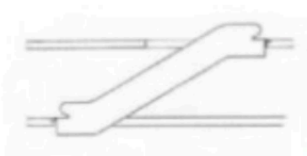
Scissors
Parallel
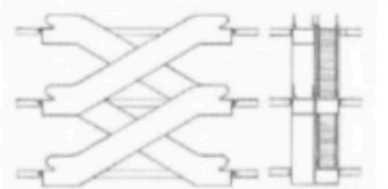
Criss-cross
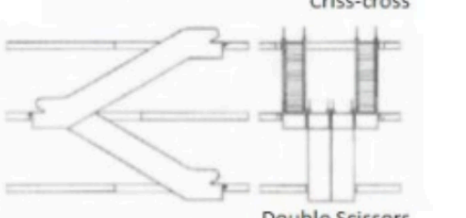
Double scissors and parallel
Dumbwaiter
A mini elevator designed to transport materials between floors, most commonly used for moving food.
Inclined Lift
A motorized chair or platform installed on a steel guide rail to transport people or goods along a slope or stairway.
Paternoster
A slow-moving, continuously operating elevator featuring open compartments that do not stop moving as passengers step on and off.
MOVING WALKWAY
A SLOW-MOVING CONVEYOR MECHANISM THAT TRANSPORTS PEOPLE ACROSS A HORIZONTAL OR INCLINED PLANE.
MOVING WALKWAY
ALSO KNOWN AS: AUTOWALK, MOVING SIDEWALK MOVING PAVEMENT, PEOPLEMOVER, TRAVOLATOR, TRAVELATOR.
MOVING WALKWAY
CAN BE FLAT OR INCLINED.
OFTEN INSTALLED IN PAIRS, ONE FOR EACH DIRECTION.
MOVING WALKWAY
CAN BE USED BY STANDING OR WALKING ON THEM.
USUALLY SEEN IN TRANSPORTATION FACILITIES AND AREAS WITH ACTIONS MOVING ITEMS
Conveyor
A mechanical handling equipment that moves materials from one location to another.
Conveyor Systems
Commonly used in many industries, including the mining, automotive, agricultural, computer, electronic, food processing, aerospace, pharmaceutical, chemical, bottling and canning, print finishing, and packaging.
Conveyor
Able to safely transport materials from one level to another.
Conveyor
Can be installed almost anywhere and are much safer.
Conveyor
Can move loads of all shapes, sizes and weights; have advanced safety features that help prevent accidents.
Conveyor
Can be hydraulic, mechanical and fully automated systems.
BELT
ROLLER
POWERED ROLLER
MAGNETIC
BUCKET
CHUTE
OVERHEAD
VERTICAL
VIBRATING
WHEEL
TYPES OF CONVEYORS
Laboratory Plumbing System
Specialized to handle cold and hot water, deionized and distilled water, gases like natural gas and specialty laboratory gases, vacuum lines, and compressed air.
Premise Plumbing System Focus
Focus on delivering safe and efficient water services in buildings but face challenges such as oversizing and water quality degradation due to outdated design assumptions.
Modern PPS Design
Integrates hydraulic, thermal, water quality, energy efficiency, and socio-economic factors.
Standpipe System
Specific type used for fire safety, categorized by the type of water supply and hose connection size to match expected flow rates and user handling capabilities.
Central System
Typically house equipment in a separate room and deliver conditioned air through ductwork; they include all-air, air-water, and all-water systems, as well as heating and cooling panels and water-source heat pumps.
Local System
Installed within or near the conditioned space and do not require ductwork; examples include local heating, local air-conditioning, local ventilation, and split systems.
Other Systems HVAC
Include all-air systems, hydronic (all-water) systems, air-water combined systems, unitary systems, and single- or multi-zone configurations.
Variable Air Volume Systems
Adjust the airflow supplied to a space based on its thermal load, reducing energy use by varying air volume rather than temperature; they are common in office buildings and more energy-efficient.
Constant Air Volume Systems
Maintain constant airflow but vary the air temperature to meet cooling or heating needs, resulting in higher supply airflow and increased cooling energy.
Under-Floor Air Distribution
Delivers conditioned air through an underfloor plenum directly into occupied zones, creating a vertical airflow pattern that improves indoor air quality and thermal comfort while reducing cooling energy use.
Active Chilled Beam
Use water-cooled beams mounted in ceilings combined with a Dedicated Outdoor Air System (DOAS).
Dedicated Outdoor Air Systems
Supplies a constant minimum volume of outdoor air for ventilation; this combination can reduce cooling energy by decoupling ventilation from cooling loads.
Low / Medium / High Pressure Water Sprays
Low-pressure water systems generally perform best in controlling different fire types in tunnels by effectively reducing heat release and fire spread, while high-pressure systems may be less effective depending on ventilation and other conditions.
Water Mist System
Produce very fine droplets that suppress fires through latent cooling, oxygen dilution, and volumetric displacement, making them more efficient in water use and faster at suppression compared to conventional sprinklers, which mainly cool fires by heat extraction with larger droplets.
Sprinkler System
Act as a water curtain to keep surfaces wet and prevent flame spread but consume significantly more water than high-pressure water mist nozzles that achieve similar effectiveness with less water.
Compressed Air Foam Systems
Used particularly in marine environments but may have limited fire suppression performance compared to water spray systems.
Aqueous Film-Forming Foam
Common foam type that rapidly cools and suppresses hydrocarbon fires by forming a film that blocks oxygen; its performance improves with optimized gas-liquid flow ratios and driving pressures.
Gel Foams
Combine foam, gel, and inert gas properties to enhance stability, reduce heat radiation, and significantly improve resistance to re-ignition in liquid fuel fires.
Subsurface Foam Injection Techniques
Foam is delivered beneath the fuel layer to prevent vapor release and improve suppression efficiency while reducing foam consumption.
Water-Based System
Foam-Based System
Gas-based System
Fire Suppression Systems
Gas-Based Systems
Often deploy gases like nitrogen, carbon dioxide, or air as carriers for foam agents, enhancing wettability and physical cooling effects on the fire.
Robotic Systems
Automate firefighting tasks to reduce human risk and improve response times; these have been developed extensively in Russia with legal frameworks supporting their use.
Acoustic Fire Extinguishing
Uses sound waves to disrupt combustion processes by airflow disturbance or thermal effects, showing promise for enhancing suppression efficiency when combined with traditional methods, though this technology is still largely experimental.
Laboratory Plumbing System
Features a typical initial cost of ₱4,000 – ₱8,500 per m² and accounts for an 8% – 15% share of the total building cost.