5. energy transfers
 Call Kai
 Learn
Learn Practice Test
 Spaced Repetition
 Match
Match Flashcards
 Knowt Play
1/169

Earn XP
Description and Tags
i am SCREAMING i hate knowt
Name | Mastery | Learn | Test | Matching | Spaced | Call with Kai |
|---|
No analytics yet
Send a link to your students to track their progress
170 Terms
give the eqn for the efficiency of biomass transfers between trophic levels by %:
% efficiency = (energy after transfer/energy before transfer) x 100
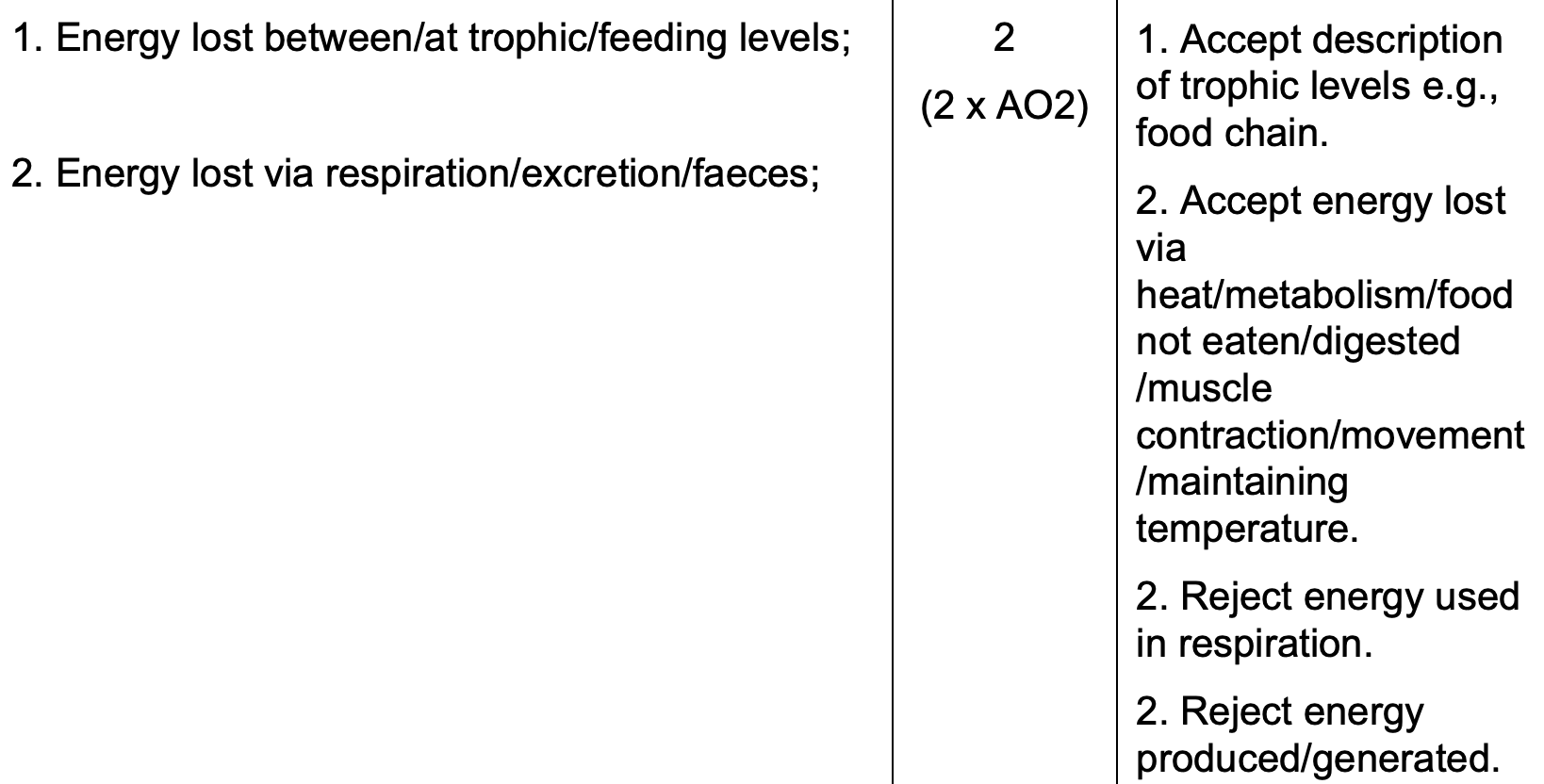
farming cattle for humans to eat is less efficient than farming crops because of energy transfer - explain transfer (2)
energy lost between/at trophic/feeding levels
energy lost via respiration/excretion/faeces
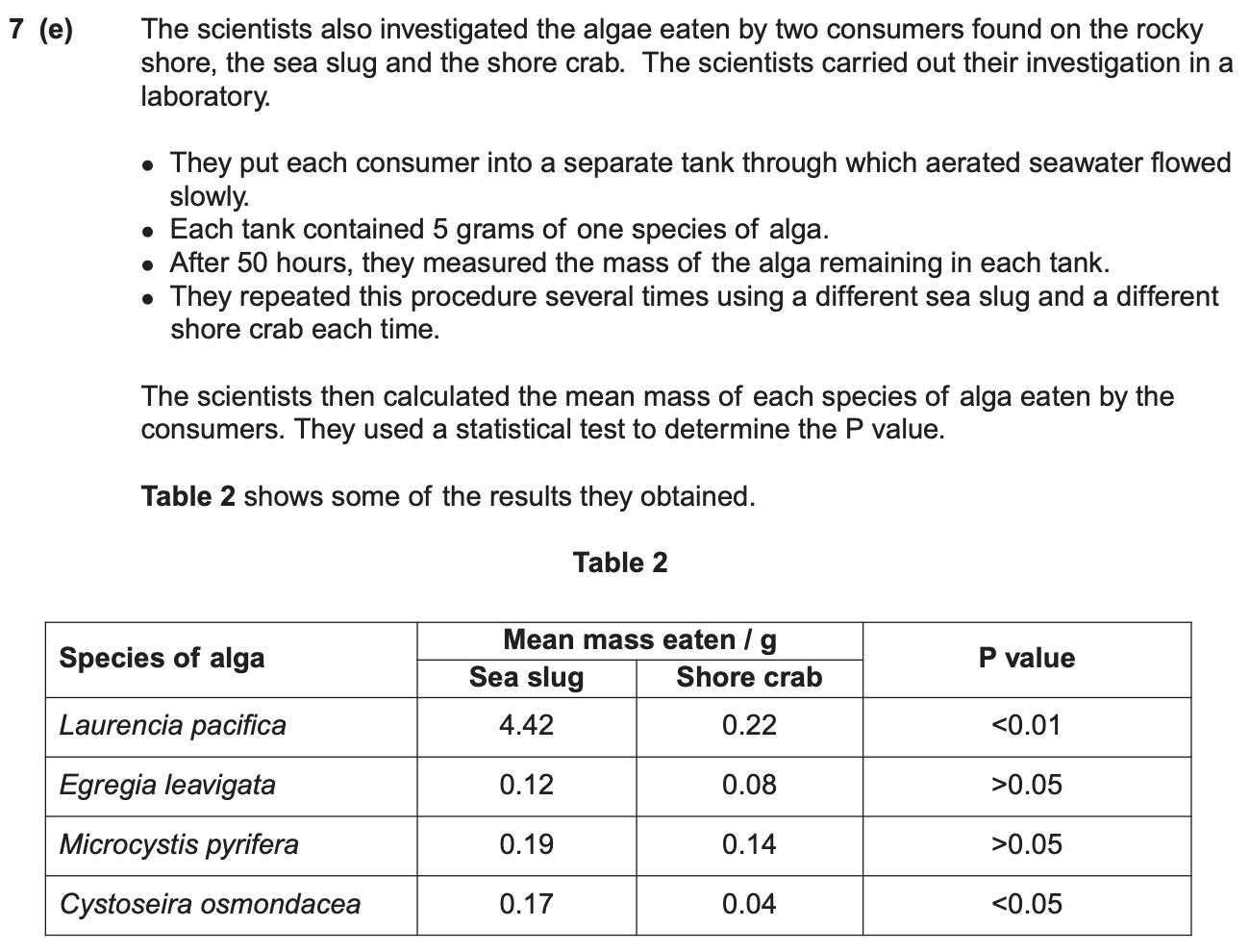
the data in the table for the mean mass of algae eaten were adjusted for loss of mass by the algae for respiration - suggest how the scientists were able to determine the loss of mass due to respiration of a sample of alga (3)
algae without consumer/named consumer/animal
(find change in mass) in dark
for 50 hours
describe and explain how leaves are adapted for photosynthesis:
large SA - max light absorption
thin - reduces diffusion distance for gases
lots of chloroplasts in palisade cells - captures light efficiently
stomata - allows gas exchange
air spaces in spongy mesophyll - facilitates gas diffusion
vascular bundles (xylem/phloem) - transports water and sugars
transparent cuticle/epidermis - allows light through and reduces water loss
leaf arrangement - minimises overlapping to capture more light
what is biomass?
measure of mass of carbon/dry mass of tissue per given area
what substance do plants used to synthesise organic compounds?
atmospheric/aquatic CO2
what are sugars used for in plants?
most used as respiratory substrates
rest used to make other biological molecules which form the plant’s biomass
what can a calorimeter be used for?
to estimate the energy store in dry biomass
give 4 aspects of the setup of a calorimeter and explain their roles:
water - high known SHC so chemical energy can be calculated from temp change
stirrer - distributes heat energy evenly
thermometer - measures temp changes
air/insulation - reduces heat loss/gain
what is gross primary production (GPP)?
total chemical energy store or biomass produced by plants/producers through photosynthesis in a given area/volume
what is net primary production (NPP)?
energy/biomass that remains after plants have used some for respiration
what is the eqn for net primary production?
NPP = GPP - R (where R = respiratory losses)
what is the net primary production available for?
plant growth
reproduction
other trophic level consumers e.g. herbivores and decomposers
what are the units for biomass measurement?
kg / m2
which process increases gross primary production?
photosynthesis
what is the net production of consumers?
the energy/biomass available to consumers after accounting for energy losses due to respiration, excretion and egestion
give the eqn for the net production of consumers:
N = I - (F + R), where:
I = chemical energy store in ingested food
F = chemical energy lost to environment in faeces and urine
R = respiratory losses to the environment
how can the yield of a plant be measured? how would this occur in practice:
calculate dry mass of plant:
weigh and heat
until mass is constant
why is calculating the dry mass of a plant useful?
dry mass measures/determines increase in biological/organic material
water content varies
what is productivity?
the measure of biomass in a given area in a given time e.g. kJ ha-1 year-1
name and define the two types of productivity:
primary productivity - rate of primary production by green plants
secondary productivity - rate of secondary production by consumers
give 3 reasons why not all the light energy falling on producers is used in photosynthesis:
reflected
misses chlorophyll
wrong wavelength
give 3 reasons for the low efficiency of energy transfer from secondary consumers to tertiary consumers in an ecosystem:
heat loss from respiration
not all eaten
excretion i.e. urine
what is the difference between egestion and excretion?
egestion involves the removal of undigested food from the body i.e. faeces
excretion involves the removal of waste products e.g. CO2, urea, sweat i.e. urine
freshwater marshes have one of the highest rates of GPP and NPP of all ecosystems.
carbon use efficiency (CUE) is the ratio of NPP:GPP. freshwater marshes have a high CUE.
use your knowledge of NPP to explain why freshwater marshes have a high CUE and the advantage of this - do not refer to abiotic factors in your answer (2)
low respiration (due to anaerobic conditions)
more growth/biomass/colonisation
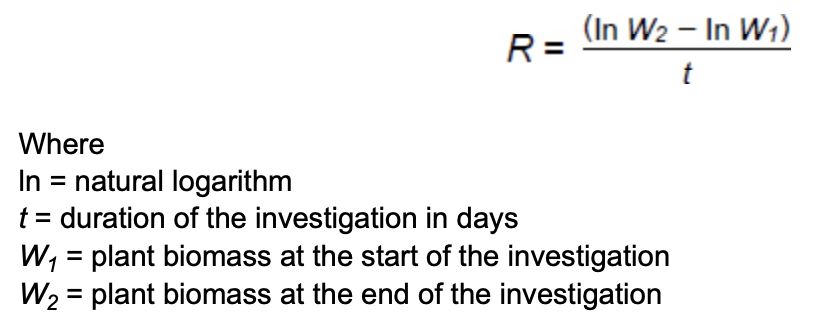
a student investigated the growth rate of a freshwater marsh plant.
the growth rate (R) of a plant can be determined using this eqn (see image)
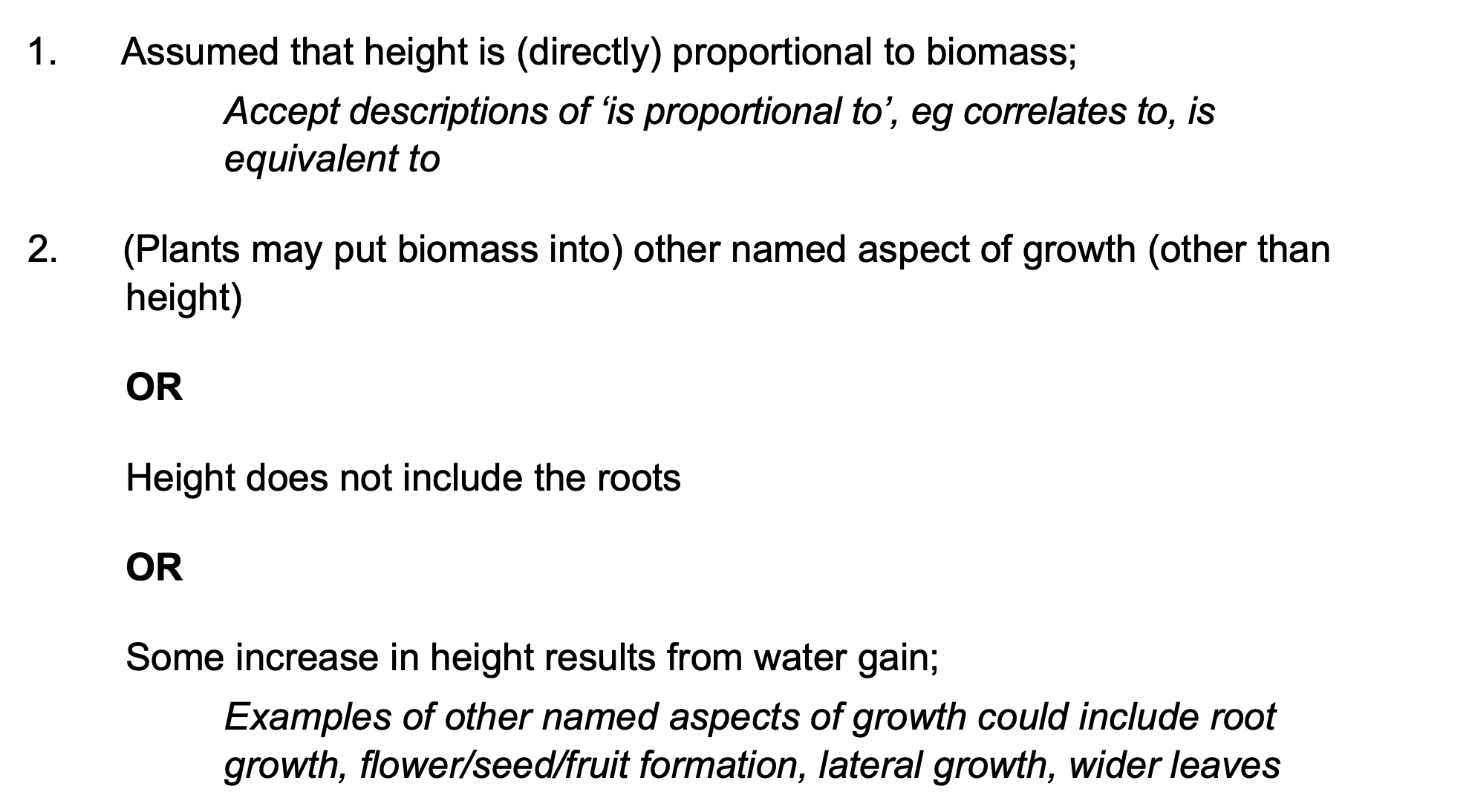
the student used to eqn, but substituted height for biomass - state the assumption the student has made and suggest why this assumption might not be valid (2)
assumed height of the plant is proportional to its biomass
plants may put biomass into other aspects of growth e.g. root growth
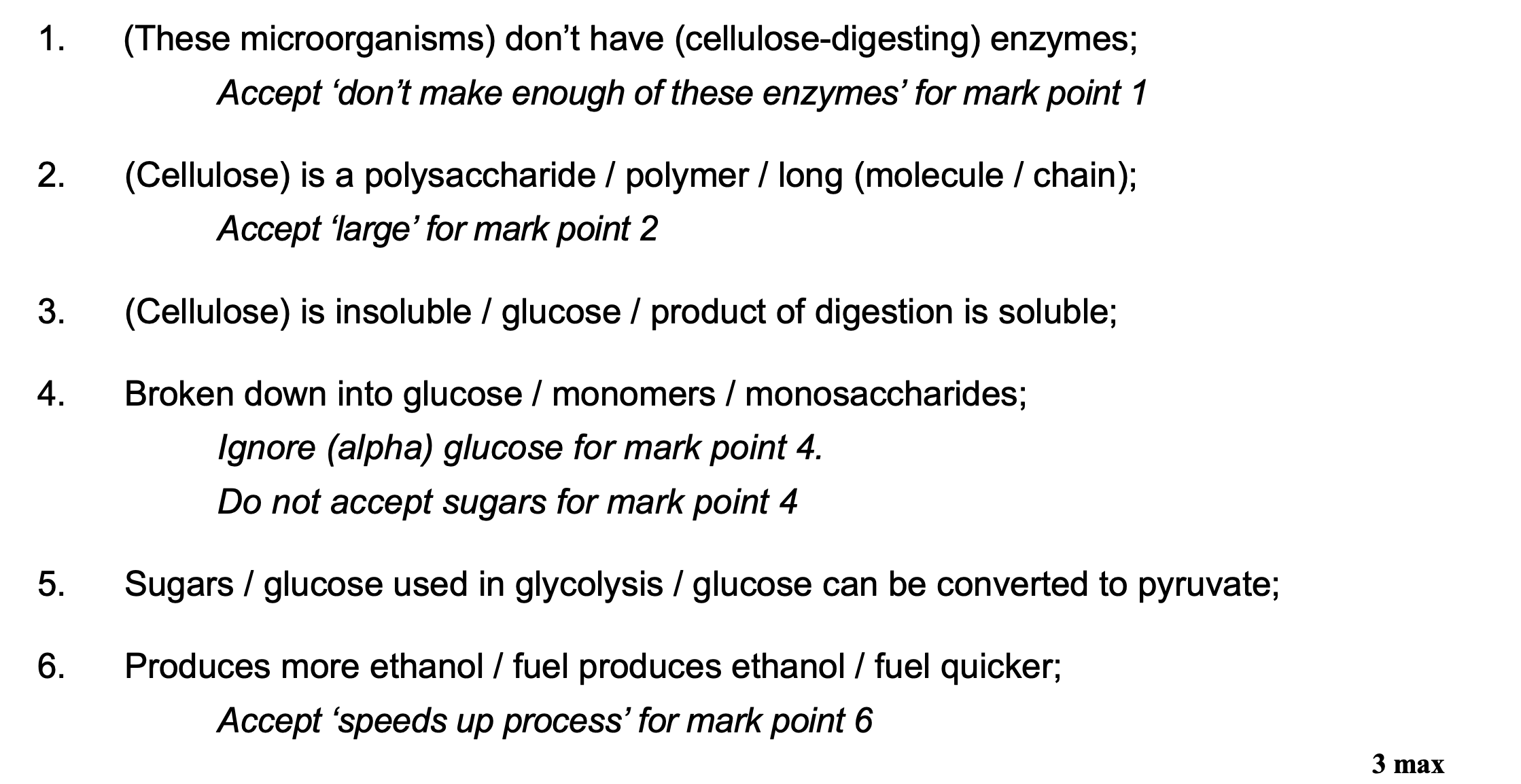
ethanol can be produced from cellulose by anaerobic R of cellulose-based biomass by microorganisms. the cellulose is pre-treated by adding cellulose-digesting enzymes before it is used in anaerobic R - suggest why pre-treatment is necessary (3)
any 3 from:
microorganisms don’t have cellulose digesting enzymes
cellulose is a polysaccharide
cellulose is insoluble
glycosidic bonds in cellulose must be hydrolysed into beta-glucose
glucose used in P
give 4 farming practices which increase GPP/NPP:
pesticides - insecticides and herbicides
biological agents - parasites and pathogenic bacteria/viruses
integrated systems (pesticides and biological agents)
keeping animals in pens
explain how using pesticides increases GPP/NPP:
killing of pests simplifies food web
insecticides - kill insect pests so less biomass lost from crops ∴ NPP greater
herbicides - kill weeds, removing direct competition for solar energy and removes insect pests’ habitat/food source
explain how biological agents increase GPP/NPP:
reduces no. of pests so simplifies food web
crops lose less energy and biomass, increasing efficiency of energy transfer to humans
parasites - live in/lay eggs on pest insect, killing it/reducing its ability to function
pathogenic bacteria/viruses also kill pests e.g. by secreting toxins
explain how integrated systems increase GPP/NPP:
combination of pesticides and biological agents
has greater effect on reducing pest numbers, further increasing NPP
explain how keeping animals in pens increases GPP/NPP:
restricts movement and increases warmth (indoors) - decreases rate of respiration ∴ less energy wasted via movement/thermoregulation
increases biomass production and chemical energy storage, further increasing NPP and efficiency of energy transfer to humans
BUT ethical concerns - may cause distress to animals as they cannot exhibit natural behaviour
describe and explain the process of eutrophication:
soluble nutrients e.g. nitrates/phosphates washed out of soil, into water
increased nitrates/phosphates increase plant growth, causing algal bloom which blocks light
aquatic plants cannot photosynthesise, causing them to die
death of aquatic plants initiates increase in saprobionts which decompose plants and respire aerobically, using up oxygen
less oxygen is available to aquatic animals, so they are unable to respire and die
what is leaching?
the process in which water soluble compounds e.g. fertilisers are lost from soil and washed off into bodies of water
give 2 factors which make leaching more likely:
fertiliser applied just before heavy rainfall
inorganic ions in artificial fertilisers - soluble so more likely to leach if not immediately used
give 2 factors which make leaching less likely:
N/P in organic fertilisers less likely to leach as contained in organic compounds, making their release into soil more controlled
phosphates less soluble than nitrates so leaching less likely
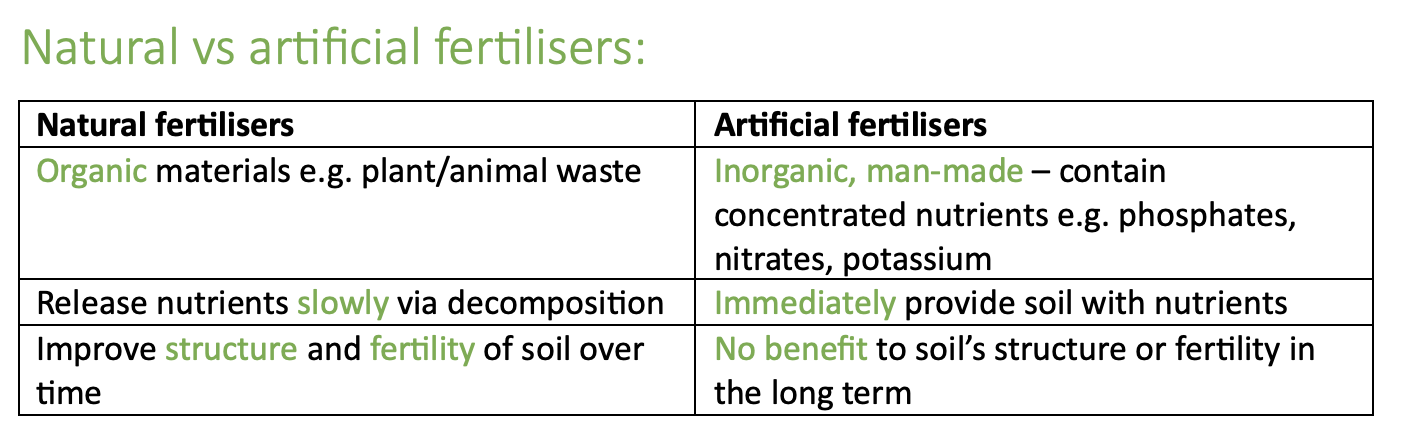
compare natural and artificial fertilisers:
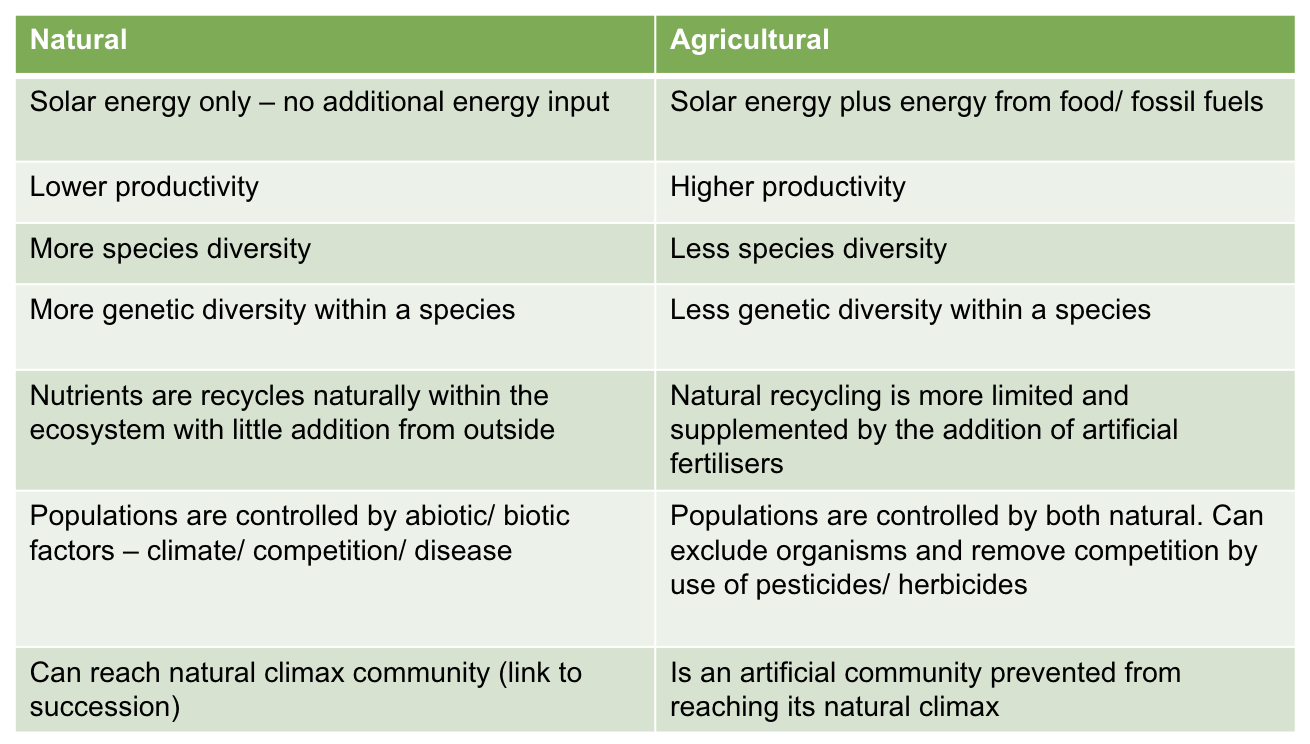
how does productivity differ between natural and artificial ecosystems?
relatively low in natural ecosystems
increases in agricultural ecosystems due to additional energy input and exclusion of other species via pesticides/herbicides, reducing competition for abiotic factors
compare and contrast natural and agricultural ecosystems:
methane is produced by anaerobic microorganisms in the soil. the scientists found that rice fiels that are not flooded do not produce large amounts of methane - suggest why (2)
rice fields that are not flooded have more aerobic conditions
not flooded so fewer active anaerobic microorganisms

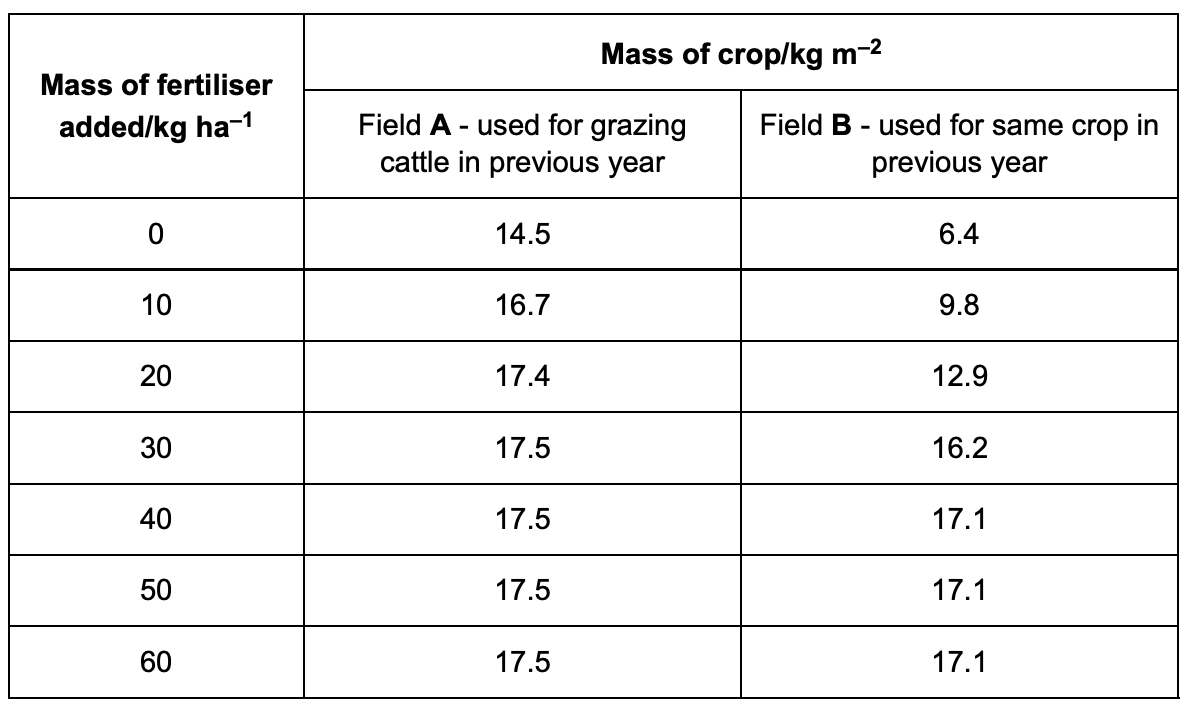
explain why the mass of crop produced stays the same in both fields when more than 40kg of fertiliser is added (2)
NO3- no longer limiting
another element is limiting growth

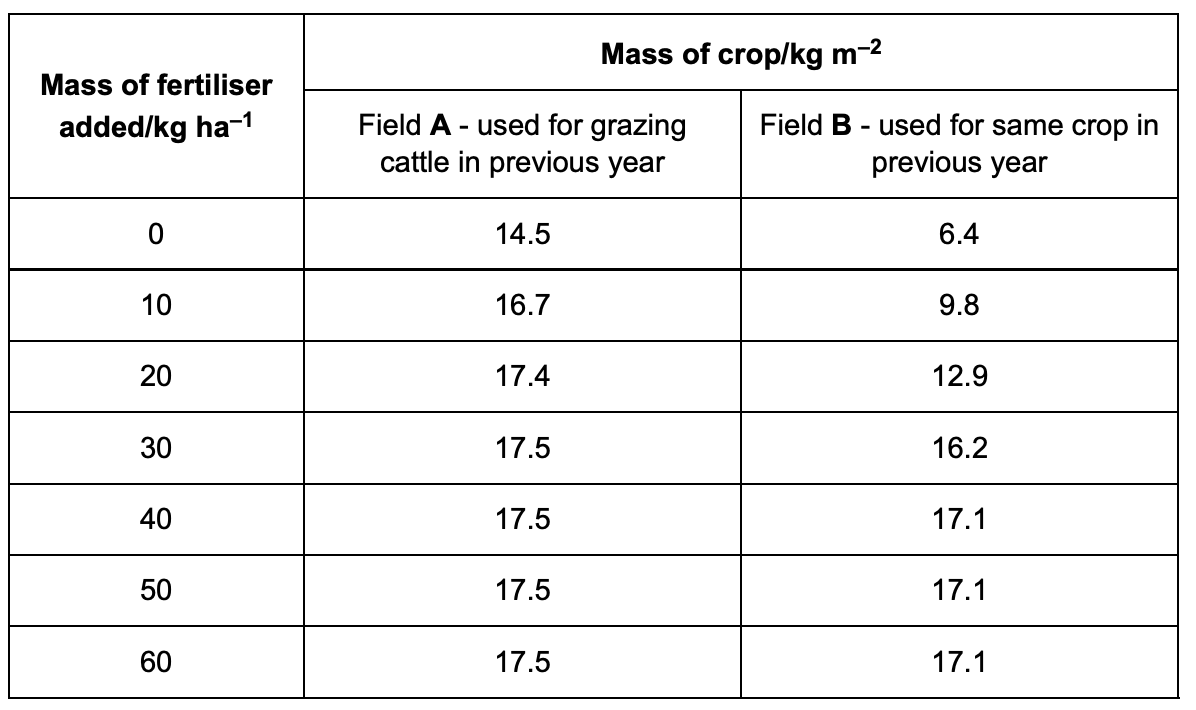
in the previous year, field A had been used for grazing cattle. field B had been used to grow the same crop as this year. when no fertiliser was added, the mass of crop from field A was higher than from field B - explain this difference (2)
cattle excreted/produced faeces
field B - crops used minerals/nutrients last year

give 6 phosphorous containing compounds:
DNA
ATP
RNA (mRNA, rRNA, tRNA)
phospholipids
NADP
triose phosphate
what is weathering?
the breakdown of rocks by wind, water or biological activity, releasing phosphate into soil and water, making it available for producers
what is deposition?
the process where particles, including phosphates, settle out of water and accumulate in layers
what is erosion?
the breakdown of rock/soil particles, often containing phosphate, by wind/water/ice
what is sedimentation?
the buildup of layers of particles, like phosphate-rich sediments, at the bottom of bodies of water
what is run-off?
water flowing over land that carries dissolved phosphates into rivers/lakes/oceans
what is guano?
nutrient-rich bird droppings that add phosphate to soils when they decompose
what is the main store of phosphorous?
mainly found as a phosphate ion, in mineral form in sedimentary rock
describe the phosphorous cycle:
phosphates in rocks are released into the soil and the sea through weathering, erosion and sedimentation
saprobionts secrete extracellular digestive enzymes onto the dead and waste matter, hydrolysing cell tissues into smaller molecules
PO43- ions are released into the soil and assimilated by root network of plants
PO43- ions absorbed by aquatic producers including algae before being passed along the food chain to zooplankton and fish and into seabirds
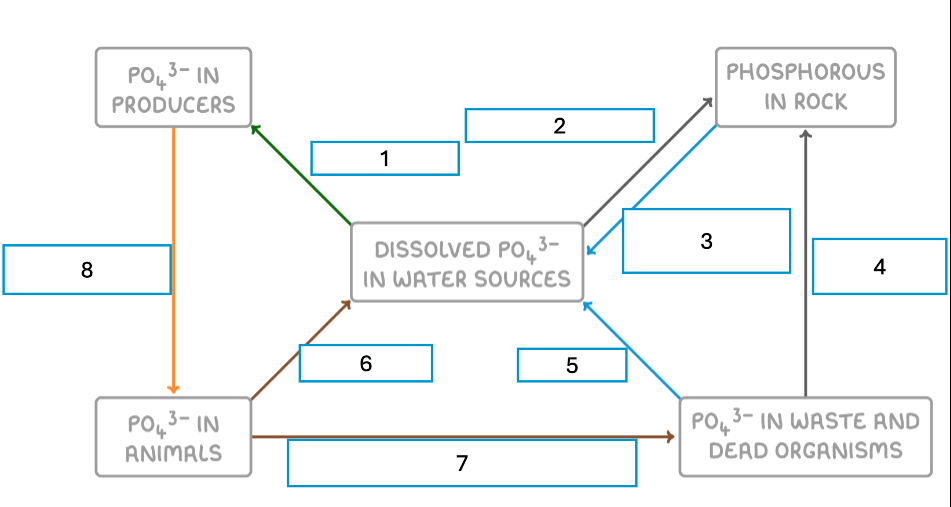
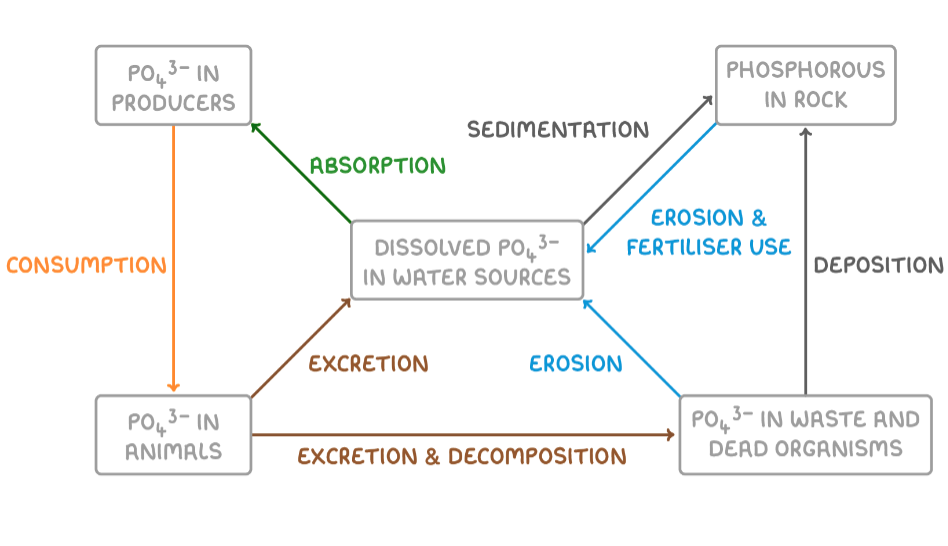
label this diagram!
absorption
sedimentation
erosion and fertiliser use
deposition
erosion
excretion
excretion and decomposition
consumption
what are mycorrhizae? what type of relationship do they form with a plant?
beneficial fungi growing in association with plant roots
form a mutualistic relationship with plant
how is mycorrhizae beneficial towards plant growth?
fungi increase SA for water and mineral absorption
mycorrhizae acts like a sponge so holds water and minerals around the roots
∴ makes plants more drought resistant and able to take up more inorganic ions
→ enables plants to take up more relatively scarce ions e.g. PO43- ions, improving plant growth
what do the mycorrhizae fungi receive in return as part of their mutualistic relationship with a plant?
carbon and sugar
give 5 examples of nitrogen containing molecules:
amino acids
DNA
RNA
ATP
ADP
what is the significance of the N2 cycle?
shows how different microorganisms are needed to convert N2 gas into nitrogen-containing compounds that can be absorbed by plants and animals
give 3 conditions required for decomposition:
warm temperature
moisture
oxygen
what is a detritivore? give 4 examples:
organism that ingests/digests dead/decaying organic matter internally
e.g. worms, millipedes, woodlice, slugs
what is a saprobiont? give an example:
microorganism which secretes enzymes to decompose N containing compounds externally and absorbs simpler molecules
e.g. microbes, primarily bacteria and fungi
give the stages of the nitrogen cycle:
nitrogen fixation
ammonification
nitrification
denitrification
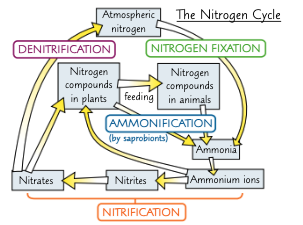
describe the process of nitrogen fixation:
free living nitrogen-fixing bacteria fix N2 → NH3/NH4+
mutualistic nitrogen fixing bacteria (e.g. Rhizobium) in root nodules of leguminous plants fix N2 into NH3 which is converted into amino acids
in turn, the plant provides the bacteria w/ carbohydrates
abiotic processes - lightning, artificial fertilisers, Haber process - can also fix N2
what is nitrogen-fixation?
the conversion of atmospheric nitrogen gas into nitrogen containing compounds like ammonia
describe the process of ammonification:
death/excretion of living organisms releases nitrogen containing substances e.g. urea, proteins, nucleic acids, vitamins
saprobionts decompose these into ammonium ions (NH4+)
NH4+ can now be absorbed (AT through root hair cells) and assimilated by plants
what is ammonification?
conversion of organic N2 containing compounds in dead organisms or waste into NH3 or NH4+ ions by saprobionts
describe the process of nitrification:
nitrifying bacteria oxidise NH4+ ions to nitrite ions - NO2-
these are then oxidised again into nitrate ions - NO3-
(most nitrogen taken up by plants is in the form of nitrate ions)
what is nitrification?
NH3 and NH4+ are oxidised to NO2- then NO3- which plants can absorb via AT and assimilate
what is denitrification?
the reduction of NO3- ions back into N2 gas by anaerobic denitrifying bacteria
what conditions might allow denitrification to take place?
anaerobic conditions
how might excessive denitrification -vely impact plant growth? what farming techniques can prevent this?
excessive denitrification may lead to stunted growth as prevents the plant from making proteins
to prevent this: frequently aerate the soil, keeping conditions aerobic
freshwater marsh soils are normally waterlogged - this creates anaerobic conditions.
use your knowledge of the nitrogen cycle to suggest why these soils contain relatively high concentrations of ammonium compounds and low concentrations of nitrite ions and nitrate ions (2)
less nitrification
less oxidation of NH4+ → NO2- → NO3-
more denitrification
so more NO3- reduced to N2 gas
where does the light dependent reaction of photosynthesis occur and how is it adapted to do so?
thylakoid membrane - has photosynthetic pigments and carrier proteins
where does the light independent reaction take place and how is it adapted to do so?
stroma - contains enzymes for the LIR
name the 2 types of chlorophyll in photosynthesis - what light do they reflect/absorb?
reflect green light and absorb red light:
chlorophyll a
chlorophyll b
give the primary pigment in photosynthesis:
chlorophyll a
what are accessory pigments? give their function:
pigments which absorb wavelengths of light that are not easily absorbed by chlorophyll i.e. more wavelengths absorbed
not directly involved in LDR
channel more captured light energy to chlorophyll so more e- can be excited
give 3 examples of accessory pigments:
chlorophyll b
(category of carotenoids - reflect orange/yellow light and absorb blue light):
carotene
xanthophyll
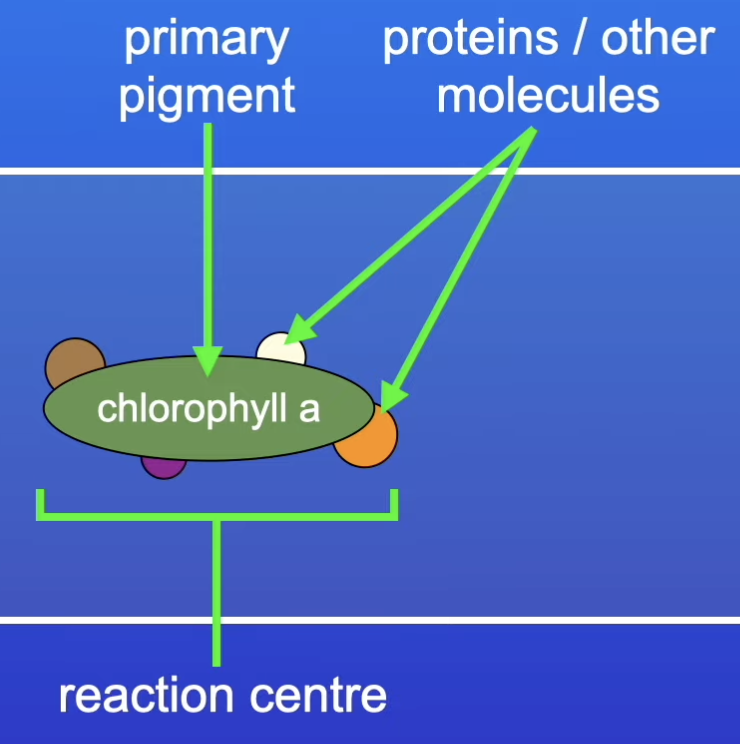
what is the reaction centre?
chlorophyll (primary pigment) surrounded by a range of other proteins
what is the light harvesting system?
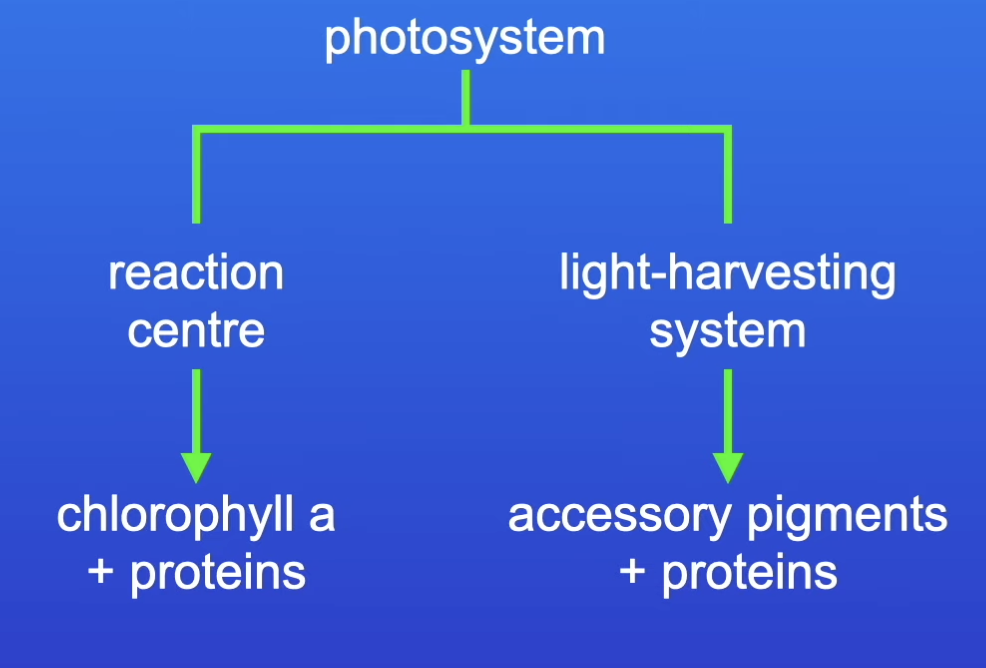
reaction centre is surrounded by accessory pigments and proteins
these accessory pigments and proteins = light harvesting system
what is a photosystem?
the reaction centre and light harvesting system (i.e. chlorophyll a and proteins surrounded by accessory pigments and proteins)
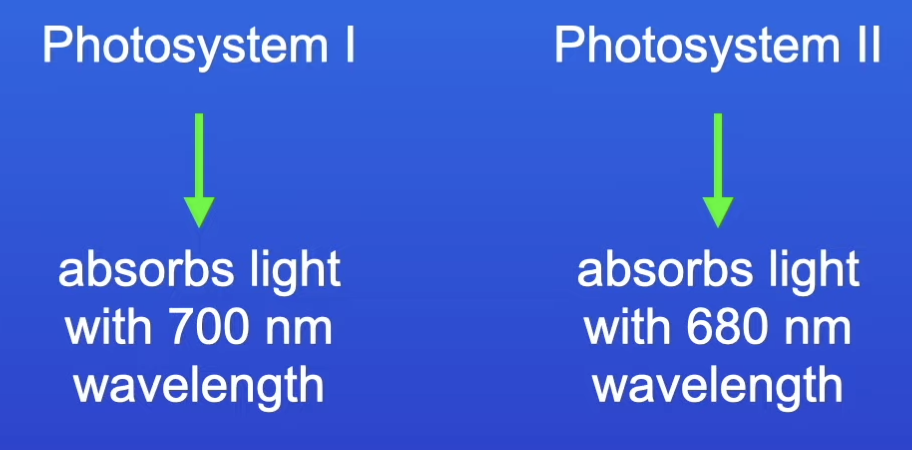
give the 2 photosystems present in photosynthesis and the wavelengths of light they absorb:
photosystem II - 700 nm (chlorophyll p700)
photosystem I - 680 nm (chlorophyll p680)
why is photosynthesis important?
the energy we rely on has been captured by photosynthesis from sunlight
photosynthesis also produces the oxygen we breathe by releasing it from water molecules
life depends on the continuous transfer of energy - in plants
why do palisade cells have a large SA?
to absorb as much sunlight as possible
why are leaves arranged on the plant to minimise overlapping?
to avoiding shadowing of one leaf
why are palisade cells long and thin in a continuous layer?
so that sunlight is absorbed in the first few micrometres of the leaf and for a short diffusion distance for gases
why is the cuticle and epidermis transparent?
to let light through the photosynthetic mesophyll cells beneath
why is the mesophyll long and narrow and has many chloroplasts?
for maximum light absorption
why are there many stomata?
so that all mesophyll cells are only a short diffusion pathway from a stomata increasing the rate of diffusion
why does the leaf have a network of xylem and phloem?
to bring water to leaf cells and carry sugars away
why are there many air spaces in lower mesophyll?
to ensure rapid diffusion in the gas phase of CO2 and O2
why are stomata open during the day and closed at night?
allows plants to optimise CO2 uptake for P during the day and minimise water loss at night
define photosynthesis and give the simplified eqn:
process of energy transferral in which some of the energy in light is conserved in the form of chemical bonds
6H2O + 6CO2 → C6H12O6 + 6O2
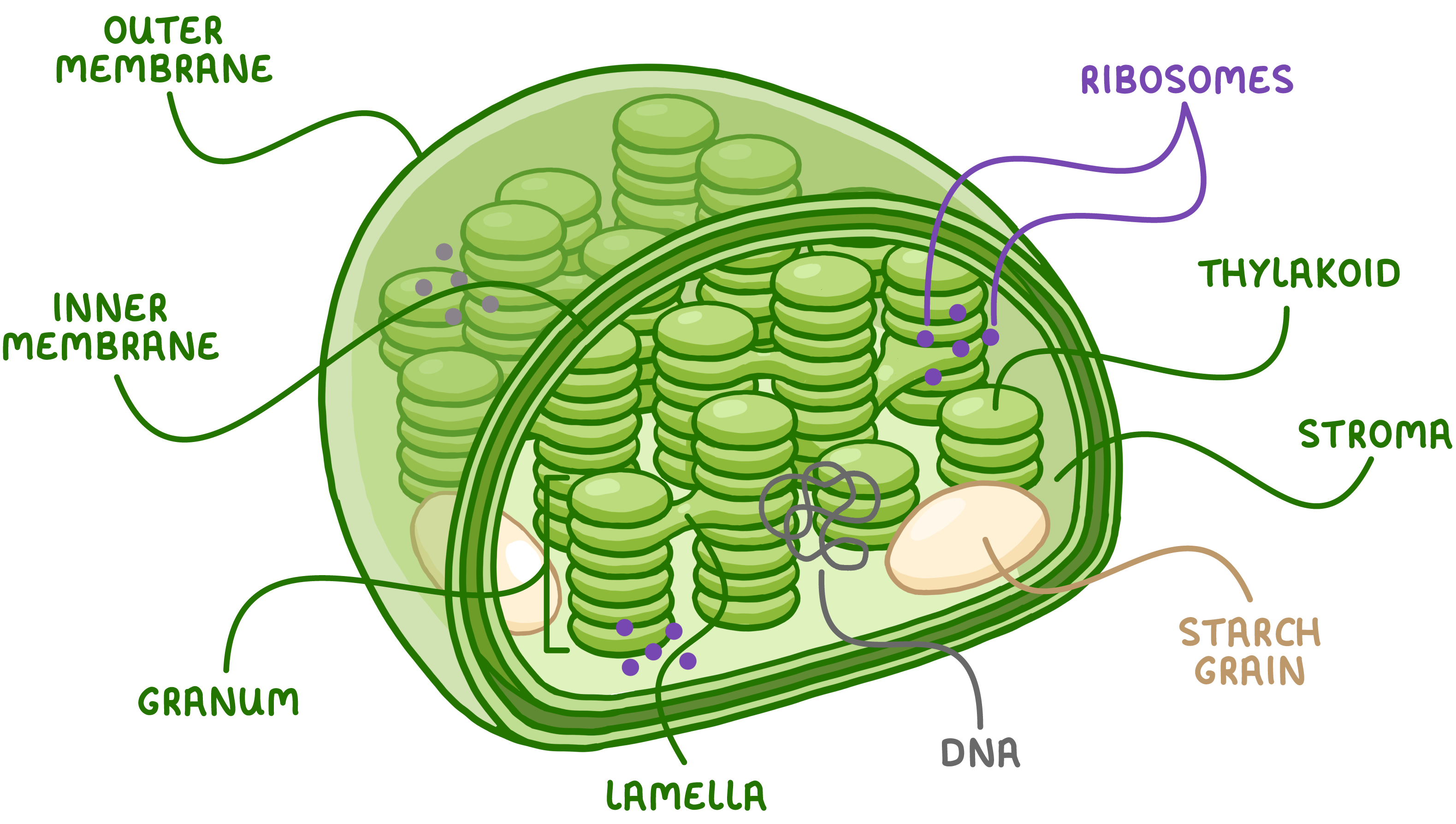
describe the structure and function of chloroplasts:
structure:
double membrane
contains thylakoids - folded membranes embedded w/ pigments
fluid filled stroma contains enzymes for photosynthesis
70S ribosomes and own DNA
function: site of photosynthesis
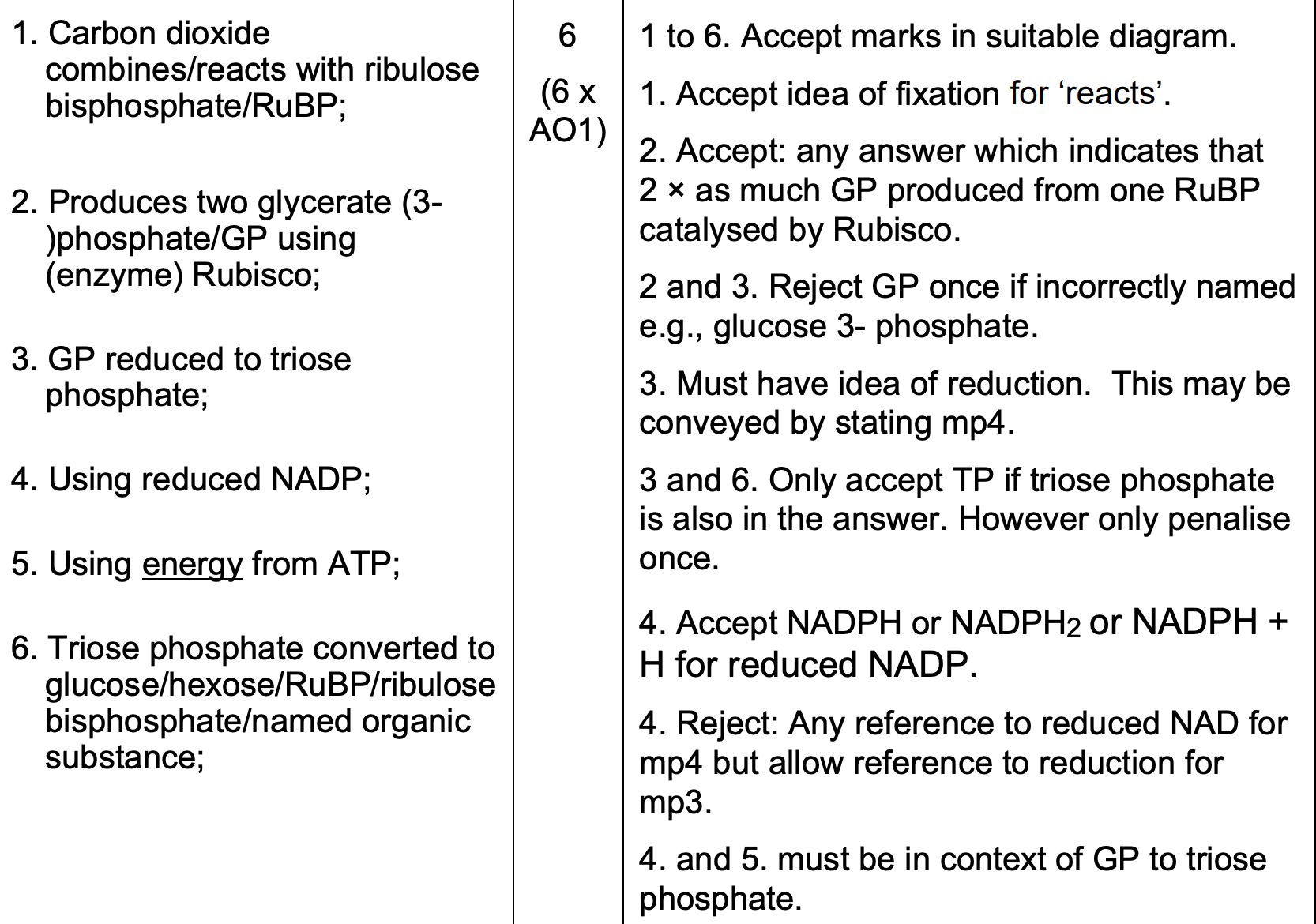
describe the stages of the light independent reaction (Calvin cycle):
CO2 reacts w/ RuBP to form unstable 6C compound and 6C compound splits into 2x GP molecules - this is catalysed by rubisco
energy from ATP and NADPH from LDR are used to reduce GP to triose phosphate
some triose phosphate used to regenerate RuBP in the Calvin cycle, using ATP
some triose phosphate converted to useful organic substances e.g. glucose
which enzyme catalyses ADP + Pi → ATP?
ATP synthase
which enzyme catalyses ATP → ADP + Pi?
ATP hydrolase
discus the efficiency of the Calvin cycle:
low:
one hexose sugar (e.g. glucose) is made by joining 2 molecules of TP
5/6 Cs used to regenerate RuBP
so Calvin cycle needs to happen 6x to make 1 hexose sugar
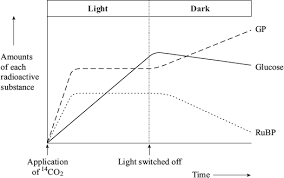
how does lack of light cause the amount of radioactively labelled GP to increase? what caused the amount of radioactively labelled glucose to decrease after the light was switched off?
ATP and NADPH not formed so GP is not being used to form RuBP
glucose used in respiration / formation of starch/cellulose
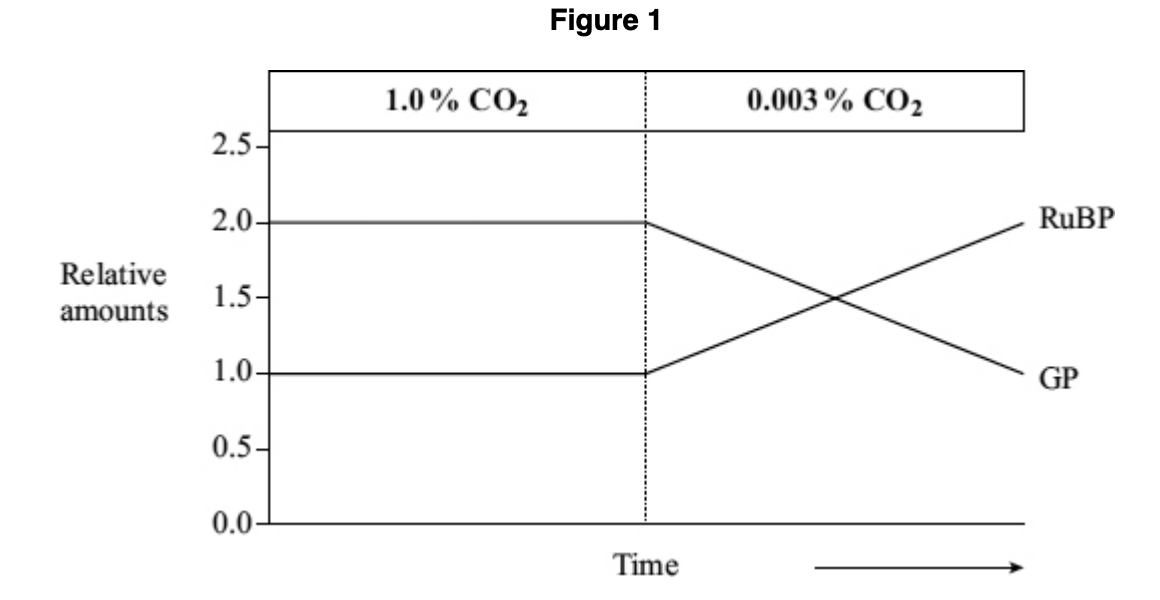
between 0 and 300 secs, the conc of radioactive GP is constant - why?
RuBP combines w/ CO2 to produce 2x GP
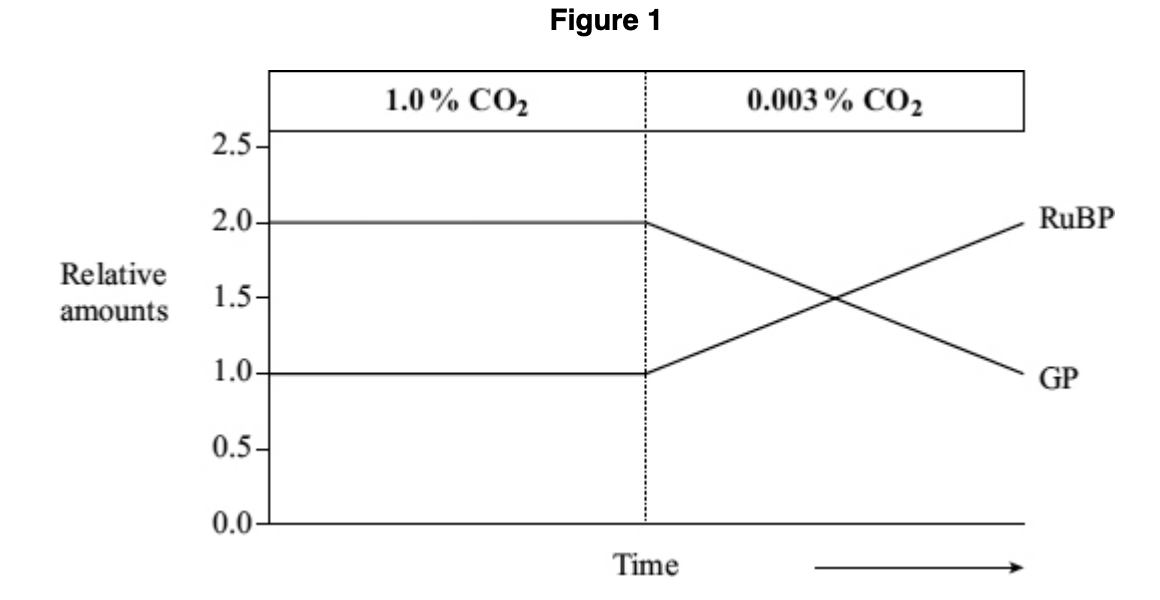
between 300 and 380 secs, the conc of radioactive RuBP increases - why?
less used to combine w/ CO2
less used to form GP