Micro Bio Exam #2
 Call Kai
 Learn
Learn Practice Test
 Spaced Repetition
 Match
Match Flashcards
 Knowt Play
1/88

There's no tags or description
Looks like no tags are added yet.
Name | Mastery | Learn | Test | Matching | Spaced | Call with Kai |
|---|
No analytics yet
Send a link to your students to track their progress
89 Terms
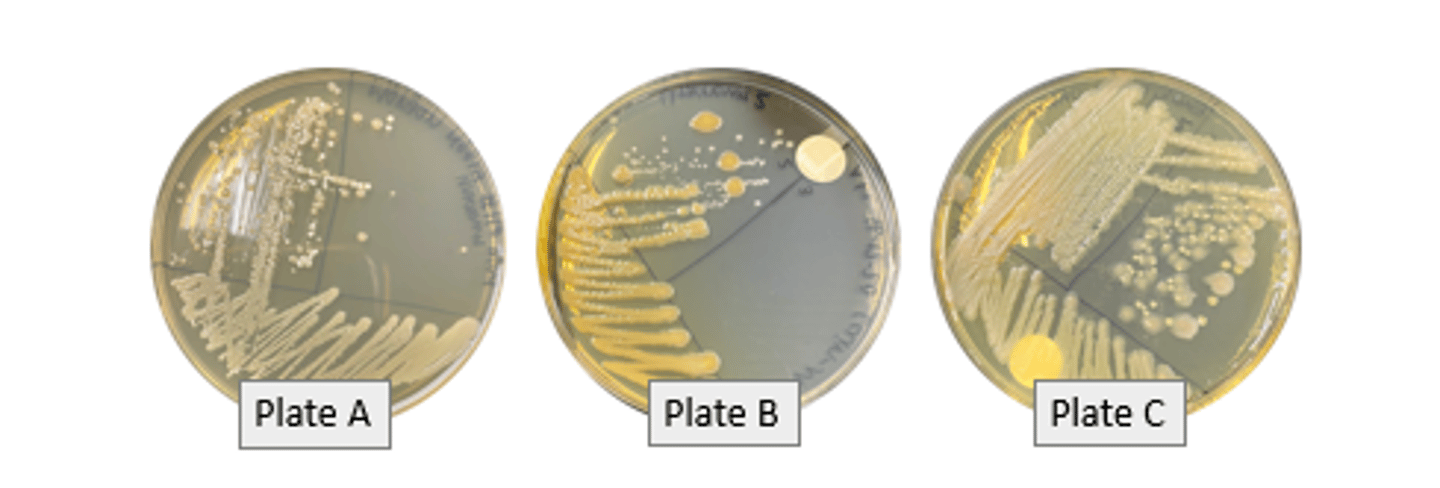
A broth culture containing two Gram-positive and one Gram-negative bacteria for a student unknown ID project is streaked for isolation onto a TSA plate.
•Which of the organisms should form isolated colonies on TSA?
•Which of the plates below shows this result?
-all should form isolated colonies
-Plate A shows this result
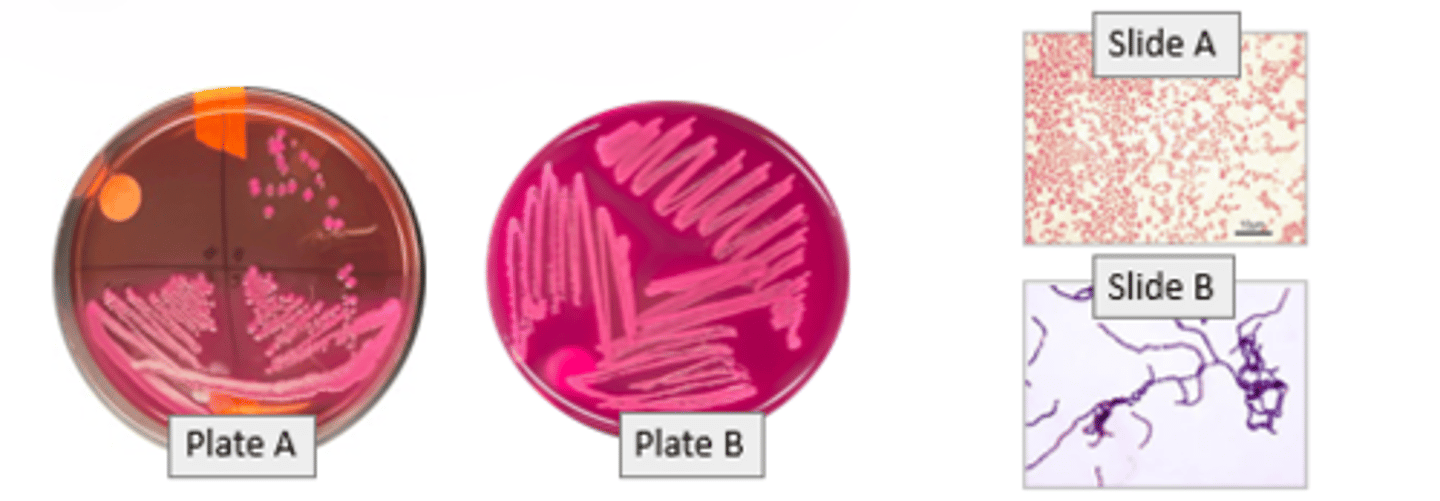
A broth culture containing two Gram-positive and one Gram-negative bacteria for a student unknown ID project is streaked for isolation onto a MacConkey plate.
•Which of the organisms should form isolated colonies on Mac?
•Which of the plates below shows this result?
•Which slide shows the results you would get if you Gram negative stained the bacteria growing on this plate?
-Selective and differential media
-selective for gram-negative organism
-plate A shows isolated colonies
-slide A shows gram stained bacteria (pink/red)
A broth culture containing two Gram-positive and one Gram-negative bacteria for a student unknown ID project is streaked for isolation onto a C-CNA plate.
•Which of the organisms should form isolated colonies on C-CNA?
•Which of the plates below shows this result?
-Selective and differential
-contains two antibiotics colistin and nalidixic acid
-selects for gram positive organism (entero/strep)
-Plate B shows isolated colonies
Describe how you would perform a catalase test
-drop 2 drops of 3% hydrogen peroxide onto glass slide
-with a sterile loop. transfer each bacteria onto slide and mix with 3% hydrogen peroxide
staph: pos
strep/entero: neg
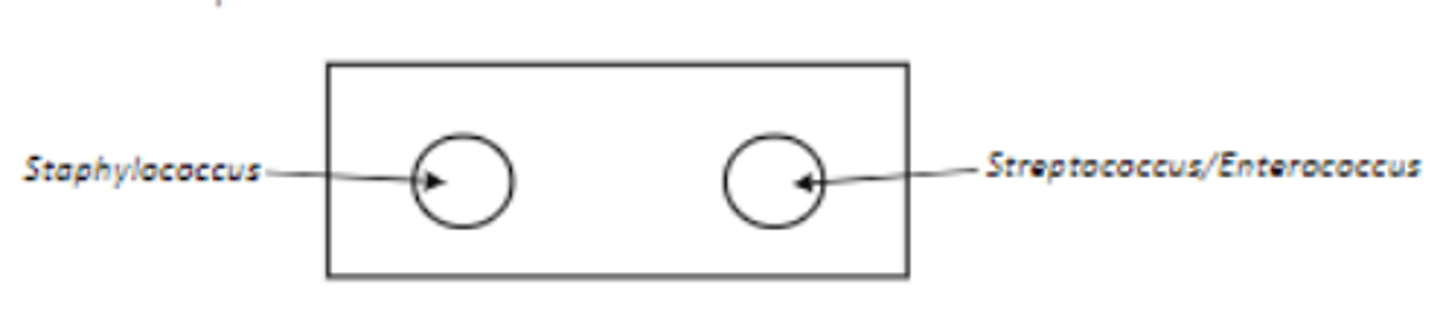
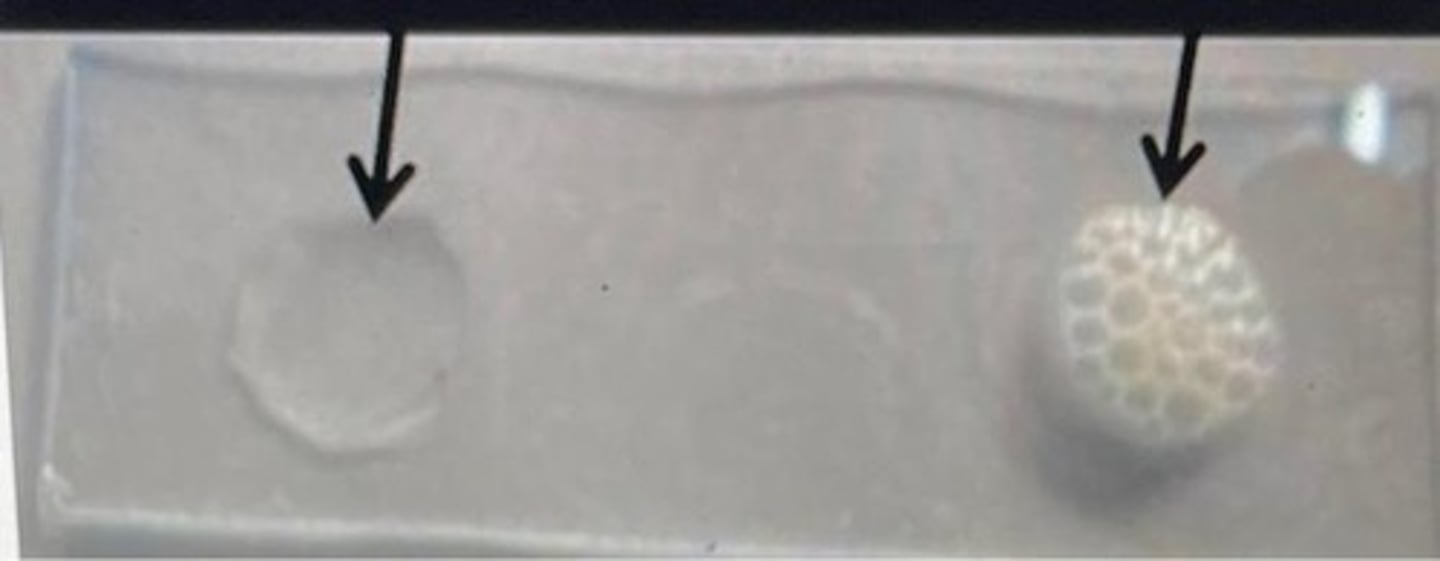
Interpret results
catalase neg- no bubbles (streptococcus/enterococcus)
catalase pos- bubbles (staphylococcus)
which plate is this
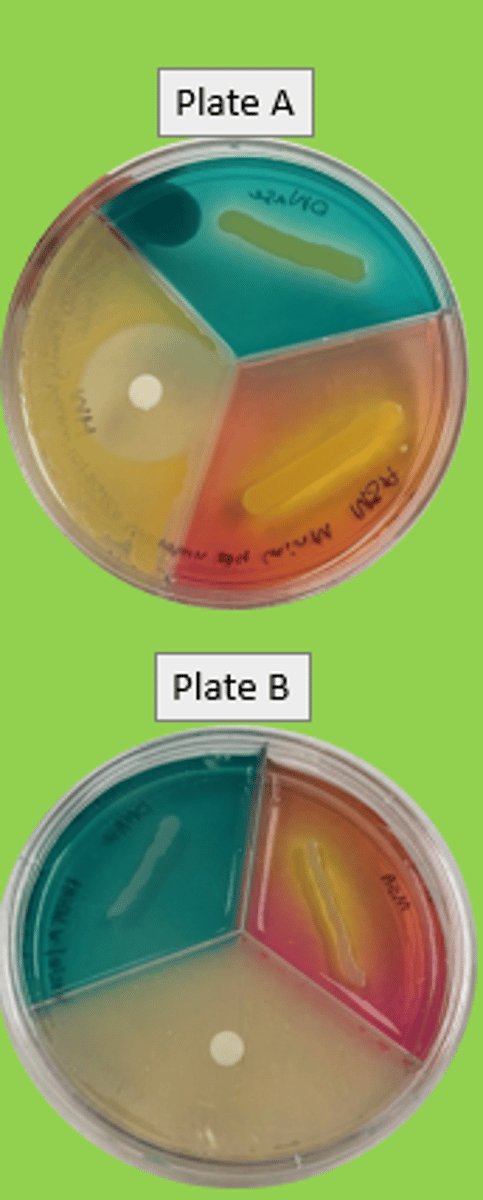
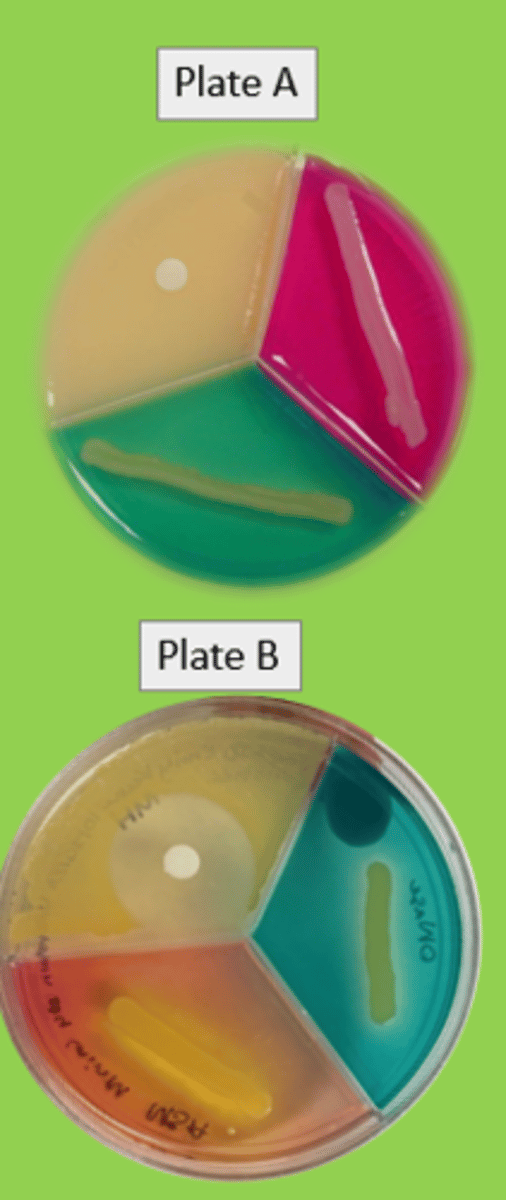
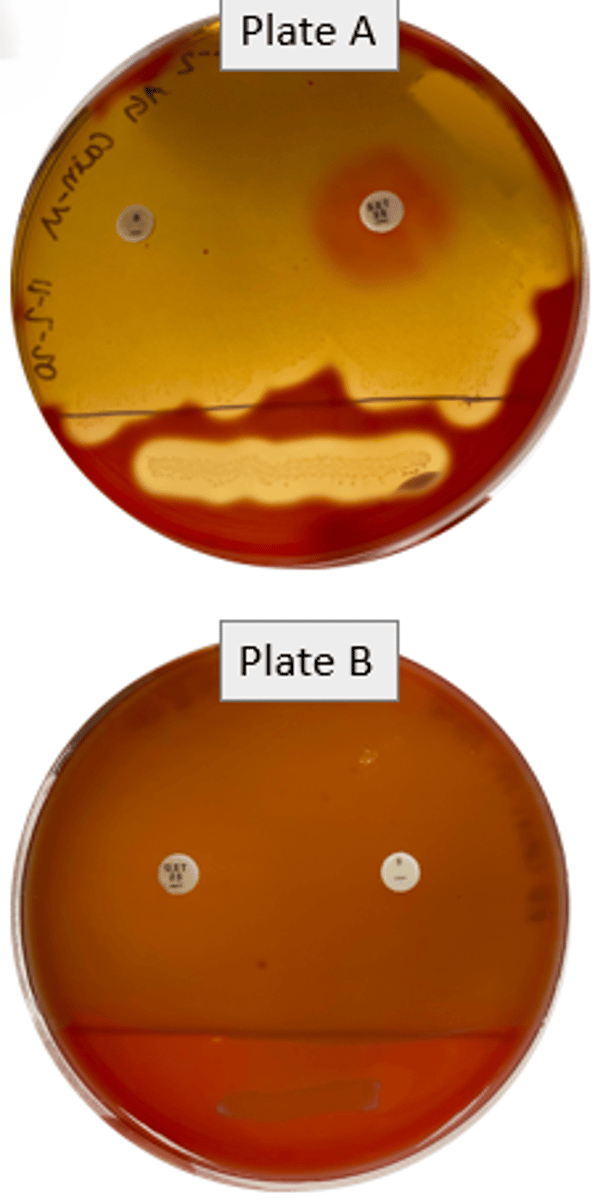
Staphylococcus tri-plate
-DNase (blue-green)
-Mannitol Salt agar (pink)
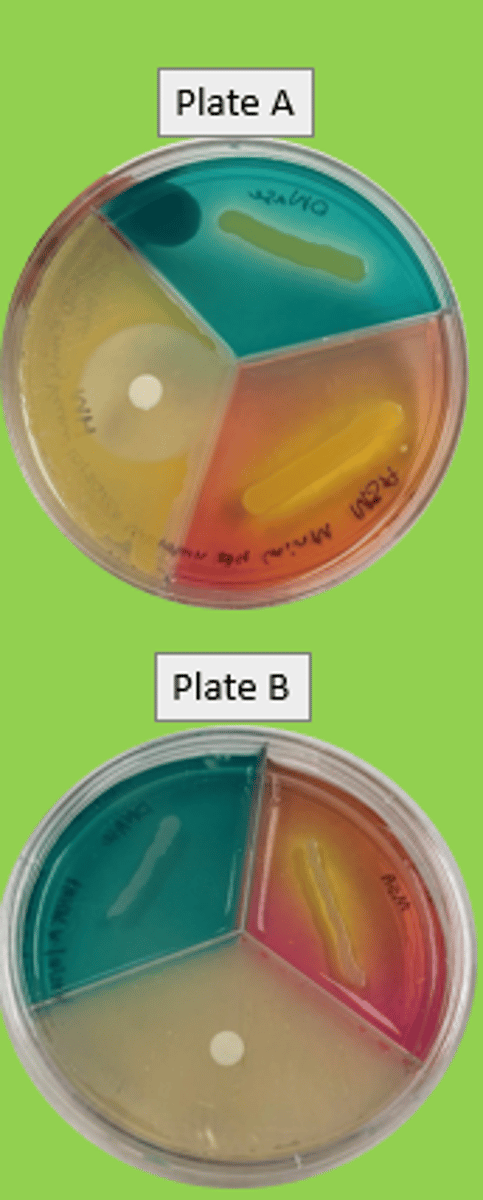
-Mueller-Hinton Agar (yellowish-clear)
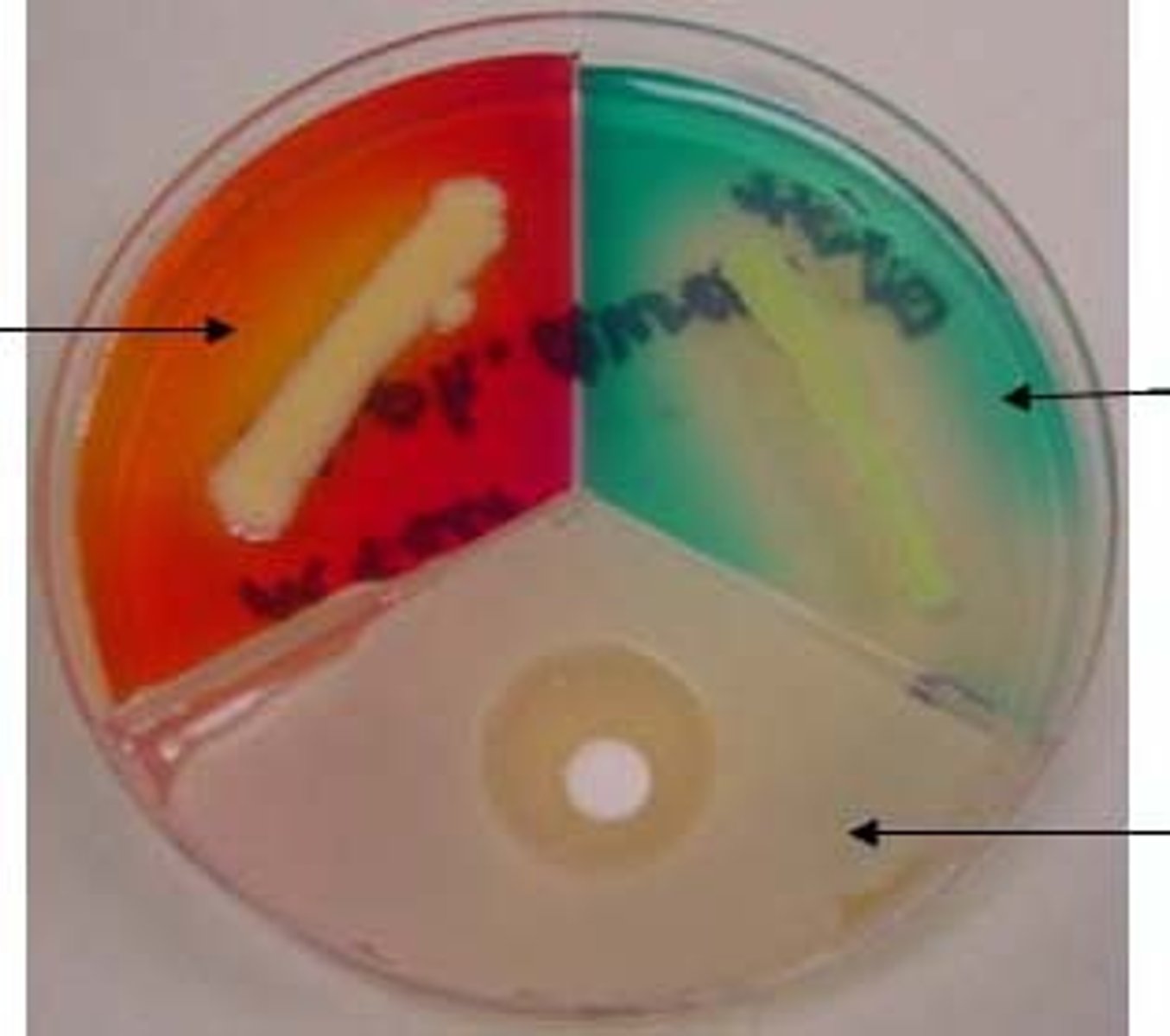
Is a DNase plate selective, differential or both?
Both
Is the organism on plate A + or - for DNase production
POSITIVE -
due to zone of clearing
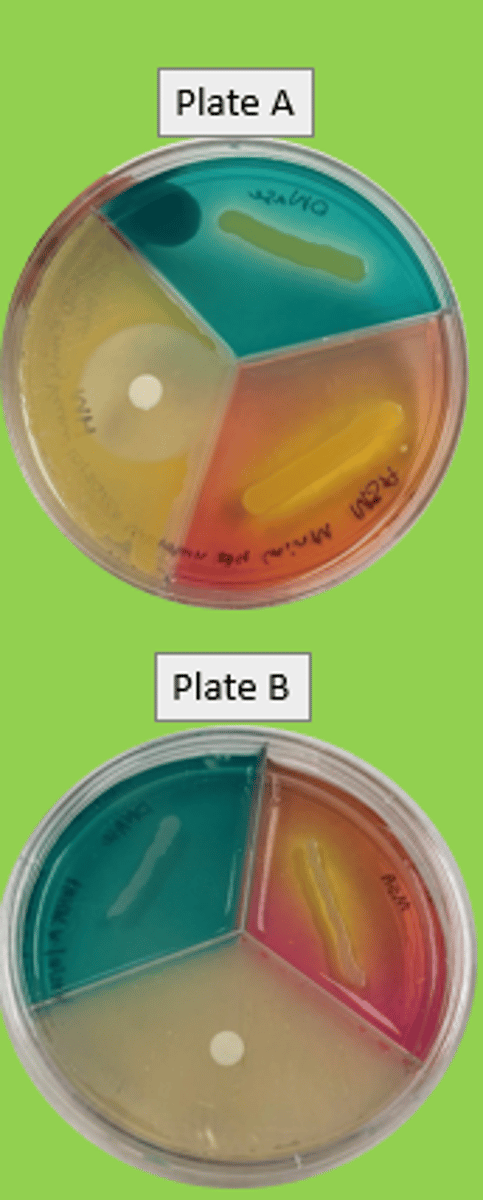
Is the organism on plate B + or - for DNase production
NEGATIVE - due to lack of clearing
Give an example of a Staph that is DNase-positive.
Staphylococcus aureus
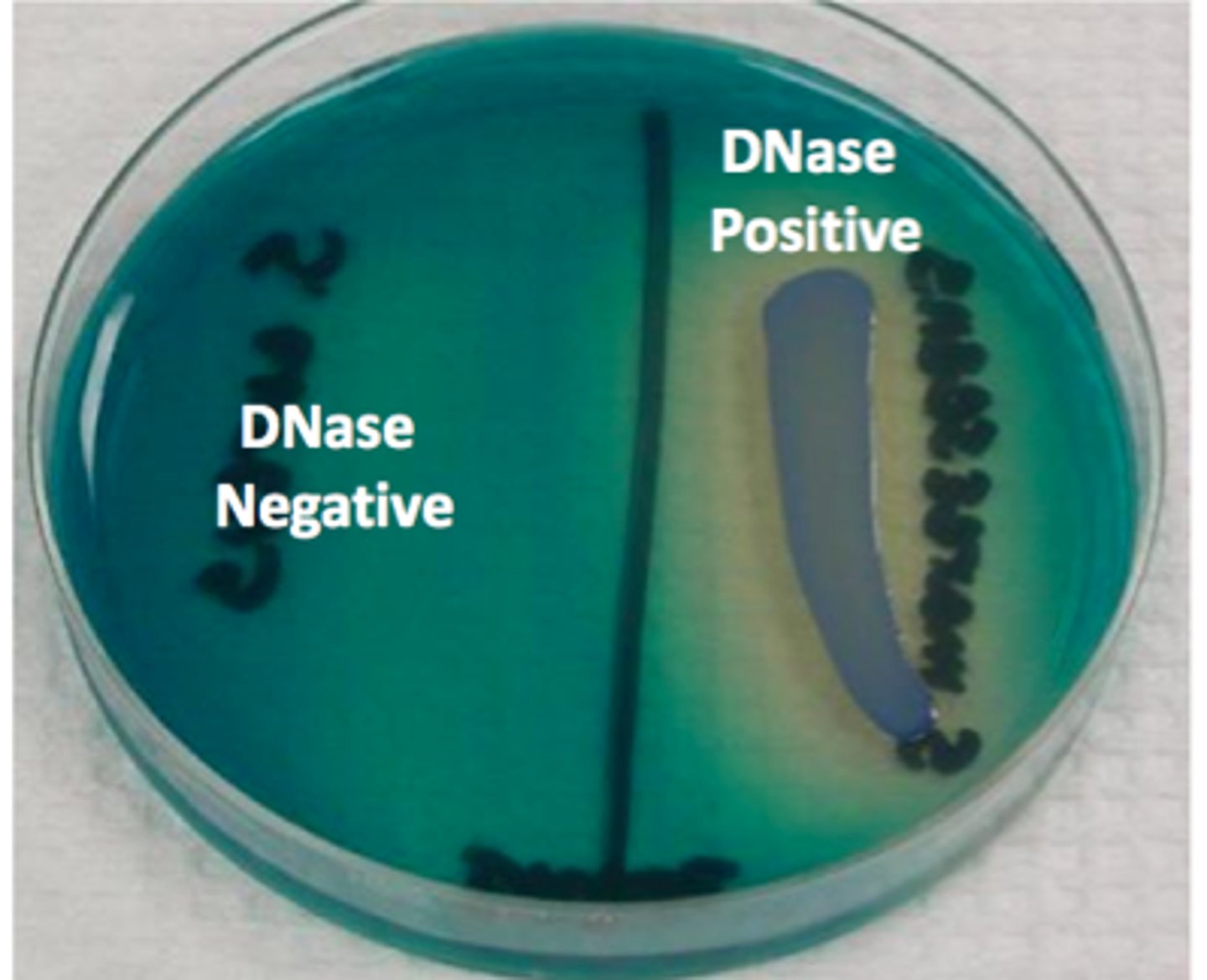
Give an example of a Staph that is DNase-negative
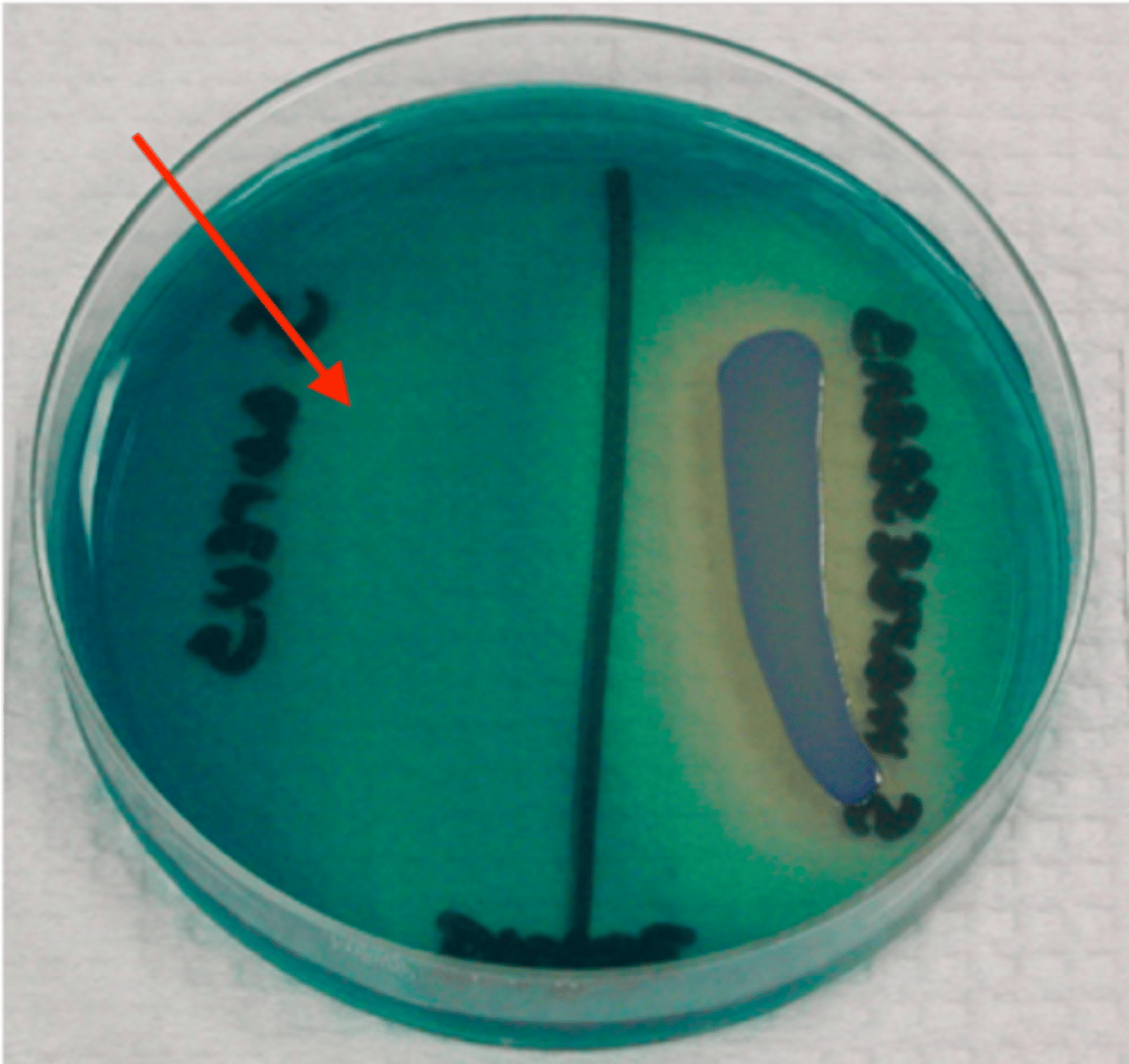
What would negative look like on plate
Staphylococcus epidermidis
or
Staphylococcus xylosus
Is the organism growing on the Mueller-Hinton sector of plate A susceptible or resistant to Novobiocin?
Susceptible due to clearing around novobiocin disk
Is the organism growing on the Mueller-Hinton sector of plate B susceptible or resistant to Novobiocin?
Resistant - due to no clearing around disk
Give an example of a Staph that is Novobiocin Resistant
Staphylococcus xylosus
Give an example of a Staph that is Novobiocin Susceptible
Staphylococcus aureus
or Staphylococcus epidermis
what makes MSA agar differential?
sugar mannitol - can ferment mannitol (yellow line)
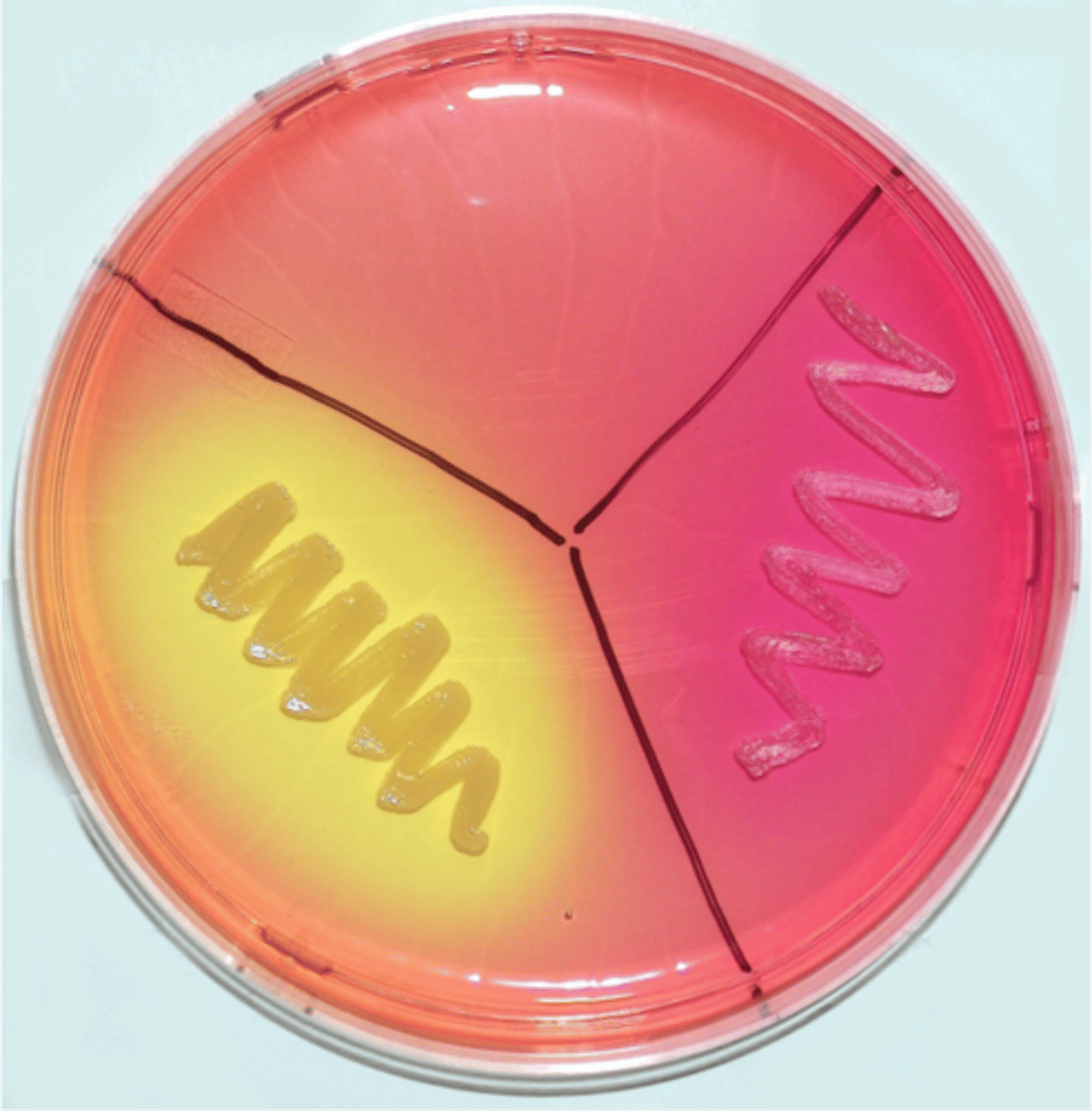
what makes MSA agar selective?
-phenol red
-7.5& NaCl - selects for halotolerant organisms (staph)
Name the pH indicator in the MSA media
phenol red
Is the organism growing on the MSA sector of plate A halotolerant? Does it ferment mannitol?
-not halotolerant
-does not ferment mannitol
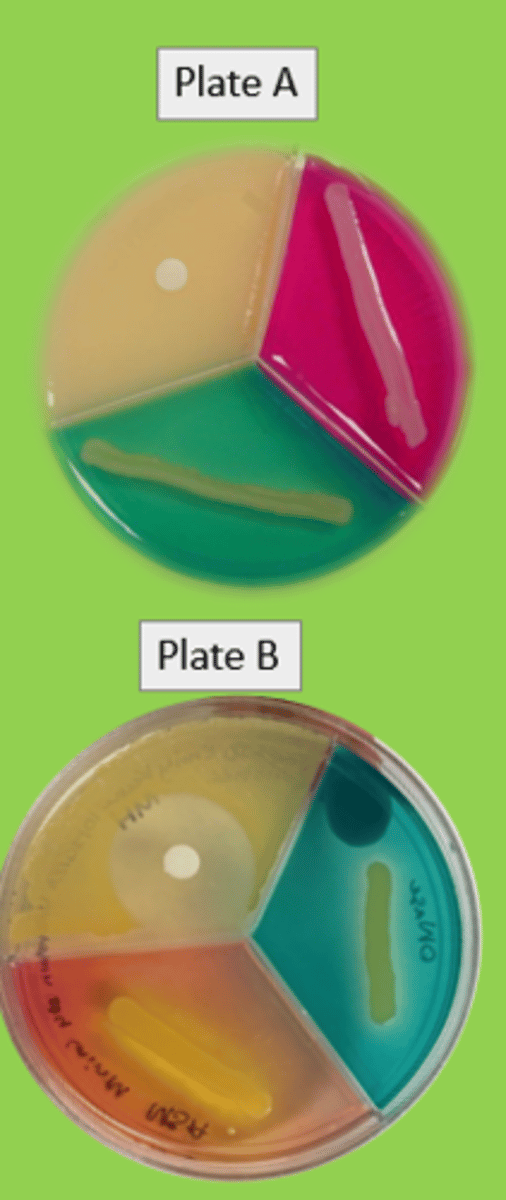
Is the organism growing on the MSA sector of plate B halotolerant? Does it ferment mannitol?
-yes halotolerant
-can ferment mannitol
Give an example of a Staph that ferments mannitol
Staphylococcus aureus
or
Staphylococcus xylosus
Give an example of a Staph that does not ferment mannitol
Staphylococcus epidermis
Determine the results for this Staphylococcus tri-plate
Identify the species of staphylococcus using the chart below
MSA: + (yellow)
DNase: + (clearing)
Novobiocin susceptibility: S (35mm)
- Staphylococcus intermedius
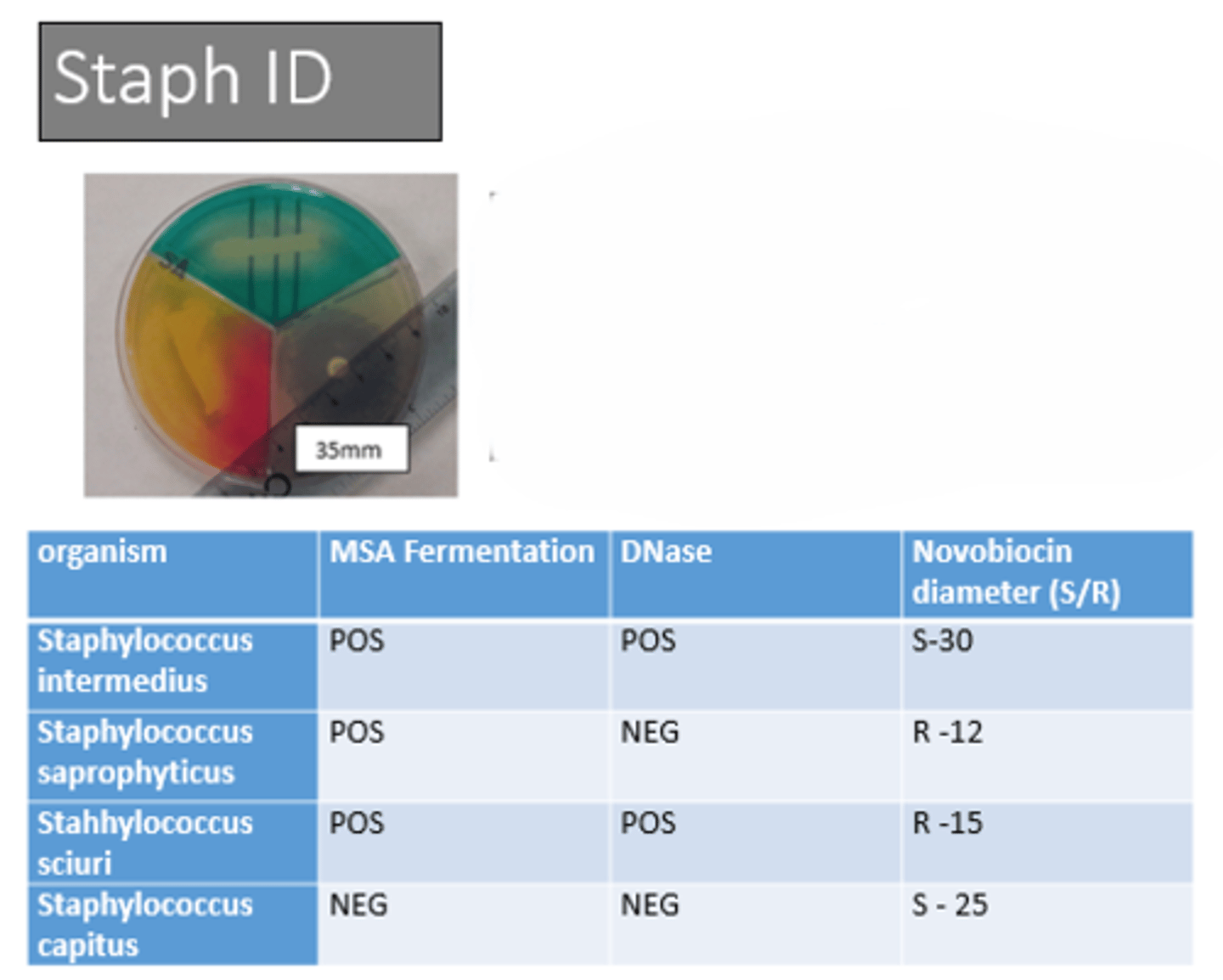
Plate A
Hemolysis: Beta
Bacitracin: R
SXT: S
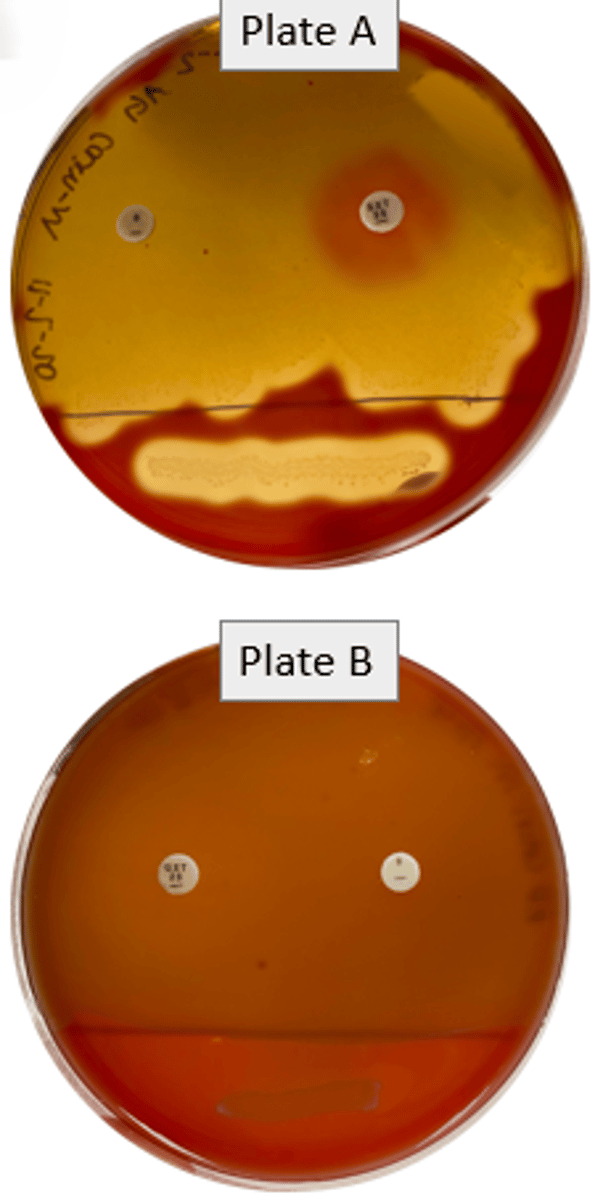
Plate B
Hemolysis: Game
Bacitracin: R
SXT: R
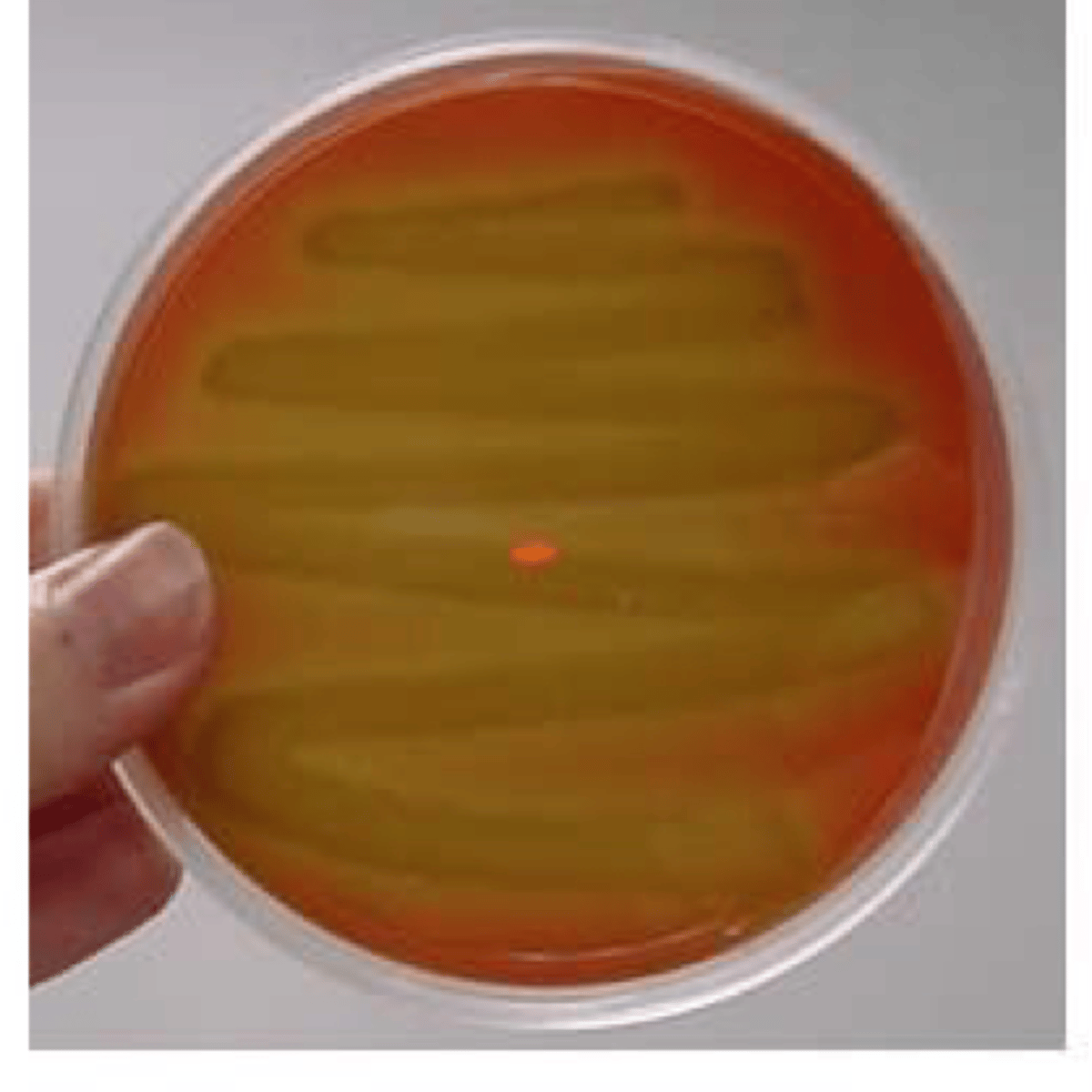
alpha results on blood agar
semi-see through (partial) green color like
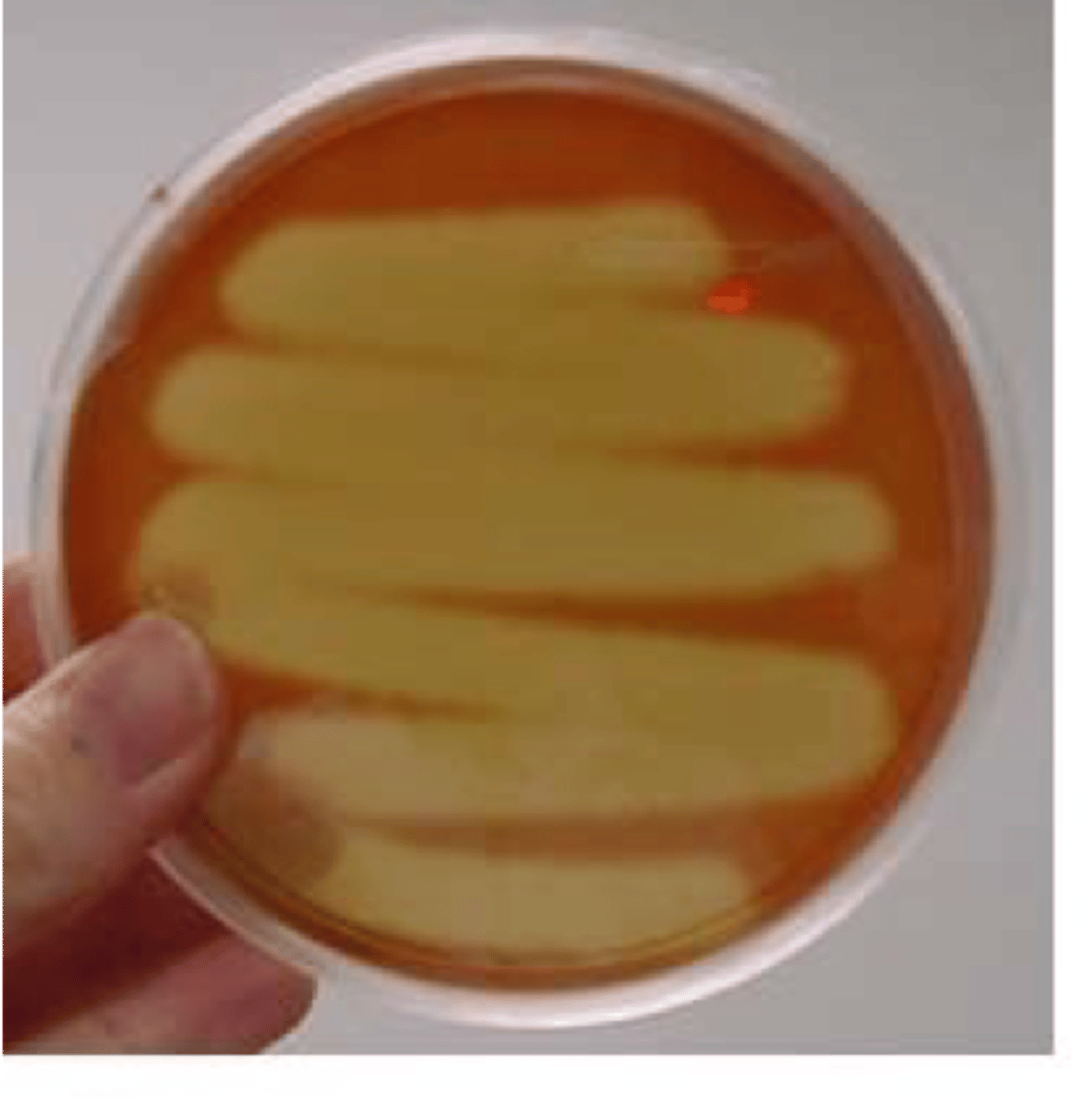
beta results on blood agar
see through (complete) yellow color like
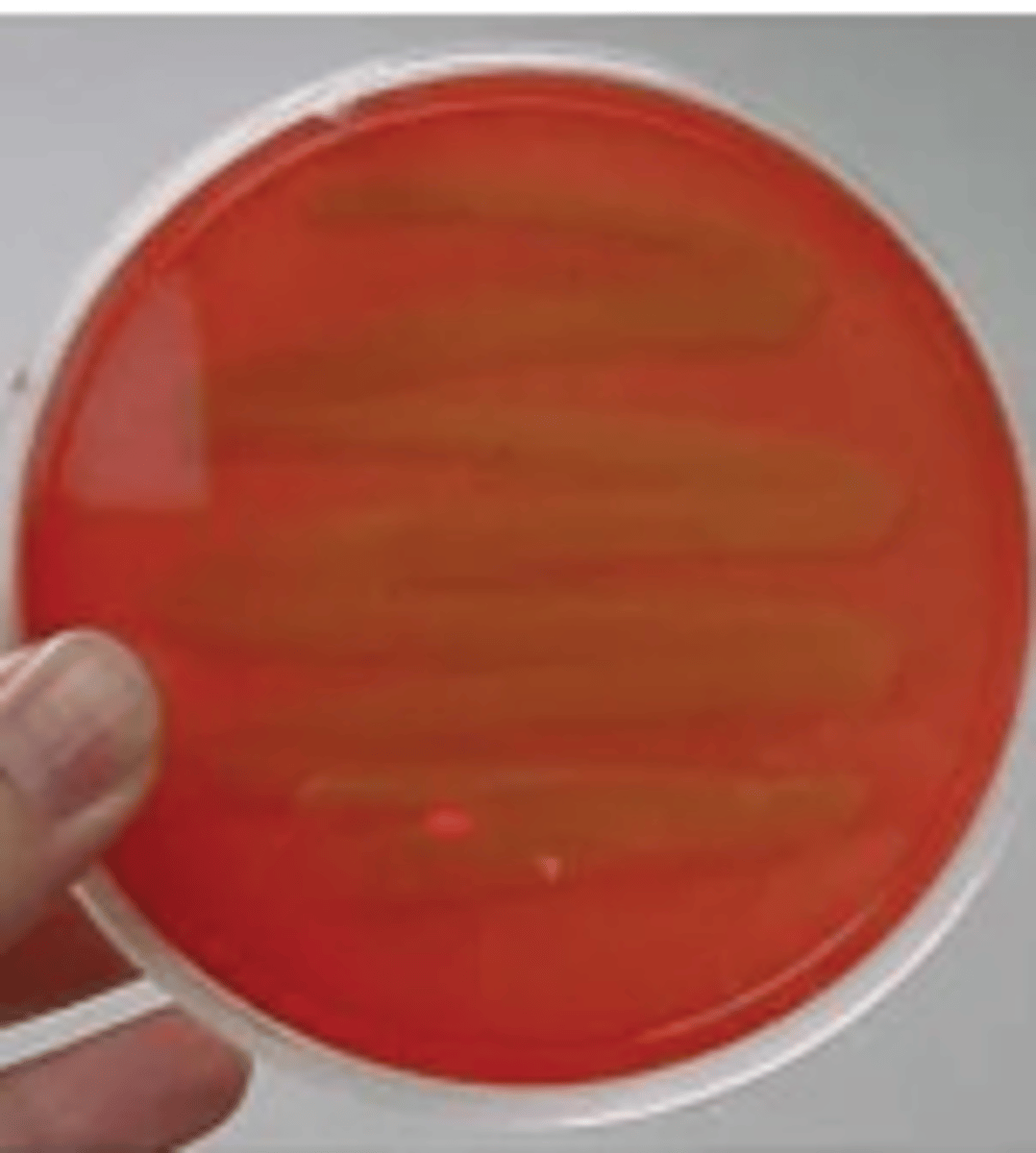
gama results on blood agar
no change - only see swab line
Bile Esculin Agar (BEA)
Substrate:
esculin
Bile Esculin Agar (BEA)
color indicator:
Ferric Ammonium citrate
Bile Esculin Agar (BEA)
What are the selective ingredients in this media?
bile salts
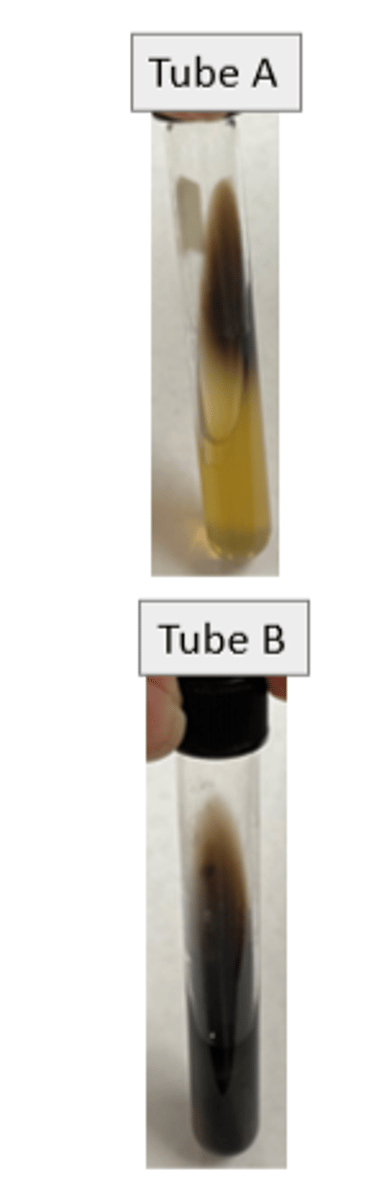
Bile Esculin Agar (BEA)
What are the differential ingredients in this media?
esculin and ferric ammonium citrate
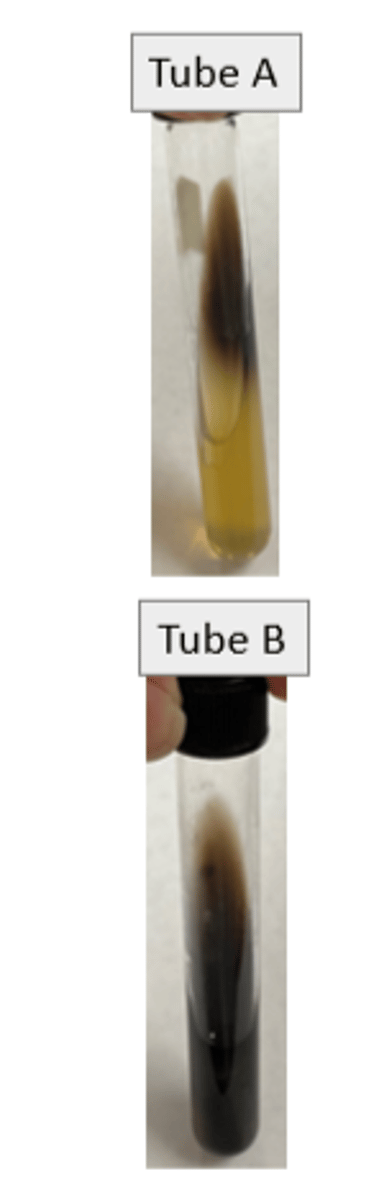
Bile Esculin Agar (BEA)
Is tube A positive or negative for esculin hydrolysis?
negative (no color change)
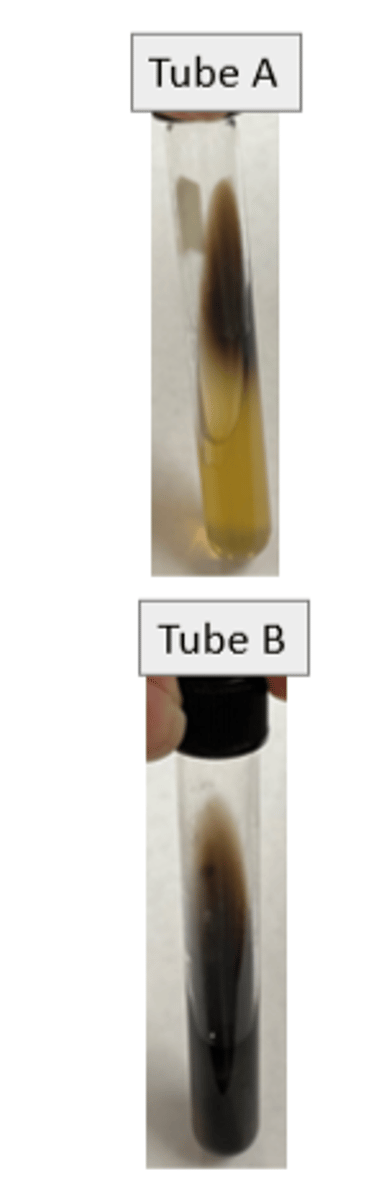
Bile Esculin Agar (BEA)
Is tube B positive or negative for esculin hydrolysis?
Positive (black)
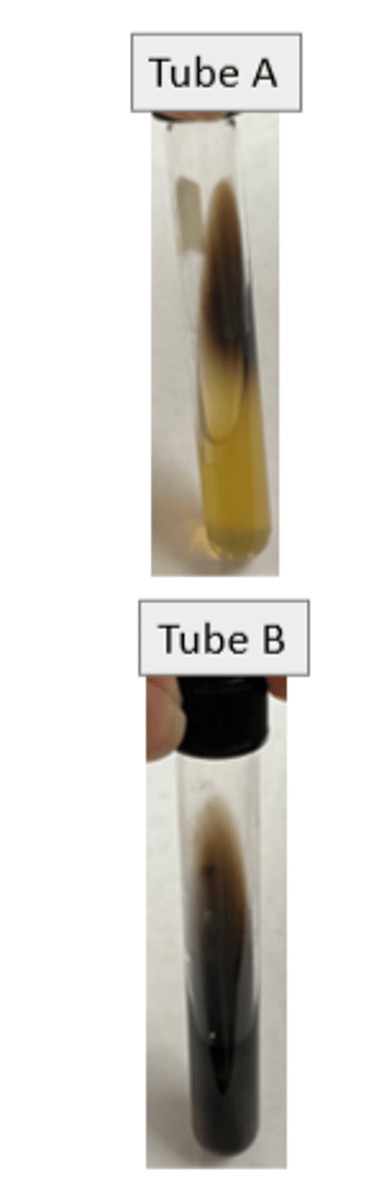
Give an example of a Strep that is positive for esculin hydrolysis.
Streptococcus agalactiae
and
Enterococcus faecalis
Give an example of a Strep that is negative for esculin hydrolysis.
-Streptococcus pyogenes
-Streptococcus Bovis
-Streptococcus Mutans
-Streptococcus equi
-Streptococcus zooepidemicus
An unknown Gram-positive coccus gives a negative catalase reaction but grows on MSA. Name the organism.
enterococcus faecalis
Determine the results for this Strep media:
MSA: pos
Hemolysis: alpha
BEA: +
SXT: R
Bacitracin: R
Enterococcus faecalis
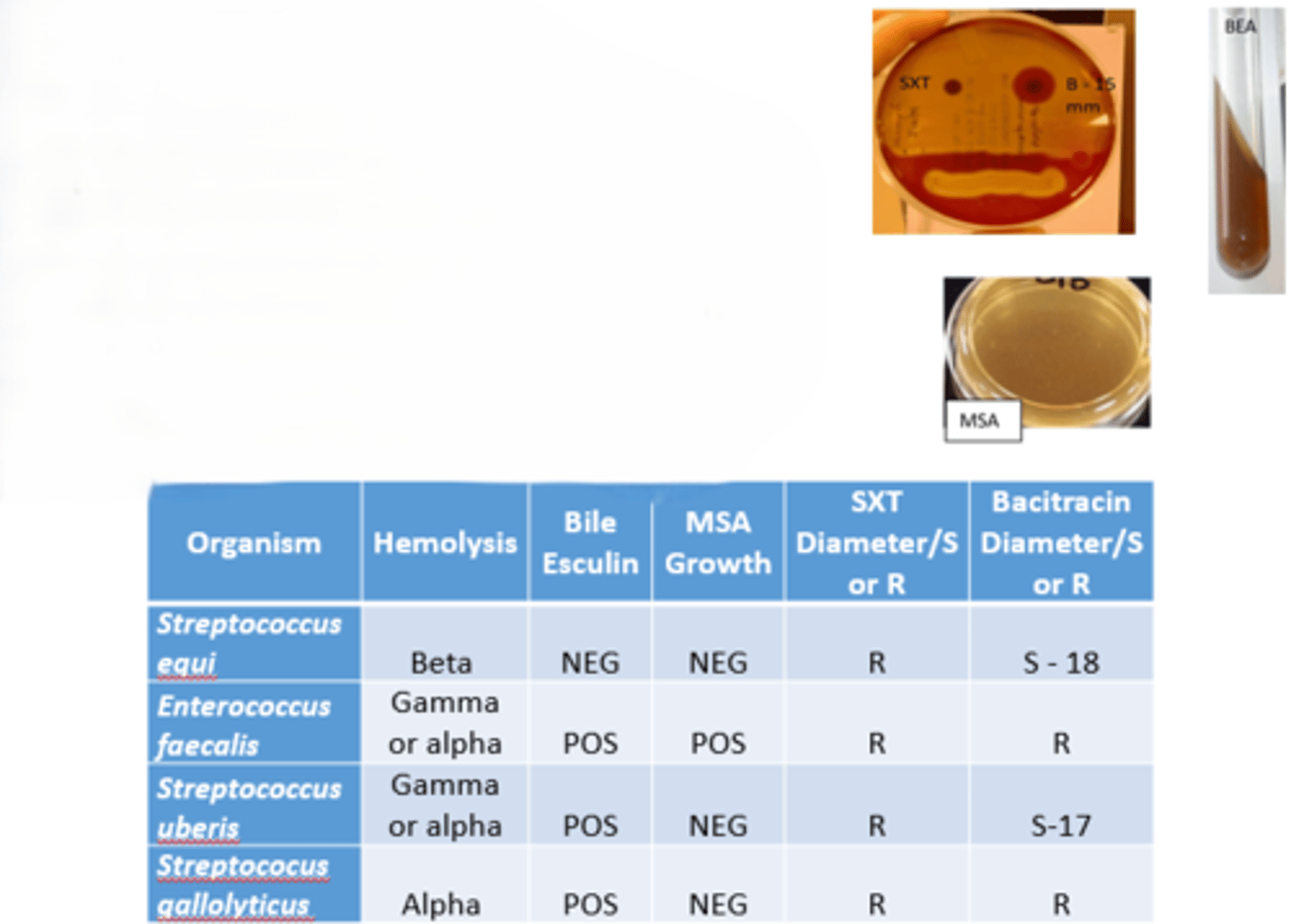
TSI Slant:
What is the pH indication in this:
pH indicator: phenol red
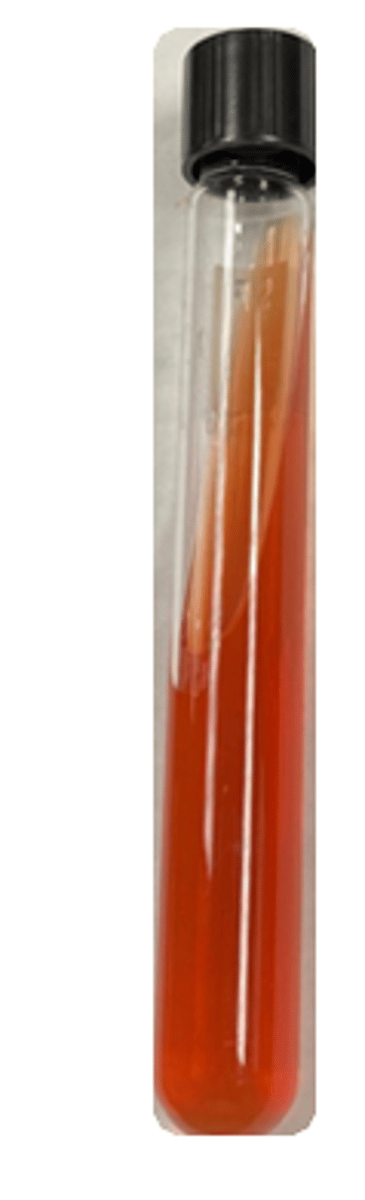
TSI Slant:
2 components of this agar that detects hydrogen sulfide production:
color indicator: ferrous sulfate
substrate: sodium thiosulfate
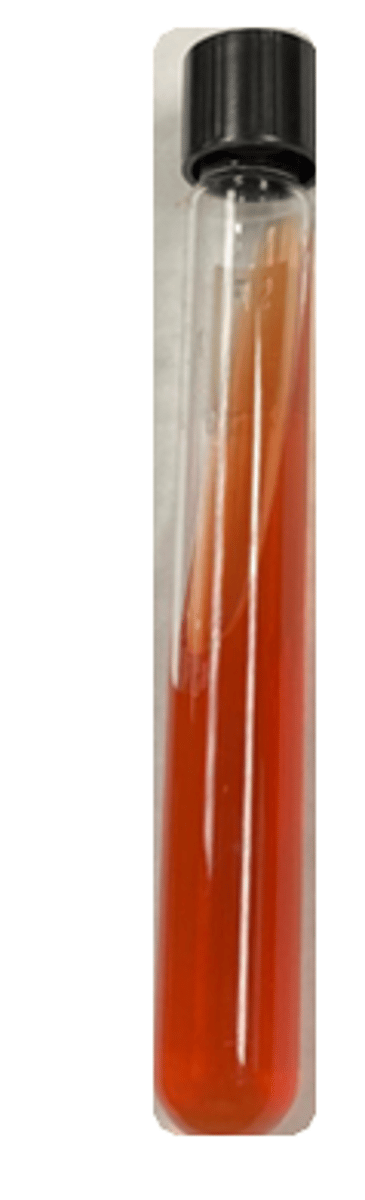
TSI Slant:
What are the 3 carbohydrates in this medium and what is the % of each
-0.1% Glucose
-1.0% Sucrose
-1.0% Lactose
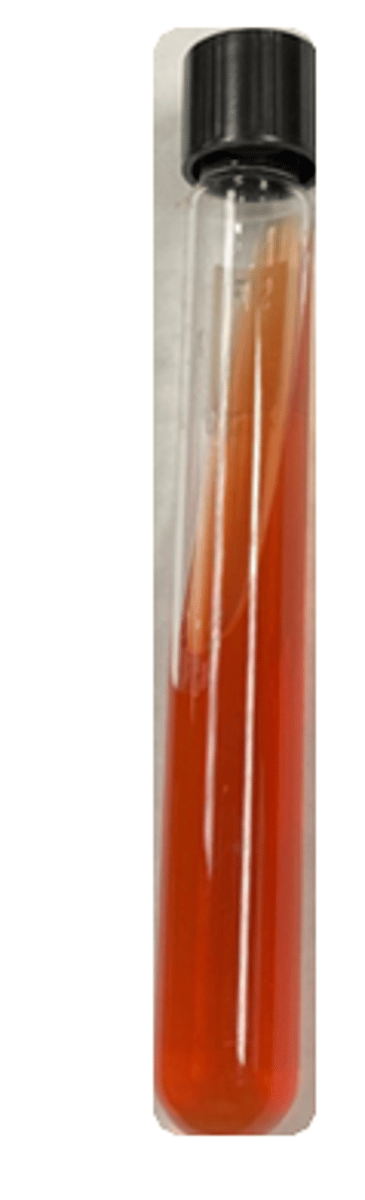
TSI Slant: Results
What are the results:
Slant:
Butt:
Gas:
H2S:
Slant: Alkaline
Butt: Acidic
Gas: neg
H2S: neg
Ferments: glucose
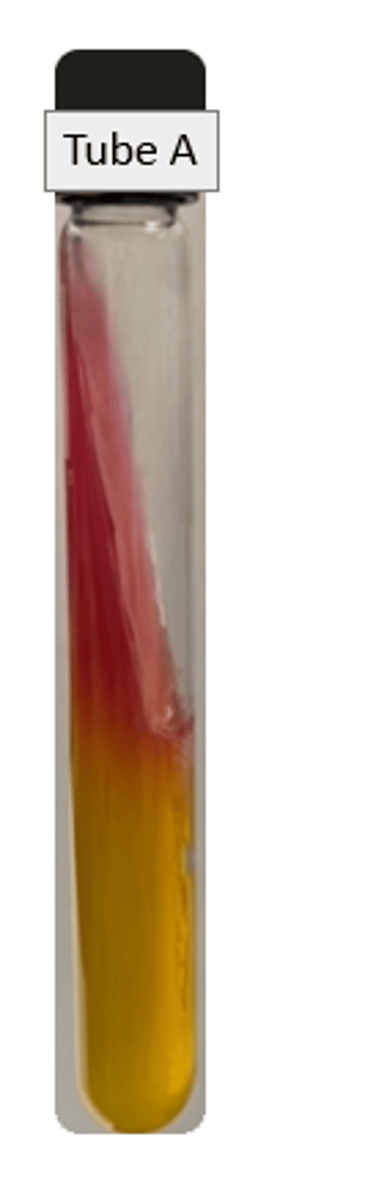
TSI Slant: Results
What are the results:
Slant:
Butt:
Gas:
H2S:
Slant: acidic
Butt: Acidic
Gas: pos
H2S: pos
Ferments: glucose and lactose/sucrose
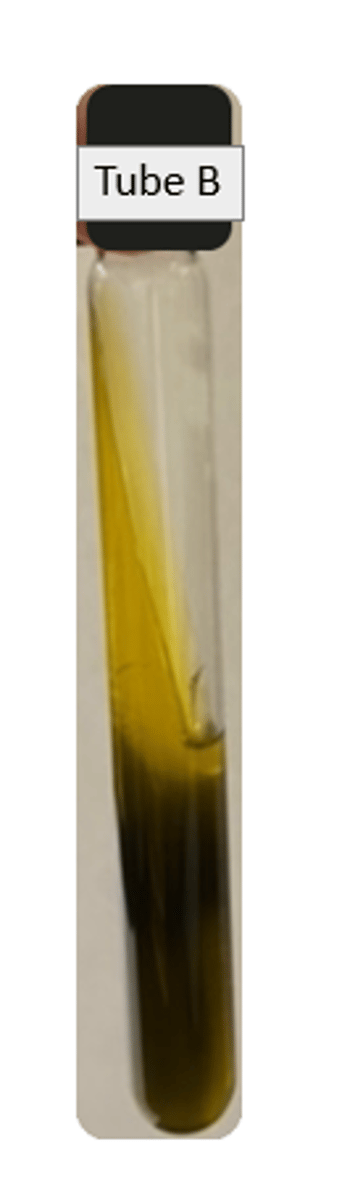
TSI Slant: Results
What are the results:
Slant:
Butt:
Gas:
H2S:
Slant: acidic
Butt: Acidic
Gas: pos
H2S: neg
Ferments: glucose and lactose/sucrose
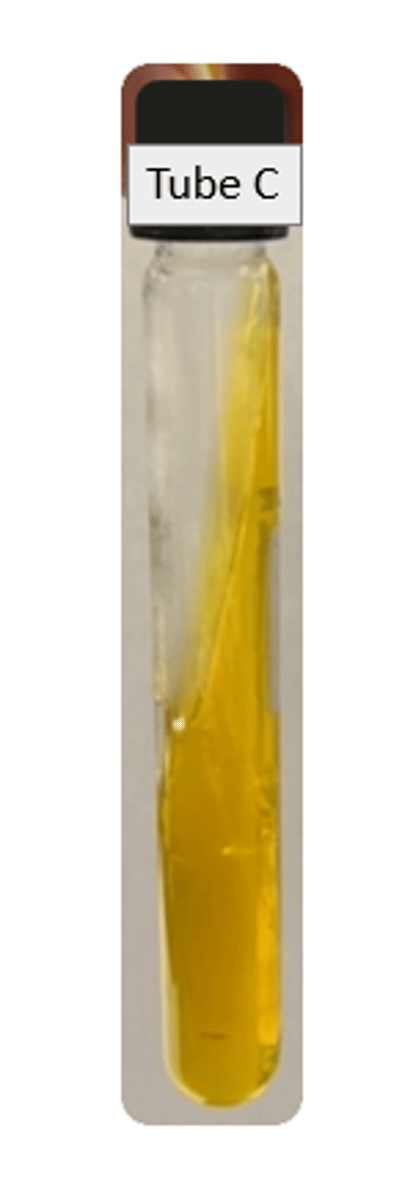
TSI Slant: Results
What are the results:
Slant:
Butt:
Gas:
H2S:
Slant: alkaline
Butt: alkaline
Gas: neg
H2S: neg
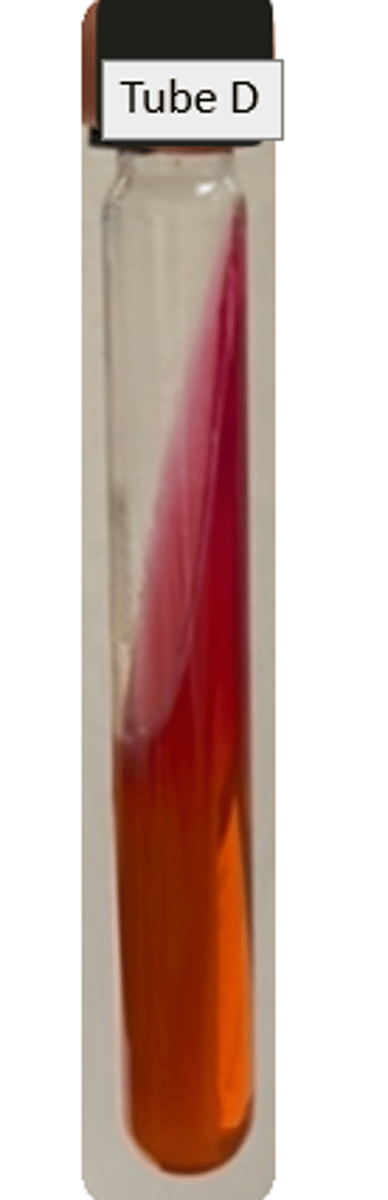
TSI Slant: Results
What are the results:
Slant:
Butt:
Gas:
H2S:
Slant: alkaline
Butt: acidic
Gas: neg
H2S: pos
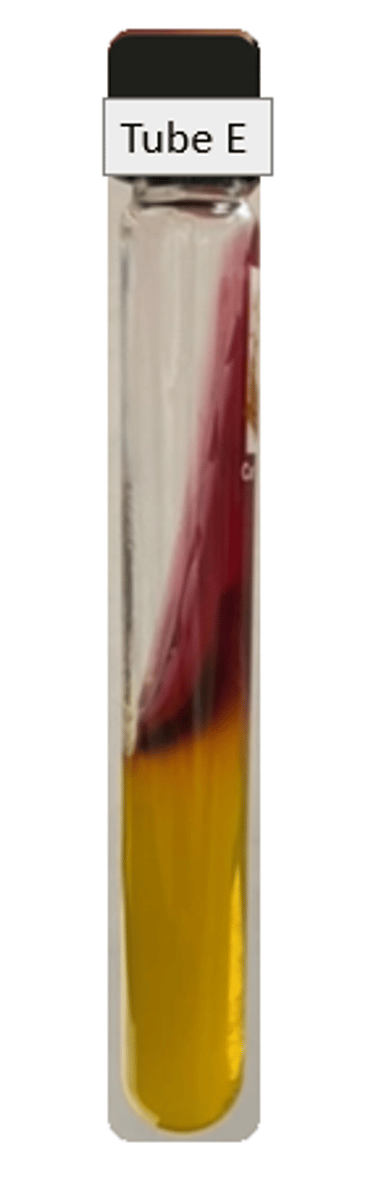
LIA Slant:
Name amino acid
lysine
LIA Slant
What is the pH indicator
bromocresol purple
LIA Slant: lysine deamination
Substrate:
glucose
LIA Slant: lysine deamination
pH indicator:
bromocresol purple
LIA Slant: lysine deamination
color indicator:
ferric ammonium citrate
LIA Slant: lysine decarboxylation
pH indicator:
bromocresol purple
LIA Slant: lysine decarboxylation
substrate:
lysine glucose
LIA Slant: H2S Production
substrate:
sodium thiosulfate
LIA Slant: H2S Production
color indicator:
ferrous sulfate
LIA Slant
Is deamination of lysine an aerobic or anaerobic process?
Where does it occur?
anaerobic process
occurs in the slant
+: red
-: purple
LIA Slant
Is decarboxylation of lysine an aerobic or anaerobic process?
Where does it occur?
anaerobic
occurs in bu**
+: purple
-: yellow
LIA Slant Results
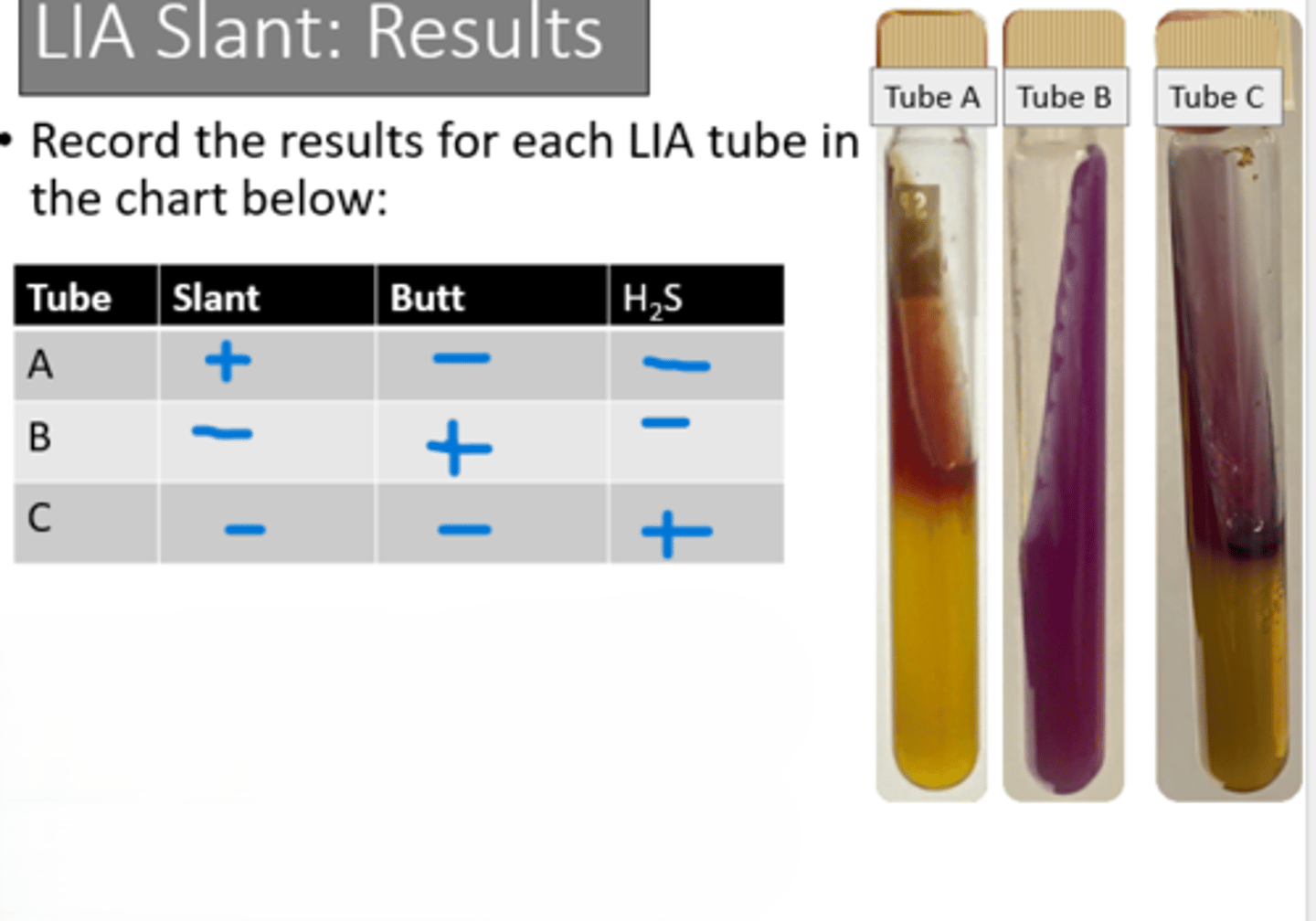
Citrate Slant:
Positive:
Negative:
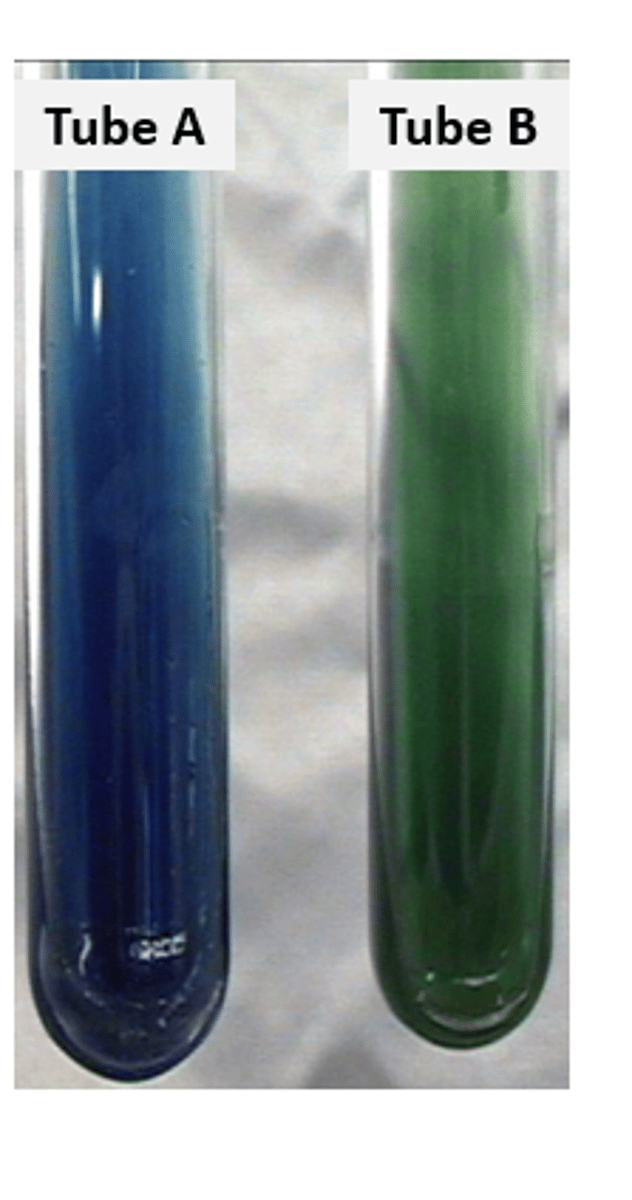
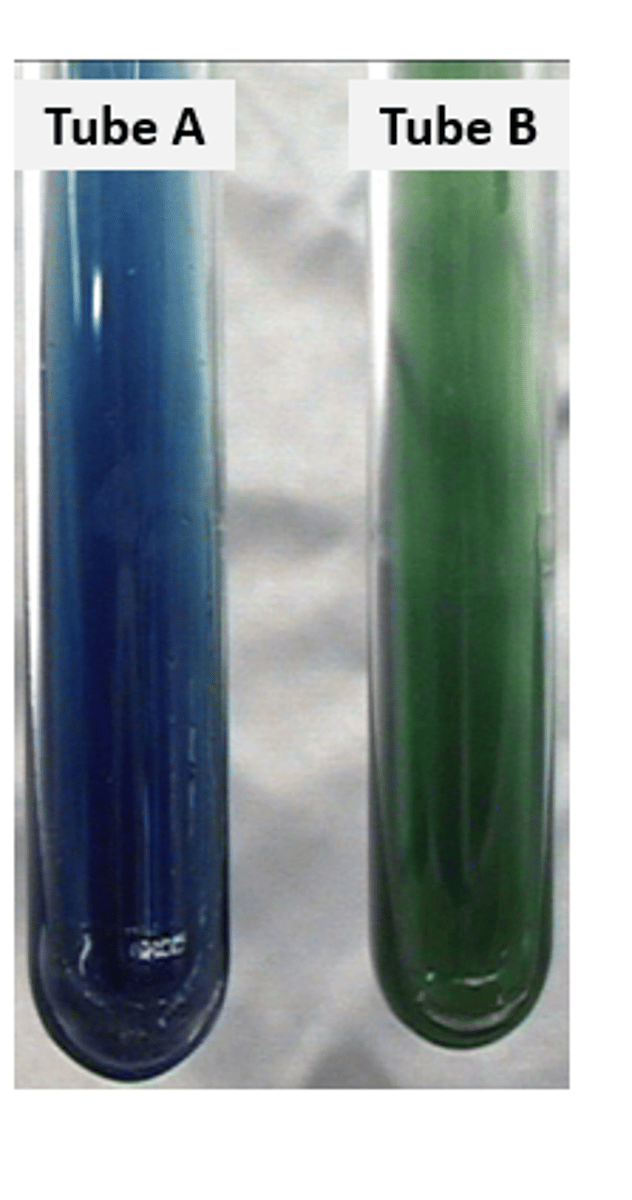
Positive: Russian blue (A)
Negative: negative - no color change
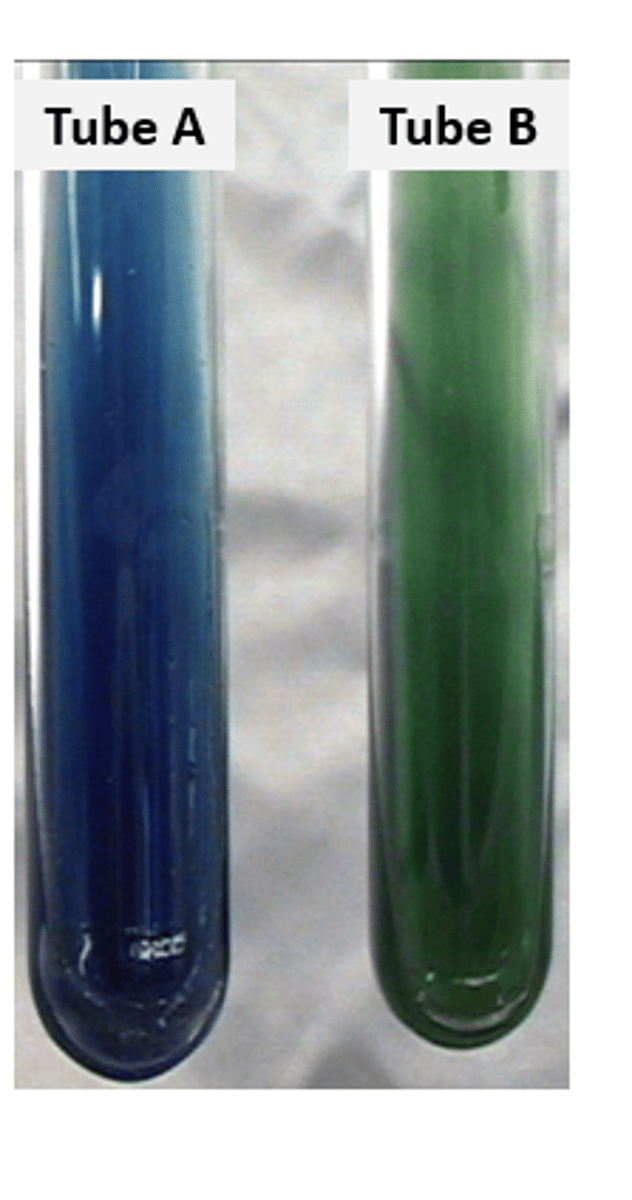
citrate test tests for ______
citrate (turns tube blue)
Citrate Slant:
pH indicator:
bromthymol blue
Citrate Slant:
Is this medium selective or differential?
both
Determine Results:
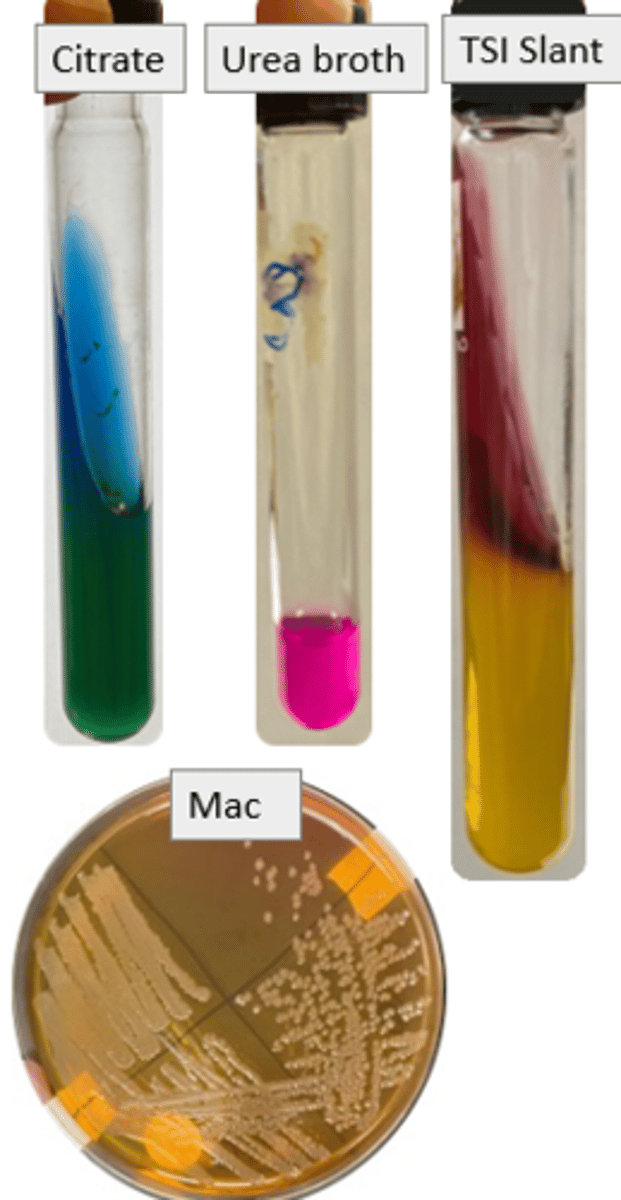
Mac fermentation: neg
Urease: + (pink)
citrate: + (blue)
TSI Slant: alkaline
TSI butt: acidic
Gas: neg
H2S: +
Nitrate Broth: (nitrate reduction)
Substrate
Nitrate
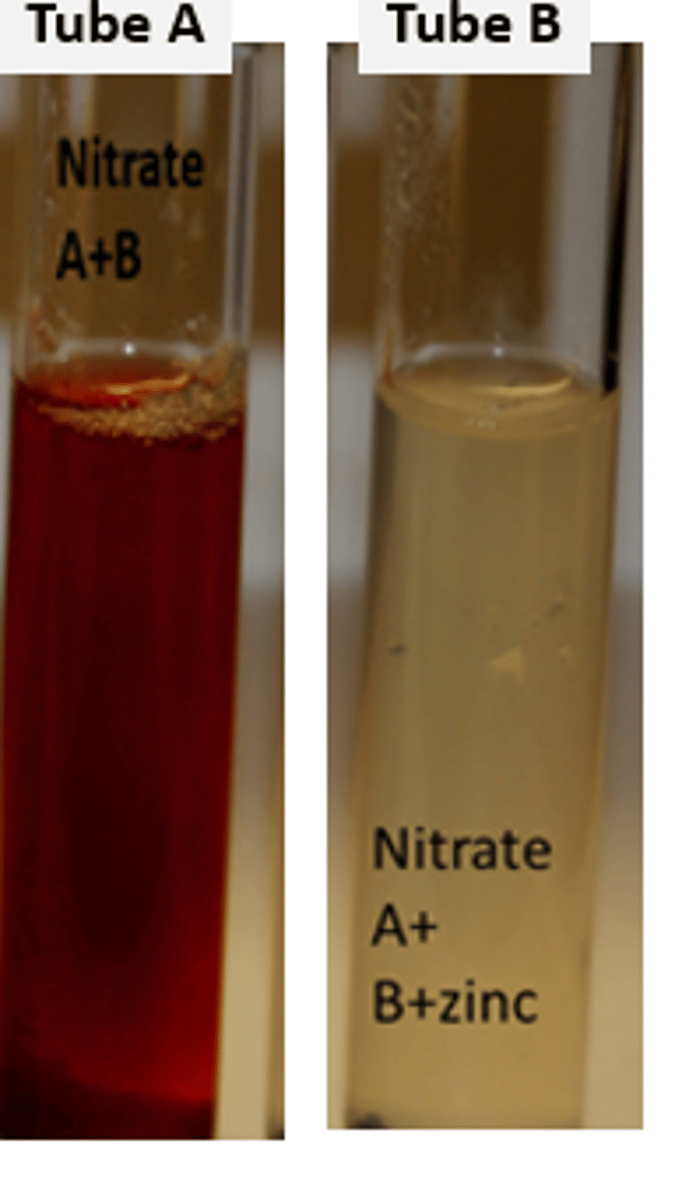
Nitrate:
What color indications a positive or negative
+: red
-: no color change or color change after adding zinc
Reagents used in Nirate:
Nitrate A: sulfamic acid
Nitrate B: alpha naphthylamine
Reagents used in TSI:
NONE
Reagents used in Urea:
NONE
Reagents used in SIM (indole production)
Kovac's reagent (HCI, Butanol, para-dimethylaminobenzaldehyde
Reagents used in methyl red broth
methyl red
Reagents used in VP Broth
Barrits A &B
A: aplha naphthol
B: 40% KOH
Reagents used in Citrate:
NONE
Substrate in citrate:
sodium citrate
pH indicator in citrate:
bromthymol blue
Reagents used in LIA:
NONE
SIM Agar Deep h2s production:
substrate
sodium thiosulfate:
SIM Agar Deep h2s production:
Color indicator
ferrous sulfate
SIM interpret results
indole: + red
black prec: + H2s
Growth of line: spreading = positive for motility
1:
indole: +
H2s: -
motility: +
2:
indole: -
H2s:-
motility: +
3:
indole: -
H2s: +
motility: -
4:
indole: -
H2s: -
motility: +
5:
indole: +
H2s: +
motility: +
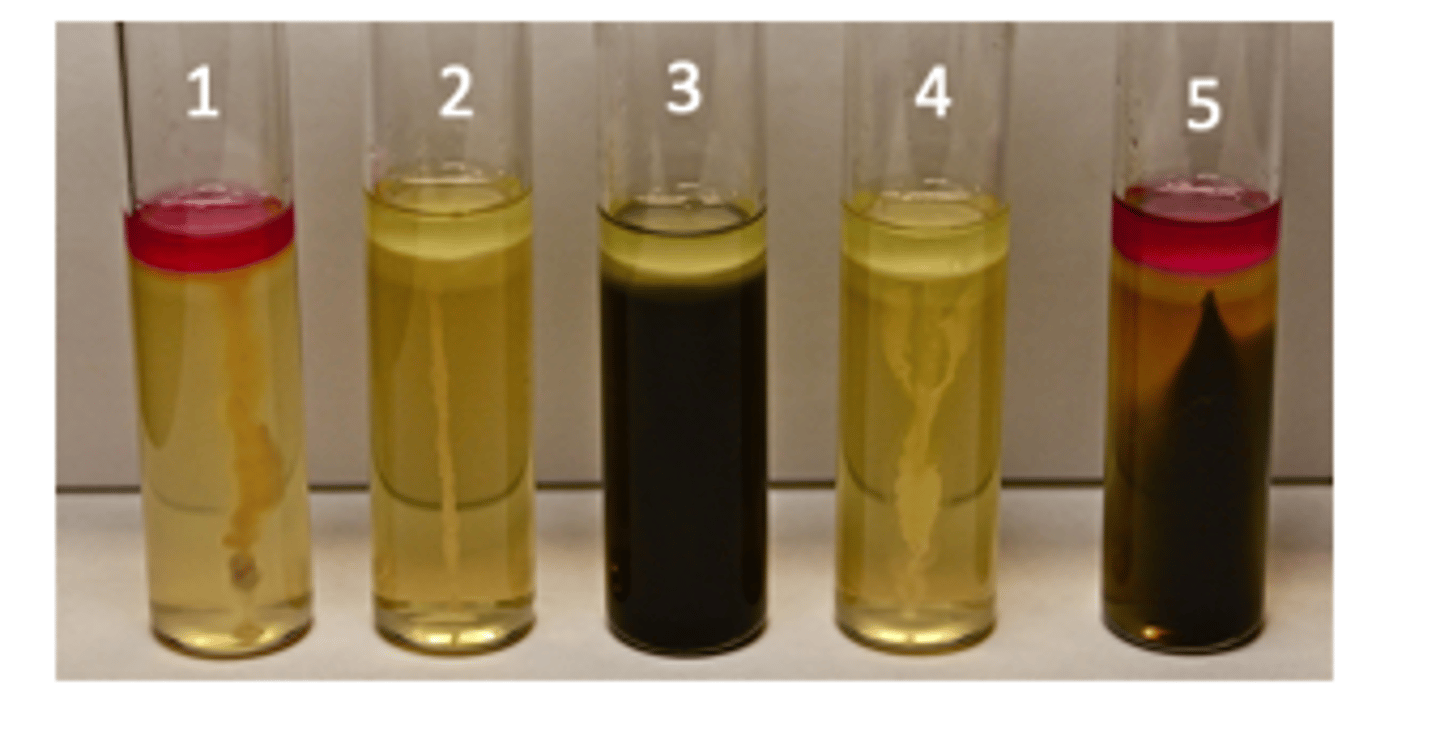
SIM agar deep
Name amino acid substrate in this medium for indole production
tryptophan
SIM Agar Deep
3 characteristic test for:
H2S, indole, motility
SIM Agar Deep
Motile if ____
growth out from stab line
Urea Broth
Substrate in this media
urea
Urea Broth
pH indicator in this media
phenol red
urea broth result
1: neg
2: pos (pink)
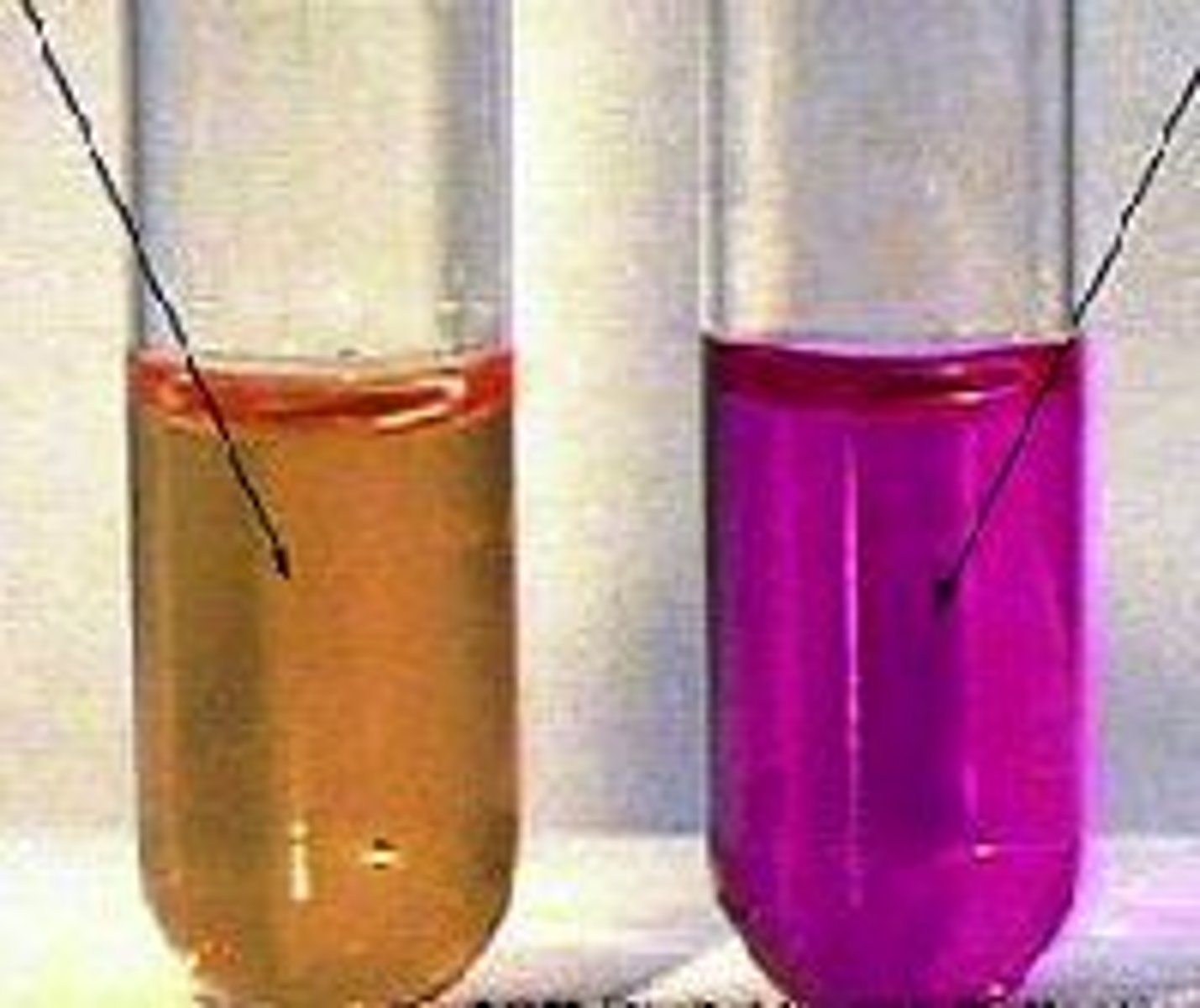
urea broth test for _____
urease
Substrate in MR & VP
glucose
what does MR stand for:
methyl red
what does VP stand for:
Voges-Proskauer
MRVP results
RED: +
yellow/no change: -