cell replication
 Call Kai
 Learn
Learn Practice Test
 Spaced Repetition
 Match
Match Flashcards
 Knowt Play
1/12

There's no tags or description
Looks like no tags are added yet.
Name | Mastery | Learn | Test | Matching | Spaced | Call with Kai |
|---|
No analytics yet
Send a link to your students to track their progress
13 Terms
mitosis
division of somatic cells
interphase
not a stage of mitosis
doubles DNA during this time
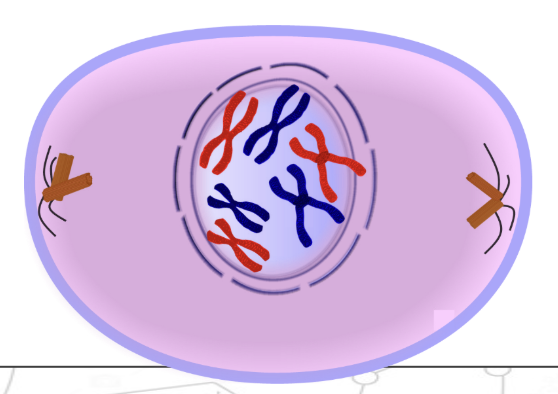
prophase
chromatids condense, become visible as pairs of chromatids
held together by centromere
spindles begin to grow from centrioles
nucleus breaks down
nucleolus disappears from view
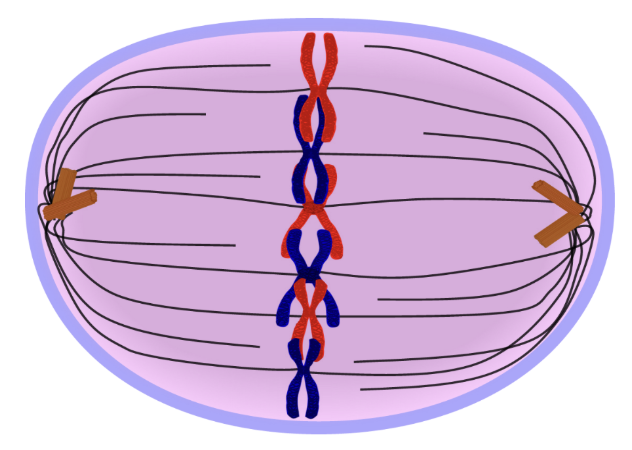
metaphase
chromatid pairs line up along metaphase plate
spindle fibres attach to centromeres
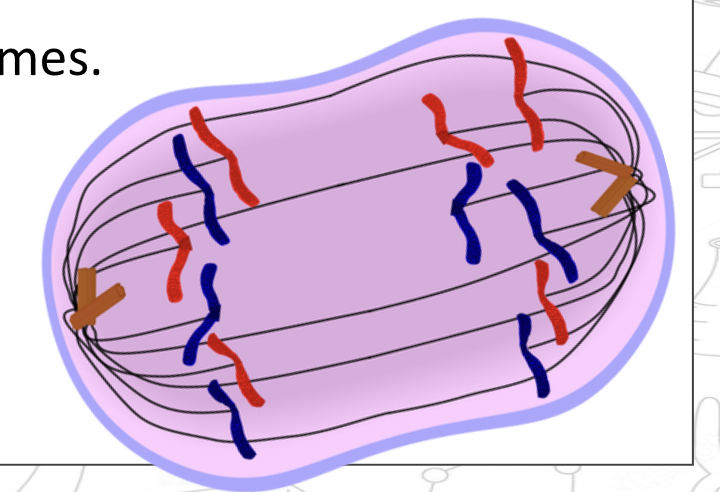
anaphase
spindle fibres attach to the chromatids to help pull them apart
chromatids separate as spindle fibres contract
chromatid = chromosome
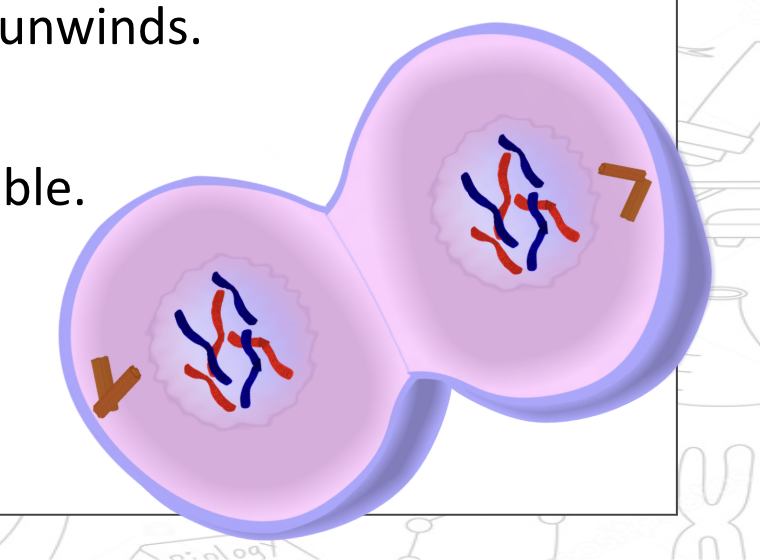
telophase
two sets of chromosomes form clusters at poles of cell
chromosomes de-condense, chromatids unwind
new nuclear envelope reforms
nucleoli reform, spindles dis-assemble
cytokinesis
the physical separation of cells
non-disjunction
failure of sister chromatids to separate
meiosis
produces sex cells / gametes
meiosis 1
reduction division– halves number of chromosomes
one chromosome from each homologous pair is donated
23 chromosomes (46 chromatids)
haploid
meiosis 2
sister chromatids pulled apart, donated to each gamete cell
23 chromosomes (23 chromatids)
haploid
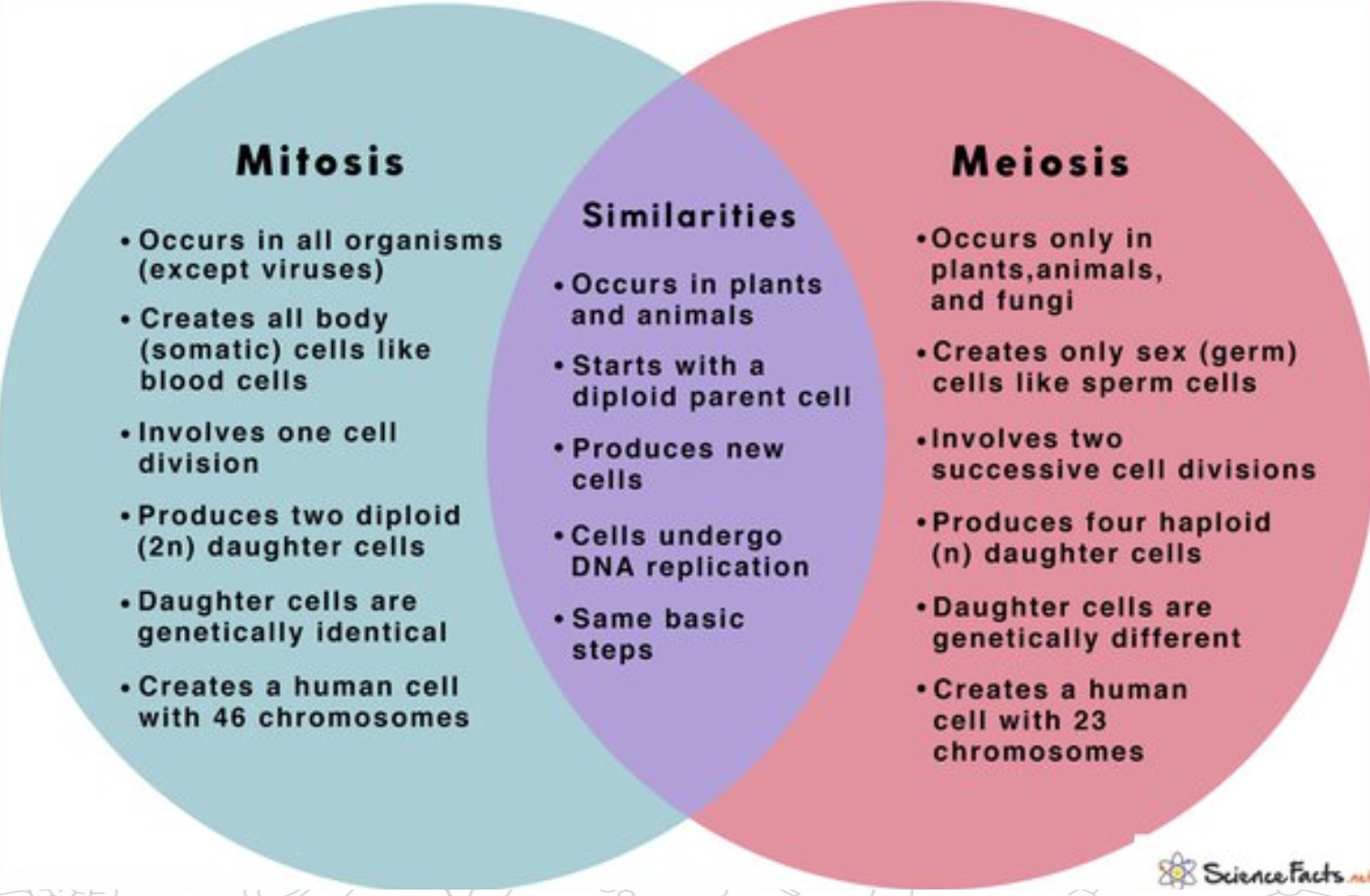
mitosis VS meiosis
mitosis // meiosis
all organisms (except viruses) // occurs in only plants, animals, fungi
creates somatic cells // creates gametes
1 division // 2 divisions
two diploid daughter cells / 4 haploid daughter cells
daughter cells = genetically identical / genetically different
human cell with 46 chromosomes // 23 chromosomes
crossing over
homologous chromosomes pair up and exchange segments of genetic material