Unit D3: Circulation and Immunity
 Call Kai
 Learn
Learn Practice Test
 Spaced Repetition
 Match
Match Flashcards
 Knowt Play
1/41

Earn XP
Description and Tags
Circulation Topic 2
Name | Mastery | Learn | Test | Matching | Spaced | Call with Kai |
|---|
No analytics yet
Send a link to your students to track their progress
42 Terms
Arteries
Carry blood away from the heart and typically carry oxygenated blood. They have thick, highly elastic walls to keep blood flowing in the right direction. They stretch to accommodate the inrush of blood from the heart
The pulse you can feel is created by
Changes in the diameter of the arteries following heart contractions
Arteries composition
3 layers: The outer and inner layers are primarily connective tissue, while the middle layers are made up of muscle fibers and elastic connective tissue
Heart Contraction is followed by a relaxation phase. During this phase, what happens?
Pressure drops and elastic fibres in the walls of the artery recoil.
Heart Attack Symptoms
-Shortness of breath
-Intense Chest Pain (may extend to arms)
-Cold sweat
-pain in left arm
-nausea/vomiting (women)
-unusual fatigue (women)
-dizzyness (women)
Arteriosclerosis
-Hardening of the arteries due to a buildup of plaque
-Caused by lack of exercise, smoking, and/or a diet high in fat
-Leads to decreased blood flow, increased blood pressure
Symptoms include: Angina (chest pain), blood clots, shortness of breath, heart failure.
Asprin
Treatment for arteriosclerosis, prevents platelets from sticking together, reducing the formation of blood clots
Angioplasty
Surgical procedure where a tube is inserted into a clogged artery and inflated, forcing the artery to open
Coronary Bypass
segment of a healthy artery/vein is used to create a new pathway from the aorta to an unblocked portion of the blood vessel.
Congenital Heart Defects
-Structural defects present from birth
-May be genetic; or due to drug/alcohol use during pregnancy
Example: Valve defects (leaky valve leading to heart murmur), septal defects (hole in septum leading to the mixing of oxygenated and deoxygenated blood)
Treated through surgery
Cardiac Output
The amount of blood pumped by the heart per minute. Used to indicate individual fitness, especially regarding the heart. Affected by heart rate (bpm) and stroke volume (amount of blood forced out of the heart with each beat)
Cardiac Output calculation
Cardiac Output = Stroke Volume x Heart Rate
Bigger individuals require…
more blood which gives them a higher cardiac output
Smaller individuals require…
less blood which gives them lower cardiac outputs
Hearts that are less strong are unable to pump as much blood per beat. How do they compensate?
They increase heart rate to reach the body’s energy demands
Variables affecting heart rate?
Lifestyle, anxiety, fear, caffeine, illness
Cells in larger arteries are supplied with nourishment and waste removal with their own blood vessels, but what about the others?
Other arteries are supplied directly by the blood that flows through them
Blood from the arteries passes into smaller arteries, called?
Arterioles
Arterioles narrow into?
Capillaries
What regulates the diameter of the arterioles?
The autonomic nervous system
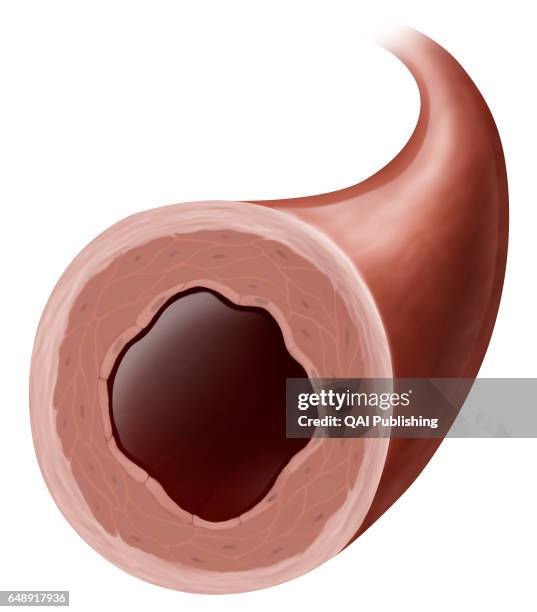
Vasoconstriction
A nerve impulse causes smooth muscle in the arterioles to contract, reducing the diameter of the blood vessel. Decreases blood flow to tissues
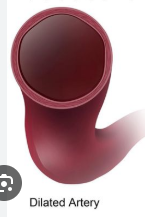
Vasodilation
Relaxation of the smooth muscle causes dilation of the arterioles, and blood flow increases. Increased the delivery of blood to tissues. Permits the cells in that localised area to perform energy-consuming tasks.
Arterioles leading to capillaries only open when?
Cells in that area require blood
Capillaries
Connect arteries and veins to tissues. Much smaller and more widespread than arteries and veins. Active cells (muscle fibres) may be supplied by more than 1 capillary. The site of fluid and gas exchange in the circulatory system.
Capillary Composititon
A single layer of cells. Diameter is so small that red blood cells must travel in single file. Does not have smooth muscle tissue.
Capillary action
Oxygen diffuses from the blood into tissues through the thin walls of the capillaries into the body cells
Water soluble ions and vitamins pass through?
Spaces in the walls of the capillary vessels
Capillaries widen as they make their way back to the heart. They eventually become?
Venules
Diameter of veins
increases as they approach the heart.
Veins
carry blood back to the heart and typically carry deoxygenated blood.
Vein composition
Thin, rigid walls that are composed of 3 layers: outer and inner layers are connective tissue, middle layers are muscle fibres and elastic connective tissue.
As blood passes through narrower vessels with weaker walls, what happens to fluid pressure?
It is reduced, ending up being not enough to return blood to the heart.
Veins contain valves on regular intervals that function to do?
only open in 1 direction to steer blood towards the heart.
What happens if blood goes backwards through a vein?
The valves will close
Skeletal muscles also aid venous blood flow. How?
Muscles help move the blood back up the legs. Blood would begin to pool in the lower limbs if we didn’t move our legs.
Venous pressure increases when?
skeletal muscles contract and push against the vein. The muscles bulge when they contract, which reduces the vein’s diameter. This builds the pressure that opens the valves inside of the vein, allowing blood to flow toward the heart.
Varicose Veins occur when?
Leaflets of valves become damaged and fail to close properly, causing blood to flow backwards and pool in the veins. Pooling causes veins to become distended.
Blood Pressure
The pressure exerted against the walls of the heart as blood is transported throughout the body.
Blood pressure is measured in?
a ratio of systolic/diastolic pressure in units of mmHg at the brachial artery (arm area)
Fluid pressure decreases with distance, meaning?
BP is not the same in all arteries
Systolic Pressure
Maximum pressure during ventricular contraction
Diastolic Pressurre
Minimum pressure before ventricular contraction.