Organisms exchange substances with their environment
 Call Kai
 Learn
Learn Practice Test
 Spaced Repetition
 Match
Match Flashcards
 Knowt Play
1/56

There's no tags or description
Looks like no tags are added yet.
Name | Mastery | Learn | Test | Matching | Spaced | Call with Kai |
|---|
No analytics yet
Send a link to your students to track their progress
57 Terms
What is the process of INSECT gas exchange [4]?
Air enters through the spiracles in their exoskeleton.
Goes through the trachea.
Then through the highly branched, thin, large SA'd tracheoles, directly to individual cells.
O2 diffuses into cells, CO2 diffuses out of cells.
Structural & functional compromises [4] for gas exchange and water loss in terrestrial INSECTS:
Highly branched tracheal system - large SA & short diffusion distance.
Spiracles open and close (rise in CO2 stimulates spiracles to open).
Spiracles are sunken & surrounded by hair - traps moist air to create water potential gradient & prevents wind from increasing rate of evaporation.
Tips of tracheoles have fluid which moves into cells so gas exchange occurs more quickly and efficiently.
What happens during periods of high activity in INSECTS [4]?
Insects contract & relax their abdominal muscles to actively move air in and out of the tracheal system and maintain a concentration gradient.
Very active insects respire anaerobically creating a build up of lactic acid.
The fluid from the tips of tracheoles moves into the cells, lowering water potential gradient.
Gas exchange occurs more quickly & efficiently, as gas exchange is faster in gases than liquids.
What is the process of gas exchange in FISHES [6]?
Pharynx is lowered, opercular valve shuts: this causes water to enter the mouth due to the decrease in pressure.
Pharynx is raised, opercular valve opens: this causes water to flow over the gills due to the increase in pressure.
At the lamellae, O2 diffuses from the water to the blood & CO2 diffuses from the blood to the water.
Counter-current exchange occurs to maintain a concentration gradient across the entire lamellae.
O2 binds to haemoglobin the RBC's.
Water exits through the operculum.
(step 1 and 2 provide a pressure gradient)
What are the adaptations of FISH gills [6]?
Large SA - many gill filaments & lamellae.
Short diffusion distance - lamellae and capillaries are thin & surrounded by dense network of capillaries.
Good blood supply - each lamellae is surrounded by a dense network of capillaries.
Constant water flow - provides constant supply of oxygenated water.
Water is always next to blood with low oxygen levels.
Counter-current principle - water flows in opposite direction to blood flow, this maintains a gradient across the entire length of the lamellae, so equilibrium is not reached.
What is the process of PLANT gas exchange [4]?
CO2 enters through the stomata that is opened by guard cells.
CO2 diffuses down the concentration gradient and through the air spaces in the spongy mesophyll.
At the palisade mesophyll layer CO2 is used for photosynthesis.
Oxygen diffuses from the palisade mesophyll, through the spongy mesophyll and out of the stomata.
What are the adaptations of a LEAF [4]?
Large SA, so more stomata - maximises light absorbtion & gas exchange.
Thin - short diffusion distance.
Guard cells - close the stomata during the night & open and close the stomata preventing water loss.
Air spaces in the spongy mesophyll - gases diffuse easily through the leaf.
What are the adaptations of a XEROPHYTES [6]?
Sunken stomata & hairs around the stomata - traps moisture reducing the concentration gradient of water, reducing water loss.
Fewer stomata - fewer places for water loss.
Curled leaves - protect stomata from wind to reduce evaporation & traps moisture.
Needle-shaped leaves (reduced SA:V ratio) - reduce SA so less evaporation occurs.
Thicker waxy cuticles - reduces evaporation.
What is the process of HUMAN gas exchange [4]?
Air enters through the mouth and down the trachea.
Trachea divides into 2 bronchi, which leads to each lung.
Bronchi divides into bronchioles, which leads to alveolis.
O2 diffuses down its concentration gradient from alveoli to blood, CO2 diffuses down its concentration gradient from blood to alveoli.
What happens during INSPIRATION [6]?
Ribs move: upwards & outwards.
Diaphram: contracts & flattens.
External intercostal muscles: contract.
Internal intercostal muscles: relax.
Volume in the lungs: increases.
Pressure in the lungs: decreases.
What happens during EXPIRATION [6]?
Ribs move: downwards & inwards.
Diaphram: relaxes & domes.
External intercostal muscles: relaxes.
Internal intercostal muscles: contracts.
Volume in the lungs: decreases.
Pressure in the lungs: increases.
What is the equation for pulmonary ventillation?
PVR = tidal volume (dm³) x breathing rate (min)
What are the adaptations of the ALVEOLI [3]?
One cell thick - short diffusion pathway.
Large SA - lots of alveoli.
Steep concentration gradient of gases - dense capillary network.
What is PULMONARY FIBROSIS? And what is its effect [3]?
Scars on the epithelial tissue, which causes the thickening of the lung tissue.
Increased diffusion distance.
Reduced elasticity.
Decrease in gas exchange.
What is ASTHMA? And what is its effect [2]?
The WBC's on the lining of the bronchi(+ioles) releases histamine, which causes inflammation and mucus build up.
Narrowened airways.
Decrease in ventillation - reducing its ability of maintaining the concentration gradient.
What is EMPHYSEMA? And what is its effect [2]?
Elastase is released which irreversibly damages/breaks the protein elastin, which breaks alveolar walls.
Decreased SA.
Decreases the rate of diffusion.
What are the enzymes [2] involved in CARBOHYDRATE digestion? Where are they located [2 & 1]? And the products produced [1 & 3]?
→ Amylase:
In the salivary glands, pancreas.
Hydrolyses starches glycosidic bonds to form maltose.
→ Membrane-bound disaccharidases:
In the small intestine.
Breaks disaccharides to monosaccharides.
maltose + water → glucose + glucose
sucrose + water → glucose + fructose
lactose + water → glucose + galactose
What are the enzymes [2] involved in LIPID digestion? Where are they located [2 & 2]? And the products produced [2 & 3]?
→ Lipase:
In the small intestine, pancreas.
Hydrolyses the ester bonds in triglycerides to form monoglycerides + fatty acids.
→ Bile salts:
Made in the liver, stored in the gall bladder.
Emulsifies lipids, increases SA, neutralises stomach acid to optimum pH.
What are the enzymes [3] involved in PROTEIN digestion? Where are they located [2 & 1 & 1]? And the products produced [1 & 2 & 1]?
→ Endopeptidases:
In the stomach, small intestine.
Hydrolyses the peptide bonds in long polypeptide chains producing many shorter polypeptide chains - increasing SA.
→ Exopeptidases:
In the small intestine.
Hydrolyses peptide bonds at the end of polypeptides producing dipeptides + amino acids.
→ Membrane-bound dipeptidases:
In the ileum epithelium cells.
Hydrolyses peptide bonds in dipeptides into amino acids.
What happens in DIGESTION?
Large biological molecules are hydrolysed into smaller molecules that can be absorbed across cell membranes.
What is the process of AMINO ACID absorbtion [3]?
Na ions are actively transported out of epithelial cells and into the blood, reducing the concentration of Na in epithelial cells.
Na begins to diffuses down its concentration gradient back into the epithelial cells and takes an amino acid (against its concentration gradient) with it by co-transport.
The amino acids in the cell then move into the bloodstream by facilitated diffusion.
What is the process of LIPID absorbtion [6]?
Bile salts emulsify lipids, then lipase hydrolyses triglycerides into monoglycerides + fatty acids.
Monoglycerides + fatty acids + bile salts → micelles
Micelles make fatty acids more soluble, transports and releases them to the surface of cells.
Where the fatty acids diffuse through the phospholipid bilayer and are transported to the SER where they are reassembles into triglycerides.
They're then transported to the golgi apparatus, where triglycerides combine with cholestrol + lipoproteins → chylomicrons.
Chylomicrons leave the golgi and enter the lymph vessels, then enter the bloodstream.
What are the adaptations for ABSORBTION [7]?
Villi & microvilli - increase SA.
Thin epithelium - creates short diffusion distance.
Dense network of capillaries/rich blood supply - maintains a steep concentration gradient by rapidly absorbing nutrients away.
Many carrier & channel proteins in the membrane - allows for facillitated diffusion to occur.
Many carrier proteins for active transport.
Many mitochondria in epithelial cells - provides ATP, which provides energy for co-transport & active transport.
Many ribosomes in epithelial cells - produces membrane-proteins for transport.
What is haemoglobin [2]?
A globular protein with a quaternary structure (4 polypeptide chains). Each polypeptide chain has one haem group which binds to 1 oxygen molecule or 2 oxygen atoms.
What is the process of LOADING (1st) in oxygen transport [3]?
Occurs at the lungs (high concentration/partial pressure of oxygen).
Oxygen diffuses from the alveoli to the red blood cells.
The oxygen binds to the haemoglobin creating oxyhaemoglobin.
What is the process of TRANSPORT (2nd) in oxygen transport [1]?
The oxyhaemoglobin is transported in the bloodstream.
What is the process of UNLOADING (3rd) in oxygen transport [3]?
Occurs at the tissues (low concentration/partial pressure of oxygen).
Oxygen dissociates from the oxyhaemoglobin and diffuses into cells.
For aerobic respiration.
Why is the OXYHAEMOGLOBIN DISSOCIATION CURVE ‘s-shaped' [4]?
Due to the cooperative nature of oxygen binding.
When the 1st oxygen molecule binds the haemoglobin slightly changes shape.
This makes it easier for the next oxygen molecule to bind.
This allows for fast loading and unloading of oxygen.
What is the BOHR EFFECT [3]?
When there is an increase in carbon dioxide concentration, this causes the bloods pH to be lowered.
This causes for oxygen to be unloaded more easily - theres a lower affinity for oxygen.
This causes the oxyhaemoglobin graph to shift to the right.
Why do some animals have differently shaped haemoglobin [4]?
They have haemoglobin with slightly different amino acid sequences, which determine its oxygen affinity.
This allows for the animals to be adapted to their environment.
Low oxygen environment = needs a high affinity for oxygen, so lots of oxygen can be loaded. Its oxyhaemoglobin dissociation curve shifts to the left.
Active animals = has a low affinity, so that oxygen is unloaded easily. Its oxyhaemoglobin dissociation curve shifts to the right.
What is the process of PULMONARY circulation [7]?
Deoxygenated blood flows from: the body → vena cava → right atrium → right ventricle → pulmonary artery → to the lungs to become oxygenated.
What is the process of SYSTEMIC circulation [7]?
Oxygenated blood flows from: the lungs → pulmonary vein → left atrium → left ventricle → aorta → to the body.
What is the artery and vein that s connected to the KIDNEY?
Renal artery - carries oxygenated blood to the kidney.
Renal vein - carries filtered blood from the kidney to the heart.
What happens at DIASTOLE (cardiac cycle) [7]?
Atria & ventricle muscles relax.
Pressure in the heart decreases.
Volume increases.
Atrioventricular valves open.
Semilunar vavles close.
Blood flows from vena cava → right atrium.
Blood flows from pulmonary vein → left atrium.
(Ventricles begin to fill.)
What happens at ATRIAL SYSTOLE (cardiac cycle) [6]?
Atria muscles contract.
Pressure in the atria increases.
Atria volume decreases.
Atrioventricular valve opens.
Semilunar valves close.
Blood is forced into ventricles.
What happens at VENTRICULAR SYSTOLE (cardiac cycle) [6]?
Ventricular muscles contract.
Ventricular volume decreases.
Pressure in the ventricle increases.
Atrioventricular valves close.
Semilunar valves open.
Blood is forced into the aorta & pulmonary artery.
What is the equation for Cardiac Output?
CO = stroke volume (dm³) x heart rate (min)
What are the adaptations of the CAPILLARY [4]?
One endothelial cell thick - short diffusion distance.
Highly branched network - lots of diffusion at once.
Lumen is slightly larger than RBC - RBC's travel in single file line allowing time for diffusion to occur.
Has fenestrations - allows for fluid + WBC's to pass out of the capillary.
What is the structure & function of the ARTERY [5]?
Thick smooth muscle - allows for the artery to contract & relax to control blood flow and withstand high blood pressure.
Many elastic fibres - allows artery to stretch & recoil.
Small lumen - maintains the high blood pressure.
Smooth endothelial lining - reduces friction so blood flows smoothly.
No valves - the high blood pressure ensures blood flows forward.
How are ARTERIOLES different to arteries [3]?
Contains blood at lower pressures.
Thinner outer layer & smooth endothelial layer.
Thicker smooth muscle layer - This is so it contracts and decreases the blood flow to the capillaries. (Vasoconstriction)
What is the structure & function of the VEIN [4]?
Large lumen - carries a greater volume of blood.
Valves - to prevent backflow of blood.
Smooth endothelial lining - reduces friction.
Thin smooth muscle & elastic layer - there is no need for stretch and recoil as the blood in veins don't travel in pulses/blood is at lower pressure.
How do VALVES work [4]?
Skeletal muscles contract, squeezing the veins.
This forces the blood in a forward direction.
Due to the shape of the valve if the blood begins to flow backwards, the valve shuts.
The valve opens when blood pressure is higher behind the valve, and close when the pressure is higher infront of the valve.
How is TISSUE FLUID formed? What is this process called?
The fluid that leaves the capillaries through the fenestrations at the arterial end of the capillary bed.
It then transfers oxygen and glucose to tissue cells, these cells then pass waste molecules into the tissue fluid.
The tissue fluid then returns back into the bloodstream near the veinous end of the capillary bed.
Ultrafiltration.
How does ULTRAFILTRATION occur [4]?
The blood at the arterial end of the capillary bed is at a high hydrostatic pressure,
so water, glucose, amino acids etc. are forced out at the fenestra.
Large proteins, RBC's and platelets remain in the capillaries, lowering the plasmas water potential.
This creates a tendency of oncotic pressure, so water moves back into the capillaries at the veinous end by osmosis.
What happens to the water that is not reabsorbed at the venious end of the capillary [2]?
The remainder water (~10%) drains into the lymphatic system. It is then drained back into the bloodstream at the blood vessels under the collar bone.
What are the pressures at the arterial & venious end of the capillary?
Arterial end = hydrostatic pressure > oncotic pressure
Venious end = hydrostatic pressure < oncotic pressure
What factors affect the rate of TRANSPIRATION [4]?
Light - causes for more stomata to open.
Temperature - more heat = more kinetic energy = molecules move faster = more evaporation.
Humidity - this reduces the water potential gradient.
Wind - this blows away the water vapour, maintaining the water potential gradient.
What is the COHESION-TENSION THEORY [6]?
Water enters the root hair cell by osmosis.
Transpiration - water evaporates from the mesophyll cells and out of the stomata.
The loss of water decreases the water potential in the leaf, so water is pulled up from the xylem/transpiration stream to replace it, this creates tension.
Water molecules are stuck together by hydrogen bonding (cohesion) creating a continuous column of water.
Water molecules also stick to the walls of the xylem, this prevents the xylem from collapsing (adhesion).
The tension, cohesion and adhesion ensures for a continuous transpiration stream, without the use of metabolic energy.
What is the MASS FLOW HYPOTHESIS [6]?
Companion cells actively pumped H+ ions into their cell walls creating a higher H+ concentration in the cell wall than the cytoplasm.
So H+ moves down its concentration gradient by a co-transport protein and it takes a molecule of sucrose against its concentration gradient and into the cell, this requires ATP.
The sucrose in the cell then enters the phloem through the plasmodesmata.
Sucrose lowers the water potential of the source and phloem so water enters by osmosis from the xylem. This increase in water volume, increases the hydrostatic pressure at the source cell.
Due to the high hydrostatic pressure at the source and the low pressure at the sink a pressure gradient is created
The sucrose is then removed from the phloem at sinks (respiring tissues) by active transport and facilitated diffusion, this creates a more positive water potential gradient, so water returns back to the xylem reducing hydrostatic pressure at the sink cell.
How do you investigate translocation using TRACERS [3]?
Plant is exposed to radioactive carbon-14.
Photosynthesis occurs and produces carbon-14-sucrose, which then moves through the phloem.
Thin slices of their stems are cut and placed on an x-ray film that turns black when exposed to radioactive material. The section of the stem containing the sugars turns black. This shows where the phloem is and that sugars are transported by the phloem.
How do you investigate translocation using RINGING EXPERIMENT [3]?
A ring of bark is removed off a tree, removing the phloem.
This causes the trunk above the removed section to swell.
The reason behind the swelling is due to the build up of sugar. This shows that without the phloem sugars cannot be transported. Therefore the phloem transports sugars.
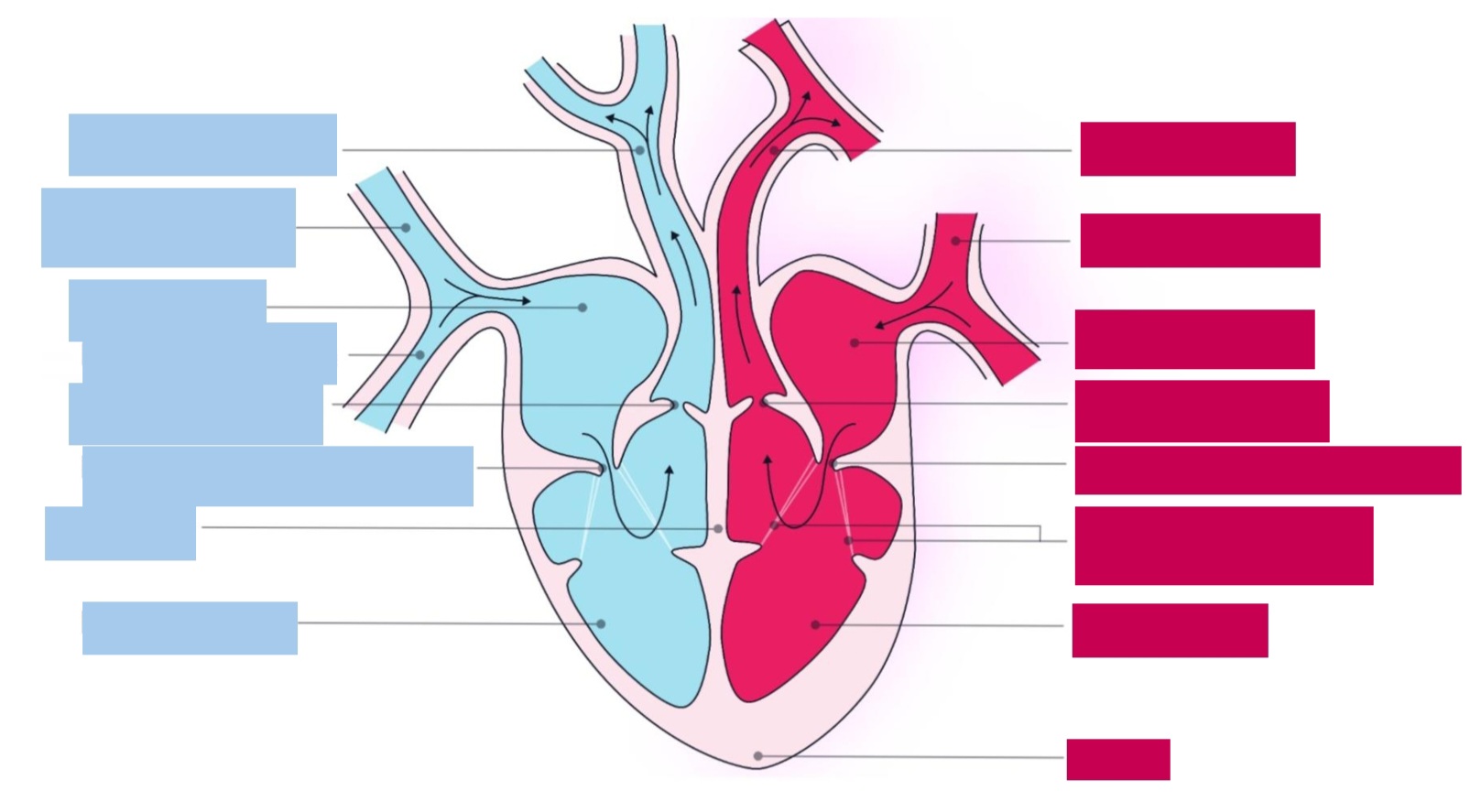
Label the boxes:
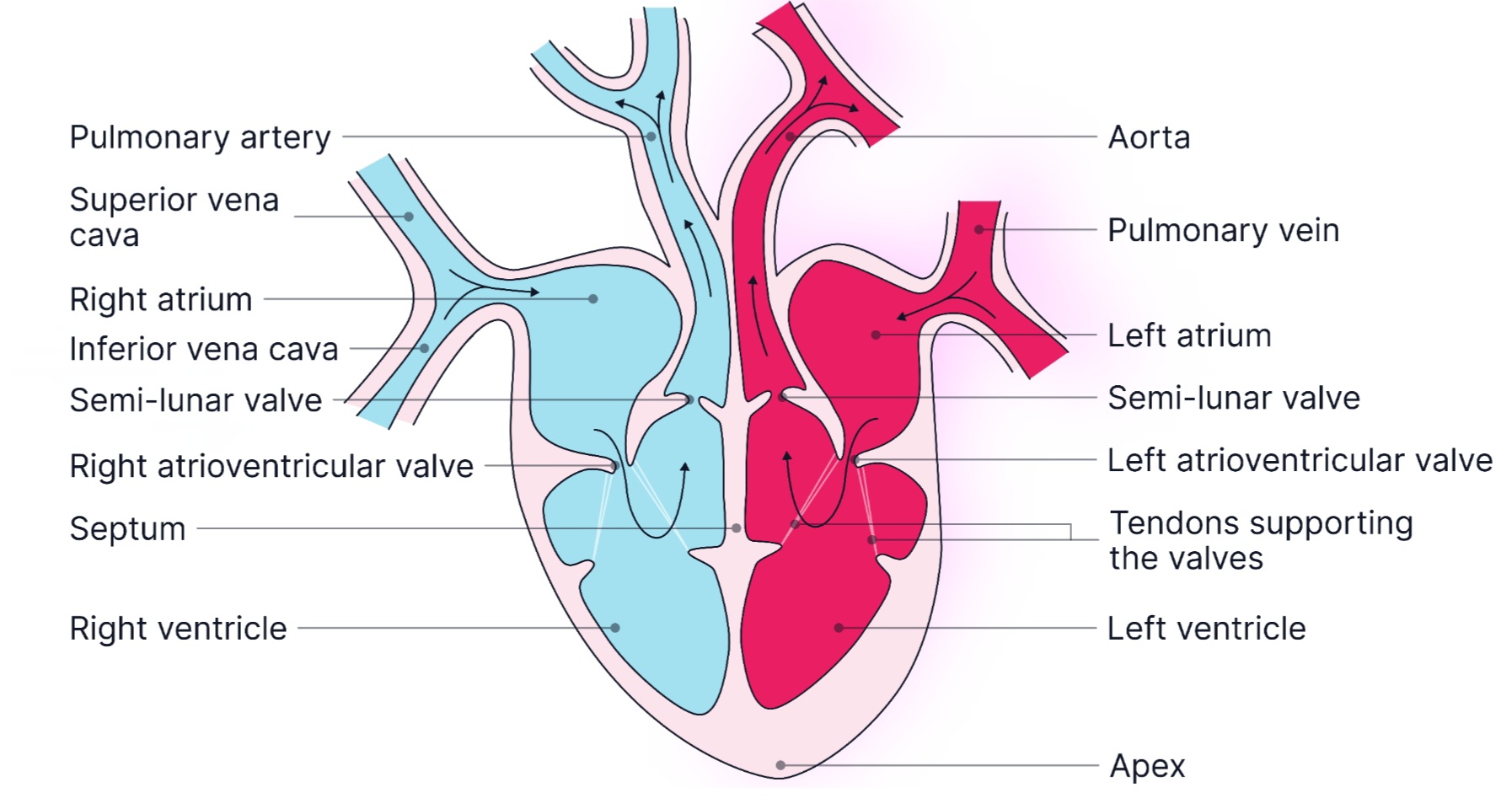
Describe the APOPLAST pathway [6]:
Water moves through the cell walls and intercellular spaces.
Movement of water occurs due to the cohesive forces between water molecules.
At the endodermis the casparian strip (waxy suberin) blocks the apoplast pathway.
This forces water to cross the selectively permeable cell membrane (that removes toxins) into the symplast pathway to cross the endodermis.
The ions that are actively transported into the xylem create a water potential gradient so water enters the xylem by osmosis.
When water enters the xylem root pressure increases, creating a root pressure gradient driving water up the xylem.
Describe the SYMPLAST pathway [5]:
Water moves through the cytoplasm of cells, by the plasmodesmata.
Water crosses the cell-surface membrane once when entering the root hair cell.
Movement occurs by osmosis down a water potential gradient, to the xylem.
The ions that are actively transported into the xylem creating a water potential gradient so water enters the xylem by osmosis.
When water enters the xylem root pressure increases, creating a root pressure gradient driving water up the xylem.
How do you set up a POTOMETER [6]?
Cut the shoot at a slant (to increase SA), underwater (to prevent air entering the xylem).
Assemble potometer in a beaker of water.
Insert shoot in the bung underwater.
Seal joints with petroleum jelly to ensure it is airtight.
Form an air bubble in the capillary tube and record its position.
Record the distance moved in a certain amount of time.
After carrying out the POTOMETER experiment what calculations should be done [2]?
(Record the distance moved in a certain amount of time).
Calculate volume of water uptake in a given time (pi x r^2 x distance).
Calculate rate of water uptake (divide vol by time taken).
What are the limitations of using a POTOMETER to measure the rate of transpiration [5]?
Potometer measures water uptake not transpiration.
Water is used for support.
Water is used in photosynthesis, and produced during respiration.
The shoot in the potometer has no roots whereas a plant does - so it may not accurately reflect a plant.
Xylem cells are very narrow.