LING 314 WEEK 12
 Call Kai
 Learn
Learn Practice Test
 Spaced Repetition
 Match
Match Flashcards
 Knowt Play
1/32

There's no tags or description
Looks like no tags are added yet.
Name | Mastery | Learn | Test | Matching | Spaced | Call with Kai |
|---|
No analytics yet
Send a link to your students to track their progress
33 Terms
degree of constriction
a continuum of constriction exists between open and closed sounds
vowels: vocal tract is most open
stop consonants: most closed
tongue bracing
contact made by tongue with surfaces within oral cavity such as molars or other teeth and palate regions
forces airflow through specific locations
maintains stability and accuracy
reduces tongue’s degrees of freedom
how does tongue bracing provide stability and precision
provides an anchor, enhances precision of sound production
especially in rapid or complex speech
how does tongue bracing efficiently produce speech
by limiting movement options, bracing simplifies control over tongue
faciliates more efficient speech articulation
how does tongue bracing provide feedbakc for adjustment
offers somatosensory feedback
aids in adjustment of tongue position and movement for accurate sound articulation
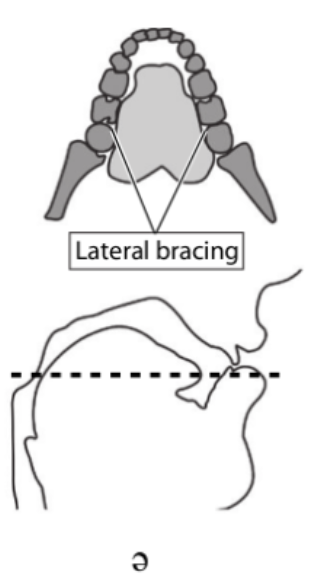
lateral bracing
curcial for sounds requiring airflow to be directed along tongue’s midline
involves side of tongue contacting inner sides of teeth or upper lateral regions of mouth
provides mechanism for achieving different shapes of tube-like cavity by stabilizing tongue in back
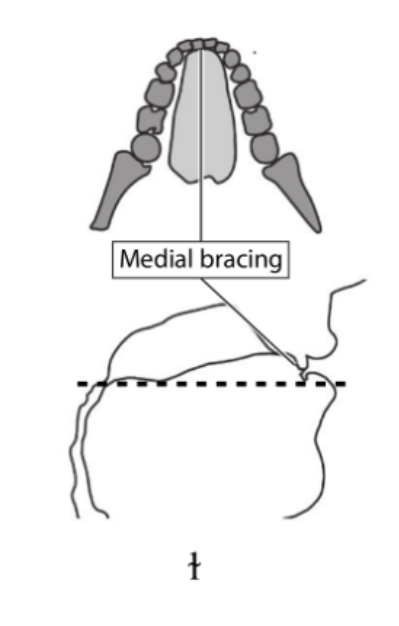
medial bracing
essential for sounds that direct airflow laterally along sides of tongue (ex. lateral fricatives + lateral approximants)
occurs when tongue makes contact with roof of mouth along its center
provides mechanism for achieving a tight central seal when allowing air to escape laterally
approximants
lingual constrictions that are not tight enough to disrupt airflow
retain some vocalic qualities, BUT tighter constrictions compared to vowels
turbelent constrictions
result from a tight constriction and specific tongue shapes that accelerate airflow, causing turbulence
ex. fricatives
true or false:
degree of turbulence decreases with constriction
it reaches a critical point that maximizes turbulence for that location
false
degree of turbulence increases with constriction
true or false:
different lingual fricatives use varied tongue shapes
lateral fricatives can be produced symmetrically or asymmetrically with airflow to create turbulence
true
periodic constrictions
result: trill of anterior tongue under certain conditions, similar to vocal fold phonation
requires narrow constriction, proper airway shape behind constriction, and tenseness in vibrating body
closure constrictions
tongue must compress against opposing surface to withstand air pressure and create a tight seal
ex. stops or plosives
narrowest degree of consonant constriction
overshoot
concept where movement’s target is beyond point of constriction
aids in creating a tight closure
closure constrictions with taps and flaps
minimal or no overshoot (representative of lighter or quicker stops)
flaps: articulator briefly touches a surface then continues in same direction, often tangentially to alveolar ridge
locations of constrictions
phonologists refer to moving parts of the anatomy with features like [coronal], [dorsal], [ATR], and [labial]
tongue anterior constrictions
anterior part of the tongue is extremely flexible, enabling constrictions at various locations
sounds can be articulated against the palate, teeth, or lips
muscles involved in tongue anterior constrictions
transversus & verticalis: elongation & bracing
SL: raising tongue front
IL: stabilization
apical vs. laminal distinctions in tongue shape
whether the tongue tip or blade makes the constrictions
retroflex constrictions
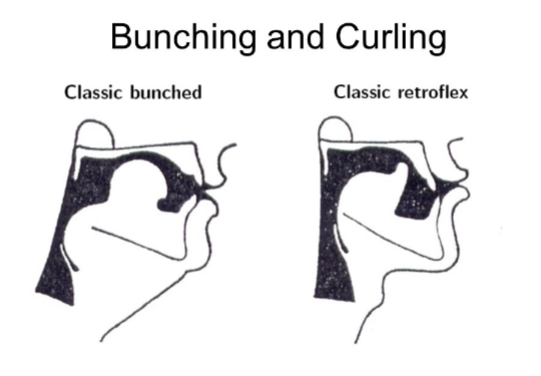
curling the tongue tip backward, using underside of tongue against upper teeth & alveolar ridge
oral cavity shape produces a recognizable alveolar ridge
can either be bunched or curled (classic retroflex)
contact between alveolar ridge and hard palate
muslce involved in retroflex constrictions
superior longitudinal muscle: facilitates retroflex productions
palatography
method used to study tongue-palate contact during speech
used in articulatory ponetics
2 types: static & electropalatorgaphy (EPG)
static palatography
used for studying constriction in stop consonants & affricates
uses powder or dye to mark tongue-palate contact
captures contact pattern after speech production
advantages of static palatography
simple and inexpensive
good for single articulatory events
limitations of static palatography
not dynamic, only captures one moment
messy and intrusive
which areas are contacted in laminal dentals (static palatography)?
broad contact all along inside the surface of the upper teeth and beyond
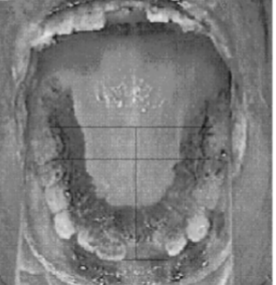
which areas are contacted in laminal post-alveolar (static palatography)?
broad contact well behind upper teeth
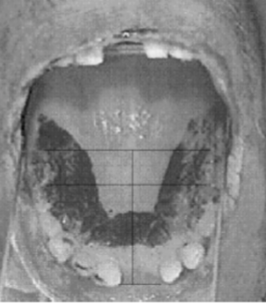
which areas are contacted in apical alveolar (static palatography)?
narrow contact just behind the upper teeth
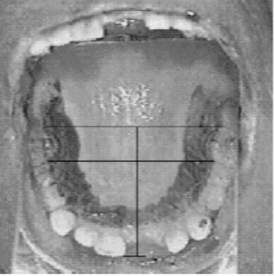
true or false:
static palatography is suitable for studying the strength of overshoot in coronal stops
false
electropalatrography
real-time method to track tongue contact
uses a custom-made artificial palate with electrodes
records contact patterns dynamically
EPG output
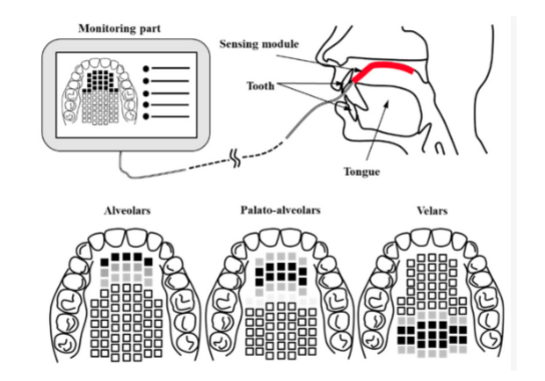
advantages of EPG
real time dynamic analysis
repeatable and quantifiable
limitations of EPG
expensive and requires custom palate
only records contact, not pressure