Chapter 48 - Regulation of the Internal Environment
 Call Kai
 Learn
Learn Practice Test
 Spaced Repetition
 Match
Match Flashcards
 Knowt Play
1/54

There's no tags or description
Looks like no tags are added yet.
Name | Mastery | Learn | Test | Matching | Spaced | Call with Kai |
|---|
No analytics yet
Send a link to your students to track their progress
55 Terms
Define osmoregulation.
The regulation of water and ion balance in an organism.
What is the primary purpose of excretion?
To maintain water and ion balance while ridding the body of metabolic wastes.
Define thermoregulation.
The control of body temperature.
What constitutes the extracellular fluid (ECF) in animals with a circulatory system?
Interstitial fluid and blood plasma.
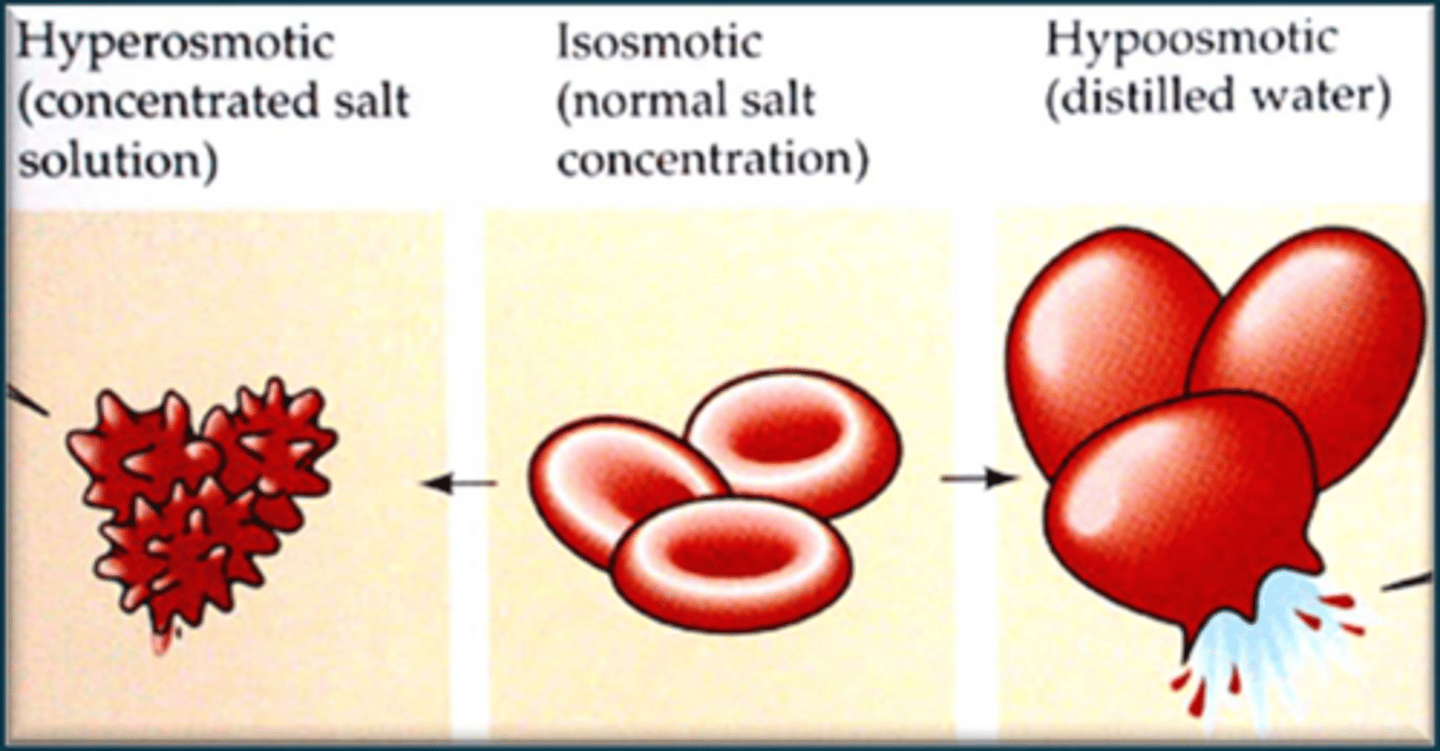
Define hyperosmotic.
A solution with higher osmolarity compared to another solution.
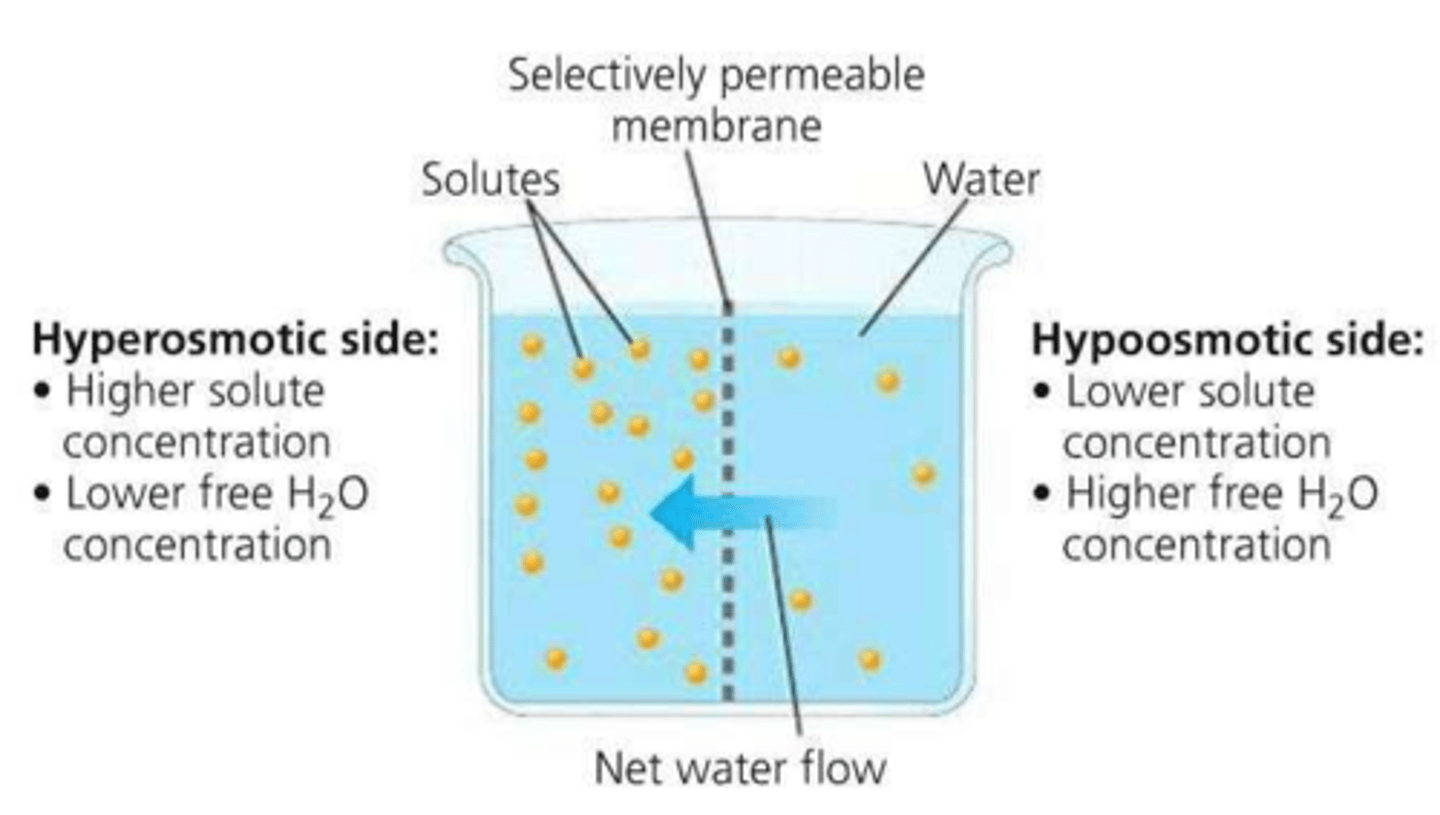
Define hypoosmotic.
A solution with lower osmolarity compared to another solution.
What does it mean for two solutions to be isoosmotic?
They have the same osmolarity.
What is an osmoconformer?
An animal whose internal osmolarity matches that of its environment.
What is an osmoregulator?
An animal that uses control mechanisms to maintain internal osmolarity at levels that may differ from its surroundings.
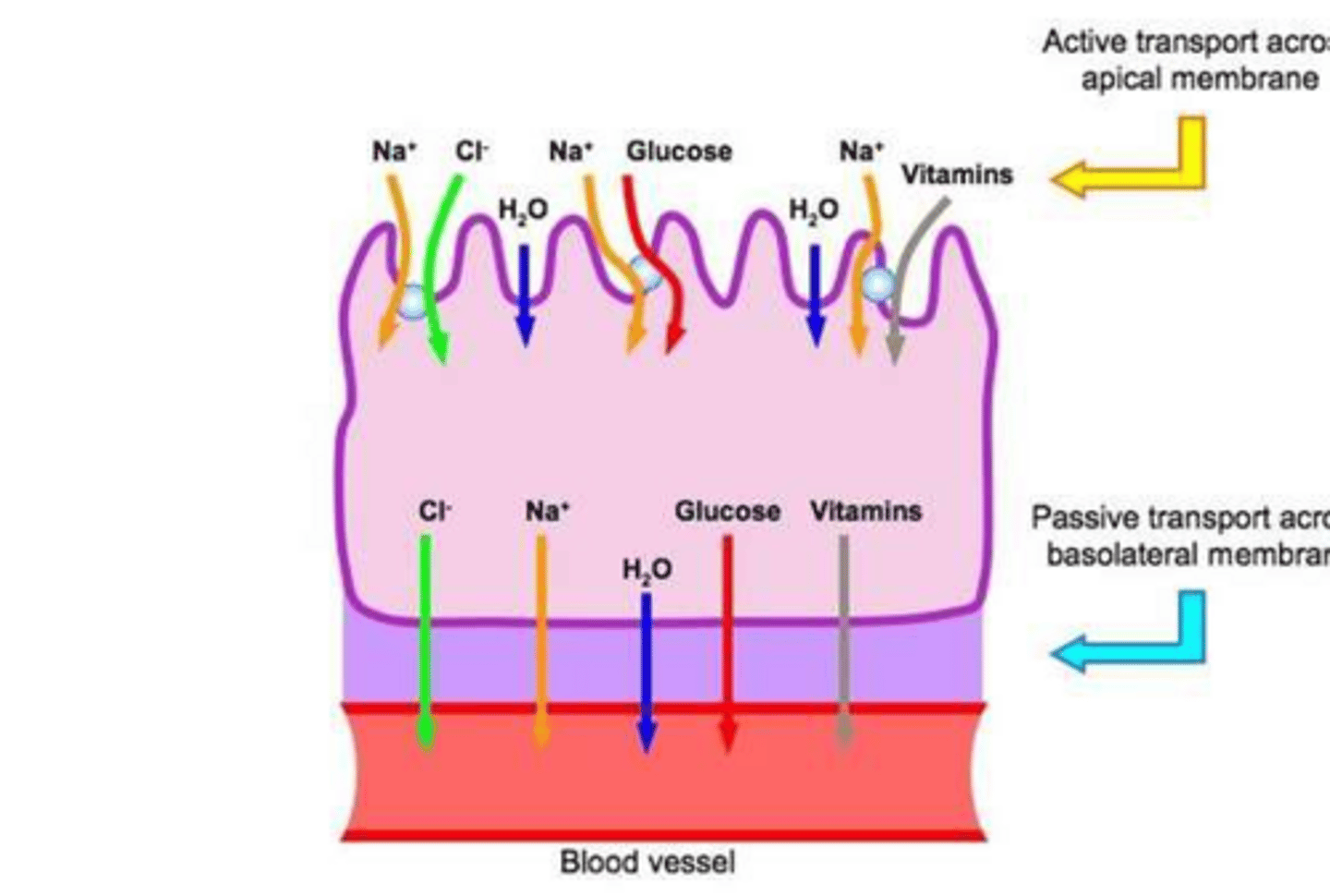
What structures carry out osmoregulation and excretion?
Microscopic tubules formed from a transport epithelium.
How do transport proteins function in excretory tubules?
They move specific molecules and ions into or out of the tubule via active or passive transport based on concentration gradients.
What is metabolic water?
Water produced as a byproduct of the metabolism of ingested food.
What are the four common nitrogenous waste products?
Ammonia, urea, uric acid, or a combination of these.
What three factors determine the type of nitrogenous waste an animal produces?
Toxicity, water conservation, and energy requirements.
Why are most marine invertebrates osmoconformers?
Because their internal fluids are isoosmotic with the surrounding seawater, typically around 1,000 mOsm/L.
How do freshwater invertebrates maintain their internal osmolarity?
They act as osmoregulators, expending energy to excrete excess water and actively transporting salt ions from the environment into their bodies.
Name the three types of specialized excretory tubules found in invertebrates.
Protonephridia, metanephridia, and Malpighian tubules.
In which organisms are protonephridia found?
Flatworms and larval mollusks.
In which organisms are metanephridia found?
Annelids and most adult mollusks.
In which organisms are Malpighian tubules found?
Insects and other arthropods.
Why is the 'flame cell' in protonephridia named as such?
Because the movement of its cilia resembles a flickering flame.
What is the function of cilia in a flame cell?
They beat to move fluid through the excretory tubule.
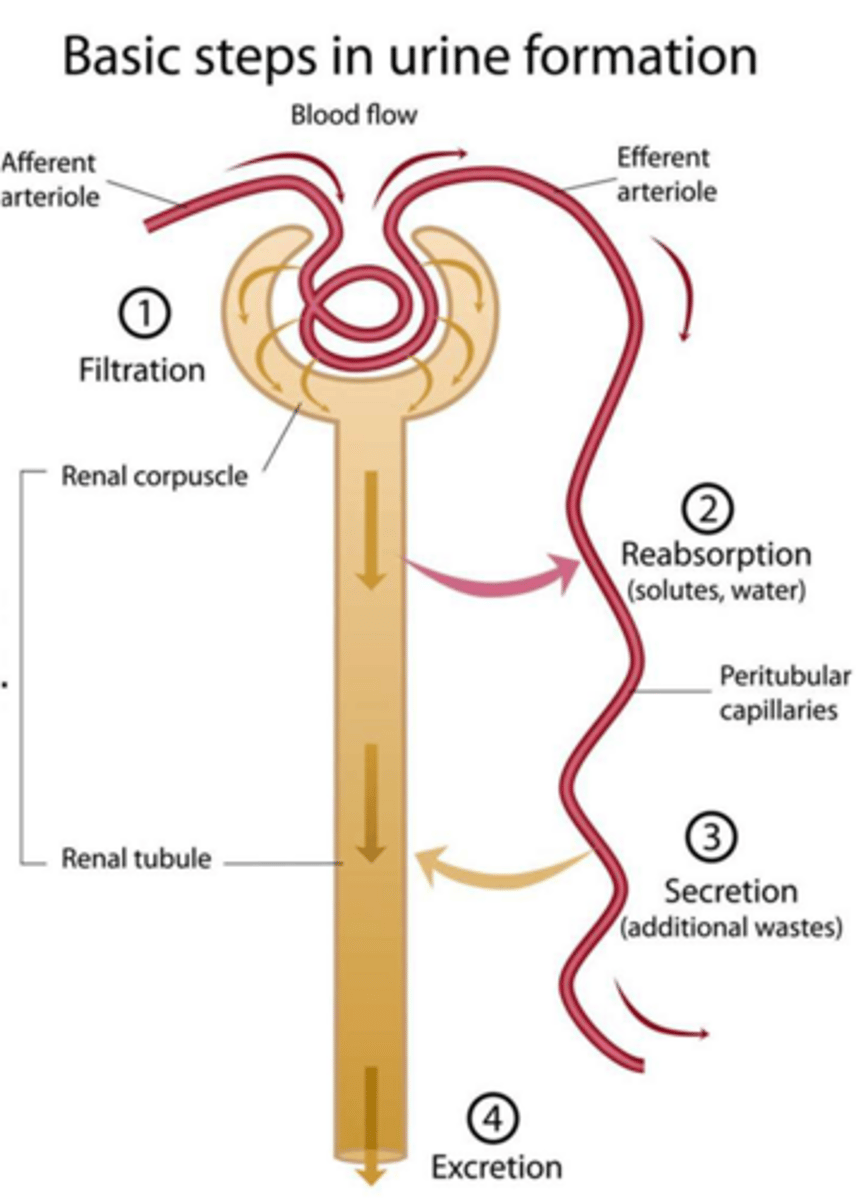
What is the primary function of the Na+/K+ pumps in the nephron epithelium?
They move Na+ and K+ from the filtrate into the interstitial fluid.
How are glucose and amino acids reabsorbed in the proximal tubule?
They are reabsorbed via specific active transport proteins.
What role do aquaporins play in the nephron?
They act as transport proteins that facilitate the movement of water from the tubule into the interstitial fluid by osmosis.
What happens to the osmolarity of the filtrate at the bottom of the loop of Henle?
It reaches a peak of about 1,200 mOsm/L.
Why is water trapped in the ascending loop of Henle?
The ascending segment lacks aquaporins, preventing water from moving out while salt ions are actively transported out.
What three features interact to concentrate wastes and conserve water in the kidney?
The loop of Henle, differences in permeability along the nephron, and the concentration gradient of the interstitial fluid.
What is the role of renin in the RAAS mechanism?
Renin is released by the juxtaglomerular apparatus and cleaves angiotensinogen to produce angiotensin I.
What are the three primary effects of angiotensin II?
It constricts arterioles to raise blood pressure, stimulates aldosterone synthesis/secretion, and stimulates thirst.
How does aldosterone affect kidney function?
It increases Na+ reabsorption, which raises the osmolarity of body fluids and promotes water movement into the interstitial fluid.
What is the function of atrial natriuretic factor (ANF)?
It inhibits renin release, dilates afferent arterioles, and inhibits aldosterone release to lower blood pressure.
How does ADH regulate water balance?
It increases water reabsorption in distal tubules and collecting ducts by promoting the insertion of more aquaporins.
How do marine teleosts maintain water balance?
They drink seawater continually and eliminate excess Cl- through chloride cells in their gills.
How do sharks and rays maintain isoosmolarity with seawater?
They retain high levels of urea and trimethylamine oxide (TMAO) in their body fluids.
How do freshwater fishes handle excess water?
They excrete large volumes of dilute urine and actively transport salts into their bodies via their gills.
What is the primary source of water for desert rodents like the kangaroo rat?
90% of their water is generated from oxidative reactions in their cells.
Define conduction as a mechanism of heat exchange.
The flow of heat between atoms or molecules in direct contact.
Define convection as a mechanism of heat exchange.
The transfer of heat from a body to a fluid, such as air or water, passing over its surface.
Define radiation as a mechanism of heat exchange.
The transfer of heat energy as electromagnetic radiation.
Define evaporation as a mechanism of heat exchange.
Heat transfer through the energy required to change a liquid to a gas.
What is the difference between ectotherms and endotherms?
Ectotherms obtain heat primarily from the external environment, while endotherms generate heat through internal oxidative reactions.
What is thermal acclimatization in ectotherms?
Physiological changes, such as altering membrane lipid composition, in response to seasonal temperature shifts.
What is the core temperature of the body?
The temperature within the central core consisting of abdominal/thoracic organs, the CNS, and skeletal muscles.
Where are thermoreceptors located in the human body?
In the skin (integument), spinal cord, and hypothalamus.
What is the immediate response to cold regarding skin arterioles?
Vasoconstriction of arterioles in the skin to reduce heat loss.
What is nonshivering thermogenesis?
The stimulation of fat oxidation by epinephrine and thyroid hormones to produce heat.
What is the function of brown adipose tissue in mammals?
It produces heat rapidly by uncoupling electron transport from ATP production in mitochondria.
What are the immediate responses to heat in the body?
Vasodilation of skin arterioles, panting (in some animals), and secretion of sweat.
What is torpor?
A sleeplike state of reduced metabolic, nervous, and physical activity to conserve energy.
What is the difference between hibernation and estivation?
Hibernation is extended torpor during winter to survive food scarcity, while estivation is seasonal torpor during hot, dry summers.
How does countercurrent exchange in nasal passages conserve water?
Inhaled air cools the nasal folds, causing water in outgoing breath to condense on the folds, which is then reclaimed.
What happens to brain function when core temperature drops significantly?
Hypothermia occurs, leading to confusion, coma, and eventually death.
What is the lethal temperature limit for most adult humans?
Death occurs if body temperature exceeds 43°C (110°F) for more than a few minutes.
How do mammals reduce convective heat loss in cold environments?
By contracting smooth muscles to erect hair shafts, trapping a layer of air.