LING 314: WEEK 10
 Call Kai
 Learn
Learn Practice Test
 Spaced Repetition
 Match
Match Flashcards
 Knowt Play
1/26

There's no tags or description
Looks like no tags are added yet.
Name | Mastery | Learn | Test | Matching | Spaced | Call with Kai |
|---|
No analytics yet
Send a link to your students to track their progress
27 Terms
mental symphysis
chin joint
where the mandible formed - originally two separate bones that fused together in early years
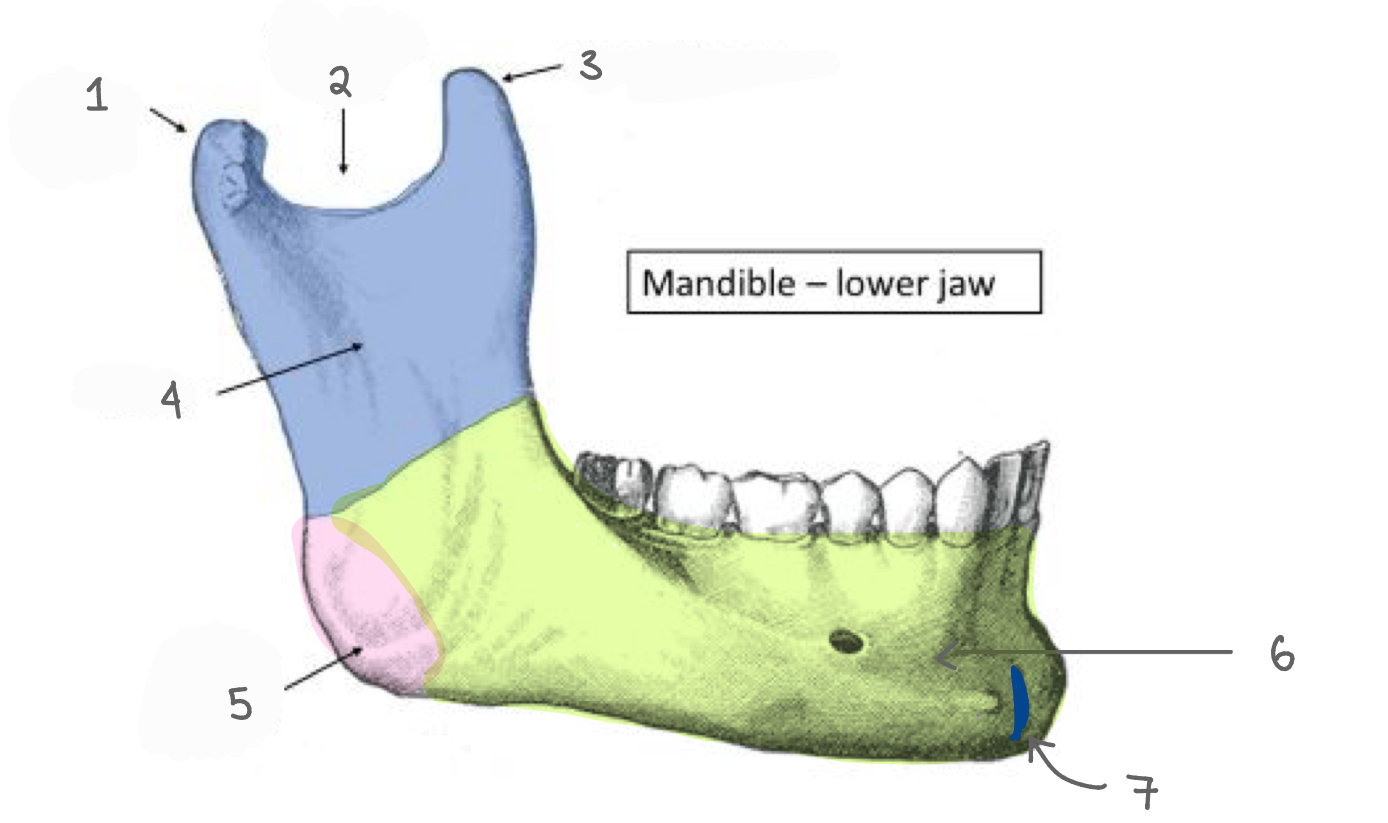
label the parts of the mandible
condylar process
mandibular notch
coronoid process
ramus
angle of mandible
body
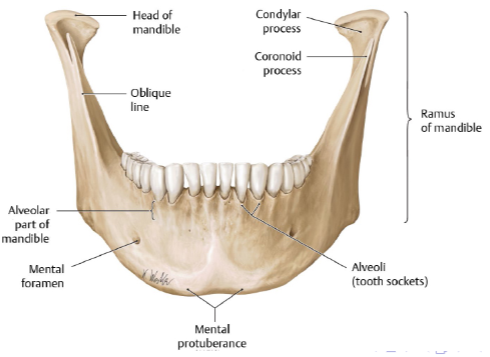
mental/mandibular symphysis
mental protuberance
chin
a triangular projection on the anterior part of the mandible located at the midline
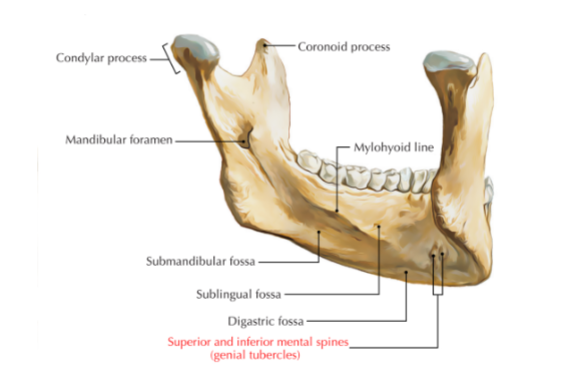
mental spines
located in the midline of the lingual (inner) surface of the mandible, specifically on the mandubular symphysis
superior: origin for the genioglossus muscle
inferior: origin for the geniohyoid muscle
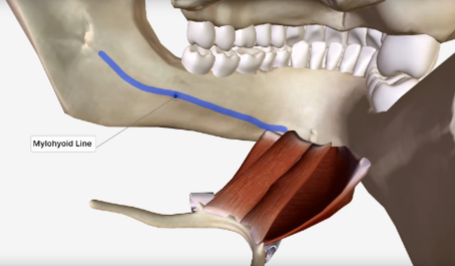
mylohyoid line
temporomandibular joint (TMJ)
connects the mandible to the temporal bone of skull
consists of condyle of mandible and mandibular fossa of temporal bone
cushioned by a fibrous articulator disk for smooth movement
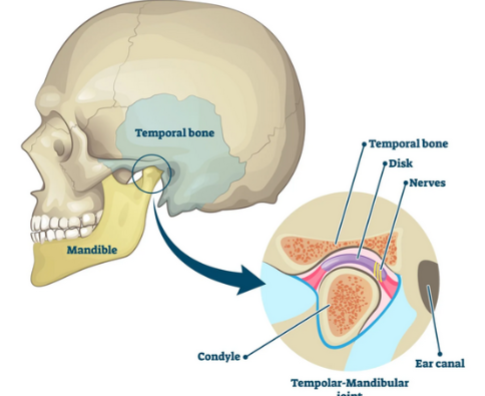
mandibular foramen
vessels supply blood to lower teeth and surrounding bone
located on internal surface of the ramus of mandible
an opening that serves as entry point for inferior alveolar nerve and vessels
mental foramen
situated on external surface of mandible, near apex of mandibular premolar teeth
a small opening that allows passage of mental nerve and blood vessels
how are jaw muscles categorized?
elevators (lifters) and depressors (lowerers)
masseter muscle
elevates the mandible (jaw closing)
divided into deep head and shallow head
origin: zygomatic arch
insertion: ramus and angle of mandible
temporal fossa
shallow depression on lateral aspect of skull
acts as origin of temporalis muscle
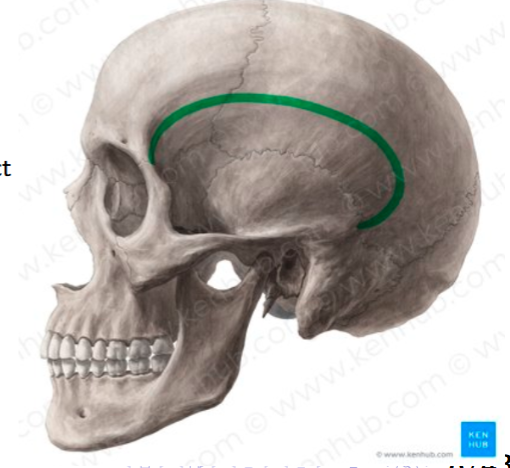
bony boundaries of temporal fossa
frontal bone (inferior lateral part)
parietal bone (inferior portion)
temporal bone (squamous part)
sphenoid bone
temporalis muscle
elevates and retracts the mandible (fast closing)
origin: temporal fossa
insertion: coronoid process of mandible
fan like shape allows for wide-range of movements
vertical fibers: elevate mandible
horizontally oriented fibers: retract mandible + pulls coronoid process sidewats
which one is false about temporalis muscle
a. it is a muscle of mastication
b. it depresses mandible during jaw opening
c. its origin intersects with frontal bone
d. it inserts on coronoid process of mandible
B
medial pterygoid muscle
elevates mandible
origin: sphenoid bone, palatine bone, and maxilla
insertion: inner surface of mandible
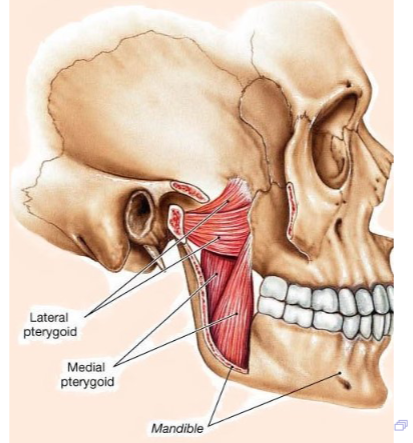
lateral pterygoid
controls side-to-side movements of jaw
aids in protrusion of jaw
origin: sphenoid bone and maxilla
insertion: TMJ disc and condyle of mandible
jaw depressor muscles
responsible for lowering the mandible
also stabilize the hyoid bone and assist in tongue movements
includes:
anterior belly of digastric muscle
mylohyoid
geniohyoid
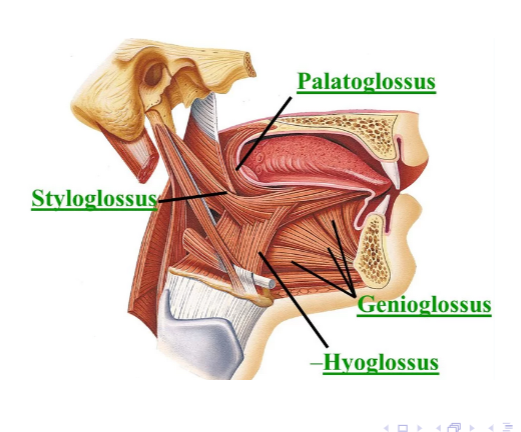
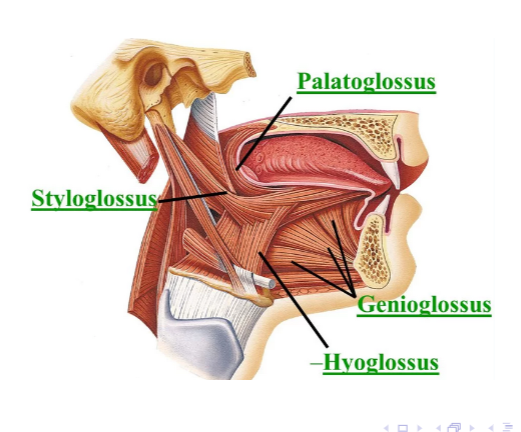
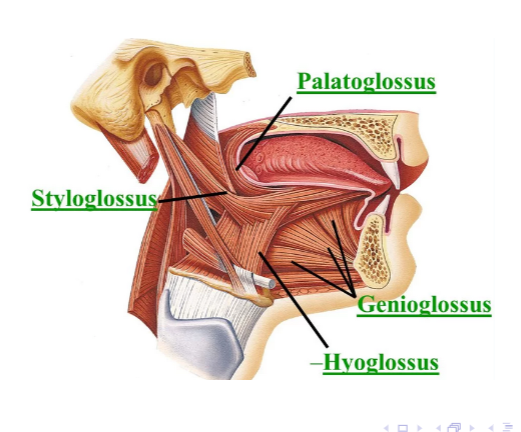
extrinsic tongue muscles
connect tongue to surrouding structures, enables complex motions
genioglossus
palatoglossus
hyoglossus
styloglossus
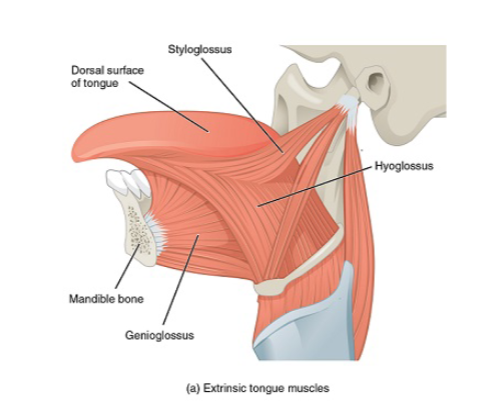
genioglossus (GG)
protacts, depresses, and can groove the tongue
origin: mental spine of mandible
insertion: throughout tongue, from tip to root
3 sections
anterior (GGa): lowers and retracts tongue front
middle (GGm): lowers and pulls forward tongue body; creates groove
posterior (GGp): pulls tongue root forward
palatoglossus (PG)
elevates the tongue and assists in uvular constrictions
narrows oropharyngeal isthmus
origin: palatine aponeurosis
insertion: sides of tongue body
hyoglossus (HG)
pulls tongue down and back, ESPECIALLY back of tongue
origin: greater horn of hyoid bone
insertion: sides of tongue
styloglossus (SG)
traditionally thought to raise and retract tongue
role in speech is under review
origin: styloid process of the temporal bone
insertion: sides of tongue, interlocks with intrinsic tongue muscles
what is the significance of the mental spines in muscle attachment?
a. both superior and inferior spines are origins for the mylohyoid
b. they are purely vestigial and have no muscular function
c. superior mental spines originate the genioglossus; inferior spines originate the geniohyoid
c
true or false:
the massete muscle, like the temporalis, inserts on the coronoid process of the mandible, and primarily contirbutes to jaw retraction
false
true or false:
john is looking at a midsagittal slice/image of the tongue of a subject and notices a forward movement of the tongue body.
the anterior fibers of the genioglssus muscle that can create such a movement.
false
which of the following statements is TRUE?
a. the medial pterygoid originates on the mandible and inserts on the temporal bone
b. the temporalis originates on the temporal fossa and inserts on the coronoid process of the mandible
c. the masseter originates on the mandible and inserts on the zygomatic arch
d. the lateral pterygoid elevates the mandible during chewing
b
during an articulatory experiment, a researcher observes strong activation of a tongue muscle that rigniates on the mandible and inserts into the body of that tongue
genioglossus