FRST 211 Lectures 27-32
 Call Kai
 Learn
Learn Practice Test
 Spaced Repetition
 Match
Match Flashcards
 Knowt Play
1/13

There's no tags or description
Looks like no tags are added yet.
Name | Mastery | Learn | Test | Matching | Spaced | Call with Kai |
|---|
No analytics yet
Send a link to your students to track their progress
14 Terms
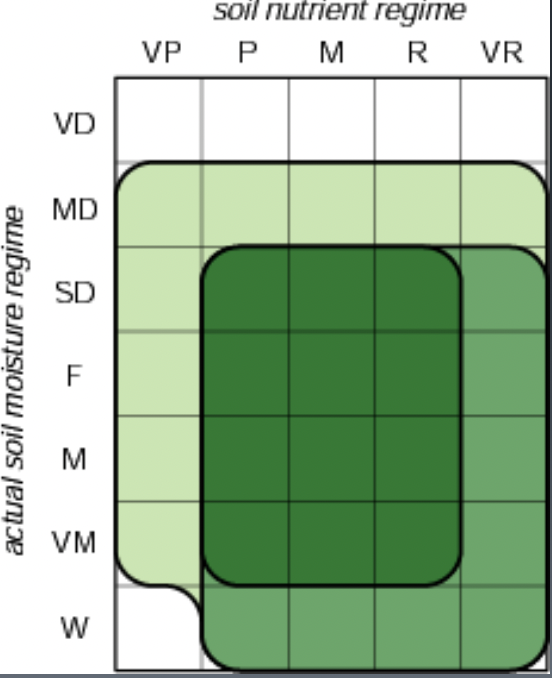
Englemann spruce
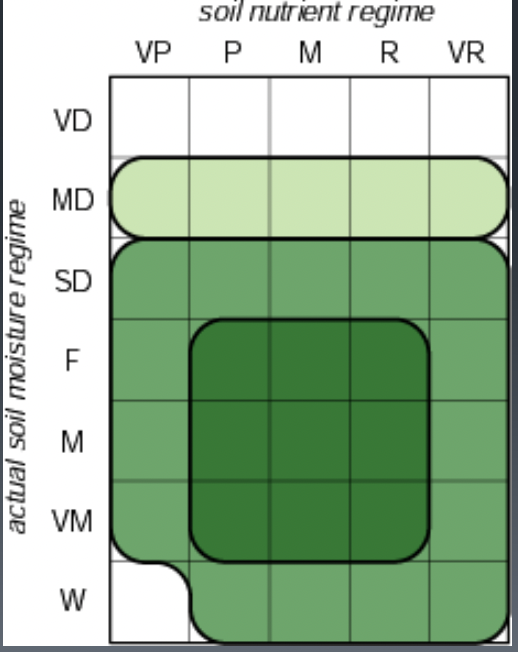
Subalpine fir
Silvics of Engelmann Spruce
Successful germination requires seed crop + light + seedbed
Moderately shade tolerant
Partial shade is beneficial (protects from high temperature and drought)
Regenerates on range of substrates: leaf litter, forest floor, decaying wood, mineral soil
Silvics of Subalpine Fir
Regenerates on range of substrates: forest floor, leaf litter or decaying wood
Can regenerate via vegetative layering
Shade tolerant
Good competitor > 50% shade
Slow growth, releases in gaps
Interior Cedar-Hemlock Zone
Interior continental climate, strong orographic effects
Cool, wet winters; warm, dry summers
Relatively wet, 25-50% precipitation = snow
Summer water deficits in many areas
Dominated by upland conifer species
western hemlock
western redcedar
subalpine fir
Douglas-fir
Highest diversity of tree species in BC
Overlap with other BEC zone
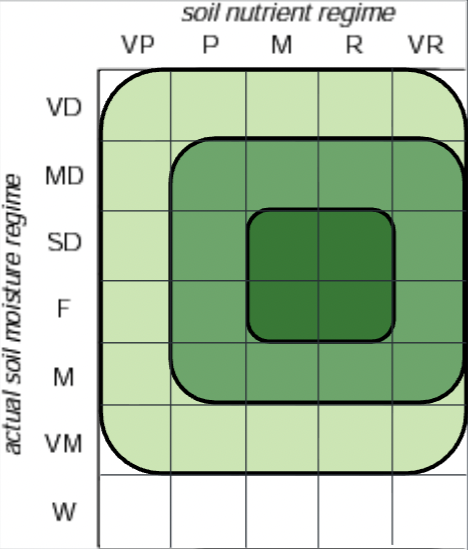
Trembling aspen
Silvics of Trembling Aspen
Modest edaphic amplitude
Slightly Dry to Fresh SMR
Medium to rich SNR
Shade intolerant
Higher in seedlings developed from root suckers
Fast-growing
Relatively short-lived
Silvics of Paper Birch
Modest edaphic amplitude
Fresh to moist SMR
Medium to rich SNR
Water-demanding species
Associative N-fixation
Nutrient-demanding
Creates nutrient-rich leaf litter
Alters humus forms
Mors → mormoders → moders
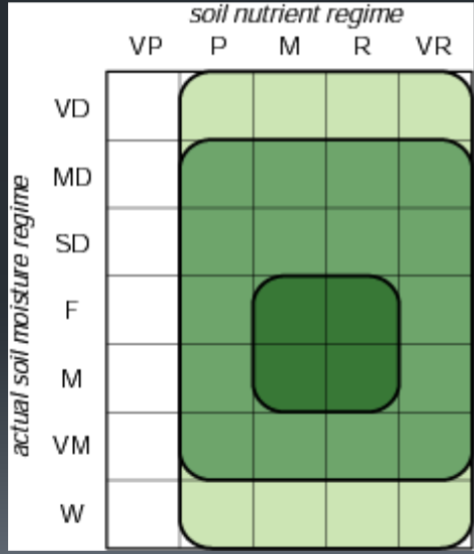
Paper birch
Positive mixed forest ICH interactions
Mixed forests are resistant to Armillaria
Paper birch microbes hostile to root pathogens, establishing a barrier to spread
This protects conifers
Paper Birch and Forest Productivity
Ectomycorrhizal networks facilitate nutrient and carbon transfer to tree biomass
Associative N-fixation
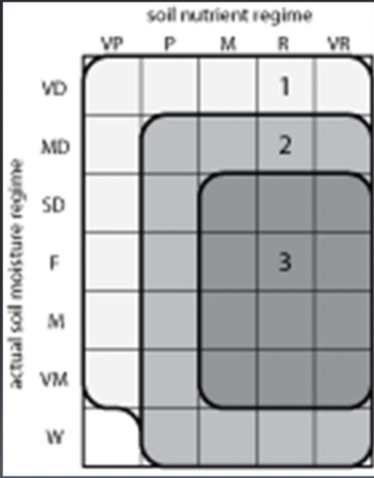
White spruce
Silvics of White Spruce
Successful germination = water + temperature
Usually shallow-rooted
Range of substrates:
Successful on mineral soil + burned substrates
Less successful on organics and decaying wood, but common in mature forests
Moderately shade-tolerant
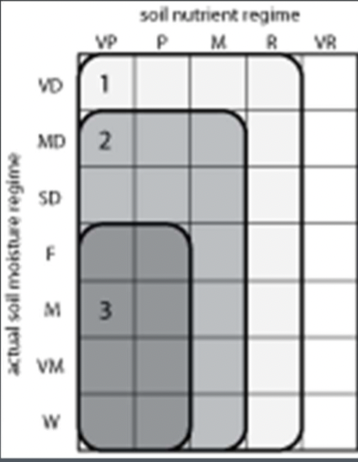
Black spruce
Silvics of Black Spruce
Pioneer after severe fires
Depends on seed availability
Little competition
Fine-scale gaps in mature forests
300-1000 years
Early to late-succession