L2. Mastication, Salivation, and Deglutition
 Call Kai
 Learn
Learn Practice Test
 Spaced Repetition
 Match
Match Flashcards
 Knowt Play
1/226

There's no tags or description
Looks like no tags are added yet.
Name | Mastery | Learn | Test | Matching | Spaced | Call with Kai |
|---|
No analytics yet
Send a link to your students to track their progress
227 Terms
-mixes food with saliva to lubricate and facilitate swallowing
-reduces the size of the food particles
-mixes ingested carbohydrates with salivary amylase to begin carbohydrate digestion, fats are digested by lingual lipase
What are the 3 functions of chewing (mastication)?
Mastication has both voluntary and involuntary components.
Mastication has both ______ and ______ components.
involves reflexes initiated by the presence of food in the mouth -> mechanoreceptors within the mouth signal to brain stem to initiate chewing
What does the involuntary component of mastication involve, and explain?
can override involuntary control
What can the voluntary component of mastication do at any time?
-primary
-secondary
-tertiary
What are the 3 main effects that the oral cavity functions involve?
interaction of the mandible and maxilla triturates food into smaller particles -> this will enhance efficiency of digestive process
What is the primary effect of oral cavity functions?
-oral cavity provides some protection for the dentition, and it begins with starch (alpha-amylase) and lipid (lingual lipase) digestion
-lubricates the food bolus for swallowing
-forms an alternate airway and functions in verbal communications
What are the 3 main secondary effects of oral cavity function?
maintaining good oral health is closely associated with good overall health -> ex: patients with perio disease have a high incidence of cardiovascular disease
What is the tertiary effect of oral cavity functions?
Teeth and bite force are important in mastication.
______ and ______ are important in mastication.
the number of teeth
What is fragmentation of food particles dependent on?
bite force
What is another factor of fragmentation of particles, besides the number of teeth?
-muscle volume
-jaw muscle activity
-coordination between the various chewing muscles
What 3 factors does bite force depend on?
a class III lever system
What type of system is mastication?
lever system distributes force between molars and incisors -> where molars have more bite force and incisors have less bite force
What is the force like in the class III lever system that is mastication?
it allows more control of force of bite
What is the advantage of the class III lever system?
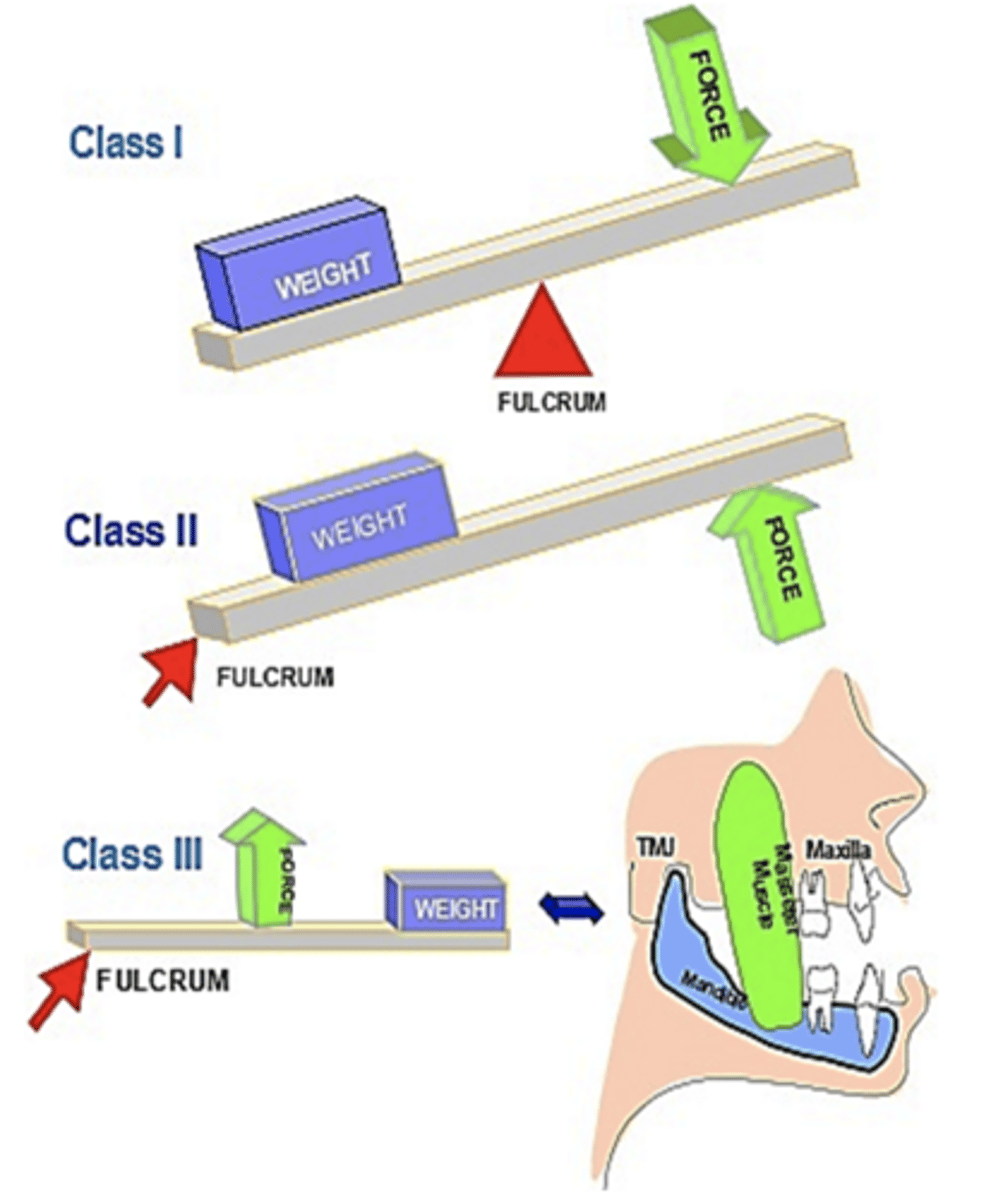
bite force can vary on individual teeth, depending upon the position of the tooth
What is the bite force like in a single person?
yes
Is bite force sufficient to crack dentition?
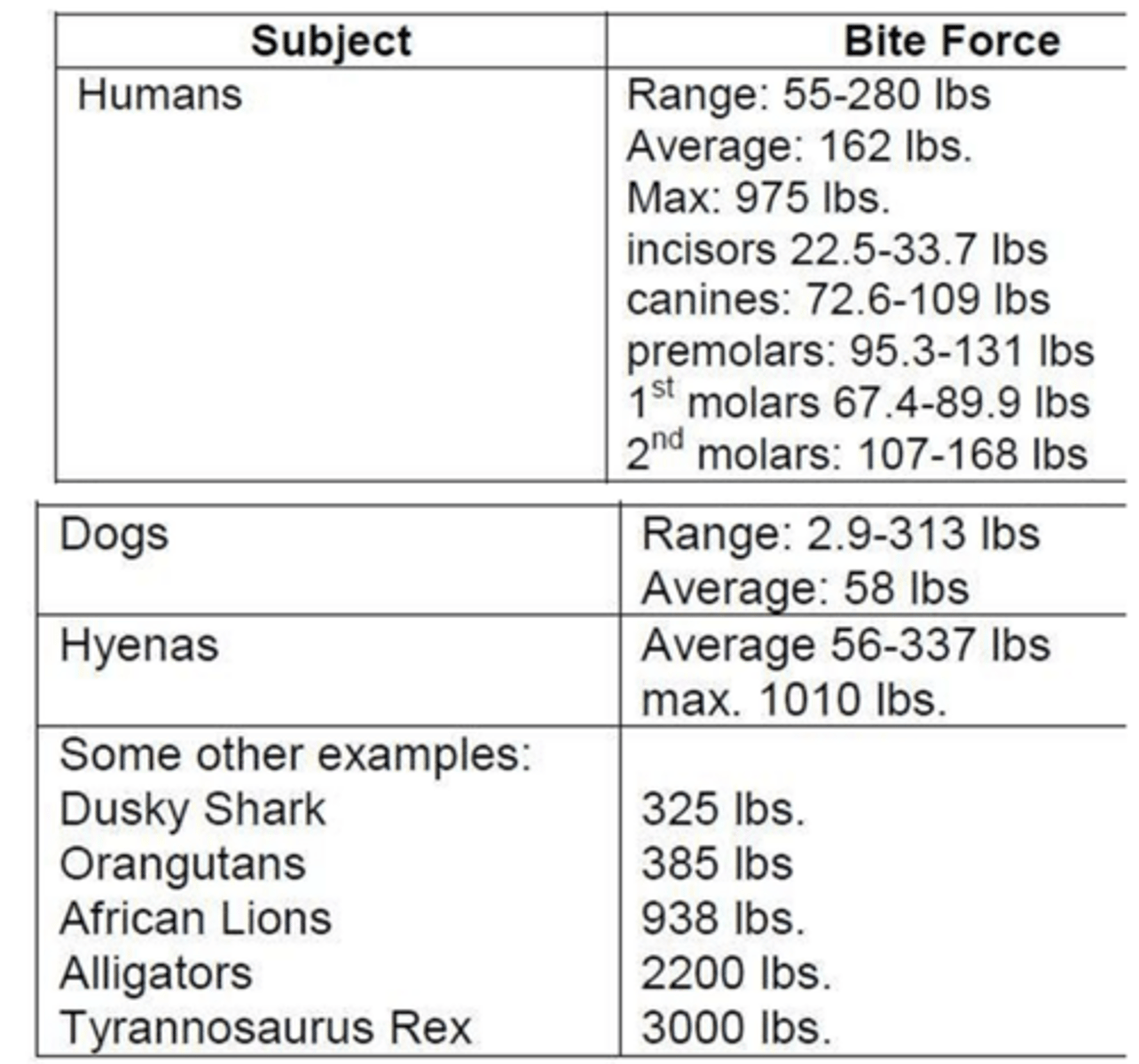
compared to other animals, the average human bite force is less!
gravity
What is the most common jaw opening force?
jaw closing muscles
What is the most common jaw opening force, gravity, opposed by?
generally not strong; oppose less resistance
What is the strength of jaw opening muscles like, and explain?
2 close the jaw and 2 open the jaw
How do the 4 basic reflexes of mastication compare?
-myotatic (aka stretch reflex)
-low threshold mechanoreceptor reflex
What are the 2 basic masticatory reflexes that close the jaw?
-inverse myotatic reflex (aka Golgi tendon reflex)
-high threshold mechanoreceptor reflex
What are the 2 basic masticatory reflexes that open the jaw?
a resting tone of the skeletal muscle in the jaw keeps the mouth closed
What happens in the myotatic (aka stretch reflex)?
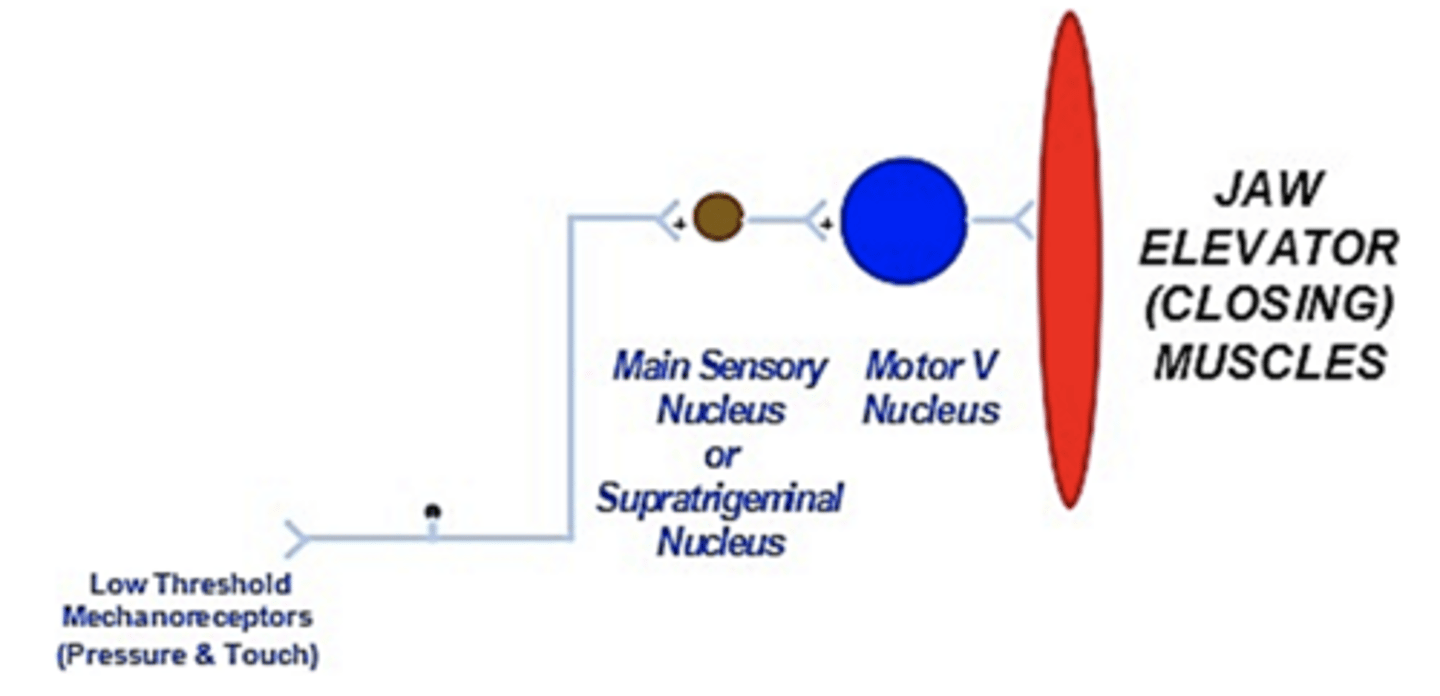
pressure or touch on dorsum of tongue stimulates jaw closing -> this is activated during swallowing
What happens in the low threshold mechanoreceptor reflex?
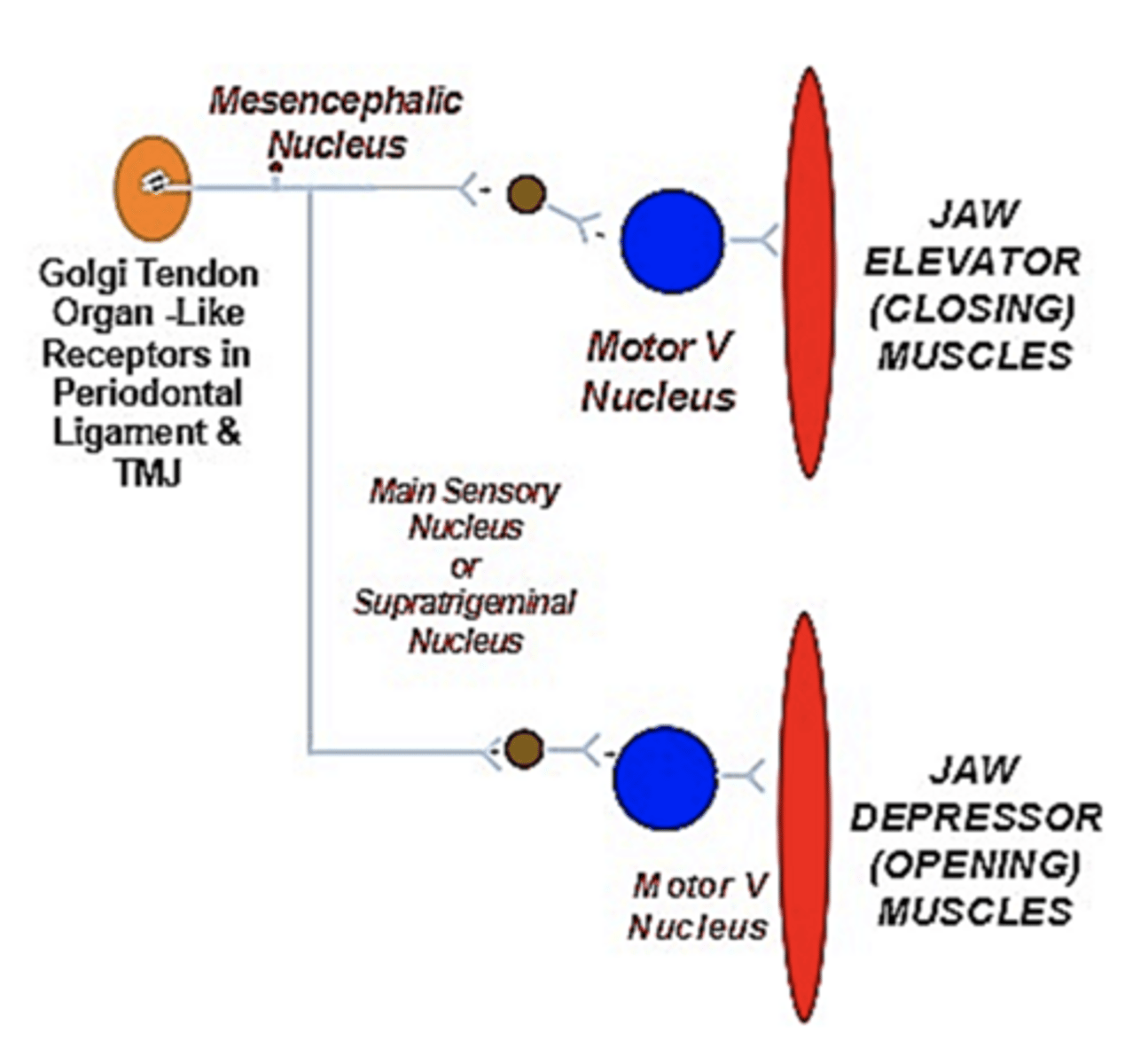
pressure on the TMJ and PDL inhibits jaw closing and stimulates jaw opening muscles
What happens in the inverse myotatic reflex (aka Golgi tendon reflex)?
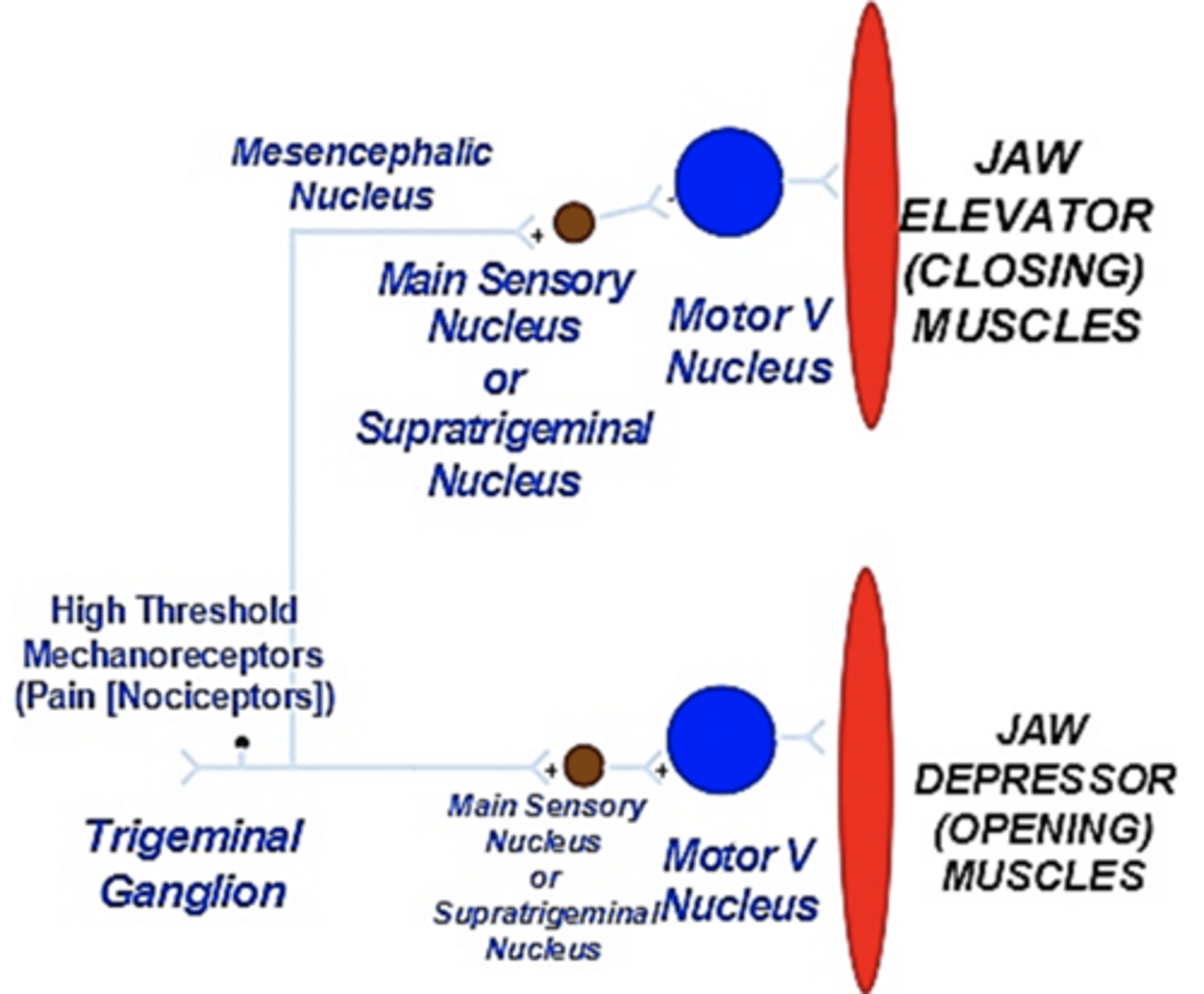
nociceptive stimuli (pain, such as hot food) results in rapid jaw opening -> rids oral cavity of harmful substances
What happens in the high threshold mechanoreceptor reflex?
reflexes of mastication:
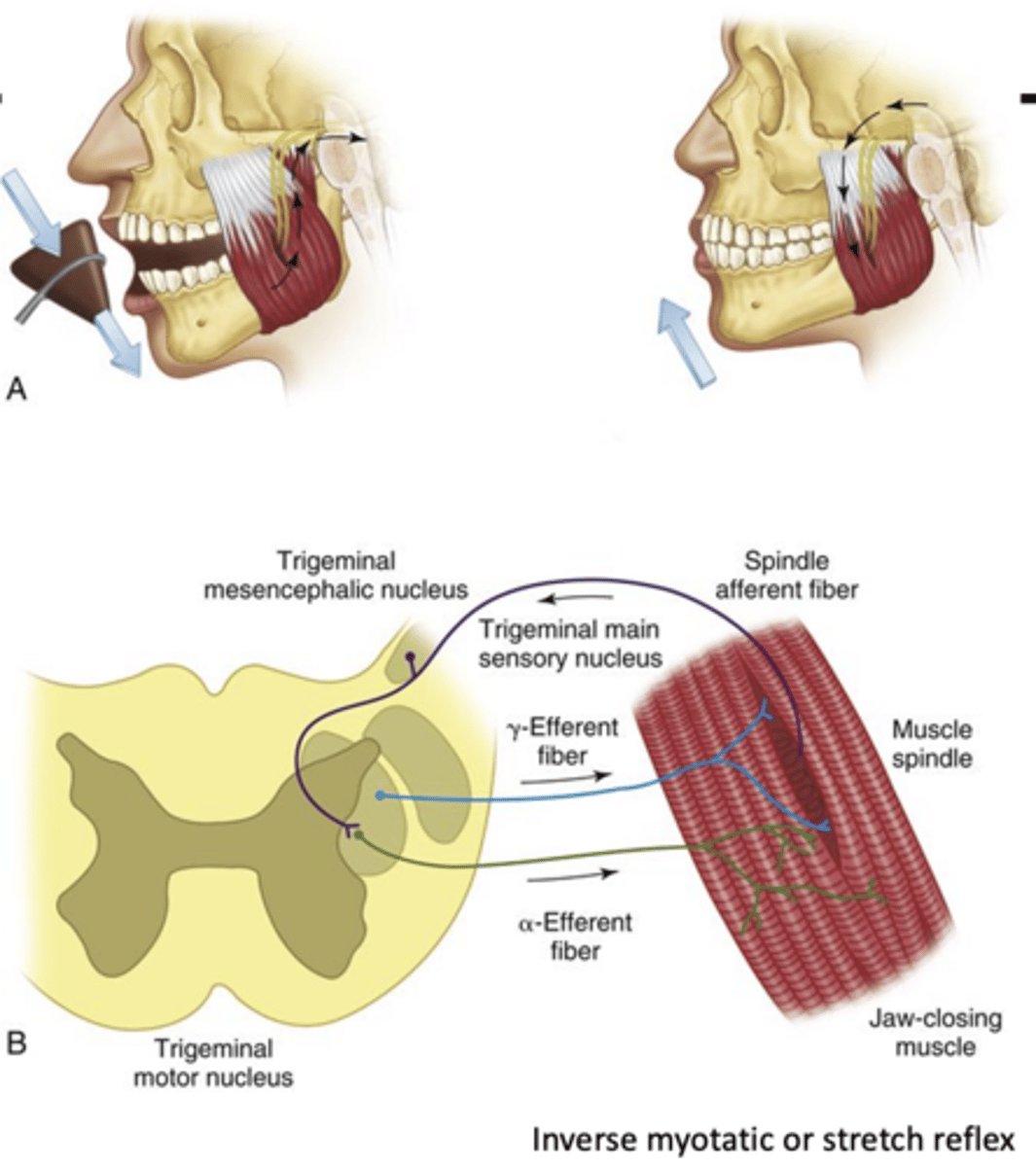
the jaw jerk reflex
What is the myotatic reflex also known as?
gravity opens jaw, stretching spindles in jaw closing muscles to stimulate the reflex
What happens to the jaw due to gravity, and explain?
ONLY in jaw closing muscles!
Where is the muscle spindle found?
motor nerves to jaw closing muscles are stimulated
What happens reflexively, upon stretching spindles in jaw closing muscles due to gravity?
gravity acts to open the jaw, but normal physiology dictates that the mouth is closed -> will direct the air through the nares
Explain the myotatic reflex and how it contributes to physiologic function.
no; this avoids confusion of the CNS
Is there a need for muscle spindles in jaw opening muscles, and explain?
they are inhibited; purpose is to maintain tone of masseter and keeps mouth shut
What happens to jaw opening motor nerves in the myotatic reflex (aka jaw jerk), and explain?
myotatic reflex (aka jaw jerk reflex):
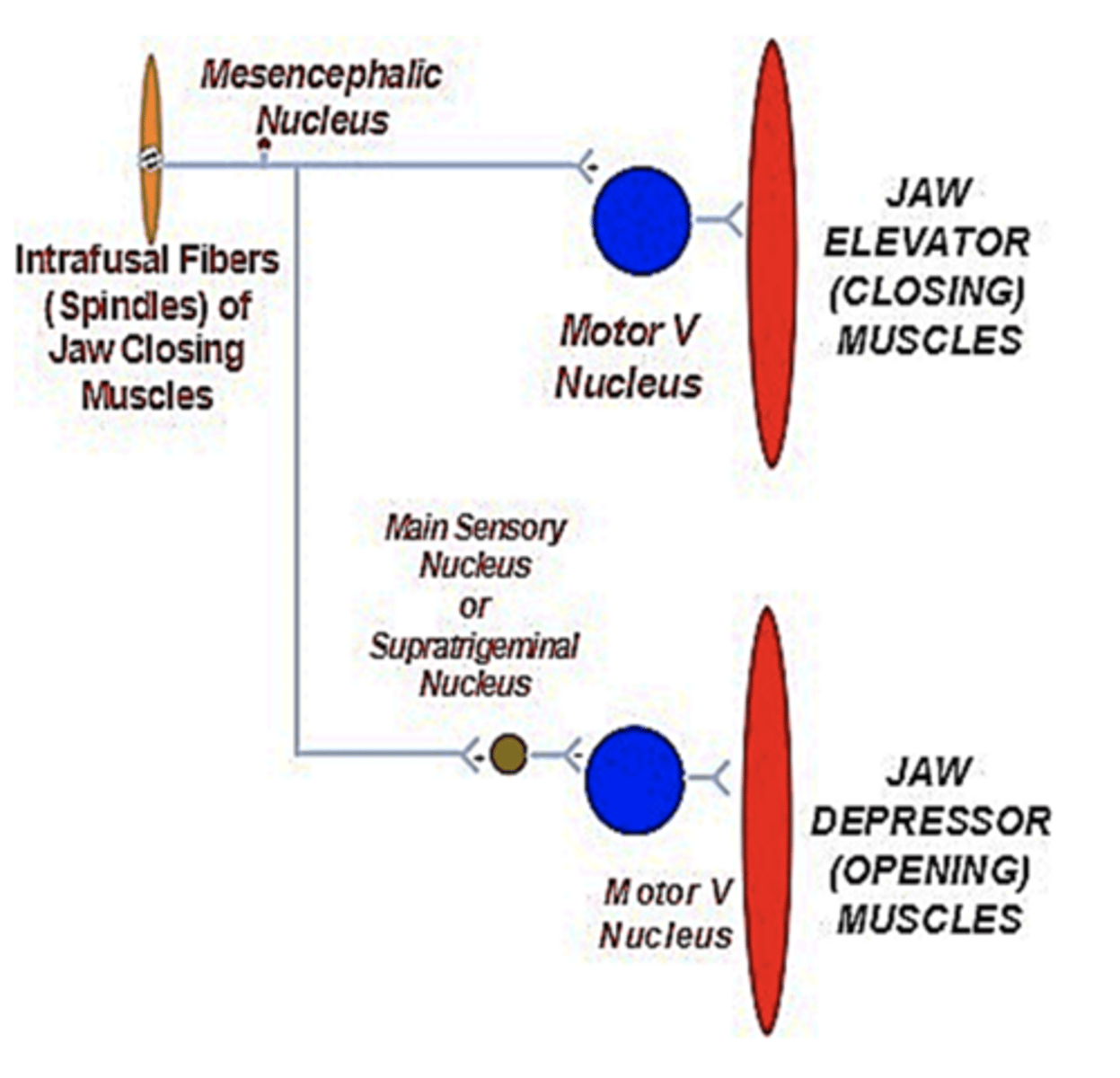
jaw opening reflex
What is the inverse myotatic reflex also known as?
stimulation of Golgi tendon, such as the PDL or TMJ
What triggers the inverse myotatic reflex (aka jaw opening reflex)?
-stimulate jaw opening muscles
-inhibit jaw closing muscles
-modulate pressure on dentition
What 3 things does stimulation of Golgi tendon, such as the PDL or TMJ, in the inverse myotatic reflex (aka jaw opening reflex) do?
inverse myotatic reflex (jaw opening reflex):
jaw closing
What does low-threshold mechanoreceptor activation cause?
pressure on the dorsum of the tongue
How is low-threshold mechanoreceptor activation initiated?
stimulation of jaw closing muscles
What occurs as a result of pressure on the dorsum of the tongue in low-threshold mechanoreceptor activation?
there is NO reciprocal innervation pathway to jaw opening muscles
What does NOT happen in the low-threshold mechanoreceptor reflex?
to seal the oral cavity in preparation of swallowing (difficult to swallow with mouth open)
What is the purpose of the low-threshold mechanoreceptor reflex?
low-threshold mechanoreceptor reflex:
-Golgi tendon organs in gingiva and PDL
-pain receptors (nociceptors) in gingiva, PDL, and in peri-oral mucosa
What are the 2 main receptors involved in high threshold receptor activation?
-stimulation of motor nerves to jaw-opening muscles
-reciprocal inhibition of jaw muscle closing motor nerves
-rapid opening of oral cavity
-expulsion of offending stimulus
What 4 things does adequate noxious stimulation of the high-threshold mechanoreceptor reflex result in?
may include a period where the mandible is held in a partly open position
What may occur for a period of time in the high-threshold mechanoreceptor reflex?
high-threshold mechanoreceptor reflex:
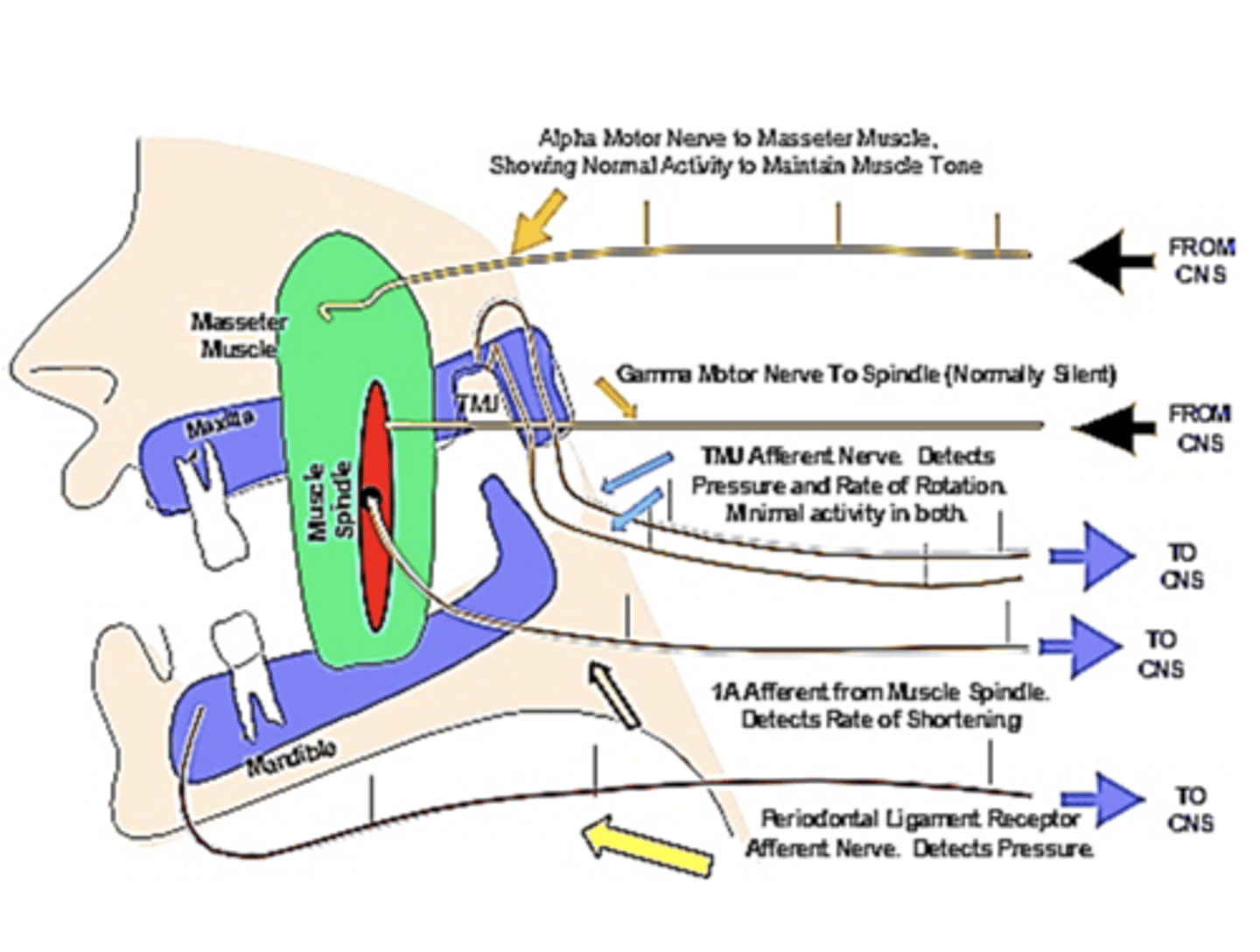
very low level of activity (quiet)
What are gamma efferents like at rest?
just enough to keep jaw closed; efferent motor nerves to jaw closing muscles have some low-level tone to keep mouth closed
What is the function of the very low level of gamma efferent activity at rest, and explain?
pressure and rate of rotation
What information do TMJ afferents receive?
they are modified (ex: Golgi-tendon-like organs)
What are pressure and rate of rotation receptors like in the TMJ?
the afferents from these receptors are quiet
What happens to the afferents from pressure and rate of rotation receptors in the TMJ at rest?
they are at a low level of activity
What is the activity of 1A afferents from muscle spindles like at rest?
low level of activity
What is the activity of PDL receptors (pressure, pain) like at rest?
there is low level of activity in all afferent and efferent nerves!
What are afferent and efferent nerves like at rest? (BOTTOM LINE)
at rest:
(LOW activity!)
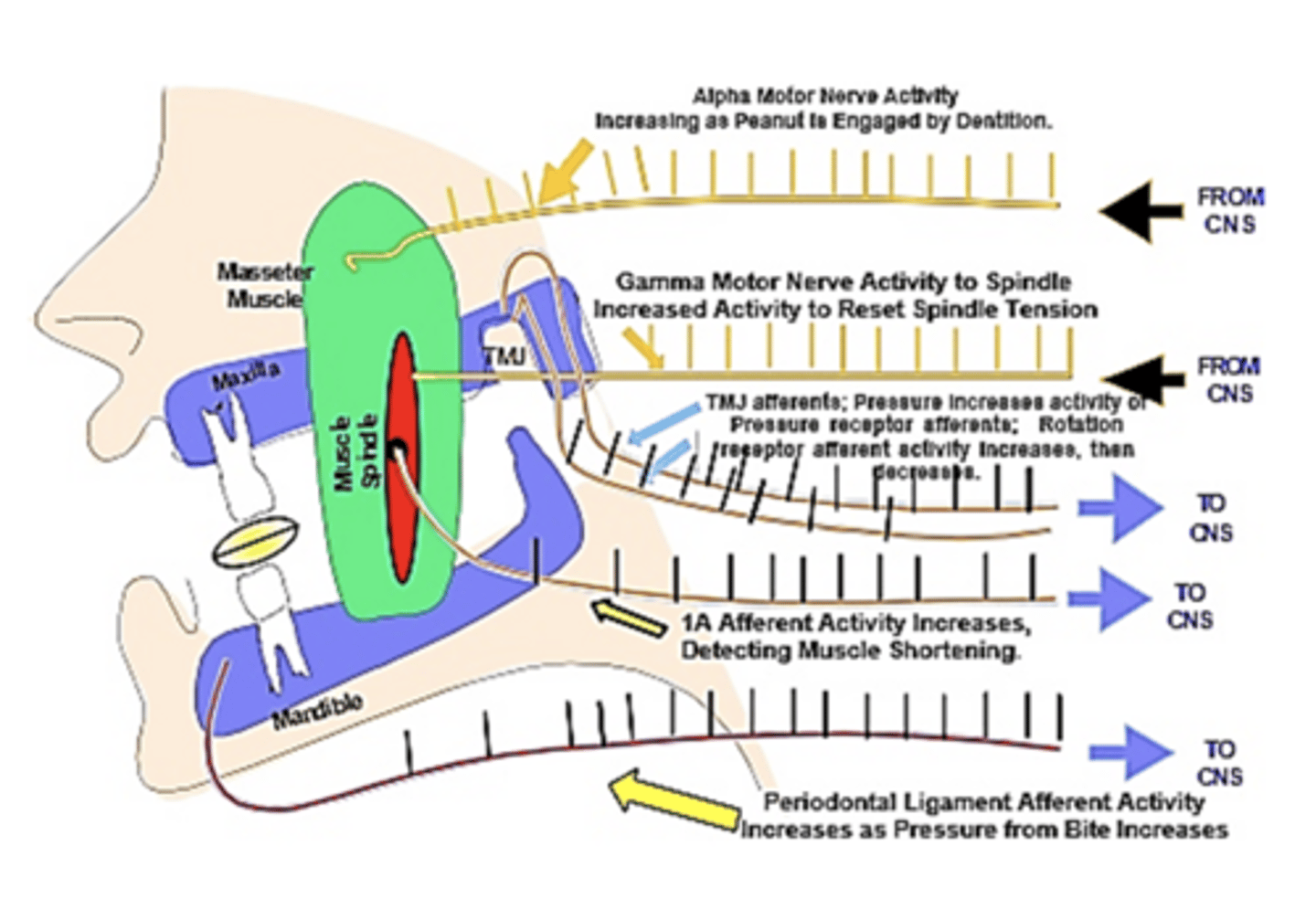
command is given by the CNS to a motor nerve to contract and split a peanut
How does the start of the chewing cycle begin (in the case of eating a peanut)?
gamma efferents are stimulated in proportion to feedback from muscle spindles
What happens to gamma efferents in the chewing cycle as the jaw closing muscles contract?
muscle spindles are stretched
What happens to muscle spindles in the chewing cycle as the jaw closing muscles contract?
they increase their firing rate as pressure increases -> sends data back to CNS to reset gamma effects to maintain optimal force and achieve optimal efficiency
What happens to TMJ and PDL pressure receptors in the chewing cycle as the jaw closing muscles contract?
they begin to fire at a high rate as mandible is rotated
What happens to TMJ receptors detecting rotation in the chewing cycle as the jaw closing muscles contract?
they then resume a low level of activity because rotation ceases as peanut is gripped by dentition
What then happens to the TMJ rotation detectors after they begin to fire at a high rate as mandible is rotated during the chewing cycle?
force is developed on the peanut at a rapid rate, but not so rapid as to damage the dentition
What is force like during the chewing cycle? (BOTTOM LINE)
start of the chewing cycle:
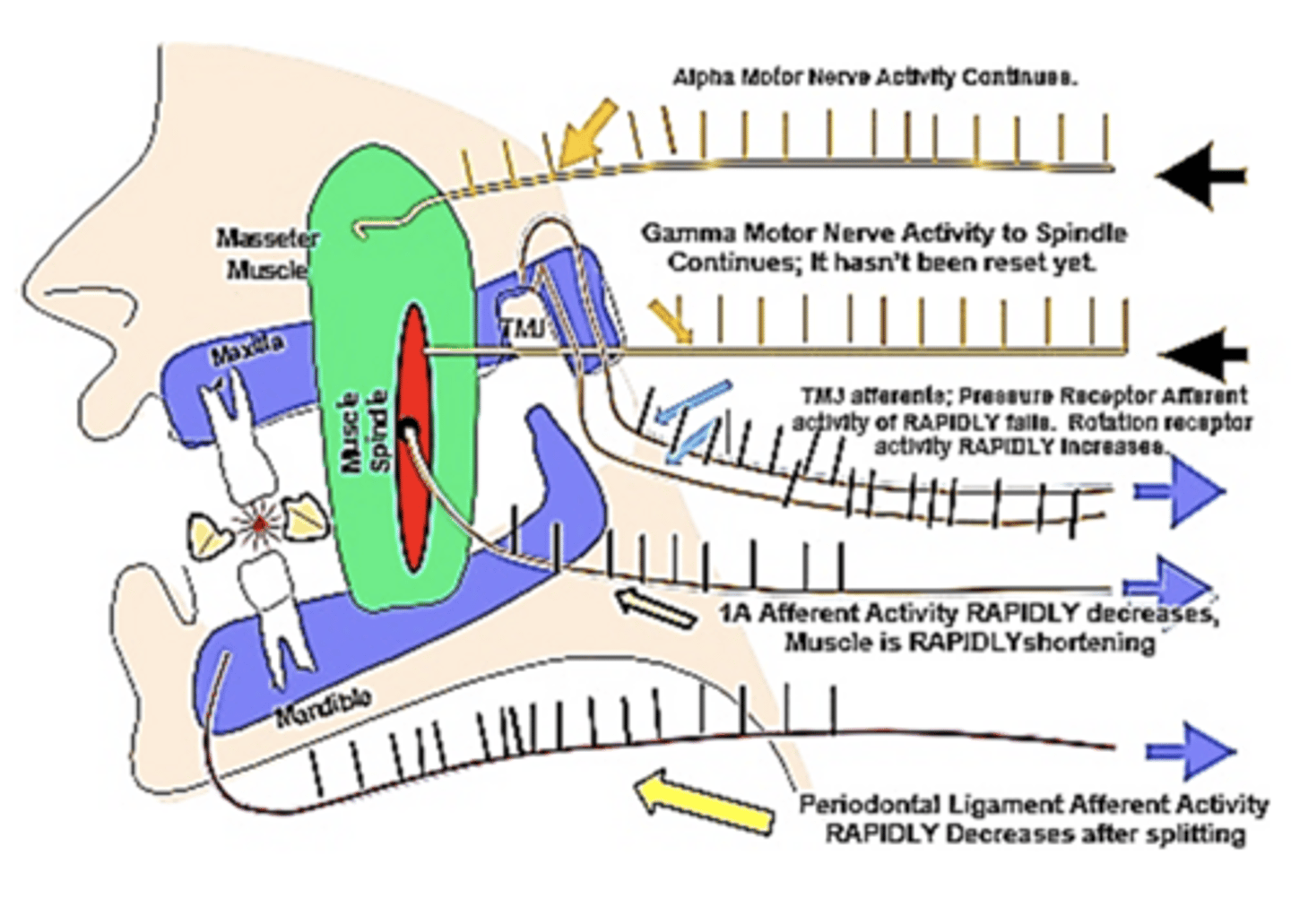
several simultaneous events occur to decelerate everything
What happens when the peanut is split?
rate of jaw closure rapidly accelerates to high levels
What happens to the rate of jaw closure when the peanut is split?
they continue to fire based on previous start of chew
What happens to alpha- and gamma-neurons when the peanut is split?
they go nearly silent -> detection of a rapid fall in pressure
What happens to TMJ pressure nerves when the peanut is split?
they go nearly silent
What happens to PDL pressure receptors when the peanut is split?
they rapidly increase firing rate
What happens to TMJ rotational receptors when the peanut is split?
rapidly go nearly silent -> spindles are unloaded as jaw closing muscles are rapidly shortening
What happens to 1A spindle input to CNS when the peanut is split?
mandible is in a ballistic arc and are trying to make sure it does not crash into maxillary dentition
What is the purpose of decelerating all parts of the chewing cycle when the peanut is split? (BOTTOM LINE)
splitting the peanut:
a warning signal to the CNS
What prevents cracked dentition during mastication?
spindle output goes silent -> there is a fall in TMJ + PDL pressure receptor input and an increase in TMJ rotational output
What is the warning signal to the CNS like?
alters afferent input and causes the CNS to rapidly inhibit motor nerves to jaw closing muscles
What follows the spindle output going silent, a fall in TMJ + PDL pressure receptor input, and an increase in TMJ rotational output?
it falls to zero, then resumes at a much lower level to ensure a "light" contact of dentition
What then happens to motor nerve activity?
activity is rapidly reset
What happens to gamma efferent activity in the prevention of crack dentition?
input increases slightly
What happens to TMJ and PDL pressure receptor input in the prevention of crack dentition?
it ceases when jaw stops rotating
What happens to TMJ rotational receptor input in the prevention of crack dentition?
they are reciprocally stimulated to contract
How do jaw-opening muscles function during contraction?
the apparatus resets itself before the start of the next bite; resting state is restored
What happens to the masticatory apparatus before the start of the next bite, and explain?
info from the low-threshold pressure receptors is processed to determine if the particles can be comfortably swallowed -> if not, the mastication cycle will begin again
What happens to the information from low-threshold pressure receptors when the apparatus resets itself before the next bite, and explain?
much of the CNS circuitry is found in the central pattern generators (CPGs) of brainstem and can be influenced by higher centers, such as the basal ganglia (how everyone has unique masticatory patterns)
What is CNS circuitry like for chewing, considering it is a repetitive process?
the chewing reflexes take place within tenths to hundredths of a millisecond -> maximal rate of chewing is 4 Hz
What is the rate of chewing reflexes like?
fast twitch muscle fibers; these muscles are also used for phonation
What kind of muscle fibers do muscles of mastication contain a large population of, and what is their additional function?
summary of mastication:
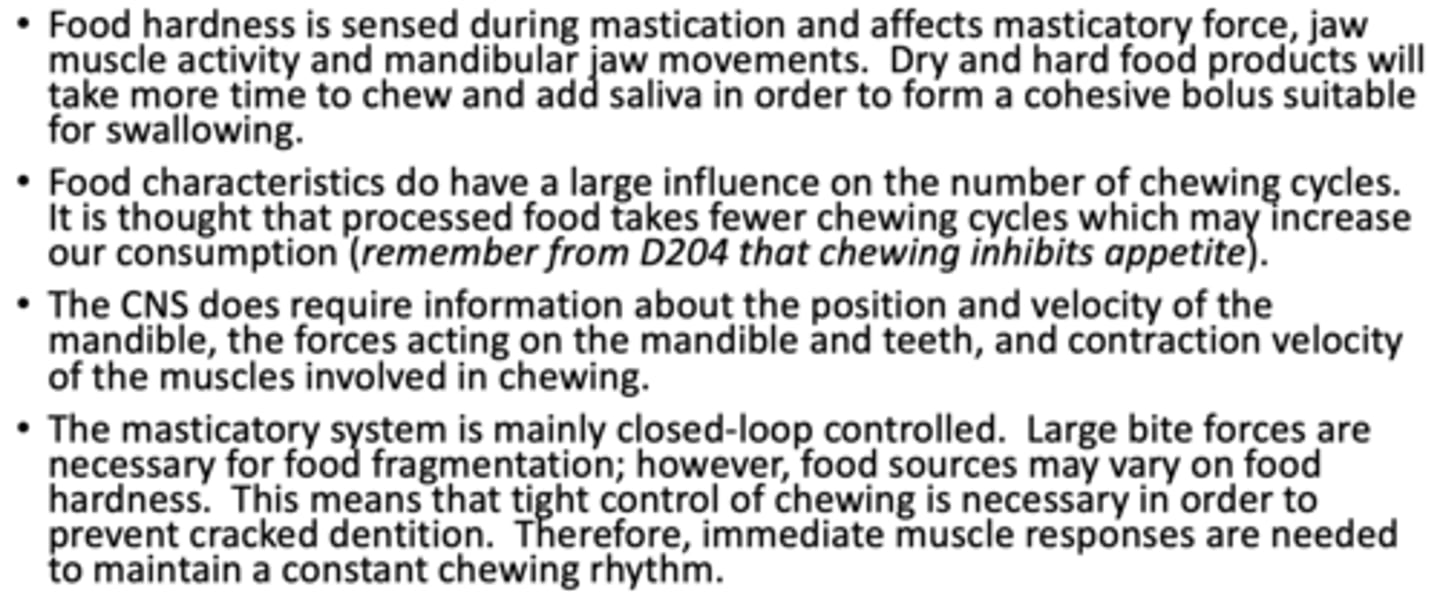
to lubricate the food bolus for ease of swallowing
What is the main function of saliva?
-initiates/contributes to digestion
-protects dentition and esophagus
-secretes hormones from blood (ex: cortisol, DHEA, etc)
What are 3 additional functions of saliva?
-salivary amylase (ptyalin)
-salivary lipase
-transcobalamin (aka R-protein, binding of vitamin B12 to start absorption process)
Via what 3 substances does saliva initiate and contribute to digestion?
-neutralizes acids from foods or from any gastric reflux
-provides immunoglobulins for cario-static effect
-allows for adhesion of proteins to enamel to provide a protective pellicle
Via what 3 methods does saliva protect dentition and the esophagus?
useful in stress tests and avoids venipuncture
What is the clinical significance of the saliva's secretion of hormones from the blood (ex: cortisol, DHEA, etc)?
-parotid gland
-submandibular (submaxillary) gland
-sublingual gland
What are the 3 pairs of major salivary glands?
composed of serous cells and secretes aqueous fluid consisting of water, ions, and enzymes
What is the composition and function of the parotid gland like?
composed of a mix of serous and mucus cells -> mucus cells secrete mucin glycoproteins for lubrication
What is the composition and function of the submandibular (submaxillary) gland like?