BIOSCI 107- MODULE 5- blood and immune
 Call Kai
 Learn
Learn Practice Test
 Spaced Repetition
 Match
Match Flashcards
 Knowt Play
1/337

There's no tags or description
Looks like no tags are added yet.
Name | Mastery | Learn | Test | Matching | Spaced | Call with Kai | Chat |
|---|
No analytics yet
Send a link to your students to track their progress
338 Terms
Self
Immune system is tolerant of these molecules, part of your own body
non-self
everything in environment that is not you (virus, pollen, fungi, plants), immune system does not tolerate
Viruses are ____ pathogens
Intracellular
Bacteria are ______ pathogens (mostly)
extracellular
Function of viruses
Need machinery inside cell (ribosomes and protein synthesis), so they need a way of getting inside the cell
Examples of viruses
Influenza, polio, smallpox, chickenpox, HIV, mumps
Function of bacteria
Grow outside the cell, defence against is primarily mediated by innate mechanisms and phagocytosis
Examples of bacteria
Staph, TB, strep, plague, cholera
Divisions of immune system
Anatomical and physical barriers, innate immunity (cellular/humoral), adaptive immunity (cellular/humoral)
Anatomical and physiological barriers
Skin, lungs (ciliary clearance), stomach (low ph), tears and saliva (lysozome)
Innate Immunity (cellular)
Cells that respond rapidly- macrophages, neutrophils, mast cells, dendritic cells, etc
Innate immunity (humoral)
Cells that respond rapidly- Proteins, complement
Adaptive immunity (cellular)
T cells and B cells
Adaptive immunity (humoral)
Antibodies
Passive immunity- natural
Antibodies in breastmilk and placenta
Passive immuntiy- artificial
antibodies harvested from another person or animal
Active immunity- natural
illness and recovery
Active immunity- artificial
Vaccinations
Herd immunity
Enough people have been vaccinated to stop virus
Immunity ____ overtime
improves
After infection / vaccination, ____ specific ____ appears in your blood, but “______ _____” remains _____
antigen, IgM, protective immunity, poor
After 1st booster, high _____ ____ appears in blood indicating class ____ along with improved protection from _____ _______
affinity IgG, switching, affinity maturation
After 2nd boost, ____ is high and protection is much ____ and longer lived.
IgG, stronger
IgM slowly fades away but never ____
disappears completely
First evidence of adaptive immunity appears in
Agnathans ~300 million years ago
Hagfish and Lamprey eels are the oldest surviving species with?
An immune repertoire, based on VLR
Every other species that evolved after Agnathans has?
Adaptive immunity
We know how Ig (immunoglobulin) and TcR rearrangement came about because the molecular mechanisms in B and T cell gene rearrangement are almost identical to another mechanism called?
Transposition
Transposition is when
a gene changes its location within a genome.
Transposition requires two essential elements that are conserved through all species.
Transpoase (recombinase) and recognition signal sequences (RSS)
Transpoase (recombinase) is
a specialist enzyme that cuts and repositions bits of DNA (RAG1 and RAG2 are only active in B
and T cells)
Recognition Signal sequences (RSS) is a
short conserved base pair sequences (9 or 7 bp long) at the ends of each gene segment that are recognised by the transposase which then cuts the double strand at the RSS and rejoins to another RSS segment which can be many millions of base pairs (Mbp) distant in the genome.
_______ immunity is the protective immunity that develops following an infection or vaccination. Immunity you never had prior to exposure.
Adaptive
_____________ changes with time to respond faster and more effectively to a pathogen. Immune memory can provide life-long protection (e.g. measles).
Adaptive immunity is a system that
Adaptive immunity is massive ______ of billions of different naïve ________ formed randomly before you are born and are just waiting for their specific “___” to be presented.
Repertoire, B and T lymphocytes, antigen
Each and every lymphocyte has a unique _____ _____ that is generated randomly
Antigen specifity
Diversity is caused by random ________ _____ and ________ within the genetic loci coding for the ___ and ___ _____ _________ ________ (_____ and ______)
gene rearrangement, recombination, B, T cell antigen receptors (BCR, TCR)
The _____ of an antibody arising from a single BCR, further increases over time and the persistence of ______
affinity, antigen
Antibodies H and L chains are formed from a repeated protein unit called the
Ig domain
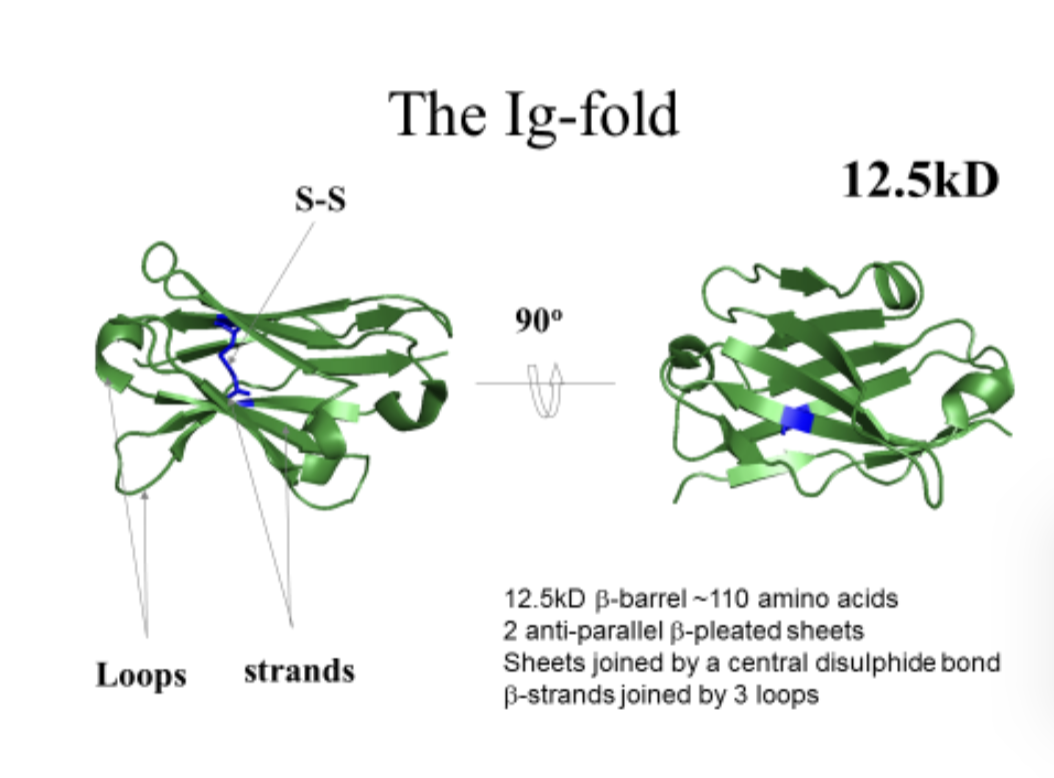
Two anti-parallel ______ sheets are like two cupped hands. A stabilising covalent _______ bond connect the palms and the loops join the fingers. This is a very stable protein fold and is used in hundreds of other proteins in nature.
Beta sheets, disulphide,
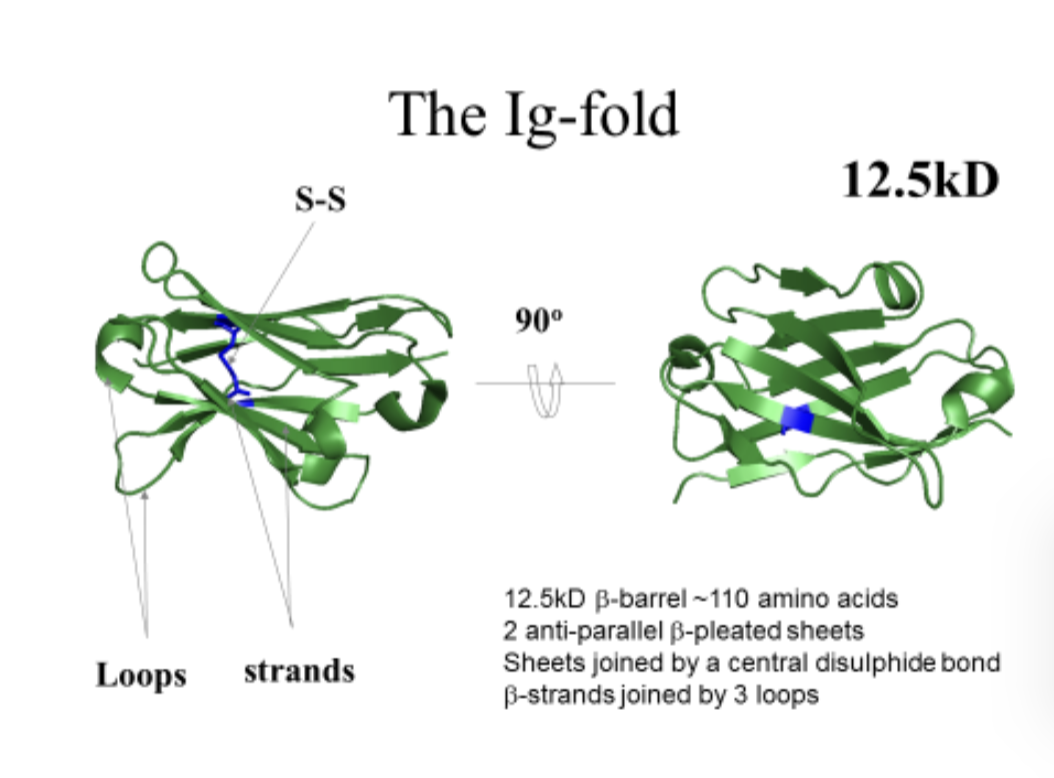
The important feature of this fold is that the loops are ________ so their amino acid sequences can vary greatly without disrupting the overall structure of the Ig domain.
Unconstrained
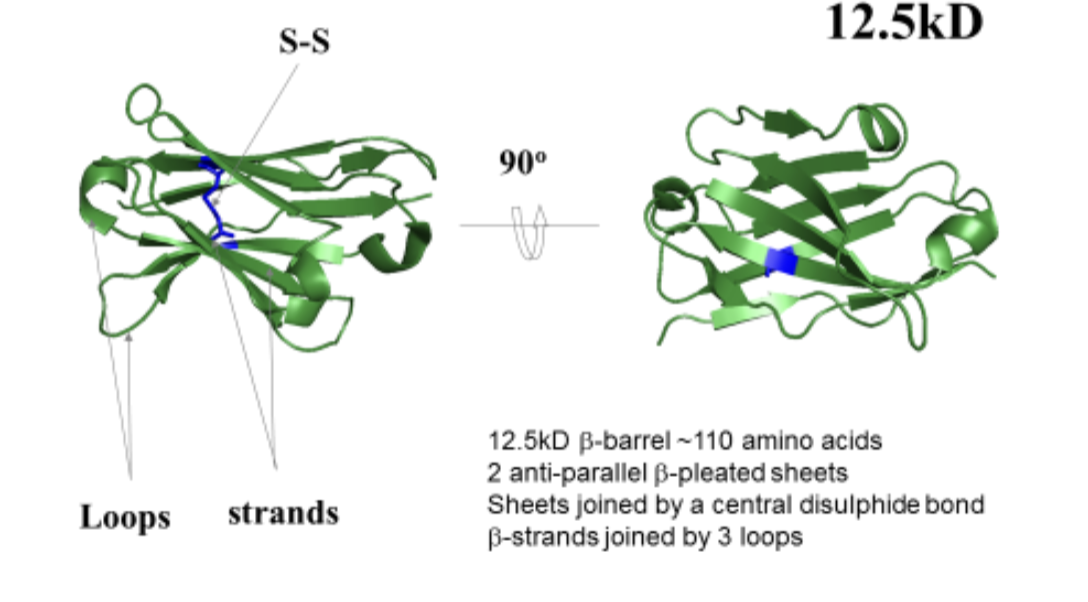
Name
Immunoglobulin protein fold (Ig-fold)
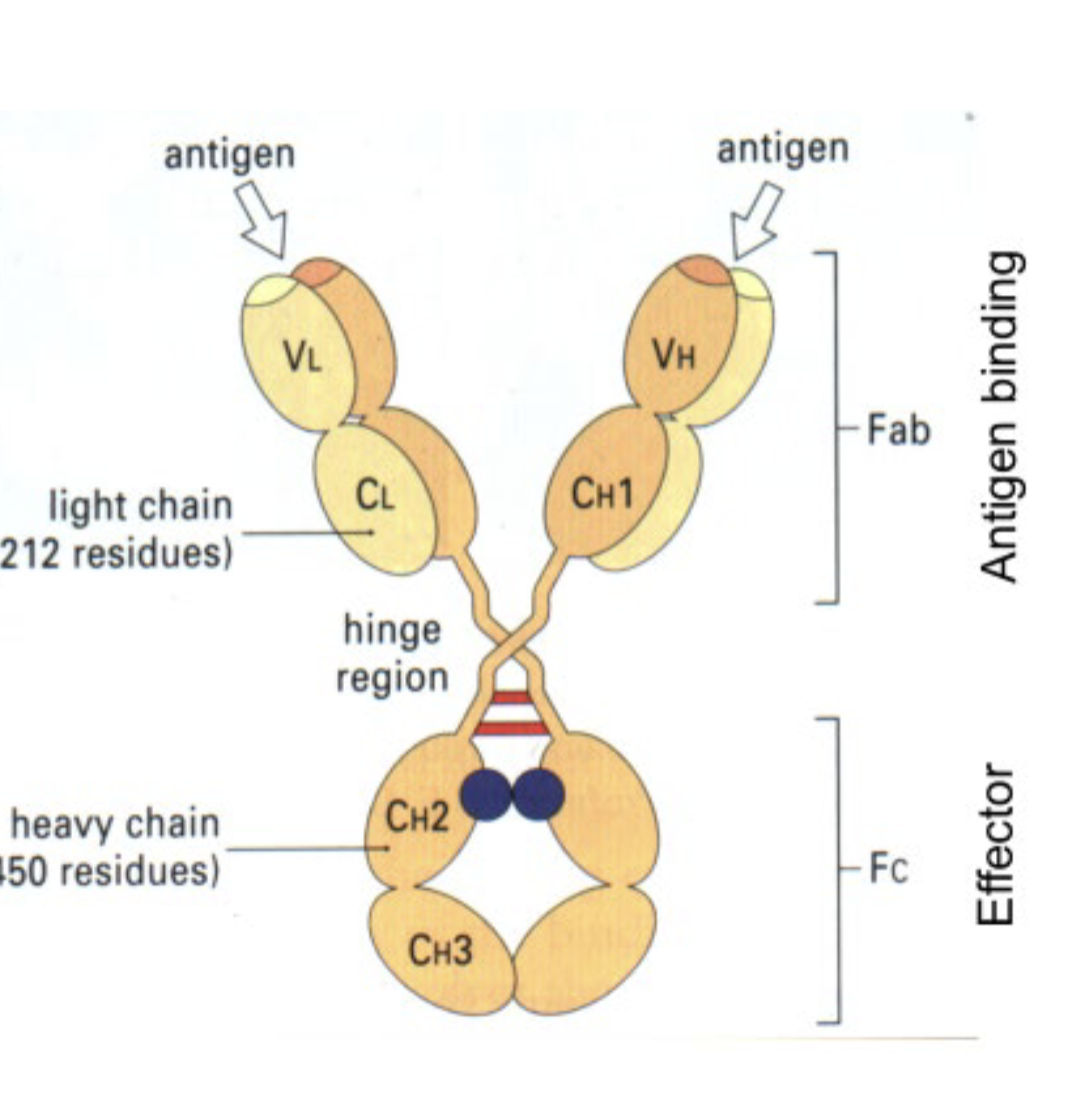
Antibody structure
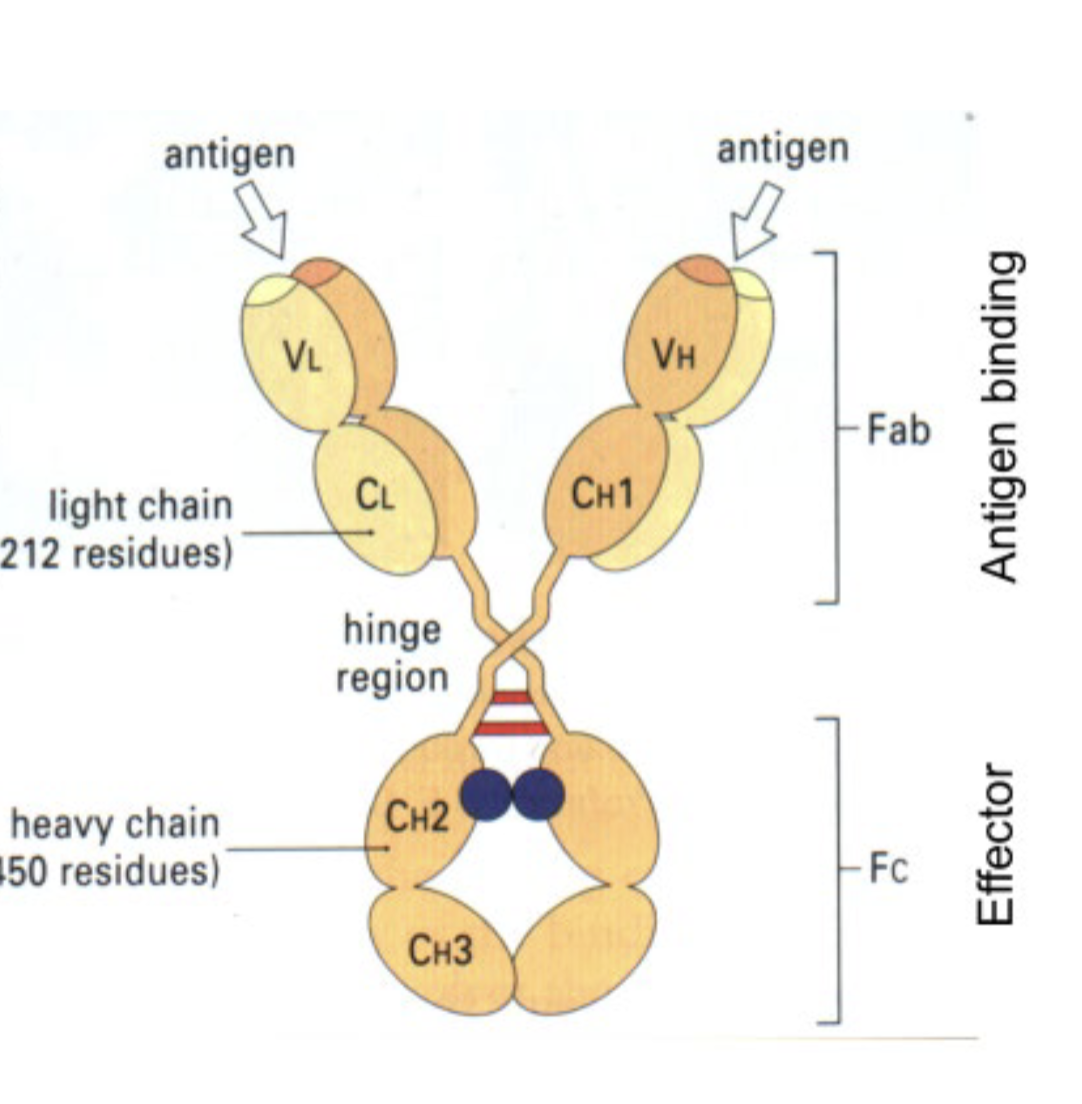
2 protein chains are constructed from
repeated Ig domains.
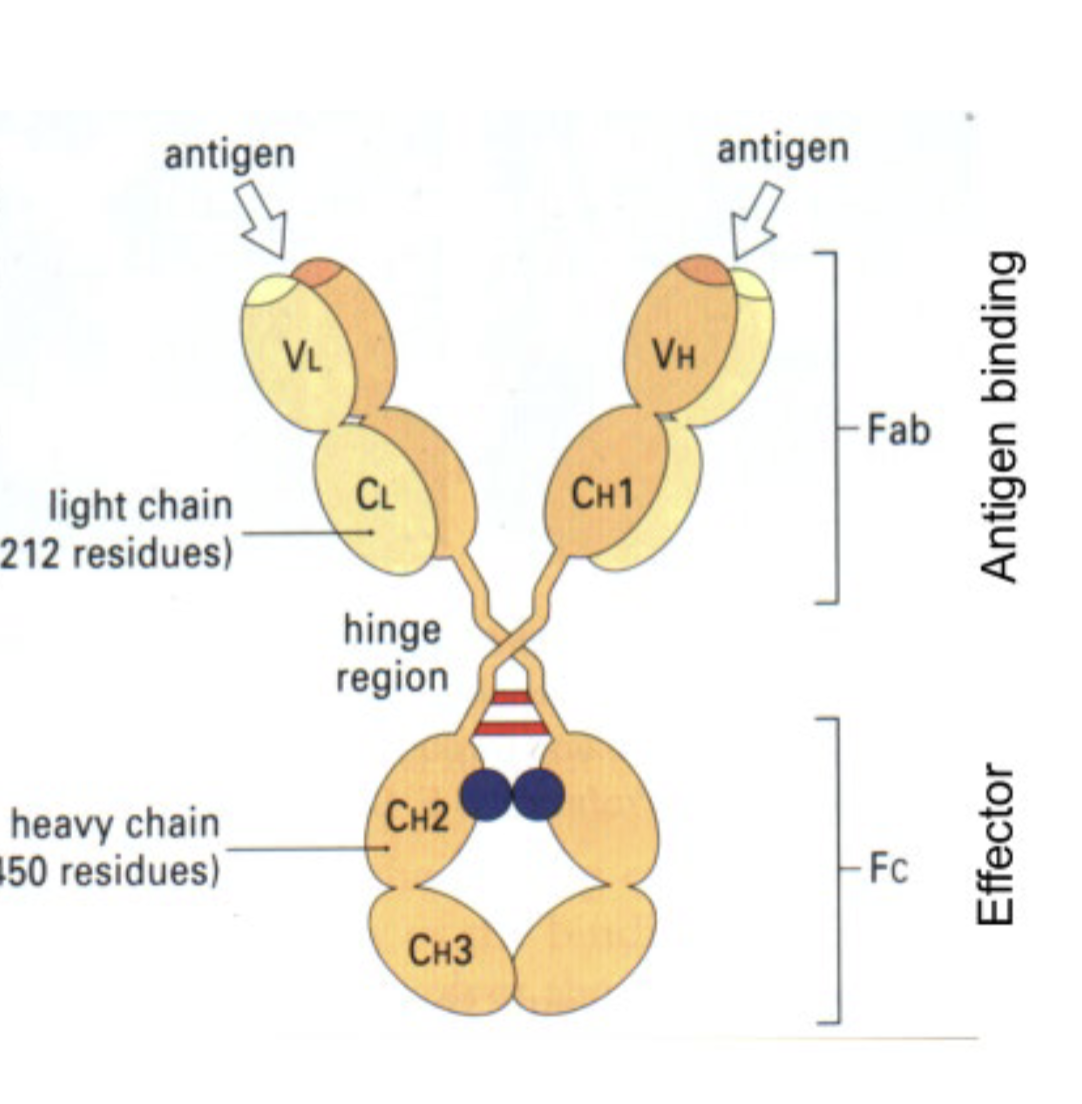
Every B cell makes one _____ and one _____
Heavy (H), Light chain (L)
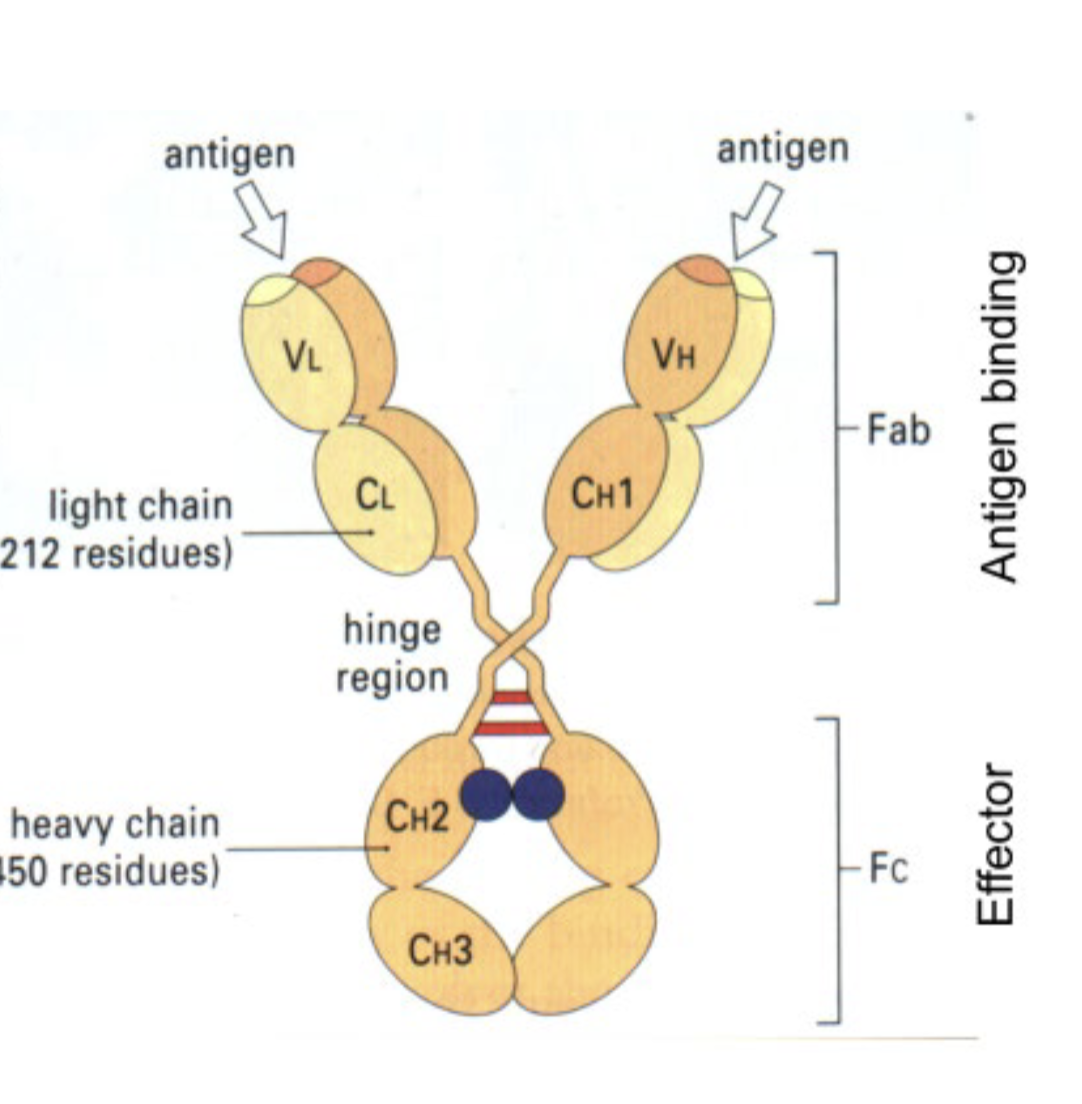
Two Heavy (H) chains pair by ______bonds at the _____ region.
disulphide, hinge
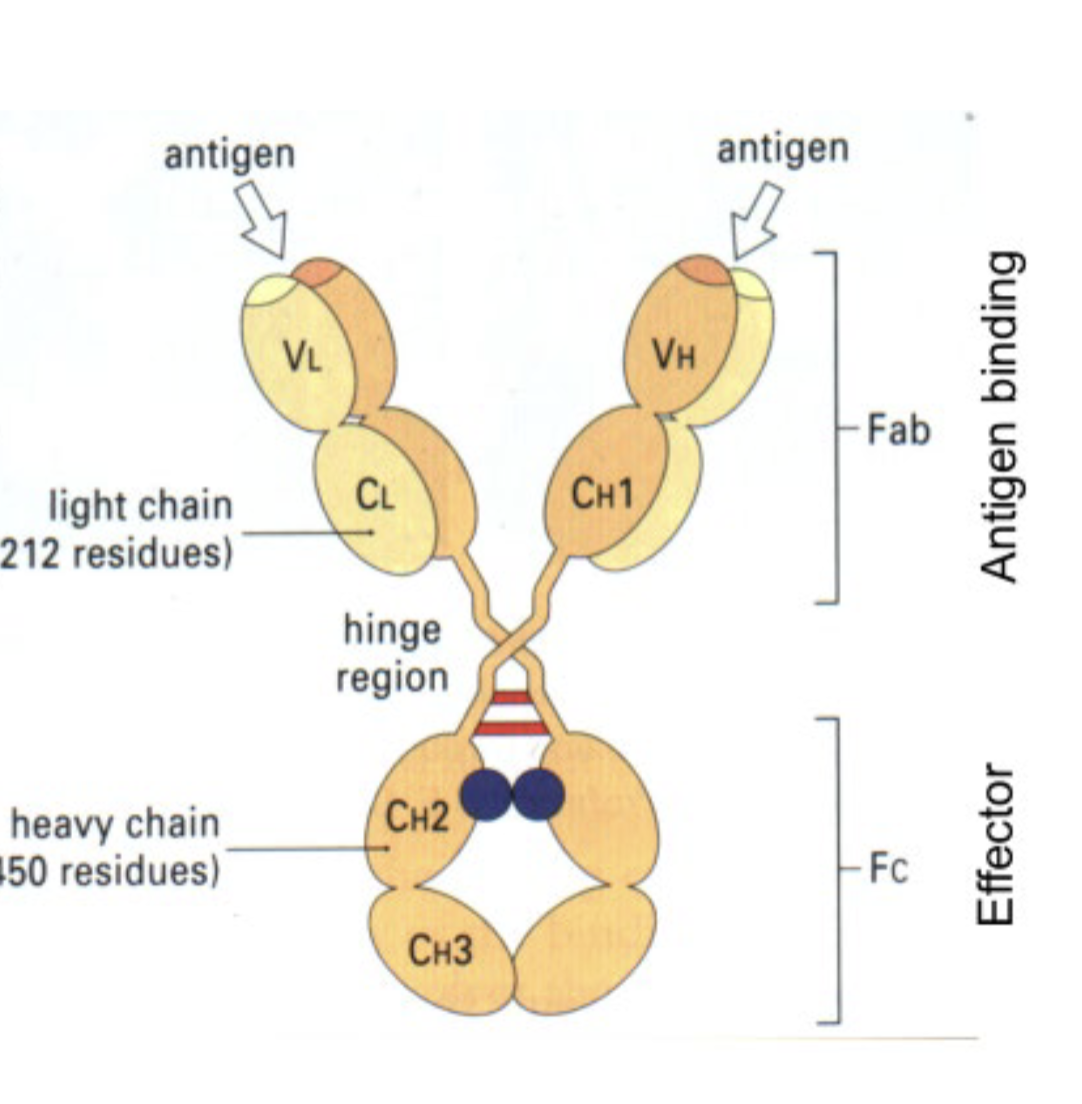
Light (L) chains pair to H chains by _____bond.
disulphide
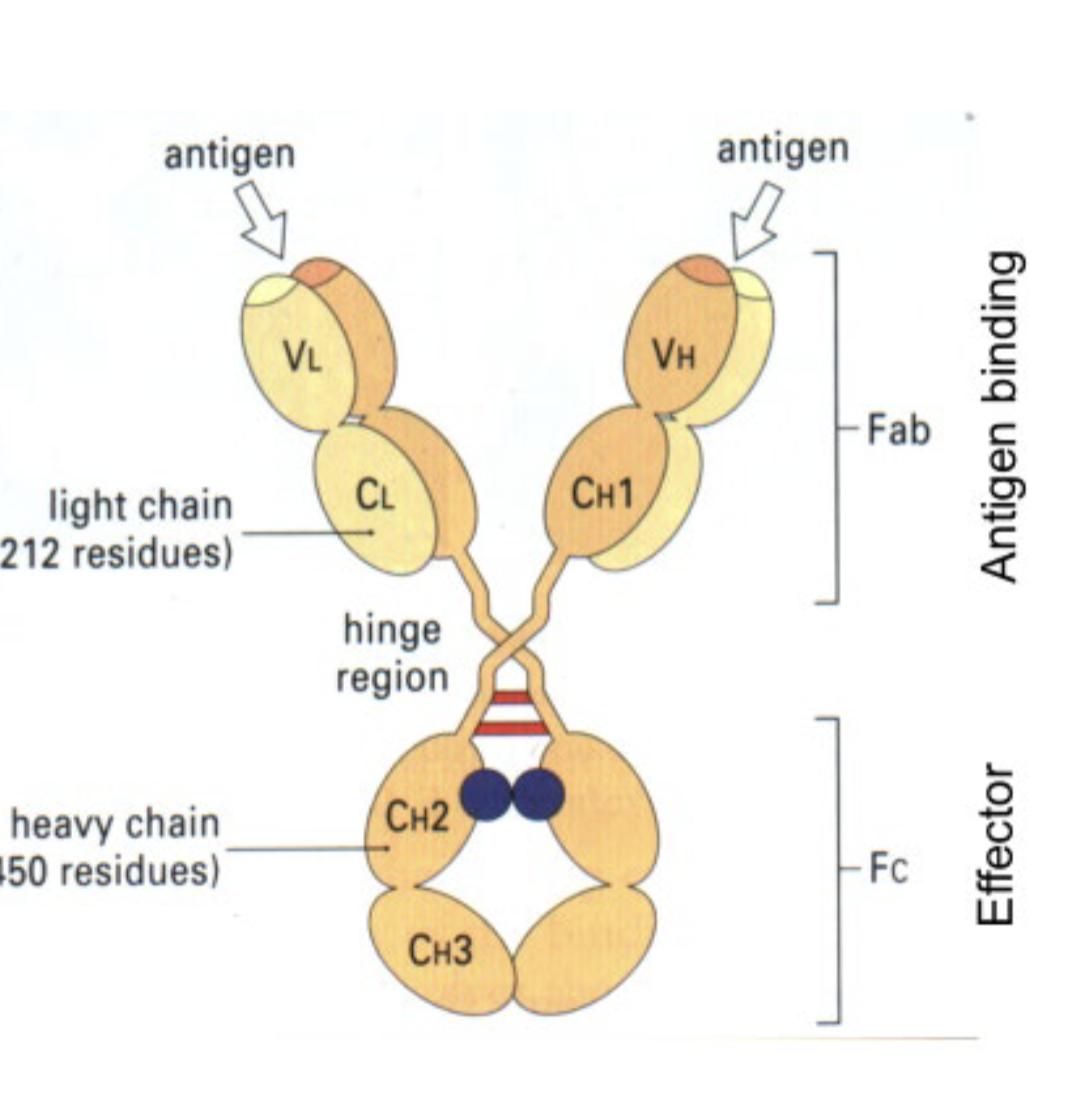
The “Y” shaped antibody has two identical _____ ____ _____ located at the tip of the two flexible arms. This is where all the amino acid diversity arises. This is called the _____ _____
antigen binding sites, variable domain
The invariant effector region (CH2 and CH3) is where _____ receptors and _____ component __ bind and defines the class of antibody and its function.
Fc, complement, C1
How many residues does light chain have?
212
How many residues does heavy chain have?
450
The Antigen binding end of an Antibody is called ___?
Fab
The region of the Antibody containing Fc receptor is called the _____
Effector
five functional classes of antibodies.
IgG, IgA, IgM, IgE, IgD
Function of antibodies depends on which ______ is used. Each class is optimized for specialized functions by its ______ and associated _______
H-chain gene, Fc region, Fc receptor
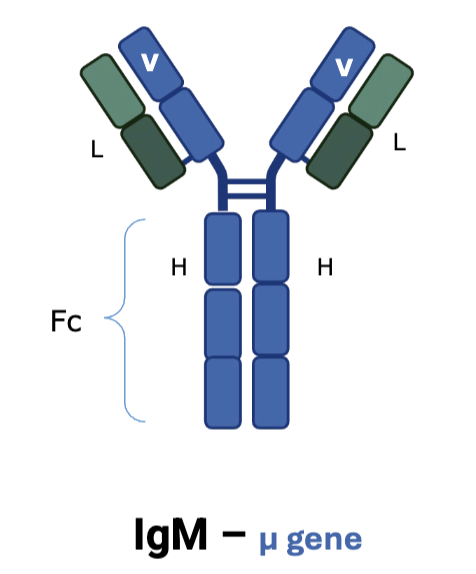
IgM
Default Ig made by all naïve B cells. B Cell Antigen Receptor (BCR). Blood form is a pentamer (5) that has high avidity binding and very good at activating complement.
IgM is the ____ Ig made by all naïve cells. B Cell Antigen ______. Blood form is a pentamer (5) that has high ____ _____ and very good at activating _______.
Default, B, recptor (BCR), avidity binding, complement
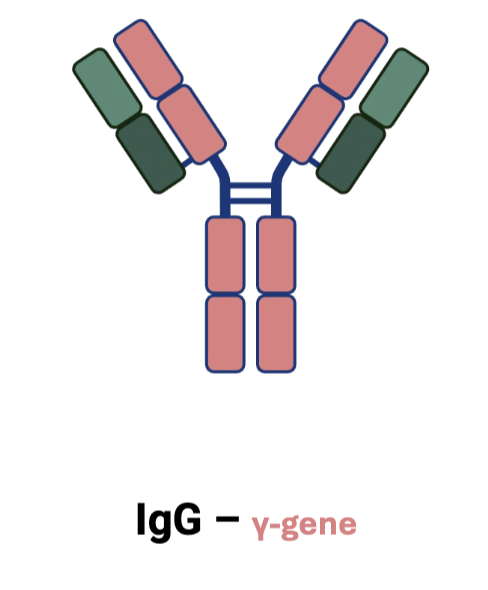
IgG
Most abundant Ig class in blood. Produced after a switch from using μ to γ gene. Neutralizes toxins and also activates complement. Long-lived and can cross the placenta. Affinity can “mature” further to become even more effective and very high affinity towards its antigen.
IgG- Most abundant Ig class in blood. Produced after a switch from using μ to γ gene. Neutralizes ____ and also activates _____. Long-lived and can cross the placenta. Affinity can “mature” further to become even more effective and very high ____ towards its antigen.
toxins, complement, affinity,
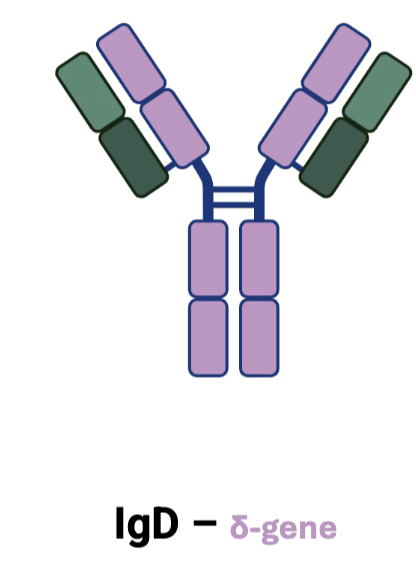
IgD
A form of BCR. Membrane and blood form. Plays a crucial role in B cell differentiation
IgD is a form of ______. _____ and blood form. Plays a crucial role in B cell _______
BCR, Membrane, differentiation
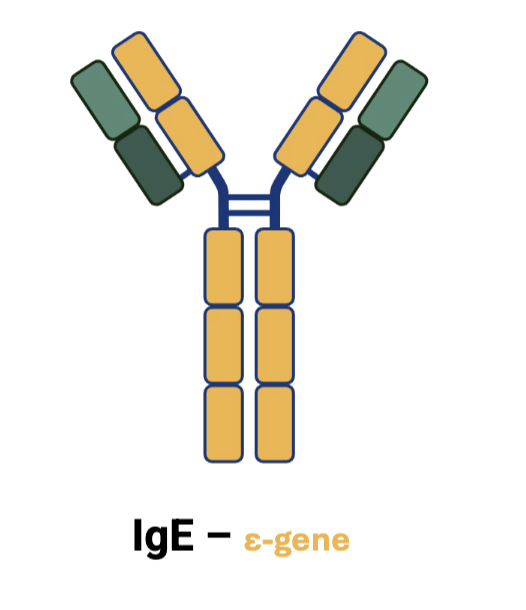
IgE
Least abundant in blood but important in defence against parasites. Responsible for atopic allergies because of a high affinity Fcε receptor on Mast cells.
IgE is least abundant in blood but important in ______ against ______. Responsible for atopic _______ because of a high affinity Fcε receptor on _____ cells.
Defence, parasites, allergies, mast
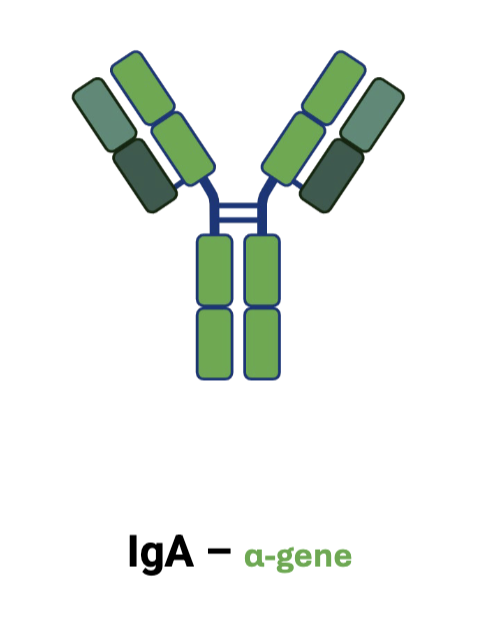
IgA
Exists as a dimer in blood and mucosal secretions such as breast milk, gut, tears, genitourinary tract. Maternal IgA and IgG in breast milk provide important passive gut immunity to neonates who can’t make their own antibodies.
Exists as a dimer in ____ and _____ secretions such as _____ ______, gut, tears, genitourinary tract. Maternal IgA and IgG in breast milk provide important ______ gut immunity to neonates who can’t make their own _______.
blood, mucosal, breast milk, passive, antibodies
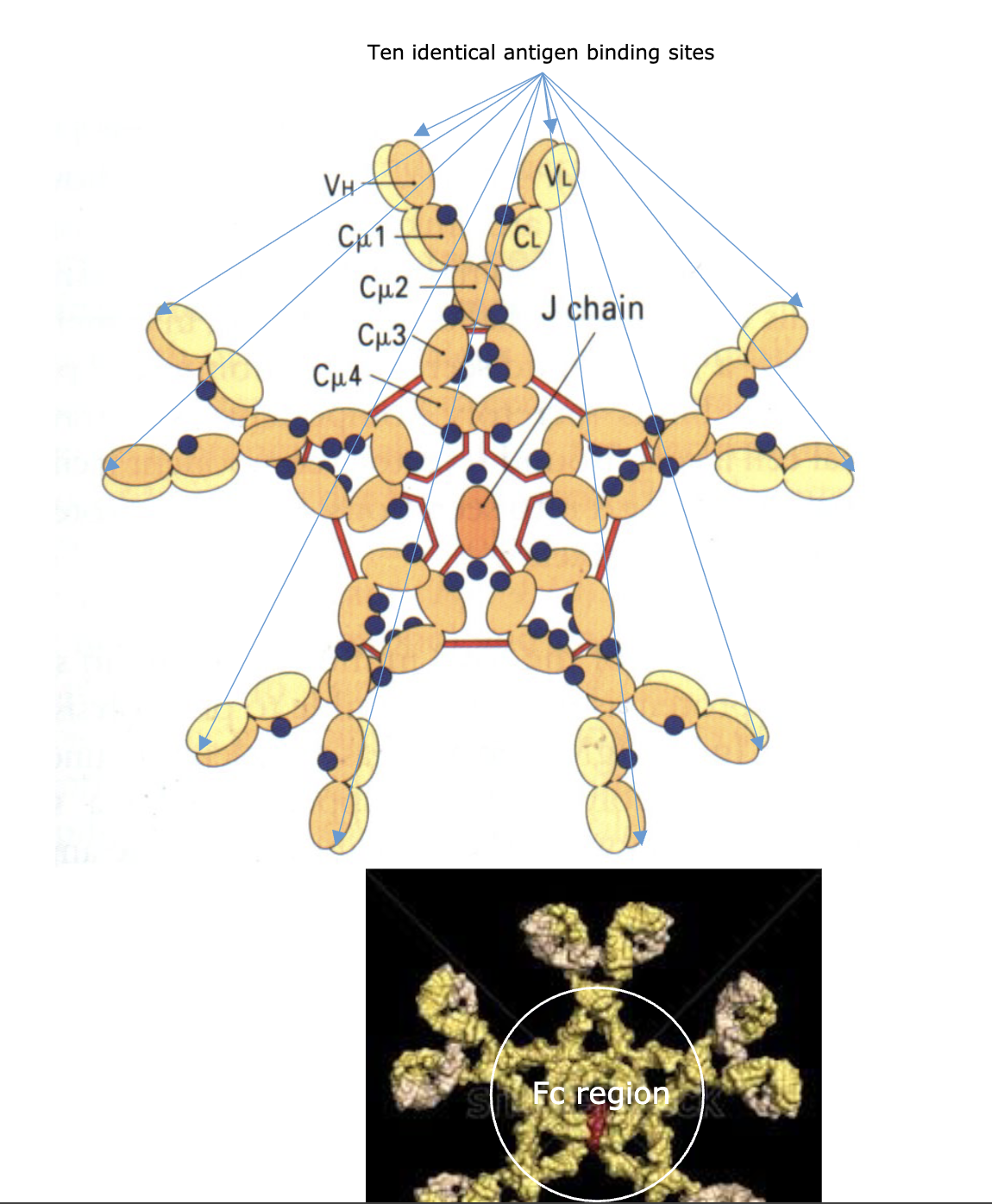
IgM- default
IgM comes in two forms
membrane bound (monomer) which is the B Cell Antigen Receptor (BCR) and a soluble form in the blood (pentamer)
Every new B cell has a ______ BCR
different
Every new B cell has a DIFFERENT BCR. The difference occurs in the _____ _____ that constitute the antigen binding site at the tips of the molecule.
Amino acids
Soluble IgM has ___ potential antigen binding sites that are all the same because the H and L chains come from the __ B cell.
10, same
IgM reacts to ______ surfaces through high ______ binding
microbial, avidity
IgM is excellent at binding complement component __ (classical activation)
because it has __ Fc regions.
C1, 5
Affinity
When the attractive molecular forces between two surfaces exceeds the repulsive forces
What affect does a higher affinity have?
fewer antibody molecules it takes per unit volume to “find and bind” its antigen molecule.
Avidity
multiple weak contacts (velcro), binding force can be orders of magnitude higher than the force associated from a single affinity interaction.
Antibodies are “_________” and allow a randomly generated naïve antigen receptor (e.g. IgM) that has not undergone _________ ________, to still bind to a pathogen surface.
multivalent, affinity maturation
Affinity maturation is
the process where the immune system improves antibody quality, producing higher-affinity antibodies over time during an immune response.
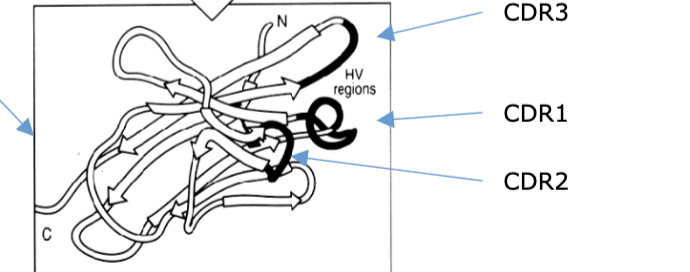
Three Hypervariable regions (HV1, HV2 and HV3) are seen in the Ig polypeptide sequence where amino acids are seldom ________. These regions correspond to the _____ in the folded protein that come together to form the antigen binding site.
the same, loops
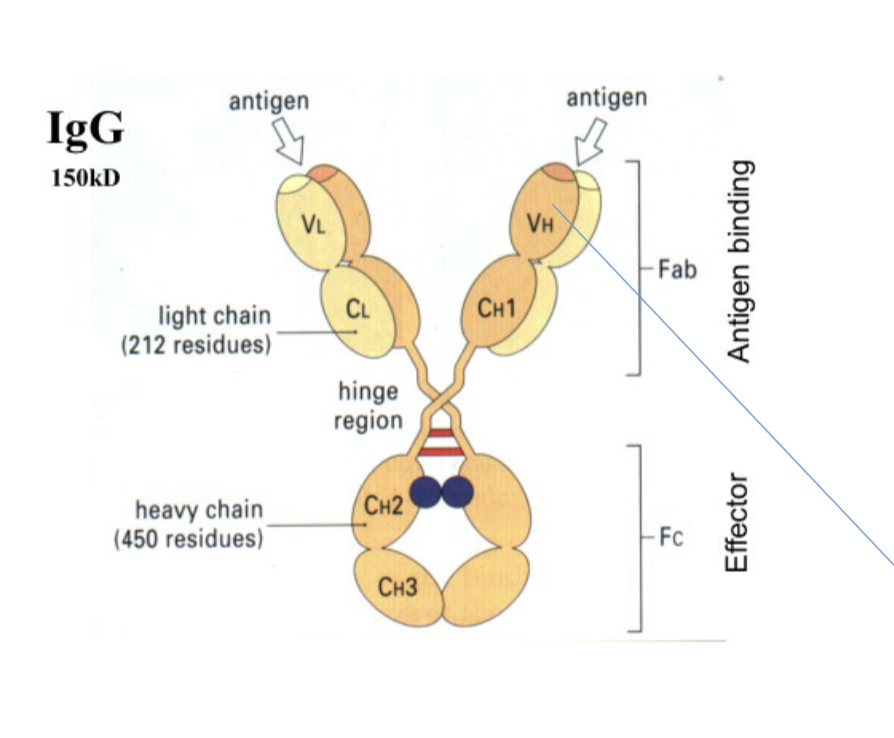
Each antibody has ____ ______ antigen binding site, one in each arm.
two identical
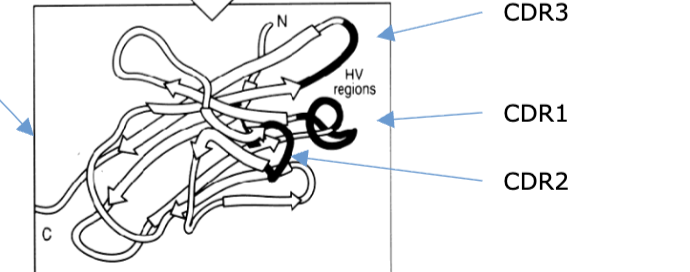
Each antigen binding site has _ loops in total. ____from the L-chain and _ from the ______, loops are commonly known as ______________
6, 3, 3, H-chain, Complementarity Determining Regions (CDR)
Germ-line Ig and TCR genes are segmented into 4 gene clusters called
Variable, Diversity, Joining and Constant regions
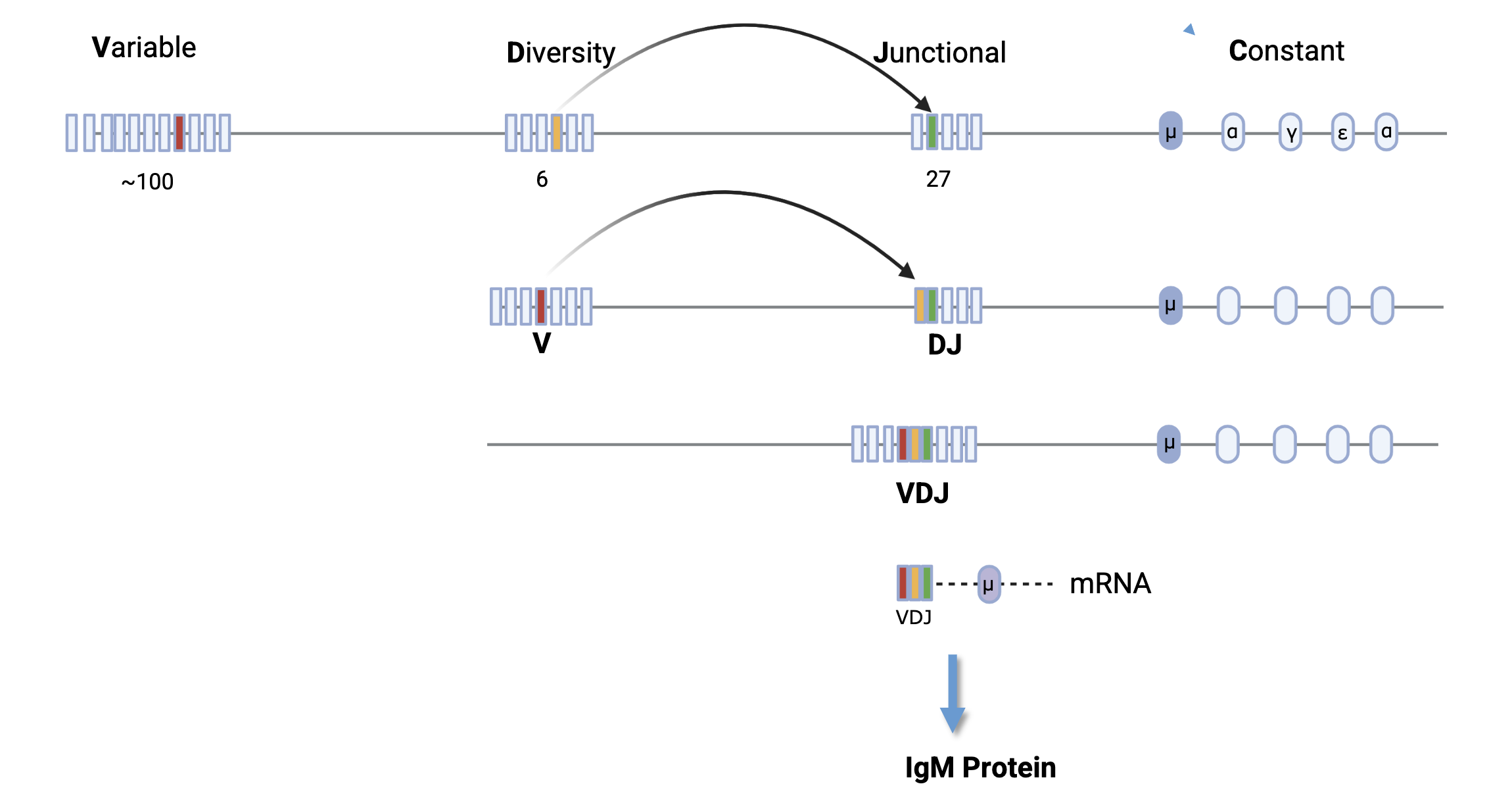
Within each cluster there are multiple segments all with slightly varying DNA sequences. Each segment carries the important ____ at its end which is how they are identified.
RSS
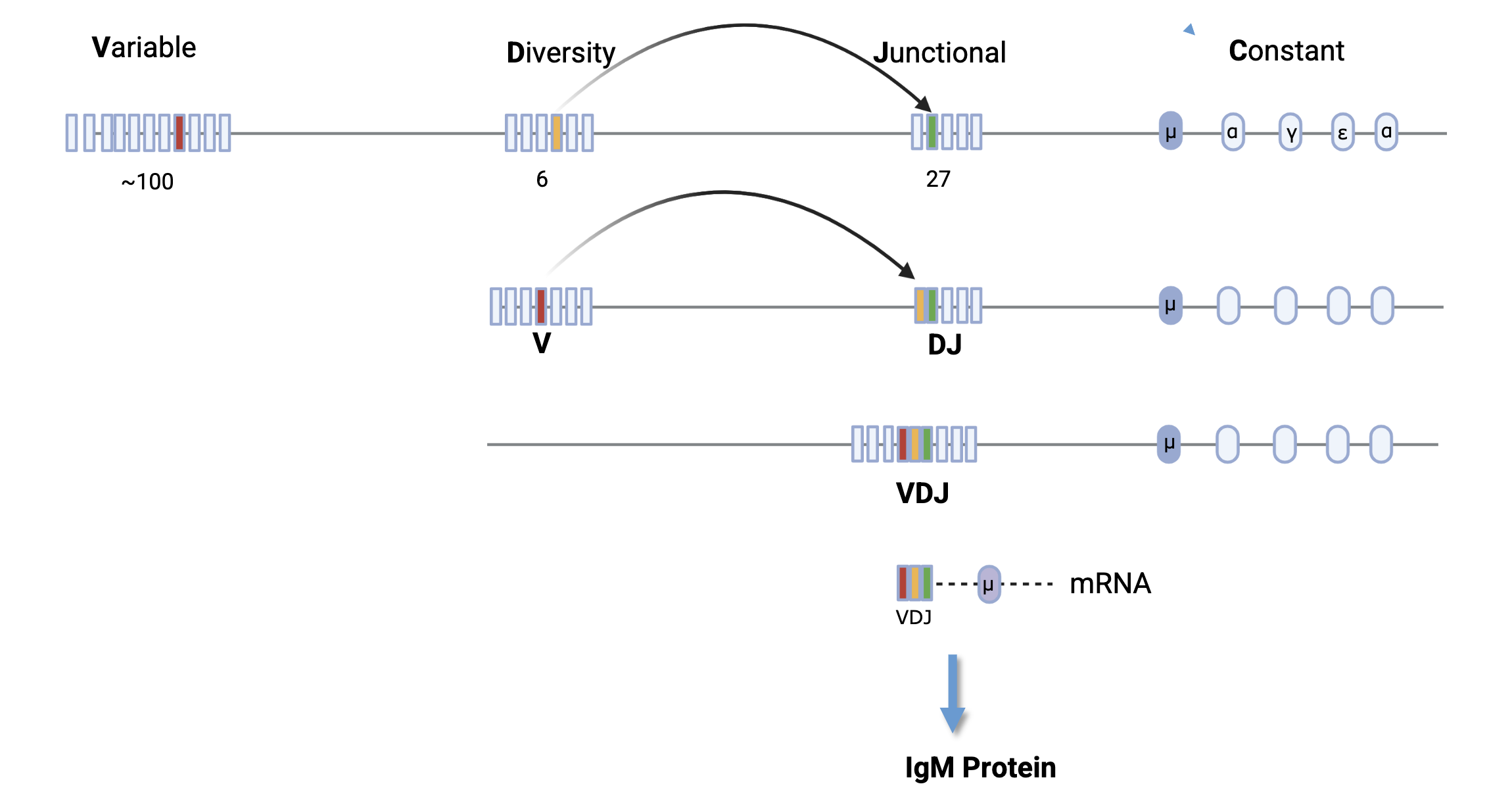
Special recombinase enzymes (____and _____) which are only expressed in B and T
lymphocytes recognise recognition signal sequences (____) at the ends of each segment.
RAG1, RAG2, RSS
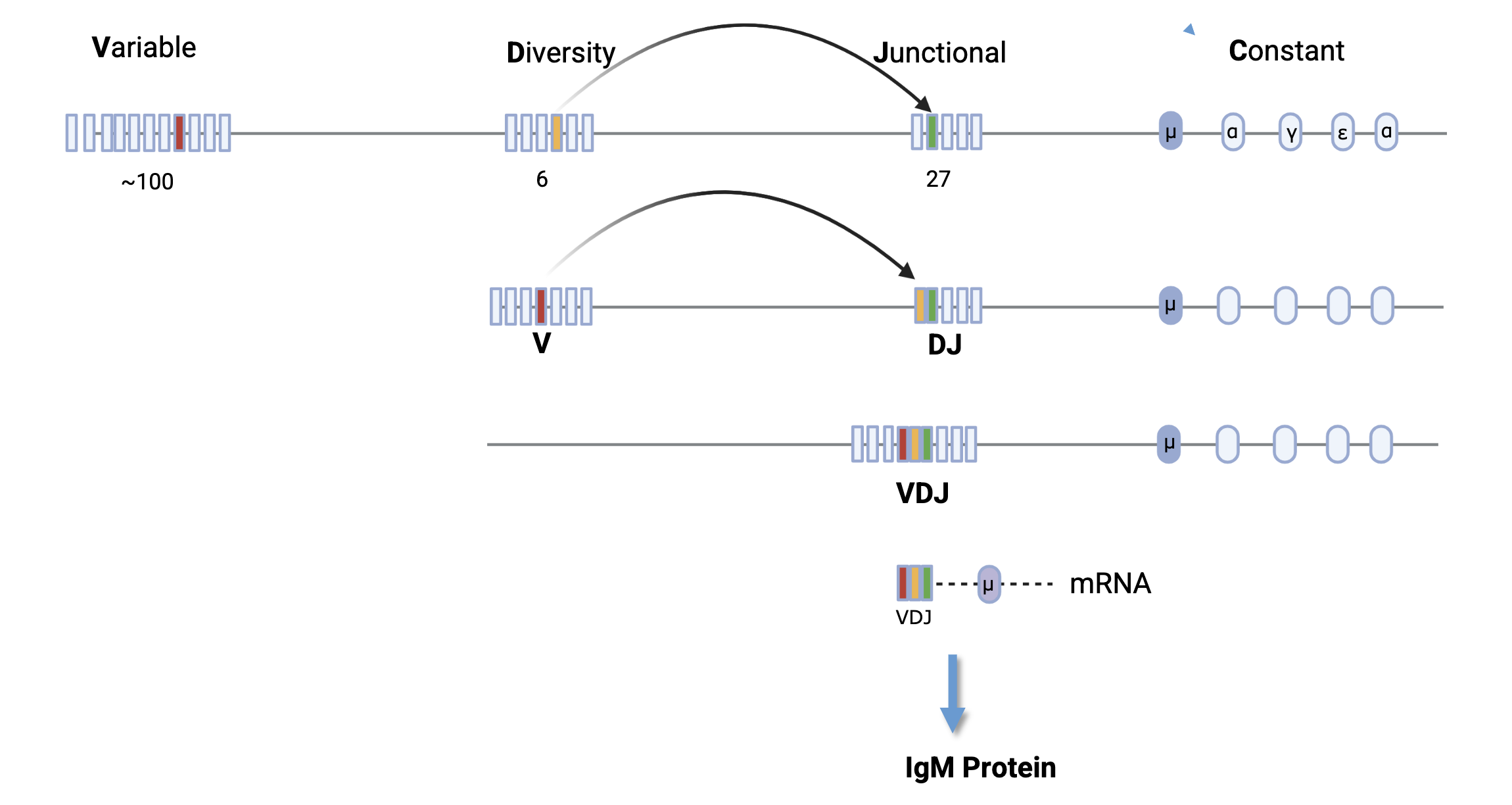
As a B cell develops, the following gene rearrangement happens in the H-chain locus
randomly selected D segment joins to a J segment, randomly selected V segment joins to the new DJ to form VDJ, intervening DNA (up to 100Mbp) between the joins is discarded.
Joining of the D-J and V-D segments is very
imprecise
ligation
the surgical process of tying off blood vessels, tissue, or anatomical channels using a thread or ligature (controlling bleeding)
Lots of random base changes occur before ______. This ultimately creates massive amino acid sequence _____ in the ______ loop (called the VDJ join). The CDR3 loop is right in the middle of the ______ binding site of the Ig protein and contributes most to the extreme ________ of antibodies and T cell Receptors.
ligation, variation, CD3, antigen, hypervariability
What is the main factor for hypervariability in antibodies and T cell Receptors?
Amino acid sequence variation in the CD3 loop, caused by lots of random base changes before ligation
How does your genome know before birth what bugs you will encounter during your lifetime?
It doesn’t so it randomly makes every possible receptor combination in the hope that at least one will work. The pathogen then selects and expands just the right B cell clone through a process called clonal selection and affinity maturation
Pentamer
Has ten binding sites with low affinity on each, high avidity overall (x10^7). Many weak interactions,
Avidity can be used to?
distinguish self from non-self
IgM (membrane bound) function explained?
receptor on B cell looks for antigen thats present in a lymph node by an antigen presenting cell, antibody binds to the antigen, triggers b cell replication which undergoes undergoes gene recombination and affinity maturation.
IgG function explained?
If an antibody against a spike protein is needed. IgM can switch to go IgG and undergo gene rearrangement as an IgG molecule
How does IgM convert to IgG?
lots of IgM on surface of bacteria, structure goes from flat to crab like, Fc region is exposed, C1 complex from complement binds to back end of antibody or Fc receptor (in IgM). Eventually converts to IgG which is stronger and only needs 2 binding sites.
Clonal selection and affinity maturation- step 1
Low affinity IgM, A naïve IgM B cell inside a lymph node is triggered by its antigen.
Clonal selection and affinity maturation- step 2
Somatic hypermutations in Ig genes (especially CD1, CD2, CD3 loops), produce a new clone with a BCR with improved affinity for antigen - faster cell division. Repeats many times over. Medium affinity IgG.
Clonal selection and affinity maturation- step 3
High affinity IgG, creates secreting plasma cells and tissue resident memory cells (all happens in lymph nodes)
The heart’s primary function is
to distribute oxygenated blood to tissue
Average adult blood volume is
~5L. 14,000L circulates every 24hr.
Large vessels close to the heart are
high volume/low flow.