California 2026: Written Permit Test
 Call Kai
 Learn
Learn Practice Test
 Spaced Repetition
 Match
Match Flashcards
 Knowt Play
1/137

There's no tags or description
Looks like no tags are added yet.
Name | Mastery | Learn | Test | Matching | Spaced | Call with Kai |
|---|
No analytics yet
Send a link to your students to track their progress
138 Terms
When parking your vehicle on any hill:
a. One of your rear wheels should touch the curb.
b. Use your parking brake and leave the vehicle in "park."
c. Your front wheels should be parallel to the road, if there is no curb.
b. Use your parking brake and leave the vehicle in "park."
It is more dangerous to drive at night than during the day because:
a. You cannot see as far ahead at night.
b. The road is always more slippery at night.
c. Your reaction time is slower at night.
a. You cannot see as far ahead at night.
At dawn or duck and in rain or snow, it can be hard to see and be seen. A good way to let other drivers know you are there is to turn:
a. Up the instrumental panel lights.
b. On your parking lights.
c. On your headlights.
c. On your headlights.
Large trucks turning onto a street with two lanes in each direction:
a. May complete the turn in either of the two lanes.
b. Often have to use the left lane to complete the turn.
c. Must stay in the right lane at all times while turning.
b. Often have to use the left lane to complete the turn.
You should not start across an intersection if you know you will block the intersection when the light turns red:
a. Under any circumstances.
b. Unless you entered the intersection on a yellow light.
c. Unless you entered the intersection on a green light.
a. Under any circumstances.
This sign shows one type of:
a. Intersection.
b. Road curve.
c. Right turn.
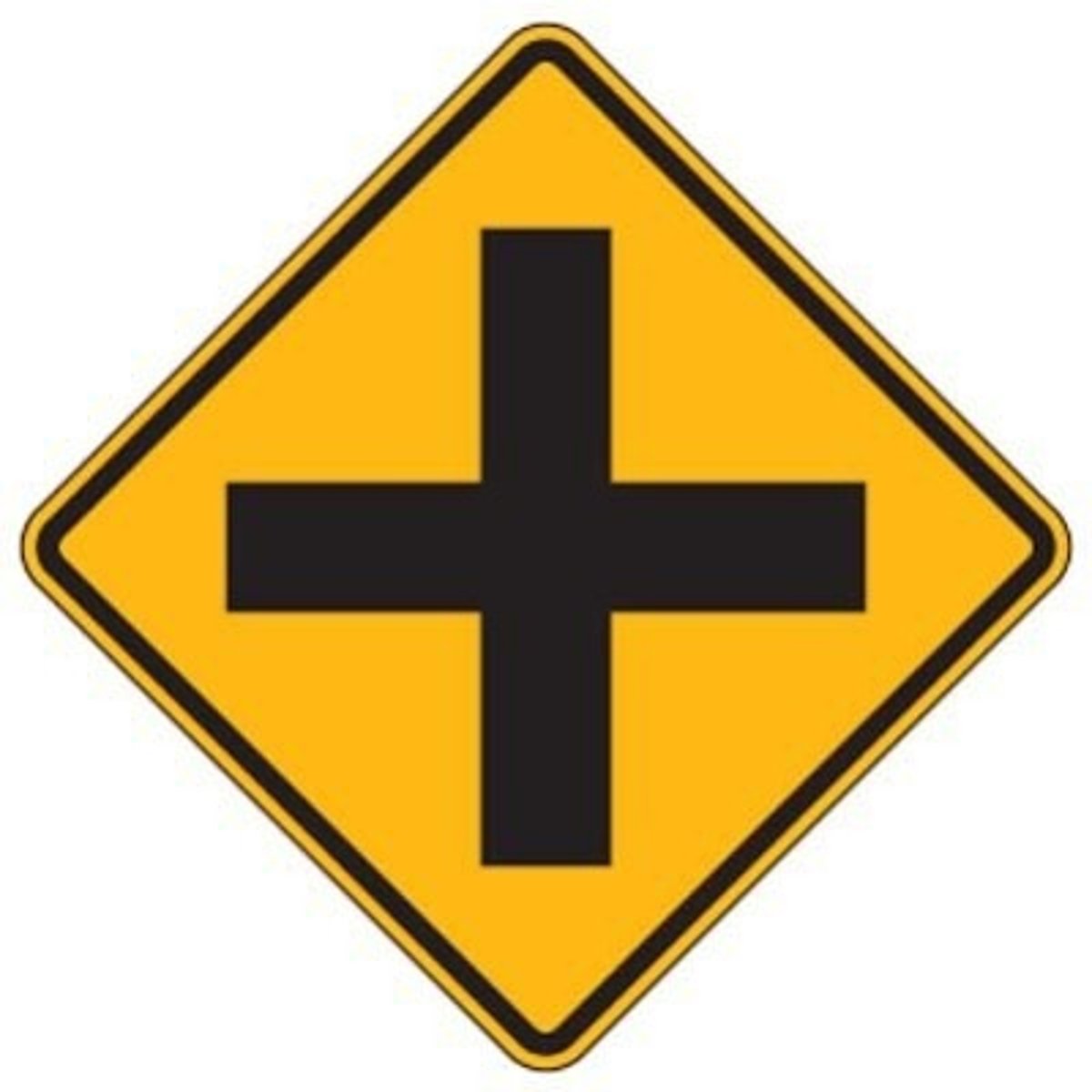
a. Intersection.
If you are being followed too closely on a two-lane road:
a. Reduce your speed slowly to encourage the tailgater to drive around you.
b. Speed up to increase the distance between you and the other car.
c. Apply your brakes to slow down, then resume your original speed.
a. Reduce your speed slowly to encourage the tailgater to drive around you.
A flashing yellow traffic signal at an intersection means:
a. You should treat the signal like a stop sign.
b. Stop. Yield to all cross traffic before crossing the intersection.
c. Slow down and be alert at the upcoming intersection.
c. Slow down and be alert at the upcoming intersection.
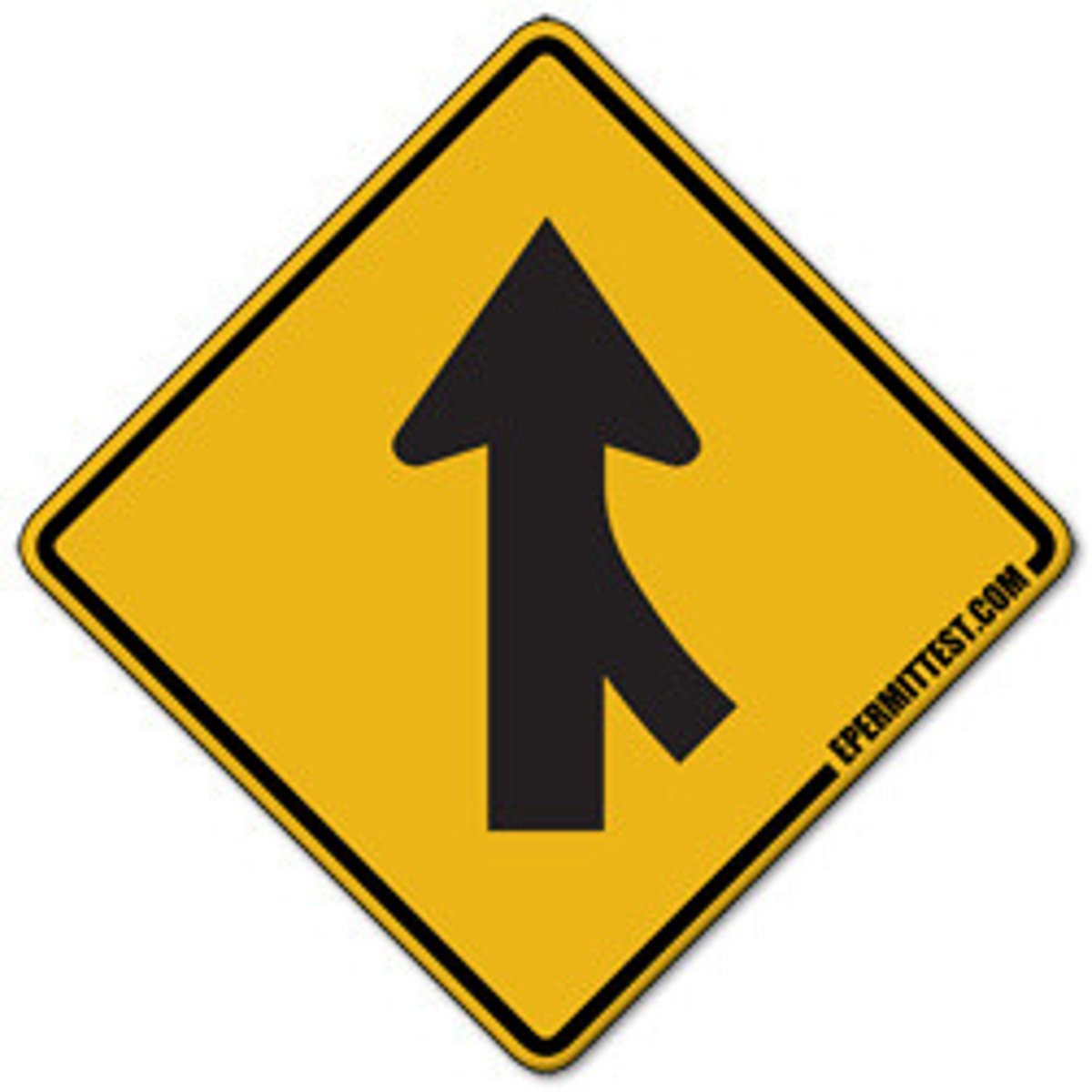
This road sign means:
a. Cars in the right lane must slow down.
b. No left turn.
c. Merge.
c. Merge
Which lane must you be in before making a left turn from a one-way street?
a. The lane nearest the left curb.
b. The lane nearest the center of the street.
c. The lane nearest the right curb.
a. The lane nearest the left curb.
Stopping distances and the severity of collisions:
a. Decrease as a vehicle's speed increases.
b. Are not affected by a vehicle's speed.
c. Increase as a vehicle's speed increases.
c. Increase as a vehicle's speed increases.
Blocking an intersection during "rush hour" traffic is not permitted:
a. Unless you entered the intersection on a green light.
b. Under any circumstances, even if your light is green.
c. Unless you have the right-of-way or a green light.
b. Under any circumstances, even if your light is green.
On a freeway, you should look farther ahead than you would on a city street:
a. In order to see potential hazards early.
b. Because it takes a quarter of a mile to stop your vehicle completely.
c. Because it helps you keep up with traffic.
a. In order to see potential hazards early.
At an uncontrolled intersection where you cannot see cross traffic until you are just about to enter the intersection, the speed limit is:
a. 15 mph.
b. 25 mph.
c. 20 mph.
a. 15 mph.
If you come to an intersection controlled by a flashing yellow light, you must:
a. Wait for the green light before proceeding.
b. Slow down and cross the intersection carefully.
c. Stop before crossing the intersection.
b. Slow down and cross the intersection carefully.
You are on the freeway and traffic is merging into your lane. You should:
a. Make room for the merging traffic, if possible.
b. Assert your right-of-way by driving faster.
c. Always maintain your position.
a. Make room for the merging traffic, if possible.
You are approaching an intersection at the posted speed limit when the signal turns yellow. You should:
a. Slow down and proceed through the intersection without caution.
b. Speed up to cross the intersection before the light turns red.
c. Stop before entering the intersection, if you can do so safely.
c. Stop before entering the intersection, if you can do so safely.
Unless otherwise posted, the speed limit in a residential area is:
a. 20 mph.
b. 25 mph.
c. 30 mph.
b. 25 mph.
The speed limit in any alley is:
a. 20 mph.
b. 15 mph.
c. 25 mph.
b. 15 mph.
Excessive speed:
a. Does not increase the chance of a crash.
b. Increases your ability to react to a hazard.
c. Often leads to high-risk-decision making.
c. Often leads to high-risk-decision making.
You should allow an extra cushion of space:
a. When following a station wagon.
b. When following a driver who cannot see the rear of their vehicle.
c. When following a small passenger car.
b. When following a driver who cannot see the rear of their vehicle.
If you are convicted of driving with an excessive blood alcohol concentration (BAC), you may be sentenced to serve:
a. Up to six months in jail.
b. Up to 12 months in jail.
c. No jail time, but you must pay a fine of $500.
a. Up to six months in jail.
Alcohol is:
a. A stimulant.
b. An antihistamine.
c. A depressant.
c. A depressant.
You can drive off the road to pass another vehicle:
a. If the vehicle ahead is turning left.
b. If there are two or more lanes traveling in your direction.
c. Under no circumstances.
c. Under no circumstances.
Using a cell phone while operating a motor vehicle is considered a distraction because:
a. It causes the driver to be concerned about the cost of the call.
b. It occupies the driver's hands, eyes, and mind.
c. It is an activity that draws the attention of other drivers.
b. It occupies the driver's hands, eyes, and mind.
Before you change lanes, you should check your mirrors and:
a. Never look over your right shoulder.
b. Always slow down in your traffic lane.
c. Glance over your shoulder.
c. Glance over your shoulder.
Dim your headlights for oncoming vehicles or when you are within 300 feet of a vehicle:
a. That you are approaching from behind.
b. Approaching you from behind.
c. That you have already passed.
a. That you are approaching from behind.
You are driving on the freeway behind a large truck. You should drive:
a. Closer behind the truck than you would if following a passenger vehicle.
b. Farther behind the truck than you would if following a passenger vehicle.
c. To the right side of the truck and wait to pass.
b. Farther behind the truck than you would if following a passenger vehicle.
Increase your following distance when driving behind a large vehicle:
a. To better see around the sides of the vehicle.
b. Because other drivers tend to pull behind large vehicles before trying to pass them.
c. Because following too closely will get you caught in the vehicle's slipstream.
a. To better see around the sides of the vehicle.
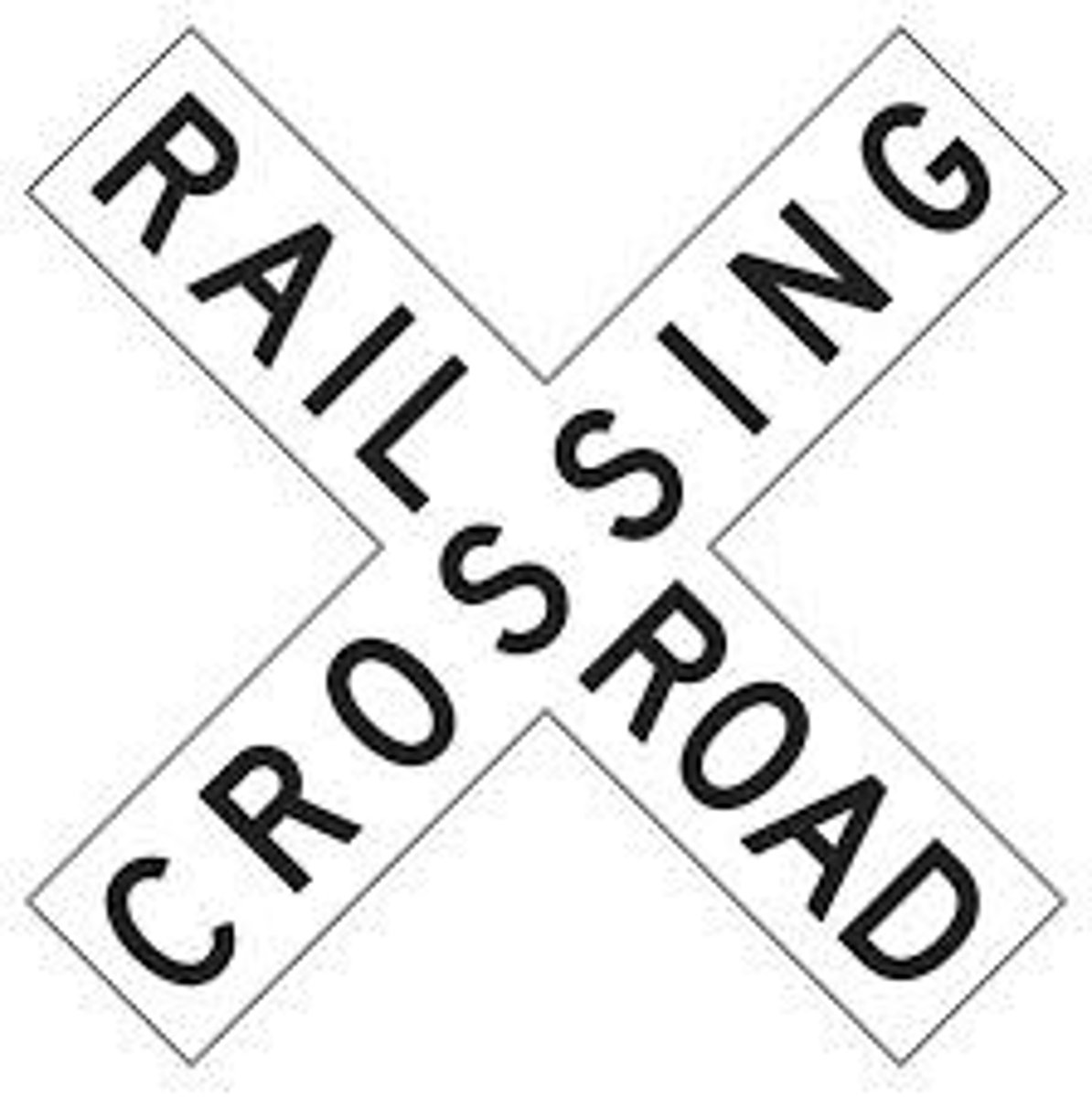
This white sign means:
a. Railroad crossing is controlled-continue at your regular speed.
b. Look, listen, and prepare to stop at the crossing, if necessary.
c. Stop at the railroad tracks and wait for a signal before crossing.
b. Look, listen, and prepare to stop at the crossing, if necessary.
Smoking inside a vehicle with a person younger than 18 years of age is:
a. Legal, if it is your child.
b. Illegal at all times.
c. Not restricted by law.
b. Illegal at all times.
A distraction when driving is:
a. Anything that causes evasive action while driving.
b. Anything that takes your attention away from driving.
c. Anything that causes you to pay more attention to driving.
b. Anything that takes your attention away from driving.
You must notify the DMV within five days if you:
a. Are cited for a traffic violation.
b. Sell or transfer your vehicle.
c. Paint your vehicle a different color.
b. Sell or transfer your vehicle.
Adjust your rearview and side mirrors:
a. Before you start driving.
b. Whenever you need to use them.
c. Before you get into the car.
a. Before you start driving.
Night driving presents unique problems because:
a. The speed limit is increased at night.
b. There are fewer cars on the roads at night.
c. Distance and vehicle speed are difficult to judge in the dark.
c. Distance and vehicle speed are difficult to judge in the dark.
Which of the following driving skills is/are affected by the use of alcohol and/or drugs:
a. Alertness.
b. Coordination.
c. Both of the above.
c. Both of the above.
If you miss your exit on the freeway, you should not:
a. Continue on the freeway and find an alternate route to your destination.
b. Proceed to the next exit, leave the freeway, and return to your proper exit.
c. Back up on the road or shoulder.
c. Back up on the road or shoulder.
A pedestrian starts to cross the street after the "Don't Walk" signal begins to flash. The pedestrian is in the middle of the street when your signal light changes to green. You should:
a. Proceed if you have the right-of-way.
b. Procced if the pedestrian is not in your lane.
c. Wait until the pedestrian crosses the street before proceeding.
c. Wait until the pedestrian crosses the street before proceeding.
What is an important step in turning?
a. Check traffic in all directions.
b. Increase your speed.
c. Always move to the left lane.
a. Check traffic in all directions.
When changing lanes on a freeway, you should:
a. Signal for at least five seconds.
b. Slow down before you start to change lanes.
c. Assume there is enough space in the next lane for your vehicle, if you signal first.
a. Signal for at least five seconds.
If a child is riding a bicycle near your vehicle:
a. Beep your horn.
b. Expect the child to be in total control of the bicycle.
c. Expect the unexpected.
c. Expect the unexpected.
If you are driving on a highway next to a single broken white line marking:
a. You cannot cross the line to pass.
b. You may cross the line to pass and change lanes.
c. You may only cross the line to change lanes if you are in the left lane.
b. You may cross the line to pass and change lanes.
Always carefully look for motorcycles before you change lanes because:
a. Their small size can make them hard to see.
b. They usually have the right-of-way at intersections.
c. It is illegal for motorcycles to share traffic lanes.
a. Their small size can make them hard to see.
The safest precaution that you can take regarding the use of cellular phones and driving is:
a. Use hands-free devices so you can keep both hands on the steering wheel.
b. Keep your phone within easy reach so you won't need to take your eyes off the road.
c. Review the number before answering a call.
a. Use hands-free devices so you can keep both hands on the steering wheel.
You are approaching an intersection where a traffic signal is displaying a steady yellow light. If you have not already entered the intersection, you should:
a. Speed up to beat the red light.
b. Reduce your speed and proceed carefully through the intersection.
c. Come to a safe stop.
c. Come to a safe stop.
If oncoming headlights are blinding you while you are driving at night, you should:
a. Look toward the right edge of the road.
b. Switch your lights to high beams.
c. Turn your lights on and off.
a. Look toward the right edge of the road.
When parking next to a curb, you should use your turn signals:
a. Only when pulling away from the curb.
b. When pulling next to, but not away from, the curb.
c. When pulling next to or away from the curb.
c. When pulling next to or away from the curb.
A broken yellow line between two lanes of traffic means:
a. Both lanes of traffic are going in the same direction.
b. Passing is permitted when it's safe.
c. Passing is not permitted.
B. Passing is permitted when it's safe.
You are driving on the freeway. The vehicle in front of you is a large truck. You should drive:
a. Closely behind the truck in bad weather because the driver can farther ahead than you can.
b. Farther behind the truck than you would when following a passenger vehicle.
c. No more than one car length behind the truck so the driver can see you.
b. Farther behind the truck than you would when following a passenger vehicle.
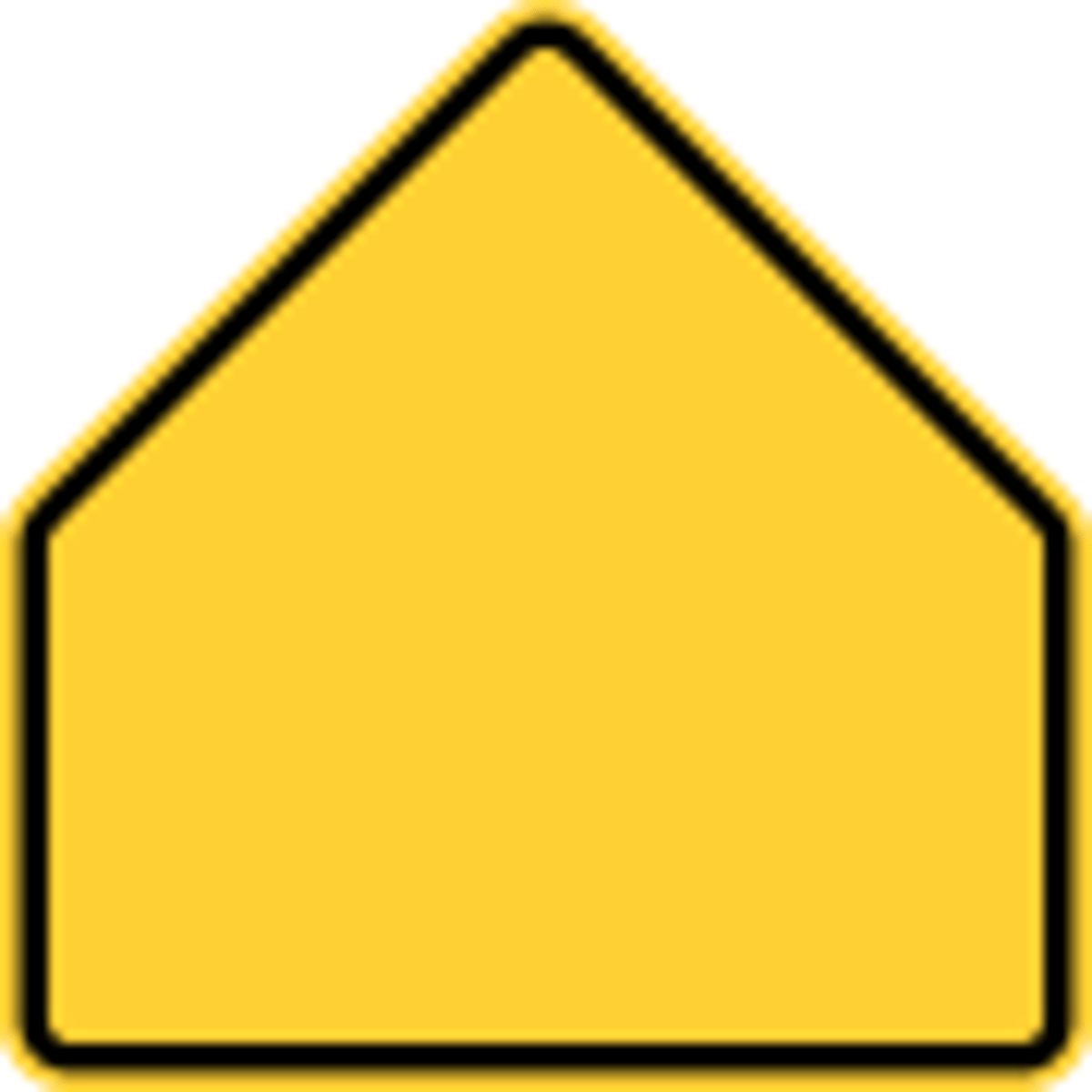
A pentagon-shaped sign is a:
a. Stop sign.
b. Regulatory sign.
c. School zone or school crossing sign.
c. School zone or school crossing sign.
A blood alcohol concentration of 0.02 percent:
a. Won't have any effect on your driving.
b. Won't put other drivers at risk.
c. Will double your chances of having an accident.
c. Will double your chances of having an accident.
When you want to change lanes, you should not:
a. Move into another lane while within an intersection.
b. Check your blind spot by looking over your shoulder.
c. Check for other drivers moving into the same lane.
a. Move into another lane while within an intersection.
It is very foggy. You should slow down and:
a. Turn on your emergency flashers.
b. Turn your lights to their high beam setting.
c. Turn your lights to their low beam setting.
c. Turn your lights to their low beam setting.
After passing a vehicle, it is safe to return to your driving lane when:
a. The driver you passed signals for you to return to your lane.
b. You signal your intention for three seconds.
c. You see the headlights of the passed vehicle in your review mirror.
c. You see the headlights of the passed vehicle in your review mirror.
You have stopped for a train at a railroad crossing. After the train passes, you should:
a. Wait for signal lights to stop flashing.
b. Look for a second train.
c. Both of the above.
c. Both of the above.
It is illegal to leave a child aged ___ or younger alone in a vehicle:
a. Eight.
b. Seven.
c. Six.
c. Six.
If you want to pass a bicyclists riding on the right edge of your lane:
a. You must honk your horn before passing the bicyclist.
b. You must not squeeze past the bicyclist.
c. You may not pass the bicyclist for any reason.
b. You must not squeeze past the bicyclist.
At a red traffic light with a green arrow, you may proceed in the direction of the arrow if:
a. You first come to a complete stop.
b. You wait until the light changes.
c. You are in the proper lane and the roadway is clear.
c. You are in the proper lane and the roadway is clear.
The amount of alcohol in the blood is referred to as:
a. Implied consent (IC).
b. Blood alcohol concentration (BAC).
c. Rate of alcohol consumption (RAC).
b. Blood alcohol concentration (BAC).
With a Class C driver license, a person may drive:
a. A three-axle vehicle if the Gross Vehicle Weight is less than 6,000 pounds.
b. Any three-axle vehicle, regardless of the weight.
c. A vehicle pulling two trailers.
a. A three-axle vehicle if the Gross Vehicle Weight is less than 6,000 pounds.
Safely backing your vehicle requires all of the following, except:
a. Looking over your right shoulder as you back up.
b. Checking your vehicle's surroundings.
c. Tapping your horn before you back up.
c. Tapping your horn before you back up.
For which of the following traffic lights must you always stop your vehicle?
a. Solid red lights, flashing red lights, and blacked out traffic signals.
b. Solid red lights, red arrows, and flashing yellow lights.
c. Solid red lights, flashing red lights, and yellow lights.
a. Solid red lights, flashing red lights, and blacked out traffic signals.
To turn left from a multilane one-way street onto a one-way street, you should start your turn from:
a. Any lane (as long as it is safe).
b. The lane closest to the left curb.
c. The lane in the center of the road.
b. The lane closest to the left curb.
In which of the following scenarios should your wheels not be pointed straight ahead?
a. When waiting to make a left turn at a traffic light.
b. When parked on a hill or sloping driveway.
c. When parked on the side of a level roadway where there is no curb.
b. When parked on a hill or sloping driveway.
You should increase the distance between your vehicle and the vehicle ahead when you:
a. Are following a small passenger vehicle.
b. Are being tailgated by another driver.
c. Are driving more slowly than the posted speed limit.
b. Are being tailgated by another driver.
If you approach a traffic light with a red signal and a police officer directs you to go through the intersection without stopping, you should:
a. Stop until the light turns green.
b. Go through the intersection without stopping.
c. Come to a complete stop before proceeding.
b. Go through the intersection without stopping.
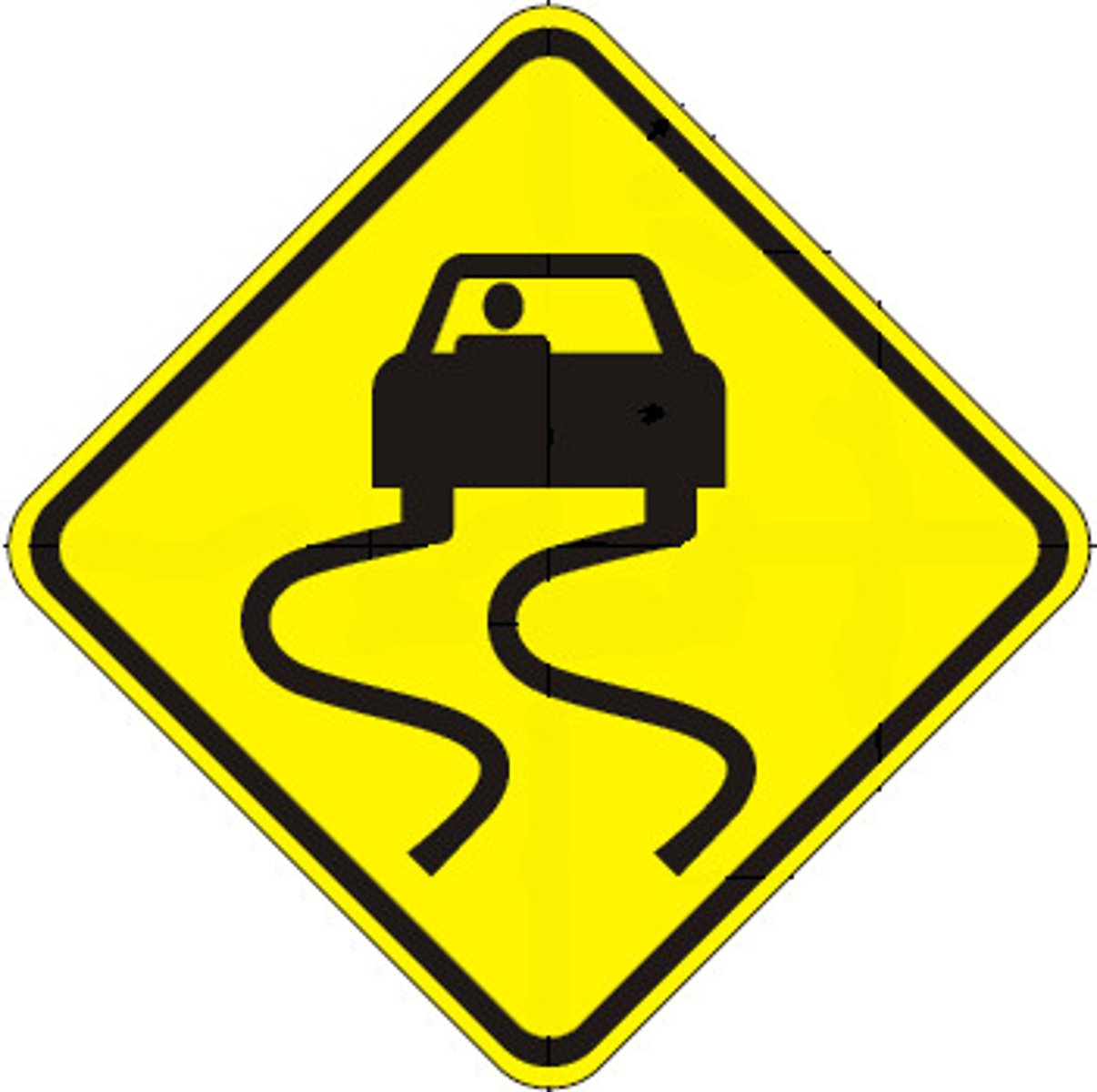
This yellow signs means:
a. The road ahead has many curves.
b. There is a sharp curve in the road ahead.
c. The road ahead may be slippery.
c. The road ahead may be slippery.
You are approaching an intersection at the posted speed limit when the signal turns yellow. You should:
a. Slow down and proceed through the intersection without caution.
b. Speed up to cross the intersection before the light turns red.
c. Stop before entering the intersection, if you can do so safely.
c. Stop before entering the intersection, if you can do so safely.
You must yield to a pedestrian using a white cane or guide dog:
a. Only when the guide dog is leading the person across the street.
b. At all times.
c. Only if a crossing guard is present.
b. At all times.
Roads are slippery after it first starts to rain. When the road is slippery, you should:
a. Avoid making turns and stops while driving at high speeds.
b. Test your tires' traction while going uphill.
c. Decrease the distance you look ahead of your vehicle.
a. Avoid making turns and stops while driving at high speeds.
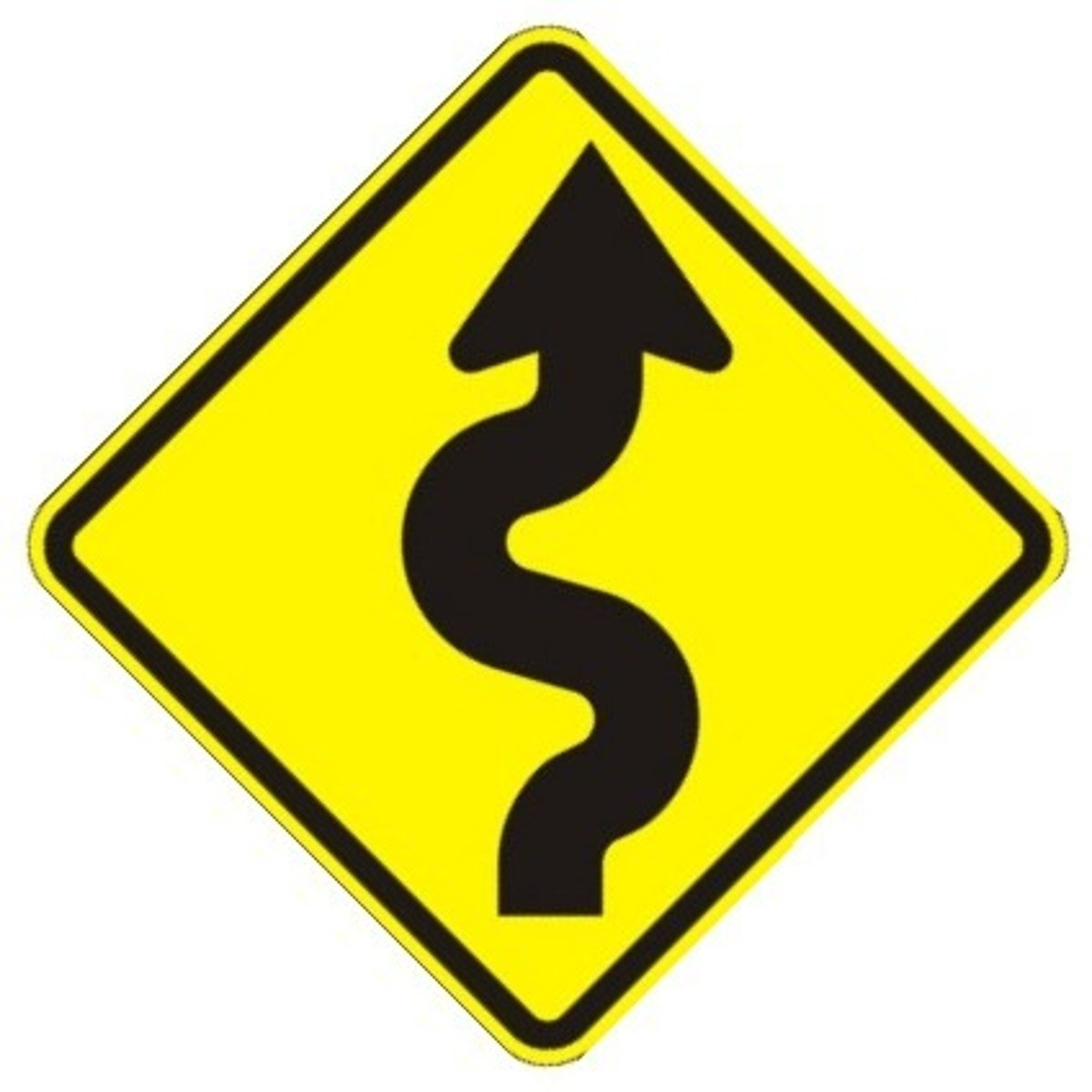
This sign means:
a. Winding road ahead.
b. Do not enter.
c. Pedestrian crossing.
a. Winding road ahead.
Always use your seat belt:
a. Unless the vehicle was built before 1978.
b. Unless you are in a limousine.
c. When the vehicle is equipped with seat belts.
c. When the vehicle is equipped with seat belts.
In rainy weather, you should be most careful when turning or stopping:
a. After it had been raining all day.
b. One half hour after it stops raining.
c. During the first half hour of rain.
c. During the first half hour of rain.
Two sets of solid double yellow lines that are two or more feet apart:
a. May be crossed to enter or exit a private driveway.
b. May not be crossed for any reason.
c. Should be treated as a separate traffic lane.
b. May not be crossed for any reason.
If you come to an intersection and your view to the side is blocked, you should:
a. Slow down and look both ways.
b. Maintain your speed and look both ways.
c. Stop, then inch forward until you can see clearly in both directions.
c. Stop, then inch forward until you can see clearly in both directions.
When driving at night on a dimly lit street, you should:
a. Drive slowly enough that you can stop within the area illuminated by your headlights.
b. Turn on your high beam headlights to better see the vehicles ahead of you.
c. Keep the instrument panel lights bright to be more visible to other drivers.
a. Drive slowly enough that you can stop within the area illuminated by your headlights.
Yellow lines separate:
a. Traffic lanes on one-way streets.
b. Traffic moving in opposite directions on two-way roads.
c. A lane barrier between regular and carpool lanes.
b. Traffic moving in opposite directions on two-way roads.
To improve visibility lowered by rain or fog, drivers should use their:
a. Low beam headlights.
b. High beam headlights.
c. Parking lights.
a. Low beam headlights.
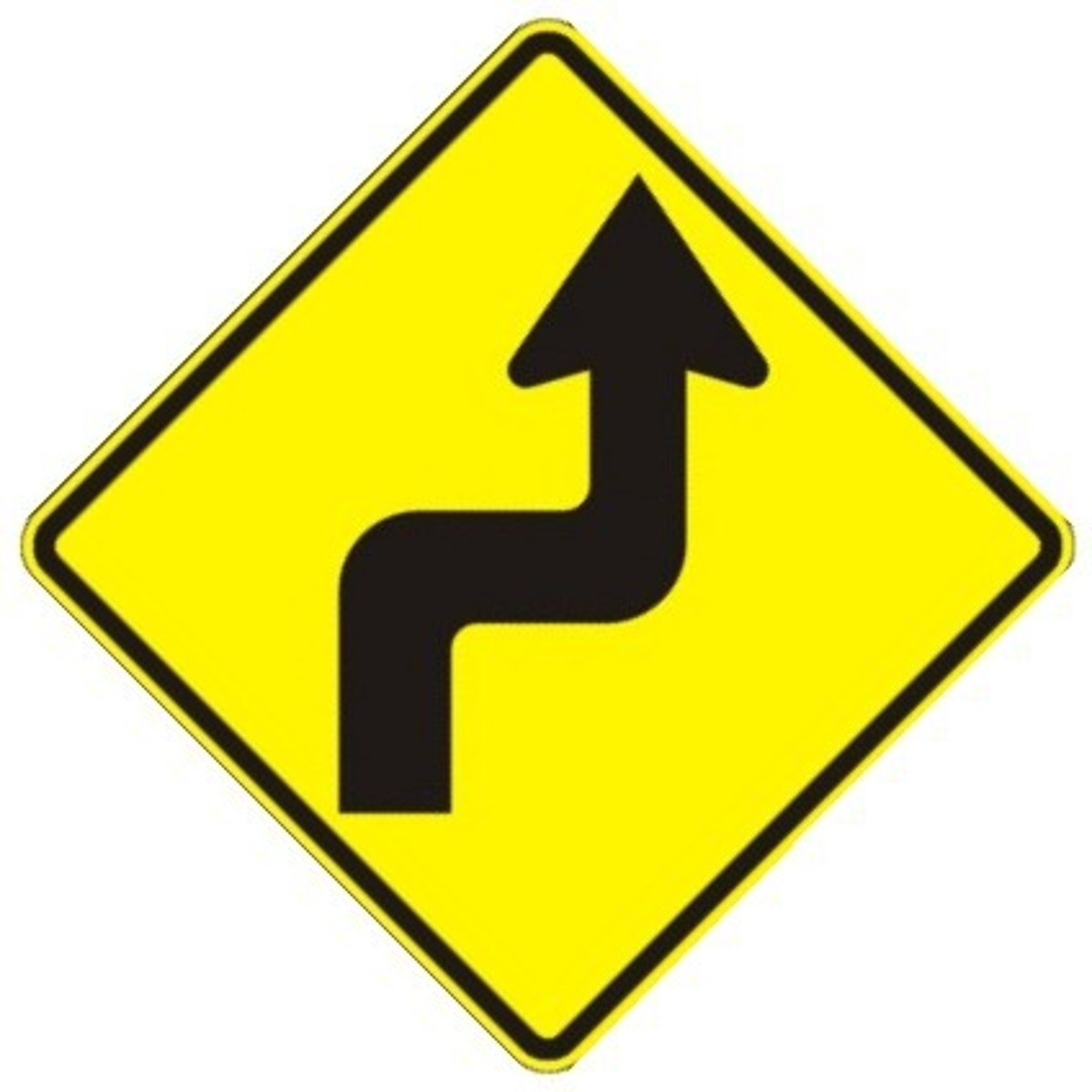
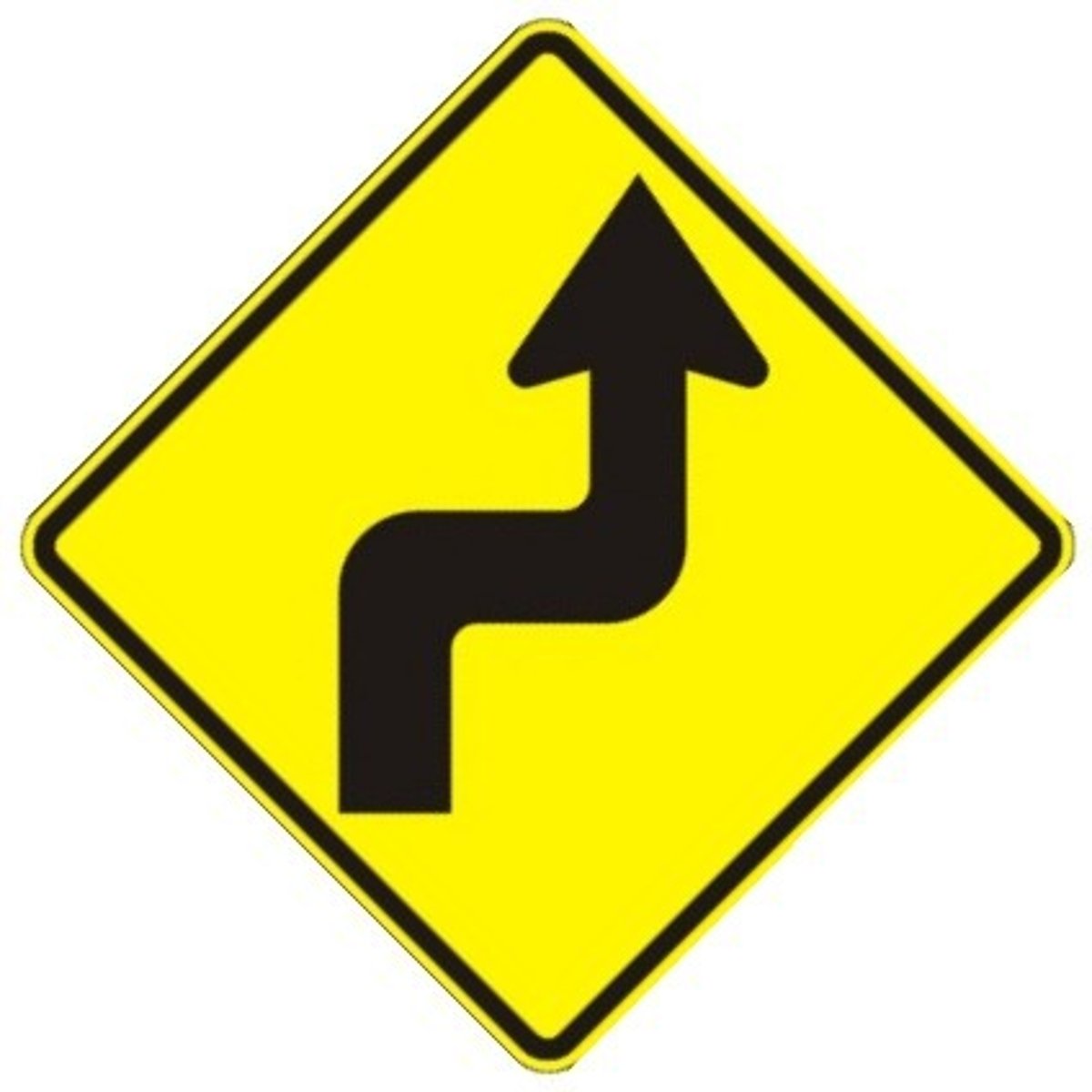
This road sign means:
a. Sharp right turn ahead.
b. A road joins from the right.
c. The road ahead turns sharply right then sharply left.
c. The road ahead turns sharply right then sharply left.
When passing another vehicle, it is safe to return to your lane if you:
a. Cannot see the vehicle directly to your right.
b. See the vehicle's headlights in your rearview mirror.
c. Have passed the other vehicle's front bumper.
b. See the vehicle's headlights in your rearview mirror.
You should not use your horn:
a. When visibility ahead is limited.
b. If you might hit another vehicle.
c. Near blind pedestrians.
c. Near blind pedestrians.
When driving in work zones, you should:
a. Follow the driver in front of you closely.
b. Pass the driver in front of you as soon as you can.
c. Avoid tailgating and keep a safe following distance.
c. Avoid tailgating and keep a safe following distance.
Drivers must use their seat belt:
a. Unless they are driving a vehicle built before 1978.
b. Unless they are driving a limousine.
c. And failure to do so will result in a traffic ticket.
c. And failure to do so will result in a traffic ticket.
Which of these statements is true about roadwork zones?
a. Fines are the same for violations committed in work zones as they are under normal traffic conditions.
b. You must "Slow for the Come Zone."
c. Slow down only if you think workers are present.
b. You must "Slow for the Come Zone."
When passing on the left of a vehicle, it is safe to move back into the right lane:
a. After about three seconds.
b. When you can no longer see the vehicle over your right shoulder.
c. When you can see the front of the vehicle in your rearview mirror.
c. When you can see the front of the vehicle in your rearview mirror.
Should you always drive slower than other traffic?
a. No, you can block traffic when you drive too slowly.
b. Yes, it is a good defensive driving technique.
c. Yes, it is always better than driving faster.
a. No, you can block traffic when you drive too slowly.
Before switching on the ignition, you should:
a. Buckle your safety belt.
b. Be sure all passengers have buckled their safety belts.
c. Both of the above.
c. Both of the above.
When driving in fog or mist, never put your headlights on the high beam setting because:
a. The light will reflect back into your eyes.
b. Approaching vehicle might not see you.
c. Vehicles behind you may follow too closely.
a. The light will reflect back into your eyes.
To turn left from a one-way street onto a one-way street, start from:
a. The lane closest to the left curb.
b. The center lane.
c. Any lane, as long as it seems safe to do so.
a. The lane closest to the left curb.
If you find yourself in a skid:
a. Brake lightly.
b. Stay off the brakes.
c. Brake abruptly.
b. Stay off the brakes.
Vehicles stopped behind a school bus with its red lights must remain stopped until:
a. All students are off the bus.
b. The stop arm is retracted.
c. The stop arm is retracted and the bus resumes motion.
c. The stop arm is retracted and the bus resumes motion.
When driving in fog, rain or snow, use:
a. Low beams.
b. High beams.
c. Fog lights only.
a. Low beams.
When driving under snowy or icy conditions:
a. It is safe to use your cruise control.
b. Make speed and directional changes more gradually than you would otherwise.
c. Drive as you would under normal conditions.
b. Make speed and directional changes more gradually than you would otherwise.
If your cell phone rings while you are driving and you do not have a hands-free device, you should:
a. Answer the call because it may be an emergency.
b. Let the call go to voicemail.
c. Check the incoming number before answering the call.
b. Let the call go to voicemail.
Which of these statements is true about changing lanes?
a. You only need to turn and look over your right shoulder for lane changes to the right or left.
b. Look over your right shoulder for a right lane change and look left shoulder for a left lane change.
c. Vehicles with two outside mirrors do not have blind spots.
b. Look over your right shoulder for a right lane change and look left shoulder for a left lane change.
If you drive more slowly than the flow of traffic, you will most likely:
a. Interfere with traffic and receive a ticket.
b. Improve traffic flow.
c. Demonstrate defensive driving techniques.
a. Interfere with traffic and receive a ticket.
You should allow an extra cushion of space:
a. When following a station wagon.
b. When following a driver who cannot see the rear of their vehicle.
c. When following a small passenger vehicle.
b. When following a driver who cannot see the rear of their vehicle.
Water on the road can cause a vehicle to hydroplane. Your car may hydroplane at speeds as low as:
a. 45 miles per hour.
b. 35 miles per hour.
c. 40 miles per hour.
b. 35 miles per hour.
To see vehicles in your blind spots, you should check:
a. The inside rearview mirror.
b. The outside rearview mirror.
c. Over your shoulders.
c. Over your shoulders.
What is the difference between traffic lights with red arrows and those with solid red lights?
a. Red arrows are only used to stop traffic which is turning.
b. Red arrows are only used for protected turn lanes.
c. You cannot turn on a red arrow, even if you stop first.
c. You cannot turn on a red arrow, even if you stop first.