Lecture 2: Lecture 2: Tissue Types & Epithelium
 Call Kai
 Learn
Learn Practice Test
 Spaced Repetition
 Match
Match Flashcards
 Knowt Play
1/29

There's no tags or description
Looks like no tags are added yet.
Name | Mastery | Learn | Test | Matching | Spaced | Call with Kai |
|---|
No analytics yet
Send a link to your students to track their progress
30 Terms
Tissues
Related cells with similar properties and common functions, individual body cells are specialized, and each type performs specific functions that maintain
homeostasis
4 basic types of tissues
Epithelium
Connective tissue (Bone, Cartilage, Blood, Connective Tissue Proper)
Muscle tissue
Nervous tissue
Epithelium
Covers body surface or lines cavities
Connective tissue
Few cells, lots of extracellular matrix (ground
substance & fibers). 4 types: CT proper, Loose = areolar, adipose, reticular; Dense = regular, irregular, elastic, | Cartilage: Hyaline, Elastic, Fibrocartilage | Bone: Compact, Spongy | Blood
Muscle Tissue
body movements, contractions, skeletal, cardiac, smooth
Nervous Tissue
brain, spinal cord, nerves, neurons, dendrites
Properties of Epithelial Tissue
Rests on basement membrane (or basal lamina), supported byconnective tissue
Polarized: apical, lateral, and basal sides of cells and tissues
Highly Cellular: little/no extracellular matrix
Specialized cell contacts bind cells into sheets
Avascular, but innervated: nourishment by diffusion throughbasement membrane
High regenerative capacity through mitosis
Surface modifications
Cilia, Microvilli, Keratinization, Goblet cells and Stereocilia
Types of Epithelia
Simple squamous, Simple cuboidal, Simple columnar, Pseudostratified columnar, Stratified squamous, Stratified cuboidal, Stratified columnar, Transitional
Label Epithelial Tissue
Layers + cell shape + "epithelium" + any
surface modifications
Simple Squamous Epithelium
Allows passage of materials by
diffusion and filtration in sites where
protection is not important - NO SURFACE MODIFICATIONS
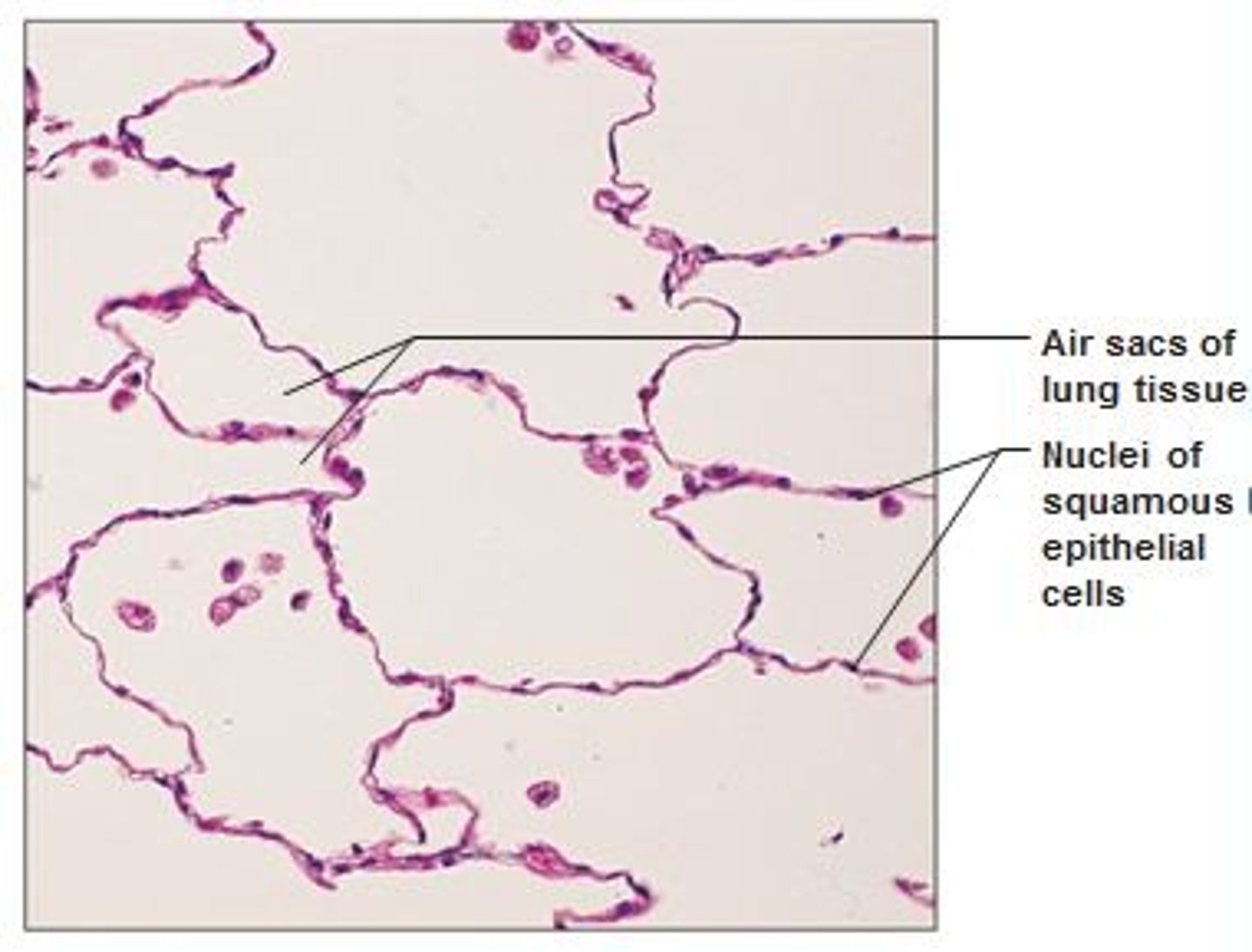
Location of Simple Squamous Epithelium
Kidney glomeruli, alveoli, peritoneum,
serous pericardium, pleurae
Stratified Squamous Epithelium
To shield underlying structures from mechanical stress, abrasion, dehydration, and pathogen invasion - Keratinized or Non Keratinized
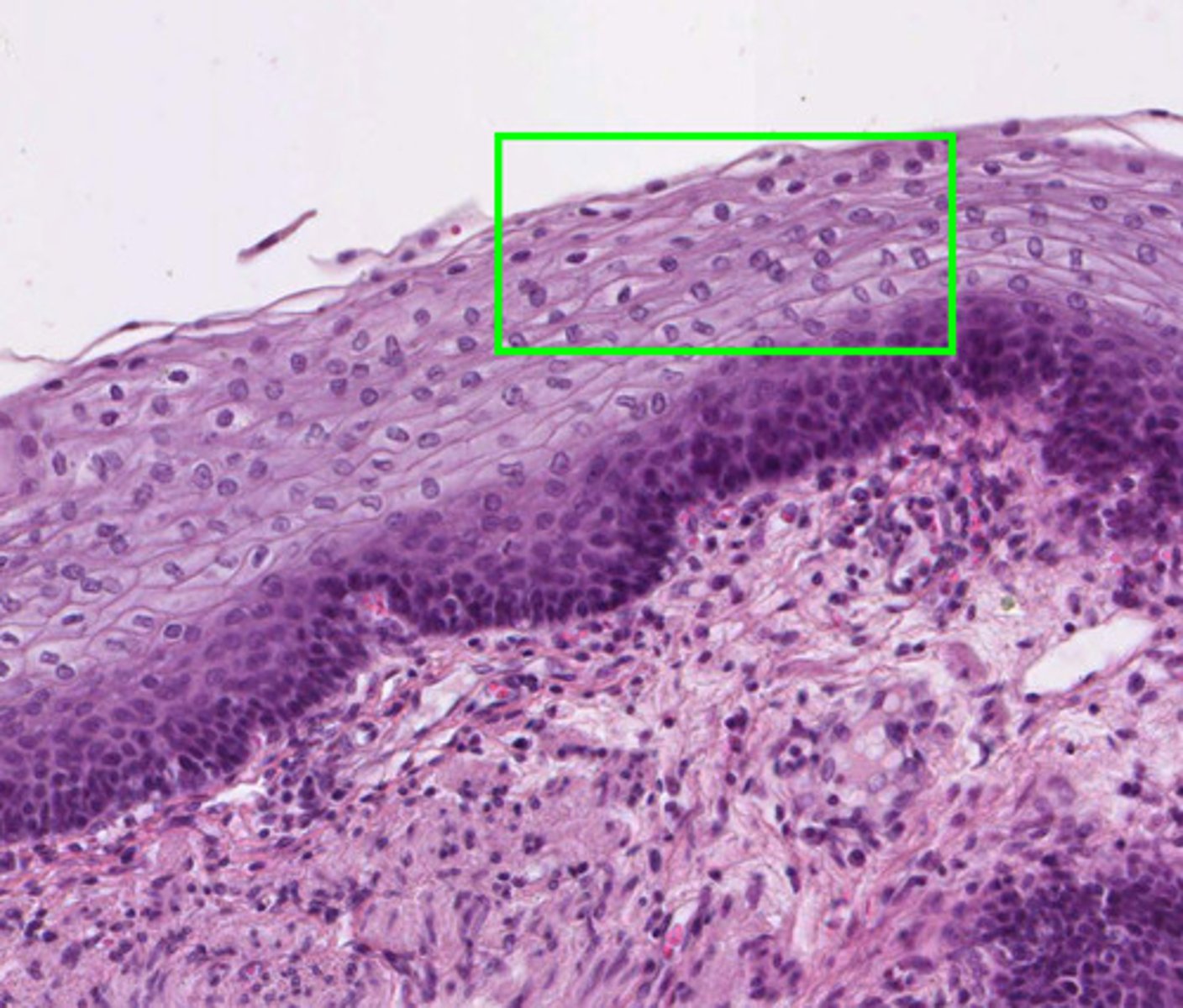
Location of Stratified Squamous Epithelium
Mouth, esophagus, vagina, skin
Simple Cuboidal Epithelium
Single layer of cubelike cells with large central nuclei, usually involved in secretion/absorption. - NO MODIFICATIONS
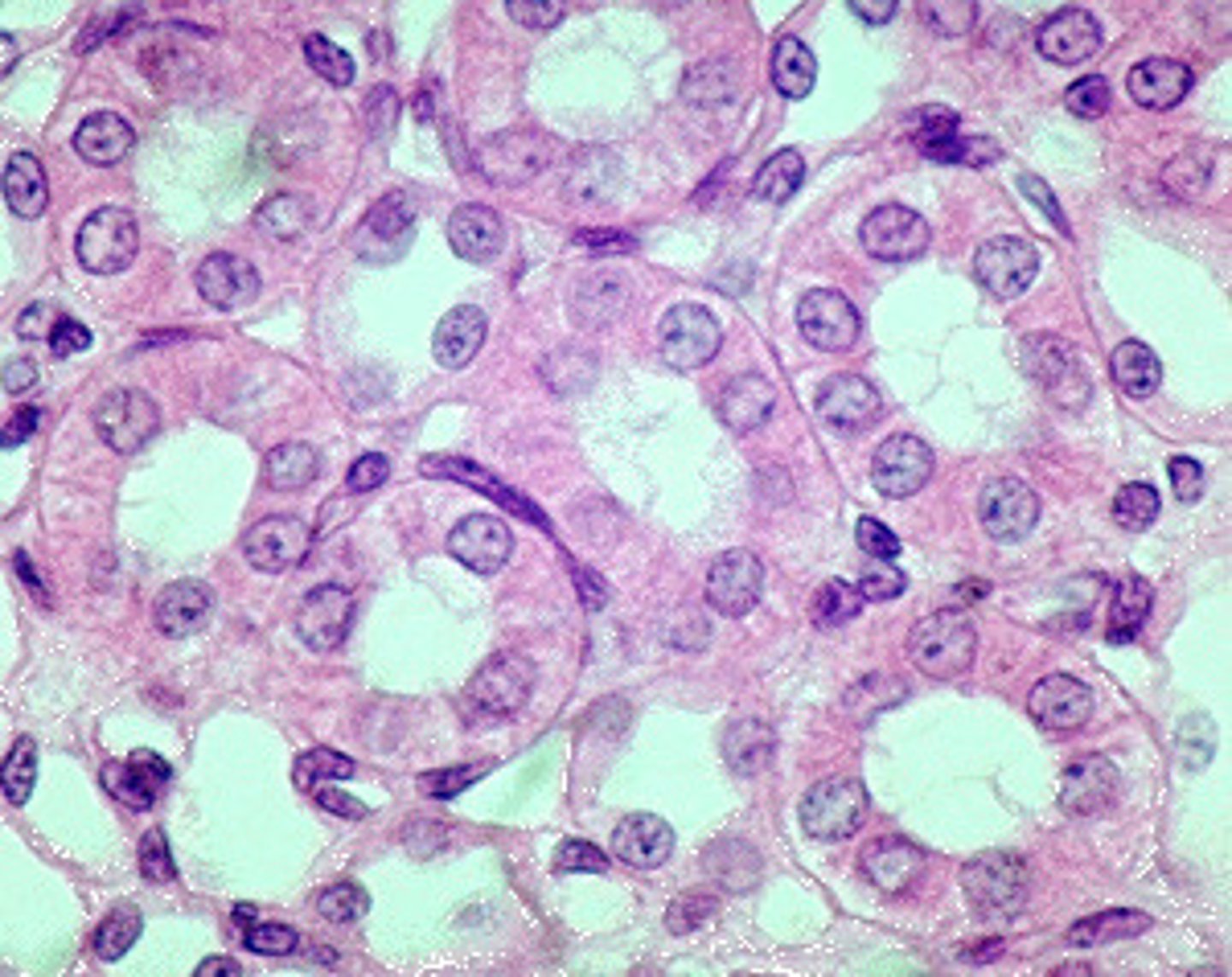
Location of Simple Cuboidal Epithelium
Kidney tubules, small glands, ovaries
Simple Columnar Epithelium
The nuclei of simple columnar epithelium are all at the same level, near the basal surface. Absorption, secretion, and protection. - Cilia, Microvilli, Goblet cells, Stereocilia.
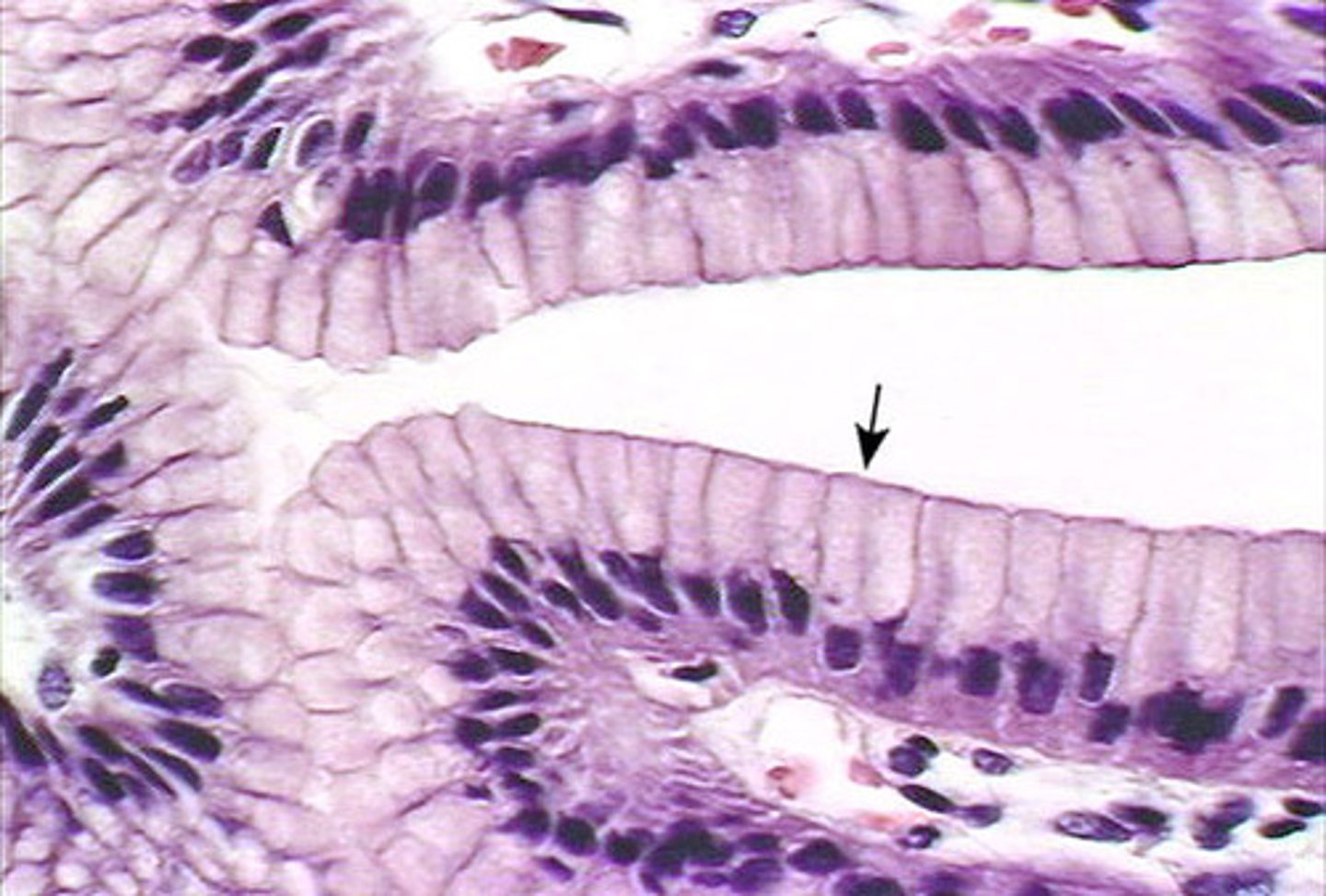
Location of Simple Columnar Epithelium
Digestive tract, gall bladder, small bronchi,
uterine tube, uterus
Pseudostratified Columnar Epithelium
Pseudostratified columnar epithelium has a single cell layer. Looks like more because the nuclei are at different levels. Absorption, secretion, and protection. - Cilia, Microvilli, Goblet cells, Stereocilia.
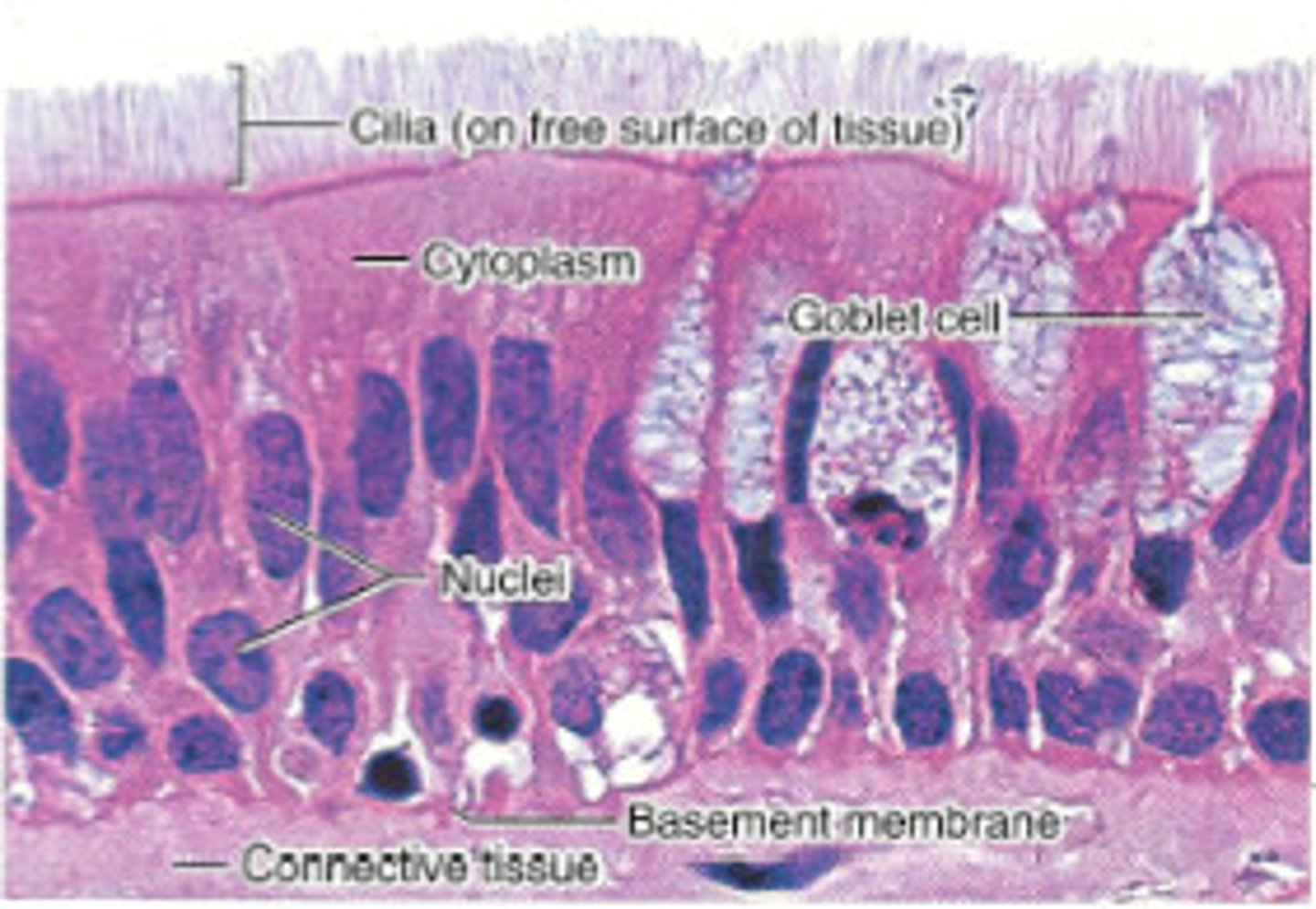
Location of Pseudostratified Columnar Epithelium
Trachea, ductus deferens
Transitional Epithelium
Cells in transitional epithelium can change their shape to allow the bladder/ureters to stretch/expand. They fill and return to their original shape when empty, while also acting as a waterproof, protective barrier against the toxic wastes found in urine. - NO MODIFICATIONS
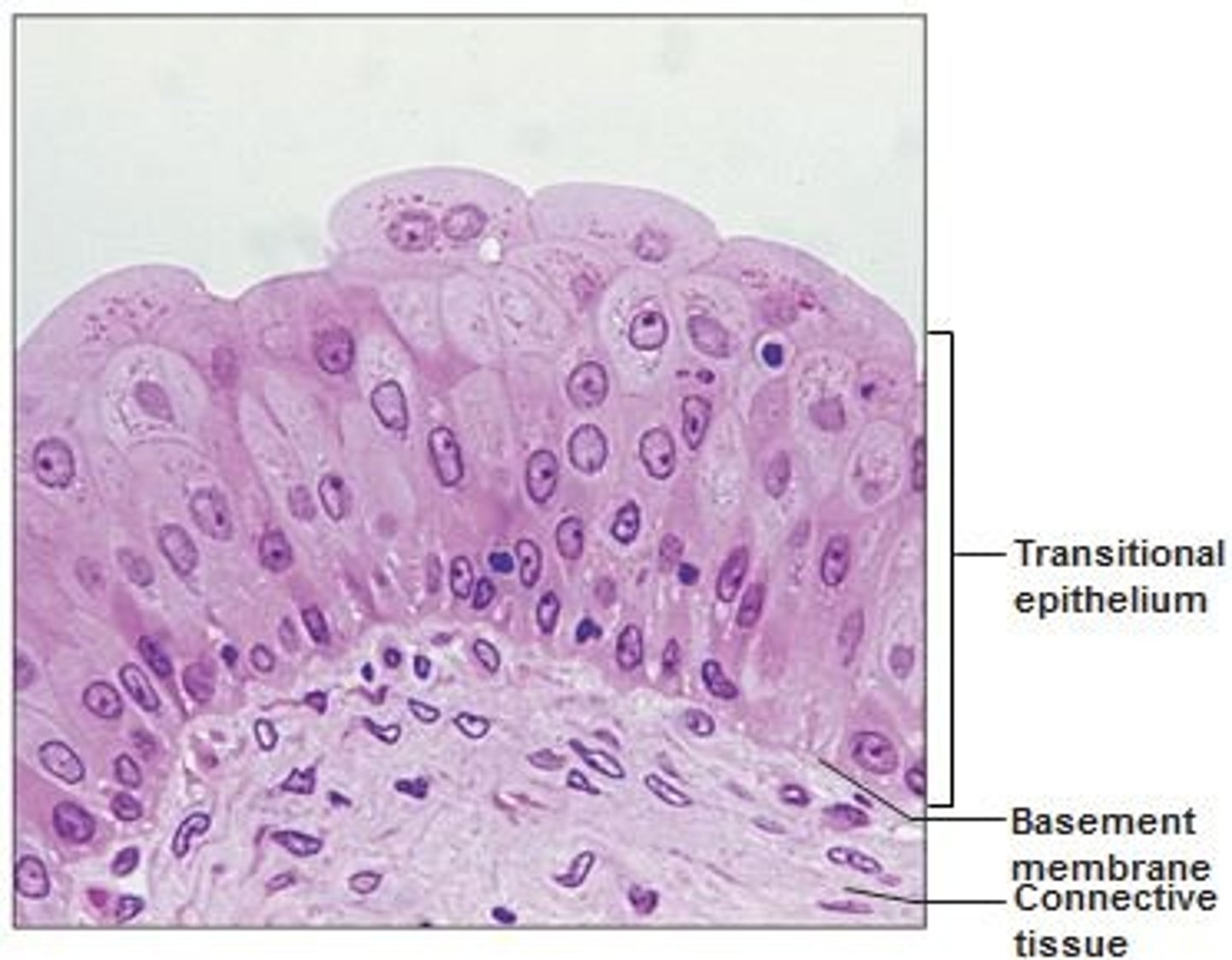
Location of Transitional Epithelium
Ureter, bladder, urethra
Cilia
small, dense, brush-like extra-cellular microtubules; used to move fluids
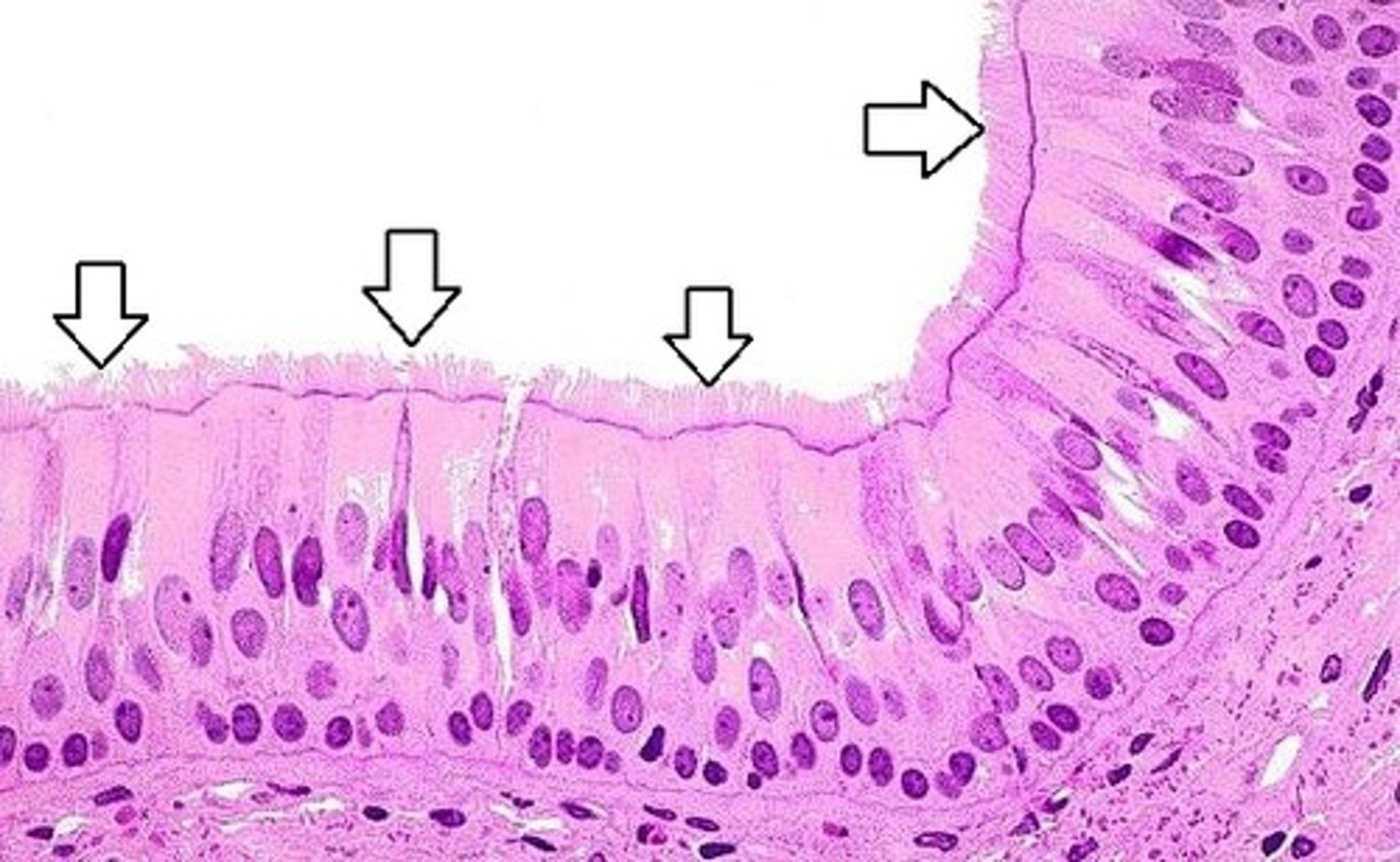
Microvilli
Small finger-like extensions of cell membrane, can't see clearly; increased surface area for absorption
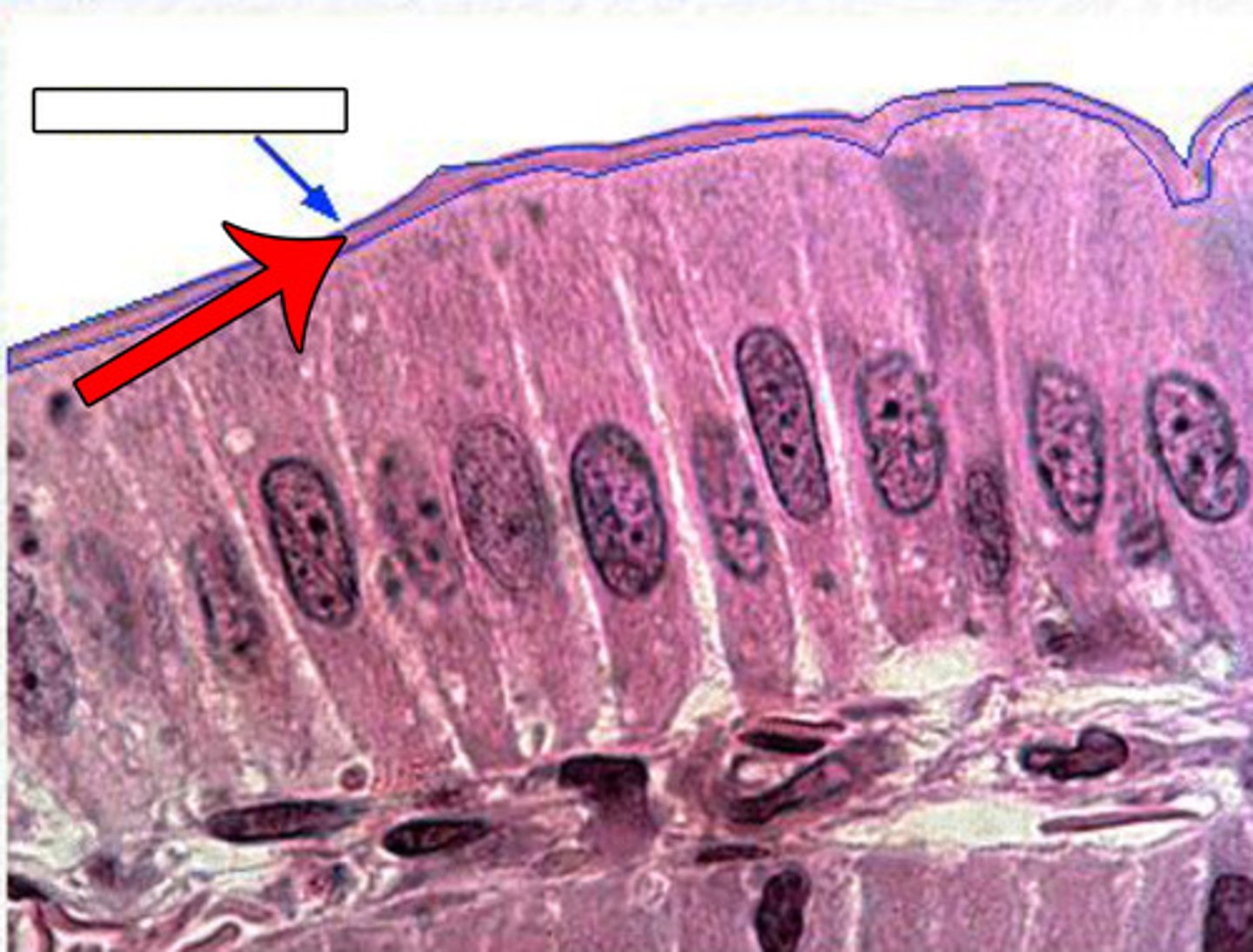
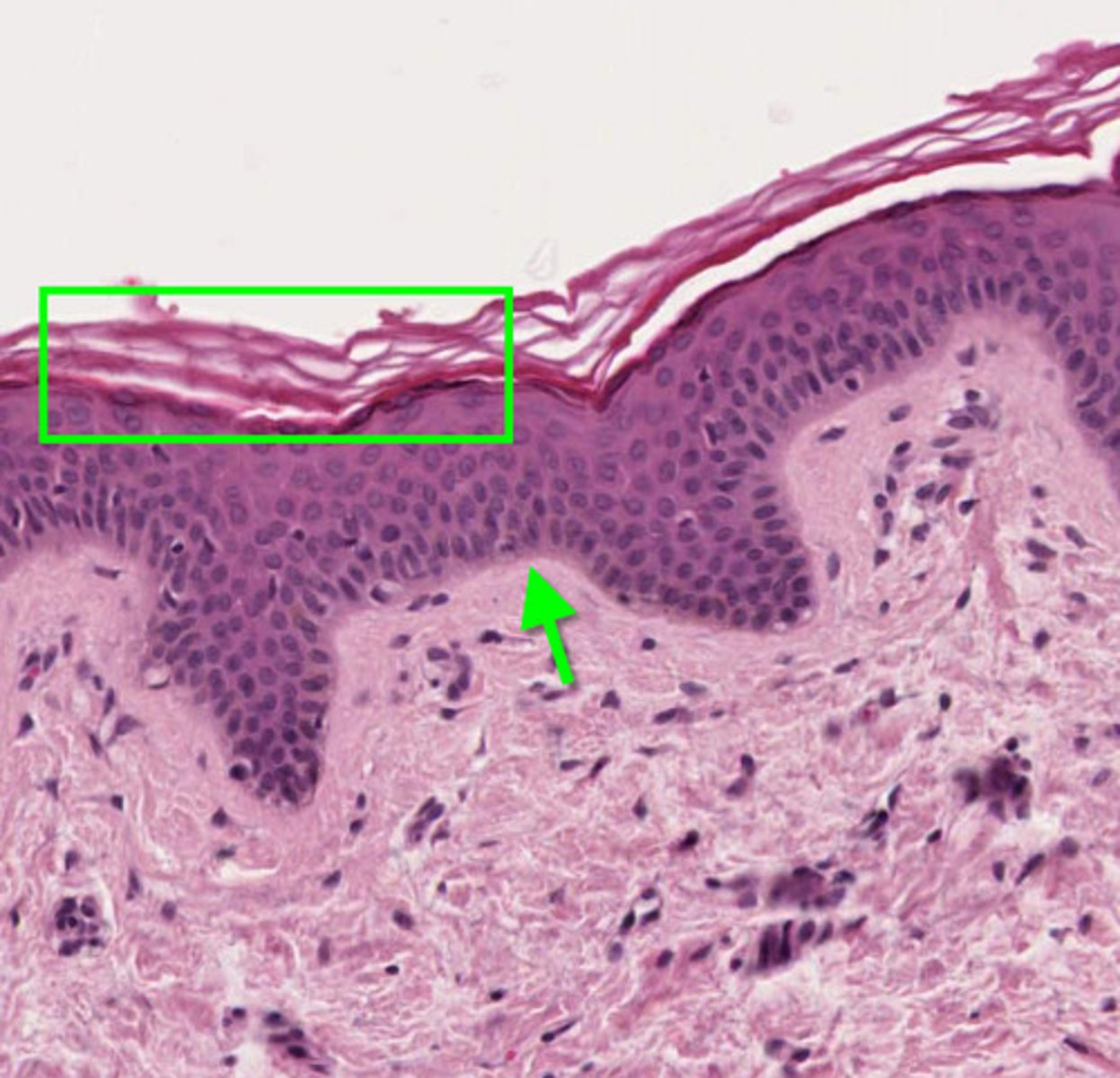
Keratinization
Extracellular protein matrix; prevents desiccation &
resists abrasion
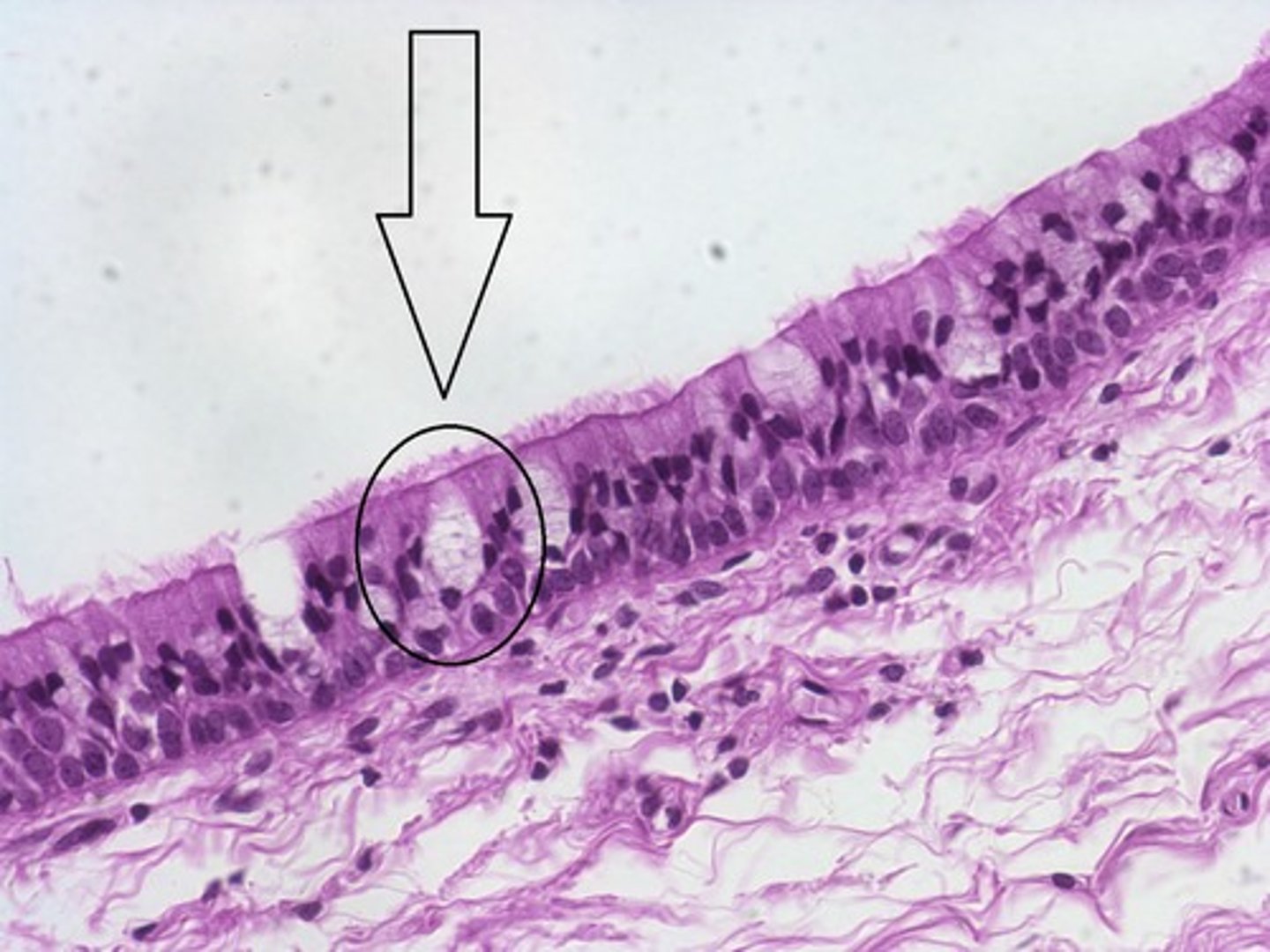
Goblet cells
Secrete (lots of) mucous
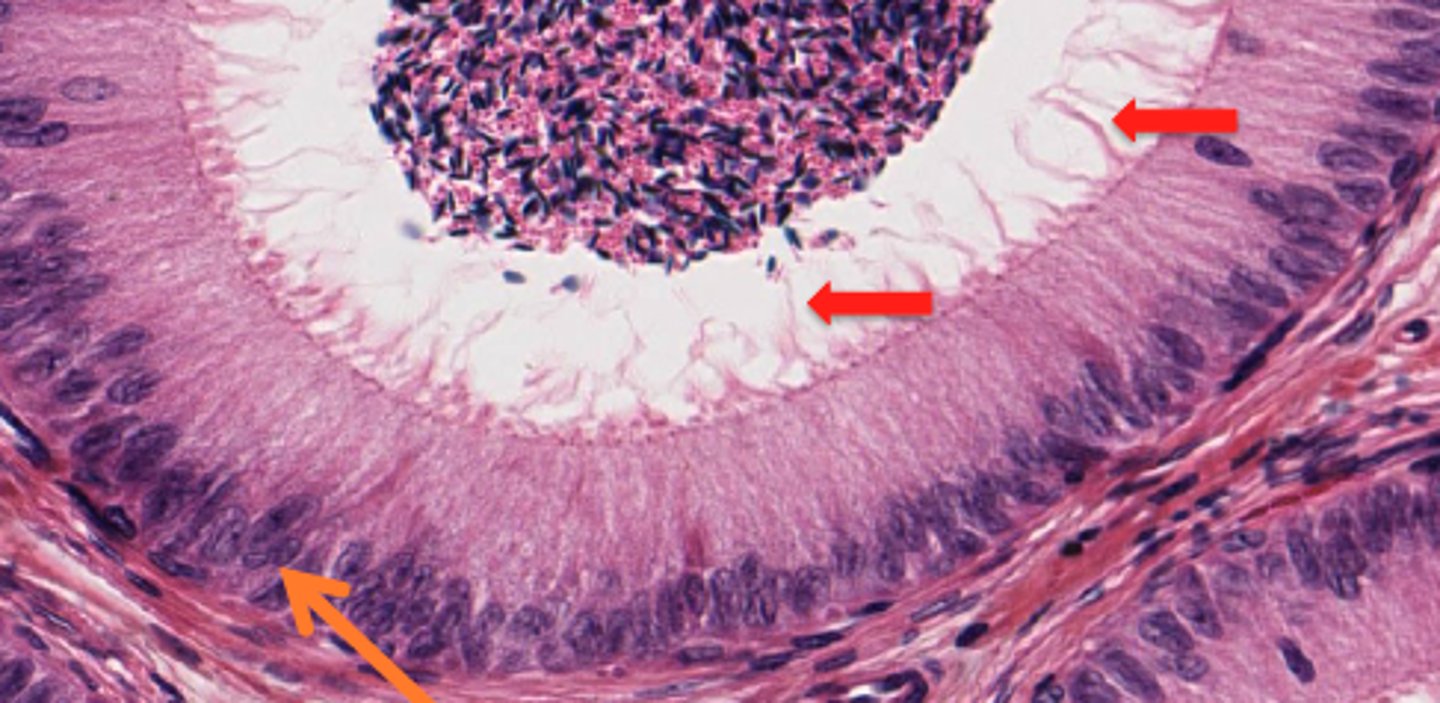
Stereocilia
Long extensions of the cell membrane; rare
Glandular Epithelia
Has cells that are specialized to produce secretions
Exocrine
Cells release their secretions into
passageways called ducts
Endocrine
Cells release their secretions into the
interstitial fluid (Secretions are called hormones)