Fertility + Reproduction
 Call Kai
 Learn
Learn Practice Test
 Spaced Repetition
 Match
Match Flashcards
 Knowt Play
1/48

There's no tags or description
Looks like no tags are added yet.
Name | Mastery | Learn | Test | Matching | Spaced | Call with Kai |
|---|
No analytics yet
Send a link to your students to track their progress
49 Terms
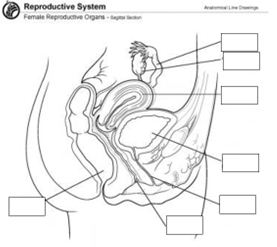
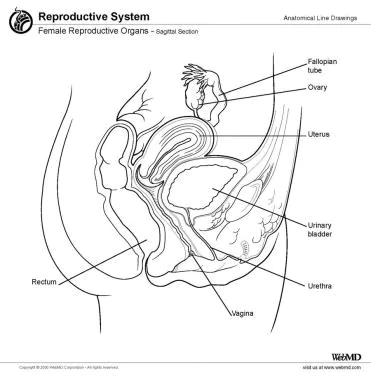
what are the parts and roles of the female urinogenital system
cervix - opens into uterus, holds pregnancy in place, protects fetus, secretes cervical mucus that thins in menstruation to allow entry of sperm
ovary - produces oocytes, site of oogenesis, secretes oestrogen + progesterone, contains follicles
fallopian tube - site of fertilisation + carries oocyte from ovaries to uterus
uterus - where fertilised ovum gets implanted + embryo develops, has 3 linings
vagina - birth canal, where penis penetrates
what are the 3 linings in the uterus
endometrium - lining sheds in menstruation + where embryo implants
myometrium - contracts in childbirth + forms placenta
perimetrium - outer protective layer
what are the parts and roles of the male urinogenital system
epididymis - coiled tube that stores sperm/sperm maturation occurs
penis - sex organ that penetrates vagina, made up of erectile tissue that undergoes vasodilation making penis erect
scrotum - holds testes outside of body as opt. temp for sperm is below normal body temp (2oC)
testes - produces sperm + testosterone
prostate gland - secretes alkaline fluid that neutralises acidity of vagina to allow sperm motility, produces fructose for respiration
seminal vesicle - secretes fluid that makes up most of sperm, fluid has proteins needed to nourish sperm to make it viable, fluid has lots of fructose
urethra - where urine + sperm exit (longer in men)
vas deferens - tube to allow sperm to exit the testes
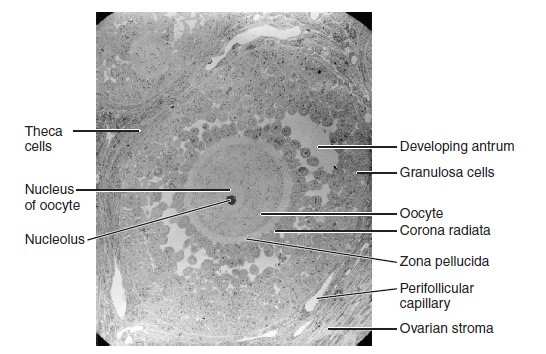
What follicles are in ovaries?
primordial follicle - contains a primary oocyte
primary follicle - zona pellucida forms
secondary follicle - theca cells surround follicle
mature/graafian follicle - very big antrum (fluid filled space found in 2nd/graafian follicles)
corpus luteum - after secondary oocyte is released from secondary follicle, it collapses into this + secretes progesterone
what are other structures found in ovaries?
antrum - fluid filled space found in 2nd/graafian follicles that nourishes the oocyte
corona radiata - layer of granulosa cells that surrounds the zona pellucida
zona pellucida - glycoprotein layer surrounding the oocyte that prevents polyspermy (multi sperm fertilisation)
internal structure of testes
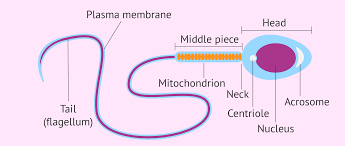
head - has acrosome that contains hydrolytic enzymes that digest the zona pellucida / has haploid nucleus to ensure diploid number of chromosomes is maintained
midpiece - lots of mitochondria to provide energy needed for movement of flagellum
flagellum - has microtubules that creates swimming action/whip-like movements
plasma membrane - surrounds the flagellum
secondary oocyte
zona pellucida - glycoprotein layer surrounding the oocyte that prevents polyspermy (multi sperm fertilisation)
nucleus - 23 chromosomes
cytoplasm - gives organelles to zygote
cortical granules - has enzymes that get released at fertilisation + changes shape of zona pellucida to prevent polyspermy
corona radiata - layer of granulosa cells that surrounds the zona pellucida + changes shape to prevent polyspermy
structures found in testes
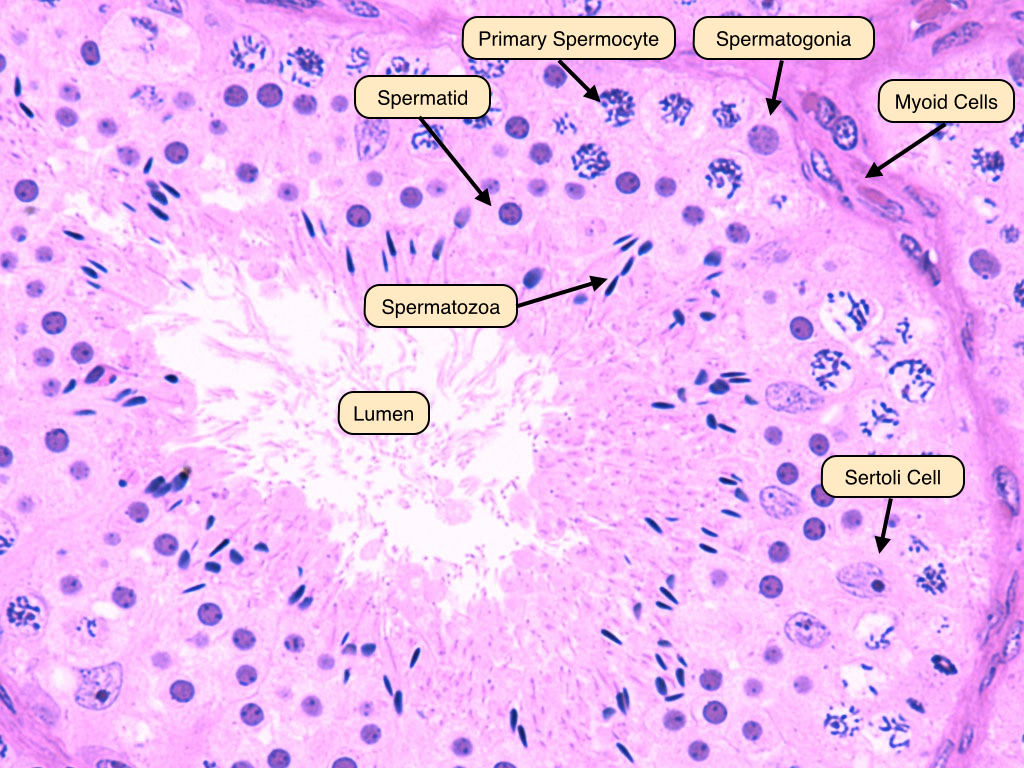
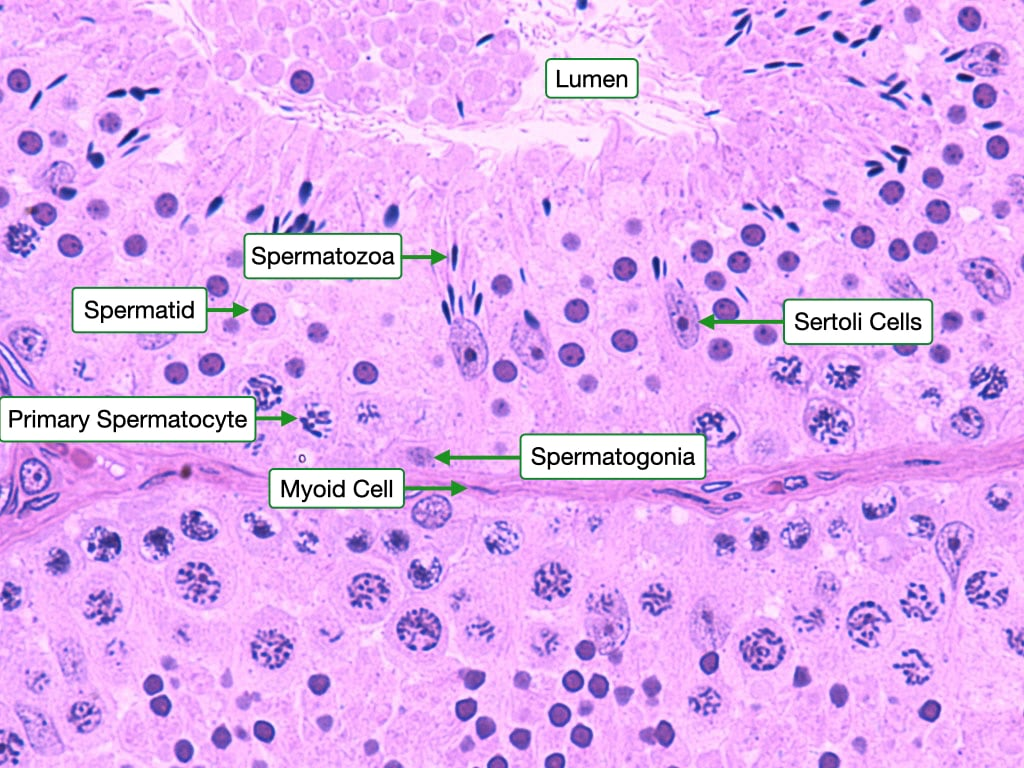
seminiferous tubules - site of spermatogenesis surrounded by a basement membrane
sertoli cells - secrete fluid into lumen of seminiferous tubule + controls entry/exit of nutrients + hormones into tubules of testes
germinal epithelium - contains cells at different stages of sperm development e.g spermatids/spermatozoa
what’s gametogenesis
production of haploid gametes in the gonads (ovaries and testes)
what is oogenesis
production of female gametes from germinal cells that line the ovaries / formation of a secondary oocyte
when does oogenesis start + end
start: before birth
end: menopause
outline oogenesis
primordial germ cells (2n) in the ovaries undergo mitosis to become oogonia in the mitotic/replication stage
oogonia (2n) grows to becomes a primary oocyte (found in primary follicle) in the growth phase
primary oocyte (n) undergo meiosis I but arrests at prophase I until puberty.
in puberty, a few 1 oocytes resumes meiosis I to form secondary oocytes, whilst others forms the 1st polar body
secondary oocytes (n), found in graafian follicle starts meiosis II but arrests at metaphase II until fertilisationat fertilisation, 2nd oocyte completes meiosis and a 2nd polar body is formed
a zygote (2n) is formed that’s diploid due to fusing of nuclei pf ovum and sperm
when does spermatogenesis start + end
starts at puberty and ends at death
outline spermatogenesis
primordial germ cells (2n) undergo mitosis to form spermatogonium (2n) in replication stage
spermatogonium grows to form primary spermatocytes (2n) in growth stage
primary spermatocytes undergo meiosis I to form secondary spermatocytes (n)2nd spermatocytes undergo mitosis II to form spermatids (n)
spermatids undergo maturation and differentiation to form spermatozoa
spermatozoa (sperm) (n)
what hormones are involved in spermatogenesis
FSH
GnRH
LH
testosterone
inhibin
what hormones are involved in oogenesis
FSH
LH
oestrogen
progesterone
GnRH - gonadotrophin releasing hormone
role of LH/GnRH in spermatogenesis
hypothalamus releases GnRHGnRH stimulates anterior pituitary gland to release LH
LH binds to LEYDIG cells (next to seminiferous tubules that can produce/secrete hormones) and stimulates them to release testosterone
this initiates spermatogenesis
testosterone causes negative feedback by decreasing FSH and GnRH levels
role of FSH/testosterone in spermatogenesis
FSH also released from anterior pituitary gland
binds to sertoli cells + activates them causing INHIBIN to be secreted
causes negative feedback as production of inhibin decreases FSH
sertoli cells more receptive to testosterone which binds to sertoli cells + further initiates spermatogenesis
testosterone inhibits LH
role of inhibin in spermatogenesis
inhibits secretion of FSH
role of LH/GnRH in oogenesis
hypothalamus releases GnRH which stimulates anterior pituitary gland to release LH
- LH binds to follicle cells in ovaries which causes ovaries to mature and release oestrogen
- SURGE in LH causes 2nd oocyte to be released from graafian follicle
- LH stimulates development of corpus luteum
role of FSH in oogenesis
released from anterior pituitary gland
binds to follicle cells in ovary and stimulates maturation of follicles
stimulates release of oestrogen
role of oestrogen in oogenesis
increased oestrogen levels inhibits FSH
stimualtes release of LH —> stimulates ovulation
role of progesterone in oogenesis
released from corpus luteum
inhibits FSH and LH
role of inhibin in oogenesis
release stimulated by FSH
released from granulosa cells of ovarian follicles
inhibits FSH
what 2 cycles are in the menstrual cycle
ovarian - release of 2nd oocyte
uterine - development of endometrium
control of the menstrual cycle
anterior pituitary gland secretes FSH into plasma
FSH travels to ovaries and stimulates follicle maturation
mature follicles releases oestrogen which inhibits FSH, stimulates LH production and thickens endometrium lining
LH is released from anterior pituitary gland and SURGE in LH causes oestrogen —> release of 2nd oocyte from graafian follicle. LH also stimulates development of graafian to corpus luteum
corpus lutuem releases progesterone which stimualtes development of blood vessels in endoemtrium + inhibits FSH/LH production
decrease in LH means corpus luteum degenerates and doesn’t secrete as much progesterone.
NO pregnancy, oestrogen/progesterone levels decrease so endometrium sheds and cycle repeats
what are the 4 stages of fertilisation
copulation
capacitation
acrosome reaction
cortical reaction
Outline copulation
sexual intercourse
release of semen into vagina which contains spermatozoa
spermatozoa must travel from cervix —> uterus —> fallopian tube —> ovum
outline capacitation
occurs in fallopian tube
glycoproteins are removed from csm of sperm by proteases in hydrolysis reactions
this makes csm more permeable to Ca2+ —> sperm more sensitive to signals from oocyte
cholesterol levels decrease
membrane more fluid —> increases motility of sperm —> can penetrate corona radiata easier
outline acrosome reaction
acrosome swells and dissolves
causes acrosome membrane to fuse with sperm csm
hydrolytic enzymes released by exocytosis to digest corona radiata
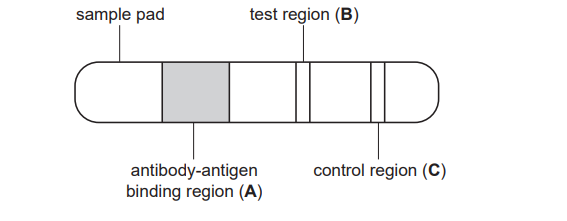
outline the role of the antibodies in each region of the test strip
A = bind complimentary to the hCG hormone
B = bind to the hCG-bound antibodies
C = bind to any unbound antibodies
outline how pregnancy tests work
dip dipstick into urine
pregnant women have hormone hCH present in urine
dipstick contains monoclonal antibodies that’s specific to hCG
hCG moves via capillary action up the stick and binds complimentary to mAb that’s coupled with a blue latex particle in the antibody-antigen binding region
at the test window, more hCG antibodies are present, + these bind to the hCG-antibody-latex complexes (produces a blue line)
any unbound antibodies moves to the control window which contains anti-mouse antibodies
these bind to the remaining unbound antibodies
what hormone does the placenta secrete in pregnant women
human chorionic gonadotrophin (hCG)
what are the different fertility treatments
IVF - gamete intra-fallopian transfer (GIFT)
IUI intrauterine insemination
ICSI intracytoplasmic sperm injection
surgical sperm retrieval (only 4 retrograde ejaculation)
frozen embryo replacement
donor sperm insemination
ovulation induction
what is IVF
female receives FSH + LH to encourage development of more follicles
catheter used to collect follicles
follicle added to culture mediums
sperm collected + washed (sperm placed in culture medium + allowed to capacitate)
sperm added to culture medium + petri dish placed into incubator to allow embryo development
RISK: multiple births, premature births, low birth rate
what is GIFT
sperm + secondary oocyte inserted directly into fallopian tube + fertilisation occurs naturally
what is IUI
sperm are washed
sperm inserted directly into uterus
what is ICSI
sperm injected into secondary oocyte
used when male has low sperm count/motility
what is SSR
extract sperm from epididymis
what is FER
freeze embryos from previous fertility treatments
thaw them for later use
don’t put in freezer due to risk of ice crystals forming
what is ovulation induction
woman given anti-oestrogen during menstrual cycle
more GnRH produced
more LH and FSH
encourage follicle development
what ethical reasons surround fertility treatments
unused embryos are destroyed
increased chance of offspring having medical issues
higher risk of multiple pregnancies - affects women’s mental/physical health
financial cost 4 parents - expensive
genetic defects which stopped parents conceiving are passed down to kids
benefits of fertility treatments
infertile couples can have kids
unused embryos can be used in research
unused embryos can provide stem cells for treatment/research
what issues can cause male infertility
low sperm count
abnormal sperm
low sperm motility
blocked vas deferens
retrograde ejaculation
what issues can cause female infertility
endometriosis - endometrium lining develops in wrong locations - risk of embryo implanting outside uterus
anti-sperm antibodies - destroys sperm
ovulatory disorders
blocked fallopian tube