PDENT800: Posterior Restorations Stainless Steel Crowns (SSC)
 Call Kai
 Learn
Learn Practice Test
 Spaced Repetition
 Match
Match Flashcards
 Knowt Play
1/71

There's no tags or description
Looks like no tags are added yet.
Name | Mastery | Learn | Test | Matching | Spaced | Call with Kai |
|---|
No analytics yet
Send a link to your students to track their progress
72 Terms
Indications of Posterior SSC
decayed teeth
pulpal therapy
hypoplastic / hereditary
high caries risk
special needs
T/F: Posterior SSC are indicated for attachments for space maintainers
TRUE
Contraindications for Posterior SSC
non-restorable teeth
exfoliate soon
occlusal interreferences
esthetics
allergy to SS or nickel
What is the biggest disadvantage to SSC?
Esthetics!
SSC placed in children ages 4 and younger have a success rate approximately ____that of amalgams for each year up to 10 years in service
2x
Failure rate for SSC
1.9-30.3%
Failure rate for amalgam
11.6-88.7%
There is up to ___ failed amalgams for every failed SSC
9
Crowns placed in younger children (<4 years) had a success rate approximately ___ that of Class II Amalgams
2x
Where is the greatest convexity of a posterior molar?
cervical 1/3
T/F: There is an occlusal buccal bulge in the posterior
FALSE
cervical buccal bulge
Which molars have a prominent cervical bulge?
Primary First Molars
Mesial of primary 1st molars have tooth structure that is ____ for Class II restorations
inadequate (pulp horn)
Distal of primary first molars have a ___ preparation and ___ walls
shallow
weak
It is easy to hit ____in primary first molars
pulp
Summary of Clinical Technique
1. Evaluate pre-op occlusion/ marginal ridge height
2. Administer LA
3. Place RD/ Isolation System
4. Crown Preparation
5. Select stie
6. Cementation
Steps for Crown Preparation
1. Occlusal Reduction
2. Excavate Decay
3. Proximal Reduction
4. Buccal and Lingual Reduction
5. Round all line angles
Depth of Occlusal Reduction for SSC
1.0-1.5 mm
Which bur for Occlusal Reduction?
169 football
wheel bur
tapered fissure diamond
Excavate with what bur?
slow speed 6,8 round bur
How much occlusal clearance do you want?
1.0 mm
Which bur to break contacts?
flame-shaped diamond
169L
___ edge finish line for proximal reduction
feather
T/F: Create a margin/ledge for proximal reduction for SSC
FALSE
Break contact ___ and ___
B/L
gingivally
In primary teeth, proximal contacts often extend ___
subgingival
The crown margin seats at the ____ which will be subgingival
CEJ
T/F: Do not pre-wedge so that you increase risk of hitting adjacent tooth
FALSE
Buccal reduction is only where?
occlusal 1/3
What angle is a buccal reduction?
30-45 degrees
T/F: Prep the buccal bulge
FALSE
Do ___ prep the buccal bulge
DO NOT
Rarely will you need to prep the ___ and ___ surfaces
buccal
lingual
Retention for a stainless steal crown comes from ____
bucca bulge
SSC is composed of ___% Nickel, ___% Chromium, and ___% iron
77
15
7
Preform Crown Brand
Unitek
Unitek requires ___ and ____
contouring and trimming
Pre-cut/Pre-contoured crowns
Ion
Ion has ____ trimming and contouring
minimal
A crown should fit ___ mm subginigval
1
A crown that is too ___ is better than ___
long
short
Trimming crown will yield a ________ ______, hence too big
larger circumference
First Molar Gingival Contour Shape
nike swoosh
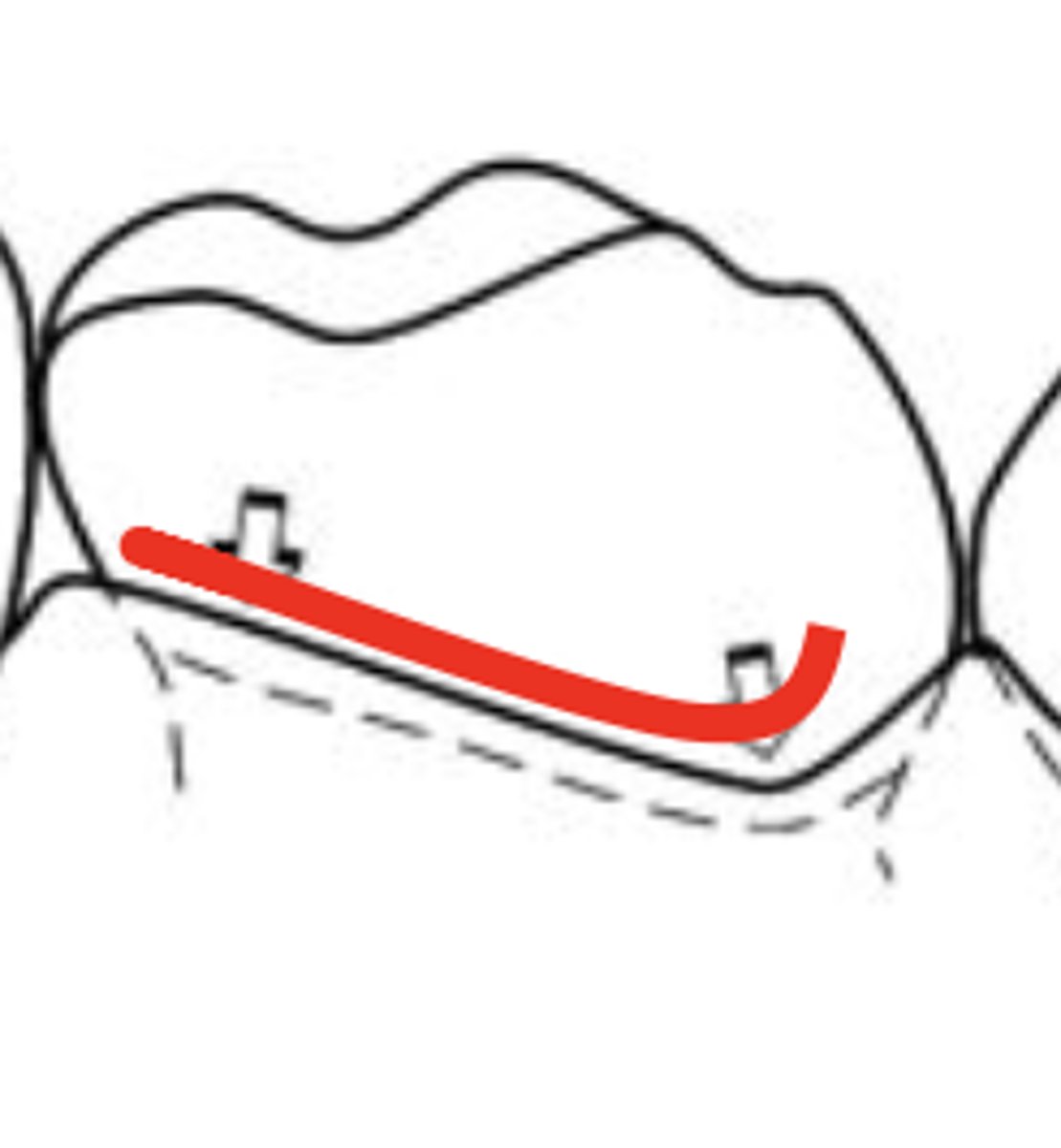
Second Molar Gingival Contour Shape
Smiley face
Interproximal gingival contour shape
frowny face
Contouring involves bending the ____ to adapt to the tooth
gingival 1/3
Crimping ___ the margin closed
cinches
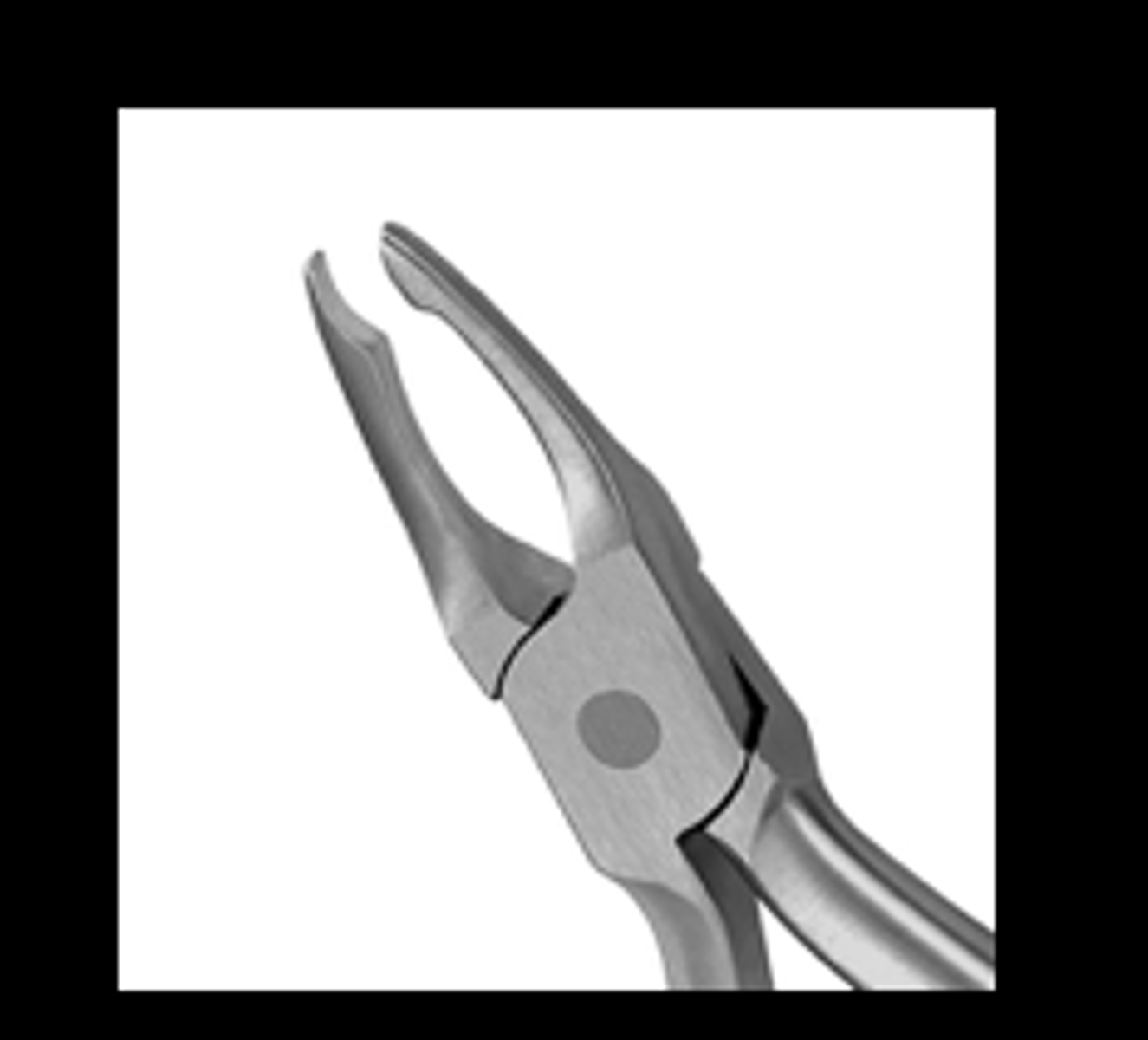
Contour Pliers
no 114 pliers
T/F: Crimping shortens the crown a lot
FALSE
Crimp which part first?
Mesial --> Distal
BUccal --> LIngual
Crimping Pliers
box crimpers
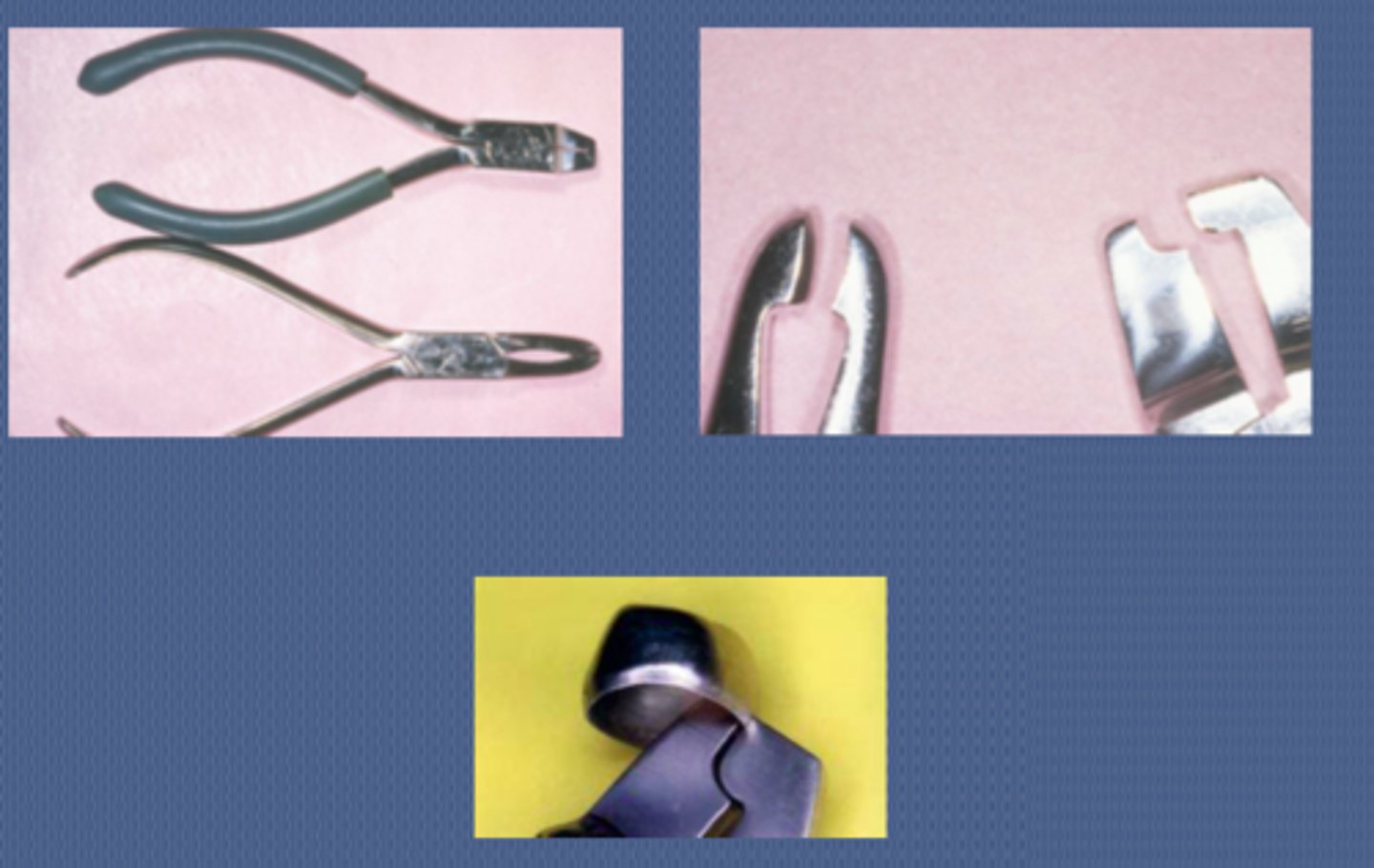
Use a wrist movement to ___ metal margin inward
Pull
Crown must have __ margin
closed
*****Key: Make sure the ____ ____ is flush with adjacent teeth
occlusal table
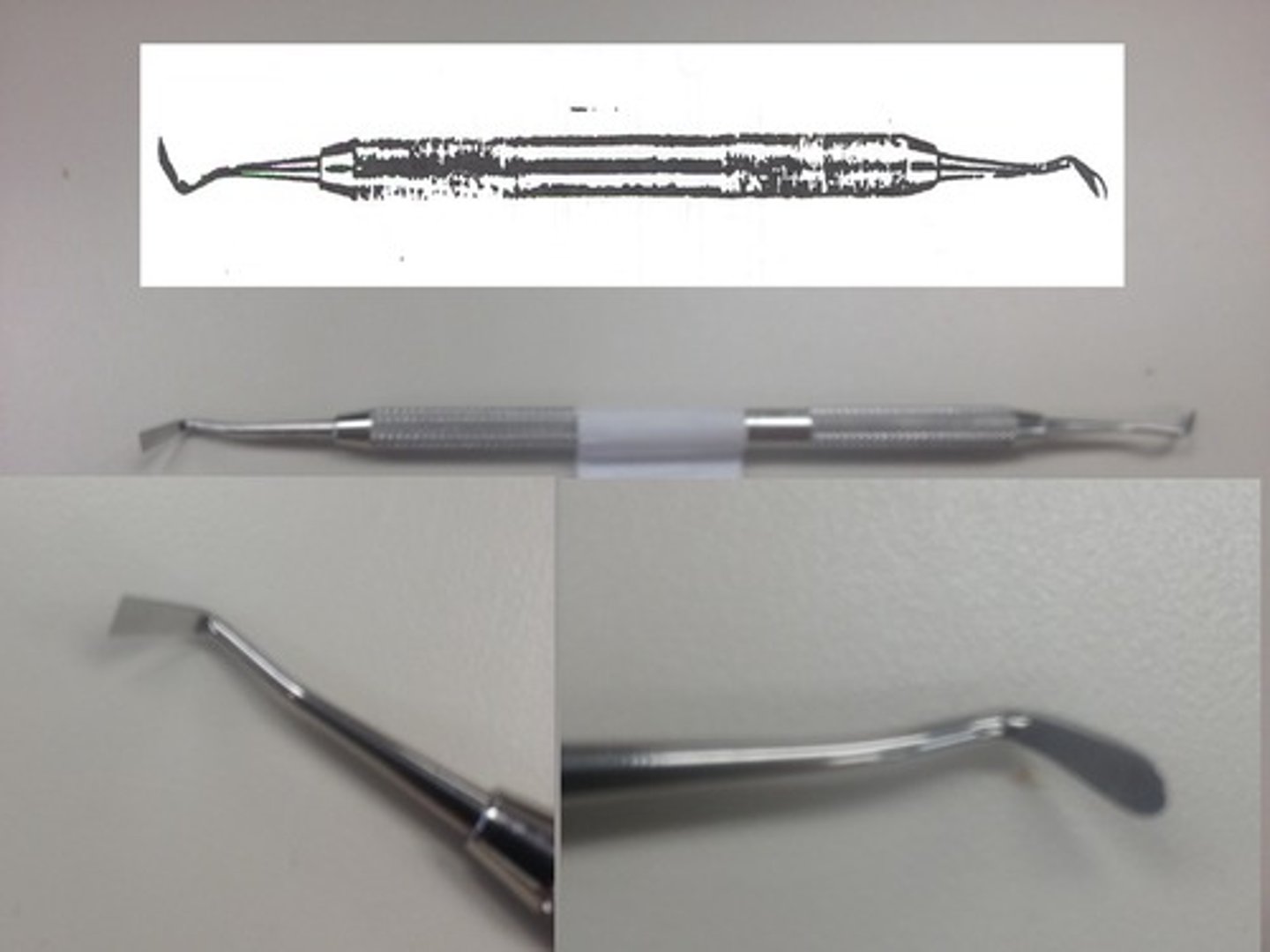
What do you use to remove a SSC?
Walls Carver
Discoid
What cements are used?
Ketac
RMGI
__ the crown to margin with cement
Fill
T/F: you can adjust a SSC that is too high
FALSE
How thick is a SSC?
1 mm
What do you do if the SSC is too high?
take off
place a new crown
For adjacent crowns, what is the minimum mm between the gingival margin?
1. 5 mm
Plier to Flatten Interproximal contacts
How Plier
If there is space loss on a mandibular first molar, you can use?
contralateral first molar
Cementation Issues
over/under reduction
large ledge
contact not broken
crown too long
inadequate crimp
incorrect crown size
Cementation Complications
not seated equally
excessive blanching
crown loss
periodontal issues
Excessive Blanching of SSC indicates
crown is too long
crown is overcontoured
T/F: If there is a wear facet, it is best to fix with restorative material?
FALSE
--> better to replace
SSC permanent restoration indication
special needs
SSC Interin Restoration
developmental malformations
trauma
pulp therapy
What size crown do we normally use?
4
Primary First Molar Crown Letter
D
Primary Second Molar Crown Letter
E