UNTESTED - Unit 0: Foundations & Lab Guide
 Call Kai
 Learn
Learn Practice Test
 Spaced Repetition
 Match
Match Flashcards
 Knowt Play
1/8

Earn XP
Description and Tags
Planes & directional terminology, synovial structures Medical Terminology lecture
Name | Mastery | Learn | Test | Matching | Spaced | Call with Kai |
|---|
No analytics yet
Send a link to your students to track their progress
9 Terms
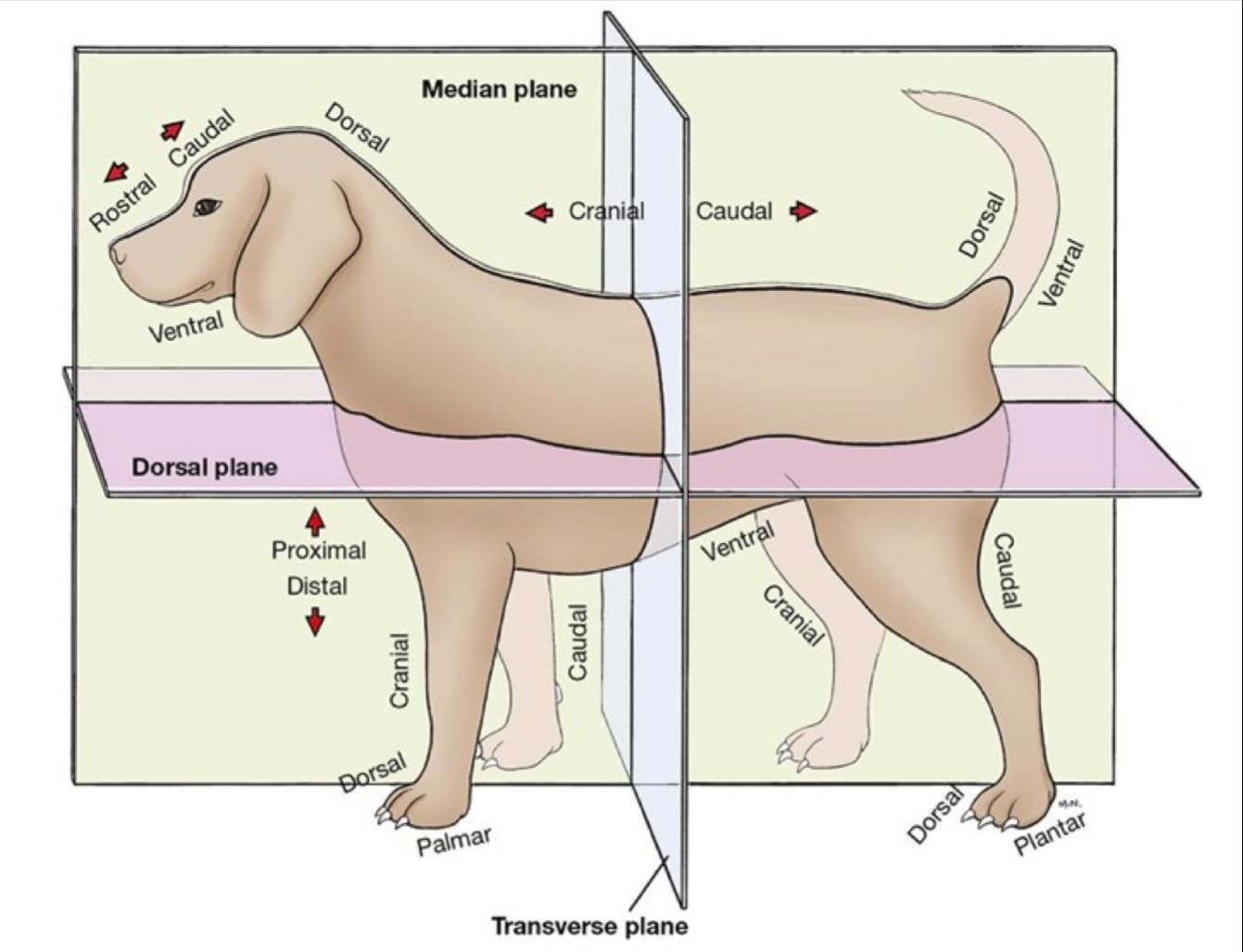
What is the definition of an anatomical plane? What are the four types?
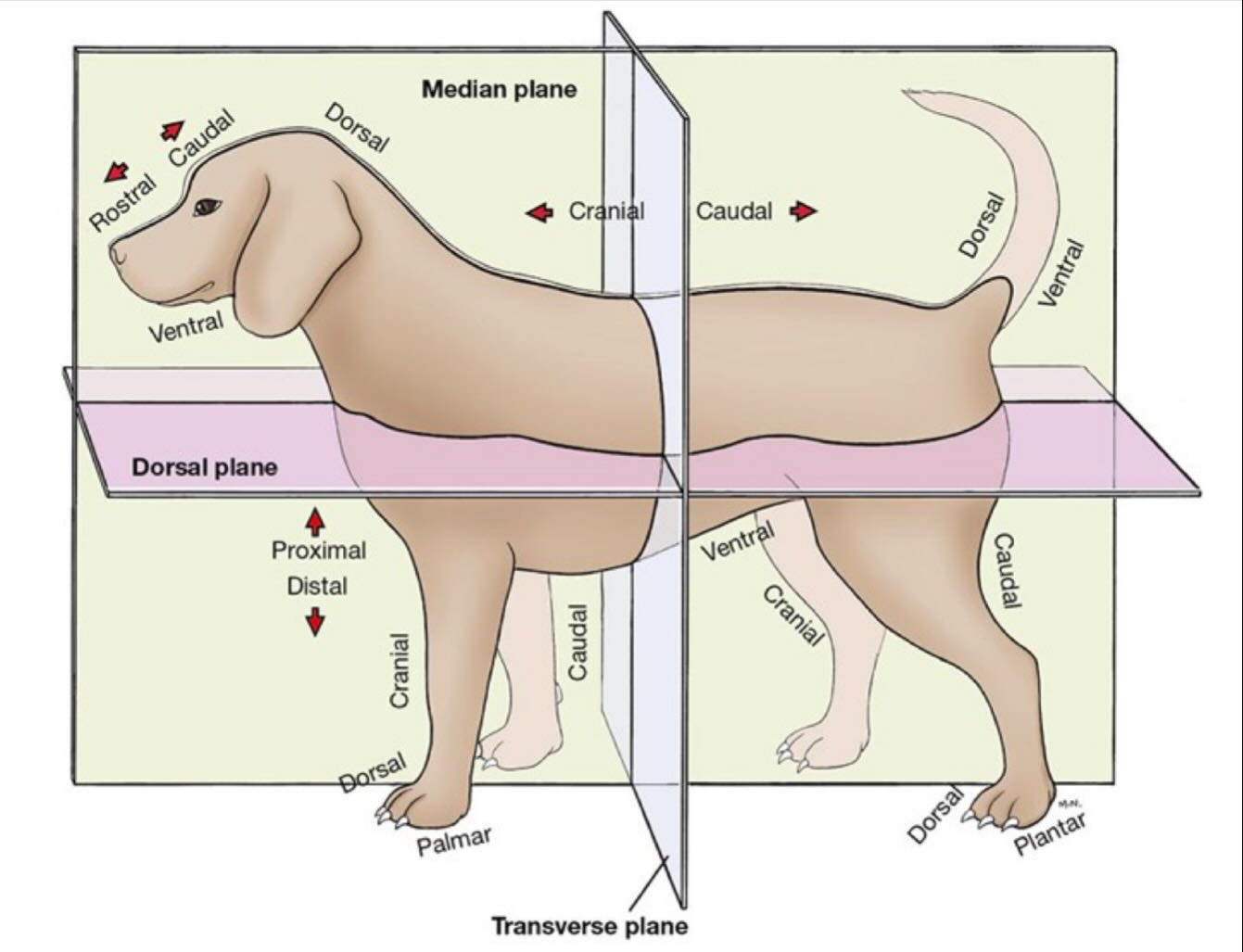
A surface, real or imaginary, along which any two points can be connected by a straight line. Divides the body into parts.
Median, sagittal, transverse, dorsal
What is the median plane? Sagittal plane?
Divides the head, body, or limb longitudinally into equal right and left halves. The sagittal plane runs parallel to this.
What is the sagittal plane?
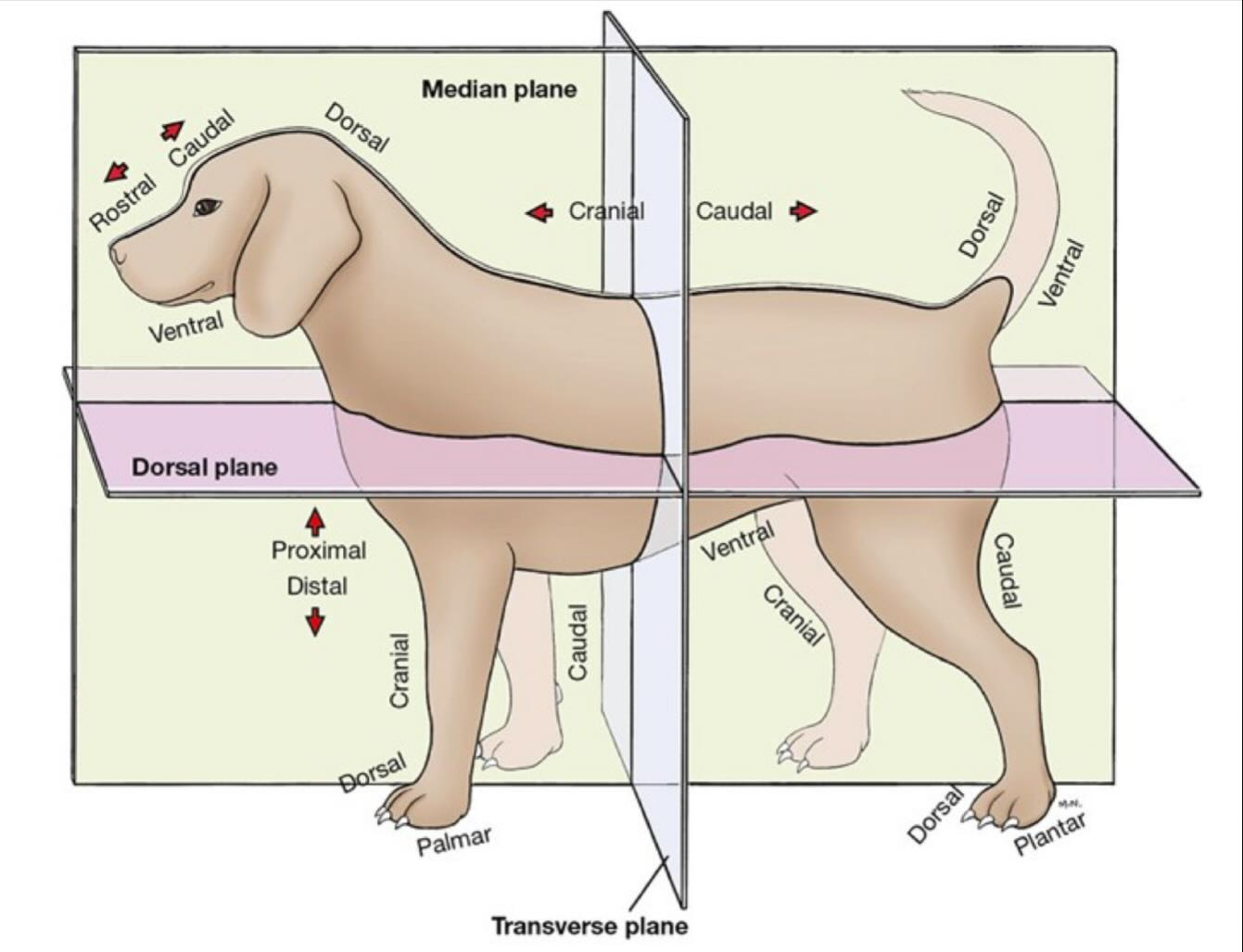
Passes through the head, body, or limb parallel to the median plane.
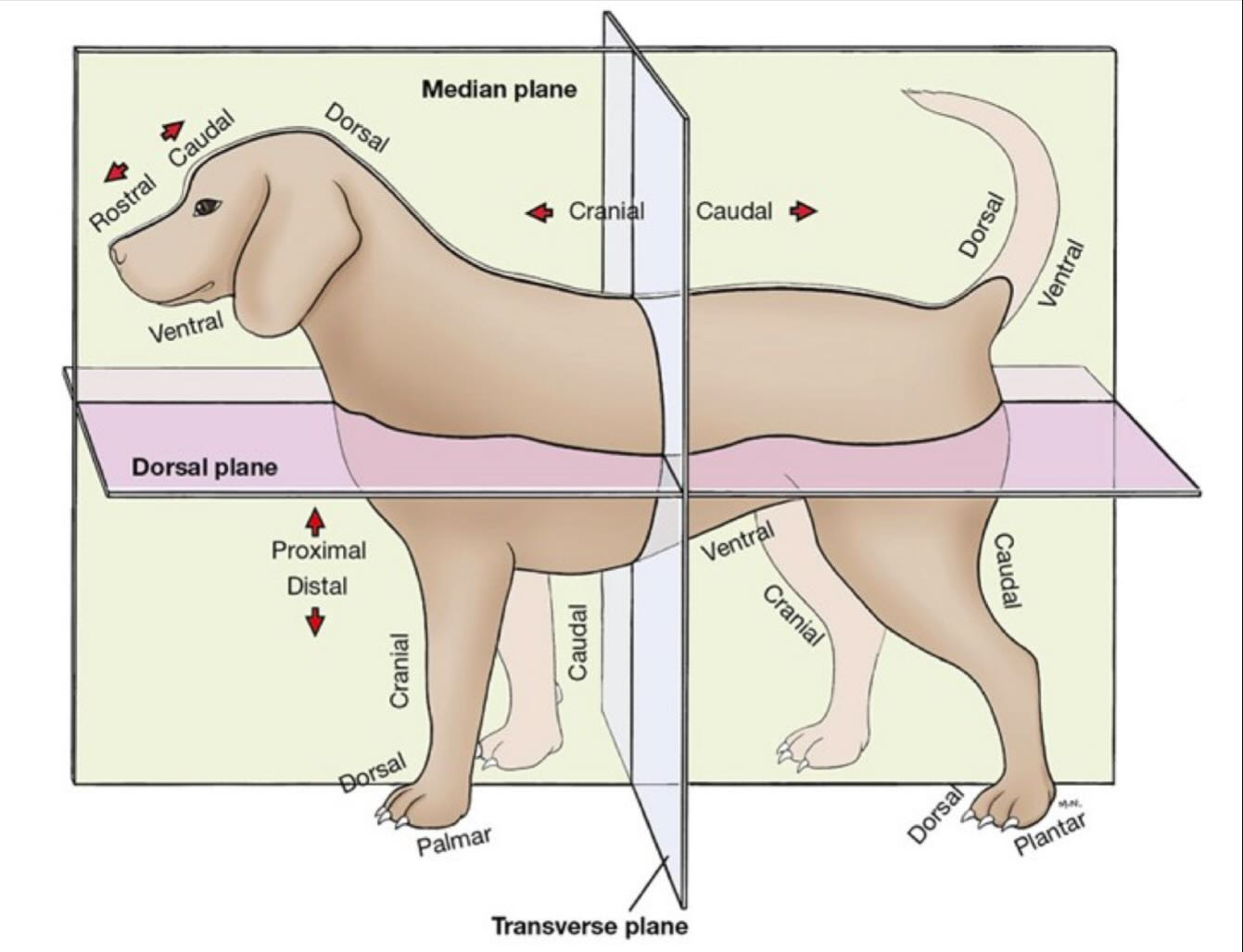
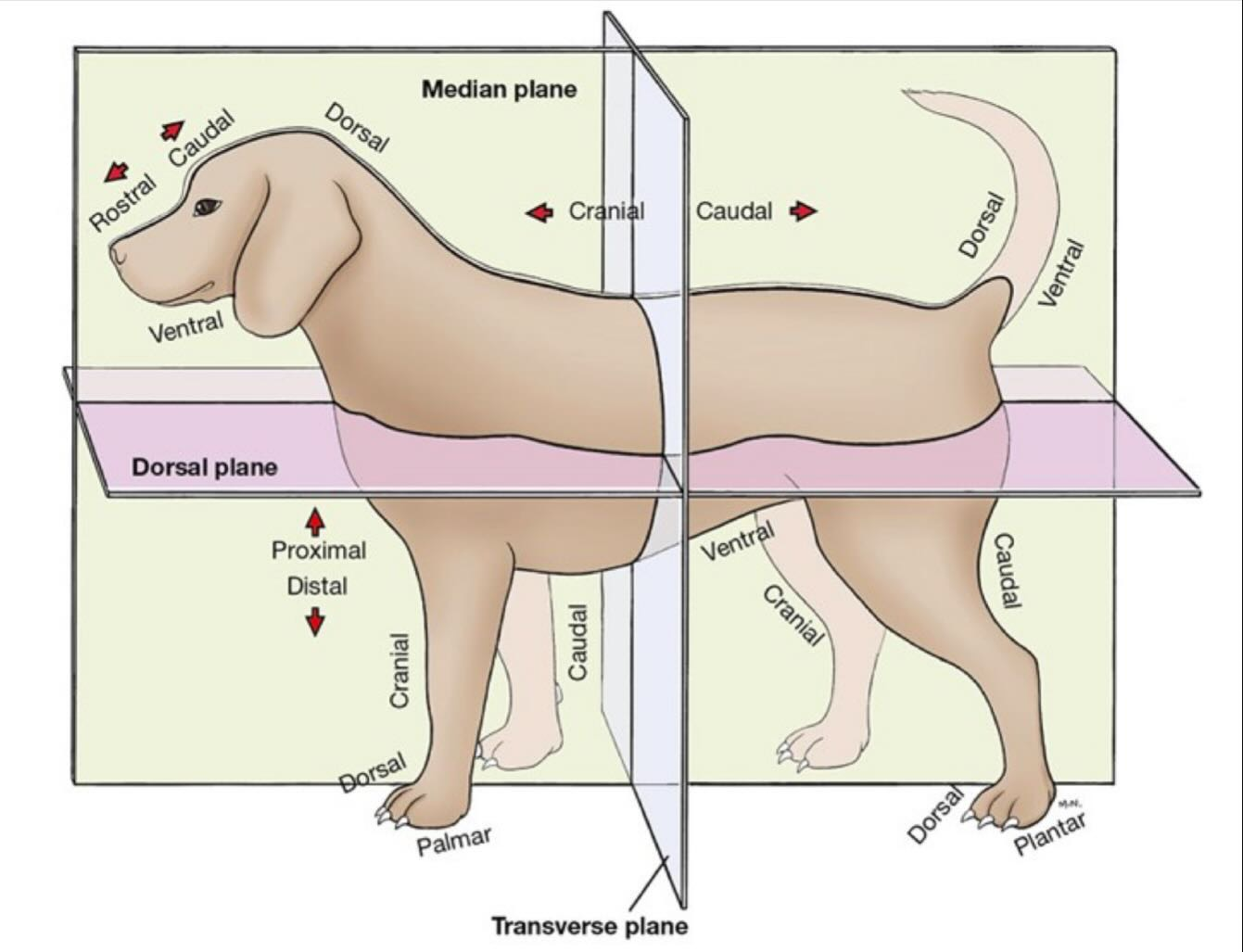
What is the transverse plane?
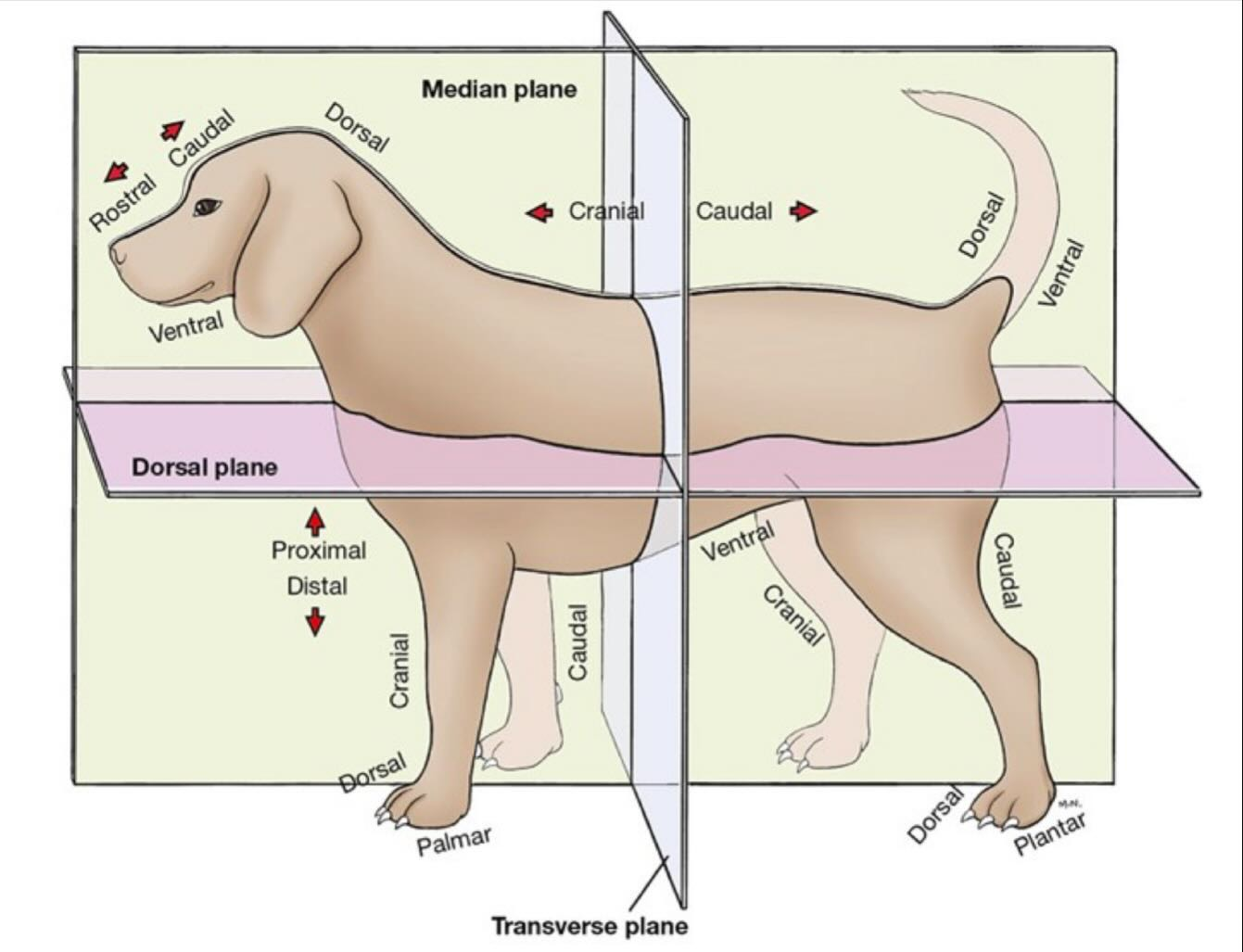
Cuts across the head, body, or limb at a right angle to its long axis or across the long axis of an organ or a part.
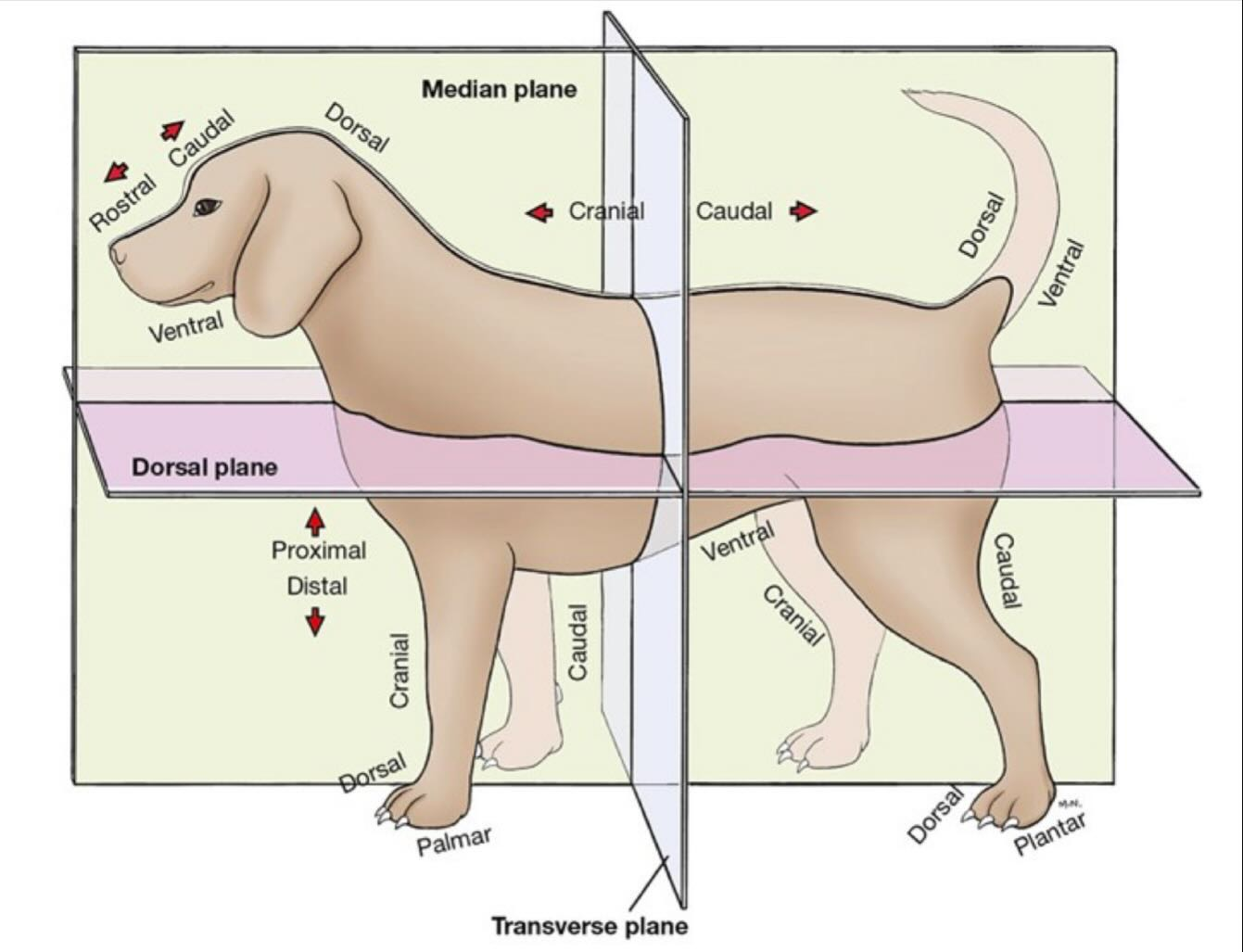
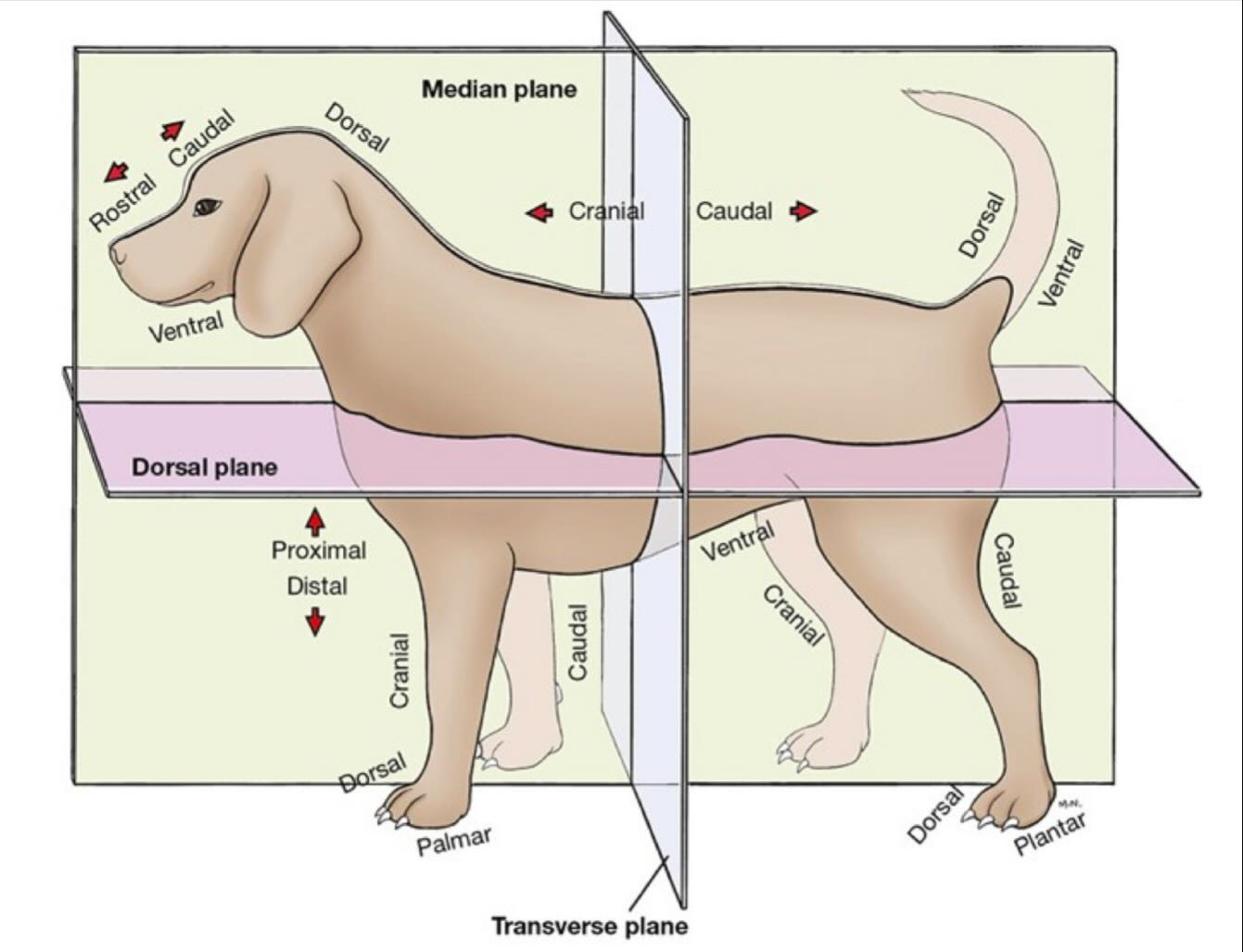
What is the dorsal plane?
Runs at right angles to the median and transverse planes and thus diagnolly to the supporting surface of the head, body, and tail.
What do the following directional terms indicate:
1) Ventral
2) Medial
3) Lateral
4) Cranial
5) Rostral
6) Caudal
7) Palmer
8) Plantar
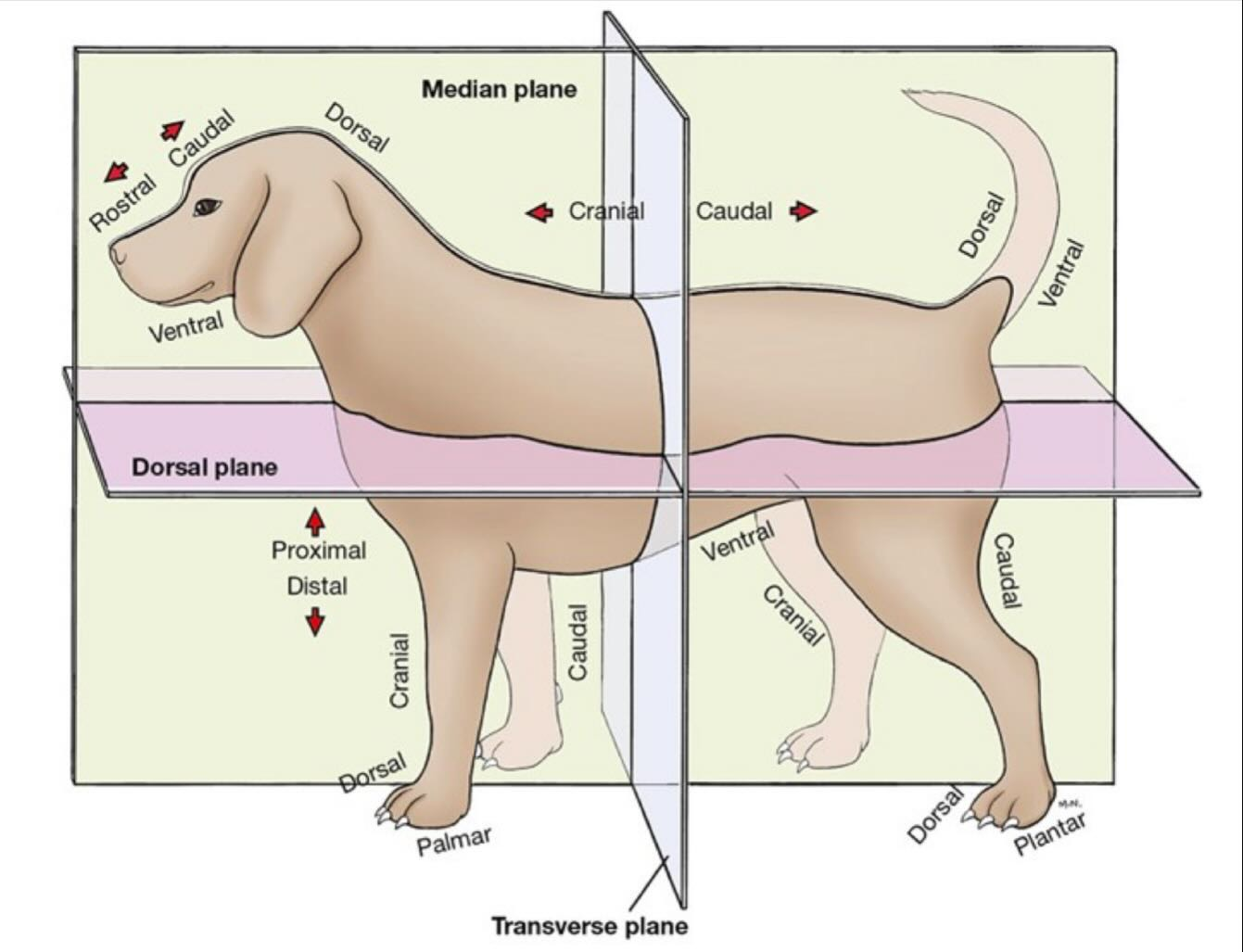
1) Ventral - Toward or near the underside/supporting surface of the head, neck, thorax or tail. Never limbs.
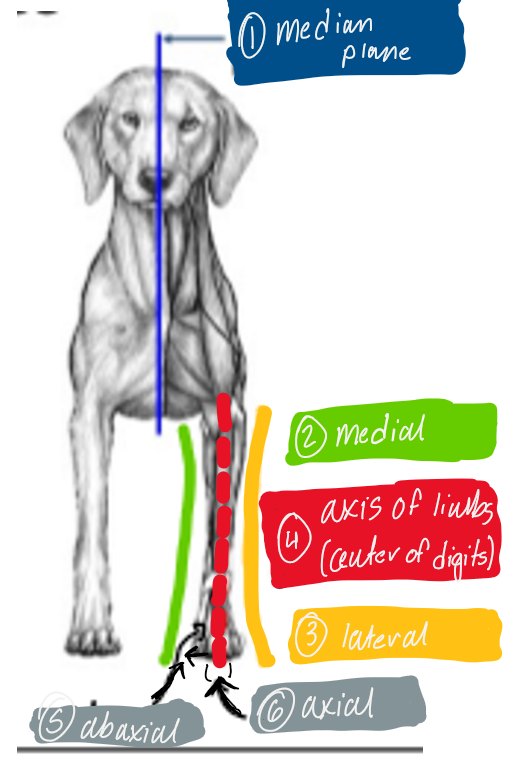
2) Medial - Toward or near the medial plane
3) Lateral - Away or far from the medial plane
4) Cranial - Toward or near the head when referring to the body. In limbs, it applies proximal to the carpus and tarsus. Does not apply to the head itself.
5) Rostral - Toward or near the nose, applies to head only.
6) Caudal - Toward or near the tail when referring to the body. On limbs it applies proximal to the carpus and tarsus. On the head, it is towards the back of the head.
7) Palmer - The thoracic (carpus) limb digit surface that contacts the ground
8) Plantar - Pelvic limb (tarsus) digit surface.
What do the following movement terms indicate:
1) Flexion
2) Extension
3) Abduction
4) Adduction
5) Circumduction
6) Rotation
7) Supination
8) Pronation
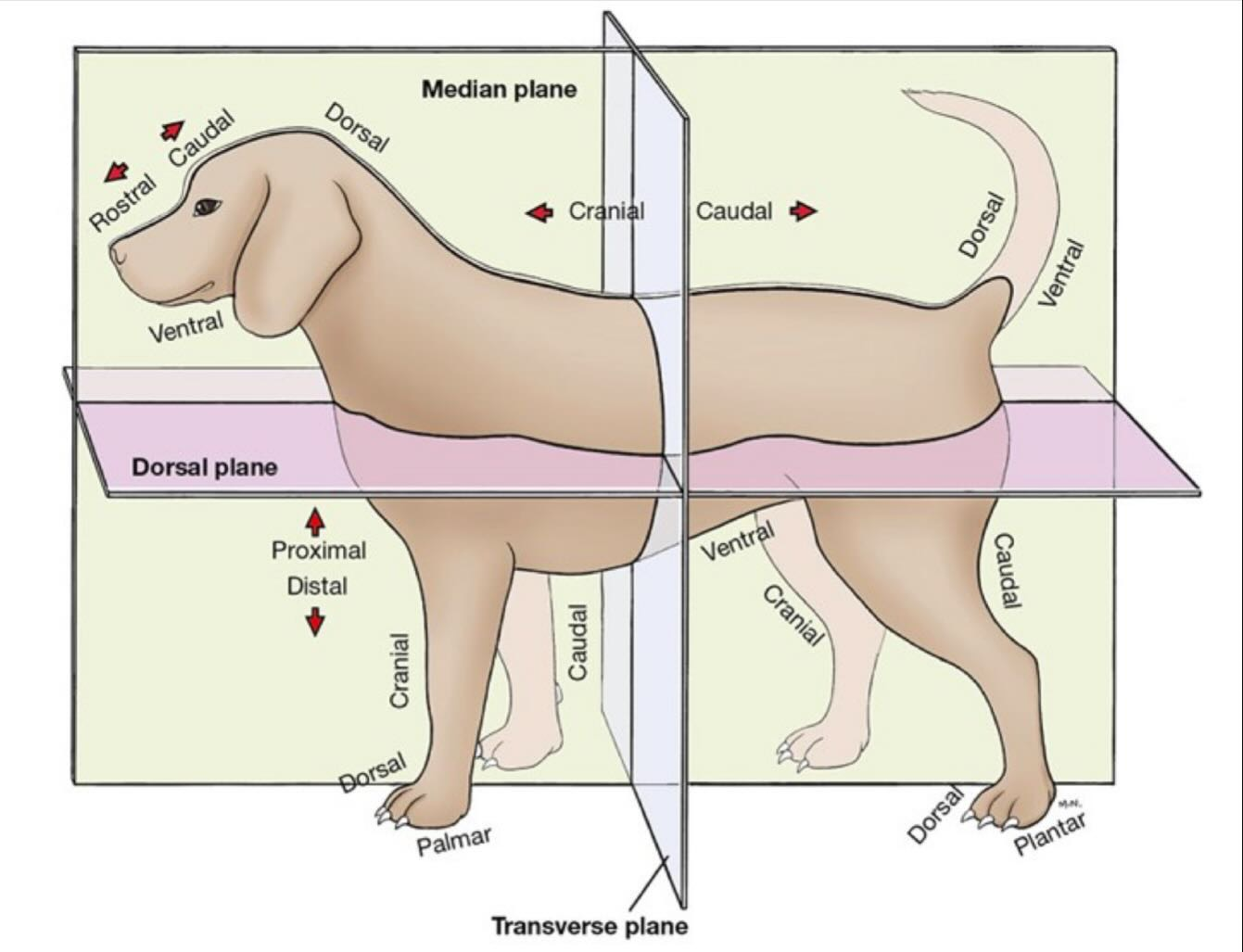
1) Flexion - The movement of one bone in relation to another in such a manner that the angle formed at their joint is reduced. The limb is retracted or folded; the digit is bent; the back is arched dorsally.
2) Extension - The movement of one bone upon another such that the angle formed at their joint increases. The limb reaches out or is extended; the digit is straightened; the back is straightened. Extension beyond 180 degrees is overextension.
3) Abduction - The movement of a part away from the median plane.
4) Adduction - The movement of a part toward the median plane.
5) Circumduction - The movement of a part when outlining the surface of a cone (e.g., the thoracic limb extended drawing a circle).
6) Rotation - The movement of a part around its long axis (e.g., the action of the radius when using a screwdriver). The direction of rotation of a limb or segment of a limb on its long axis is designated by the direction of movement of its cranial or dorsal surface (e.g., in medial rotation of the arm, the crest of the greater tubercle is turned medially).
7) Supination - Lateral rotation of the appendage so that the palmar or plantar surface of the paw faces medially.
8) Pronation - Medial rotation of the appendage from the supine position so that the palmar or plantar surface will face the substrate.
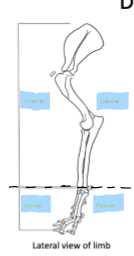
Describe the directional terms pertaining to the thoracic and pelvic limbs.
Above the carpus/tarsus, the limb is referred to as cranial/caudal. Below the carpus/tarsus, is is dorsal/palmer (thoracic) or plantar (pelvic)
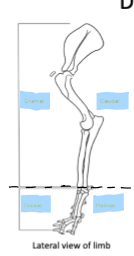
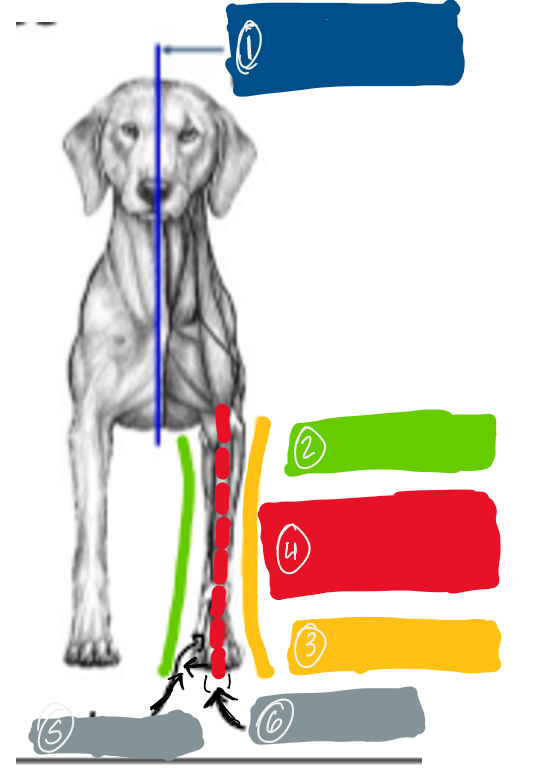
Describe the directional terms pertaining to this view of the thoracic/pelvic limbs.
pic