PHYSICS Ch. 6 Rotational Motion
 Call Kai
 Learn
Learn Practice Test
 Spaced Repetition
 Match
Match Flashcards
 Knowt Play
1/17

There's no tags or description
Looks like no tags are added yet.
Name | Mastery | Learn | Test | Matching | Spaced | Call with Kai |
|---|
No analytics yet
Send a link to your students to track their progress
18 Terms
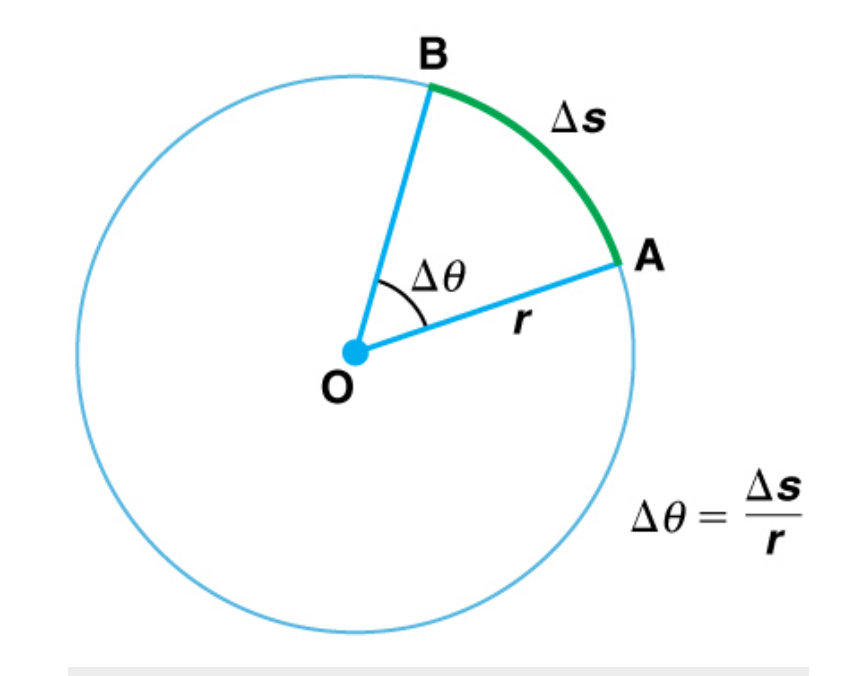
angle of rotation
Δθ = Δs / r
Δθ = angle of rotation
Δs = arc length
r = radius
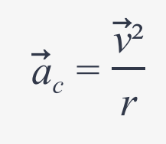
Centripetal acceleration
⃗ac = ⃗v2 / r
⃗a = centripetal acceleration (m/s2)
⃗v = velocity (m/s)
r = radius (m)
net force of an object moving in a circular motion
mv2/r
uniform circular motion
net force, velocity, and acceleration are all constantly changing because the object is changing directions
kinetic energy is constant in a uniform circular motion because the object’s speed is constant and does not change based on its position on the circular path
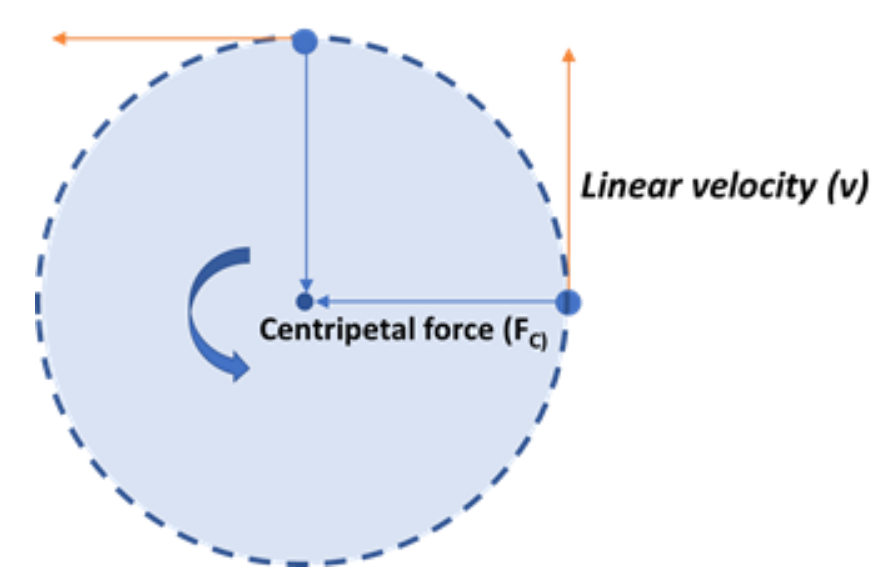
Centrifugal force
an apparent force, directed outwards, experienced by an object travelling in a circular path
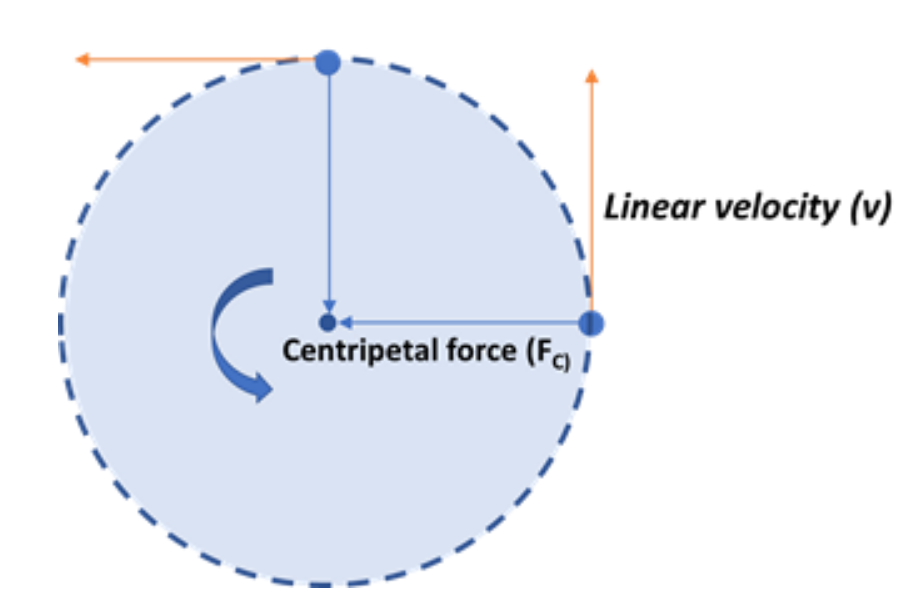
centripetal force
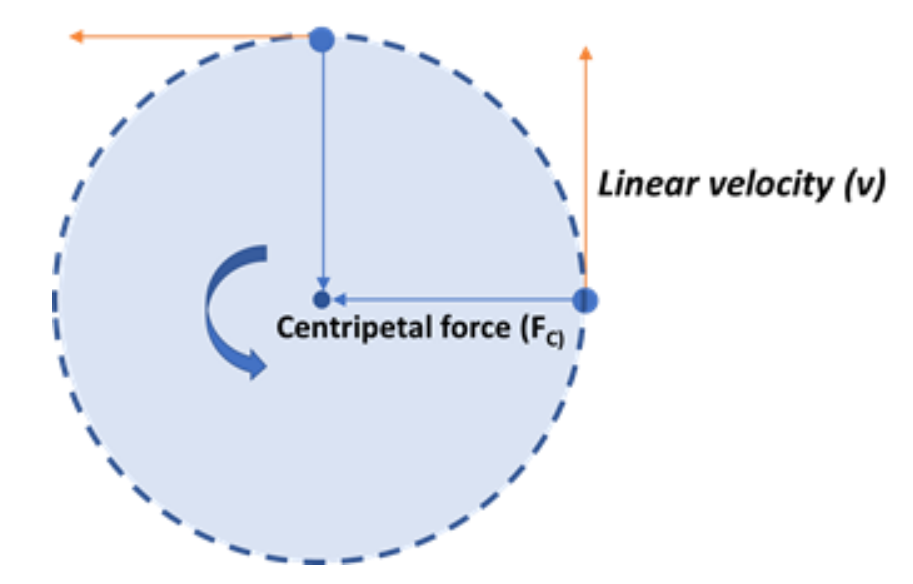
a force that keeps an object moving in a circular motion. It is a real force and directed towards the center of the circular path
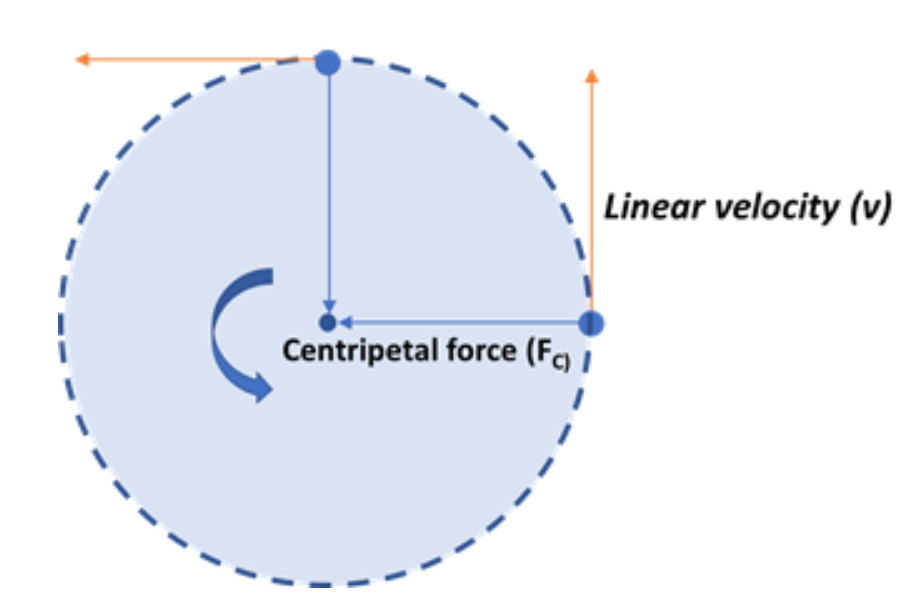
When a car is travelling around a circular path, _________ will be the centripetal force that acts to prevent the car from sliding off the road.
friction
the direction of linear velocity and centripetal acceleration are ______ to each other
perpendicular
If the centripetal force is removed, the object will travel in a linear path perpendicular to the circular path it was originally on
Torque
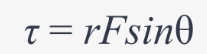
τ = rFsinθ
τ = torque (kg m2⋅s-2)
r = radius (m)
F = force (N)
θ = angle between force and lever arm
Rotational kinematics
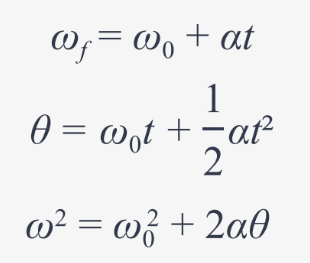
ωf = ω0 + αt
θ = ω0t + 1/2αt2
ω2 = ω02 + 2αθ
θ = angle of rotation
ω0 = initial angular velocity (rad/s)
ωf = final angular velocity (rad/s)
t = time (s)
α = angular acceleration (rad/s2)
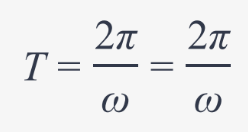
Period
T = 2π/ω
T = period
ω = angular velocity (rad/s)
f = frequency (s-1)
angular velocity
ω = Δθ / Δt
angular displacement (Δθ rad) per unit of time (Δt s)
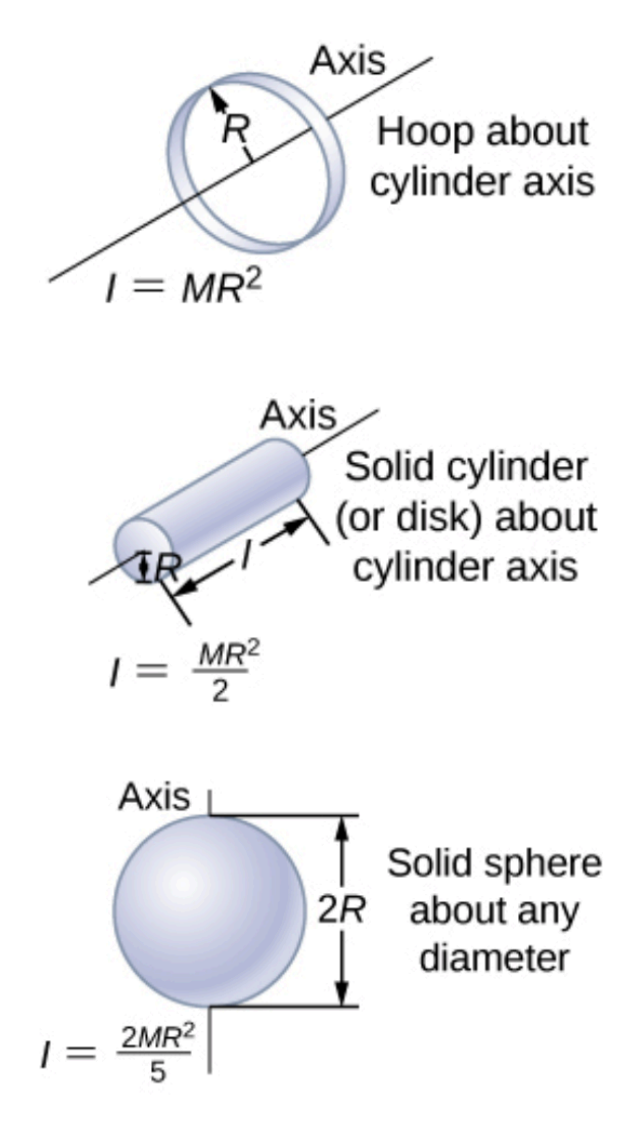
Moment of inertia
I = mr2 for hoop about cylinder axis
I = mr2 / 2 for solid cylinder (or disk) about cylinder axis
I = 2mr2 / 5 for solid sphere about any diameter
I = moment of inertia (kg⋅m2)
m = mass of rotating bodies (kg)
r = distance of object from centre of axis of rotation (m)
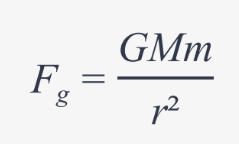
Newtons law of universal gravitation force
Fg = GMm / r2
Fg = gravitational force (N)
G = universal gravitational constant (6.67x10⁻¹¹ Nm2/kg2)
M = mass of object 1 (kg)
m = mass of object 2 (kg)
r = distance of body from the center of the earth (m)
Newtons law of universal gravitation force
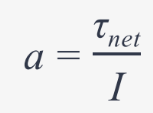
a = τnet / I
α = angular acceleration (rad/s2)
τ = torque (N⋅m)
I = moment of inertia (kg⋅m2)
angular momentum
L = Iω
L = angular momentum (kg * m2 / s)
I = inertia (kg * m2)
ω = angular velocity (rad/s)
drop the “rad” for radians when expressing the units for angular momentum because a radian is the ratio of arc length to radius; it is an expression of proportionality, not a physical unit in itself.
escape velocity
ve = sqrt( 2Gmp / rp )
escape velocity is dependent on the gravitational constant, G, the mass of the planet, mp, and the radius of the planet rp
conservation of momentum
Li = Lf