15. ending relationships
 Call Kai
 Learn
Learn Practice Test
 Spaced Repetition
 Match
Match Flashcards
 Knowt Play
1/56

There's no tags or description
Looks like no tags are added yet.
Name | Mastery | Learn | Test | Matching | Spaced | Call with Kai |
|---|
No analytics yet
Send a link to your students to track their progress
57 Terms
a bunch of factors which predict divorce
income
cohabitation
age
age difference
marital history
education
race
family background
beliefs
having a collective annual household income of … or more is associated w a 30% lower divorce risk
50k
cohabiting couples have a 50-80% … likelihood than never cohabitating
higher
those who marry after age … have a 24% reduced divorce rate
18
are marriages w a significant age difference more or less likely to divorce?
more
does being previously divorced elevate risk of divorce?
yes
do college graduates divorce less or more by middle age than others?
less
do AAs or White couples divorce more?
African American couples
3 kinds of symptoms of ending relationships
psychological
physical
financial
5 steps to end a relationship
discovery of a problem
exposure
negotiation
transformation
grave-dressing
exposure
stage when both partners communicate
grave-dressing
creation of narrative to justify breakup
bunch of reasons why relationships fail
lack of trust
autonomy
similarity
support
loyalty
honesty
attention
equality
respect
“magic” qualities (the SPARK)
avg time it takes for indivs to recover from a breakup
6-7 months
most common stage partners get stuck at when negotiating a breakup
exposure (30%)
when does skipping stages occur?
if intimacy and relationship quality was never very high
some reasons why the divorce rate seems to have increased
women’s increased participation in the labor force → decreased dependence on their husbands, higher CLalts
gender roles are changing
western culture is becoming more individualistic — feel less connected to those around them
less negative perceptions of divorce
higher expectations of marriage
Levinger’s barrier model
claims there are 3 elements that influence the breakup of relationships
attraction
the alternatives one possesses
barriers that make it harder to leave
attraction
enhanced by the rewards a relationship offers (like enjoyable companionship, sexual fulfillment, security, social status), diminished by its costs (irritating incompatibility, investment of time and energy)
the alternatives one possesses
any alternative to a current relationship which lures them away from an existing partnership (other partners, being single, achieving occupational success, etc.)
barriers that make it harder to leave
include the legal and social pressures to remain married, religious and moral constraints, and the financial costs of obtaining a divorce and maintaining 2 houesholds
Karney and Bradbury’s vulnerability-stress-adaptation model
highlights 3 influences that can contribute to divorce
some ppl enter marriage w ENDURING VULNERABILITIES that increase their risk of divorce
the ADAPTIVE PROCESS w which ppl respond to stress
STRESSFUL EVENTS that require the partners to provide support to one another and to adjust to new circumstances
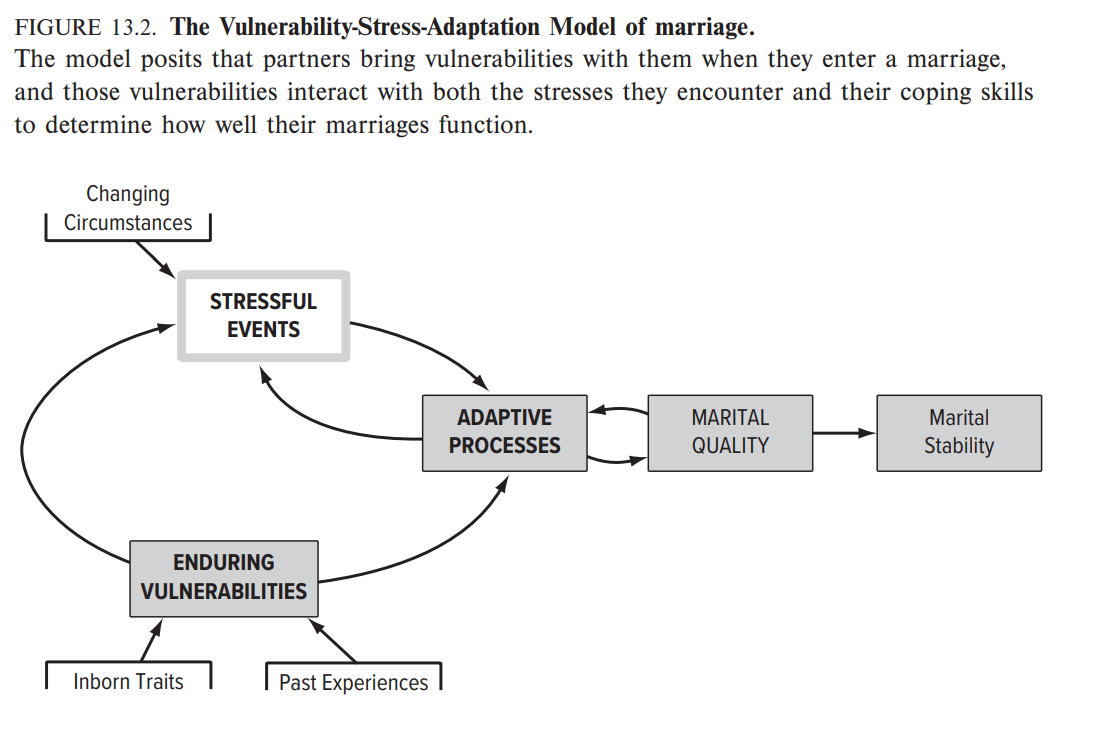
examples of enduring vulnerabilities
adverse experiences in one’s family of origin, poor education, maladaptive personality traits, bad social skills, dysfunctional attitudes toward marriage
examples of the adaptive processes w which ppl respond to stress
coping and communication skills, determine whether our stress grows or is managed and reduced
stress spillover
bringing surly moods home (from frustrations/difficulties experienced individually at work or school) and interacting irascibly w our innocent partners
3 explanations for why marriages go awry + simple summary
enduring dynamics model - marriages that are headed for divorce are weaker than others from the very beginning
emergent distress model - in the beginning, there’s no discernible difference between marriages that’ll succeed and those that’ll fail; the difficulties that ruin some marriages usually dev later
disillusionment model - we become disillusioned from our fantasies and reality sets in after time goes by
enduring dynamics model
suggests that spouses bring to their marriages problems, incompatibilities, and enduring vulnerabilities that surface during their courtship
emergent distress model
suggests that the problematic behavior that ultimately destroys a couple begins after they marry
disillusionment model
suggests that couples typically begin their marriages w rosy, romanticized views of their relationship that are unrealistically positive. then, as time goes by and the spouses stop working as hard to be adorable and charming to each other, reality slowly erodes these pleasant fictions
the models which seem to properly explain why divorces occur + what specifically were they good at predicting
enduring dynamics model - predicted how happy marriages would be
disillusionment model - best predictor of which couples would actually divorce
(conclusions from Processes of Adaptation in Intimate Relationships (PAIR) Project)
what did the Early Years of Marriage (EYM) Project demonstrate?
demonstrates that the social context in which couples conduct their relationships may have substantial effects on the outcomes they encounter
on avg, black couples had cohabitated for a longer period and were more likely to have had children before getting married
lower incomes
more likely to come from broken homes
various models and data seem to suggest 3 general types of influences on our marital outcomes
cultural context
personal contexts
relational context
cultural context
broadest lvl, the cultural norms and other variables that set the national stage for marriage
personal contexts
the social networks of family and friends and the physical neighborhoods we inhabit
relational context
describes the intimate environment couples create thru their own perceptions of, and interactions w, each other
other-oriented vs. self-oriented strats to breaking up
other-oriented - attempt to protect the partner’s feelings
self-oriented - be more selfish at the expense of the partner’s feelings
of these distinctions, which side was more common?
gradual vs sudden onset of one’s discontent
individual vs shared desire to end the partnership
rapid vs protracted nature of one’s exit
presence or absence of repair attempts
gradual
individual
protracted
absence
persevering indirectness
single most common manner in which premarital relationships ended
gradual dissatisfaction that led one of the two partners to make repeated efforts to dissolve the relationship without ever announcing that intention and without engaging in any attempts to improve or repair the partnership
relational cleansing
changing or hiding relationship status on pfp pages, defriending their ex-partners or blocking their texts, editing the photos on their walls
5 general stages occur during the dissolution of most relationships
personal phase
dyadic phase
social phase
grave-dressing phase
resurrection phase
personal phase
a partner grows dissatsified, often feeling frustration and disgruntlement
dyadic phase
unhappy partner reveals their discontent. long periods of negotiation, confrontation, or attempts at accommodation may follow
social phase
partners publicize their distress, explaining their side of the story to family and friends and seeking support and understanding
grave-dressing phase
mourning decreases, partners begin to get over their loss by doing whatever cognitive work and relational cleansing are required to put their past partnership behind them
resurrection phase
ex-partners re-enter social life as singles, often telling others that their experiences have changed them and that they’re smarter and wiser now
churning
when partners break up but then reconcile and get back tgt (on/off/on again experience of breakup and renewal during their relationship)
4 factors noticed in monitoring divorce/widowing
life satisfaction dropped
ppl who were destined to divorce were less happy years earlier
divorces typically halted a painful pattern of eroding contentment
years later, they still weren’t as happy as they had been before the decline and fall of their marriages
why are women less well off than men after divorce?
both of their household incomes decrease, but men are more likely than women to live by themselves after they divorce; women are much more likely to have children in their households
4 broad types of postmarital relationships
fiery foes
angry associates
cooperative colleagues
perfect pals
fiery foes
spouses’ animosity toward each other defines the relationship, little to no capacity to work tgt in co-parenting
angry associates
spouses’ animosity toward each other still defines the relationship, have some capacity to work tgt in co-parenting
cooperative colleagues
aren’t good friends, but they’re civil and pleasant to each other and are able to cooperate successfully in parenting tasks
perfect pals
maintain a strong friendship w mutual respect that didn’t get eroded by their decision to live separate lives
parental loss view
children are presumed to benefit from having 2 parents who’re devoted to their care, and children who lose a parent for any reason, including divorce, are less likely to be less well off
parental stress model
proposes that the quality, not the quantity, of the parenting a child receives is key, and any stressor (including divorce) that distracts or debilitates one’s parents can have detrimental effects
economic hardship
a major stressor which may add to children’s burdens in parental stress model
parental conflict
most potent influence on children, associated w more anxiety, poorer health, and more problematic behavior, whether or not a divorce occurs