4.2.2 Inequality
 Call Kai
 Learn
Learn Practice Test
 Spaced Repetition
 Match
Match Flashcards
 Knowt Play
1/11

There's no tags or description
Looks like no tags are added yet.
Name | Mastery | Learn | Test | Matching | Spaced | Call with Kai |
|---|
No analytics yet
Send a link to your students to track their progress
12 Terms
WEALTH INEQUALITY
wealth is a stock of assets
so wealth inequality is unequal distributions of these assets
wealth is likely to be more unequally distributed than income bc assets can be accumulated over time
INCOME INEQUALITY
income is flow of earnings
income inequality is an unequal distribution of earnings
MEASURES OF INCOME INEQUALITY
Lorenz curve
Gini coefficient
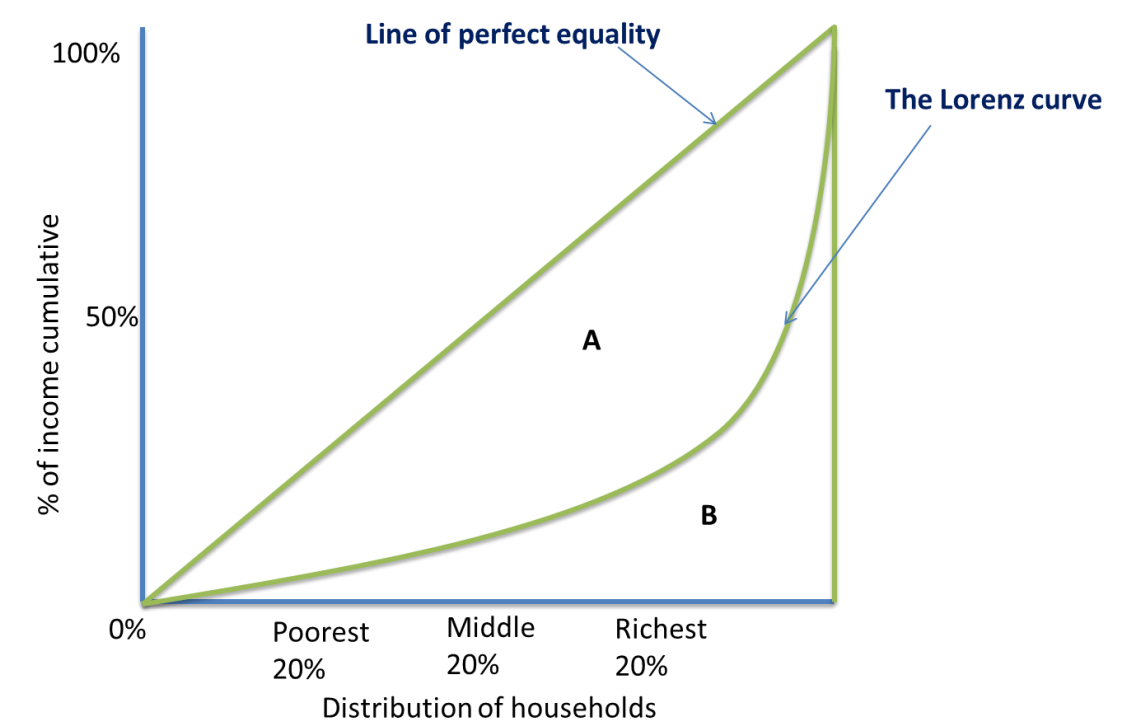
LORENZ CURVE
shows cumulative % of population plotted against the cumulative % of income that those people have
perfectly equal society would have a straight line
degree of bend away from straight line indicates degree of inequality
GINI COEFFICIENT
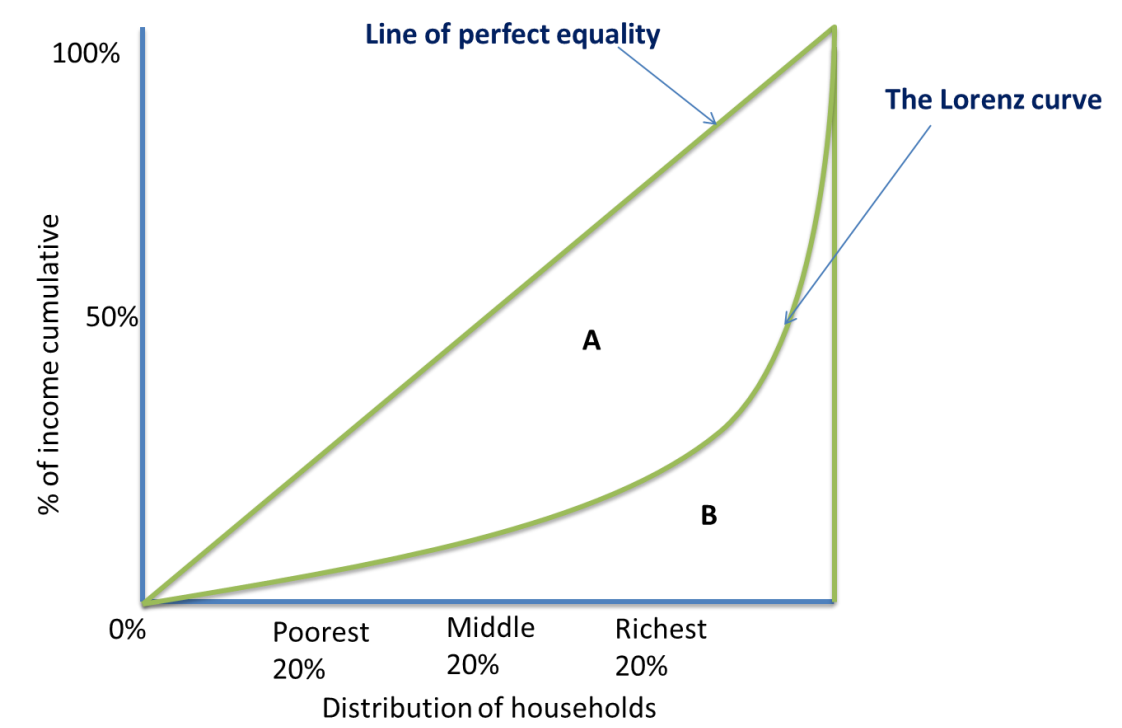
gives a numerical value for inequality
A/(A+B)
measured between 1 and 0
bigger coefficient = more unequal country
CAUSES OF WEALTH AND INCOME INEQUALITY WITHIN COUNTRIES
wages
wealth levels
welfare payments and taxes
WAGES
more part-time jobs → leaves people underemployed → limits how much they can earn
jobs in the low-skilled service industries, especially in public sector, tend to pay less than jobs in the private sector
women still earn less than men on average- could be due to career breaks or because women are crowded into low-paid or part-time jobs, which may only require low skill levels
discrimination due to age, disabilities, gender and race → lower incomes
WEALTH LEVELS
those who already has a high level of wealth are able to build up larger wealth than those on lower levels of wealth
can undertake more risky investment (bc they have more security) which will give a higher rate of return → increases income inequality
WELFARE PAYMENTS AND TAXES
state pensions and welfare payments tend to increase less than wages → so those on benefits see a smaller real increase in their income compared to those in jobs → increases inequality
some taxes regressive → those on lower incomes bear a larger burden of the tax → increase inequality
CAUSES OF WEALTH AND INCOME INEQUALITY BETWEEN COUNTRIES
some countries have been held back by wars, droughts, famines and earthquakes
developed countries tend to favour each other when trading, negotiating etc. and this helps them to develop more than countries who are not involved in the agreements
IMPACT OF ECONOMIC CHANGE AND DEVELOPMENT
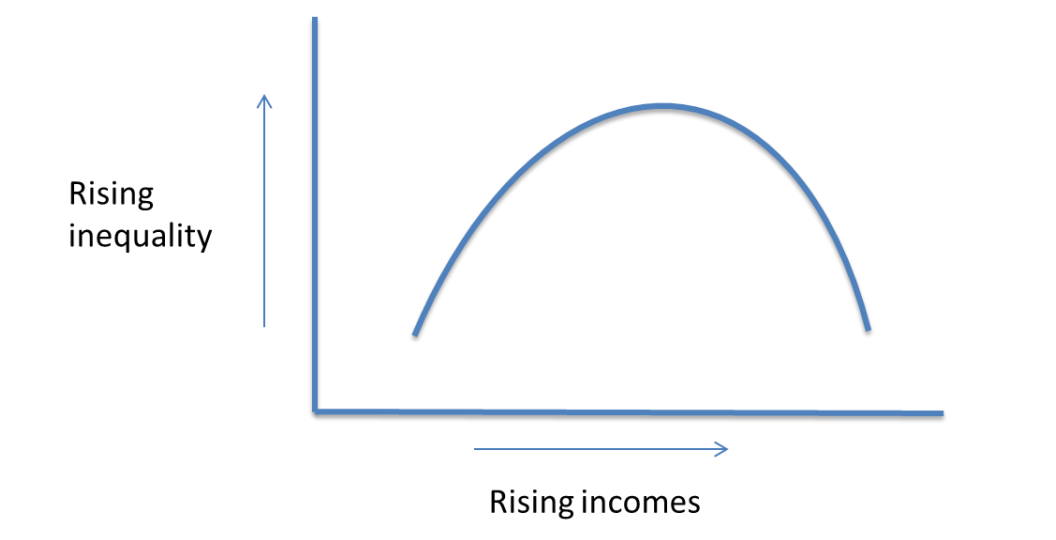
Kuznets hypothesis says that as society develops and moves from agriculture to industry, inequality increases as the wages of industrial workers rises faster than farmers (increasing part of curve)
wealth is then redistributed through taxation and gov spending → inequality falls (decreasing part of curve)
but, Piketty discredited this by arguing that as a country develops → rate of return on capital grows → so rich get richer → increases inequality
SIGNIFICANCE OF CAPITALISM ON INEQUALITY
wages vary as they are based on demand and supply in capitalist economy, and demand and supply vary for different jobs → wage differentials → inequality
individuals own resources and thus wealth differs based on the assets they own
inequality acts as an incentive to learn new skills and work hard → higher wage reflects higher productivity in a capitalist society → results in wage inequality