Anatomy- Chp 1
 Call Kai
 Learn
Learn Practice Test
 Spaced Repetition
 Match
Match Flashcards
 Knowt Play
1/102

There's no tags or description
Looks like no tags are added yet.
Name | Mastery | Learn | Test | Matching | Spaced | Call with Kai |
|---|
No analytics yet
Send a link to your students to track their progress
103 Terms
anatomy
the branch of biology concerned with the study of the structure of organisms and their parts
important anatomists
herophilus (335-255 BC)
galen (129-216 AD)
andreas vesalius (1500s)
infectious disease
bacteria, virus, fungi, parasites, prions
deficiency disease
scurvy, goiter
hereditary disease
cystic fibrosis, sickle cell, tay-sachs disease, von willebrand disease, hemophilia
physiological disease
diabetes, cancer, asthma
physiology
study of how the body functions
homeostatic mechanisms
homeostatic mechanisms
how body reacts to changes in conditions and tries to go back to some range of baseline values
anatomy
study of internal/external structures
naming parts/how they fit together
dictates physiology
specific anatomical structures have specific physiological functions
microscopic anatomy
cytology, histology
cytology
study of cells
histology
study of tissues
gross anatomy
surface anatomy, clinical anatomy, surgical anatomy
surface anatomy
superficial anatomical markings and relationship to deeper structures
clinical anatomy
changes during illnesses
surgical anatomy
landmarks for surgical procedures
common morphologies
dorsal nerve cord, notochord, muscular tail, cartilage surrounding brain, pharyngeal arches, ventral body cavity
body organization simple to complex
chemical/molecular, cellular, tissue, organ, organ system, organism
molecular composition of the body
66% water
20% proteins
10% lipids
3% carbohydrates
1% other substances
elemental composition of the human body
62% hydrogen
26% oxygen
10% carbon
1.5% nitrogen
others
primary
all organ systems have multiple homeostatic functions that can overlap, but each has unique _______ functions for homeostasis (except one)
integumentary system
protects against external environment
thermoregulation and sensory
includes:
skin (cutaneous membrane)- epidermis, dermis
hair follicles- hairs, sebaceous galnds
sweat glands
nails
sensory receptors
subcutaneous layer
the skeletal system
support and protection
immunity, storage of Ca2+, and feeding
includes:
bones, cartilages, and joints- axial and appendicular skeletons
ligaments
bone marrow
the muscular system
locomotion
thermoregulation and storage of amino acids
includes:
skeletal muscles- axial and appendicular muscles
tendons and aponeuroses
the nervous system
relays and processes info for homeostasis and senses
hormones
includes:
CNS- brain, spinal cord, special senses
PNS
the endocrine system
chronic homeostasis
allows for reproduction
includes:
pineal gland
pituitary gland
thyroid gland
parathyroid gland
thymus
adrenal glands
kidneys
pancreas
gonads- testes, ovaries
the cardiovascular system
transport of gasses and nutrients
thermoregulation, pH balance, immune function and endocrine function
includes:
heart
blood vessels- arteries, veins, capillaries
blood
the lymphatic system
immune function and water balance
aids in absorption of nutrients
includes:
lymphatic vessels
lymph nodes
spleen
thymus
the respiratory system
gas exchange and pH balance
water balance
includes:
nasal cavities and paranasal sinuses
pharynx
larynx
trachea
bronchi
lungs- alveoli
the digestive system
digestion and absorption of nutrients; water absorption
removes waste from blood and immune function
includes:
oral cavity
salivary glands
pharynx
esophagus
stomach
small intestine
liver
gallbladder
pancreas
large intestine
the urinary system
filters blood of excess, waste, ions, and solutes; pH and water balance
endocrine function
includes:
kidneys
ureters
urinary bladder
urethra
reproductive system
secondary sex characteristics
female includes:
ovaries
uterine tubes
uterus
vagina
external genitalia- clitoris, labia
mammary glands
male includes:
testes
accessory organs- epididymis, ductus derferens, seminal gland, prostate, urethra
external genitalia- penis, scrotum
anatomical position
standing with feet flat on floor
hands are at side
palms facing forward (anterior)
all discussion of anatomy is in reference to this
L/R based on specimen
supine
laying face up
prone
laying face down
antebrachium
forearm
antecubitis
front of elbow
brachium
arm
axilla
armpit
mentis
chin
oris
mouth
cephalon
head
cranium
skull
facies
face
frons
forehead
nasus
nose
oculus
eye
auris
ear
bucca
cheek
cervicis
neck
thoracis
thorax
mamma
breast
abdomen
abdominal
umbilicus
navel
pelvis
pelvic
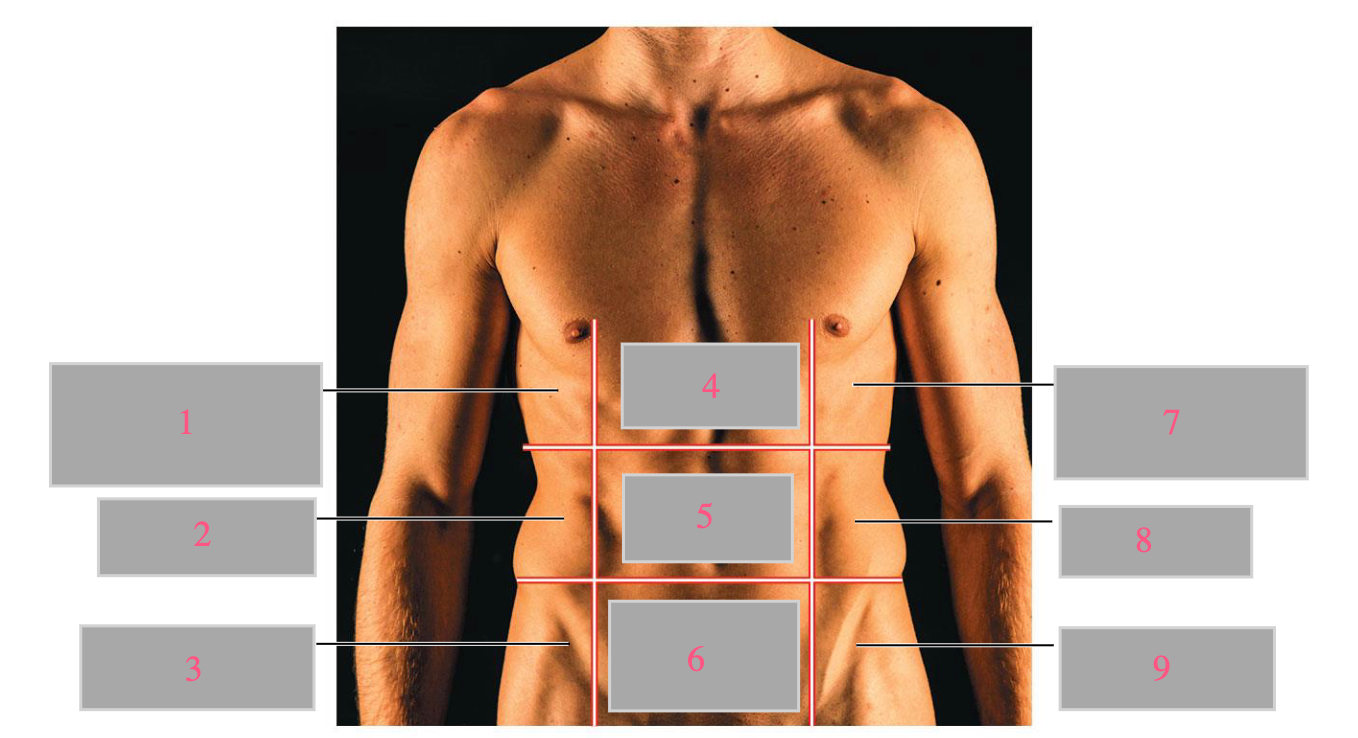
right hypochondriac region
1
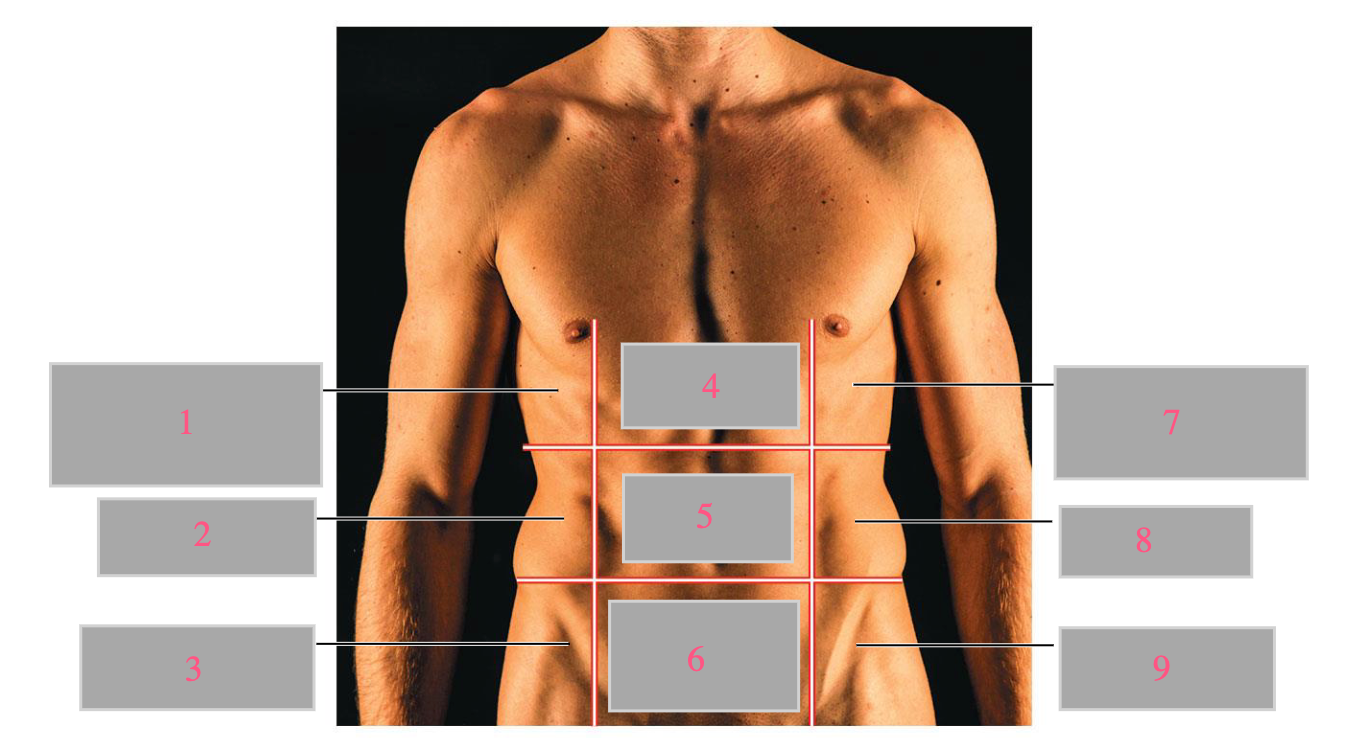
right lumbar region
2
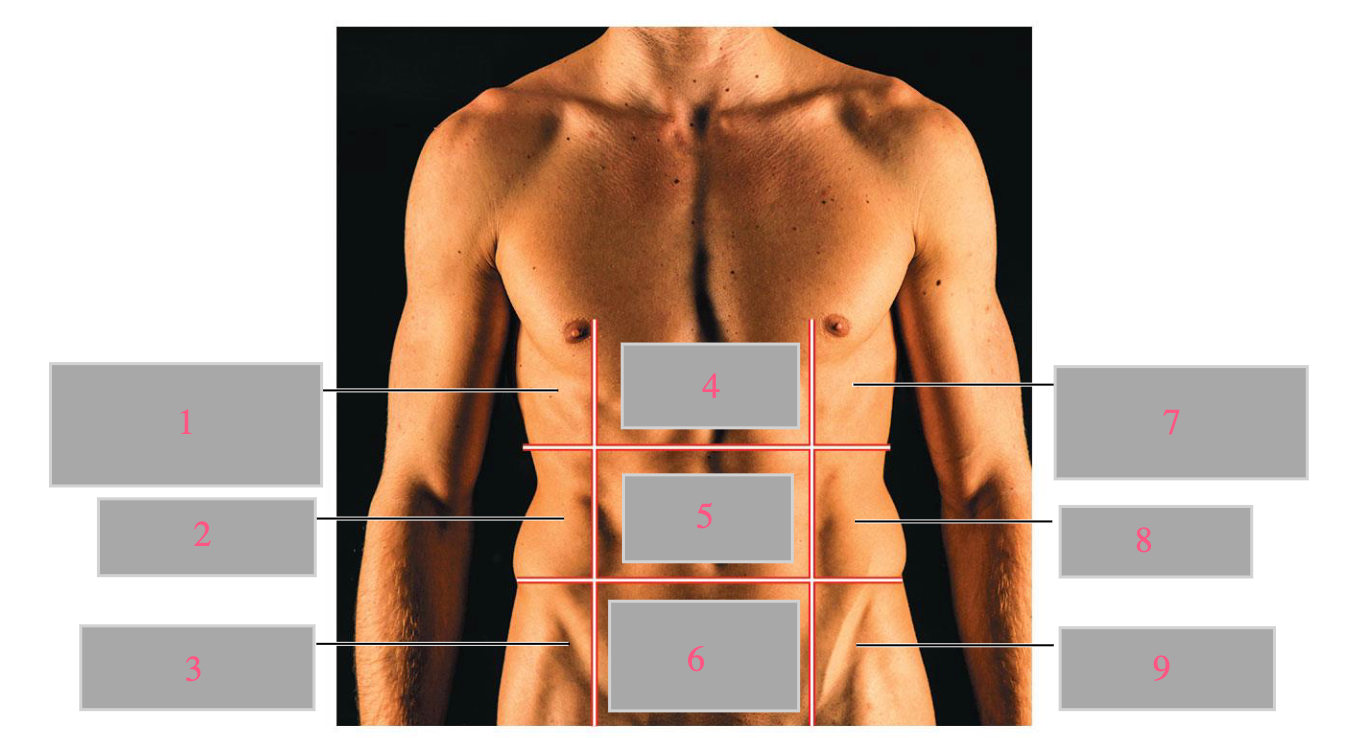
right inguinal region
3
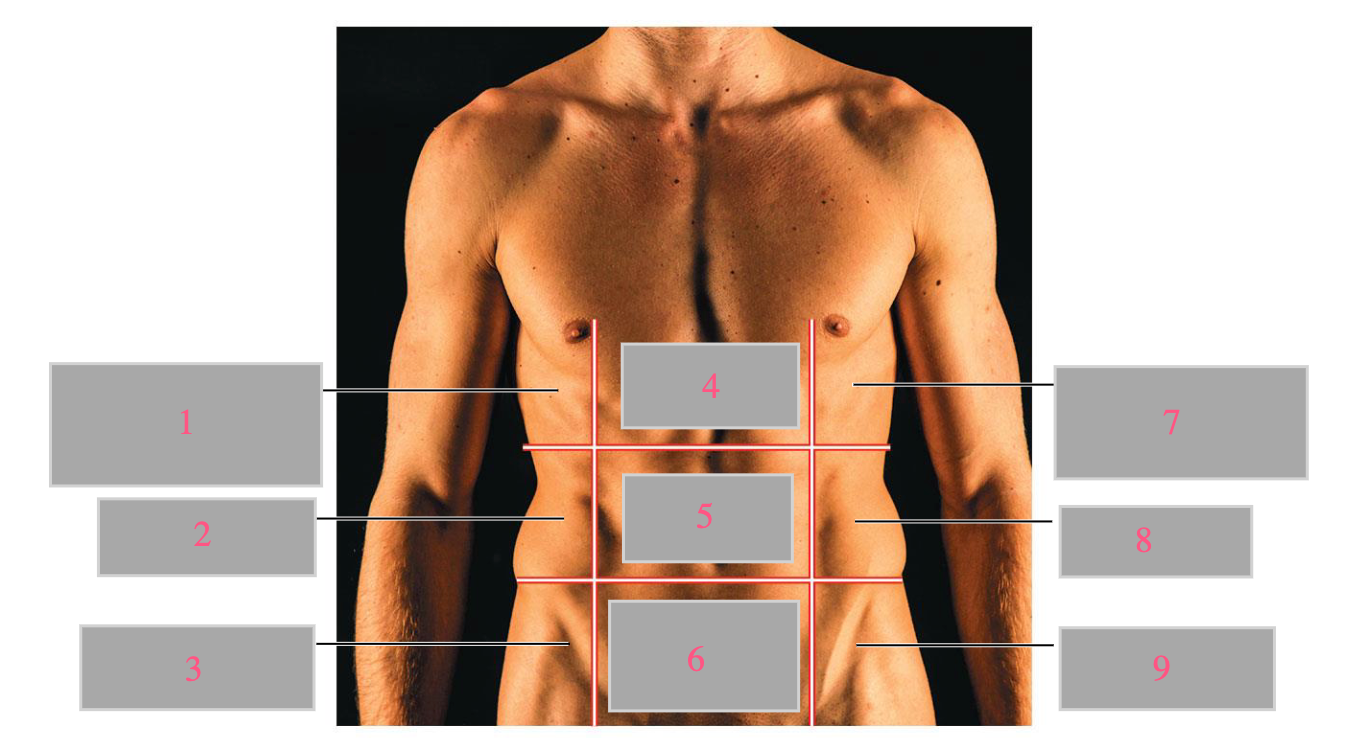
epigastric region
4
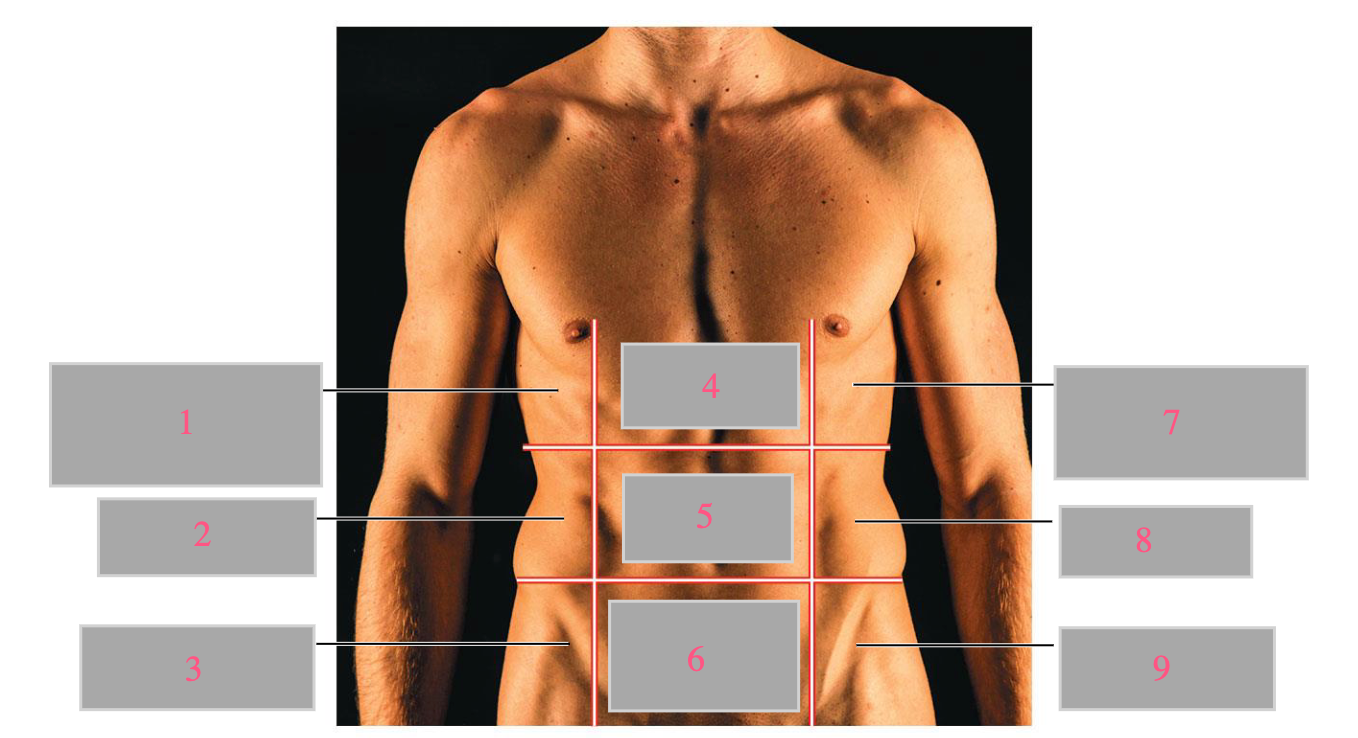
umbilical region
5
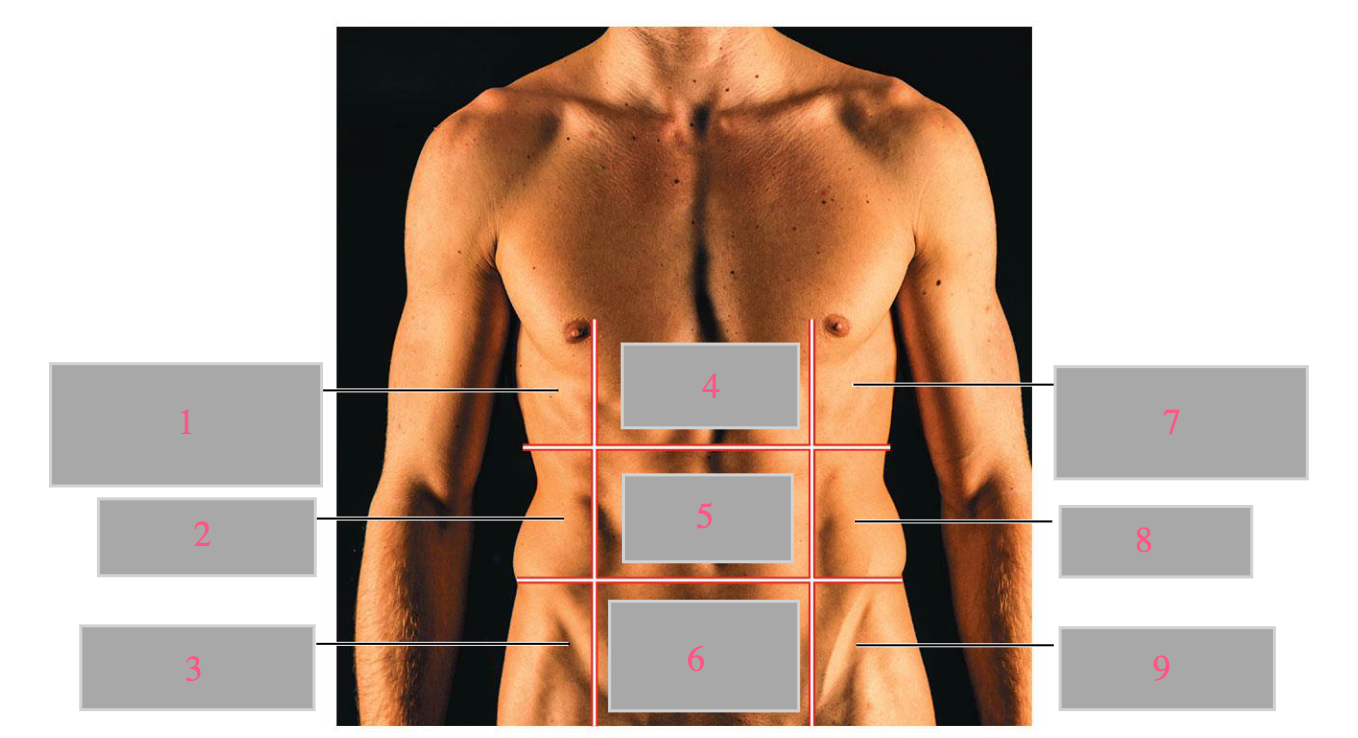
hypogastric (pubic) region
6
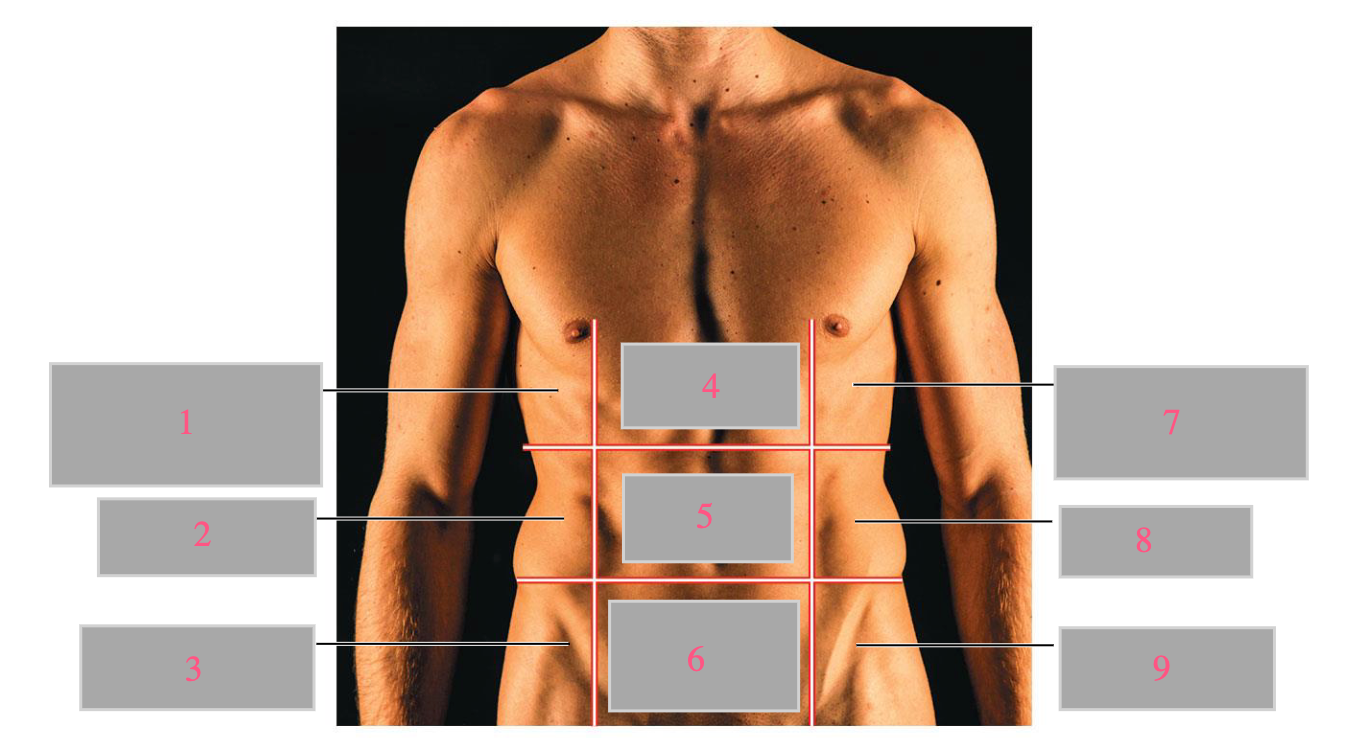
left hypochondriac region
7
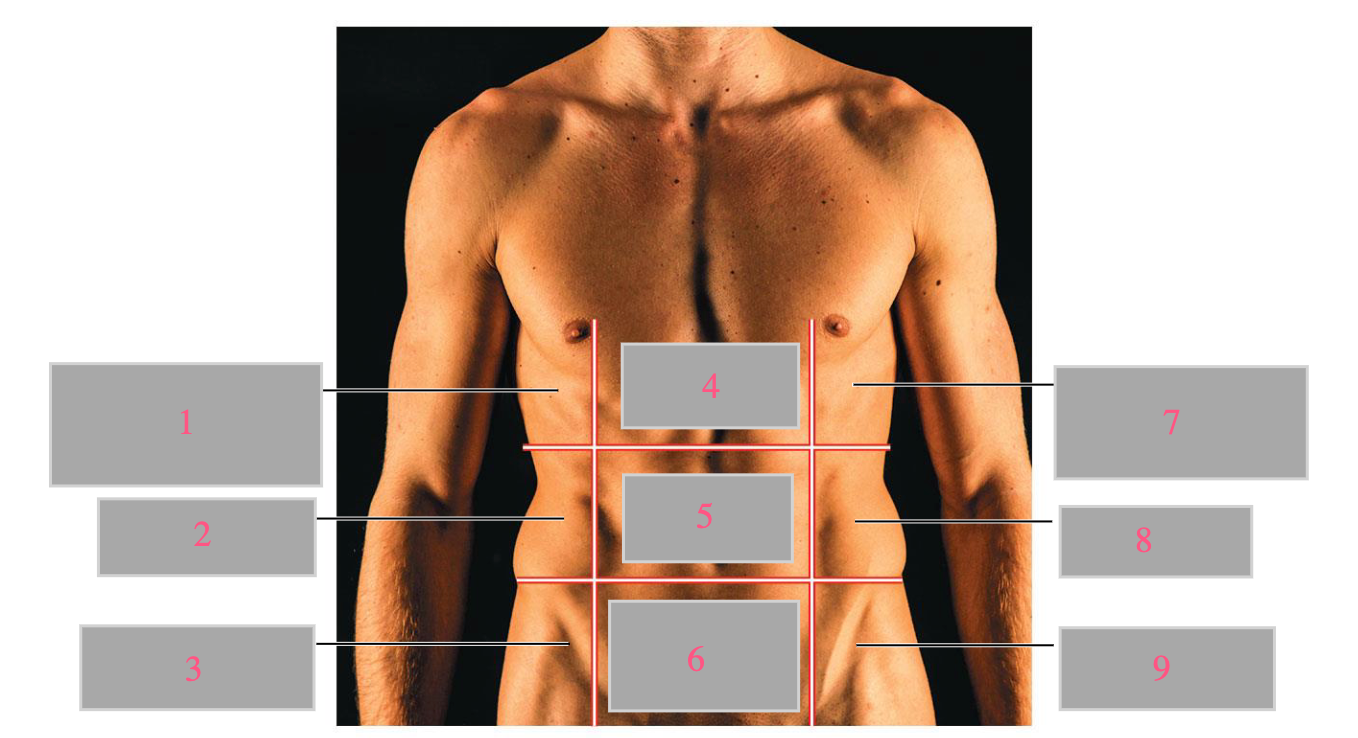
left lumbar region
8
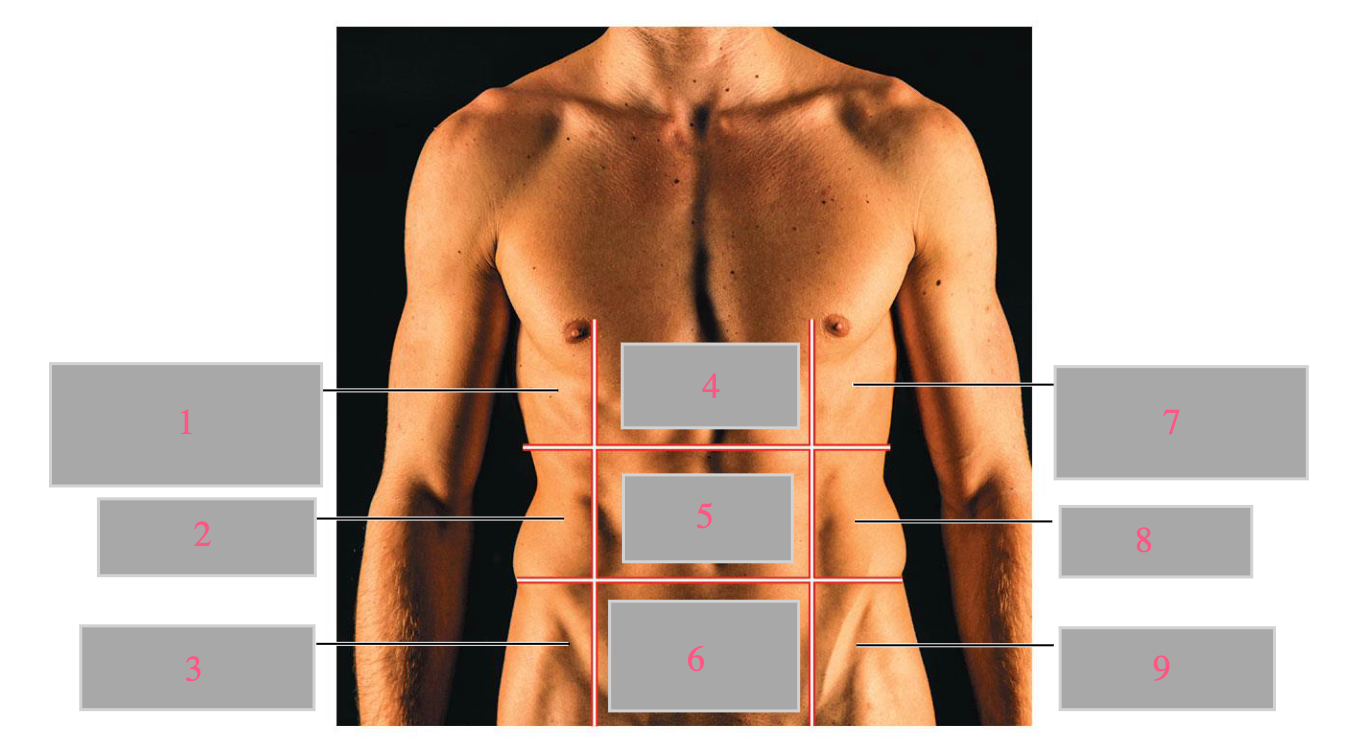
left inguinal region
9
lateral
away from midline
medial
towards midline
proximal
towards an attached base
distal
away from an attached base
superifical
at, near, or close to body surface
deep
towards inside of body
cranial/cephalic
towards head
caudal
towards tail
posterior/dorsal
behind; the back
anterior/ventral
the front
frontal plane
divides body into front and back halves
saggital plane
divides body into left and right halves
transverse plane
divides body into top and bottom halves
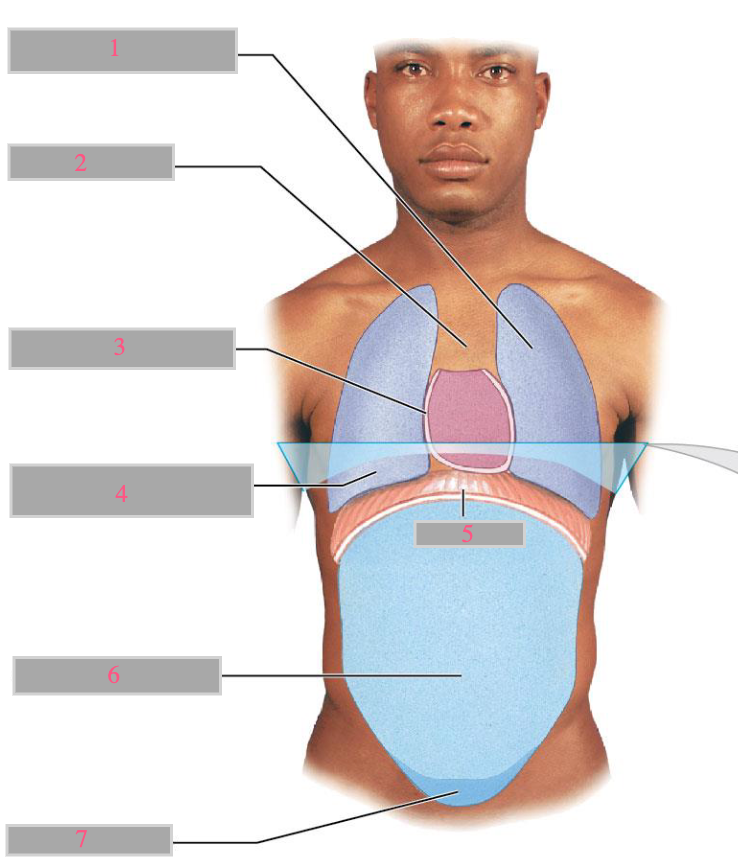
left pleural cavity
1
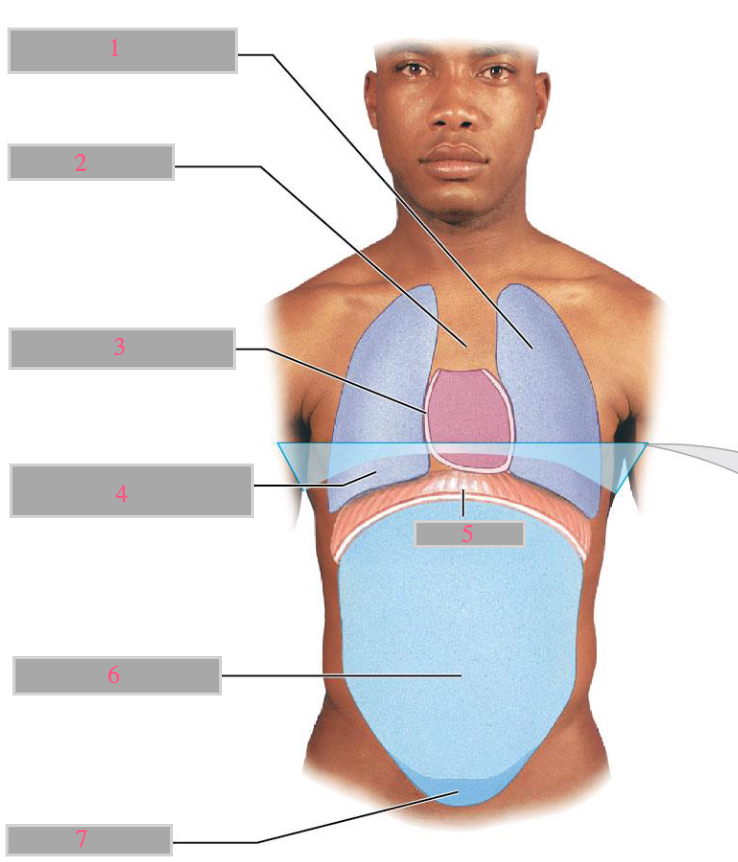
mediastinum
2
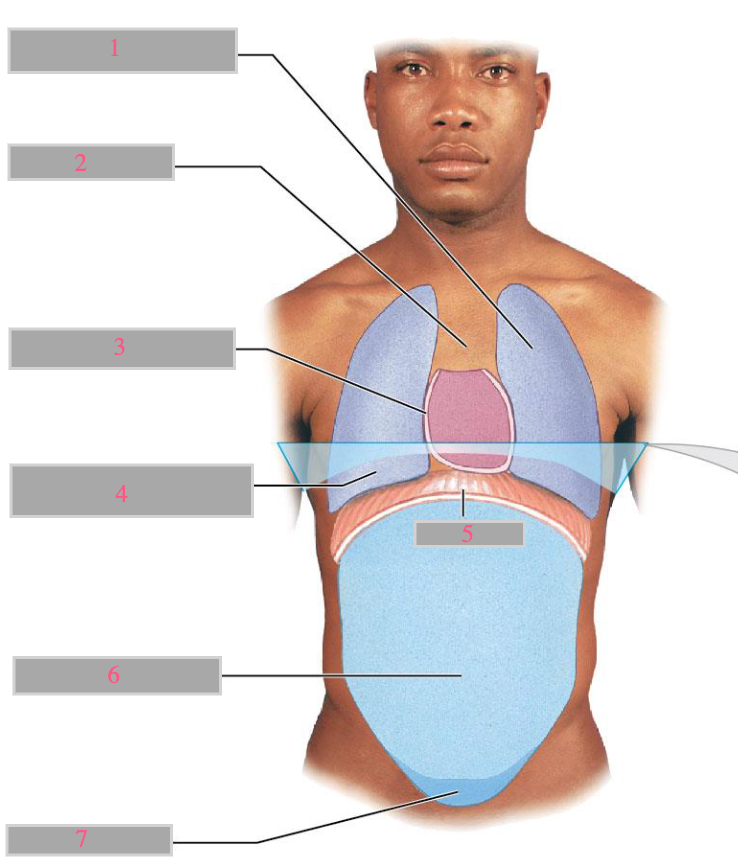
pericardial cavity
3
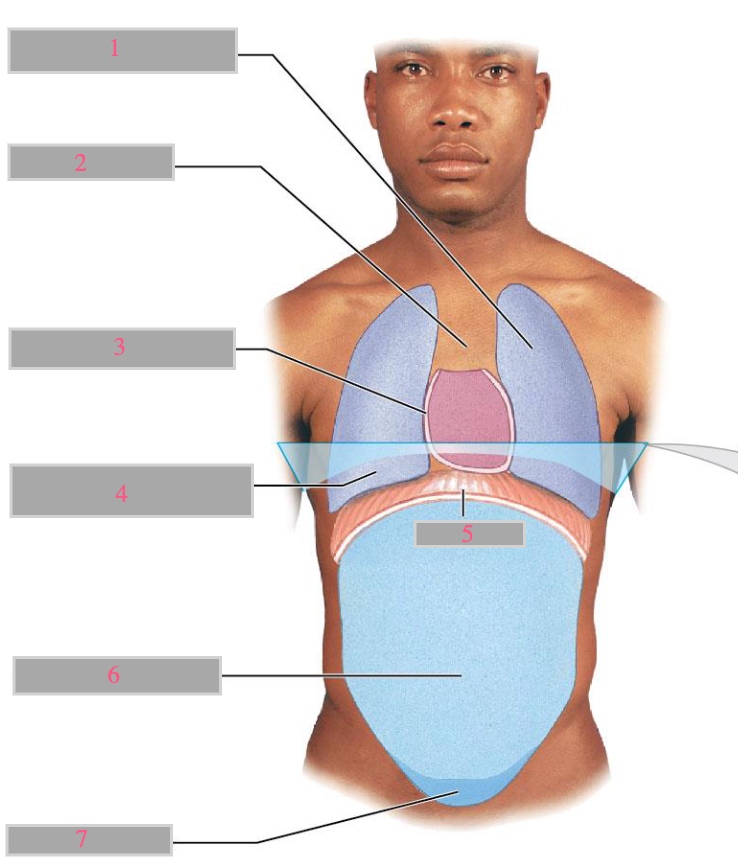
right pleural cavity
4
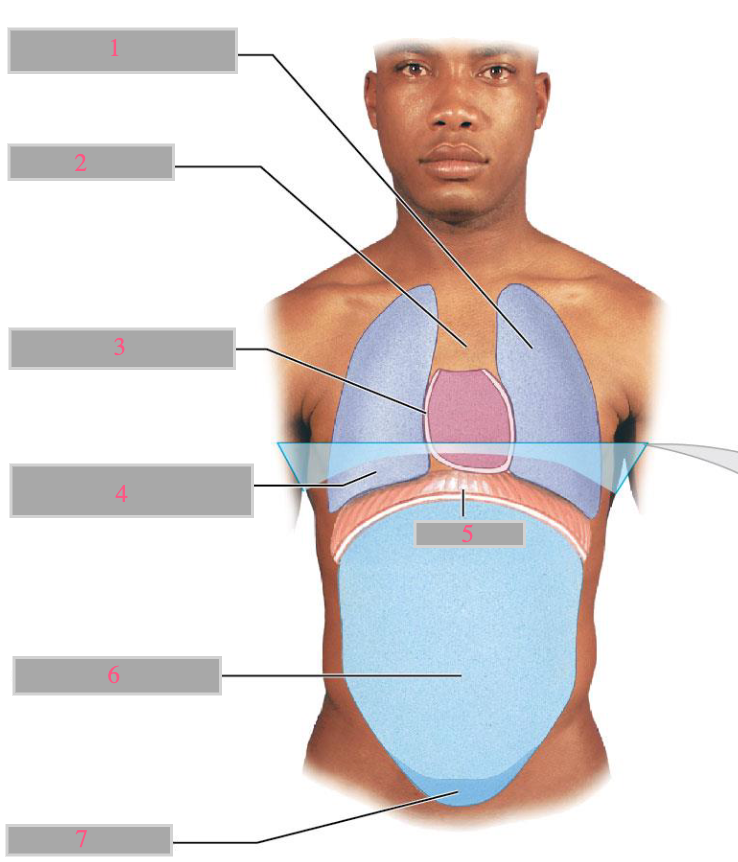
diaphragm
5
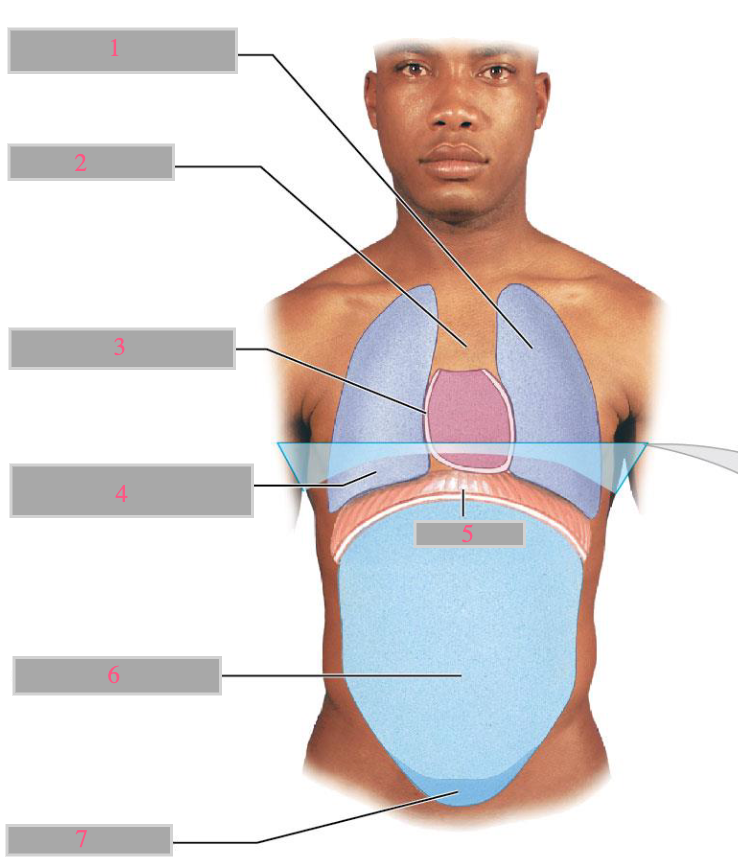
abdominal cavity
6
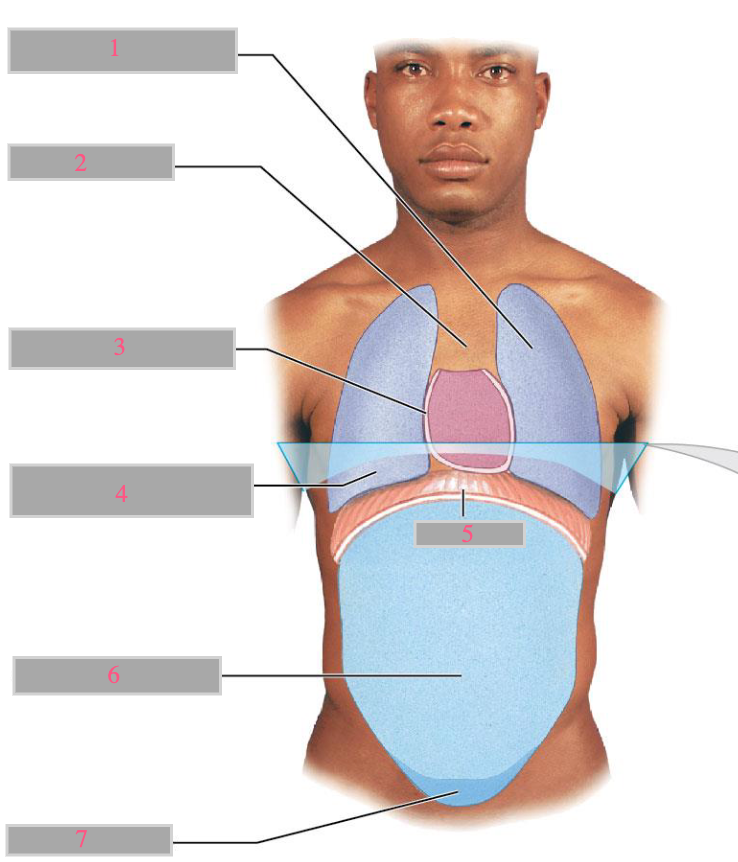
pelvic cavity
7
serous membranes
provide lubrication to organs
tuberosity
projection: large rounded projection of bone; may be roughed
crest
projection: narrow ridge of bone; usually prominent
trochanter
projection: very large, blunt, irregularly shaped process (only example is on the femur)
line
projection: narrow ridge of bone; less prominent than a crest
tubercle
projection: small rounded process or projection
epicondyle
projection: raised area on or above a condyle
spine
projection: sharp, slender, often pointed projection
process
projection: any bony prominence
head
surface: bony expansion carried on a narrow neck
facet
surface: smooth, nearly flat articular surface
condyle
surface: rounded articular projection, often articulates with a corresponding fossa
foramen
depression/opening: round or oval opening through a bone
groove
depression/opening: a furrow
fissure
depression/opening: narrow slit-like opening
notch
depression/opening: indentation at the edge of a structure