BIOL 121: Skeletal Anatomy
 Call Kai
 Learn
Learn Practice Test
 Spaced Repetition
 Match
Match Flashcards
 Knowt Play
1/21

There's no tags or description
Looks like no tags are added yet.
Name | Mastery | Learn | Test | Matching | Spaced | Call with Kai |
|---|
No analytics yet
Send a link to your students to track their progress
22 Terms
Axial Skeleton Bones (Post-Cranial)
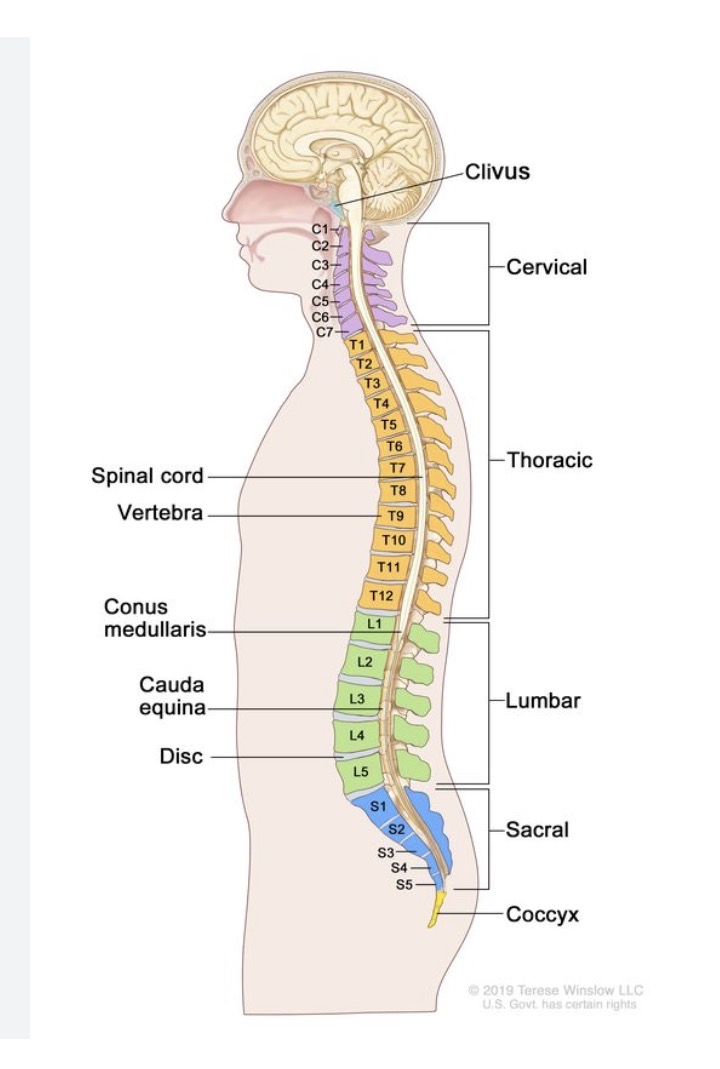
Vertebral Column - cervical, thoracic, lumbar, sacral, caudal
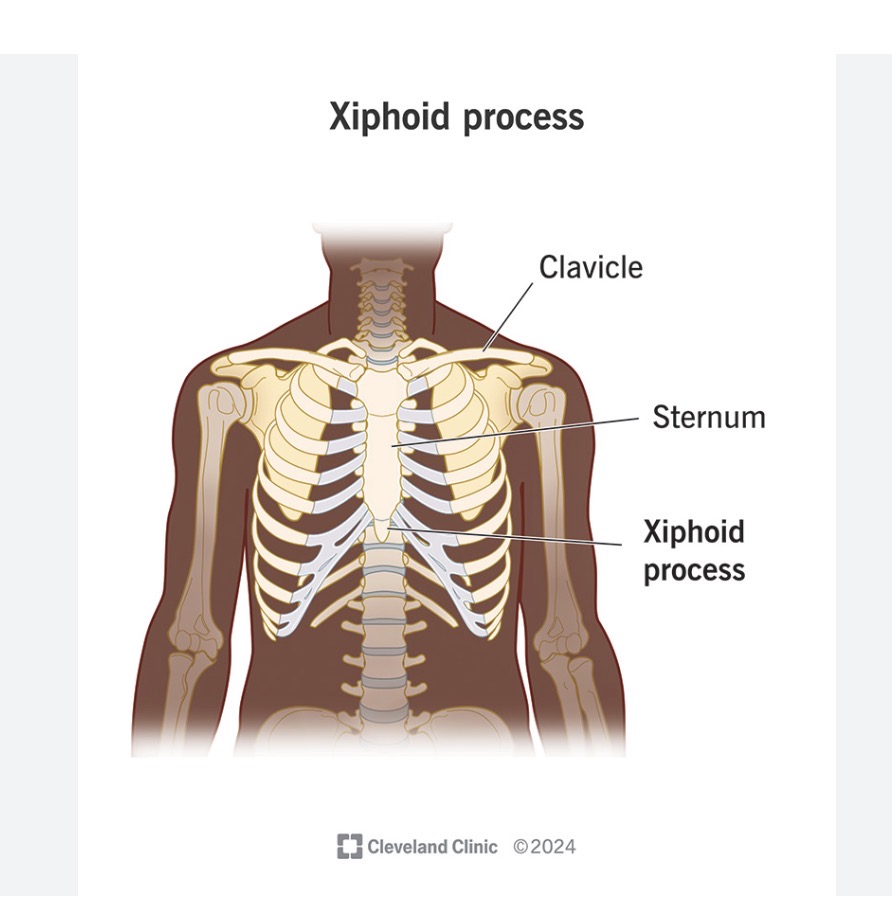
Ribs - sternum, xyphoid process, *keel*
Appendicular Skeleton Bones
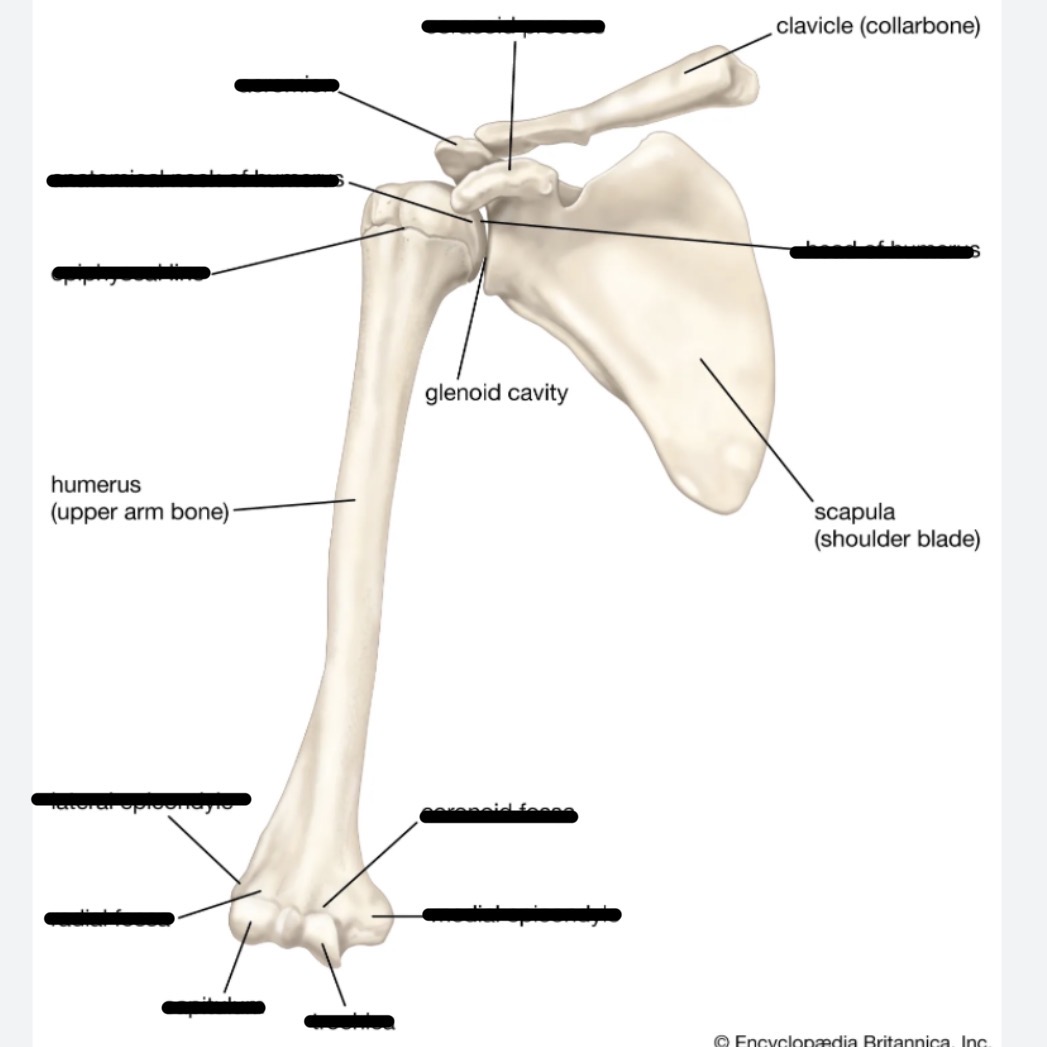
Pectoral Girdle - clavicle, scapula, *suprascapula*, glenoid fossa/cavity
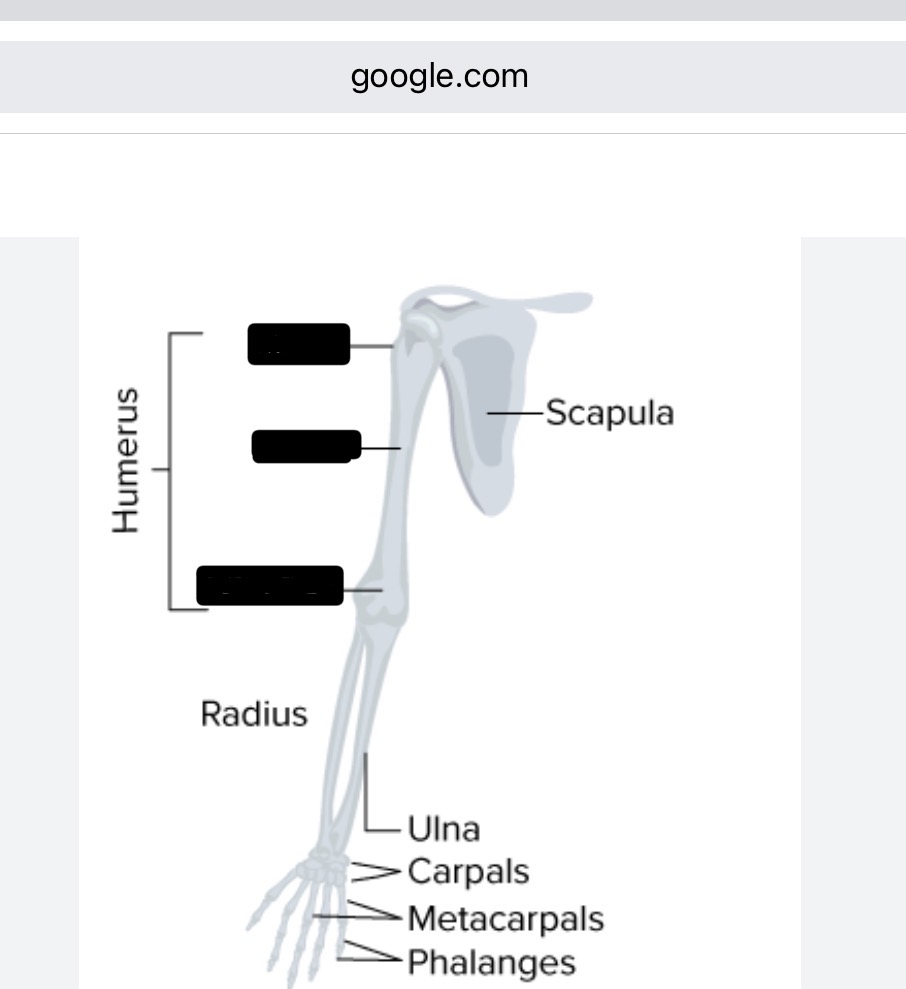
Forelimbs - humerus, radius, ulna, *radioulna*, carpals, metacarpals, phalanges, *carpometacarpus*
Pelvic Girdle - pelvis, acetabulum, *urostyle*
Hindlimb’s - femur, patella, tibia, *tibiotarsus*, fibula, *tibiofibula*, tarsals, astragalus, calcaneus, metatarsals, *tarsometatarsal*, phalanges/digits
Vertebral Column:
Cervical =
Thoracic =
Lumbar =
Sacral =
Caudal =
neck
on which ribs articulate’
abdominal region
enclosed by pelvic girdle
tail
Ribs:
Sternum =
Xyphoid process =
breastbone
cartilaginous extension of lower sternum
Keel (part of ribs)
In birds only; extension of sternum + attachment site for flight muscles
Pectoral Girdle:
Clavicle =
Scapula =
Glenoid Fossa/Cavity =
collarbone
shoulder blade
rounded groove that forms articular surface of scapula w/ humerus at shoulder joint
Suprascapula (part of pectoral girdle)
In frogs only; together w scapula forms shoulder blade
Forelimbs:
Humerus =
Radius =
Ulna =
Carpals =
Metacarpals =
Phalanges =
long part of upper limb
long bone of lower limb that extends from lateral side of elbow toward thumb (top)
long bone of lower limb that extends from elbow towards pinky (bottom)
wrist
palm
fingers
Radioulna (part of forelimbs)
In frogs only (radius + ulna)
Carpometacarpus (part of forelimbs)
In birds only + attaches many of flight feathers
Pelvic Girdle:
Pelvis =
Acetabulum =
has 2 os coxa bones
bowl shaped articular surface of pelvis that accommodates head of femur

Urostyle (part of pelvic girdle)
In frogs only; fusion of caudal vertebrae + forms pelvic girdle of frog
Hindlimbs:
Femur =
Patella =
Tibia =
Fibula =
Tarsals =
Astragalus / Talus =
Calcaneus =
Metatarsals =
Phalanges/Digits =
long thigh bone
kneecap
larger of two long bones of lower limb
smaller of two long bones of lower limb
ankle
lower part of ankle + transmits body weight to foot
heel bone
mid-foot bones
toes
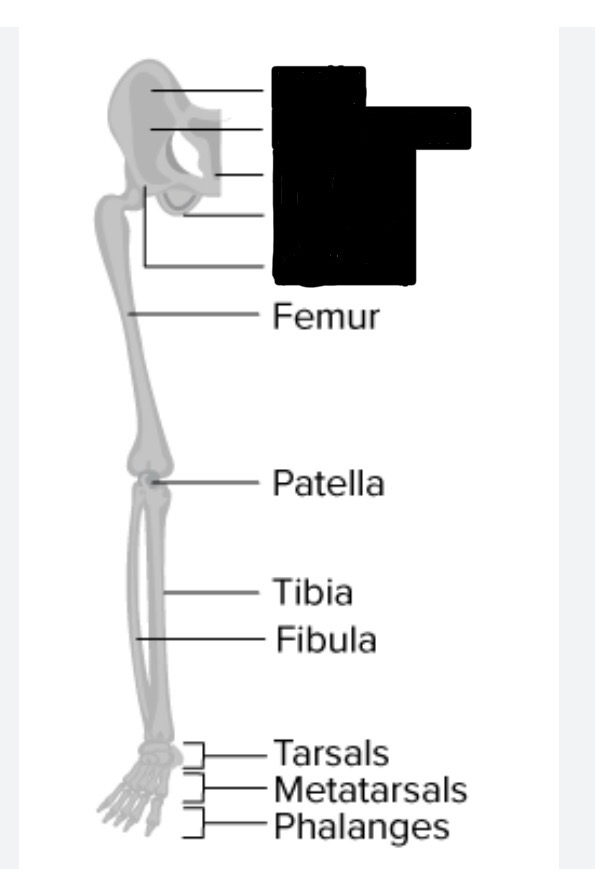
Tibiotarsus (part of hindlimbs)
In birds only; homologous to tibia bone
Tibiofibula (part of hindlimbs)
In frogs only; bigger
Tarsometatarsals (part of hindlimbs)
In birds only
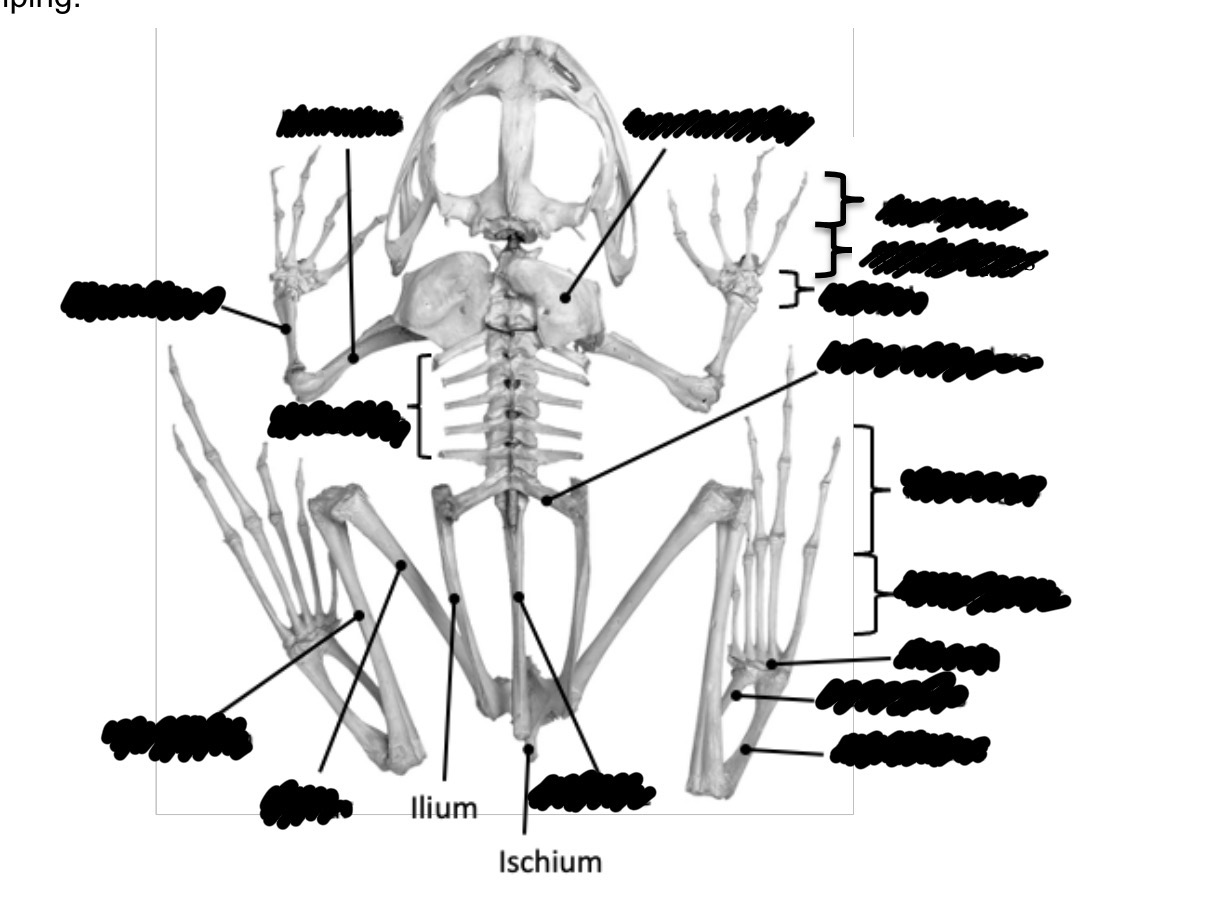
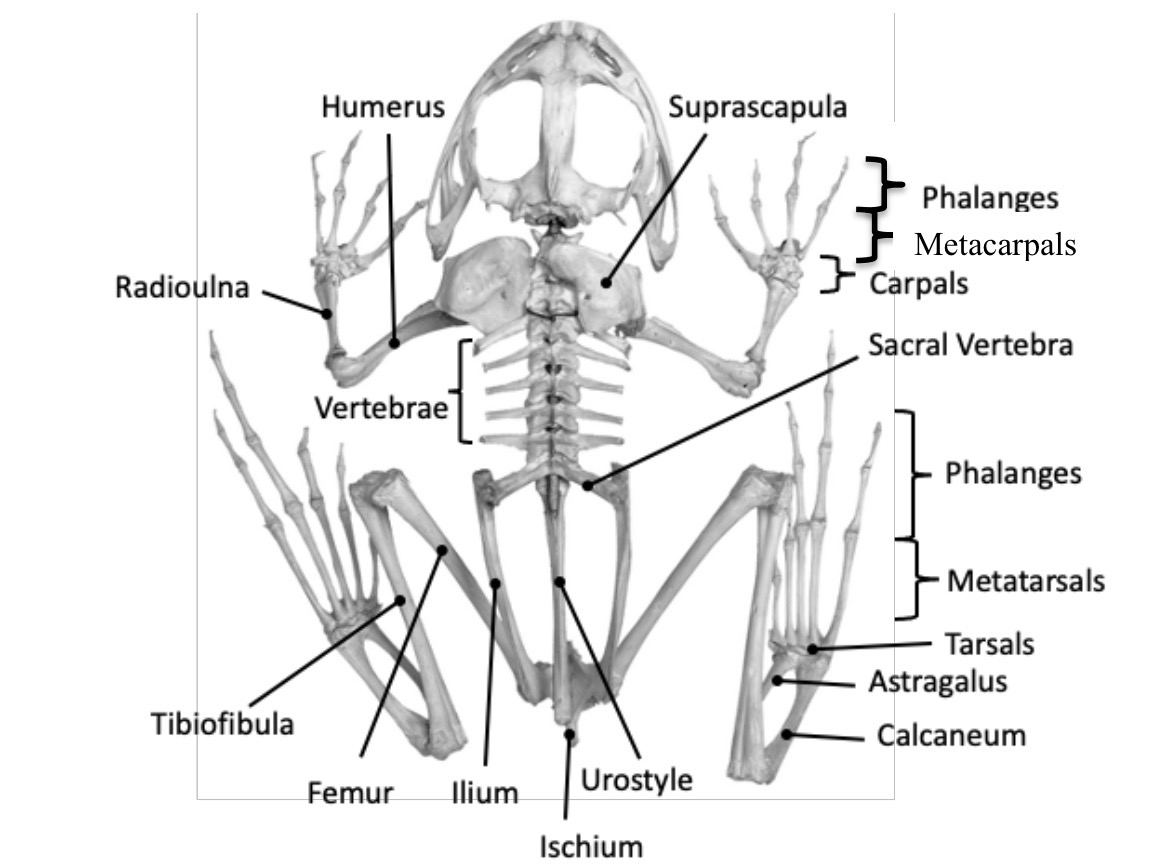
What are the different bone structures of the frog? Label the image
Suprascapula, radioulna, urostyle, tibiofibula
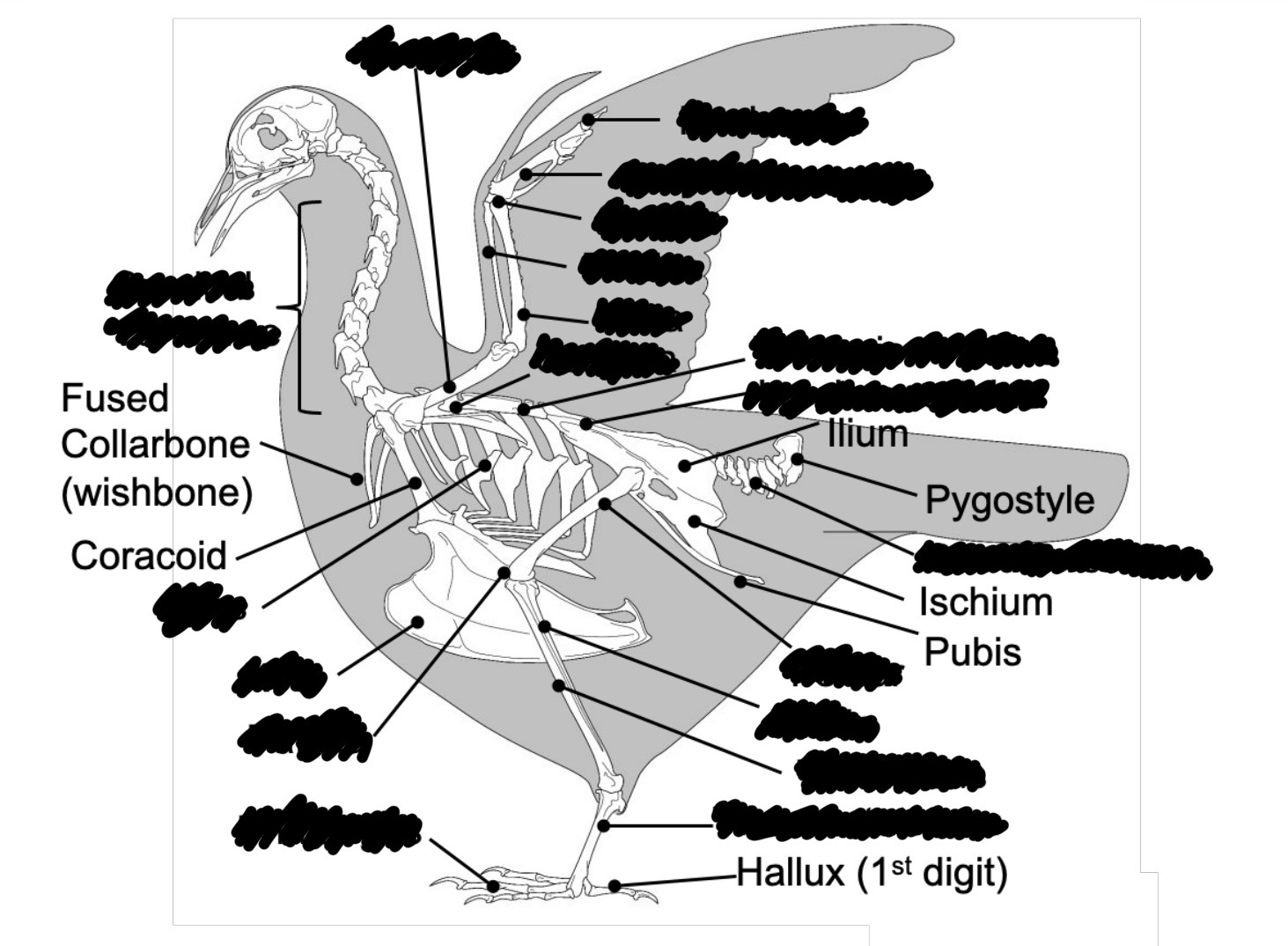
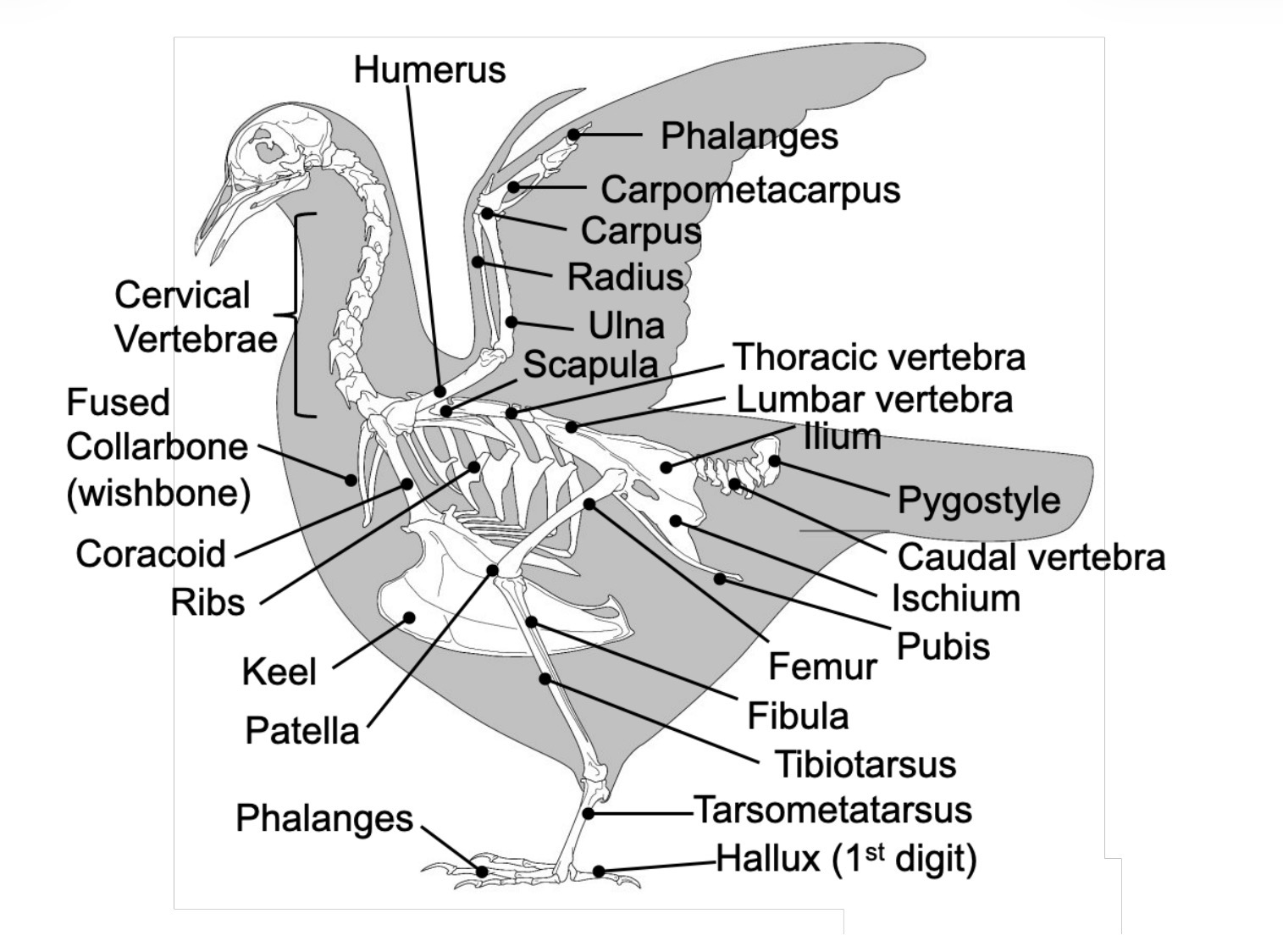
What are the different bone structures of birds? Label the image.
Keel, carpometacarpus, tibiotarsus, tarsometatarsal
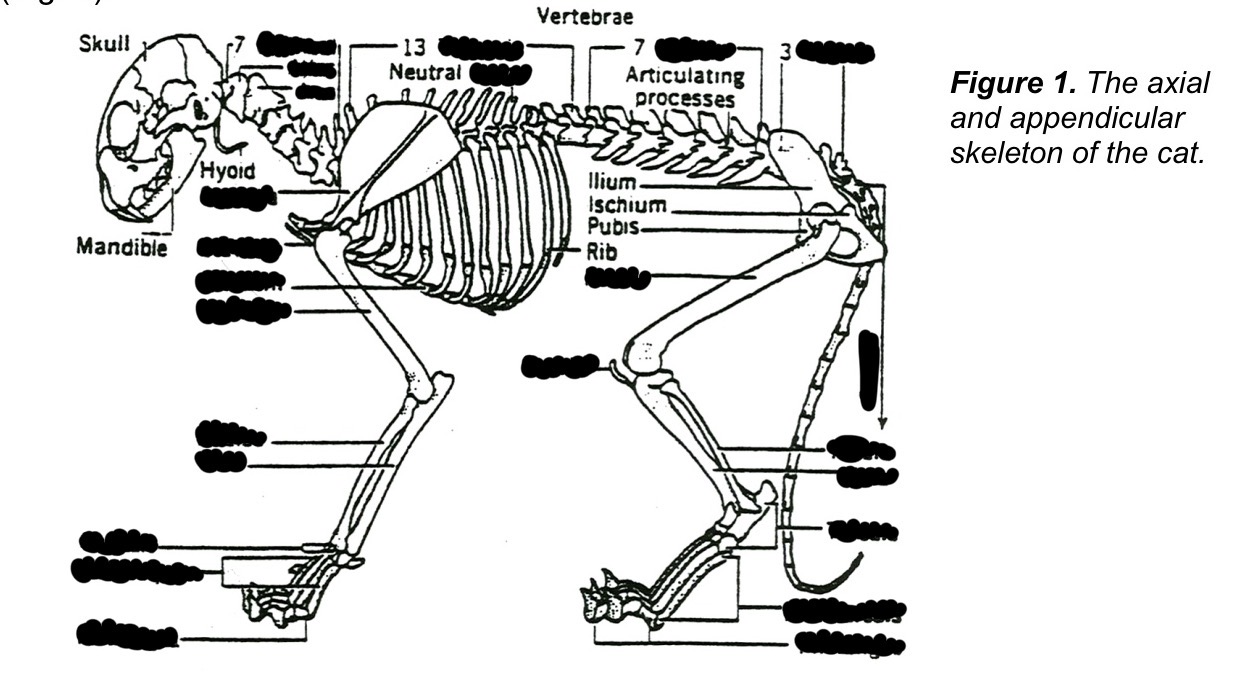
Label the cat diagram
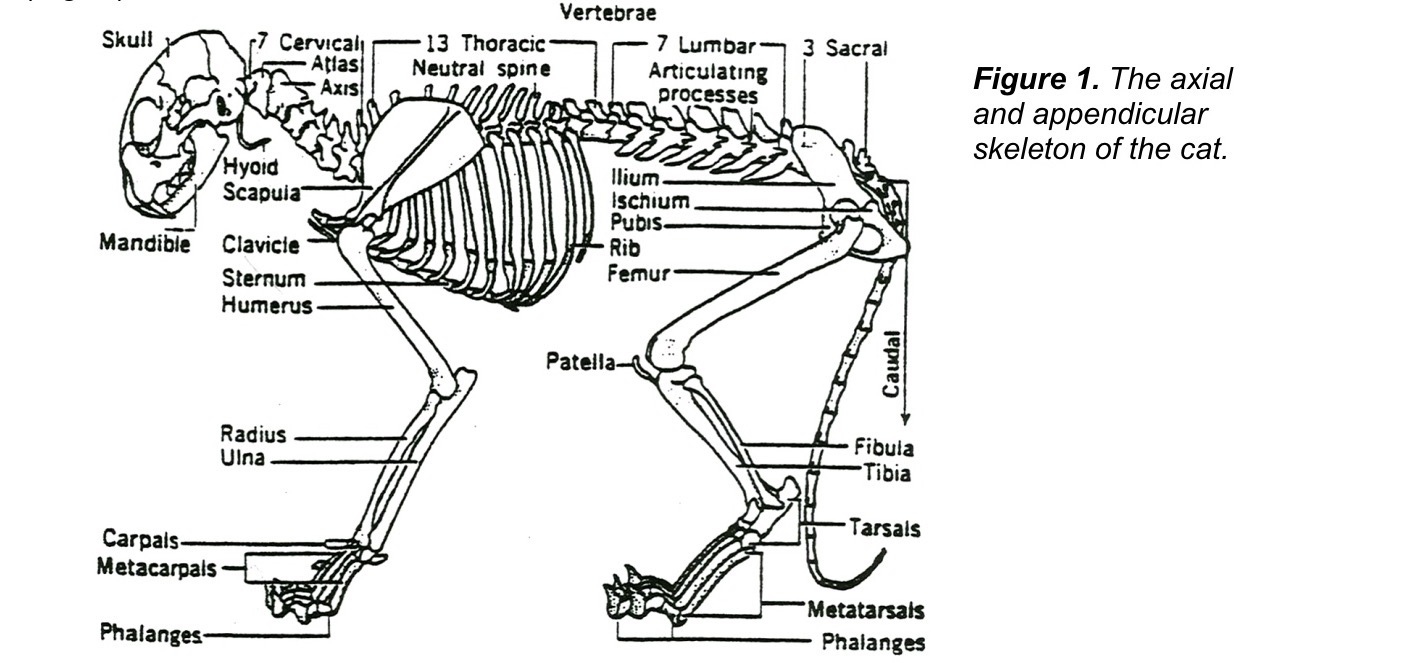
What are the evolutionary adaptations for increased running speed in cats?
vertebral column bends freely up/down —> increased stride length
limbs elongated + digitigrades —> increased stride length
reduced vestigial (“floating”) clavicle —> scapula moves more freely —> good shock absorber —> agility
What are the evolutionary adaptations for improved jumping in frogs?
Urostyle resistant to bending/breaking
Backbone jointed above sacral vertebra —> frog can leap
Radioulna + tibiofibula —> to withstand stress from jumping/landing
What are the evolutionary adaptations for flight in birds?
Keel —> attachment area for flight muscles
Pectoral girdle —> modified to provide support for forces associated w/ flight
Pelvic girdle —> expanded to provide large area for attachment of hind limb muscles
Tail reduced to stump —> attachment area for large tail feathers