Inheritance 1
 Call Kai
 Learn
Learn Practice Test
 Spaced Repetition
 Match
Match Flashcards
 Knowt Play
1/24

There's no tags or description
Looks like no tags are added yet.
Name | Mastery | Learn | Test | Matching | Spaced | Call with Kai | Chat |
|---|
No analytics yet
Send a link to your students to track their progress
25 Terms
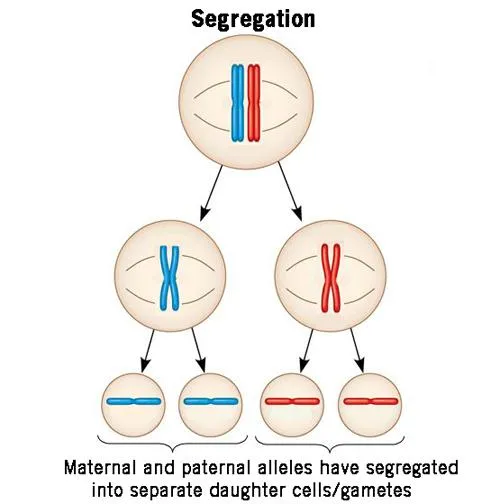
Mendel’s first law of segregation
during formation of gametes, the paired alleles segregate randomly so that each gamete receives one or the other with equal likelihood.
Mendel’s second law of independent assortment
The segregation of one pair of alleles is independent of the segregation of the other
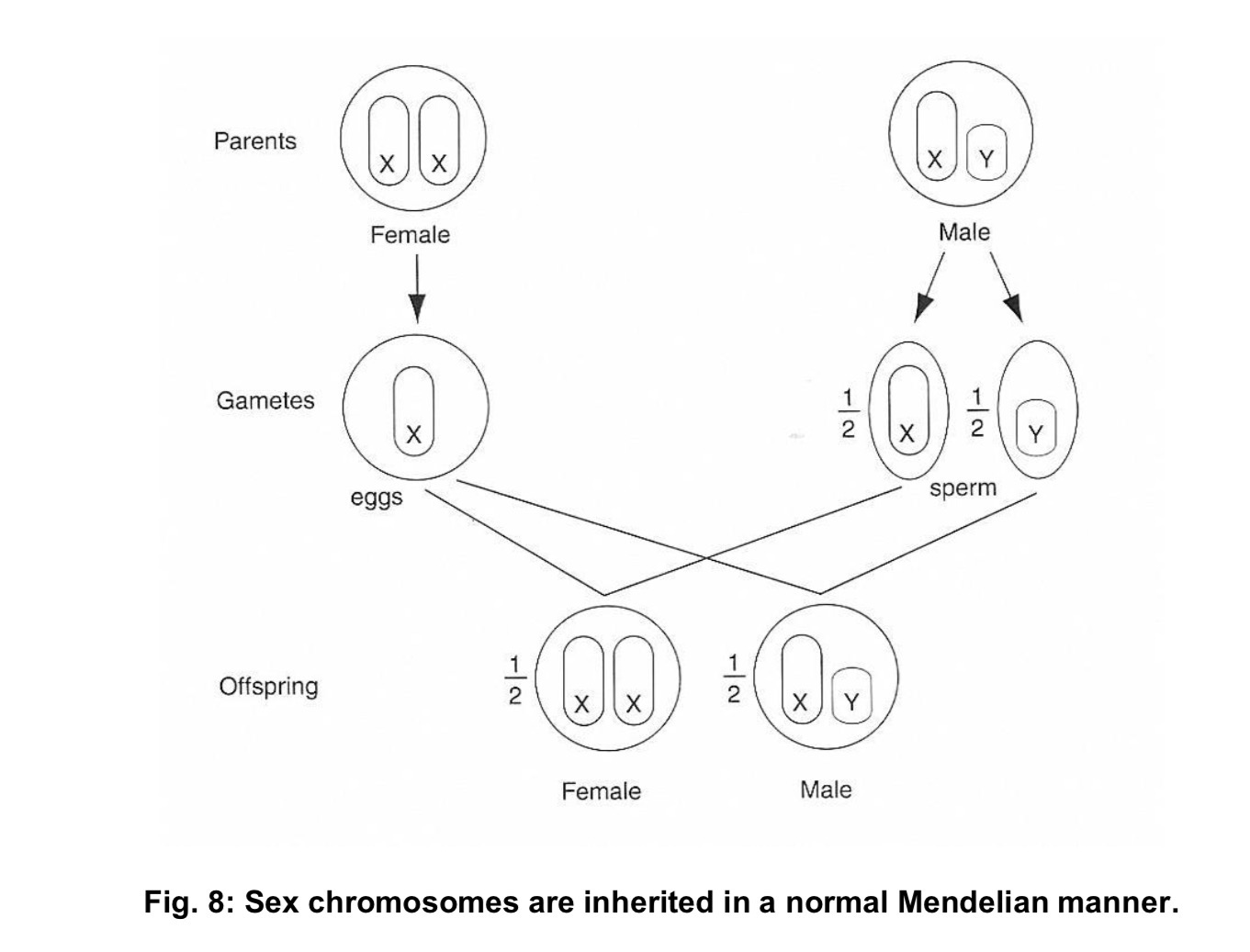
Why are females described as homogametic?
The female produces one type of gamete (all egg cells carry an X chromosome)
Why are males described as heterogametic?
The male produces two types of gametes
half sperm cell carry an X chromosome while the other half carries a Y chromosome
Sex-linkage
the carrying of genes on the sex chromosome
X-linked genes or sex-linked genes
genes located on the sex chromosome, mainly the X chromosome
Why does sex-linked inheritance mainly affect males
Males are hemizygous as they have possess only a single X chromosome and hence have only one sex-linked gene locus (instead of 2 as seen in females)
whatever allele present on X chromosome of males ,regardless of whether it is dominant or recessive, will be directly expressed in the phenotype (recessive allele will be expressed due to no absence of a dominant allele to mask it)
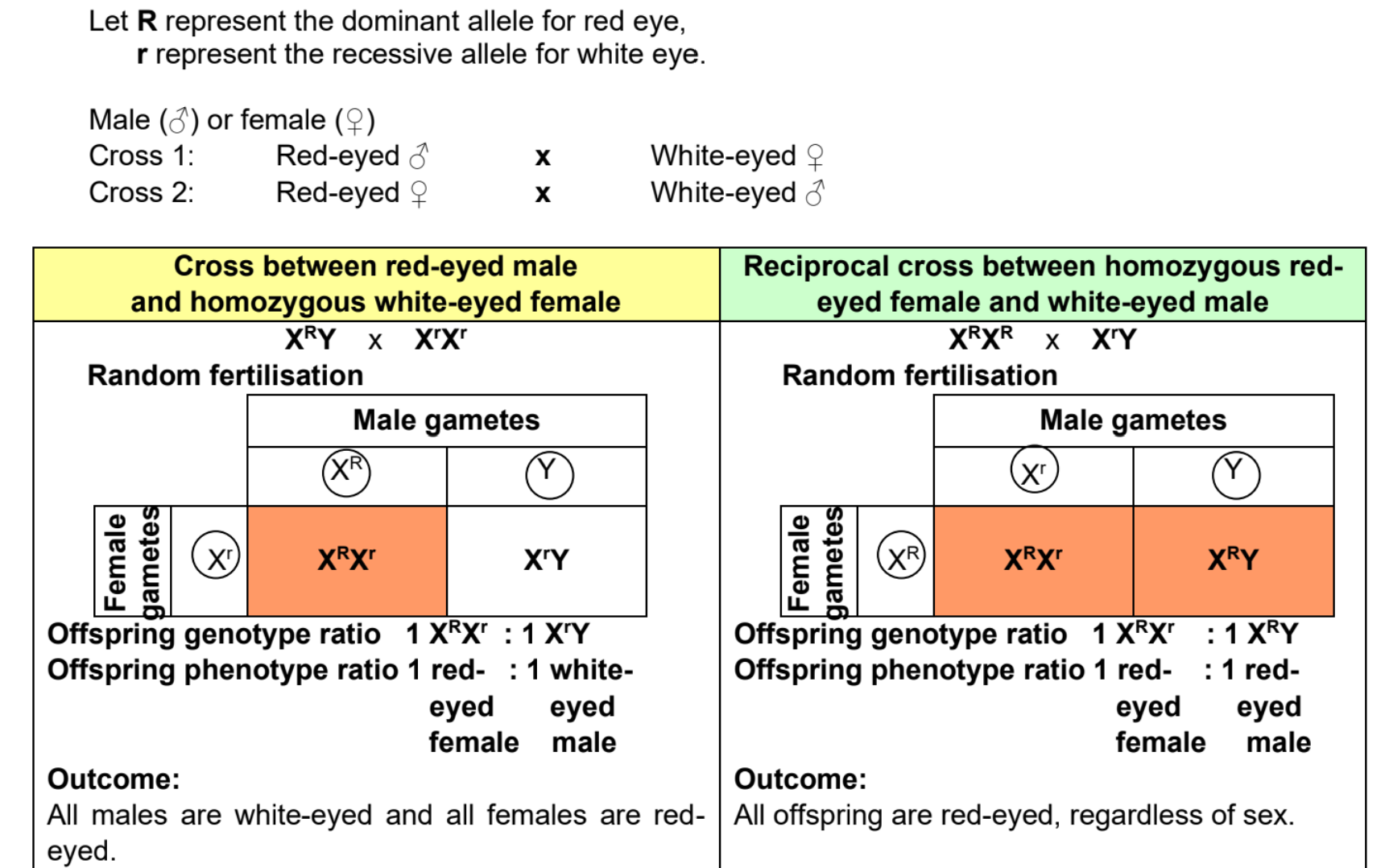
What is a reciprocal cross? what is the purpose and expected positive result?
What: pair of crosses in which the traits of the two parents are reversed
Purpose: A reciprocal cross can be conducted to discern if a trait is carried on a sex chromosome(X chromosome) or an autosomal chromosome
Positive result: yield non-identical results in contrast to reciprocal crosses involving autosomal traits which yield identical results
characteristics of x-linked recessive inheritance
most affected individuals are male
affected mothers produce affected sons with 100% chance
affected females are the result of mating between affected fathers and affected/carrier mothers
characteristics of x-linked dominant inheritance
affected mother will produce affected sons with only 50% chance
affected females are the offspring of affected mothers or father
All daughters but none of the sons are affected, assuming mother is normal
Characteristics of dominant inheritance
unaffected parents does not have affected children
trait does not skip generations (affected individuals will always give rise to affected offspring)
Characteristics of recessive inheritance
both parents are affected, all children are affected
unaffected parents can produce affected individuals
trait often skips generations
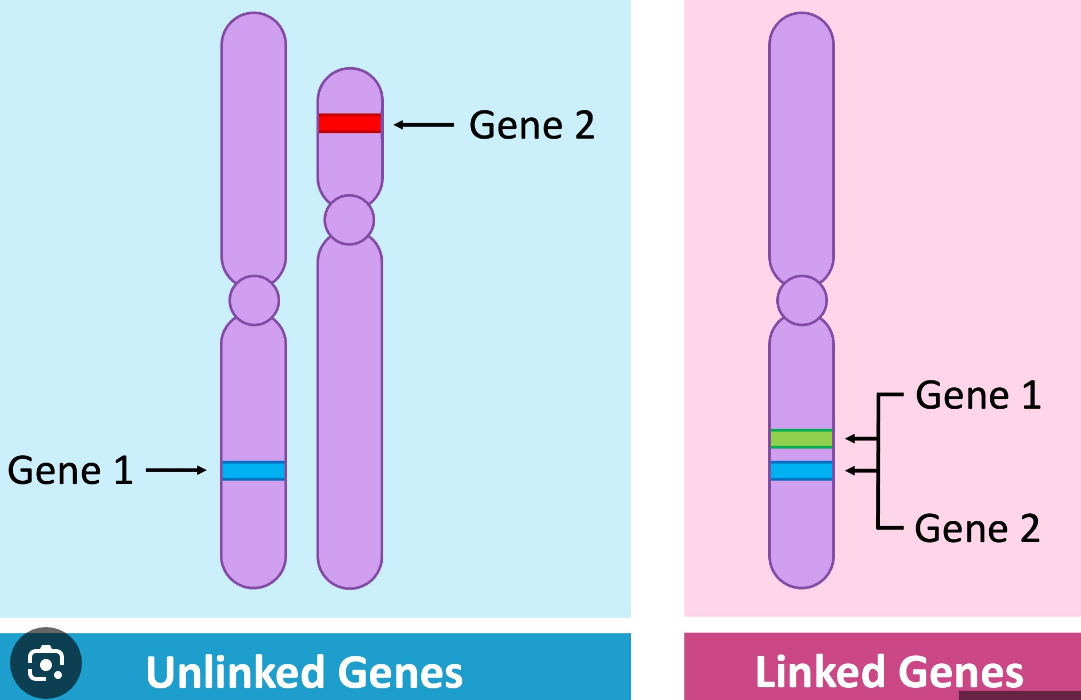
Linked genes
genes that control different characters and situated on the same chromosome at different loci (transmitted as a single unit during segregation of homologous chromosomes)
fail to produce the expected 9:3:3:1 or 1:1:1:1 ratio in independent assortment in dihybrid inheritace
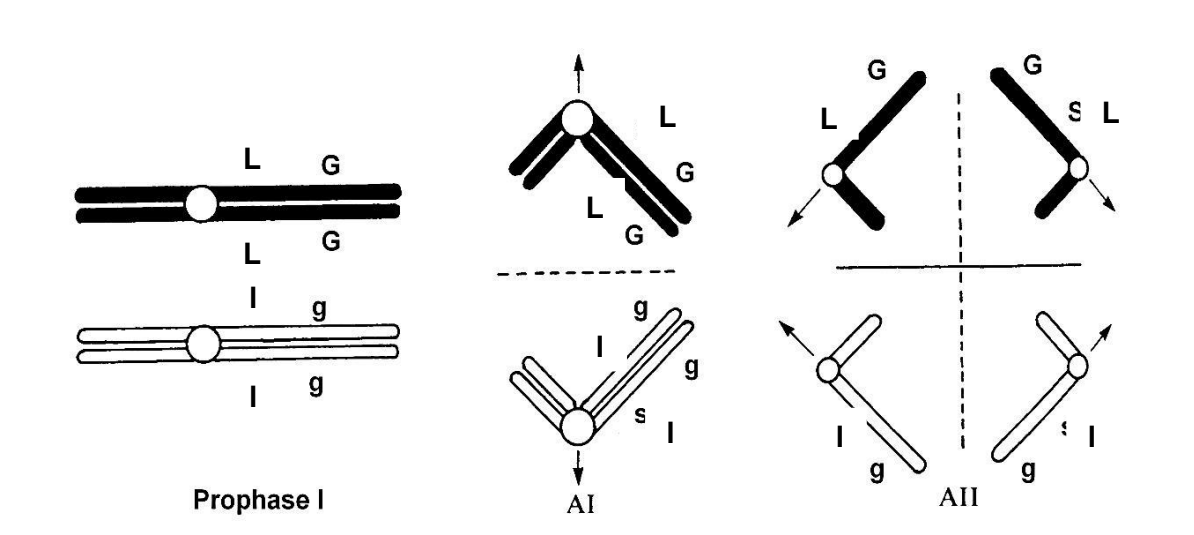
What does complete linkage mean for the resulting phenotype?
no crossing over occurs betwen linked genes and they are transmitted as a unit during anaphase 1
all linked genes will pass into the same gamete, resulting in only parental gametes
will show a monohybrid offspring phenotypic ratio (3:1 or 1:1 which deviates from expected Mendelian ratios 9:3:3:1 or 1:1:1:1)
results in a parental phenotypes and no recombinant phenotype produced
Why does complete linkage occur?
two pairs of genes must be located very close together on the same chromosome and are closely linked together
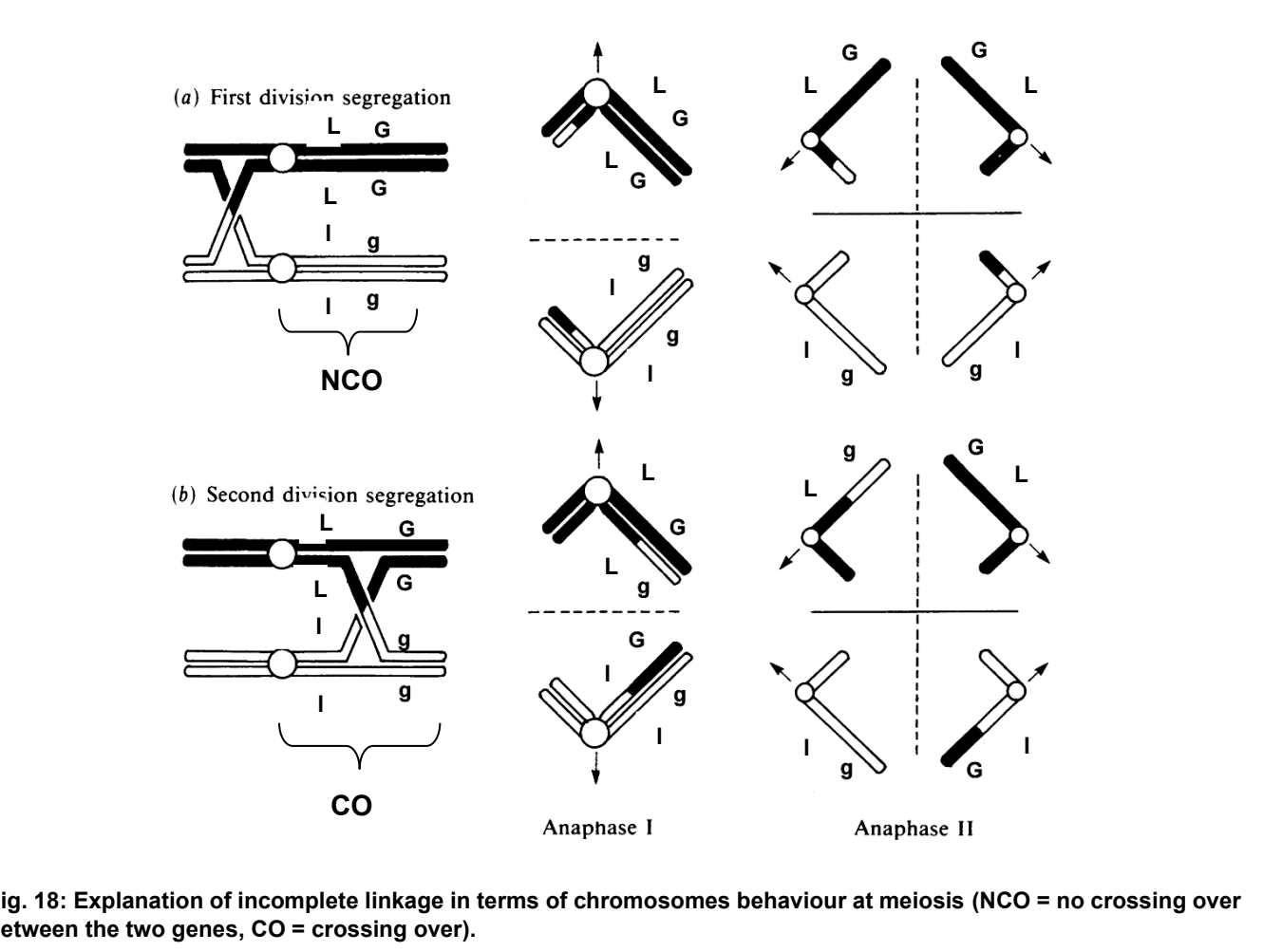
What does incomplete linkage mean for the resulting phenotype?
crossing over occurs between the linked genes in some cells, forming recombinant chromatids in
leading to a new combination of alleles in the gametes
and hence new combinations of alleles in offspring, called recombinants
offpsring show a majority of parental allele combinations and hence parental phenotypes, and a minority of recombinant allele combinations and hence recombinant phenotypes (deviates from expected Mendelian ratios 9:3:3:1 or 1:1:1:1)
Why does incomplete linkage occur?
as distance between linked genes on the same chromosome increases
the probability of crossing over happening between the linked genes increases
How should we detect if gene are unlinked, completely linked or incompletely linked?
Do a test cross between a double heterozygous and double homozygous recessive
unlinked(diff chromosomes): phenotypic ratio of 1:1:1:1 (4 phenotypes)
completely linked: phenotypic ratio of 1:1 (2 parental phenotypes)
incompletely linked: no fixed ratio but larger percentage of parental phenotype and smaller percentage of recombinant phenotype (2 parental phenotypes + 2 recombinant)
Coupling arrangement of linked genes
two dominant allels are on one chromosome and the two recessive are on the homologous partner
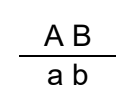
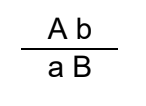
Replusion arrangement of linked genes
dominant allele is linked to a recessive allele on one chromosome
What does the Crossover Value (COV) or Recombinant Frequency (RF) represent?
the value can be used to represent the relative distance between genes in arbitrary units.
This is because the chances of crossing over between the linked genes are proportional to the distance between them.
How to calculate the Crossover Value (COV) or Recombinant Frequency (RF)?
note: By convention, a COV of 1% represents a relative distance of 1 centimorgan(cM).

What are the effects of the genotype on the phenotype?
gene mutation: change in nucleotide sequence of DNA results in formation of a new allele
Chromosome mutation: change in structure of chromosome or no. of chromosomes
Meiosis: crossing over of non-sister chromatids during phrophase 1 and independent assortment of homologous chromosomes during metaphase 1(independently align along the equator) —> genetic variation with new cominations of existing alleles
Sexual reproduction: random fusion of gametes —> genetic variation with new cominations of existing alleles
What are the effects of envrionment on phenotype?
Effect of diet on animals (eg queen bee larvae feed on royal jelly)
Effect of elevation on plants (eg yarrow plants grow tall at lowest and highest elevation)
Effect of soil acidity on plants (eg hydrangea flowers are blue in acidic soils and pink in pH 6.5 or higher)
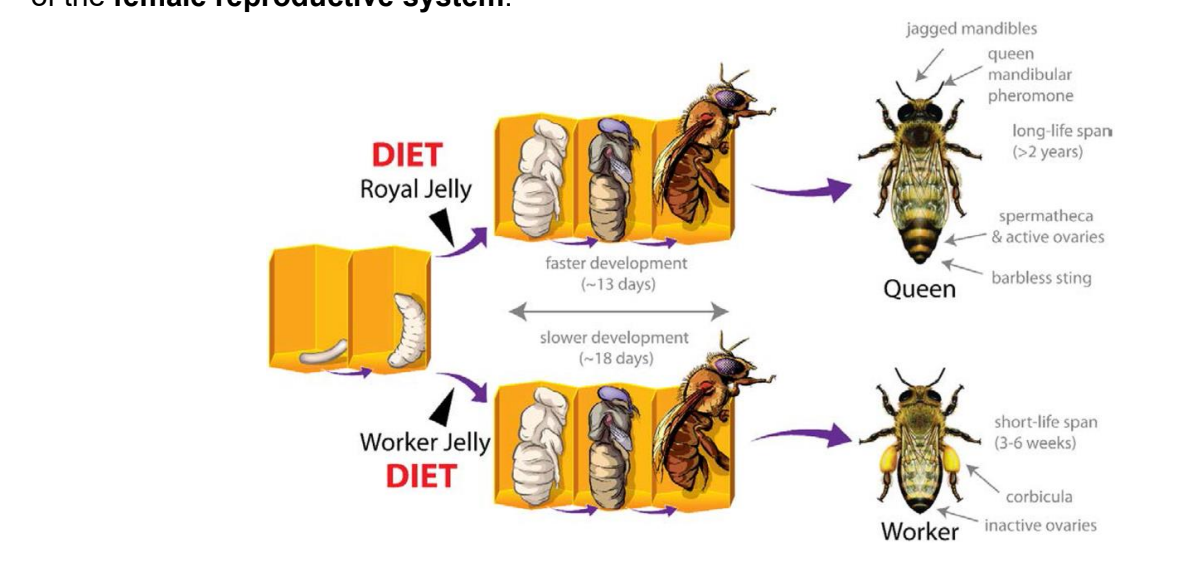
Effect of diet on bees
all larvae are initiallly fed with royal jelly
worker bees are switched to a diet containing honey and pollen
larvae destined to be the queen bees are fed with royal jelly containing high content of protein which stimulates the formation and maturation of the female reproductive system