Lab 1 + lecture 3 combined - The Human Brain and Cranial Nerves
 Call Kai
 Learn
Learn Practice Test
 Spaced Repetition
 Match
Match Flashcards
 Knowt Play
1/71

There's no tags or description
Looks like no tags are added yet.
Name | Mastery | Learn | Test | Matching | Spaced | Call with Kai |
|---|
No analytics yet
Send a link to your students to track their progress
72 Terms
Brain protection structures
Cranial bones
meninges
cerebrospinal fluid (CSF)
blood-brain barrier
Dura mater
Outermost meningeal layer; tough; attached to skull; has endosteal and meningeal layers
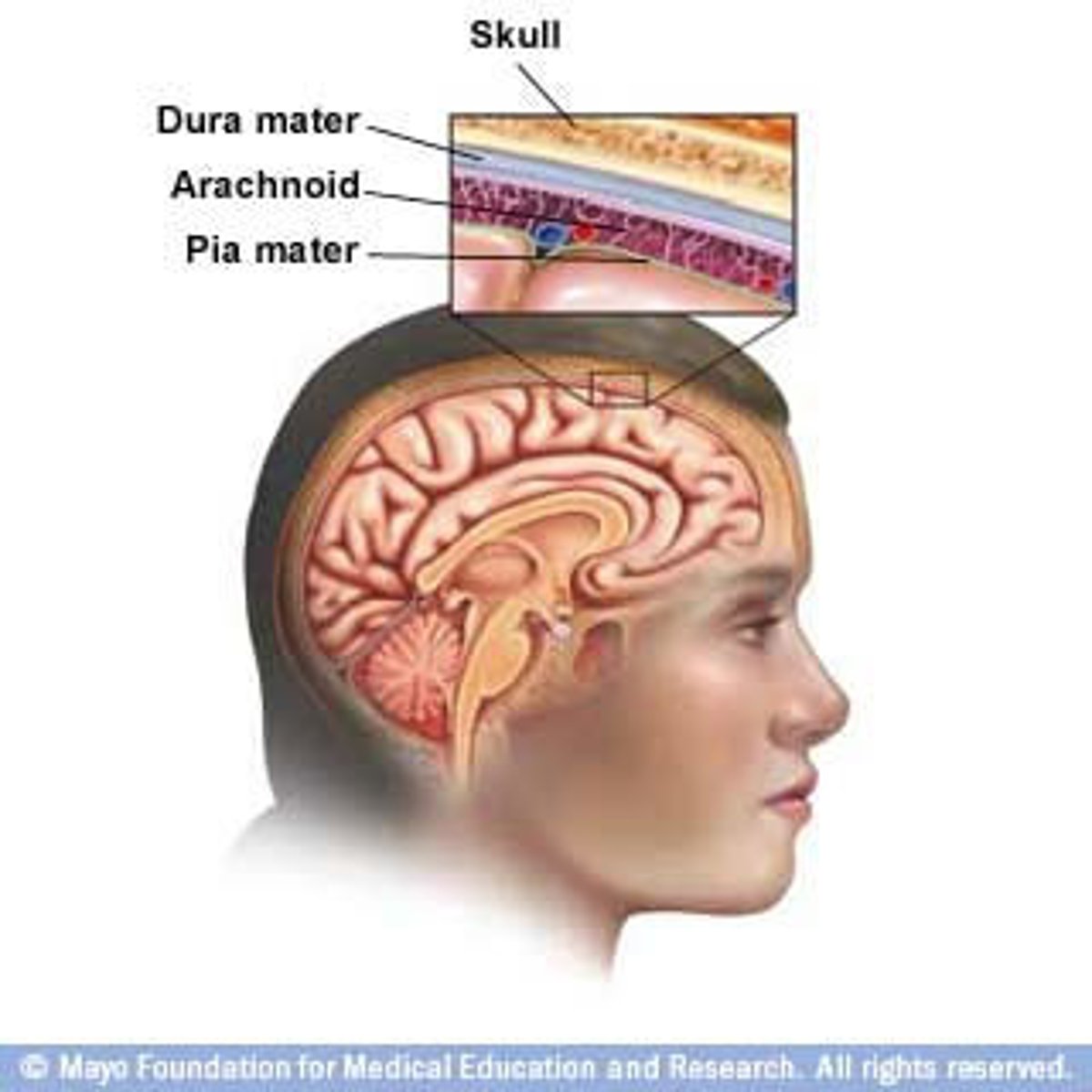
Arachnoid mater
Middle meningeal layer; web-like; contains subarachnoid space filled with CSF
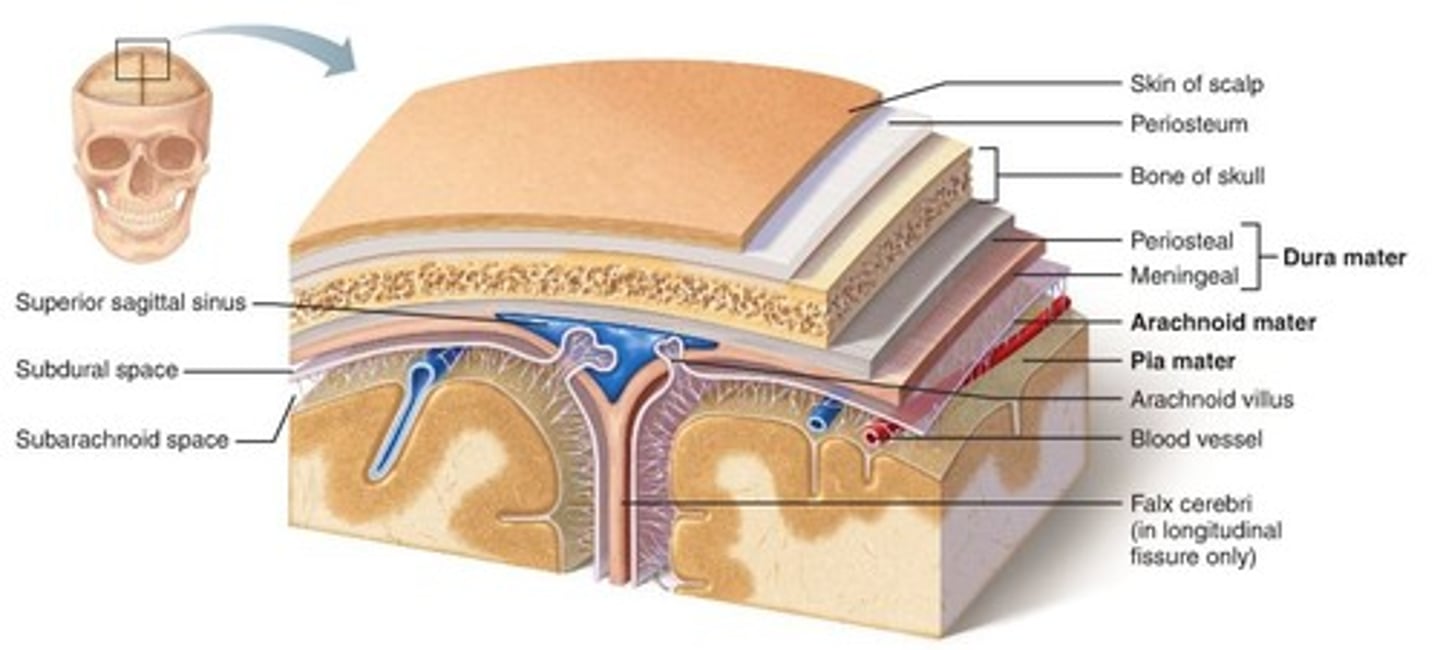
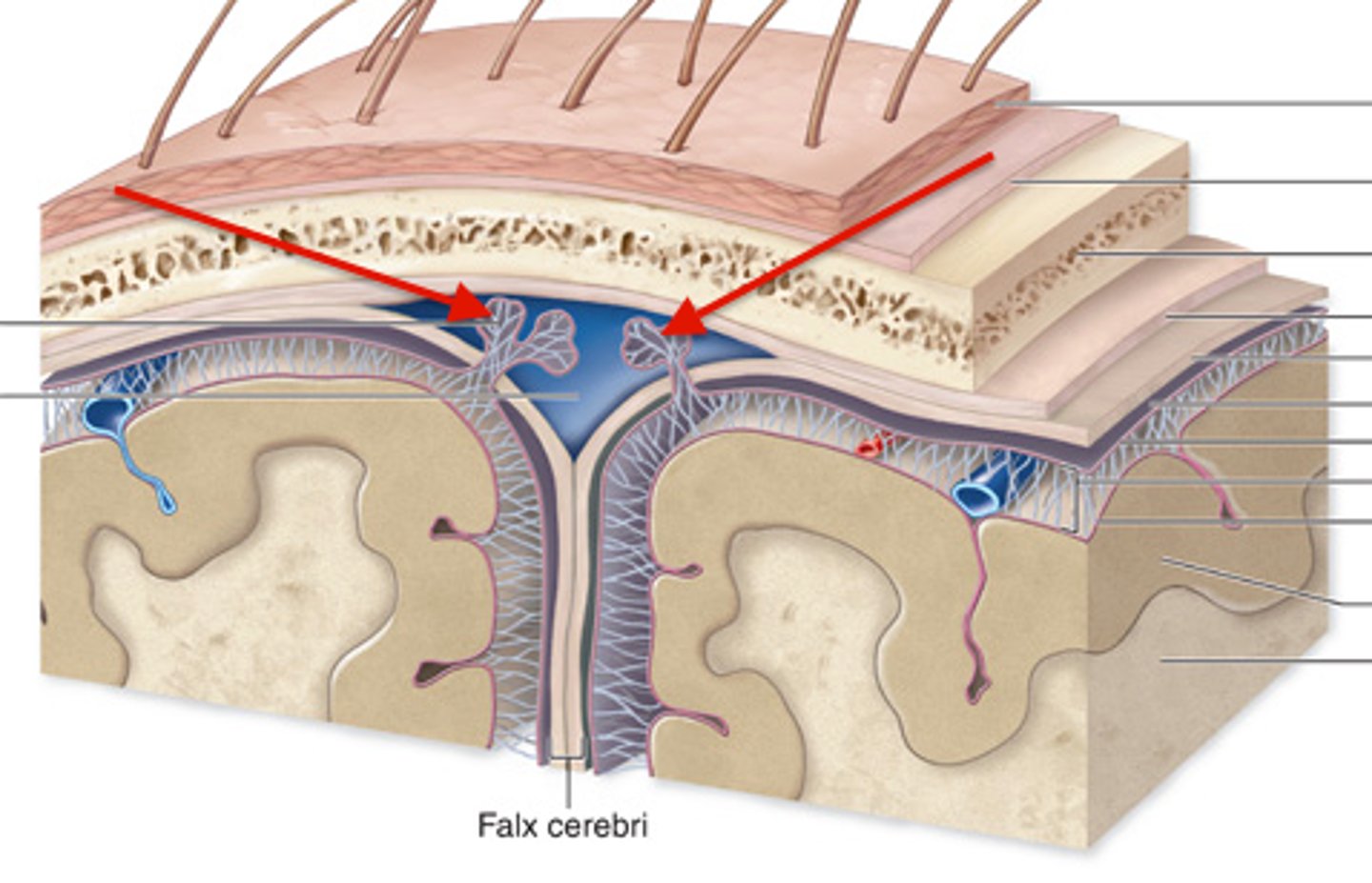
Arachnoid villi
Structures that reabsorb CSF into venous blood (dural sinuses)
Pia mater
Innermost layer; thin; directly covers brain and spinal cord; contains blood vessels
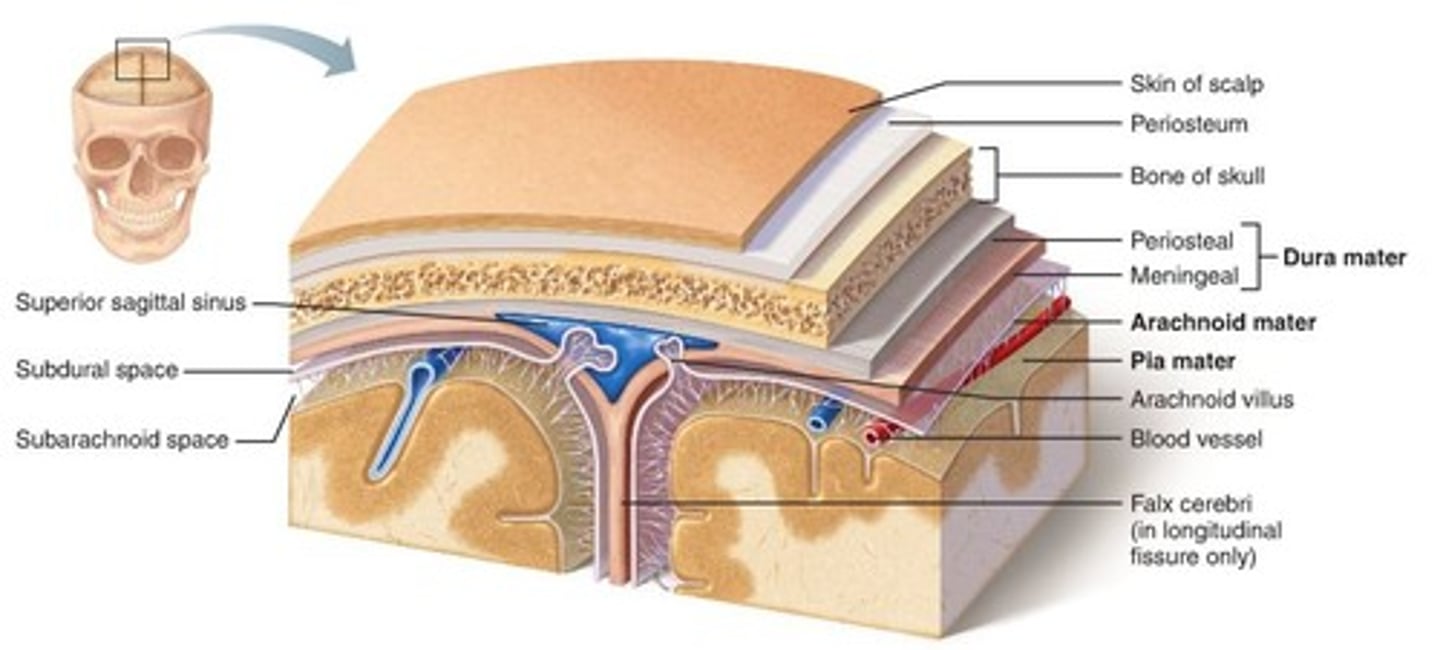
Subdural space
Space between dura mater and arachnoid mater
Subarachnoid space
Space between arachnoid and pia mater; contains CSF
Cerebrospinal fluid (CSF)
Fluid that cushions brain; provides nourishment; maintains chemical environment
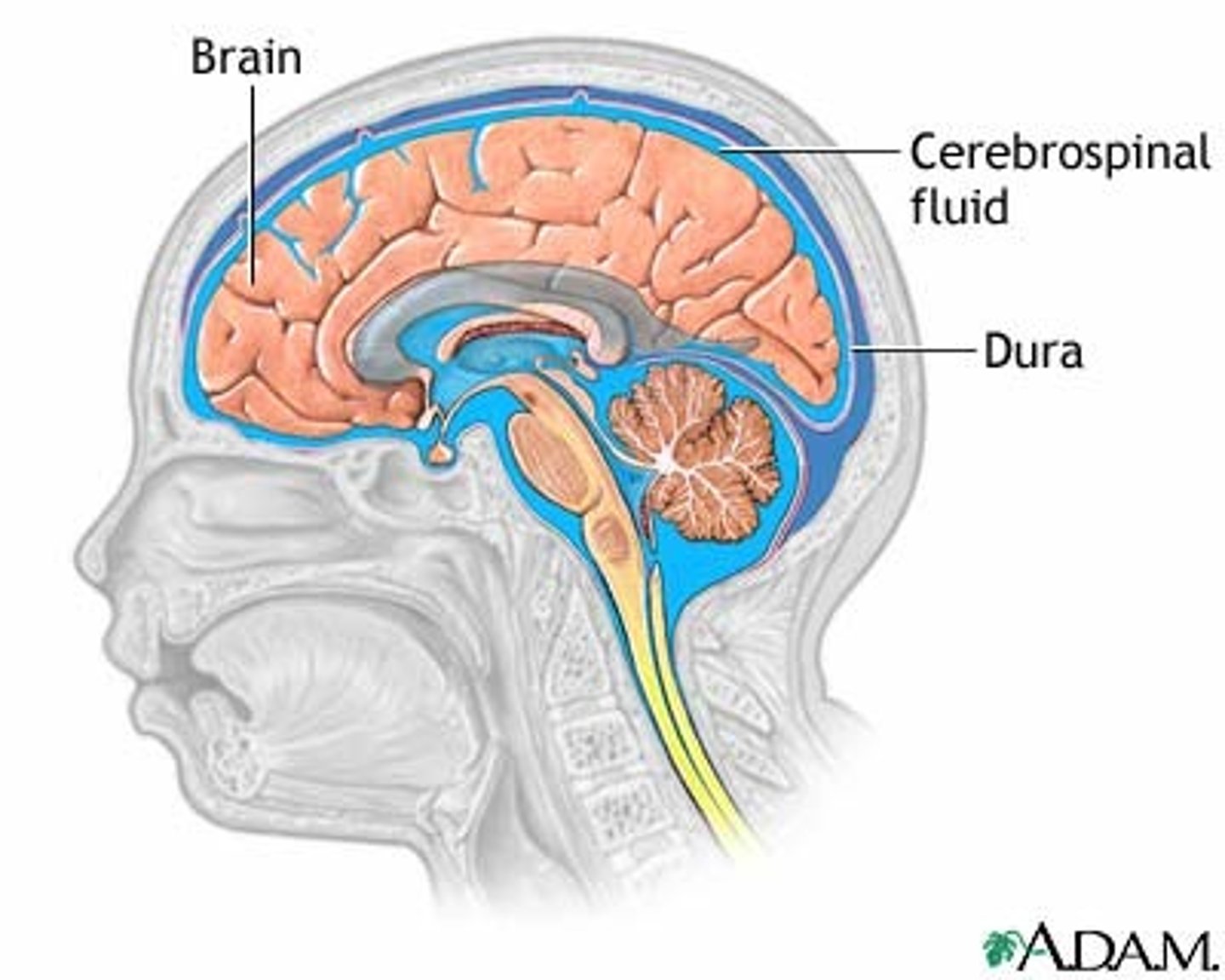
CSF production
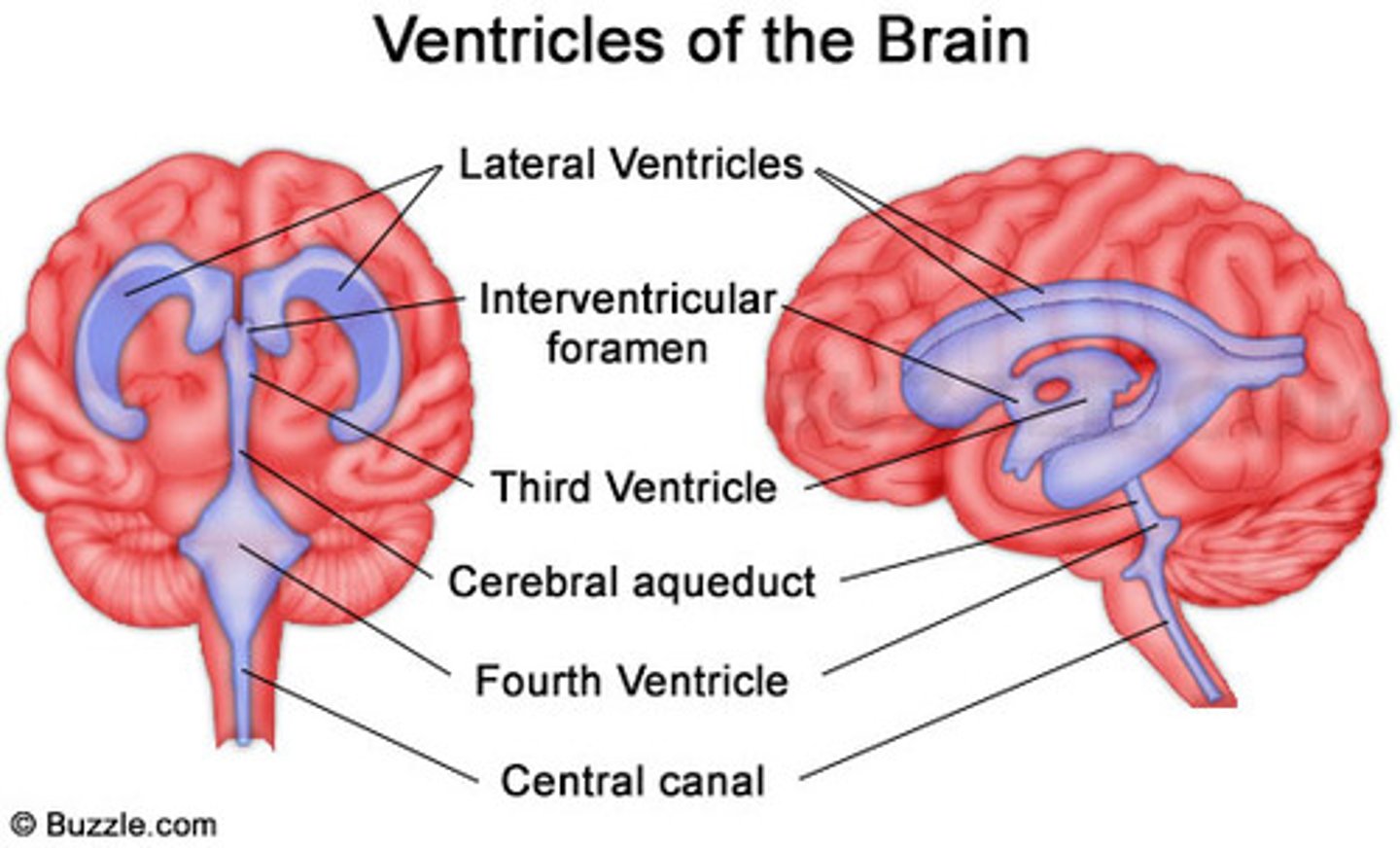
Produced by choroid plexus in brain ventricles
CSF flow pathway
Lateral ventricles → → 3rd ventricle → → 4th ventricle → subarachnoid space → arachnoid villi → venous blood
Ventricles
Four fluid-filled chambers in brain that produce CSF
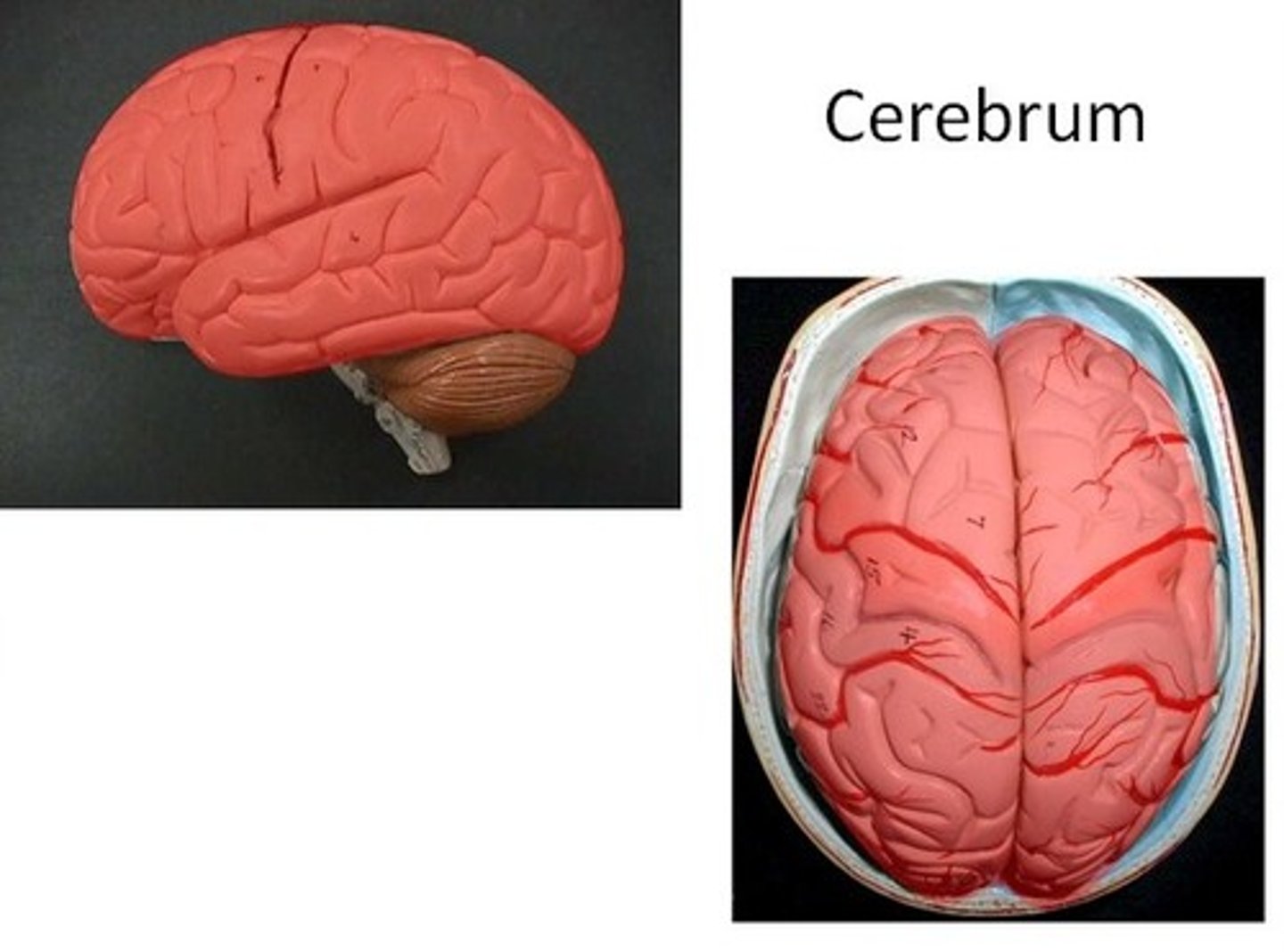
Cerebrum
Largest brain region; responsible for higher thinking memory and voluntary movement
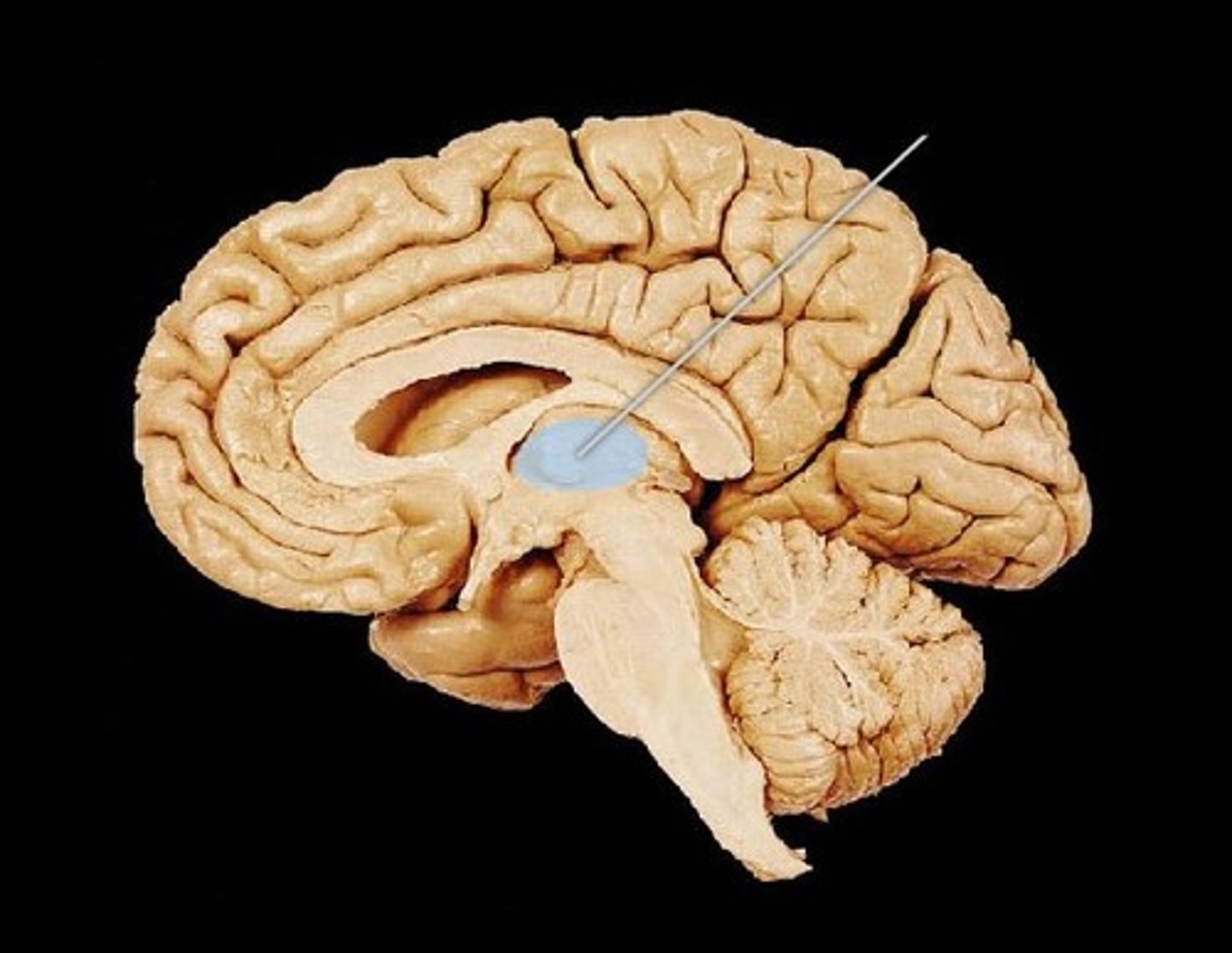
Diencephalon
Includes thalamus and hypothalamus; involved in sensory relay and homeostasis
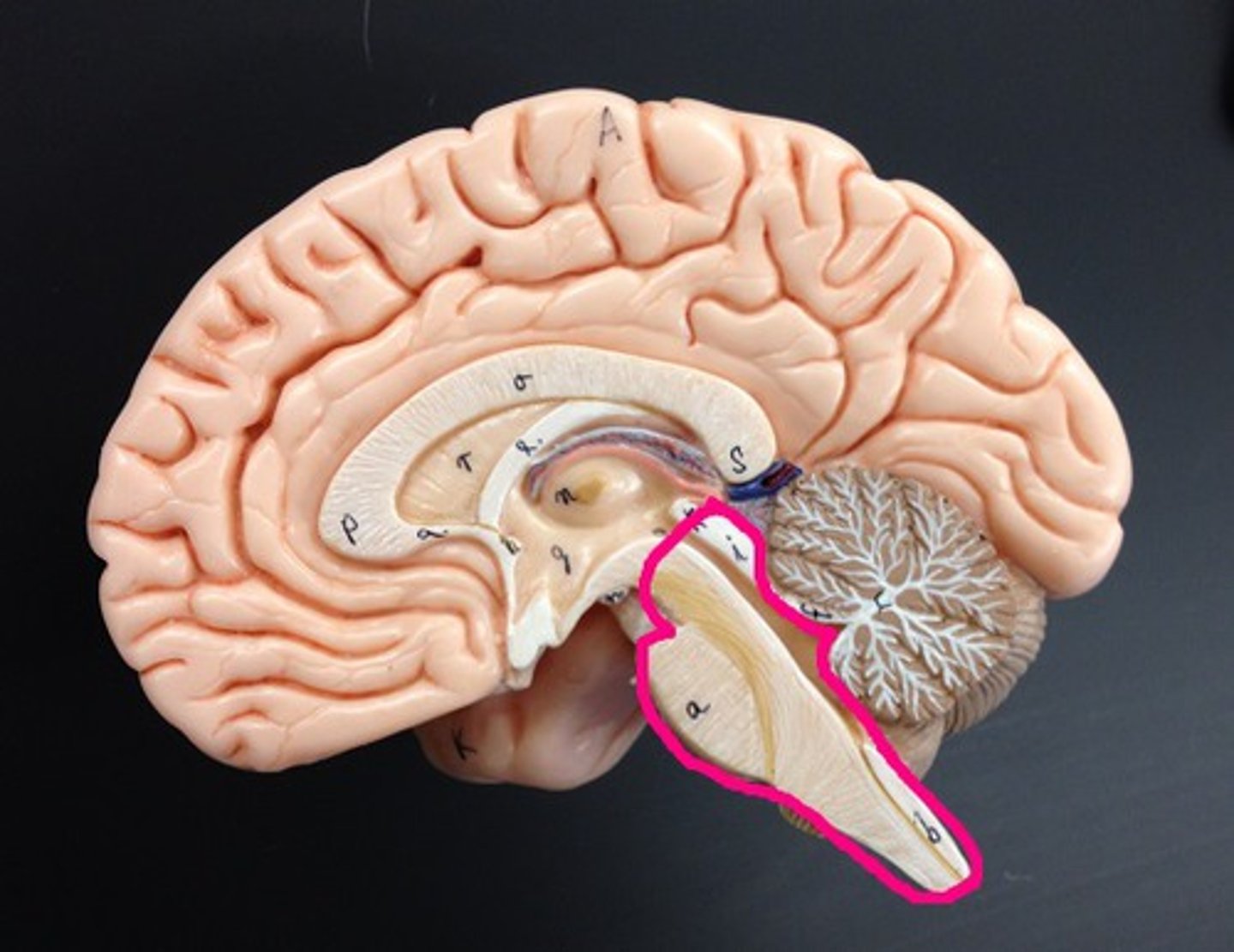
Brainstem
Midbrain pons and medulla; connects brain to spinal cord
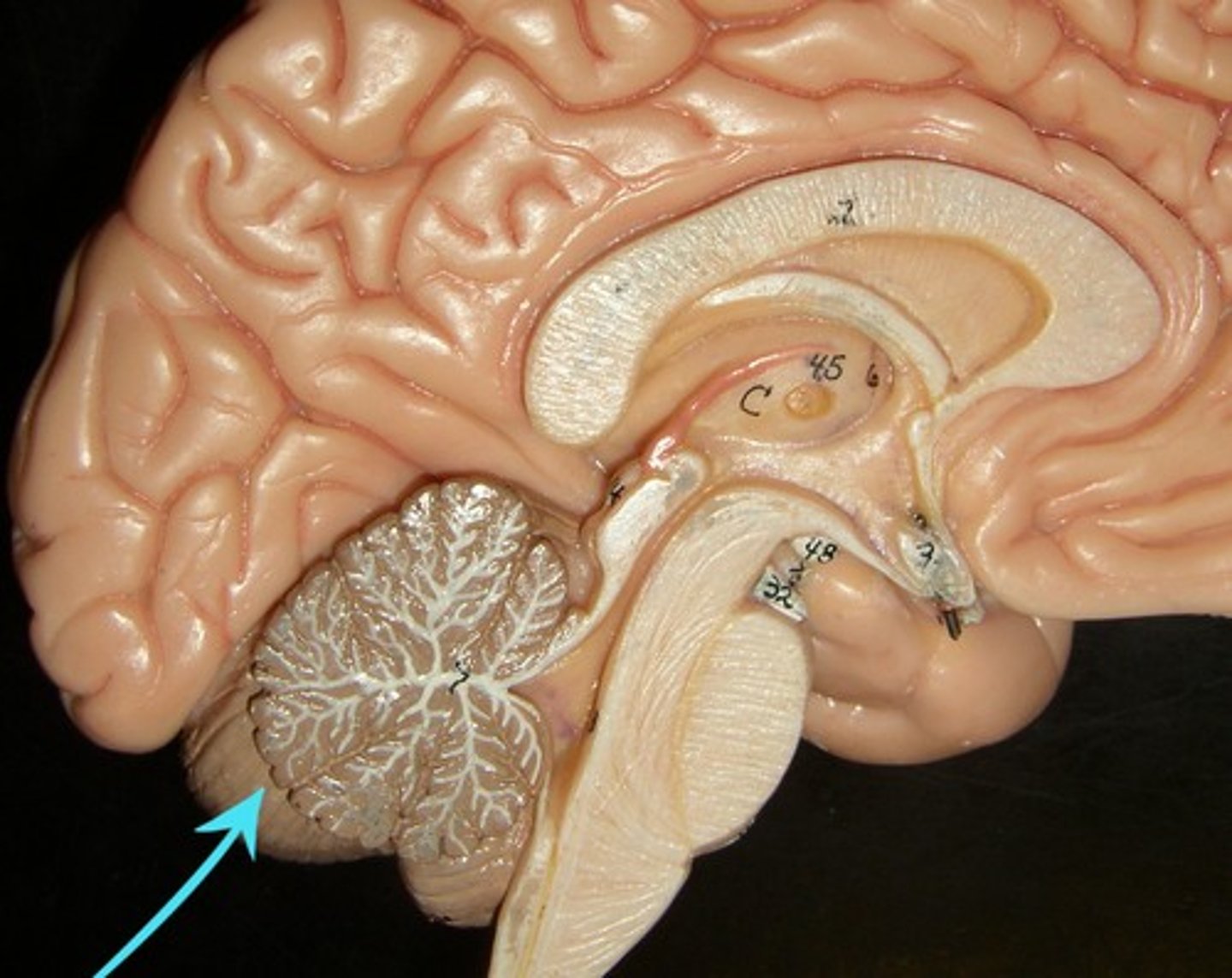
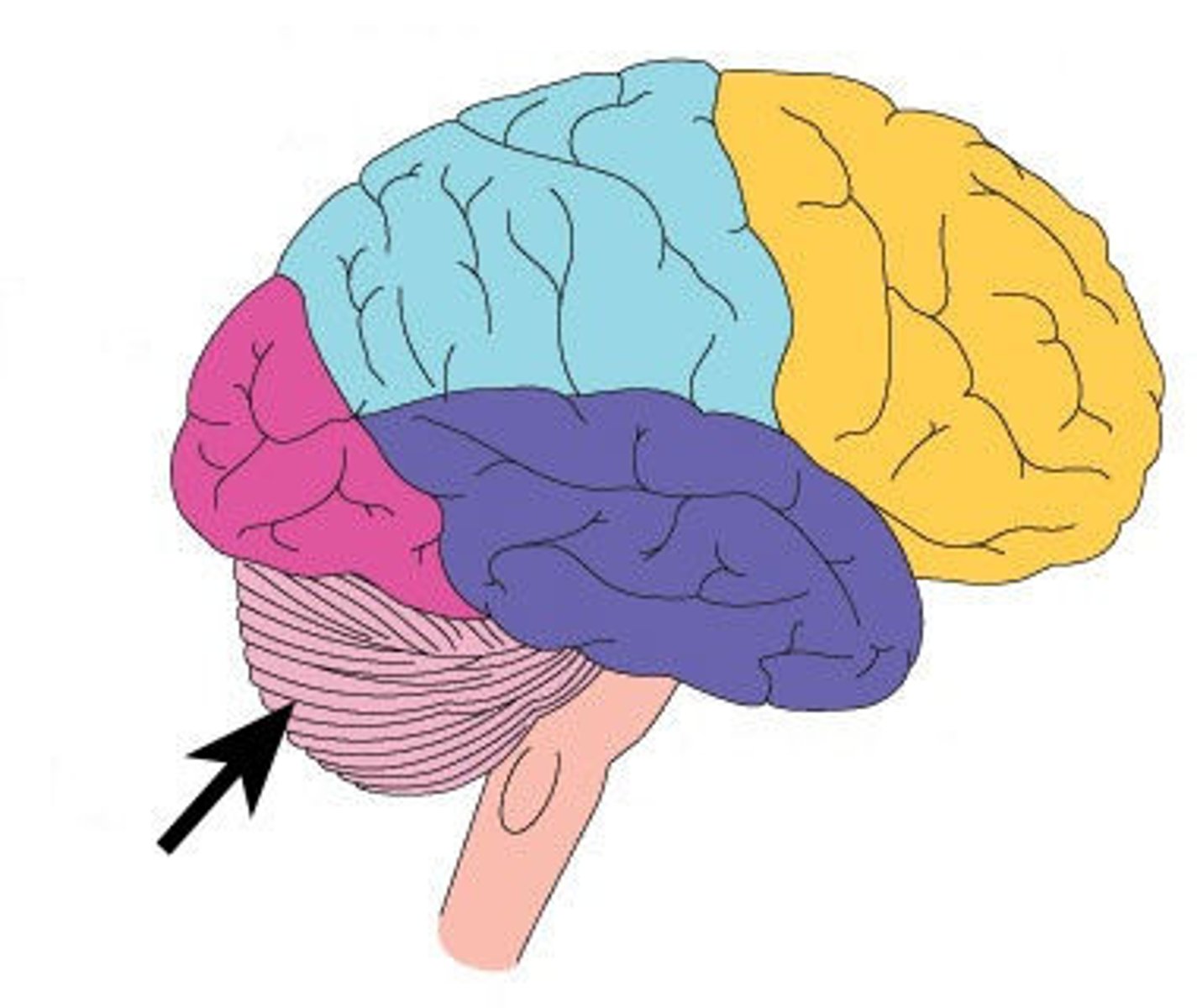
Cerebellum
Coordinates movement of somatic functions: balance and motor learning, ex: playing piano
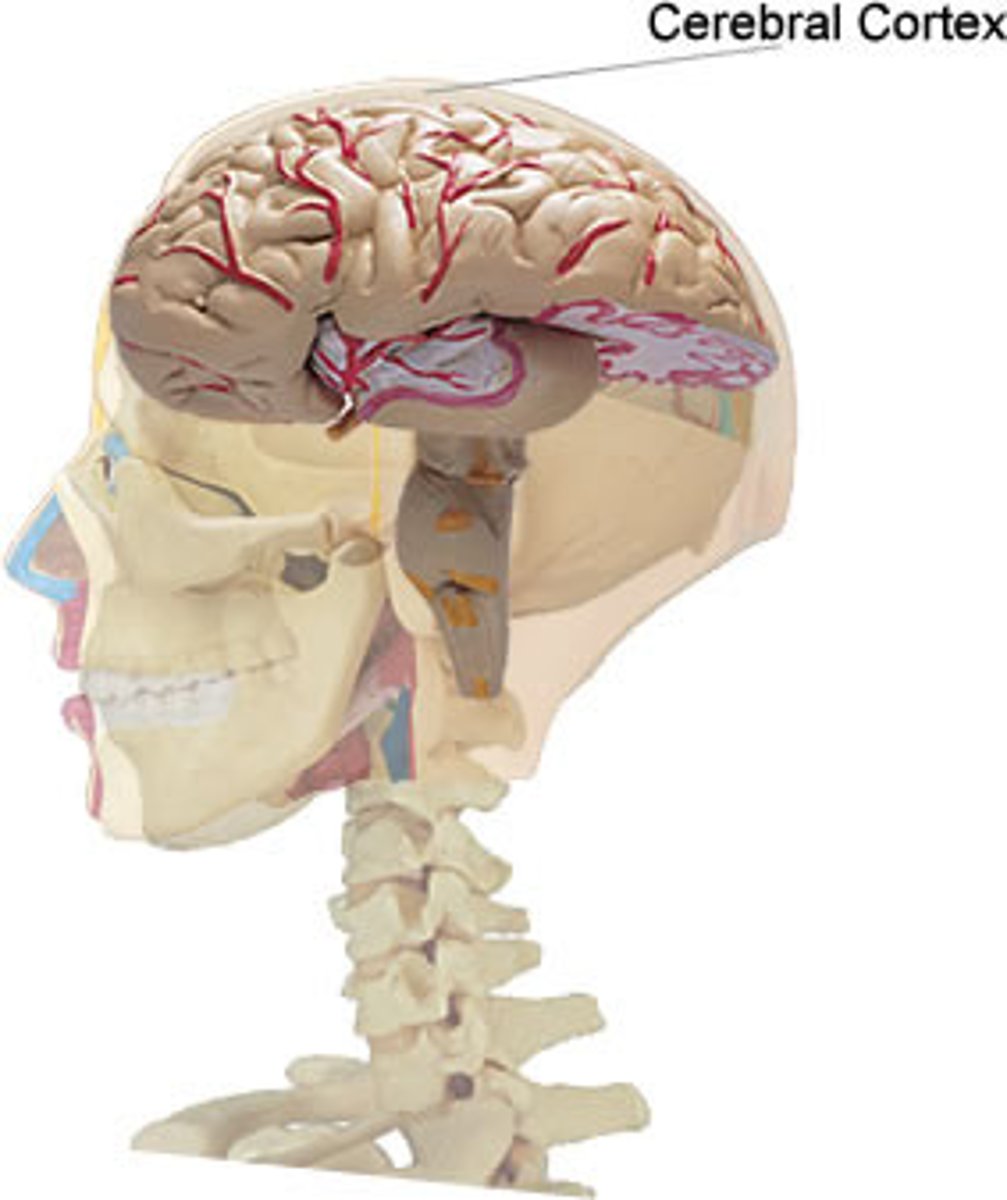
Cerebral cortex
Outer gray matter; 6-7 layers; center for higher intellect
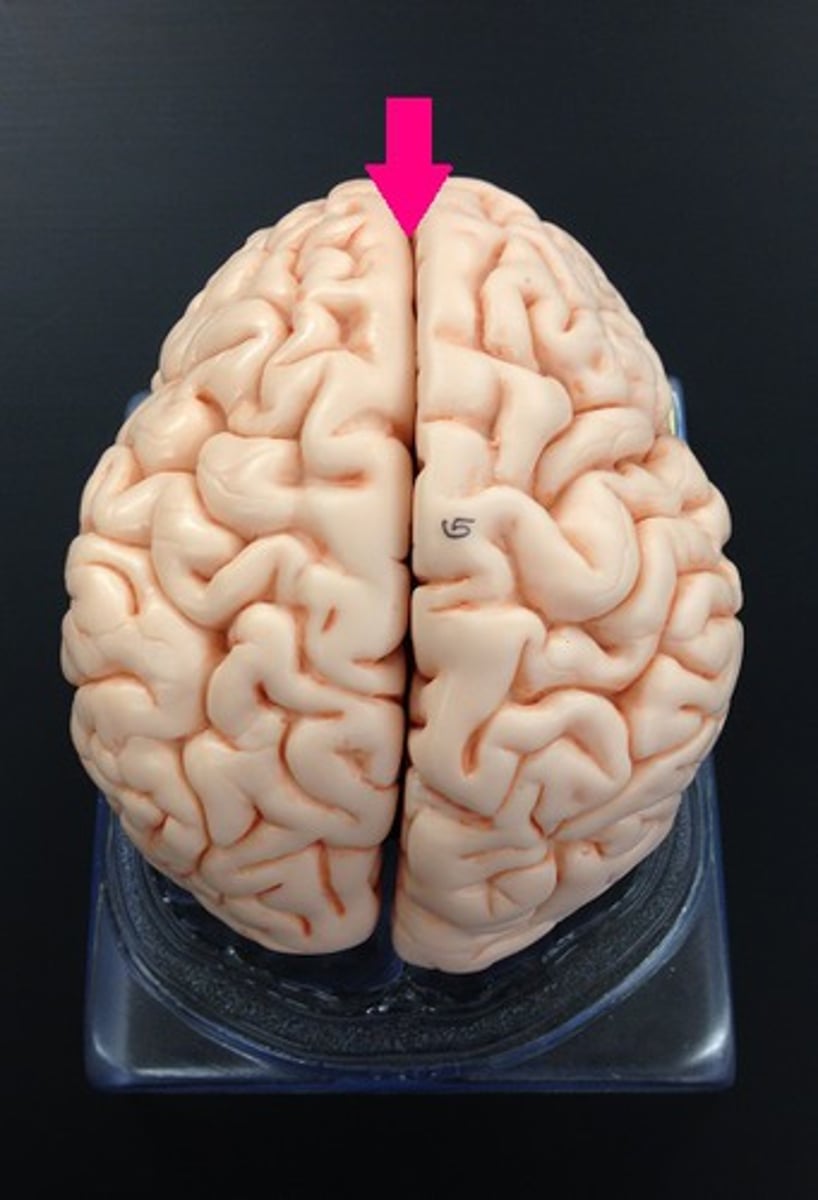
Longitudinal fissure
Separates right and left hemispheres
Gyrus
Raised ridge of brain tissue
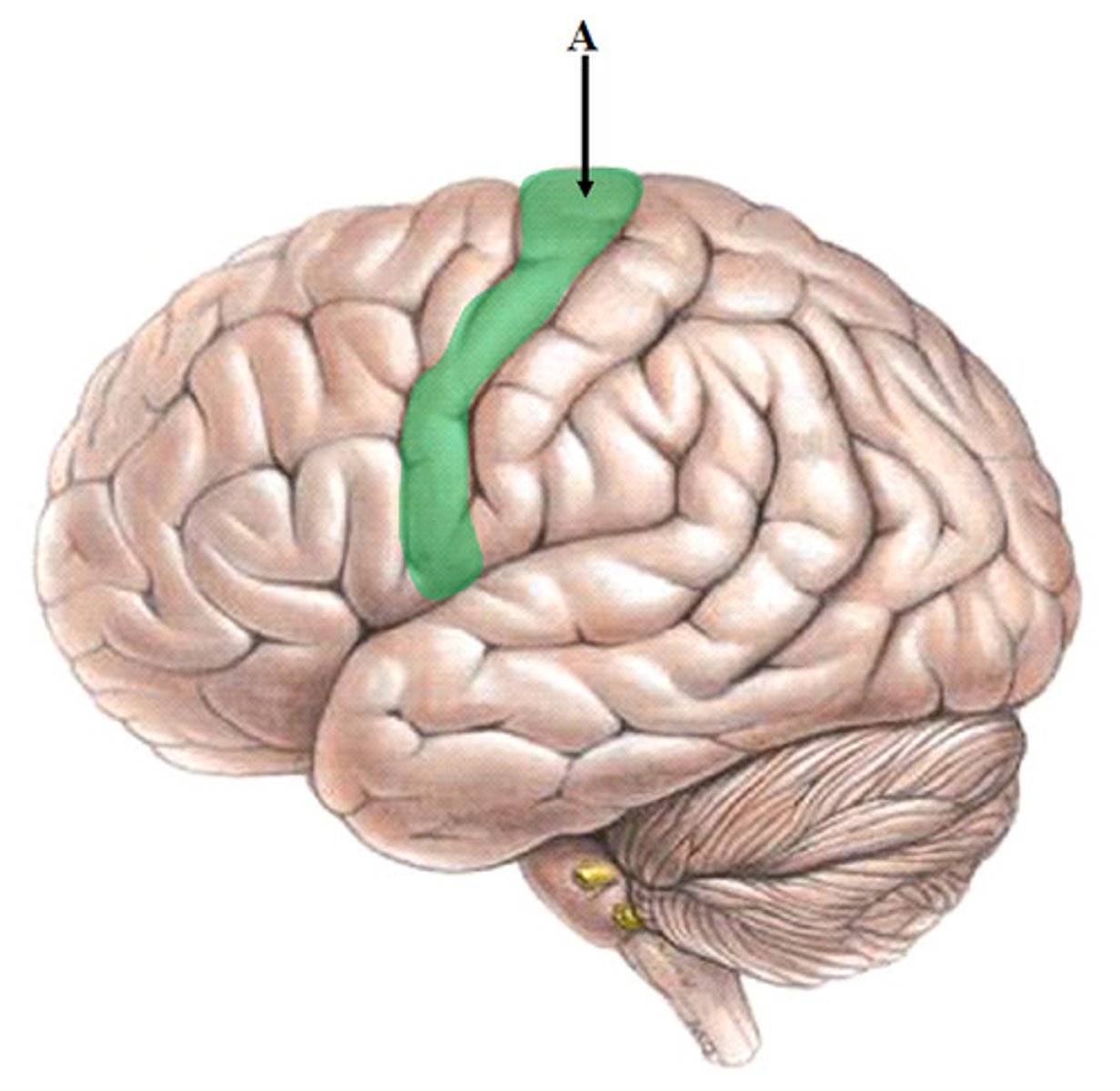
Sulcus
Shallow groove on brain surface
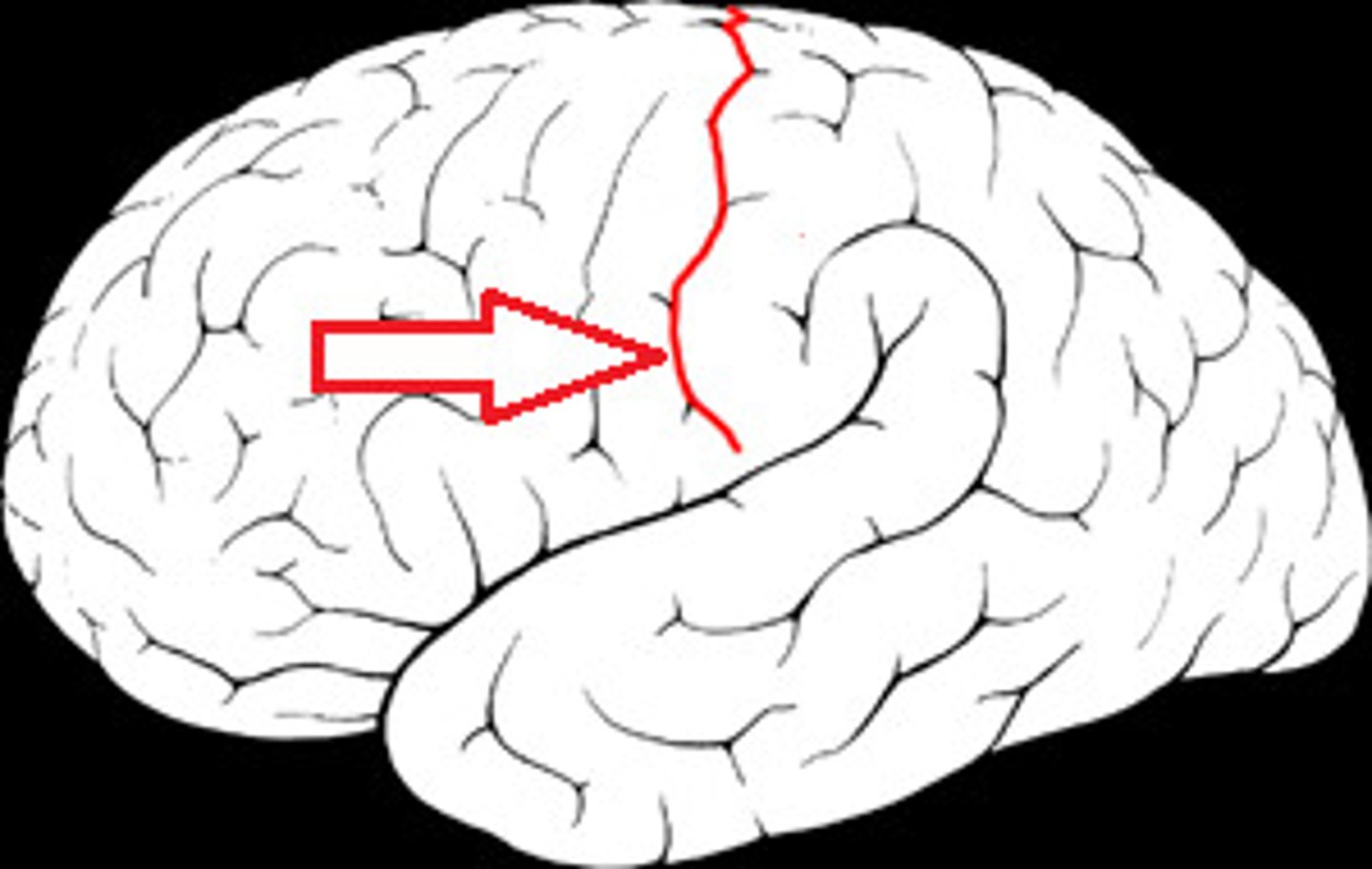
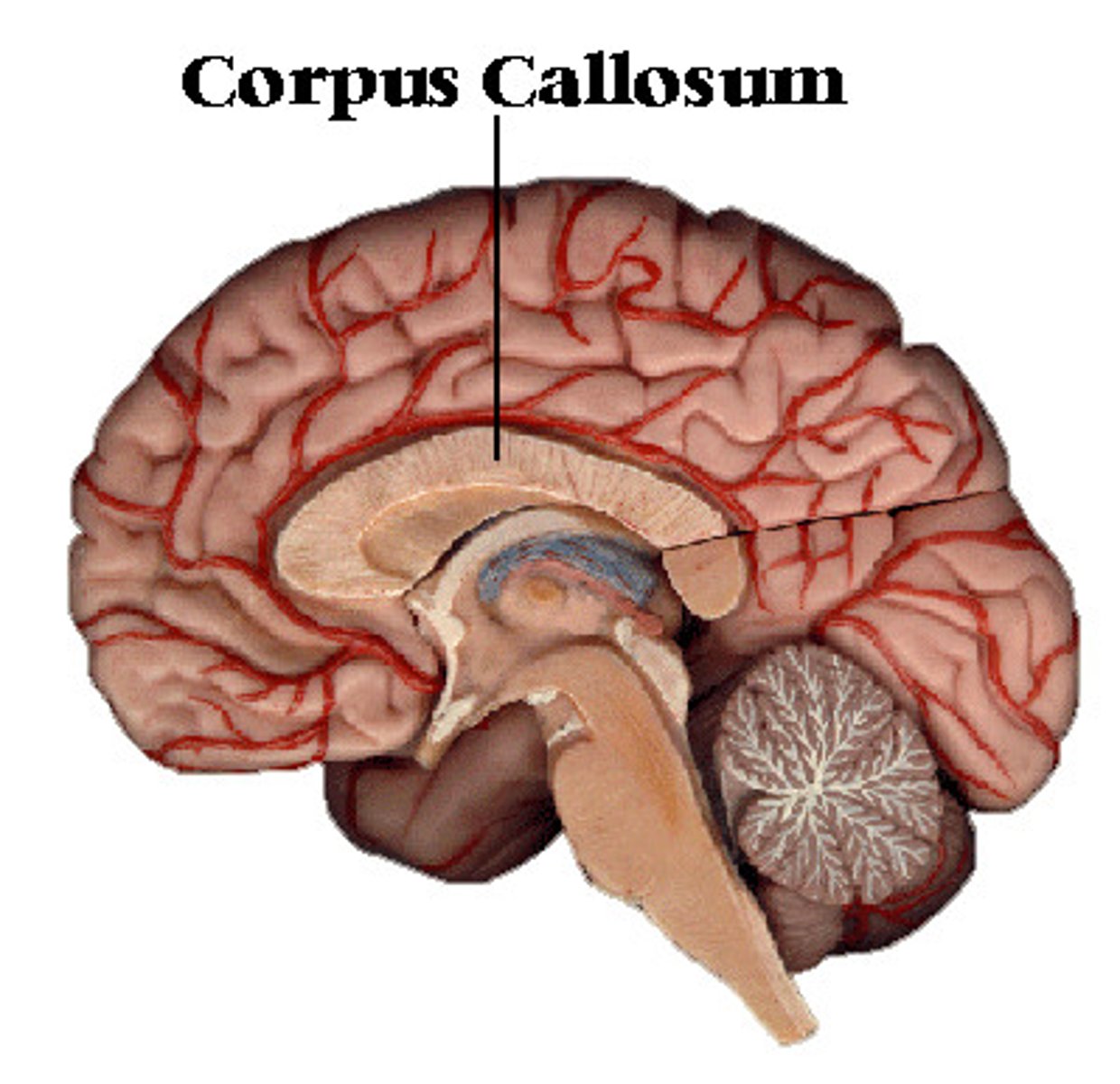
Corpus callosum
White matter tract connecting information between the two hemispheres
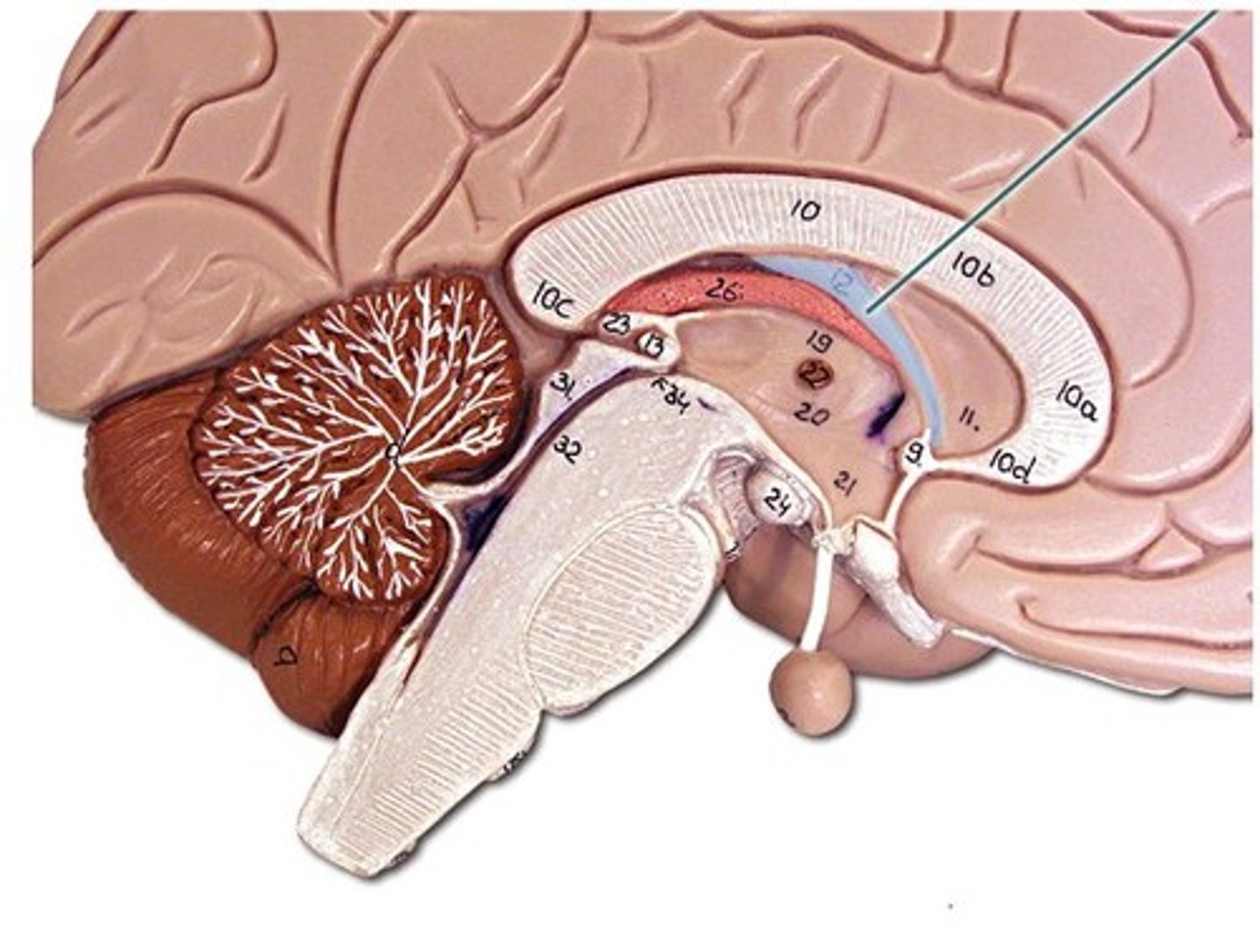
Fornix
Inferior portion of corpus callosum
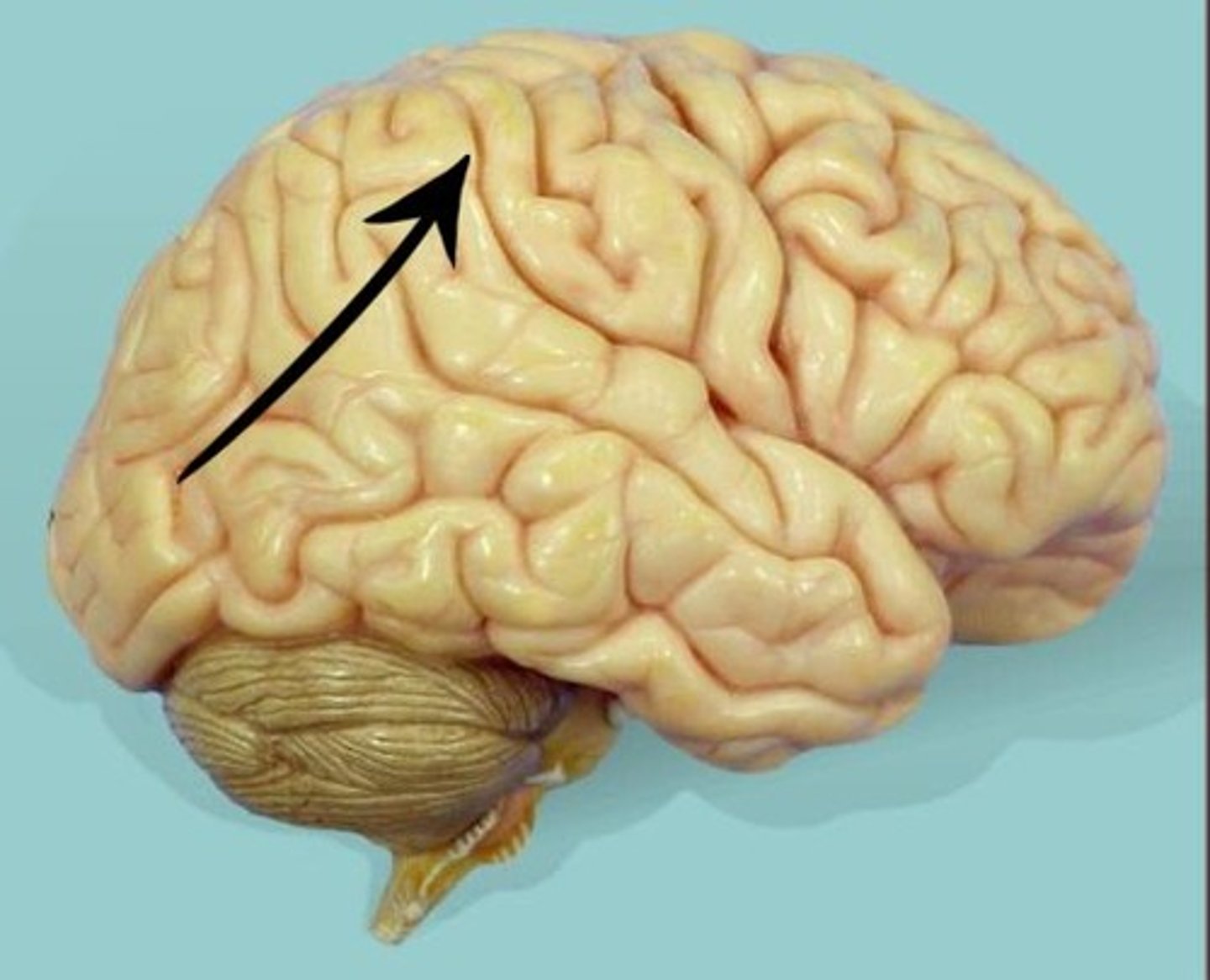
Frontal lobe
Voluntary movement decision-making personality
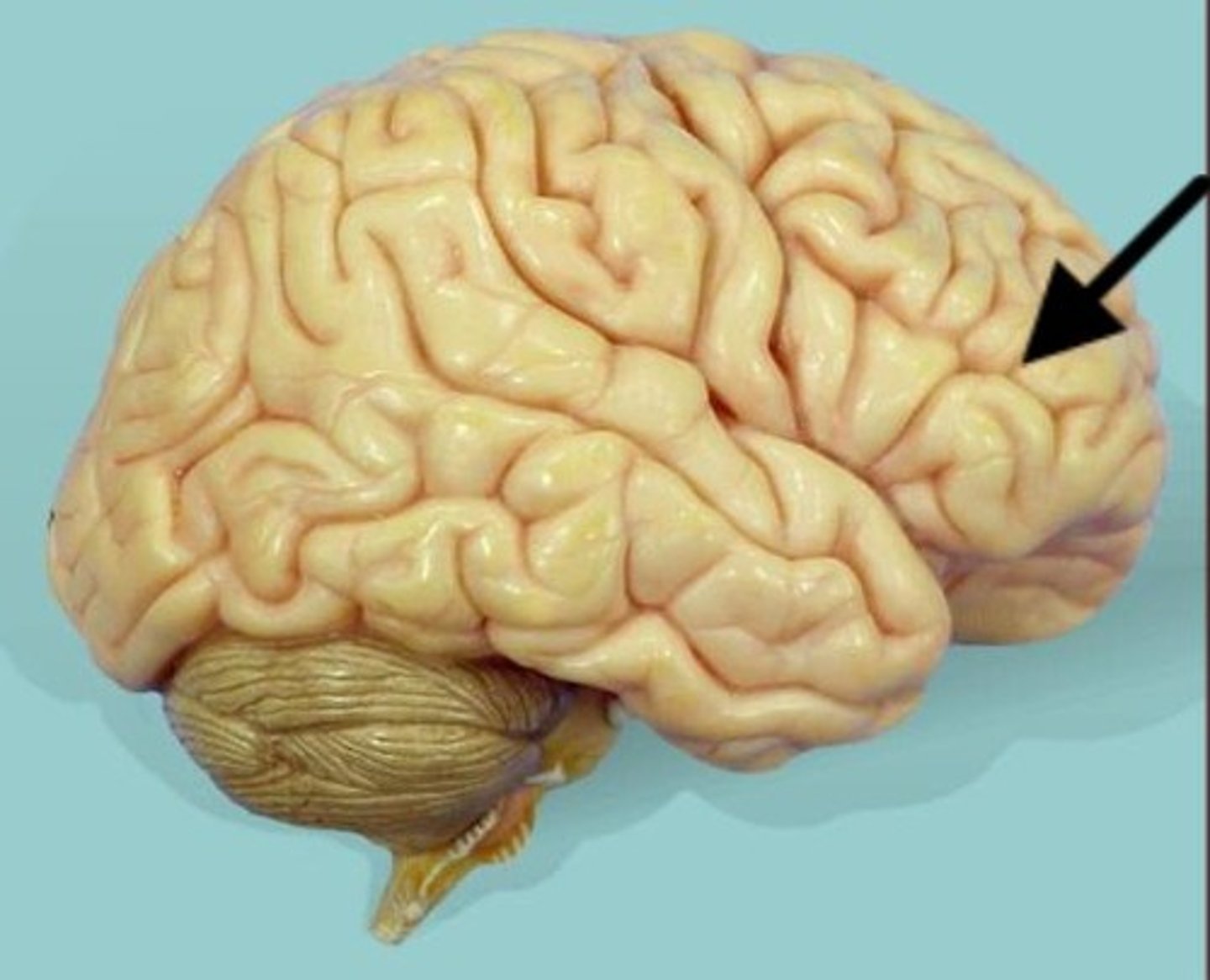
Parietal lobe
Somatosensory processing touch pain temperature
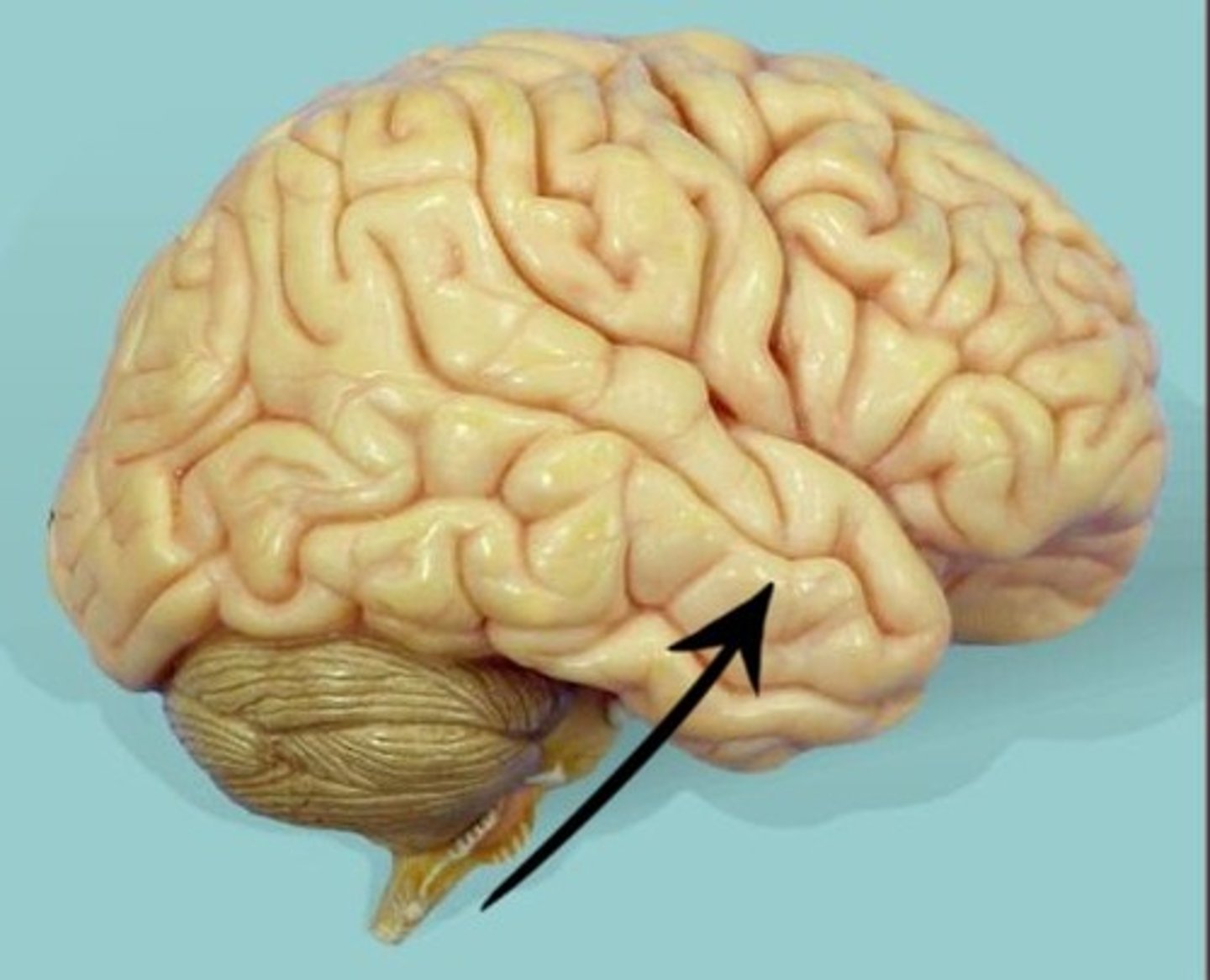
Temporal lobe
Hearing language memory
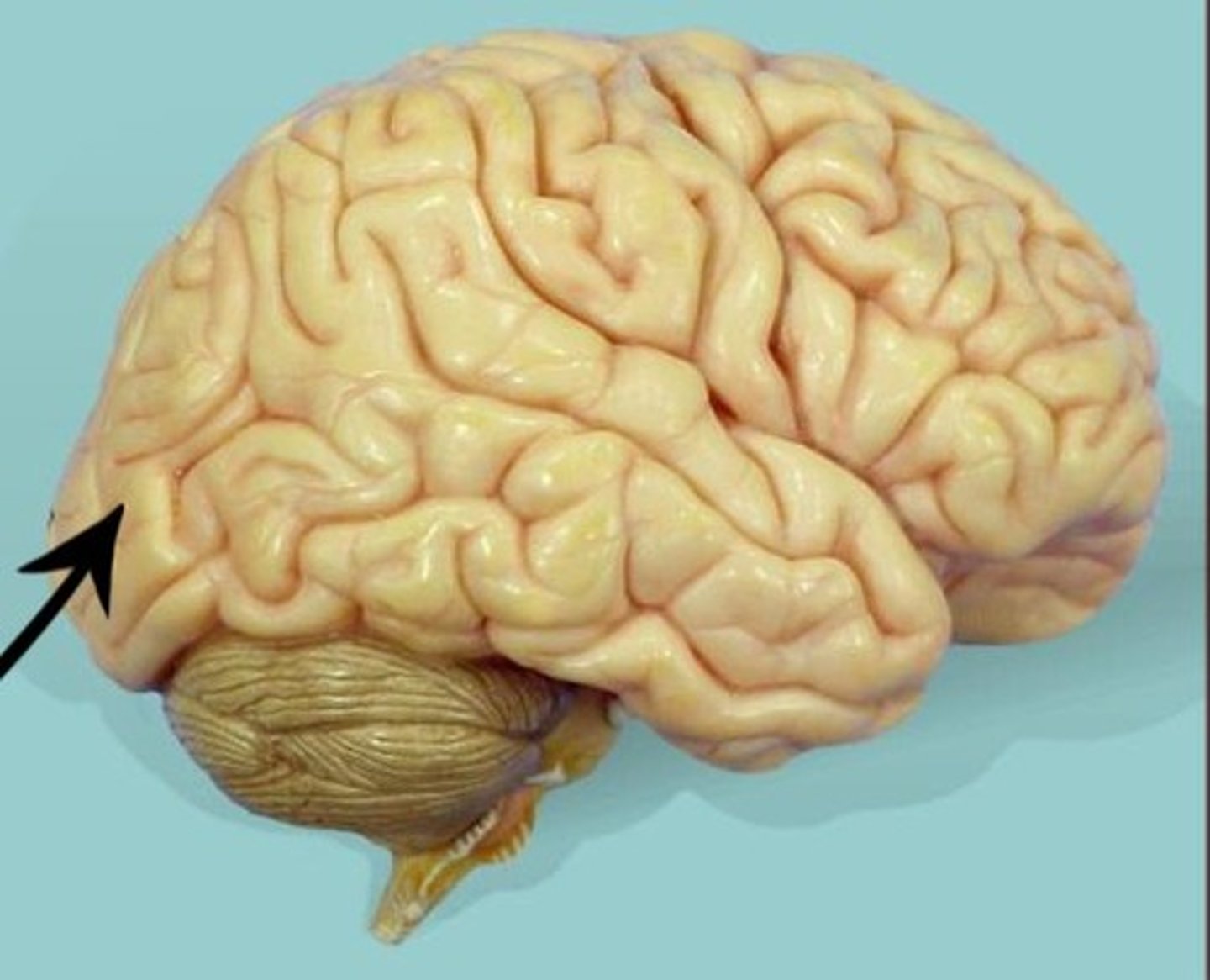
Occipital lobe
Vision processing
Insula
Deep lobe involved in internal awareness
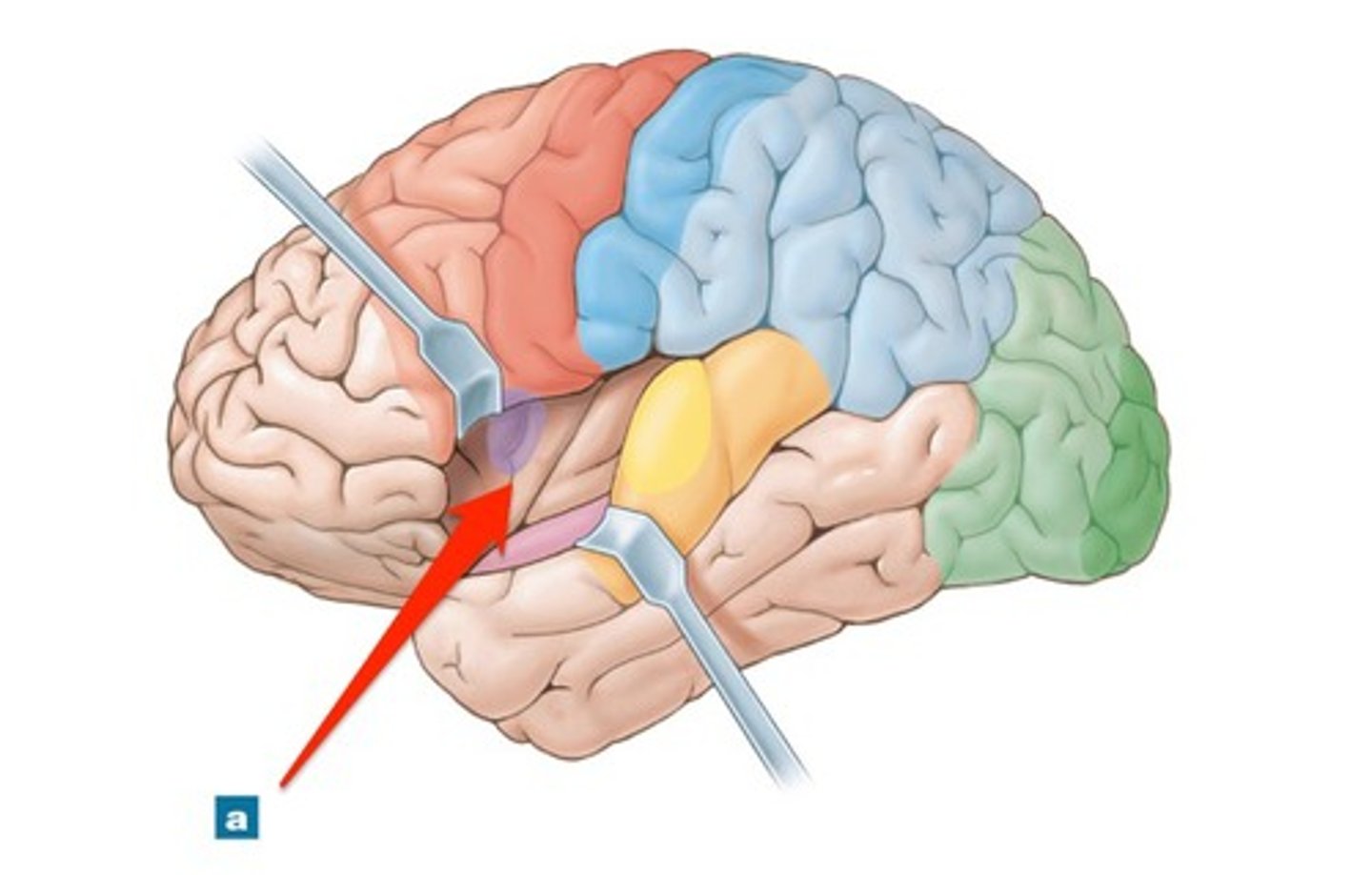
central sulcus
Separates frontal and parietal lobes
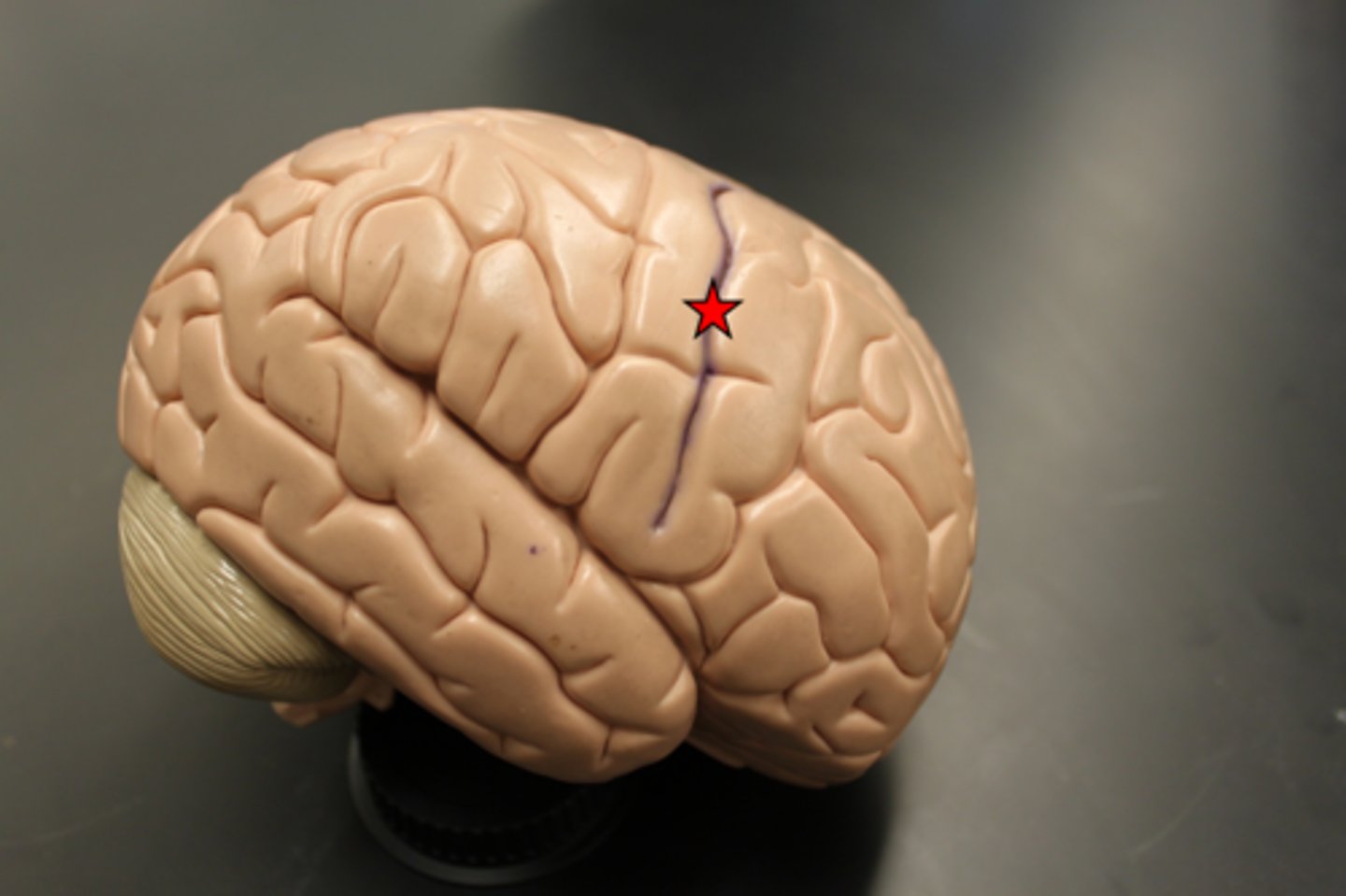
Lateral sulcus
Separates temporal lobe from frontal and parietal lobes
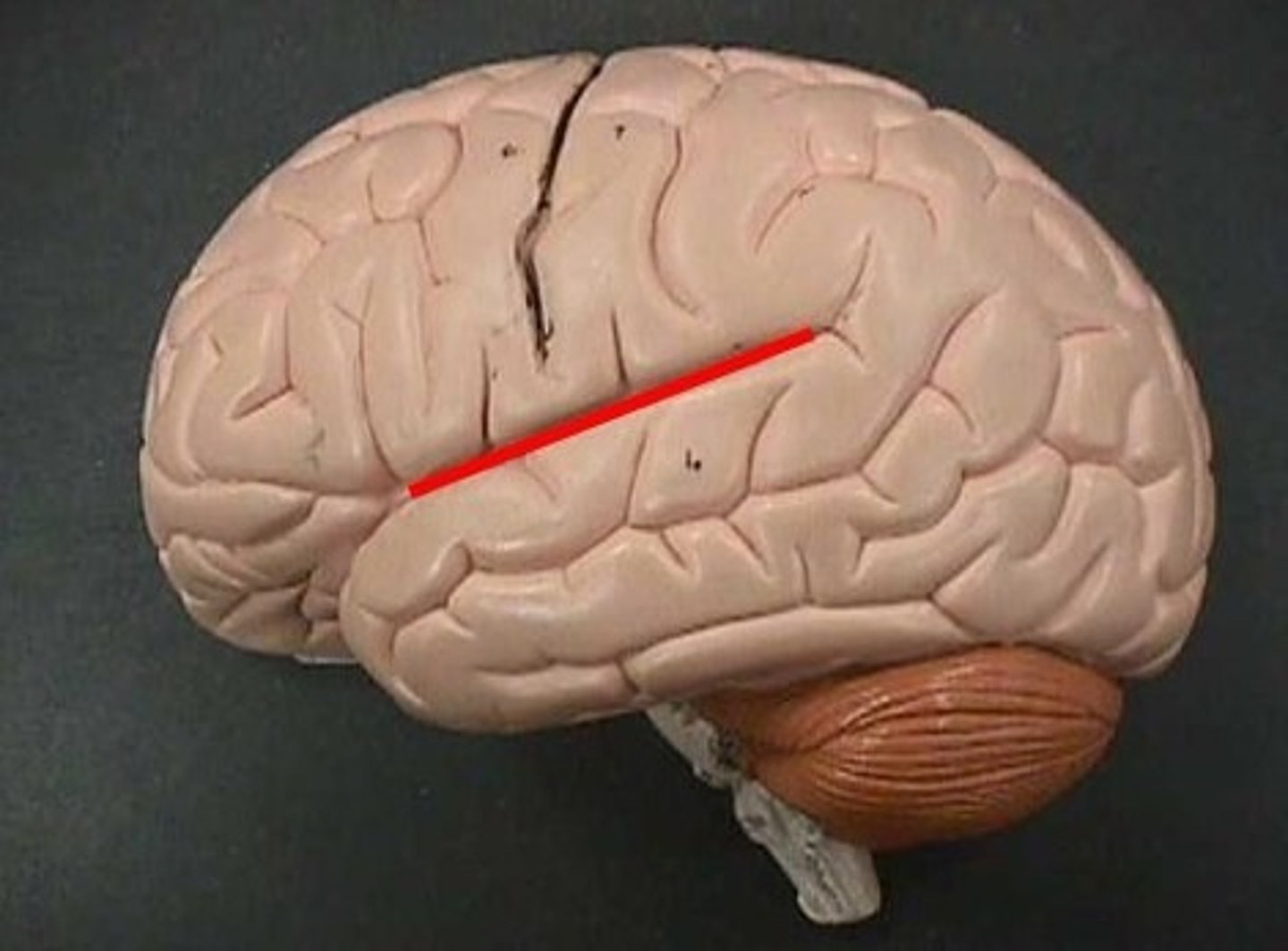
Primary cortex
Area that directly receives or sends signals (motor or sensory)
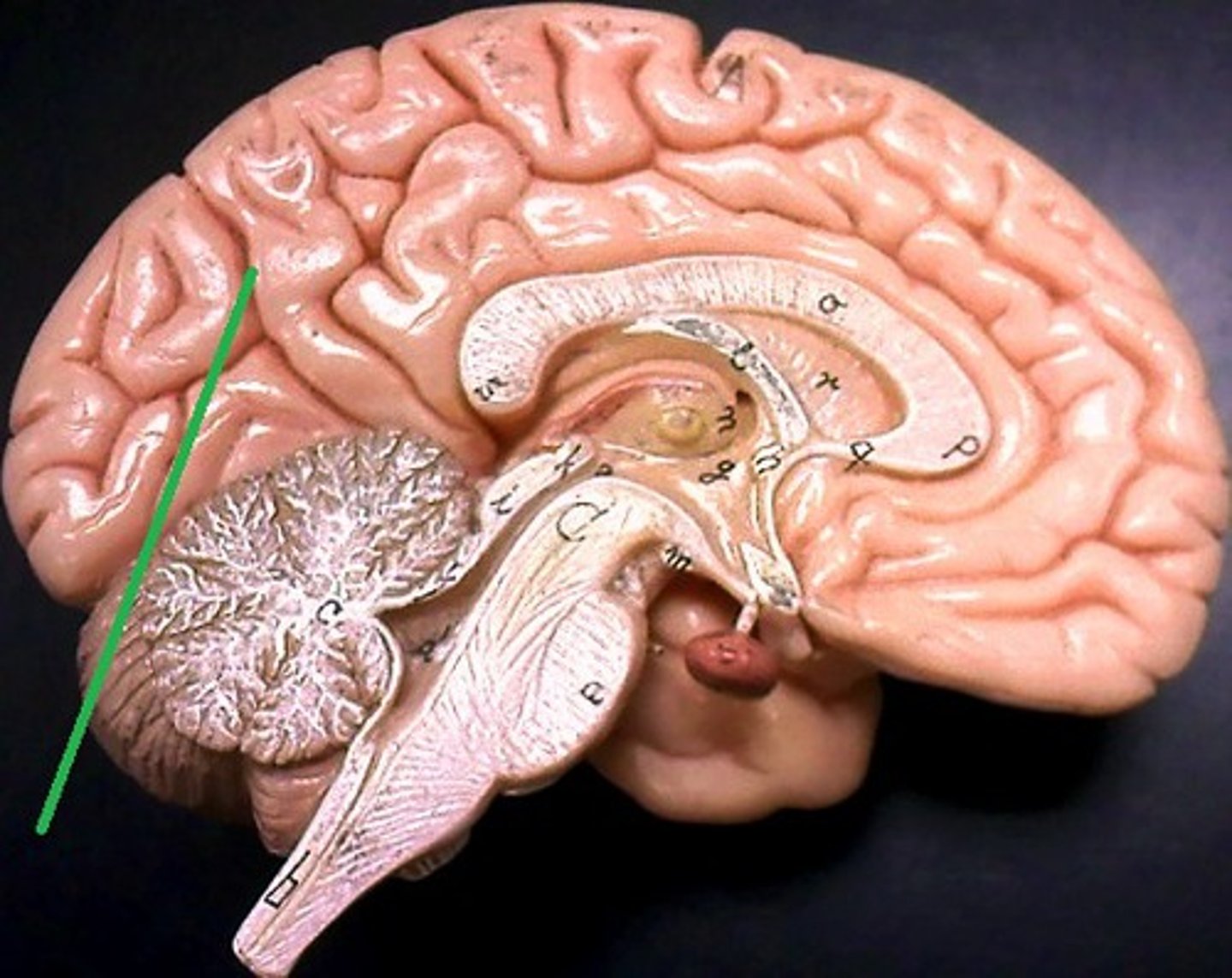
Parieto-occipital sulcus
Separates parietal and occipital lobes
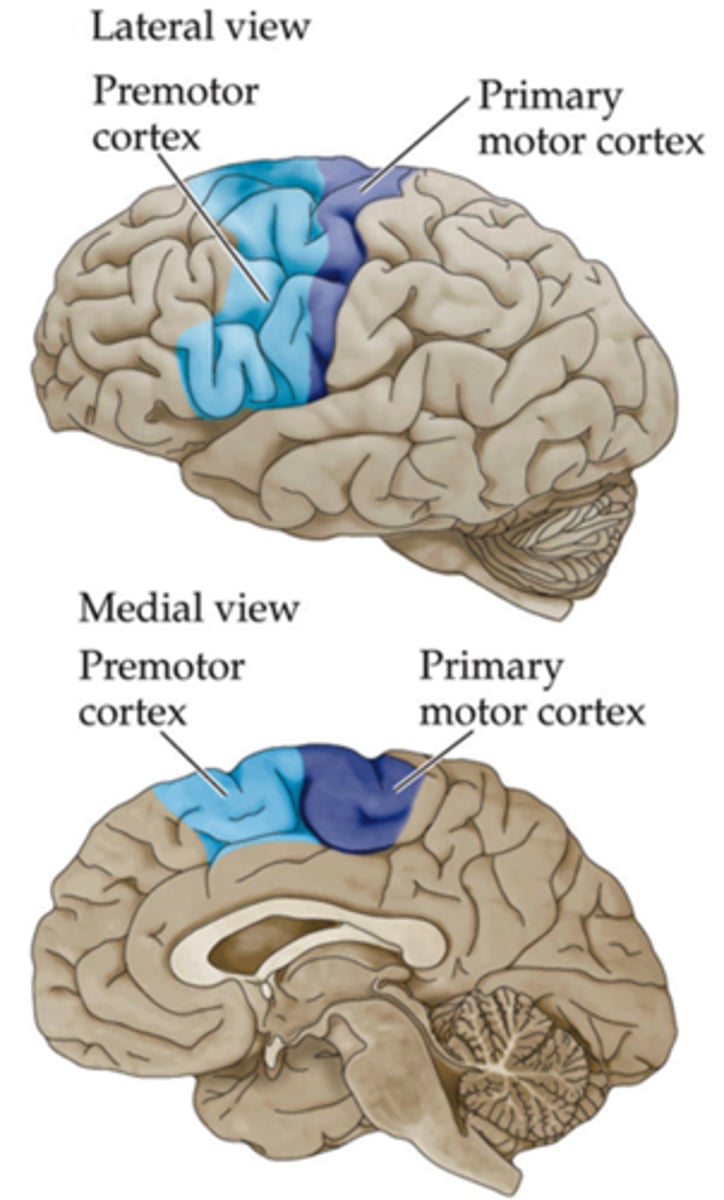
Primary motor cortex (precentral gyrus)
controls voluntary movement (motor output)
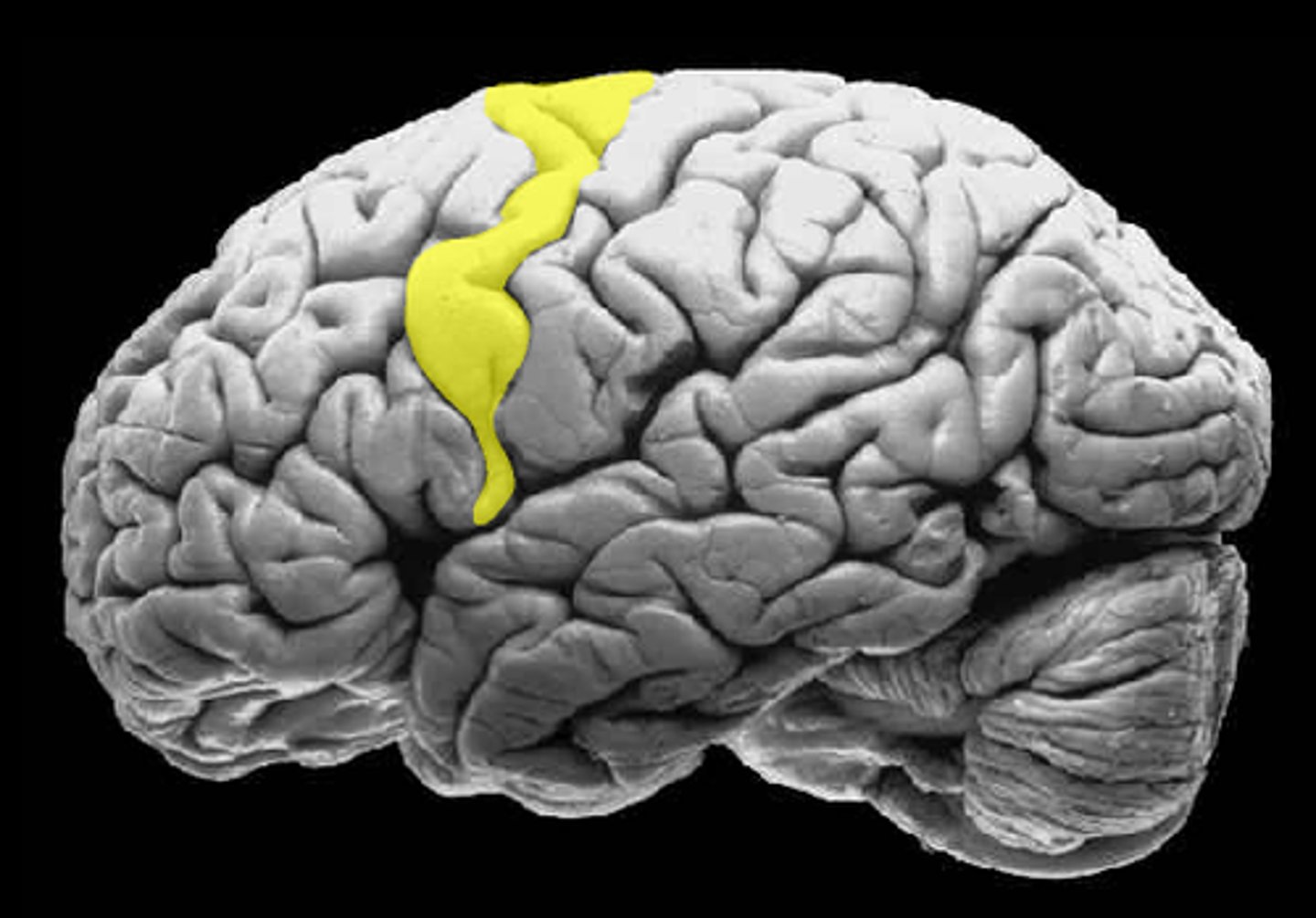
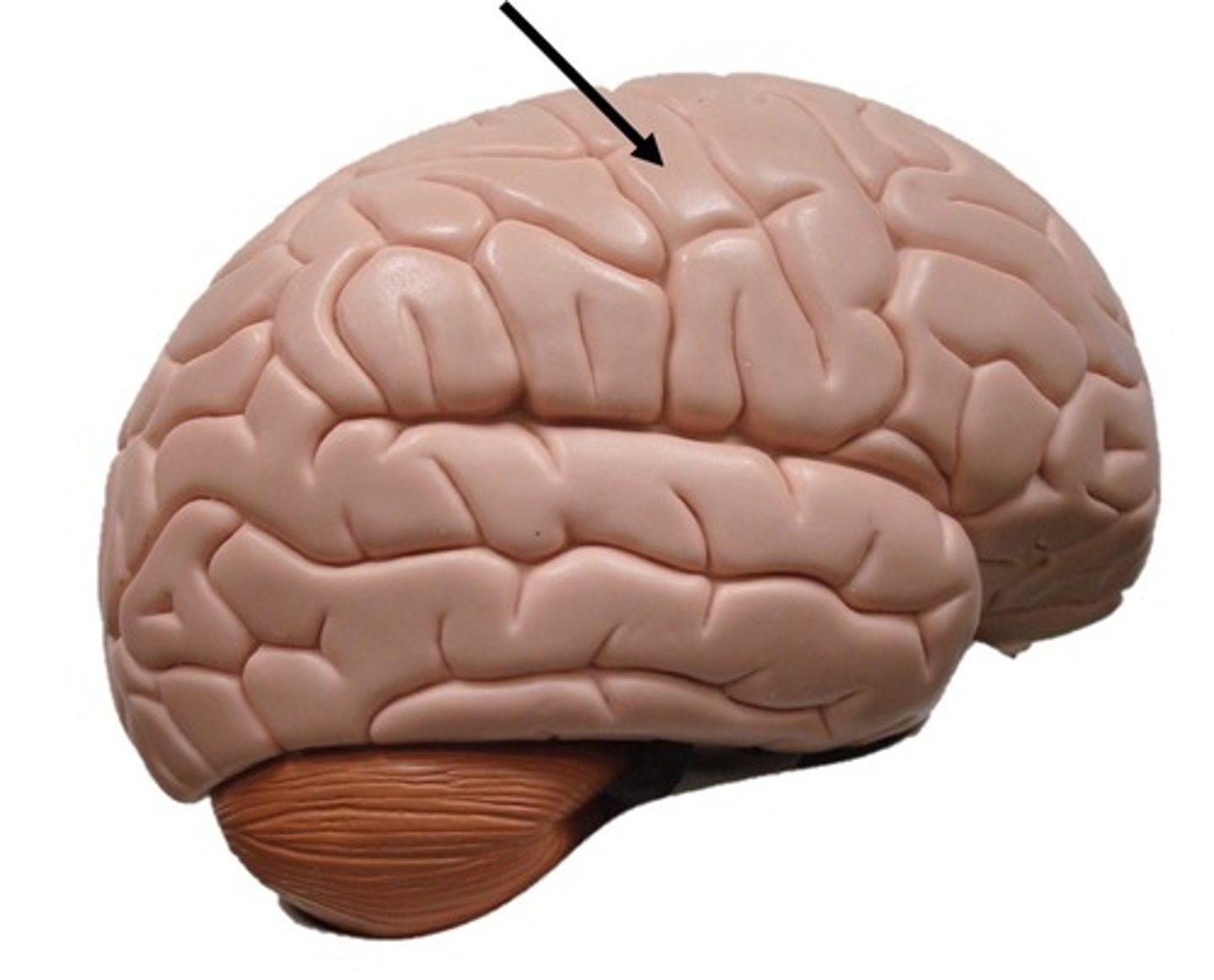
Primary somatosensory cortex (postcentral gyrus)
Receives sensory input (touch, pain, temperature, proprioception)
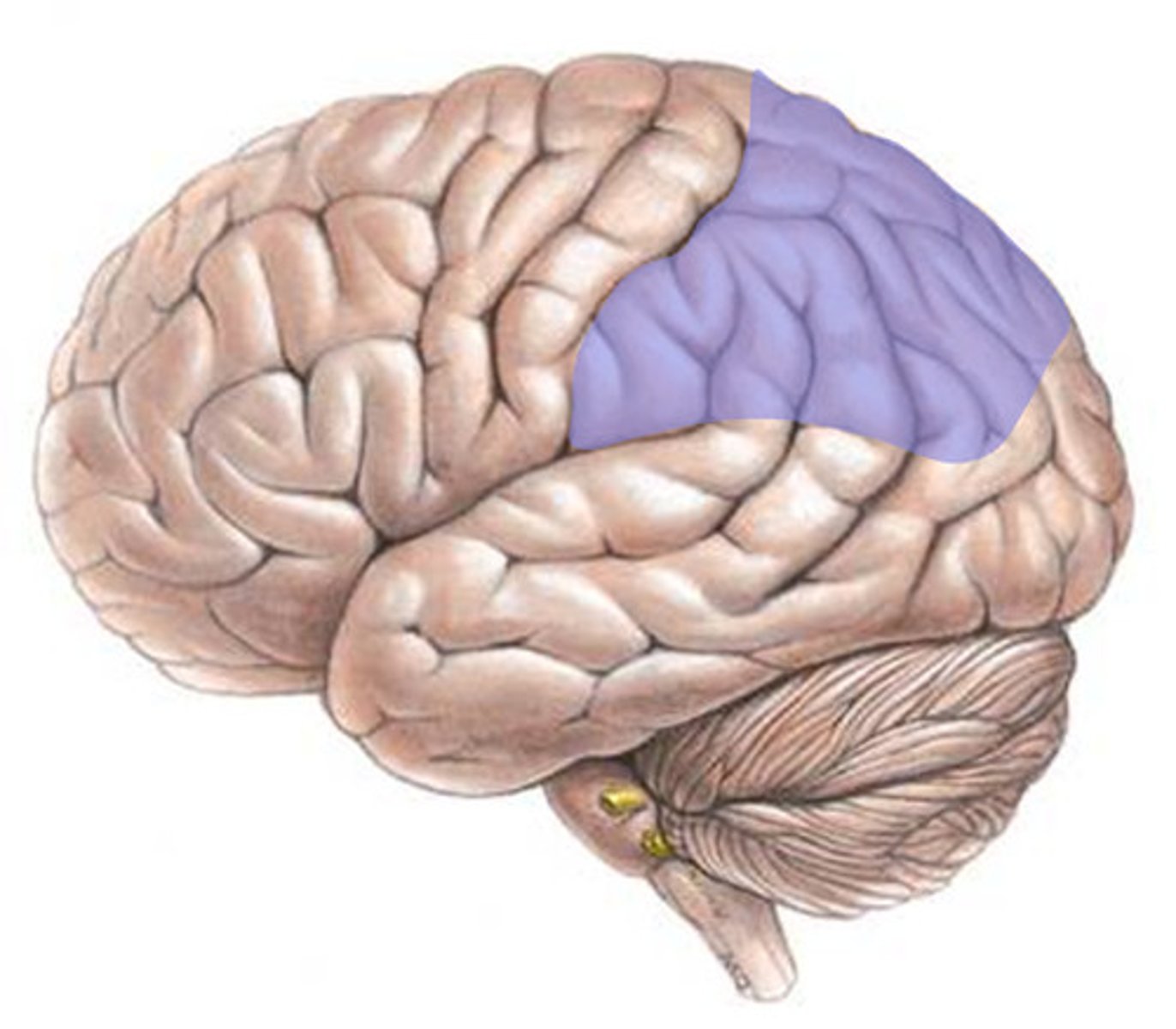
Association cortex
Interprets and integrates information
Premotor cortex
Coordinates learned motor skills and sequences
Broca's area
Motor speech production
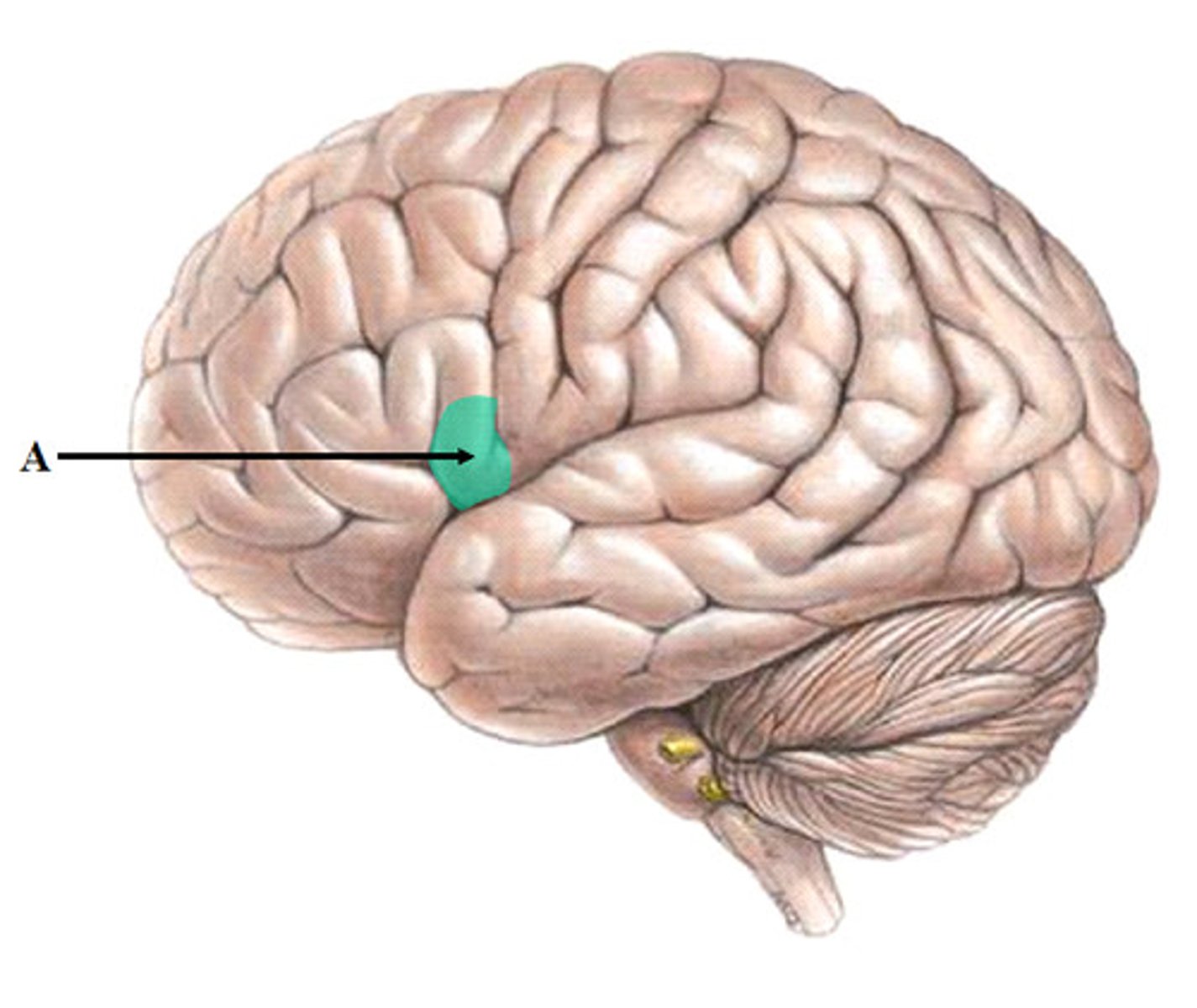
Wernicke's area
Language comprehension
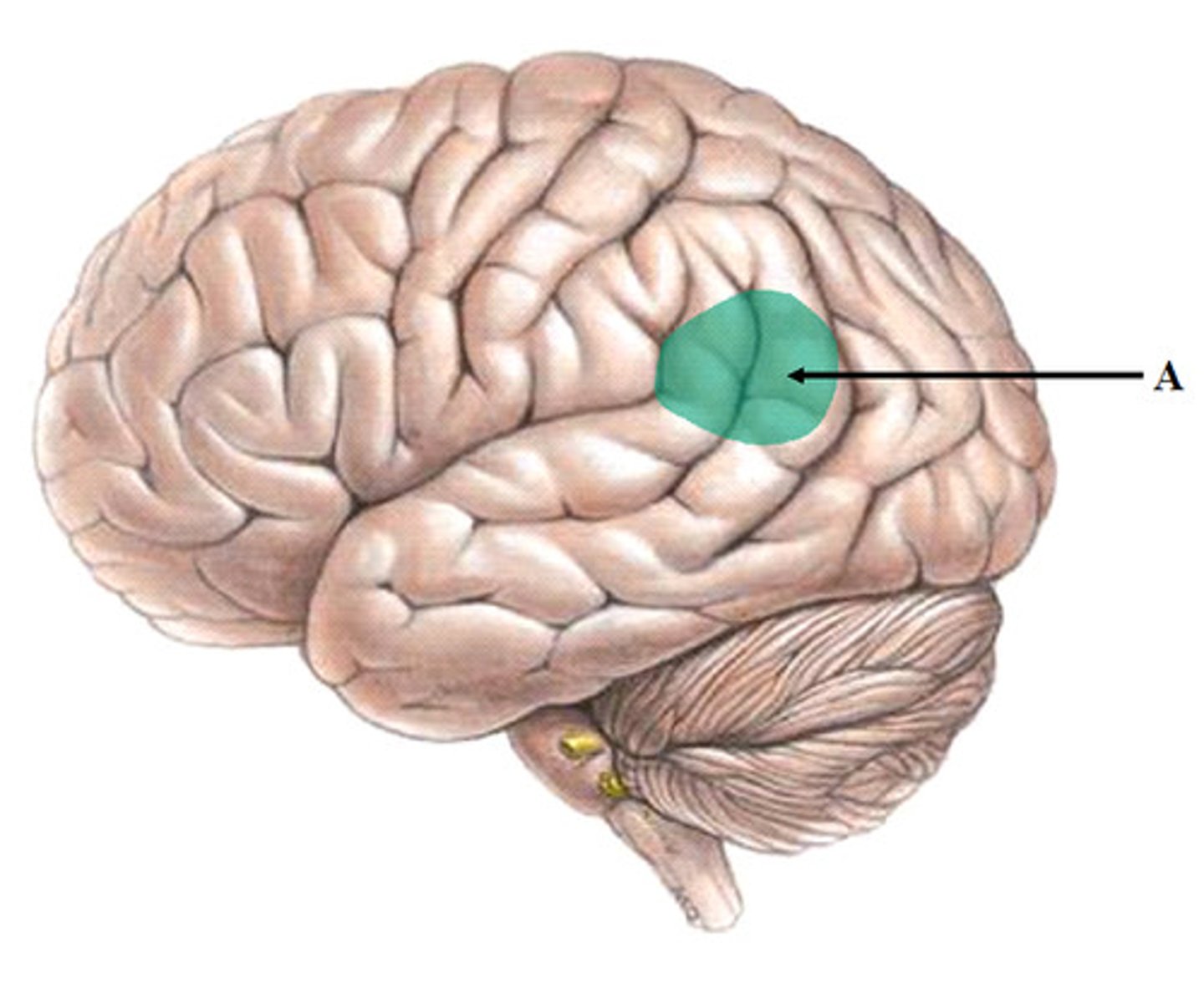
Visual cortex
Processes visual input occipital lobe
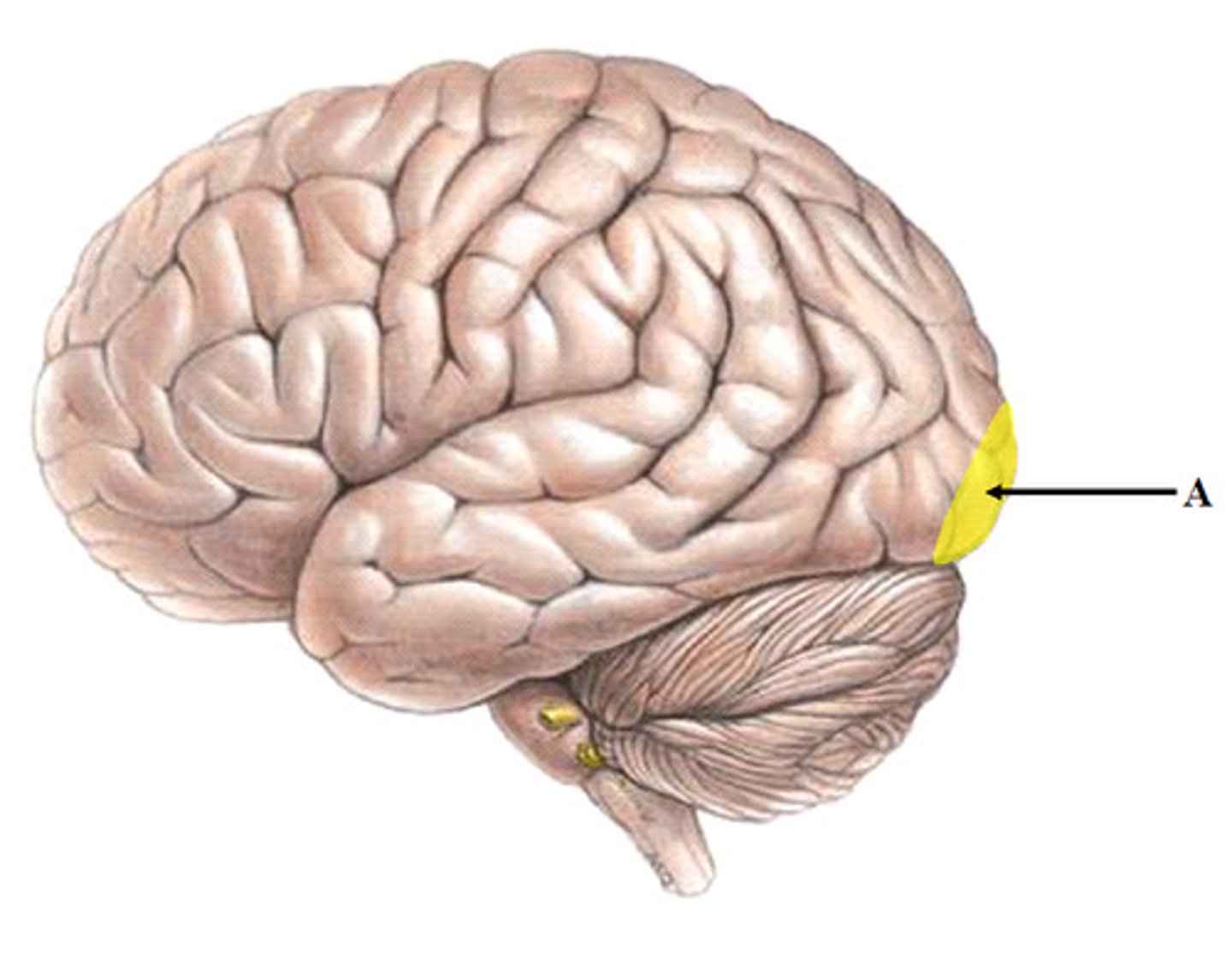
Auditory cortex
Processes sound temporal lobe
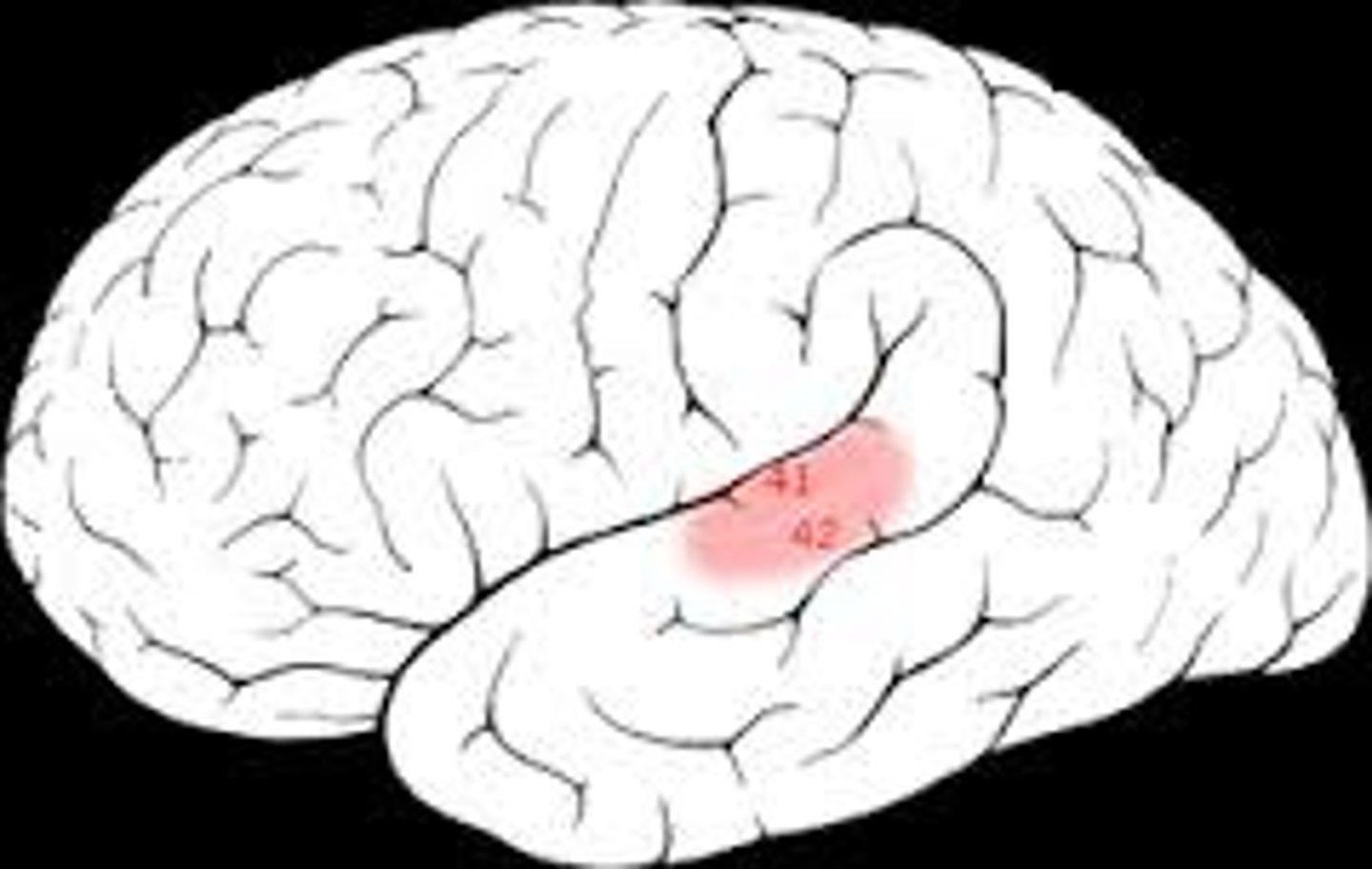
Chemosensory Centers
Primary Olfactory (smell) and gustatory (taste)
Olfactory cortex
Smell; located in temporal lobe
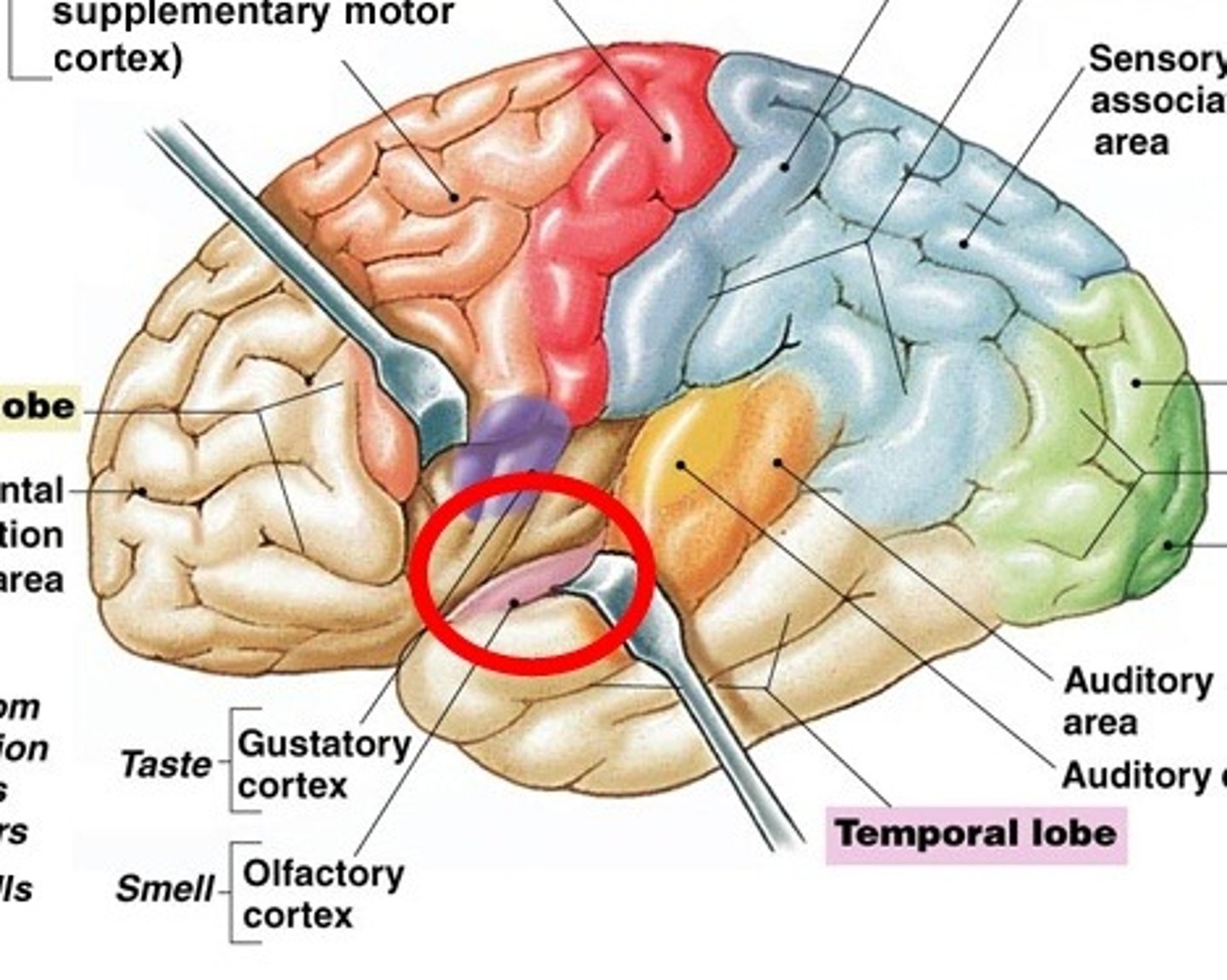
Gustatory cortex
Taste; located in parietal lobe near postcentral gyrus
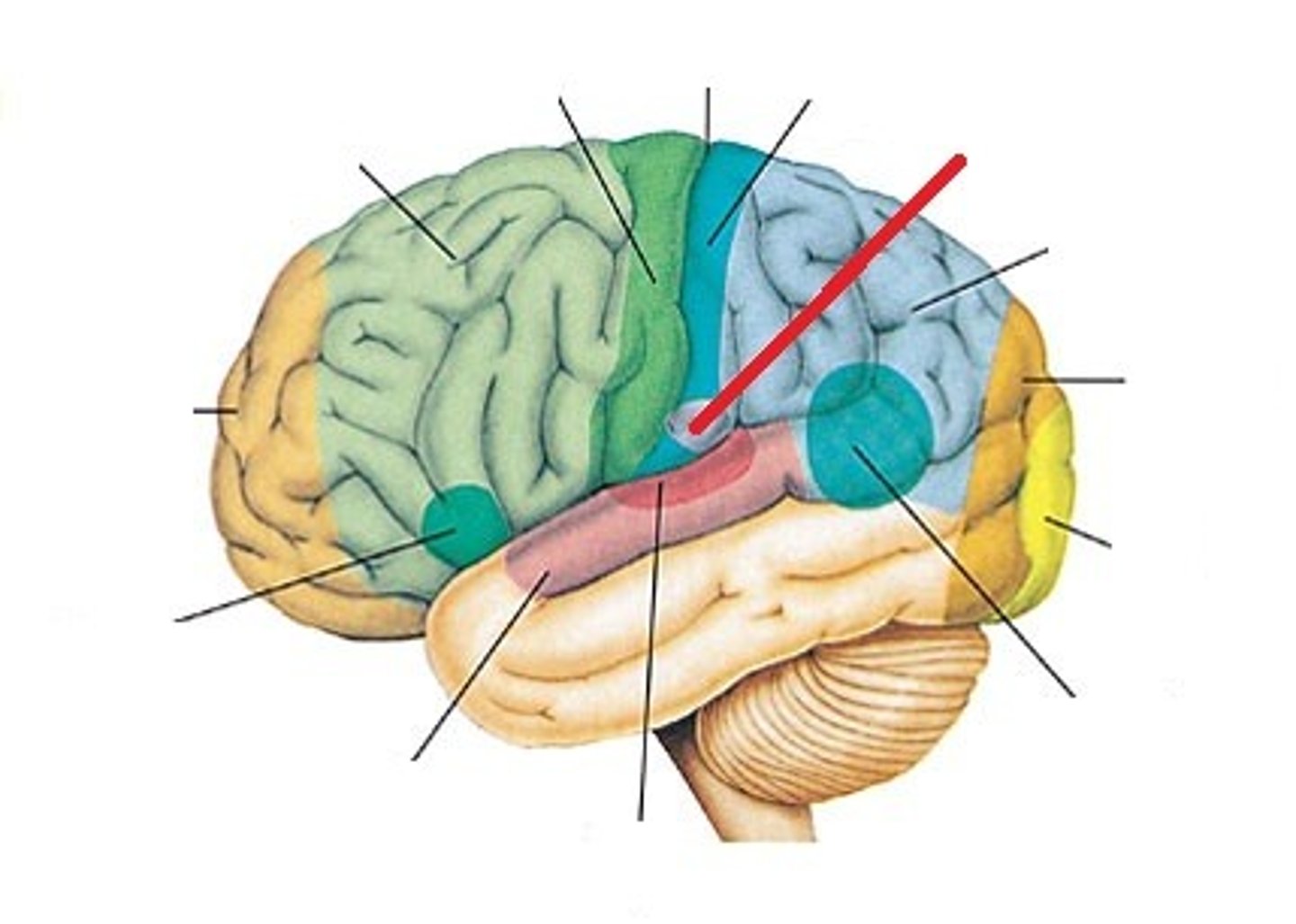
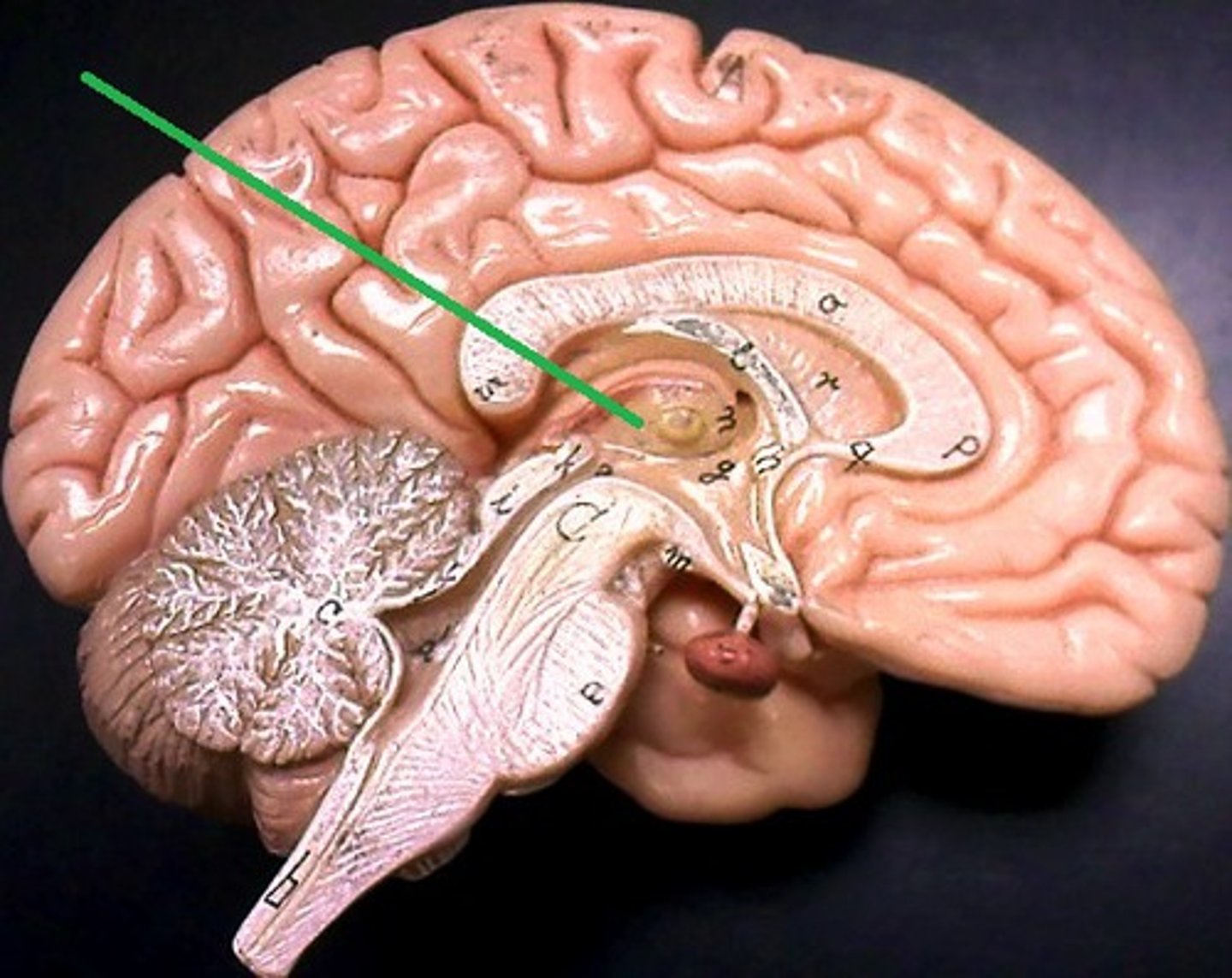
Thalamus
Major sensory relay (gateway to cerebral cortex - all senses except smell pass through here)
Hypothalamus
Maintains homeostasis regulates temperature hunger thirst hormones
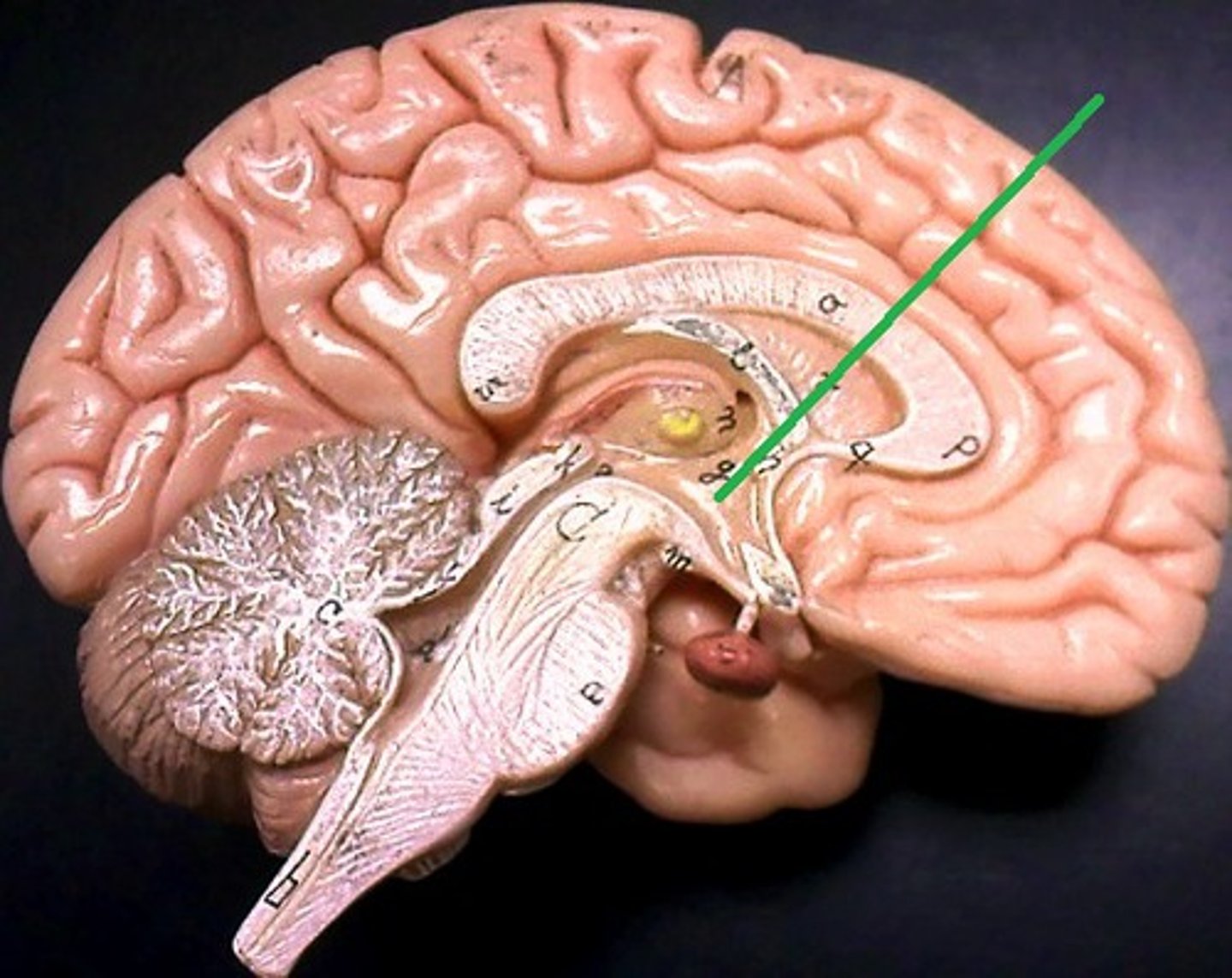
Hypothalamus control
Controls pituitary gland and autonomic nervous system
Brainstem function
Contains nuclei for many cranial nerves; pathway between brain and spinal cord
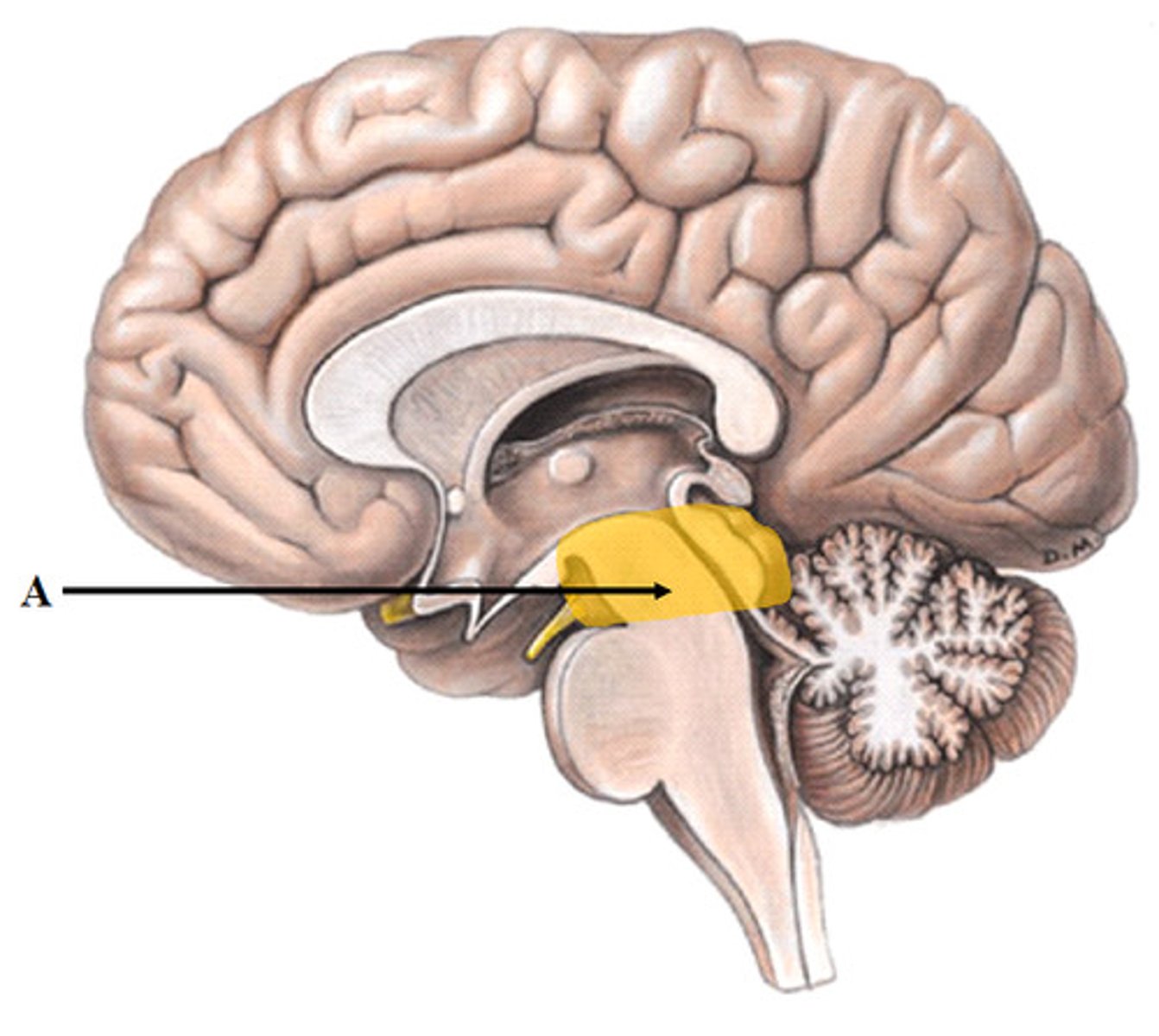
Midbrain
Contains cerebral peduncles; relays motor and sensory signals
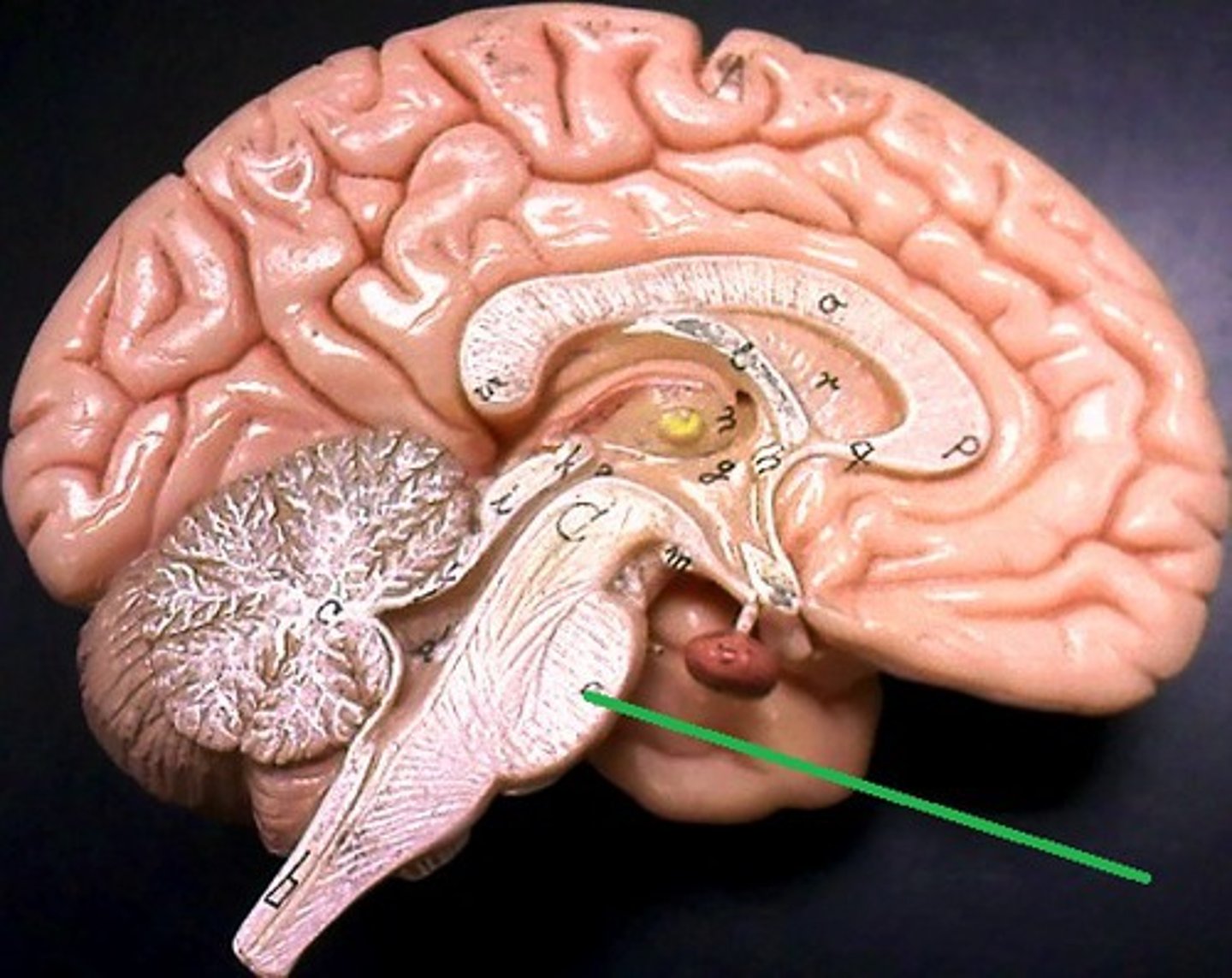
Pons
Relay station; connects cerebellum and cerebrum; contains cranial nerve nuclei
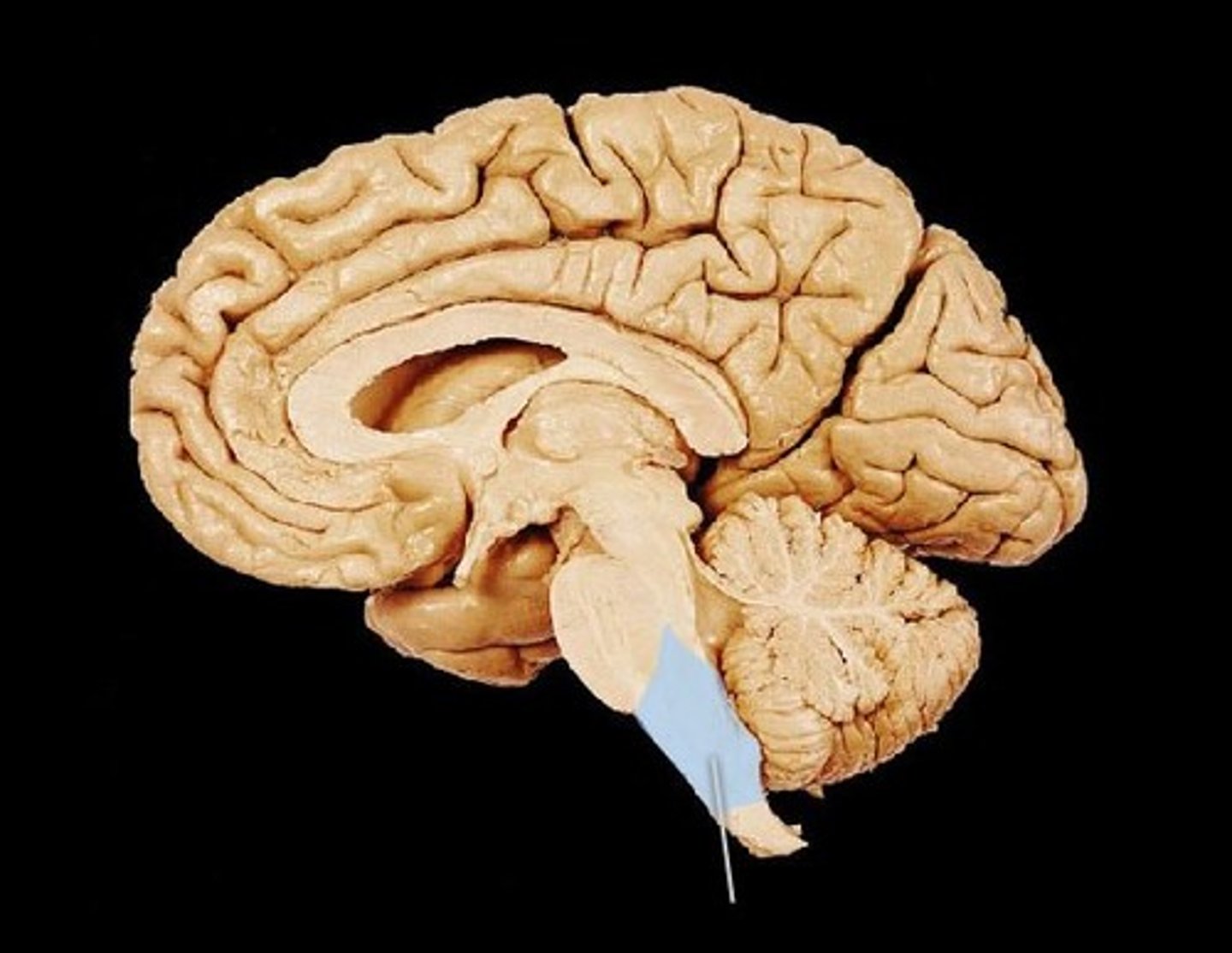
Medulla oblongata
Controls vital functions heart rate breathing digestion
Decussation
Crossing of motor fibers in medulla; right brain controls left side of body
Pyramids (medulla)
Motor tract crossover to other side of body (decussate)
Cerebellum function
Coordinates movement balance posture motor learning
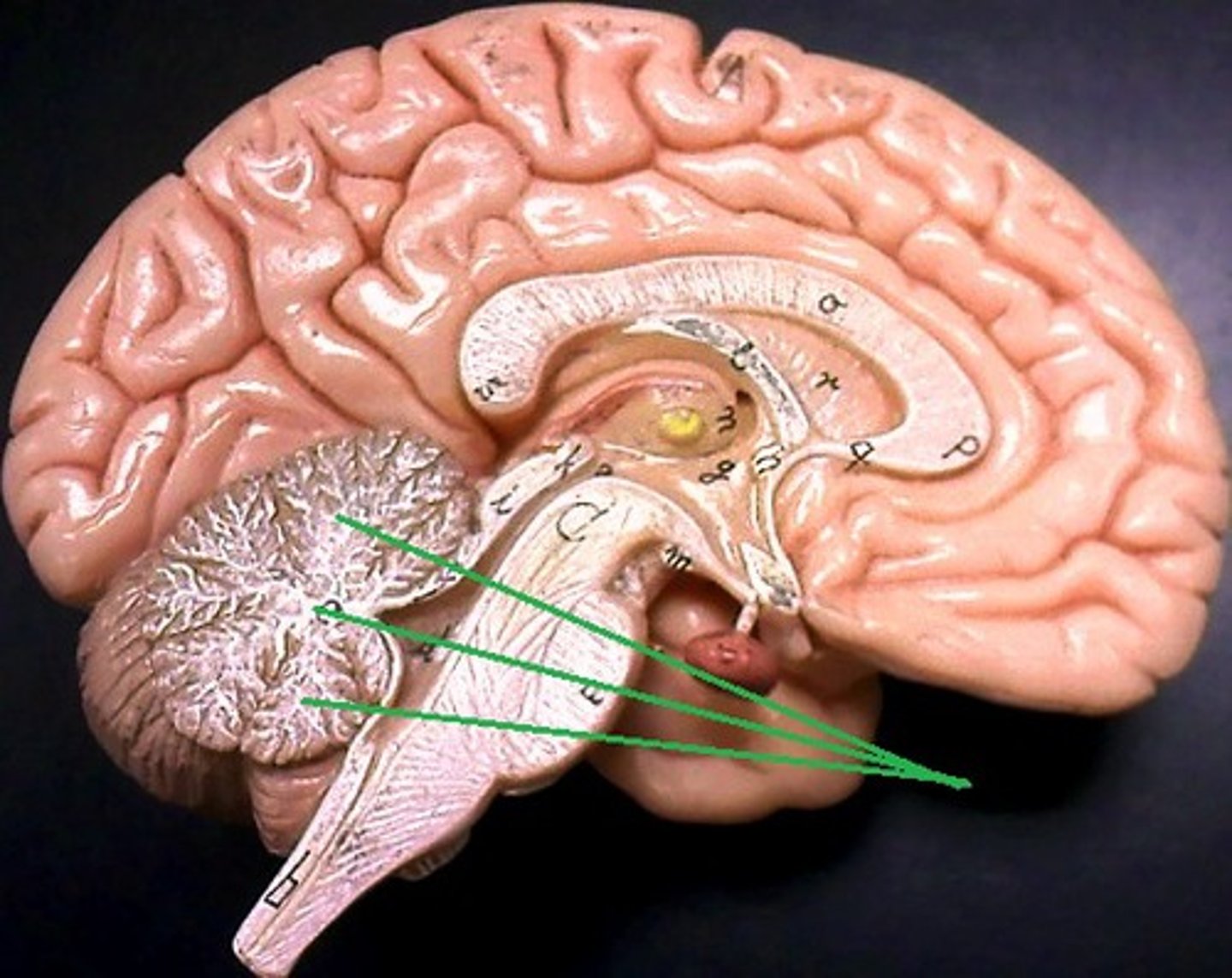
Arbor vitae
Tree-like white matter in cerebellum
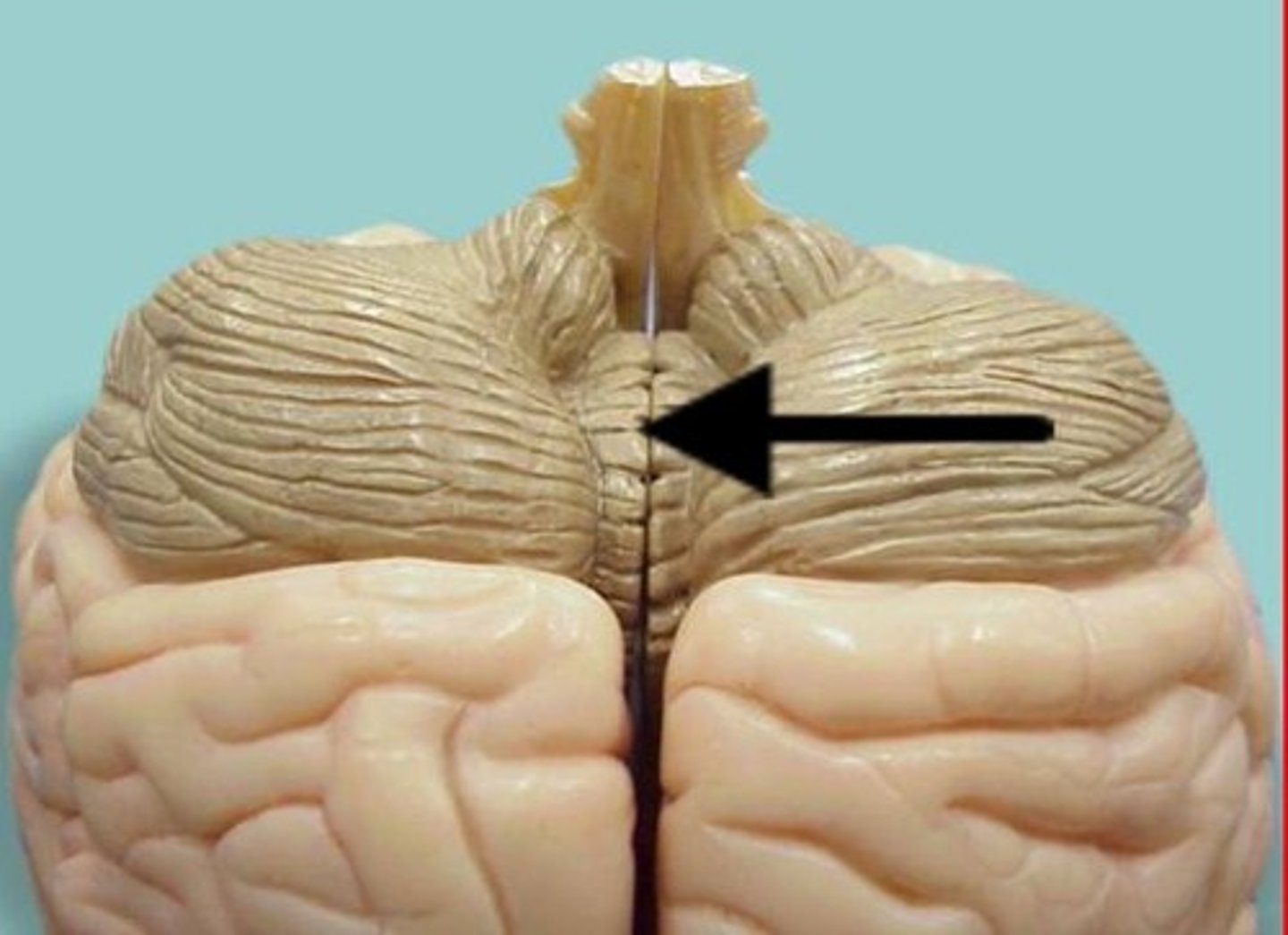
Vermis
Separates cerebellar hemispheres
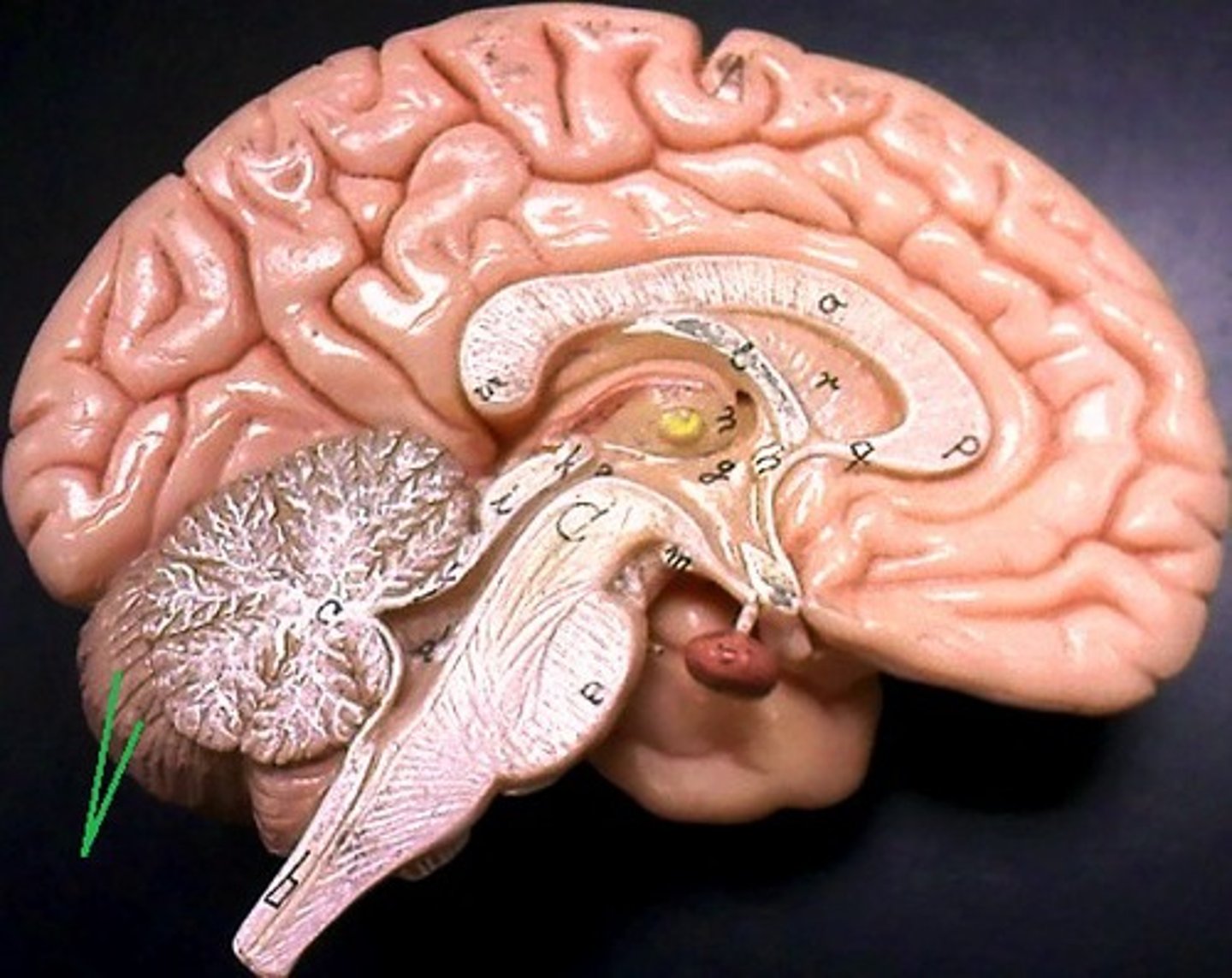
Folia
Small folds of cerebellum
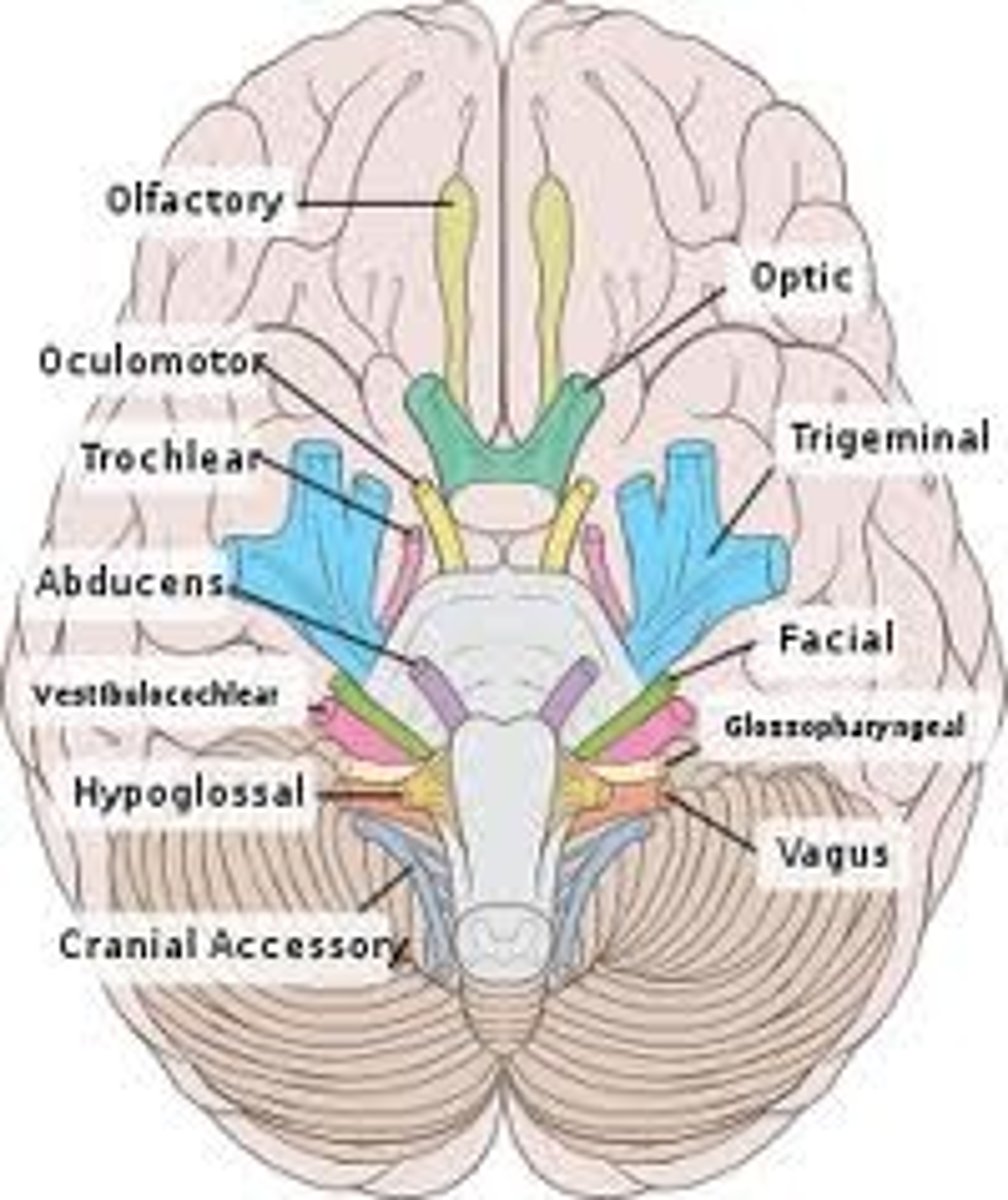
Cranial nerves
12 pairs; sensory motor or mixed; serve head and neck
mnemonic for cranial nerves NAMES
Oh Oh Oh To Touch And Feel Very Good Velvet AH
I - Olfactory
II - Optic
III - Oculomotor
IV - Trochlear
V - Trigeminal
VI - Abducens
VII - Facial
VIII - Vestibulocochlear
IX - Glossopharyngeal
X - Vagus
XI - Accessory
XII - Hypoglossal
mnemonic for cranial nerves FUNCTIONS
Some Say Marry Money, But My Brother Says Big Brains Matter More
S = Sensory
M = Motor
B = Both
Sensory cranial nerves
(bring info TO brain) I II VIII (olfactory, optic, Vestibulocochlear)
Motor cranial nerves
(send commands from brain) III IV VI XI XII (oculomotor, trochlear, abducens, accessory, hypoglossal)
Mixed cranial nerves
V, VII, IX, X (trigeminal, facial, glossopharyngeal, vagus)
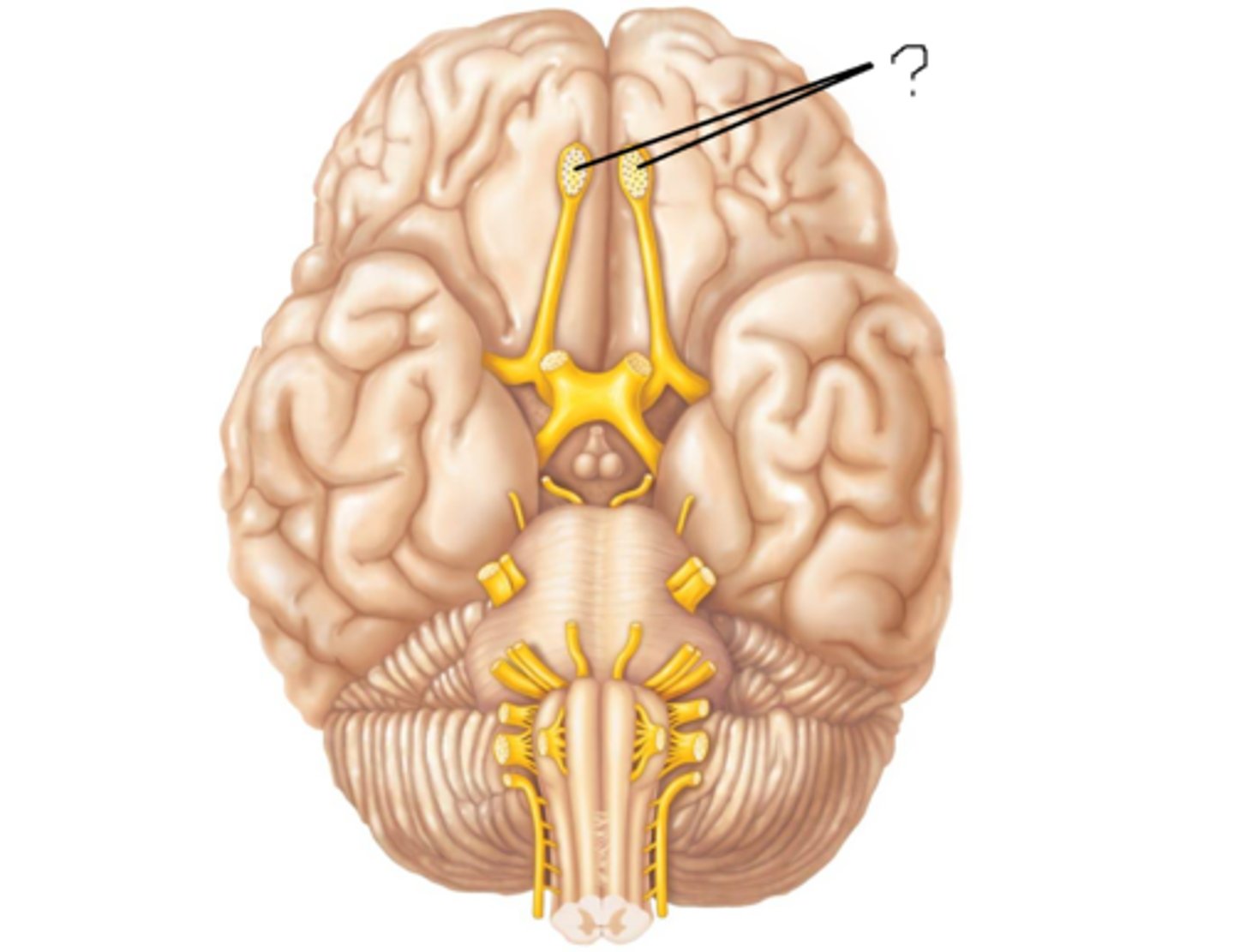
Olfactory nerve (I)
Smell
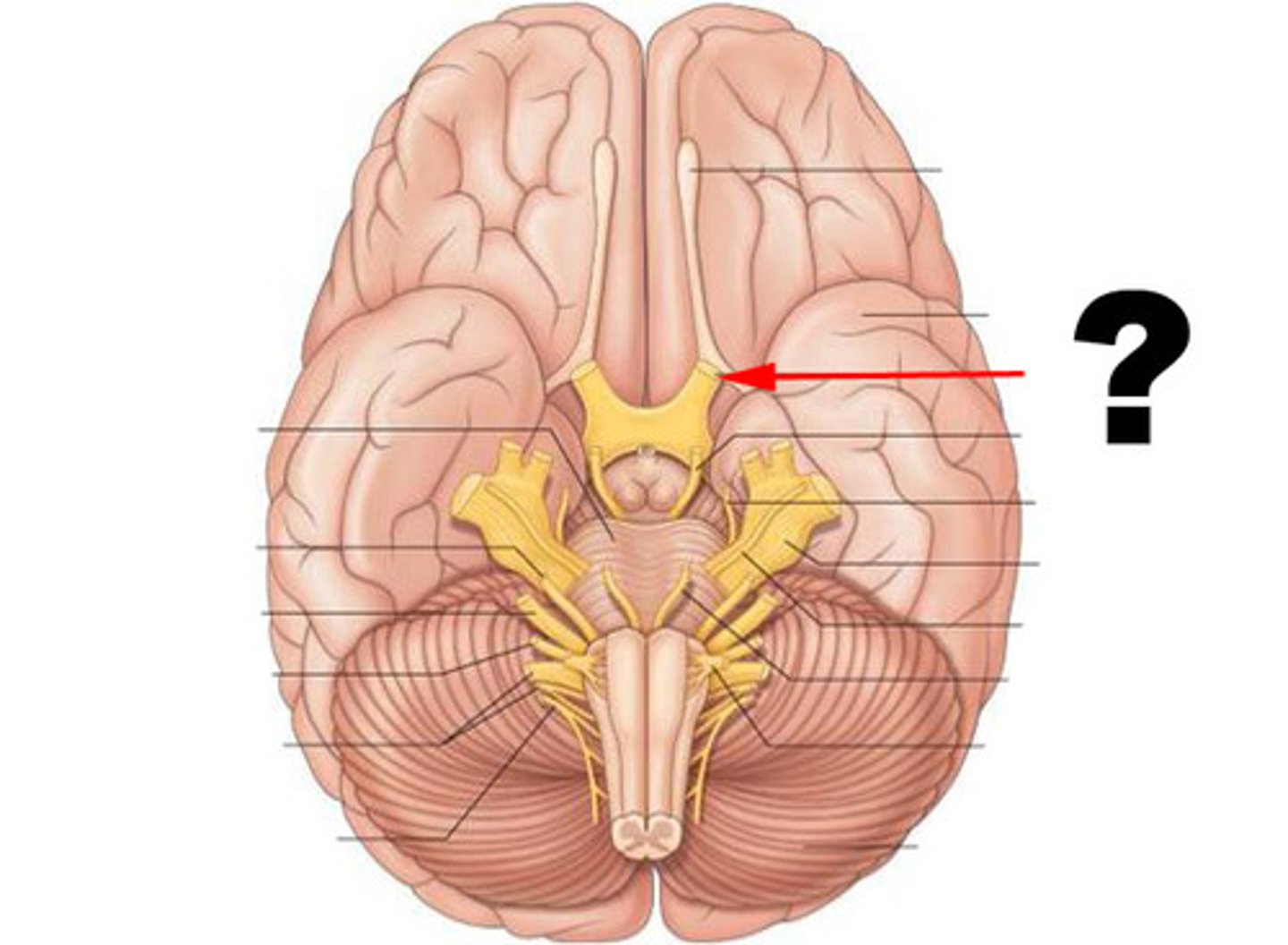
Optic nerve
(II) Vision
Oculomotor nerve
(III) Eye movement and pupil constriction
Trochlear nerve
(IV) Eye movement superior oblique muscle
Trigeminal nerve
(V) Facial sensation and chewing
Abducens nerve
(VI) Lateral eye movement
Facial nerve
(VII) Facial expression and taste anterior 2/3 tongue
Vestibulocochlear nerve
(VIII) Hearing and balance
Glossopharyngeal nerve
(IX) Taste posterior 1/3 swallowing salivation gag reflex
Vagus nerve
(X) Major parasympathetic nerve; controls heart, lungs, digestive organs
Accessory nerve
(XI) Neck turning and shoulder shrugging
Hypoglossal nerve (XII)
(XII) Tongue movement speech and swallowing