4P: Place
 Call Kai
 Learn
Learn Practice Test
 Spaced Repetition
 Match
Match Flashcards
 Knowt Play
1/46

There's no tags or description
Looks like no tags are added yet.
Name | Mastery | Learn | Test | Matching | Spaced | Call with Kai |
|---|
No analytics yet
Send a link to your students to track their progress
47 Terms
Distribution
A set of separate organizations that help transfer ownership of a product from producer to the consumer or the business user.

retailer
a business whose sales come primarily from selling goods or services to final consumers for their personal, non-business use
wholesaler
a business engaged primarily in selling goods and services to those buying for resale (like retailers or other wholesalers) or business use.
supply chain
the sequence of processes involved in the production and distribution of a commodity
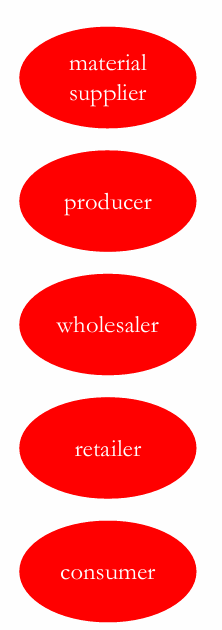
demand chain
planning starts by identifying the needs of target customers
the company responds by organizing a chain of resources and activities with the goal of creating customer value
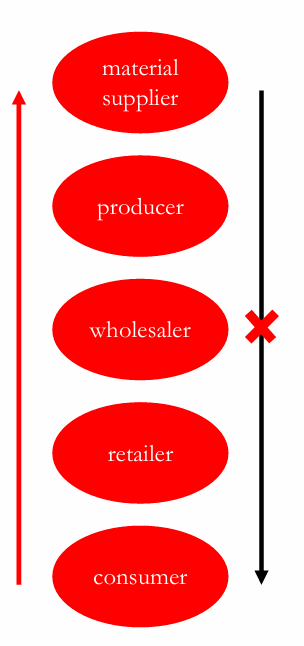
value delivery network
a network composed of the company, suppliers, distributors, and ultimately, customers who partner with each other to improve the performance of the entire system
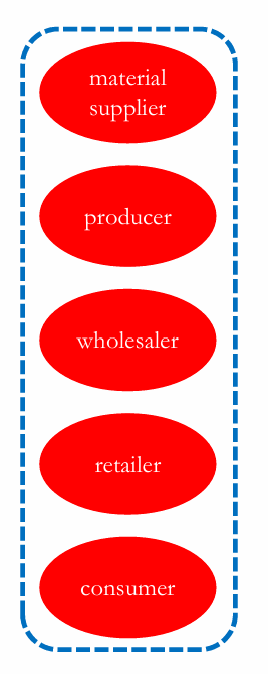
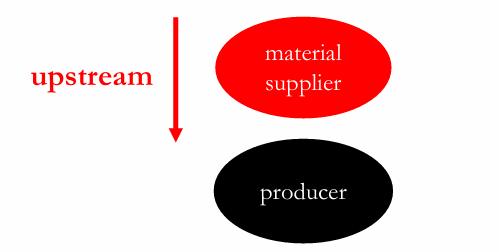
supply chain - upstream
a set of firms that supply the raw materials, components, parts, information, finances, and expertise needed to create a product and services
supply chain - downstream
a set of interdependent organizations that help make a product or service available to customers
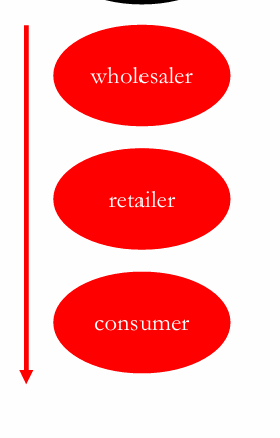
channel level and length
a layer of intermediaries that performs work in bringing the product and its ownership closer to the final buyer
the number of channel levels indicates the length of a channel
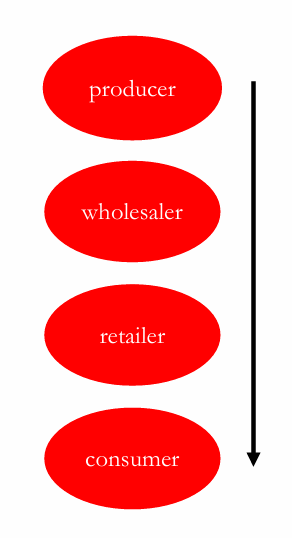
direct channel
a marketing channel that has no intermediary levels
indirect channel
a marketing channel that contains one or more intermediary levels
key functions of wholesalers & retailer
gather info about consumers
develop promotion strategy
contact and find buyers
negotiate price
financing
physical distribution
benefits of direct distribution
• more control
• closer customer contact
• eliminate double margins
benefits of indirect distribution
• more rapid penetration and broader coverage
• benefit of specialization (core competencies)
• variable rather than fixed cost structure
• bulk breaking
• reduces the number of channel transaction
producer benefits
wants to make lots and lots of a relatively small number of products
wholesaler & retailer benefits
buy large quantities and break them down into the smaller quantities and broader assortments
multi-channel distribution system
a distribution system in which a single firm sets up two or more marketing channels to reach one or more customer segments
benefits of distribution
Help producers reach customers
Give customers more choices
More efficient because of specialization
Meet the gaps between supply and demand by performing a series of functions
channel conflict
disagreements among marketing channel members on goals, roles, and rewards – who should do what and for what rewards
vertical marketing system (VMS)
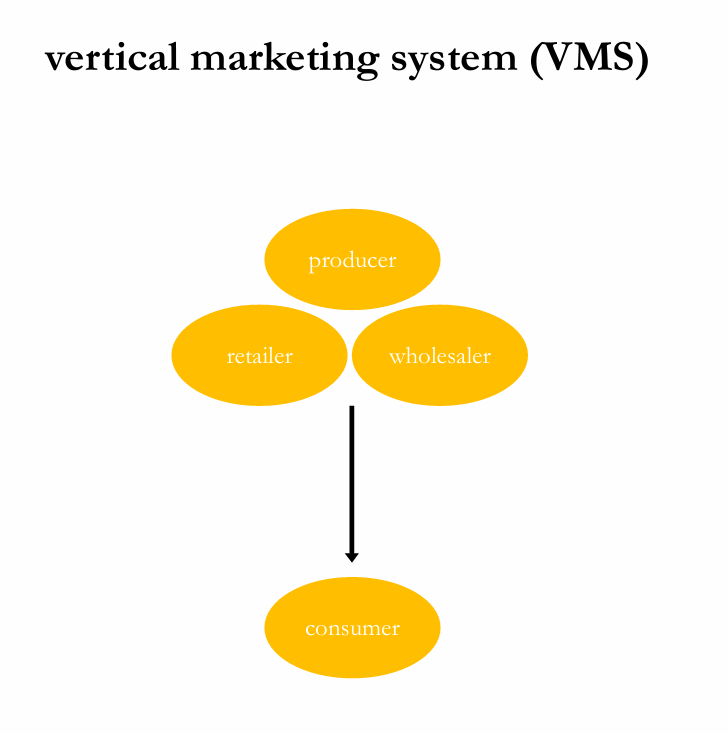
corporate VMS
combines successive stages of production and distribution under single ownership
contractual VMS (e.g., franchise)
independent firms at different levels of production and distribution join together through contracts
administered VMS
coordinates successive stages of production and distribution through the size and power of one of the parties.
horizontal marketing system
a channel arrangement in which two or more companies at one level join together to follow a new marketing opportunity. (target and starbucks)
intensive distribution
in as many outlets as possible
selective distribution
not all outlets, but more than just one or two
exclusive distribution
in one or a very small number of dealers / outlet types
shopper marketing
focusing the entire marketing process on turning shoppers into buyers as they approach the point of sale
ex) design in-store ads encouraging customers to “stock up” on medicine and tissues before the flu season hit
showrooming
consumers armed with smartphones visit stores to see an item, compare prices online while in the store, and then request price matches or simply buy the item online at a lower price
omni-channel retailing
creating a seamless cross-channel buying experience that integrates in-store, online, and mobile shopping. (same design, price)
new forms of retailing
pop-up shops, flash sales sites (time-limited sales events)
mega-retailers
where sales are much greater than those of their suppliers
shifts the balance of power between producers and retailer
growing importance of retail technology
no checkout, RFID inventory tracking, AR and VR in retailing, etc.
green marketing
greening up their stores and operations
promoting more environmentally responsible products
launching programs to help customers be more responsible and working with channel partners to reduce their environmental impact
self-service
serves customers who are willing to perform their own locate-compare-select process
typically used by retailers selling convenience goods
limited service
more sales assistance because they carry more shopping goods about which customers need information
Sears, where some departments provide service
full service
• high-end specialty stores
• assist customers in every phase of the shopping process
specialty store (product line retailing)
• flourishing
• narrow product line with deep assortments
• apparel stores, sporting-good stores, furniture stores, florists, bookstores, etc
category killer (product line retailing)
• giant specialty store with very deep assortment
best buy, home depot
department store
• store carrying several product lines (generally clothing, household goods, and furniture) with each line managed as a separate department
supermarket
• large, low-margin, high-volume store designed to meet wide range of needs for grocery and household products
convenience store
• small store near residential areas, carrying a limited line of high turnover convenience products
off-price retailers
owned and operated by a manufacturer, and typically carries surplus or discontinued goods
corporate chains
two or more outlets that are commonly owned
voluntary chain & retailer cooperative
groups of independent retailers who come together to engage in joint purchasing and joint promotional efforts (e.g., Ace Hardware)
franchisor
a manufacturer, wholesaler, or service organization
franchisees
independent businesspeople who buy the right to own and operate one or more units in the franchise system