7. AMINOTES CHORDATES
 Call Kai
 Learn
Learn Practice Test
 Spaced Repetition
 Match
Match Flashcards
 Knowt Play
1/35

Earn XP
Name | Mastery | Learn | Test | Matching | Spaced | Call with Kai |
|---|
No analytics yet
Send a link to your students to track their progress
36 Terms
AMNIOTIC EGG
Specialized shelled reproductive egg produced by reptiles, birds, and monotreme mammals
Embryos develop on land rather than water
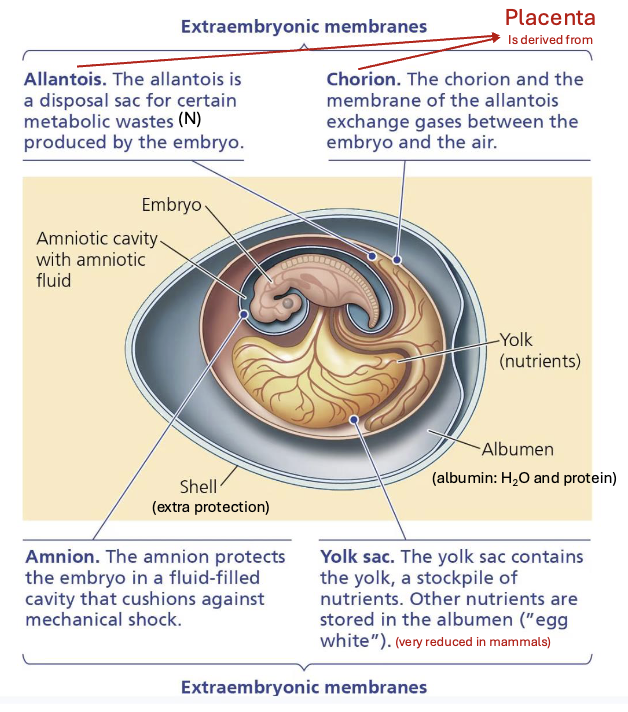
AMNIOTIC EGG ANATOMY (6+1) AACYAS
AACYAS
Amnion
Allantois
Placenta Formation
Chorion
Placenta Formation
Yolk Sac
Albumen
Shell
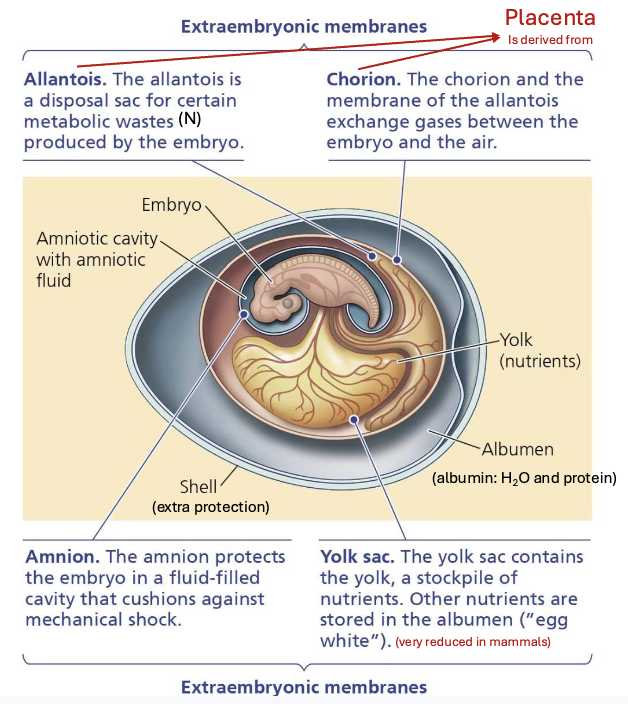
AMNION
Protects embryo in fluid-filled cavity
Cushions against mechanical shock
ALLANTOIS
Disposal sac for metabolic/nitrogenous wastes produced by embryo
Allantois and Chorion = Placenta formation
CHORION
Exchanges gases between embryo and air, assisted by allantois
Allantois and Chorion = Placenta formaton
YOLK SAC
Yolk, stockpile of nutrients
Reduced structure in mammals
Embryo recieves nutrients from placenta
ALBUMEN
Provides additional nutrients, water, and protein
SHELL
Extra protection
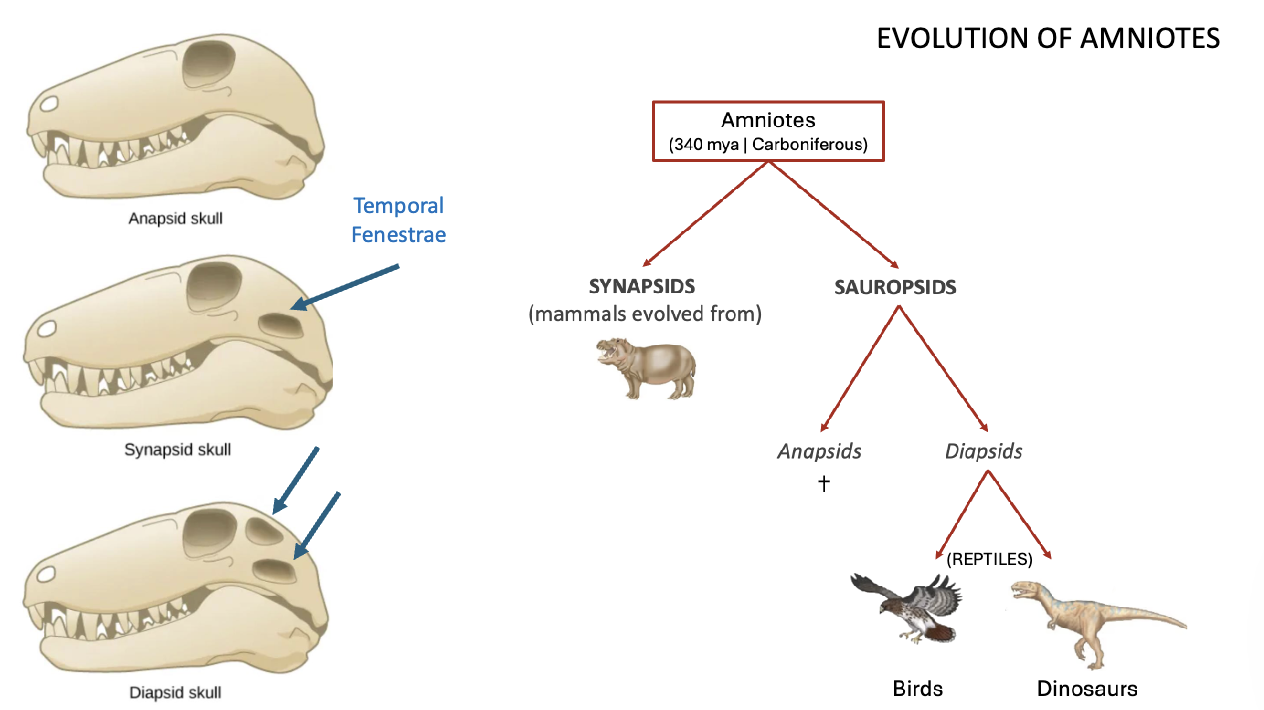
SKULL TYPES (3)
Based on temporal fenestra (openings in skull BEHIND eye orbit)
Anapsid
Synapsid
Diapsid
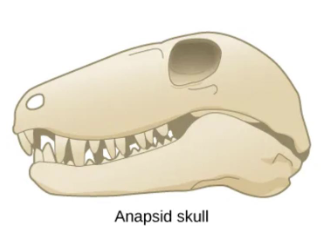
ANAPSID
NO TEMPORAL FENESTRAE
Extinct
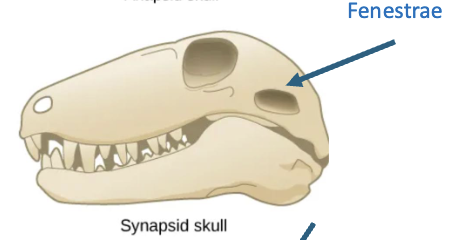
SYNAPSID
ONE TEMPORAL FENESTRA behind eye
Mammals evolved from
Still retain ancestral skull characteristic, but it is highly modified
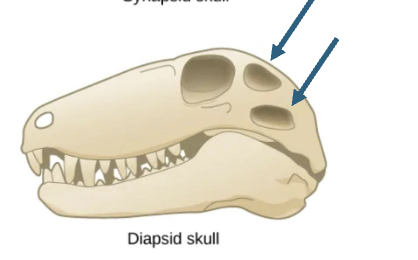
DIAPSIDS
TWO TEMPORAL FENESTRAE behind eye
Reptiles, birds, dinosaurs
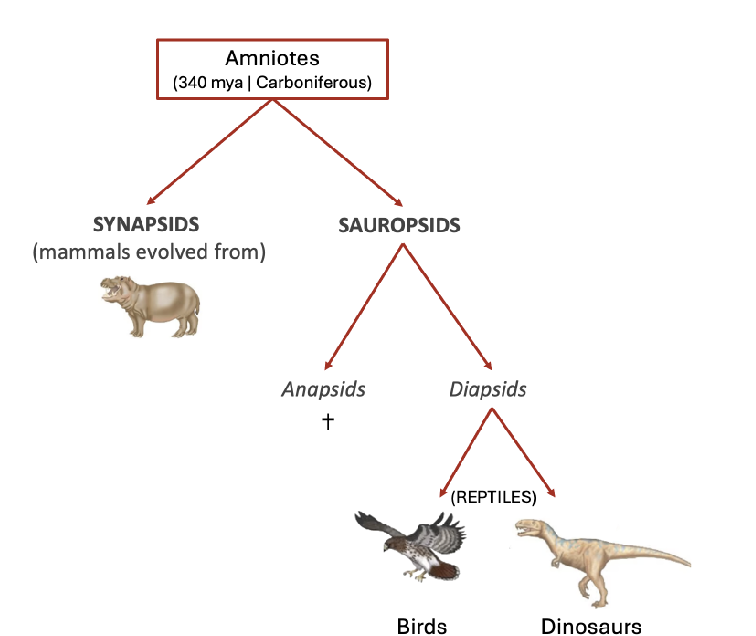
AMNIOTES DIVERSIONS
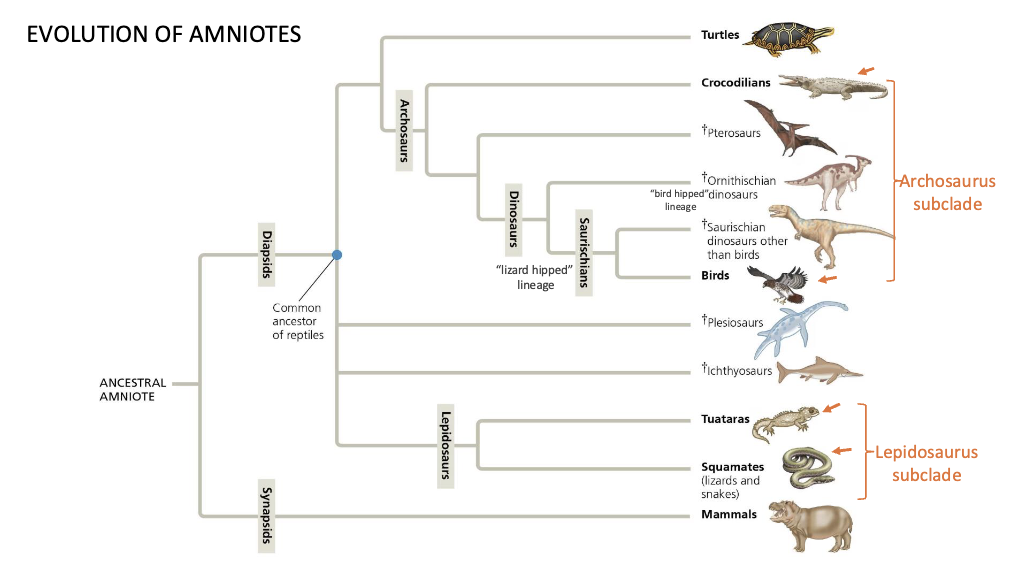
Amniotes —> Synapids & Sauropsids—> Aapsids (Extinct) + Diapsids—> Birds & Dinosaurs
EVOLUTION OF AMNIOTES
REPTILES (Non-Avian)
Tetrapods
Ectotherms (MOST)
Cold-blooded
Need heat from environment
Endotherms (REGIONAL, some crocodilian)
Warm-blooded
Internally regulate heat
Need more energuy
Brumation
Less active in lower temperatures
REPTILE CLADES (5, 4) CSSST
CSSST
CROCODILIA
SPHENODONTIA
SQUAMATA
TESTUDINES
Sphenodontia
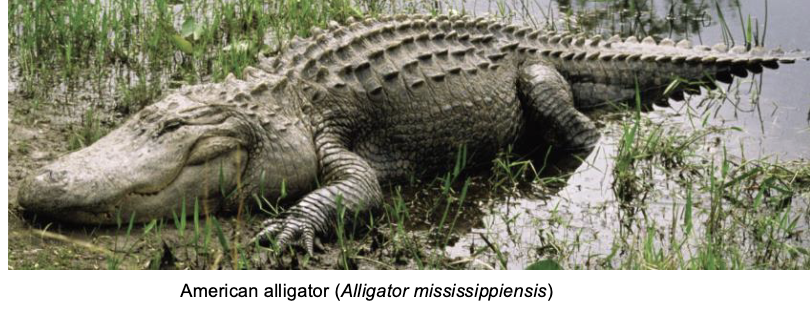
CROCODILIA (“Small Lizard”)
Alligators, crocodiles, gharials, caimans
Aquatic environments
Able to walk and run (short distances), gallop (crocodiles), and lift bodies off ground
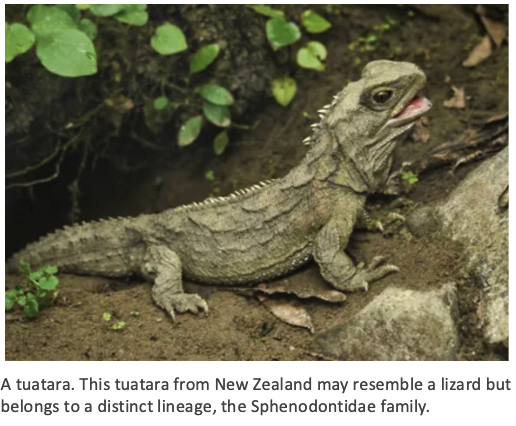
SPHENODONTIA (“Wedge Tooth”
Diapsid skull
Two rows of teeth (upper jaw)
Single row of teeth (lower jaw)
SQUAMATA (“Scaly or having scales” | Lizards and snakes)
Largest Reptilia clade
All continents except Antarctica
SQUAMATA Lizards
4 Limbs
External Eyes
Extravagant Ornamentation
Spines, crests, frills, bright colors
Change skin color
Chromatophores
Eyelids, good color vision
Jacobson’s organ
Sensory structure to detect pheromones and chemical signals
Carnivores
Except iguanas
Long, sticky, fast tongue
Venom glands
No constriction
SQUAMATA Snakes
No limbs (except boa constrictors)
May or may not have extravagant ornamentation
Eyes protected by transparent scale
Jacobson’s organ
Carnivores
Venom glands
Some immobilize or kill prey
Constriction
Flexible skulls
Infrared detection
Jaws without a bony anterior attachment
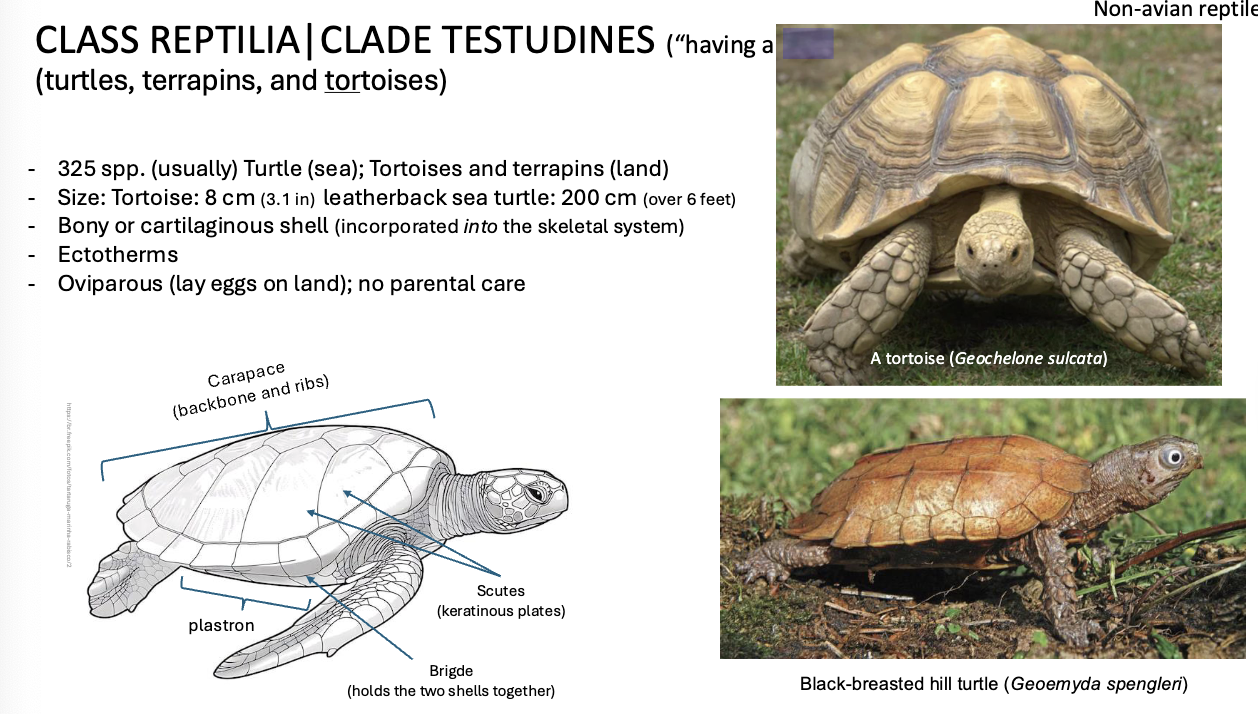
TESTUDINES (“Having a shell”)
Turtles, terrapins, tortises
Ectotherms
Oviparous
Lay eggs on land
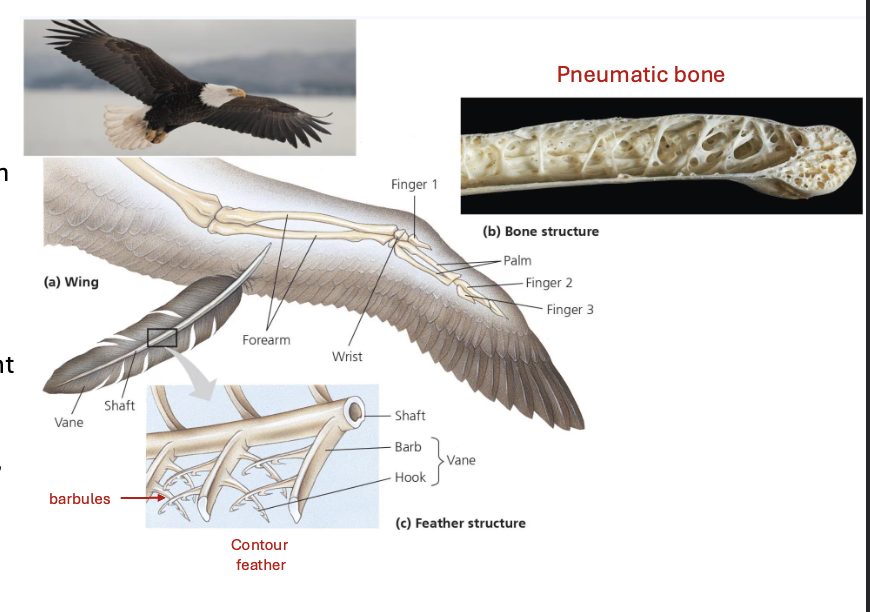
AVIAN REPTILES (BIRDS)
Endothermic
Feathers
Homologous to reptilian scales and mammalian hairs
Share common ancestry, different use
Contour Feathers
Several parallel barbs bran from central shaft
Barbs interlocked by hooks in barbules
Down Feathers
DO NOT interlock
Insulation
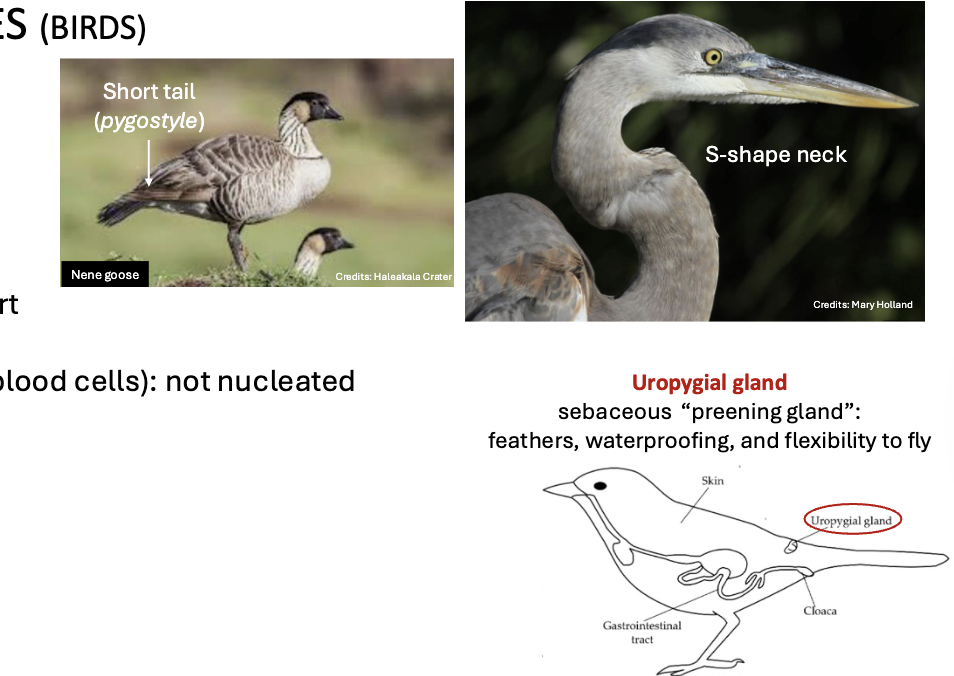
AVIAN REPTILES (BIRDS)
Color vision
Excellent eyesight
4-Chambered Heart
Erythrocytes (red blood cells)
Syrinx (voice box)
Uropygial gland
Preening gland
Feathers, waterproofing
Flexibility to fly
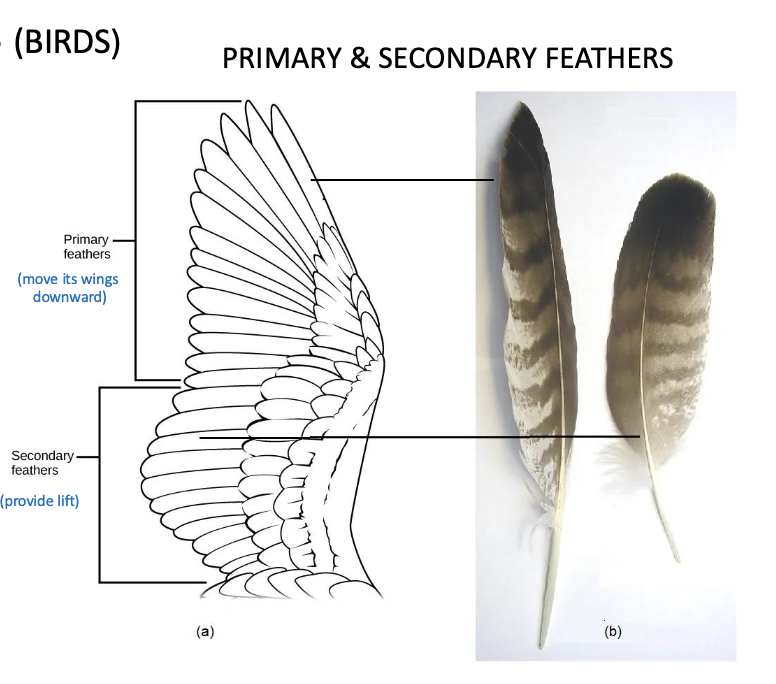
AVIAN REPTILES (BIRDS) PRIMARY & SECONDARY FEATHERS
Primary Feathers:
Move its wings downwards
Secondary Feathers:
Provide lift
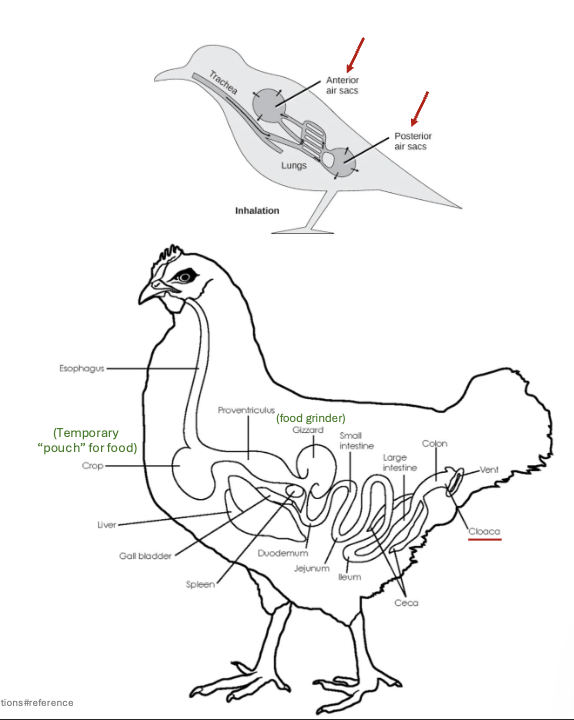
AVIAN REPTILES (BIRDS) ADAPTATIONS TO FLY (9)
PNEUMATIC BONES:
Hollow, found in large birds
URINARY BLADDER:
Absent
N waste eliminated with feces through cloaca
SMALL GONADS:
Male and female
ONE OVARY
CLOACA:
Reabsorbs and redirects water to bloodstream
Uric acid is eliminated and concentrated as urate salts
RESPIRATORY SYSTEM:
Coelomic fluid REPLACED BY AIR SACS
AIRFLOW THROUGH:
Lungs is undirectional
PARABRONCHI:
Minimally expandible lungs
Thin air sacs among visceral organs and skeleton
TOOTHLESS:
Gizzard
MAMMALS EVOLUTION
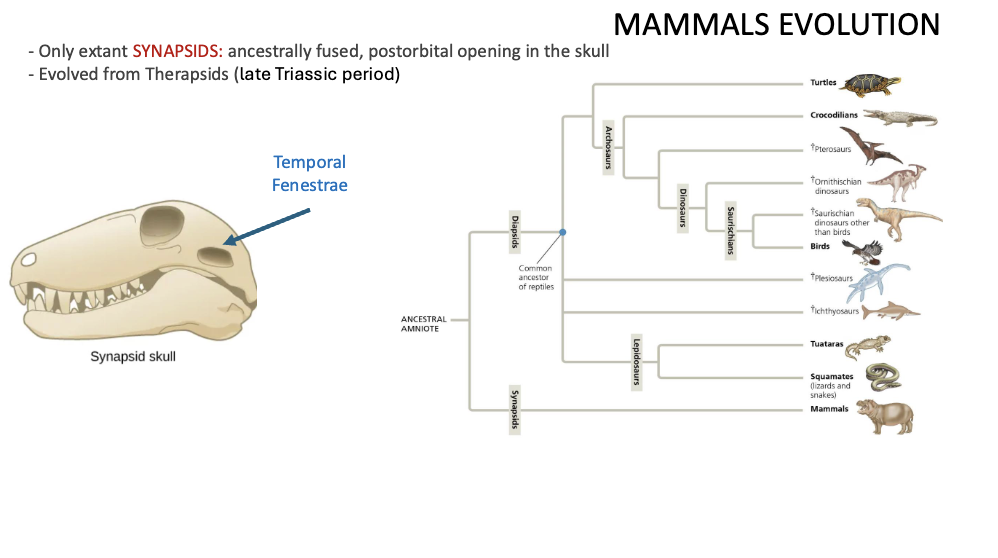
MAMMALS OVERVIEW (3 Clades)
Mammary glands
Hairs
Endothermic
Sebaceous glands
Sebum (lipid mixture)
Eccrine glands
Perspiration
3 CLADES:
MONOTREMEAS
MARSUPIALS
PLACENTAL
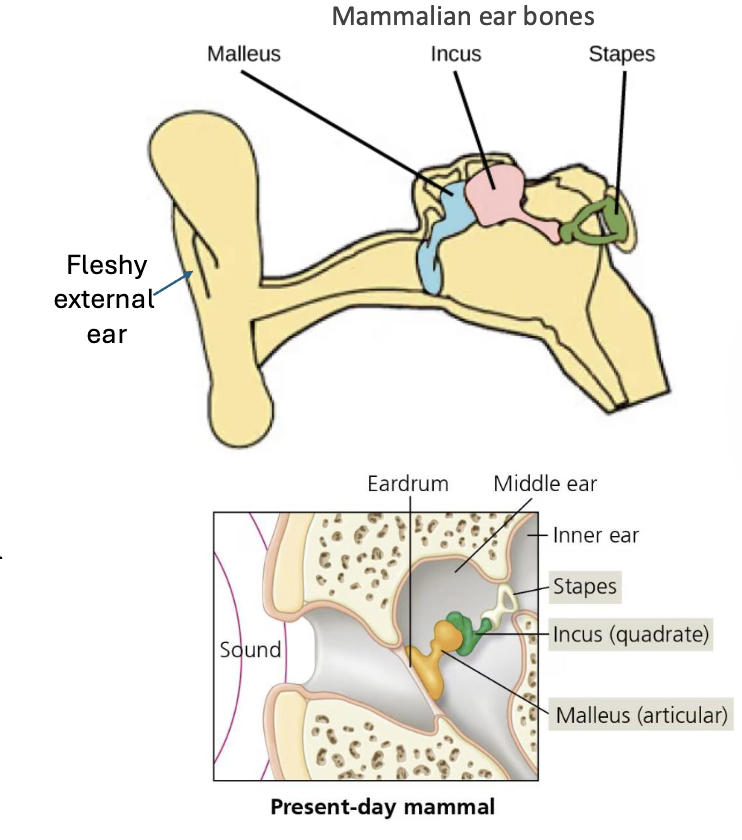
MAMMALS SKELETON FEATURES
STAPES: Single bone that transmits vibrations to inner ear
HETERODONT TEETH: Incisors, canines, premolars, molars
DIPHYDONTS: Two sets of teeth in lifetime
4 Chambered heart
ERYTHROCYTES: Red blood cells, not nucleated
MOOVABLE EYELIDS
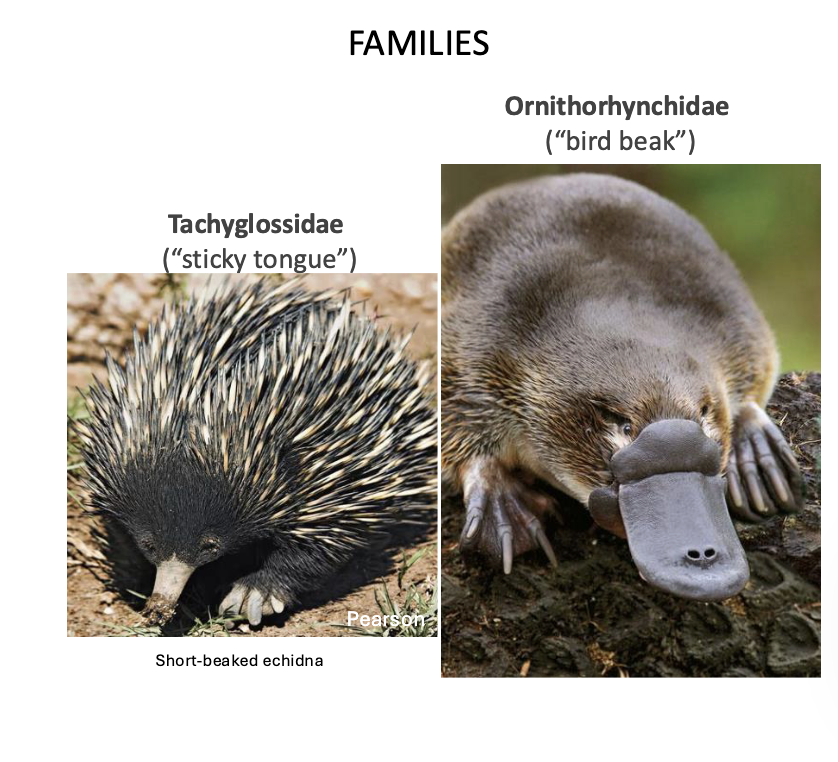
MONOTREMES CLADE (Egg Layers)
Echidnas and platypuses
Lay eggs!
Have hairs
DO NOT HAVE TEETH
Produce milk but lack nipples
Mammary glands located on ventral body part
After hatching, babies suck milk from mother’s skin/fur
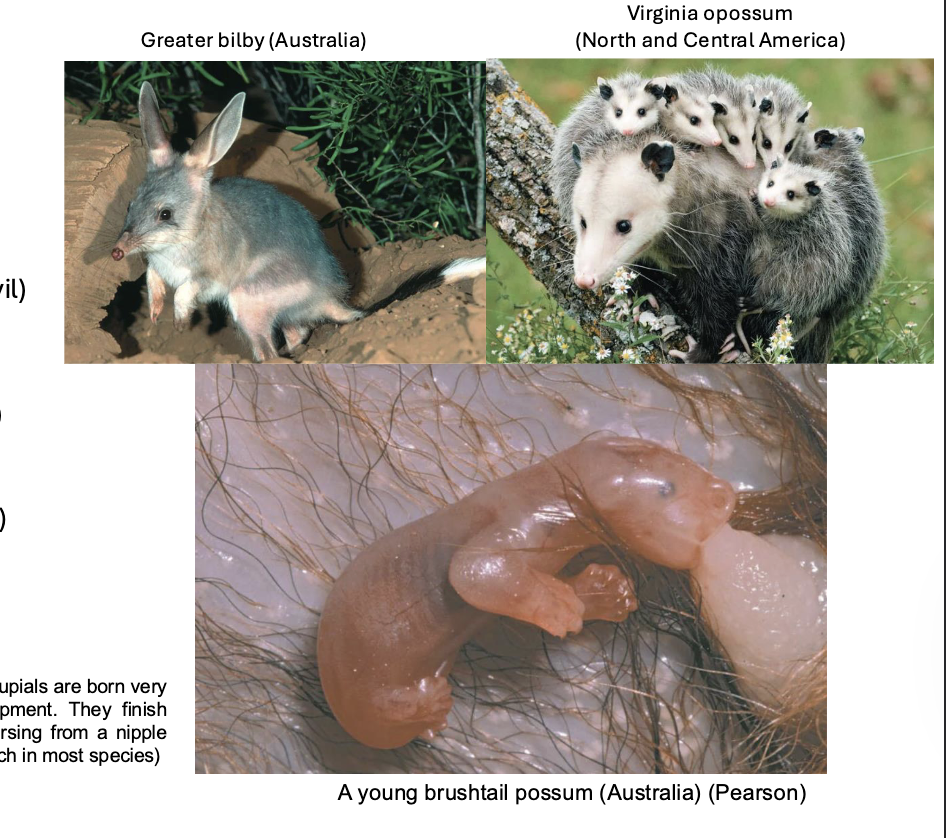
MARSUPIALS CLADE (Pouch)
Opossum, kangaroo, koala, bilby
Give birth to young
Placenta
Complete development in marsupium (pouch)
EUTHERIANS (Placentals)
Adaptations for burrowing, flying, swimming, hunting, running, climbing
Well-developed chorioallantoic placenta
Gas, fluid, nutrient exchange
Longer pregnancy than marsupials
Complete embryonic development within uterus
PRIMATES SYNAPOMORPHIES (6) Order
ROTATING Shoulder Joint
Hands/Feet GRASPING
Big Toe
Opposable Thumbs
Thumb can touch ventral surface (fingerprint side) of fingertip on all four fingers of the same hand with its own ventral surface
"Your brain is good if you can do this” BS
STEREOSCOPIC VISION
Two overlapping fields of vision from eyes
LARGER BRAINS, Shorter Jaws
MODIFIED CLAWS = Nails
(Usually) ONE OFFSPRING per pregnancy
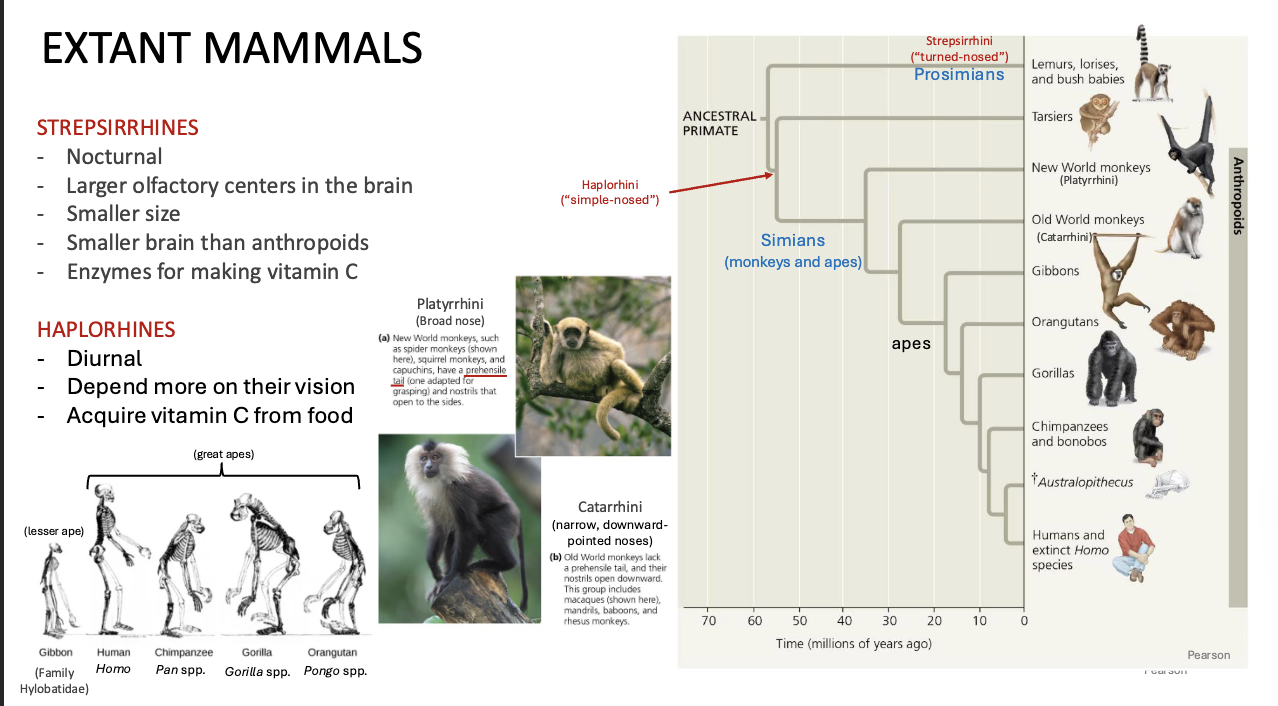
PRIMATES GROUPS (2) SH
STREPSIRRHINES
HAPLORHINES
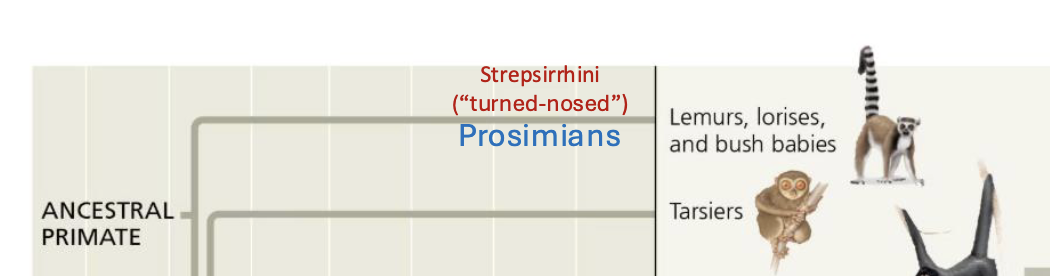
STREPSIRRHINES
Nocturnal
Larger olfactory centers in brain
Smaller in size
Smaller brain than anthropoids
Enzymes for making vitamin C
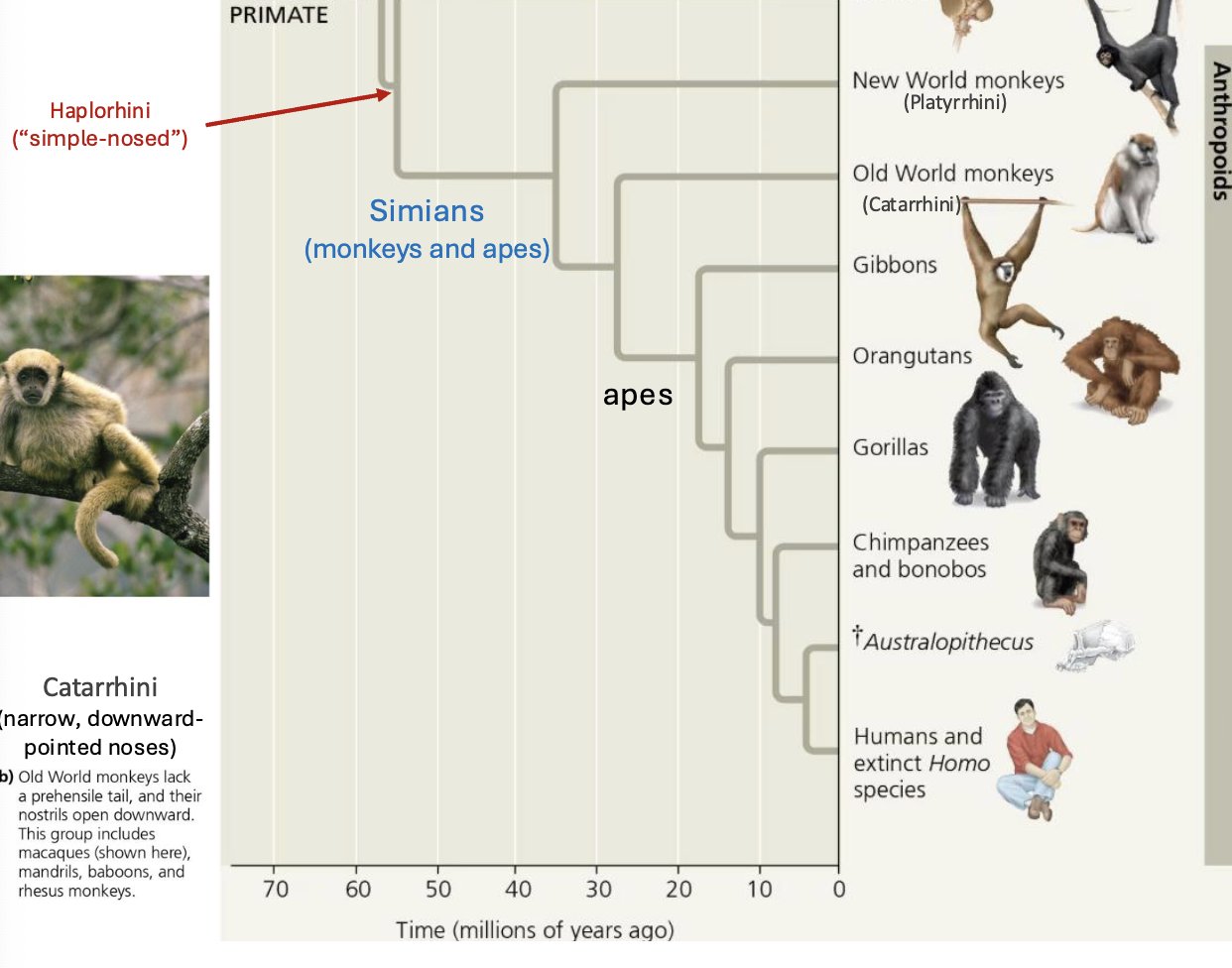
HAPLORHINES
Diurnal
Depend more on vision
Aquire vitamin C from food