Dams and Reservoirs
 Call Kai
 Learn
Learn Practice Test
 Spaced Repetition
 Match
Match Flashcards
 Knowt Play
1/51

Earn XP
Description and Tags
WRS Final
Name | Mastery | Learn | Test | Matching | Spaced | Call with Kai |
|---|
No analytics yet
Send a link to your students to track their progress
52 Terms
water supply
water needs and supply aren’t well matched
water needs are being met by depleting resources that took an extended period of time to accumulate (water use increases, but water availability stays the same)
water is being depleted by:
agriculture
industrilal
domestic
no growth in ground/surface water
Dams
Defn: solid barrier used to store water
Use: Hydroelectric Power generation, irrigation, flood controls, recreation
Storage Dams
for impounding water for development use
diversion dams
for diverting streamflow into canals or other conveyance systems
detention dams
hold water temporarily to delibrately slow down flood flows
Types of Dams - function(3)
storage dams
diversion sams
detention dams
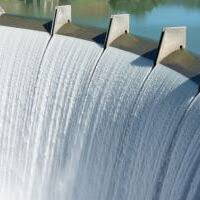
Overflow Dams
Carry discharge over the crests
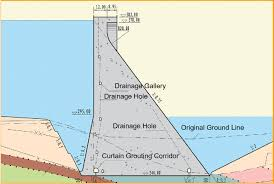
Nonoverflow dams
not designed to be overtopped
Dam classification (2)
overflow dams
non-overflow dams
Earthfill dams
built by compacting successive layers of earth, using the most impervious materials to form a core and placing more permeable substances on the upstream and downstream sides
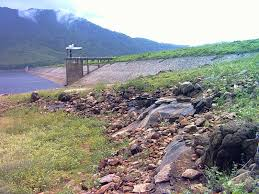
Rockfill Dams
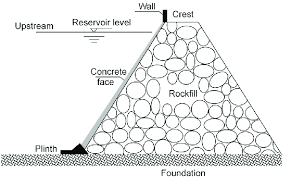
mainly made from natural materials. They are suited to sites with wide valleys and shallow slopes, creating relatively wide and shallow reservoirs
Concrete Dams (3)
a dam constructed of concrete and or masonry, which relies on its weight and internal strength for stability
concrete gravity dams
concrete arch dams
concrete buttress dams
hollow gravity dam
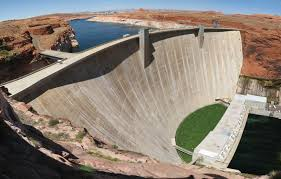
Stone Masonry
a dam constructed of concrete and or masonry, which relies on its weight and internal strength for stability
stone masonry gravity dams
stone masonry arch dams
hollow gravity dam
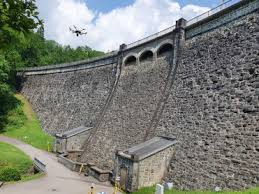
Hollow gravity Damn (concrete/masonry)
a dam constructed of concrete or masonry on the outside, but having a hollow interior relying on its weight for stability
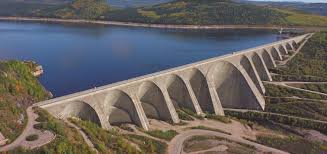
Steel Cofferdams
a cofferdam is a substantially water tight enclosure consisting of steel sheet piling and structural bracing components which will permit substructure construction in waterways, or other areas where construction must be isolated from the surroundings
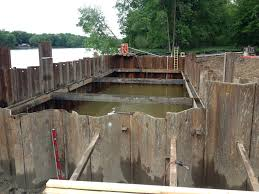
inflatable cofferdams
can change them to control flow
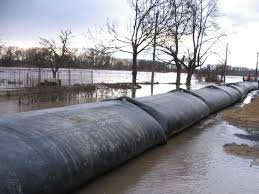
types of dams (5-7)
earthfill dams
rockfill dams
concrete dams
stone massonry dams
hollow gravity dam
steel cofferdam
inflatable cofferdam
Hydropower station
big dams used to generate power
power dependent on elevation of water, efficiency, and losses
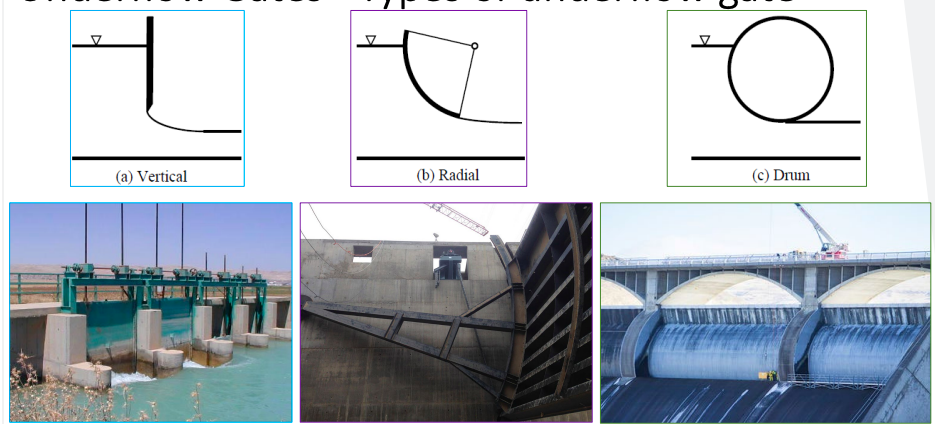
underflow gates
gates are frequently used to control discharge in canals or on spillway crests
vertical slice gate is most common
found at bottom of reservoir
Reservoir Sedimentation
Defn: sedimentation is the process of filling natural lakes and man-made reservoirs by sediment transforming finally into the land again (will shorten lifespan of reservoir)
Cause: sediment yield transported by rivers as suspended or bed load into the reservoirs. The inflow into the reservoir is mixture of water and sediment
finest silt particle of diamm < 0,1mm are carried up to the deepest reservoir zone in front of the dam and normally near the outlet
Issues w Sedimentation
as the amount of sediment rises the storage of the reservoir goes down
eventually they will have to dredge the reservoir (costly
Sedimentation Solution (general)
calculate the amount of sediment coming in
the water with most the sediment in it is allowed to flow over/past the reservoir (taking the sediment with it) and then the reservoir will open to intake the rest of the water.
issues with general solution:
causes silt to accumulate downstream instead of in the dam
reduces the cross section of the stream
stream depth decreases and the stream width increases, causing more flooding
Check Dams
small structures, ditches, and brooks
use: Build a dam before the big dam to collect the sediment, then let the overflow from that dam go to the big dam
pros:
easier to dredge
reduces sediment in the big dams
Flushing
how much rain will impact that area of the soil and how much settlement will come through
letting water go instead of catching it bc you plan for a big storm to come
sediment amount depends on length of dry period before rainfall
cons:
risky because weather is often unpredictable
Situation 1: Rate at which the water resources are available is always in excess of the requirements
(supply > demand)
Solution: run-of-river project can be formulated in which water can be used directly from the stream as need arises. A run-of-river project primarily incorporates a conveyance system to transport water to the location of its use.
Situation 2: The total quantity of available resources over a period of time is equal to or in excess of the overall requirements, but the rate of requirements at times exceeds the available rate of resource supply
(rate of requirements > availability)
Solution: a storage reservoir. A reservoir project includes a storage structure, a control structure, and a conveyance system
Situation 3: Total available resources are less than the overall requirements
(available resources < required)
Solution: a supplemental source or an alternative site has to be explored (the conveyance structures, desalination…)
Seasonal (within-year) storage
when the demand for water can be satisfied by holding some of the high flow each year for release during a later period of low flow
Carryover (over-year) Storage
when there is not enough high flow every year to raise the flow to the desired level, extra water must be stored during wetter years, to release during dry year
Types of Storage (2)
seasonal - Within year
Carry over - over year
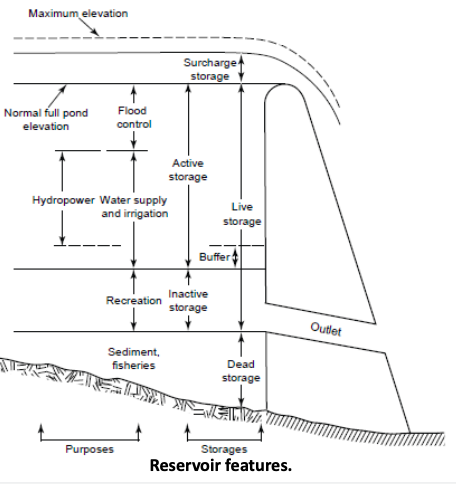
Active storage
storage to manage peak demand, provide firefighting reserves, ensure supply during dry periods, and support irrigation
includes:
flood control, hydropower, water supply and irrigation, and a buffer
storage required to meet the water demand for intended uses as well as a buffer amount of water
live storage is part of it
Dead storage
storage provided to collect sediment and maintain a minimum pool level
prevents it from clogging intakes while maintaining habitat for fish and supporting environmental minimum downstream flows during droughts
live storage
the storage required to meed the demand for intended uses
amount of active storage without the buffer section
Reservoir Storage Capacity
active storage: (live storage + buffer)
dead storage
gate useful to control water supply
Demand for Water
use of water: comprises studying availability of and demand for water contemplating a project that can meet the expected needs from available supplies
Goal: varying the quantity and quality, time of supply, and place of use of water resources in accordance w need
Questions (4)
How much water is needed?
(how much demand/ supply )
How much water is Available?
(are demand and supply in sink? How can we manage resources and risks to see what the demand is?)
How are the requirements satisfied by the supplies?
(multiple objectives to play bw them)
How is the used-up water disposed of?
How is the used up water disposed of?
disposed of through the drainage system
(important because main intake from river and water waste will be disposed of back into the river and used by communities downstream.)
The volume of water you can dispose of into the river depends on the size of the river itself
reconciliation of demand w available resources in an optimal manner
combines demands for agriculture, industry, etc
optimize this solution to balance water availability as well as demand (not a static problem-both variables vary)
water withdrawal uses
involve diverting surface water or groundwater from tis source of supply (for irrigation…water supply…etc)
(demand that requires withdrawal)
Nonwithdrawal uses
onsite uses such as navigation and recreatoin
(doesnt require withdrawal)
requires a certain amount that remains in the network
(keep certain volume at certain flow to avoid cavities)
consumptive water use
the portion of withdrawn quantity that is no longer available for further use because it has been degraded from use by plants, humans, industry, evaporation…etc
(consumptive water use is small since 80-90% of the total intake is returned)
Demand for Water Supply
withdrawal uses
non withdrawal uses
water requirements usually have the highest priority
consumptive water use is small
most water will be returned to the system degraded which is why it is treated
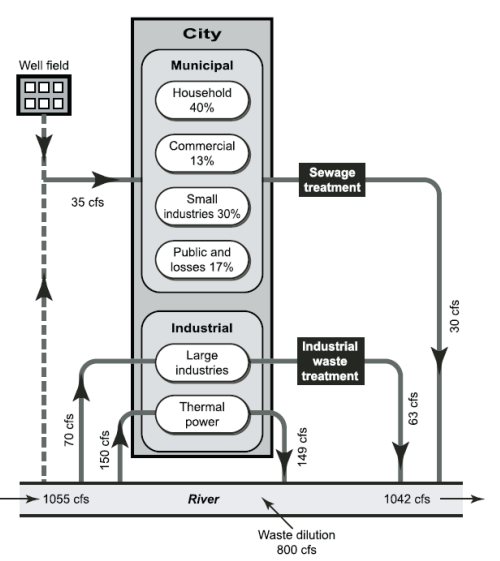
Water supply visual (magnitude of consumption)
well field: (literally a field of wells) used for backup storage that pump the water from aquifers
(in this example) the municipal is the main water demand source
water is withdrawn and is returned to the river (80-90%) - very little loss from start to finish
water we dispose of in the river will need to be a certain ratio of the water flow because people downstream need the water so it cant all be degraded from use
Municipal Requirements (public water use)
domestic uses
public uses
commercial uses
small industrial use
losses in distribution system
Parameters:
population estimates
per-capita water usage
(highly variable-depending on size of city, characteristics of the population, nature, and size of commercial and industrial establishments, climactic conditions, and cost of supply)
plan to anticipate demand
Water requirements: Categories
Municipal (public use)
large industrial
waste dilution
water supply vs water consumption
water supply: the recorded amount of water put into the system
water consumption: the recorded amount of water taken out of a system
water supply > water consumption (usually)
Per Capita water usage
common:
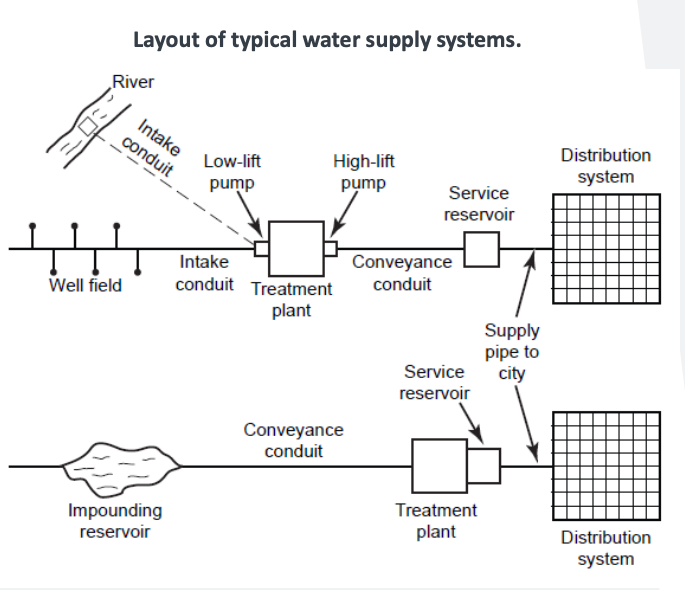
low lift pump: bring water from rier to treatment plant
high lift pump: go through conduit and go to reservoir
distribution system: water reaches It by gravity
benefit: don’t need power to send water to people
treatment plant: never sends water directly to the city because it cant keep up with the variance in demand of the city
service reservoir: holds water to deal with city variance
uncommon:
service reservoir, treatment plant, distribution center: risk here with power (variable demand and power issues)
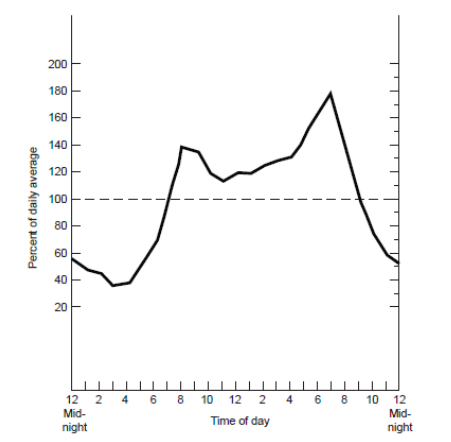
common trends in Per capita use
smaller the city the more variable the demand
the shorter the period of flow, the wider the variation is from average
(the hourly peak flow Is much higher than the daily peak)
(time period increase, average increases)
supply has to cope with the pattern of this demand and always satisfy this demand and more (incase of worst case scenario)
water supply tanks
when there are widely varying demands on a water supply distribution system, a distribution reservoir or service tank is provided to accommodate the higher-than-averae demands from an operating storage.
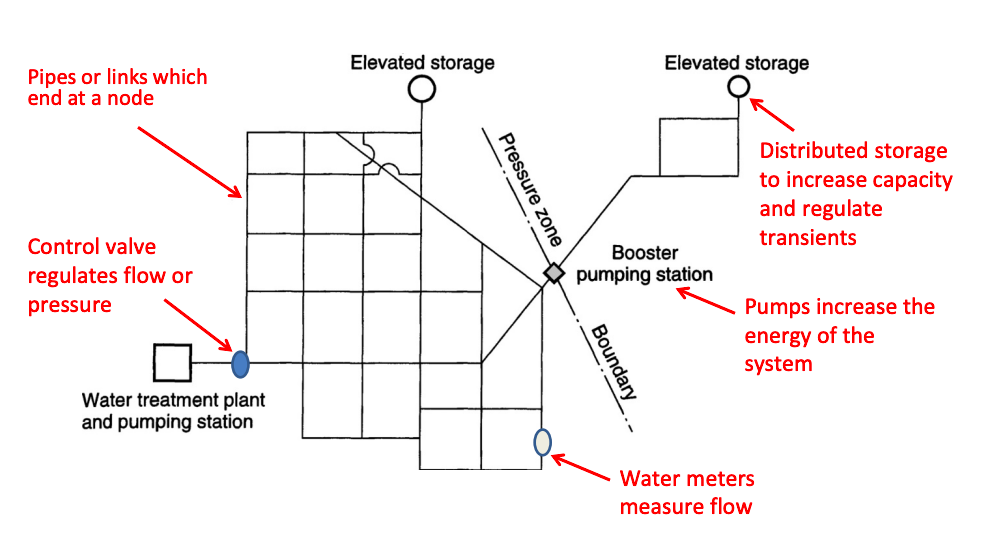
Water distribution system components
water tanks supply water to meet demands
pipes increase energy of the water system
meters measure flow
valve control flow or pressure (but decrease energy)
largest portion of a water distribution system is the pipes
Hydraulic grade line
low demand periods:
all consumption met by pumping station, tank filled with excess pumped water
High demand periods:
pumping station and tank both flowing to meet consumption needs
divert water to decrease head loss from pipes (pipes have friction which causes head loss)
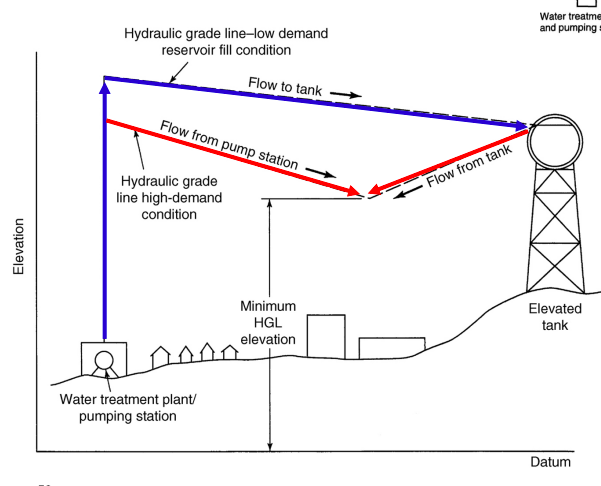
energy and hydraulic grade lines
pressure causes flow even against gravity
(need to know flow and pressure)