equilibrium
 Call Kai
 Learn
Learn Practice Test
 Spaced Repetition
 Match
Match Flashcards
 Knowt Play
1/17

Earn XP
Description and Tags
gen chem2
Name | Mastery | Learn | Test | Matching | Spaced | Call with Kai |
|---|
No analytics yet
Send a link to your students to track their progress
18 Terms
when Q > 1
the reaction is product favored
when Q < 1
the reaction is reactant favored
when Qc = Kc
it is not at equilibrium and nothing needs to occur to make the reaction at equilibrium
when Qc < Kc
it is not at equilibrium and the reactants need to be converted into products (shift RIGHT)
when Qc > Kc
it is not at equilibrium and the products need to be converted into reactants (shift LEFT)
when Qc = 0.60, what does this mean for the Kc value?
the reaction is not at equilibrium and it is smaller than the Qc value, making this reactant favored and there needs to be more products made, shifting the reaction right.
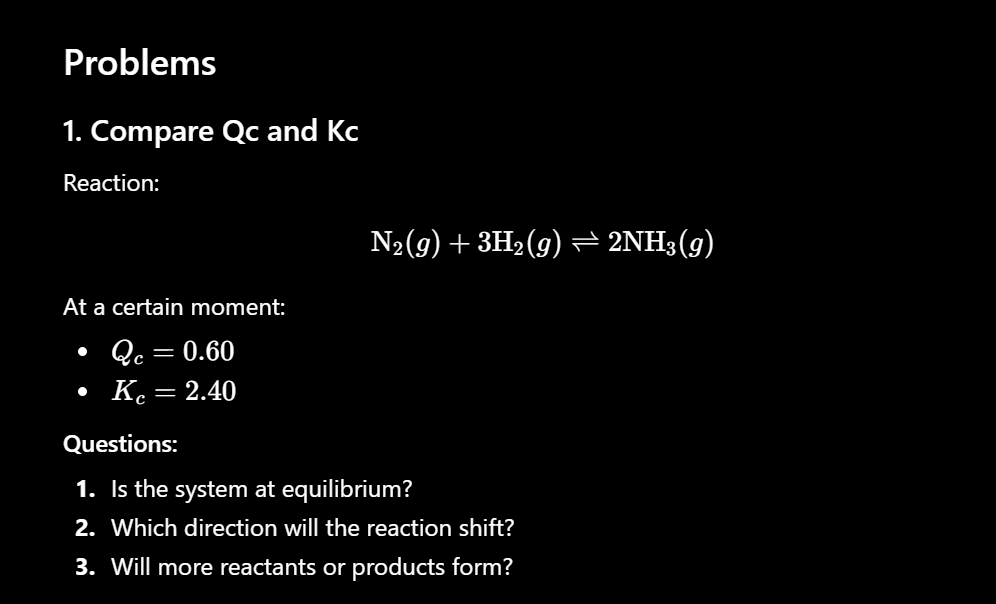
No
The reaction will shift right
More products will form
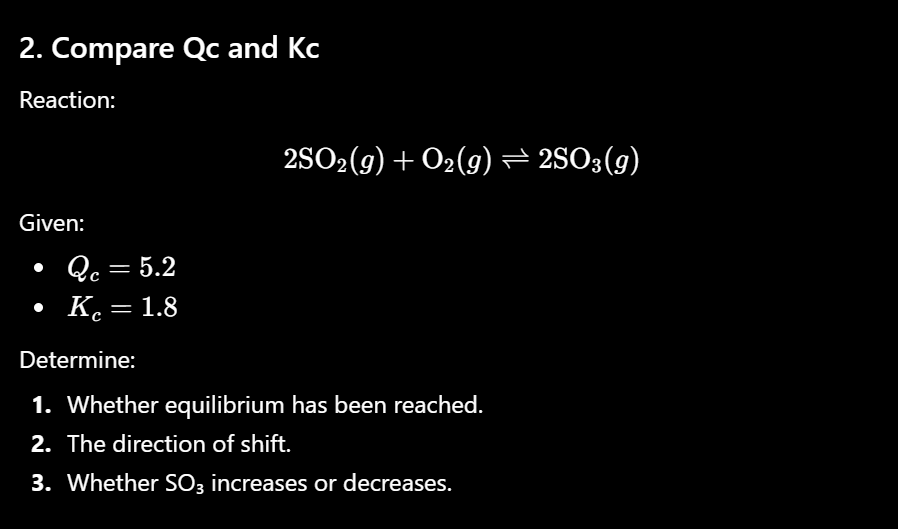
No
Shift left
Decreases
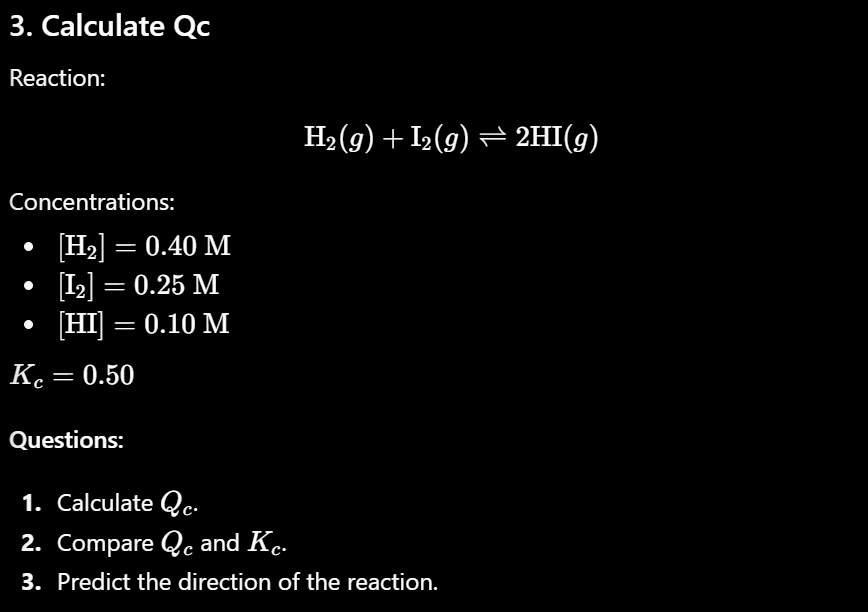
Qc = 0.1
Qc < Kc
The reaction will proceed right
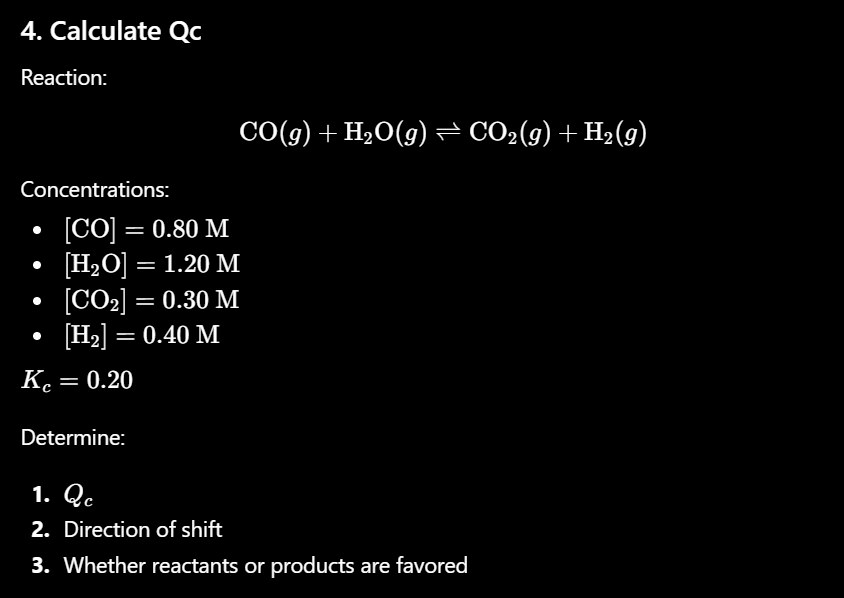
Qc = 0.125
Shift right
Reactant favored
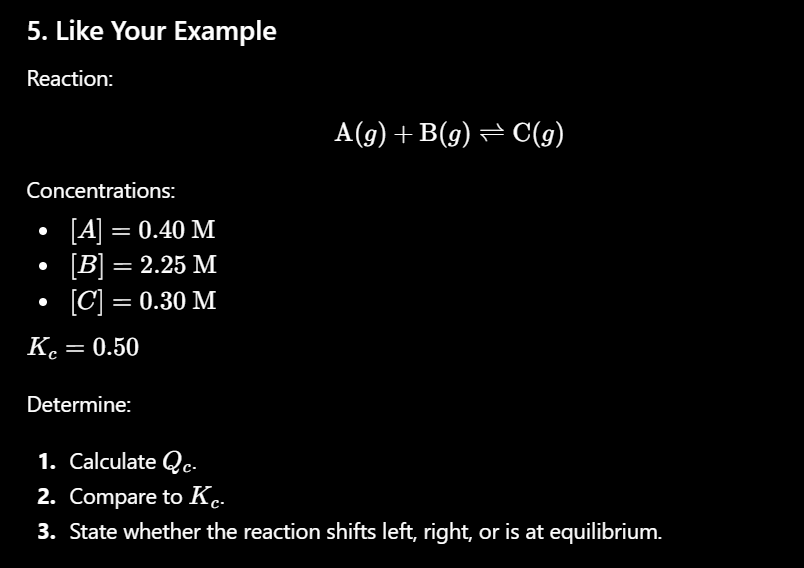
Qc = 0.33
Qc < Kc
Shifts right
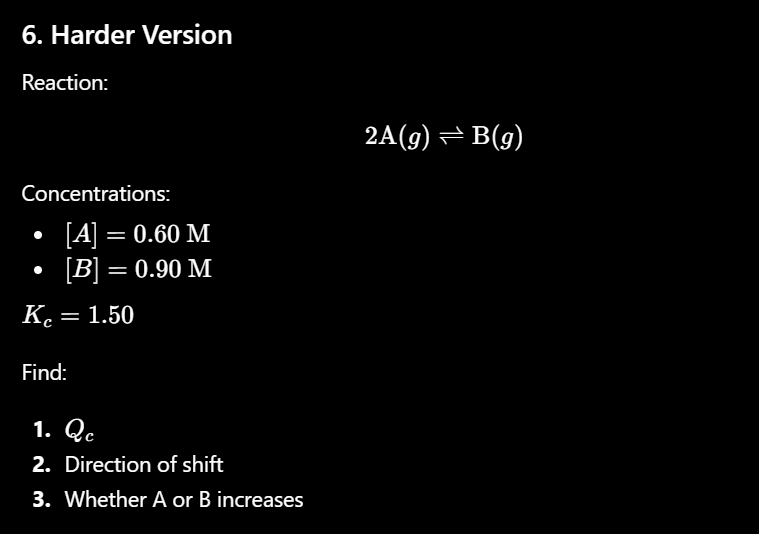
Qc = 2.5
Shift left
B decreases & A
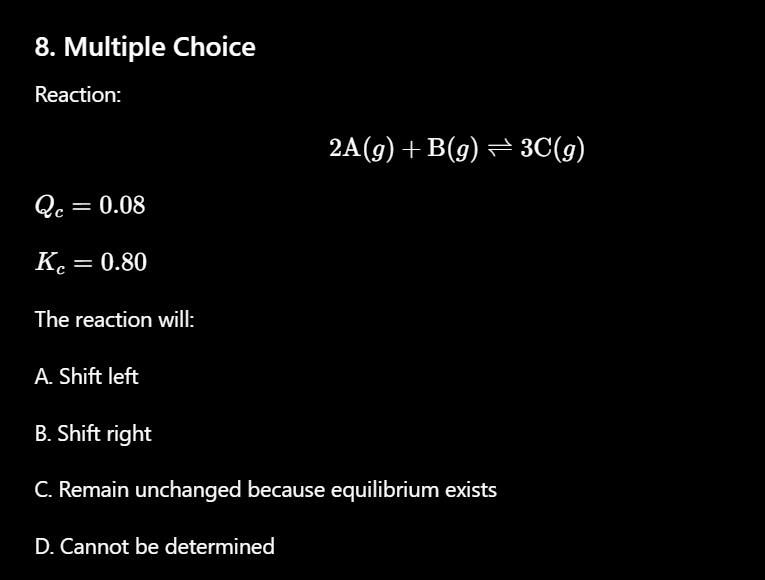
B, shift right
Le Chatiler’s Principle
equilibrium adjusts based on disturbances in pressure, temperature, or a component concentration
What CHANGES the K-value
temperature
What DOES NOT change the K-value
concentration, pressure, volume, and catalysts.
concentration and pressure/volume
shifts equilibrium left/right
catalysts
makes the reaction rate faster but does not change the k-value