2026 Peds!OB
 Call Kai
 Learn
Learn Practice Test
 Spaced Repetition
 Match
Match Flashcards
 Knowt Play
1/85

There's no tags or description
Looks like no tags are added yet.
Name | Mastery | Learn | Test | Matching | Spaced | Call with Kai |
|---|
No analytics yet
Send a link to your students to track their progress
86 Terms
Appearance (color)
The APGAR sign assessment that evaluates the newborn's skin tone, categorized as Blue/Pale (0), Acrocyanosis (1), or Normal color (2).
Uterine rupture
A rare but serious complication where the uterine wall tears, which can lead to severe maternal hemorrhage and fetal distress or death
Acrocyanosis
A specific condition indicating a score of 1 for Appearance (color) in the APGAR scoring system - blue extremities but pink core
Pulse
The APGAR sign evaluated as Absent (0), a rate of <100 (1), or a rate of >100 (2).
Grimace (response to stimulation)
The APGAR sign assessment of reflex irritability, scored as No response (0), Some response to stimulation (1), or Normal response to stimulation (2).
Activity
The APGAR sign assessment of muscle tone, scored as Absent (0), Flexed limbs (1), or Vigorous (2).
Respiration
The APGAR sign assessment of breathing effort, scored as None (0), Weak cry (1), or Strong cry (2).
Severely depressed newborn
The clinical assessment of a critically ill newborn with an APGAR score of 0−3.
Precipitous Labor
An extremely rapid labor and delivery process that occurs in less than three hours from the onset of contractions to birth.
Moderately depressed newborn
A newborn clinical status requiring close monitoring and rapid transport, indicated by an APGAR score of 4−6.
Normal APGAR Score
A cumulative APGAR score ranging from 7−10.
Weak cry
The observation for the Respiration sign that results in a score of 1.
Flexed limbs
The observation for the Activity sign that results in a score of 1.
Vigorous
The observation for the Activity sign that results in a score of 2.
Strong cry
The observation for the Respiration sign that results in a score of 2.
Initial Stimulation Period
The newborn should be dried, warmed, and stimulated for approximately 1 min while being kept at the level of the vagina, not below or above!
Cord Clamping - First Clamp Position
The clamp should be placed 4extinches (10extcm) from the baby once the cord stops pulsating.
Cord Clamping - Second Clamp Position
The second clamp is placed 2 inches (5extcm) from the first clamp.
APGAR Assessment Timing
The score is assessed first at 1extmin and then again at 5extmin after birth.
Normal APGAR Score
A score for a healthy newborn that is > 7.
Low APGAR Score Protocol
If the score is < 7, assessment should continue every 5extmin.
Braxton-Hicks Contractions
Irregular, non-labor contractions that occur as the uterus prepares for childbirth.
Signs and symptoms of Braxton-Hicks Contractions
Irregular, painless contractions, that have no increase in intensity or frequency, and no cervical dilation.
Gestational Diabetes
A type of diabetes that develops during pregnancy, characterized by high blood glucose levels.
Abruptio Placenta
The premature separation of the placenta from the uterine wall, which can compromise fetal oxygen and nutrient supply.
Abruptio Placenta
Sudden and severe abdominal pain, dark vaginal bleeding, uterine tenderness, and signs of fetal distress are associated with what OB medical condition?
Dark Vaginal bleeding
This type of bleeding is associated with placenta abruption
immediate emergency care, monitoring and supporting vital signs, providing oxygen, and preparing for urgent delivery
What are the required treatments and emergency interventions for Abruptio Placenta?
Increases by approximately 50ext, rising from 4.5extliters to 7extliters to support the fetus, kidneys, and preparation for delivery.
Blood Volume (Pregnancy)
The typical volume of blood a mother can lose during delivery, approximately 500extmL.
Normal Vaginal Delivery Blood Loss
Respiratory Changes (Early Pregnancy)
Both tidal volume and minute volume increase by 50%.
Renal and Urinary Changes (Pregnancy)
Characteristics include increased diameter of ureters, increased urinary output volume, and decreased bladder volume leading to increased frequency of urination.
Gastrointestinal Changes (Pregnancy)
The weight of the uterine fundus on the lower intestines can lead to constipation.
Gestational Diabetes
A metabolic change resulting from a combination of increased carbohydrate intake and a decline in insulin sensitivity, despite an increase in insulin production.
Supine Hypotension Syndrome
A condition occurring when a pregnant woman lies on her back, compressing the inferior vena cava and reducing venous return to the heart, typically after 20 weeks gestation.
Pathophysiology of Supine Hypotension Syndrome
Compression of the inferior vena cava leading to reduced venous return, decreased cardiac output, and hypotension.
Signs and Symptoms of Supine Hypotension Syndrome
Includes dizziness, lightheadedness, hypotension, nausea, pallor, sweating, and fetal distress.
Positioning treatment for Supine Hypotension Syndrome
Placing the patient on her left side to relieve pressure on the inferior vena cava.
Hyperemesis Gravidarum
A severe form of nausea and vomiting during pregnancy that leads to dehydration, electrolyte imbalance, and weight loss.
Diphenhydramine
An antiemetic medication used as a treatment for the severe nausea associated with Hyperemesis Gravidarum.
Treatments for Hyperemesis Gravidarum
IV fluids for rehydration, electrolyte replacement, antiemetic medications, dietary modifications, and potentially hospitalization.
Fundal height at 12weeks
Palpable just above the pubic symphysis.
Fundal height at 20weeks
The fundus can be palpated at the level of the umbilicus.
Fundal height at 36weeks
The fundus reaches the sternum or xiphoid process.
First stage of delivery
The stage characterized by the dilation of the cervix, typically beginning with uterine contractions, the bloody show, and the rupture of the amniotic sac (water breaking).
Second stage of delivery
The stage of delivery of the fetus (expulsion), starting when the fetus enters the birth canal and ending with the delivery of the newborn.
Third stage of delivery
The stage of delivery of the placenta, beginning with the delivery of the newborn and ending with the delivery of the placenta; it may take up to 30minutes.
Expulsion
Another term for the second stage of delivery, referring to the delivery of the fetus.
"Neutral or sniffing" position
The anatomical position used to maintain airway patency in a small child whose head is larger proportionally to their body.
Pediatric Head Trauma
Small children are more prone to this because their heads are larger proportionally to their bodies.
Pediatric Muscle Mass
Small children have less muscle, making them more prone to hypothermia and abdominal organ trauma.
Fontanels
Anatomical structures in a child's head that take 18 months to close.
Sunken Fontanels
A physical assessment finding in infants indicating that the patient is dehydrated.
Bulging Fontanels
A physical assessment finding in infants that suggests ICP (Intracranial Pressure).
Pediatric Assessment Triangle (PAT)
An assessment tool for pediatric patients comprising three components: Work of breathing, Appearance, and Circulation.
PAT is WAC
A mnemonic used to remember the three components of the Pediatric Assessment Triangle: Work of breathing, Appearance, and Circulation.
Work of breathing
A component of the Pediatric Assessment Triangle that includes evaluating breathing rate and quality, breathing sounds, retractions, and nasal flaring.
Appearance
A component of the Pediatric Assessment Triangle assessed by looking at factors such as if the patient is lethargic, muscle tone, whether they are alert or crying, and eye contact.
Circulation
A component of the Pediatric Assessment Triangle assessed by checking for cyanosis, pallor, mottling, and cap refill time.
Retractions
Physical signs of respiratory distress assessed under the Work of breathing component of the Pediatric Assessment Triangle (PAT).
Nasal flaring
An indicator assessed during the evaluation of the Work of breathing component of the Pediatric Assessment Triangle (PAT).
Cyanosis/Pallor/Mottling
Skin-related signs used to assess the Circulation component of the Pediatric Assessment Triangle (PAT).
Cap refill time
A measurement used to evaluate the Circulation component of the Pediatric Assessment Triangle (PAT).
Preeclampsia
A pregnancy complication characterized by high blood pressure (> 140/90) and signs of damage to organ systems (often liver and kidneys), occurring after 20 weeks of gestation.
Severe Preeclampsia BP
A blood pressure reading of 160/110 or higher during pregnancy.
Preeclampsia "3 must haves"
Hypertension, proteinuria, and edema.
Preeclampsia additional symptoms
Severe headaches, visual disturbances, upper abdominal pain, nausea or vomiting, and decreased urine output.
Preeclampsia treatments
Monitoring blood pressure, administering antihypertensive medications, and administering magnesium sulfate for seizure prevention.
Eclampsia
A serious complication of pregnancy marked by the onset of seizures or coma in a woman already diagnosed with preeclampsia.
Eclampsia signs & symptoms
Seizures, severe headache, visual disturbances, upper abdominal pain, altered mental status, and hypertension.
Eclampsia
Immediate emergency care, securing the airway, providing oxygen, administering magnesium sulfate for seizure control, antihypertensive medications, and preparing for urgent delivery for which medical condition?
Magnesium sulfate
A medication used in preeclampsia for seizure prevention and in eclampsia for seizure control.
Placenta Previa
A condition occurring when the placenta partially or completely covers the cervix, which can lead to bleeding during pregnancy or delivery.
Painless vaginal bleeding
A sign and symptom of placenta previa that usually occurs during the third trimester.
What do you suction first when delivering a new born?
Mouth then nose
Prolapsed cord
A rare but serious complication where the uterine wall tears, which can lead to severe maternal hemorrhage and fetal distress or death.
Shoulder Dystocia
Occurs when the fetal shoulders become lodged behind the mother's pelvic bone during delivery, preventing the baby from being born.
McRoberts
Perform the ( ) maneuver (flexing the mother's legs to her abdomen), apply suprapubic pressure to dislodge the shoulder, and prepare for potential neonatal resuscitation and maternal complications.
Breech presentation
Occurs when the fetus is positioned with the buttocks or feet first instead of the head down at the time of delivery.
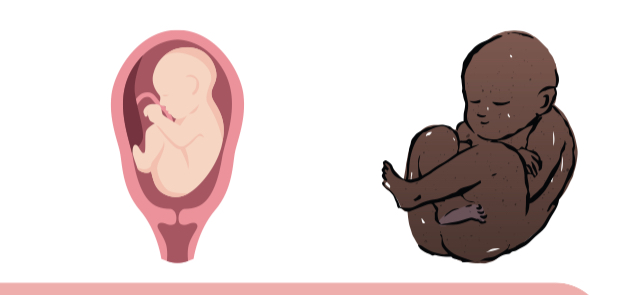
Limb presentation
Occurs when an arm or leg of the fetus presents first instead of the head or buttocks, which can complicate the delivery process. (DO NOT) want to deliver this
Pulmonary embolism
A blockage of the pulmonary artery or one of its branches due to a blood clot, which can be life-threatening. Can also occur from an amiotic fluid embolism.
Uterine inversion
Occurs when the uterus turns inside out, often due to excessive traction on the umbilical cord or fundal pressure during delivery.
No we should not , this can lead to withdrawals
Should we give Naloxone to new borns?
Less than 45
Dextrose 10% (D10 or D12.5) should be given to newborns if their BGL is less than?
Croup
Laryngotracheabronchitis also known as( )? Symptoms include hoarse, barking cough and inspiratory stridor
Signs of acute epiglottitis
Classic signs include sudden high fever, drooling, stridor, difficulty swallowing, and tripod positioning.