L12- Mining
 View linked note
 Call Kai
 Learn
Learn Practice Test
 Spaced Repetition
 Match
Match Flashcards
 Knowt Play
1/25

There's no tags or description
Looks like no tags are added yet.
Name | Mastery | Learn | Test | Matching | Spaced | Call with Kai |
|---|
No analytics yet
Send a link to your students to track their progress
26 Terms
Who does mining matter to?
matters to everyone→ smartphones/laptops rely on mining, contain deforestation metals
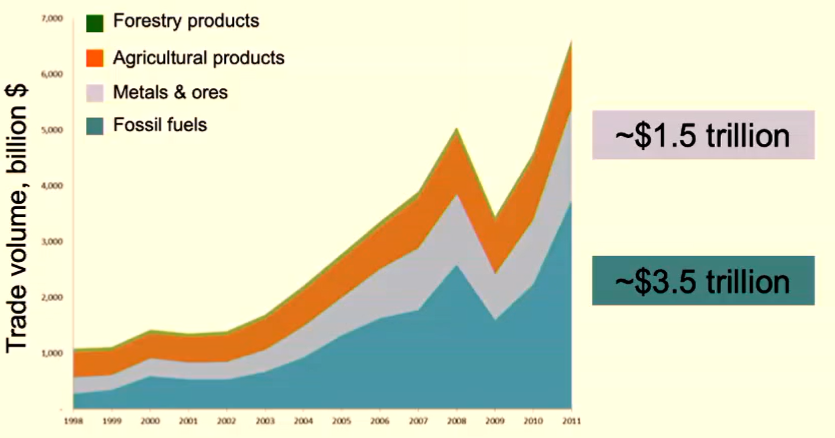
Global mining trade→ what makes the most money?
forestry and agricultural products are very important but don’t make much money
metals are doing better than the above
fossil fuels are dominating→ making the most money
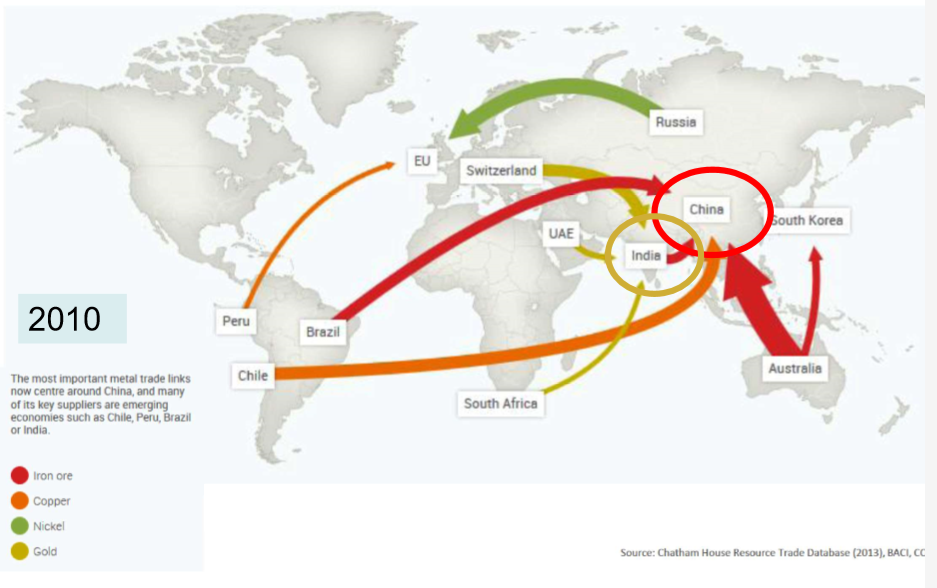
Global mining trade→ where?
major trade flows into Europe
China→ epicentre of global growth
India→ gold is popular
EU→ involved too
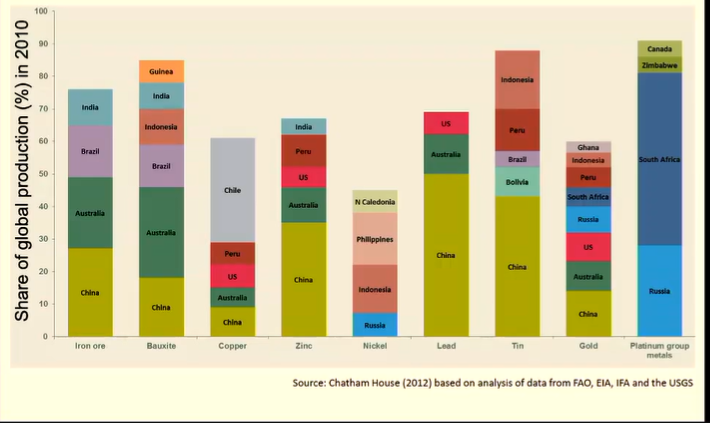
Global mining trade→ extraction/production?
extraction/production are concentrated in a few nations e.g. China, Australia
Study of gold mining in the Amazon (forest cover and sedimentation)
rates of gold mining in the Amazon using landsat imagery (high resolution) and ground-truthing (on the ground)
get a huge expansion in the 10 year period→ less than 10,000 hectares in 1999, more than 50,000 hectares now
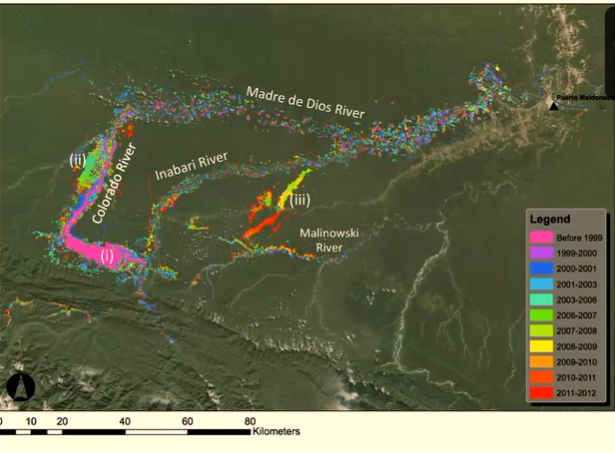
→ have lost lots of forest
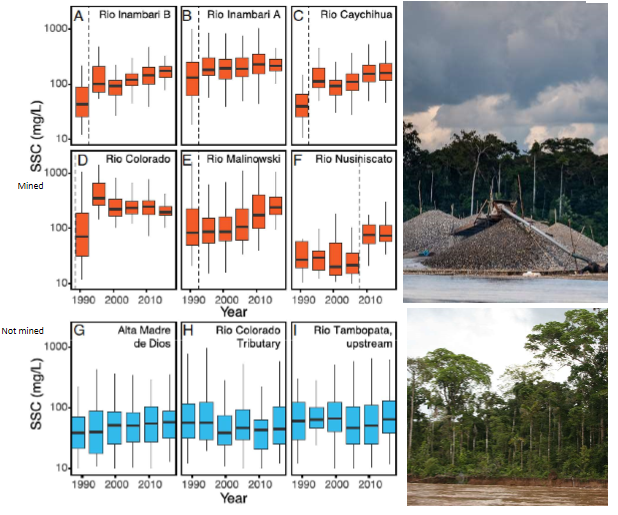
looked at the amount of suspended sediment in rivers with or without gold mines→ before mines had low sediments, there are now much higher sediment rates in rivers, don’t find much sediment in rivers without mined areas
get lots more in the wet season and in rivers with mines, rivers without mines have less sediment, especially in the dry season
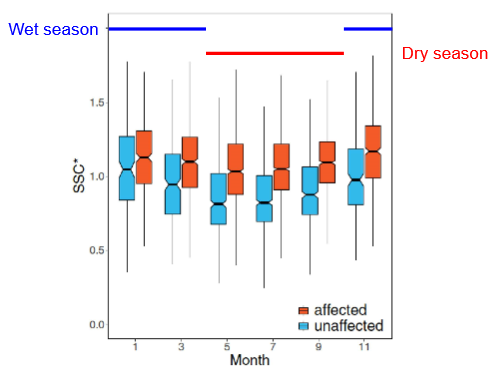
→ gold mining is having a big impact on deforestation and sedimentation in rivers
Why the rapid expansion of gold mining?
2008 international financial crisis, 8x increase in gold prices
want to make money, locally and nationally
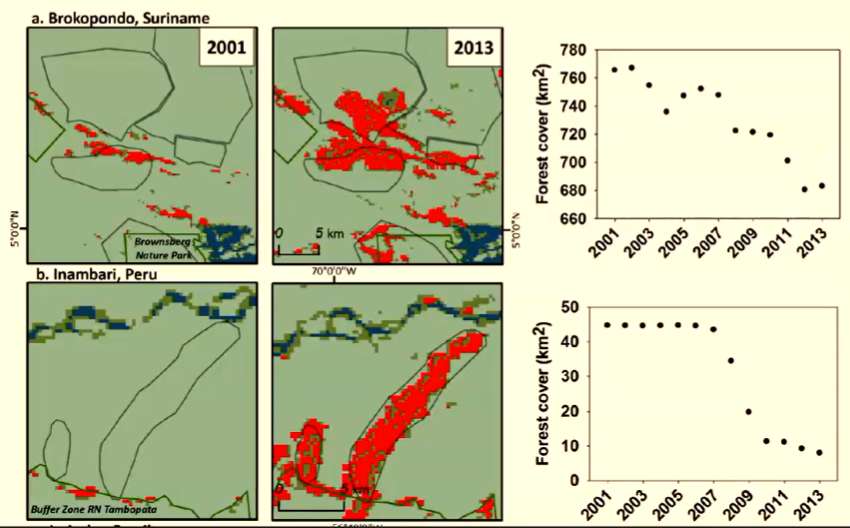
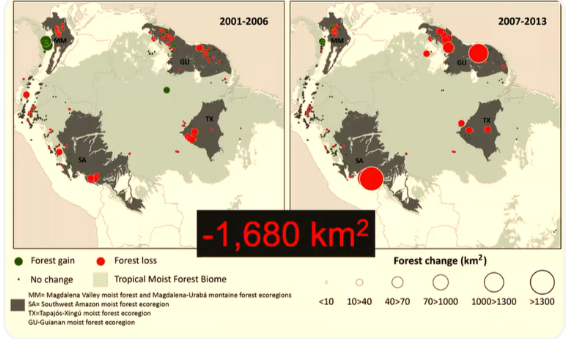
study looking at change in forest cover at known gold mining sites in the Amazon from 2001-2013
10-15% reduction in forest cover in Suriname
massive loss in Peru
→ gold mining expansion is a massive driver of deforestation in the amazon
Types of mining:
low volume, high value→ gold, diamond, coltran (lots of small mines)
businesses→ fly-in, fly-out
artisanal mining→ poor people, is illegal, is environmentally damaging
blood diamond→ a diamond mined in a war zone to finance
high volume, low value→ iron ore, copper
mined by large corporations→ major investments needed
built a 101km railway out of the Amazon in Brazil
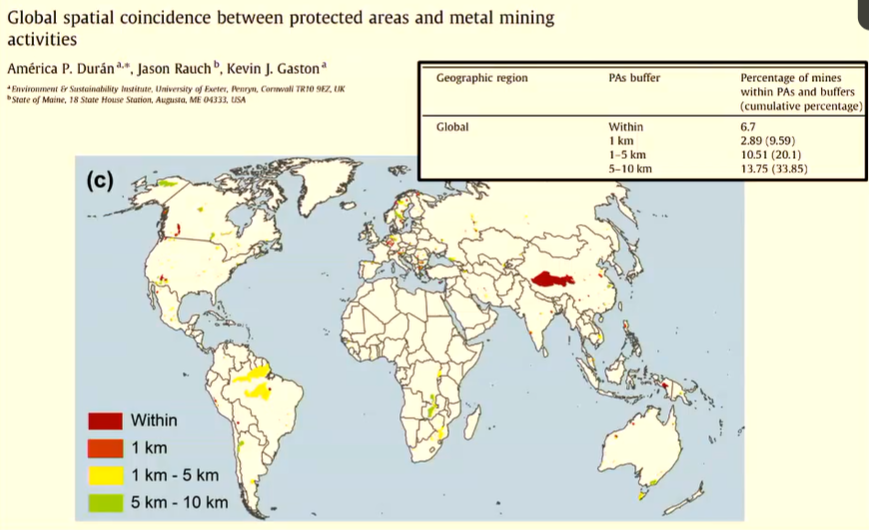
Study looked at global spatial coincidence between protected areas and mining activities
30% of PAs have mines in them or within 10km
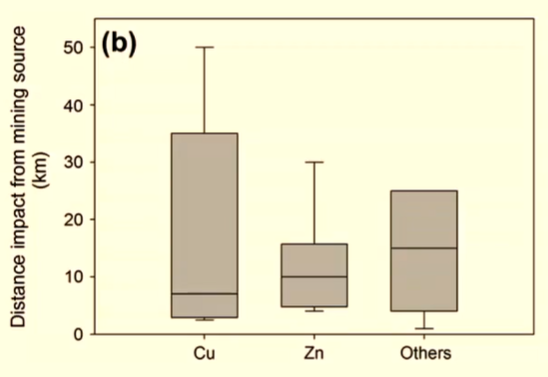
How far are the effects of mining felt?
more mining, more impacts e.g. fish dying, mercury poisoning on brain, most impacts are felt 10-15km away
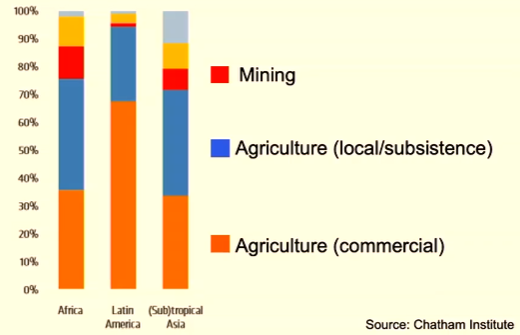
Driver of deforestation in the tropics:
biggest driver of deforestation is agriculture in the tropics
mining- 10% of deforestation→ secondary effects of mining may be more important
Negative secondary effects of mining:
outside boundary of mine
expansion of roads, rails, pipelines
accessing sparsely populated areas→ land clearing, bushmeat hunting
30,000 in 1999→120,000 people in 2002 in Geita township, Tanzania
allows land to be reached by industrial-scale agriculture
resource curse→ investment, weak governance, corruption, civil unrest, ignoring of environmental policy
e.g. Guinea tragedy
Positive secondary effects of mining:
large-scale mines can invest in areas for biodiversity e.g. Dja World Heritage site, Cameroon
brings people out of poverty
improved transport networks→ sparing land with higher yield
investing in low-income artisanal mining
Where are new mines going to be created? + study method
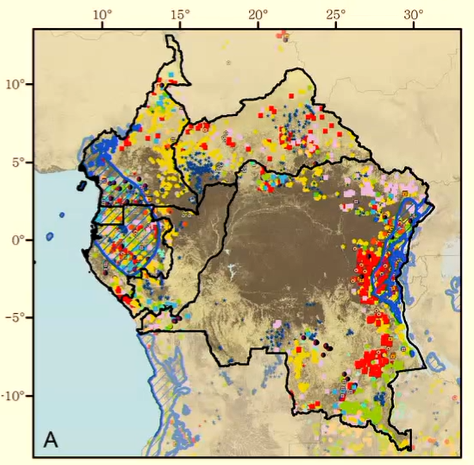
Congo basin, central Africa→ second largest remaining forest
have already signed up who can go and mine for oil in the Congo
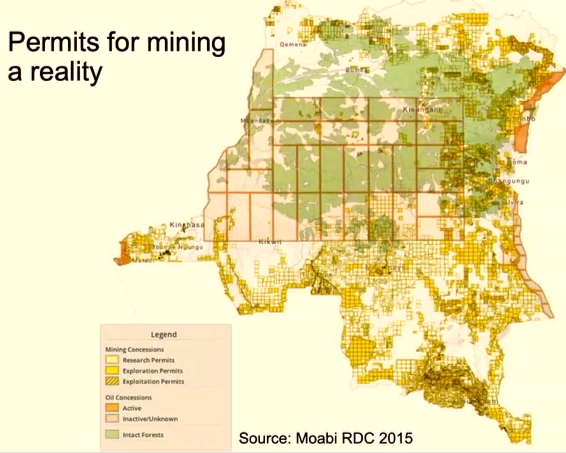
mapped minerals and overlayed this with conservation values
percentage of forest cover x where minerals are
protected areas x where minerals are
endemic bird areas x where minerals are
percentage of forest cover x where minerals are:
heart of congo basin doesn’t have minerals, more around the edge- good but does have potential for oil
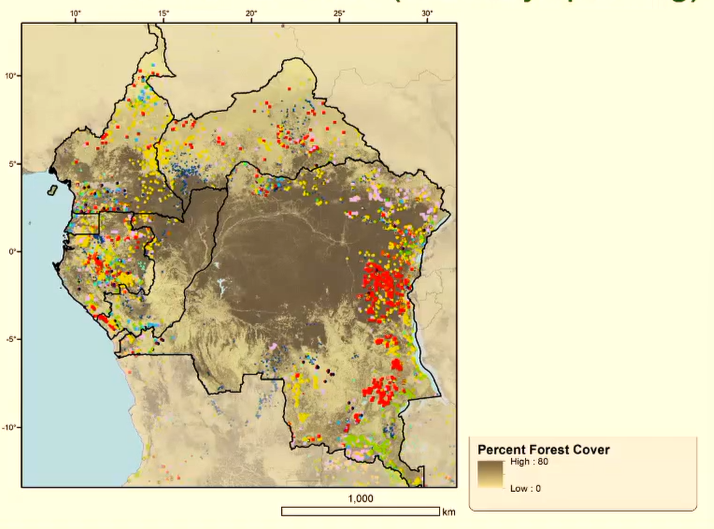
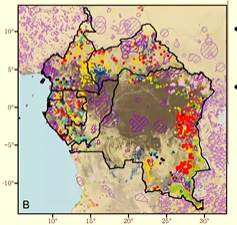
protected areas x where minerals are:
lots of purple shapes (PAs) are overlapping with potential mining areas
10% inside PAs, 23% within 10km
is bad as there are high potentials to downgrade, downsize or degazette (remove official status) a PA e.g.
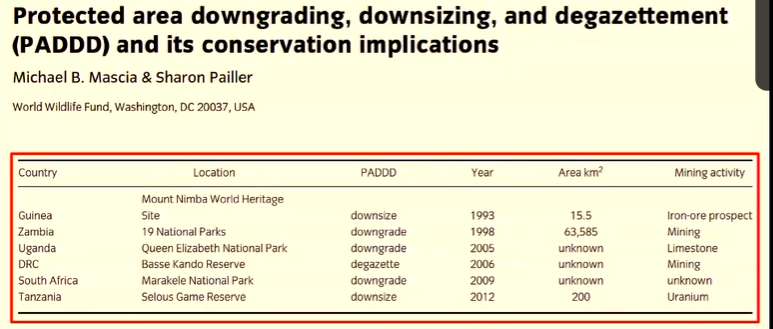
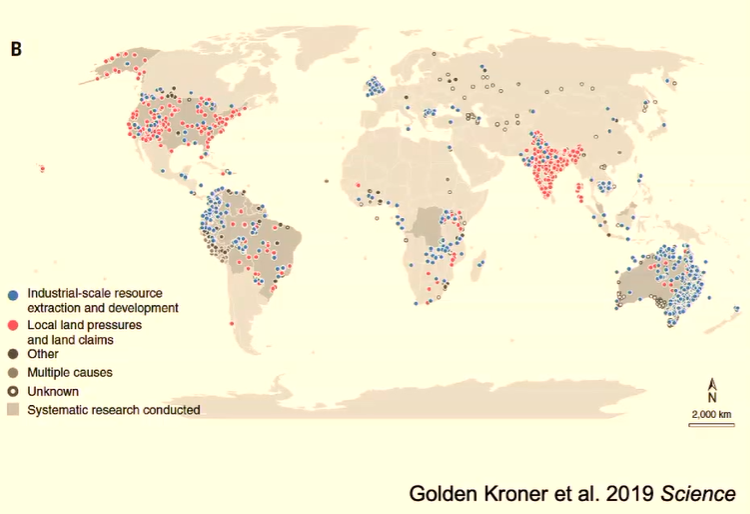
PAs on a bigger scale→ 62% of PADDD events are associated with mining
endemic bird areas x where minerals are:
27% of mining areas are in EBAs
850 of these EBAs have no protection anyways
Will the mining in the Congo actually happen?
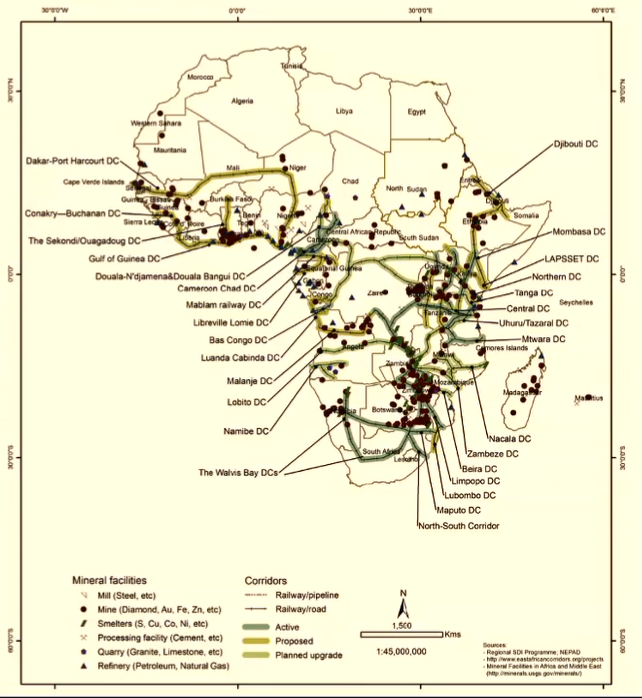
China, India, Brazil, Russia, Canada and Australia are all investing billions into mining in Africa
are investing in roads and railways in DRC, railway Mozambique, railway Cameroon, dam and railway through Congo rainforest, road through Serengeti
developmental pathways in Africa→ are next to or going through mines→ will open up wilderness areas
Policy Options:
Land use planning
Strengthen government’s capacities to plan, manage and monitor the mining sector
Promote offset impacts
Improving management of artisanal mining
Carbon payments
Identify market choke points
Reforestation post-mining
Recycling metals
Land use planning:
spend more money in railway construction to build them around forest
Strengthen government’s capacities to plan, manage and monitor the mining sector:
Samarco disaster, Brazil→ toxic sludge into a river, killed people and wildlife
having an independent global funding body→ miners pay into this that go and check, police construction, management and maintenance of mining infrastructure
Carbon payments:
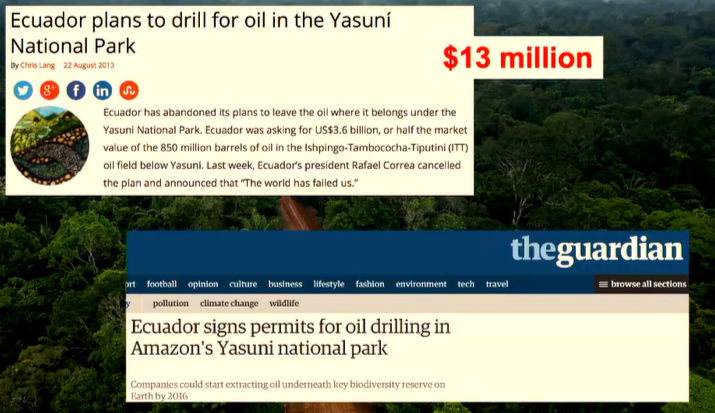
Ecuador plans for drilling oil→ world bank planned to be given half the market value in place of drilling but were only given 13million rather than 3.6billion so drilled anyway
Identify market choke points:
boycotts, publicity e.g. Juniors sell to major→ intercept at Junior point
lower corruption in stock markets external to tropics→ intercept here
Reforestation post-mining:
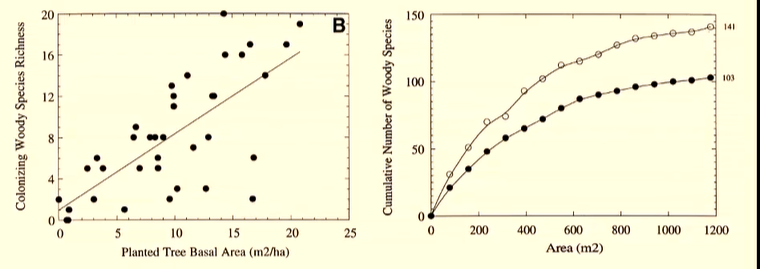
there is limited recovery after mining:
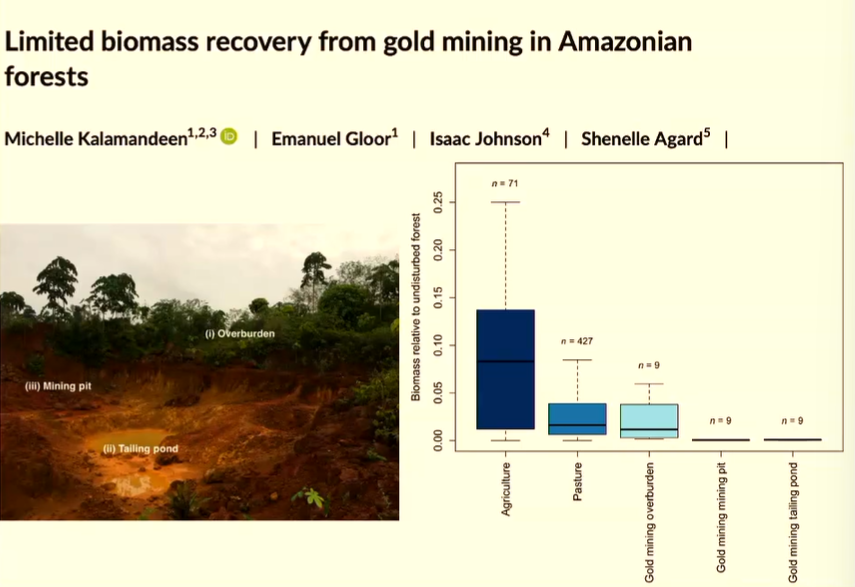
study→ replaced top 15cm of soil, replanted with native tree species
there was recovery on these mined areas
Recycling metals:
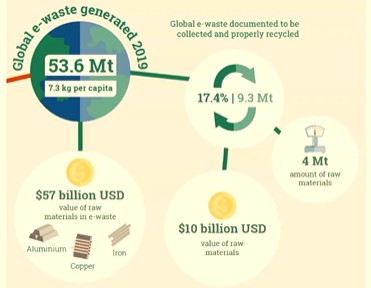
10billion dollars of precious metals are dumped every year
57billion dollars of raw value metals are thrown away
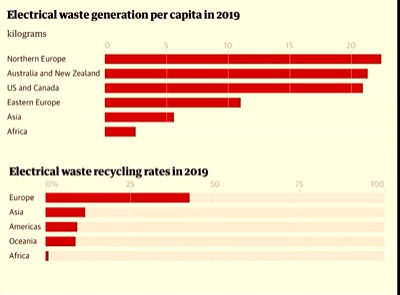
Northern Europe→ generate the most electronic waste, do recycle but not enough
Summary:
mining is a trillion dollar industry
affects tropics, especially Africa, directly and secondarily
there are possible conservation positives
policy initiatives need to be developed
there is little scientific understanding in this area