Lean Startup (Opportunity Development)
 Call Kai
 Learn
Learn Practice Test
 Spaced Repetition
 Match
Match Flashcards
 Knowt Play
1/17

There's no tags or description
Looks like no tags are added yet.
Name | Mastery | Learn | Test | Matching | Spaced | Call with Kai |
|---|
No analytics yet
Send a link to your students to track their progress
18 Terms
strategies to deal with uncertainty
opportunity development activities
lean statrtup
business planning, causation
effectuation
bricolage
idea vs opportunity
ideas are essential but not a sufficient condition for opportunities to emerge
commercial viability, potential market demand profitability, competition and sustainability need to be considered
opportunity development process
continuous process of shaping and developing the idea
engagemetn of other social actors to further develop the idea
refine, elaborate, change
different insights shape the raw idea into a valid opportunity
ideal opportunity development process model overall
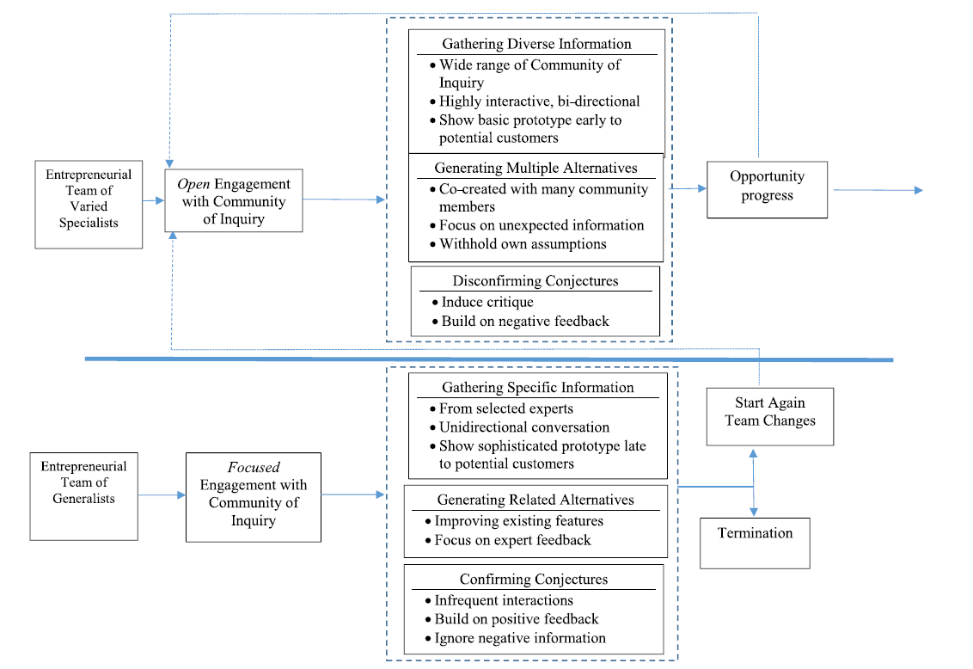
ideal opportunity development process focused engagement with community of inquiry
with entrepreneurial team of generalists:
gathering specific information
from selected experts
unidirectional conversation
show sophisticated prototype late to potential customers
generating related alternatives
improve existing features
focus on expert feedback
confirming conjectures
infrequent interactions
build on positive feedback
ignore negative information
results in: termination or starting over with team changes (open engagement)
ideal opportunity development process open engagement with community of inquiry
with entrepreneurial team of varied specialists:
gathering specific information
wide range of community inquiry
highly interactive, bi-directional
show basic prototype early to potential customers
generating multiple alternatives
co-created with many community members
focus on unexpected information
withhold own assumptions
disconfirming conjectures
induce critique
build on negative feedback
results in: opportunity progress
intentional feedback
ask different people individually to get inconsistent feedback (in- and outside your own bubble)
experts have especially strong mental schemas → not always a reliable source
track feedback
lean startup
develop a hypothesis and engage in “scientific” experimentation to test assumption (A/B split testing)
build on and test MVP
principles
validated learning: run frequent experiments to test your ideas, asses real behaviour (not intentions)
build-measure-learn (progressive learning): build and test a minimum viable product (MVP), engage with a feedback loop to decide to pivot or persever
innovation accounting: develop a metric, set milestones (goals), measure progress
build-measure-learn
continuous feedback loop
build → product → measure → data → learn → ideas → …
minimise time through entire feedback loop
experiment to obtain feedback
lean startup MVP
minimum viable product
the simpler the better (easier to engage with in split testing)
doesn’t need to be a perfectly polished product, acceptable if it’s buggy, incomplete or a compromise
don’t want to begin with a high-quality mainstream product
continuous judgement process
set quantative goals
pivot: don’t hesitate to completely change your idea
lean: start small, small batches
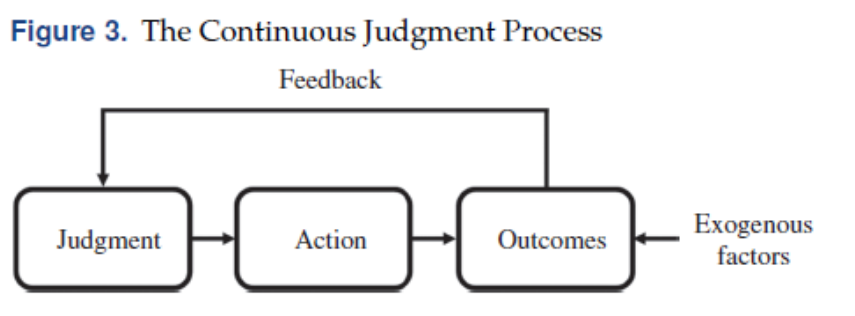
entrepreneurship as belief formation, testing and reponse process
continuous cycle:
belief formation: formulate belief about novel and value-creating assembly of resources
belief testing: test belief in the market and analyze feedback
response definition: update belief on higher level of product-market fit
experiment to obtain feedback
update beliefs
progressive learning
error orientation and monitoring model
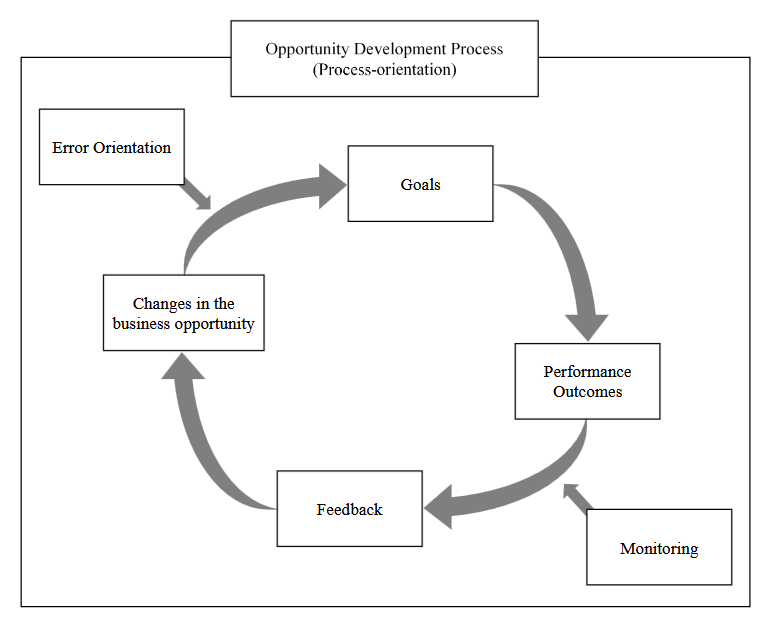
error orientation definition
positive attitude toward errors or deviations from previously set goals and standards
high: maximise positive consequences of deviations in terms of learning, innovation and motivation, which is reflected by setting higher goals for the venture
low: deviations induce strain having detrimental effects on motivation, protect and withdram
learning is as essential unit of progress: learn fast, learn often
high error orientation combined with high changes lead to a higher probability to reach goals
monitoring definition
using feedback to reevaluate one’s goals and actions based on a comparison between goals and performance outcomes and the assessment of progress towards performance and outcomes
depending on positive or negative assessment: continue, change or stop
forms of pivot
zoom-in: single-feature becomes whole product
learning goals
build on scientific findings and active engagement
value hypothesis: does it deliver value? to whom?
growth hypot hesis: how to discover new customers?