Lab exam #4 week 11-14 Histology and Electroencephalogram + Hearing and Visual tests
 Call Kai
 Learn
Learn Practice Test
 Spaced Repetition
 Match
Match Flashcards
 Knowt Play
1/48

There's no tags or description
Looks like no tags are added yet.
Name | Mastery | Learn | Test | Matching | Spaced | Call with Kai |
|---|
No analytics yet
Send a link to your students to track their progress
49 Terms
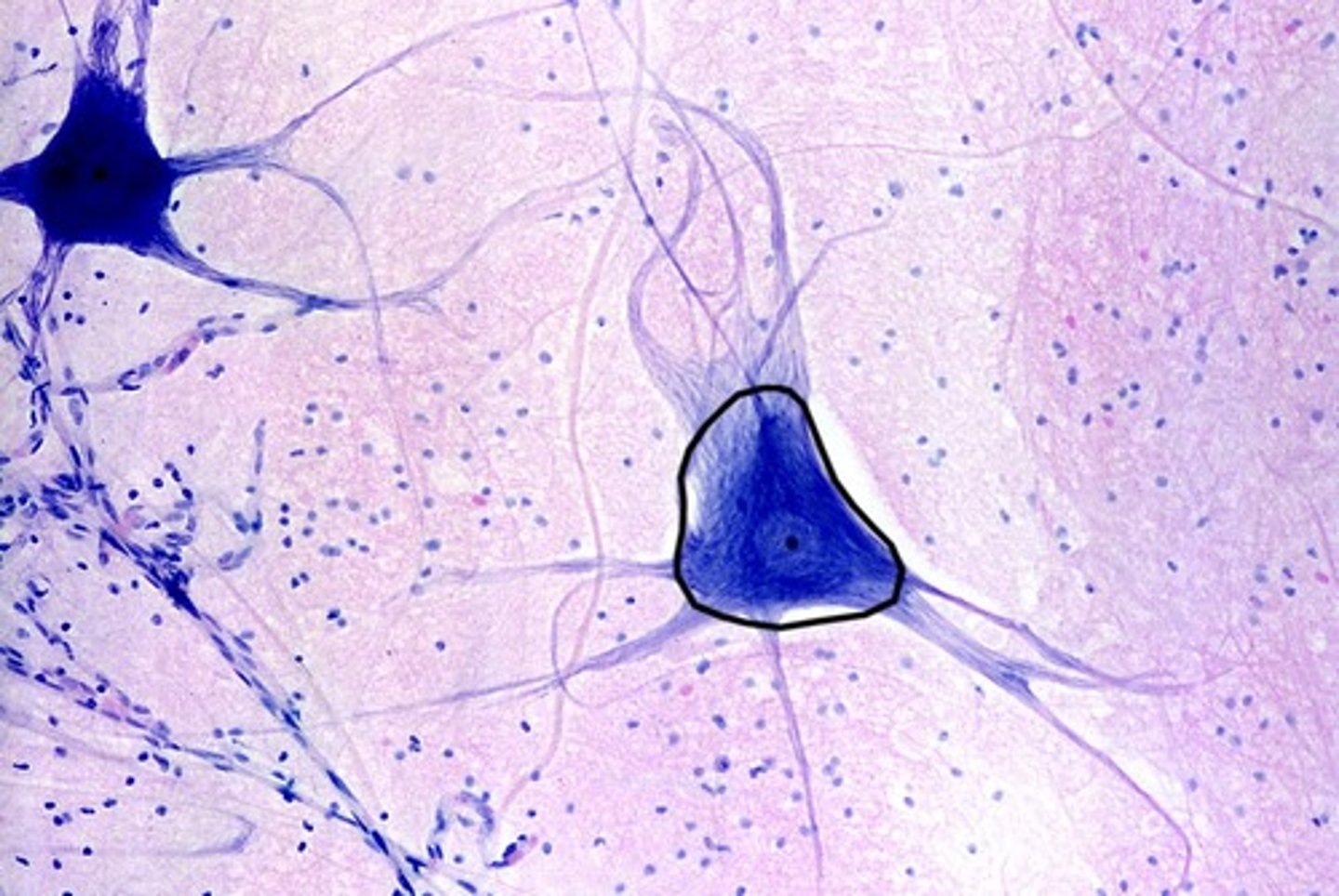
Neurosoma
cell body of a neuron
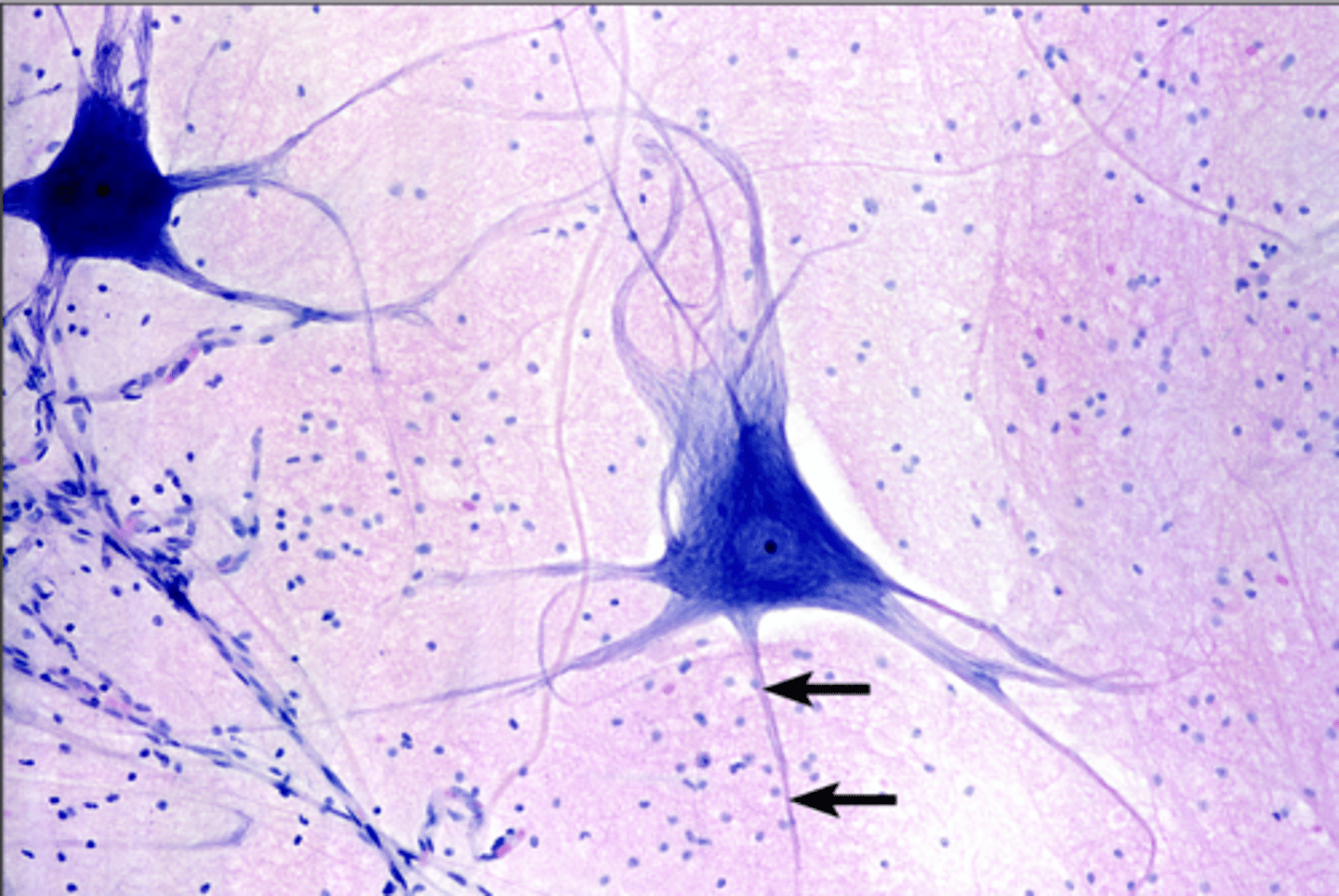
Axon
singular long extension of nerve fiber
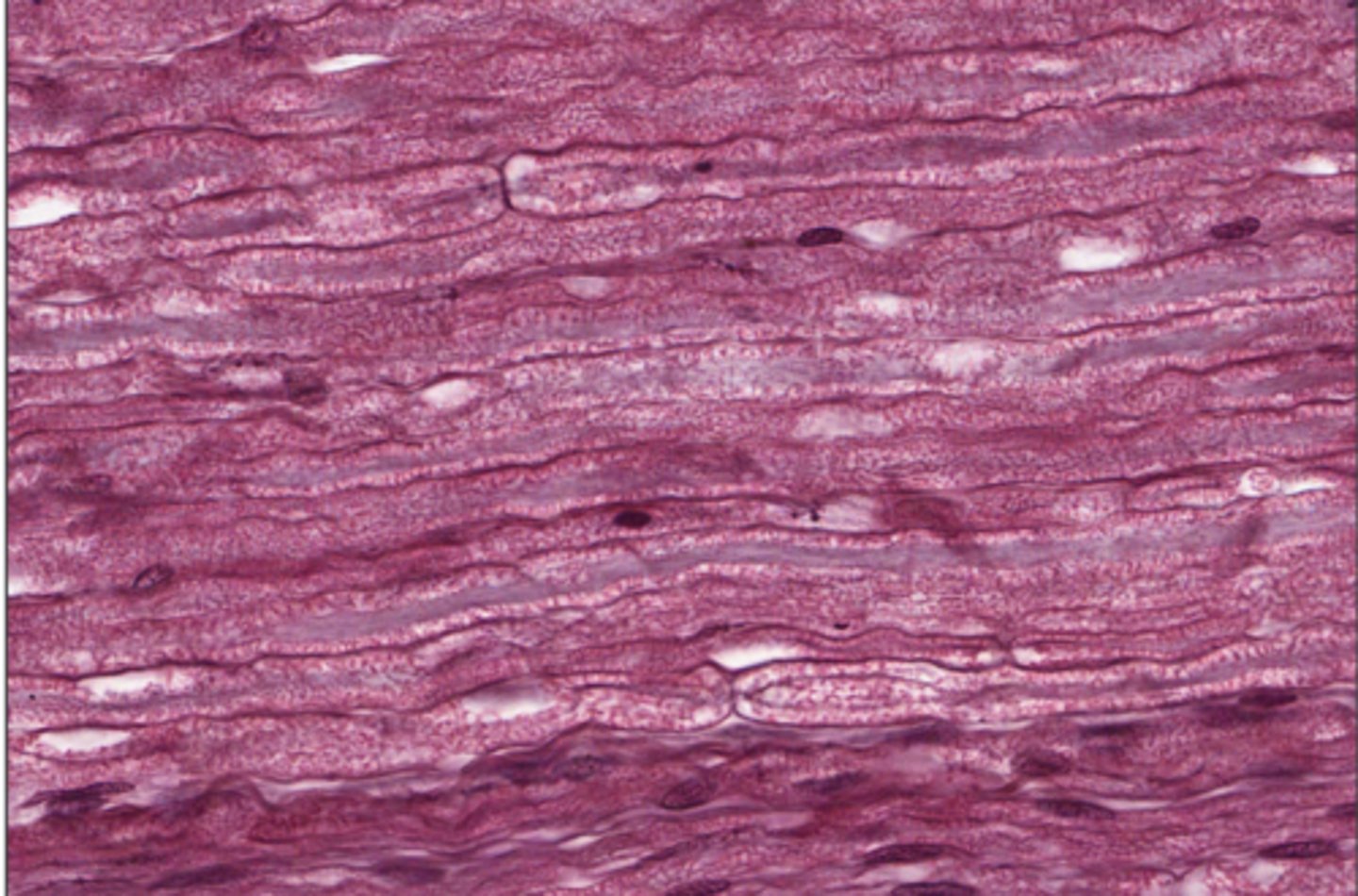
Myelin sheath gap
space between axons
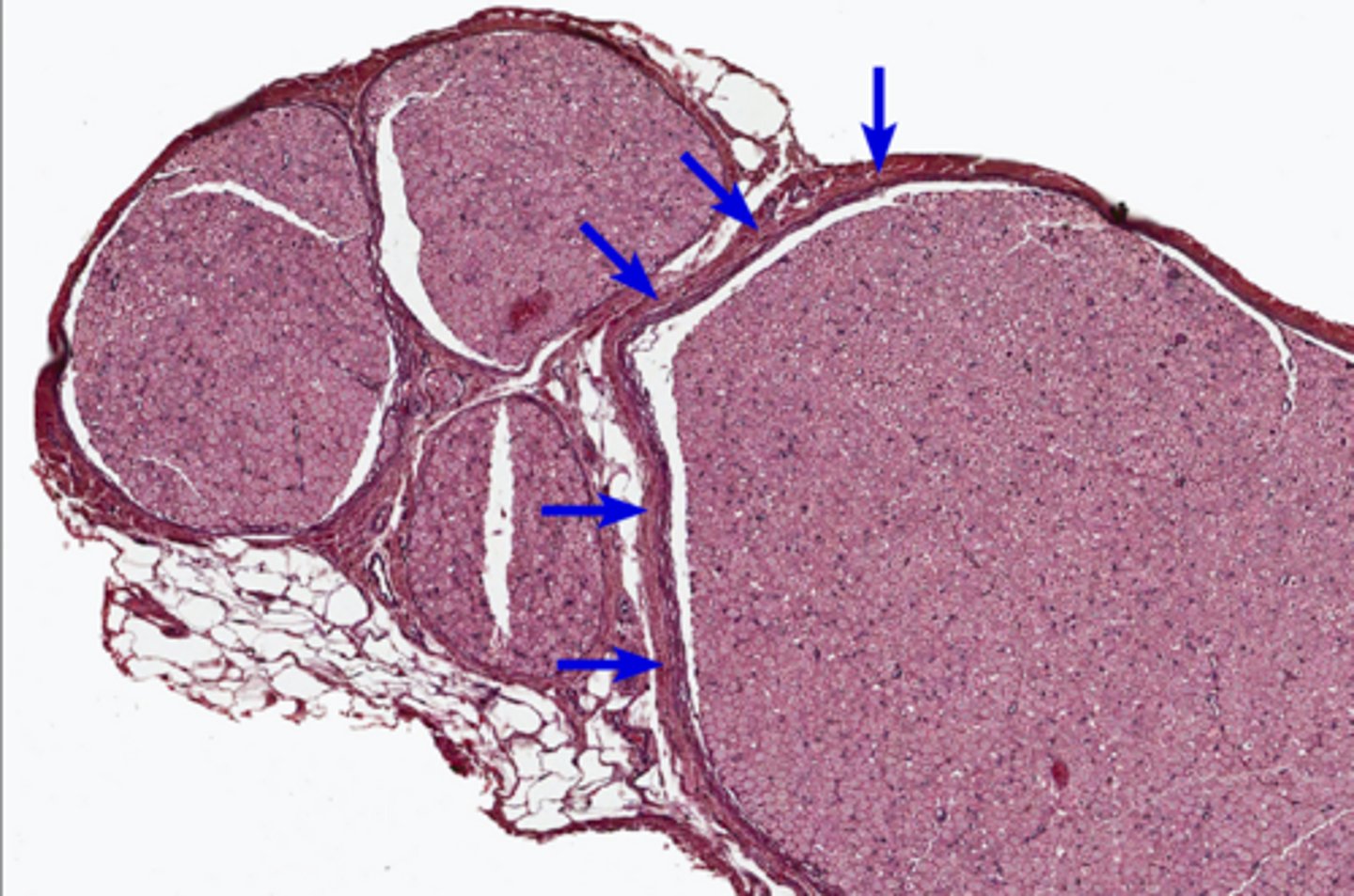
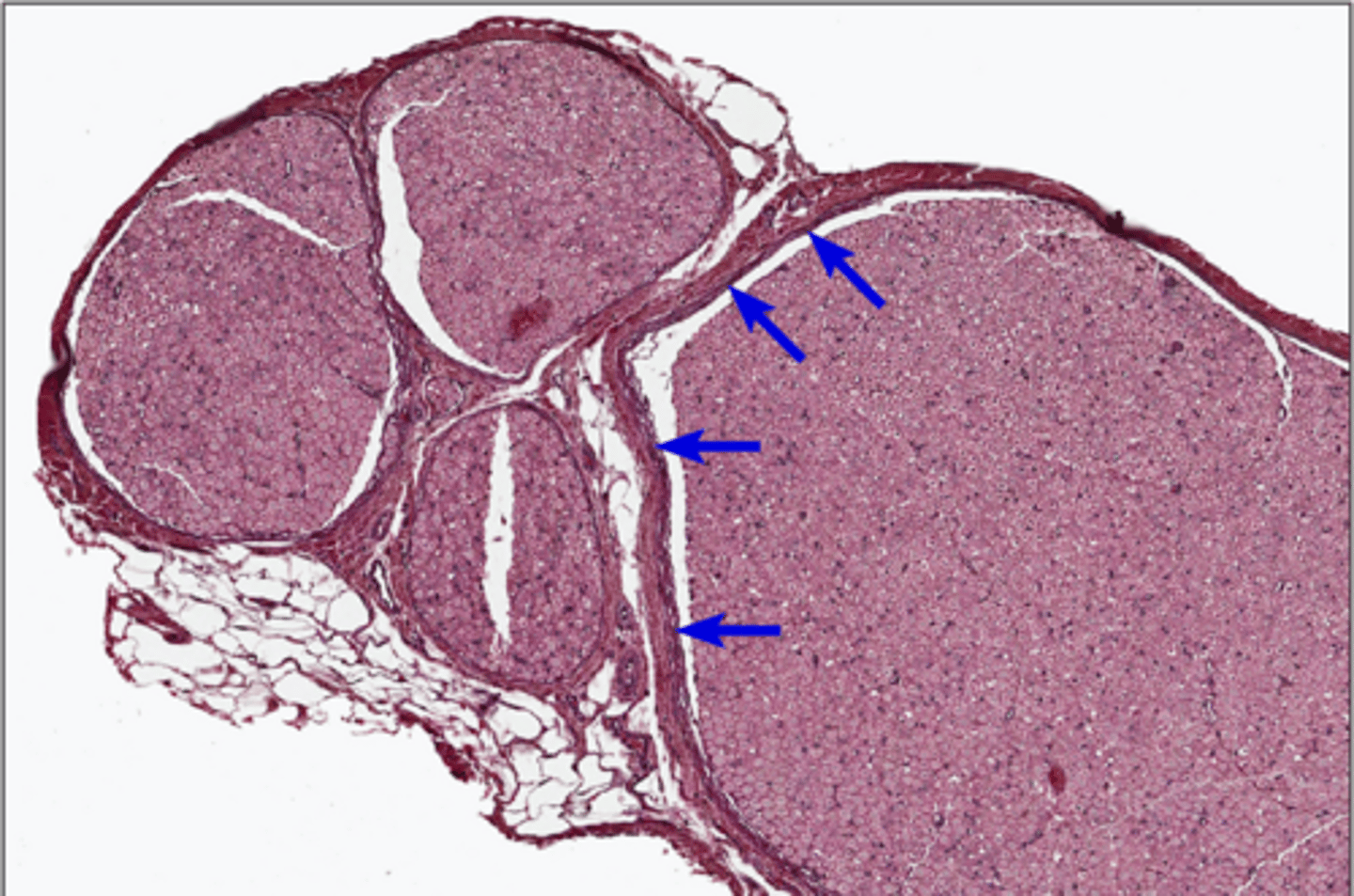
Epineurium
outermost layer of connective tissue that surrounds an entire nerve
Perineurium
middle layer of connective tissue that holds the fascicles together
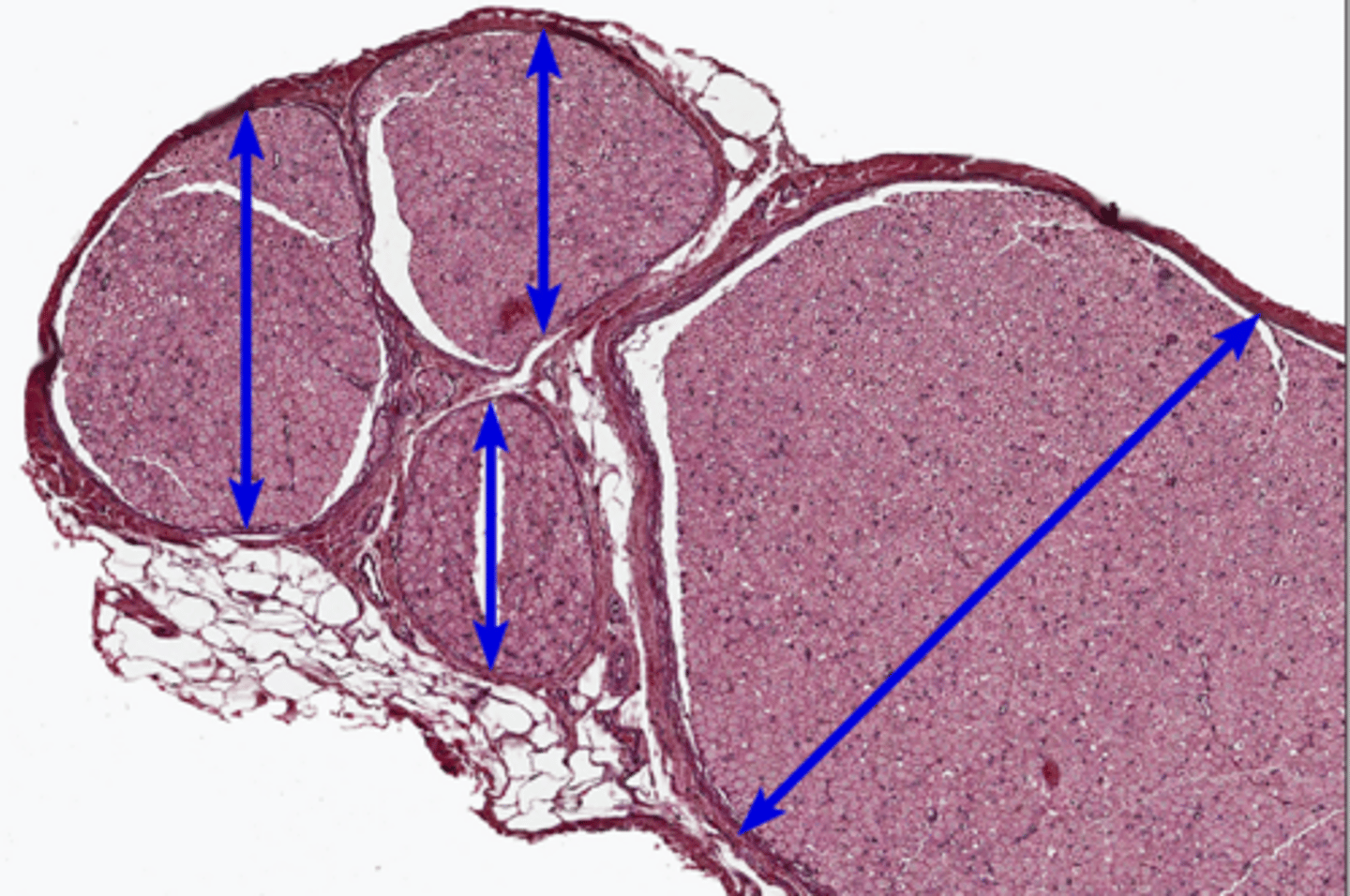
Fascicle
bundles of muscle fibers wrapped around each other
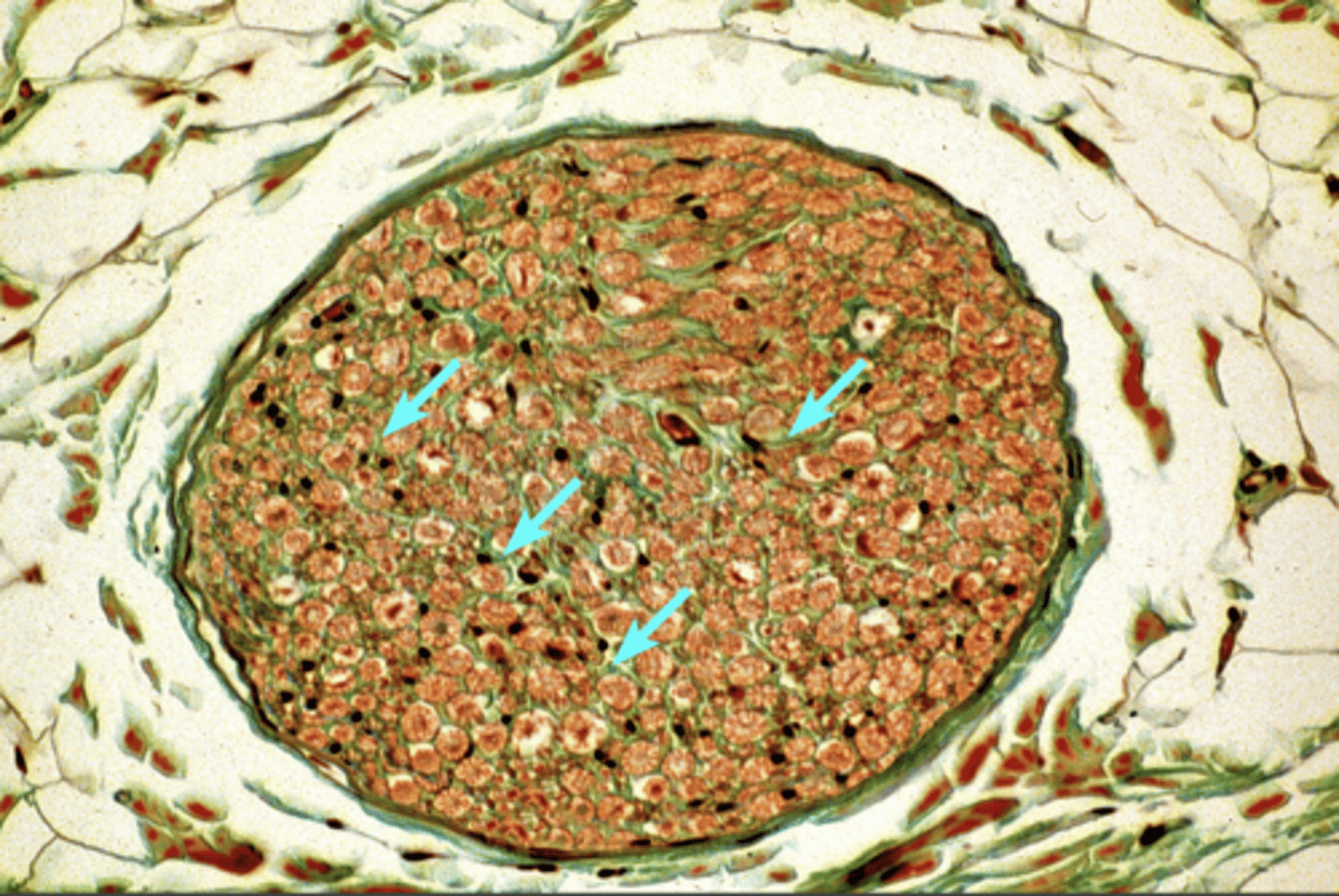
Endoneurium
innermost layer containing the schwann cells myelinating individual nerve fibers
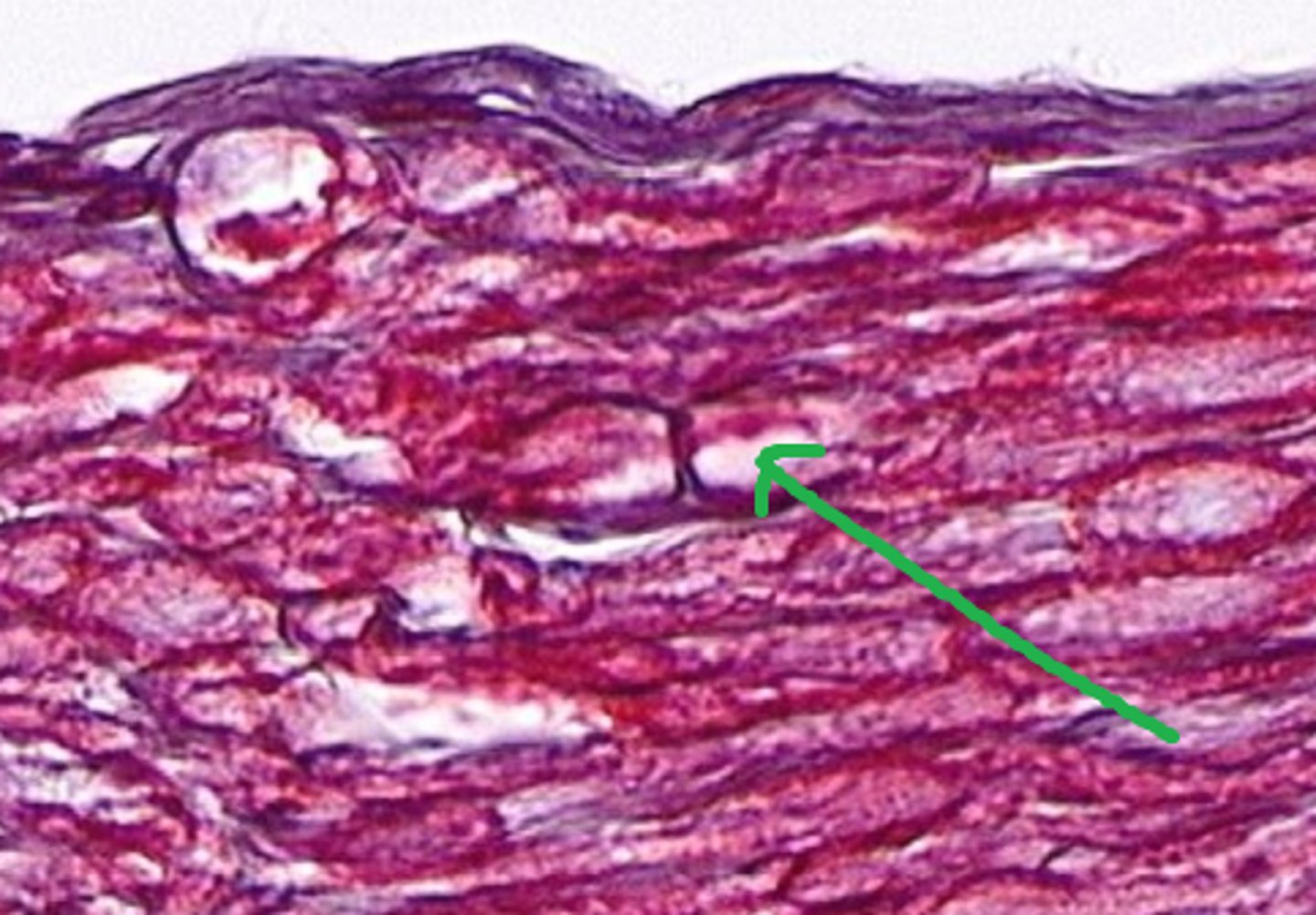
Myelinated sheath
composed of 80% lipids and 20% proteins and acts as a specialized membrane
Alpha waves
frequency 8-13 Hz
calm alertness - a relaxed but awake mental state
upregulation: relaxation, reduced stress/anxiety, mental calmness, improved emotional stability
downregulation: anxiety, hyperarousal, difficulty relaxing, stress-related tension
Beta waves
highest frequency 13-30 Hz, with active, alert thinking, logical reasoning, problem solving, and concentration (fast, active)
upregulation: increased alertness, focused attention, fast thinking
downregulation: low energy, reduced concentration, mental fog, slower processing
Theta waves
frequency 4-8 Hz
light sleep, deep relaxation, creativity, meditation
upregulation: increased creativity, enhanced nutrition, relaxed state, daydreaming
downregulation: reduced imagination, difficulty relaxing, less access to subconscious processing
Delta waves
slowest frequency 0.5-4 Hz
deep, restorative sleep
upregulation: deep sleep, physical healing, immune system support, appear in some brain injuries
downregulation: poor sleep quality, reduced restorative sleep, difficulty with physical recovery, sleep disturbances
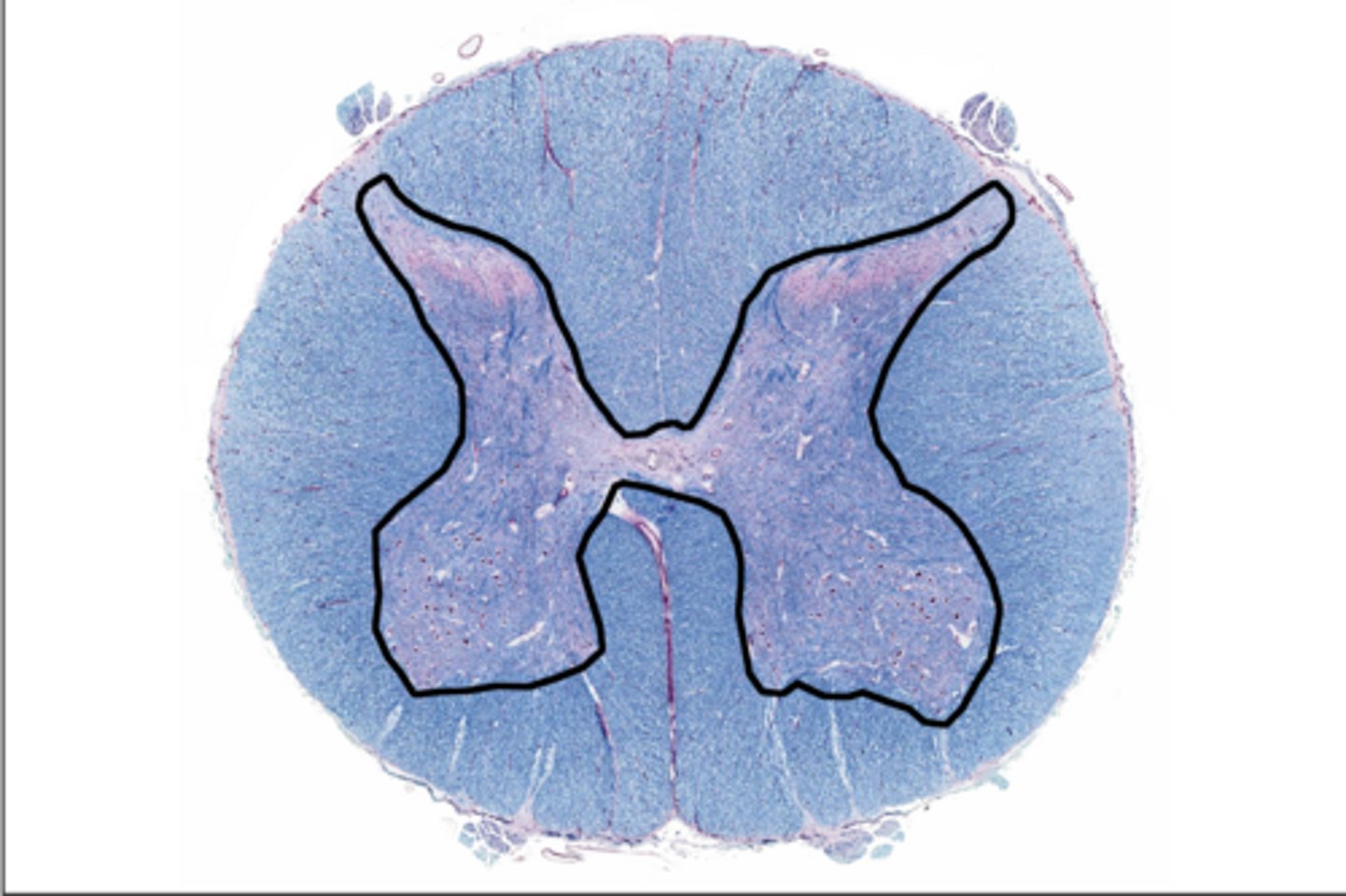
Gray matter
brain and spinal cord tissue that is gray consists mainly of neuronal cell bodies (nuclei) and lacks myelinated axons
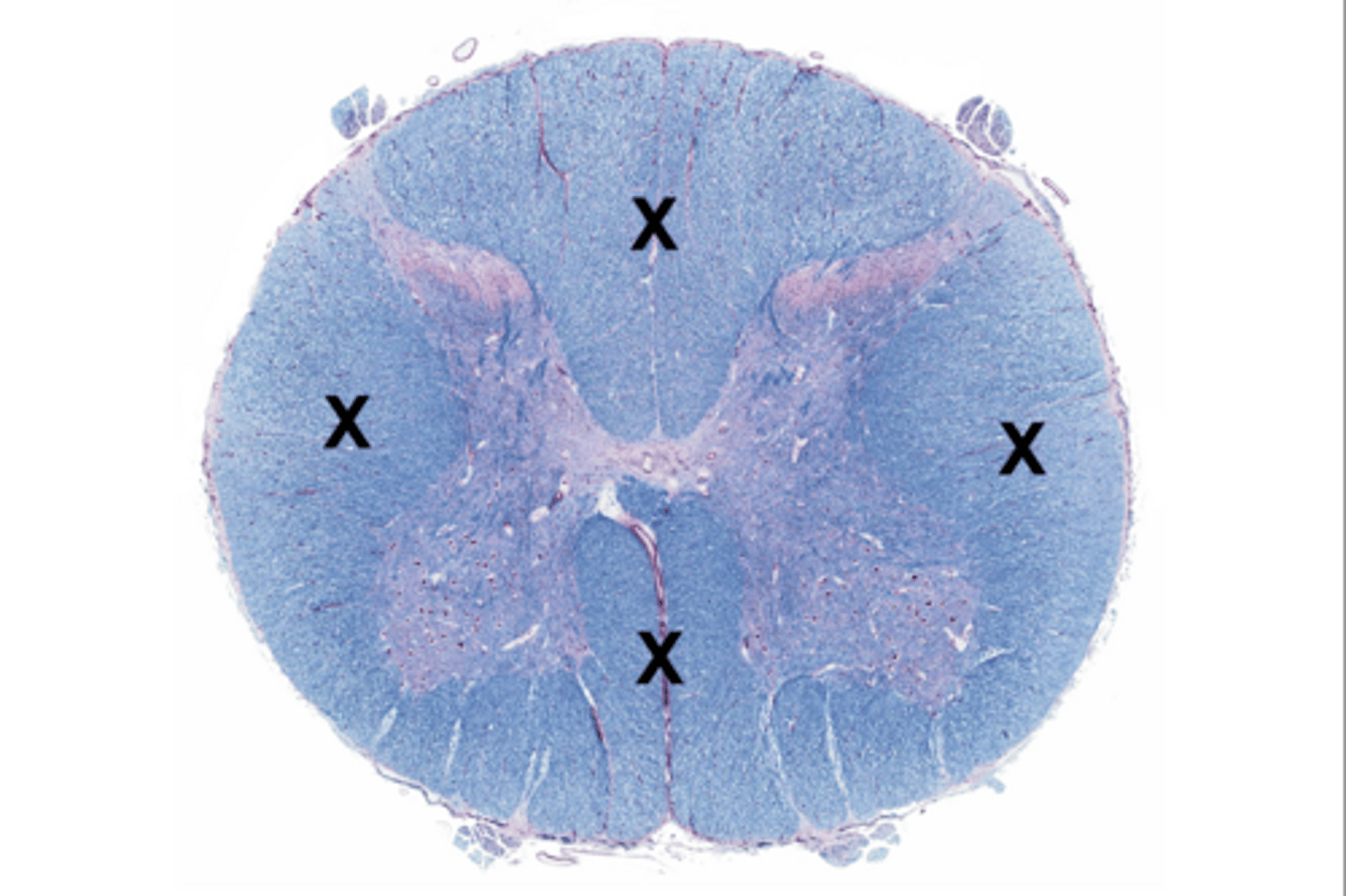
White matter
Whitish nervous tissue of the CNS consisting of neurons and their myelin sheaths.
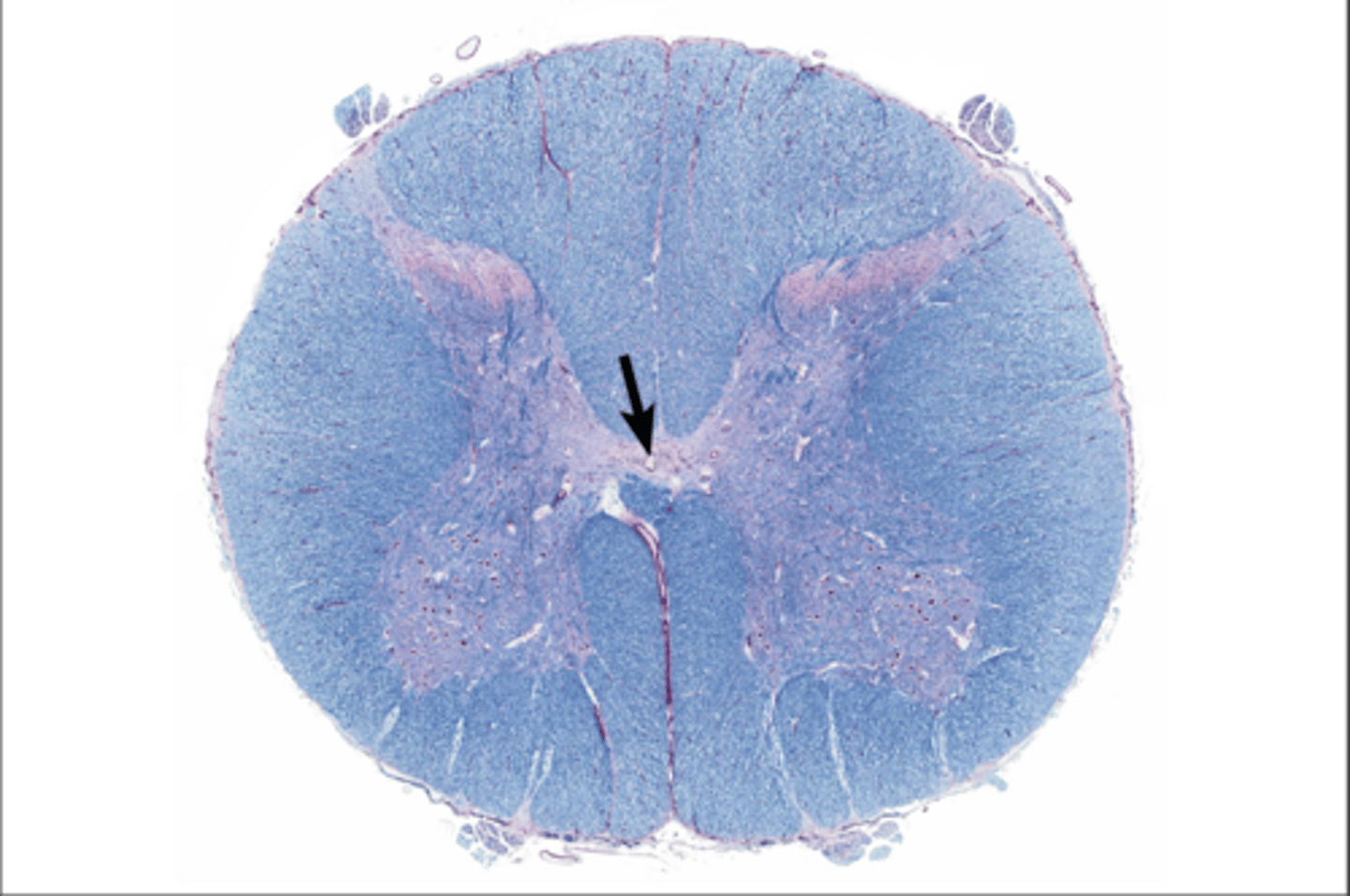
Central canal
center of gray commissure
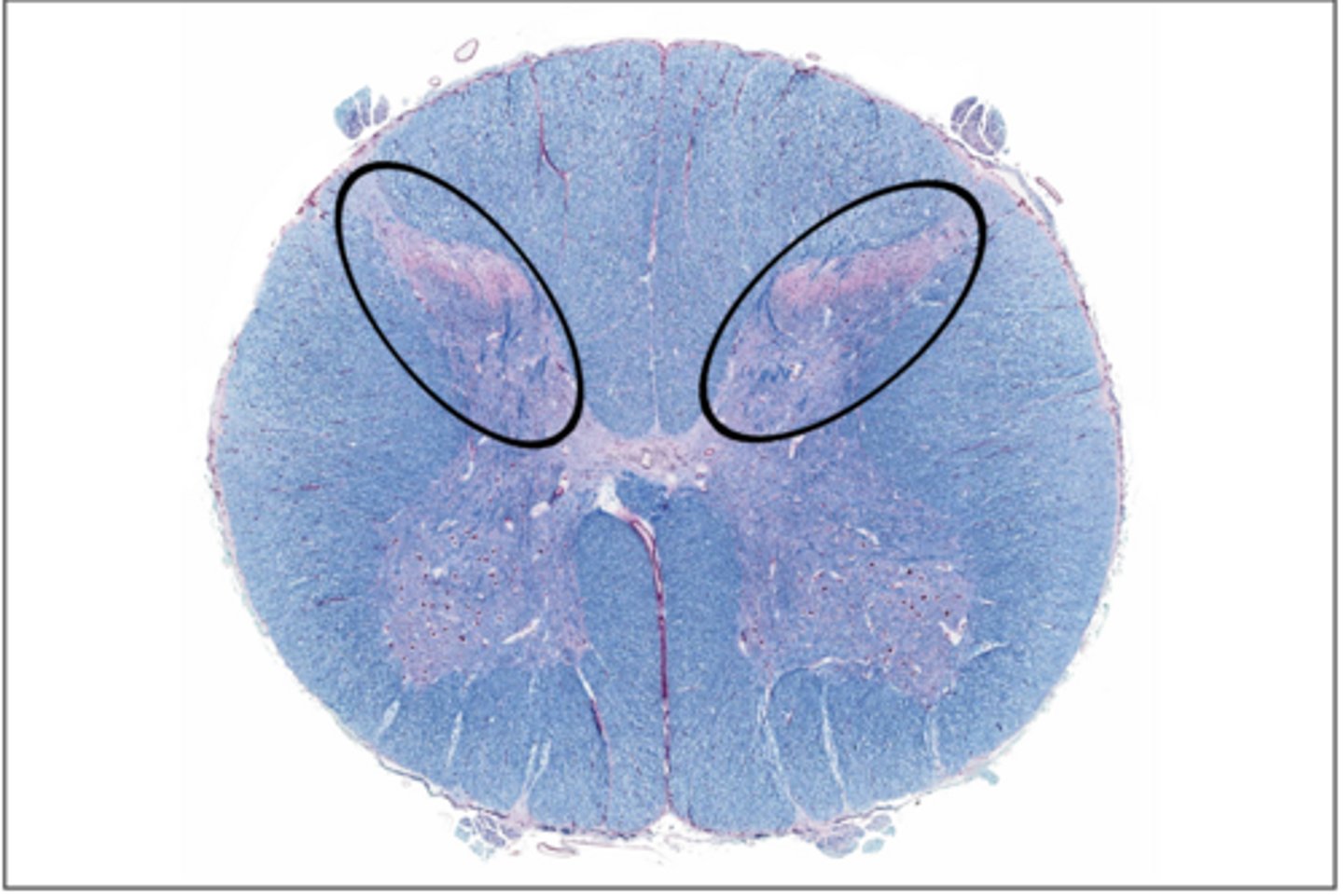
Posterior horns
Anterior horns
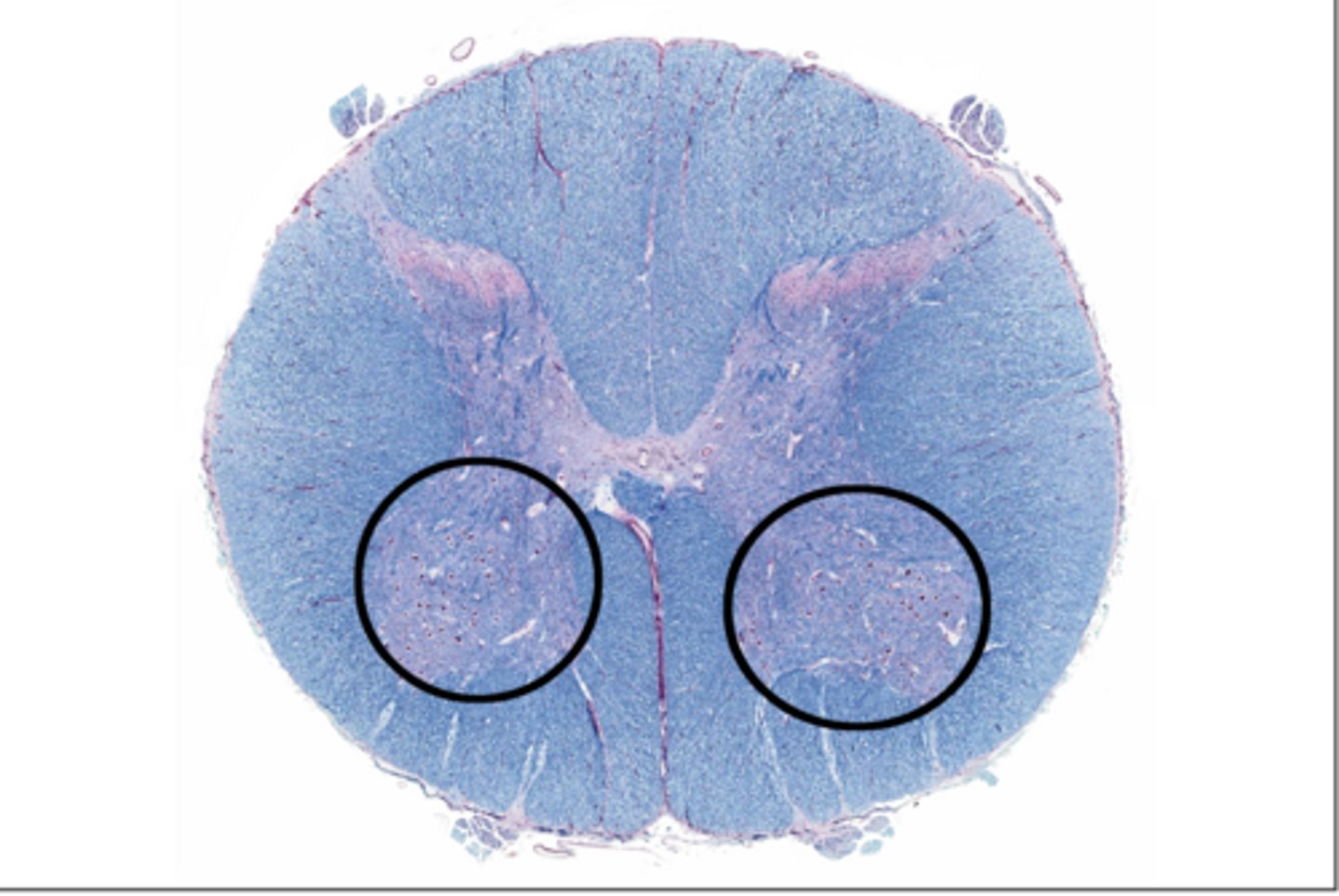
Pituitary gland
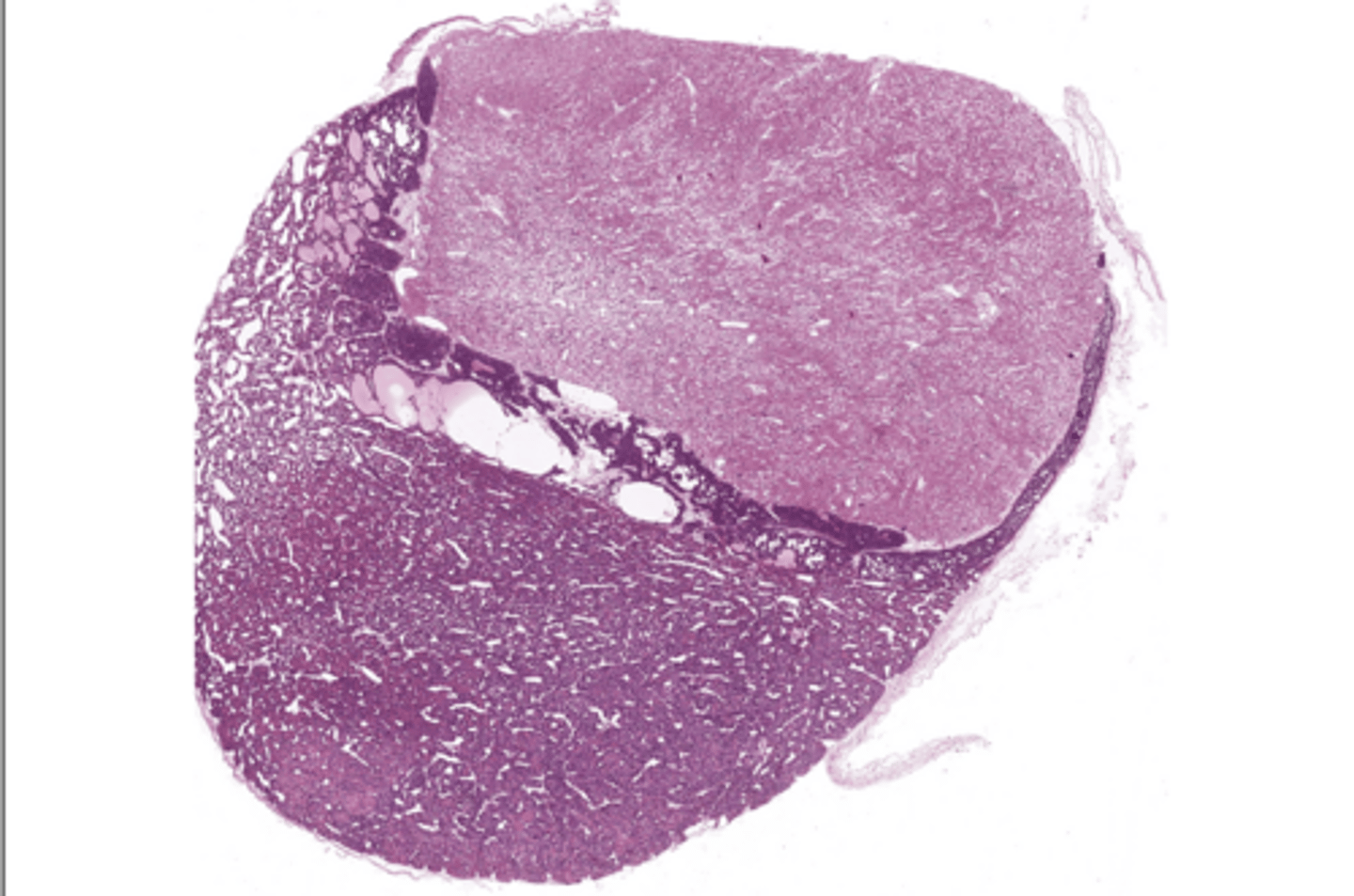
Thyroid gland
produces hormones that regulate metabolism, body heat, and bone growth
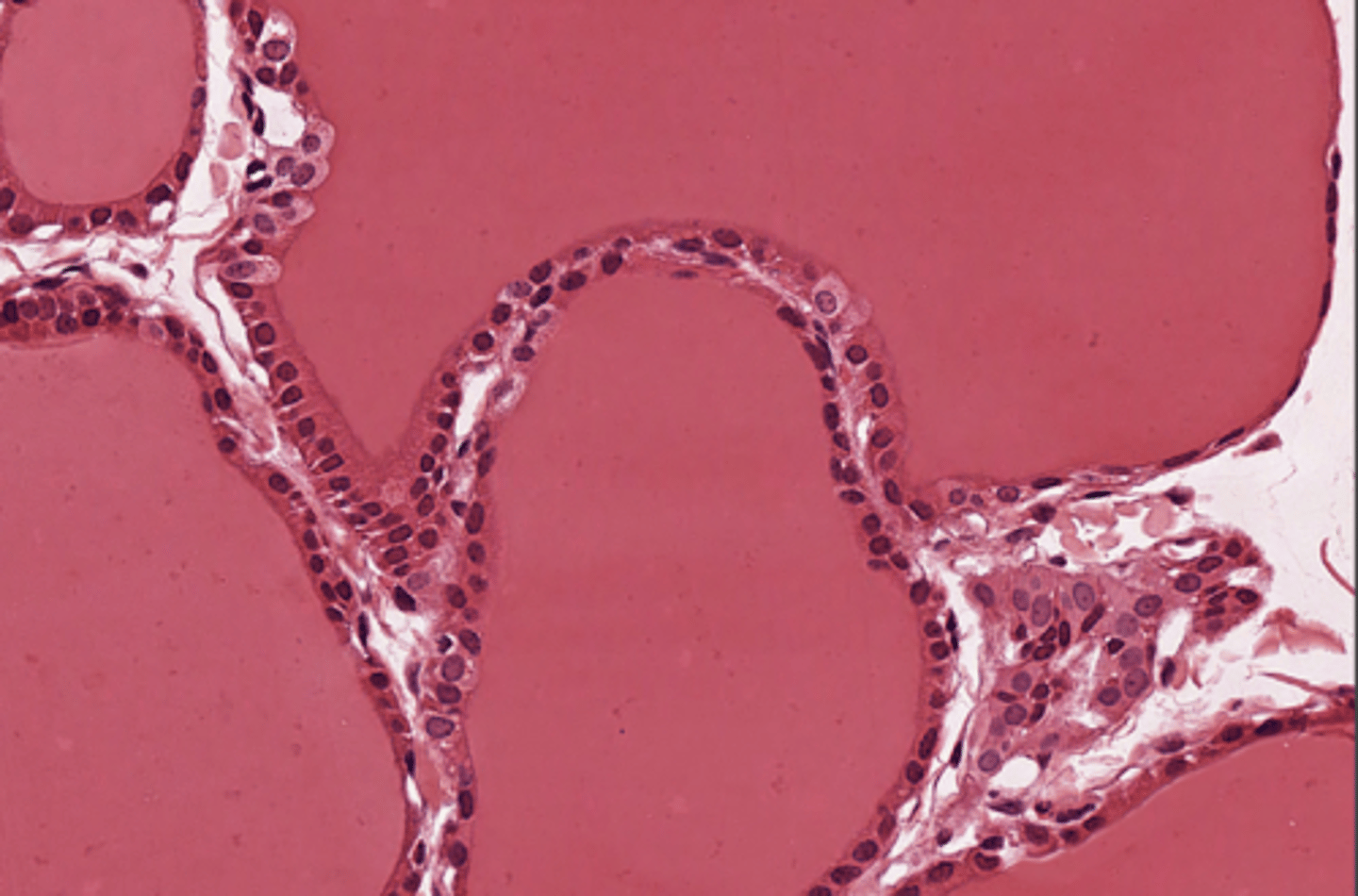
parathyroid gland
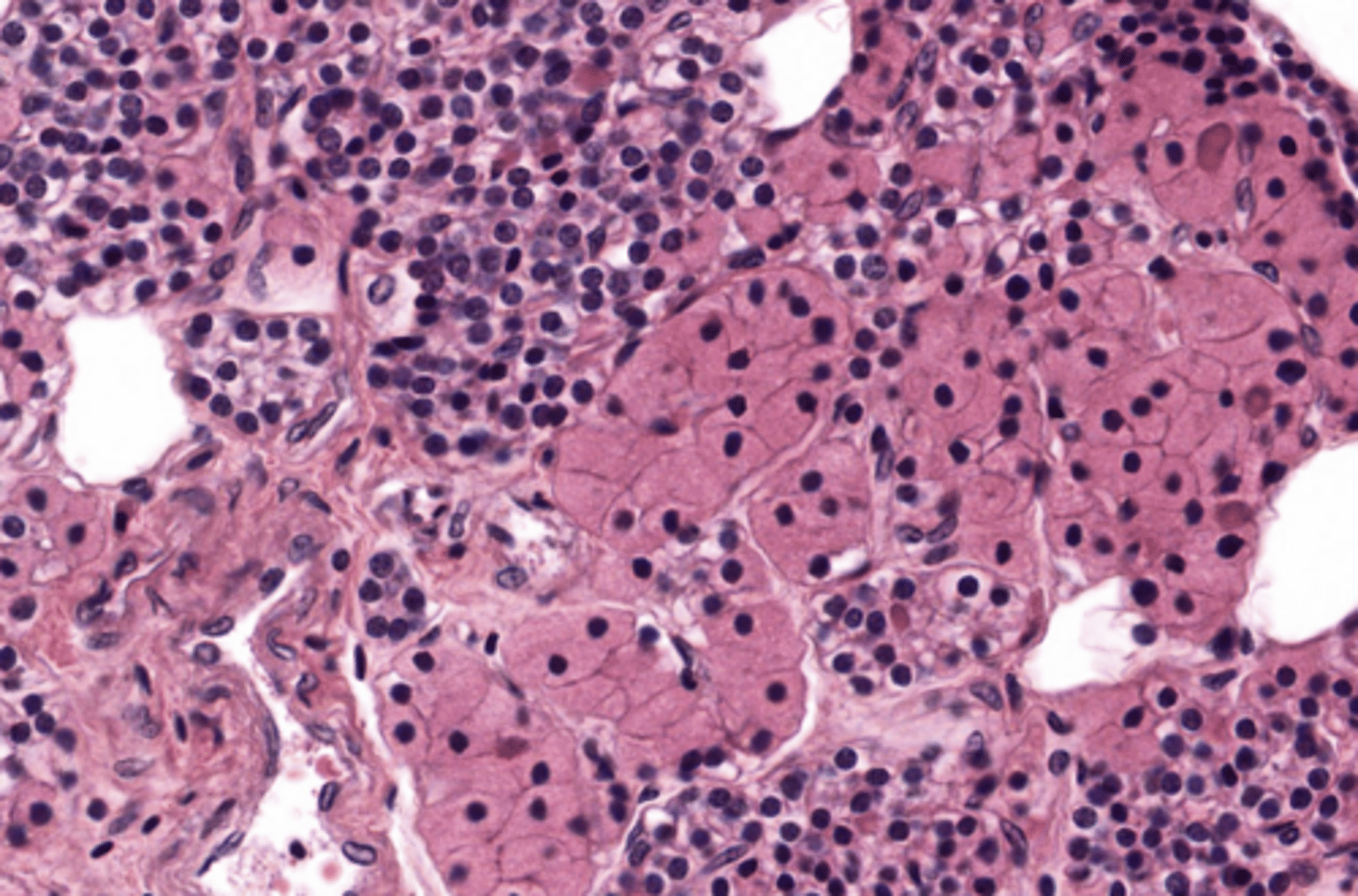
Thymus
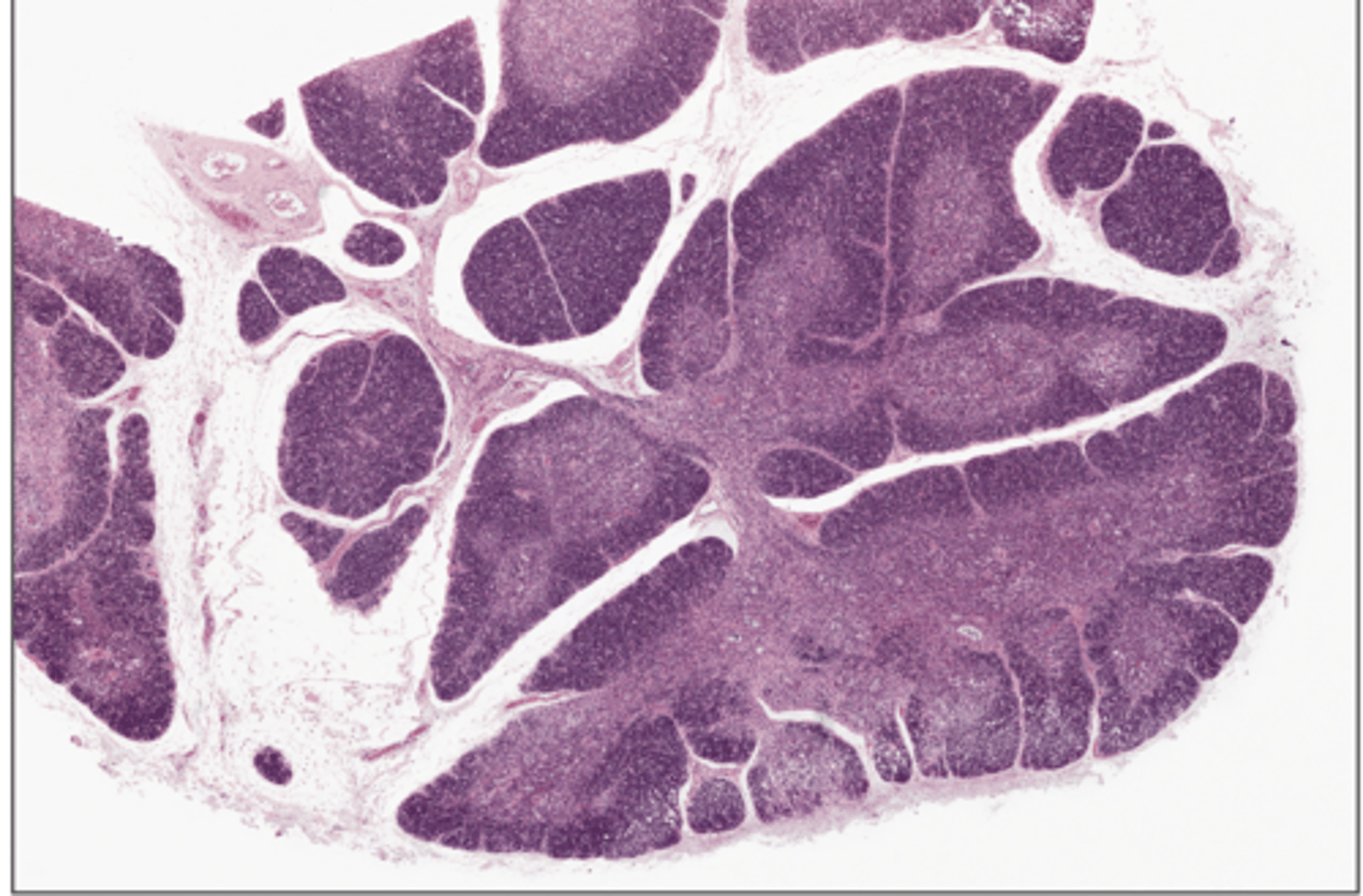
Pancreas
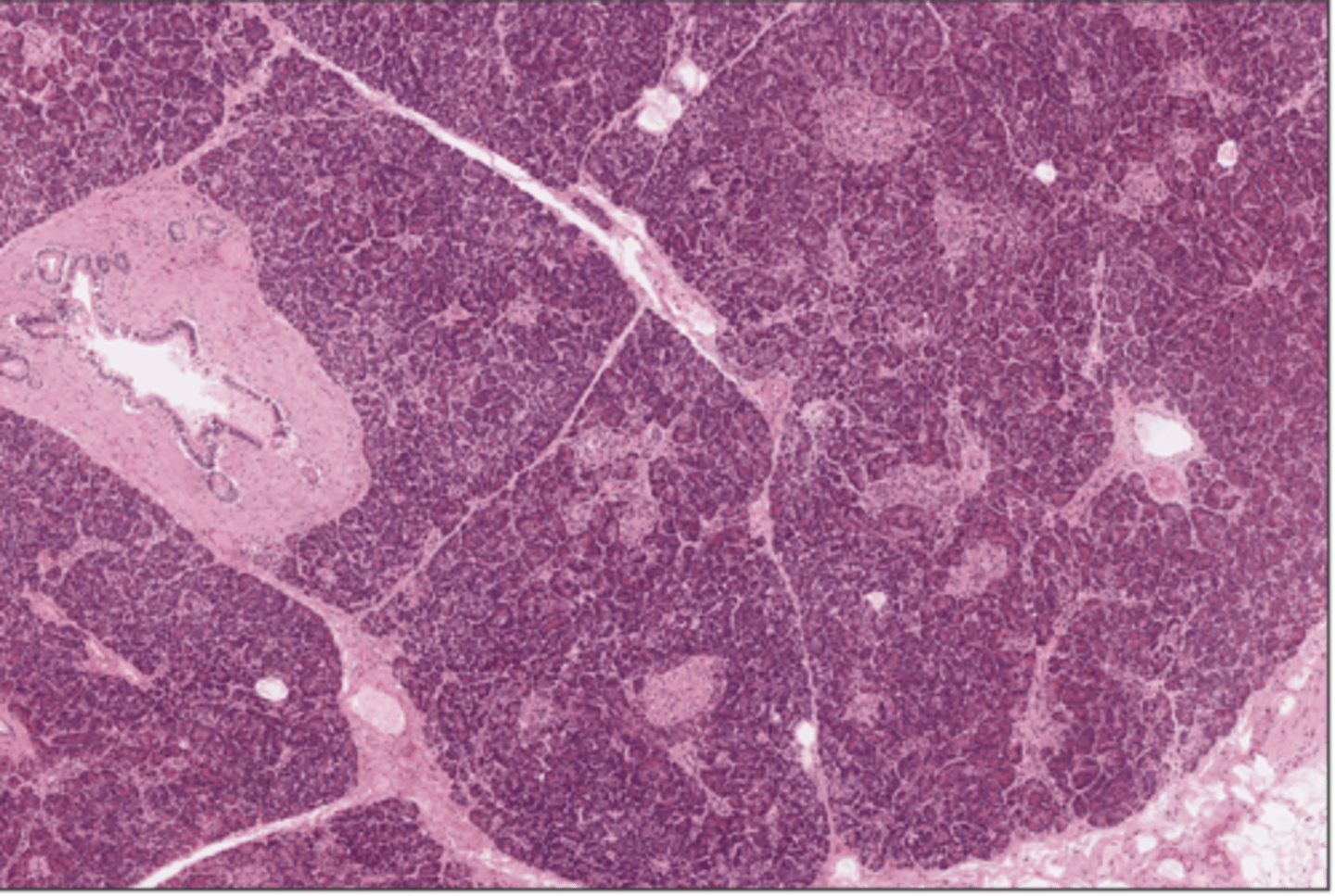
Pancreatic Islet
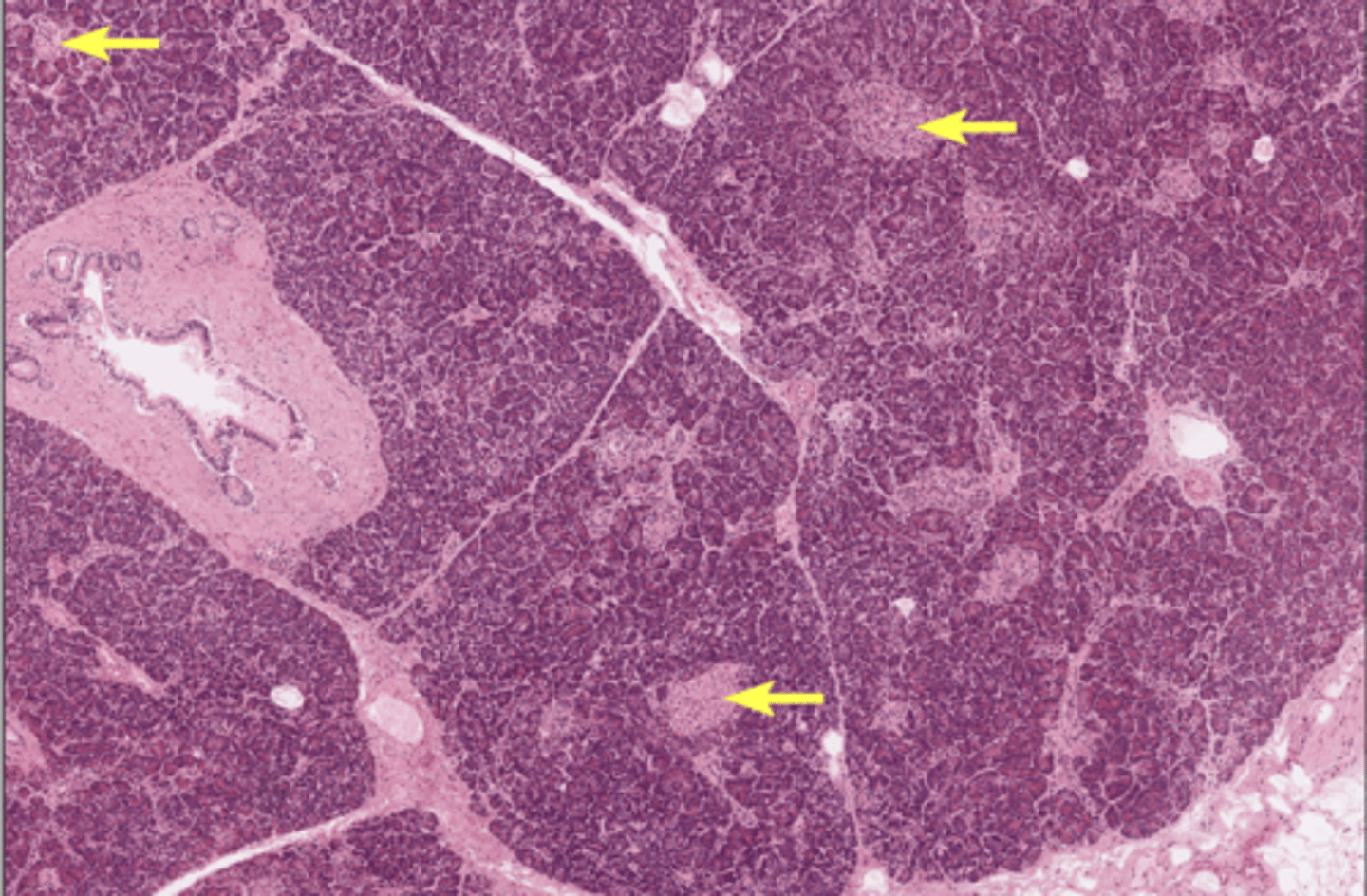
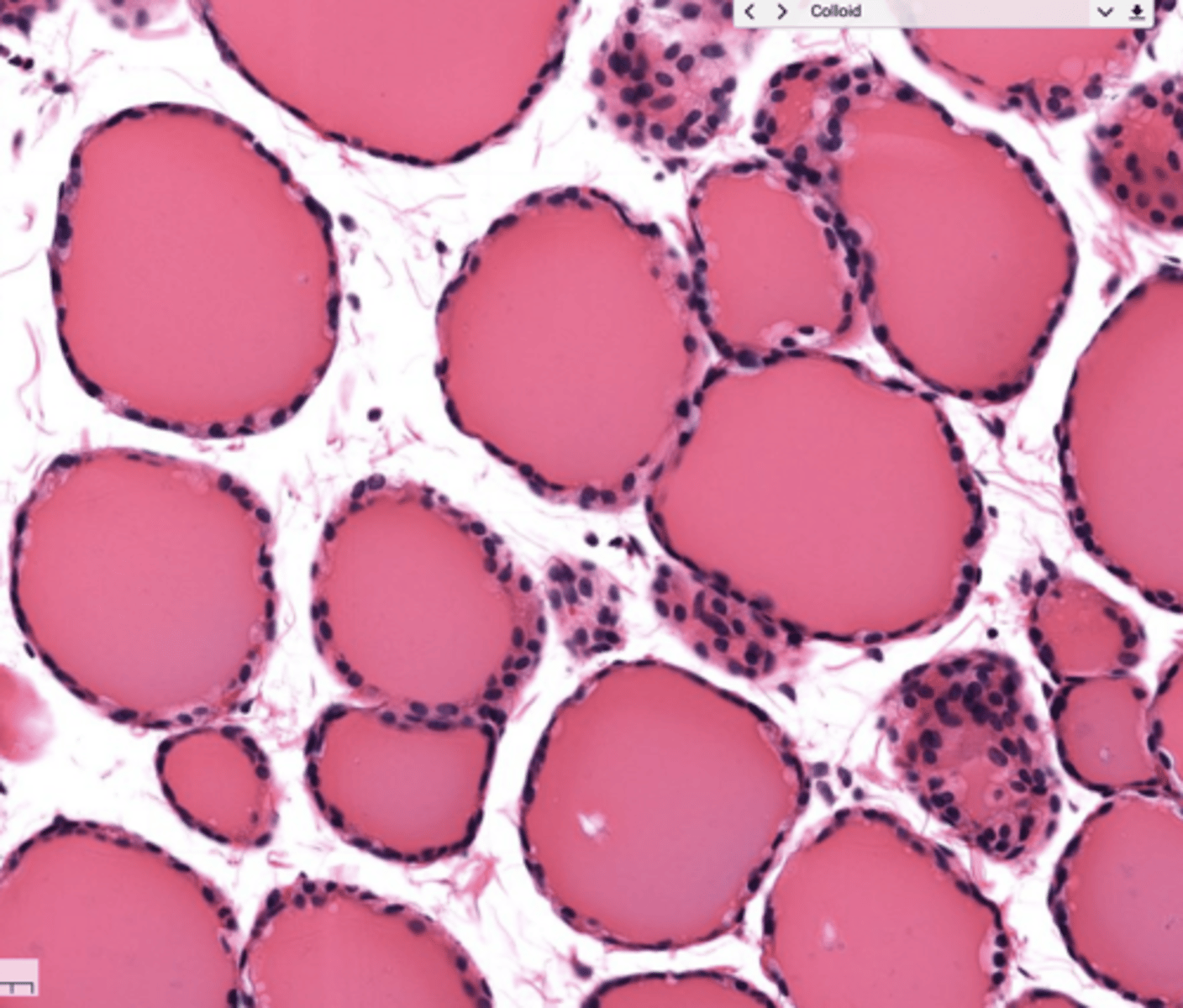
Follicular cells
In thyroid gland
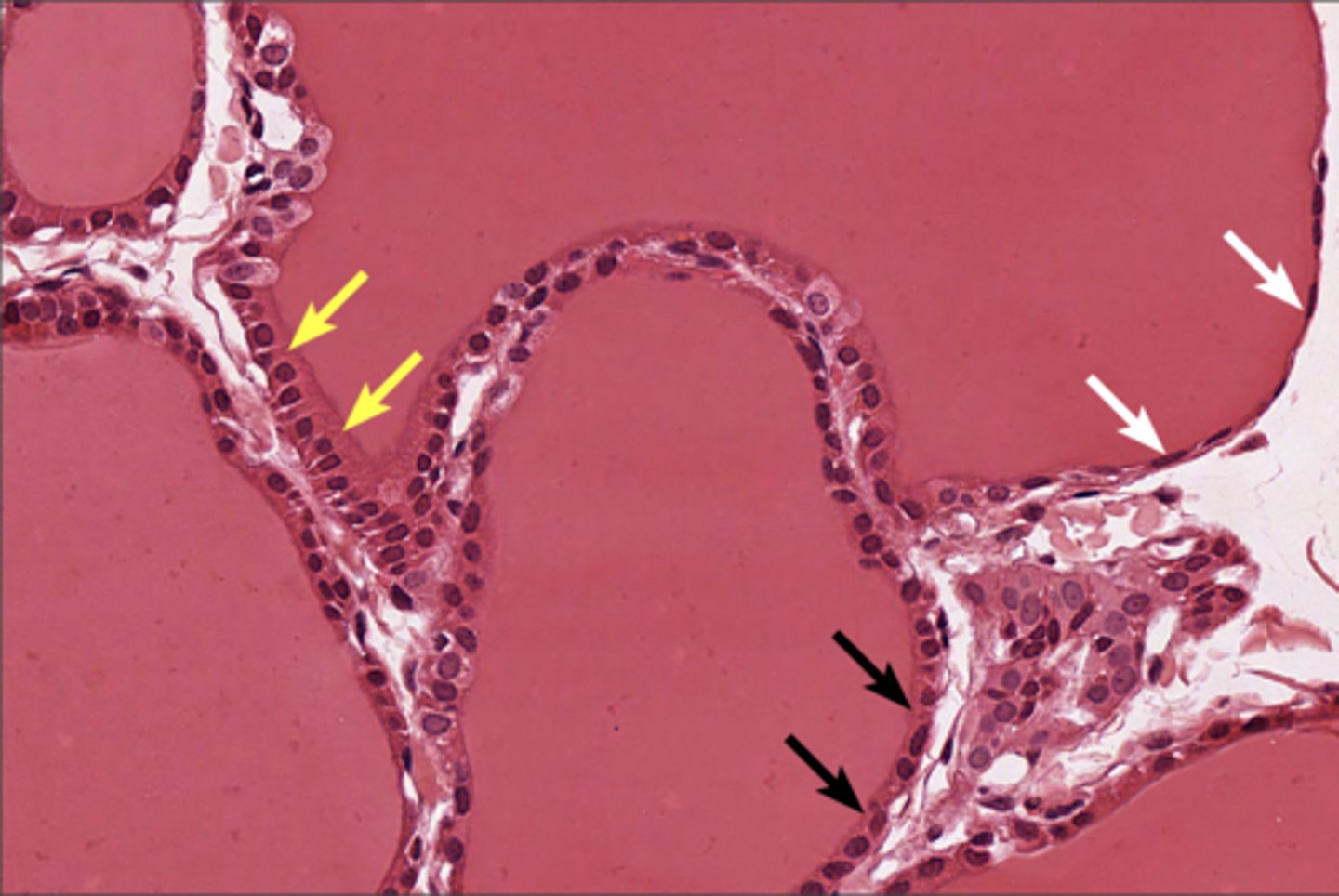
Colloid filled follicle
In thyroid gland
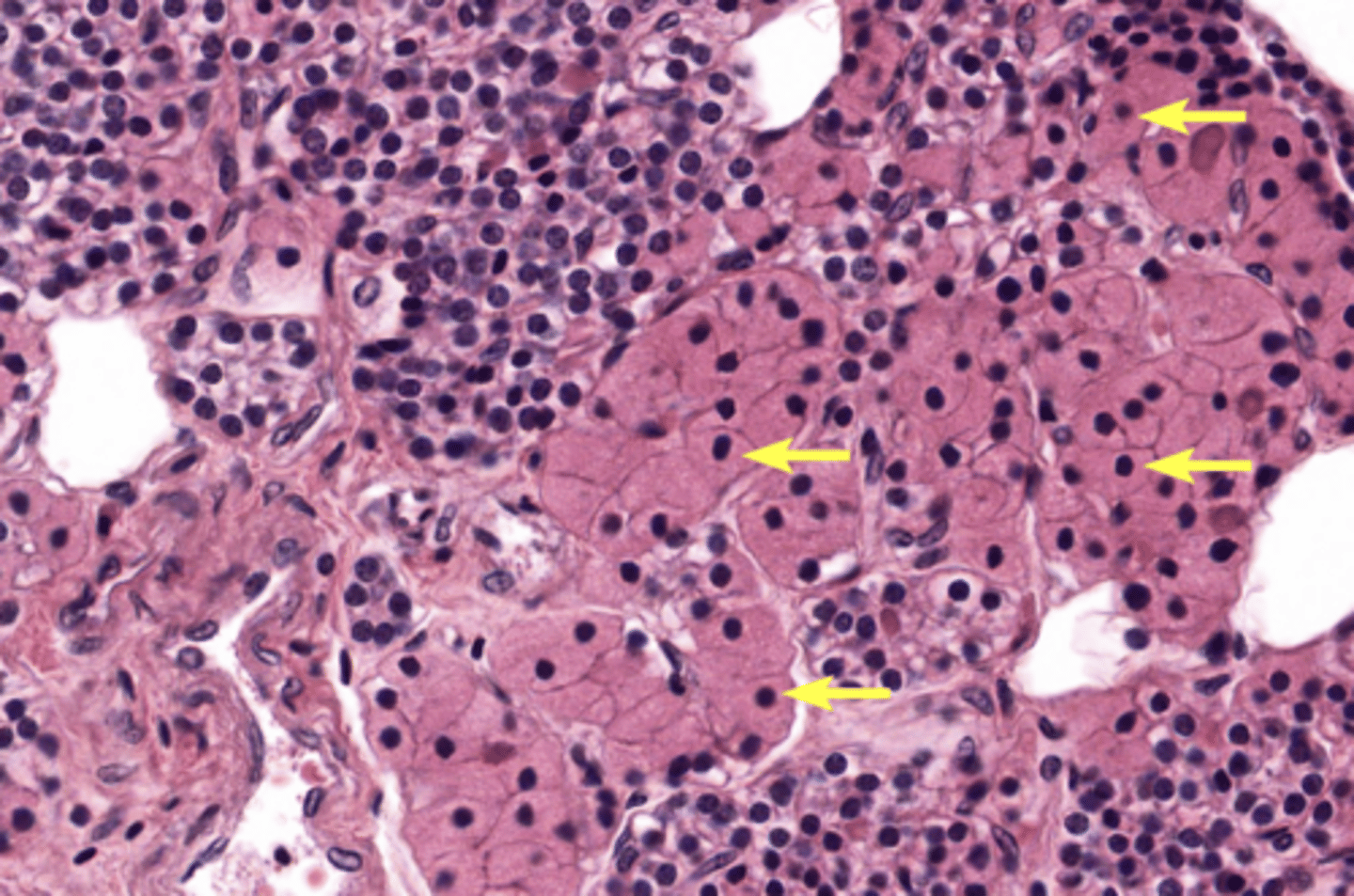
Oxyphil cells
In parathyroid gland
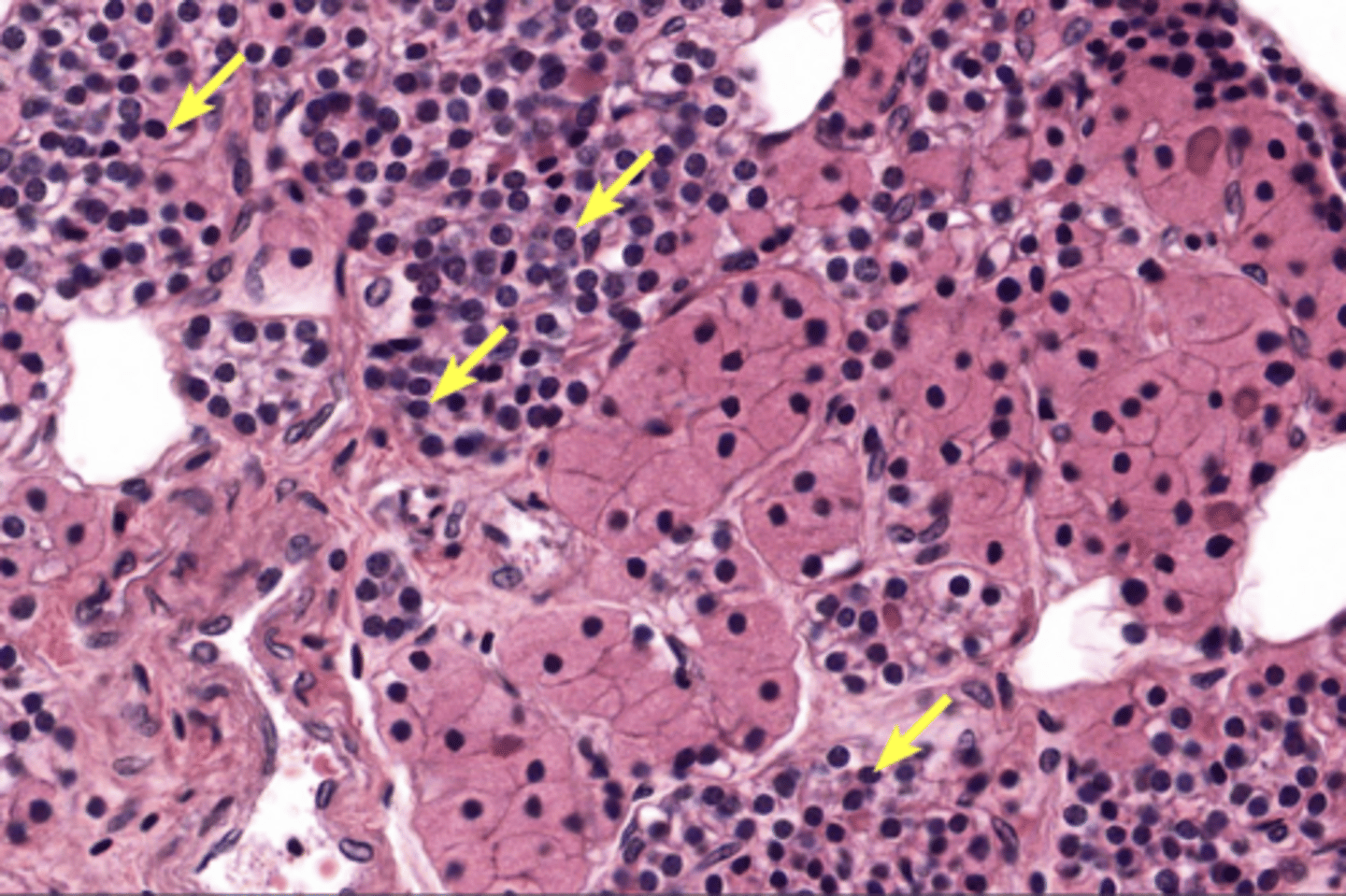
Principal cells
In parathyroid gland
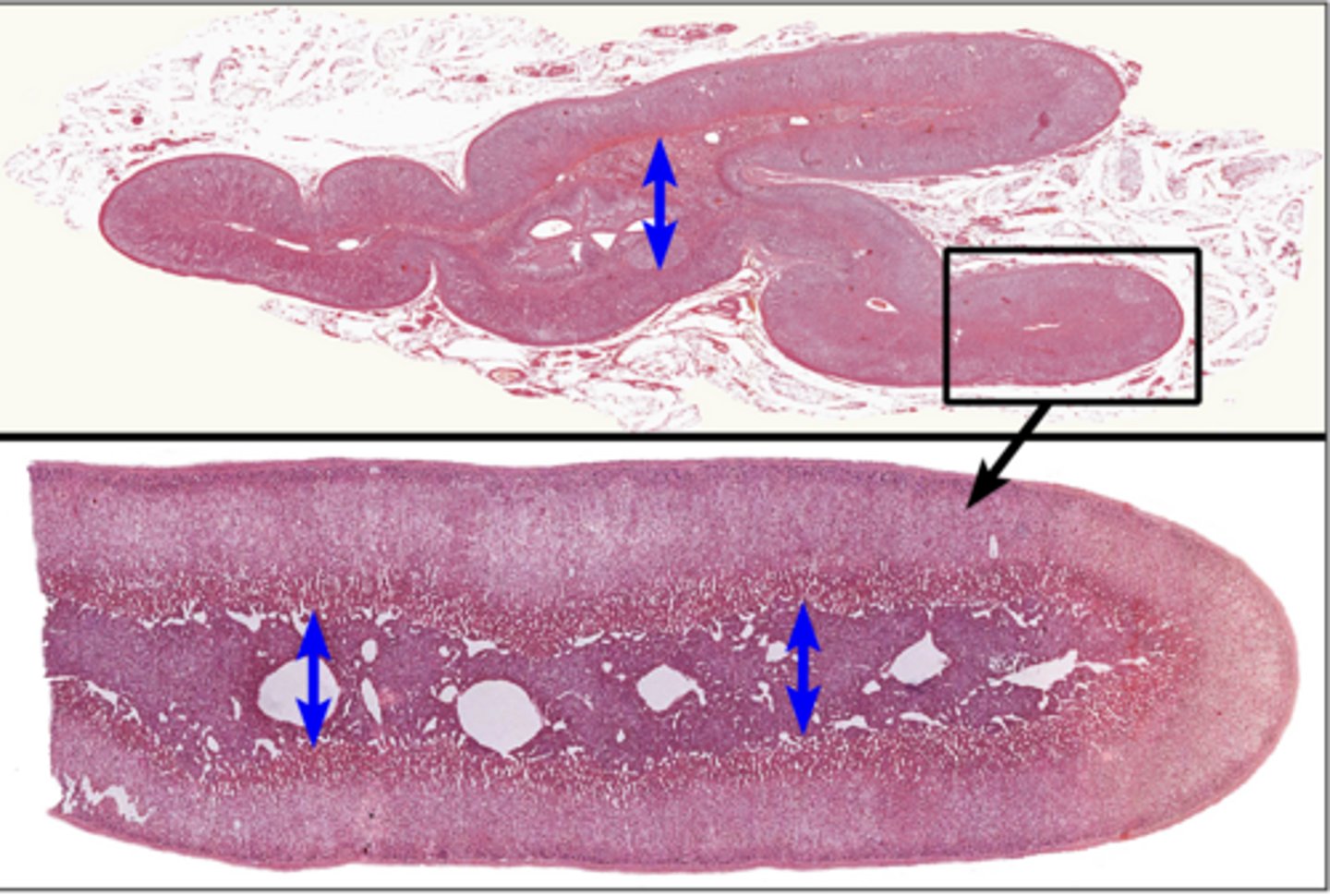
Adrenal gland
At top of each kidney
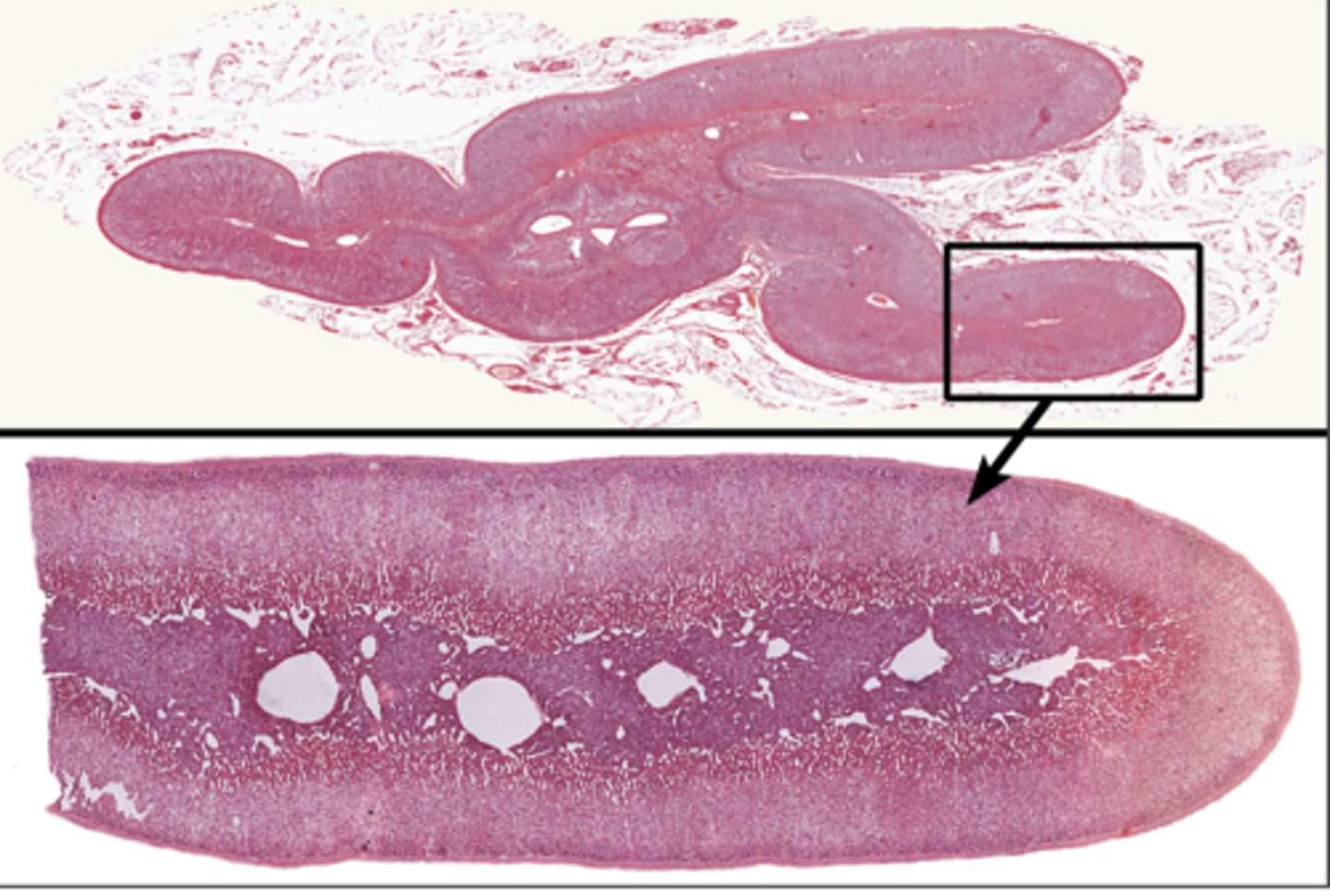
Zona glomerulosa
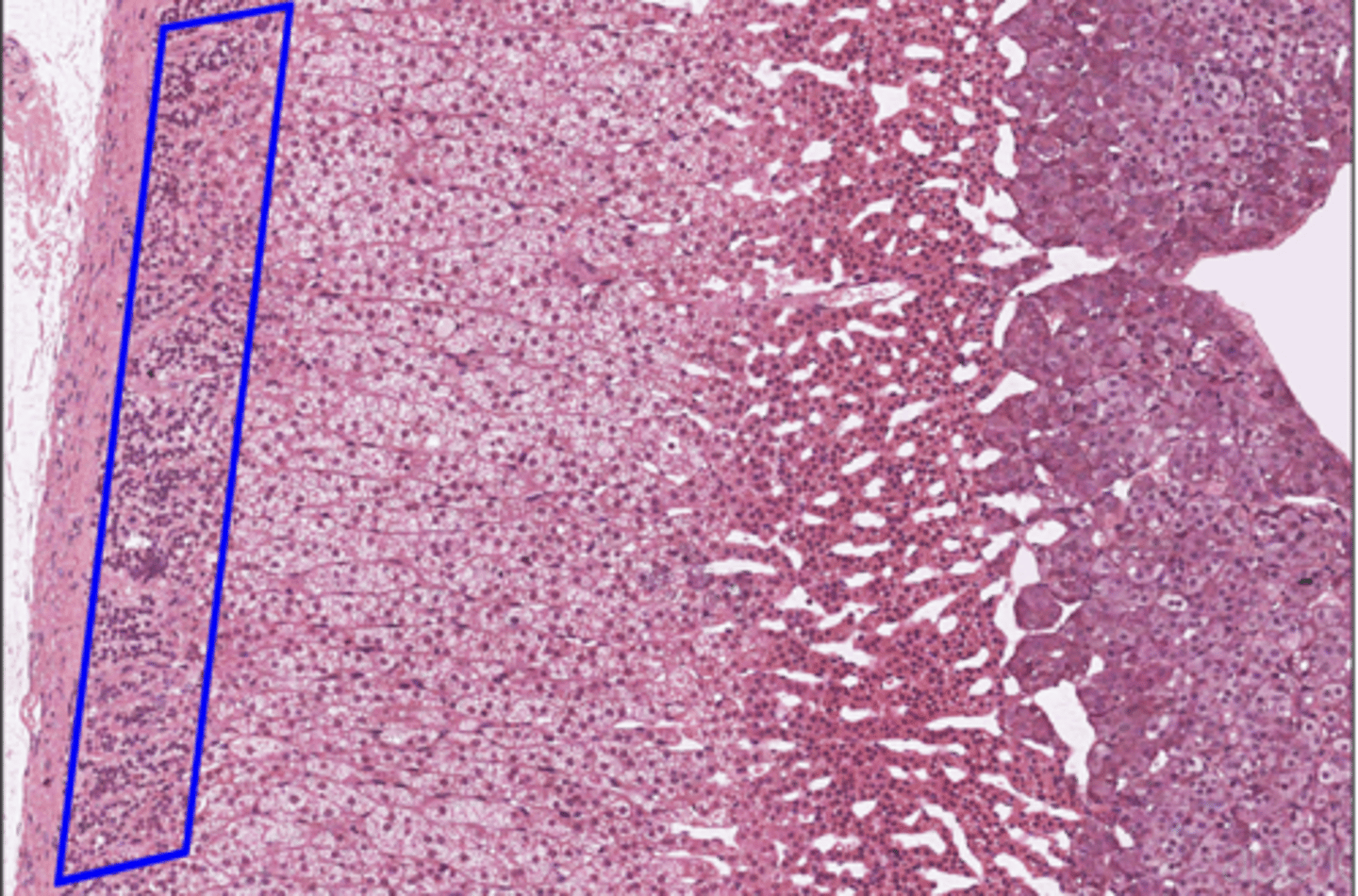
Zona fasciculata
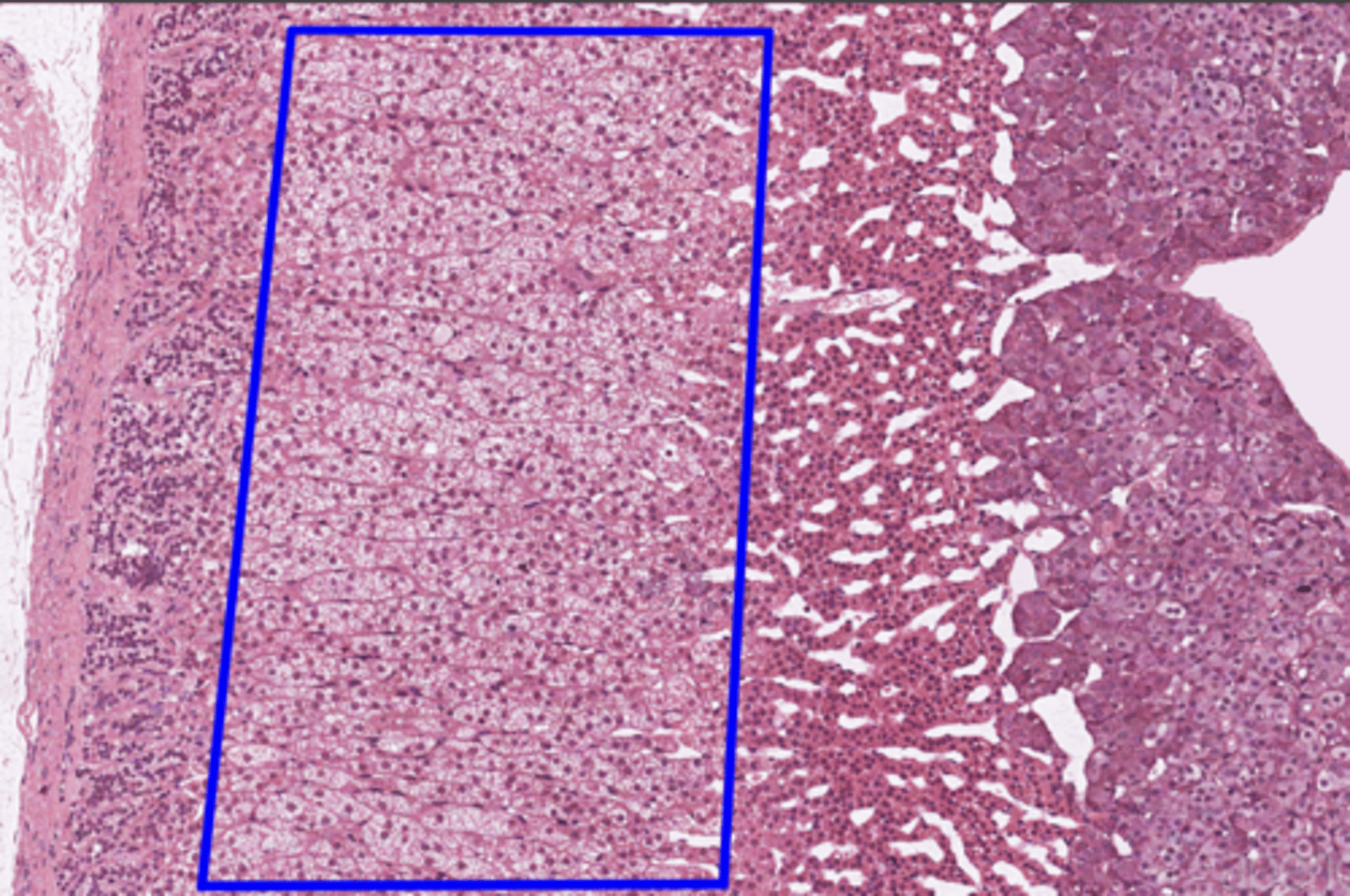
Zona reticularis
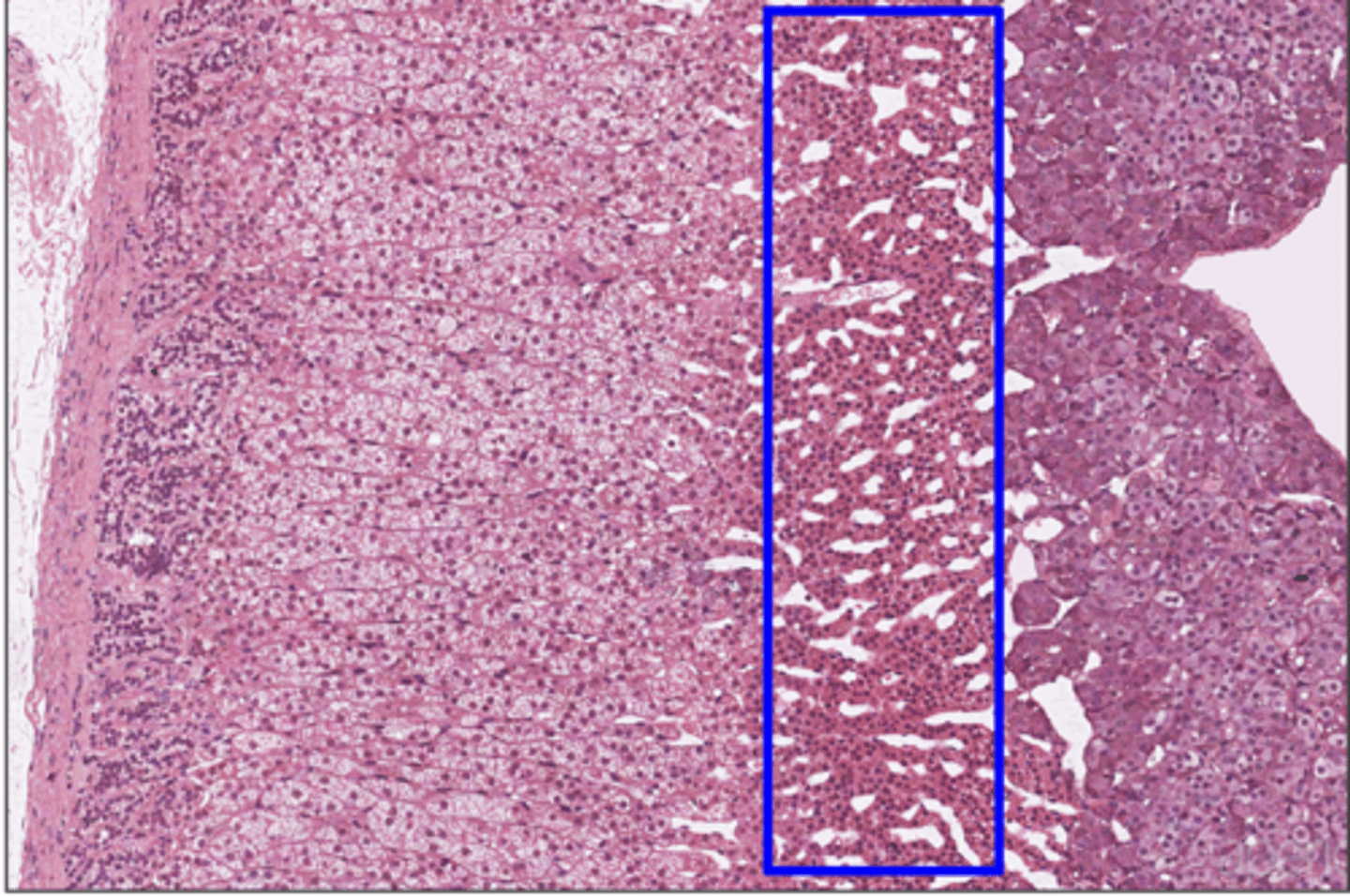
Adrenal medulla
Cornea
the clear tissue that covers the front of the eye
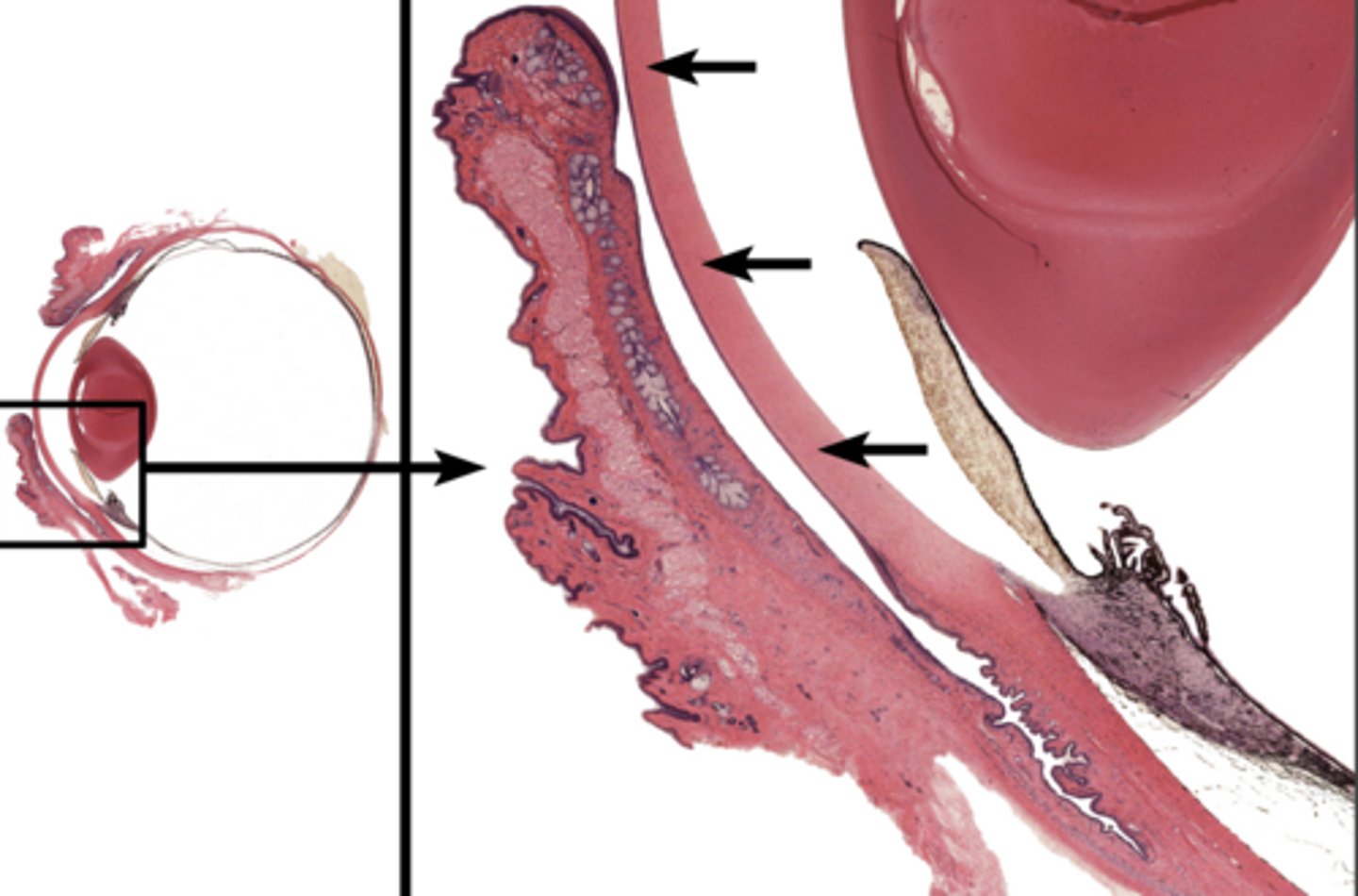
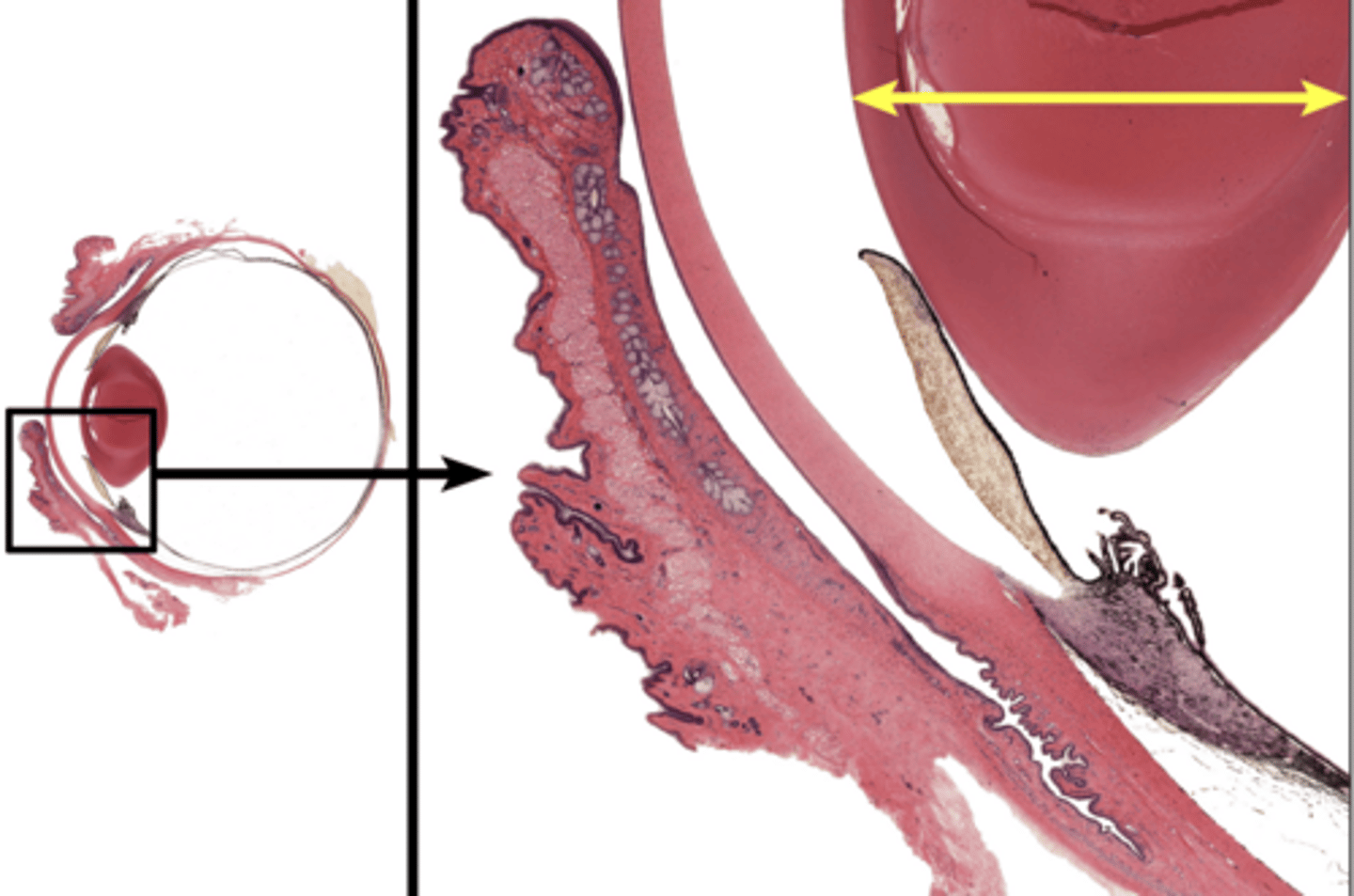
Lens
focuses light on the retina
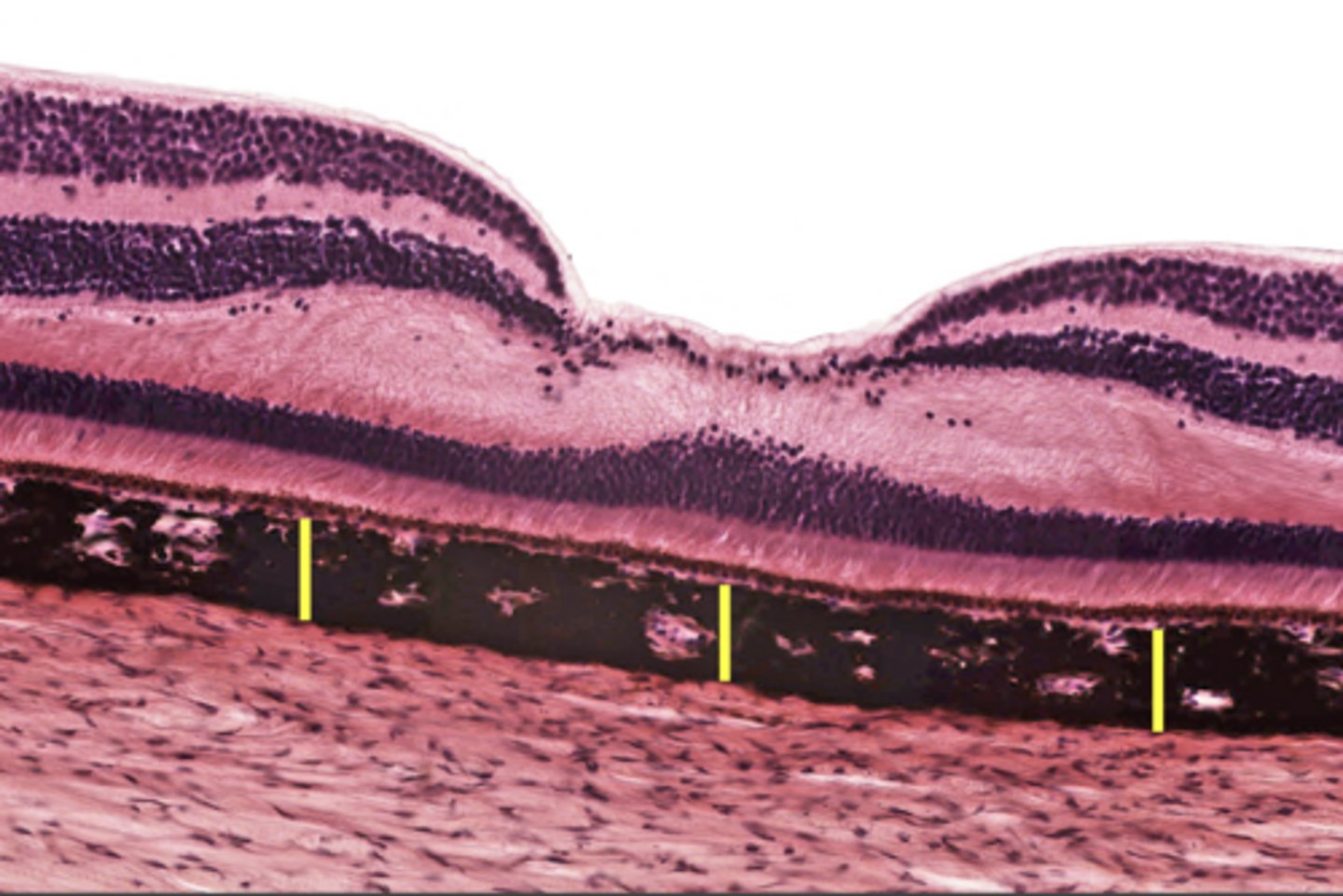
Choroid
dark pigmentation, blocks light from coming through
Retina
inside lining around back of eye (specialized cells are here)
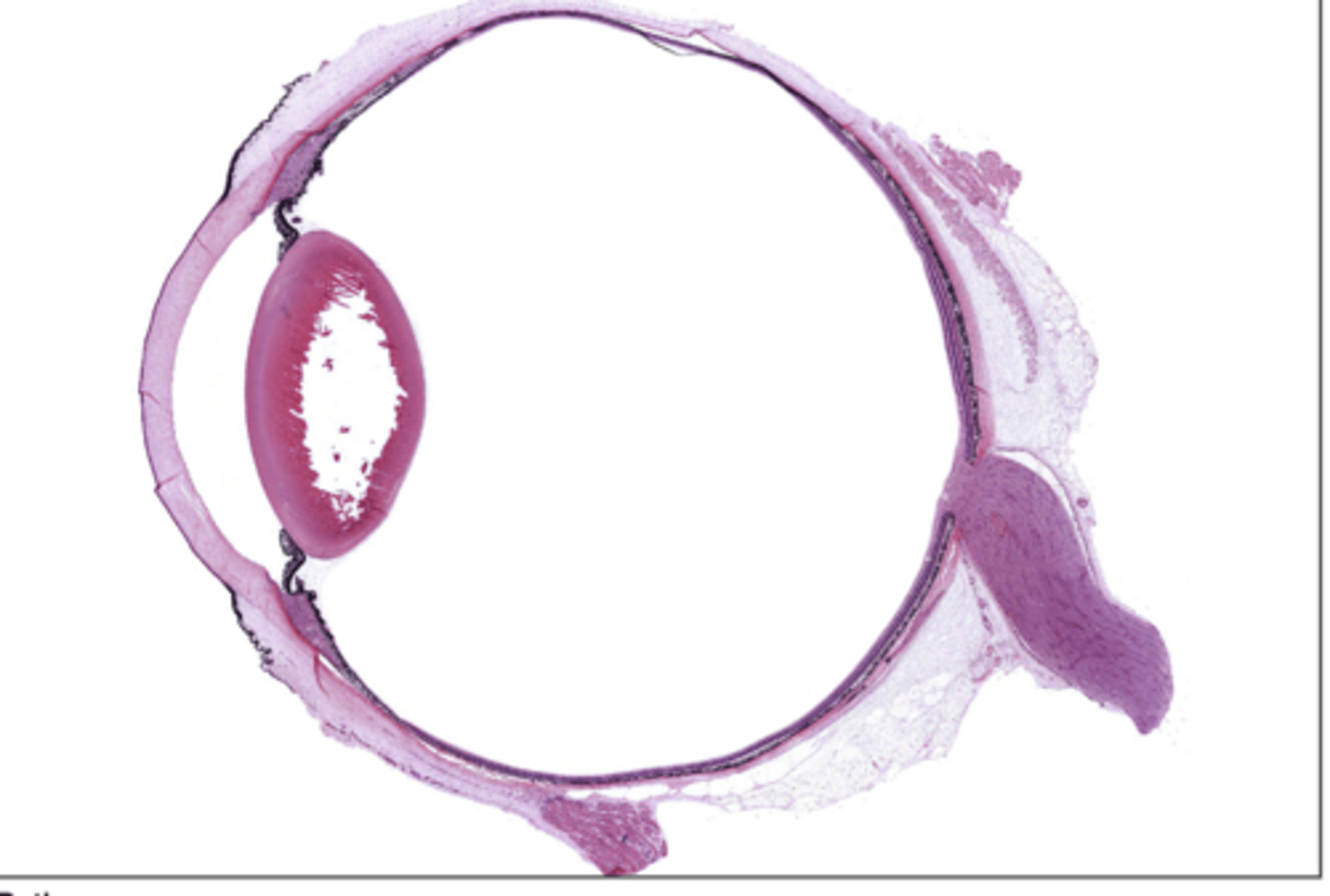
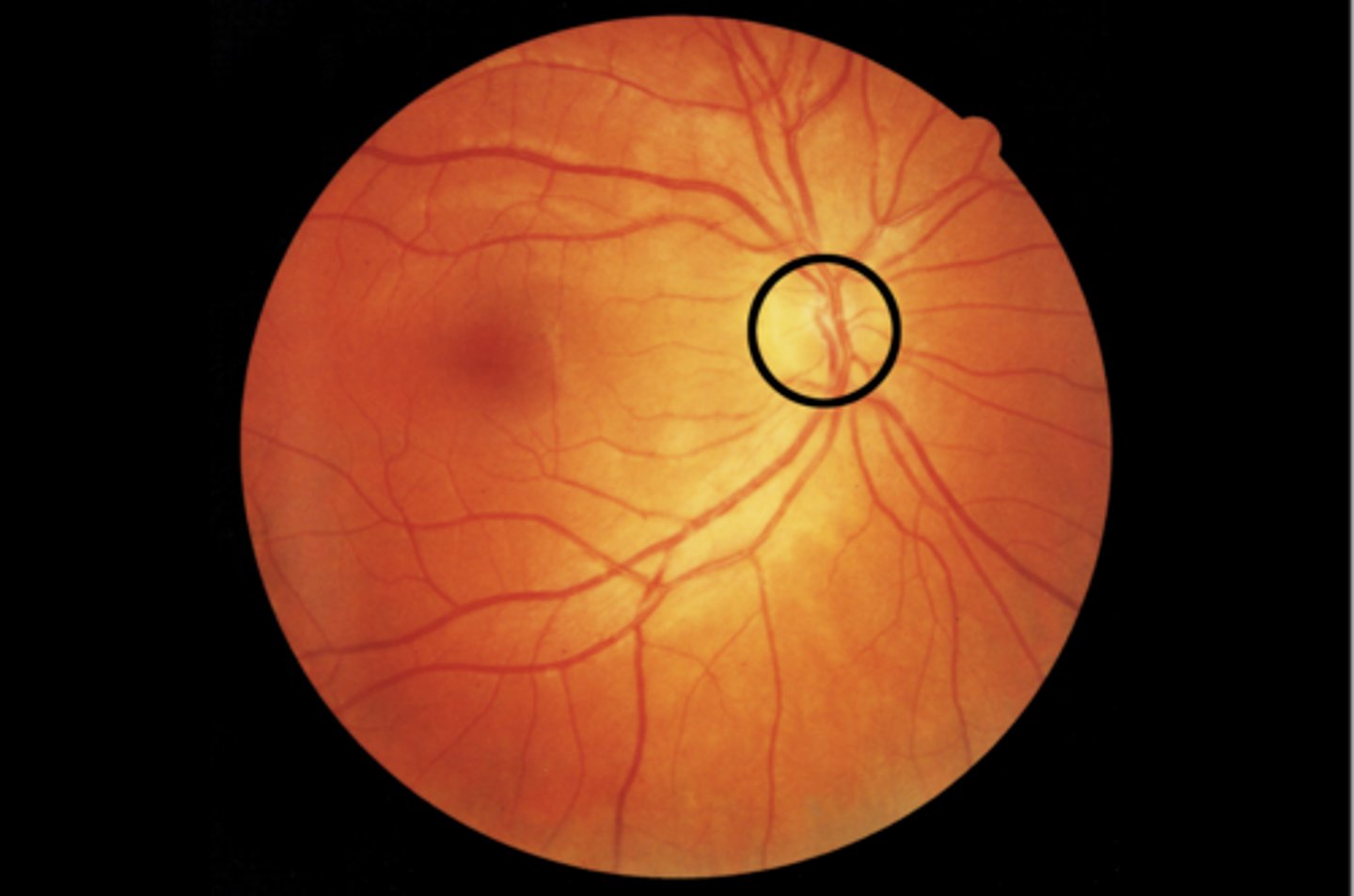
Optic Disc
blind spot
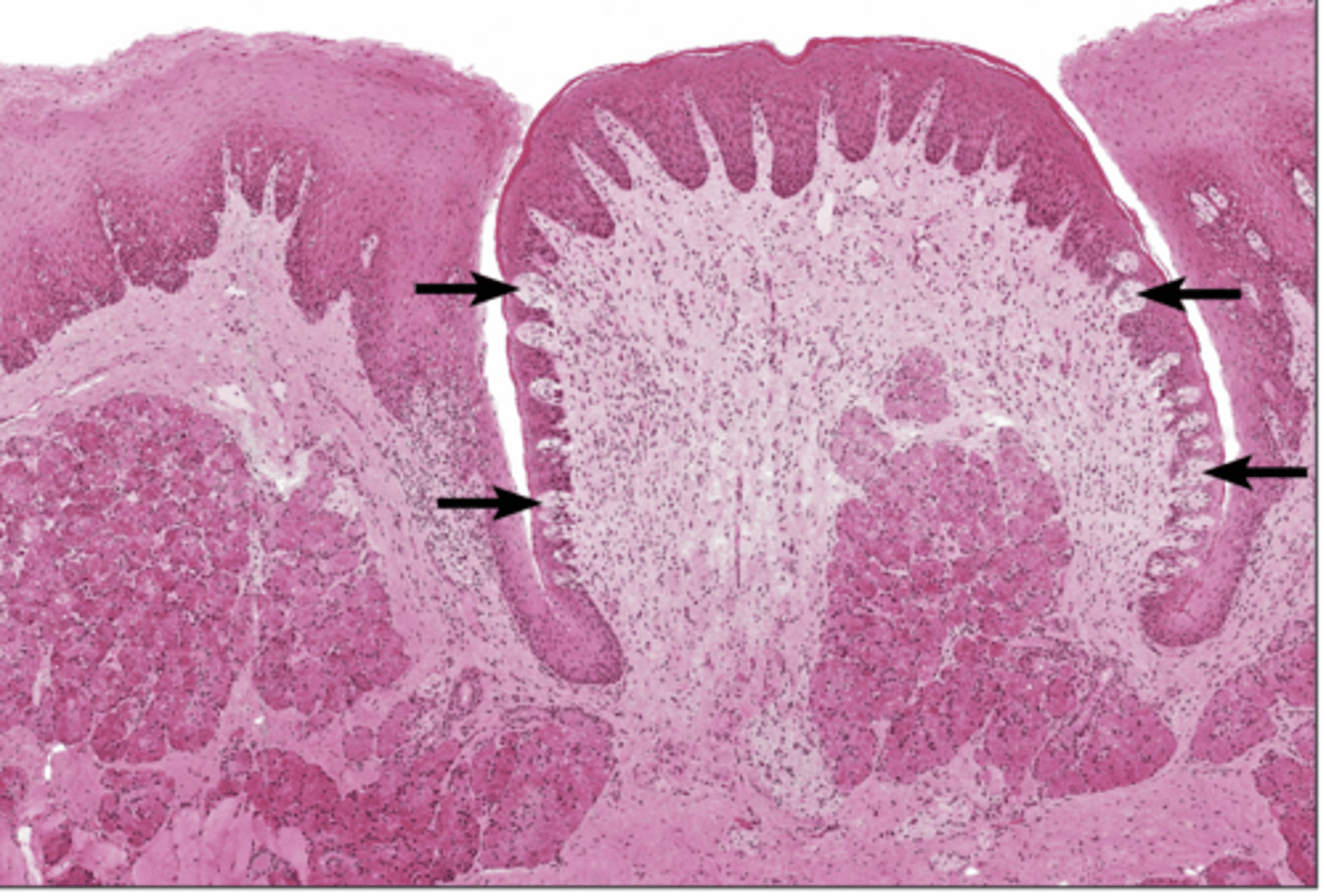
Taste buds
sensory organs in the mouth that contain the receptors for taste
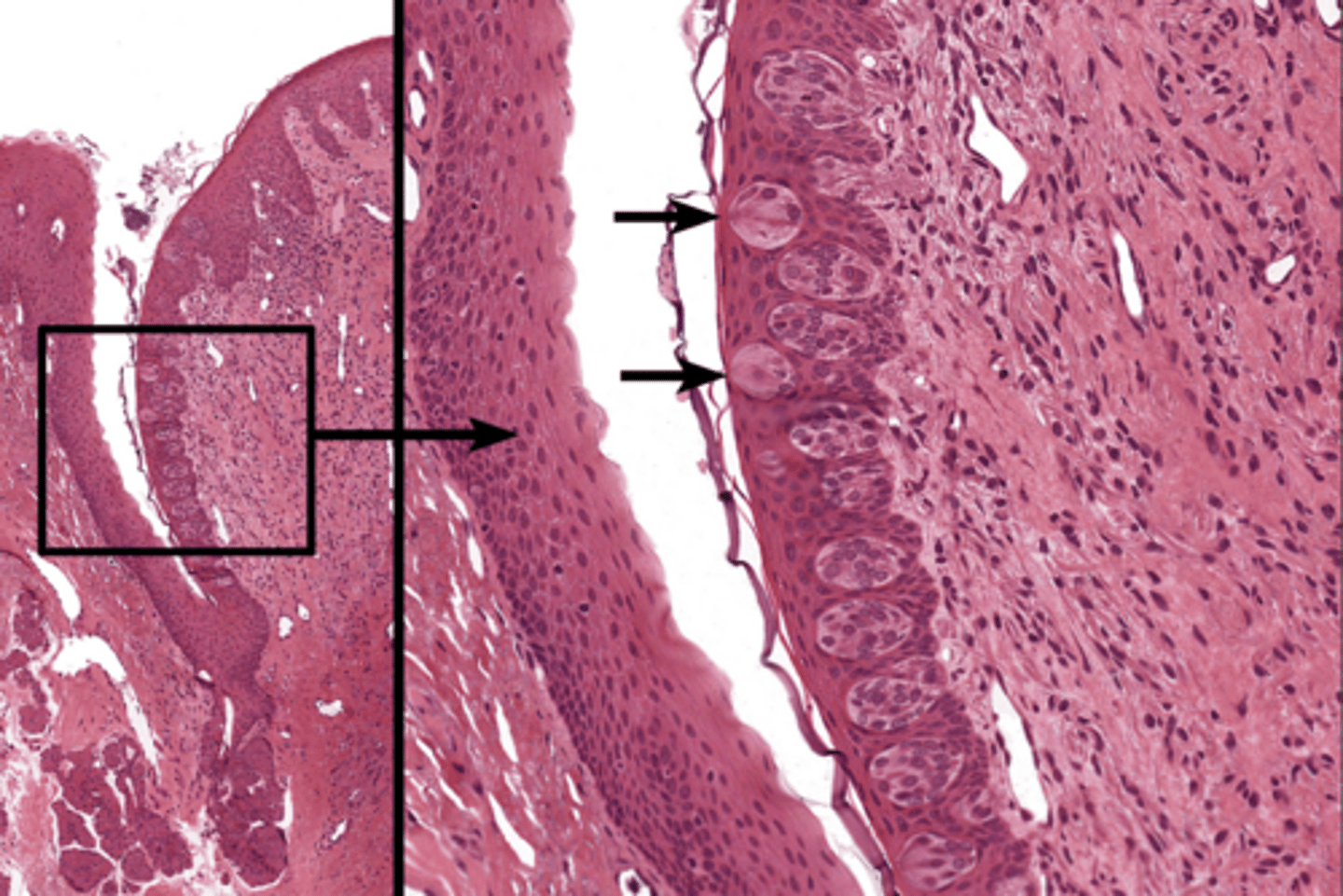
Taste pores
very small openings in the top of the taste buds through which gustatory hairs project
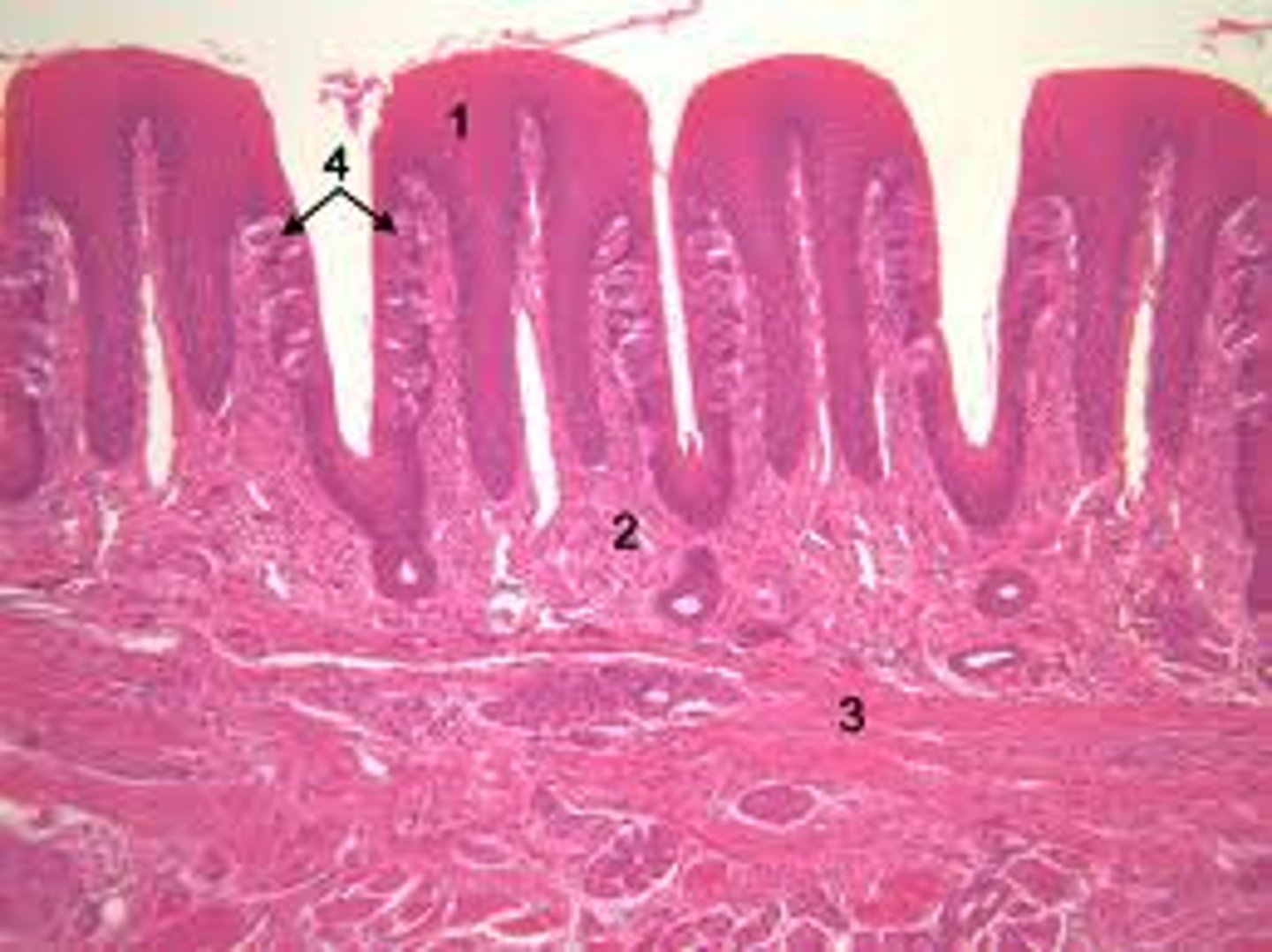
Foliate papilla
side of tongue
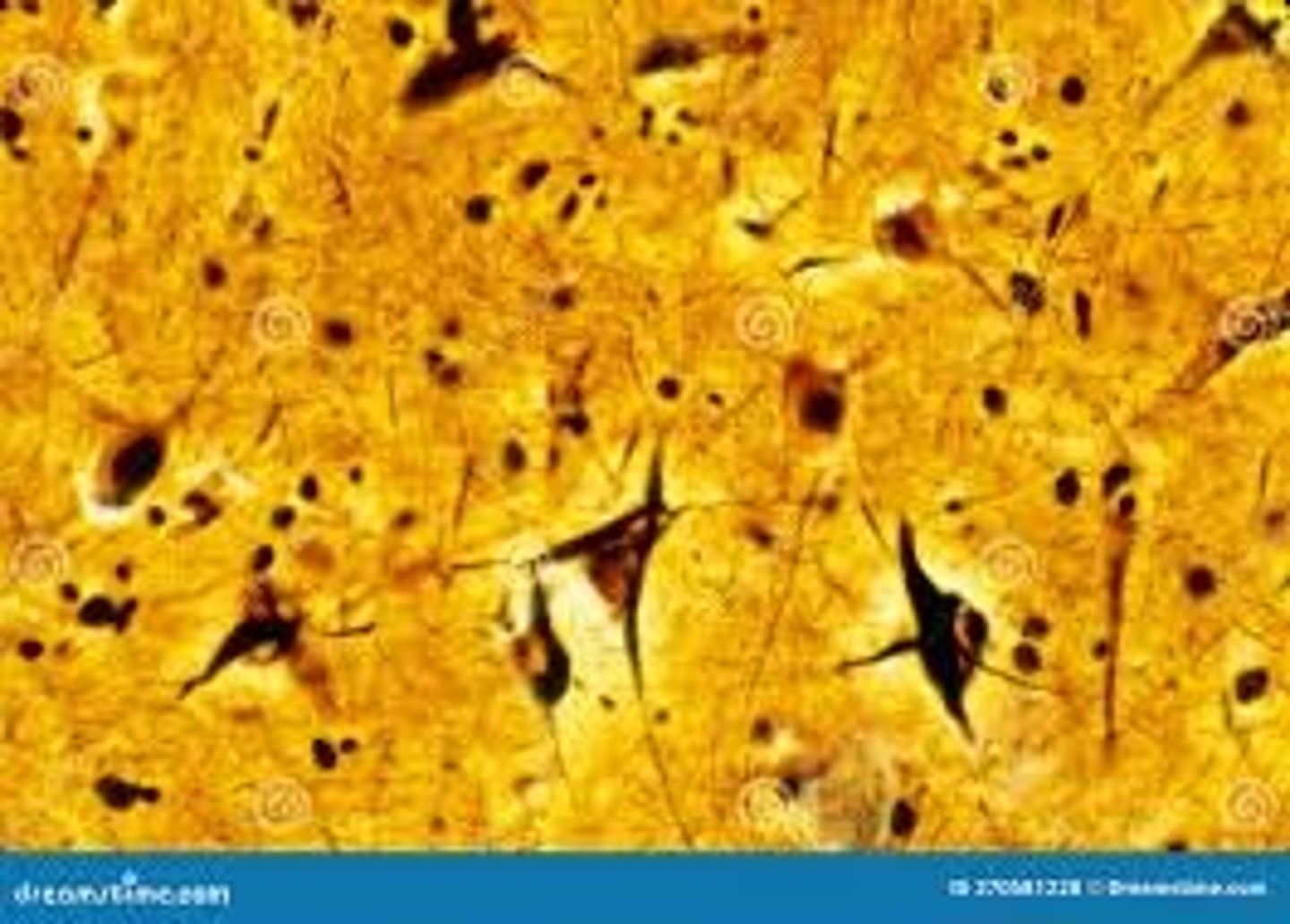
pyramidal neuron
Blind Spot test
bringing something closer to view to see when you cannot see it anymore in one eye while covering other eye
Depth Perception Test
focusing on something (pen) and back of room
Webers Test
hearing loss on one ear versus the other
Rinne Test
hit the tuning fork behind your ear and you hold it there until you can't hear it anymore
Sensorineural deafness
deafness that usually results from damage to the inner ear or to the auditory nerve
Conduction deafness
hearing loss due to problems with the bones of the middle ear
Bone - conductance
sound conducted as subtle vibration along the bones to the inner ear housing the organs of hearing and balance
Air conductance
uses the apparatus of the ear (pinna, ear canal, tympanic membrane, and ossicles) to amplify and direct the sound