BIOB11 Final Exam (7-12)
 Call Kai
 Learn
Learn Practice Test
 Spaced Repetition
 Match
Match Flashcards
 Knowt Play
1/248

There's no tags or description
Looks like no tags are added yet.
Name | Mastery | Learn | Test | Matching | Spaced | Call with Kai |
|---|
No analytics yet
Send a link to your students to track their progress
249 Terms
General structure of AAs
has an
amino (N terminus) and carboxyl end (C terminus)
and a side chain (or R
group)
General structure of Polypepetides
linear sequence of AAs linked by peptide bonds
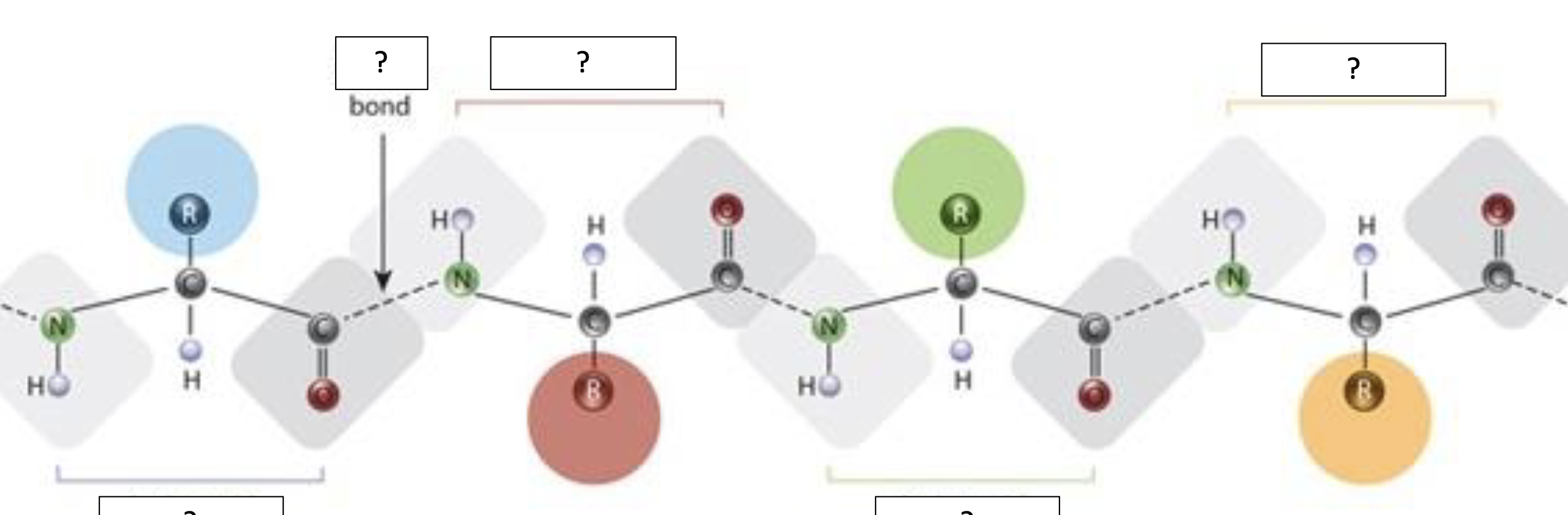
General structure of Subunits
made of domains, and can bind together to form proteins. (stable on their own also)
General structure of Proteins
composed of 1 or more polypeptide subunits. folded into correct shape and have correct post translational modifications to be functional.
what is a protein domain?
structural units of proteins (one blobby), can have the same ones in different proteins.
they fold independently and can have different functions.
what promote protein folding?
non covalent interactions
two ways duplication of a domain can occur?
exon shuffling and gene duplication
what kind of bond occurs in glycosylation?
covalent
What major step is the ribosome put into the correct reading frame during translation, and how?
Initiation, by reading the start codon, AUG methionine
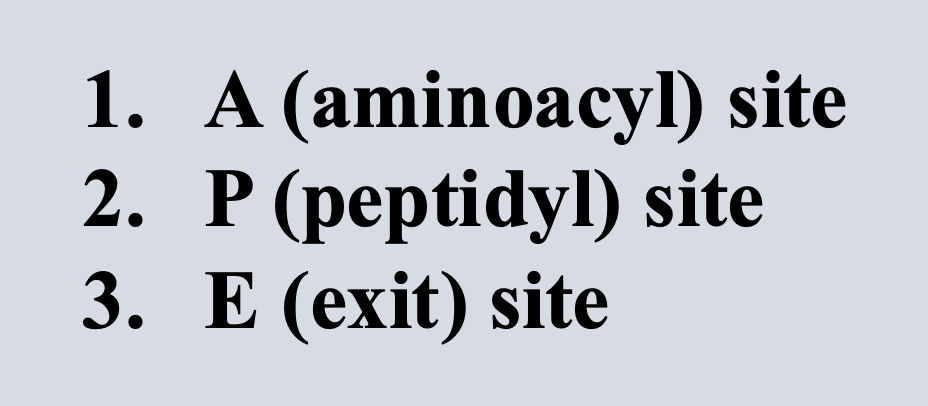
explain,
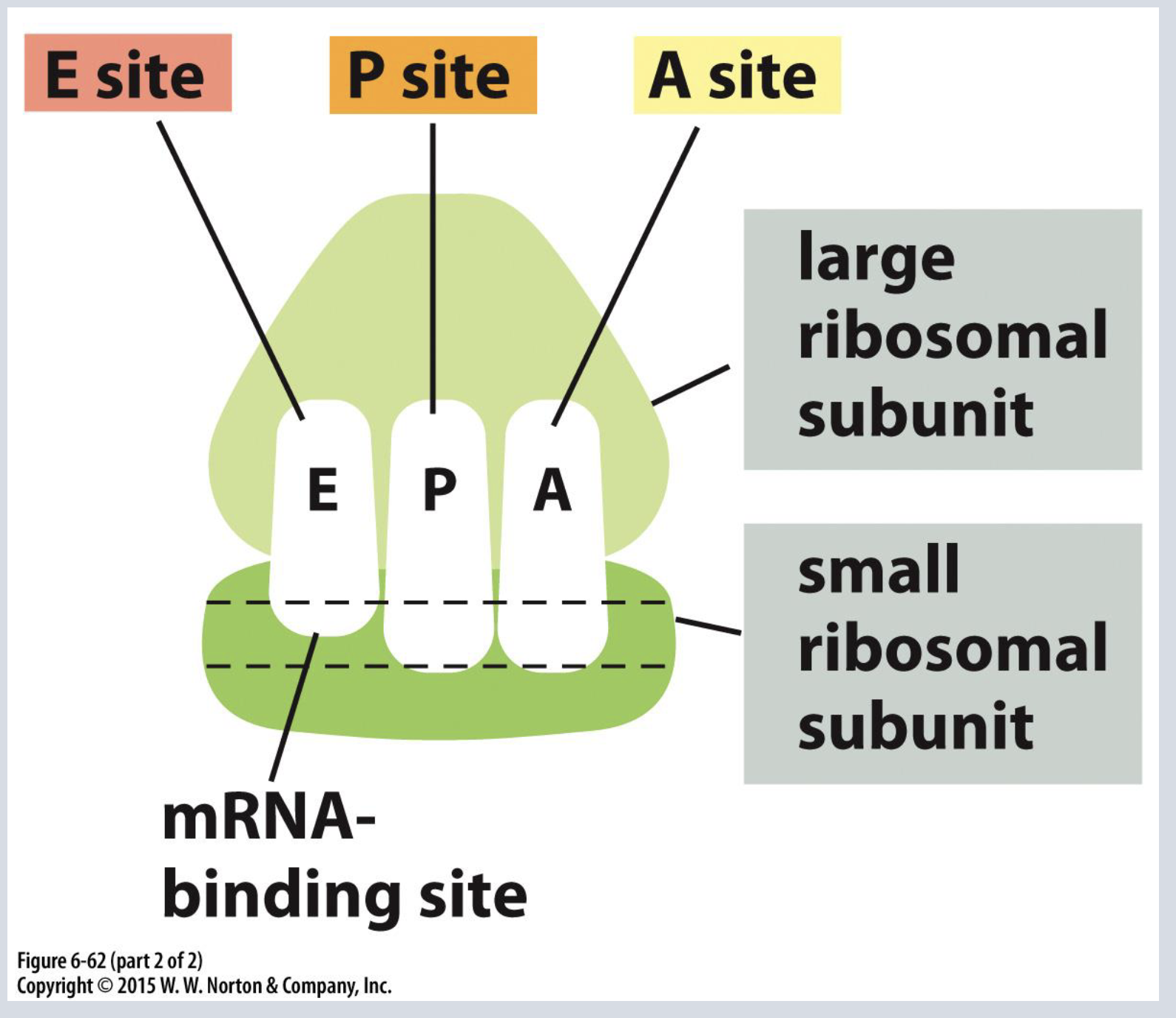
the three sites of association with trna in ribosomes. trna enters in A.
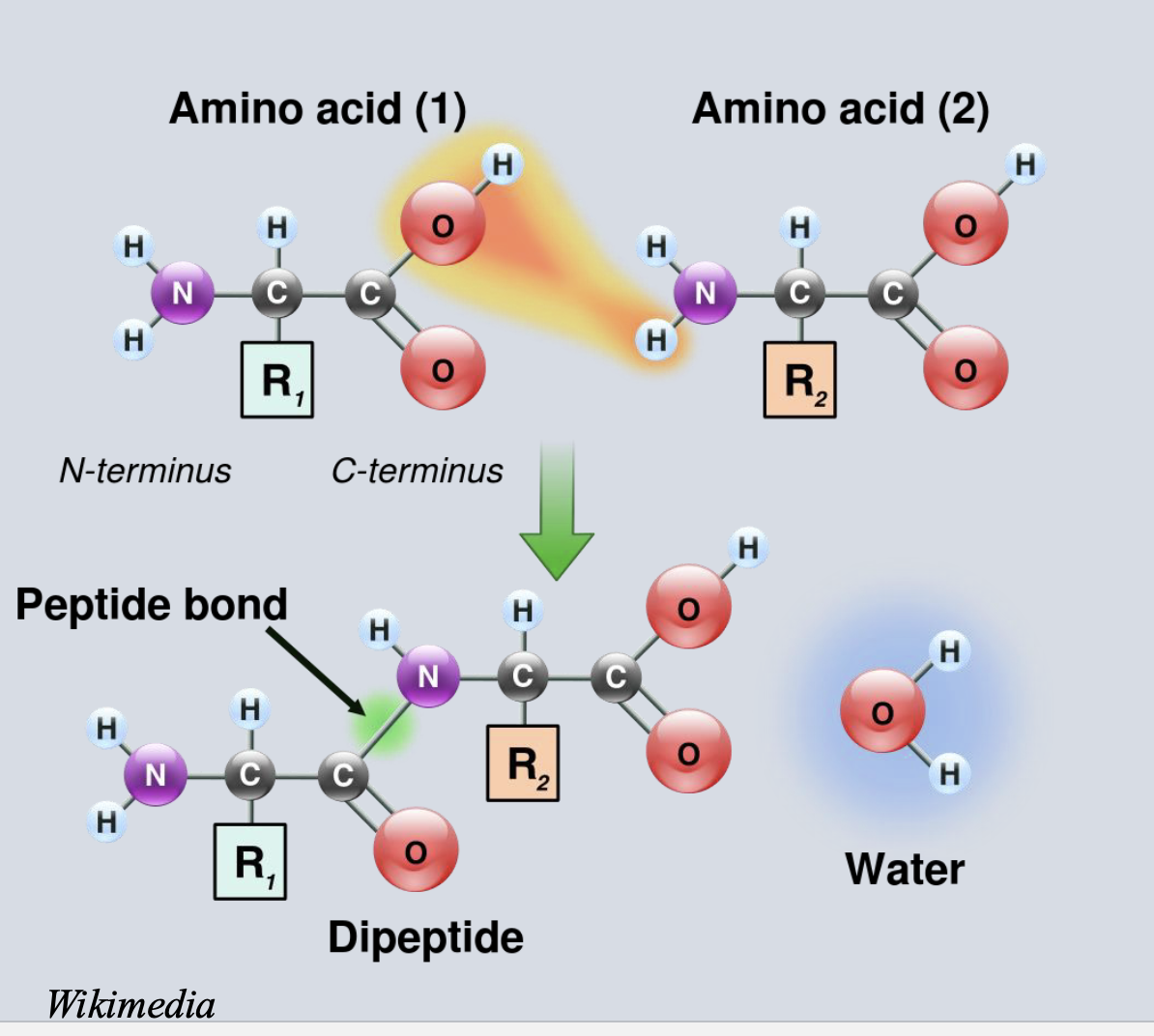
between which two parts of the trna/AA does the peptide bond form ?
C-terminus of growing chain (the growing end) connects to the amino group of the new AA.
Explain translation elongation (5)
new tRNA comes in
peptidyl transferase activity results in bonding of chain and new AA.
L subU slides, A is empty
S subU slides to catch up.
empty trna(in E space) ejected
Explain what Translation elongation factors do. ex: EF-Tu and EF-G in
bacteria
improve efficiency and accuracy
holds the AA away from chain, until its sure its the right one
if approved, GTP is hydrolyzed to GDP and then the TEF is released, allowing the AA to bond.
Adding AA to chain is irreversible. T or F
T, thats why we have the accuracy checks by TEFs
in both eukaryotes and prokaryotes, translation can begin at the 5’ end while
RNA polymerase is still synthesizing T ir F
F, only Proks because the rxn is coupled, but in eukaryotes cannot because it is not coupled.
the 5’ end of a PP chain is always methionine T or F
T, but it can be removed later on.
In prokaryotes, the small ribosomal subunit binds to the first AUG codon guided by a specific
sequence of nucleotides upstream. it is complementary to a sequence near 3’ end of 16S rRNA →
positions the ribosome at the correct spot
The Shine-Dalgarno Sequence (5’-AGGAGG-3’)
they allow prokaryotes to synthesize multiple proteins from a single RNA
IF1, IF2, and IF3 do what?
IF1: attachment to mRNA
IF2: GTP-binding protein, attachment of first AA-
tRNA
• IF3: Prevents premature attachment of large subunit
when they detach, L subU can bind=elongation occurs
what is N-formylmethionine (fMet)
In bacteria the initial AUG methionine is a modified
version
Initiator tRNA (carrying fMet) interacts with AUG
at what will be the ‘P’ site of the ribosome
eukaryotes have larger ribosomes than prokaryotes T or F
true! thats why their initiation is a bit more complex.
eIFs bind to the small subunit and are important for:
eukaryotic translation initiation.
eIF2, eIF1, eIF3 roles
euk TL initiation, encounters mRNA in ribosome:
• Initiator tRNA (Met) binding the ‘P’ site with GTP-bound eIF2
• eIF1s: Conformational change to allow binding of mRNA
• eIF3: interaction with eIF4G on mRNA complex
eIF4E/A/G roles in euk TL initiation
the set that belongs to the mRNA
E: binds to 5’ cap
A: unwinds any doub.stranded regions in the mRNA by ATP hydrolysis
G: links both ends to make a circular message/ (interacts with eIF3 on S subU)
Kozak sequence
S ribo subU with eIFs and initiator tRNA scans from 5’ end to find this consensus sequence to begin TL initiation
how are eIFs released, and what does that occur after
eIF’s GTP hydrolyzed and they are released. this allows for L subU to attach.
inefficient kozak sequence recognition results in:
P with different AA at the beginning (N terminus)
release factors bind to the A section and catalyze the addition of what instead of an AA at a stop codon?
water!
this frees up the C terminus. po
polysome
Multiple ribosomes associated with an mRNA
can occur anywhere in proks and only in cytoplasm in euks.
at at what point can another ribosome assemble?wh
when the AUG is free
differrential gene expression evidence
some genes are transcribed more than others.
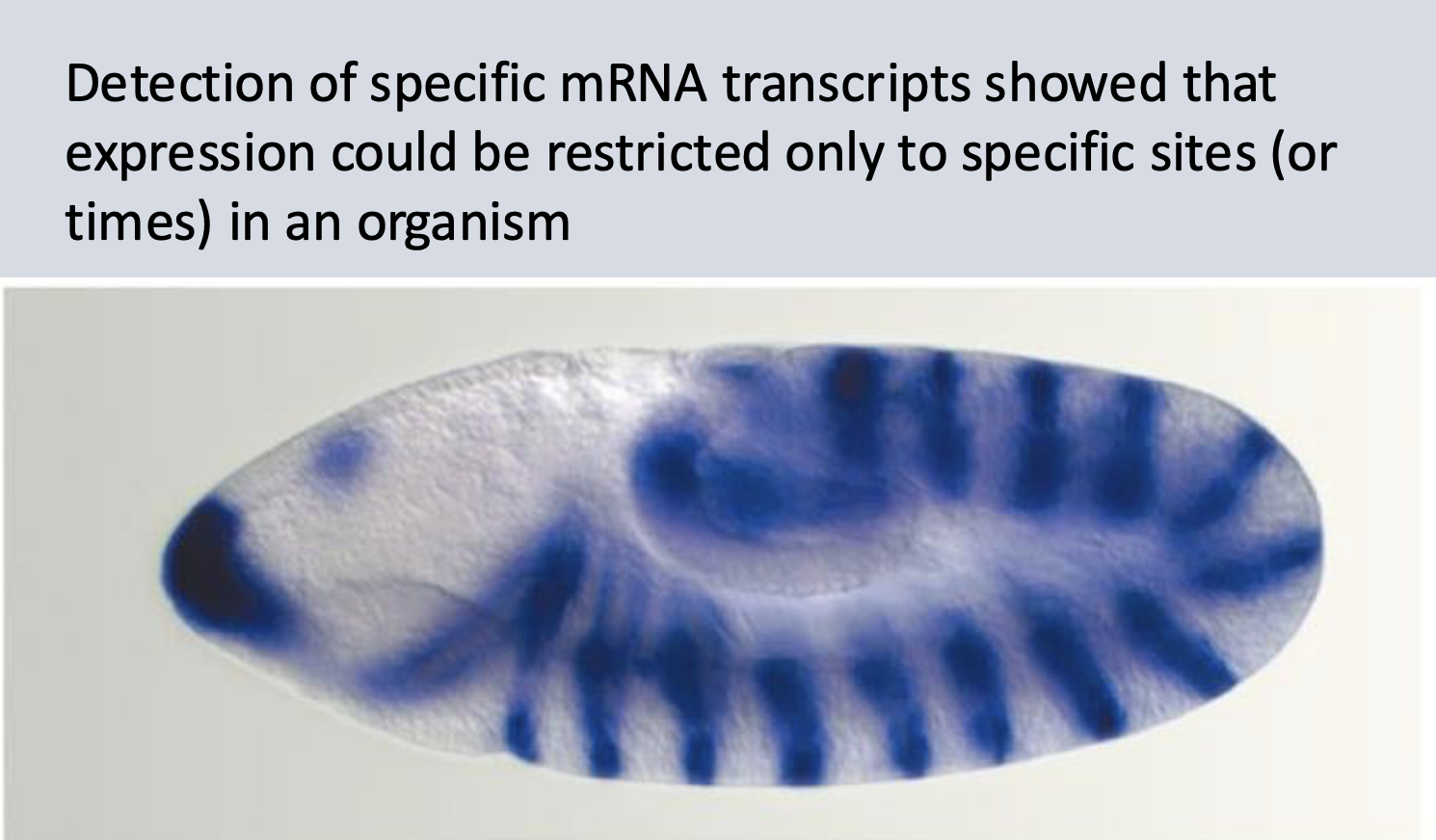
in a drosophila embryo, in situ hybridization, which detects mRNA through base-pairing
with a labeled nucleic acid probe , they saw odd-skipped mRNA. diff mRNA expressed in diff. cell types in a v precise manner,
genomic equivalence and evidence
all somatic cells of an organism have the same DNA, possible because of differential gene expression.
proof: An entire mammal can be cloned from the DNA in an adult somatic cell!
3 different levels of commitment/potential in stem cells
Pluripotent – Produce all cell types in the body.
(ex. embryonic stem cells)
Multipotent – Produce a related group of cells.
(ex.hematopoietic stem cells that create red and white blood cells)
Unipotent - Only produce cells of their own type, but have the property of self-renewal required to be labeled a stem cell.
(ex. muscle stem cells).
what is cell commitment
the gradual process of a stem cell becoming differential and functional (restricting cell fate)
what are the amplification steps in P expression, why?
one gene can be multiple mRNAs and 1 mRNA can become many proteins.
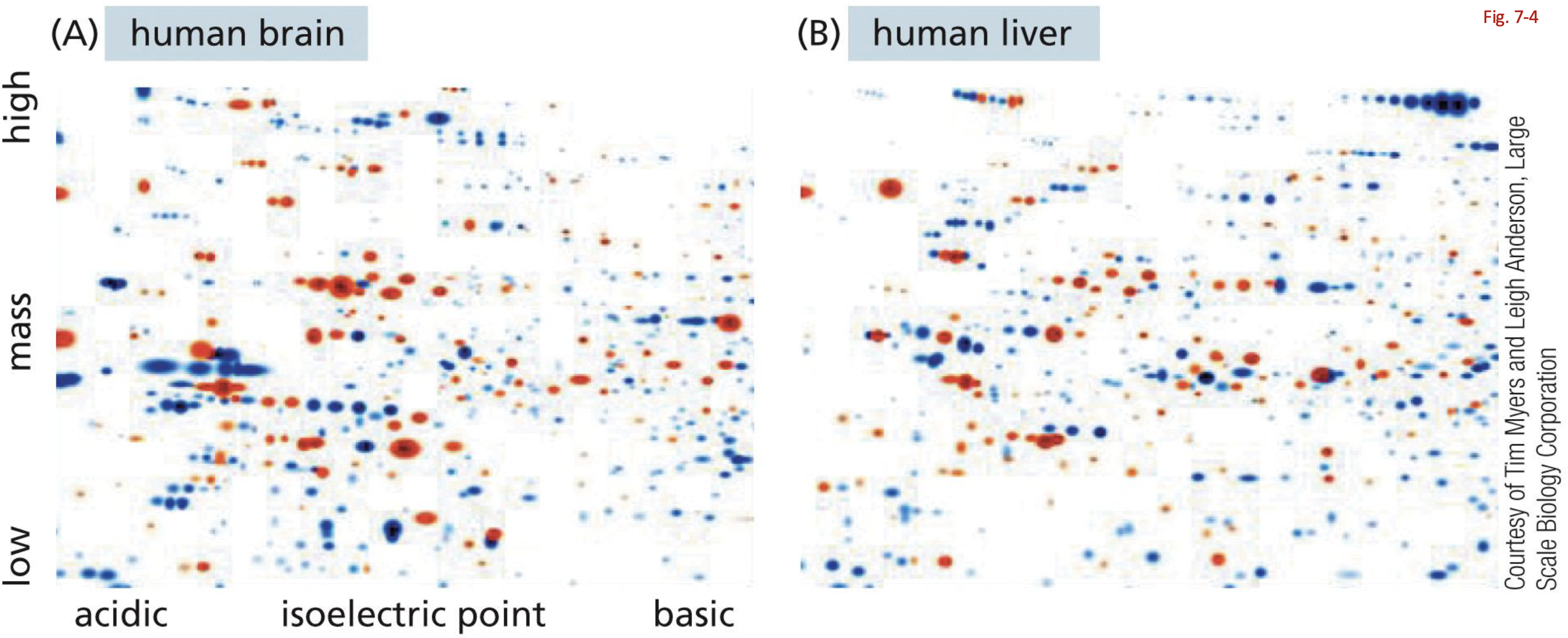
what is this? what des it show?
2D gel electrophoresis. separates proteins by mass and charge. shows different proteins expressed in different cells.
general approach & potential uses for RNA-seq
USE: comparing transcriptomes of 2 diff tissues/ treatments, detect new muts or splicing variants.
HOW: isolate [ALL] mRNA, rev.transcriptase to → cDNA, ligate&lify, sequence by synthesis
results in a sequence read. shows how many times a gene comes up.
![<p>USE: comparing transcriptomes of 2 diff tissues/ treatments, detect new muts or splicing variants. </p><p>HOW: isolate [ALL] mRNA, rev.transcriptase to → cDNA, ligate&amplify, sequence by synthesis</p><p>results in a sequence read. shows how many times a gene comes up.</p>](https://assets.knowt.com/user-attachments/ecc7b35f-e589-41c7-b9c3-0dfd939b862a.png)
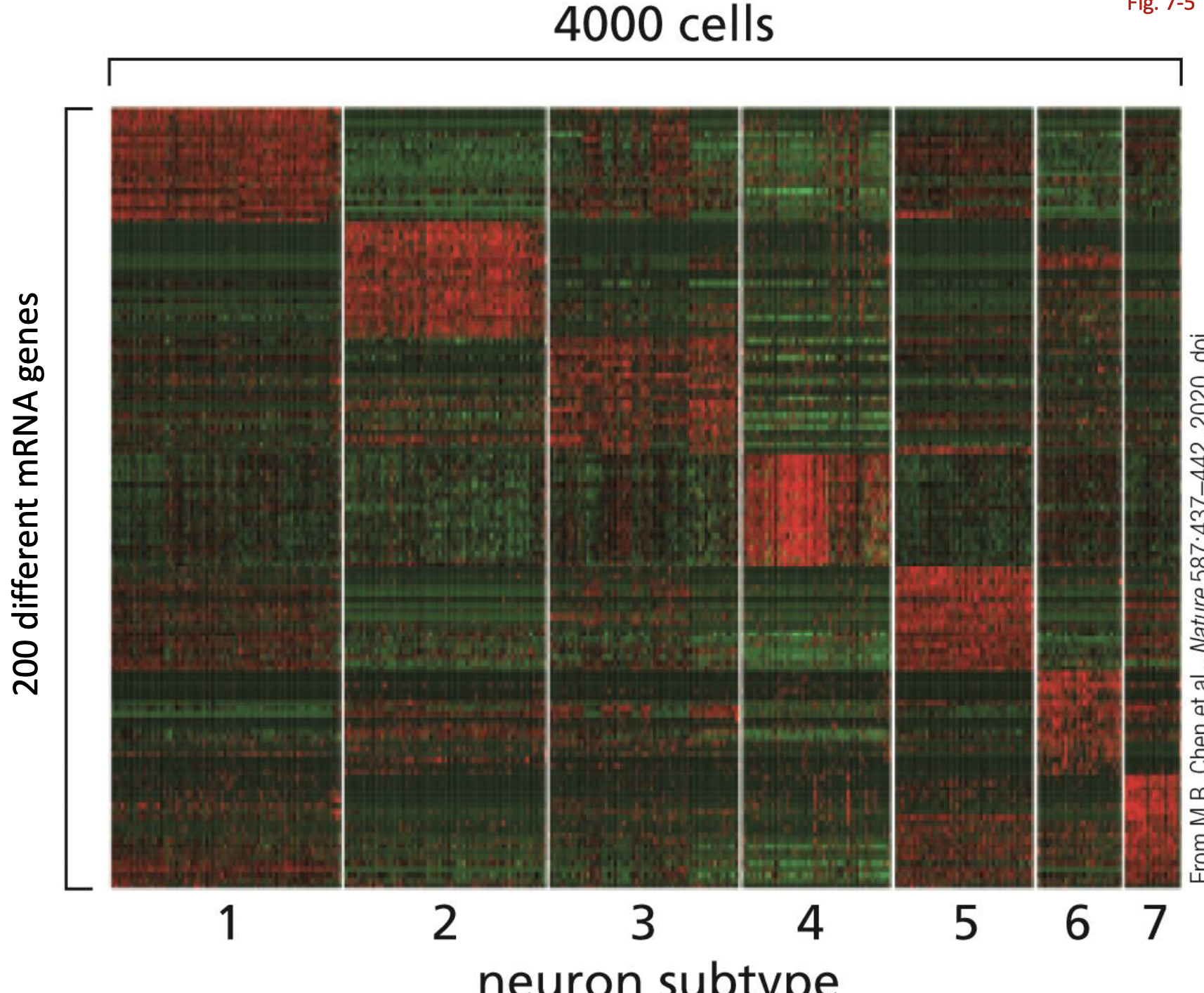
what is this?
RNA-seq by heatmap
done for large scale comparisons of transcriptomes or proteomes.
colour scheme used to show different expression groupings.
in RNA seq. why are introns detected a little bit?
they are possibly not fully processed rnas (introns not spliced out yet) or some bits are kept for different functions.
Is protein binding to DNA typically using covalent or non-covalent bonds?
non-covalent
cis regulatory transcriptional factors
promoters and enhancers
On the gene they affect
on DNA, so same for all cells of an organism.
trans regulatory factors
ACTIVATORS OR REPRESSORS (and transcription factors)
bind to cis reg TC factors
expressed from anywhere in the genome
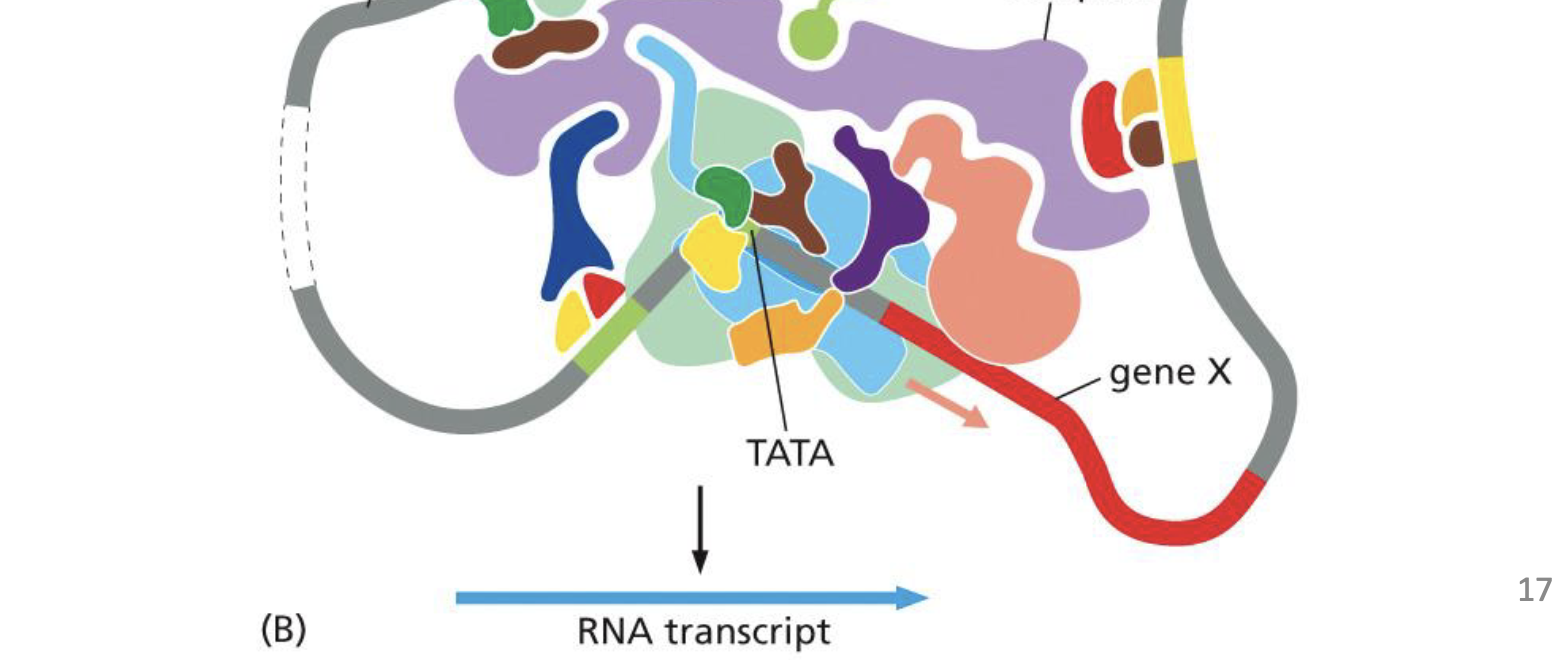
what is this, what is purpose
Mediator complex, Transcription regulators act through them. but not all, some interact directly with with
the general transcription
factors or RNA polymerase
or chromatin remodelers!
Transcription factors (TFs)
proteins that bind specific DNA sequences and influence transcription
Whether a TF can increase or decrease transcription is often dependent on forming complexes with other trans-regulatory elements.
explain the modularity of TFs (3)
1 gene, ++TFs
1 TF, ++genes
1 TF can have ++ effects in diff contexts.
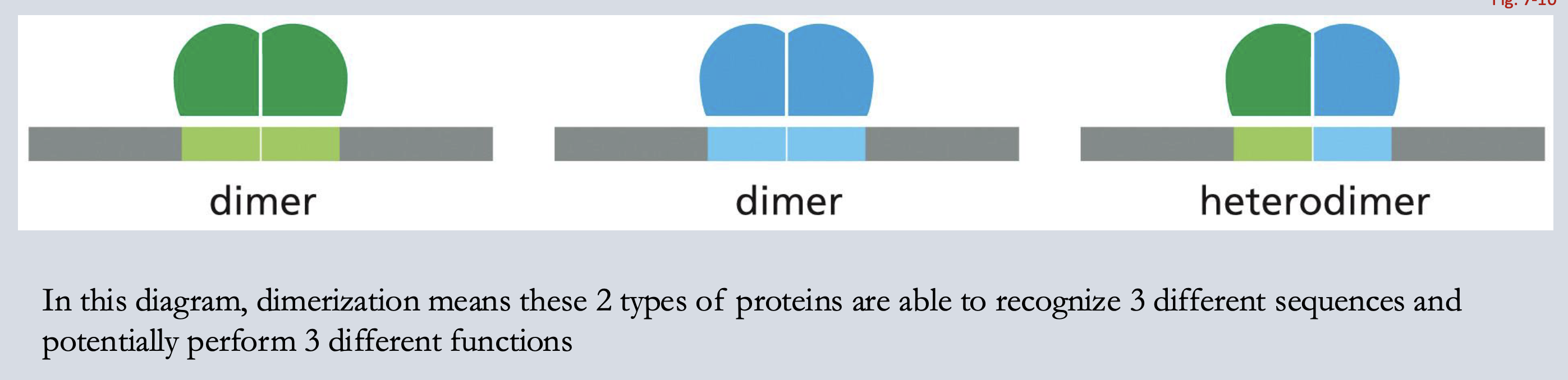
what’s a way to create the opportunity for fewer proteins to be used to recognize a greater number of sequences
Dimerization: diff combos!
Genome-wide analysis of the binding locations/sequences for a particular protein (determining its fxn) can be performed by a technique known as:
ChIP-Seq
(chromatin immunoprecipitation and
sequencing)
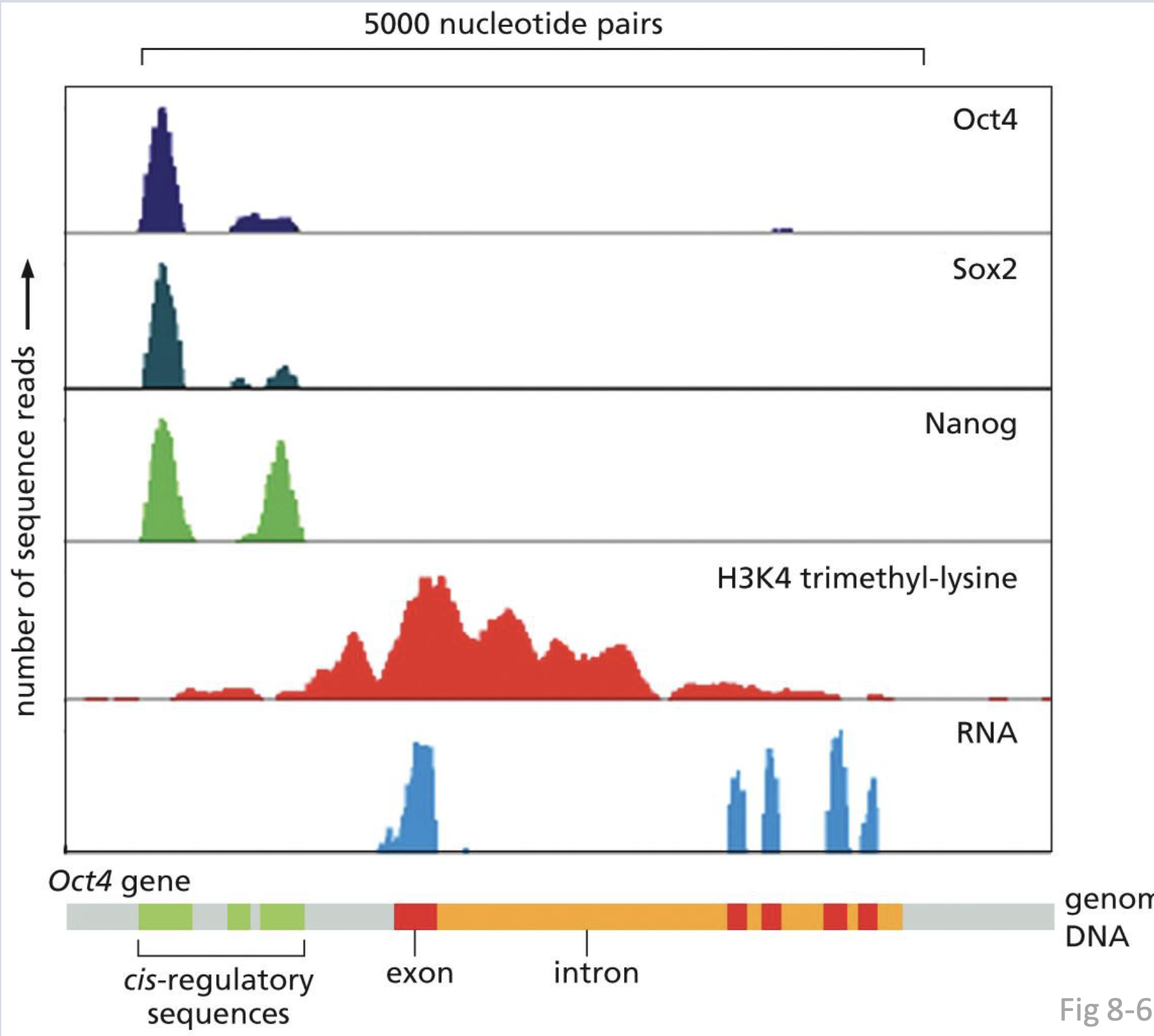
which are chip seq and which are RNA seq.
top three chip seq, last one RNA seq
general approach & potential uses for ChIP-Seq
crosslink uses covalent bonding to freeze all activity in the cell
DNA is broken into pieces, so only the target DNA is stuck to the select protein
antibody attaches to all select P and pulls out all DNA fragments that are attached to it.
reverse cross linking then sequencing possible!
Detects regulatory sequences
because enhancers are cis, they must be close to the transcription start site. T or F
F, because DNA can loop around!
promoter role
Sequences of DNA where RNA
polymerase can be recruited to
initiate transcription
enhancer role
Sequences of DNA that impact
how much gene product is made
from a promoter
if all cis regulatory genome is the same in every cell type, what differes/ ?
the combo of transcription factors and co-regulators present!
Explain modularity of gene regulation
1 gene, ++enhancers
1 enhancer, ++cell types, time, stimulus
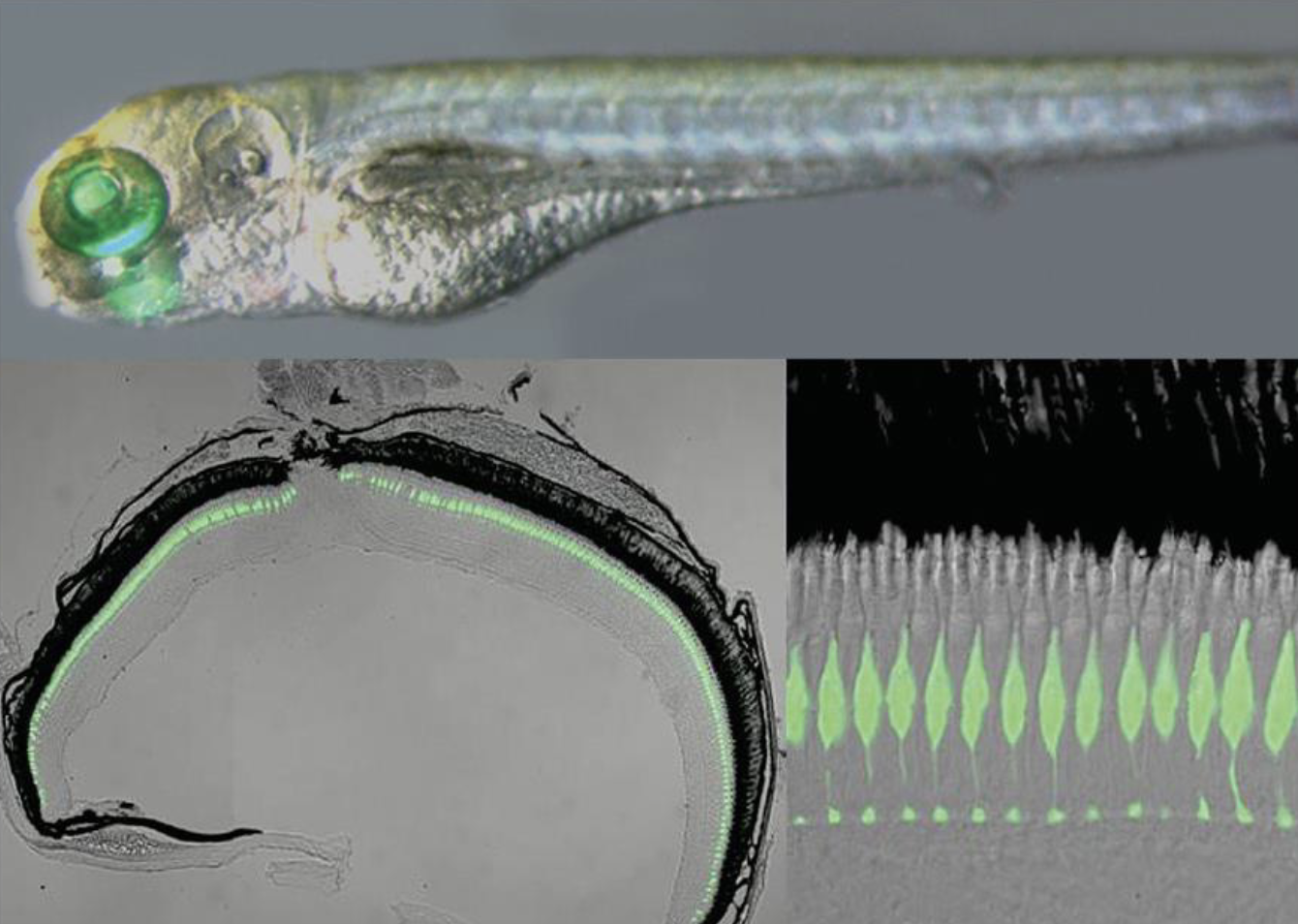
Explain how reporter genes can be used to understand regulation of a gene
find and study enhancer sequences
expression in DNA fused with reporter genes is visible.RG ex: Green fluorescent protein
(GFP)
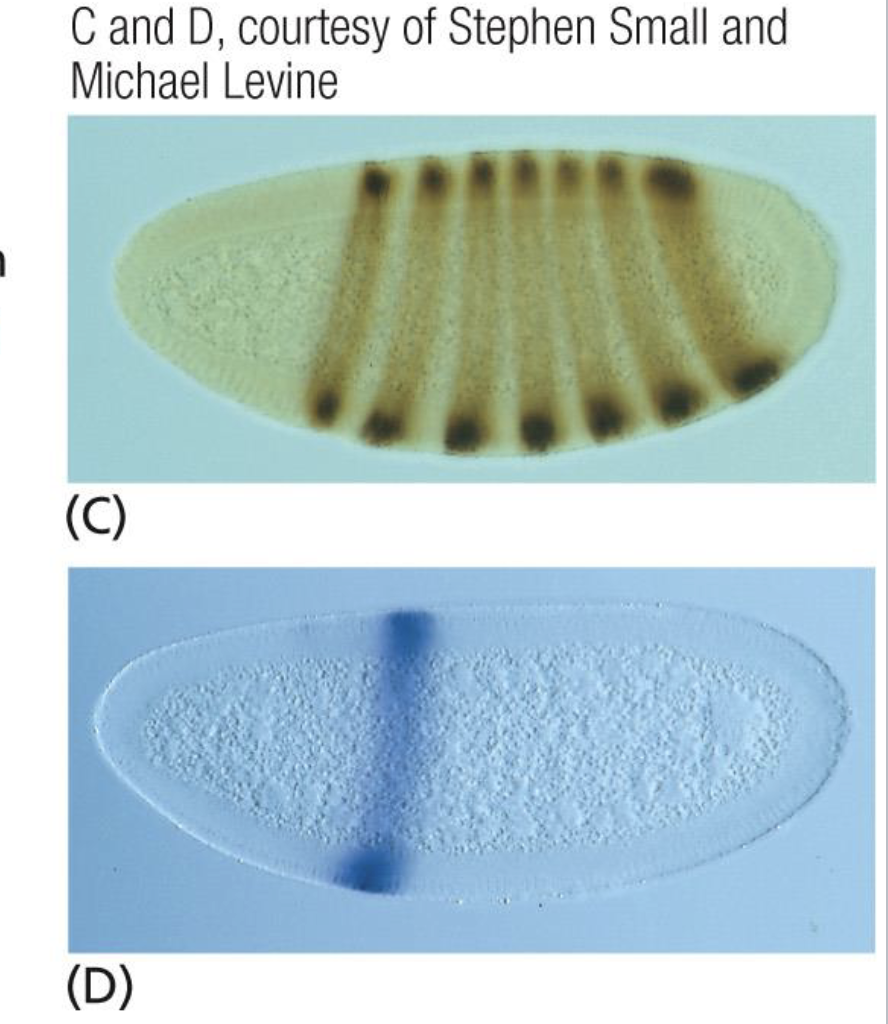
allows for deletion mapping
what is deletion mapping?
delete a section, does anything change?
if the reporter gene fuses into one after change, it means one stripe of expression requires this one regulatory
sequence
WHATS A silencer?
cis regulatory element that can prevent promoter use and inhibit transcription.
Required to restrict gene expression to the proper cells/times
ex: NRSE sequence to the LacZ gene
activators usually interact with rna polymerase either directly or through mediators and GTFs. t or F
T, in proks though, more likely direct contact. according to chat GTP)A
Activators bind to
enhancer DNA
elementsr
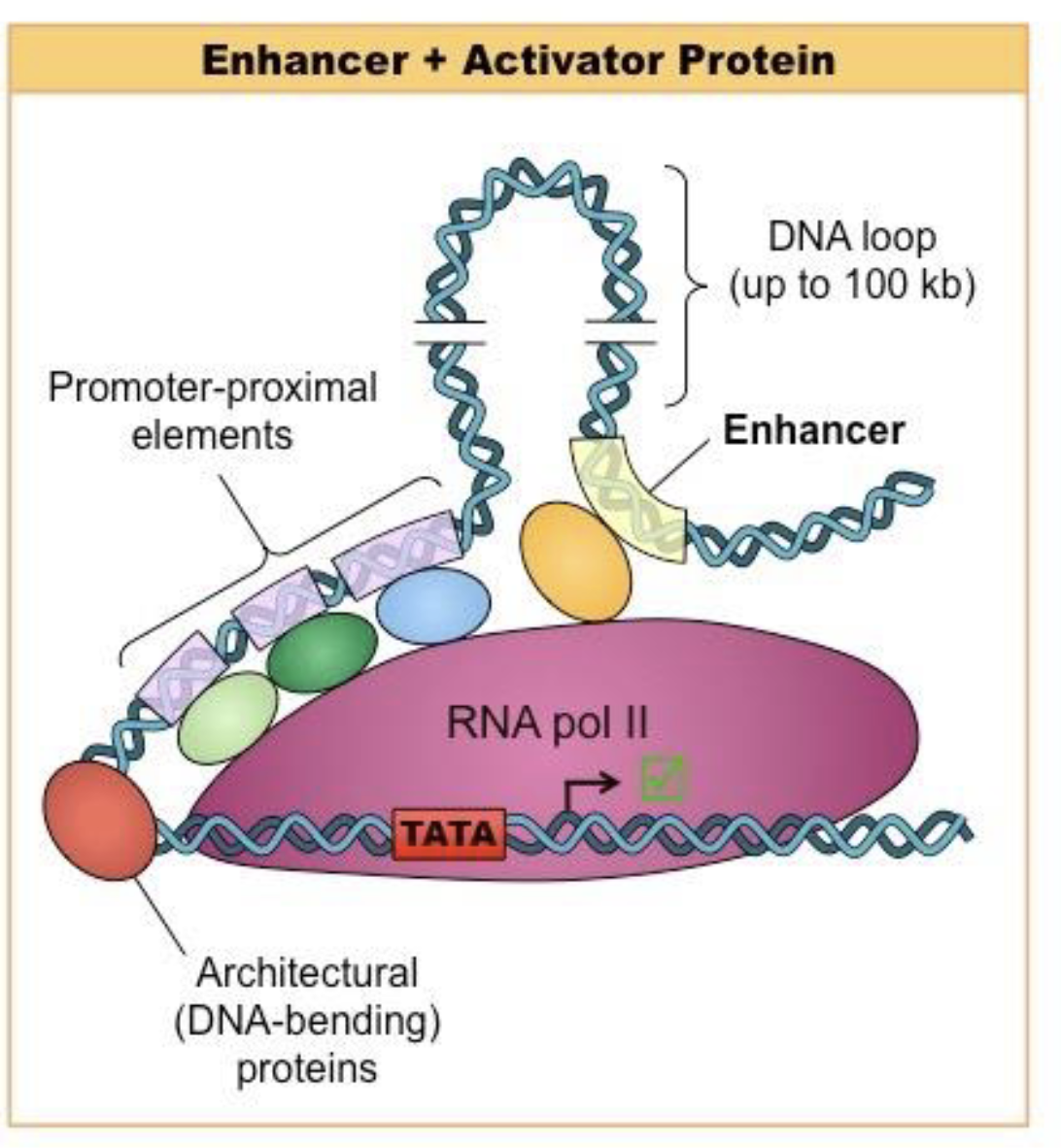
repressors bind to
silencer Dna elements
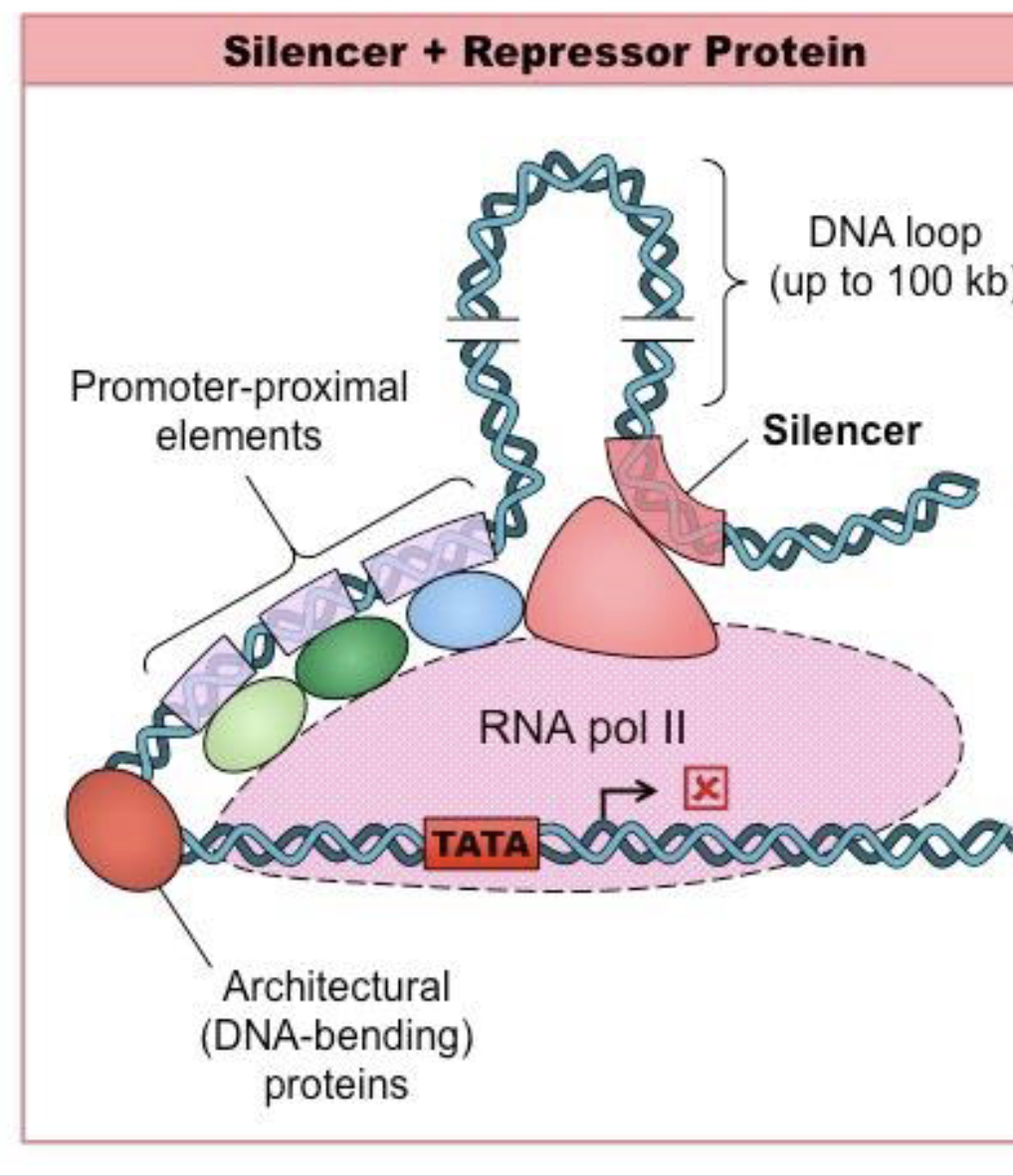
Co-activators and
co-repressors are
recruited to help
influence
transcription
Explain how nucleosomes impact DNA binding and contribute to gene regulation
if the surface the TF binds is wound around nucleosome, it cannot bind. some TFs can destabilize nucleosomes to facilitate binding.
note: epigenetic stuff happening parallel to. this
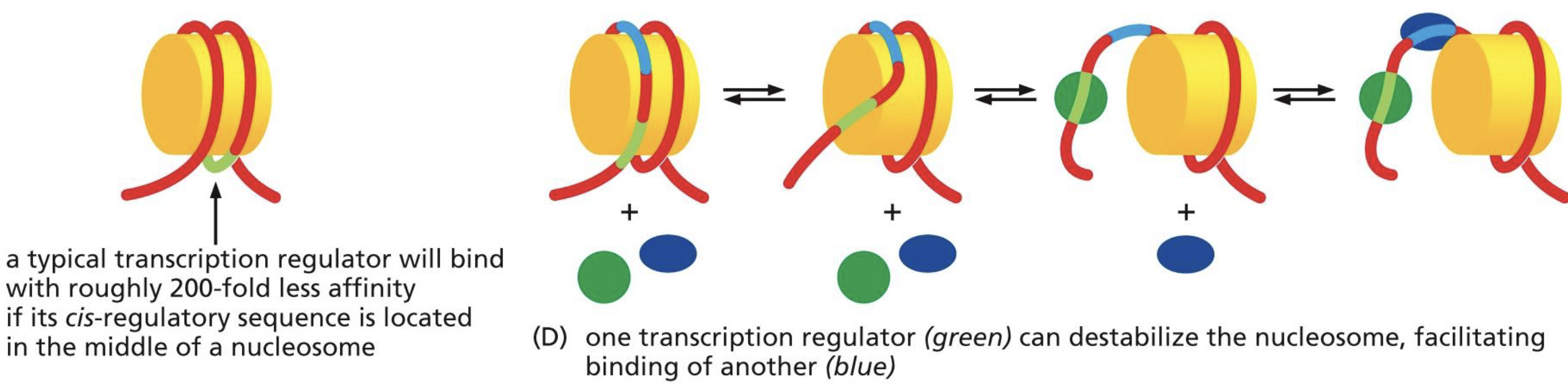
activators can bind to histone acetyltransferases, what does this do?
opens up chromatin and promotes gene transcription
Activator vs repressor when they are overlapping!
repressor winds, TCrepressed
if Activator and repressor are side by side, what happens
they stop each other (I think, according to slideh) (or repressor wins according to chat)
how does the recruitment of chromatin remodelling completes affect TC
repress TC because it re curls up the chromatin
how does the recruitment of histone deacytelyases or histone methyl transferees affect TC
repress TC as it promotes constriction tightness of the chromatin
why is lncRNA kinda special…? 👉👈 3 things
non protein regulator
can be cis or trans(normally)
can start acting when its still being transcribed on
how are gene expression patters maintained in daughter cells?
Histone reader-writer complexes and DNA methyltransferases propagate and maintain epigenetic regulation of chromatin
If enhancers and silencers can be located far away from a promoter (and trigger chromatin modifications) what stops them from acting on the wrong gene?
Insulators (& the proteins that bind tothem) can alter the 3D arrangement of chromatin to divide DNA into looped region. only looped bits can have things happen.
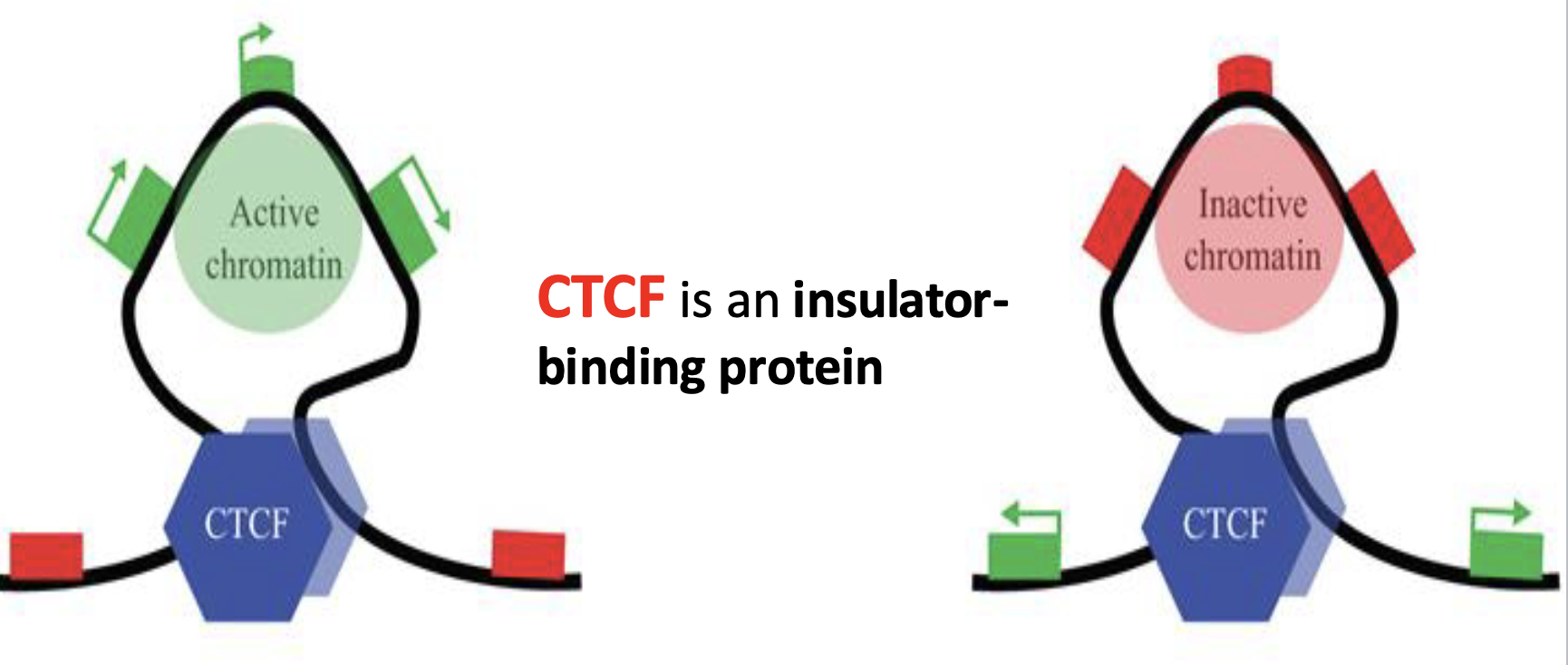
how is coordinated expression off gene groups possible? (in development or in response to external stimuli)
1 transcriptional regulator can act with many different genes. ex: 1 hormone released connects to many different receptor Ps. allows for coordinated regulation and expression!
“Negative and positive feedback
loops can assemble into
complex gene regulatory
networks for precise control of
gene expression” Euks or Proks?
euks
benefits of operon regulation in prokaryotic genes.
Changes in gene expression occur rapidly in response to changes in nutritional and physical
environments → allows effective use of available resources
in prokaryotes: Polycistronic clusters of genes (an operon) share cis-regulatory elements (operator or activators or both) T or F
true! ex: Lac operon
how can mechanisms in prokaryotic gene expression be used in designed expression systems?
not sure…
why can genes only be regulated by a limited number of diff transcription factors?
[cause there are so many different types of combos and stuff… allowing for lots of variation?] there’s no need?
regulation of transcription vs. post-transcriptional regulation
reg of TC: the RNA made from DNA
post TC: influences how much P is made, anything happening on the RNA live;
why can some Alt splicing be constitutive
(euks only btw!)
happens when the 5’ and 3’ splice sites are not clear, results in diff Ps, versions, which can sometimes be useful!
a repressor on a splice site is an example of what kind of regulation?
Negative control as access to splice site prevented= no splicing
positive control=activator
the presence of what marks the completed splice?
Exon junction complexes (EJC)
T or F: enhancer[cis sequences in general?] will always be present, its just a matter of whether or not trans regulatory factors will bind.
T
Nonsense-Mediated Decay:
there are in-frame stop codons in introns, if they are not spliced out, ribosome can detect the stop codons and disintegrate the mRNA.
this is done by the Upf proteins which connects stop codon with EJC
RNA editing is controlled by:
whether or not enzymes that edit are expressed in that cell type
Alt cleavage and polyadenylation
fine tuning mechanism that occurs after processing. indicated by Cstf cleavage event.
low cstf=normal bit spliced out bc poly A site is strong.
bad stuff present=high Cstf= increased site of binding to weak site (different length mRNA)→ antibodies secreted
(affects C terminal of P)
Three main types types of control acting through UTRs
1. mRNA stability (half-life of mRNA determines how long the message is
present to be used for translation)
2. mRNA translation (yes/no, when, how often)
3. mRNA localization (where in the cell)
(mRNA stability) In the cytoplasm, _________ gradually shorten the poly-A tail until degradation of the mRNA is triggered.
deadenylases
BUT Sequences in the 3’UTR regulate recruitment of proteins that
regulate poly(A) tail length (Change 3’UTR = change mRNA half-life)
(mRNA stability) -nuclease often means
breaking down
(mRNA stability) endo vs exo nuclease activity
both degrade RNA as a way to regulate
endo: by cleaving, blocking or exposing this site can regulate degradation.
exo: degradation from the outside PolyA tail 3’ end.
(mRNA translation)in the example where cells regulate based on the Iron levels, what do ferritin do?
binds excess iron
aconitase is on 5’UTR (b4!)
(mRNA translation)in the example where cells regulate based on the Iron levels, what do transferrin do?
imports iron into the cell.
aconite is on 3’UTR(after!)
(mRNA translation)what happens when iron starvation? in cytosolic aconitase
stays bound, so ferritin not activated, and transferrin activated, iron is transferred into cell
the opposite occurs in iron surplus, where the iron binds to aconitase and it releases. this allows transferrin 3’ poly A tail to degrade slowly, while ferritin is activated.
(mRNA translation)blocking the shine dalgarno sequence blocks TL in eukaryotes or prokaryotes
prokaryotes
Can also sometimes be affected by temperature!
(mRNA localization) Regulation of localization typically occurs through regulators binding to
sequences in the 5’ and 3’ UTRs T or F
T
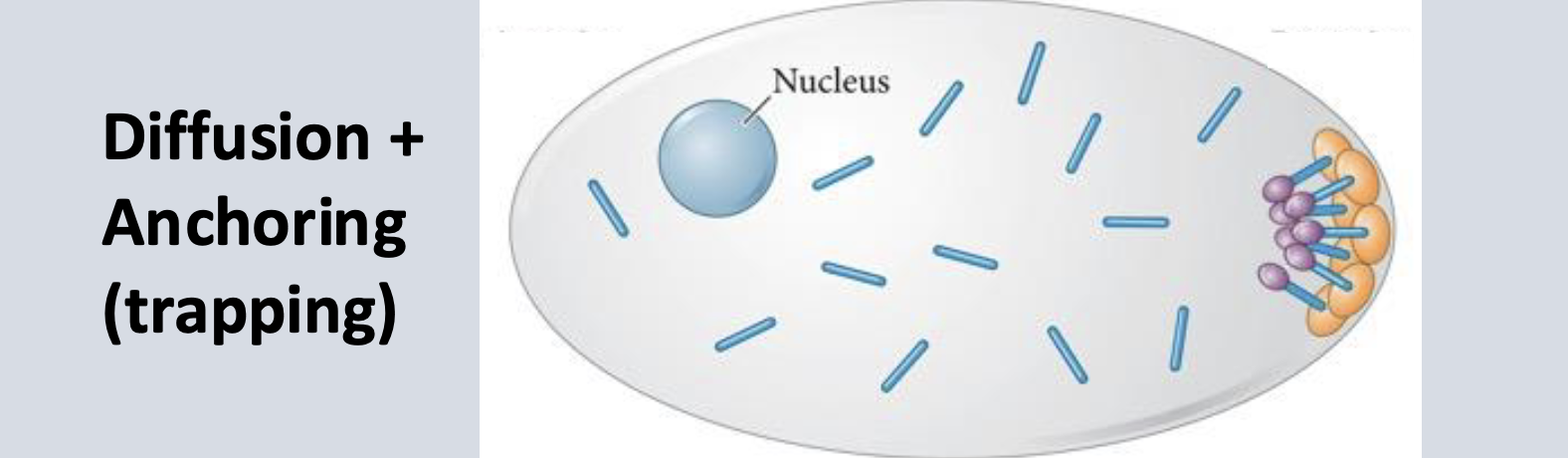
(mRNA localization)
getting stuck to certain P
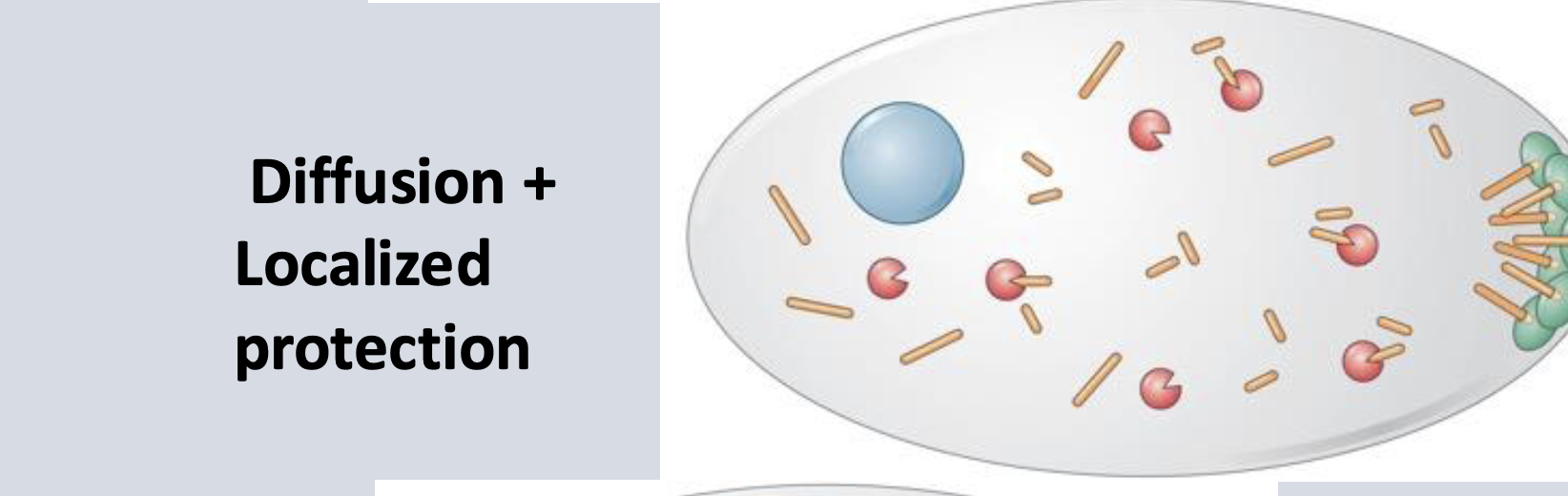
(mRNA localization)
protection, only the ones stuck are safe
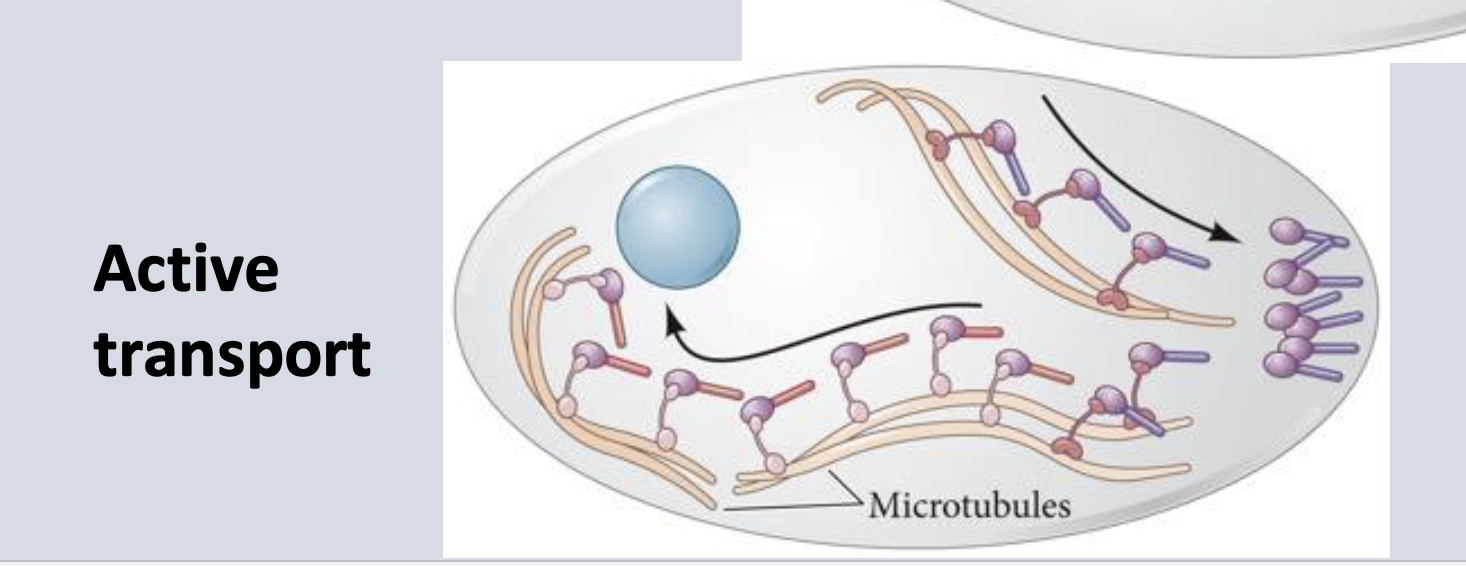
(mRNA localization)
protein highways with motor proteins that walk along it carrying RNA
why is the mRNA localization important? (2)
localized translation
possibility of unequal distribution of daughter cells ( notable in development and stem cell differentiation)
Ex: neurons are so long!
Maternal contributions
proteins and RNA that are stored in the egg until they are needed to orchestrate early development (and determine the fate of particular cells). then real DNA takes over for later stages.
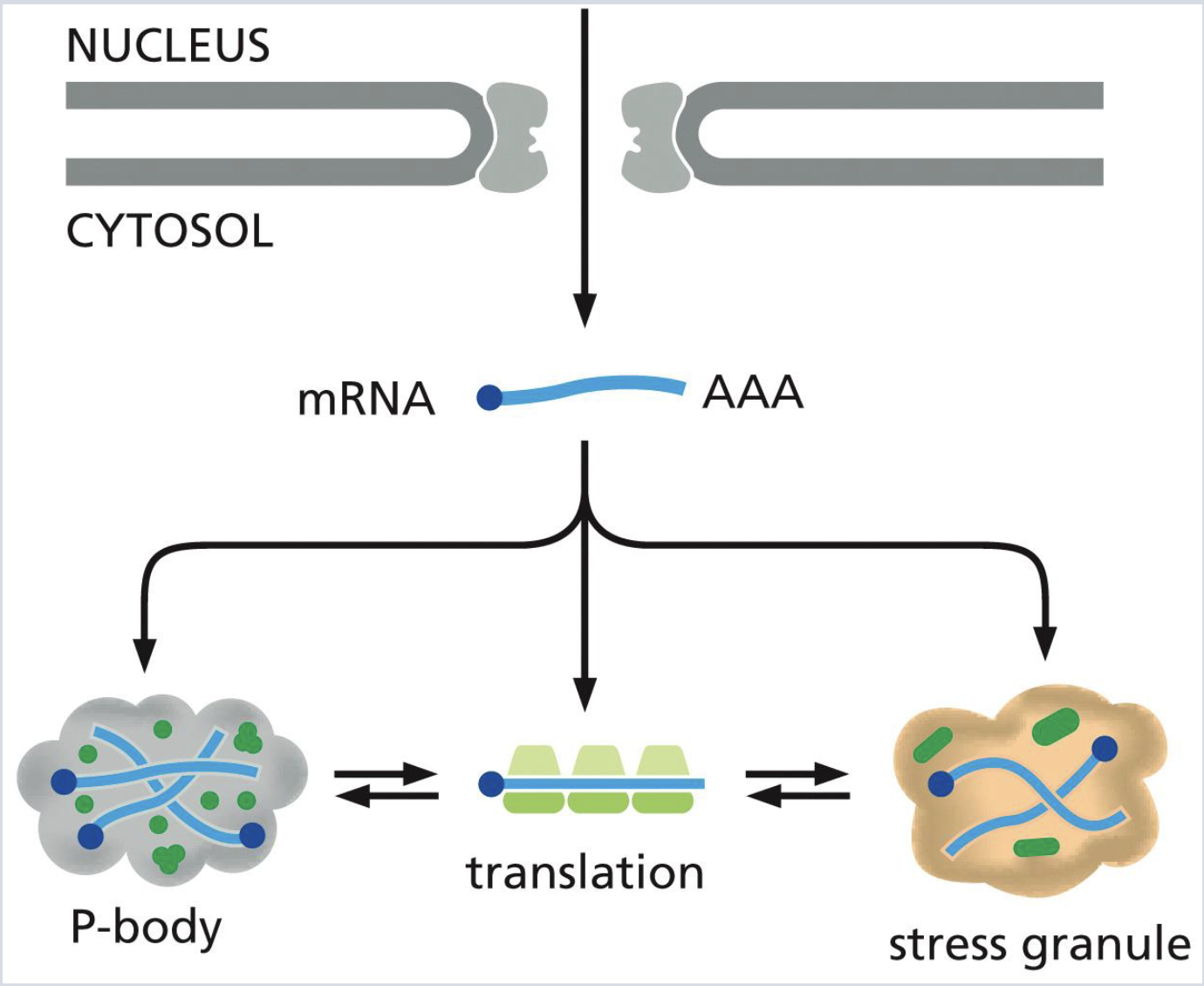
P-bodies role
sites or mRNA degradation or storing Translationally repressed mRNA.
mRNA that has been stored in a P-body can also be moved back to the cytoplasm
to reactivate translation T or F
true, bc there is not a membrane around these regions
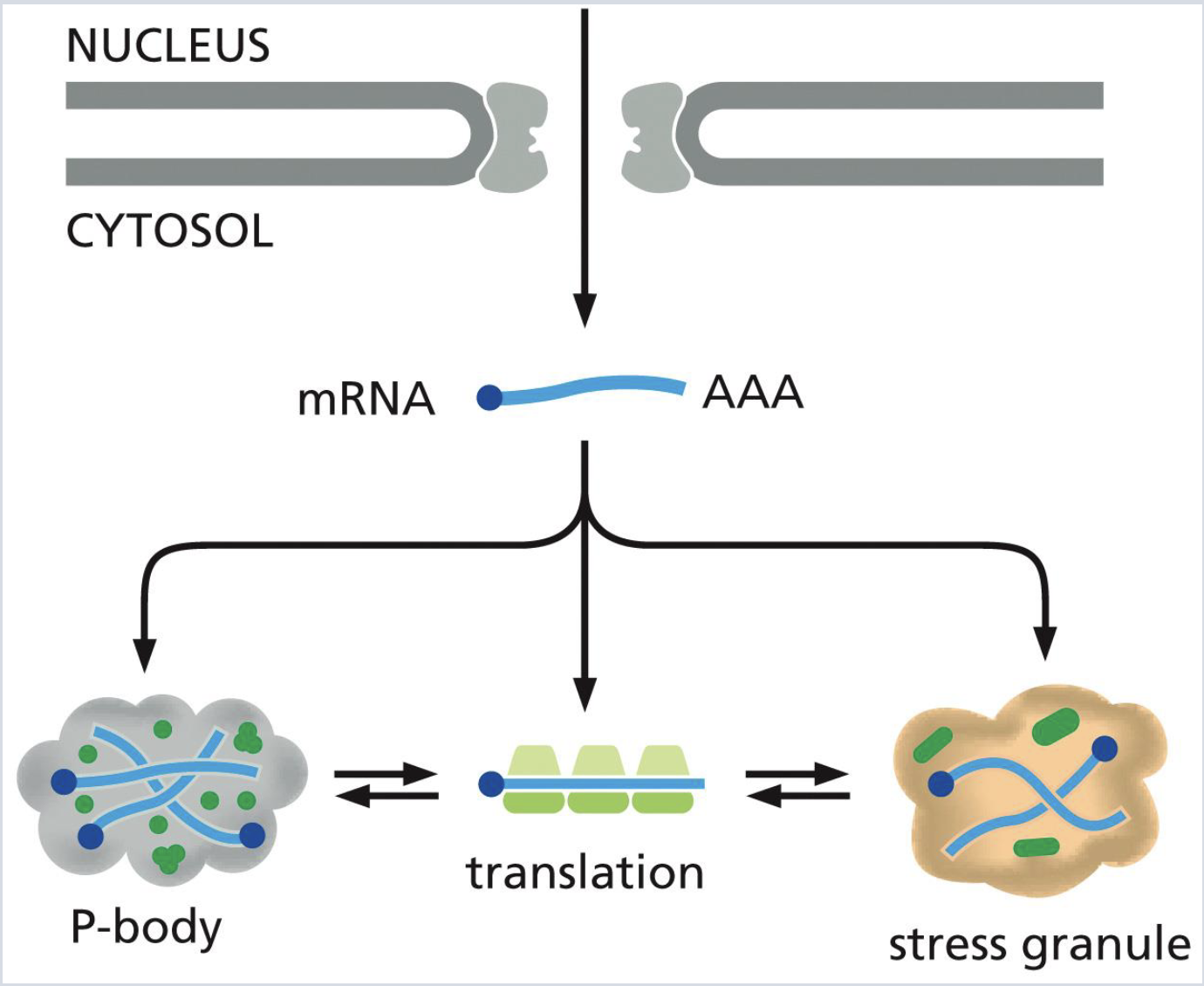
what are stress granules?
Under conditions of stress, cells accumulate mRNA in another membrane-less compartment called stress granules
• In stress granules, translation initiation is blocked until the stressful conditions are removed