U9 - Digestive System
 Call Kai
 Learn
Learn Practice Test
 Spaced Repetition
 Match
Match Flashcards
 Knowt Play
1/25

There's no tags or description
Looks like no tags are added yet.
Name | Mastery | Learn | Test | Matching | Spaced | Call with Kai |
|---|
No analytics yet
Send a link to your students to track their progress
26 Terms
Functions of the digestive system
Ingestion (take in food)
Propulsion (movement of food)
Digestion/absorption (break down food and take in nutrients)
Egestion (elimination of waste)
Layers of the alimentary canal (superficial to deep)
Serosa (membrane that secretes a slippery/watery fluid, decr friction as digestive organs contract/move)
Muscular (circular & longitudinal layer)
Submucosa (has nerve fibers/glands/blood vessels)
Mucosa (secretes mucus/hormones/digestive enzymes, absorbs nutrients, protects from pathogens w/ lymphatic tissue) (*has rugae folds)
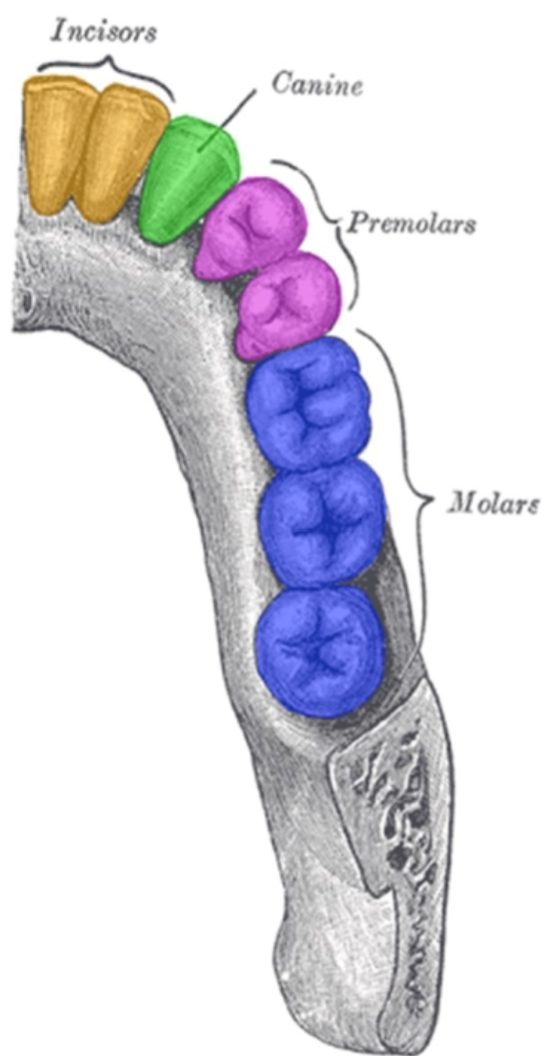
Teeth
accessory digestive organs
begin mechanical digestion process
Incisors: cut food
Canines (cuspids): tear/pierce
Premolars (bicuspids): crush
Molars (tricuspids): grind
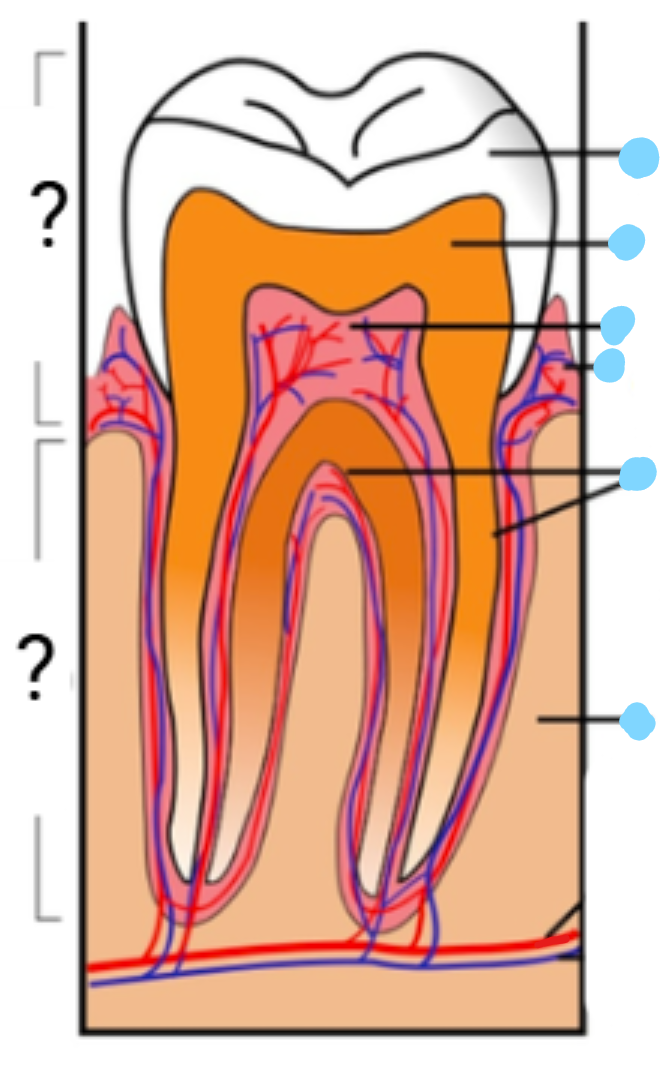
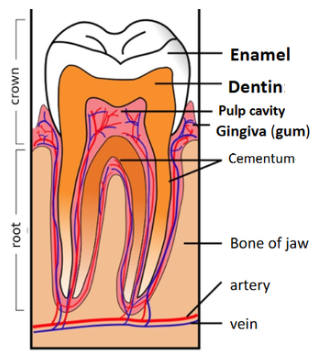
Tooth anatomy
Crown
Enamel (hard, protects tooth)
Dentin (calcified connective tissue)
Cementum (covers the dentin in the root)
Pulp cavity (has blood vessels & nerves)
Gingivae (gums) (provides seal around tooth)
Bone of jaw
Root
!!! alimentary canal = mouth, pharynx, esophagus, stomach, small intestine, large intestine
accessory organs = teeth, tongue, salivary glands, liver, gallbladder, pancreas
Child teeth - toddler’s only 20 compared to adult 32. Get incisors, canines, then molars (teens/early 20s), which are replaced w/ permanent teeth
epiglottis blocks larynx, uvula blocks nasal cavity → food travels to esophagus and not respiratory system
Other digestive structures in the mouth
Salivary glands
make saliva
99% water
mucus lubricates food for swallowing
amylase breaks down starch (carbs)
lysozymes kill bacteria, antibodies mark foreign invaders
Hard palate - bony roof of the mouth
Soft palate - rest of the mouth
Uvula - prevents swallowed food from entering the nasal cavity
Tongue - helps to push food down towards the esophagus
What happens during deglutition?
Swallowing
Buccal phase - chew (mastication), food mix with saliva to make bolus (food lump), tongue forces into pharynx
Pharyngeal-esophageal phase
Peristalsis
bolus propelled down esophagus in waves of muscle contractions
*involuntary, by longitudinal muscles, caused by PNS (parasympathetic nervous system) not gravity
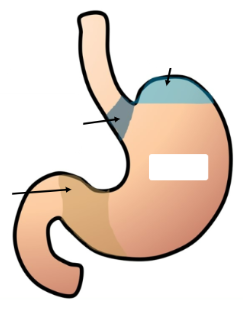
Stomach and its anatomy (4)
muscular sac w/ thick walls
mechanical/chemical digestion
Sphincters = thick rings of muscle, serve as gatekeepers to allow food to enter/leave at appropriate times
Cardiac (food enters, separates esophagus from stomach)
Pyloric (food leaves, separates stomach from small intestine)
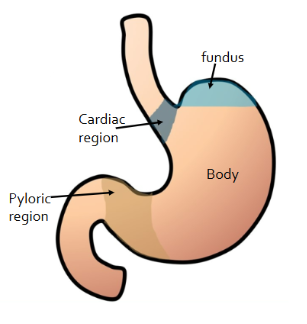
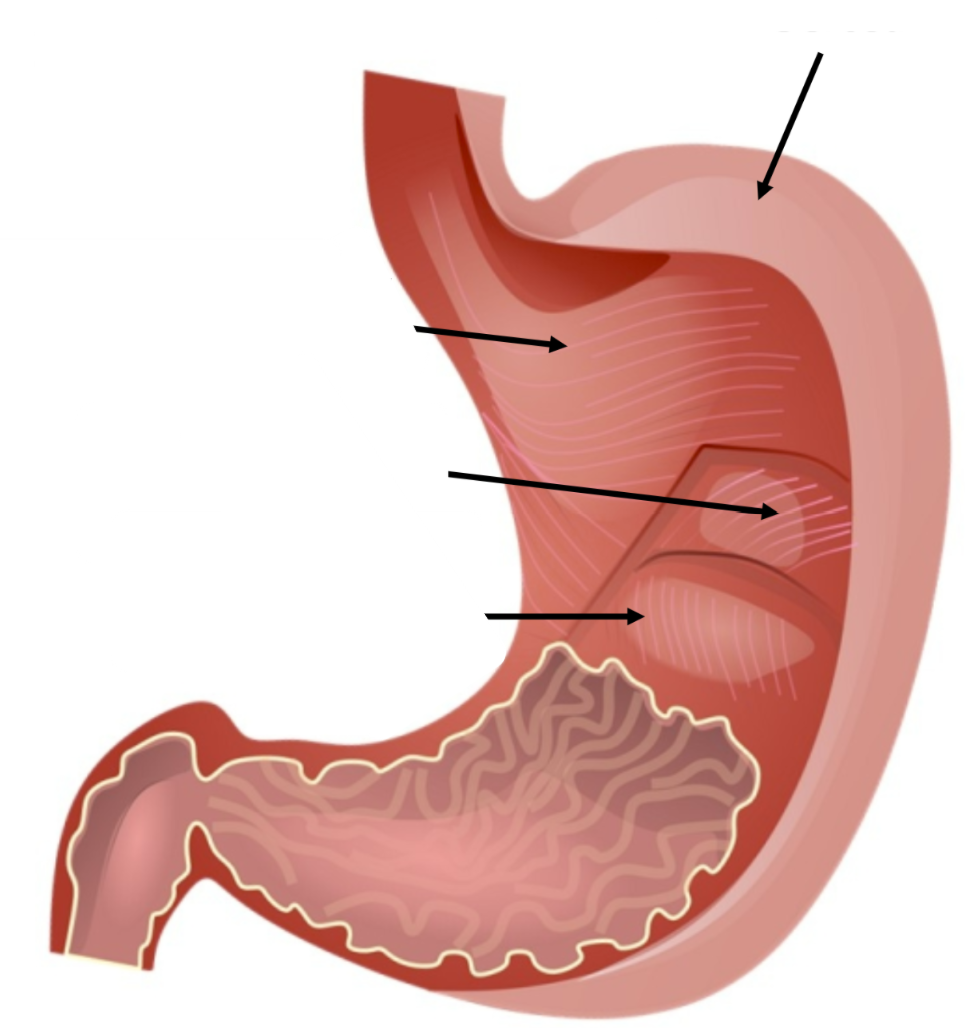
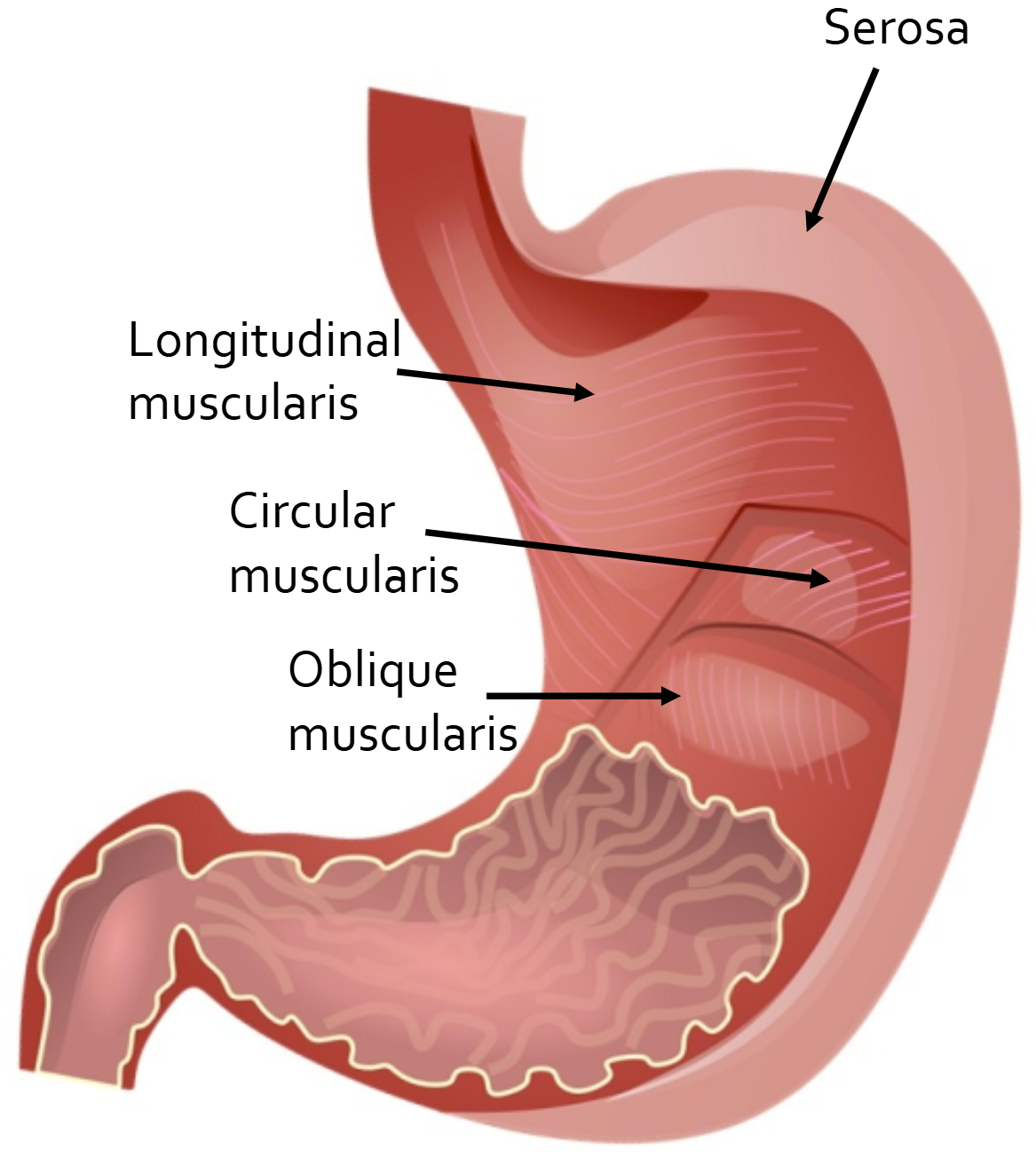
Mechanical digestion: Slippery outer layer of stomach? Layers of muscle in stomach? What do the muscles do?
serosa
.
Longitudinal muscularis
Circular muscularis
Oblique muscularis
.
muscles churn food (maceration) and propel towards small intestine
rugae - folds of the mucosa that stretch when the stomach is full (in pic, bottom of stomach)
Chemical digestion: what are the specialized gastric gland cells (gastric juices) in the mucosa? What do they make?
mucous cells - secrete mucus to protect stomach lining
chief cells - secrete pepsinogen (inactive enzyme)
parietal cells
secrete HCl to kill microbes in food
convert pepsinogen into the digestive enzyme pepsin, which breaks down food proteins
.
squeezing of stomach + gastric juices makes soupy mixture called chyme
Small intestine
where most digestion and nutrient absorption happens
Duodenum, jejunum, ileum
Villi - tiny/finger-like projections in the lining of the small intestine, filled w/ blood vessels, absorb nutrients
Joins large intestine at ileocecal sphincter (ileum+cecum)
Hormones/enzymes in the small intestine
many glands line the small intestine and secrete digestive hormones
mucus - protects from pathogens
secretin - inhibits release of gastric juices when chyme is very acidic
cholecystokinin - causes gallbladder to release bile
Intestinal juices
maltase/sucrase/lactase - break down sugars
peptidase/enterokinase - break down proteins (protein, think peptide (peptidase!))
What happens to chyme in small intestine?
slowed down b/c small intestine needs time to absorb nutrients
circular muscles in intestinal wall cause segmentation of the chyme (in contrast to longitudinal muscles involved in peristaltic contractions)
Large intestine
Sections: Cecum, colon (parts: ascending, transverse, and descending), r3ctum
Functions
absorb water back into body
remove waste (feces) thru the r3ctum/@nus
Bacteria produce vit B & K
Lumpy look b/c of haustra
Haustral contractions - slow, segmenting, last ~30min after food moves into large intestine
Mass movements - slower, powerful, push waste to r3ctum 3-4 times/day
R3ctum and anu$
collects/stores undigested waste & bacteria
r3ctum fills, pressure placed on internal @nal sphincter, it relaxes
external @nal sphincter needs to voluntarily relax to release feces thru @nus
Liver
major lobes=L & R lobes
secretes bile (greenish fluid that breaks down fats)
functions of liver cells
remove bacteria/old RBCs
detoxify blood from drugs/poisons
store glycogens/iron/copper
manufacture proteins/produce fats
has hepatic sinusoids, which are full of blood
Gallbladder
small green sac attached to liver by bile duct (liver makes bile, gallbladder stores it)
stores bile before sending to small intestine to digest fats
concentrates bile by removing water (too much water removed, gallstones made of cholesterol crystals may form)
Pancreas
long/thin gland behind stomach
secretes digestive enzymes & sodium bicarbonate (base that neutralizes stomach acid so the digestive enzymes are not affected by the lowered pH)
secretes hormones that regulate blood sugar levels (insulin)
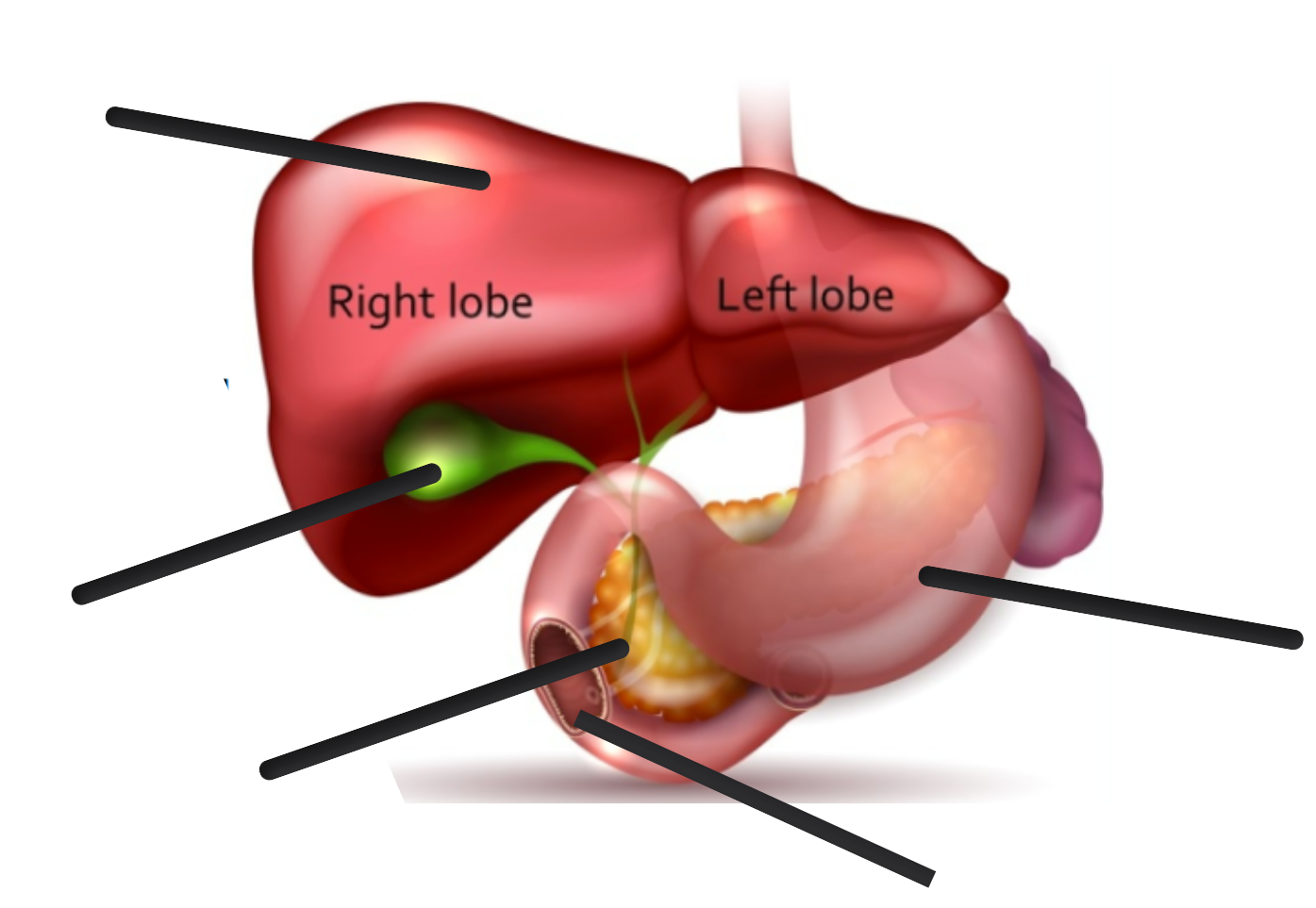
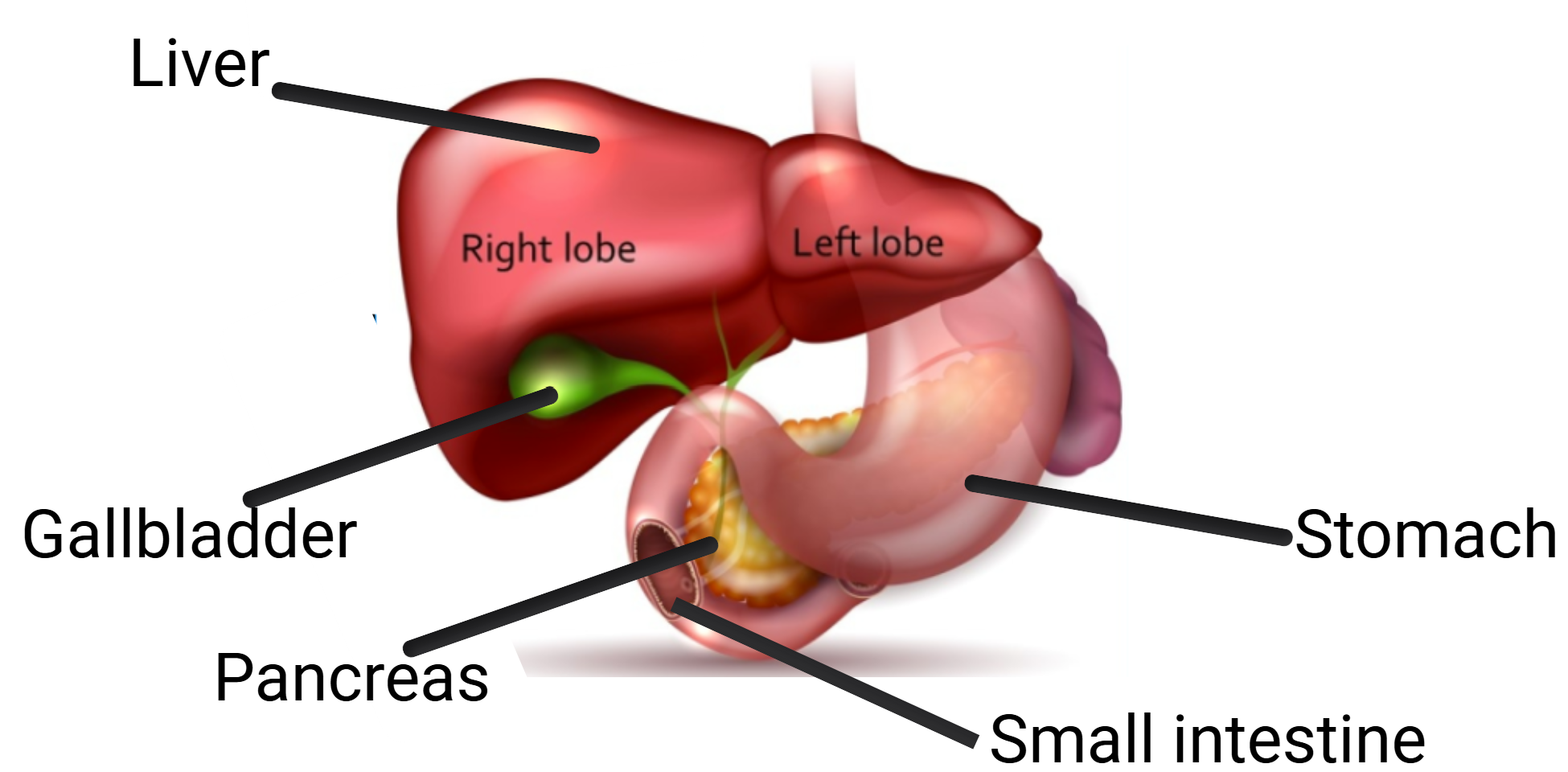
Digestive system/accessory organ anatomy
liver
gallbladder
pancreas
stomach
small intestine (towards it; the opening)
Metabolism
life-sustaining chemical reactions of the body
catabolism (break down complex molecules while releasing energy/ATP)
anabolism (form complex molecules while using energy)
Nutrients needed by the body
nutrients provide the body with energy and can be used for growth
macronutrients: (need in large amts)
carbs (sugars/glucose, main source of E)
lipids (fats, secondary source of E used for cell membranes/nerves/insulation/hormone production)
proteins (make up majority of cellular structures, some used as enzymes for chemical rxns)
water
micronutrients: (need in small amts)
vitamins (organic molecules, broken down by heat/air/acid)
minerals (inorganic, ex: Ca, Fe, Mg, K, Zn, etc.)
How macromolecules are digested
Carbs
broken down by
salivary amylase (mouth)
pancreatic amylase & epithelial enzymes (brush border enzymes) (small intestine)
process: cellular respiration breaks down carbs (glycolysis, citric acid cycle, electron transport chain). excess sugar stored as fat or glycogen
Lipids
broken down by
bile salts (liver & small intestine)
pancreatic lipase (small intestine)
process: lipids are insoluble, must be emulsified first. broken into acetic acid then metabolized into ATP or stored for later use
Proteins
broken down by
pepsin (stomach)
pancreatic enzymes & epithelial enzymes (aka brush border enzymes) (small intestine)
process: polypeptide chains are broken into indiv. amino acids then actively pumped into the cell for immediate use
Use of water
chemical rxns
dissolve foods for digestion
maintain blood pH levels
regulate body temp thru sweat
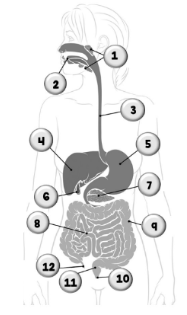
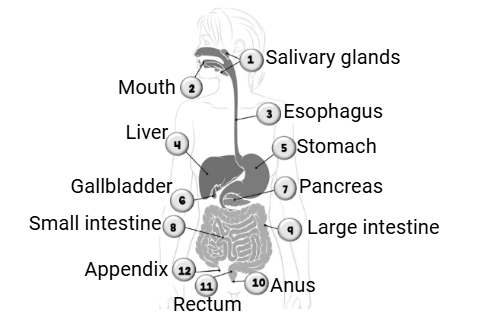
!!! SI - primarily absorbs nutrients, LI primarily absorbs water/electrolytes/vitamins
bariatric surgery - 40+ BMI qualify, most common types = sleeve gastrectomy (remove majority of stomach) and gastric bypass ('pouch' of stomach connected directly to small intestine, bypass duodenum)
homeostasis - eat carbs & blood glucose levels rise, pancreas makes more insulin, body cells incr glucose absorption, blood glucose levels drop, pancreas makes less insulin, glucose absorption in body cells slows, higher blood glucose levels (insulin tells body cells to take in glucose from blood)
type 1 diabetes - less insulin, cells absorb less glucose, more glucose in blood (less cellular respiration w/ glucose b/c cells take in less glucose, use fat instead, weight loss)
use antibiotics, can kill good bacteria that absorb vitamins, can cause vitamin deficiency
Meckel's Diverticulum - congenital pouch in small intestine (commonly confused w/ appendicitis)