unit 13 - economic fluctuations and unemployment
 Call Kai
 Learn
Learn Practice Test
 Spaced Repetition
 Match
Match Flashcards
 Knowt Play
1/49

There's no tags or description
Looks like no tags are added yet.
Name | Mastery | Learn | Test | Matching | Spaced | Call with Kai |
|---|
No analytics yet
Send a link to your students to track their progress
50 Terms
GDP definition
the total value of all final goods and services which are produced for the marketplace during a given time period within the nations borders
intermediate goods
goods used up in the process of producing something else
(eg flour is used to make bread)
final good
a product sold to its final user
the product approach for calculating GDP
adding up the market values of goods and services produced, excluding any goods and services which were used up in intermediate stages of production
market value = revenue
product approach for each firm = revenue - intermediate goods
income approach for calculating GDP
add together all forms of income generated by production
wages, profit, rent and interest payments
expenditure approach for calculating GDP
add up the amount spent by all ultimate used of output
measure the spending on the domestically produced goods and services
capital stock + investments + inventory + government spending + net exports
categories of spending in the expenditure approach to calculation GDP
consumption (C) → spending by households (includes spending on imports and excludes purchases of used goods eg homes and land)
private investment (I) → spending by firms (ignores depreciation)
planned investment
unplanned investment → goes into firms inventory stocks
government purchases (G)
net exports (NX)
private investment equation
private investment roughly = capital formation - the increase of the nation’s capital stock during a given period of time
private investment is the rate of change of capital stock
I = dK/dt = rate of change of K
K = economies capital stock
t denotes time
net private investment
gross private investment (I) - depreciation
2 components of government purchases
government investment (capital goods purchased by the government)
government consumption (spending on goods and services that are used up over a period
government expenditure
different to government purchases
includes the purchase of goods as services as well as transfer payments (TR)
equation for the expenditure approach
Y = C + I + G + X - IM
fundamental identity of national income accounting
total production = total income = total expenditure
stock variables
a variable representing a quantity at a moment in time
flow variables
a variable representing a process that takes place over time
gross national product (GNP)
the total values of goods and services produced for the marketplace by domestic factors of production during a given period of time
capital and labour owned by domestic nationals
net factor payments from abroad (NFP)
income paid to domestic factors of production by the rest of the world - income paid to foreign firms by the home economy
equation for GDP using GNP and NFP
GDP = GNP - NFP
net national product (NNP)
gross national production - depreciation of capital
equation for national saving (in an open economy)
S = Y + NFP - C - G
equation for nation saving (in a closed economy)
S = Y - C - G
equation for the saving rate
s = s/y
the fraction of GDP that is saved
government saving equation
S = T - (G + TR + INT)
T = tax revenue
G = government purchases
TR = transfer payments
INT = interest payments
when the government is running a budget surplus government saving is positive
saving identity in a closed economy
S = Y - C - G
invoke income-expenditure identity for a close economy (Y = C + I + G)
S = (C+I+G) - C - G
therefore
S = I
how to calculate an index number
= value of measure in a period t / value of measure in base period x 100
consumer price index (CPI)
an index of the cost, through time, of a market basket of goods and services purchased by the average (typical) household
goal of CPI is to track the prices paid by consumers
price level (p)
the average level of prices in the economy (either measured by the CPI or the GDP deflator)
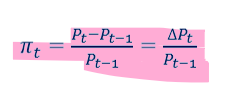
inflation rate
the percentage rate of change of the price level from one period to the next
inflation rate % = ((CPIt / CPIt-1) - 1) x100
nominal variables
an economic variable measured using current market prices or that is not adjusted for the £’s changing value
real variables
a variable measured using the prices of a base year or one that has been adjusted for the £’s changing value
real wage rate
nomimal wage rate / price level
problems with GDP
doesn’t measure quality changes
doesn’t account for illegal or informal economy
excludes non-market production
does not show environmental quality and resource depletion
doesn’t show poverty and inequality
omits other aspects of wellbeing
labour force
= employed + unemployed
adult population
those over 16
= labour force + those not in labour force
employment ration
= employed / adult population
frictional unemployment
short term unemployment experienced in between jobs or when first finding a job
structural unemployment
unemployment due to either
mismatch between workers skills and skills demanded by employers
mismatch between workers location and employers location
cyclical unemployment
unemployment causes by a downturn in demand and the business cycle
the different between the actual rate of unemployment and the natural rate of unemployment
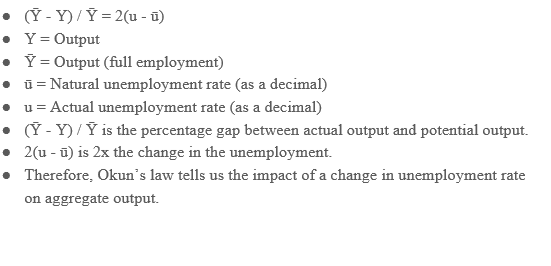
Okun’s law
measures the impact of a change in output on unemployment
the %gap between full employment (Y bar) and the actual output (real GDP, Y) is 2 times the cyclical unemployment rate
why is consumption smooth
due to principal of diminishing marginal returns
acts as a source of stablisation
limit of smoothing of consumption
credit constraints or credit market exclusion
weakness of will
limited co-insurance
current account balance (CA)
= net factor payments (NFP) - net exports (NX)
factor payments
payments for land, labour and capital
national savings
= private savings + government savings
GDP deflator
index for the price level of all goods and services included in GDP
does not include used goods and imports
real GDP growth rate
g tilde = (1+g)^n - 1
nominal interest rate
nominal interest rate % = ((pricet/pricet-1) -1) x100
real interest rate
nominal interest rate % - inflation rate %
Okun’s law to find full employment output
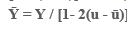
Okun’s law where we are not given the growth rates
