Respiratory System
 Call Kai
 Learn
Learn Practice Test
 Spaced Repetition
 Match
Match Flashcards
 Knowt Play
1/53

There's no tags or description
Looks like no tags are added yet.
Name | Mastery | Learn | Test | Matching | Spaced | Call with Kai |
|---|
No analytics yet
Send a link to your students to track their progress
54 Terms
Top 2 functions of respiratory system
1.) gas exchange
2.) helps regulate blood pH
other functions of respiratory system
filters inspired air
produces vocal sounds
excretes small amounts of water and heat
contains receptors for sense of smell
external nares
opening to nasal cavities
functions of nose
airway for respiration
moistens and warms air
filters and cleans inspired air
resonating chamber for speech
houses olfactory receptors
cell type lining respiratory tract in nose
(Respiratory mucosa)
pseudostratified columnar epithelium
can make mucous to trap particle breathed in and cilia help move it back out of body
what triggers sneezing
sensory nerve endings in nose
folds that help direct air in the nasal cavity
nasal conchae
internal naris
opening at back of nasal cavity, leads to pharynx
3 parts of pharynx
nasopharynx
orophayrnx
laryngopharynx
nasopharynx
lined w/pseudostratified columnar epithelium
where opening of auditory tube (eustacean tube) is located
pharyngeal tonsil is against its superior wall
what prevents food from going up into the nasopharynx?
soft palate & uvula
oropharynx
where palatine and lingual tonsils are located
laryngopharynx
posterior to epiglottis
function of pharynx
passageway for food, liquid and air
where does food/liquid go after leaving pharynx?
esophagus
where does air go after leaving pharynx?
larynx
prevents food/liquid from going down larynx
epiglottis
type of cartilage epiglottis is made of
elastic cartilage
larynx
voice box of body; produces sounds
attaches to hyoid bone
supported by 2 types of cartilage
2 types of cartilage supporting larynx
thyroid cartilage
cricoid cartilage
both made of hyaline cartilage
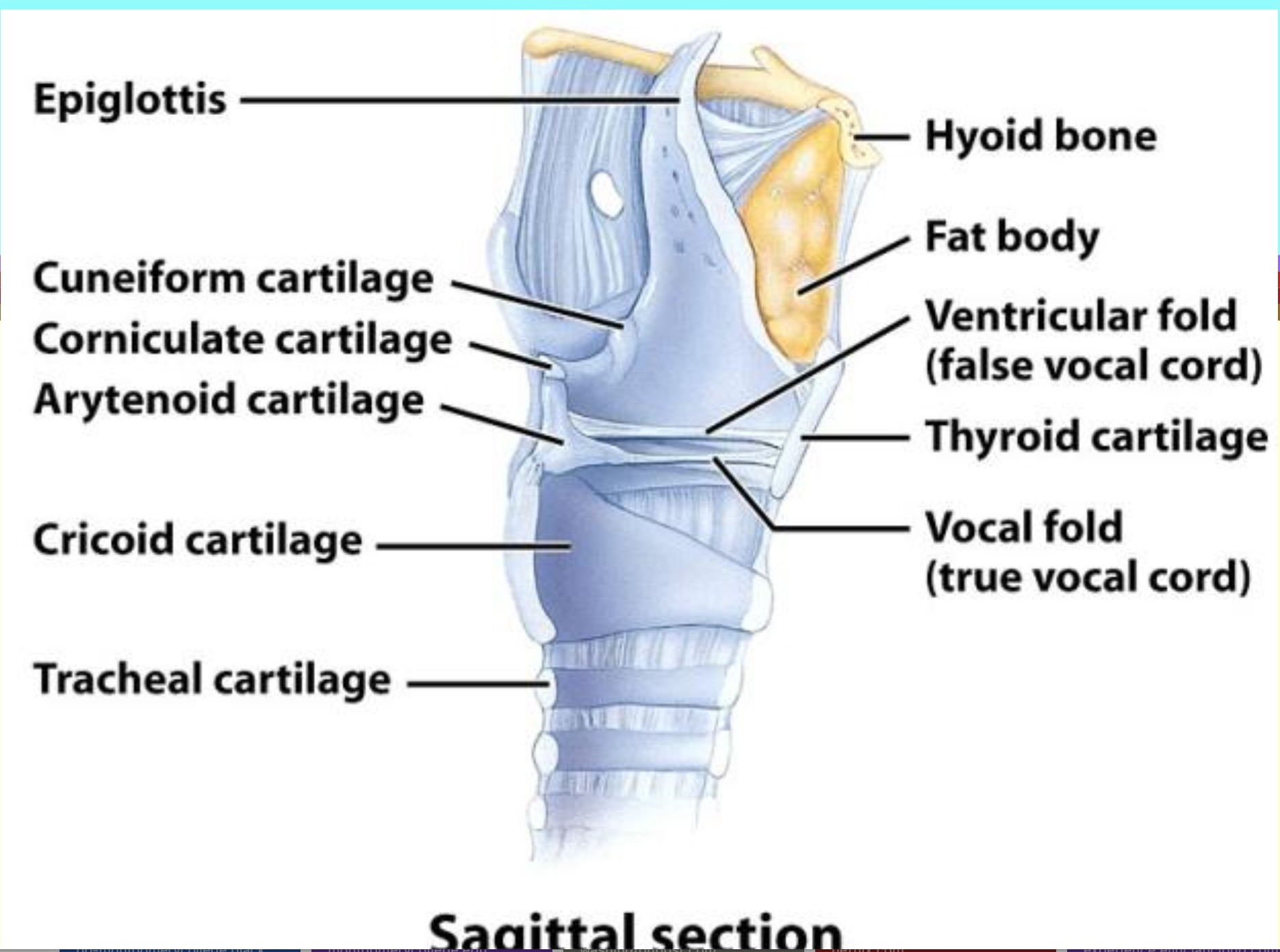
anatomy of the larynx
look at image
what produces sounds in larynx?
vocal folds. (aka - vocal chords)
vocal folds are typically thicker and longer in __________
males
how are vocal folds attached to larynx?
muscles/elastic ligaments attach them to cartilage
can control tension of folds
ventricular folds
part of the larynx above the vocal folds
aka - “false vocal chords”
Have a mucous membrane, just like vocal folds
glottis
space that opens up in larynx when muscles attached to vocal chords are relaxed
what happens when laryngeal muscles contract?
they pull elastic ligaments tight
vocal folds move into air passageway (other muscles relax folds)
glottis narrows
vibration of air against vocal folds produces sound
what body parts act together as a resonating chamber?
pharynx, nose, mouth, paranasal sinuses
body parts that help us enunciate
muscles of face, tongue, lips
the greater the air pressure in larynx=
the louder the sound
tension on vocal folds determines this
pitch
trachea
(aka - windpipe)
passageway for air from larynx to bronchi/lungs
tracheal cartilage
supports airway so it doesn’t collapse w/pressuire change
c-shaped rings
bronchi
passageway for air to flow into lungs
formed by bifurcating trachea
primary, secondary and tertiary bronchi
primary bronchi
one goes to each lung
secondary bronchi
one goes to each lobe of lung
aka: lobular bronchi
Tertiary Bronchi
branch again w/in each lobe
curve in the left lung where the heart fits
cardiac notch
why do blood vessels branch to each lobe?
if something damages one lobe, the others are still functional
Flow of Air from Bronchi to site of air exchange
primary bronchus
secondary bronchus
tertiary bronchus
bronchioles
Terminal Bronchiole
alveolar duct
alveolar sac
alveoli
Where does gas exchange take place?
Alveoli and capillaries surrounding them
Alveolar Membrane cell type
simple squamous epithelium
it’s one cell layer thick, allowing for easy gas exchange
why do lungs stay inflated?
negative pressure in pleural cavity
presence of surfactant, substance that reduces surface tension of alveoli allowing them to remain open and expand during breathing
Pleurae (pleura, singular)
the double layered membrane that surrounds lungs and lines chest cavity
has a cavity btwn the two layers
aka: serous membrane
visceral pleura
membrane that covers the exterior of the lung
parietal pleura
membrane that is up against the chest wall
pleural cavity
space btwn the visceral pleura and the parietal pleura
contains fluid (Serous fluid) which reduces friction
intrapulmonary pressure
pressure within the lungs
@ equilibrium w/atmospheric pressure (760mm Hg)
intrapleural pressure
pressure within the pleural cavity (756 mm Hg)
ALWAYS LESS than atmospheric pressure /intrapulmonary pressure
if it wasn’t less, your lungs would collapse
What determines intrapleural pressure?
elastic recoil of lungs (force inward)
pleural fluid adhesion w/in pleural cavity (force outward)
Atelectasis
lung collapse
affects alveoli in particular
usually due to surgery w/anesthesia but sometimes airway blockage
pneumothorax
when air gets into the pleural cavity, causing lung to collapse either partially or fully
air either leaks in from inside or outside body
hemothorax
accumulation of blood in the pleural cavity
usually due to chest trauma
symptoms: chest pain, difficulty breathing, rapid heart rate
Boyle’s Law
volume of gas varies inversely with pressure