GEN CHEM Ch. 6 Gases
 Call Kai
 Learn
Learn Practice Test
 Spaced Repetition
 Match
Match Flashcards
 Knowt Play
1/15

Earn XP
Description and Tags
Name | Mastery | Learn | Test | Matching | Spaced | Call with Kai |
|---|
No analytics yet
Send a link to your students to track their progress
16 Terms
Ideal Gas Law (Kinetic-Molecular Theory of Gases)
Particles in a gas are in constant, random motion
The combined volume of particles is negligible
Particles exert no force on one another
Gas molecule collisions are entirely elastic, indicating no intermolecular forces
All gases have the same average kinetic energy at a given temperature KEavg∝ (T + 273 K)
Assuming the same number of moles, in which of the conditions would a gas behave most ideally?
Kinetic-Molecular Theory of Gases – gases behave most ideally at low pressures and high temperatures.
effusion
r1 / r2 = sqrt(M2 / M1)
confined gas escapting through a small hole
gas > liquild > solid
gas w/ lowest molar mass effuses faster
diffusion
molecules move from [high] → [low]
gas laws: Boyle, Charles, Avogadro, Gay-Lussac, combined gas
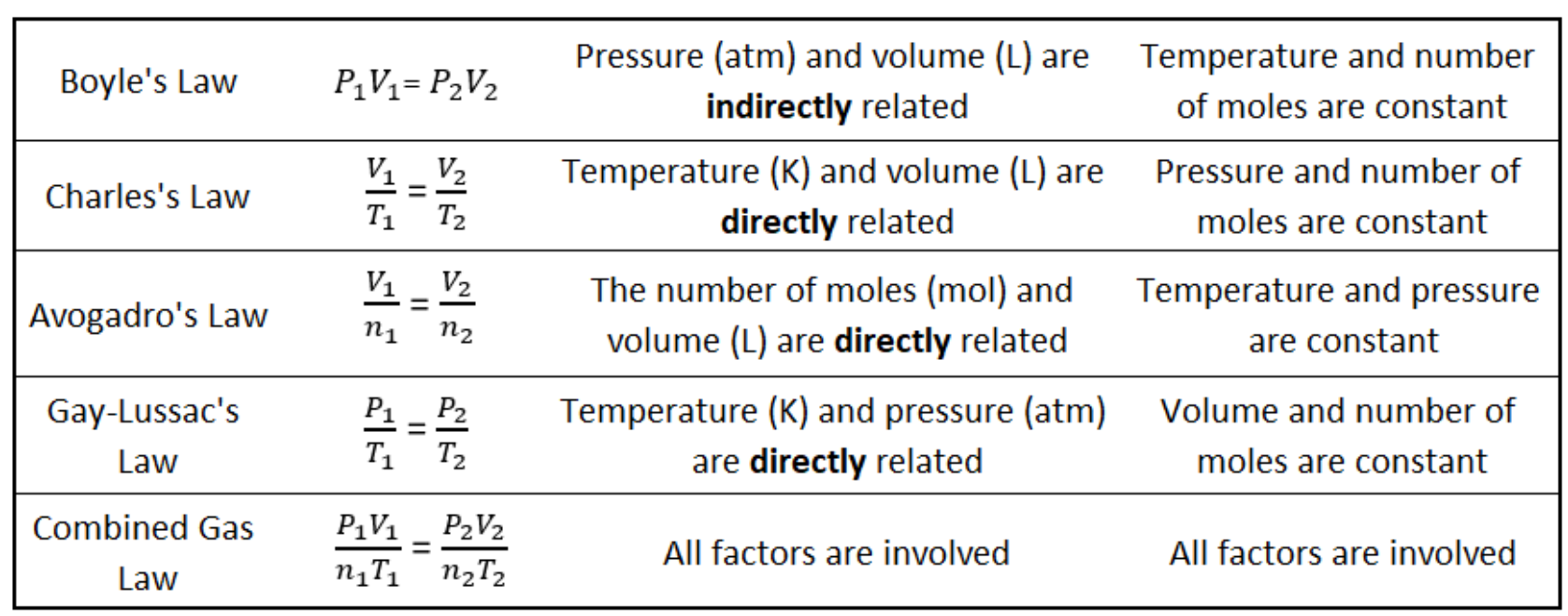
Boyle’s Law
P1V1 = P2V2
pressure (atm) and volume (L) are inversely proportional under constant temperature and moles.
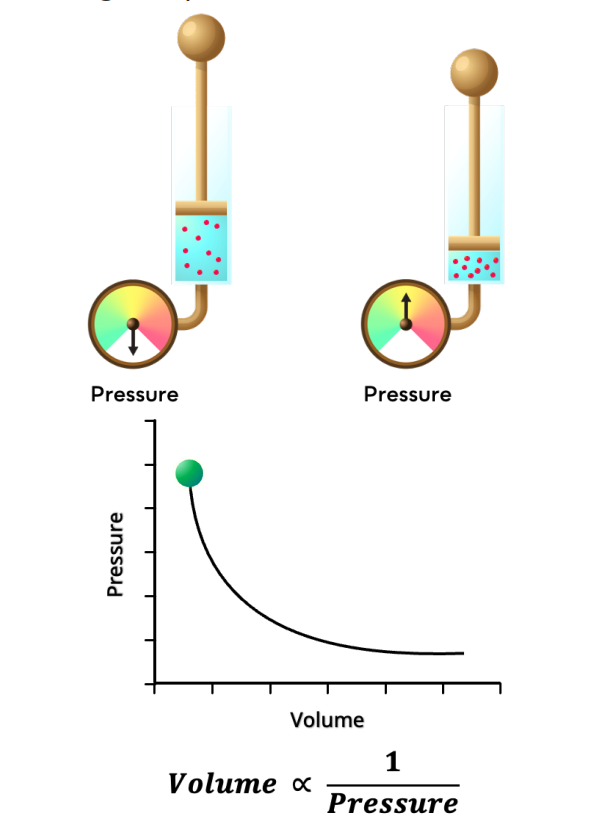
Charles’s Law
V𝟣 / T𝟣 = V𝟤 / T𝟤
volume (L) and temperature (K) are directly proportional under constant pressure and moles
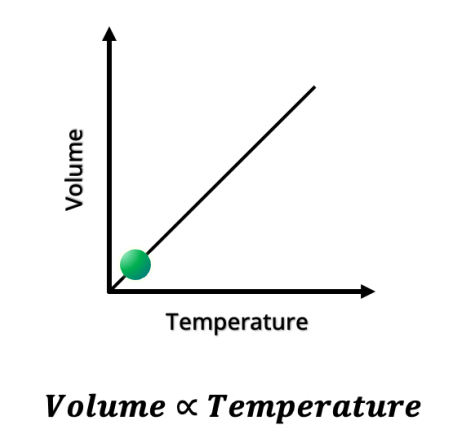
Avogadro’s Law
V𝟣 / n𝟣 = V𝟤 / n𝟤
volume (L) and moles (mol) are directly proportional under constant pressure and temperature
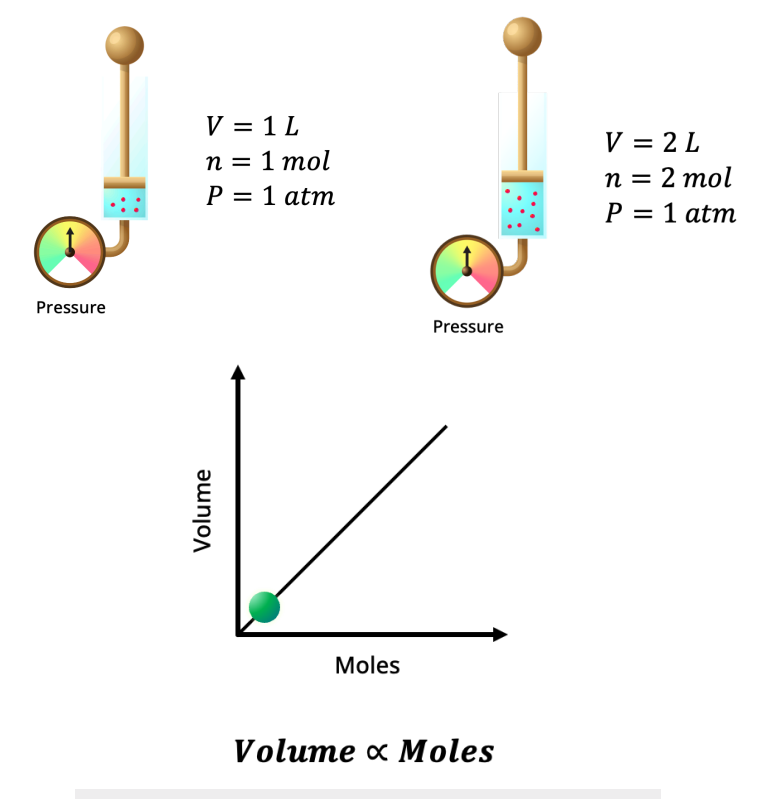
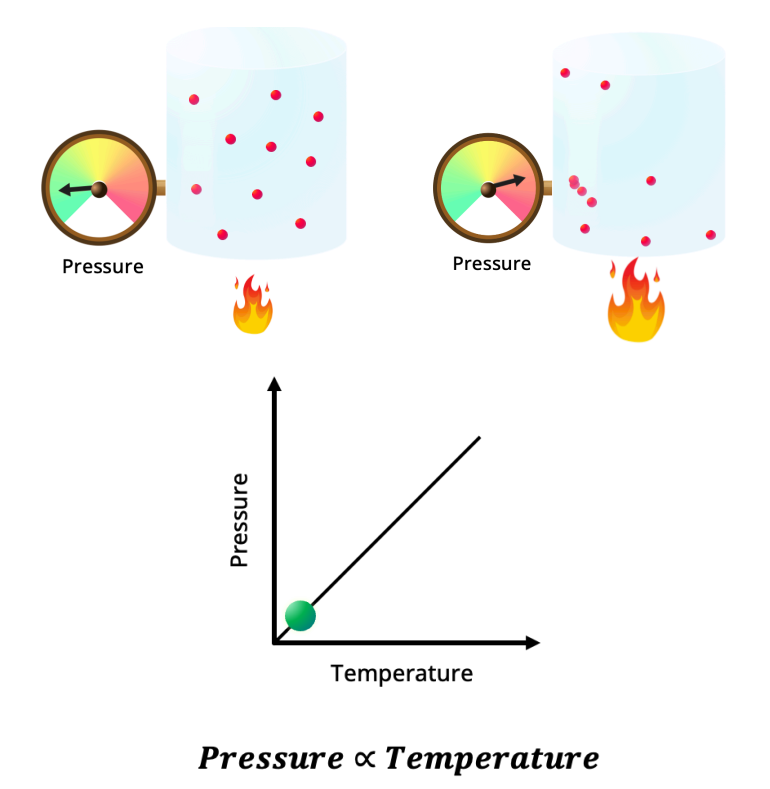
Gay-Lussac’s Law
P𝟣 / T𝟣 = P𝟤 / T𝟤
pressure (atm) and temperature (K) are directly proportional under constant volume and moles
Combined Gas Law
P𝟣V𝟣 / n𝟣T𝟣 = P𝟤V𝟤 / n𝟤T𝟤
partial pressure involving mole fractions
P1 = X1Ptotal
X1 = mol1 / moltotal
relationship between pressure (P), force (F), and area (A)
P = F / A
Ideal Gas Law
PV = nRT (use when question mentions ideal)
P = pressure V = volume n = moles R = ideal gas constant T = temperature
R = 0.0821 L*atm/mol*k or 8.314 L*kPa/mol*K
STP Conditions
273 K
1 atm
22.4 L in 1 mole
gas density
ρ = m / V = PM / RT
ρ = density m = mass V = volume P = pressure M = molar mass R = ideal gas constant T = temperature
R = 0.0821 L*atm/mol*k or 8.314 L*kPa/mol*K
1 atm conversions
1 atm = 760 mmHg = 760 torr = 101.325 kPa = 101,325 Pa