Lecture 5 - Habits
 Call Kai
 Learn
Learn Practice Test
 Spaced Repetition
 Match
Match Flashcards
 Knowt Play
1/28

There's no tags or description
Looks like no tags are added yet.
Name | Mastery | Learn | Test | Matching | Spaced | Call with Kai |
|---|
No analytics yet
Send a link to your students to track their progress
29 Terms
habits
-strong associations in memory between contexts and responses that have developed through repetition
-insensitive to changes in the value or contingency of the response outcomes
frequency (of habits)
-habit should not be equated with frequency of occurrence
-having a habit is more than doing something frequently, key indicator is how often or for how long something is done
-can habitually not do something vs just not doing something
adriaanse - method (evidence that habits are represented by strong associations between contexts and responses)
-identified habits:
what would you usually snack on at home? - habitual response
what snack would you eat if this was not available? (alternative response)
-then completed a primed lexical decision task
decide if a letter string is a word or non-word
prime is home
targets → responses that the participants had generated + filler items
-so should see activation of things associated with home such as snacking so respond quicker to related snacks
adriaanse - results (evidence that habits are represented by strong associations between contexts and responses)
-prime word home and then show what they typically eat takes 620ms to respond
-but if give alternative response of what they don’t usually eat then takes 675ms to respond
-shows priming effect and evidence for association between context and habitual response
wood (do habits develop through repetition)
-experience sampling → participants recorded what they were doing at the time of a watch chime
-frequency with which they had performed the behaviour in the past month
-extent to which they performed the behaviour in the same physical location
-involvement of other people in the behaviour
-43% of actions performed almost daily and in the same context
criteria for establishing automaticity (are habitual responses automatic)
-do not require deliberation
-occur outside conscious awareness
-insensitive to changes in the value of the response
-difficult to control
aarts - method (do strong habits remove the need for deliberation)
-measure the strength of cycling habits
decide how to travel for 9 trips
frequency of mentioning bicycle served as a measure of habit
-received 16 descriptions of travel situations, each with 4 attributes:
weather conditions
weight of luggage
departure time
distance to the destination
-favourability of using the bicycle in each travel situation
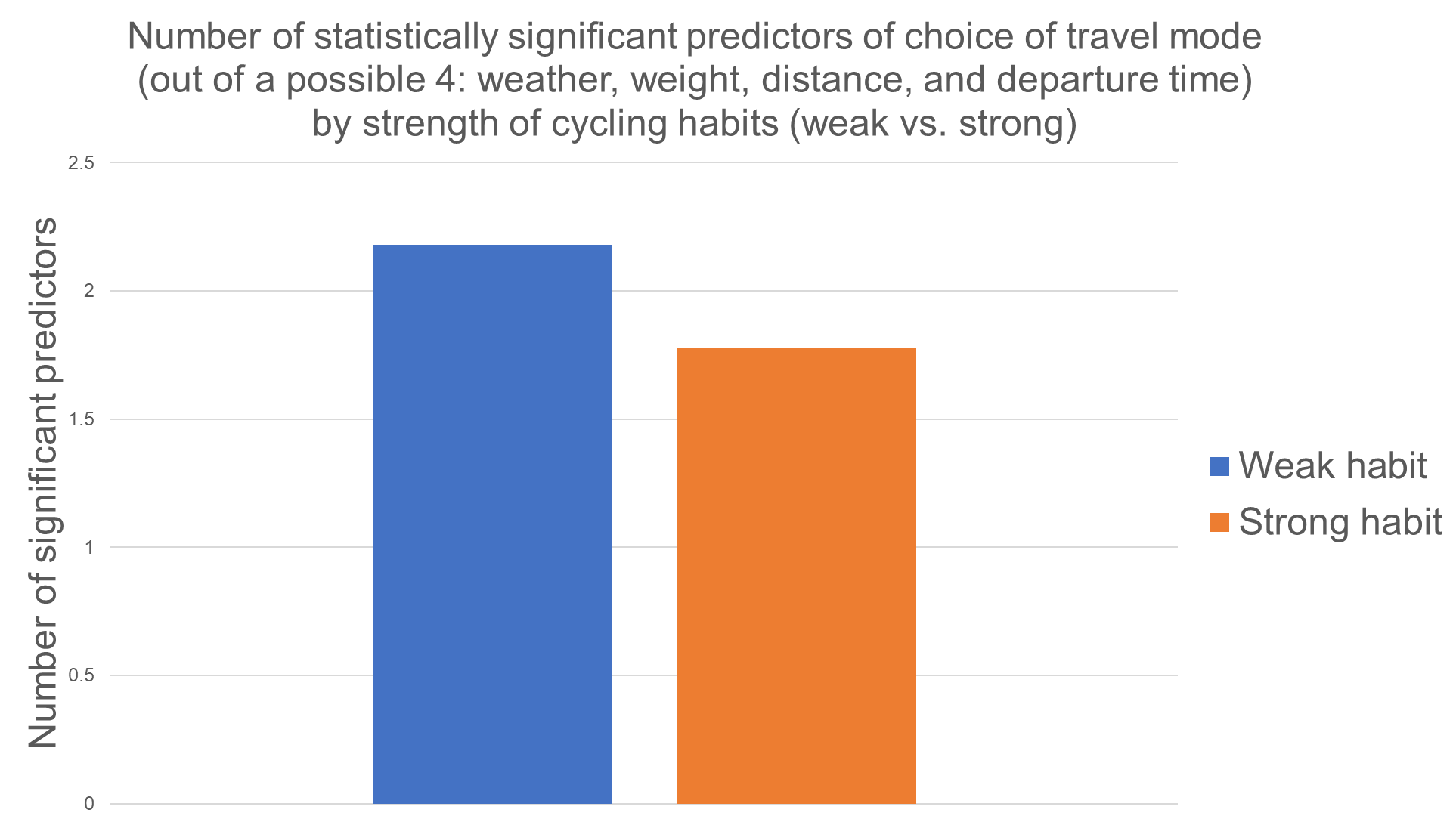
-number of attributes used to make decision - operationalised of how predictive attributes were of decision
aarts - results (do strong habits remove the need for deliberation)
-non-habitual cyclists took into account 2.2 attributes
-whereas habitual cyclists tend to take into account less of the attributes → so still deliberate and attitudes are still predictive of behaviour
-still significant but smaller proportion of attributes considered
-so habits occur without people being aware of them and people less likely to be thinking of habitual actions than non-habitual actions
do thoughts correspond with behaviour?
-when behaviour was non-habitual → 70% of time thinking about non-habitual action
-when behaviour was habitual → less likely to be thinking about it and more likely to be thinking about something else
-thoughts less likely to correspond with habitual behaviour than non-habitual behaviour
neal - method (are habits insensitive to changes in the value of the response?)
-measured:
habit strength → how frequently do you eat popcorn in the movie theaters?
context → cinema or meeting room?
value of the response → popcorn was either fresh or stale?
-DV was how much popcorn people eat
neal - results (are habits insensitive to changes in the value of the response?)
-in meeting room context people don’t eat much popcorn, ate slightly more if fresh than stale → don’t eat more even if habitually eat more popcorn at the cinema → shows habit not powerful enough to overcome staleness
-in cinema context → supports habit, amount of popcorn consumed depends more on habit and eat less popcorn when stale
-eat more when fresh if don’t have habit → but if habit will eat the popcorn regardless
-habit is insensitive to the value of the response as the value of the response has changed but for people with the habit it still persists
verplanken - method (mental habits)
-can have habitual patterns of thoughts
-developed habit index of negative thinking about the self → some people habitually critical of self
-thought responses can have the same properties of behavioural responses
self-report habit index (are habits part of who we are)
-designed to capture habits
-capture different features of habitual responses
-doing x is something that is typically me → part of the self and opens question of if we are defined by our habits
murtagh (are habits part of who we are)
-extent to which being a driver is part of who they are
-then looked at behaviour
-weak correlation between being a driver and extent to which they use alternative transport → 0.02 to 0.07
-but didn’t measure the extent to which people drive a car
albini (are habits part of who we are)
-extent to which people feel like eating fruit is something they do frequently and part of who they are
-correlation between eating veg and how important it is to them
-but no correlation found for fruit
verplanken - results (are habits part of who we are)
-how much does this activity reflet who you really are as a person?
-how frequently do you do this activity?
-the median correlation between these two measures was r = 0.46 → large size correlation
-so people more likely to do things they felt were part of them as people
webb & sheeran (is it possible to change or break habits)
-motivation alone is unlikely to be enough
-meta-analysis of 47 studies that changes participants’ intentions to do things
-changes in intentions led to larger changes in behaviours that participants sporadically (d = 0.74)
-less changes in behaviours that could be repeated into habits (d = 0.22)
counter-intentional habits
-intentions have smaller effects on behaviours performed frequently in similar situations
difficulty breaking habits
-people may not be aware:
habits drive behaviour
of the cues that trigger habits
of the habitual responses
-habits are also:
insensitive to changes in the value of the response
may define us
wood & tam - method (changing circumstances - breaking habits)
-looked at frequency of student behaviour before and after moving to university
stability of context → participants indicated whether they typically performed each behaviour in the same location, with the same people and whether those around them perform the behaviour
changes in context → participants reported the extent to which the context they performed behaviour in at the two contexts was similar/different
wood & tam - results (changing circumstances - breaking habits)
-people with strong habits are very disrupted by changes in contextual cues
-people with weaker habits are less disrupted, are more flexible and adaptive to new circumstances → exercise more similar across the two contexts
-same pattern for watching TV and reading newspapers
quinn - method (vigilant monitoring - breaking habits)
-participants had to identify behaviours they tried to inhibit or change during a typical day
-measure strength of participants’ habits
-at follow-up:
reported the strategies they used → vigilant monitoring, distraction, stimulus control, nothing
vigilant monitoring → paying attention to behaviours that aren’t usually thought about to prevent them
-rated the overall success of each attempt to change their behaviour
quinn - results (vigilant monitoring - breaking habits)
-vigilant monitoring effective for people with strong habits
-more successful at changing things that aren’t habitual
-stimulus control more effective than monitoring strategy and distracting
mean response latencies of the habitual responses - method (make a plan - breaking habits)
-faster to respond to habitual snack than alternative less eaten snack
-other condition of trying to break habit by planning to eat non-habitual snack instead → making a plan
-forming an implementation intention creates a new association with the habitual cue that is then pitted against the habitual association
mean response latencies of the habitual responses - results (make a plan - breaking habits)
-responded quicker to alternative food and responded slower to habitual response in condition when they made a plan
-suggests new association has been formed and this partly inhibits the old association
holland - method (make a plan - breaking habits)
-telecom company installed recycling boxes for old paperwork and plastic cups, but the amount binned did not seem to be reduced
-one group of employees asked to plan when, where and how they would recycle their paper and plastic cups
-recycling behaviour → weight of paper and cups in each participant’s bin
holland - results (make a plan - breaking habits)
-lower paper weight in in implementation intention condition
-planning seemed to be helpful - tends to disrupt habits and put less paper in bin
-but strength of habits was not accounted for and effectiveness of planning may depend on this
webb & sheeran - second method (effectiveness of planning depends on strength of habit)
-recruited smokers
-measured strength of smoking habits
-one half formed implementation intentions
-control condition completed one of three control exercises concerning seat belt use
-one month later, participants’ smoking behaviour was followed up
webb & sheeran - second results (effectiveness of planning depends on strength of habit)
-forming implementation intentions effective for reducing habits → but only for those with weak habits
-no effect for those with moderate or strong habits
-need to take into account the habit trying to break → boundary conditions for effectiveness of strategies