Hep A and B Learning Objectives (Barber)
 Call Kai
 Learn
Learn Practice Test
 Spaced Repetition
 Match
Match Flashcards
 Knowt Play
1/33

There's no tags or description
Looks like no tags are added yet.
Name | Mastery | Learn | Test | Matching | Spaced | Call with Kai |
|---|
No analytics yet
Send a link to your students to track their progress
34 Terms
- Fatigue / malaise
- Loss of appetite
- RUQ pain
- Myalgia / arthralgia
- Jaundice ± pruritus
- Dark urine / light stools
Shared Acute Symptoms (HAV & HBV)
- Fatigue
- Anxiety, anorexia
- Ascites
- Jaundice
- Variceal bleeding
- Hepatic encephalopathy
Chronic Symptoms (mainly HBV)
acute only (self-limiting)
HAV
acute or chronic
HBV
- RNA virus
- Replicates in hepatocyte cytoplasm
- Liver damage = immune-mediated (T cells, NK cells)
- Virus excreted in bile → stool
Hepatitis A (HAV) Pathophysiology
- 1.4 million cases worldwide annually
- Declined significantly due to vaccination
- Fecal-oral transmission
Hepatitis A (HAV) Epidemiology
- Person-to-person (household, sexual, daycare)
- Contaminated food/water
Hepatitis A (HAV) transmission
- Travel to endemic areas
- MSM
- IV drug use
- Chronic liver disease
- Occupational exposure
Hepatitis A (HAV) risk factors
- Double-stranded DNA virus
- Uses reverse transcriptase
- Integrates into host DNA
- Infects via surface antigen binding
Hepatitis B (HBV) pathophysiology
- 640,000 chronic infections in US
- 30% of infants → chronic vs <5% adults
- Highly infectious (50-100× HIV)
Hepatitis B (HBV) epidemiology
- Blood, serum, wound exudates
- Perinatal (mother → child)
- Sexual
- Needle sharing
Hepatitis B (HBV) transmission
- Multiple sexual partners
- IV drug use
- Healthcare exposure
- Dialysis
- Immunosuppression
Hepatitis B (HBV) risk factors
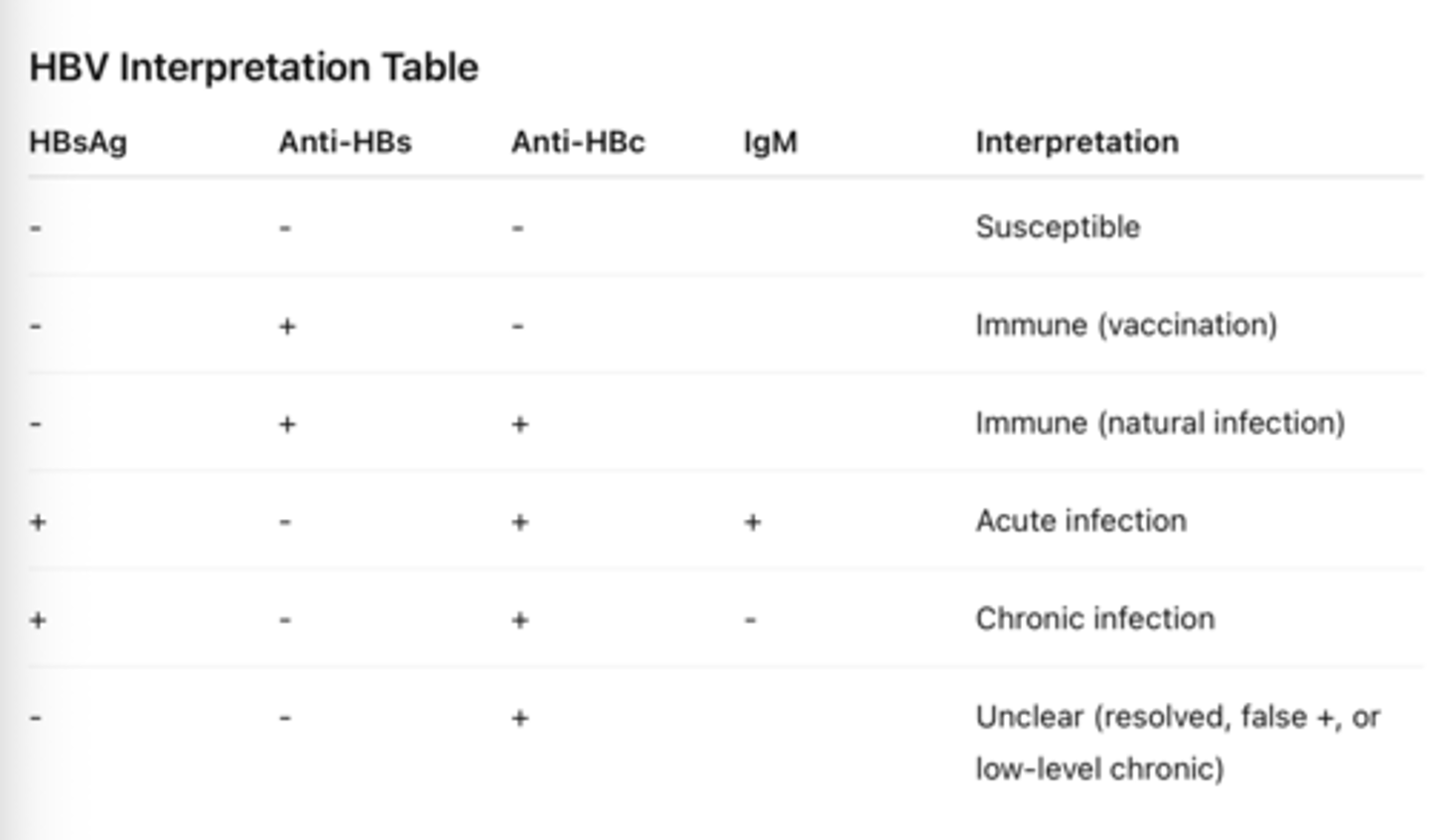
Acute infection
Anti-HAV IgM
Immunity (past infection or vaccine)
Anti-HAV IgG
Active infection
HBsAg
Immunity
Anti-HBs
Exposure
Anti-HBc
Acute infection
Anti-HBc IgM
have to know this
- Children (12-23 months)
- Unvaccinated (2-18 years)
- High-risk groups (travelers, MSM, drug use, etc.)
- Chronic liver disease, HIV, pregnancy
Hepatitis A Vaccine
2 doses
- Havrix
- Vaqta
- 2, 3, or 4 doses
- combo HAV + HBV
Twinrix
- All infants
- Unvaccinated <19
- Adults 19-59
- ≥60 with risk factors
Hepatitis B Vaccine
3 doses
- Engerix-B
- PreHevbrio
- Recombivax HB
2 doses
Heplisav-B
Pre- or post-exposure for high-risk patients
HAV
Post-exposure (e.g., needlestick, newborns)
HBV
- No specific antiviral therapy
- Supportive care only
- Avoid hepatotoxic drugs
- Vaccination
- Hand hygiene
- Safe food/water
- Monitoring Symptom resolution (most recover in 3–6 months)
Hepatitis A
- Suppress viral replication
- Prevent progression
- HBV DNA > 2,000 IU/mL
- ALT > 2× ULN
- Cirrhosis
Hepatitis B
- Tenofovir (TDF, TAF)
- Entecavir
First-Line Treatment
Pegylated interferon
Alternative Treatment
- HBV DNA
- Liver enzymes
- Kidney function
- Lactic acid (NRTIs)
Monitoring
- NRTIs: ≥4-5 years (sometimes lifelong)
- Interferon: ~48 weeks
Duration
- Promote vaccination
- Counsel on liver-toxic drugs
- Monitor drug interactions
- Encourage alcohol abstinence
Pharmacist Role