MUSIC Q2 LT1: African Music
 View linked note
 Call Kai
 Learn
Learn Practice Test
 Spaced Repetition
 Match
Match Flashcards
 Knowt Play
1/24

There's no tags or description
Looks like no tags are added yet.
Name | Mastery | Learn | Test | Matching | Spaced | Call with Kai |
|---|
No analytics yet
Send a link to your students to track their progress
25 Terms
Spiritual Music
A kind of church singing combining elements of hymn, jazz, and black American religious folk songs.
Gospel Music
Twentieth-century music rooted in true folk songs reflecting happiness and sadness, mirroring deep emotions of the American Negro with simple, repetitive rhythms.
Blues Music
A genre of music with types including country blues (quiet and meditatively sung) and city blues (harsher and more noisily sung), rooted in true folk songs of the twentieth century.
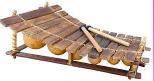
Balafon (Idiophones)
A West African xylophone, a pitched percussion instrument with bars made from logs or bamboo.
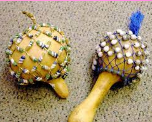
Rattles (Idiophones)
Vessels made of various materials creating sounds when they hit each other, such as seashells, tin, basketry, animal hoofs, horn, wood, metal, cocoons, palm kernel, or tortoise shells.
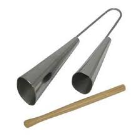
Agogo (Idiophones)
Single or multiple bells originating in Traditional Yoruba music and Samba Bateria ensembles.
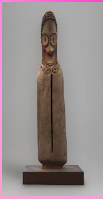
Atingting Kon (Idiophones)
Slit gongs used for communication between villages, carved to resemble ancestors with a slit opening at the bottom.
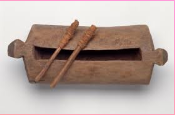
Slit Drum (Idiophones)
Hollow percussion instrument carved or constructed from bamboo or wood with one or more slits in the top.
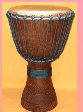
Djembe (Idiophones)
One of the best-known African drums, shaped like a large goblet and played with bare hands.
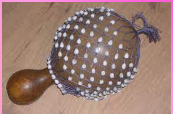
Shekere (Idiophones)
Type of gourd and shell megaphone from West Africa, consisting of a dried gourd with beads woven into a net covering.
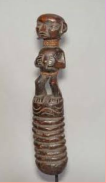
Rasp (Idiophones)
Hand percussion instrument producing sound by scraping notches on a piece of wood with a stick.
Body Percussion (Membranophones)
Africans use their bodies as musical instruments, including clapping, slapping of thighs, pounding of upper arms or chest, shuffle, and stamp of feet.
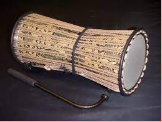
Talking Drums (Membranophones)
Drums used to send messages for various occasions, including births, deaths, marriages, events, dances, invitations, or war.
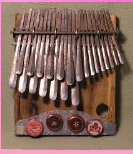
Mbira (Lamellaphones)
Thumb piano or finger xylophone originating from Zimbabwe, used in ceremonial functions, weddings, funerals, and religious purposes.
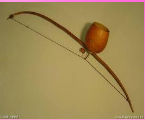
Musical Bow (Chordophones)
Ancestor of all string instruments, including mouth bow, resonator bow, and earth bow.
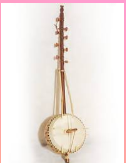
Lute (Chordophones)
Shaped like the modern guitar and played similarly, originating from the Arabic states.
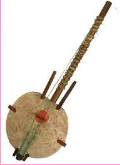
Kora (Chordophones)
Africa's most sophisticated harp, featuring a body made from a gourd or calabash, held upright and played with fingers.
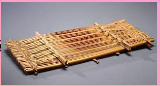
Zither (Chordophones)
Stringed instrument with varying sizes and shapes, with strings stretched along its body.
Zeze (Chordophones)
Fiddle from Sub-Saharan Africa played with a bow, a small wooden stick, or plucked with the fingers.
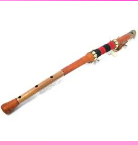
Flutes (Aerophones)
Various types and origins, including Anteben (bamboo flute from Ghana), Fulani (traditional flute of the Fulani people, Guinea), and Panpipes (found throughout Africa).
Horns (Aerophones)
Commonly made from elephant tusks and animal horns.
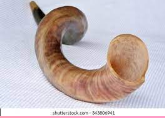
Kudu Horn (Aerophones)
Releases a mellow and warm sound, adding a unique African accent to the music.
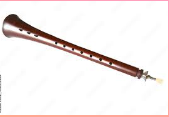
Reed Pipes (Aerophones)
Example:Rhaita or Ghaita, an oboe-like double reed instrument from Northwest Africa.
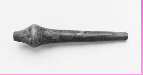
Whistles (Aerophones)
Made of wood, metal, or animal horns, short pieces of horn serve as whistles, often used ceremonially.
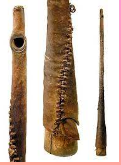
Trumpets (Aerophones)
Ceremonial in nature, used to announce the arrival or departure of important guests.