9. Marketing essentials and marketing in media companies
 Call Kai
 Learn
Learn Practice Test
 Spaced Repetition
 Match
Match Flashcards
 Knowt Play
1/45

There's no tags or description
Looks like no tags are added yet.
Name | Mastery | Learn | Test | Matching | Spaced | Call with Kai |
|---|
No analytics yet
Send a link to your students to track their progress
46 Terms
Defining Marketing
Value Creation: Marketing is about creating value for customers. It's about understanding their needs and offering solutions.
Relationship Building: Strong customer relationships are essential. These relationships foster loyalty and drive repeat business.
Value Capture: In return, companies capture value from customers. This translates to profits and customer equity.
Profitable customer relationship management
Defining Marketing
Marketing is a process by which companies create value for customers and build strong customer relationships in order to capture value from customers in return.
Profitable customer relationship management
Key Elements of Marketing
Customers: Customer-centric decisions are paramount. Understand their needs and cater to them effectively.
Profitability: Decisions must contribute to profitability. Marketing efforts should yield a positive return on investment.
The Five-Step Marketing Process Understand the marketplace and customer needs
Needs, wants, demand.
Offers
Customer value
Satisfaction
Markets
Design a customer value-driven marketing strategy
Customer selection,
segmentation
Select a value proposal
Marketing concept
Construct an integrated marketing program that delivers superior value
Transform the strategy in action
Company Marketing mix
The 4 Ps
Engage customers, build profitable relationships, and create customer delight
Customer relationship management
Adding value and superior satisfaction.
Customer management tools
Programs
Capture value from customers to create profits and customer equity
Customer lifetime value
Loyalty and customer maintenance
Share of customer
Customer equity
Understanding Customer Needs, Wants, and Demands
Needs: Needs are states of deprivation. These include physical, social, and individual needs.
Wants:They are how people express their needs. Wants are shaped by culture and personality.
Demands: Demands are human wants supported by purchasing power. It's the willingness to purchase a product.
Managing Customer Value and Satisfaction
1 Customer Value: Offer superior value compared to competitors. Understand what customers perceive as valuable.
2 Expectation Management: Manage customer expectations effectively. Balance promises with deliverable results.
Satisfaction = results - expectations
3 Brand Promise: Create an attractive (for many people) and achievable (not disappointing) brand promise.
Markets, Exchange, and Building Relationships
The Market: A market consists of actual and potential buyers. Understand their needs and behaviors.
Exchange: Exchange involves obtaining a desired object. Offer something of value in return.
Marketing actions: Marketing aims to create, maintain and growth exchange relationships. Focus on creating mutually beneficial connections.
Designing a Customer Value-Driven Marketing Strategy
Target Audience:Determine which customers to serve. This requires segmentation and targeting efforts. It is equally important to choose than to give up It is equally important to choose than to give up
Brand Value Proposition: Choose a compelling brand value proposition.
• Easy to understand
• It solve specific needs
• Different to the others
The reason for customers to choose one brand over the others
Markets, Exchange, and Building Relationships
The Market: A market consists of actual and potential buyers. Understand their needs and behaviors.
Exchange: Exchange involves obtaining a desired object. Offer something of value in return.
Marketing actions: Marketing aims to create, maintain and growth exchange relationships. Focus on creating mutually beneficial connections.
Designing a Customer Value-Driven Marketing Strategy
Target Audience: Determine which customers to serve. This requires segmentation and targeting efforts.
Brand Value Proposition
Choose a compelling brand value proposition.
• Easy to understand
• It solve specific needs
• Different to the others
The reason for customers to choose one brand over the others It is equally important to choose than to give up
Customer Relationships and Brand Role
Customer Relations
Interactions
Tribes
Try to maximize the role of your brand in your consumer´s life
Customer Relationships Management: CRM
• CRM involves building and maintaining profitable customer relationships.
• It focuses on value and satisfaction.
• These drive loyalty and retention.
The Digital Environment and Customer Engagement
Social Media:
Use platforms for conversations.
Offer experiences and build community.
Brand ambassadors:
Incentive by the brand
Spontaneous by customer lovers
High level of demand
Higher consumer power over brands.
More demanding with campaigns
A very demanding big opportunity → need to be planned
Capturing Customer Value
The adequate customer management provoke:
Loyalty → customer retention
Recommendation → potential new customers
Customer lifetime value
It is the value of the entire stream of purchases that the customer would make over a lifetime.
It is five times cheaper to maintain a customer than recruit a new one
Capturing Customer Value
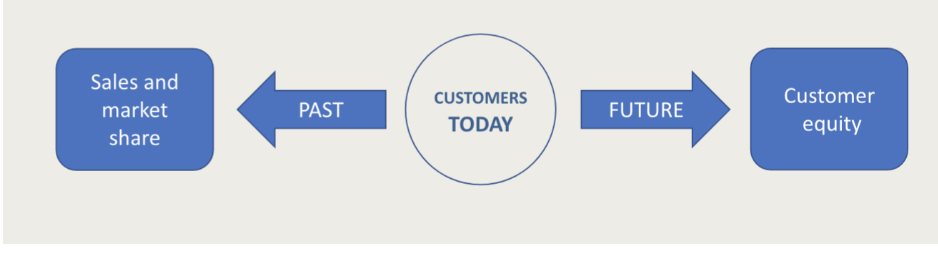
Customer equity is the total combined customer lifetime values of all of the company’s customers.
The more loyal and younger the customers, the higher customer equity
Why Growth is Key
Competitive Advantage: Growth allows companies to compete effectively in a dynamic market.
Shareholder Value: Satisfying shareholders is vital for attracting investments and achieving growth goals.
Talent Attraction: Growth is crucial for attracting and retaining top talent, fostering innovation and competitiveness.
Marketing main responsibility
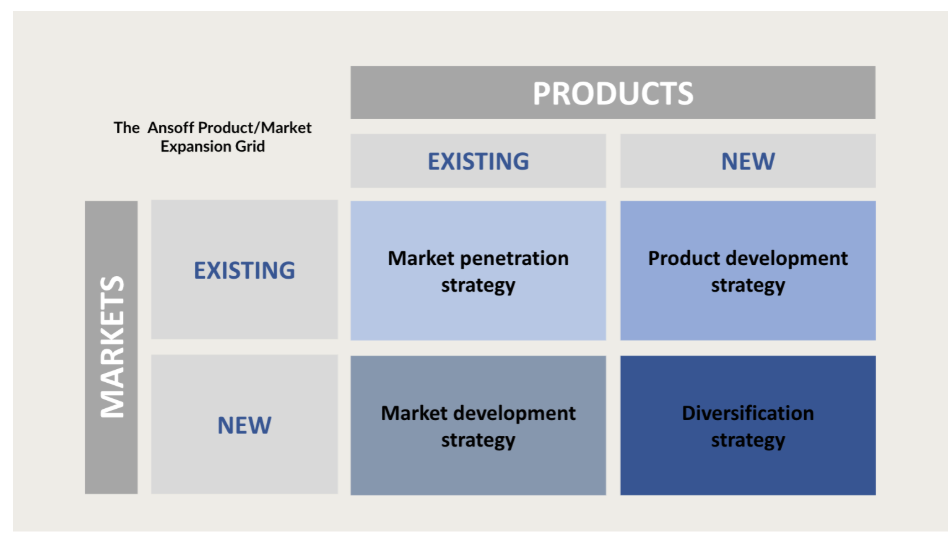
To identify, evaluate and choose market opportunities, and define the right strategy to approach them. Just growth is not a company goal → it must be “profitable” growth
Growth Strategy Ansoff Matrix
Marketing Strategy and the Marketing Mix
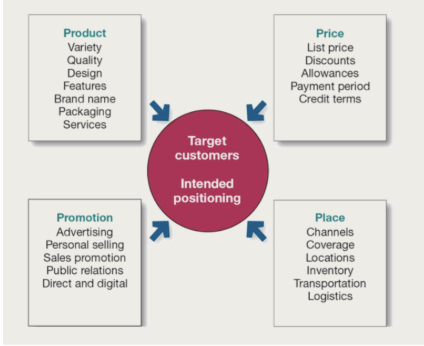
Marketing Mix: is the set of controllable, tactical marketing tools—product, price, place, and promotion—that the firm blends to produce the response it wants in the target market
Managing marketing investments
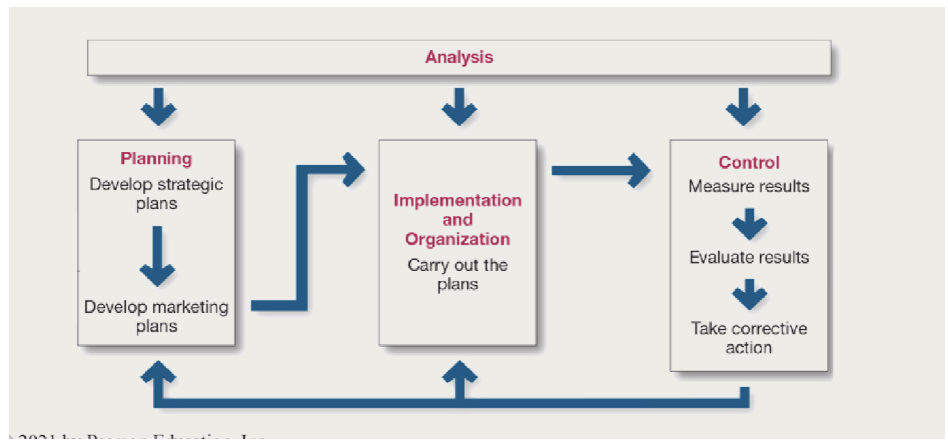
Managing the Marketing process
The Marketing Plan
CURRENT SITUATION
Market, segments, trends
Brand performances
Competitors
OBJECTIVES
To define quantitative business and marketing targets.
ACTION PLAN
What, where, when, who will be done and how much it will cost
CONTROLS
KPI´s definition
Corrective measures
Marketing plan content
OPPORTUNITIES AND THREAT ANALYSIS
SWOT
MARKETING STRATEGY
Marketing rationale to achieve the objectives.
Marketing mix strategy to add higher value.
BUDGET Y P&L
Resources needed
Total impact in the P&L
The Product: Tangible vs. Intangible
Consumer Goods: Focuses on physical products: things you can touch, use, and replace. Examples include food, clothing, and electronics.
Media: Promotes intangible products: content, experiences, and information. Examples include news, entertainment, and digital platforms.
Consumer Purchase Cycle
Consumer Goods: FMCG marketing focuses on driving repeat purchases and building brand loyalty through consistent messaging and promotions.
Media Companies: Media companies aim to attract and retain audiences over time through consistent engagement, such as daily tuning in or subscribing to a service.
Engagement
Consumer Goods: FMCG brands engage consumers through loyalty programs, social media interactions, and customer feedback.
Media Companies: Media companies engage audiences through interactive content like live shows and polls, and community-building efforts.
Metrics of Success
Consumer Goods: FMCG marketing success is measured by sales volume, market share, brand awareness, and customer retention.
Media Companies: Media company success is measured by audience ratings, viewership numbers, engagement metrics, and subscription growth.
Competitive Landscape
Consumer Goods: FMCG brands compete with other brands in the same product category in a highly saturated market.
Media Companies: Media companies compete for attention with other media outlets, streaming services, and entertainment options.
The Audience: Consumers vs. Dual-Sided Market
Consumer Goods:Targets individual customers who directly purchase the product. The goal is to build brand loyalty and drive sales.
Media: Operates in a dual-sided market. It must attract and retain audiences by offering compelling content and appeal to advertisers who fund the content.
Revenue Model: Direct Sales vs. Multiple Streams
Consumer Goods: Relies on direct sales: a customer purchases a product in exchange for money. Pricing strategies, discounts, and product positioning are key.
Media: Works with multiple revenue streams, including advertising, subscriptions, sponsorships, and content licensing. The audience is both a consumer and a product.
Marketing Strategies: Product Promotion vs. Content Distribution
Consumer Goods: Relies on traditional advertising, retail distribution, influencer marketing, and digital campaigns.
Media: Focuses on content distribution, platform optimization, audience analytics, and virality. It must adapt to rapid technological changes and shifting user behaviors.
Seasonality and Trends
Consumer Goods: FMCG marketing often aligns with seasonal demand and trends, such as health-conscious products.
Media Companies: Media companies align with cultural trends, timetables, events and seasonal programming.
Brand development
Consumer Goods: Marketing is key for bring them to live and develop its personality
Media Companies: Develop their own voice and personality through their contents; marketing play a minimum role on it.
Audience Research and Segmentation
What It Is: Collecting data to understand who the audience is, what they want, and how they consume media.
Why It Matters: Media companies live or die by their audience. Knowing demographics, psychographics, and behavior shapes everything else.
Example: Netflix analyzes viewing data to segment audiences into "binge-watchers" or "casual viewers" and tailors recommendations accordingly.
Content Promotion
What It Is: Creating and executing campaigns to advertise specific content (e.g., a new show, article series, or podcast).
Why It Matters: Even great content needs visibility to attract viewers, listeners, or readers in a crowded market.
Example
HBO's trailers and social media teasers for House of the Dragon to build hype before the premiere.
Brand Management
What It Is: Shaping and maintaining the company's overall identity and reputation.
Why It Matters: A strong brand builds trust and loyalty, setting the company apart.
Example
CNN emphasizing "breaking news" to reinforce its position as a go-to news source.
Customer Acquisition and Retention
What It Is: Attracting new subscribers/viewers and keeping them engaged over time.
Why It Matters:Media companies often rely on subscriptions or ad revenue tied to audience size.
Example
Hulu offering a free trial to hook new users, then sending personalized emails to keep them subscribed.
Advertising Sales and Partnerships
What It Is: Selling ad space or sponsorships to brands wanting to reach the company's audience.
Why It Matters: For ad-supported media, this is a core revenue stream, and marketing makes it happen.
Example: A TV serie like Money Heist (La casa de papel) signing an sponsorship with a spanish beer (Estrella Galicia)
Digital and Social Media Marketing
What It Is: Leveraging online platforms to engage audiences and drive traffic.
Why It Matters: Most media consumption happens digitally now, and social media amplifies reach and interaction.
Example
La Revuelta posting viral post on X to promote the program beyond its live broadcasting.
Performance analysis and optimization
Measuring the performance of marketing efforts and adjusting them for better results ensures that the company is not wasting resources on ineffective strategies.