AP World History Modern Unit 4 1450-1750 (Maritime Empires), AP World History Unit 1-9
 Call Kai
 Learn
Learn Practice Test
 Spaced Repetition
 Match
Match Flashcards
 Knowt Play
1/119

There's no tags or description
Looks like no tags are added yet.
Name | Mastery | Learn | Test | Matching | Spaced | Call with Kai |
|---|
No analytics yet
Send a link to your students to track their progress
120 Terms
Charters
Documents granting the right to organize settlements in an area
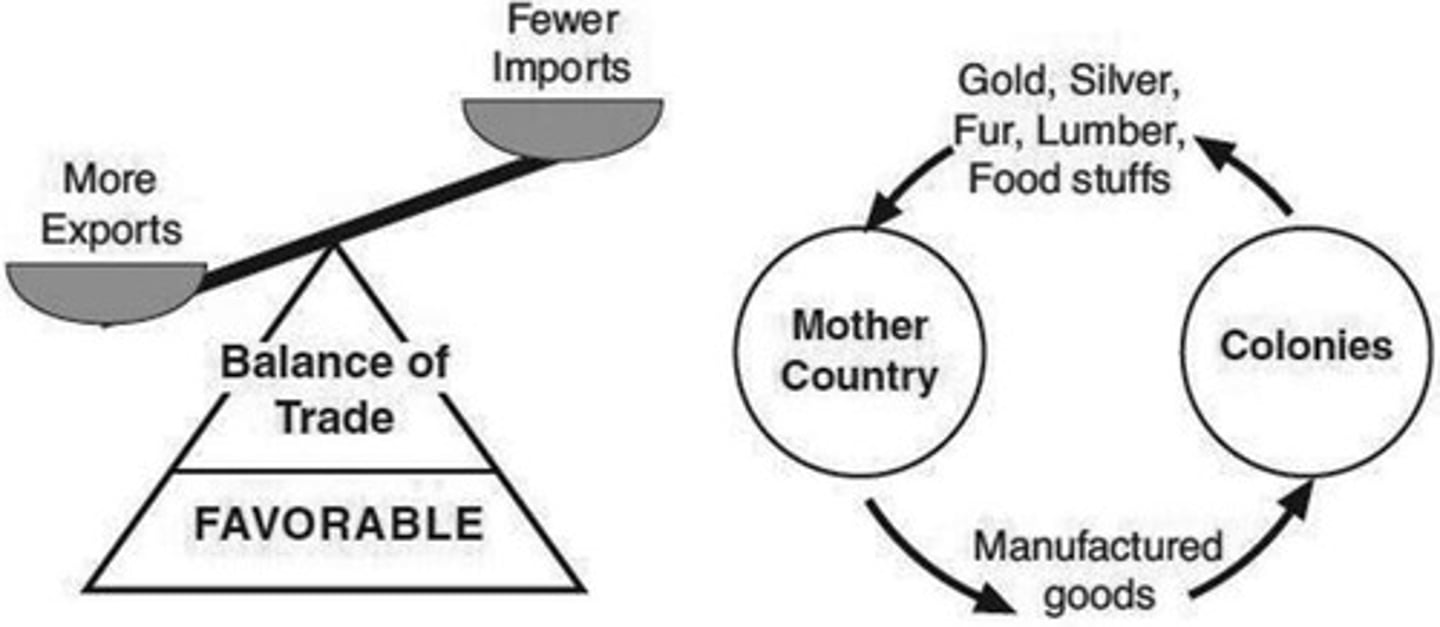
Mercantilism
An economic policy under which nations sought to increase their wealth and power by strictly regulating the economy to obtain large amounts of gold and silver by selling more goods than they bought and utilizing colonies
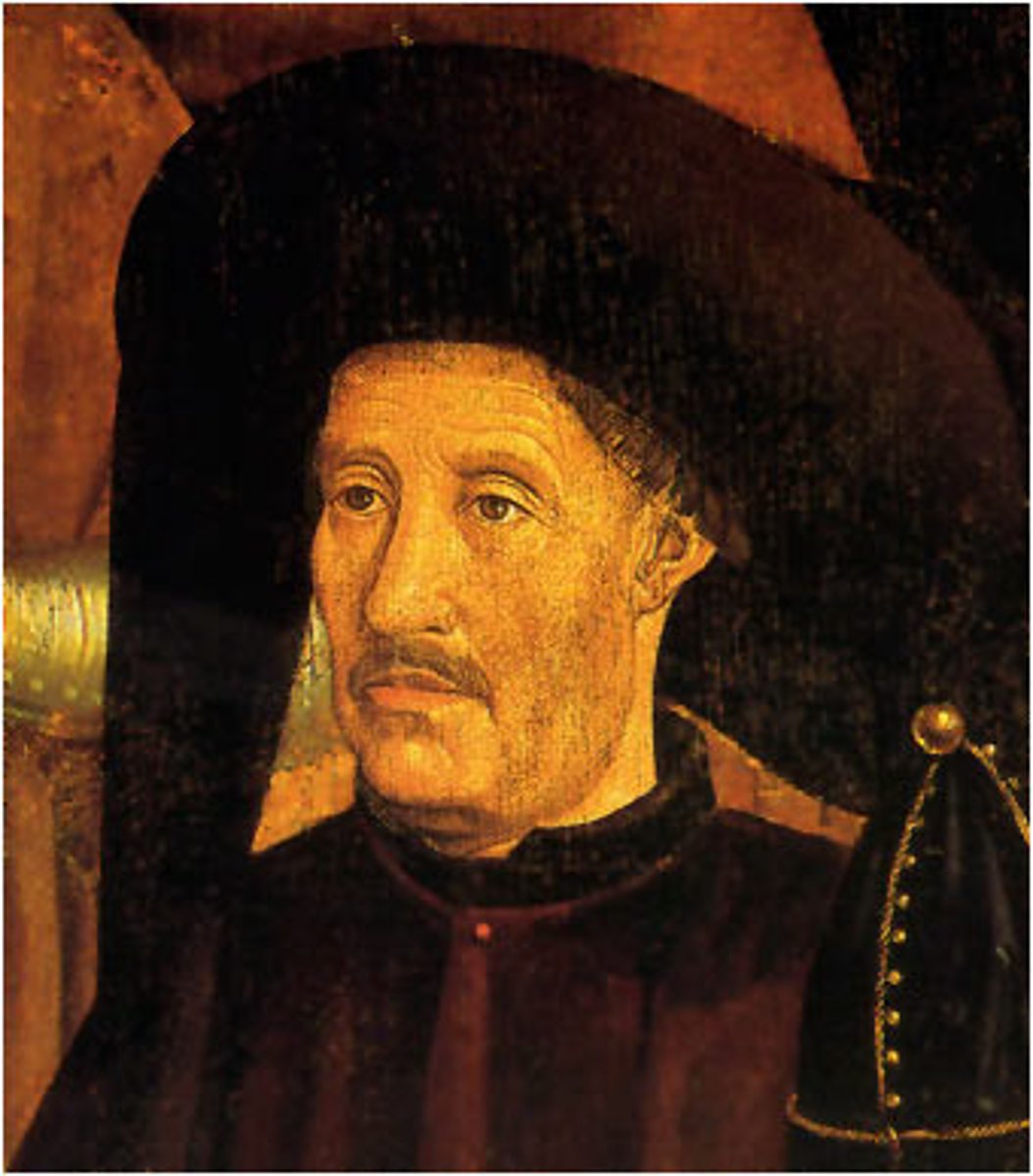
Prince Henry the Navigator
(1394-1460) Prince of Portugal who established an observatory and school of navigation at Sagres and directed voyages that spurred the growth of Portugal's colonial empire.
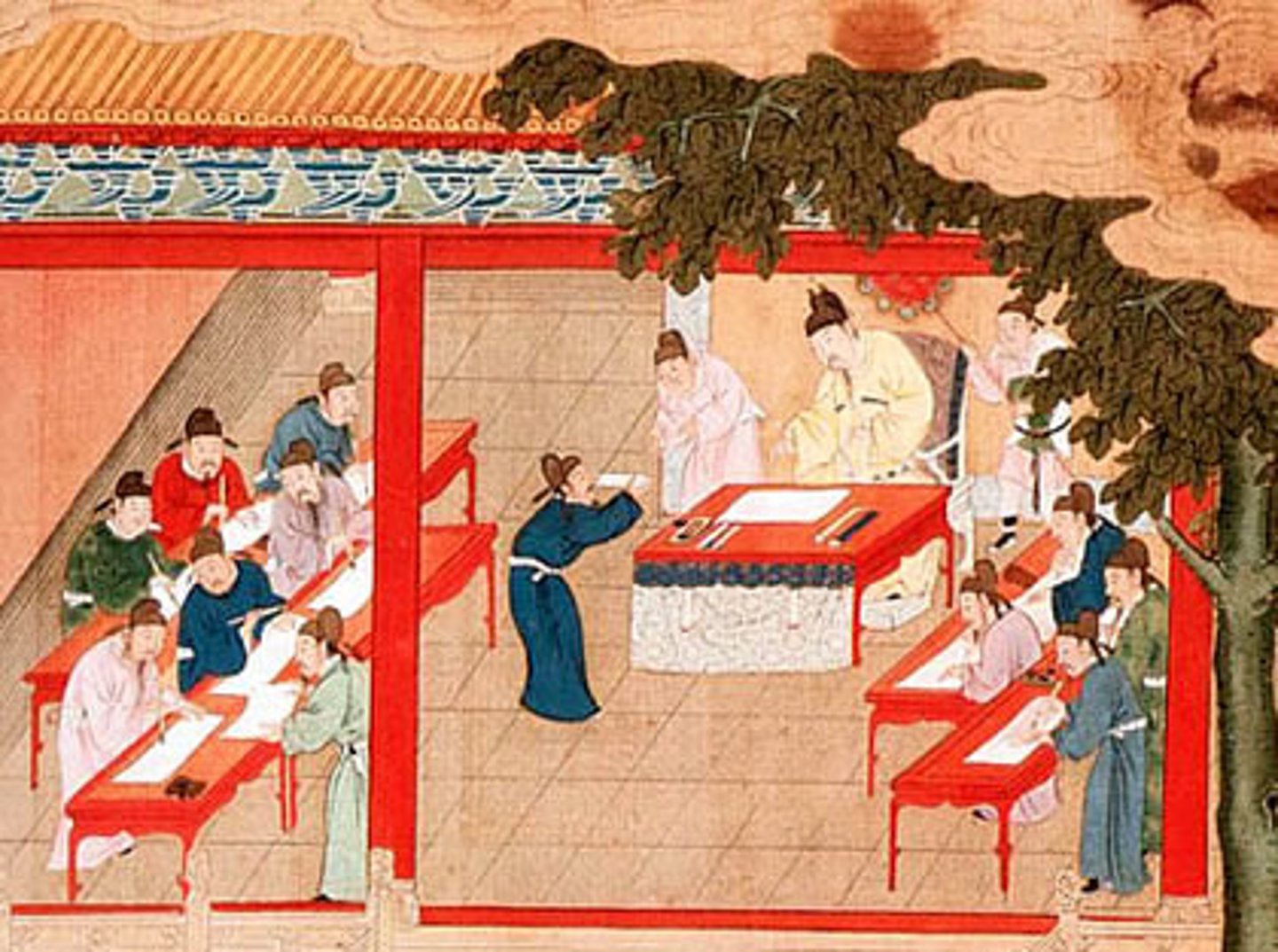
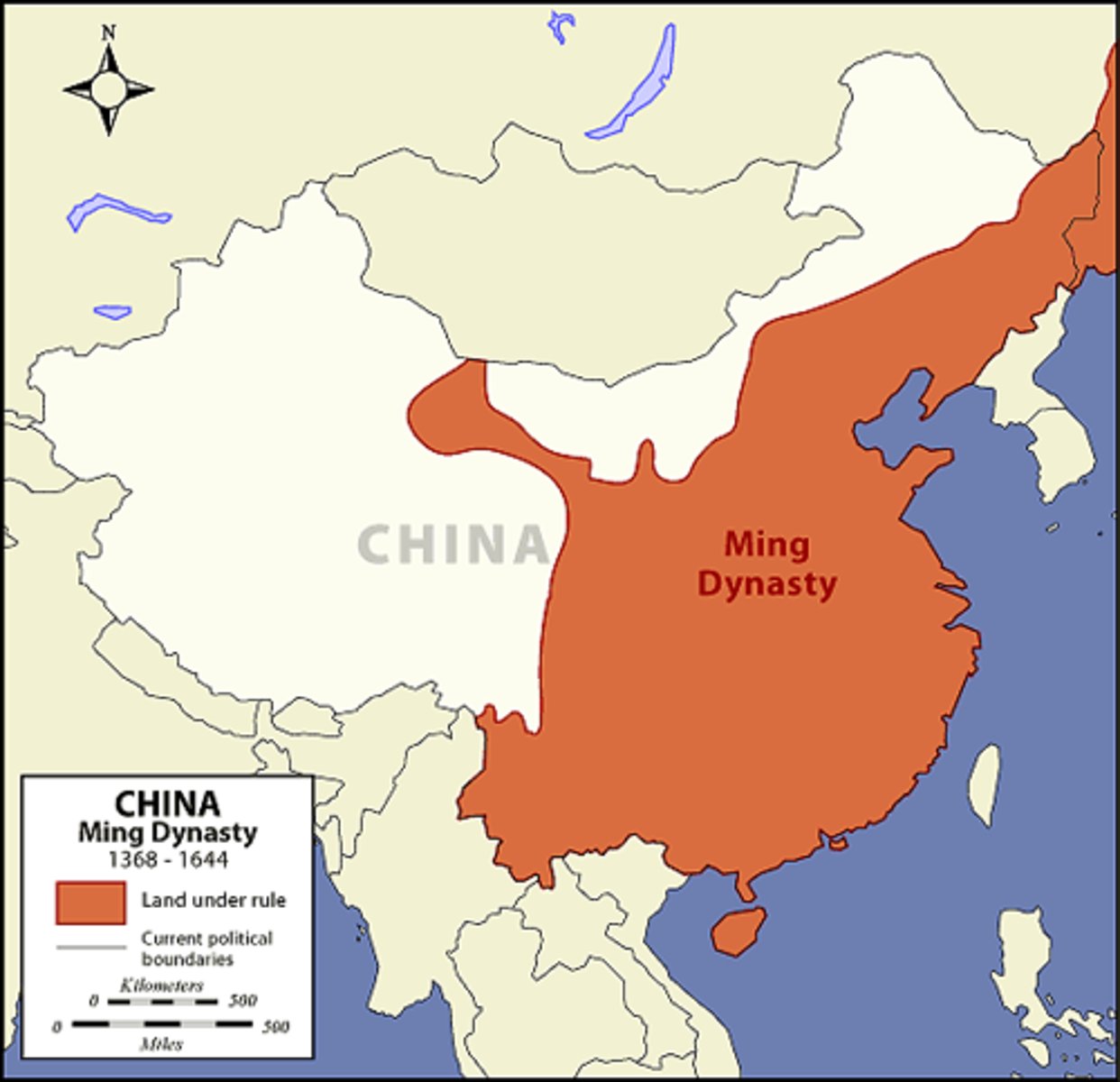
Ming Dynasty (1368-1644)
It was perhaps the peak of Chinese civilization with 300 years of peace and prosperity.
Portuguese Empire
took an early lead in European exploration (sponsored by Prince Henry); went East and established trading posts in West Africa, East Africa (Swahili City States) and India for spice trade
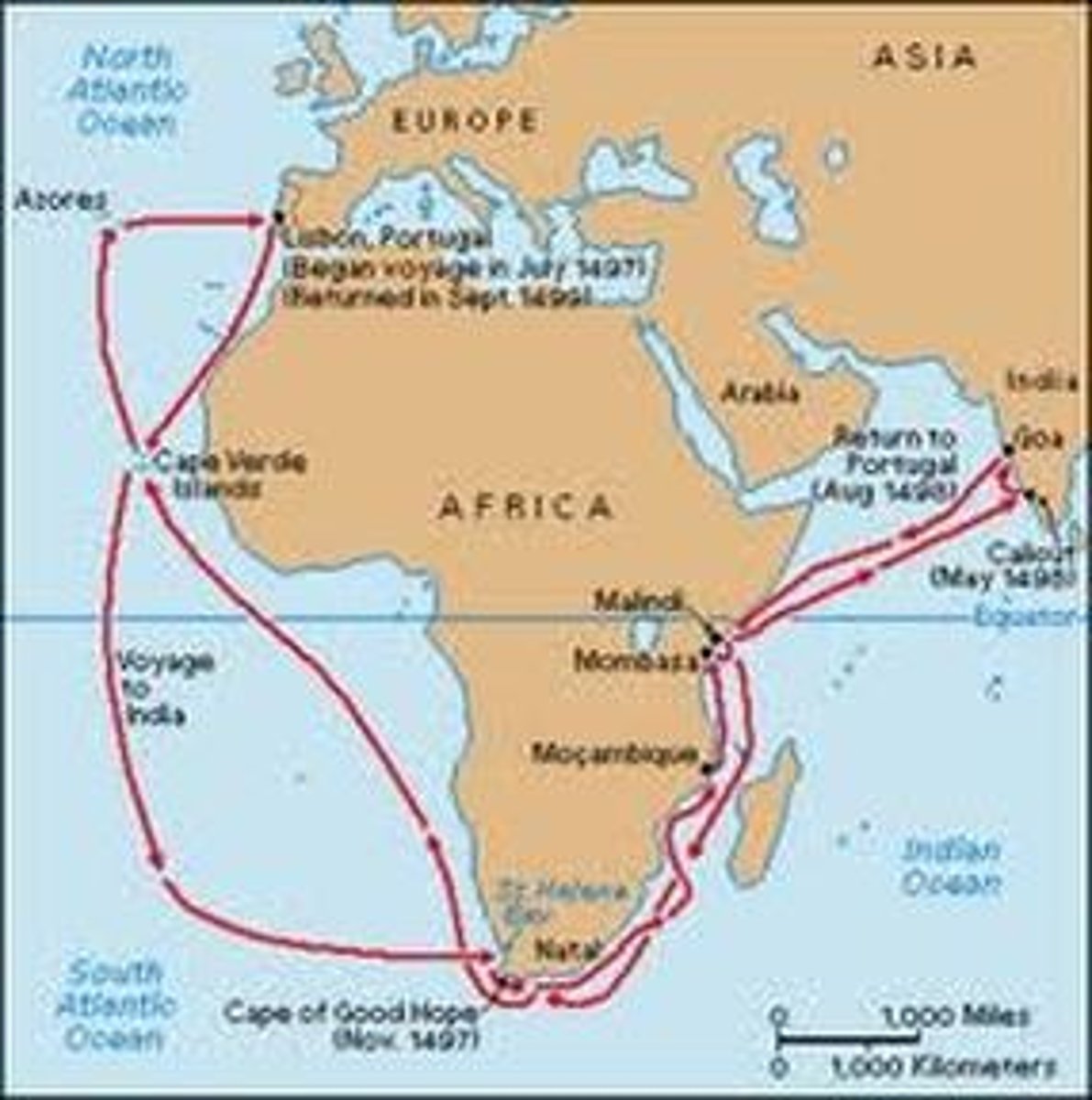
maritime
on or near the sea
Global Silver Trade
Silver trade between the Americas and Europe and onward to China from the 16th to 18th centuries.
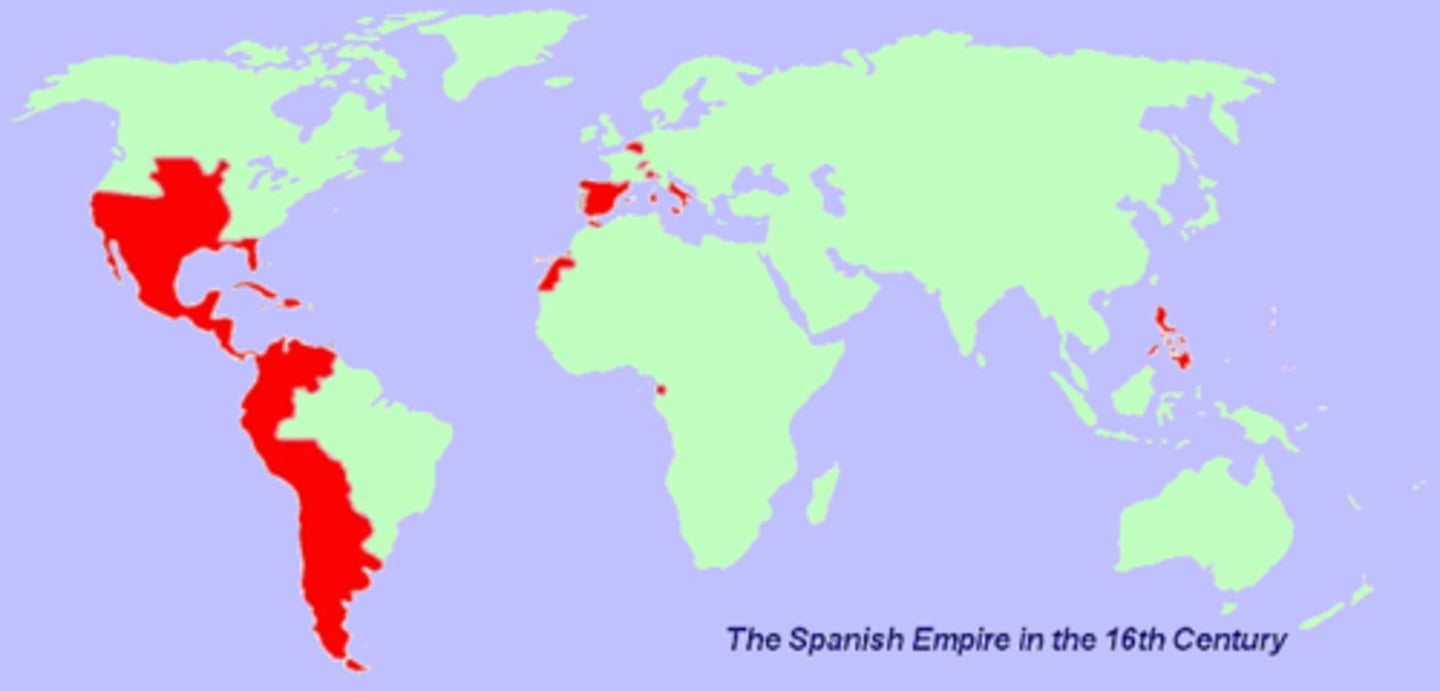
Spanish Empire
Made up of territories and colonies in Europe, Africa, and Asia controlled from Spain. At its strongest, it was one of the biggest empires in world history according to how much land they had, and one of the 1st global empires.
plantation agriculture
Production system based on a large estate owned by an individual, family, or corporation and organized to produce a cash crop.
cash crop
a crop produced for its commercial value rather than for use by the grower.
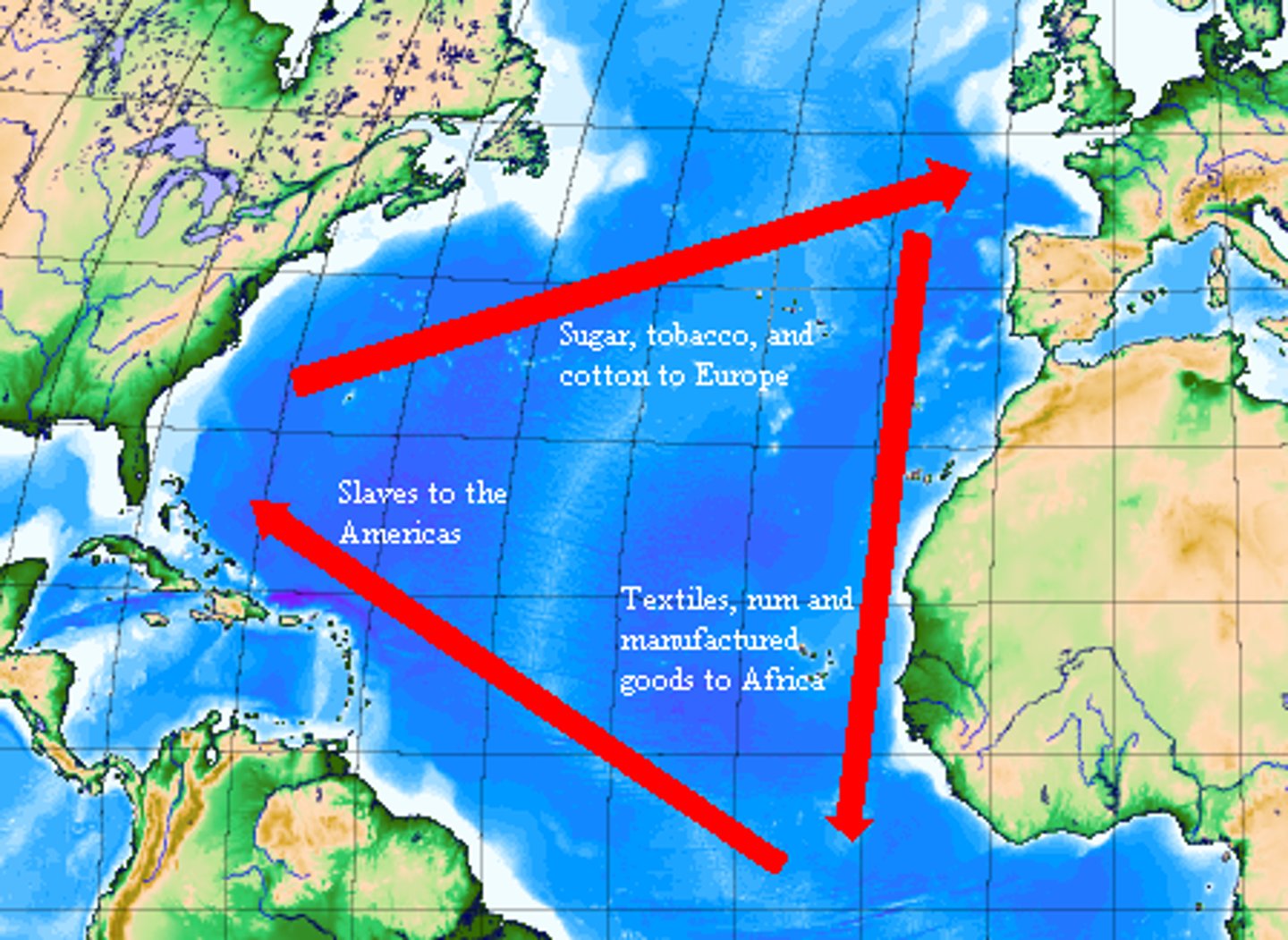
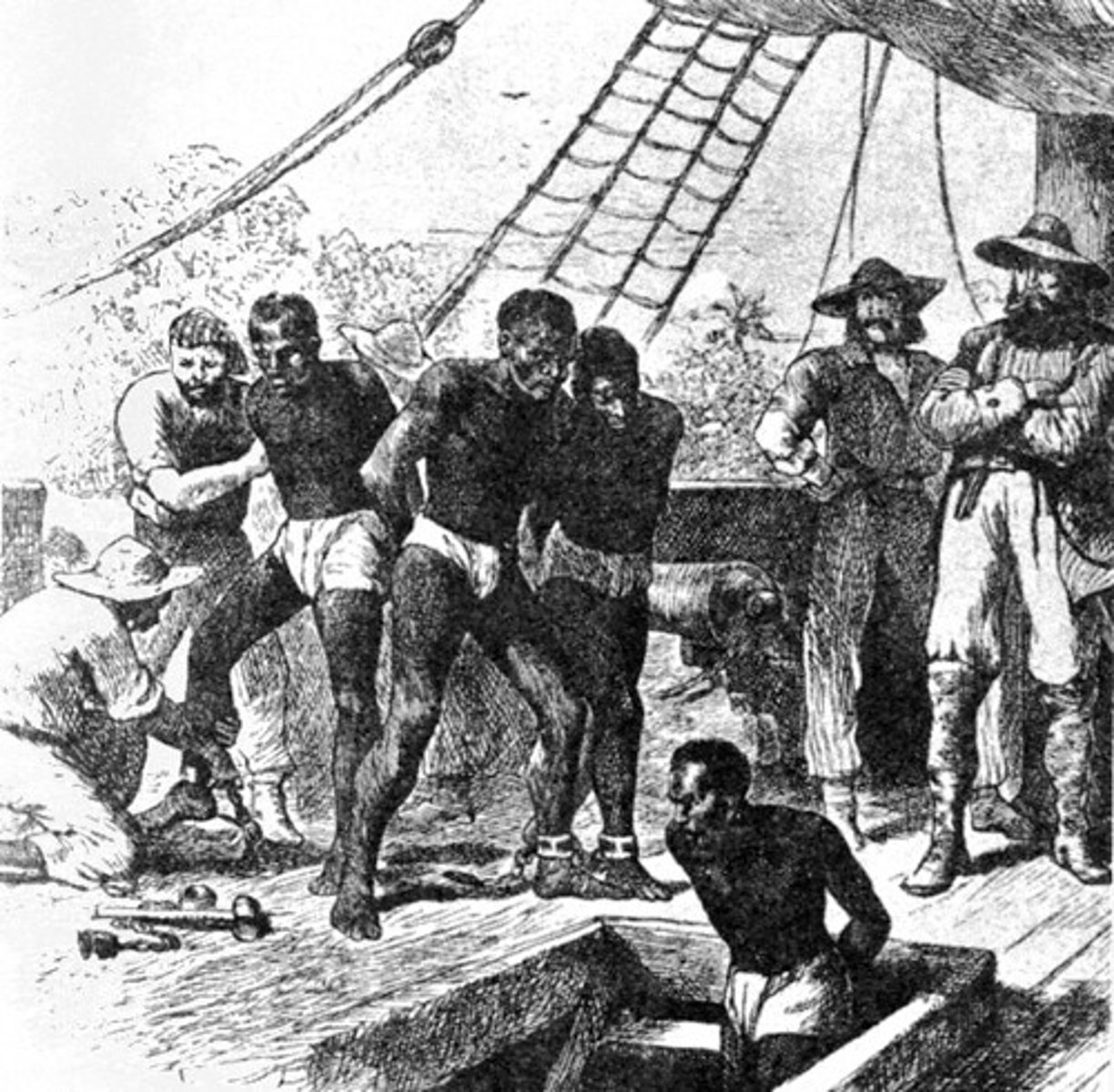
Trans-Atlantic Slave Trade
The forced migration of between 12 - 15 million people from Africa to the Western Hemisphere
indigenous
native to a certain area
Encomienda System
It gave settlers the right to tax local Native Americans or to make them work.
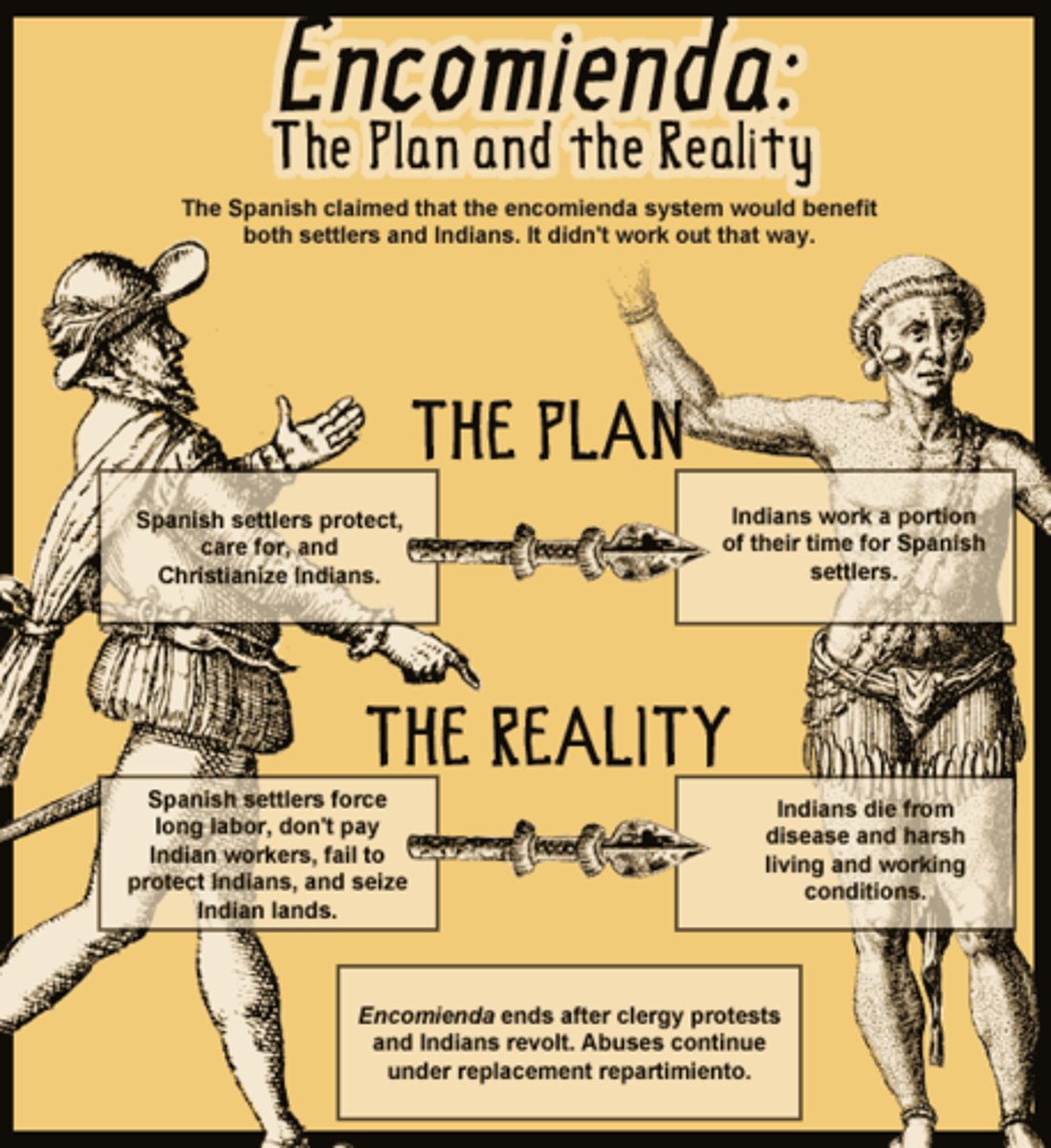
Tokugawa Shogunate
was a semi-feudal government of Japan in
Closed Country Edict
Was a document that restricted Japanese to only certain times when the Japanese could trade and intervene with the outside world
syncretic religion
Combines two religious traditions into something distinctly new
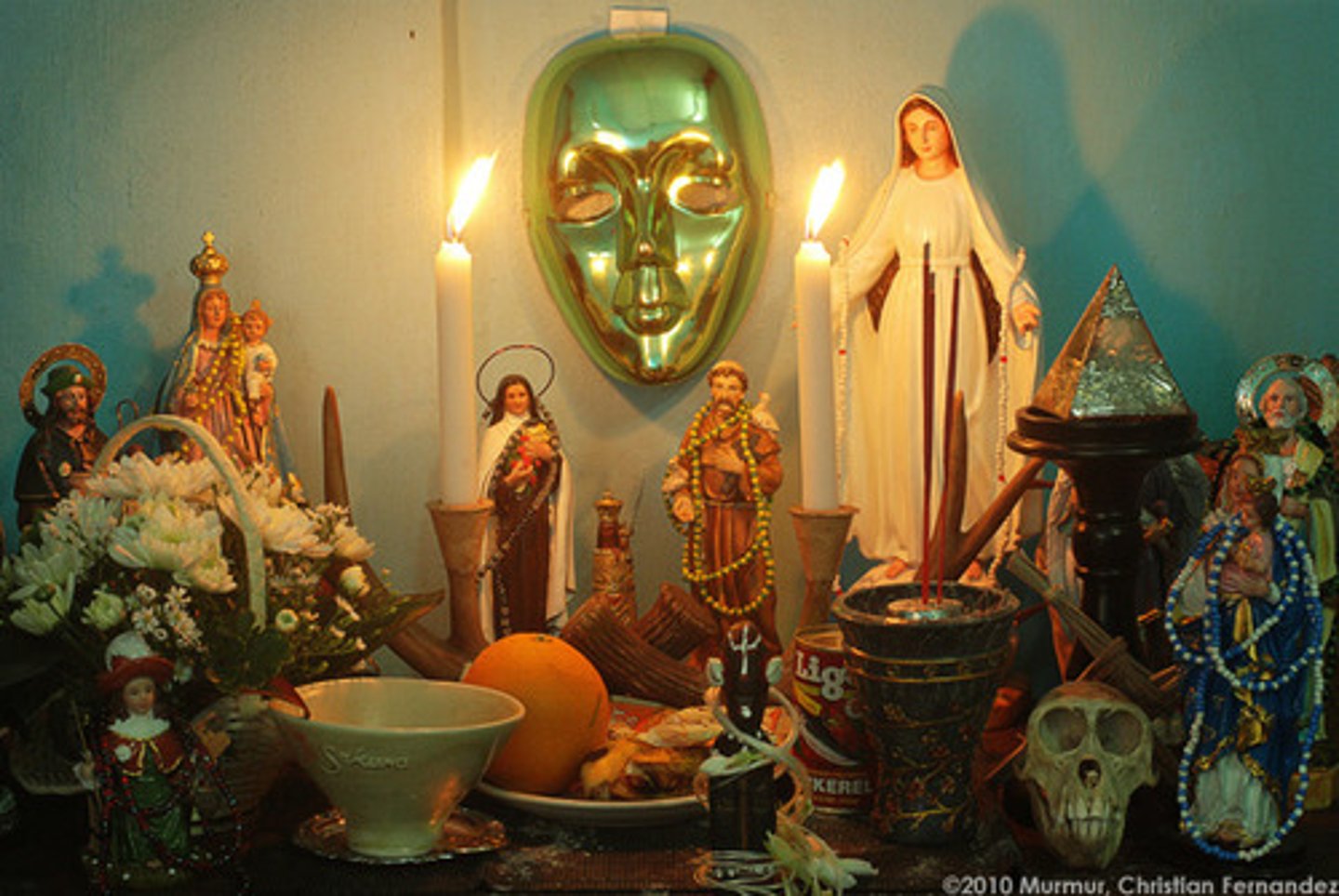
Dutch East India Company
Government-chartered joint-stock company that controlled the spice trade in the East Indies.
British East India Company
set up trading posts in India in the 1600s, beginning the British economic interest there
joint-stock company
A business, often backed by a government charter,
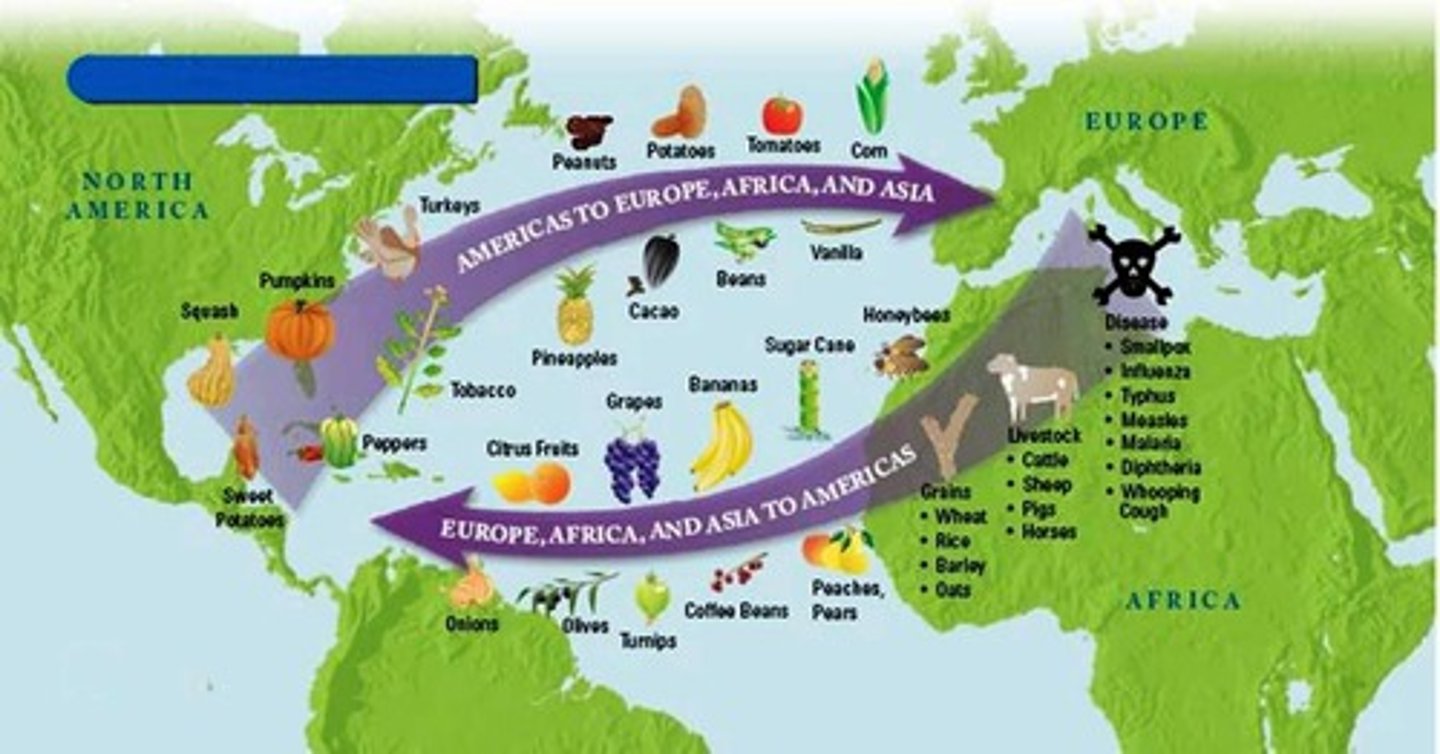
Columbian Exchange
The exchange of plants, animals, diseases, and technologies between the Americas and the rest of the world following Columbus's voyages.
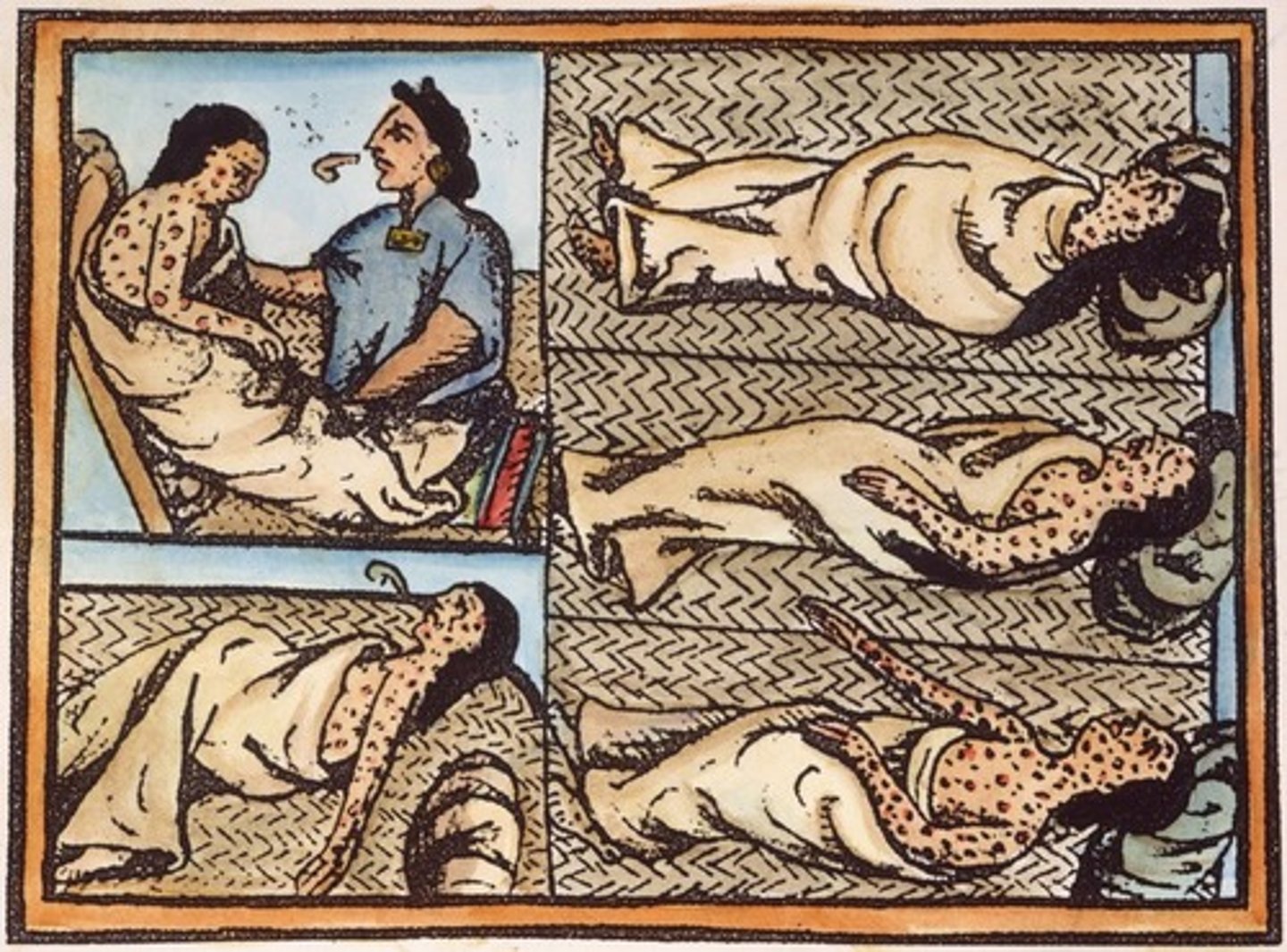
Smallpox
A highly contagious viral disease characterized by fever, weakness, and skin eruption
coercive labor
Any labor system that involves force (slavery, serfdom, and encomienda)
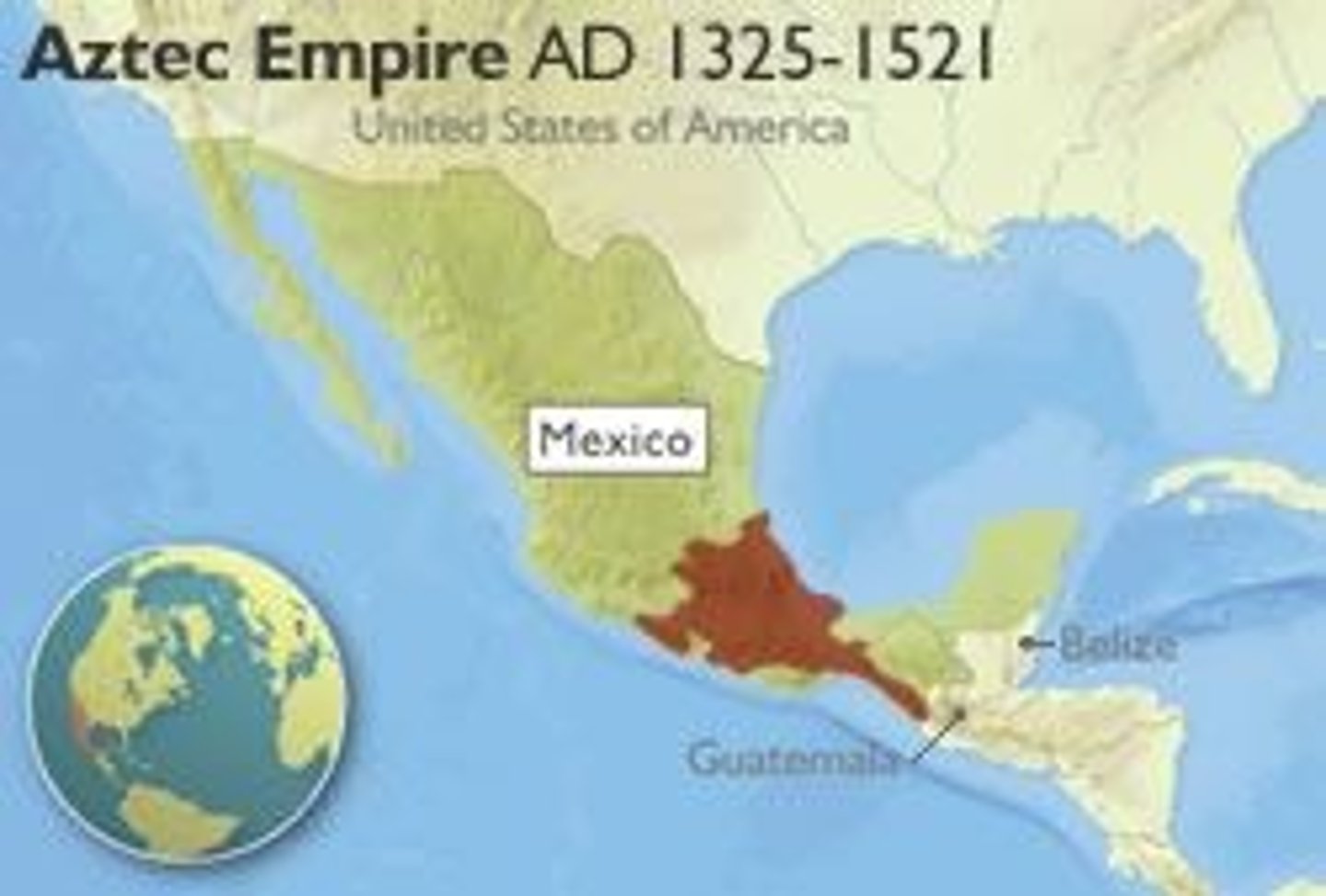
Aztec Empire
Central American empire constructed by the Mexica
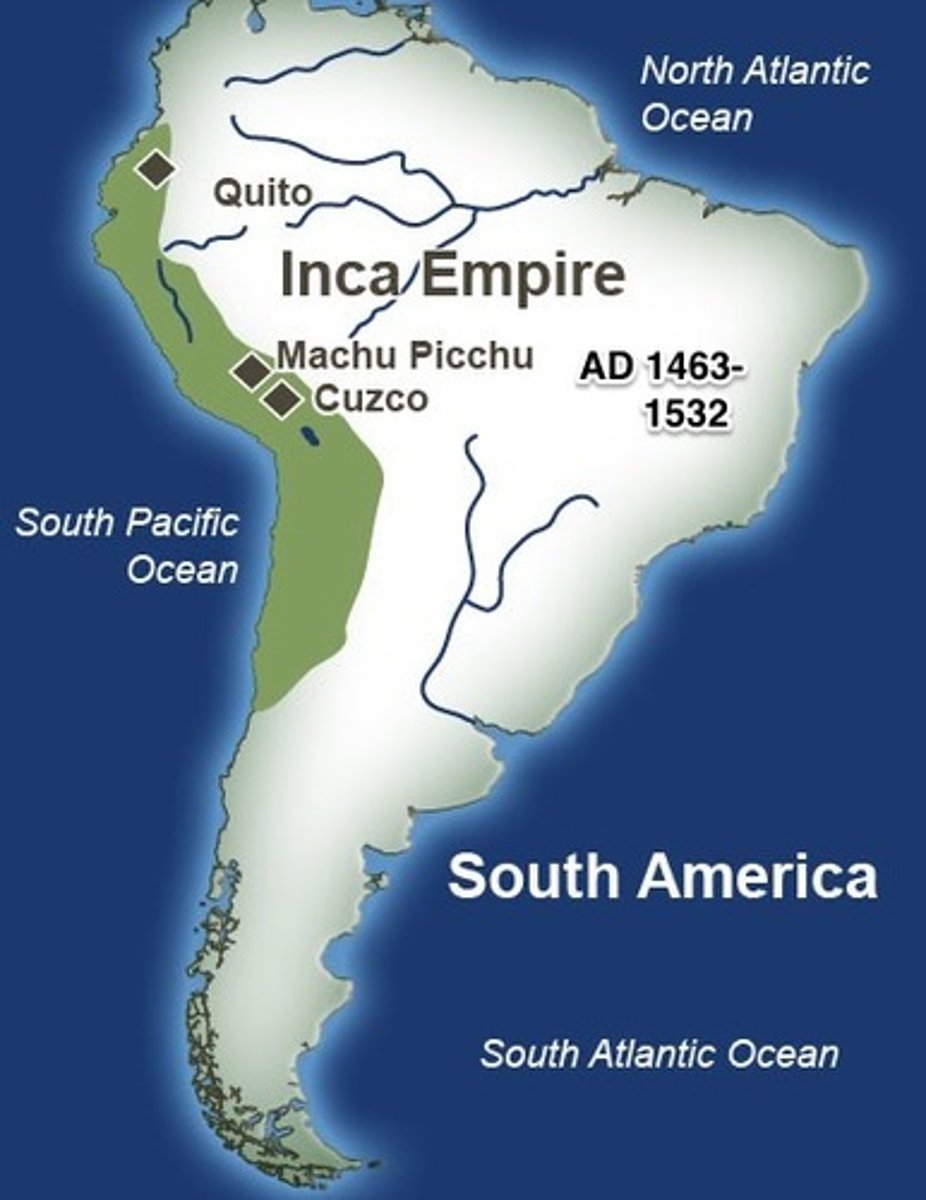
Inca Empire
Empire in Peru. conquered by Pizarro, who began an empire for the Spanish in 1535
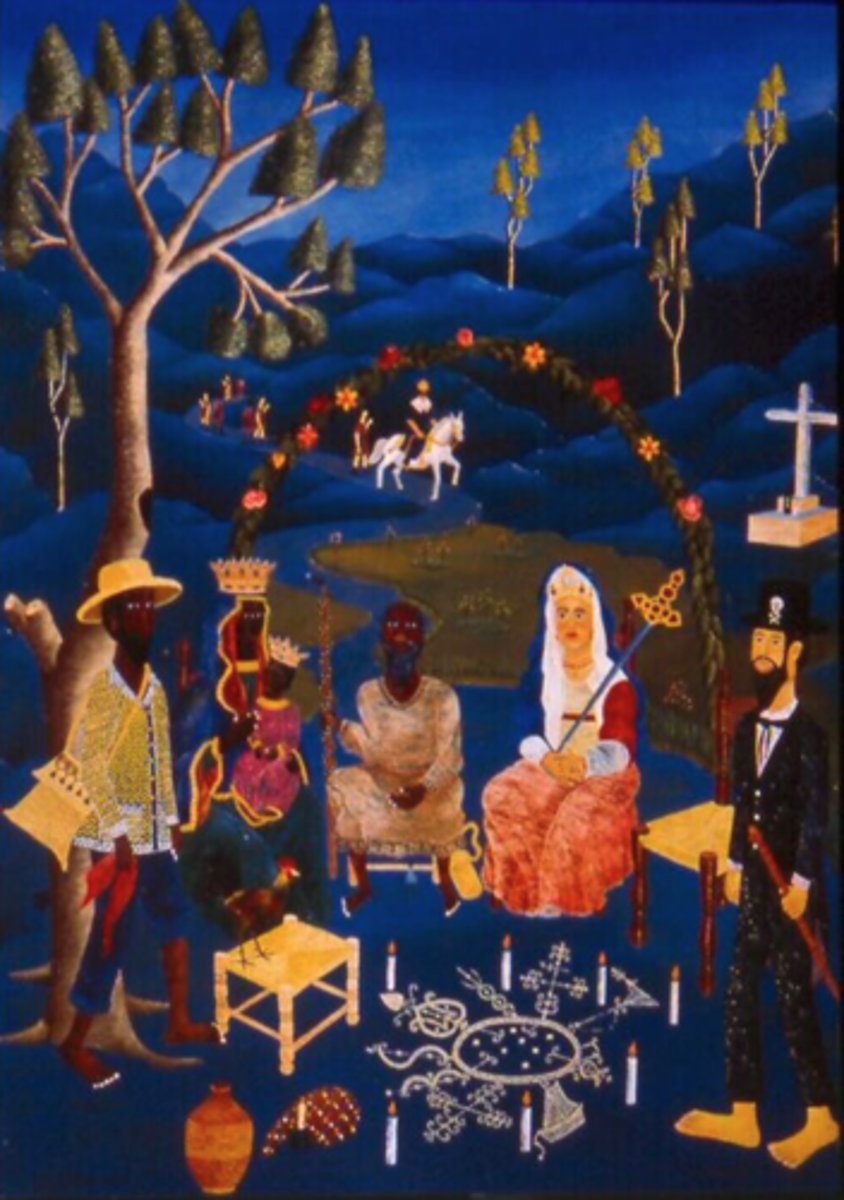
Voodoo
syncretic belief system that combines traditional African religious beliefs with elements of Christianity.
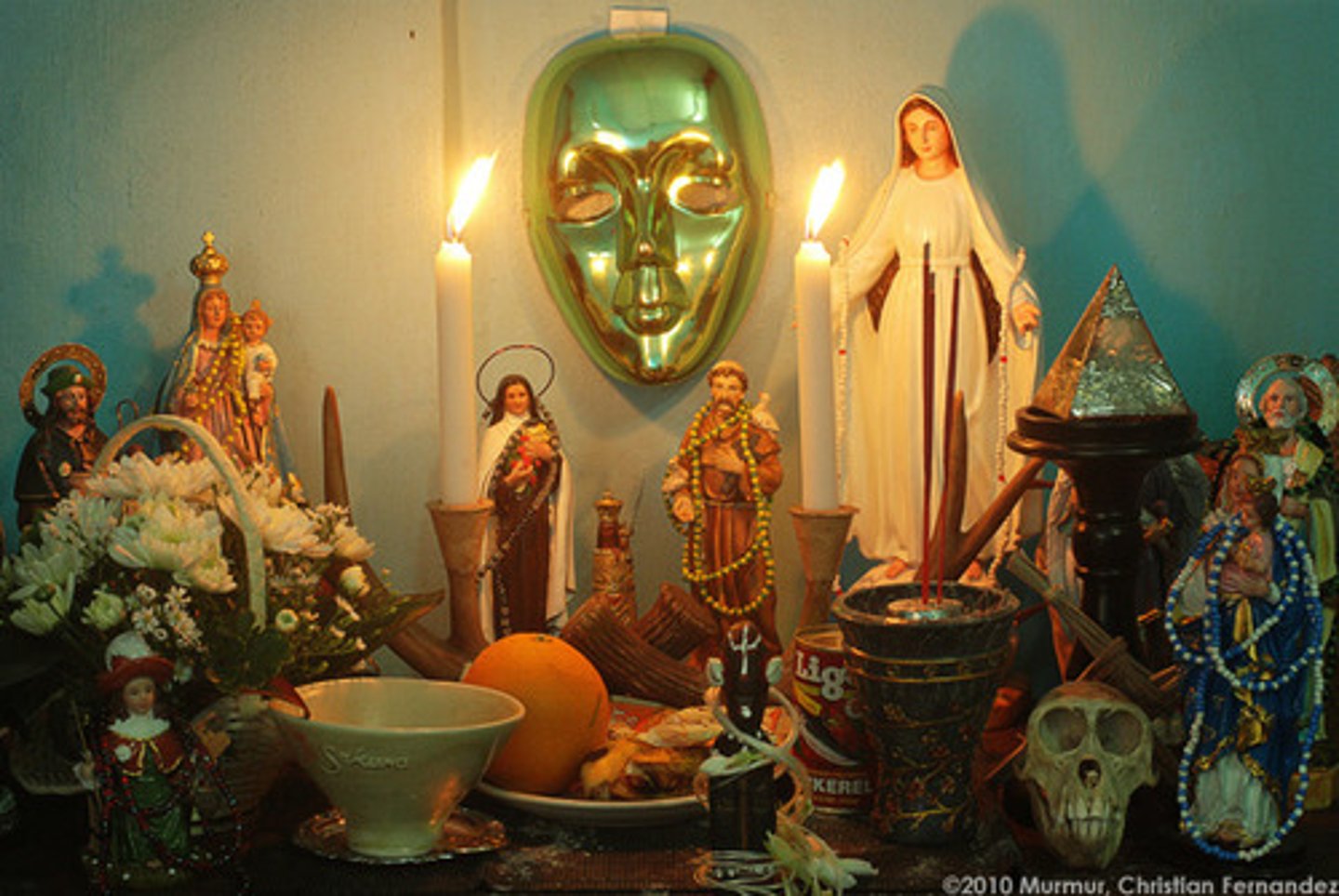
Santeria
Cuban religion that combines Catholic and West African beliefs
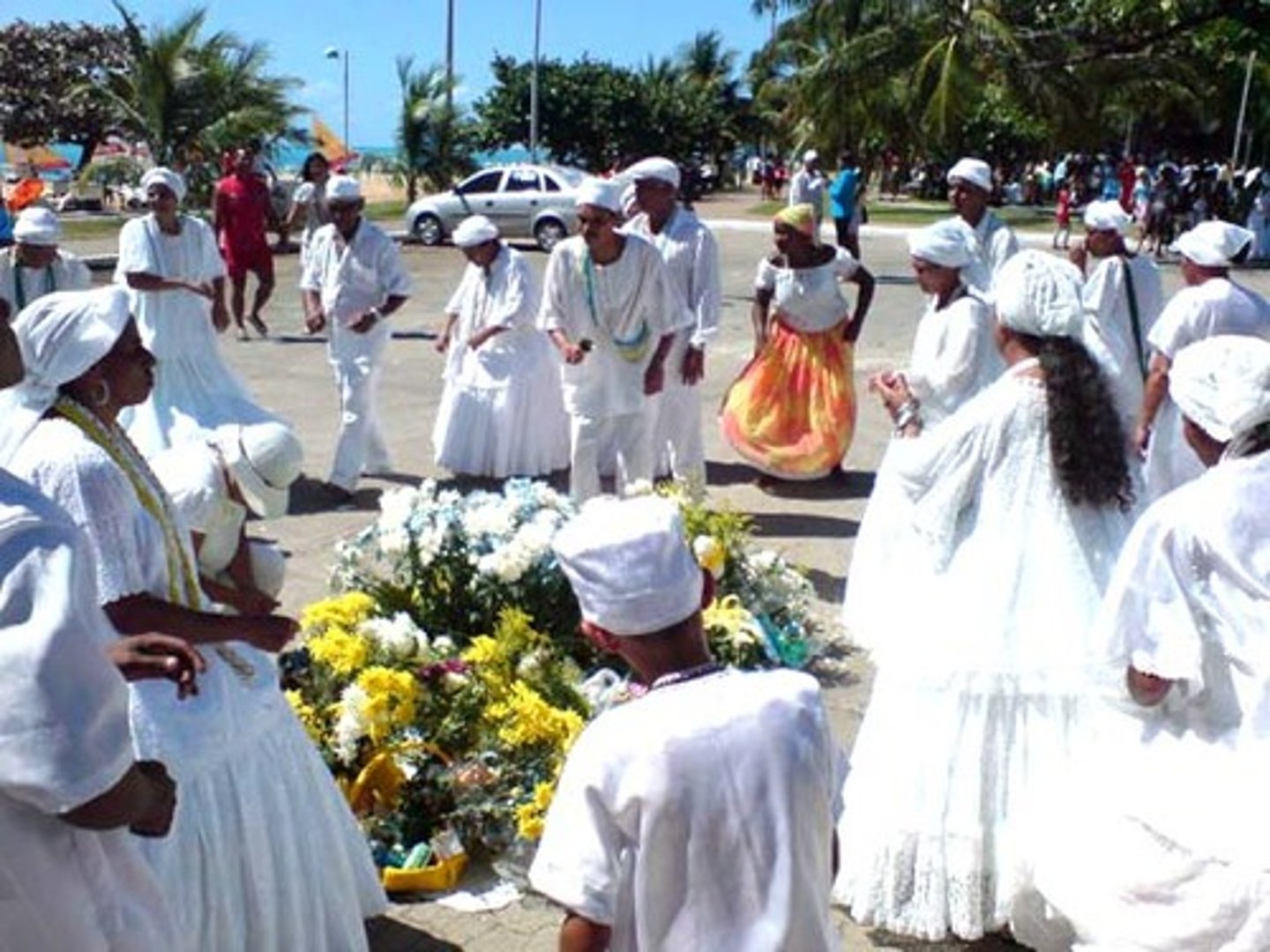
Candomble
African religious ideas and practices in Brazil, particularly among the Yoruba people.
Maroon Societies
Communities formed by escaped slaves in the Caribbean, Latin American. and the United States.
Slave Rebellions
Slaves resisted by working slowly, damaging goods, or running away
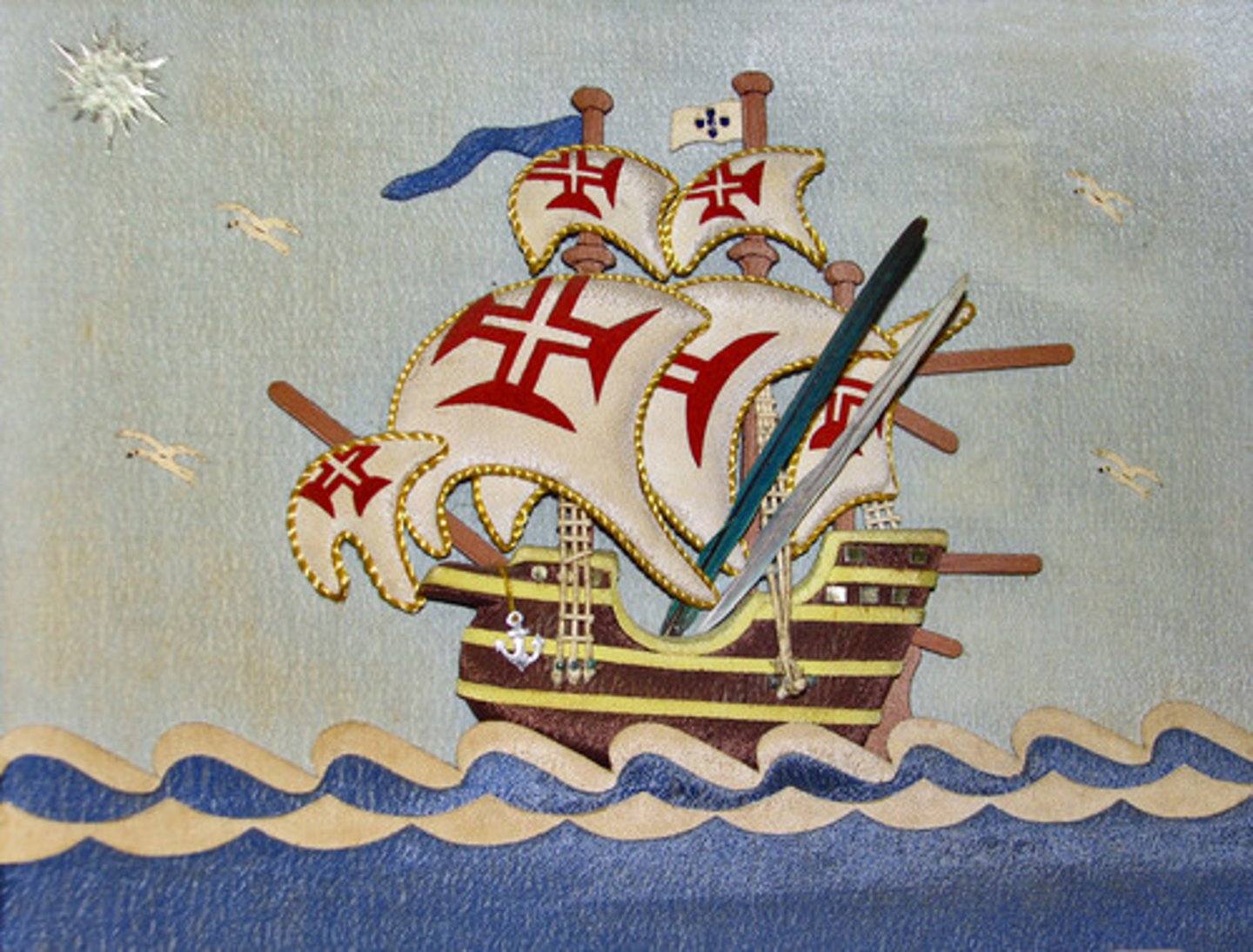
Caravel
A small, highly maneuverable three-masted ship used by the Portuguese and Spanish in the exploration of the Atlantic.
kongo
Central African state that began trading with the Portuguese around 1500;
Asante Kingdom
kingdom that emerged in the 1700s in present-day Ghana and was active in the slave trade
compass
an instrument containing a magnetized pointer that shows the direction of magnetic north and bearings from it.
Creoles
In colonial Spanish America, term used to describe someone of European descent born in the New World.
Mestizos and Mulattoes
People with mixed races between European and Latin American or African descent
Qing Dynasty
last imperial dynasty of China;
Manchus
Northeast Asian peoples who defeated the Ming Dynasty and founded the Qing Dynasty in 1644, which was the last of China's imperial dynasties
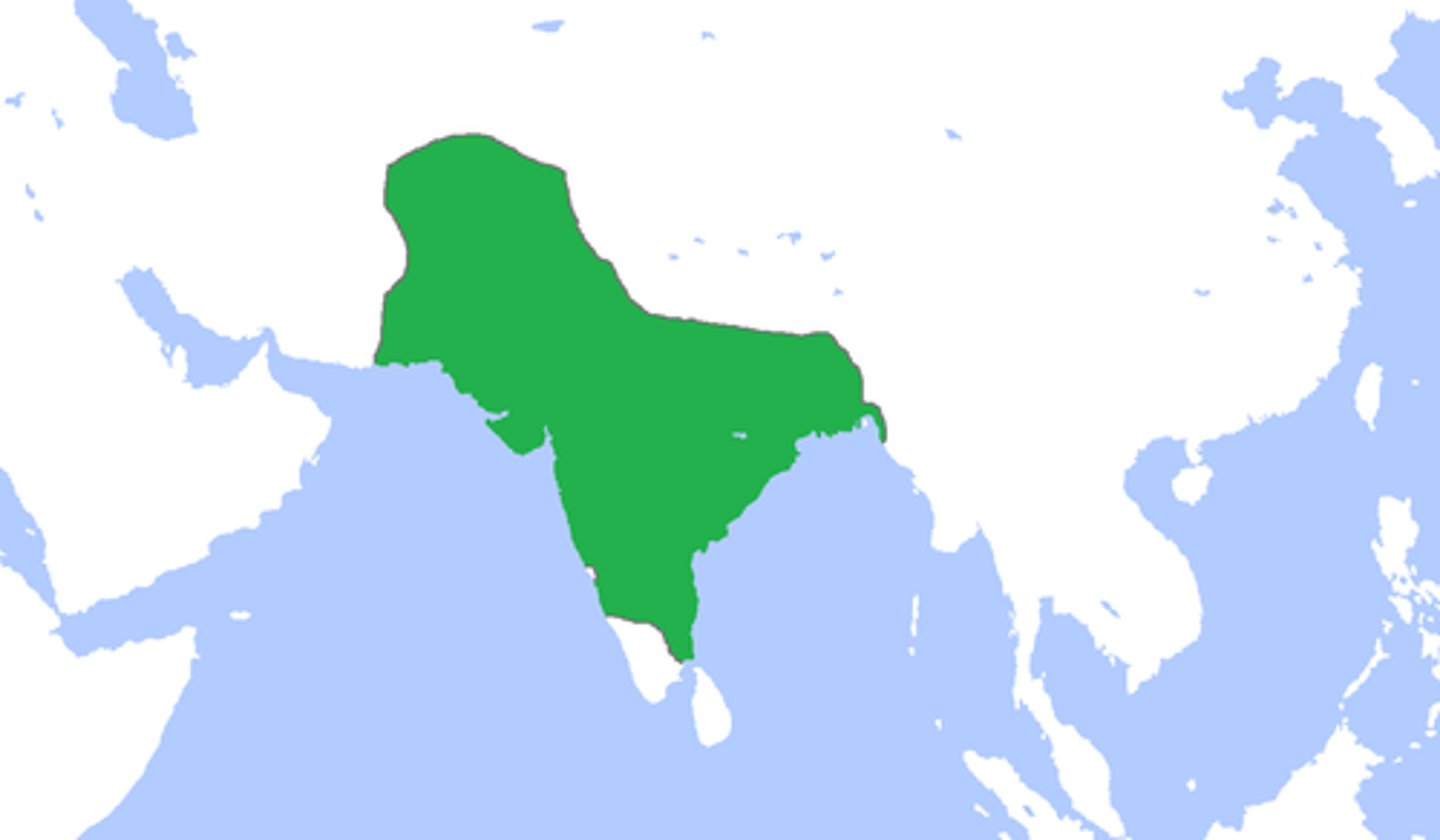
Mughal Empire
Muslim state (1526-1857) exercising dominion over most of India in the sixteenth and seventeenth centuries;
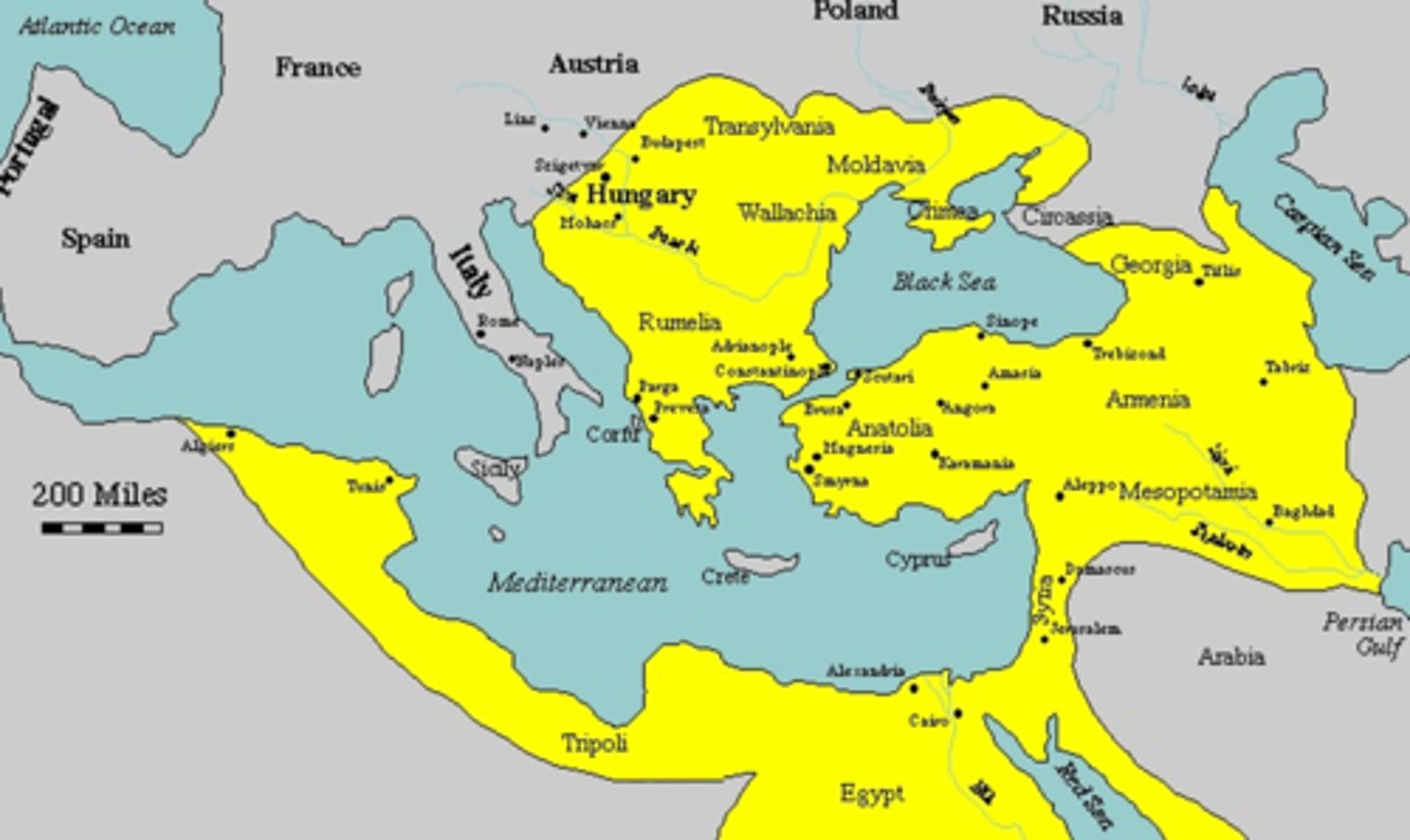
Ottoman Empire
Islamic state of Turkic speaking peoples lasting from 1453 to 1922; conquered the Byzantine Empire in 1453;
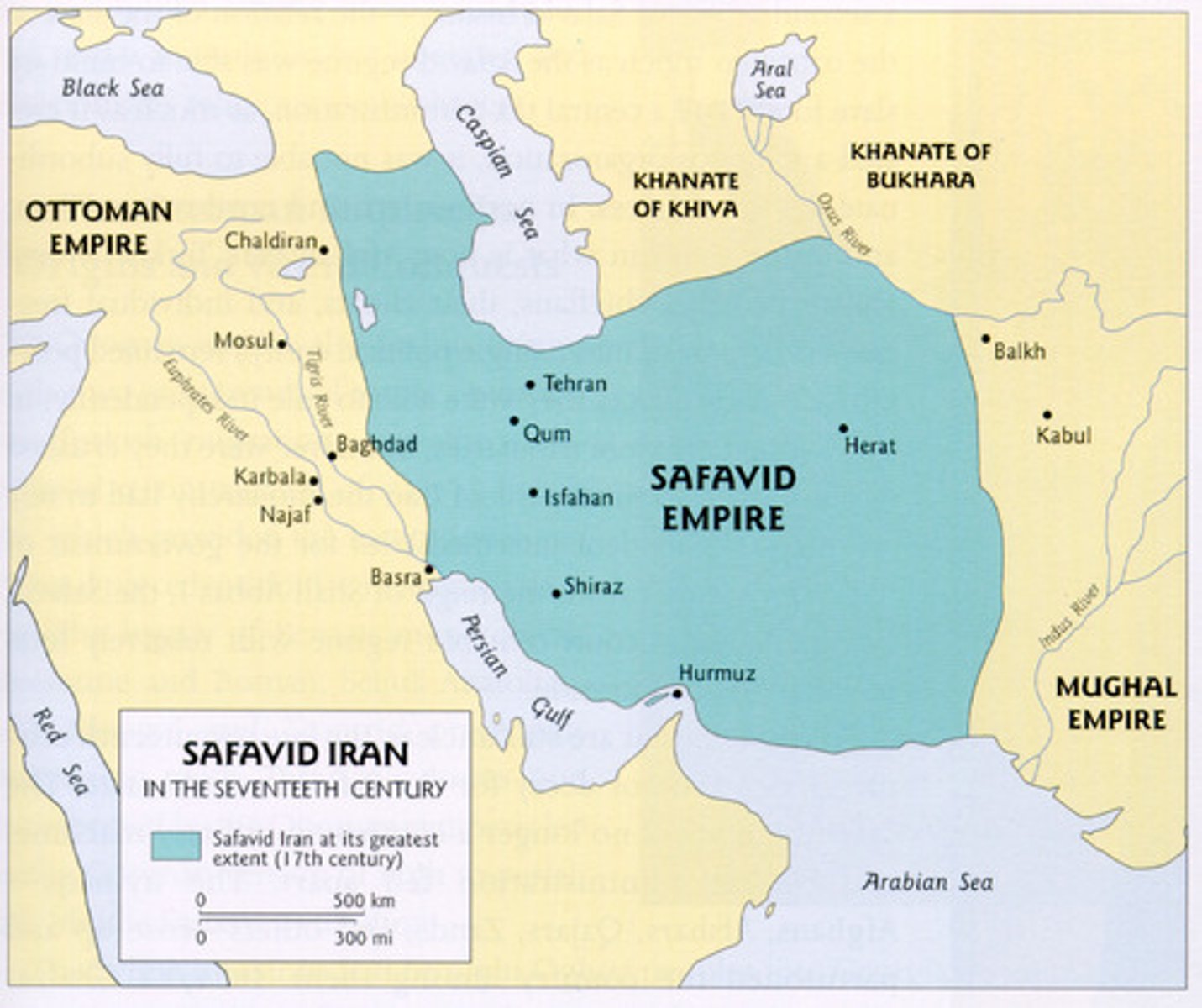
Safavids
A Muslim dynasty that ruled in Persia (Iran and parts of Iraq) from the 16th-18th centuries
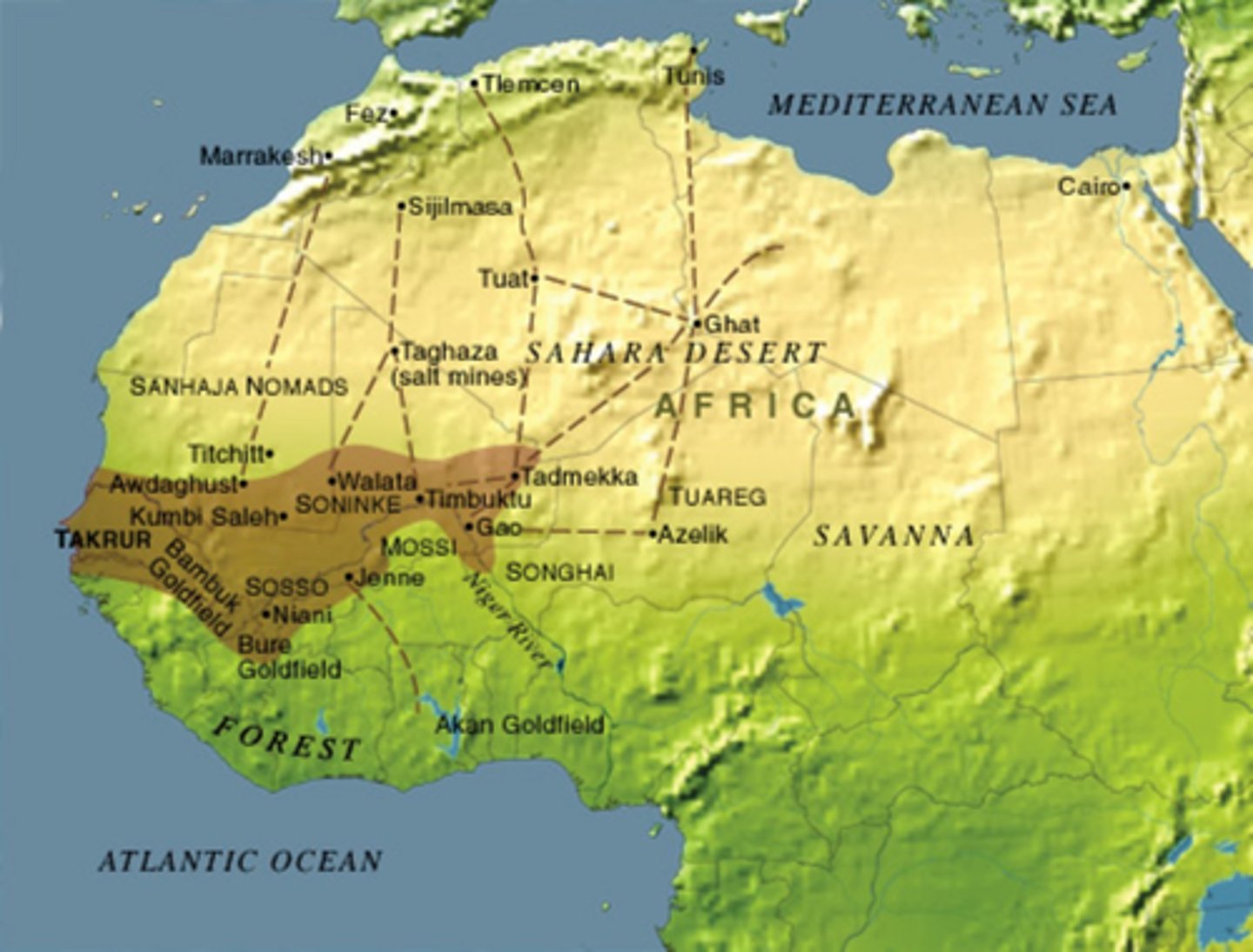
Songhai
an Islamic West African empire that conquered Mali and controlled trade from the into the 16th century;
Devshirme
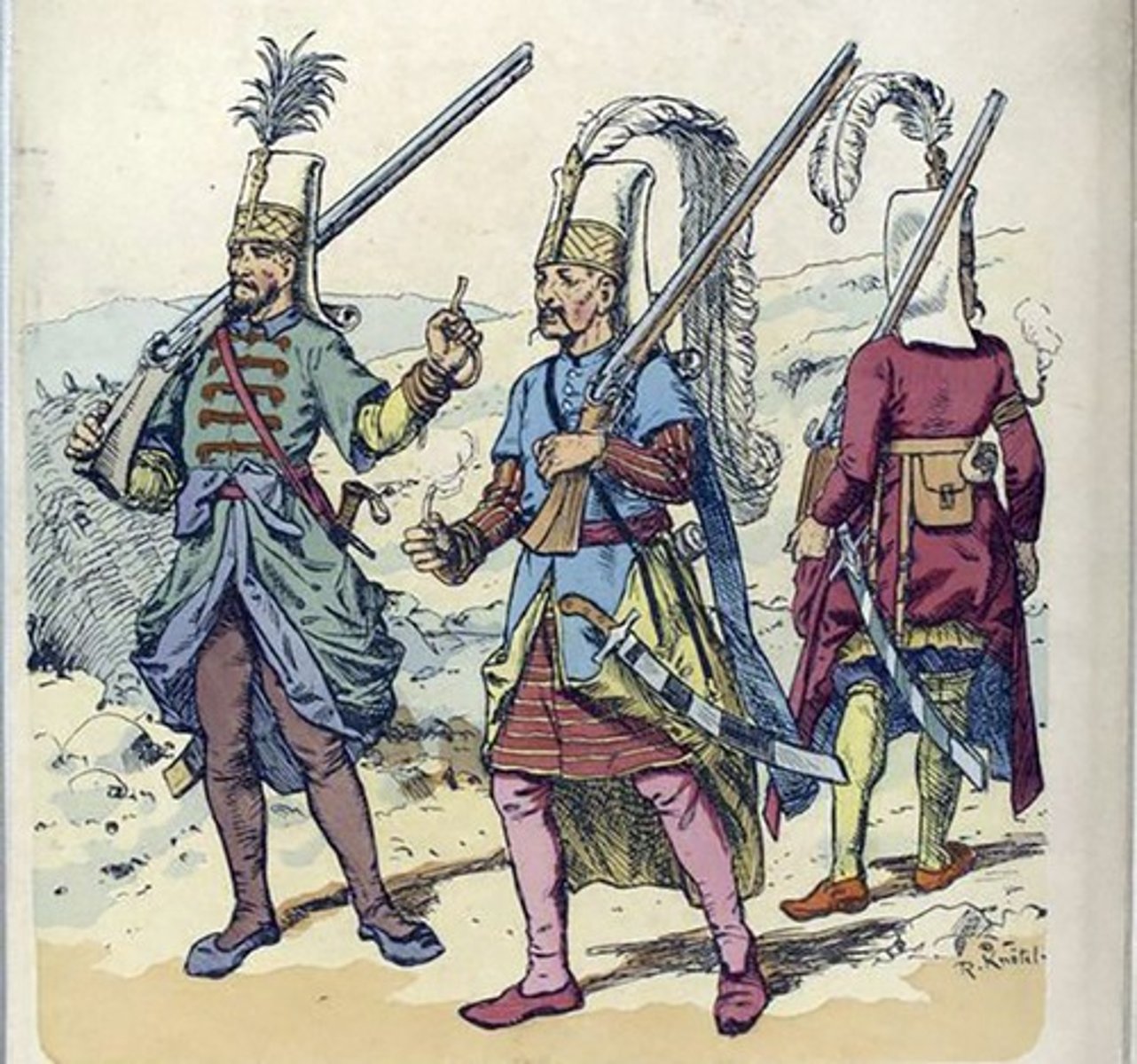
the system by which boys from Christian communities were taken by the Ottoman state to serve as Janissaries (elite military units)
Janissaries
elite Ottoman guard recruited from the Christian population through the devshirme system,
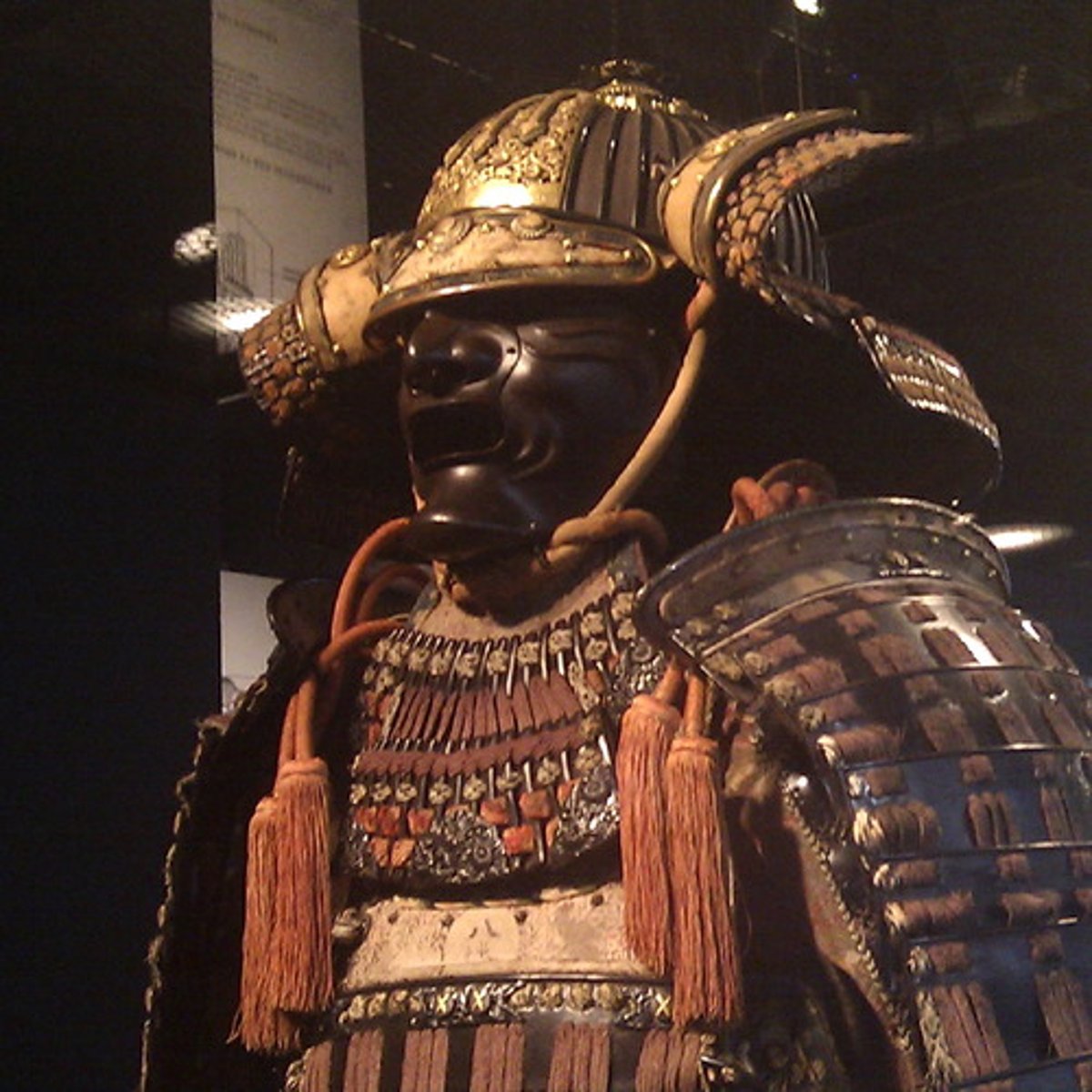
samurai
class of salaried warriors in feudal Japan
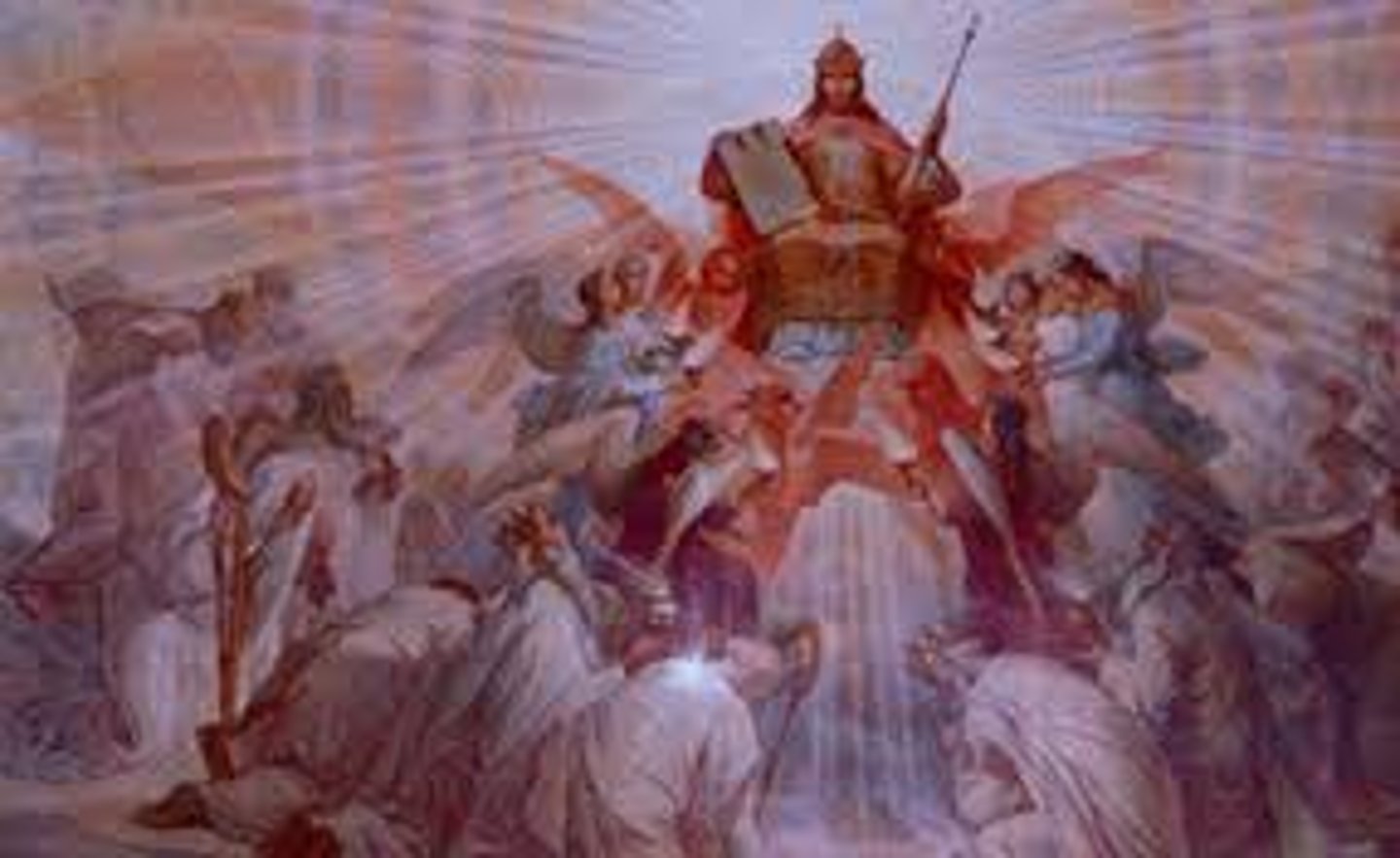
Divine Right
the idea that monarchs are God's representatives on earth and are therefore answerable only to God.
absolute monarchy
system of government in which the head of state is a hereditary position and the king or queen has almost complete power
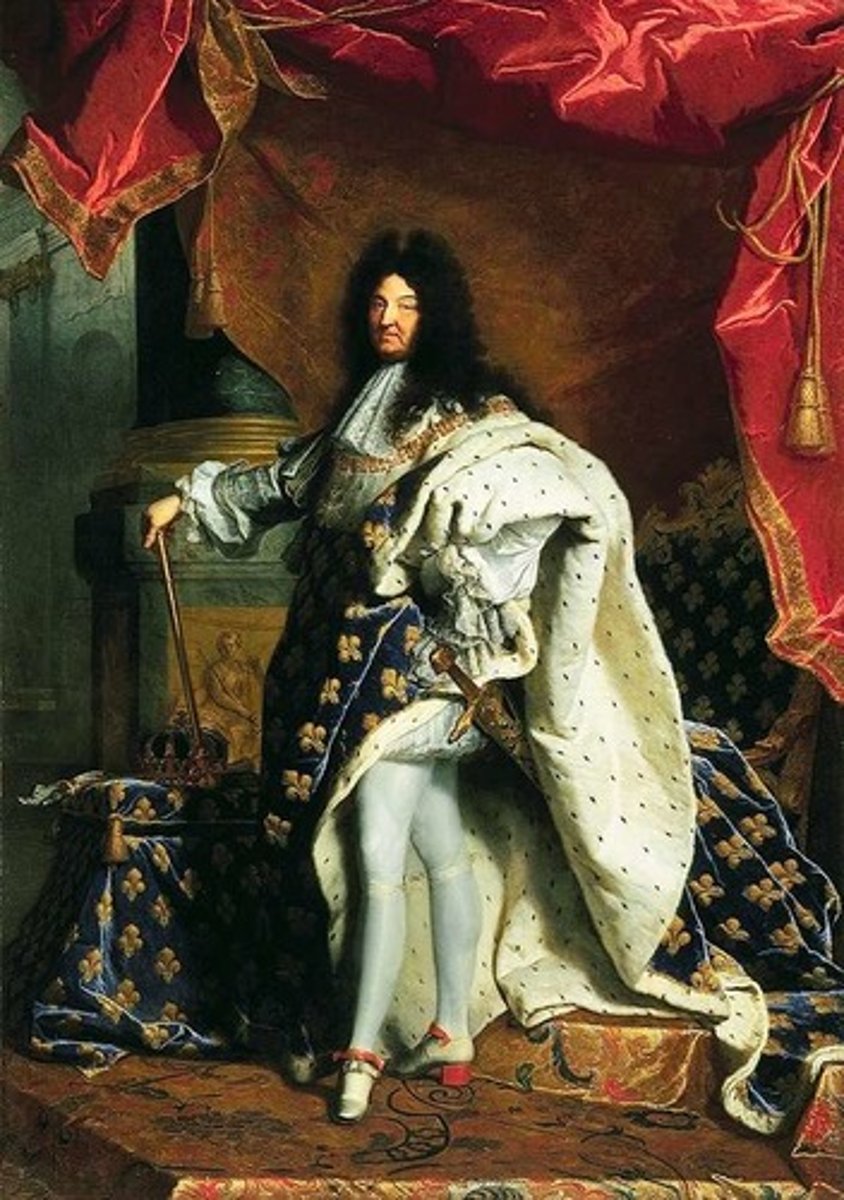
Versailles
Palace constructed by Louis XIV outside of Paris
zamindars
Mughal empire's taxation system where decentralized lords collected tribute/taxes for the emperor
Taj Mahal
mausoleum (tomb) in India built by the Mughal emperor Shah Jahan;
tax farming
tax-collection system utilized by the Ottoman Empire to generate money for territorial expansion;
Protestant Reformation
religious movement begun by German monk Martin Luther
95 Theses
arguments written by Martin Luther against the Catholic church;
Martin Luther
a German monk who became one of the most famous critics of the Roman Catholic Church.
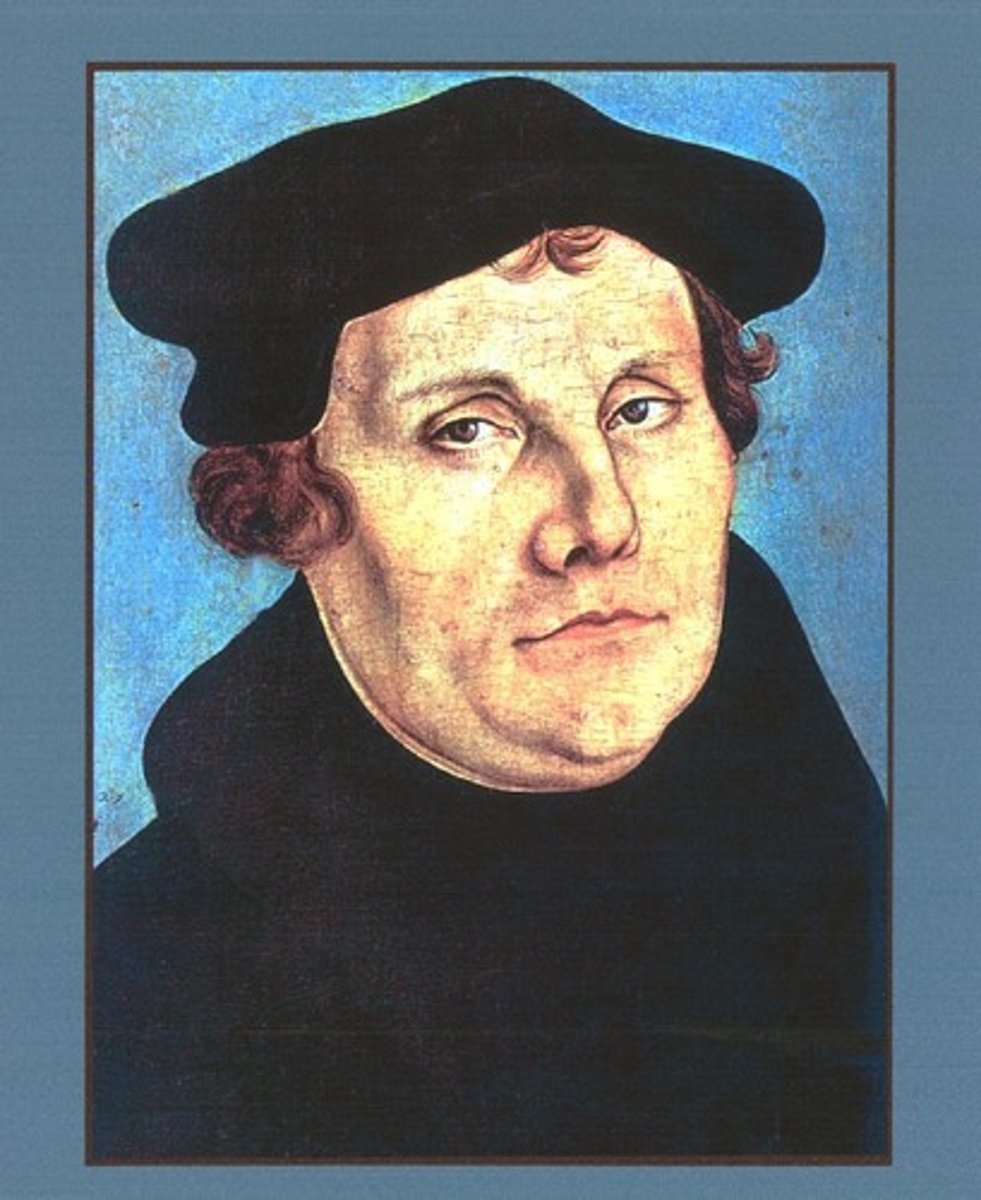
Counter/Catholic Reformation
the reaction of the Roman Catholic Church to the Protestant Reformation;
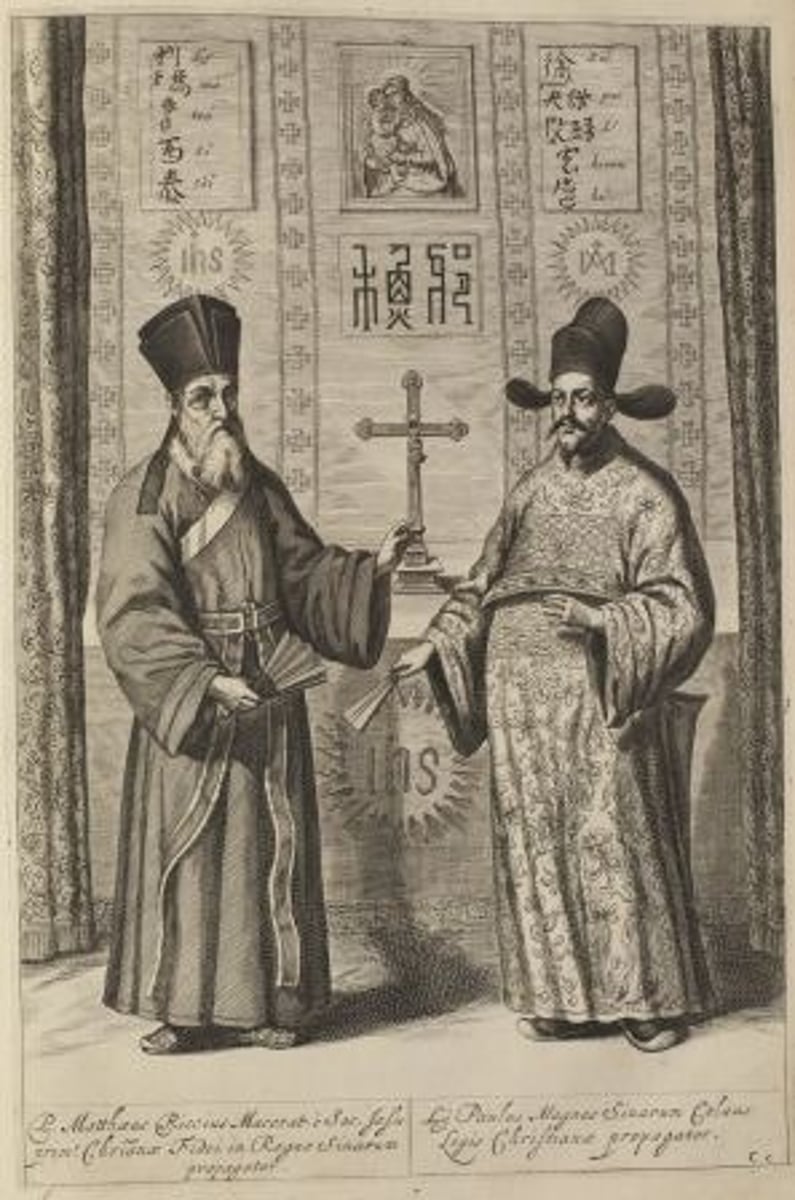
Jesuits
a teaching and missionary order created to resist the spread of Protestantism (a result of the Counter Reformation); sent to China, Japan, and the New World to gain Catholic converts
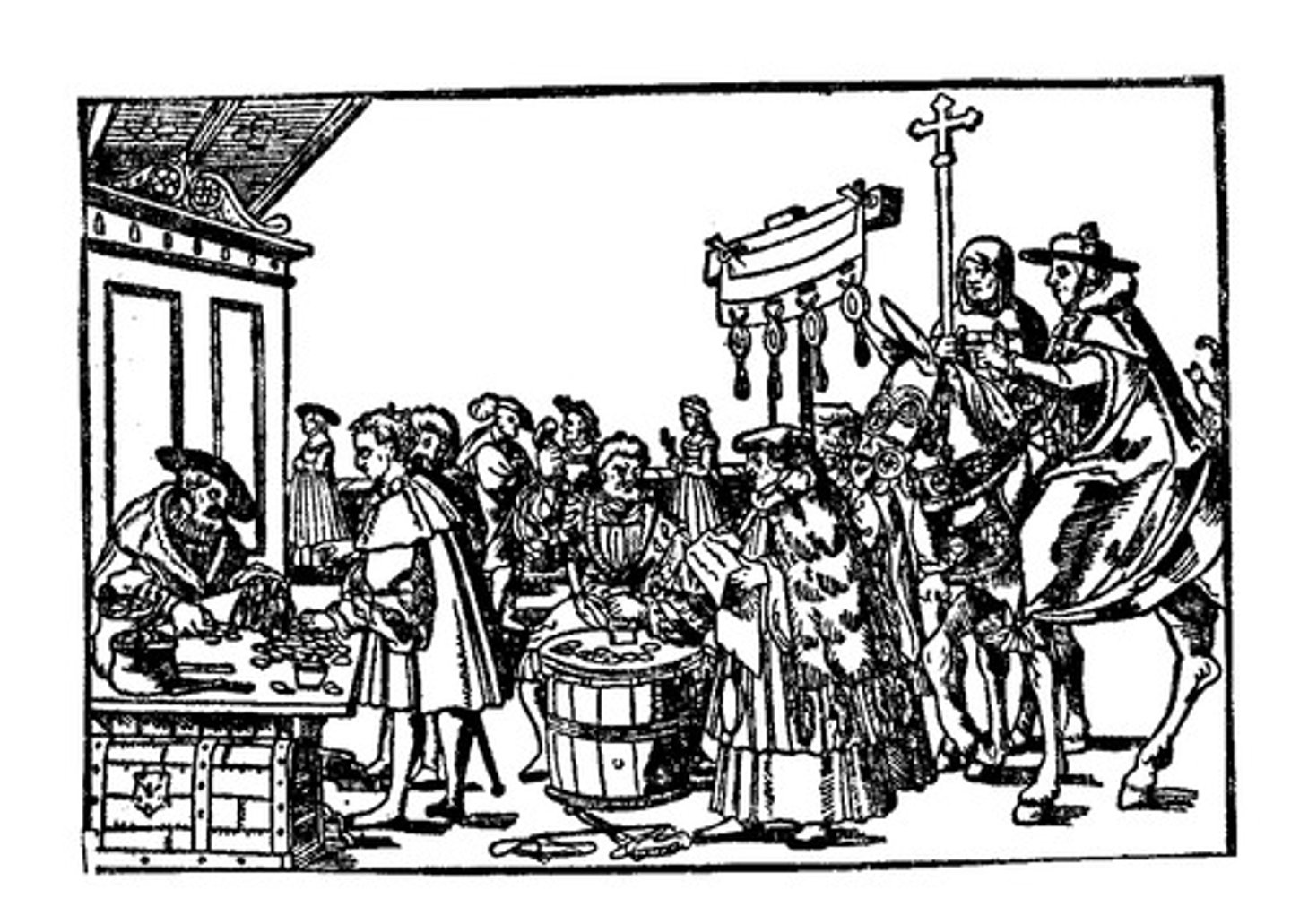
indulgence
a pardon given by the Roman Catholic Church in return for repentance for sins and payment; "a way to reduce the amount of punishment one has to undergo for sins"
Simony
the buying and selling of church offices, seen as a corrupt practice, this practice was outlawed by the Catholic Church during the Counter Reformation
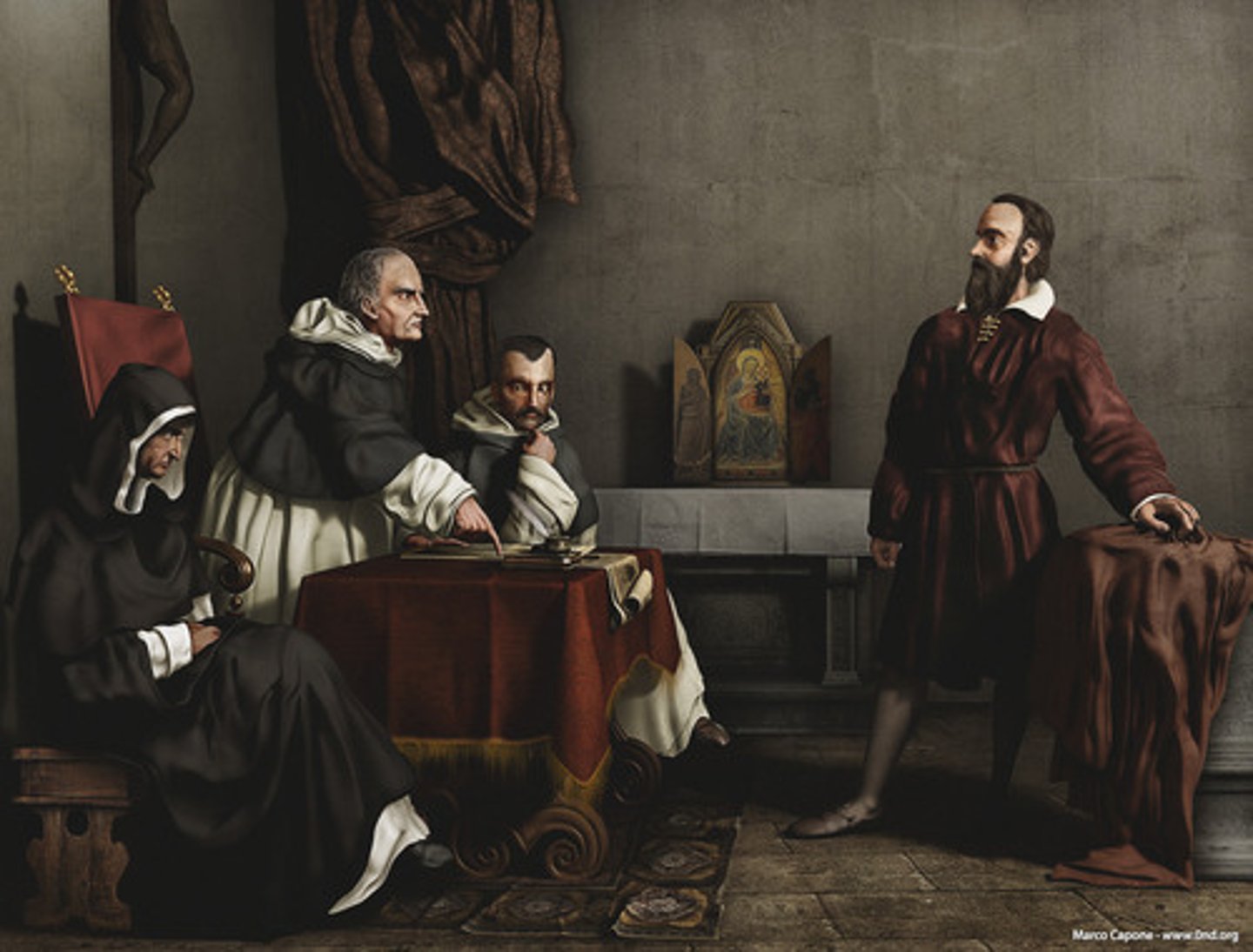
Inquisition
Roman Catholic tribunal for investigating and prosecuting charges of heresy
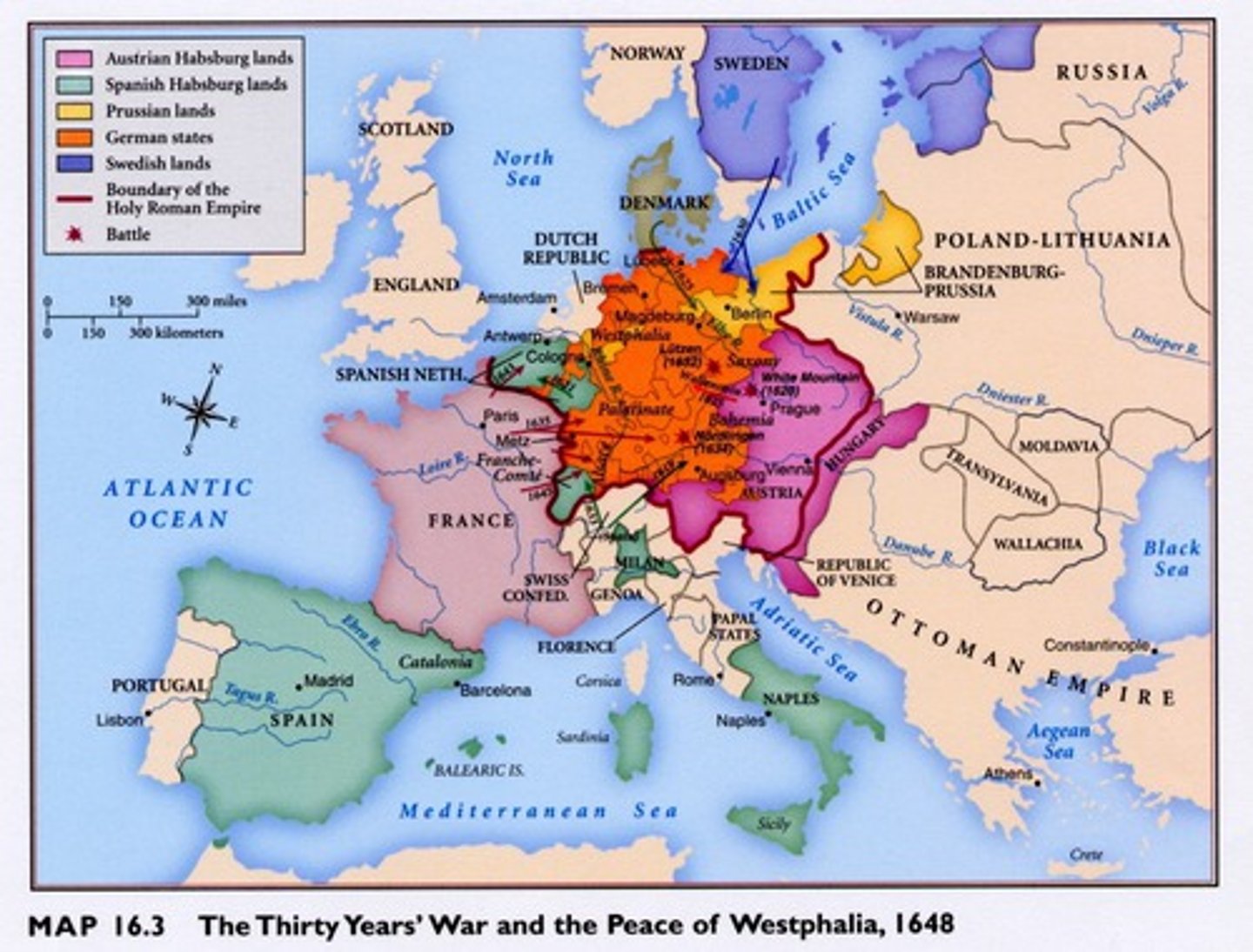
Thirty Years War
a war that resulted from the Protestant Reformation
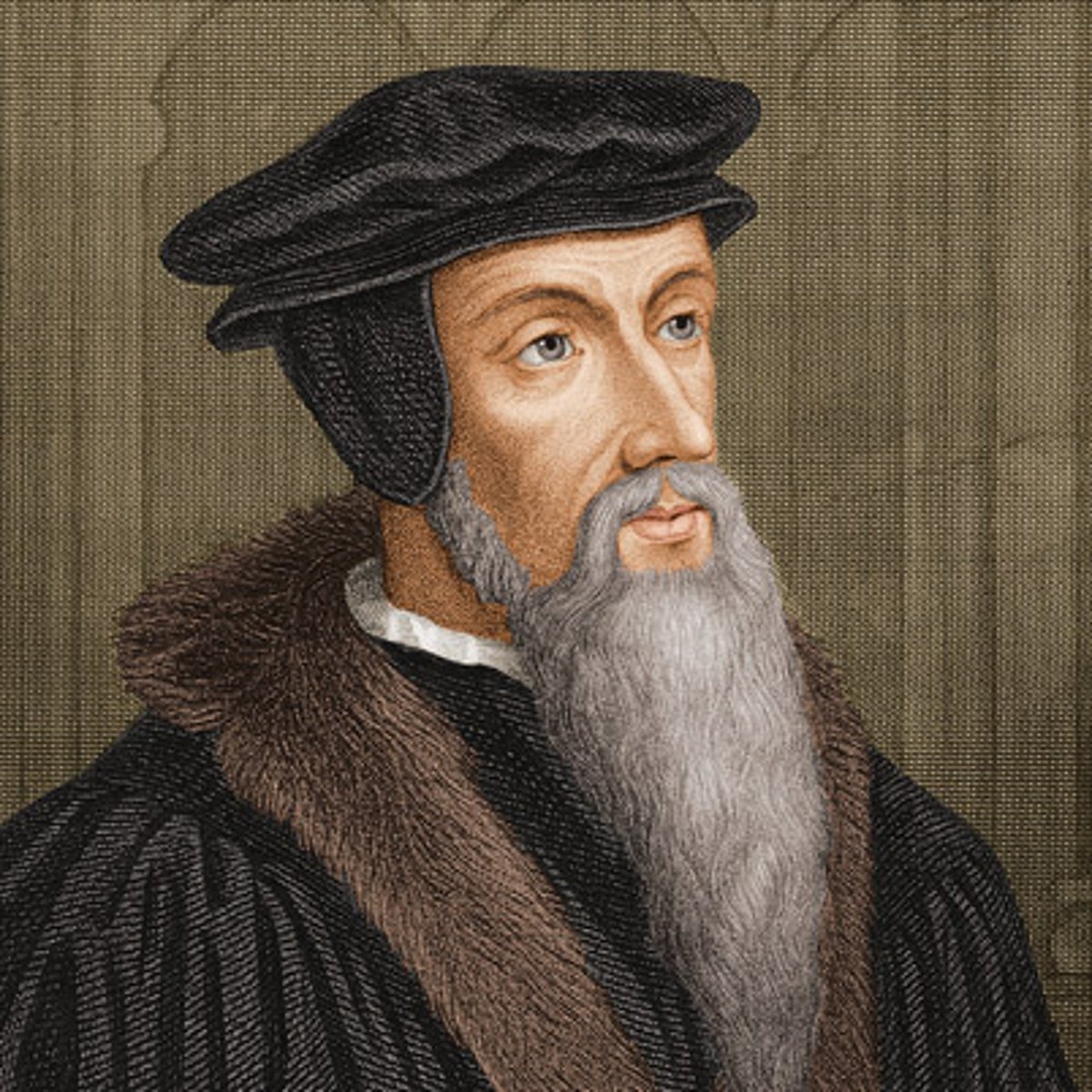
John Calvin
French theologian who developed the Christian theology known as Calvinism; attracted Protestant followers with his teachings; believed in predestination; 1509-1564
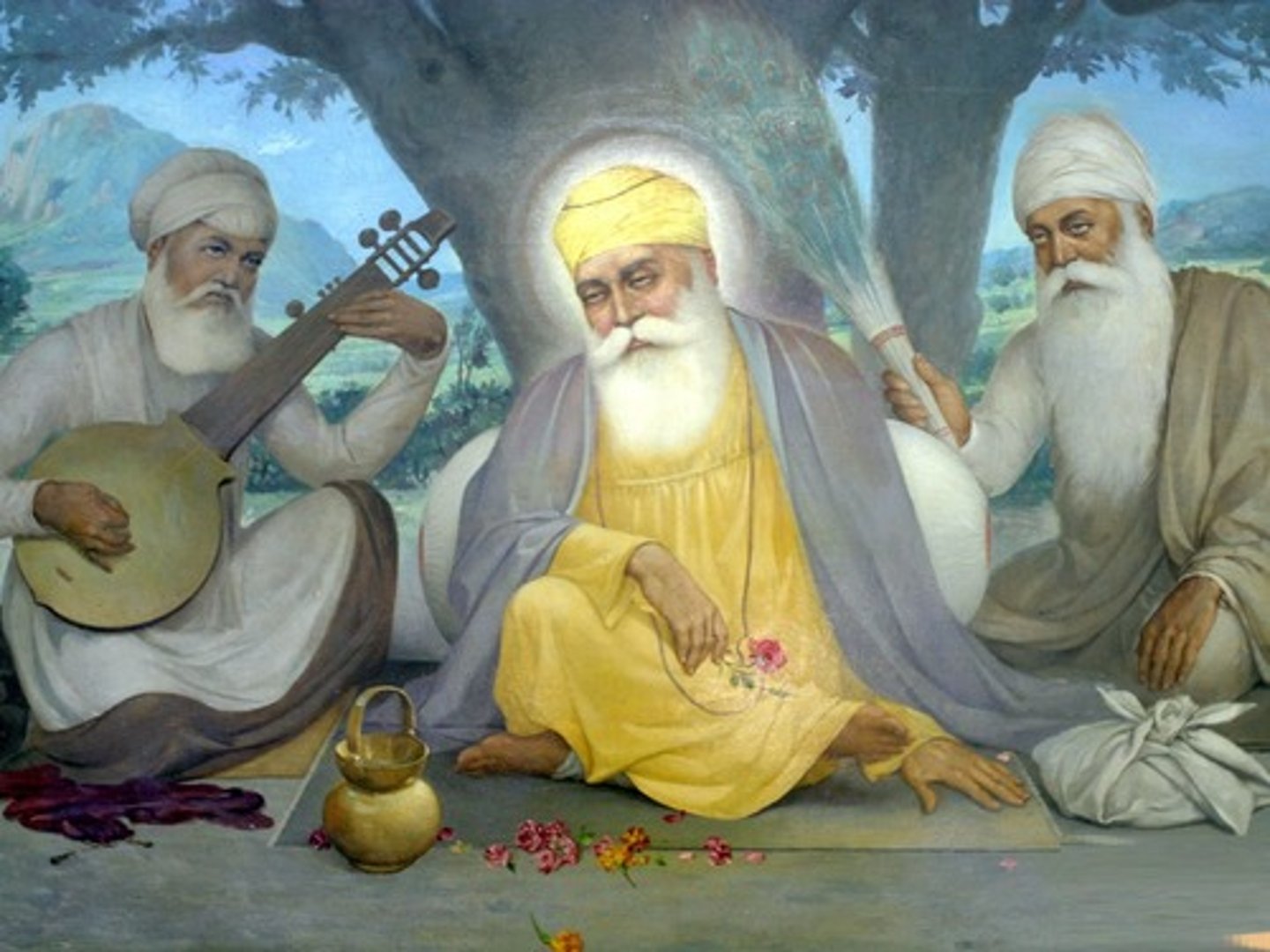
Sikhism
combining elements of Hinduism and Islam;
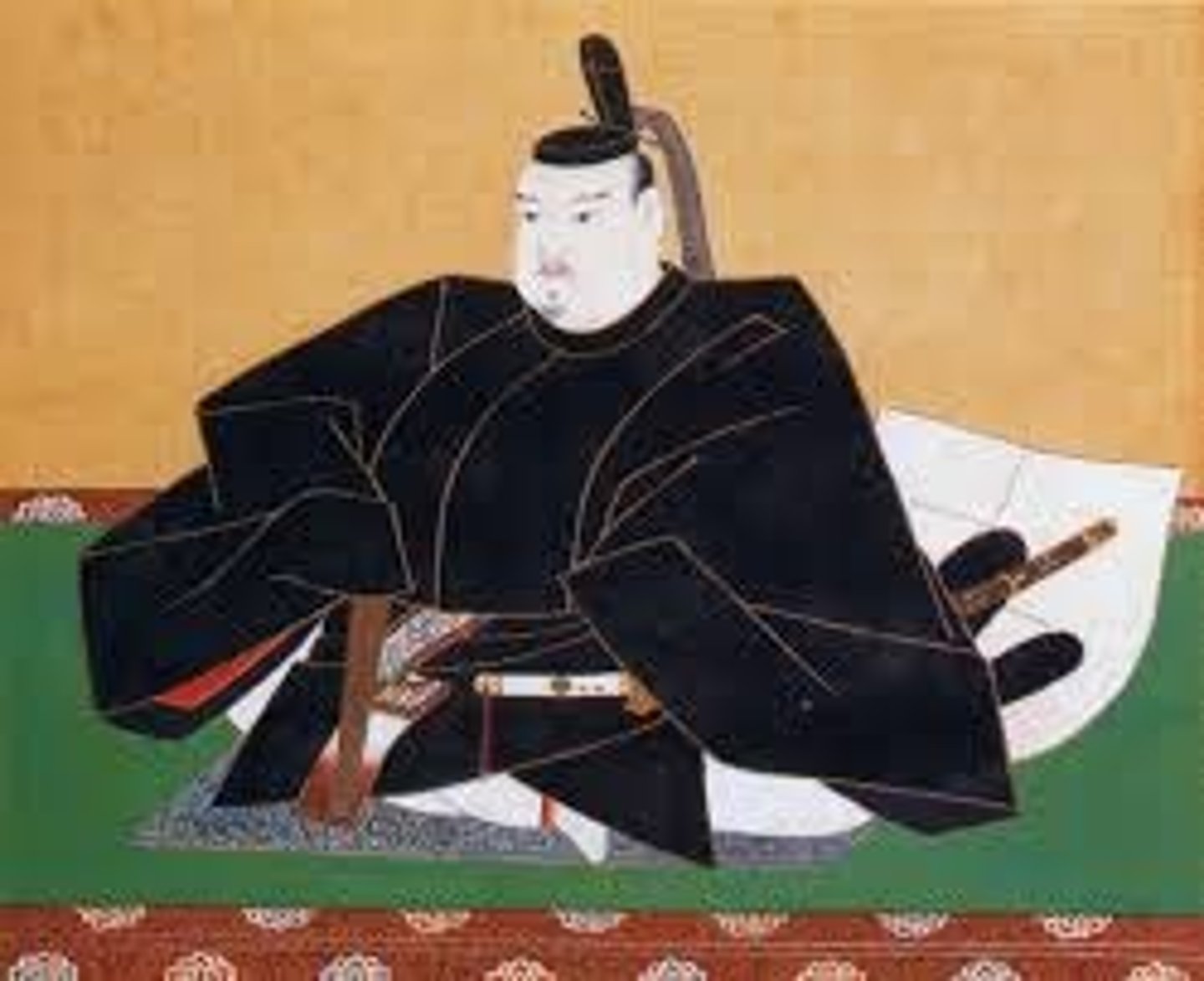
Shogunate
Japanese system of government under a shogun (military warlord),
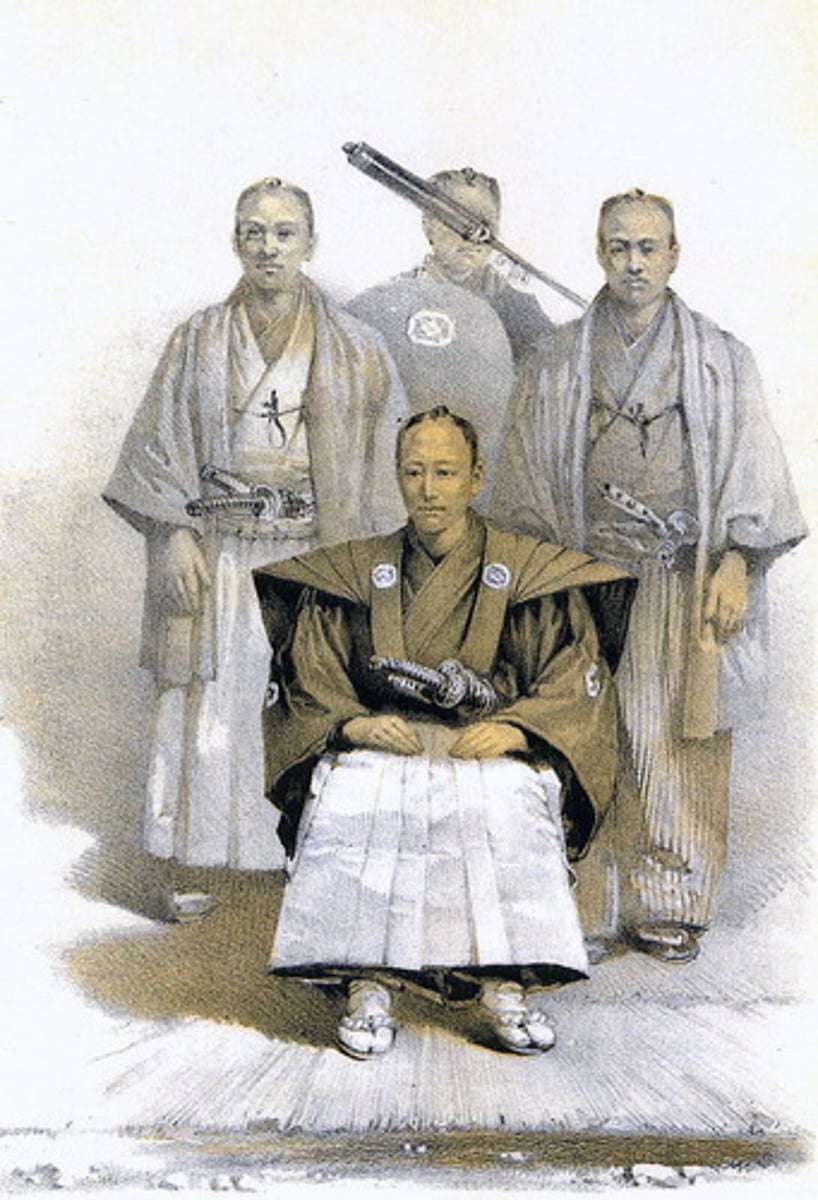
Daimyo
Japanese feudal lord who commanded a private army of samurai; owed allegiance to the shogun
Millet System
A system used by the Ottomans whereby subjects were divided into religious communities, with each millet (nation) enjoying autonomous self-government under its religious leaders; a unique way to manage a diverse empire
Sakoku
the isolationist foreign policy of the Japanese Tokugawa shogunate (1603 to 1868) when trade between Japan and other countries was severely limited, and almost all foreign nationals were banned from entering Japan, common Japanese people were kept from leaving; Allowed trade with only the Dutch, Chinese, and Koreans
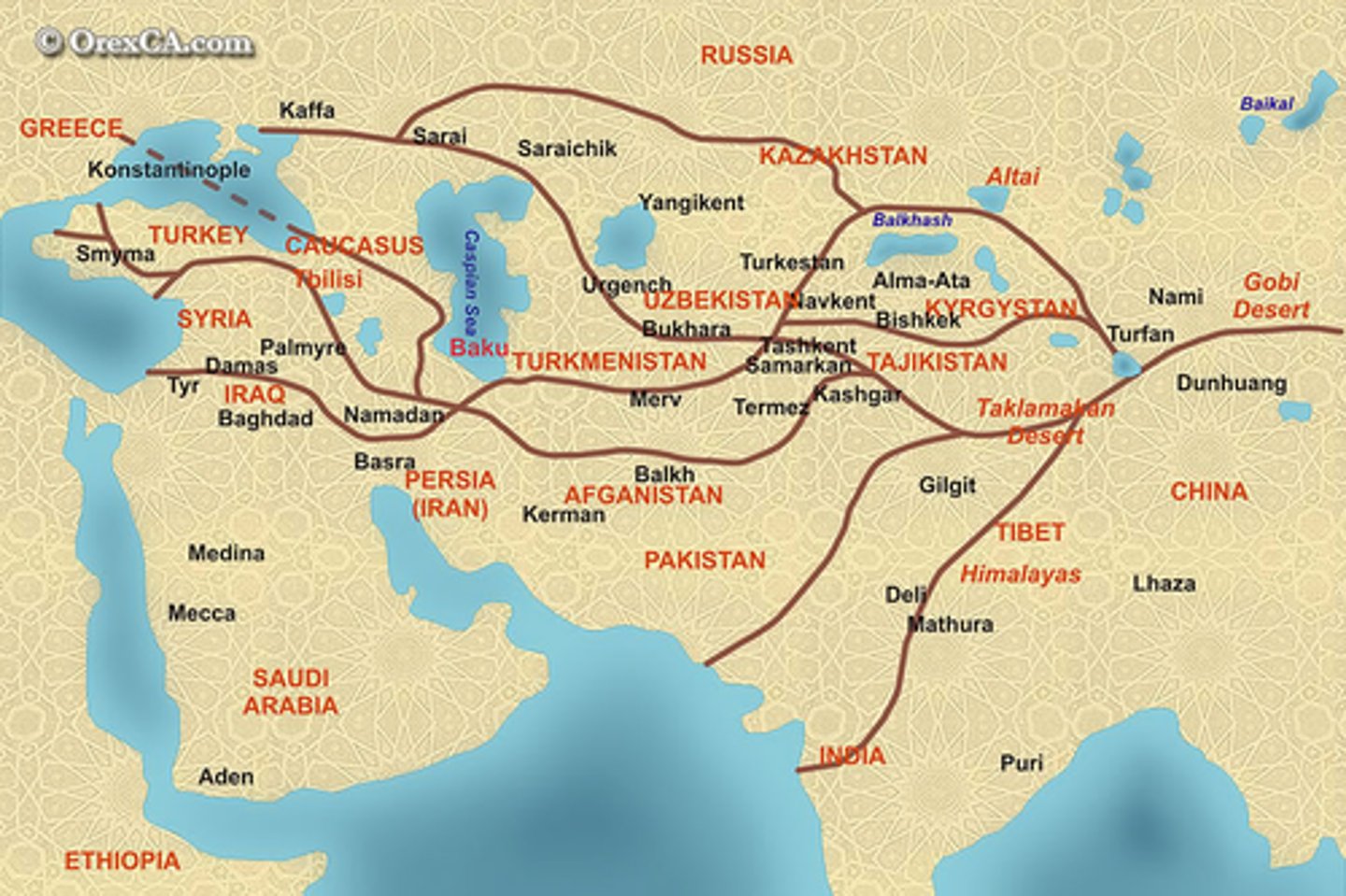
Silk Roads
system of ancient caravan routes across Central Asia,
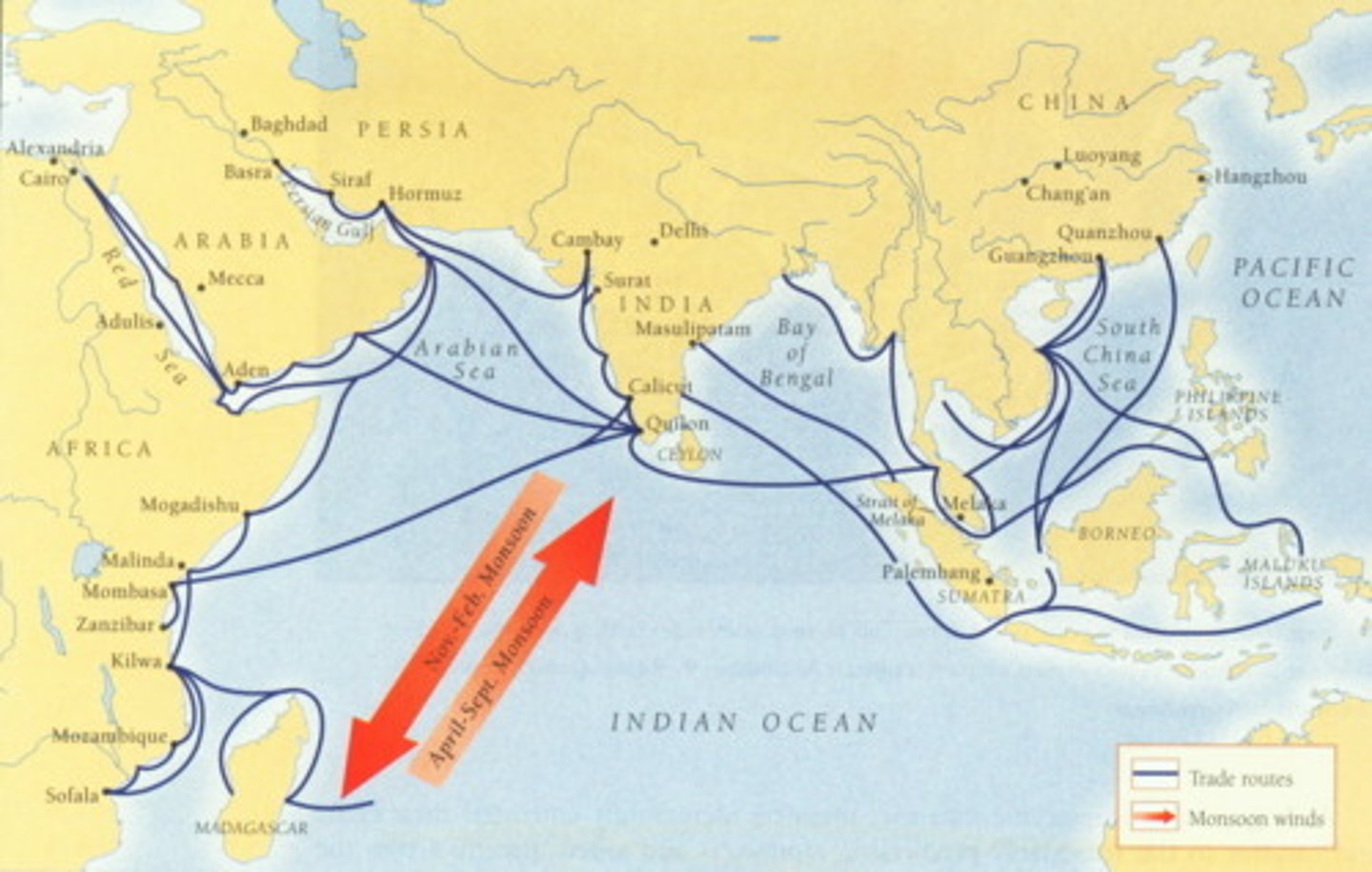
Indian Ocean trade
connected Africa, South Asia (India), Southeast Asia and China.;
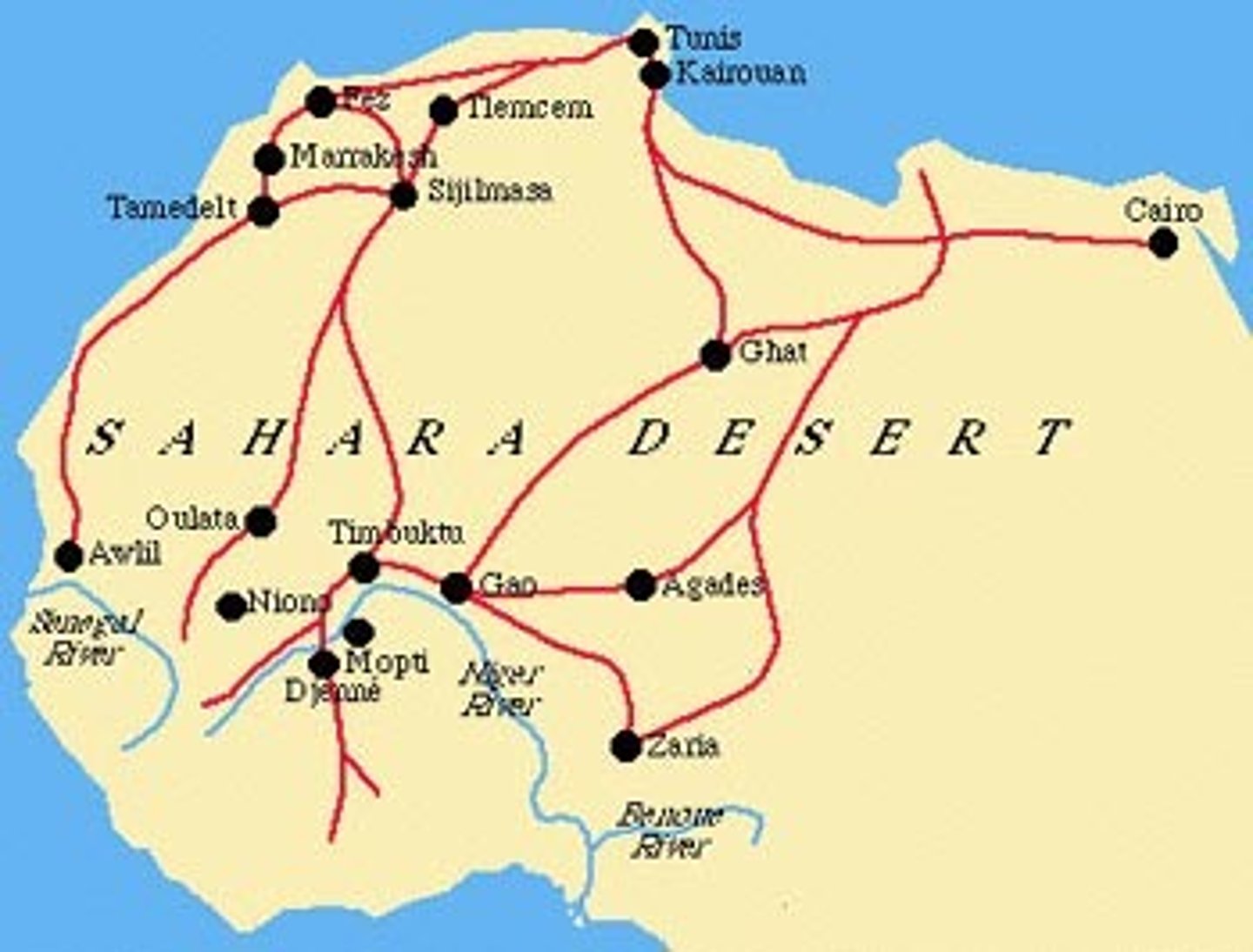
trans-Saharan trade
trade routes across the Sahara Desert;
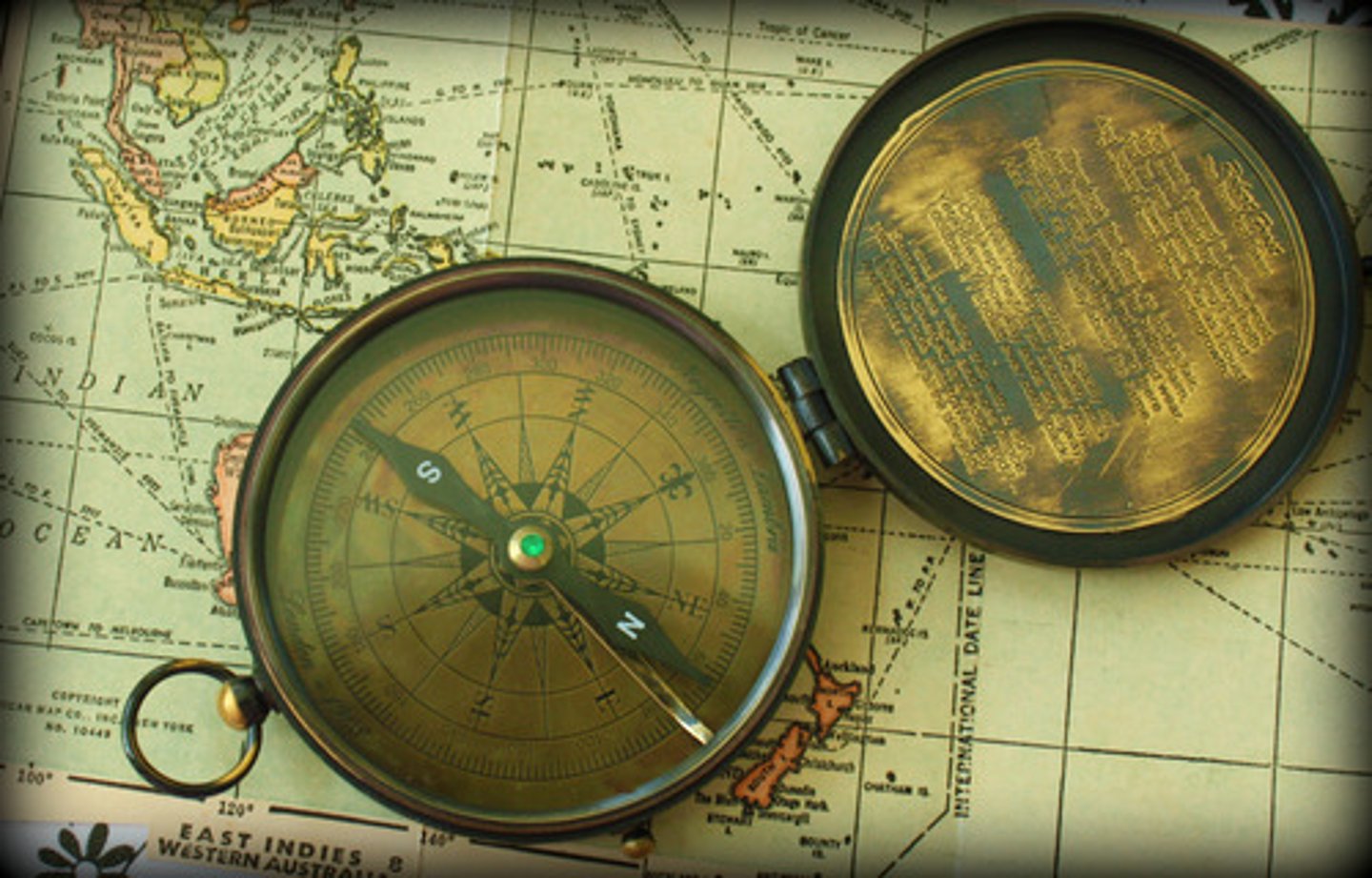
magnetic compass
Chinese invention that aided navigation by showing which direction was north; use spread through trade networks like Silk Roads and Indian Ocean trade
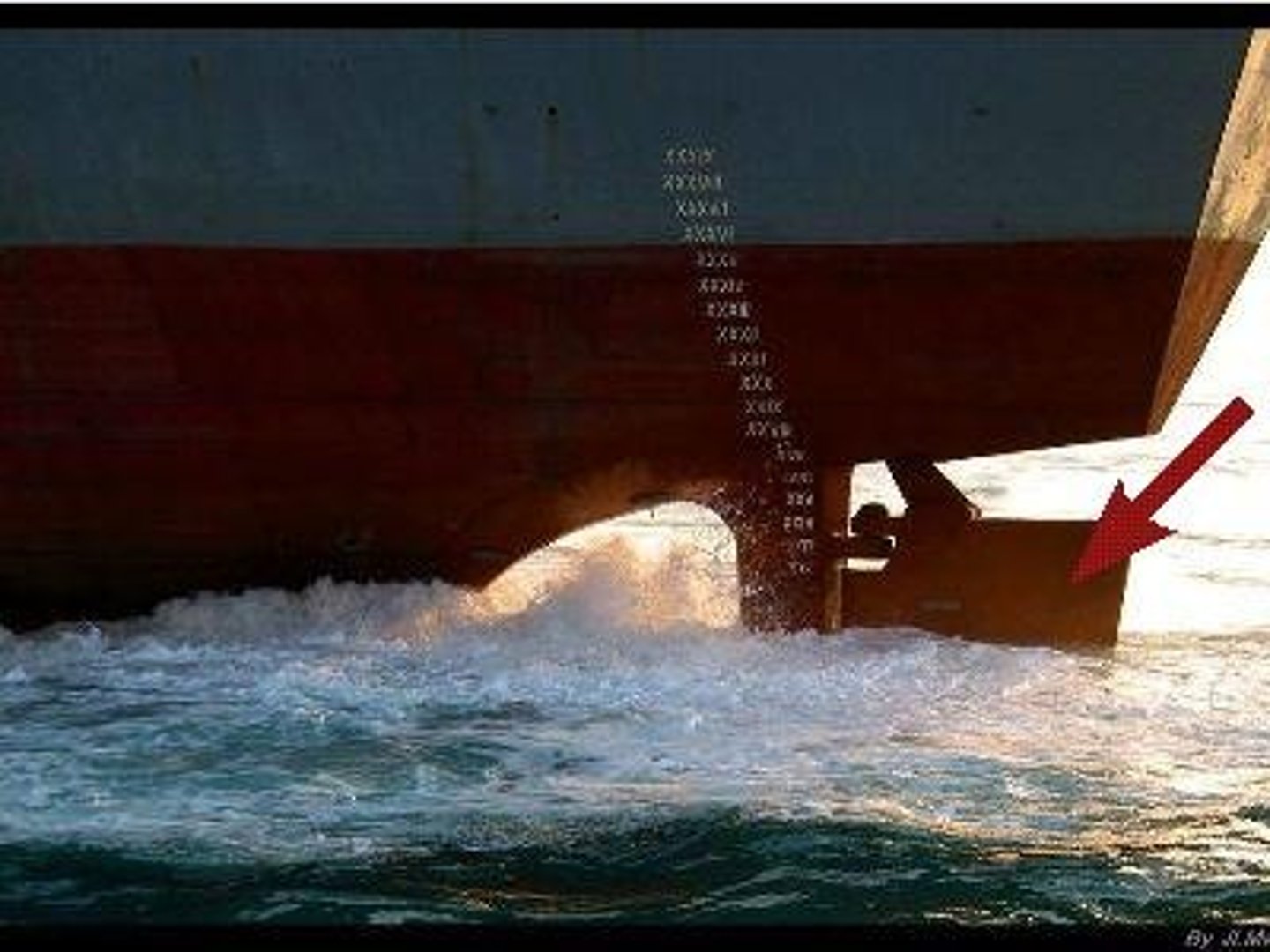
rudder
steering device, usually a vertical blade attached to a post at, or near, the stern of the boat; improved sea trade
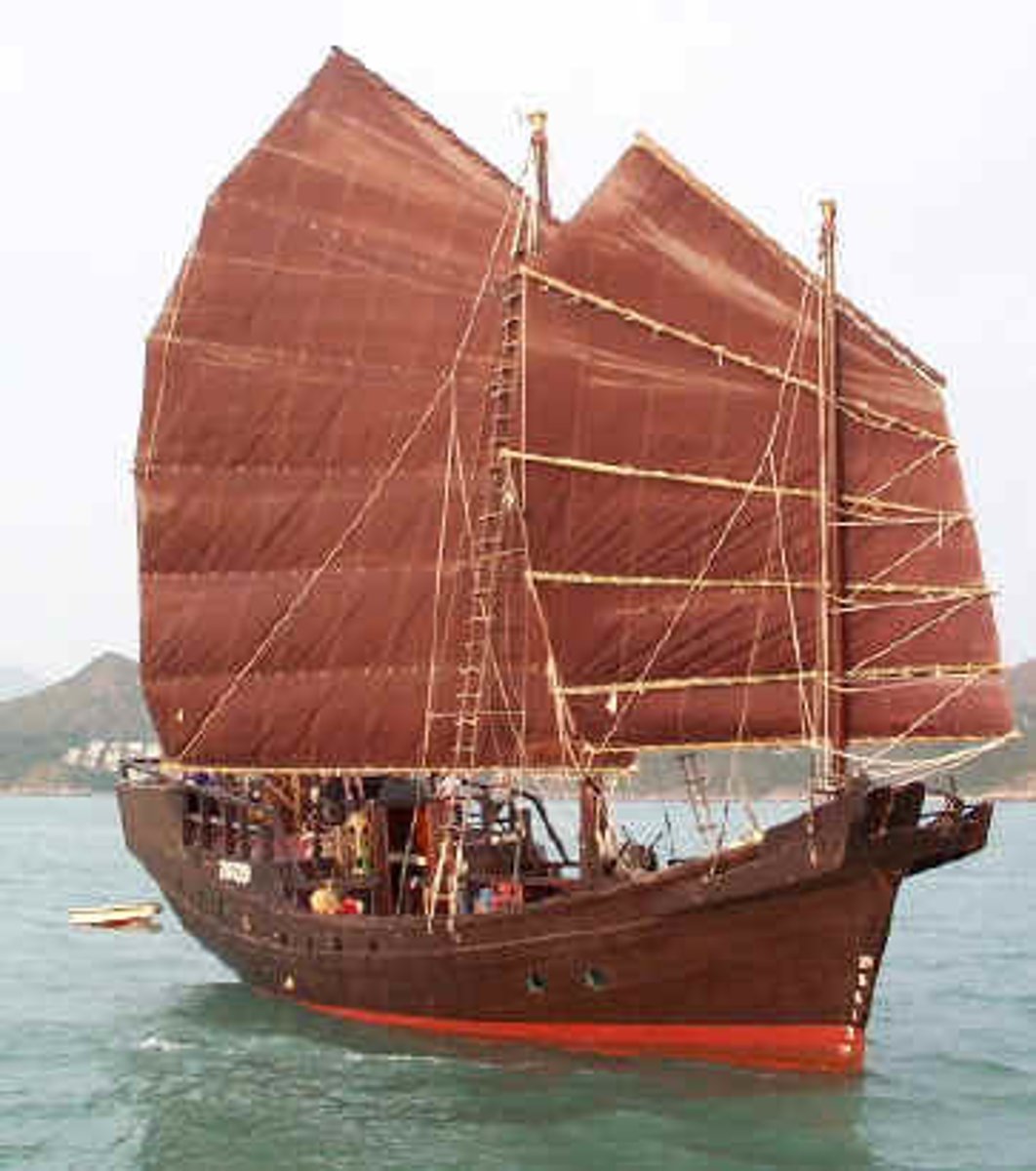
junk ship
large flat-bottom sailing ship produced in the Tang and Song Empires, specially designed for long-distance commercial travel and participation in the tribute system
Kashgar
a central Asian city where the western and the eastern Silk Roads met; one of the westernmost cities of China, near the border with modern day Afghanistan, Kyrgyzstan, Pakistan, and Tajikistan.
Samarkand
During the rule of Timur Lane was the most influential capital city, a wealthy trading center known for decorated mosques and tombs; a key trading city along the Silk Roads
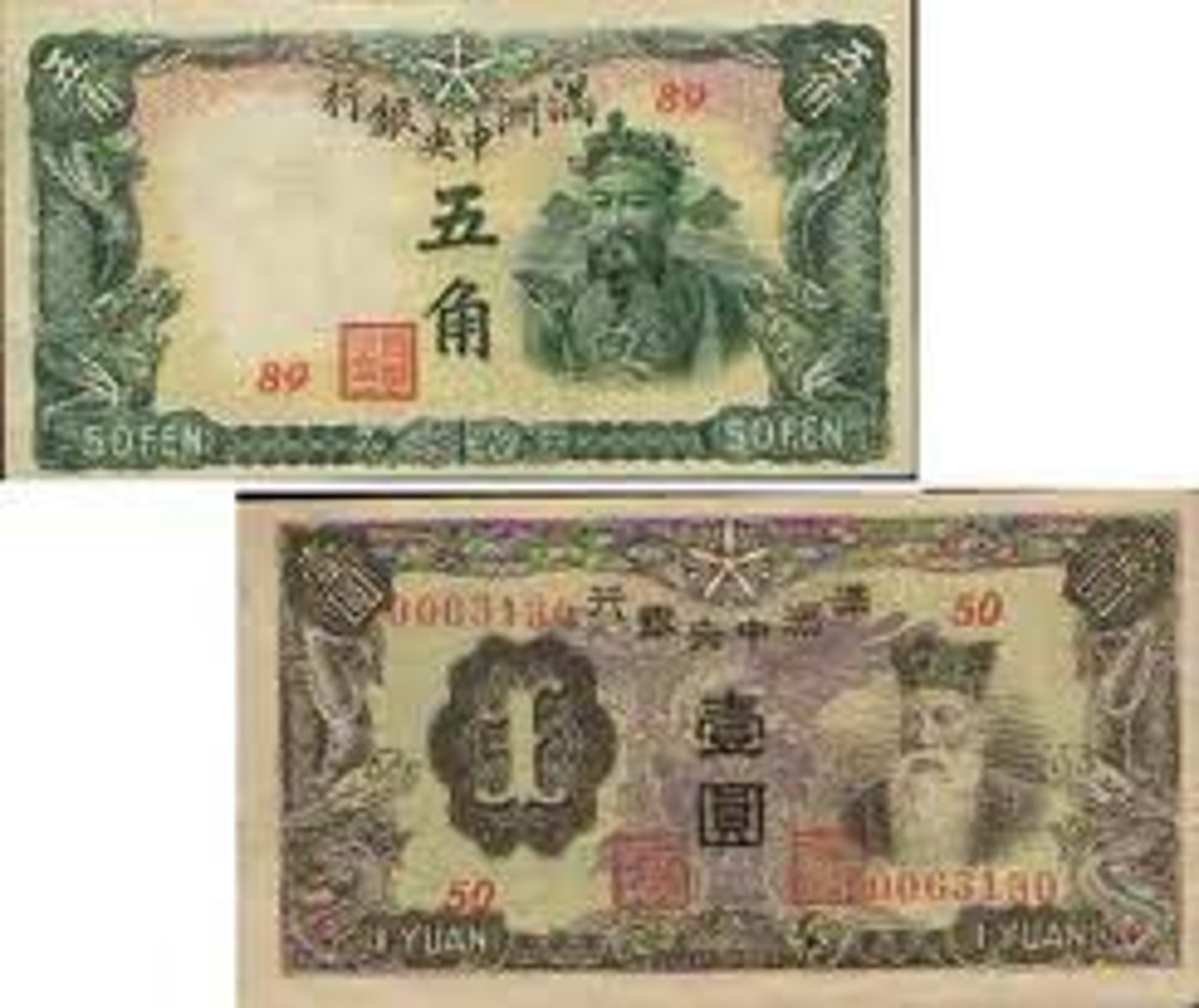
paper money
it developed in China as a convenient alternative to metal coins;
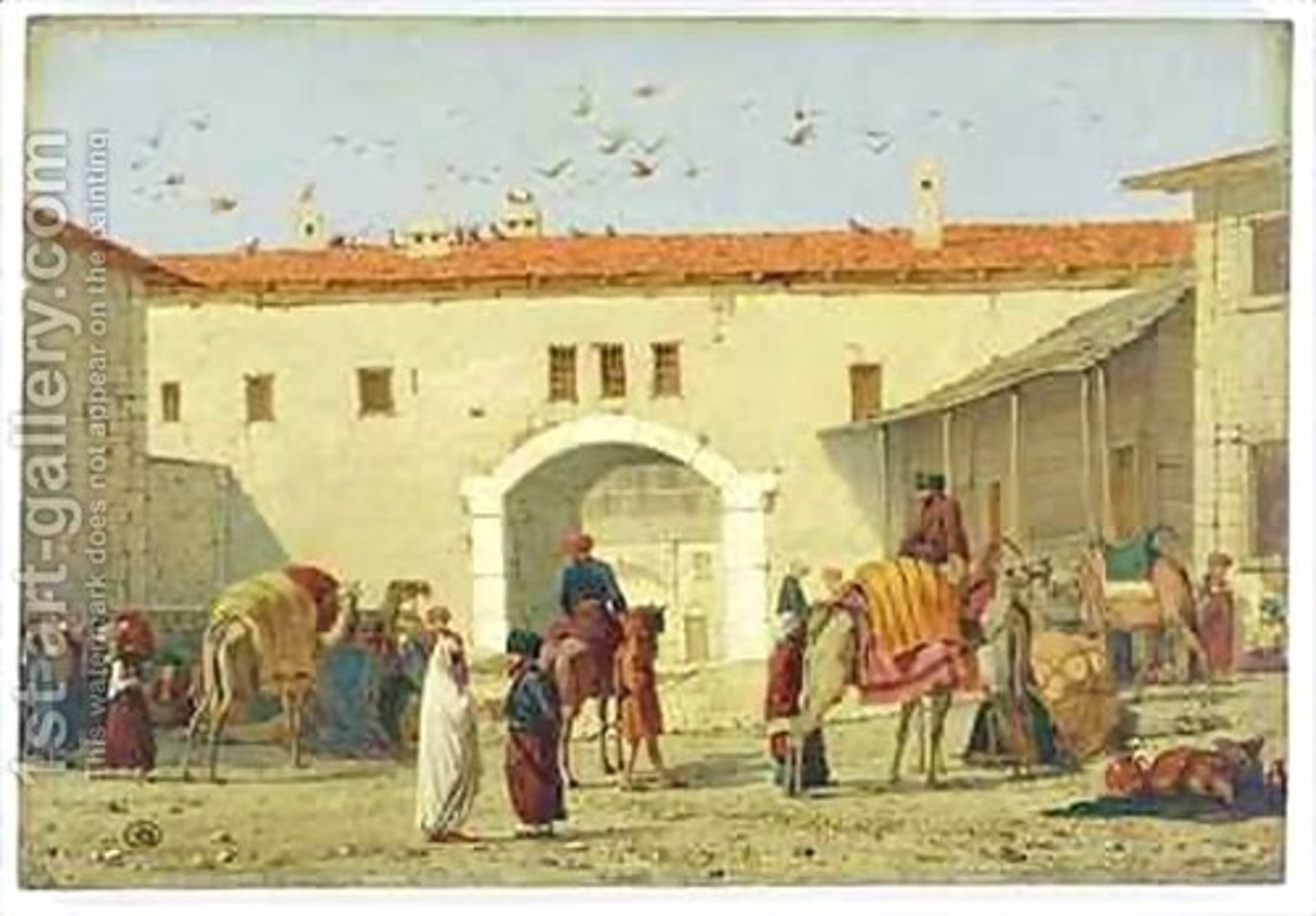
caravanserai
an inn with a central courtyard for travelers in the desert regions of Asia or North Africa; de
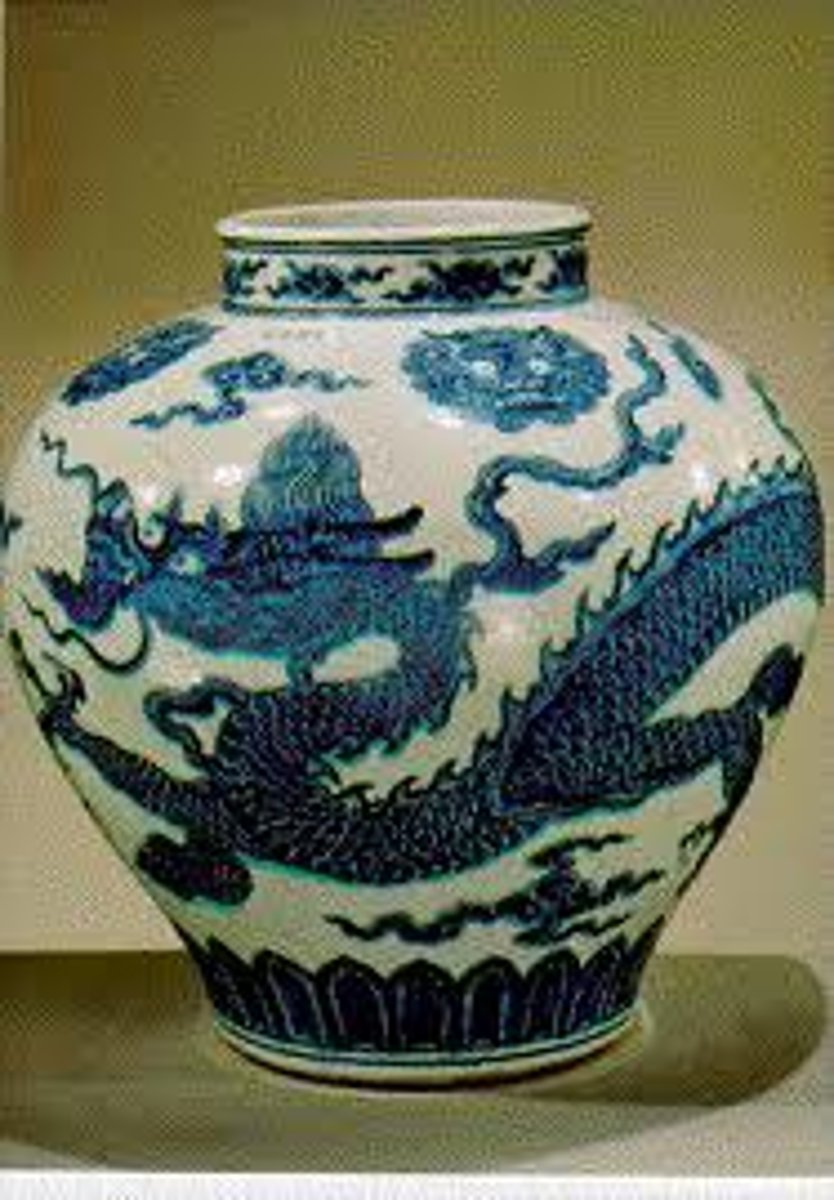
porcelain
thin, beautiful pottery invented in China; highly desired luxury good traded along the Silk Road and Indian Ocean trade networks
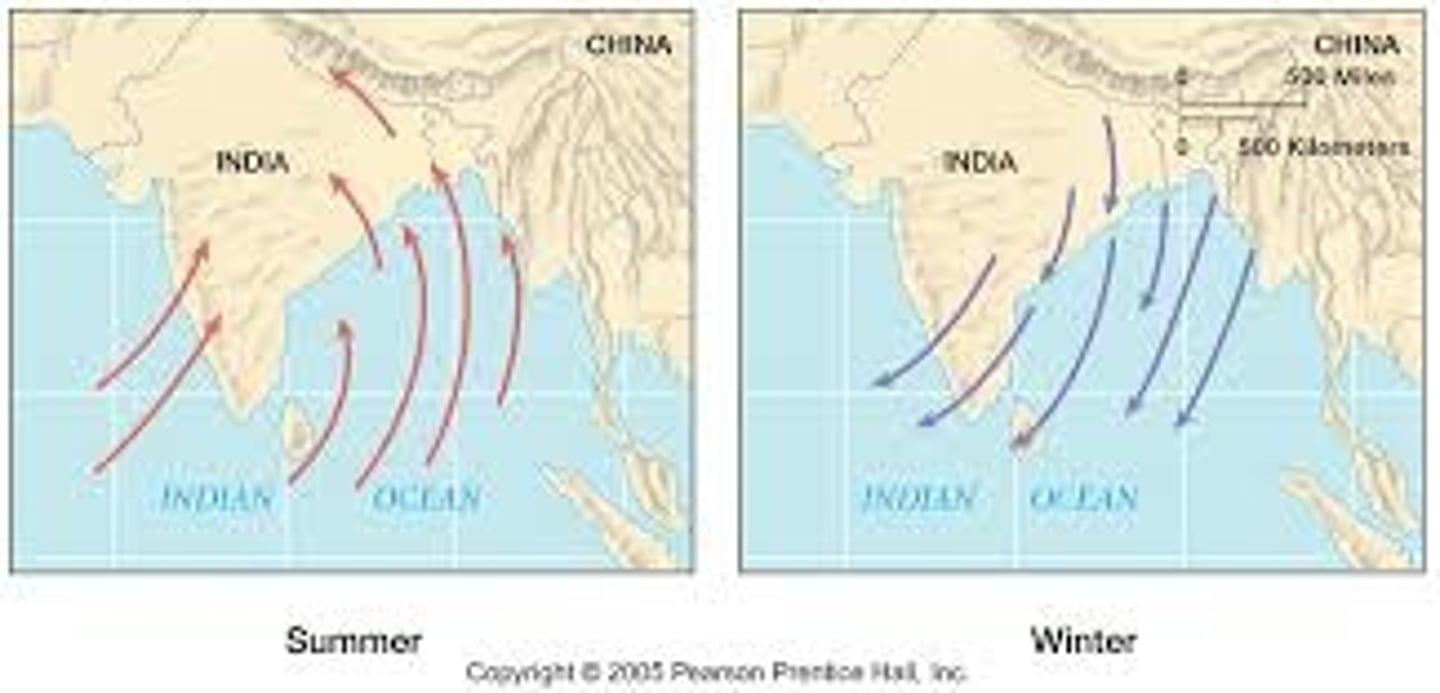
monsoon winds
seasonal wind in India, the winter monsoon brings hot, dry weather and the summer monsoon brings rain
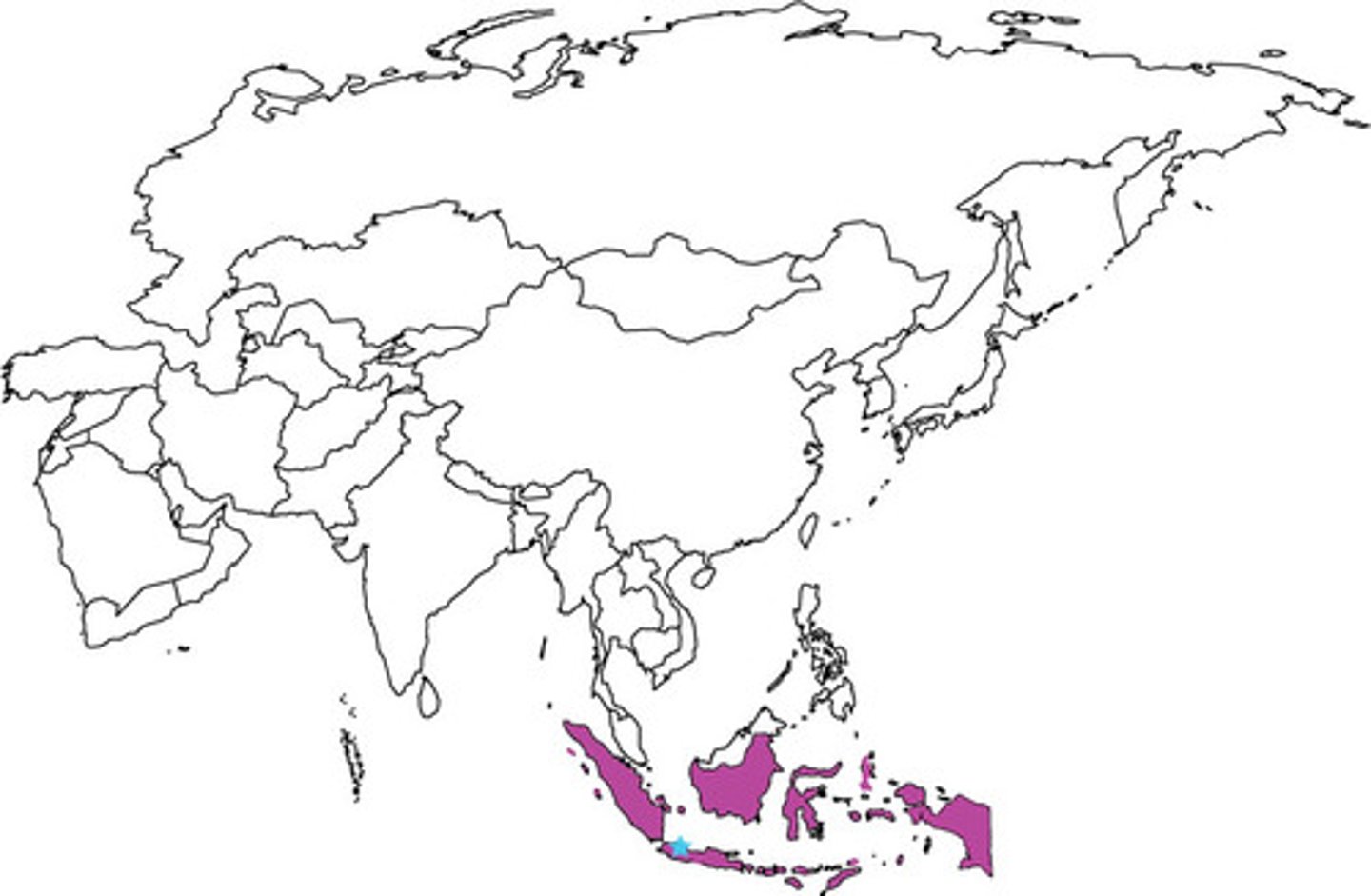
Spice Islands
Europeans' name for the Moluccas, islands in Southeast Asia rich in highly desired spices like cinnamon, cloves, and nutmeg which were often traded in the Indian Ocean trade network
diaspora
A dispersion of people from their homeland;
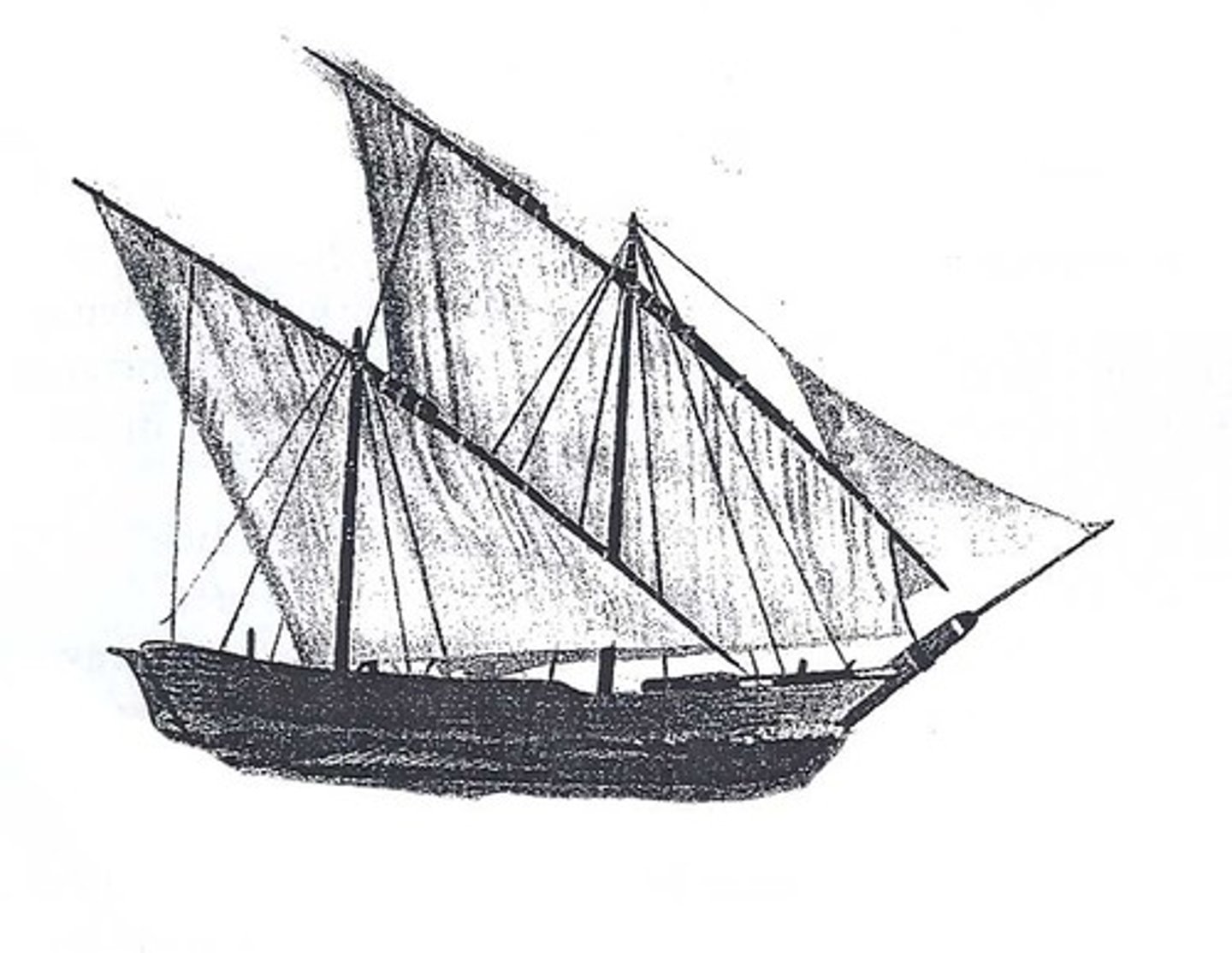
dhow ships
Arab sailing vessels with triangular or lateen sails;
Mansa Musa
Muslim ruler of Mali. one of the richest people to have ever lived
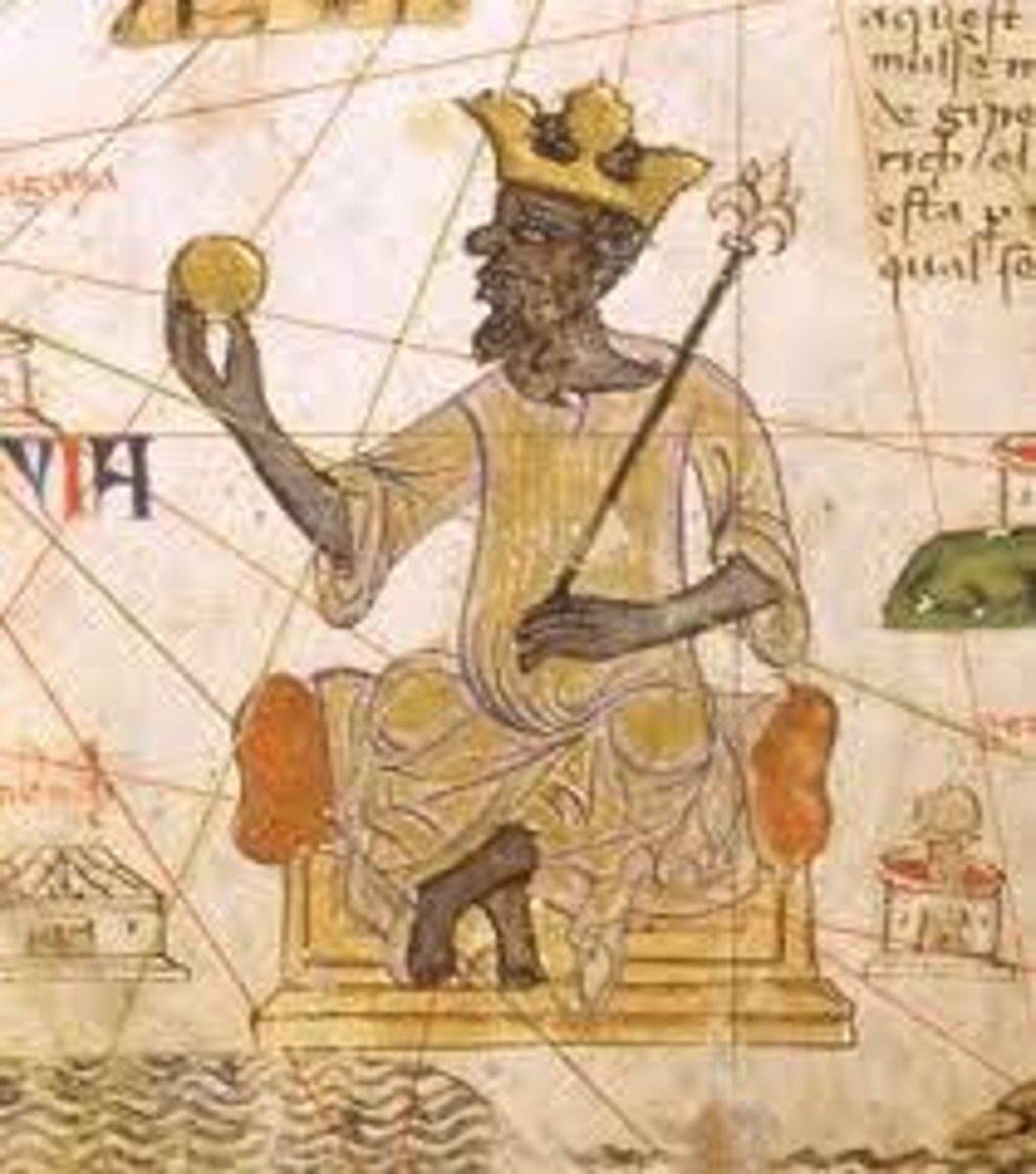
Timbuktu
Mali trading city that became a center of wealth and learning
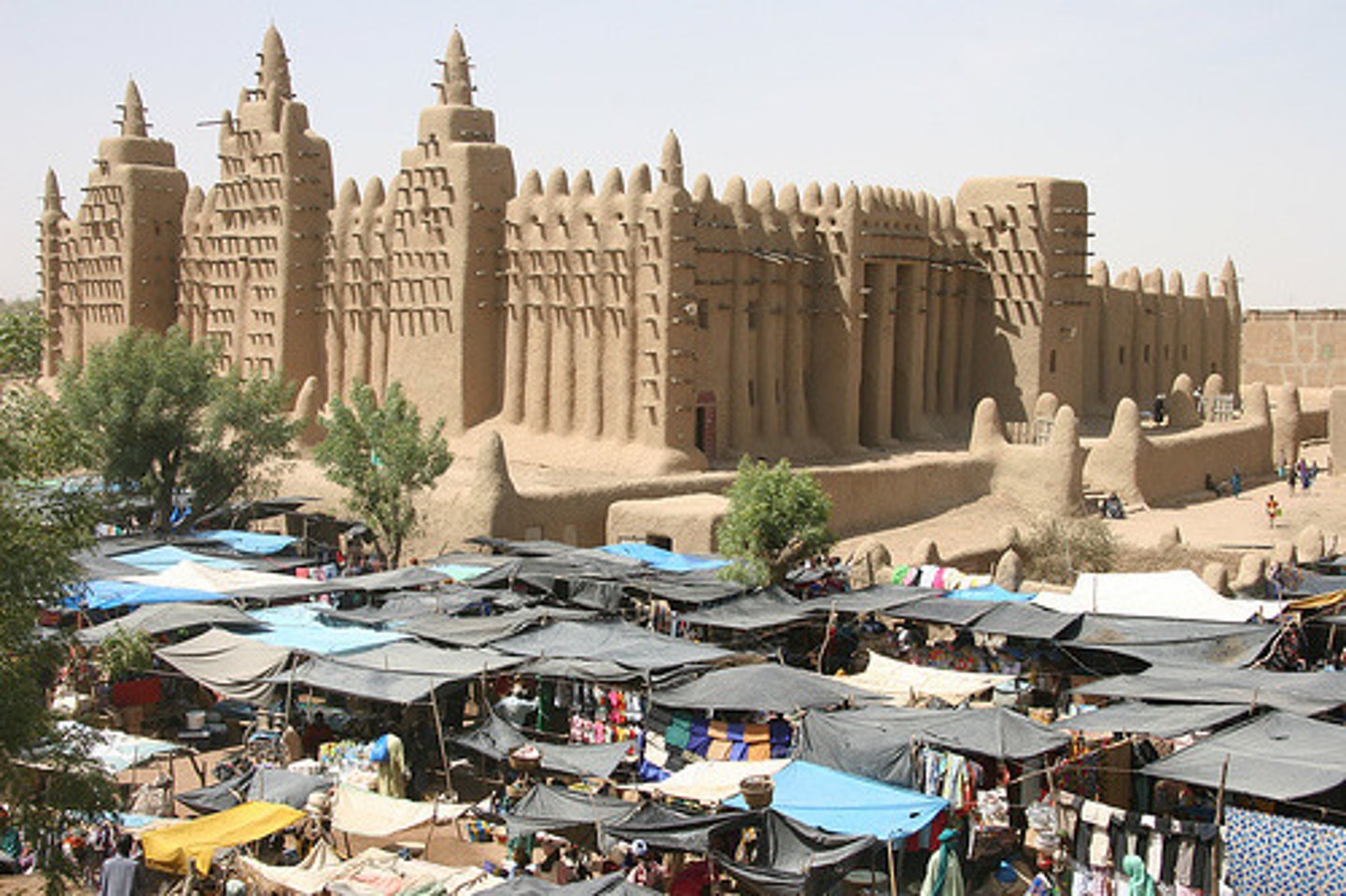
camel saddle
An invention which gives camel riders more stability on the animal
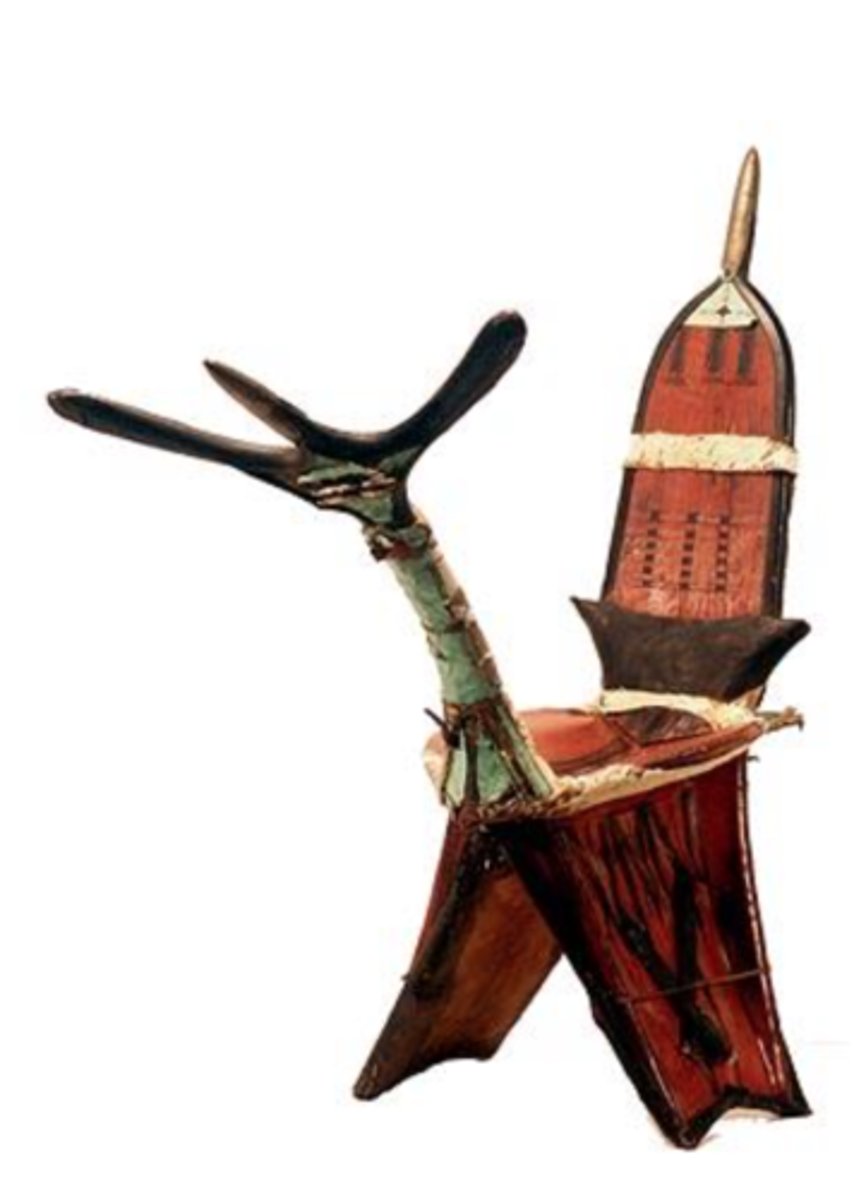
caravan
group of traveling merchants and animals; facilitated trade along the Silk Roads and Trans-Saharan trade networks
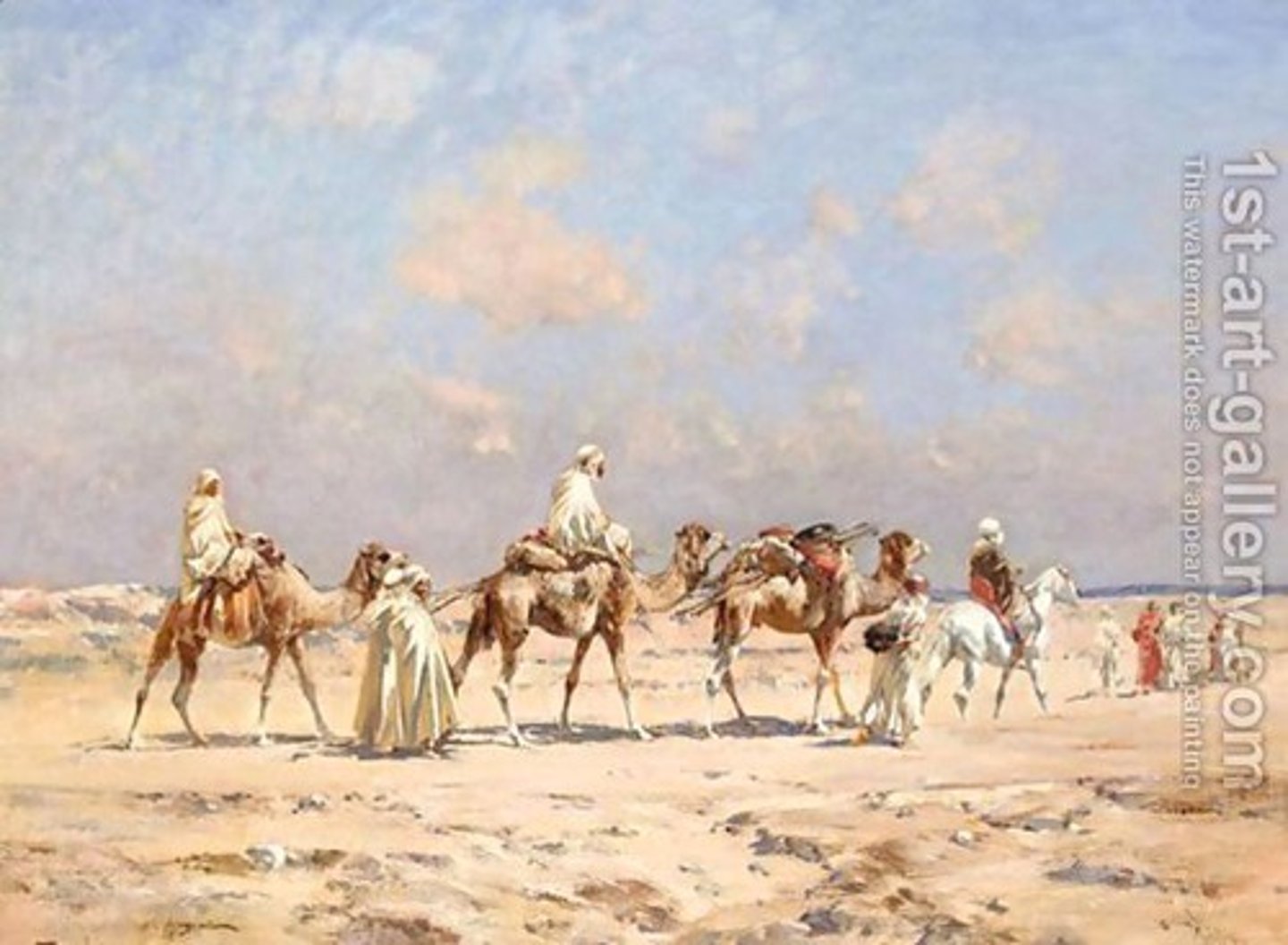
Khan
Name for a Mongol ruler
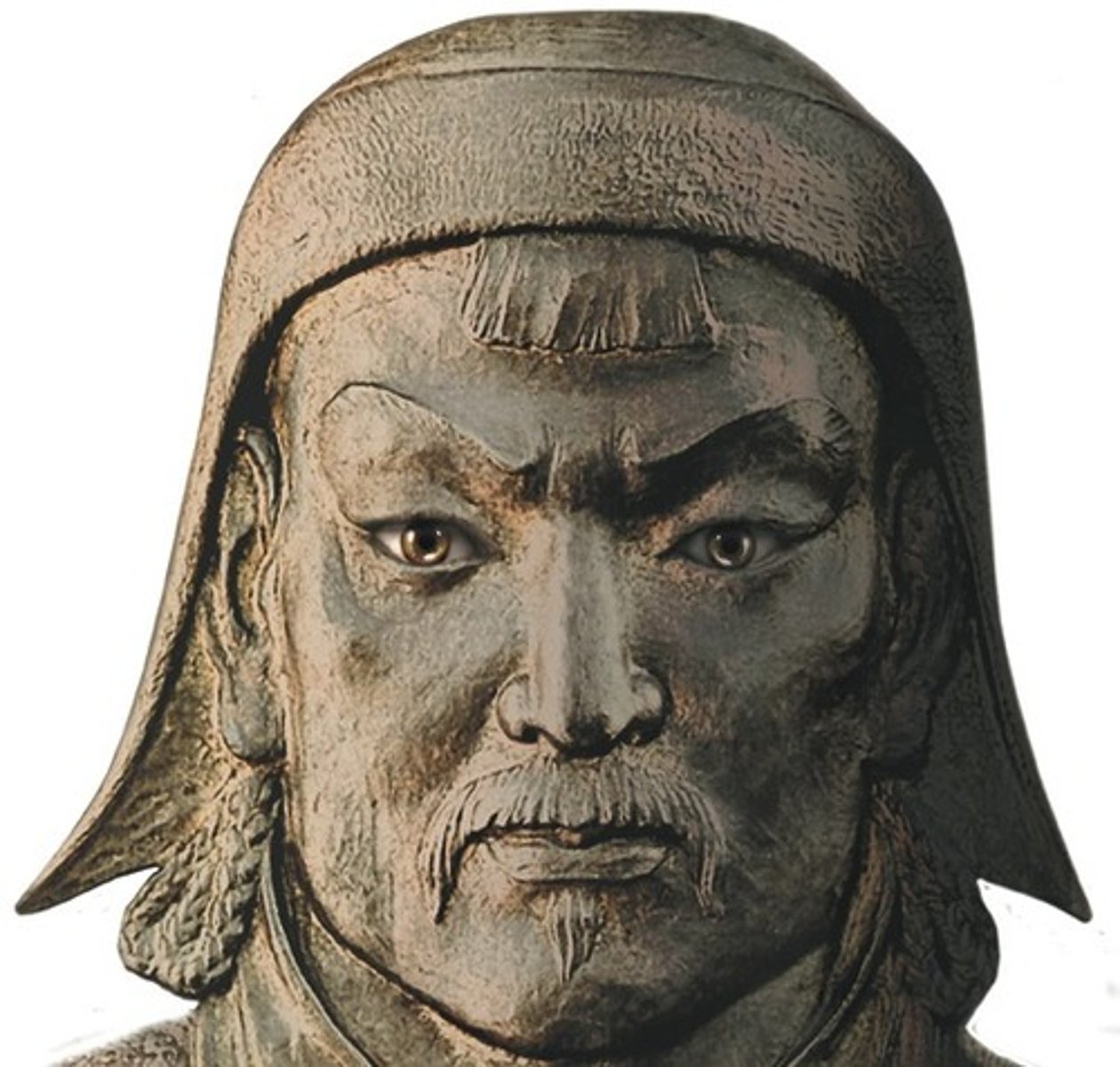
Khanates
Four regional Mongol kingdoms that arose following the death of Ghengis Khan.
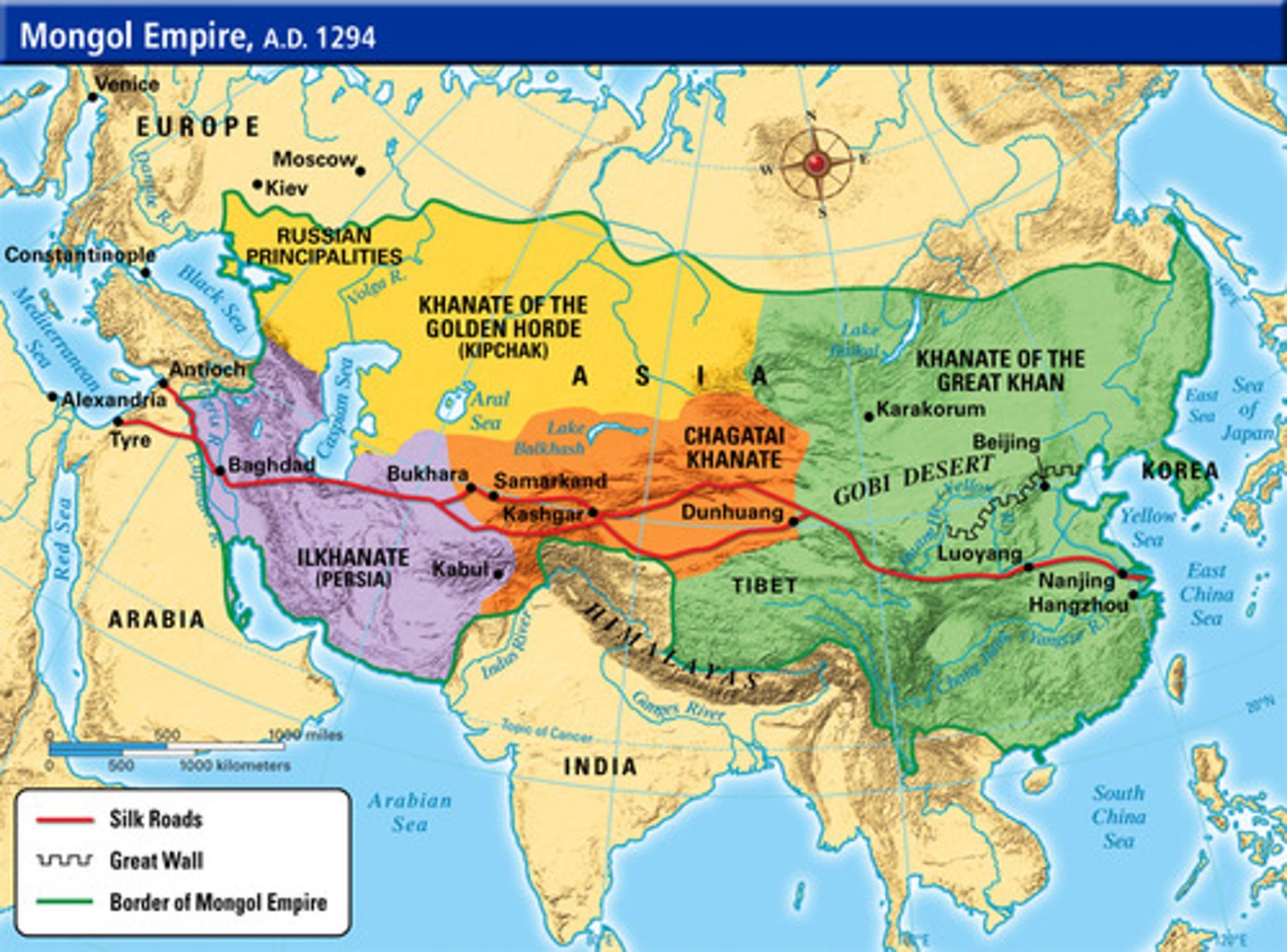
Pax Mongolica
The period of approximately 150 years of relative peace and stability created by the Mongol Empire
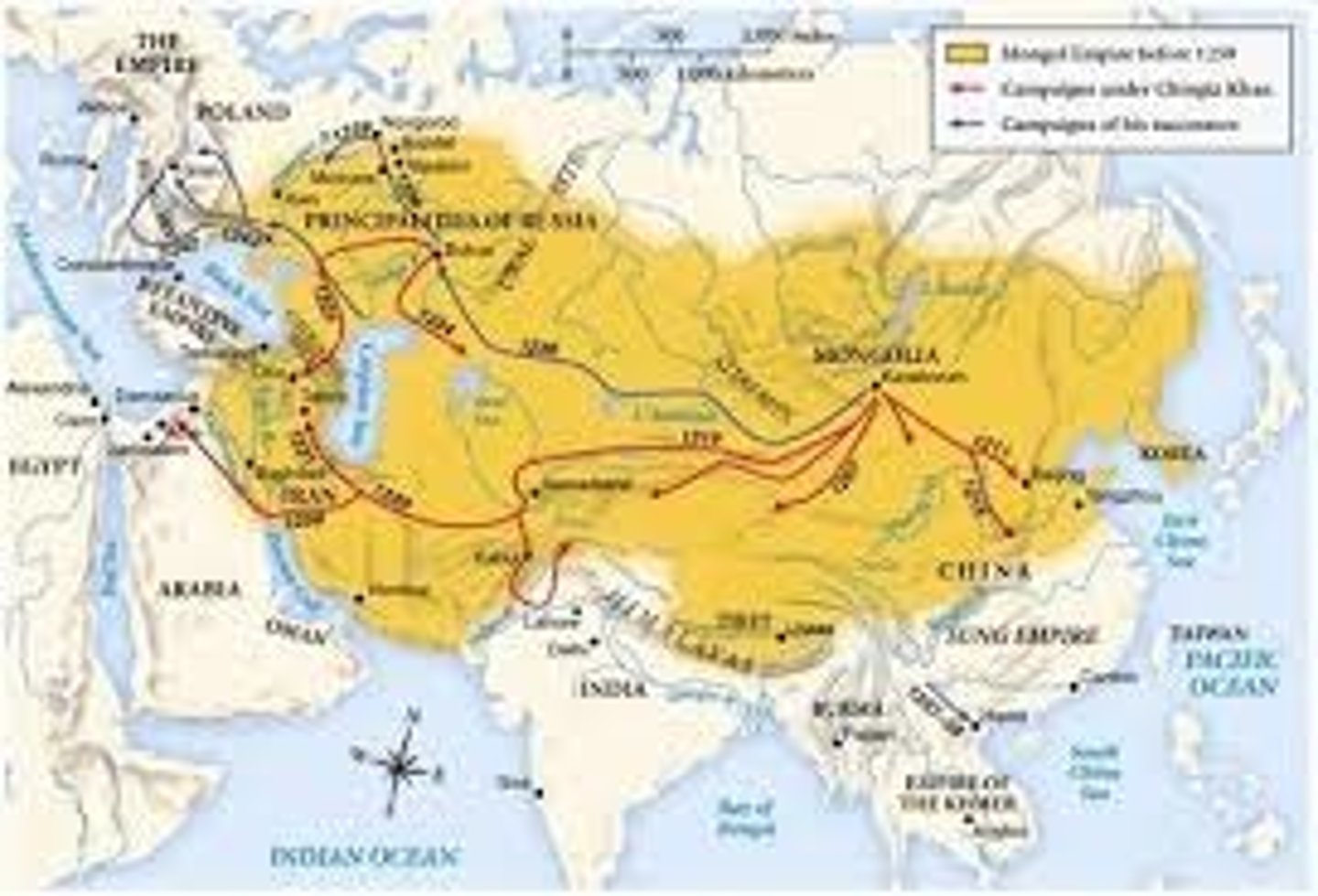
Golden Horde
Mongol khanate founded by Genghis Khan's. It was based in southern Russia and quickly adopted both the Turkic language and Islam; became a tribute state for the Mongols
Il-Khanate
Mongol empire that ruled over Iran (Persia) & the Middle East; Mongols conquered and assimilated into Persian society
Yuan Dynasty
(1279-1368 CE) Chinese dynasty under Mongol rule under Kublai Khan;
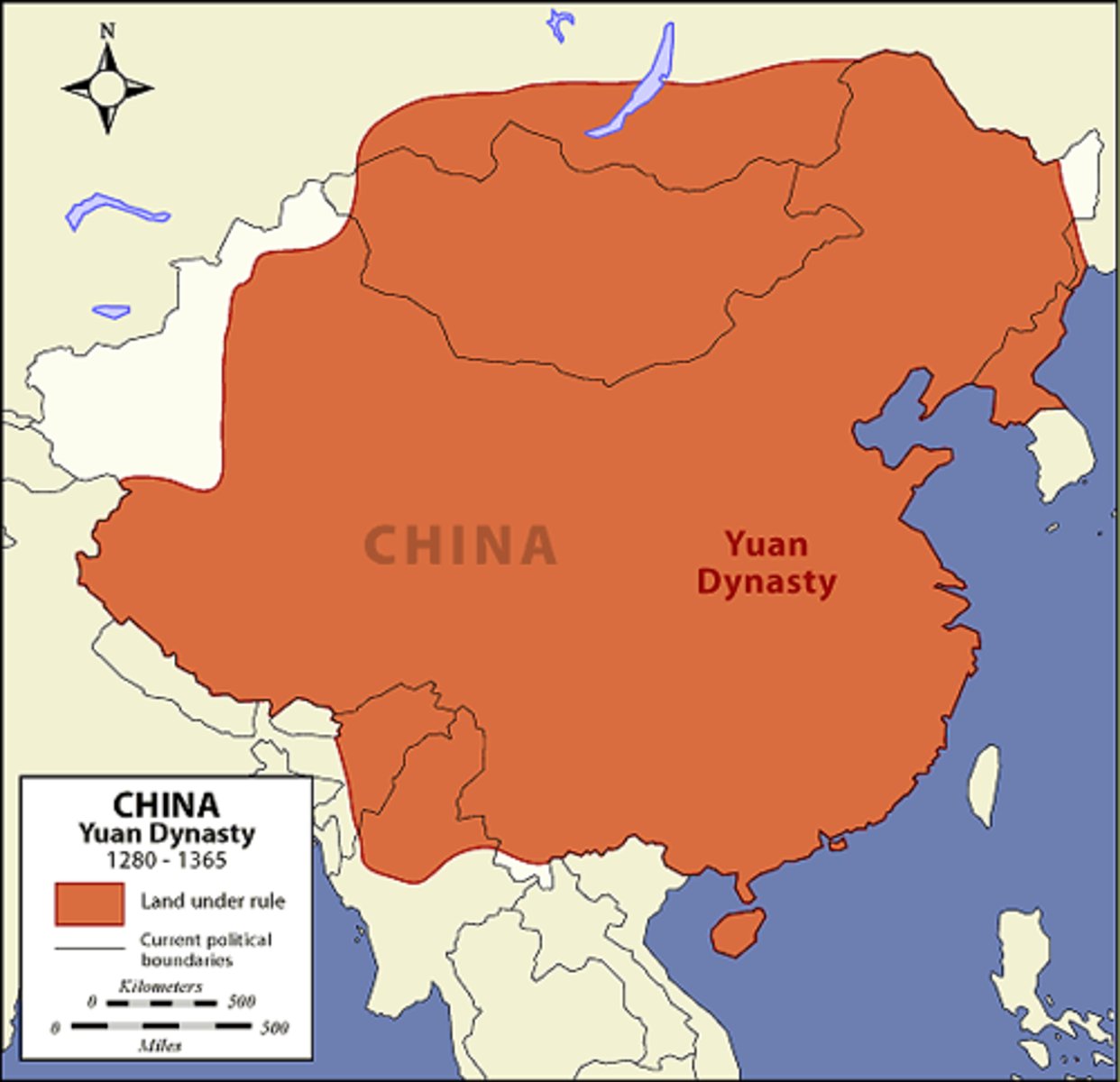
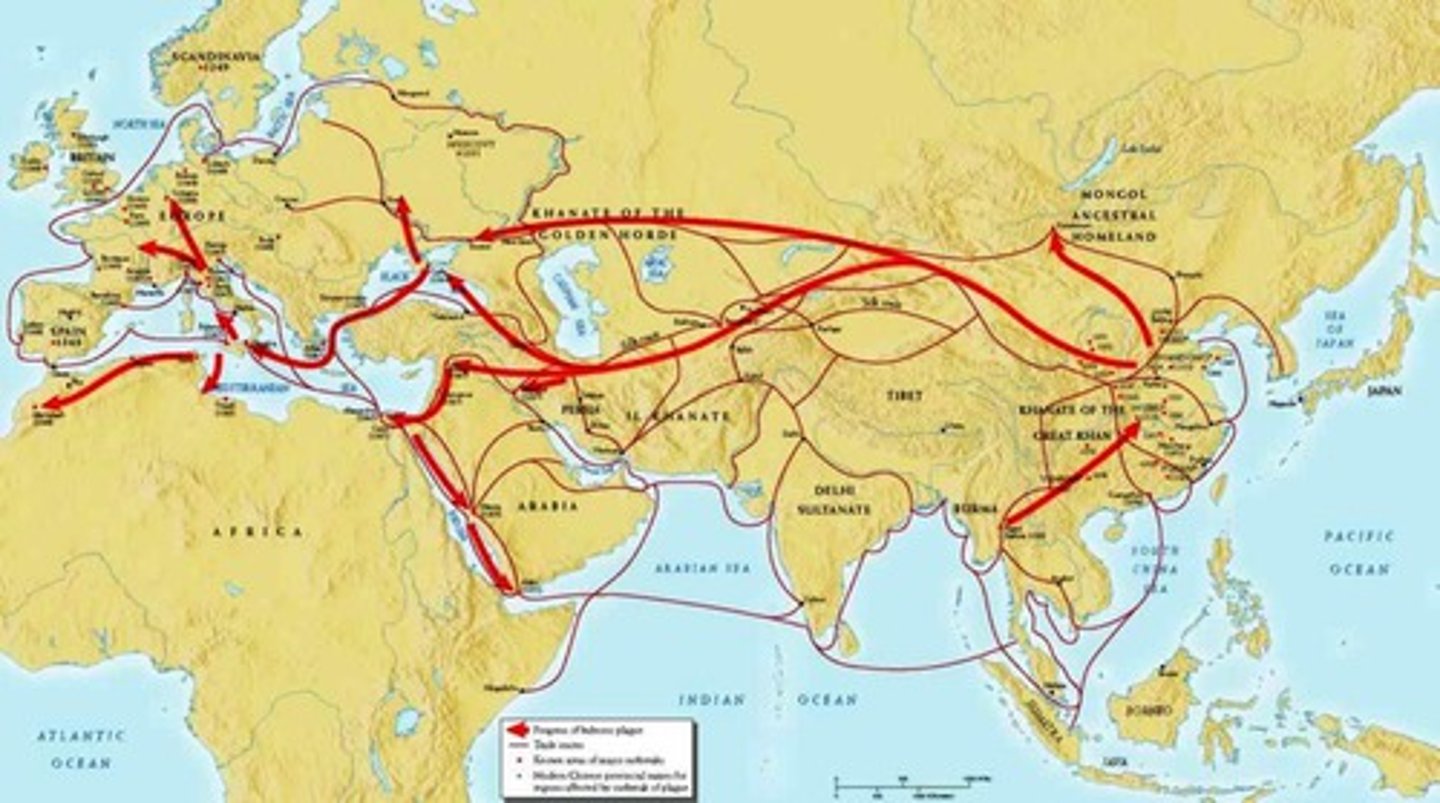
Bubonic Plague
aka Black Death; the deadly disease that spread through Asia and Europe and killed more than a third of the population in some areas;
gunpowder
Invented in China during the 9th century, this substance was became the dominant military technology used to expand European and Asian empires
Ibn Battuta
(1304-1369) Moroccan Muslim scholar,
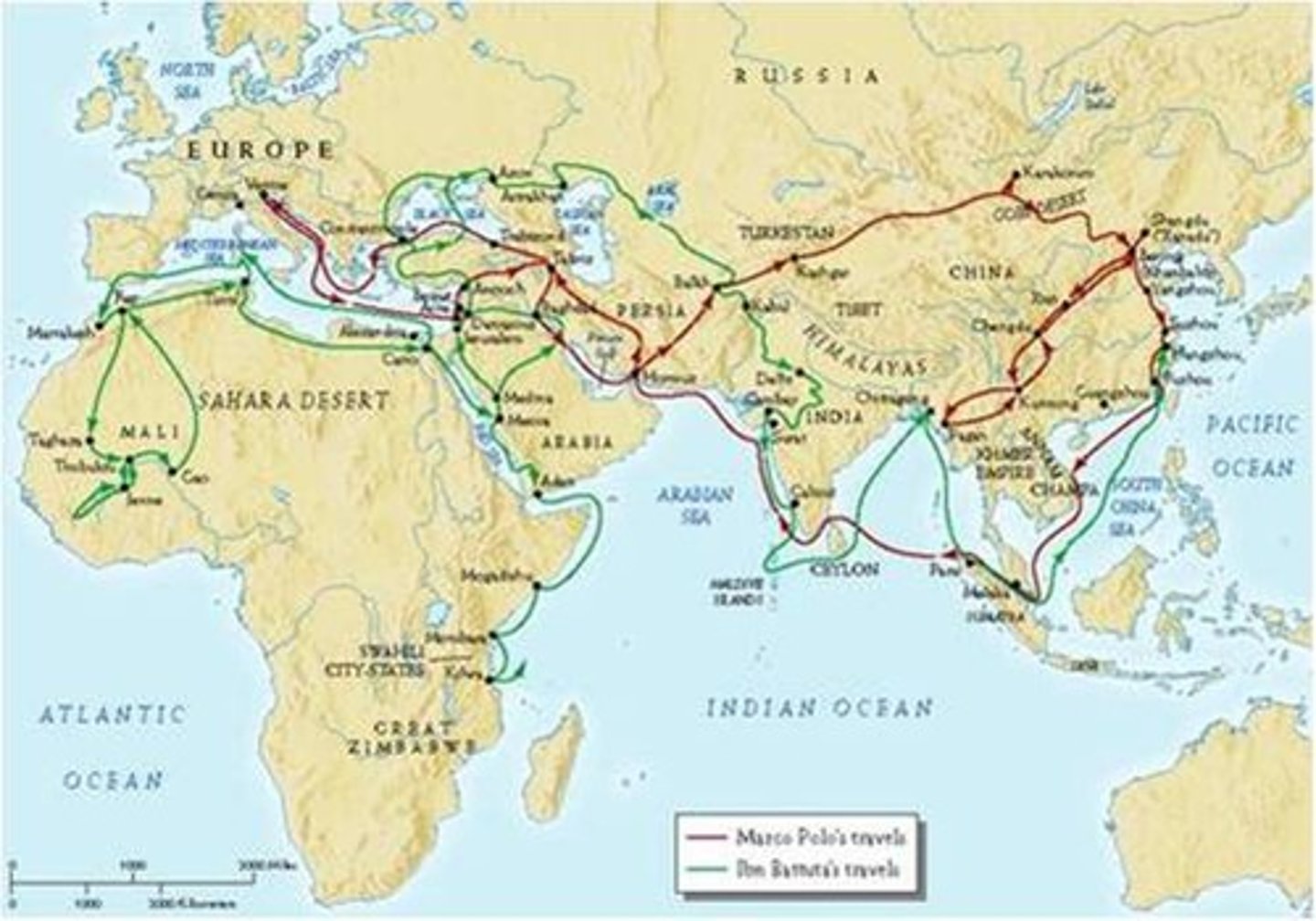
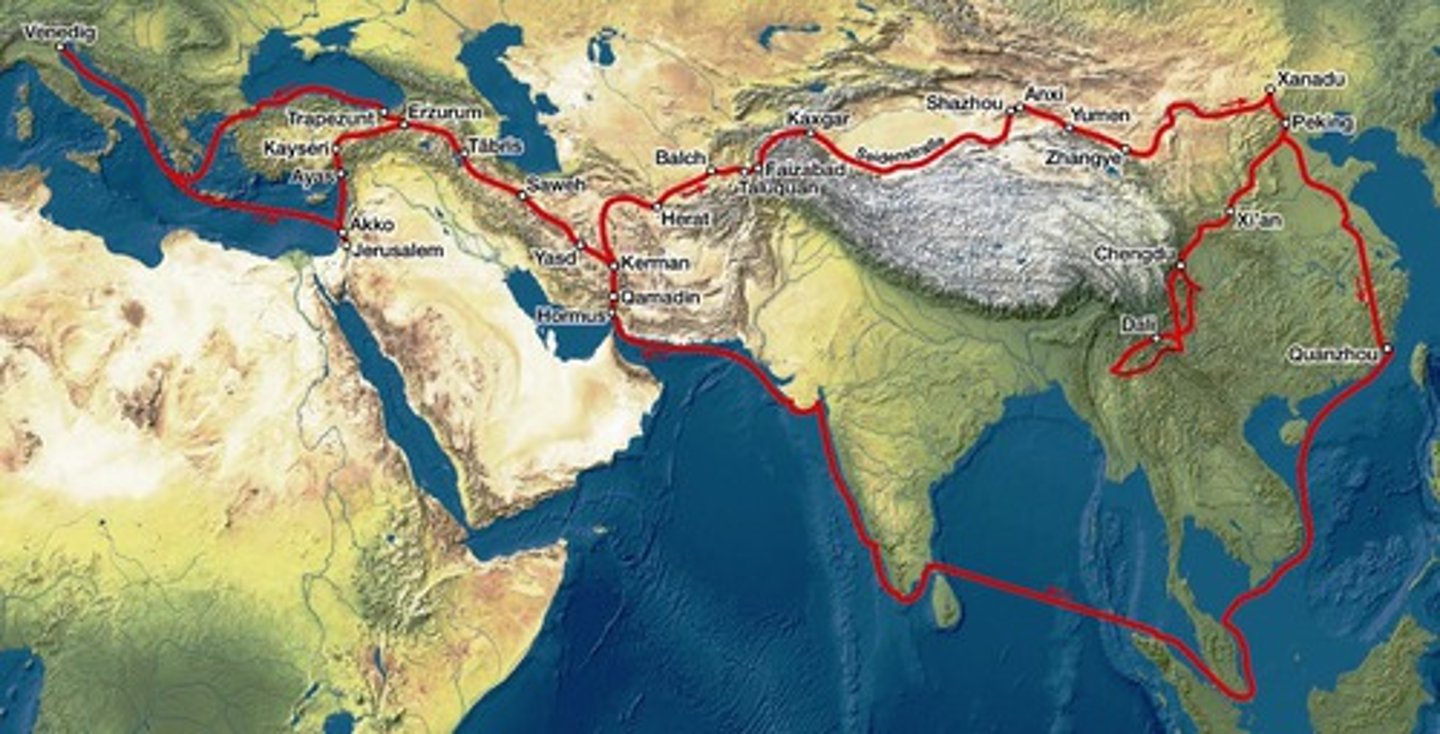
Marco Polo
(1254-1324) Italian explorer and author.
Swahili city-states
Cities along the coast of East Africa that actively participated in Indian Ocean trade:
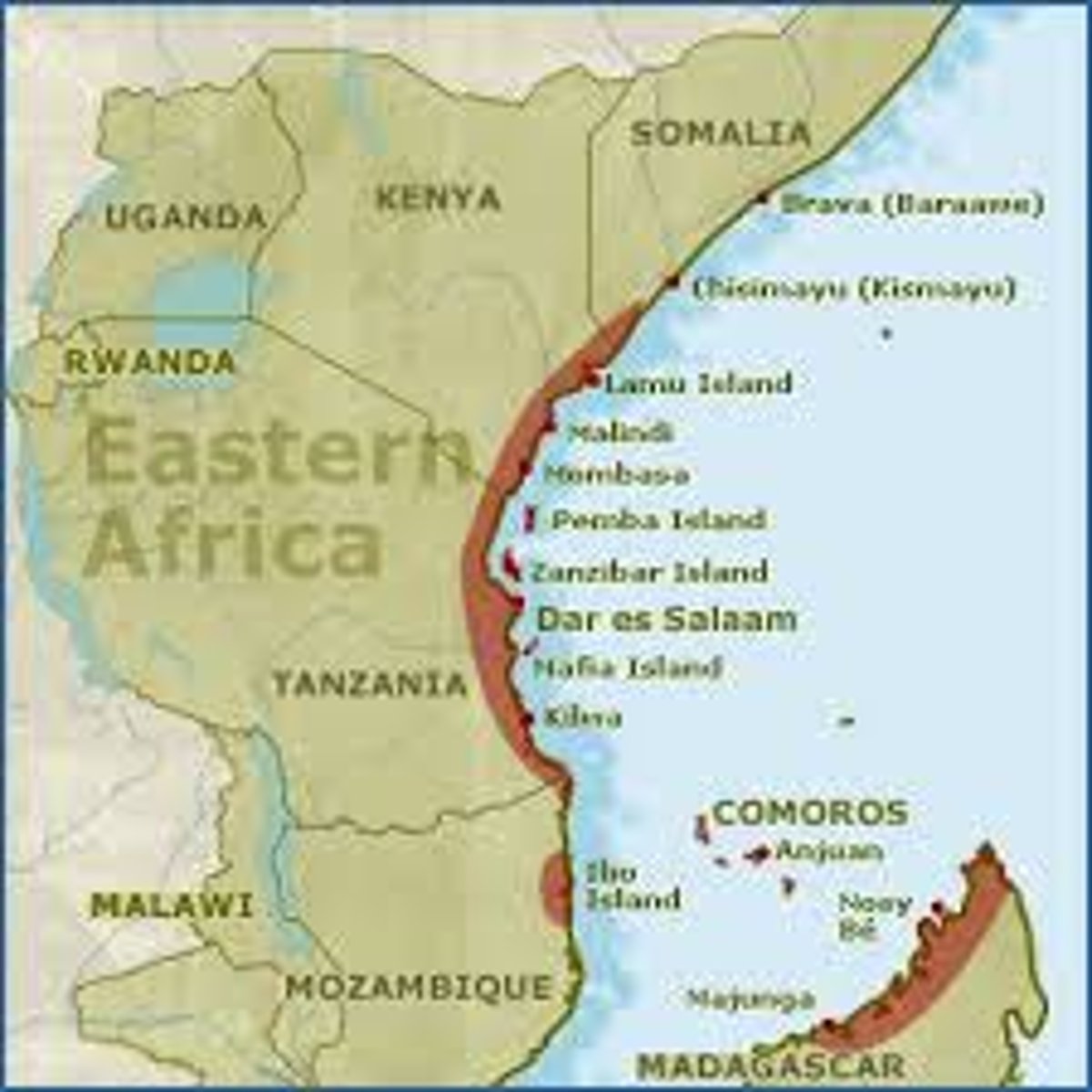
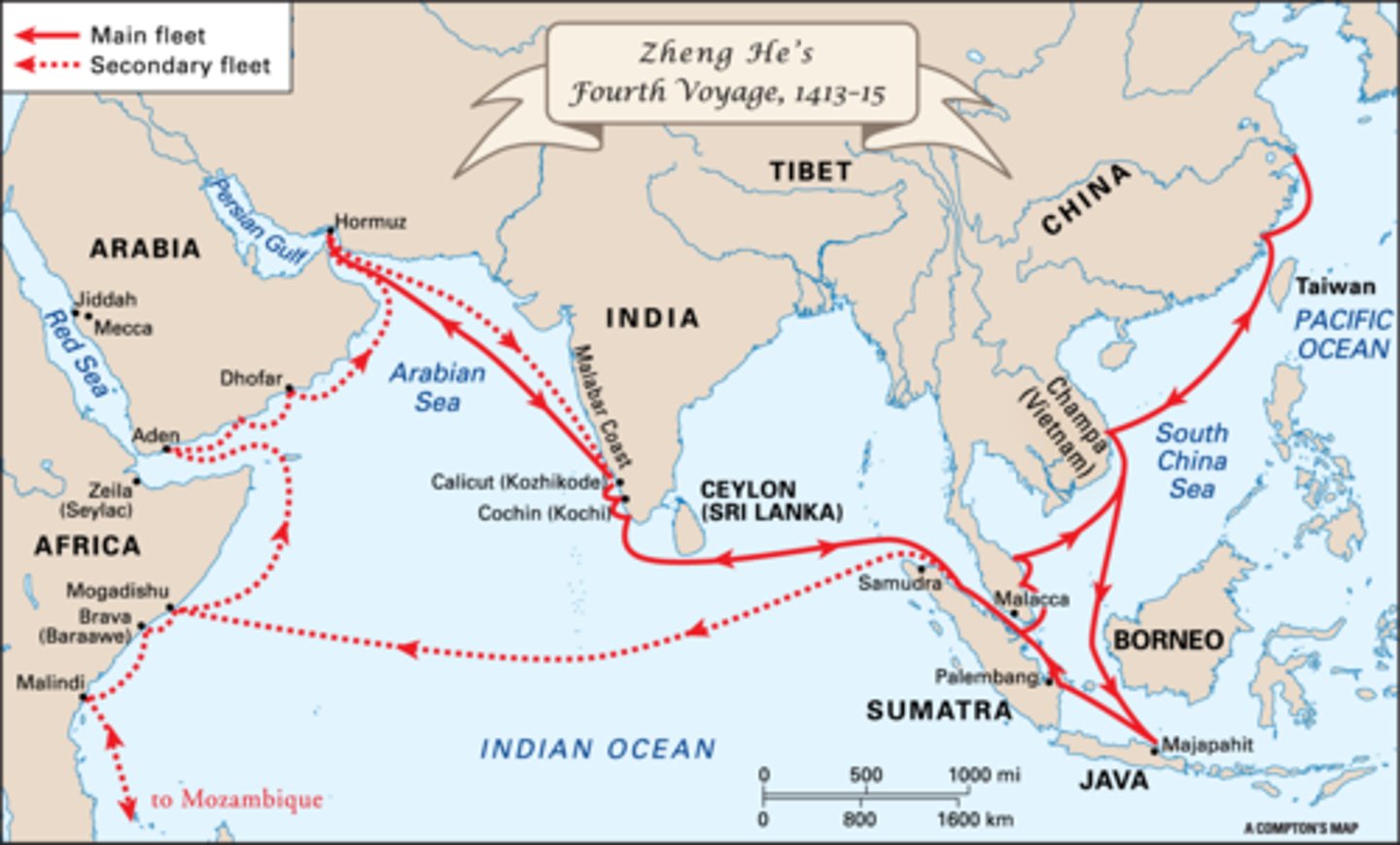
Zheng He
(1371-1433?) Chinese Ming Dynasty naval explorer who sailed along most of the coast of Asia, Japan, and half way down the east coast of Africa
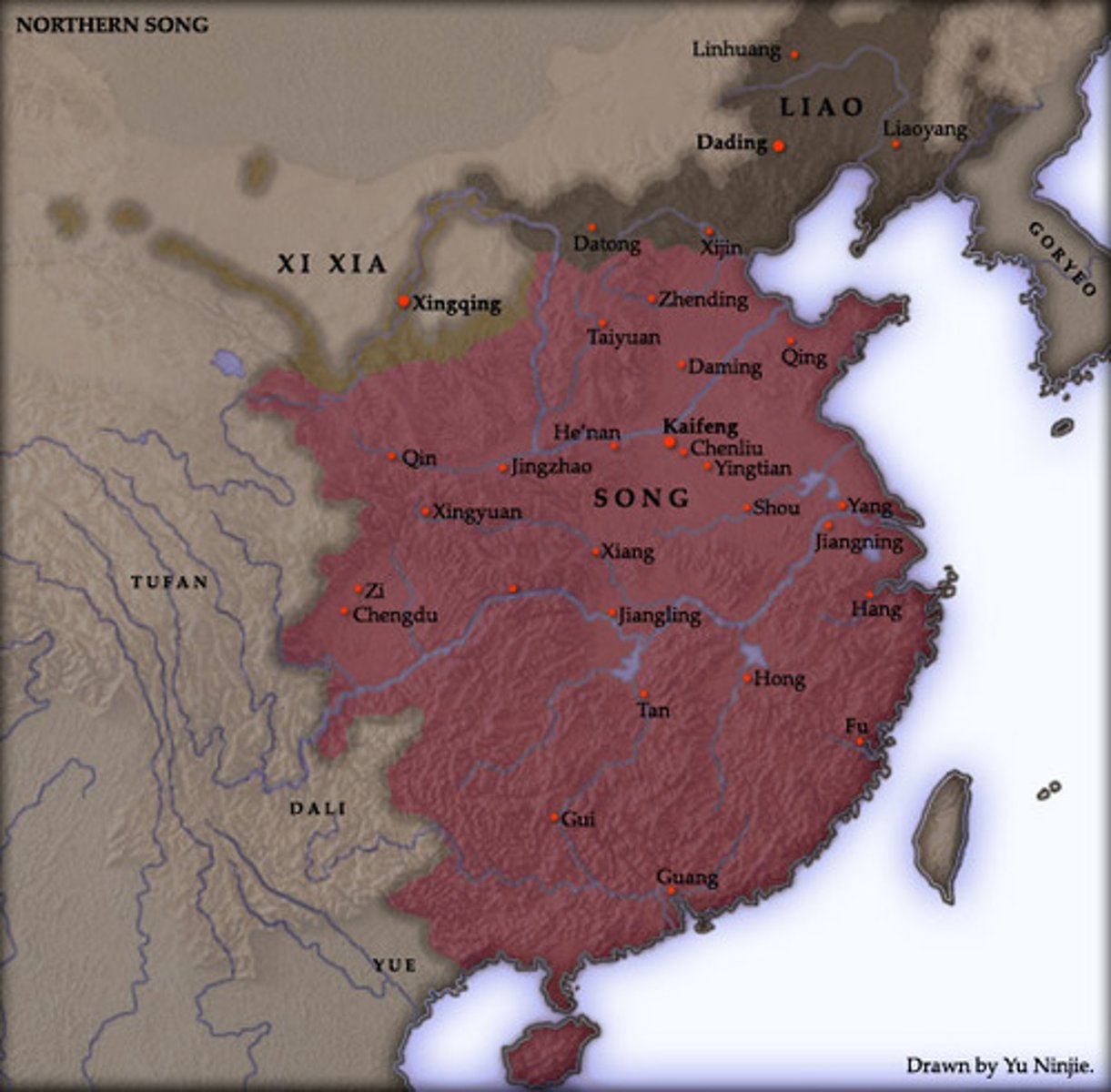
Song Dynasty
Chinese dynasty (960 - 1279 CE) that could be considered their "golden age" when China saw many important inventions.
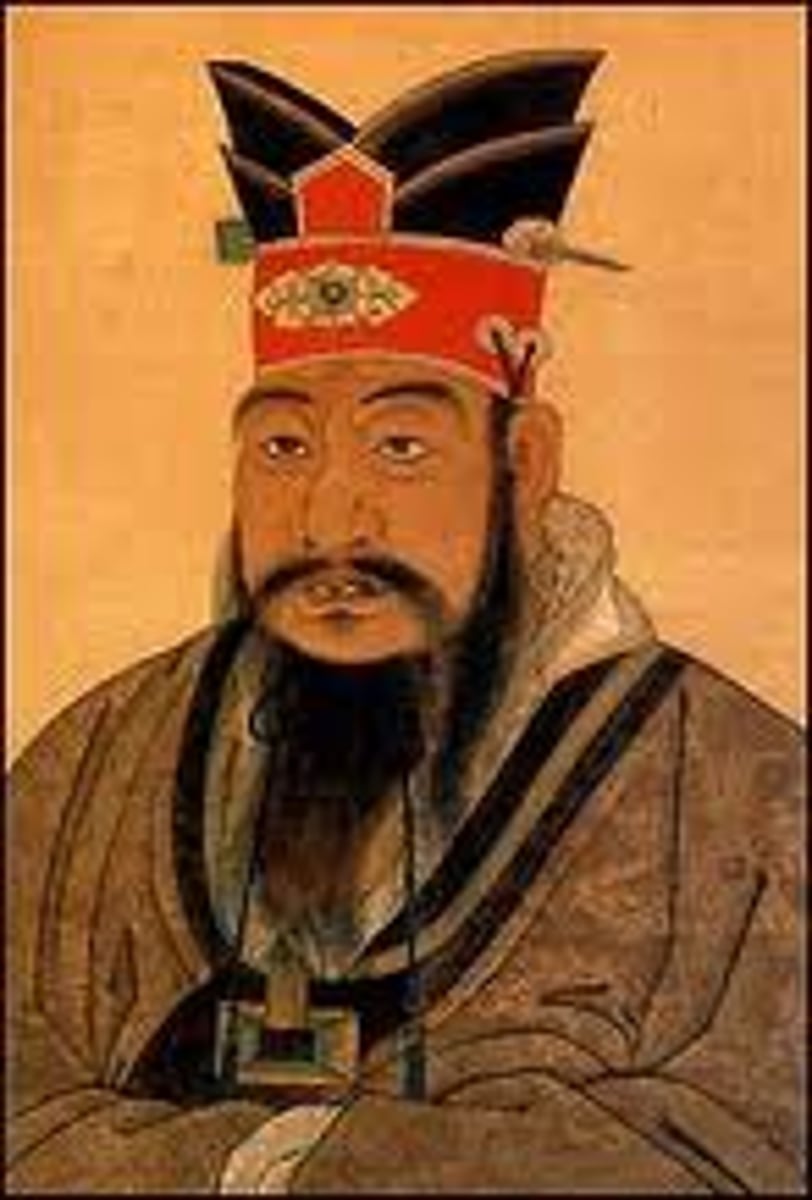
Confucianism
. It shows the way to ensure a stable government and an orderly society in the present world and stresses a moral code of conduct.
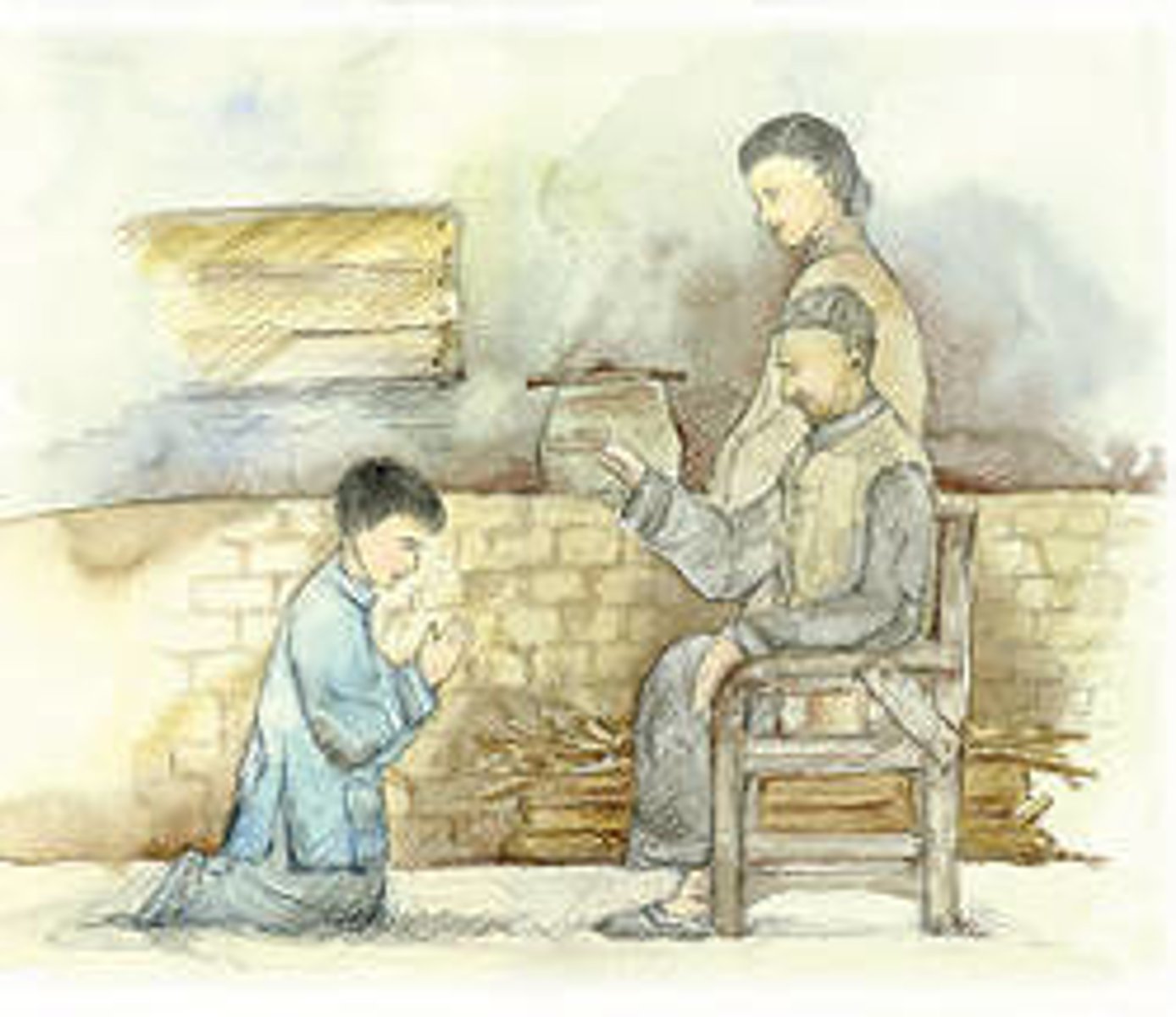
Filial Piety
In Confucian thought, one of the virtues to be cultivated, a love and respect for one's parents and ancestors.
Neo-Confucianism
The Confucian response to Buddhism by taking Confucian and Buddhist beliefs and combining them into this.