BIOL 191: Exam #1 STEVENSON UNR
 Call Kai
 Learn
Learn Practice Test
 Spaced Repetition
 Match
Match Flashcards
 Knowt Play
1/78

There's no tags or description
Looks like no tags are added yet.
Name | Mastery | Learn | Test | Matching | Spaced | Call with Kai |
|---|
No analytics yet
Send a link to your students to track their progress
79 Terms
Evolution
"descent with modification"; the view that all organisms are related through descent from another ancestor that lived in the remote past
Fossils
remains or traces of organisms from the past, usually found in sedimentary rock (one of three main rock groups)
Strata
a layer or a series of layers of rock in the ground
Ancestral species
species descended from ancestors found in lower strata layers
Derived species
species that branches off from another species found in the upper layers of the strata
Adaptation
the process; any alteration in the structure or function of an organism or any of its parts that results from natural selection, by which the organism becomes better fitted to survive and multiply in its environment
Adaptations
the traits of an organism that change
Artificial selection
the process of humans modifying other species by selecting or breeding individuals wth desired traits
Darwin's Observation #1
Members of a population often vary in their inherited traits
Darwin's Observation #2
All species can produce more offspring that the environment can support, and many of these offspring fail to survive and reproduce
Darwin's Inference #1
Individuals whose inherited traits give them a higher probability of surviving and reproducing in a given environment tend to leave more offspring than other individuals
Darwin's Inference #2
The unequal ability of individuals to survive and reproduce will lead to the acclimation of favorable traits in the population over generations
Chapter 19 Concepts
1. The Darwinian revolution challenged traditional views of a young Earth by unchanging species
2. Descent with modification by natural selection explains the adaptations of organisms and the unity and diversity of life
3. Evolution is supported by an overwhelming amount of scientific evidence
Homology
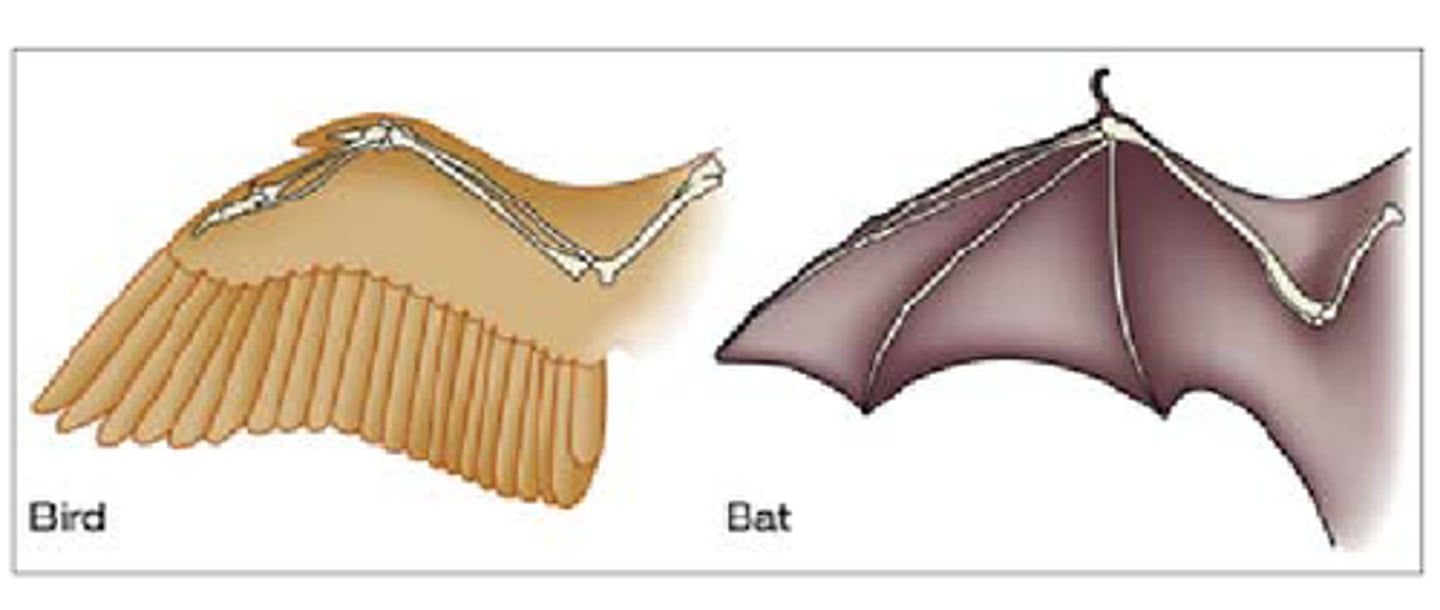
similarity from common ancestor
Homologous structures
anatomical resemblances that represent variations on a structural theme present in a common ancestor
Vestigial structures
remnants of features that served important functions for an organism's ancestor
Convergent evolution
the evolution of similar (analogous) features in distantly related groups
Analogous traits
arise when groups independently adapt to similar environments in similar ways
Biogeography
the geographic description of species which provides evidence of evolution
Phylogeny
evolutionary history of a species or group of related species
Systematics (phylogeny)
classifies organisms and determines their evolutionary relationships
Taxonomy
ordered division and naming of organisms
Binomial
the two-part scientific name of a species
Genus
the first part of a species' two-part scientific name
Taxonomic groups
Domain, Kingdom, Phylum, Class, Order, Family, Genus, Species
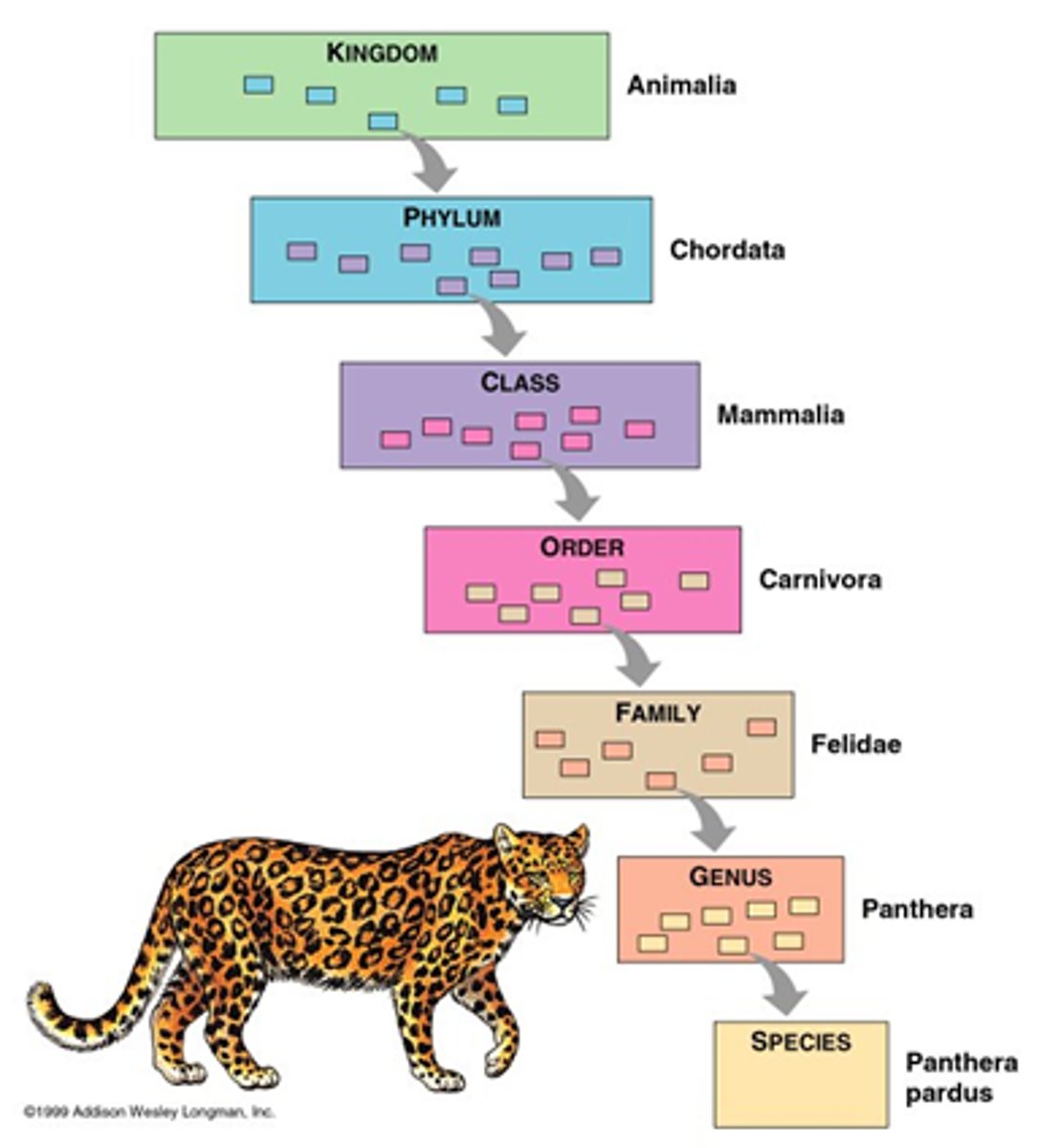
Phylogenetic trees
depiction of evolutionary relationships in branching structures used by systematists; represents a hypothesis about evolutionary relationships
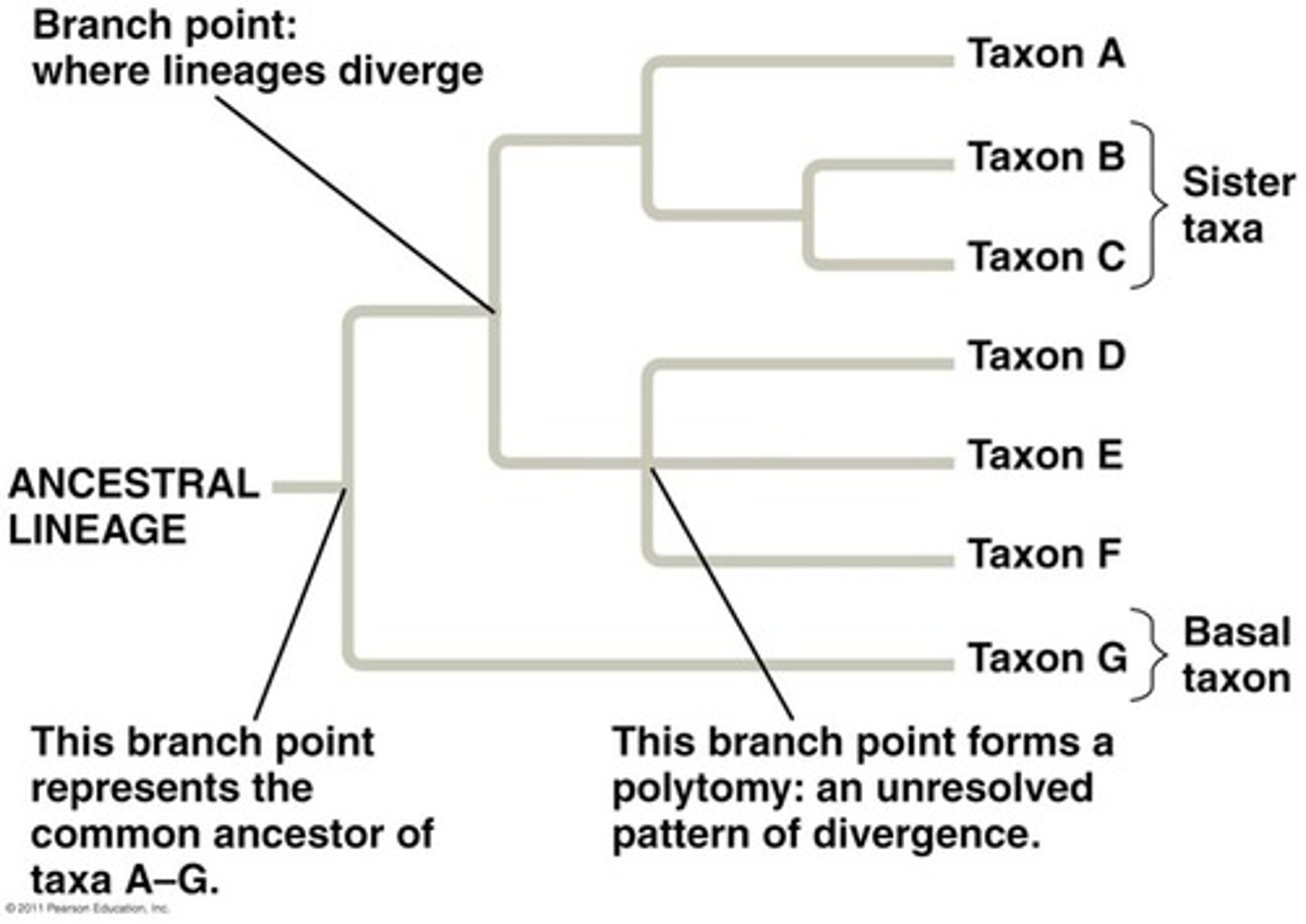
Branch point
represents the divergence of two taxa from a common ancestor on a phylogenetic tree
Sister taxa
groups that share an immediate ancestor on a phylogenetic tree
Rooted tree
includes a branch to represent the most recent common ancestor of the entire phylogenetic tree
Homologies
phenotypic and genetic similarities due to shared ancestry
Analogy
similarity due to convergent evolution
Homoplasies
analogous structures or molecular sequences that evolved independently
Cladistics
classifies organisms by common descent
Clade
a group of species that includes an ancestral species and all its descendants
Molecular clock
uses constant rates of evolution in some genes to estimate the absolute time of evolutionary change
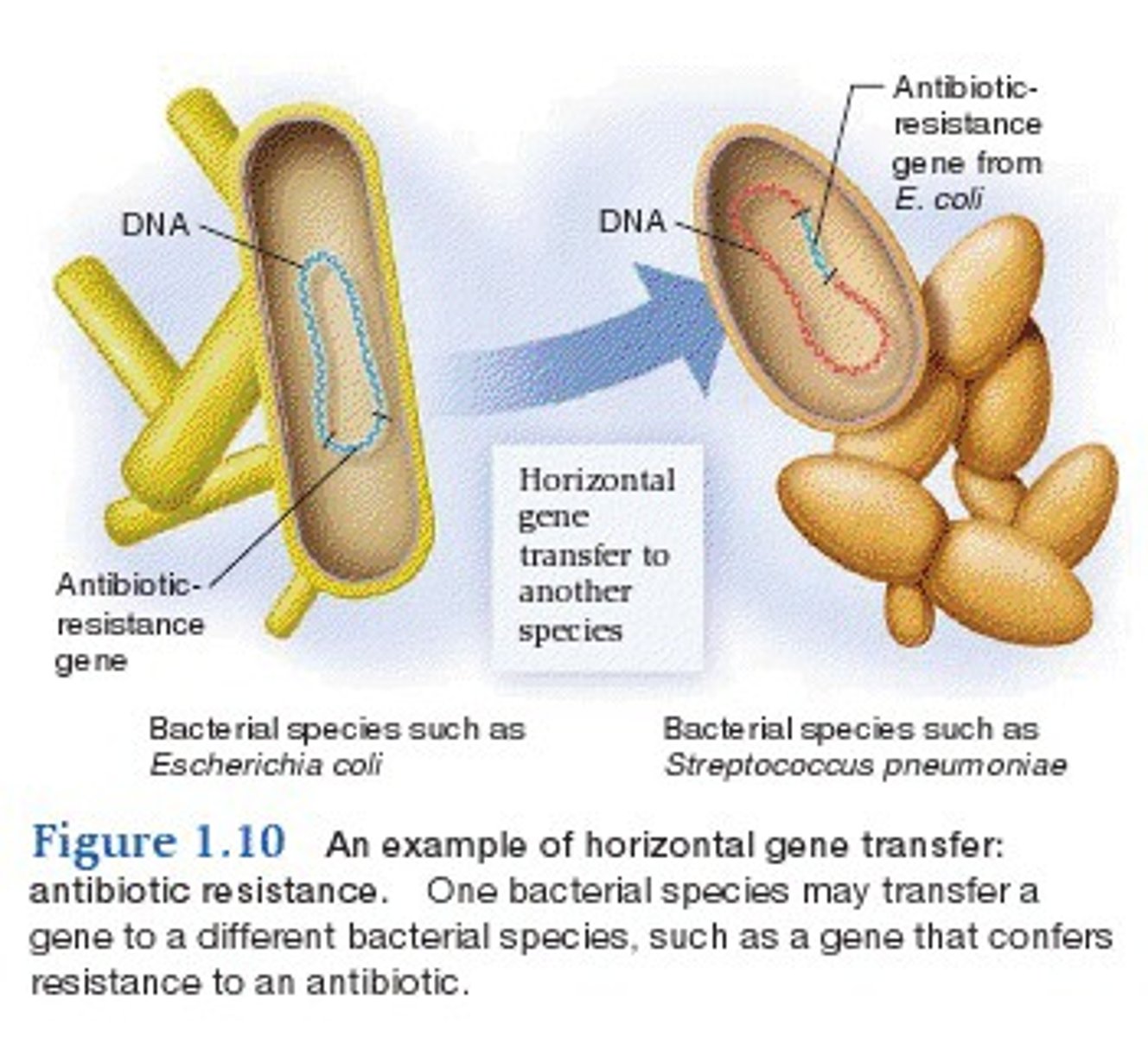
Horizontal gene transfer
the movement of genes from one genome to another; plasmids, viral infection, fusion of organisms
Microevolution
a change in allele frequencies in a population over generations (time)
Genetic variation
the variation in the DNA sequence of each organisms' genomes
The Hardy-Weinberg Principle
Describes a population that is not evolving
The Hardy-Weinberg Equation
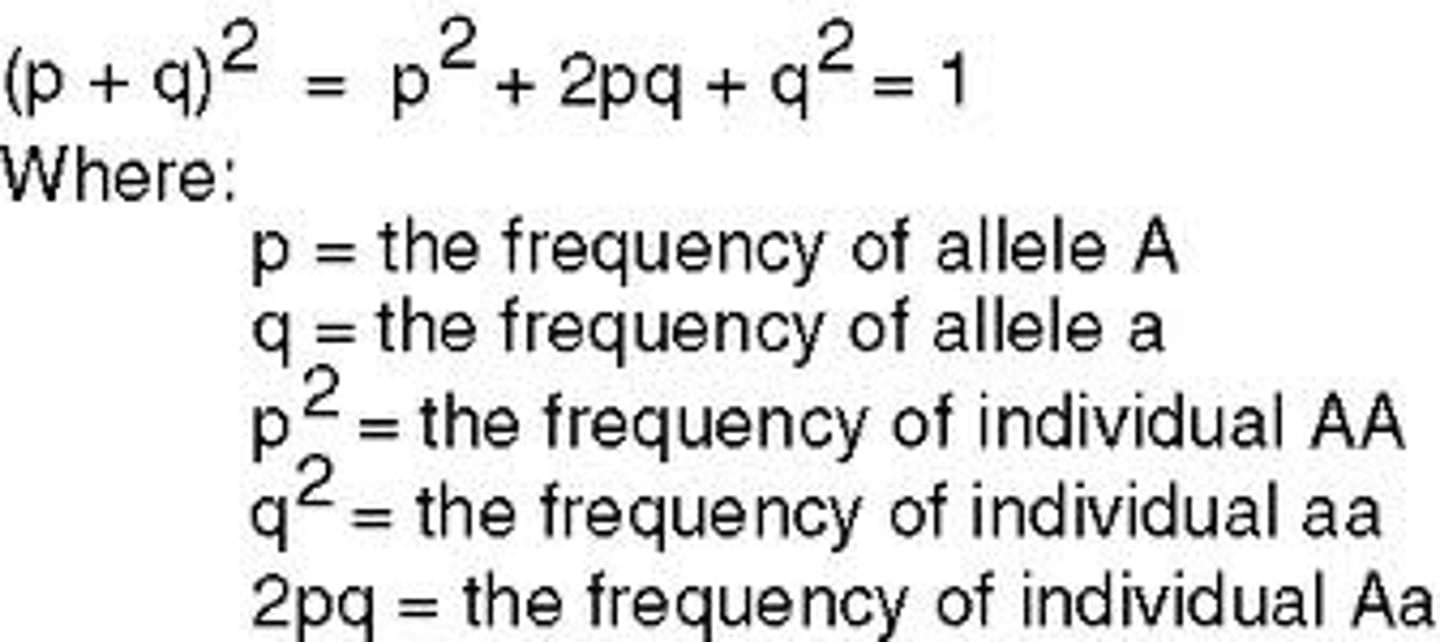
The Hardy-Weinberg Equilibrium conditions
The condition for non evolving populations are rarely met in nature:
1. No mutations
2. Random mating
3. No natural selection
4. Extremely large population size
5. No gene flow
In real populations, allele frequencies do change
Genetic drift
Describes how allele frequencies fluctuate unpredictably from one generation to the next; due to randomness and chance
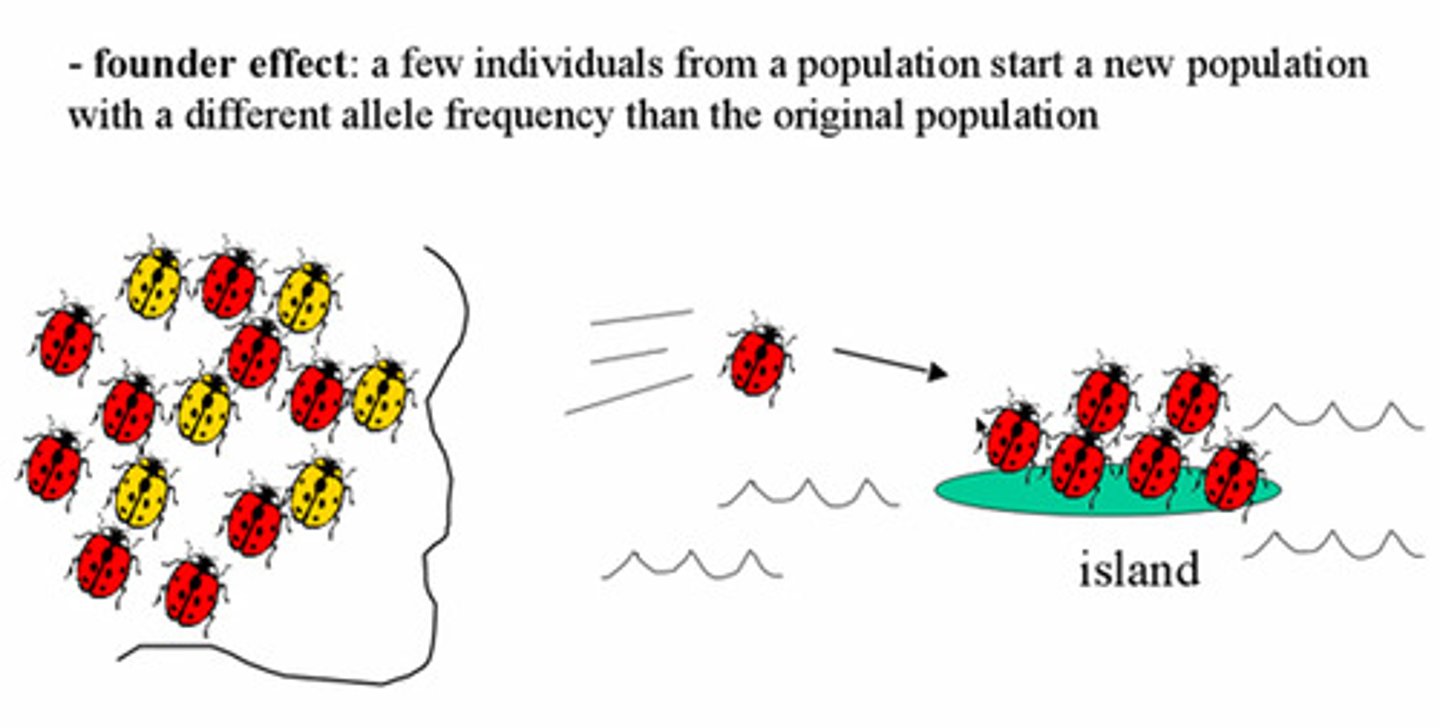
The Founder Effect
occurs when a few individuals become isolated from a larger population
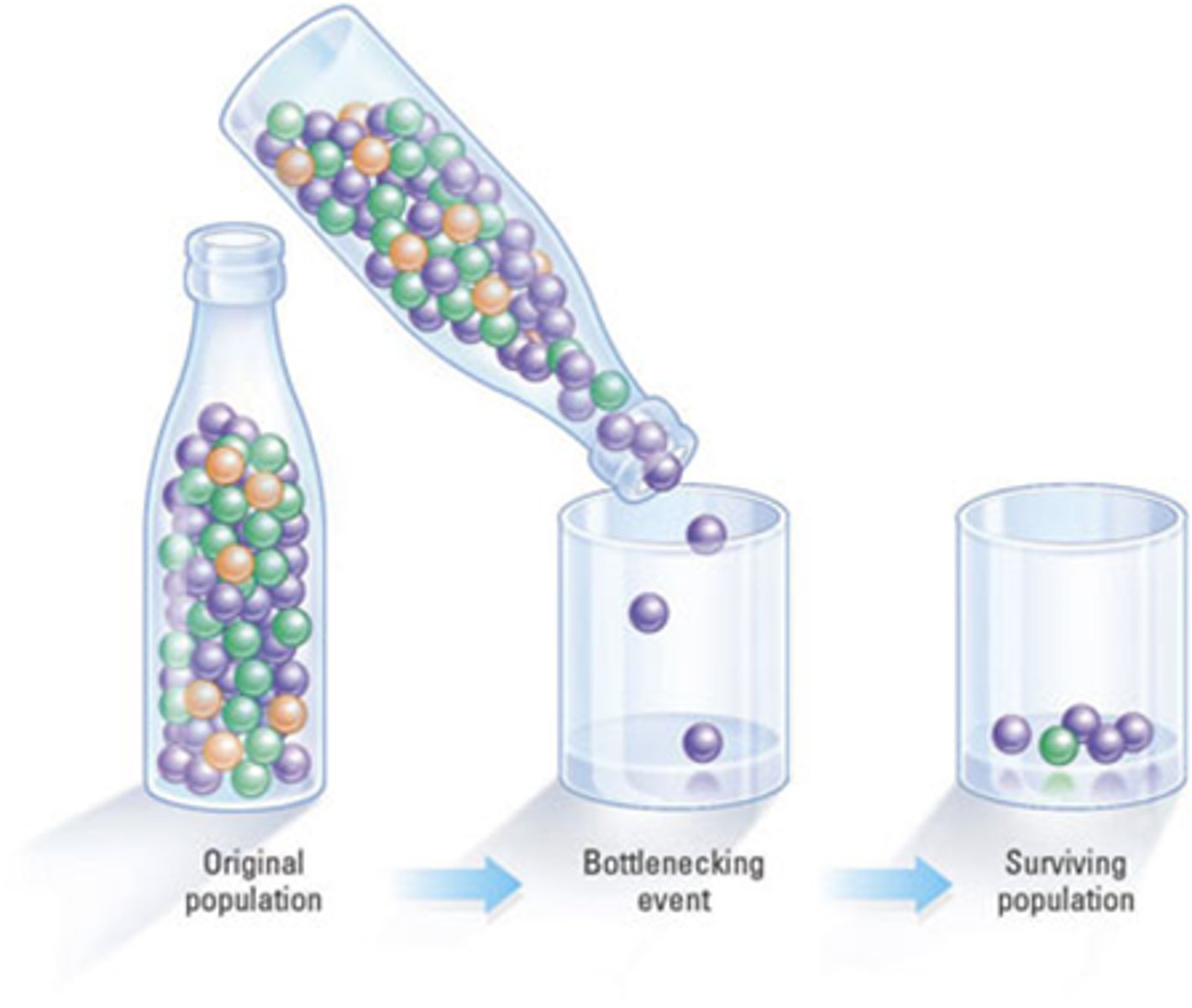
The Bottleneck Effect
can result from drastic reduction in population size due to a sudden environmental change; the resulting gene pool may no longer be reflective of the original population's gene pool
Gene flow
the movement of alleles among populations
Adaptive evolution
an increase in the frequency of alleles that improve fitness due to natural selection
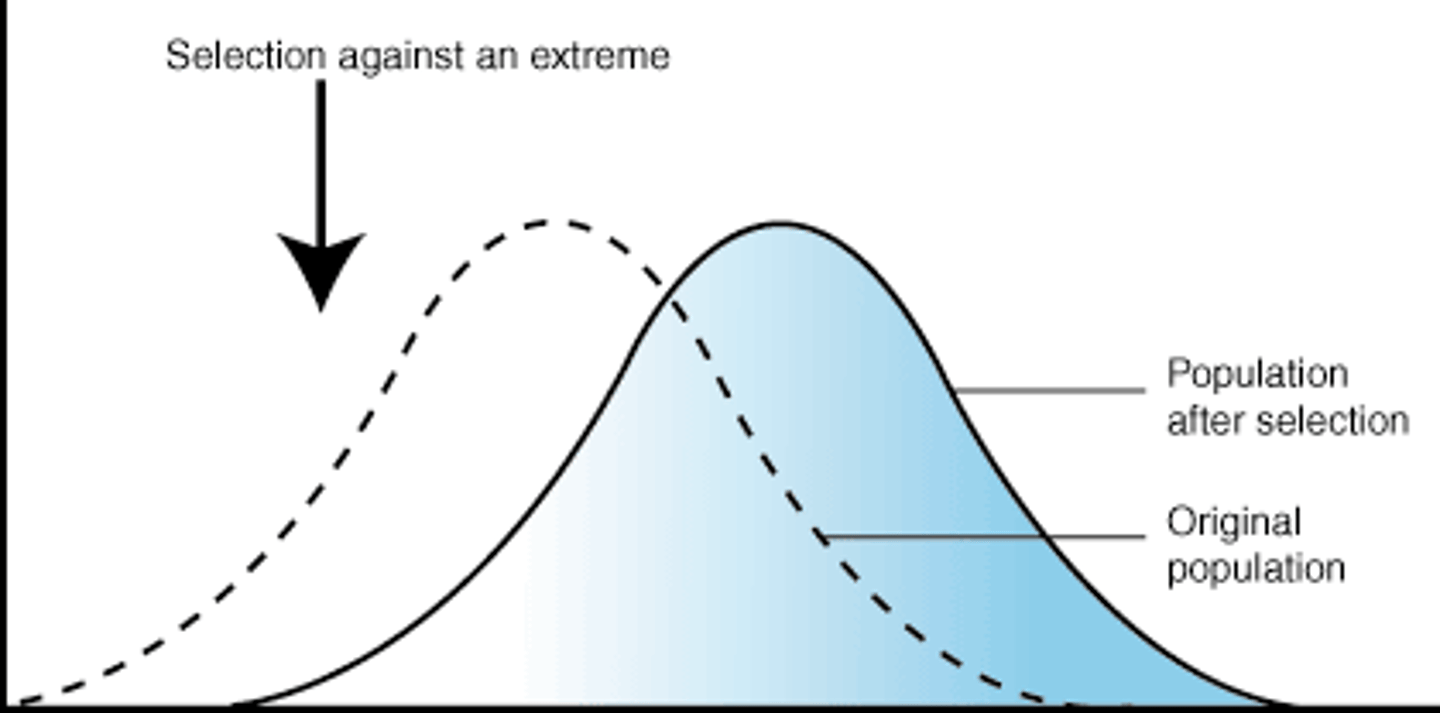
Directional selection
favors individuals at one end of the phenotypic range
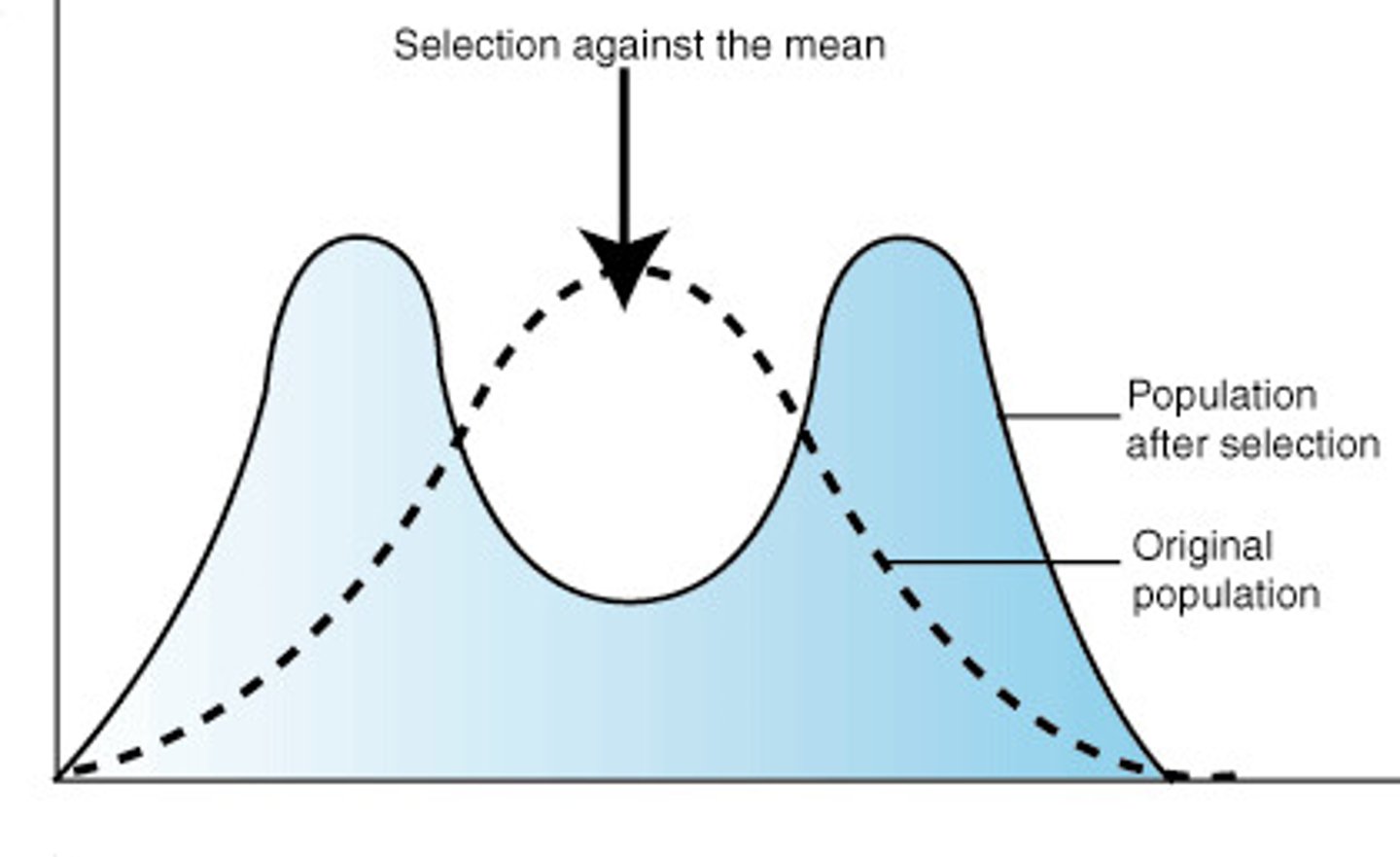
Disruptive selection
favors individuals at both extremes of the phenotypic range
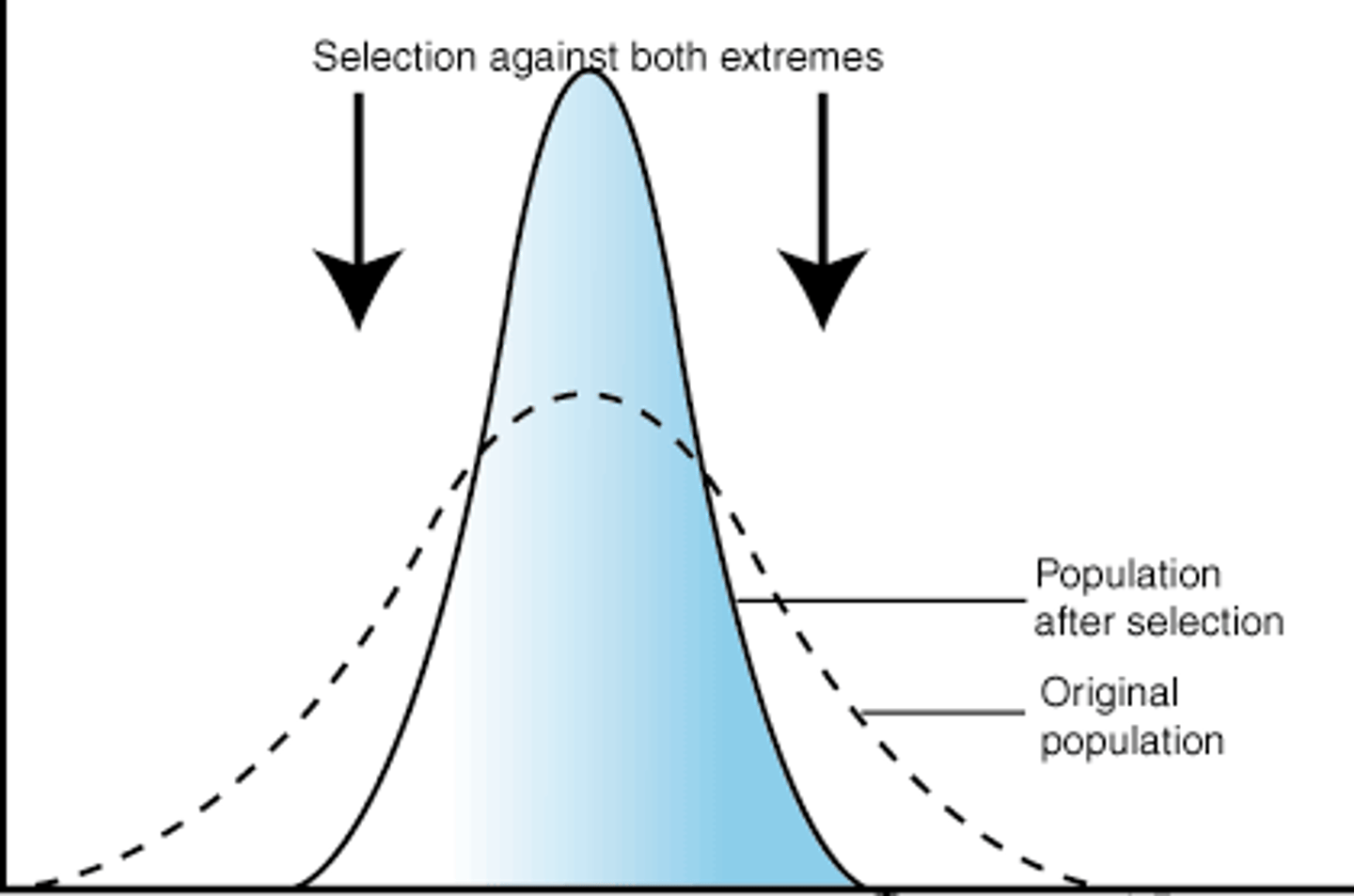
Stabilizing selection
favors intermediate variants and acts against extreme phenotypes
Sexual selection
natural selection for mating success; certain phenotypes are correlated with better overall genotype
Sexual Dimorphism
marked differences between the sexes in secondary sexual characteristics
Speciation
the process by which one species splits onto two or more species
Macroevolution
refers to broad patterns of evolutionary change above the species level
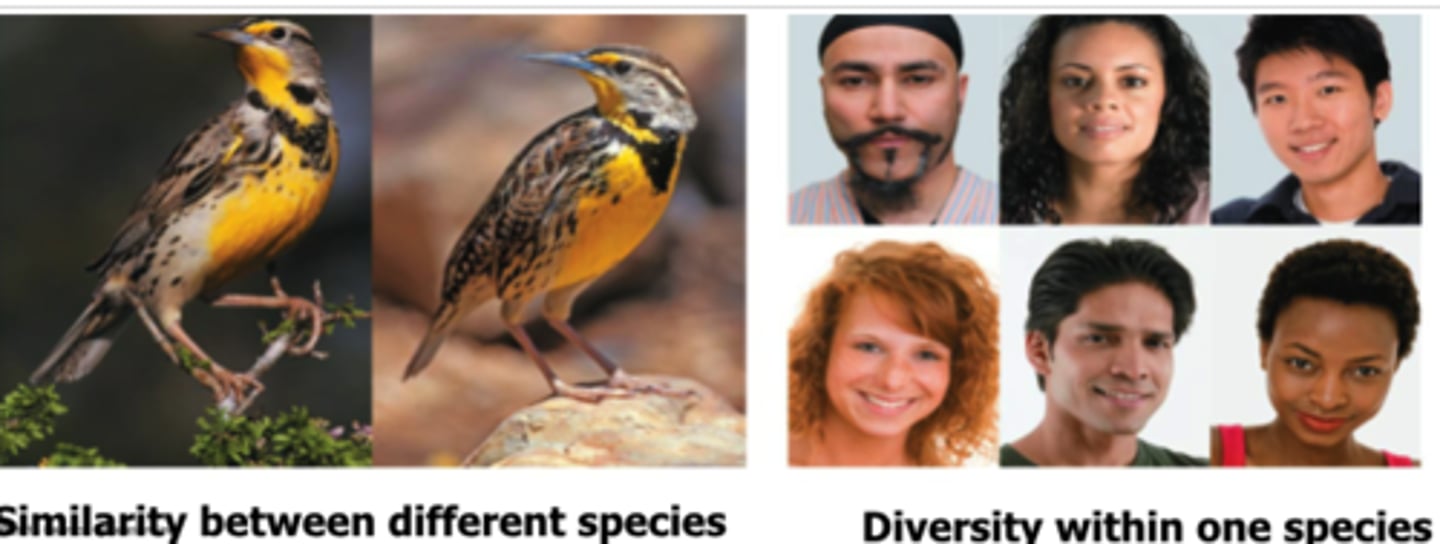
Biological species concept
states that a species is a group of populations whose members have the potential to interbreed in nature and produce viable, fertile offspring
Reproductive isolation
the existence of biological barriers that impede two species from producing viable, fertile offspring
Pre-zygotic barriers
block fertilization by:
- Impeding different species from attempting to mate
- Preventing the successful competition of mating
- Hindering fertilization if mating is successful
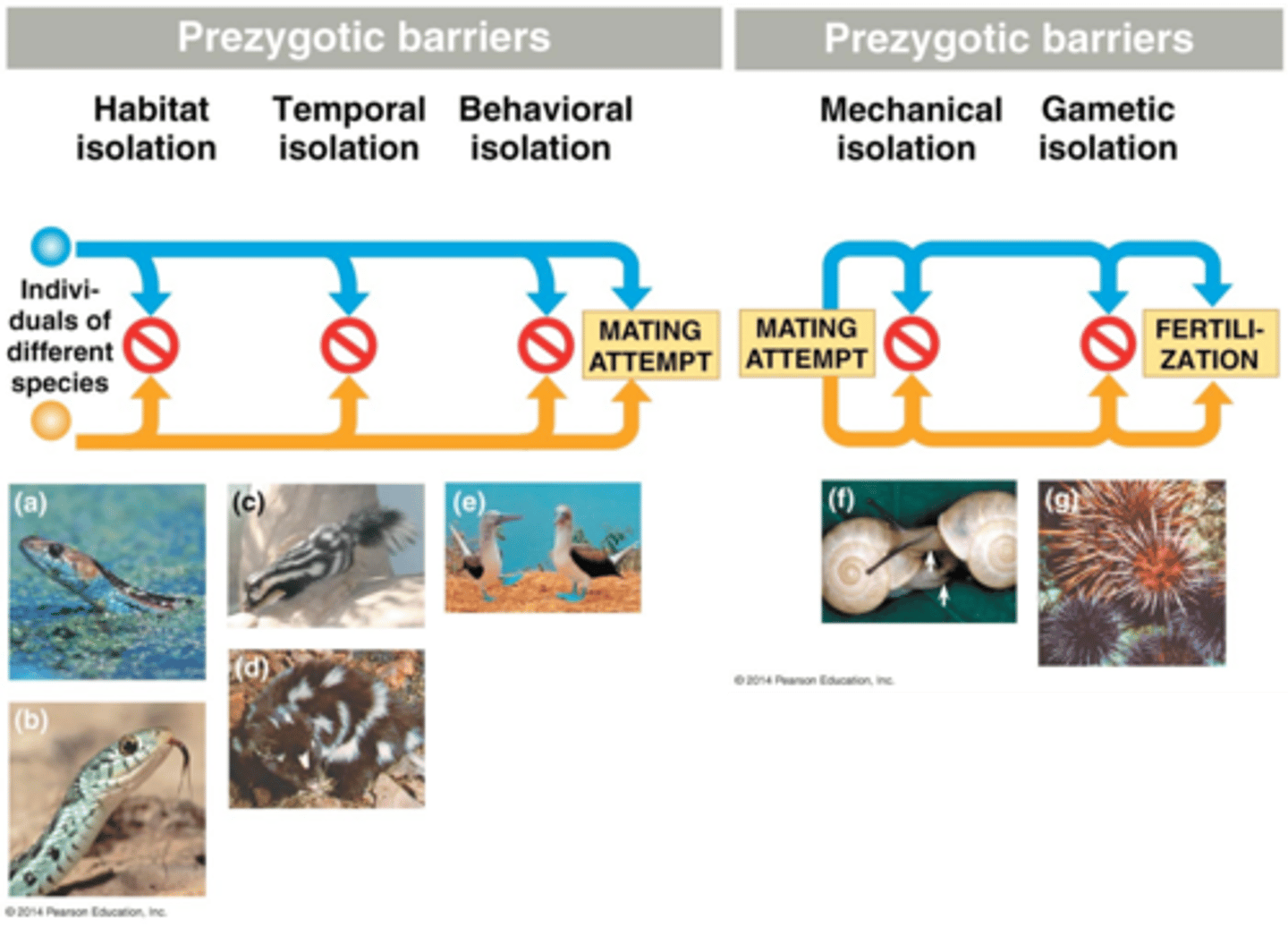
Types of pre-zygotic barriers
Habitat, Temporal, Behavioral, Mechanical & Gametic Isolation
post-zygotic barriers
prevent the hybrid zygote from developing into a viable, fertile by:
- Reduced hybrid viability
- Reduced hybrid fertility
- Hybrid breakdown
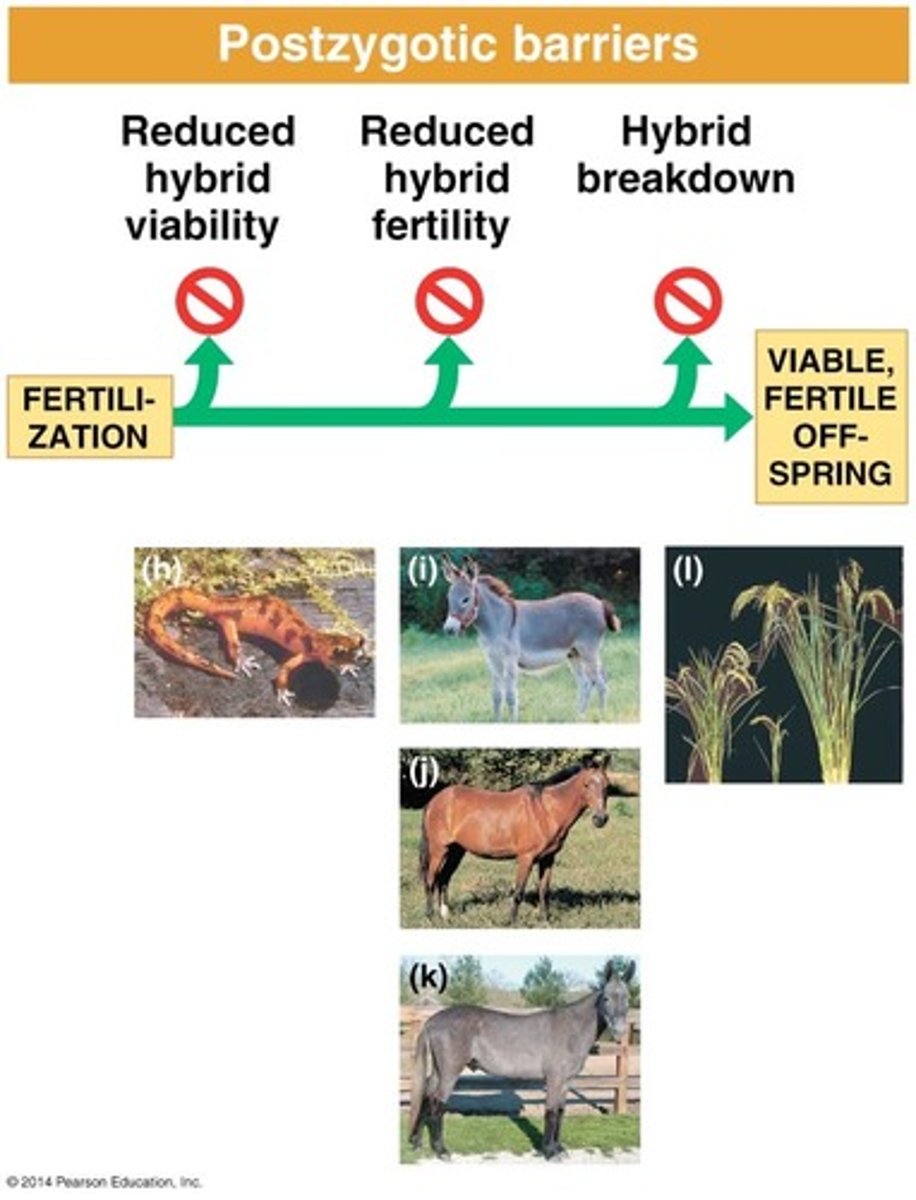
Reduced hybrid viability
Genes of different parent species may interact and impair the hybrid development or survival
Reduced hybrid fertility
even if hybrids are vigorous, they may be sterile
Ex. Donkey + Horse = Mule
Hybrids
the offspring of crosses between different species
Hybrid breakdown
some first-generation hybrids are fertile, but when they mate with another species or either parent species, offspring of the next generation are feeble to sterile
Ex. strains of cultivated rice accumulating bad alleles
Morphological species concept
defines a species by structural features
(applies to sexual and asexual species, but relies on subjective criteria)
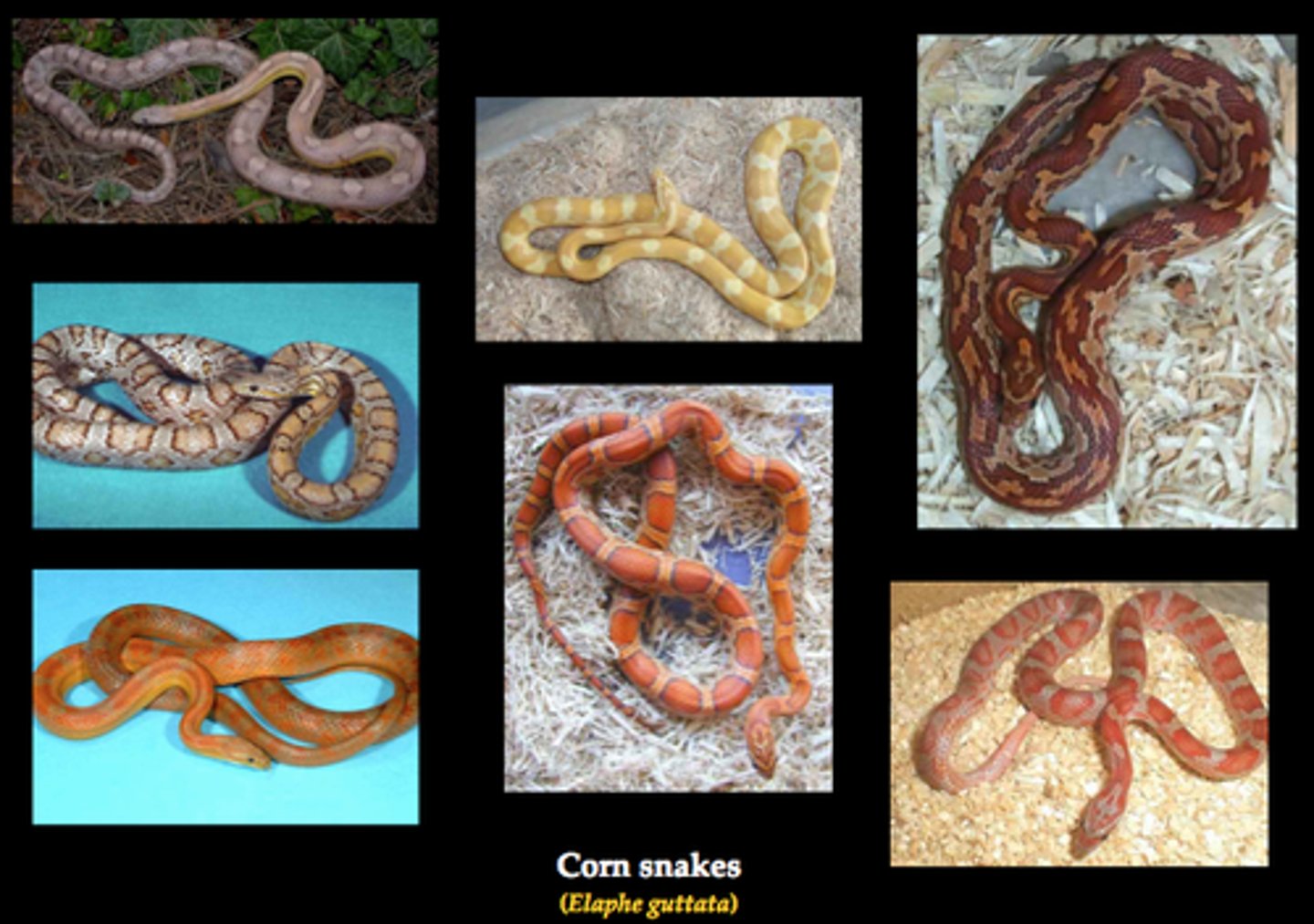
Ecological species concept
views a species in terms of its ecological niche
(applies to sexual and asexual species and emphasizes the role of disruptive selection)
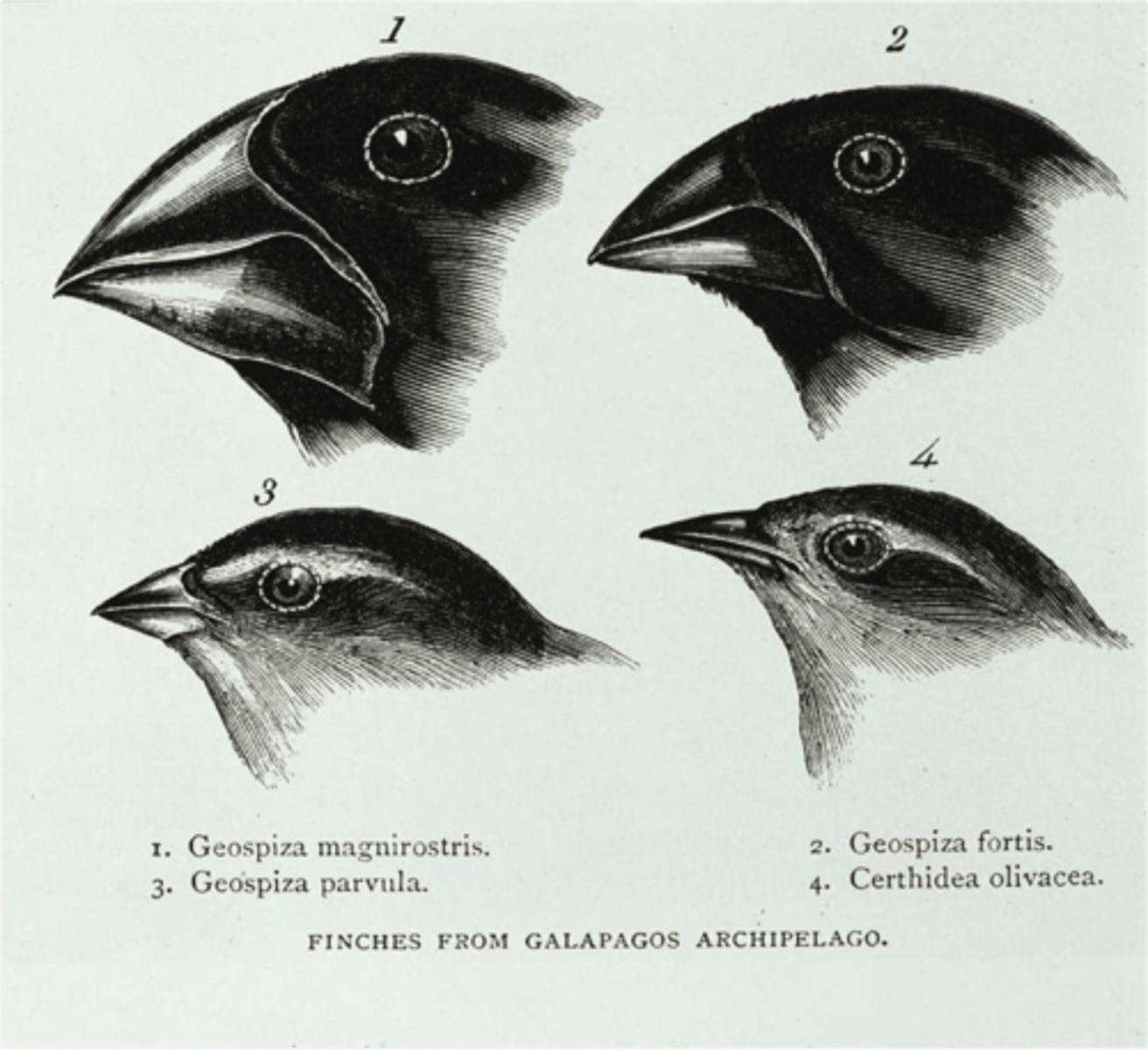
Phylogenetic species concept
defines a species as the smallest group of individuals on a phylogenetic tree (i.e. the smallest branch)
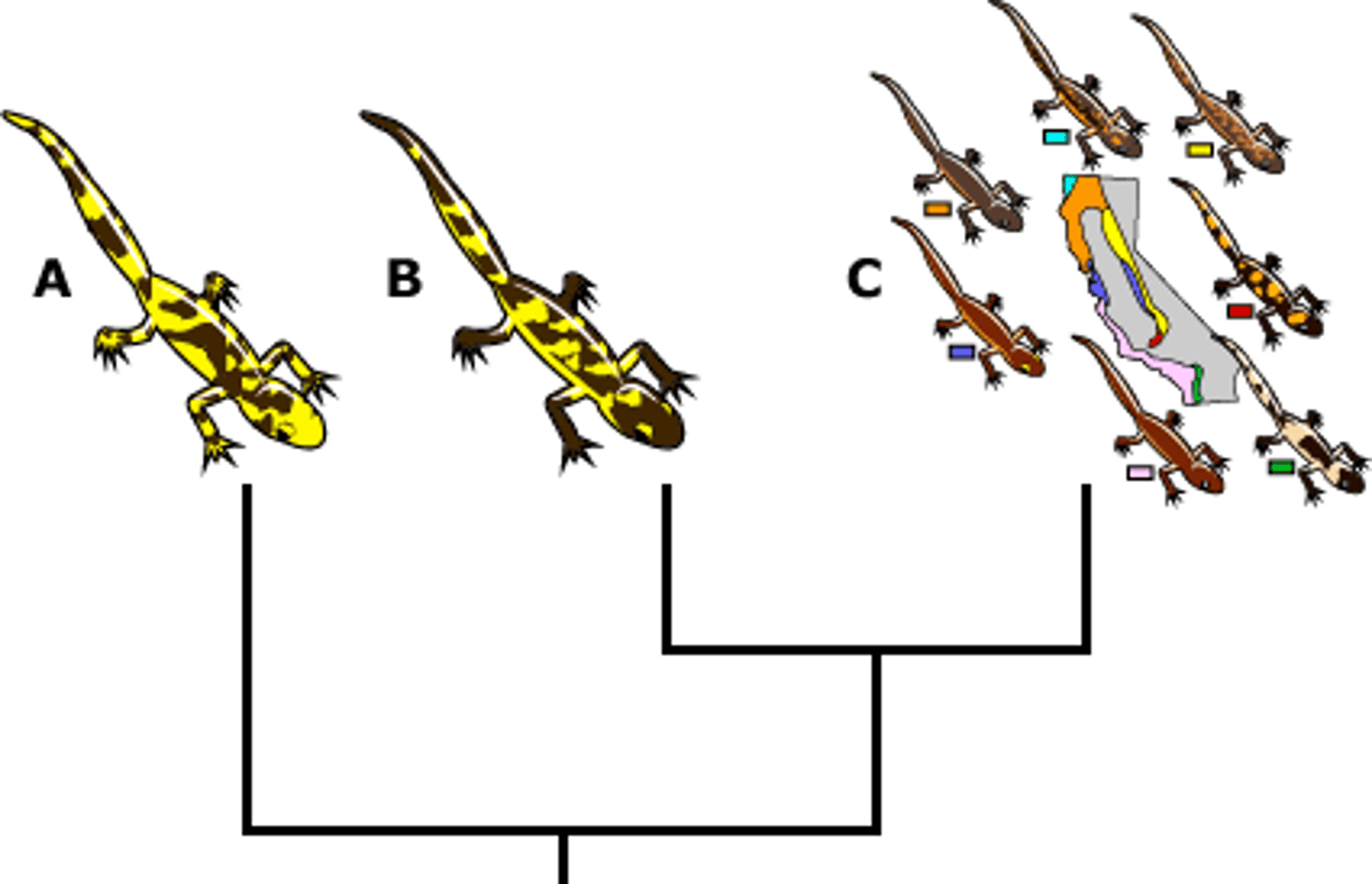
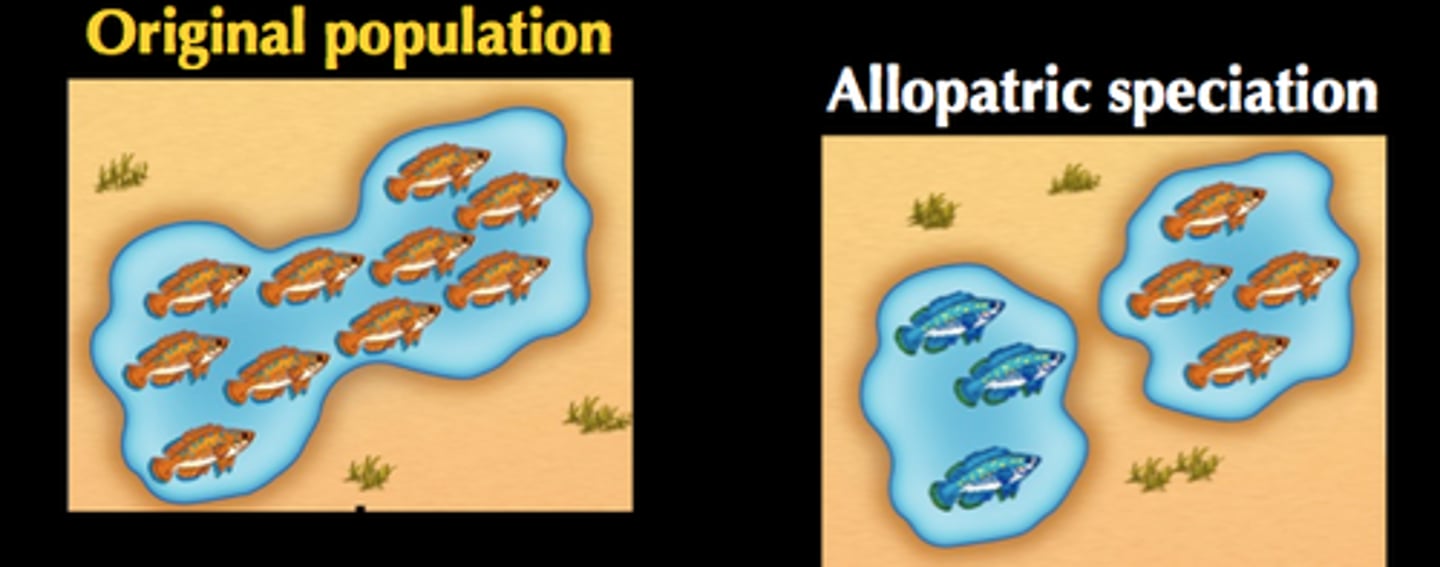
Allopatric speciation
gene flow is interrupted when a population is divided into geographically isolated subpopulations
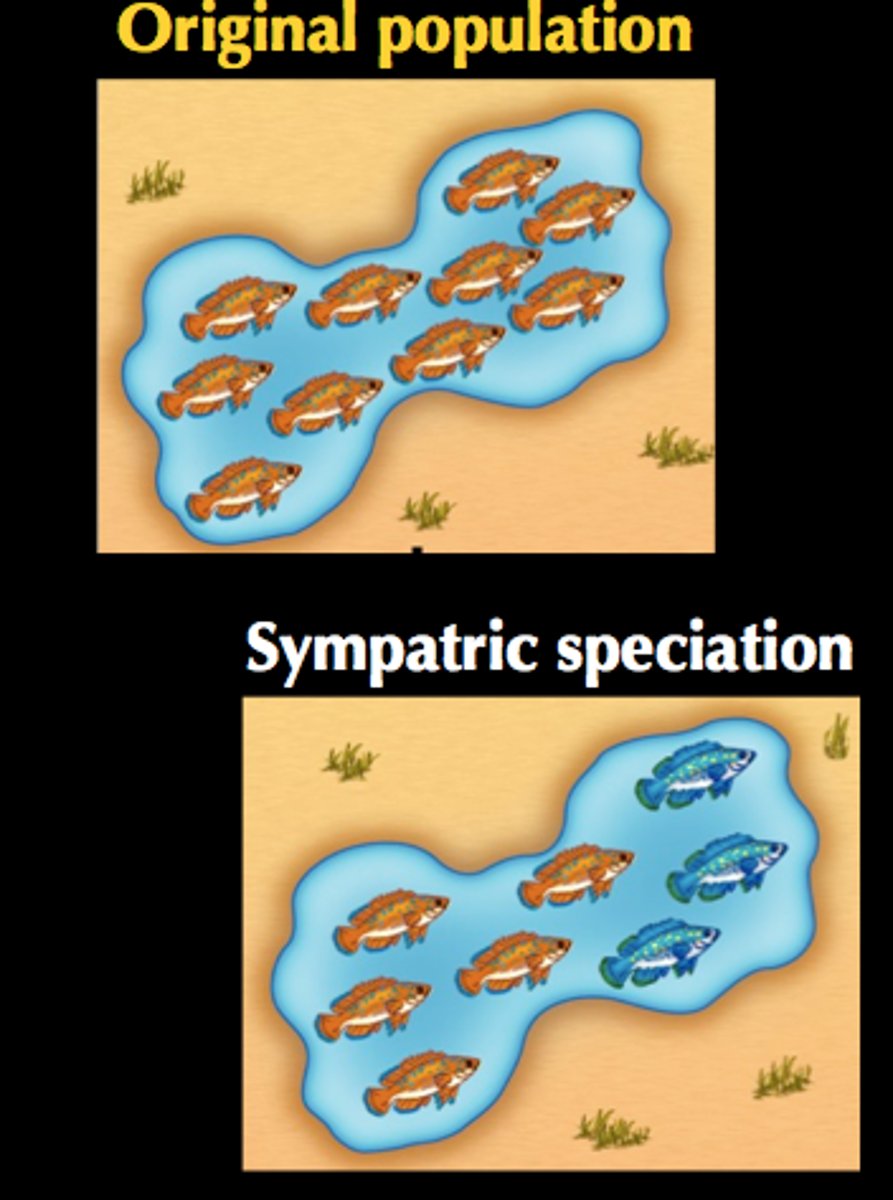
Sympatric speciation
speciation that takes place in populations that live in the same geographic area
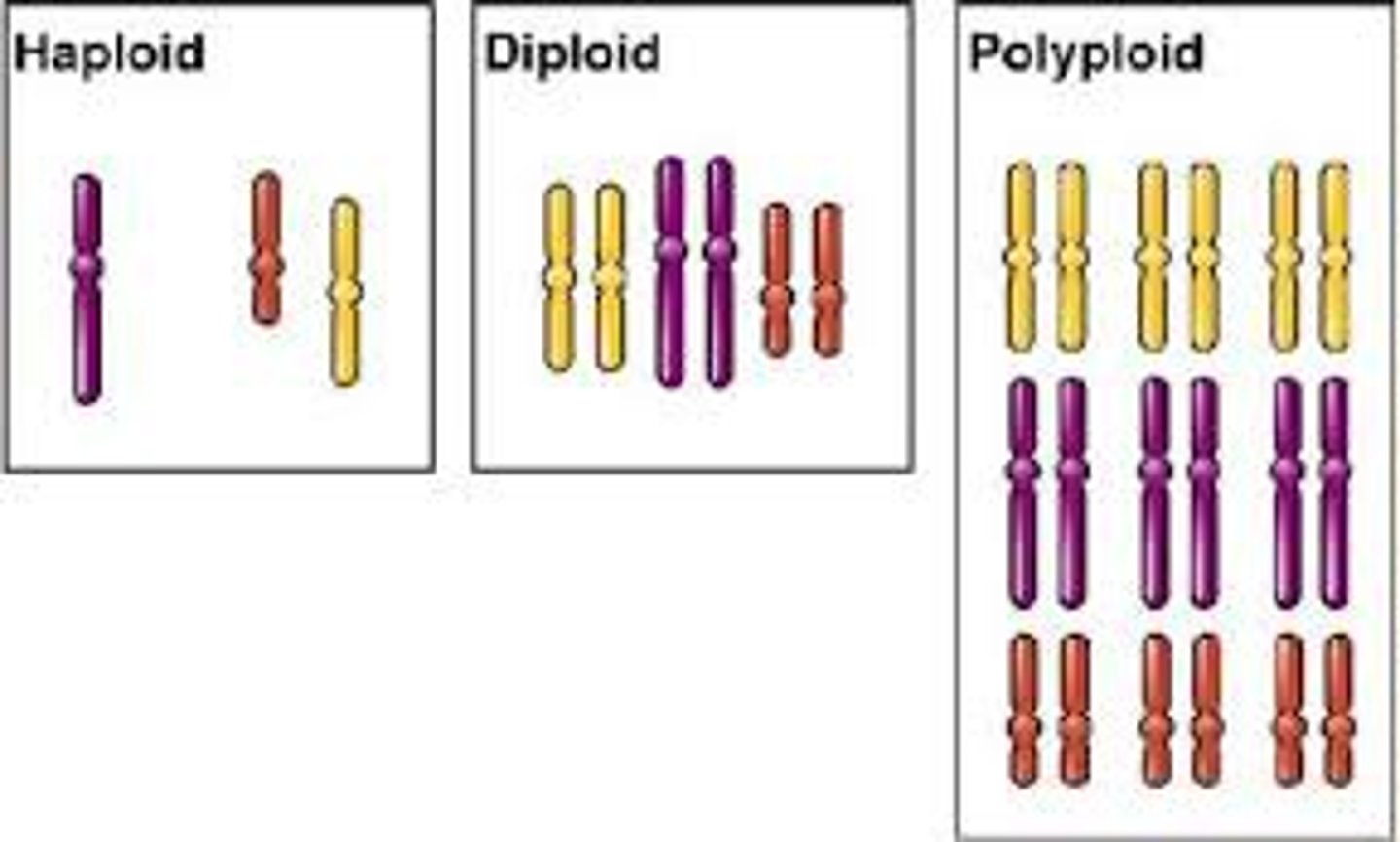
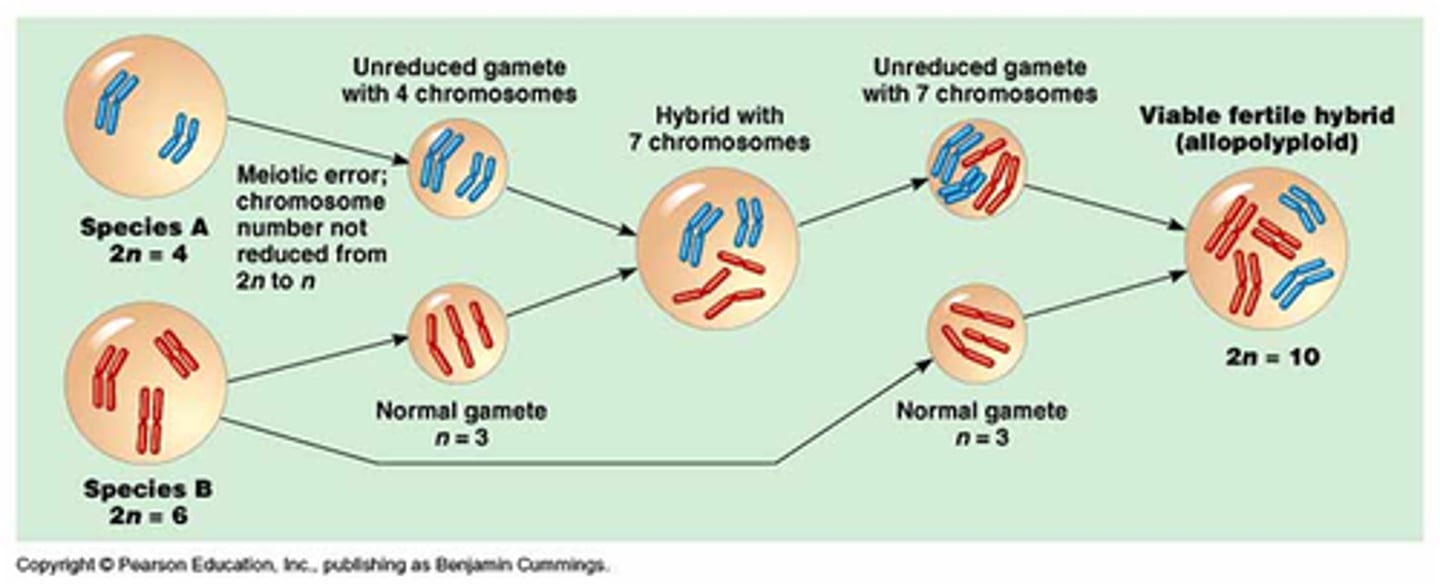
Polyploidy
the presence of extra sets of chromosomes due to accidents during cell division
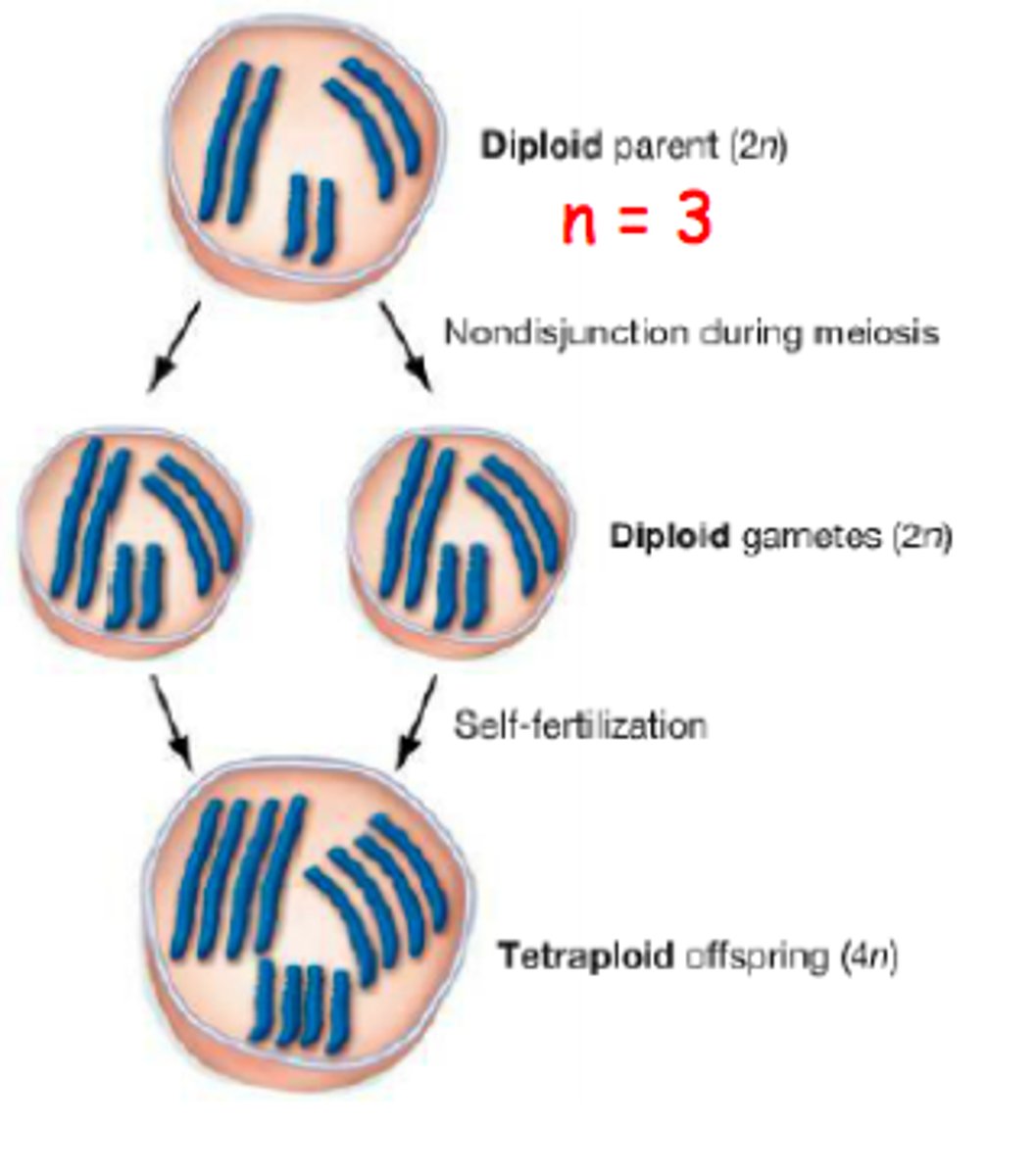
Autoploidy
an individual with more than two chromosome sets, derived from one species
Allopolyploid
a species with multiple sets chromosomes derived from different species
Punctuated equilibria
periods of apparent stasis punctuated by sudden change; speciation can occur rapidly or slowly, can result from changes in few or many genes
Half-life
the time required for half the parent isotope to decay
Stromatolites
oldest known fossils; rocks formed by the accumulation of sedimentary layers on bacterial mats
Plate techtonics
a theory explaining the structure of the earth's crust and many associated phenomena as resulting from the interaction of rigid (lithospheric) plates that move slowly over the underlying mantle
Mass extinction
the result of disruptive global environmental changes; when the rate of extinction (caused by changes in a species' environment) increases dramatically
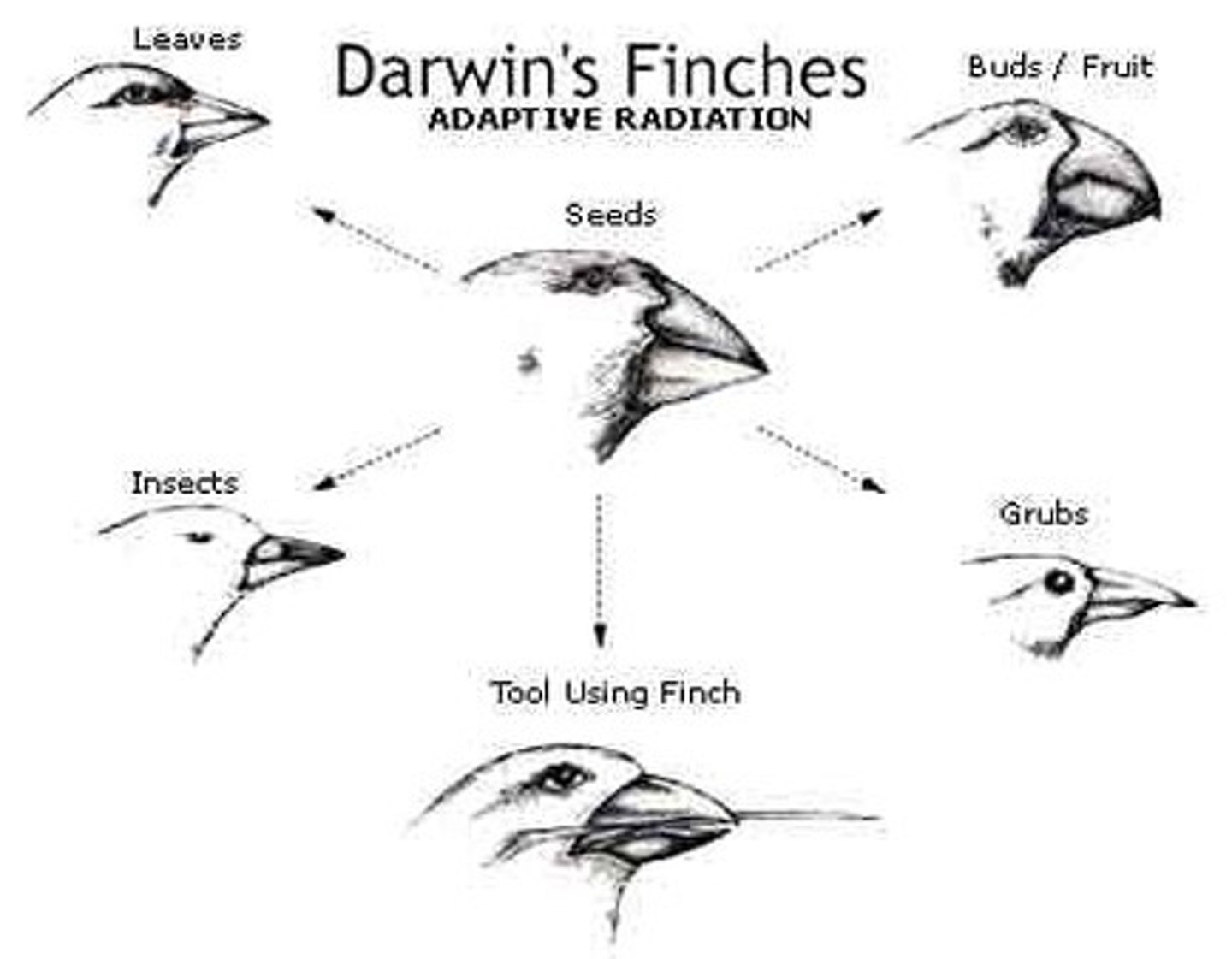
Adaptive radiation
the evolution of many diversely adapted species from a common ancestor
List and briefly describe Darwin's two observations and two inferences on natural selection.
(Ch. 19)
- Observation #1: Members of a population often vary in their inherited traits
- Observation #2: All species can produce more offspring than the environment can support, and many of these offspring fail to survive and reproduce
- Inference #1: Individuals whose inherited traits give them a higher prob of surviving and reproducing in a given environment tend to leave more offspring than other individuals
- Inference #2: This unequal ability of individuals to survive & reproduce will lead to the accumulation of favorable traits in the population over generations
List and briefly describe four conditions that must be present to maintain the Hardy-Weinberg equilibrium. Additionally, state what is occurring if the equilibrium is determined to be broken? (Ch. 21)
The condition for non evolving populations are rarely met in nature:
- No mutations: without DNA mutations, a species is unable to become introduced to new genetic material which inhibits natural selection from occurring
- Random mating
- No natural selection: natural selection can not occur because the affected species has no variation in genes resulting in a lack of competition for new desirable traits
- Extremely large population size: a large pop means the population is not affected by evolutionary causation in their environment (because of their ability to survive and flourish)
- No gene flow: no genetic variation or random mating leads to a lack of gene flow resulting in a population unable to evolve
If the frequencies of alleles in a population are changing (if the equilibrium is determined to be broken) it can be concluded that the population is evolving
List and briefly describe five reproductive barriers that may exist between species. Additionally, state whether each reproductive barrier is pre-zygotic or post-zygotic. (Ch. 22)
PREZYGOTIC BARRIERS block fertilization from occurring by :
HABITAT ISOLATION: Two species encounter each other rarely, or not at all, because they occupy different habitats, even though not isolated by physical barriers
- Aquatic vs. terrestrial garter snakes
TEMPORAL ISOLATION: Species that breed at different times of the day, different seasons, or different years cannot mix their gametes
- Ex. mating season of skunk species
BEHAVIORAL ISOLATION: Courtship rituals and other behaviors unique to a species are effective barriers
- Ex. blue-footed boobies display
MECHANICAL ISOLATION: Morphological differences prevent successful mating
- Ex. snail species' reproductive anatomy
GAMETIC ISOLATION: Sperm of one species may not be able to fertilize eggs of another species
- Ex. sea urchin gametes
POSTZYGOTIC BARRIERS prevent the hybrid zygote from developing into a viable, fertile by:
REDUCED HYBRID VIABILITY: Genes of the different parent species may interact and impair the hybrid development or survival
REDUCED HYBRID FERTILITY: Even if hybrids are vigorous, they may be sterile
- Ex. Donkey + Horse = Mule
HYBRID BREAKDOWN: Some first-generation hybrids are fertile, but when they mate with another species or either parent species, offspring of the next generation are feeble or sterile
- Ex. strains of cultivated rice accumulating bad alleles