ORAL ANATOMY 7-13
 Call Kai
 Learn
Learn Practice Test
 Spaced Repetition
 Match
Match Flashcards
 Knowt Play
1/40

There's no tags or description
Looks like no tags are added yet.
Name | Mastery | Learn | Test | Matching | Spaced | Call with Kai |
|---|
No analytics yet
Send a link to your students to track their progress
41 Terms
What is the shape of the crown of the mandibular canine when viewed from the proximal: circula, diamond, triangular, square
triangular
Maxillary canines are narrower mesiodistally than the central incisors: true or false
true
At what age do the maxillary canines erupt: 8-9 year, 9-10 years, 11-12 years, 13-14 years
11-12 years
The lingual surface anatomy of the maxillary canines is more prominent than the mandibular canines: true or false
true
The definition of lingual ridge for canines should include all of the following except: convexity, runs mesiodistally across the crown, it splits the lingual fossa into two called the mesial and distal fossa, seen on the lingual surface, runs from the cingulum to the cusp tip
runs mesiodistally across the crown
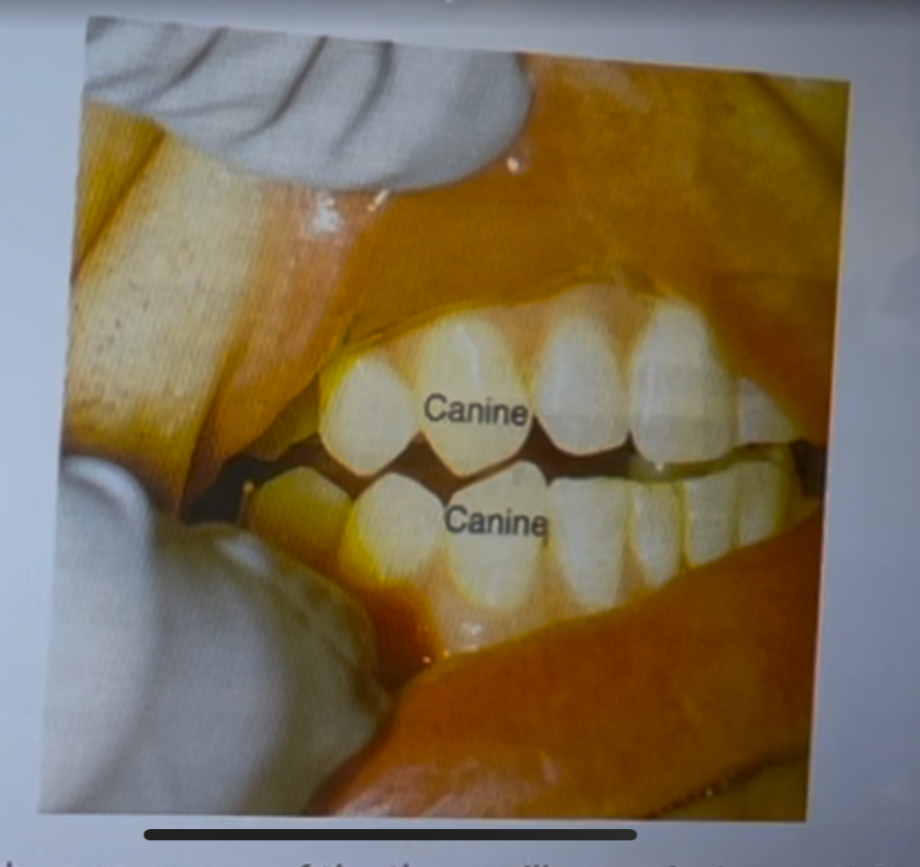
it has attrition, the mesial cusp slope is longer than it should be, the patient is probably grinding his teeth, there is no attrition on the maxillary canine it is only on the mandibular canine, more than one of the above
more than one of the above
The tooth that possesses the longest single root is: incisor, canine, premolar, molar
canine
The canines are considered high risk for periodontal disease and caries: true or false
false
Which of the following annotates a permanent canine: 3, 11, 21, 28, 44
11
The lingual anatomy of the canine includes: lingual ridge, cingulum, two marginal ridges, two lingual fossae, all of the above
all of the above
Maxillary and mandibular canines resemble each other and their crowns are about the same size: true or false
true
The permanent canines are considered succedaneous teeth: true or false
true
The CEJ of the maxillary and mandibular canines curves higher incisally on the distal than on the mesial: true or false
false
Which of the following is not true for the maxillary canine: single rooted, has concabities on both mesial and distal, have less lingual anatomy than the mandibular canine, mesial cusp slope is shorter than the distal cusp slope
have less lingual anatomy than the mandibular canine
The functions of the canines include: canine guidance, piercing food, esthetics supporting the lips, all of the above
all of the above
Which describes the root of the maxillary second premolar: bifurcated, mesial concavity on the cervical third of the root, single apex, single longest root
single apex
Which premolar has a mesial marginal ridge groove: maxillary first premolar, maxillary second premolar, mandibular first premolar, mandibular second premolar, more than one of the above
maxillary first premolar
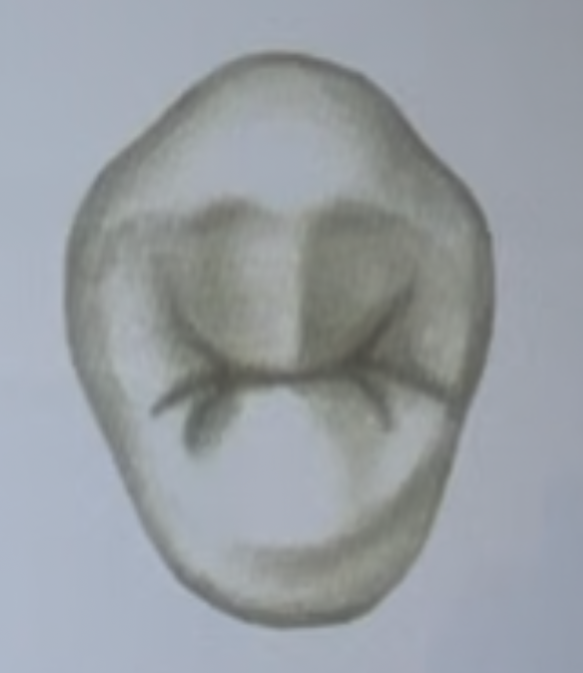
Maxillary right first premolar, maxillary right second premolar, mandibular right first premolar, mandibular right second premolar
maxillary right first premolar
These are sharp, V-shaped depressions on the occlusal surfaces of posterior teeth: cuspal planes, cusps, marginal ridges, developmental grooves
developmental grooves
Which premolar has a bifurcated root: maxillary first premolar, maxillary second premolar, mandibular first premolar, mandibular second premolar, more than one of the above
maxillary first premolar
For posterior teeth, the marginal ridges are seen when look at the occlusal surfaces: true or false
true
The maxillary first premolar is larger than the maxillary second premolar: true or false
true
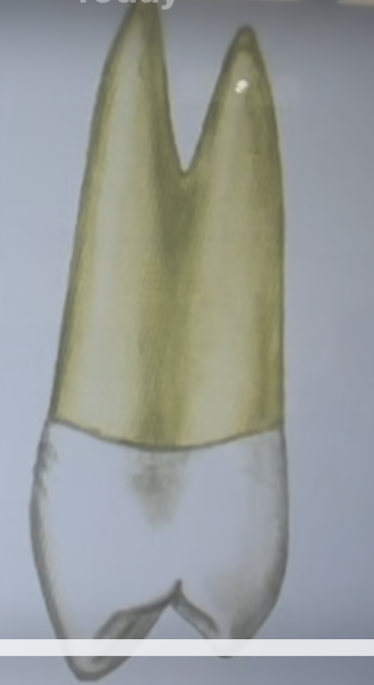
Maxillary right first premolar, maxillary right second premolar, mandibular right first premolar, mandibular right second premolar
maxillary right first premolar
These are pyramid-shaped features on posterior teeth: cuspal planes, cusp, marginal ridge, developmental groove
cusp
These are the sloping areas between cusp ridges: cuspal planes, cusp, marginal ridge, developmental groove
cuspal planes
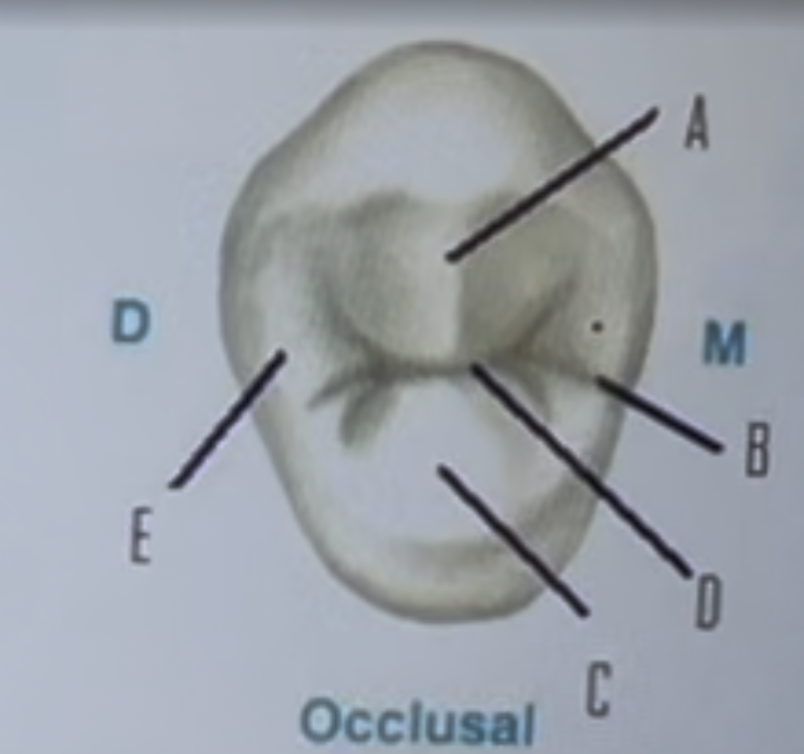
Mesial marginal ridge groove, lingual cusp, distal marginal ridge, central groove, buccal cusp, A B C D E
A buccal cusp, B mesial marginal ridge groove, C lingual cusp, D central groove, E distal marginal ridge
Which premolar has a mesiolingual groove: maxillary first premolar, maxillary secon premolar, mandibular first premolar, mandibular second premolar
mandibular first premolar
Which of the following mandibular first premolar type traits could be seen from the lingual aspect: transverse ridge, snake eyes, lingual cusp, mesiolingual groove, all of the above could be seen from the lingual on this particular tooth
all of the above could be seen from the lingual on this particular tooth
Which of the following is NOT true for the mandibular second premolar: generally has 3 cusps (most common type), smaller than the mandibular first premolar, erupts later than the mandibular first premolar, more square from the occlusal view, none of the above all are true
smaller than the mandibular first premolar
Which of the following is the most common kind of mandibular second premolar: Y pattern, U pattern, H pattern, none of the above
Y pattern
Which premolar has 3 cusps: maxillary first premolar, maxillary second premolar, mandibular first premolar, mandibular second premolar
mandibular second premolar
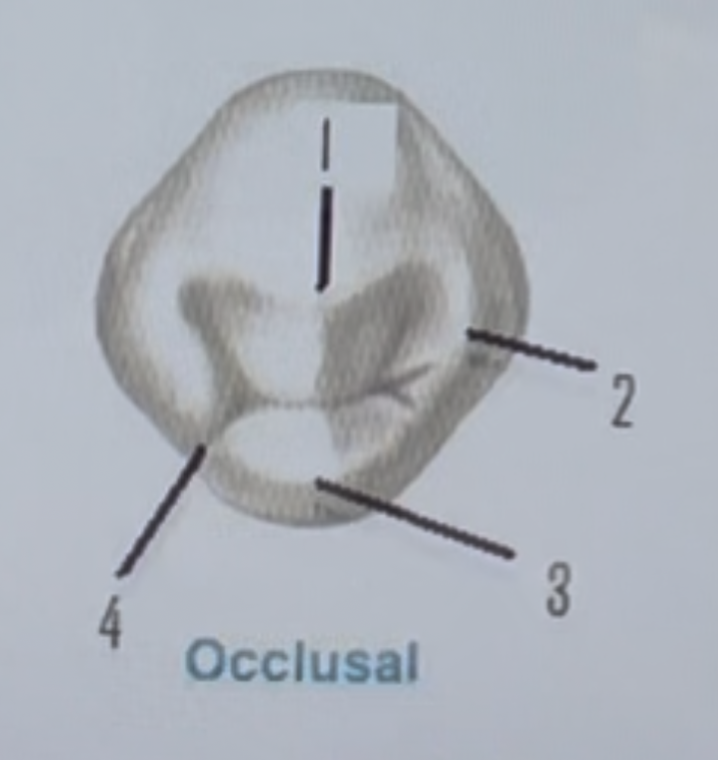
mesiolingual groove, lingual cusp, distal marginal ridge, buccal cusp AND 1, 2, 3, 4
1 buccal cusp, 2 distal marginal ridge, 3 lingual cusp, 4 mesiolingual groove
Which premolar has 2 cusps that are very different in sixe, with the B much larger than the L: maxillary first premolar, maxillary second premolar, mandibular first premolar, mandibular second premolar
mandibular first premolar
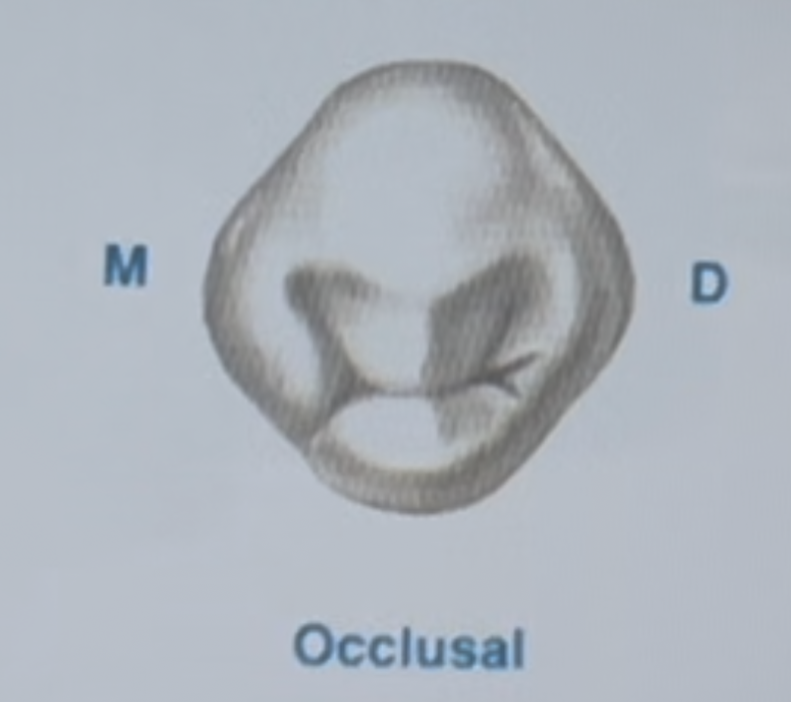
In the diagram of the mandibular first premolar the smaller cusp is the ___ cusp: B, L, DL, none of the above
L
Which premolar has the nickname “snake eyes”: maxillary first premolar, maxillary second premolar, mandibular first premolar, mandibular second premolar, more than one of the above
mandibular first premolar
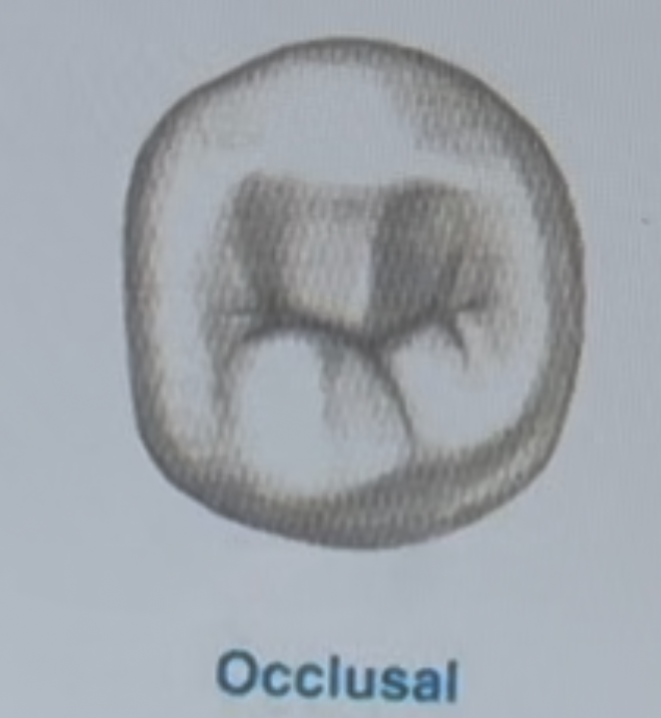
Which premolar is shown in the diagram: maxillary right first premolar, maxillary right second premolar, mandibular right first premolar, mandibular right second premolar
mandibular right second premolar
Which of the following are true of the mandibular first premolar: has a mesiolingual groove, succedanous, 2 cusps (Buccal & Lingual), nicknamed snake eyes, all of the above are true
all of the above are true
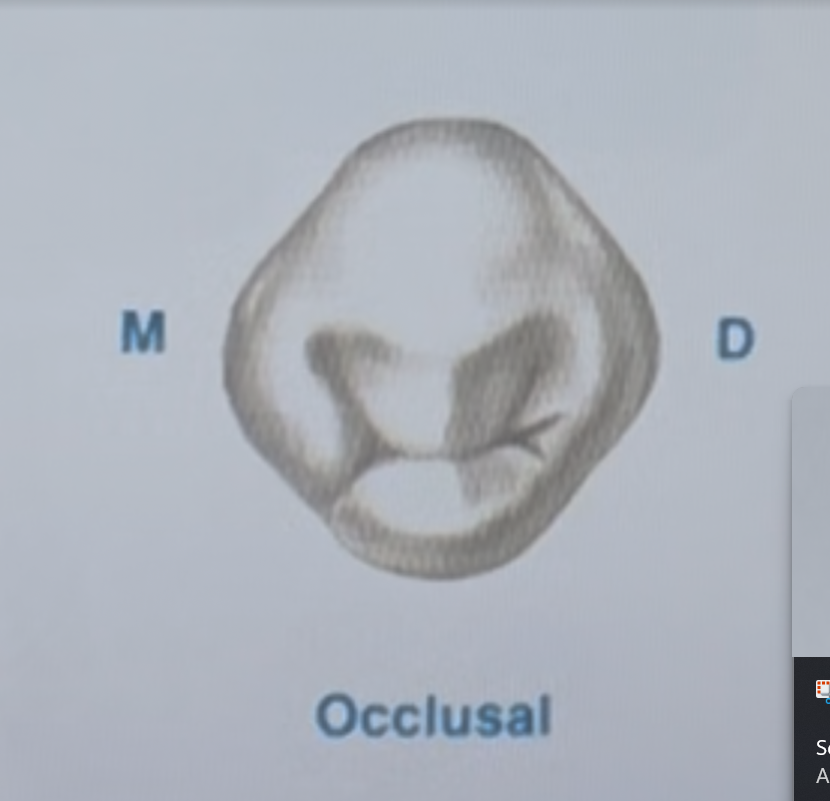
In the diagram of the mandibular first premolar the groove that crosses the mesial marginal ridge is called the : mesial marginal ridge groove, mesiolingual groove, lingual groove, none of the abovee
mesiolingual groove
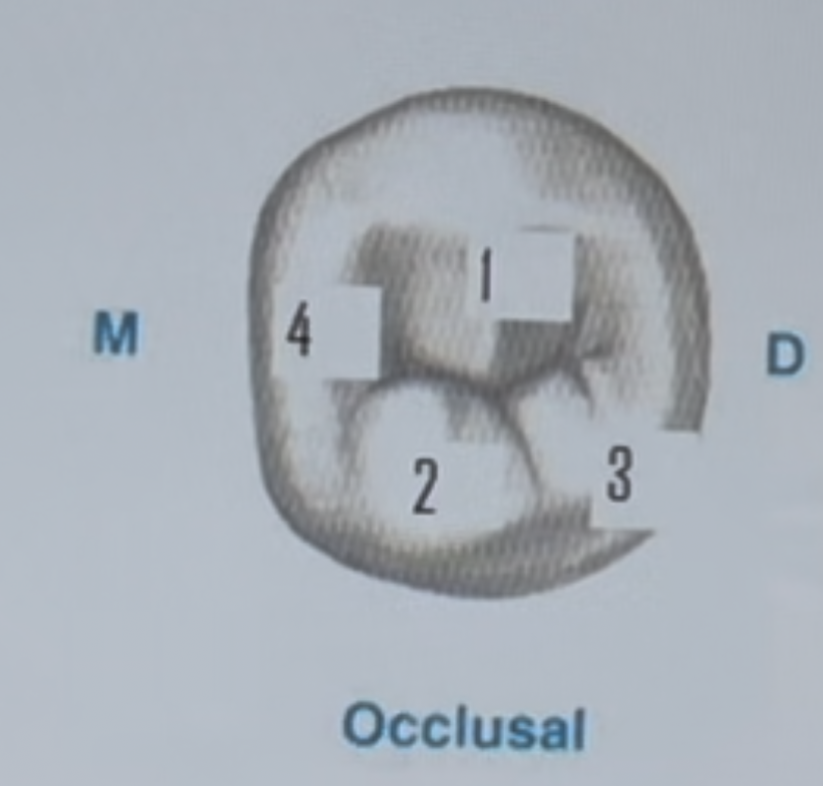
In the diagram of the mandibular right second premolar match the number ro the corresponding parts of the occlusal anatomy: distolingual cusp, buccal cusp, mesiolingual cusp, mesial marginal ridge
1 buccal cusp, 2 mesiolingual cusp, 3 distolingual cusp, 4 mesial marginal ridge
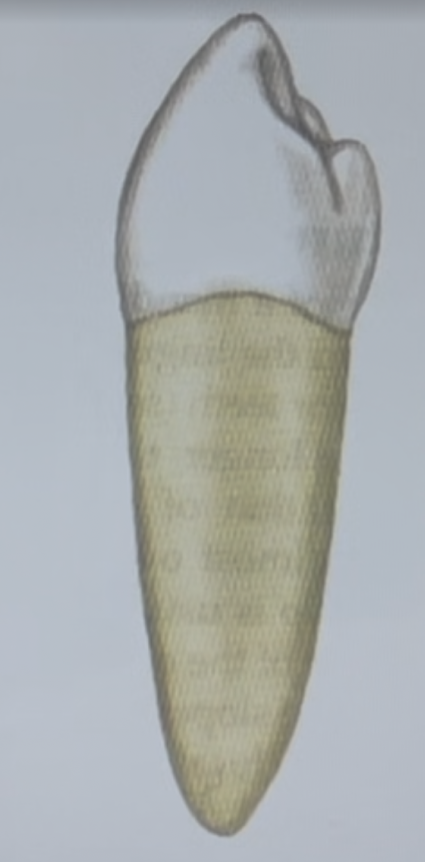
Which premolar is shown in the diagram: maxillary right first premolar, maxillary right second premolar, mandibular right first premolar, mandibular right second premolar
mandibular right first premolar
Which of the following is NOT a general feature for the mandibular premolars: B and L cusps are nearly equal in size, 1st is smaller than 2nd, round/square from the occlusal views, buccal profiles curve dramatically to the lingual, do not look as much alike
B and L cusps are nearly equal in size