Edexcel Physics A-level Topic 7: Electric and Magnetic Fields
 Call Kai
 Learn
Learn Practice Test
 Spaced Repetition
 Match
Match Flashcards
 Knowt Play
1/43

Earn XP
Description and Tags
Comprehensive vocabulary flashcards covering electric fields, capacitance, magnetism, and electromagnetic induction based on A-level Physics notes.
Name | Mastery | Learn | Test | Matching | Spaced | Call with Kai |
|---|
No analytics yet
Send a link to your students to track their progress
44 Terms
Force field
An area in which an object experiences a non-contact force, represented as vectors (which describe the direction of the force that would be exerted on the object and from this you can deduce direction of field) or diagrams containing field lines. The distance between field lines represents the strength of the force exerted by the field in that region.
Electric field
A force field in which charged particles experience a force.
Electric field strength (E)
The force per unit charge experienced by an object in an electric field, given by the formula E=QF, where F is force and Q is charge. This value is constant in a uniform field but varies in a radial field.
Coulomb’s law
A law stating that the magnitude of the force between two point charges is directly proportional to the product of their charges and inversely proportional to the square of the distance between them: F=4πϵ0r2Q1Q2 . Epsilon is the permittivity of free space, Q1/Q2 are charges and r is the distance between the charges.
Permittivity of free space (ϵ0)
A physical constant used in the calculation of electric force and potential in a vacuum.
Charges have the same sign
So force will be repulsive, if charges have different signs the force will be attractive.
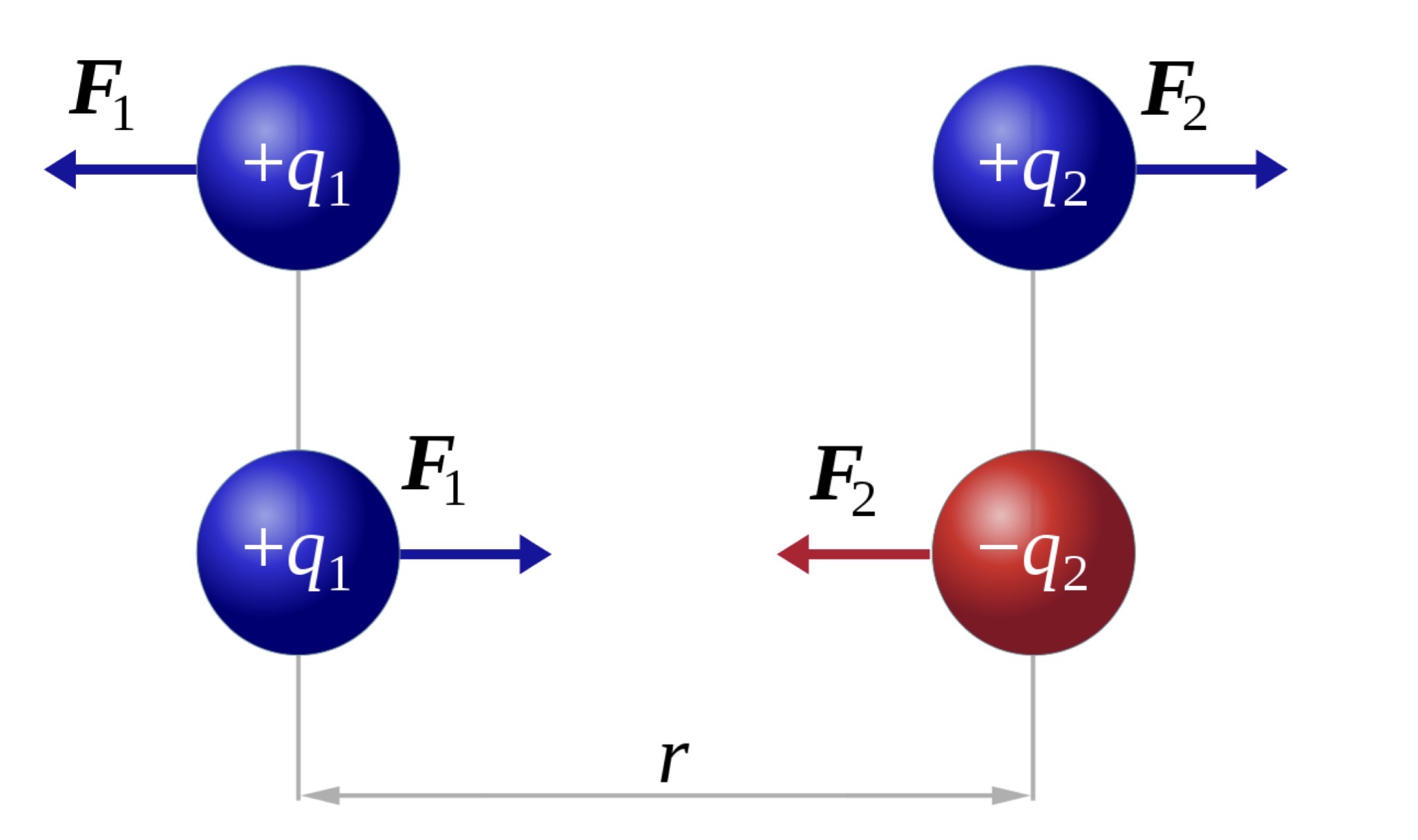
Point charges
Form a radial electric field, can calculate electric field using formula E=4πϵ0r2Q
Absolute electric potential (V)
The potential energy per unit charge of a positive point charge at a specific point in a field; it is zero at infinity.
Absolute magnitude of electric potential
Greatest at the surface of charge and as the distance from the charge increases the potential decreases so electric potential at infinity is zero.
Electric potential difference (ΔV)
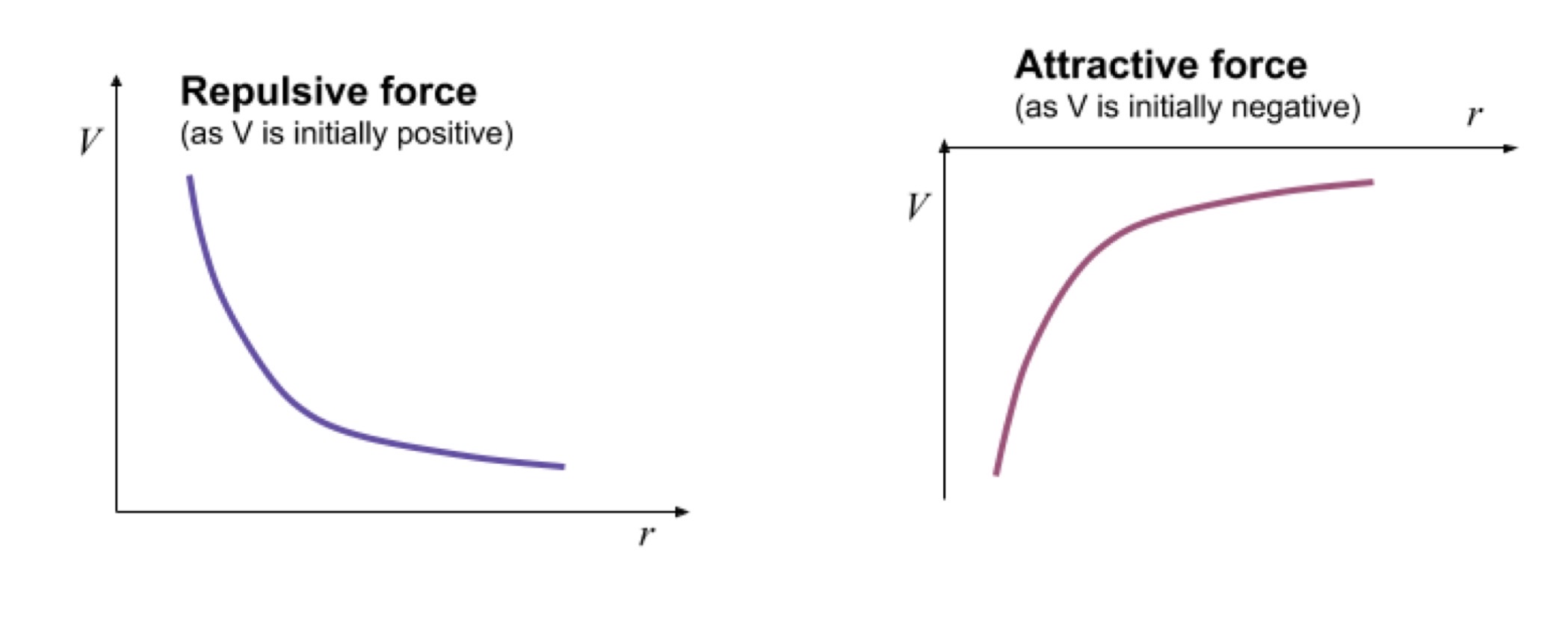
The energy needed to move a unit charge between two points. Whether the value of potential is negative or positive depends on the sign of the charge (Q).
When electric potential is
Positive: Charge is positive, and charge is repulsive Negative: charge is negative and the force is attractive
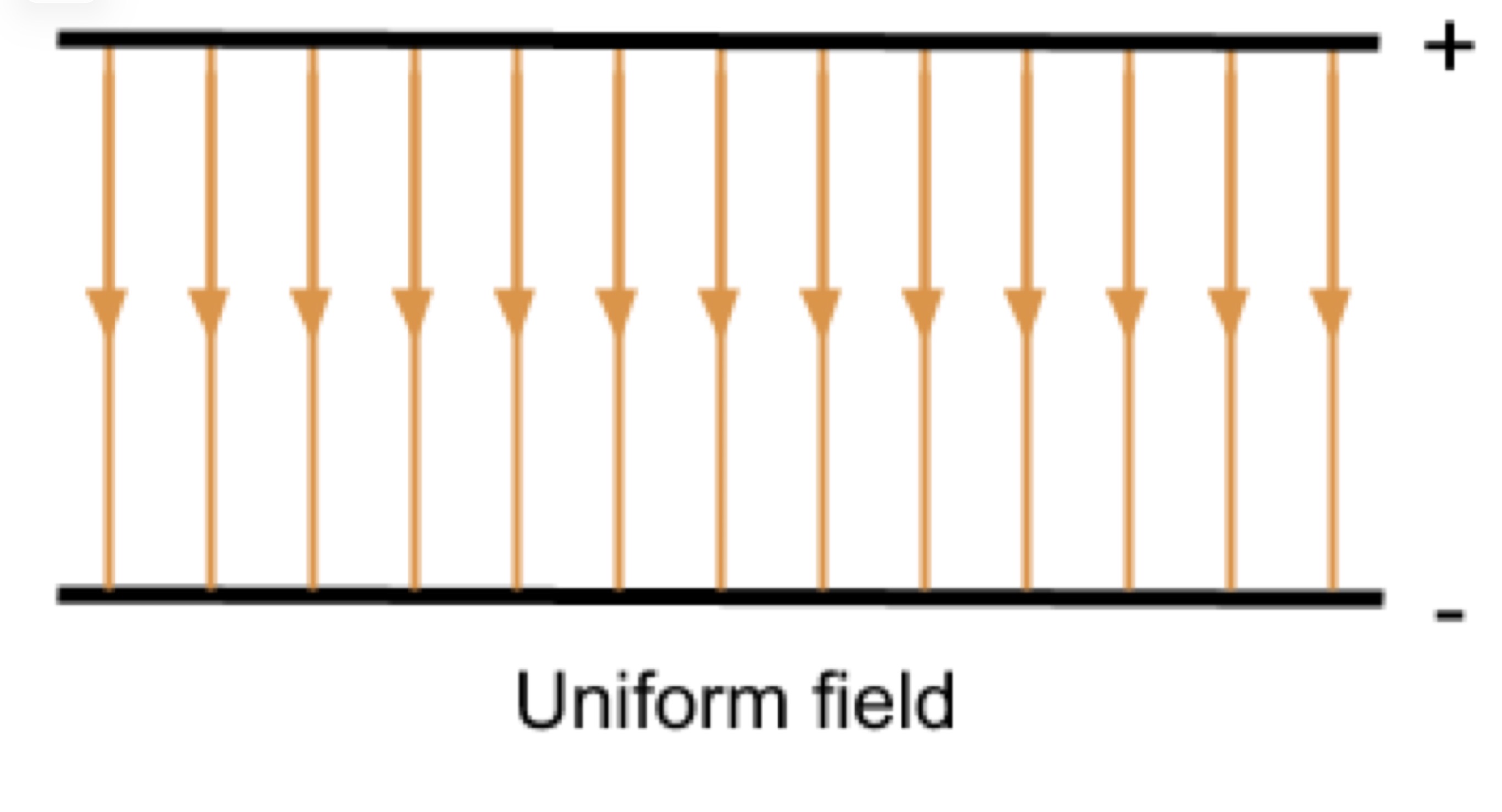
Electric fields between parallel plates
Uniform electric field. Calculate Electric field strength (E) in electric field formed between parallel plates by using E=dV
Electric potential in a radial field
To find the electric potential in a radial field use formula V=4πϵ0rQ , ϵ0 is the permitivitty of free space, Q is the charge, r is the distance between the charges.
Electric field types
uniform or radial
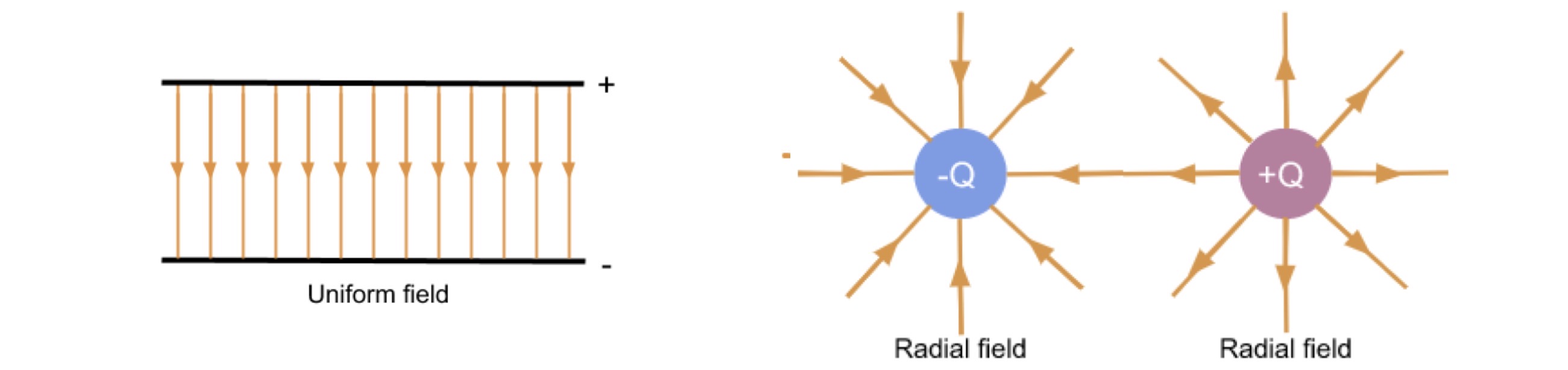
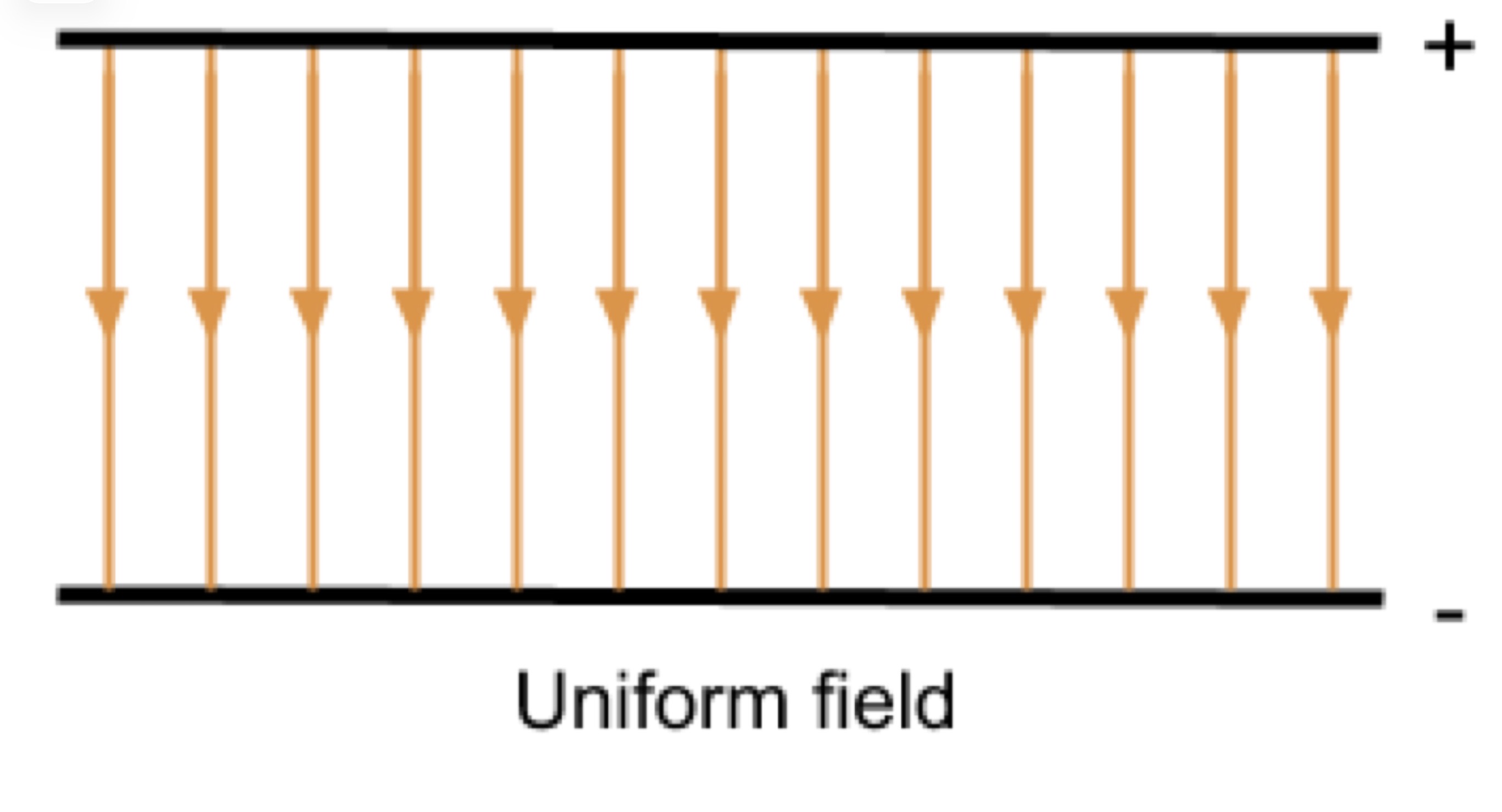
Uniform electric field
Exerts the same electric force everywhere in the field, has parallel and equally spaced field lines, distance between field lines represent magnitude of force (field lines are at the same distance so stays the same throughout). Equipotential surfaces are planes which are equally spaced and parallel to the plates.
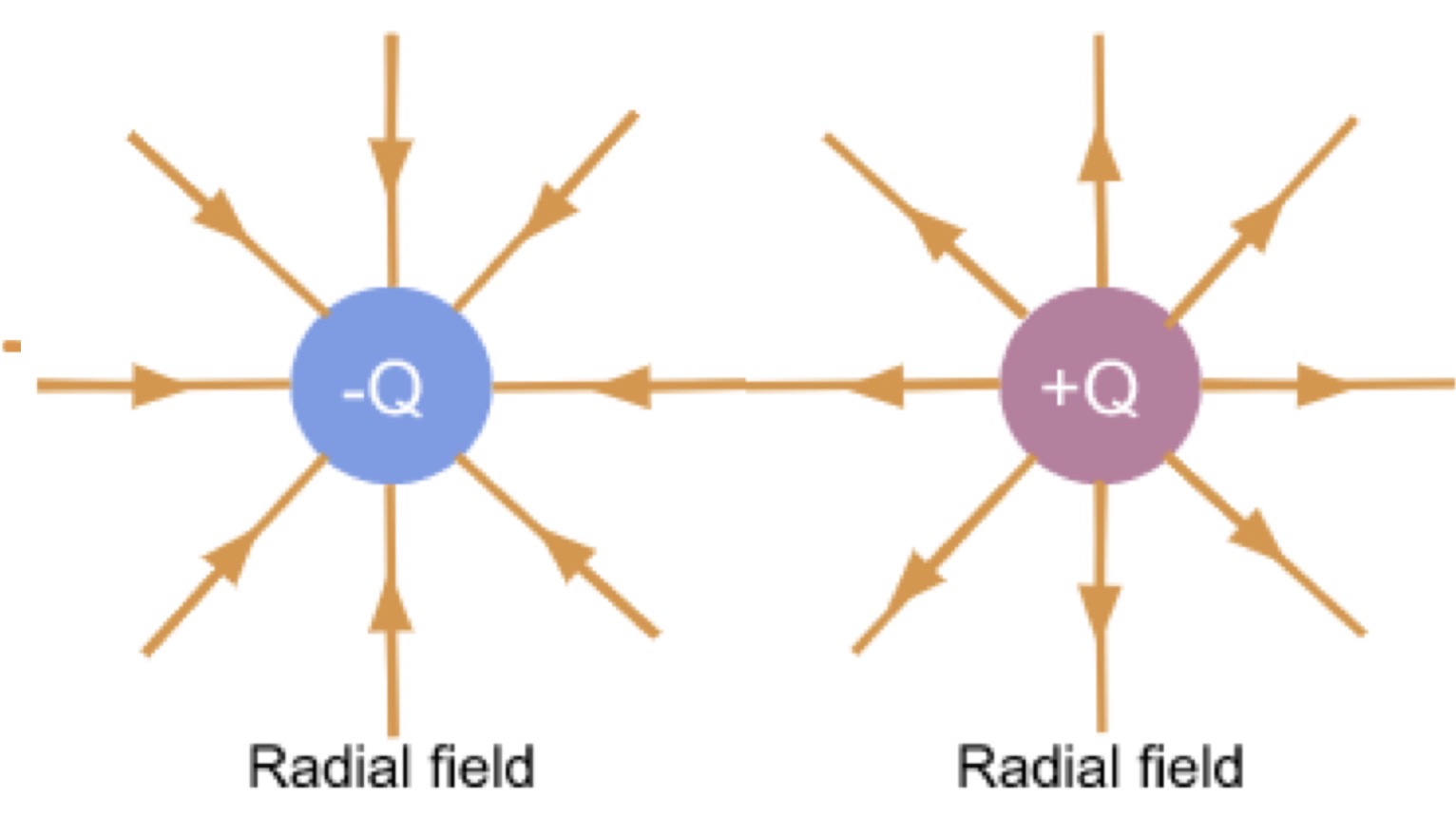
Radial electric field
Magnitude of electric force depends on the distance between the two charges (e.g as charge moves further away from the centre. The magnitude of force would decrease as distance between field lines increases), equipotential surfaces around point charge for concentric circles.
Equipotential surface
A surface where the potential is the same everywhere; consequently, no work is done when a charge moves along it.

Capacitance (C)
The charge stored by a capacitor per unit potential difference, defined by the formula C=VQ.
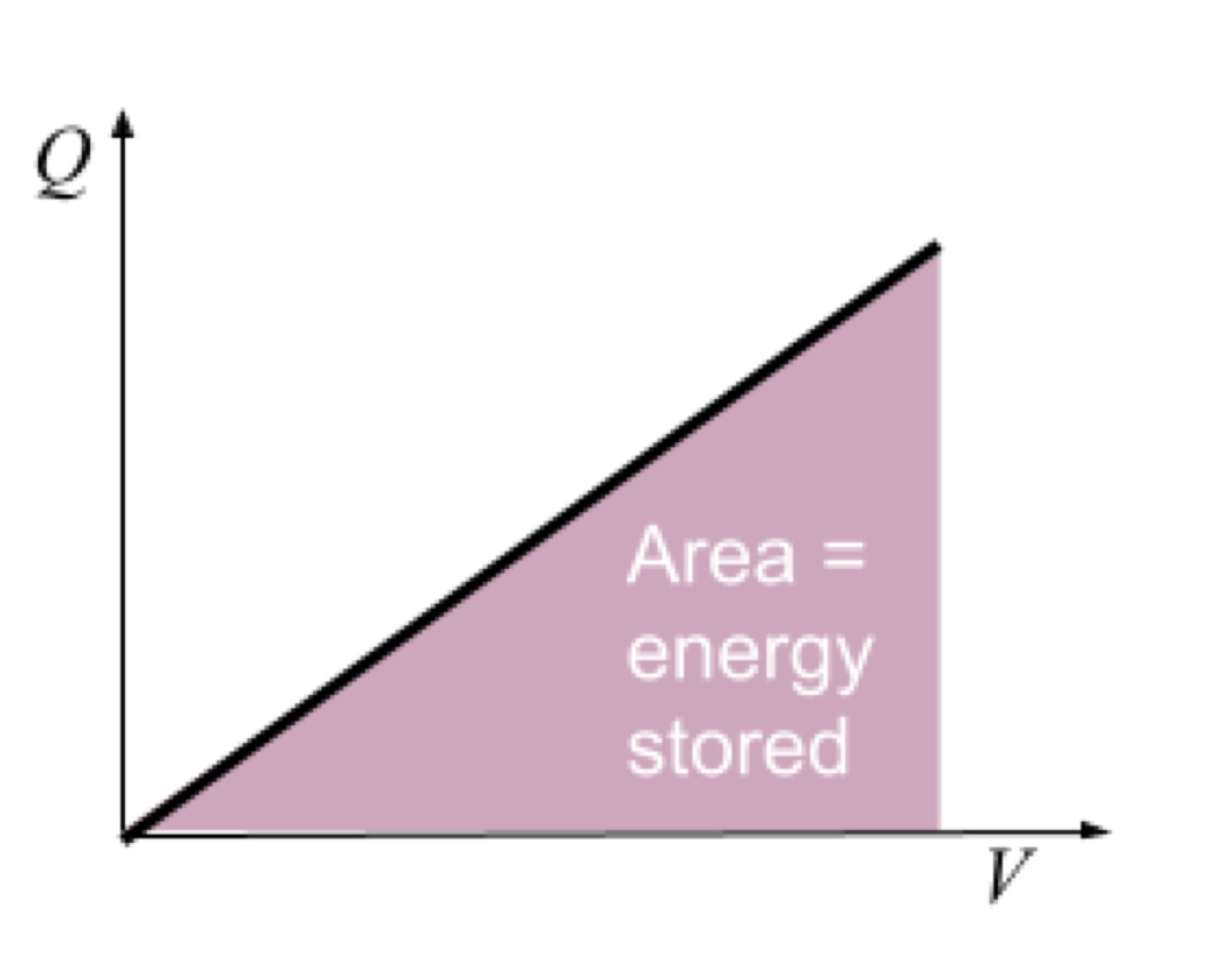
Electrical energy stored by a capacitor (W)
Represented by the area under a graph of charge against potential difference, calculated as W=21VQ, W=21CV2, or W=2CQ2.
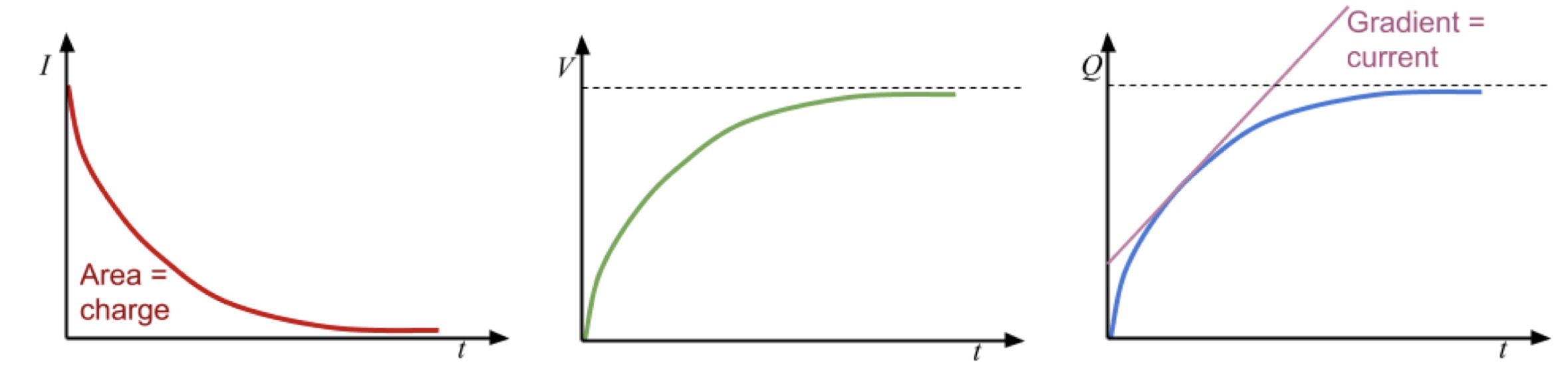
Capacitor charging
Current starts to flow and negative charge builds up on the plate connected to the negative terminal. On the opposite plate electrons are repelled by the negative charge building up on the initial plate, therefore these electrons move to the positive terminal and equal and opposite charge formed on each plate creating potential difference. As charge across plates increases, pd increases but electron flow decreases due to force of electrostatic repulsion also increasing therefore current decreases and eventually reaches zero.
How to charge a capacitor
Connect it in a circuit wit power supply and resistor
How to discharge a capacitor
Connect it in a closed circuit with just a resistor
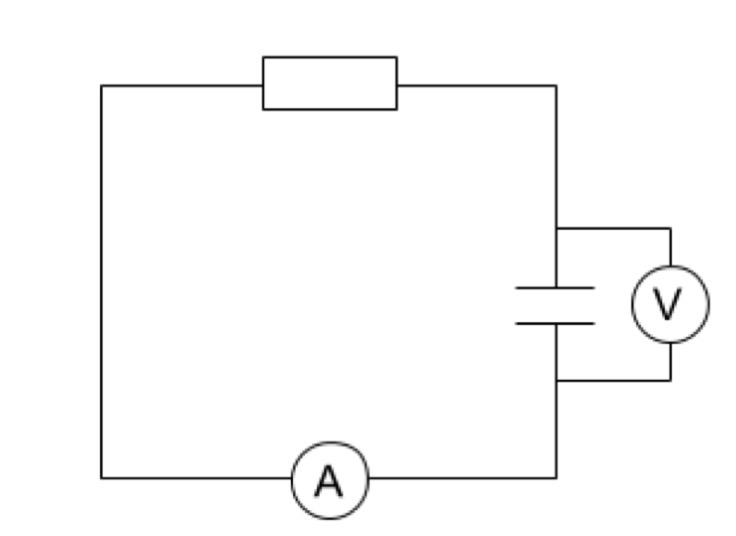
Capacitor discharging
When capacitor is discharging the current flows in the opposite direction and current charge and potential difference across the capacitive will all fall exponentially meaning it will take same amount of time for each of the values to halve.
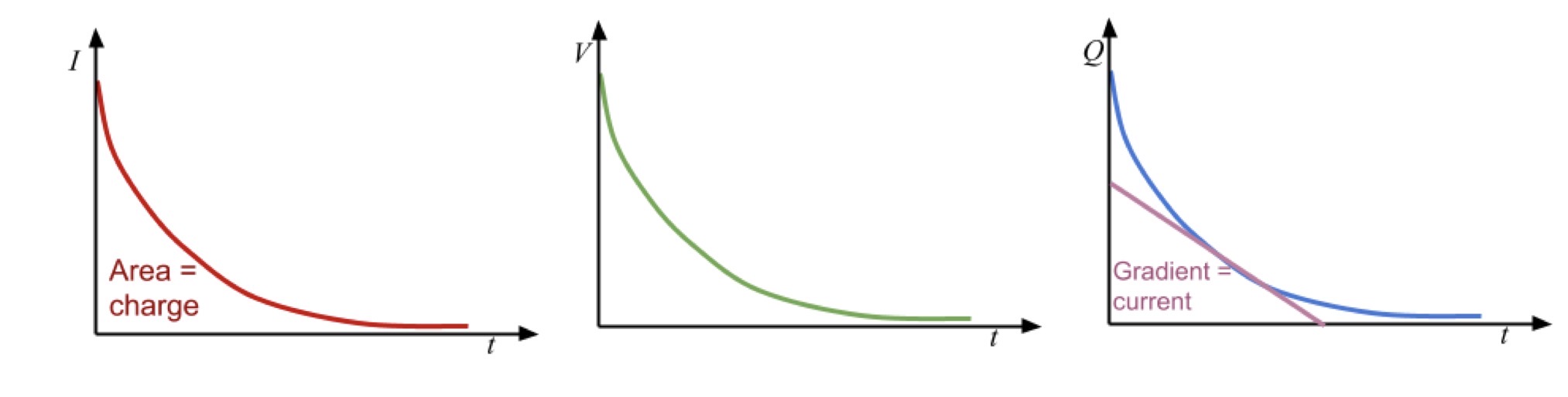
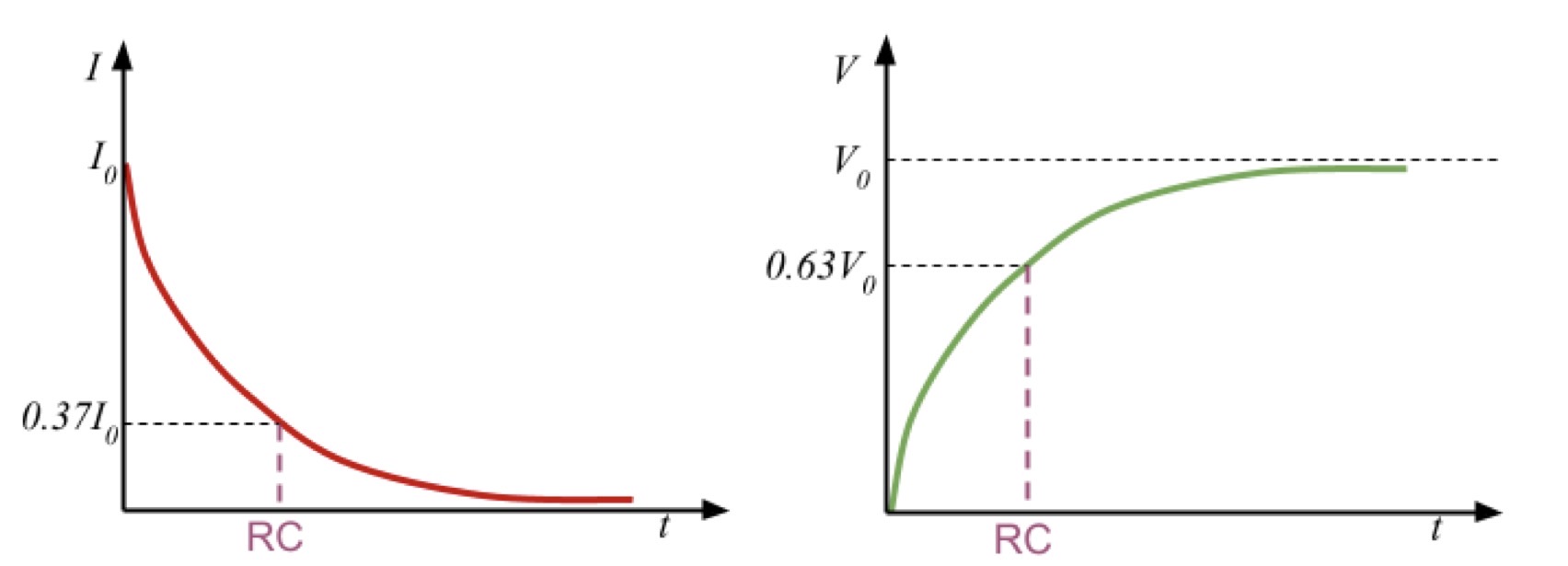
Time constant (RC)
The product of resistance and capacitance, representing the time taken to discharge a capacitor to 0.37 (e−1) of its initial value or charge it to 0.63 (1−e−1) of its maximum value. Can be calculated by finding time where values are 0.37 of initial value if discharging or 0.63 of the maximum value if charging
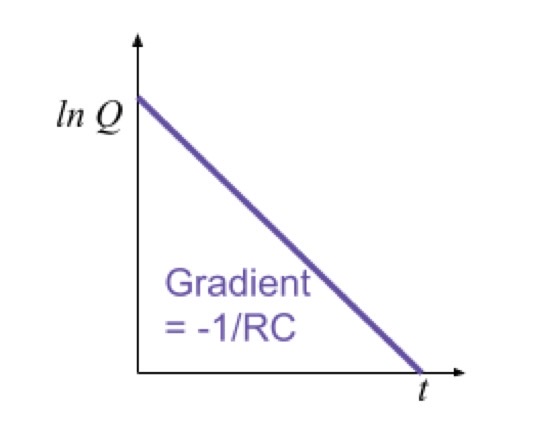
Gradient of ln(Q) against t
Gradient of graph is RC−1. Therefore RC=gradient−1
Magnetic flux density (B)
A measure of the strength of a magnetic field, measured in Tesla (T).
Magnetic flux (ϕ)
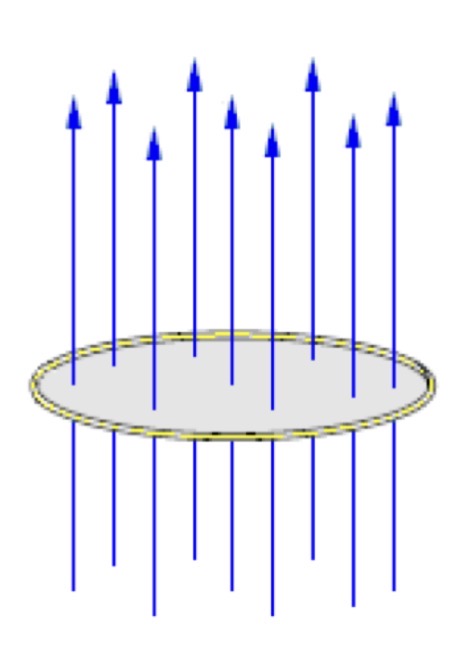
A value describing the magnetic field lines passing through a given area, calculated by Φ=BA when the field is perpendicular to the area.
Magnetic flux linkage (NΦ )
The magnetic flux multiplied by the number of turns (N) of a coil, given by NΦ=BAN . B is magnetic flux density, A is the area and N is the number of turns.
Charged particles moving in a magnetic field
Force acts on charged particles moving in a magnetic field. Reason why force exerted on current carrying wire in a magnetic field because it contains moving electrons which are negatively charged. Magnitude of force calculated as F=BQvsinθ . B is magnetic flux density, Q is charge and v is velocity of particle.
Fleming’s left hand rule
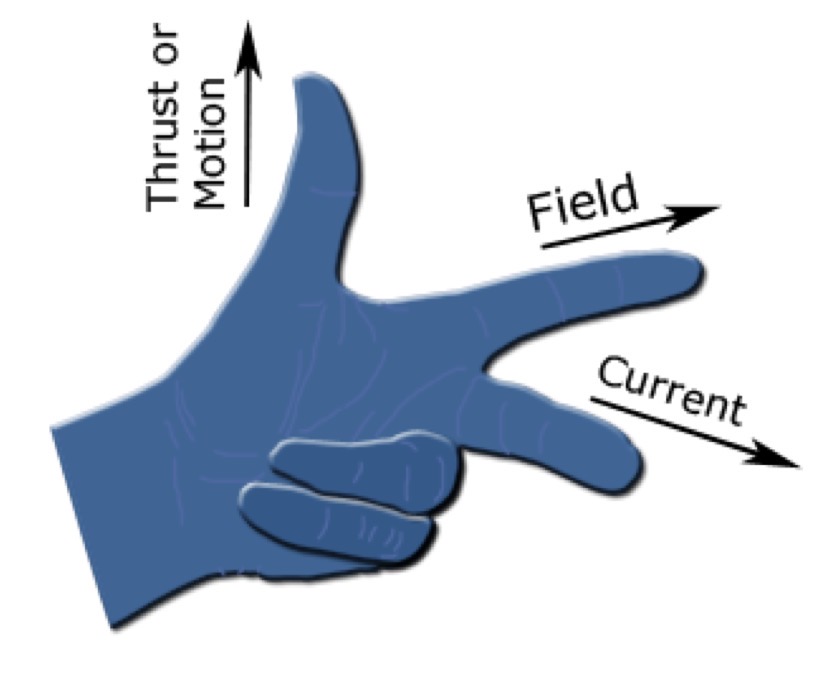
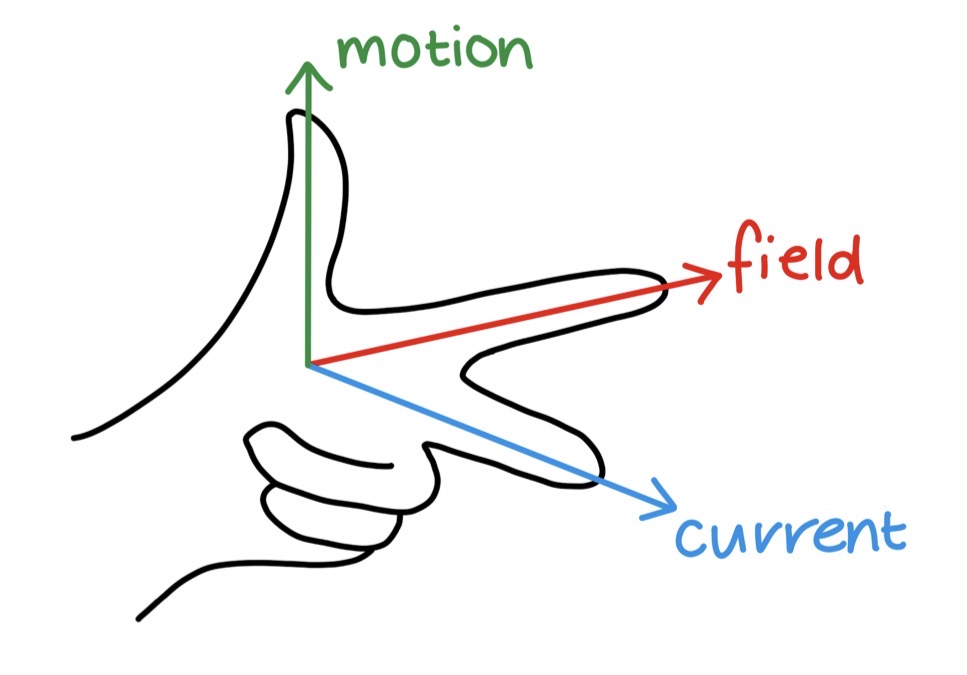
Used to find direction of force exerted on a charged particle where the thuMb represents Motion/force, the First finger represents Field, and the seCond finger represents Conventional Current (opposite direction to electron flow) Use second finger as the direction of travel, however if the charge on the particle is negative reverse the direction of your second finger because conventional current flows from positive to negative. Force causes charged particles to follow a circular path when in a magnetic field and acts as centripetal force
Current carrying conductors in a magnetic field
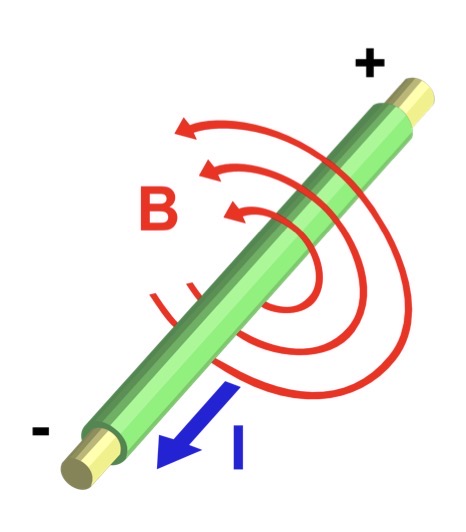
When current passes through a wire, magnetic field is induced (this is true for any long straight current carrying conductor) Field lines of the induced magnetic field form concentric rings around the wire
Current carrying wire in a magnetic field force
Magnitude of force found by F=BIlsinθ , B is magnetic flux density I is current and l is they length of the wire in the magnetic field. Direction using Flemings left hand rule.
Electromagnetic induction
The phenomenon where an emf is induced in a conductor when it moves relative to a magnetic field, electrons in the rod will experience a force and build up on one side. Or if magnet moves relative to a coil of wire. If the coil forms a complete circuit, current is also induced.
Faraday’s law
A law stating that the magnitude of induced emf (ϵ ) is equal to the rate of change of flux linkage: ϵ=ΔtNΔΦ . Measures the rate of change of flux linkage
Lenz’s law
A law stating that the direction of induced current is such as to oppose the motion causing it, which is a direct consequence of the conservation of energy.
Mutual inductance
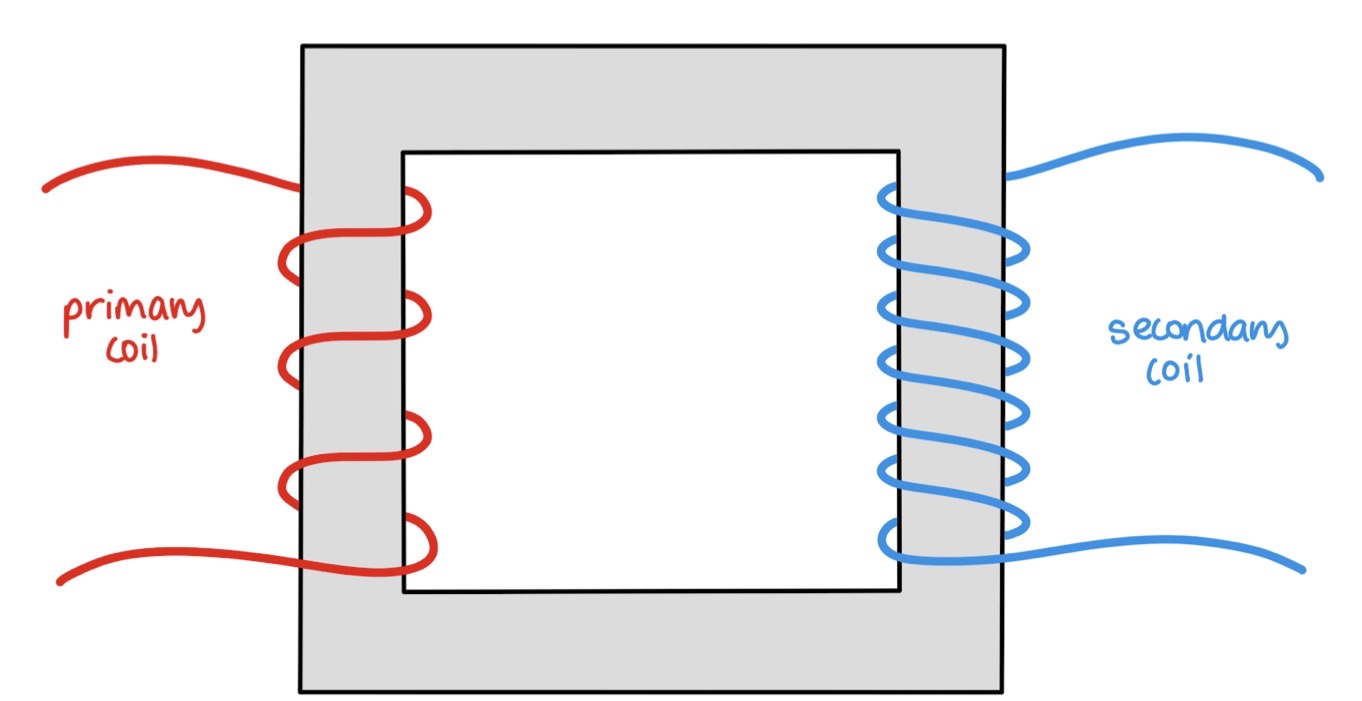
A process where a change in current in one coil induces an emf in a second coil located within the first coil's magnetic field. The induced emf in the second coil is proportional to to the change in current in the first coil. E.g transformer
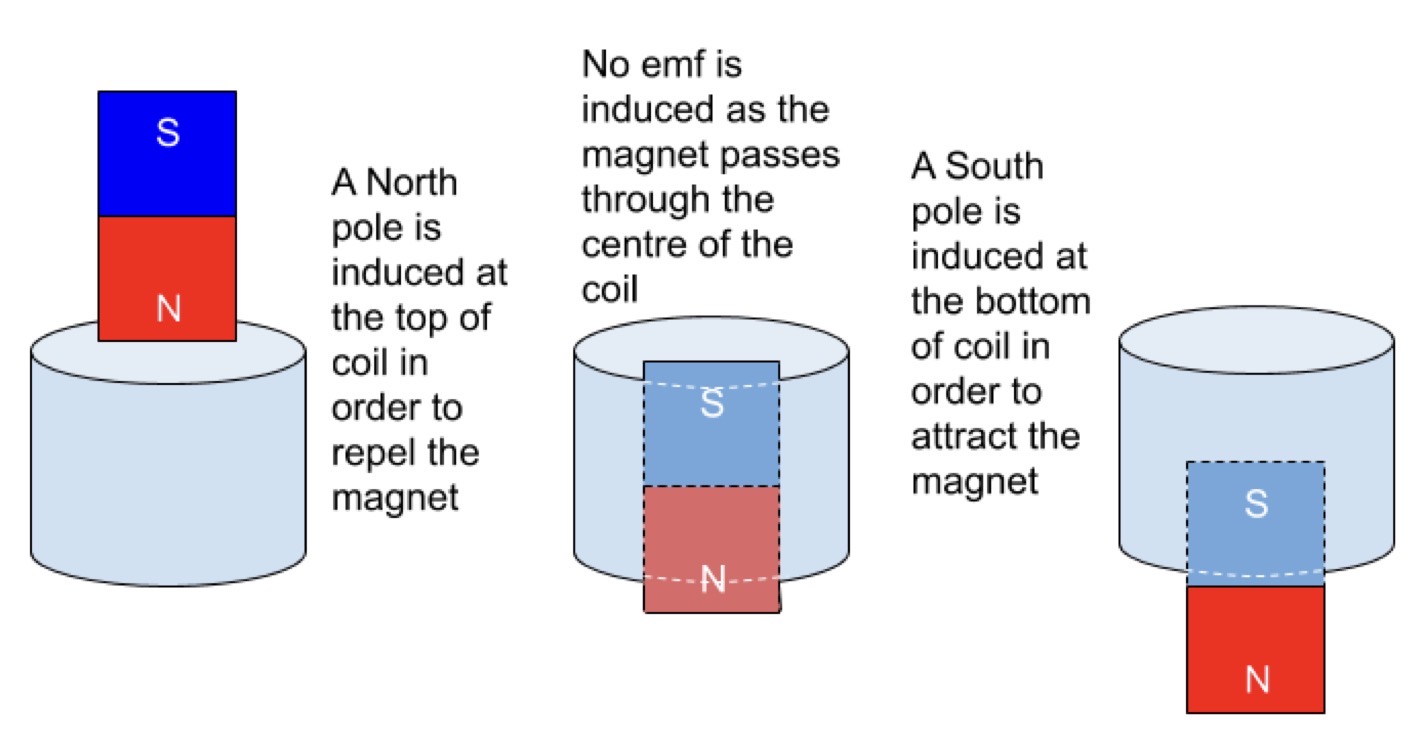
Demonstrate Lenz’s law
Measure the speed of a magnet falling through a coil of wire and its speed when falling from the same height without falling through the coil. Magnet takes longer to reach the ground when it moves through the coil. 1. As magnet approaches copil change in flux through the coil so emf and current induced 2. Due to Lenz’s law the direction of induced current is such as to oppose the motion of the magnet so the same pole as pole of magnet approaching coil is induced in order to repel the magnet. Causes magnet to slow down due to electrostatic forces of repulsion. 3. As the magnet passes through the centre of the coil there is no change in flux so no emf is induced 4. Magnet begins to leave coil, change in flux so current induced opposing motion of magnet. Opposite pole induced by magnet causing it to slow down once again due to electrostatic forces of attraction.
Faraday and Lenz law combined
ϵ=Δt−Δ(NΦ)
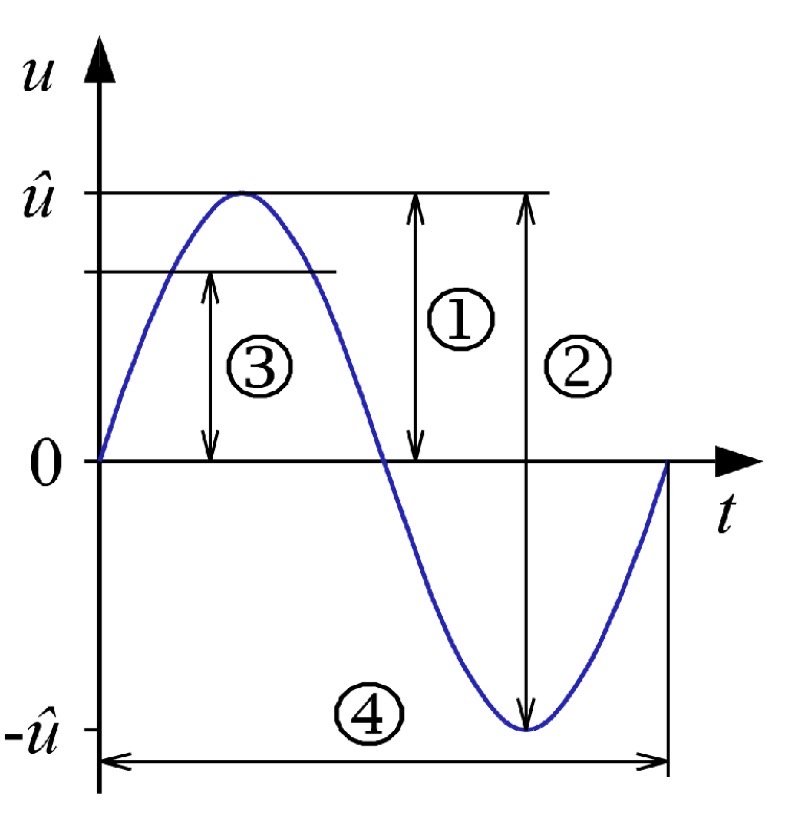
Peak value (1)
Maximum value (amplitude)
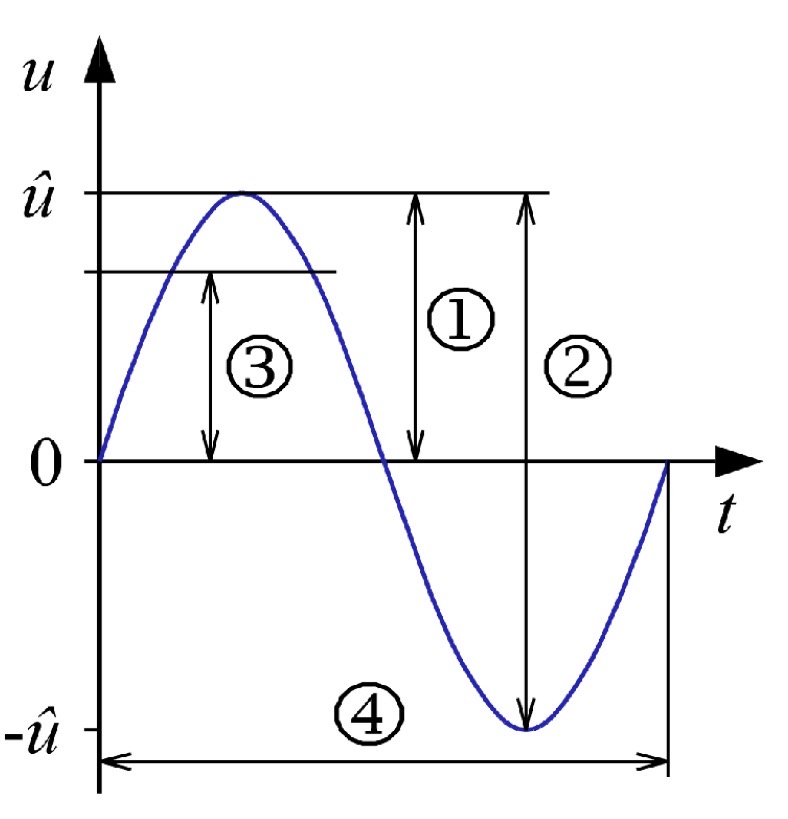
Root mean square (2)
Average of all the squares of the possible values this value give you the effective value of current/voltage output
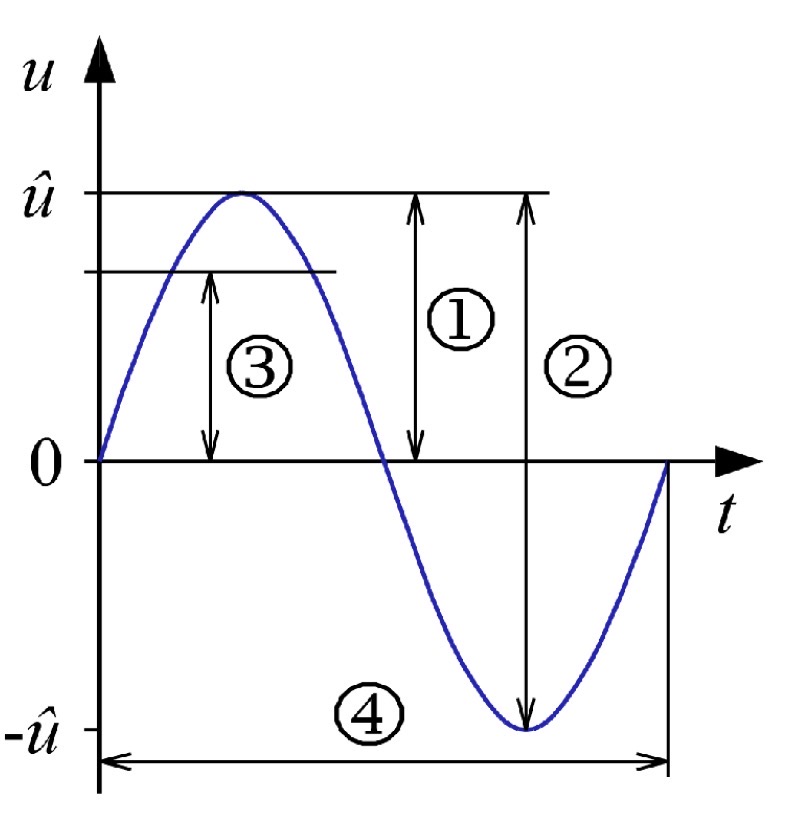
Time period (4)
Time taken to complete one full cycle.
Frequency
Number of complete oscillations passing through a point per second
Root mean square (rms) value
The effective value of an alternating current or voltage, calculated as the average of all the squares of the possible values; for sine waves, Vrms=2V0 . Irms=2I0 , I0 is peak current and V0 Is peak voltage
UK Mains Voltage
The electricity supplied to homes in the UK, which has an rms voltage value of around 230V.