Variety of Living things
 Call Kai
 Learn
Learn Practice Test
 Spaced Repetition
 Match
Match Flashcards
 Knowt Play
1/9

There's no tags or description
Looks like no tags are added yet.
Name | Mastery | Learn | Test | Matching | Spaced | Call with Kai |
|---|
No analytics yet
Send a link to your students to track their progress
10 Terms
Classification
Kindom
Phylum
Class
Order
Family
Genus
Species
Binomial Name
The genes and species of an organism make up its binomial name (the scientific name).
The binomial name is written in italics
The first part (genus) has a capital letter, the second part (species) doesn’t
An example is Panthera Leo which is a Lion
The 5 Kindom: Animals
They are multicellular.
Get their nutrition from feeding on other organisms (heterotrophic).
They are capable of movement from one place to another.
They have nervous coordination.
They have no cell wall or chloroplasts and therefore do not photosynthesise.
Store carbohydrates as glycogen which is a store of glucos, which is stored in liver.
Do not have cell walls or chlorophyll
Can move around more than plants
An example for animals is Cats or dogs or birds or worms.
The 5 Kindom: Plants
They are multicellular.
Cells contain chloroplasts and cells walla made from cellulose.
Carry out photosynthesis and therefore make their own food (autotrophic).
Autotrophic: An organism that can produce its own food, turning inorganic compounds (e.g. Carbon Dioxide) into organic compounds (e.g. glucose)Have cellulose cell walls.
Store carbohydrates as starch or sucrose. (OR IS IT STARCH AND GLUCOSE)
Examples for plants are; Roses, Apple Trees and Cherry Blossom
The 5 Kindom: Protoctists
Uni cellular and has a nucleus.
Examples for Protoctists are; Amoeba, Param ecium, plasmodium, and certain algee such as Chlorella.
The 5 Kindom: Prokaryotes
Examples of Prokaryotes are; E.coli, lactobacillos, Mycobacterium and Salmonella
The 5 Kindom: Fungi
Multicellular, have cell walls which are made of chitin but no chlorophyll.
Their bodies are usually organised into a mycelium (the living part of the fungi).
Examples of Fungi are; Mushroom or mold
Virus
Virsuses are not lving things, here are some examples:
Influenza (known as flu)
Varicella
HIV
AIDS
Eukaryotic Organisms
Plants, fungi, animals and protoctists are eukaryotic organisms as their cells possess a membrane-bound nucleus, their genetic information is enclosed in a nucleus.
Bacteria are prokaryotic organisms because their cells do not have a membrane-bound nucleus, however they still have genetic information, it’s just not in a nucleus. (credit to samiha i think, I got similar but samiha’s was re worded like this one)
DNA is the code for proteins and proteins tell the cell what to do. This is why the nucleus controls the cells in eukaryotic organisms. credit to samiha, also miss do we have to know this part?
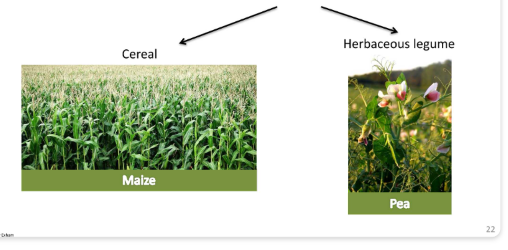
2 Types of plants
Flowering Plants like Herbacious Legume
Non-flowering Plants like Cereal