CH 17: Data and Competitive Advantage
 Call Kai
 Learn
Learn Practice Test
 Spaced Repetition
 Match
Match Flashcards
 Knowt Play
1/34

There's no tags or description
Looks like no tags are added yet.
Name | Mastery | Learn | Test | Matching | Spaced | Call with Kai |
|---|
No analytics yet
Send a link to your students to track their progress
35 Terms
Data
Raw facts and figures.
transaction processing system
Systems that record a transaction or some form of business-related exchange, such as a cash register sale, ATM withdrawal or product return.
transaction
Any kind of business exchange.
data aggregators
Firms that collect and resell data.
legacy systems
Older information systems that are incompatible with other systems, technologies, and ways of conducting business
database
Single table or a collection of related tables.
database management systems (DBMS)
Software for creating, maintaining, and manipulating data (also known as database software).
structured query language (SQL)
A language used to create and manipulate databases.
database administrator (DBA)
Job title focused on directing, performing, or overseeing activities associated with a database or set of databases.
entity, table or file
List of data, arranged in columns or fields and rows or records.
column or field
A column in a database table. Columns represent each category of data contained in a record
row or record
A row in a database table. Records represent a single instance of whatever the table keeps track of.
relational database
Most common standard for expressing databases, whereby tables (files) are related based on common keys.
data warehouse
A set of databases to support decision-making in an organization.
data mart
Database or databases focused on addressing the concerns of a specific problem or business unit
online analytical processing (OLAP)
A method of querying and reporting that takes data from standard relational databases, calculates and summarizes data, and then stores the data in a special database called a data cube
big data
The collections, storage, and analysis of extremely large, complex, and often unstructured data sets that can be used by organizations to generate insights that would otherwise be impossible.
business intelligence (BI)
A term combining aspects of reporting, data exploration and ad hoc queries, and sophisticated data modeling and analysis
dashboards
Heads-up display of critical indicators that allows managers to get a graphical glance at key performance metrics
data visualization
The graphical representation of data and information.
What is entity-relationship (ER) modeling?
It is a database design process that database designers use
Primary key
To uniquely identify a single row. May be made up of one or more attributes. Ex: Email addresses, Student IDs, Social Security Number, etc
Secondary keys
Other field that have some identifying information but typically do not identify the file with complete accuracy. Ex: Last Name, Zip Code, Date of Birth, etc.
Foreign Key
a primary key from one table placed into another table
One and Only One
You MUST have exactly one. No skipping, no extras. Ex: Every employee must have exactly one Social Security Number — not zero, not two.
Zero or One
You can have none, or you can have one. It's optional but can't exceed one. Ex: A person may or may not have a middle name — but you can't have two middle names.
One or Many
You MUST have at least one, but can have as many as you want. Ex: A restaurant must have at least one menu item — it can't have zero or it's not a restaurant.
Many-to-many
A junction table is created which has a composite primary key consisting of the primary keys from each of the tables that formed it.
Zero Or Many
Completely open-ended. You can have none, one, or as many as you want. Ex: A person can have zero pets, one pet, or ten pets — totally up to them.
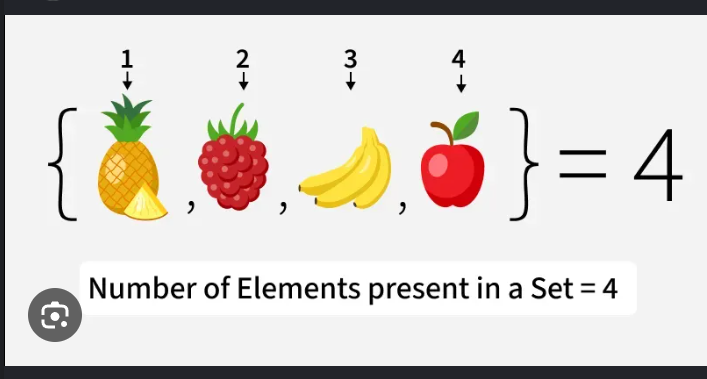
Cardinality
the total number of unique elements within a set or the measure of a set's size
One-to-One (1:1)
One record in Table A matches exactly one record in Table B. Ex: One person has one passport. One passport belongs to one person.
One-to-Many (1:M)
One record in Table A can match many records in Table B, but each record in Table B only points back to one in Table A.
One-to-Many (1:M) Example
Ex: One customer can place many orders, but each order belongs to only one customer.
Many-to-Many (M:M)
Many records in Table A can relate to many records in Table B.
Many-to-Many (M:M) Example
Ex: Students and courses — one student takes many courses, and one course has many students enrolled.