ACTIVITY 11 ANIMAL GENERAL MORPHOLOGY AND CLASSIFICATION
 Call Kai
 Learn
Learn Practice Test
 Spaced Repetition
 Match
Match Flashcards
 Knowt Play
1/50

There's no tags or description
Looks like no tags are added yet.
Name | Mastery | Learn | Test | Matching | Spaced | Call with Kai |
|---|
No analytics yet
Send a link to your students to track their progress
51 Terms
Segmentation
metameres; somites; metamerism
tagmata; tagmatization
______________ is another common feature of animals in which the body is organized into definite regions or segments.
If the segments are similar with each other (so called ____________ or ____________), the condition is called ____________;
otherwise, they may become structurally different from one another and fused into functional groups or __________ by a process known as ______________.
oral
aboral
central
peripheral
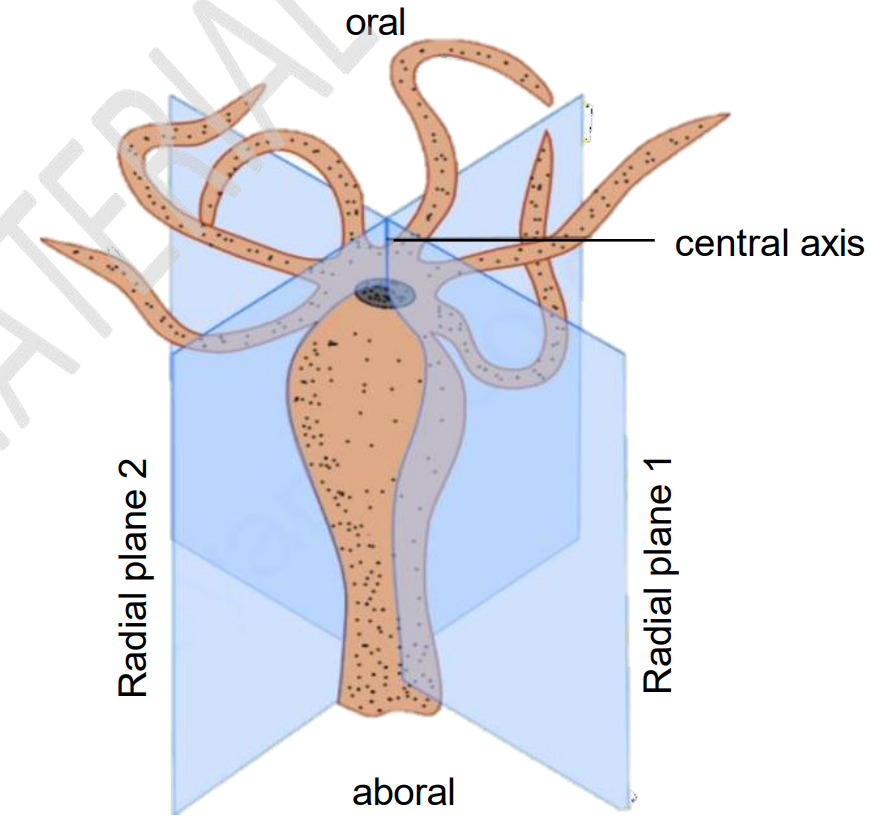
For radially symmetrical animals:
_________ – located near or toward the mouth
___________ – opposite the mouth
__________– the middle portion of the body
______________– away from the middle portion of the body
anterior – the "head--end"; the end directed forward in locomotion; opposite of posterior
posterior – the "tail--end"; opposite of anterior
dorsal – the back or upper surface; opposite of ventral
ventral – the belly or the lower surface; opposite of dorsal
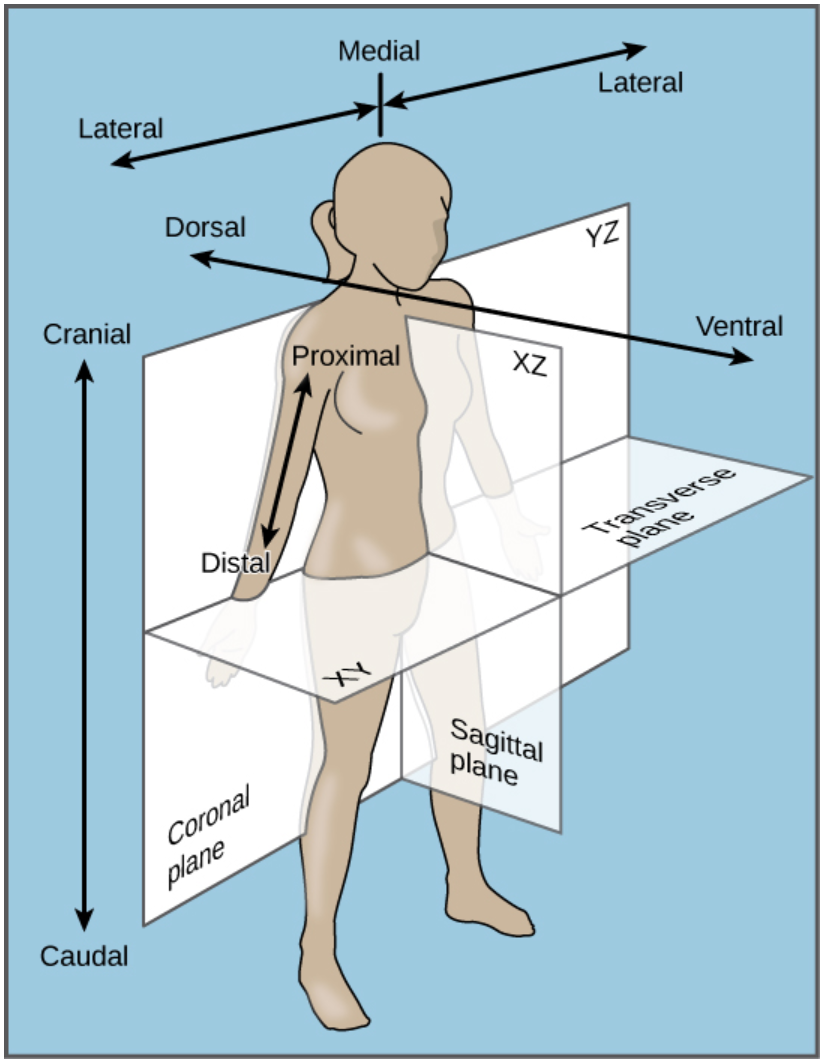
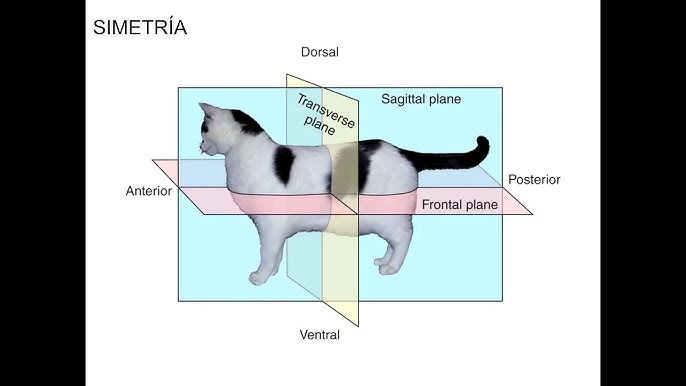
For bilaterally symmetrical animals:
__________ – the "head--end"; the end directed forward in locomotion; opposite of posterior
__________ – the "tail--end"; opposite of anterior
__________ – the back or upper surface; opposite of ventral
__________ – the belly or the lower surface; opposite of dorsal
lateral – on or toward the side
medial – on or toward the middle
proximal – toward the central part; opposite of distal
distal – farther from the middle of the body or toward the extremities of the body; opposite of proximal
For bilaterally symmetrical animals:
_________– on or toward the side
_________– on or toward the middle
_________ – toward the central part; opposite of distal
_________ – farther from the middle of the body or toward the extremities of the body; opposite of proximal
peripheral – near the surface of the body
pectoral – region in vertebrates which denotes the chest region; associated with the anterior pair of appendages
pelvic – denotes the hip region, associated with the posterior pair of appendages
cephalic – pertaining to or toward the head; opposite of caudal
caudal – toward the tail; opposite of cephalic
For bilaterally symmetrical animals:
___________ – near the surface of the body
___________ – region in vertebrates which denotes the chest region; associated with the anterior pair of appendages
___________ – denotes the hip region, associated with the posterior pair of appendages
___________ – pertaining to or toward the head; opposite of caudal
___________ – toward the tail; opposite of cephalic
Porifera
cellular
State which phylum and fill in the blank if applicable.
All are aquatic, mostly marine
Simplest of all animals
✔ multicellular
✔ w/ ________ level of organization
Porifera
mesohyl; spicules; totipotent
State which phylum and fill in the blank if applicable.
- no true tissues or organs
- loose aggregates of cells embedded in a non-cellular matrix (_______) supported by ___________
- a few cells have specialized functions
- cells are ___________, can change form and function
Porifera
choanocytes
State which phylum and fill in the blank if applicable.
Sessile/non-motile (adult); free swimming/motile (larvae)
Most are filter feeders (through their _____________)
Asymmetric or radially symmetrical
Exhibit asexual and sexual reproduction
Porifera
Ostia
Osculum
Spongocoel
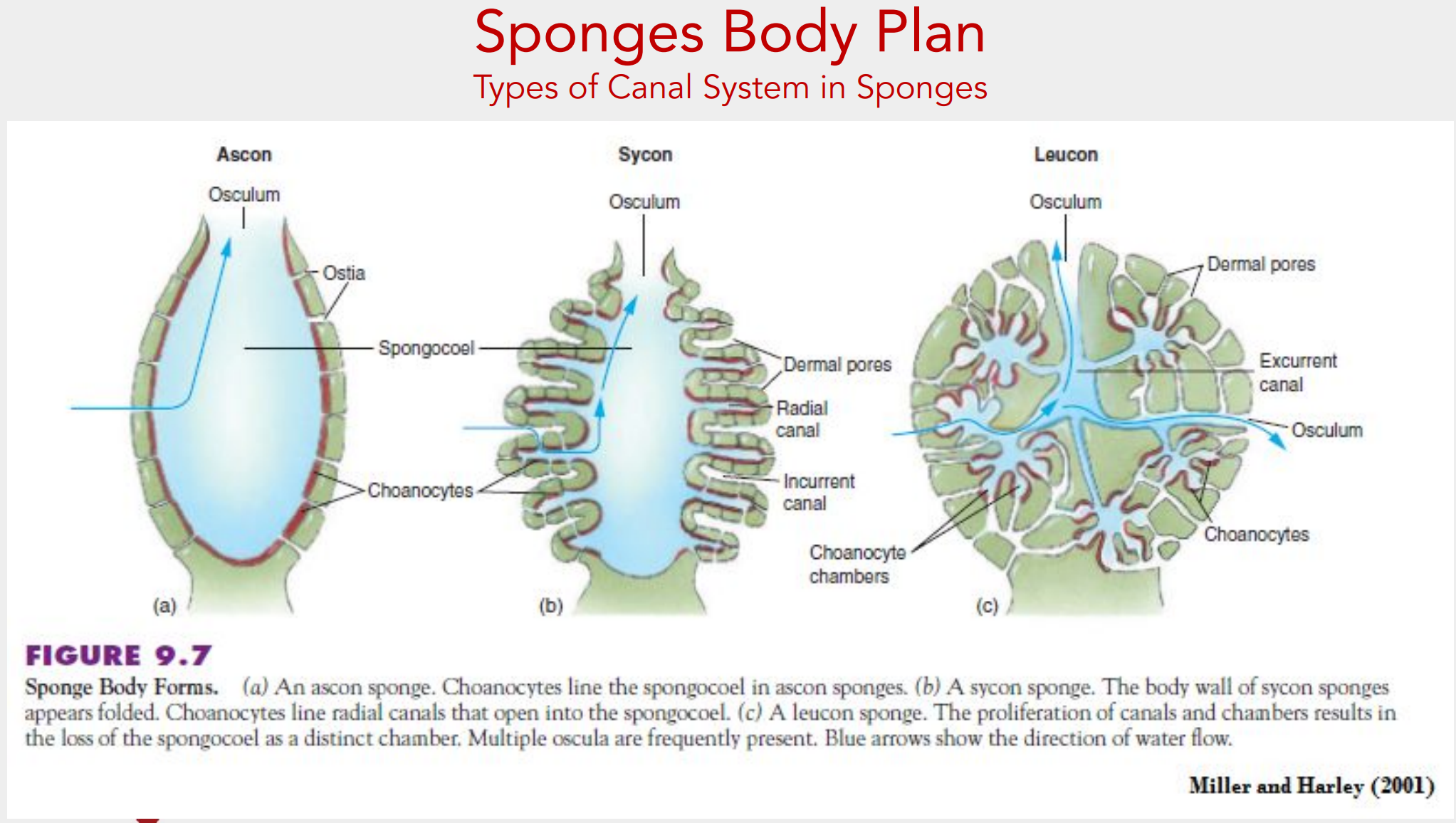
State which phylum and fill in the blank if applicable.
Water is pumped through these passageways and the animal filters nutrients from the water.
_________– small openings or pores for entrance of water
_________– larger openings for exit of water
_________– large central cavity
Porifera
Spicules
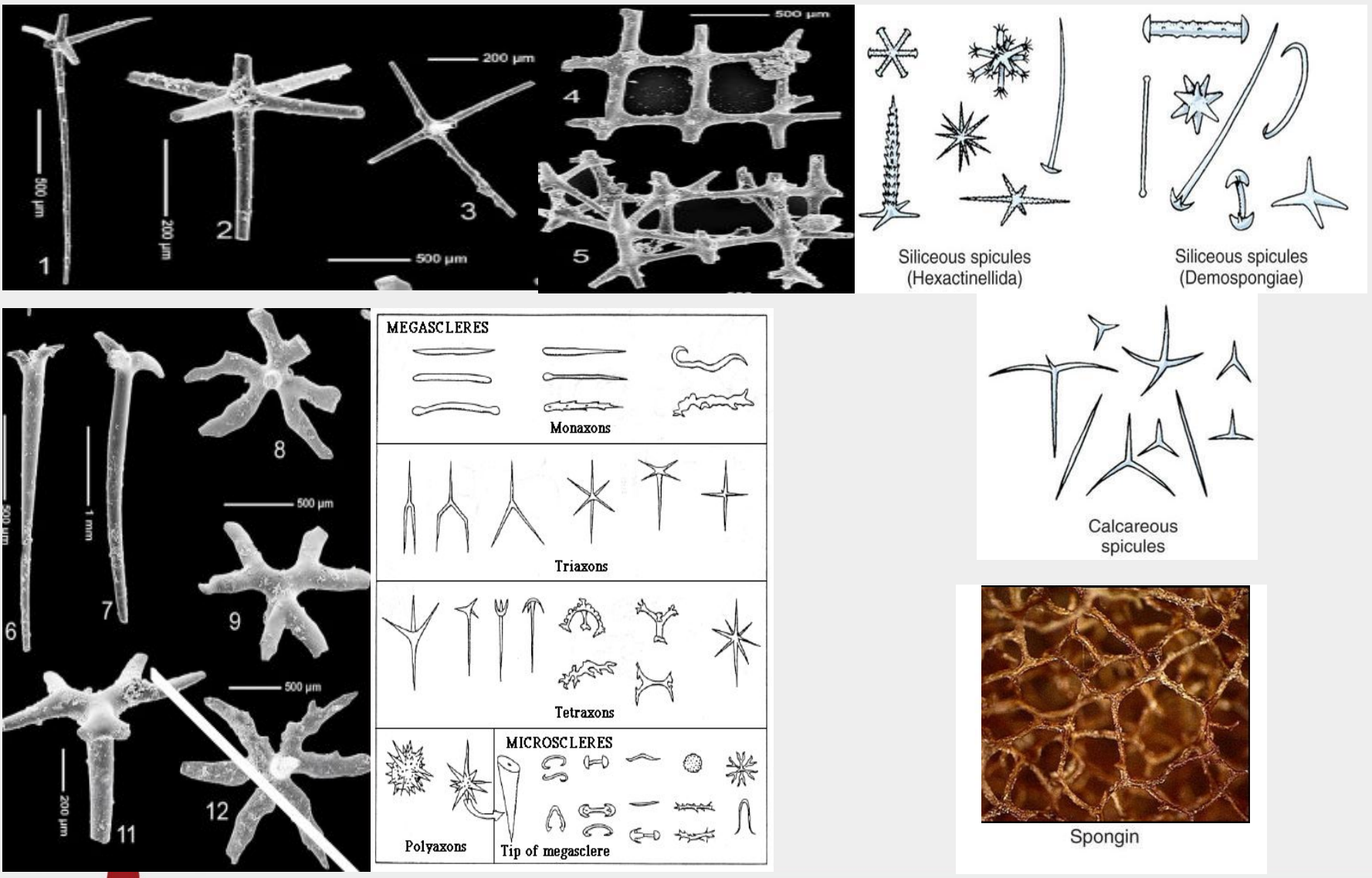
State which phylum and fill in the blank if applicable.
____________
stiffened rods or spike used to maintain shape of the sponge, keep pores and canals open and for defense
may be composed of calcium carbonate or silica
Porifera
Spongin
State which phylum and fill in the blank if applicable.
_________
collagenous protein
for support
Cnidaria
State which phylum and fill in the blank if applicable.
All are aquatic, widespread in marine habitats
Tissue level organization
Cnidaria
diploblastic; cnidocytes
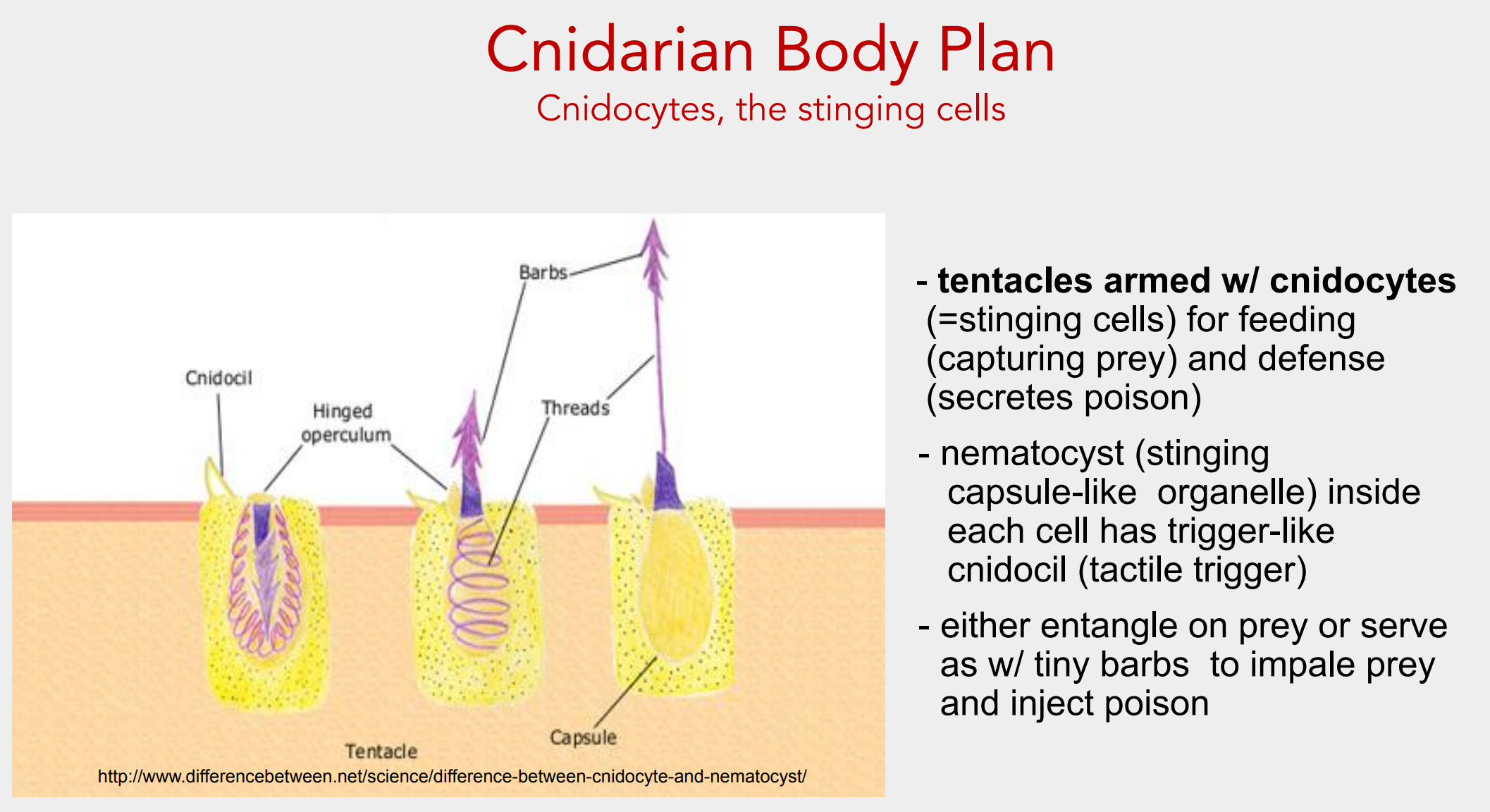
State which phylum and fill in the blank if applicable.
more complex than sponges but still very simple
✔ With true tissues (_____________-2 layers of tissues), few simple organs, stinging cells (____________) from w/c the name of the phylum was derived
Cnidaria
nerve net
State which phylum and fill in the blank if applicable.
No respiratory, circulatory or excretory system, but with simple __________ as simple nervous system
✔ With gastrovascular cavity/coelenteron
Most are sessile (e.g. corals); some are motile (e.g. jellyfishes)
Cnidaria
polyp; medusa
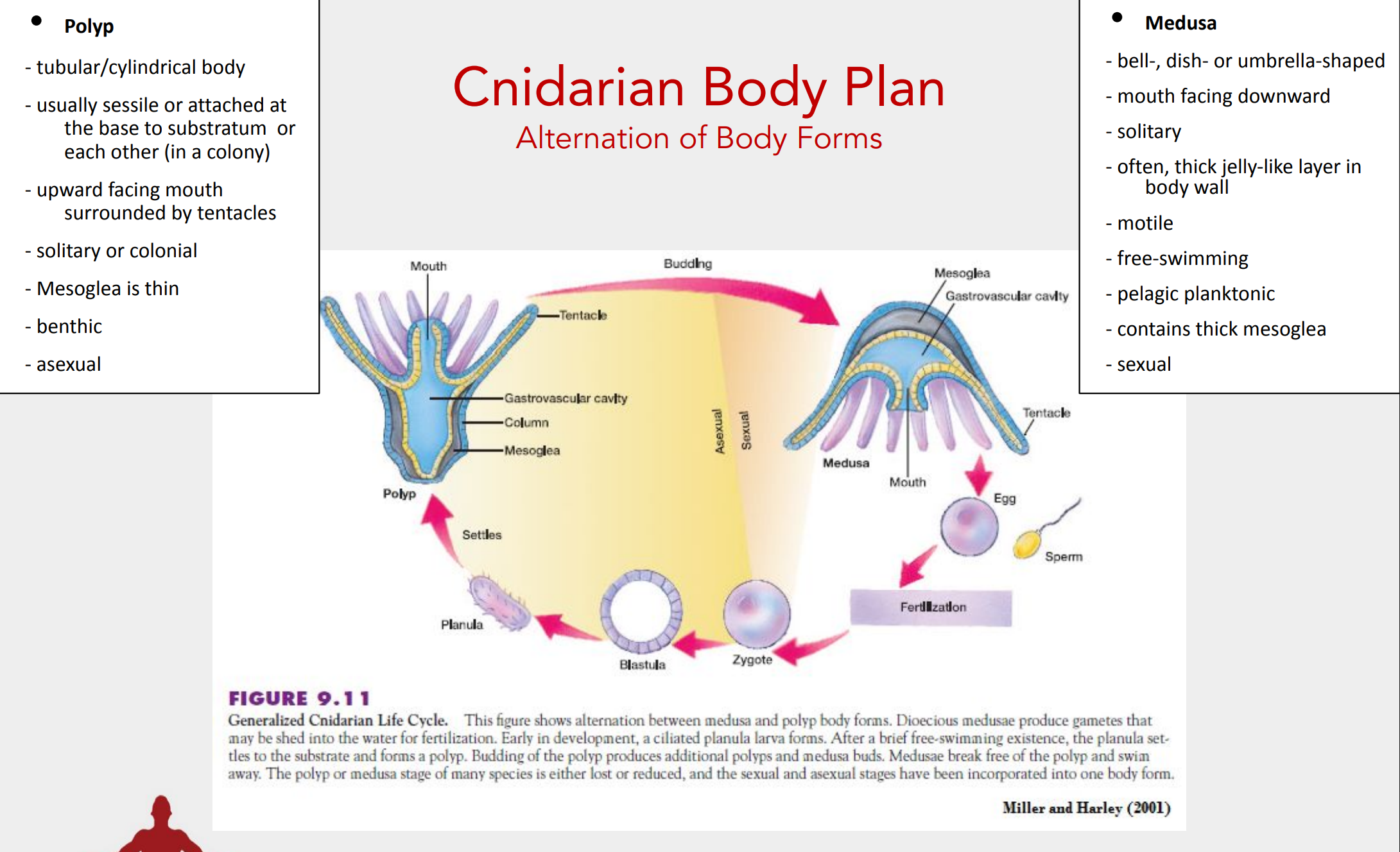
State which phylum and fill in the blank if applicable.
Radial symmetry
some are polymorphic (2 or more separate body forms); there is alternation between 2 body forms: _________ and _________
Asexual (via budding, fragmentation) and sexual reproduction
All are carnivores/predators
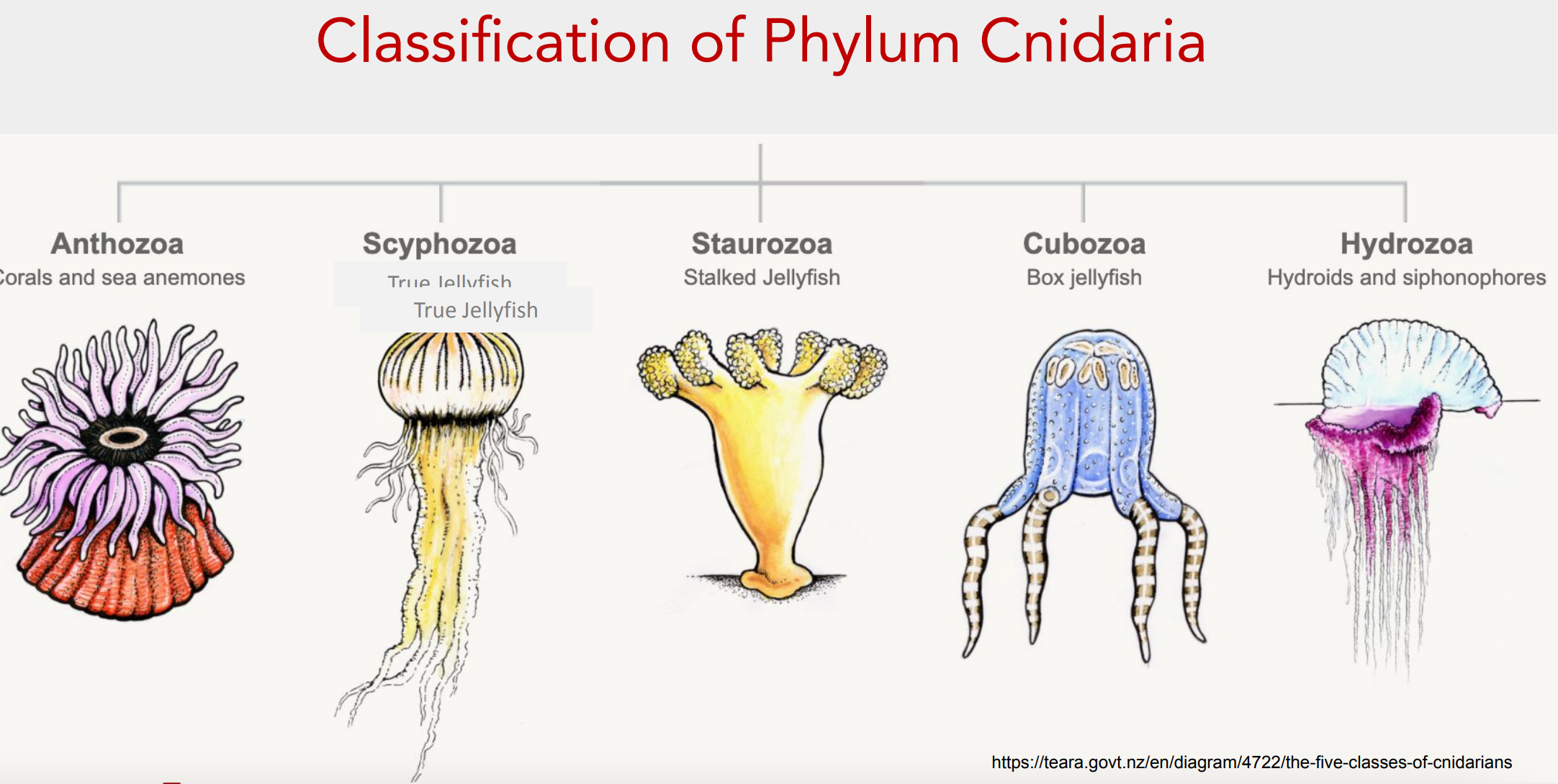
Hydrozoa
Scyphozoa
Anthozoa
Cubozoa
State which phylum and fill in the blank if applicable.
Under this phylum, there are four classes:
Class H___________
Hydroids; most possess both medusa and polyp stages in their life cycle, with the polyp stage dominant. Most hydroids are marine and colonial. About 2700 species worldwide.
Class S_____________
Jellyfishes; medusa stage dominant; polyp stage small, inconspicuous, and simple in structure. All solitary and marine. About 200 species worldwide.
Class A___________
Corals, sea anemones and their relatives; only polyps occur in the members of the class, and they may be colonial or solitary. About 6200 species worldwide.
Class C__________ - box jellyfish
Platyhelminthes
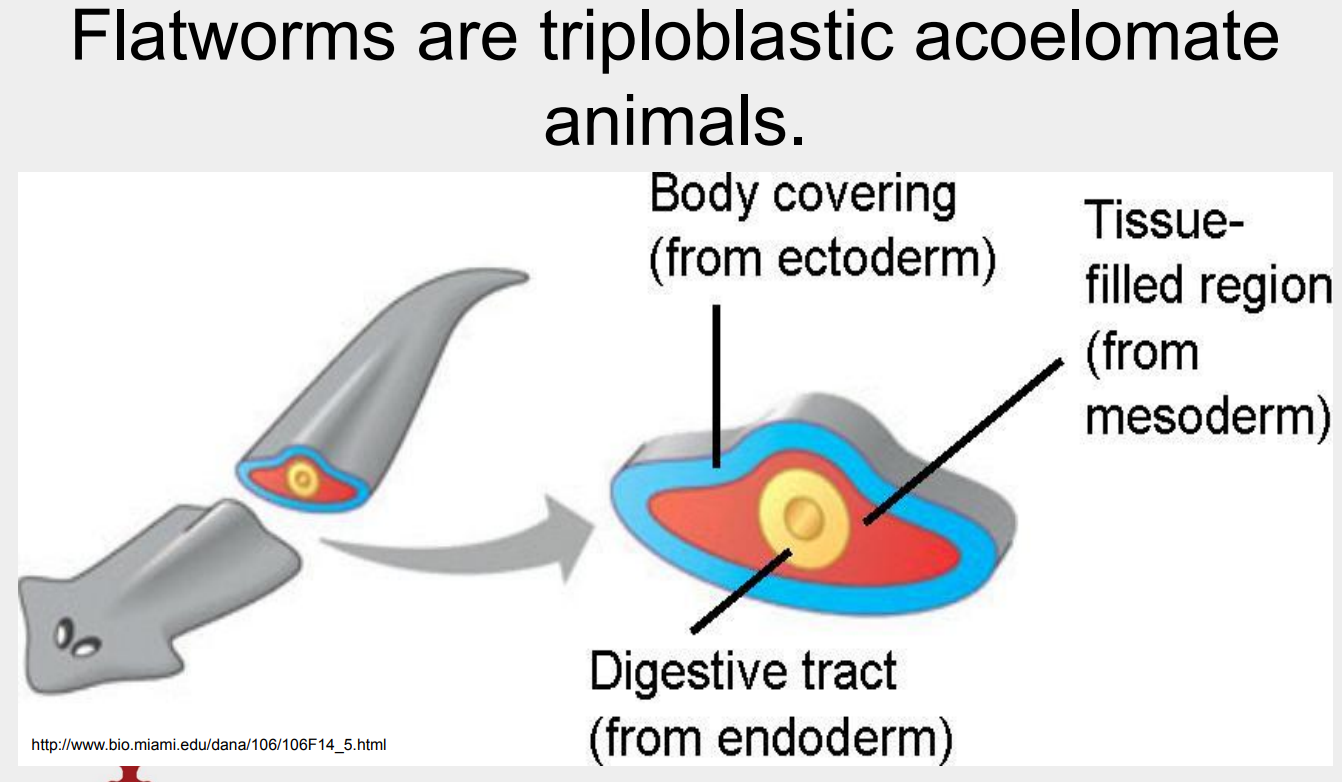
State which phylum and fill in the blank if applicable.
Triploblastic acoelomate
Platyhelminthes
incomplete
protonephridia
ganglionic
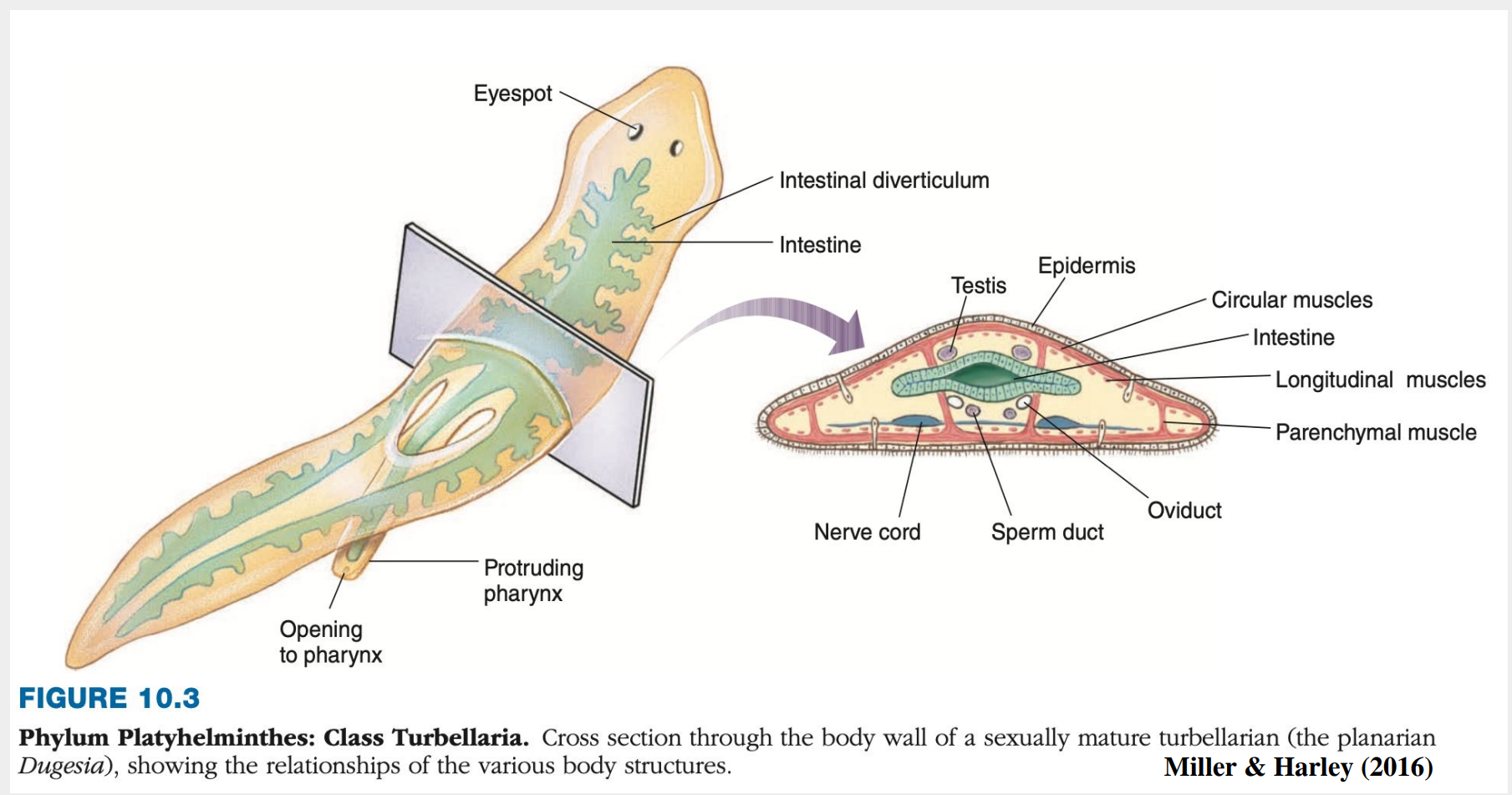
State which phylum and fill in the blank if applicable.
Simplest phylum at organ level of complexity (w/ digestive, reproductive, muscular and excretory organs)
✔ Digestive system - _________ gut in most; in some, digestive system is lacking
✔ Excretory system – _______________
✔ Nervous system - ____________
✔ Reproductive system – hermaphrodites; asexual and sexual reproduction
Platyhelminthes
State which phylum and fill in the blank if applicable.
Body dorsoventrally flattened
Bilaterally symmetrical
Protostomes
Phylum Platyhelminthes, The Flatworms
Turbellaria
Trematoda
Cestoda
Monogenea
State which phylum and fill in the blank if applicable.
This phylum is composed of the following classes:
Class T___________
Free-living flatworms, move from place to place by means of their ciliated epidermis, and have eyespots, which are absent in their parasitic relatives. Abundant in freshwater and the sea.
Class T___________
Flukes; parasitic flatworms with a digestive tract, and often complex life cycles that involve two or more hosts. (e.g. Schistosoma [blood fluke], Fasciola hepatica [liver fluke]).
Class C___________
Tapeworms; parasitic flatworms that lack a digestive tract and absorb food through their body walls; with complex life cycles
Class M_____________ - fish ectoparasite
Phylum Nematoda, the roundworms
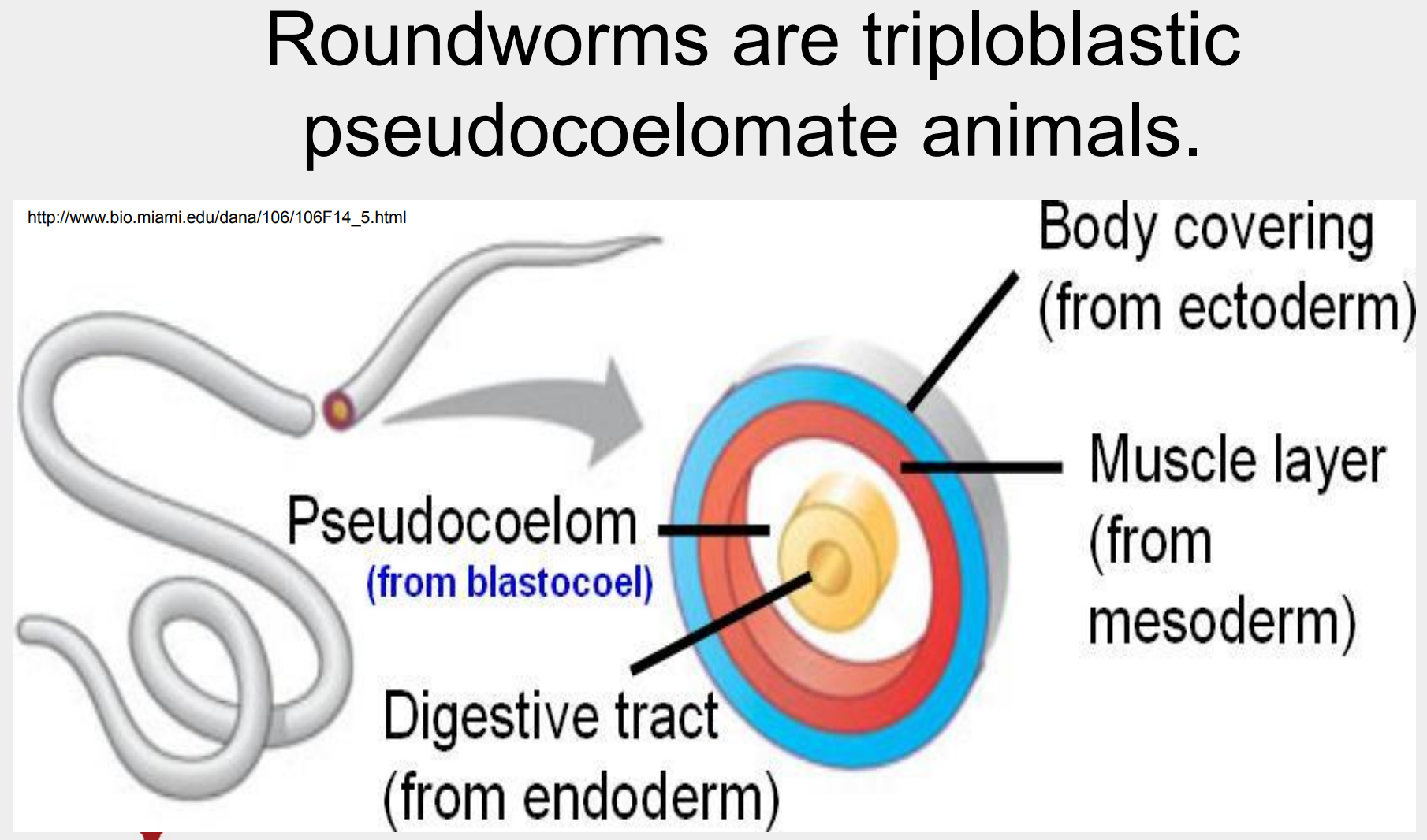
State which phylum and fill in the blank if applicable.
Triploblastic pseudocoelomate
Phylum Nematoda, the roundworms
State which phylum and fill in the blank if applicable.
unsegmented and vermiform ends;
Phylum Nematoda, the roundworms
cuticle
State which phylum and fill in the blank if applicable.
externally no distinct head or obvious sense organ
body covered with ________
Phylum Nematoda, the roundworms
complete
longitudinal
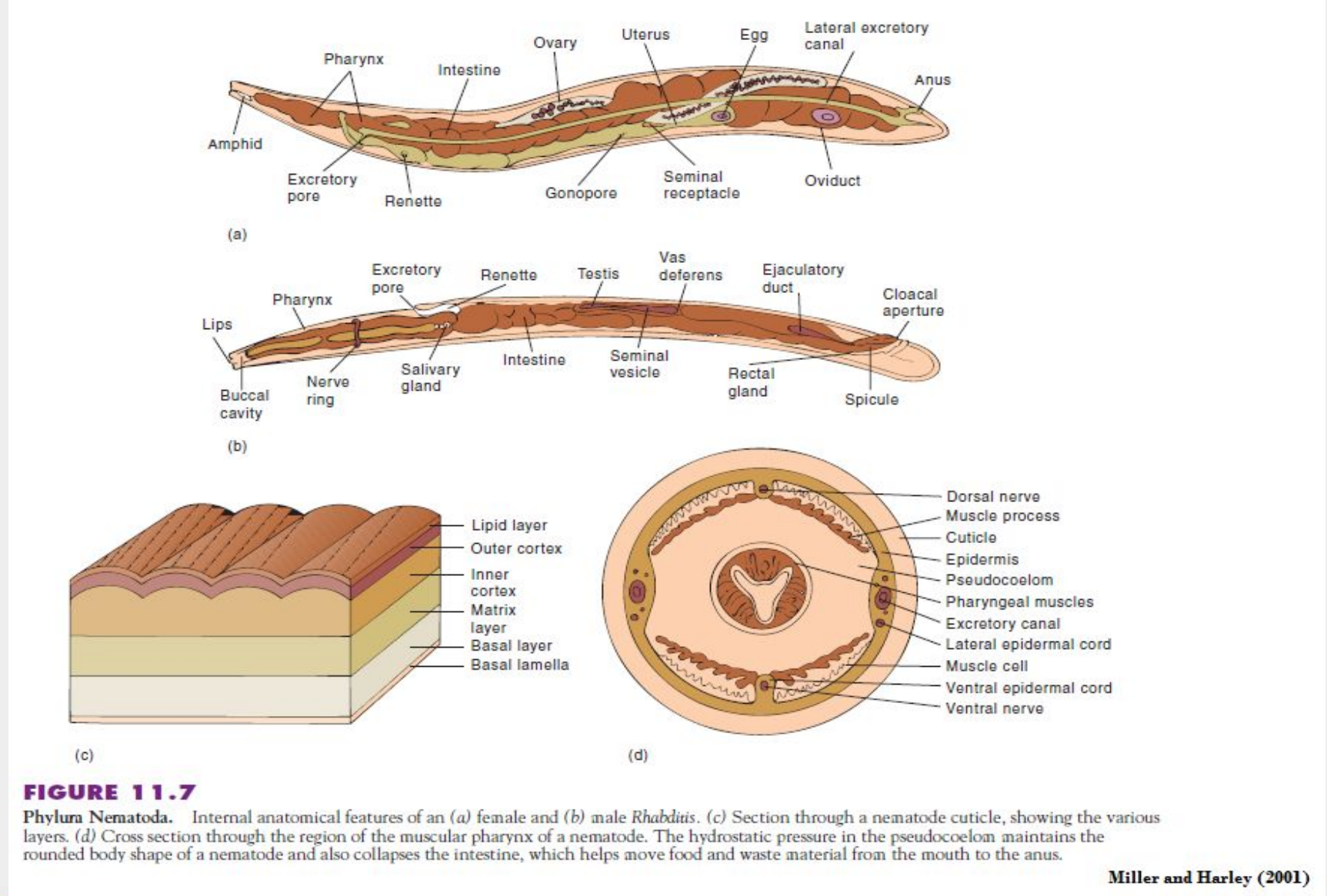
State which phylum and fill in the blank if applicable.
with ___________ digestive system
with unique excretory system of collecting tubules
with ____________ muscles only
Phylum Nematoda, the roundworms
State which phylum and fill in the blank if applicable.
No circulatory or respiratory systems
Dioecious
Bilaterally symmetrical
Sexual reproduction
Phylum Nematoda, the roundworms
Secernentea
State which phylum and fill in the blank if applicable.
Examine an image of Ascaris, the intestinal roundworm. This is a member of Class S_____________. Its cylindrical body is pointed at both ends, with the mouth at the anterior and blunt end. The anus at the posterior end is pointed.
Phylum Annelida, the segmented worms
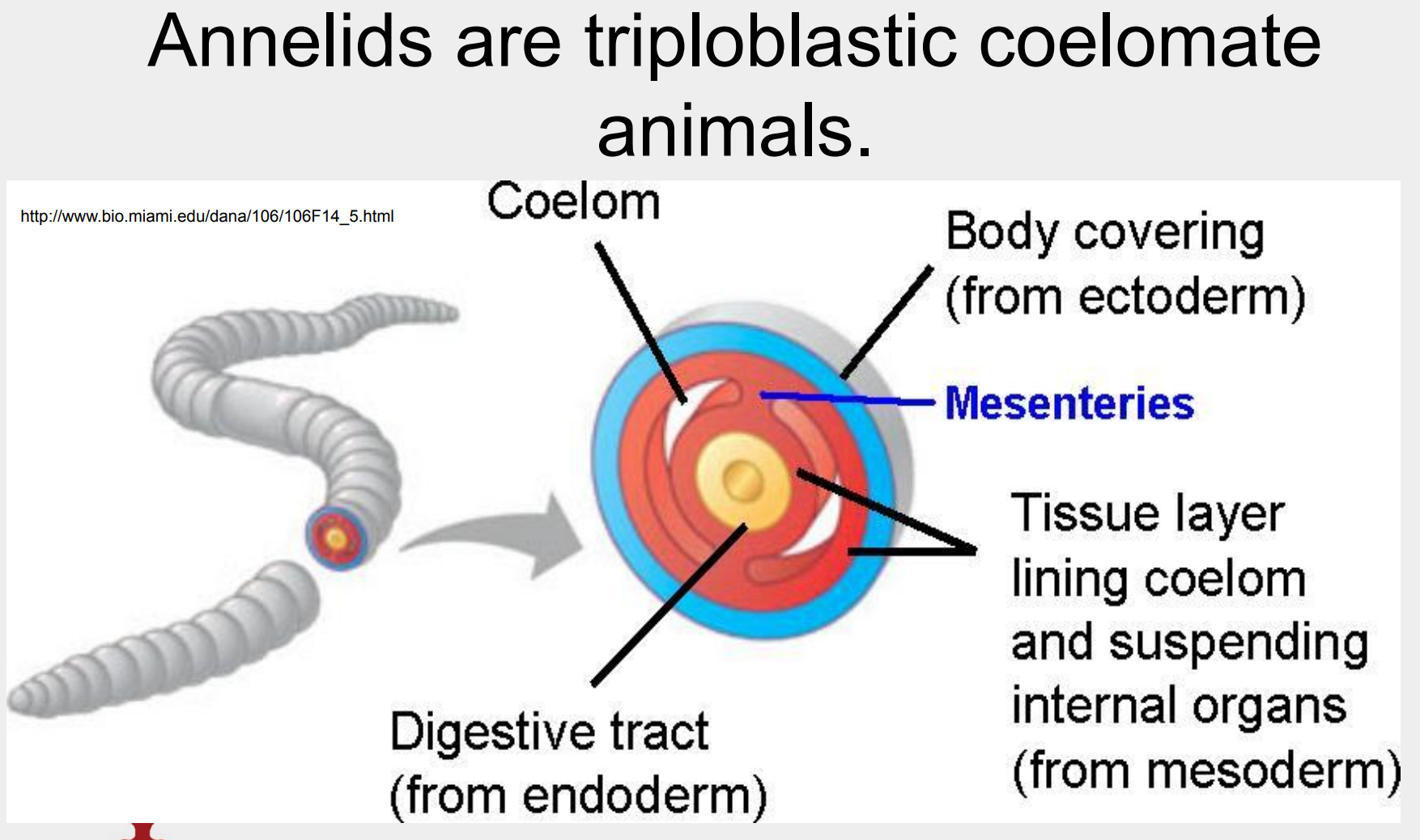
Phylum Mollusca, the “soft-bodied” animals
State which phylum and fill in the blank if applicable.
Protostomes and schizocoelous
Triploblastic coelomates
Phylum Annelida, the segmented worms
State which phylum and fill in the blank if applicable.
Body divided into metameres/somites/segments by grooves or annuli
With head-body-pygidium
Phylum Annelida, the segmented worms
hydroskeleton; collegenous
State which phylum and fill in the blank if applicable.
Coelom is filled with fluid, ________________ serving as its support structure
Body is covered with nonchitinous ____________ cuticle
Phylum Annelida, the segmented worms
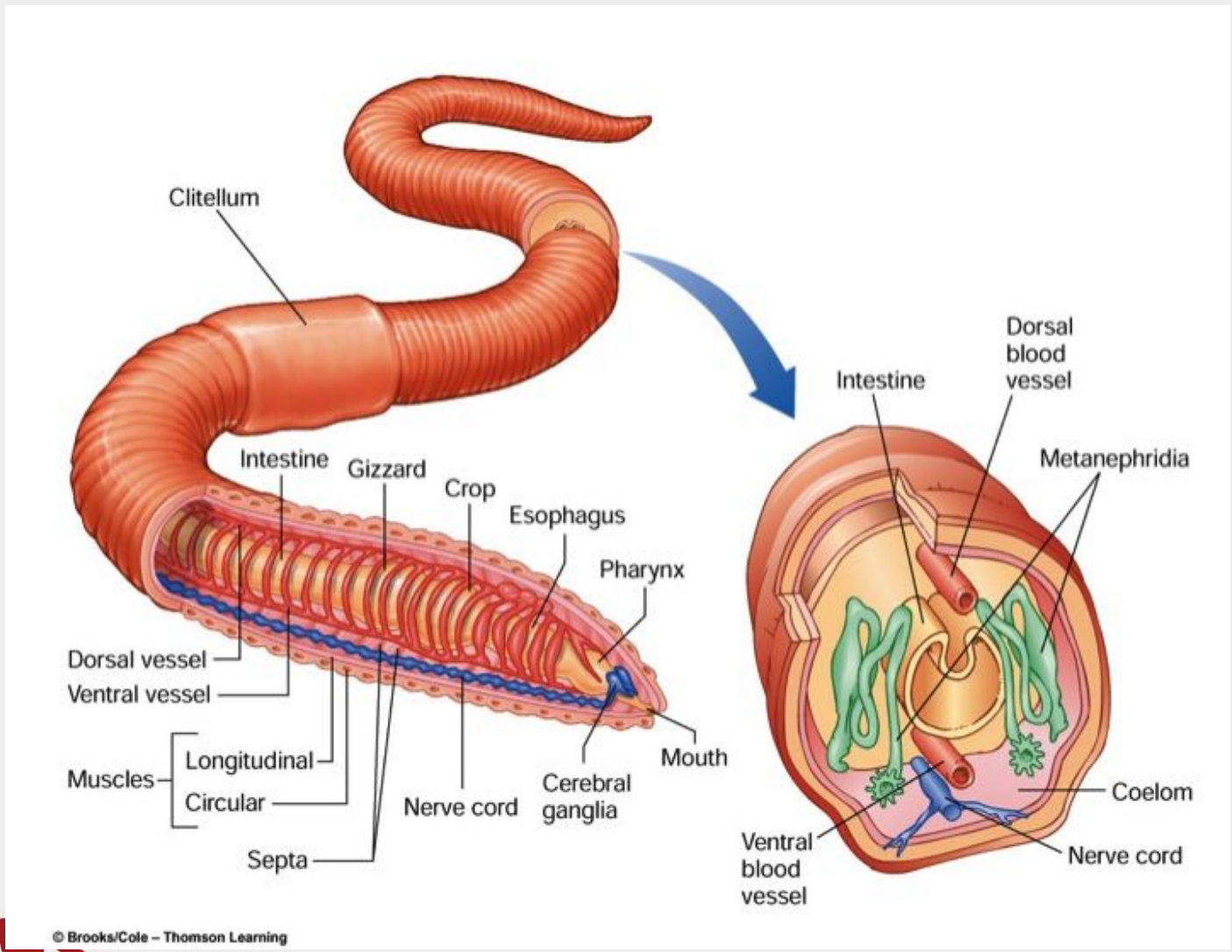
State which phylum and fill in the blank if applicable.
Have setae or bristles made up of chitin
Closed circulatory system
Complete digestive system
Phylum Annelida, the segmented worms
Parapodia - (in a polychaete worm) each of a number of paired muscular bristle-bearing appendages used in locomotion, sensation, or respiration.
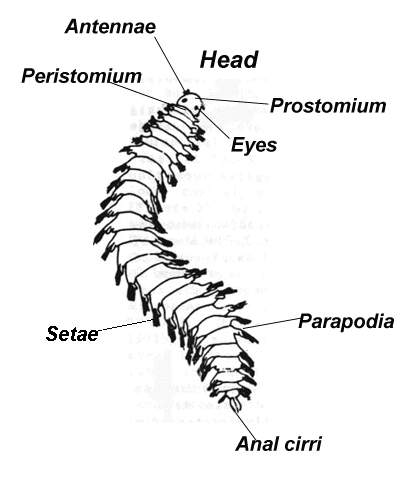
State which phylum and fill in the blank if applicable.
Respiration occurs through skin, gills, or parapodia
Ganglionic nervous system
Monoecious or dioecious
Phylum Annelida, the segmented worms
Polychaeta
Oligochaeta
Hirudinea
State which phylum and fill in the blank if applicable.
This phylum consists of three classes:
Class _____________
Polychaetes; clamworms, plumed worms, scale worms and their relatives. Mainly
marine worms with a distinct head and specialized sense organs, including eyes.
Fleshy, paddlelike flaps called parapodia, used in locomotion, occur in most
segments. The trochophore larvae are free swimming; about 8000 species.
Class ______________
Earthworms; terrestrial, freshwater and marine annelids with fewer setae than the
polychaetes and no parapodia. Earthworms lack a distinct head, and their sense
organs are not as specialized as the polychaetes. In preserved specimens, the
clitellum appears as a dark band near the anterior end of the body; about 3100
species.
Class ________________
Leeches; dorsoventrally flattened external parasites, predators or scavengers,
with suckers at one or both ends of the body. The anterior sucker surrounds the
mouth and is smaller at the posterior. Leeches have clitellum (though rarely
conspicuous) formed in segments 9 to 11; about 300 species.
Phylum Mollusca, the “soft-bodied” animals
Head-foot; visceral mass; mantle
radula
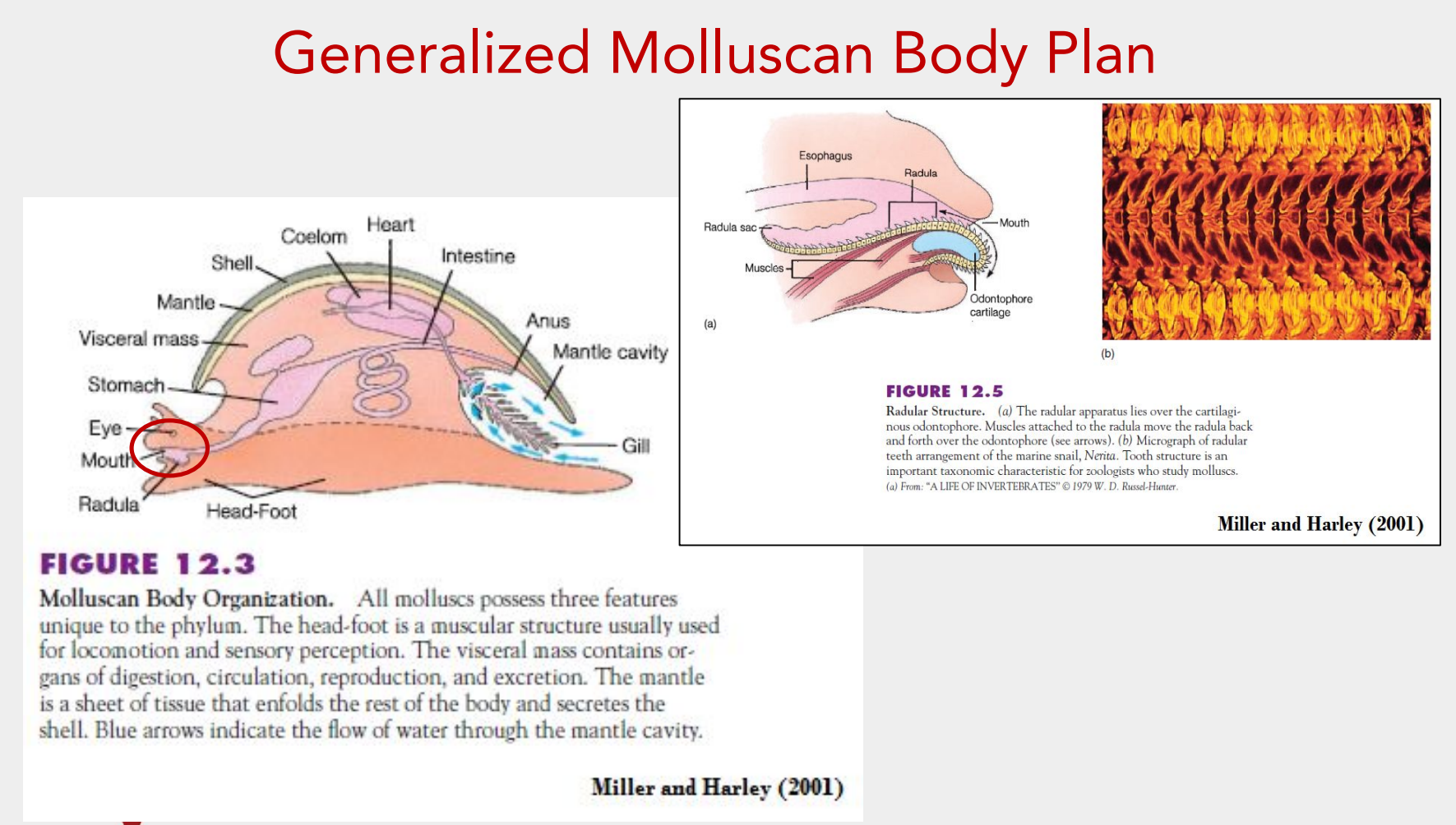
State which phylum and fill in the blank if applicable.
Phylum Mollusca, the “soft-bodied” animals
Body plan: _____________, ______________ and __________
Complete digestive system, equipped with __________
Phylum Mollusca, the “soft-bodied” animals
ctenidia
cephalopods
State which phylum and fill in the blank if applicable.
Respiration occurs through gills (___________), lungs, mantle or body surface/skin
Open circulatory system, except in ______________
Well-developed endocrine system
Phylum Mollusca, the “soft-bodied” animals
State which phylum and fill in the blank if applicable.
Metanephridia for excretion
Ganglionic nervous system
With monoecious and dioecious forms
Polyplacophora
'Polyplacophora' means 'bearer of many plates'. The animal possess a
heart and an open blood system, a pair of kidneys that open to the pallial cavity,
a simple nervous system with two pairs of lateral nerve cords, and many special
minute sensory organs (aesthetes) that pass through the shell valves. Some of
these are specialized as light receptors, having a minute lens and retina-like
structure. The mouth is surrounded by a simple velum and the head lacks
tentacles or eyes.
Bivalvia
Cephalopoda
Gastropoda
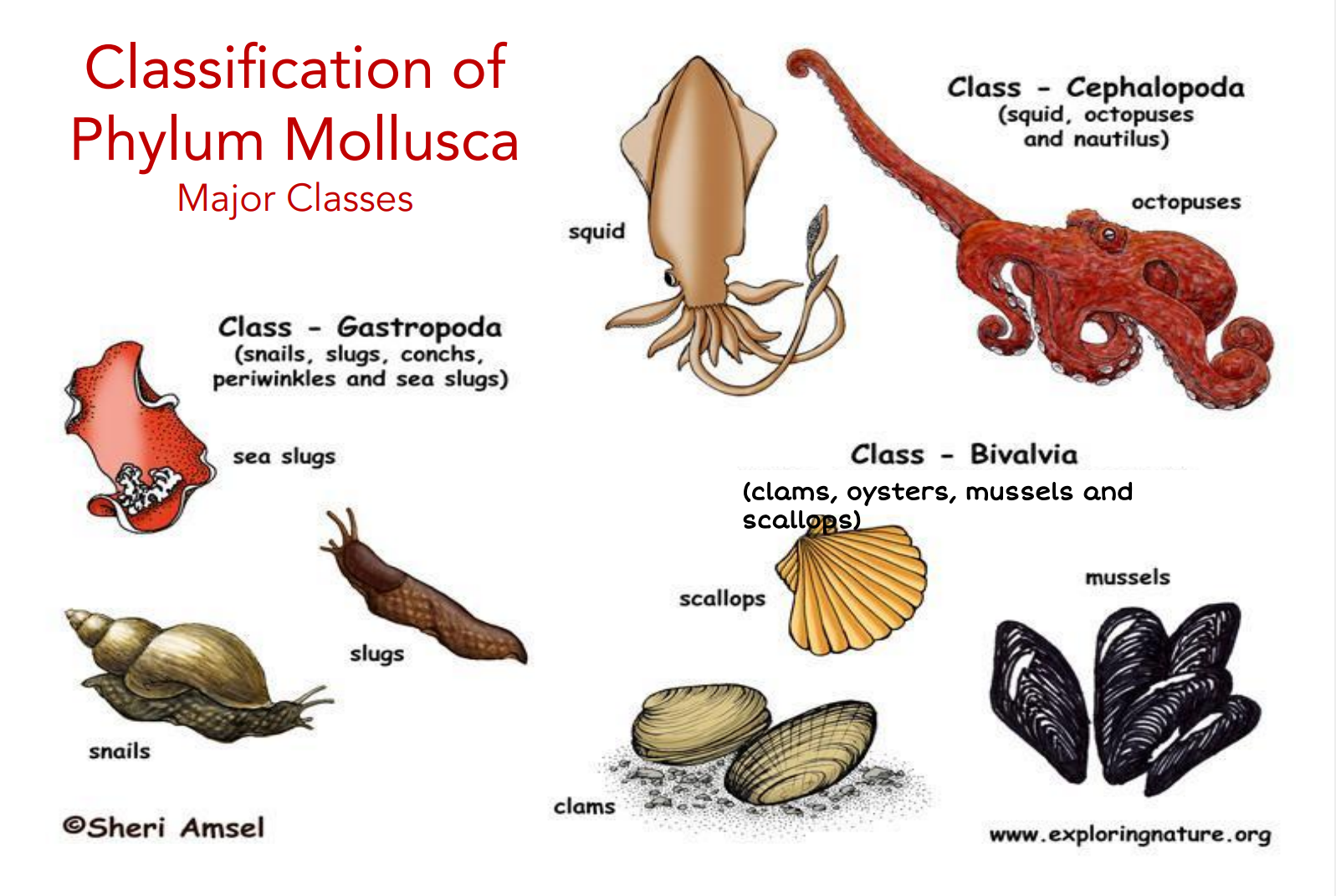
State which phylum and fill in the blank if applicable.
Four classes comprise this group:
Class ________________-
A chiton has an oval flattened body that is made up of a thick body with 8
overlapping plates or valves, bordered by a thick girdle formed from the mantle
that may be covered with spines, scales, or hairs. The pallial cavity, containing
multiple pairs of small gills, surrounds the foot with which the animal typically
clings to hard surfaces. The plates are greatly reduced or even internal in a few
species.
Class __________
Bivalves – clams, scallops, oysters, mussels and related mollusks – have two
shells, hinged together, and a wedge-shaped foot; bivalves lack distinct heads
and radula. The oldest portion of the shell called the umbo is found on the pointed
end. The concentric lines or growth lines on the surface accounts for the deposits
of additional material, an indicator of the age of the organism. Bivalves are
usually sessile feeders that disperse from place to place largely as larvae.
Class ______________
Octopuses, squids, and nautilus; active, intelligent marine predators in which the
foot has evolved into a series of tentacles – 8 in octopuses, 10 in squids, 80 to
90 in the nautilus. The cephalopods have two horny jaws, highly developed eyes,
and complex, efficient nervous systems. The shell in internal (squids), external
(nautilus), or absent (octopuses).
In squids, the shell, which is a reduced plastic-like strip, is found inside the mantle
cavity. Take note of the lateral flaps, found on the posterior end of the organism.
These are fins used by the squid for balance while swimming. In the octopus, the
tentacles are reinforced by suction cups for clinging to firm surfaces.
Class ____________ (Univalvia)
Snails; that have a single whorled shell. The broad, long and flat foot is ventrally
located and is used chiefly for locomotion. The head bears two (2) pairs of
tentacles while the visceral mass along with the internal organs are enclosed
within the shell.
Phylum Arthropoda, the “joint-legged” animals
State which phylum and fill in the blank if applicable.
o Triploblastic coelomates (but coelom is reduced)
o Protostomes
o Metameric or segmented body with some or all of the segments bearing several pairs of jointed appendages (artus – joint; poda – foot)
Phylum Arthropoda, the “joint-legged” animals
State which phylum and fill in the blank if applicable.
Exhibit tagmatization
With chitinous exoskeleton
Phylum Arthropoda, the “joint-legged” animals
State which phylum and fill in the blank if applicable.
Complete digestive sytem
Open circulatory system
Respire through body surface, gills, book lungs or trachea
Phylum Arthropoda, the “joint-legged” animals
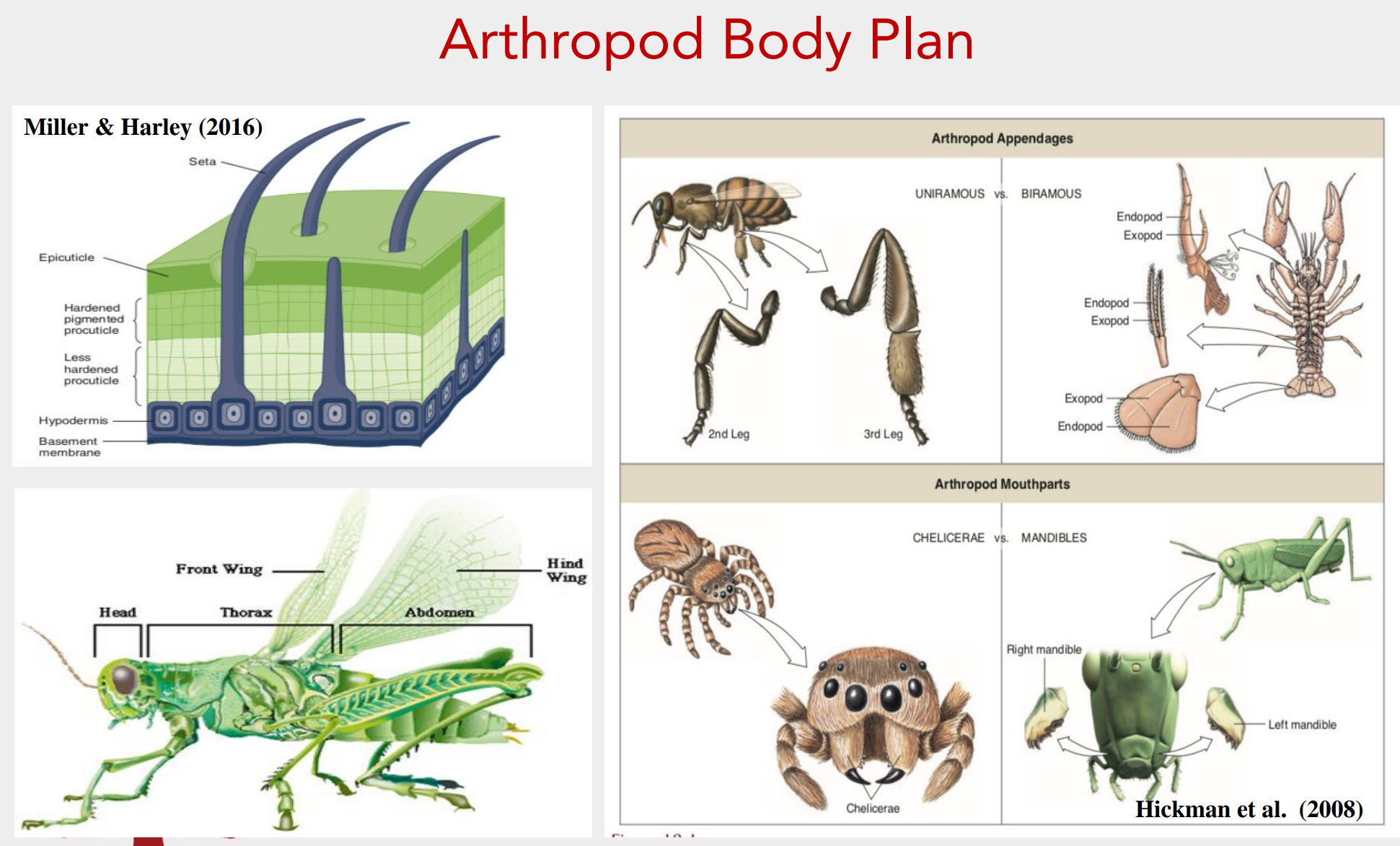
State which phylum and fill in the blank if applicable.
Excrete through nephridia, Malphigian tubules or glands
Ventral nervous system; nervous system is ganglionic, highly developed sense organs and head (cephalization)
Reproduction is sexual; most species are dioecious; often with metamorphosis
Phylum Arthropoda, the “joint-legged” animals
Class Chilopoda - predaceous centipedes
Class Diplopoda - millipedes
Class Insecta - winged and wingless insects, all adults have 6 pairs of legs
Class Crustacea - Shrimps and crabs
Class Arachnida - spiders, scorpions and mites
State which phylum and fill in the blank if applicable.
Class _____________ - predaceous centipedes
Class _____________ - millipedes
Class _____________ - winged and wingless insects, all adults have 6 pairs of legs
Class _____________ - Shrimps and crabs
Class _____________ - spiders, scorpions and mites
Phylum Echinodermata, the “spiny-skinned” animals
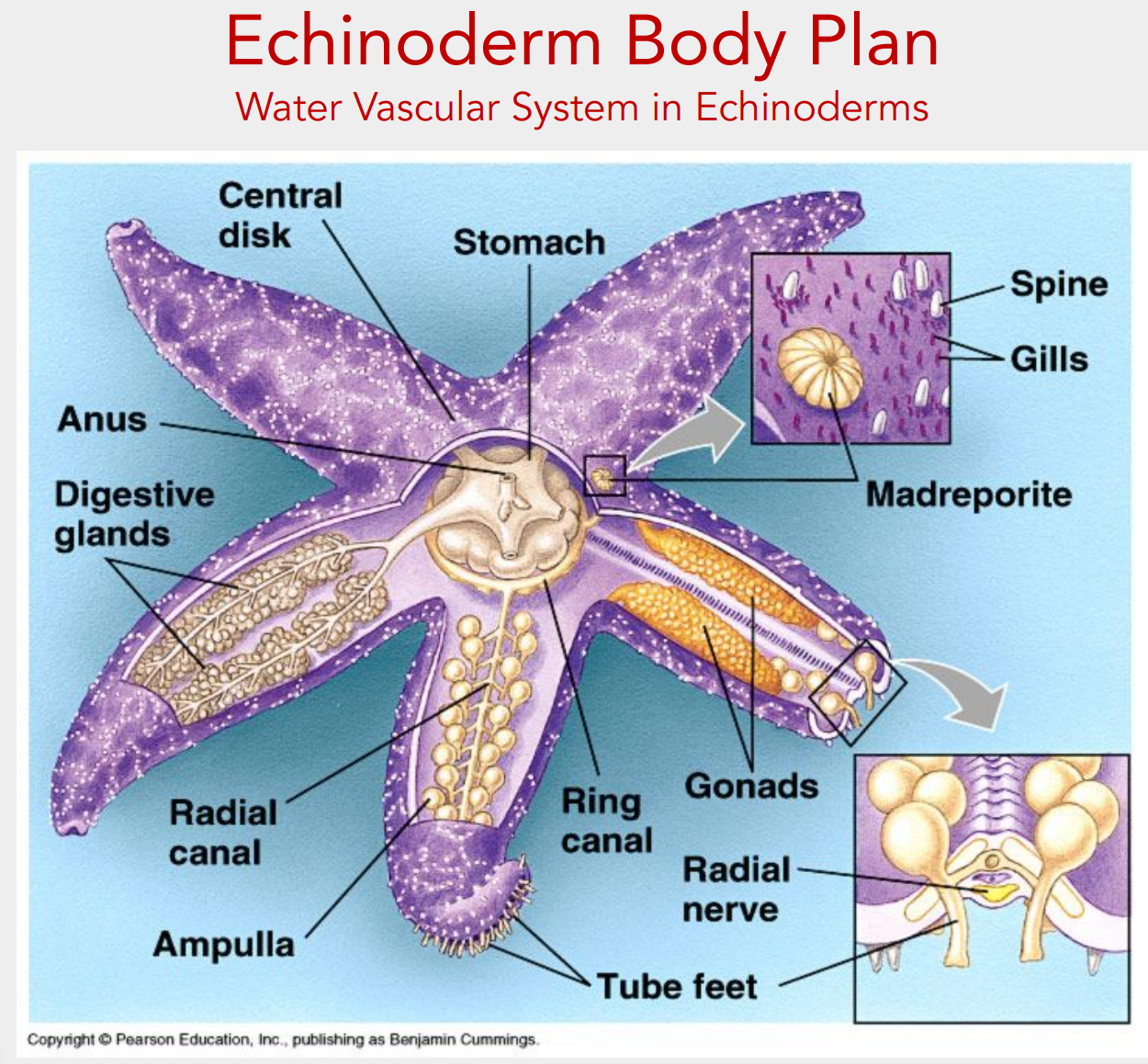
State which phylum and fill in the blank if applicable.
o Exclusively marine
o Triploblastic coelomates
o Enterocoelous
o Deuterostomes
Phylum Echinodermata, the “spiny-skinned” animals
ossicles
water; podia
State which phylum and fill in the blank if applicable.
Bilateral larvae; radial adults
Endoskeleton of spiny calcareous ___________
Presence of _________ vascular system; locomotion by tube feet (________)
Phylum Echinodermata, the “spiny-skinned” animals
State which phylum and fill in the blank if applicable.
Complete digestive tract and with blood-vascular system (haemal system)
Respiration by tube feet, dermal branchiae, respiratory tree and bursae
Phylum Echinodermata, the “spiny-skinned” animals
State which phylum and fill in the blank if applicable.
No excretory organs
Nervous system of circumoral rings and radial nerves; no distinct head or brain (no cephalization)
Asexual (regeneration, disk division) and sexual reproduction (dioecious with sperm or eggs produced in 2 or more gonads in each arm ; Larval stage = bipinnaria)
Phylum Echinodermata, the “spiny-skinned” animals
Class Crinoidea (sea lilies, feather stars)
Class Asteroidea (starfishes)
Class Ophiuroidea (brittle stars)
Class Echinoidea (sea urchins, sand dollars)
Class Holothuroidea (sea cucumbers)
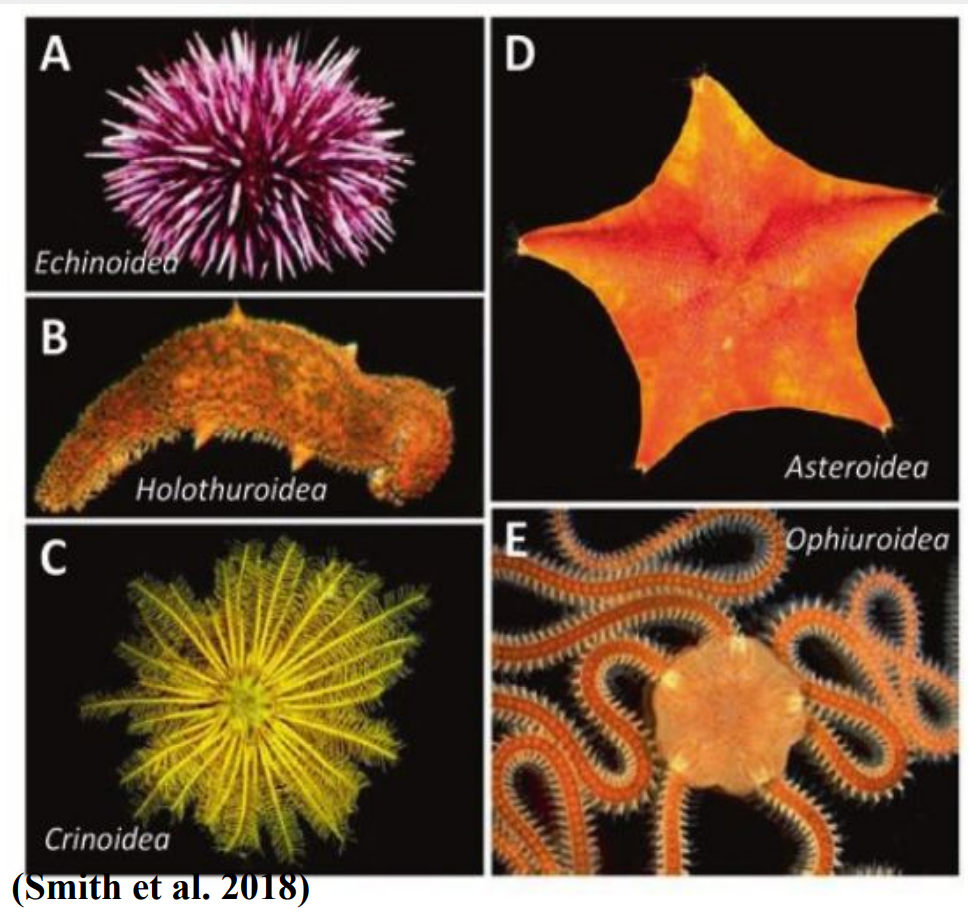
State which phylum and fill in the blank if applicable.
Class ____________ (sea lilies, feather stars)
Class ____________ (starfishes)
Class ____________ (brittle stars)
Class ____________ (sea urchins, sand dollars)
Class ____________ (sea cucumbers)
Notochord
Dorsal hollow nerve cord
pharyngeal pouches/slits
post-anal tail
subpharyngeal
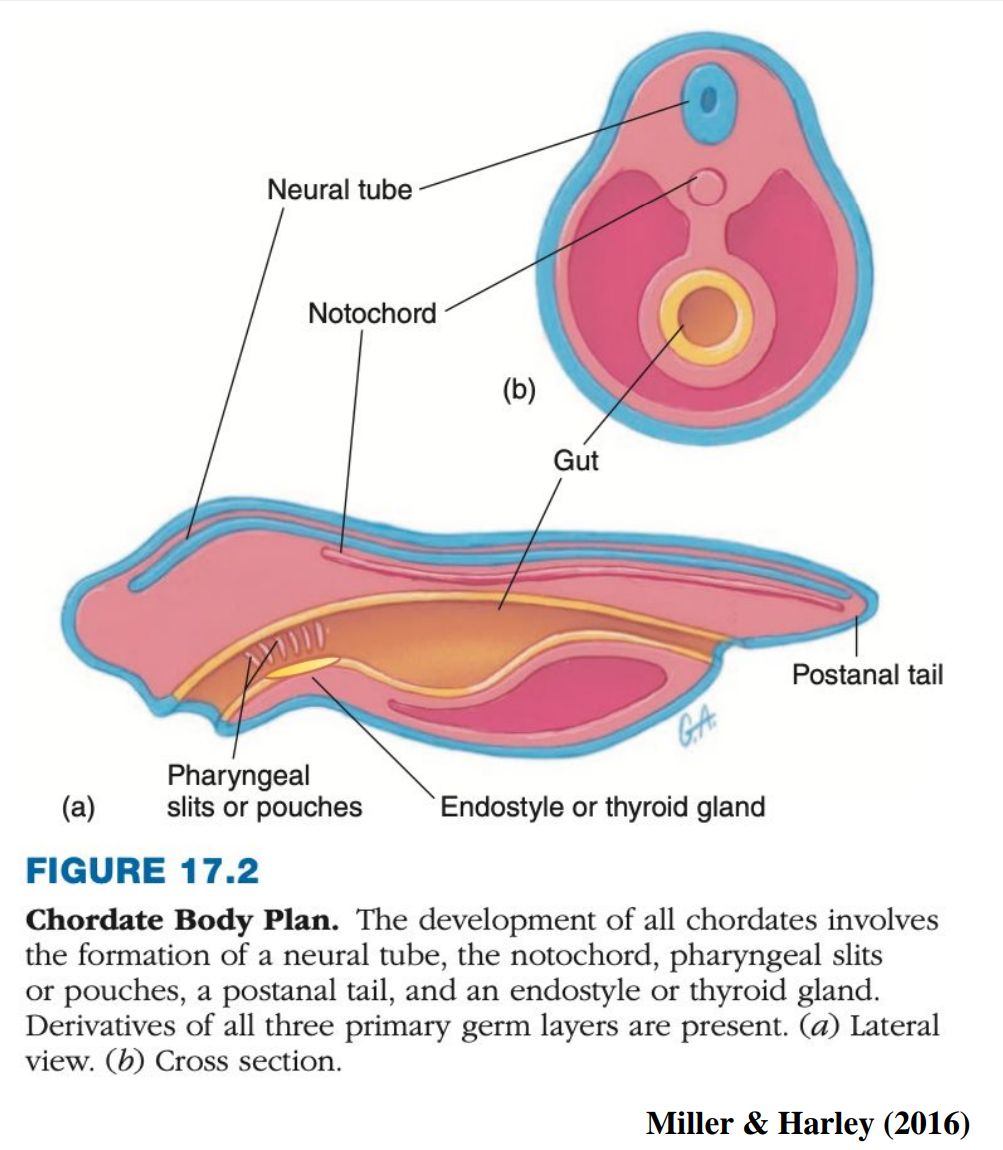
Phylum Chordata
Triploblastic coelomate
Bilaterally symmetrical
Cardinal features:
a. ___________ as supporting structure,
b. _______________,
c. _____________,
d. ______________,
e. _______________ organ
Phylum Chordata
State which phylum and fill in the blank if applicable.
Complete digestive system
Segmented muscles
Ventral heart and closed circulatory system
Phylum Chordata
chordates
State which phylum and fill in the blank if applicable.
Respire through body surface, gills or lungs
Complete excretory system; advanced __________ have kidneys for excretion
Inhabit terrestrial or aquatic habitats
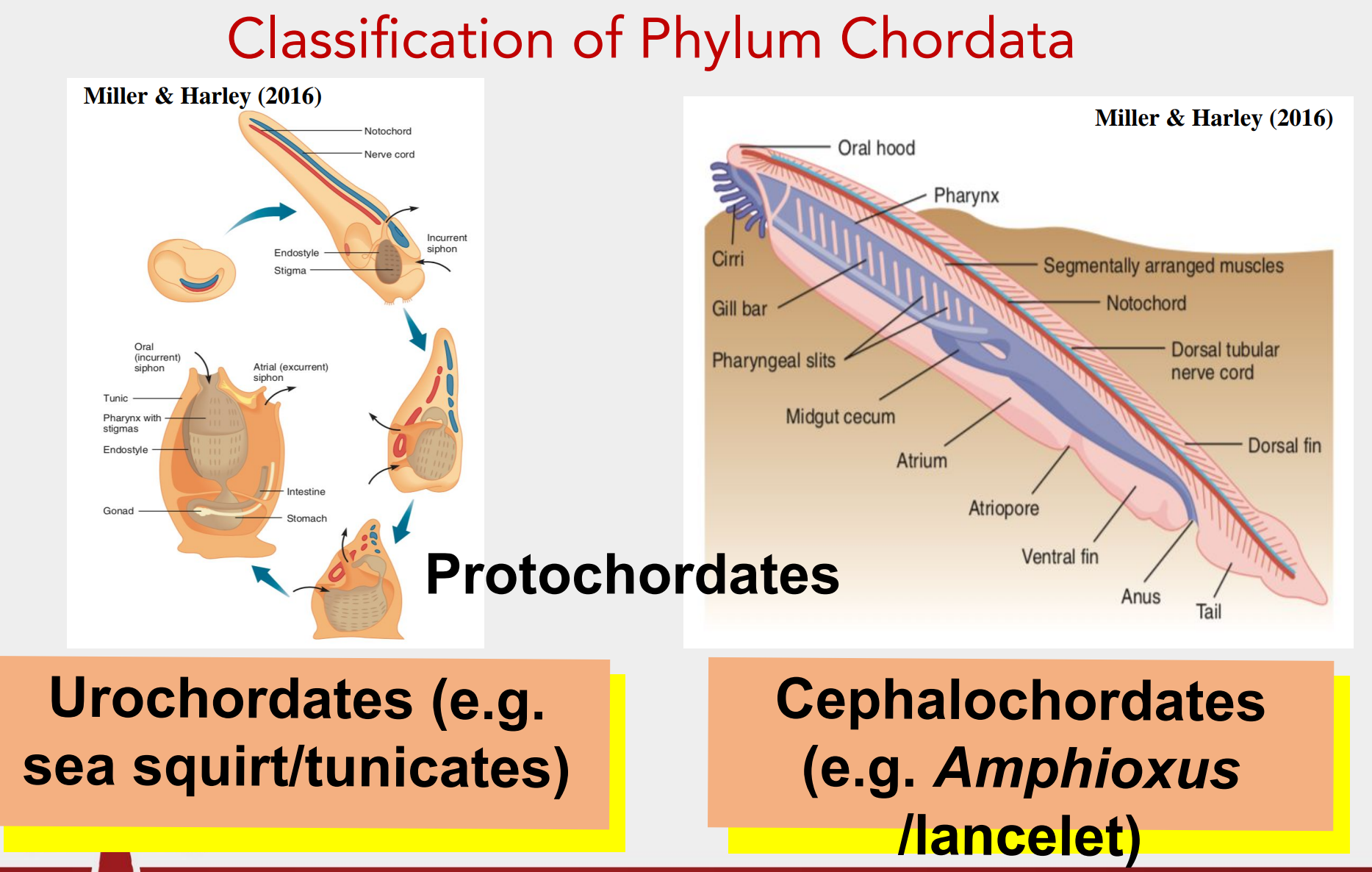
Urochordata
Cephalochordata
Vertebrata
State which phylum and fill in the blank if applicable.
Subphylum ______________ – notochord restricted in tail region in adults, tunic composed of cellulose, pharyngeal slits used for filter-feeding
Subphylum _______________ (lancelets) – persistent notochord that extends up to head, oral cirri, fishlike body with muscle somites and median fins
Subphylum ______________ – presence of vertebral column and cranium, tripartite brain In one group, the vertebrates, the notochord is replaced by the vertebral column, which also encloses the dorsal nerve cord.
Chondrichthyes
Osteichthyes
Amphibia
Reptilia
Aves
Mammalia
State which phylum and fill in the blank if applicable.
Class _____________ - Sharks, skates and rays.
Class _____________- Bony fishes.
Class ______________ - Salamanders, frogs and toads.
Class ______________ - Lizards, snakes, turtles, tortoises, crocodiles and alligators.
Class _______- Birds.
Class ____________- Mammals.